




Abstract
Introduction
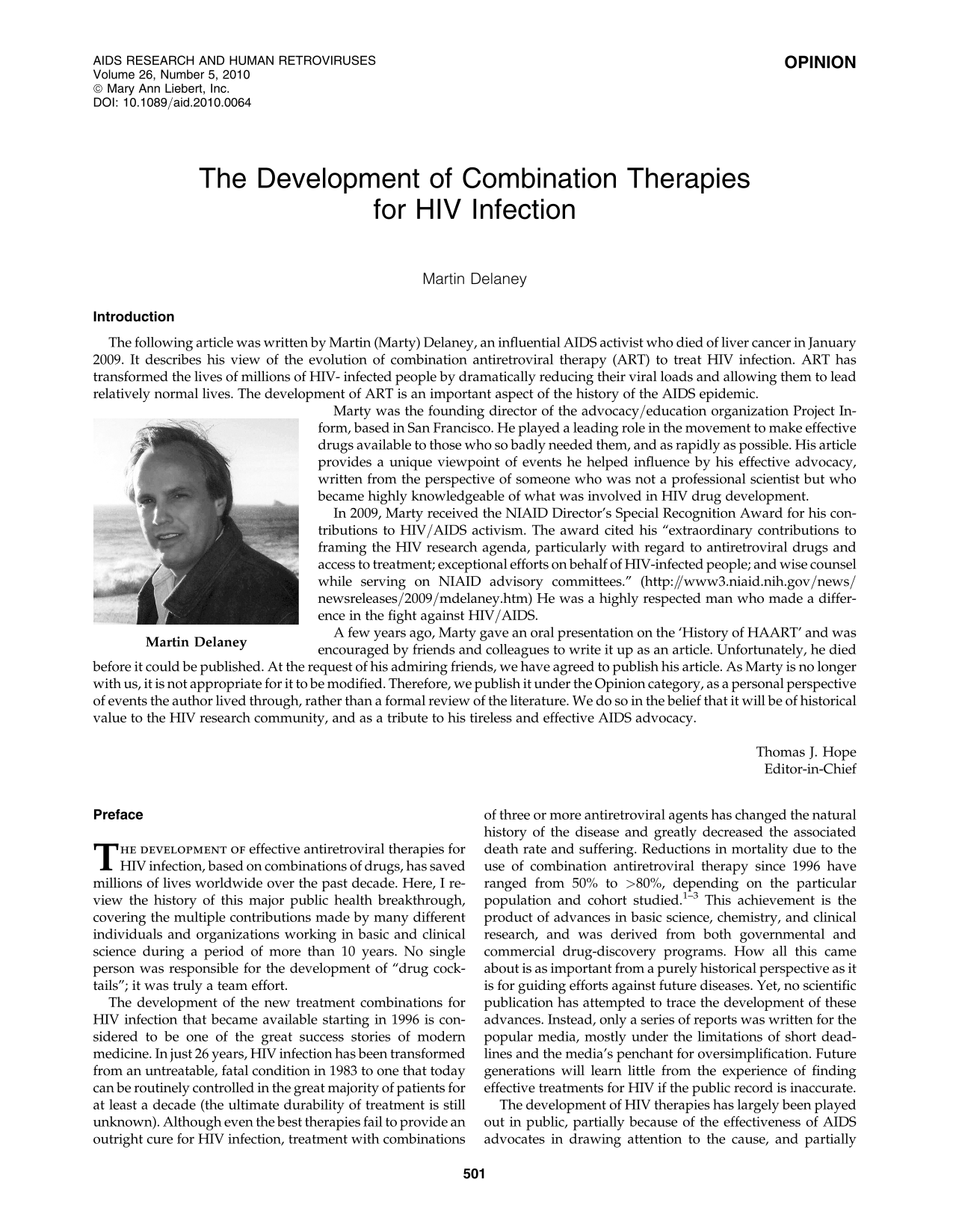
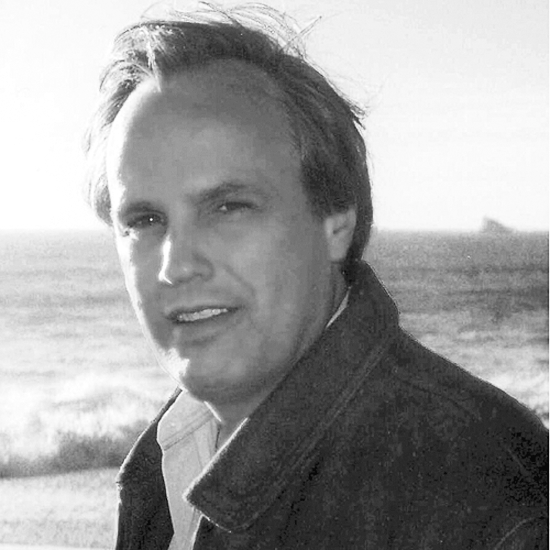
The following article was written by Martin (Marty) Delaney, an influential AIDS activist who died of liver cancer in January 2009. It describes his view of the evolution of combination antiretroviral therapy (ART) to treat HIV infection. ART has transformed the lives of millions of HIV- infected people by dramatically reducing their viral loads and allowing them to lead relatively normal lives. The development of ART is an important aspect of the history of the AIDS epidemic.
Marty was the founding director of the advocacy/education organization Project Inform, based in San Francisco. He played a leading role in the movement to make effective drugs available to those who so badly needed them, and as rapidly as possible. His article provides a unique viewpoint of events he helped influence by his effective advocacy, written from the perspective of someone who was not a professional scientist but who became highly knowledgeable of what was involved in HIV drug development.
In 2009, Marty received the NIAID Director's Special Recognition Award for his contributions to HIV/AIDS activism. The award cited his “extraordinary contributions to framing the HIV research agenda, particularly with regard to antiretroviral drugs and access to treatment; exceptional efforts on behalf of HIV-infected people; and wise counsel while serving on NIAID advisory committees.” (
A few years ago, Marty gave an oral presentation on the 'History of HAART' and was encouraged by friends and colleagues to write it up as an article. Unfortunately, he died before it could be published. At the request of his admiring friends, we have agreed to publish his article. As Marty is no longer with us, it is not appropriate for it to be modified. Therefore, we publish it under the Opinion category, as a personal perspective of events the author lived through, rather than a formal review of the literature. We do so in the belief that it will be of historical value to the HIV research community, and as a tribute to his tireless and effective AIDS advocacy.
Preface
T
The development of the new treatment combinations for HIV infection that became available starting in 1996 is considered to be one of the great success stories of modern medicine. In just 26 years, HIV infection has been transformed from an untreatable, fatal condition in 1983 to one that today can be routinely controlled in the great majority of patients for at least a decade (the ultimate durability of treatment is still unknown). Although even the best therapies fail to provide an outright cure for HIV infection, treatment with combinations of three or more antiretroviral agents has changed the natural history of the disease and greatly decreased the associated death rate and suffering. Reductions in mortality due to the use of combination antiretroviral therapy since 1996 have ranged from 50% to >80%, depending on the particular population and cohort studied. 1 –3 This achievement is the product of advances in basic science, chemistry, and clinical research, and was derived from both governmental and commercial drug-discovery programs. How all this came about is as important from a purely historical perspective as it is for guiding efforts against future diseases. Yet, no scientific publication has attempted to trace the development of these advances. Instead, only a series of reports was written for the popular media, mostly under the limitations of short deadlines and the media's penchant for oversimplification. Future generations will learn little from the experience of finding effective treatments for HIV if the public record is inaccurate.
The development of HIV therapies has largely been played out in public, partially because of the effectiveness of AIDS advocates in drawing attention to the cause, and partially because advances in media technology have made every important story a public adventure. Poster children have been created, and heroes anointed, often based on false perceptions of how the scientific and medical advances were made. The days when a single individual or group can claim credit for broad, major advances in HIV science are long gone. The development of effective and lasting treatment for HIV infection came about not through any singular breakthrough but by a steady series of advances from many sources, each building on and refining what came before. As Sir Isaac Newton said: “If I have seen further than others, it is by standing upon the shoulders of giants.” Understanding how HIV has been tamed in the clinic and at the bedside may be essential to the fight against future diseases.
A Multistage Development Process for HIV Therapies
This review melds a study of the publication record of the events spanning the years from 1983 through 1996 with a series of interviews of many of the people directly involved in the work of the era. Additionally, I was an AIDS activist throughout the 26-year history covered here and a personal observer of many of the events I now describe.
The evolution of effective therapy for HIV disease may be seen in three general stages. These include (a) the discovery of the causative agent of the new syndrome of immune deficiency and the identification of viral proteins that could be targeted as sites for therapeutic intervention; (b) the screening of available compounds (and the eventual creation of new ones) targeting the viral proteins and evaluating their individual effectiveness in the clinic; and (c) as multiple effective agents became available, the process switched to testing them in rational combinations, following the models of combination therapy that had been previously demonstrated to be effective against several cancers, tuberculosis, and other infectious diseases. A fourth stage is still under way today, involving efforts to simplify treatment regimens and reduce both drug toxicity and the development of viral resistance.
This drug-development process was guided by parallel research efforts, which provided an increased understanding of the pathogenesis of the disease and produced diagnostic tests that helped speed the evaluation of new therapies and guided their use in clinical practice.
Stage One: The Virus and Its Proteins
Identification of the causative agent of the disease has been described in many other publications and requires only minimal retelling here. The fight against AIDS had its first success in early 1983 when Luc Montagnier's and Francoise Barre-Sinoussi's team at the Pasteur Institute isolated a previously unknown retrovirus from lymph node tissue from people with what was then known as lymphadenopathy-associated syndrome (LAS). 4 The tissue samples had been sent to the Pasteur for analysis by clinicians in other French hospitals who were attempting to treat such patients. Prior statements had been made by a number of researchers between 1981 and 1982, suggesting that the likely culprit would be a sexually transmitted retrovirus; these insights guided the work of the Pasteur scientists.
The next major advance came in the spring of 1984, when Robert Gallo's group at the National Cancer Institute published five articles describing additional isolates of the new virus and convincingly linking them to the disease that was then called AIDS. 5 –9 Subsequent discoveries in the laboratories of Robin Weiss in the U.K., 10 Jay Levy in California, 11 and at the Centers for Disease Control in Atlanta 12 confirmed and extended these foundations of AIDS research. The groundwork was now in place for learning how to treat HIV.
These first steps had themselves been made possible by the discoveries, by Howard Temin 13 and David Baltimore 14 in the 1970s, of the reverse transcriptase (RT) enzyme, a key identifier of retroviruses. Compounds that could inhibit the RT enzymes of animal retroviruses had been identified in the 1970s by several groups, including the teams of Eric de Clercq in Belgium, Maurice Green at St. Louis University, Prakash Chandra in Frankfurt, and Robert Gallo at the National Cancer Institute. 15 –19 Although the original RT inhibitors were too toxic for human use and lacked activity against HIV, they provided conceptual hope that an HIV therapy would be possible by defining a target for drug-development programs. The seminal discovery of RT by academic researchers therefore had a double payoff for HIV research. It not only provided a means of recognizing the causative agent as a retrovirus, but also shone a spotlight on the most obvious target for therapy. All the drugs approved for the treatment of HIV disease in the first decade of research (i.e., up to 1995) were RT inhibitors, and these compounds remain the “backbone” of the combination therapies that are still in use today. Effective combination therapies could not have been developed as quickly as they were without the RT inhibitors.
The first of these drugs, zidovudine (AZT), was identified as a potentially useful compound when Samuel Broder and his team at the National Cancer Institute and scientists at Burroughs Wellcome screened existing compounds for activity against HIV replication in tissue culture. 20 AZT was the first of the nucleoside reverse transcriptase inhibitors (NRTIs). When AZT showed potential, Broder and Wellcome each independently began preliminary studies in humans. The first controlled study of zidovudine, conducted in 1986, produced what seemed to be a dramatic effect: only a single death occurred in the treated group (n = 145) versus 19 in a placebo control group (n = 137) after 24 weeks. 21 Follow-up studies, however, showed the benefit to be short lived, with a rapidly increasing mortality rate even among those treated after the first 24 weeks. AZT is an active compound, but not a very durable one, at least when used alone. Douglas Richman and his team at the University of California eventually demonstrated that the lack of durability was due to the rapid development of viral resistance, a problem that was not initially appreciated. 22 Toxicity was also a major concern, to the extent that many people who needed the drug could not tolerate it. The AZT dose used in these very early monotherapy studies was higher than what was finally approved for routine use, which was understandable, given the urgency of the situation at the time and the desperate need of very sick patients. Subsequent studies in the United States, Europe, and Australia in patients at varying stages of disease showed that AZT had a modest benefit when used as a single agent at the lower, much more tolerable doses that are now used in combination therapies. 23 –26
Although AZT was quickly approved for use in the United States and Europe by 1987, the availability of additional drugs was anxiously awaited as its limitations became all too clear. The commercial success of AZT encouraged Burroughs Wellcome to make a commitment to the HIV field that persists to this day (the company is now known as Glaxo Smith Kline). It also signaled other pharmaceutical companies that treating HIV was commercially viable.
The next drugs in development were also NRTIs: didanosine (ddI) and dideoxycytidine (ddC). Studies in the late 1980s showed that both ddI and ddC were about as active as AZT, although with somewhat different side effects. 27 –31 Although early studies seemed to promise minimal toxicity, over time, each drug caused problems at least as severe as those of AZT when they were given at doses high enough to be effective as single agents (lower, less-toxic doses of ddI and ddC are now used in combination therapies). As seen with AZT, the benefits of ddI and ddC monotherapy were of short duration because of the same problem of resistance development. Much of the initial testing of these compounds was to assess their suitability as replacements for AZT after its effectiveness waned, but their use in combination with AZT was already under study by 1989.
The NRTIs were not the only drugs pursued as possible treatments for HIV therapy, nor was reverse transcription the only possible target for interrupting the viral life cycle. In the early 1990s, Merck, Boehringer Ingelheim, Jansen, and other firms worked on a second class of RT inhibitors that acted by a different mechanism, the nonnucleoside reverse transcriptase inhibitors (NNRTIs). As early as 1986, scientists at Hoffman La Roche and Merck Research Laboratories began, with little fanfare, aggressive pursuits of another class of drugs known as protease inhibitors (PIs), which attacked a different stage of HIV replication. The ability to use this class of compounds in combination with the first-generation RT inhibitors was the key to the development of effective therapy even though, in 1986, the licensure of the PIs was nearly a decade away.
Using PIs was not the only way to build drug cocktails. Combination-therapy research was already well in progress long before the PIs appeared on the scene.
Stage 2: The Development of Combination Therapy
As multiple, individually active drugs became available, attention naturally expanded to testing them in combinations. The use of “drug cocktails” was in no way an invention of HIV researchers. Combination therapy had been predicted from the very first days of HIV treatment and had already had been used in a number of other diseases. In the infectious disease world, drug combinations to treat tuberculosis were first tested in the 1950s. At the International AIDS Conference in Montreal in 1989, Samuel Broder of the National Cancer Institute spoke about the discouraging limited success of AZT monotherapy. He described the history of therapy for childhood acute lymphoblastic leukemia, which had begun with a single, weakly active agent that had substantial side effects. But when a second drug was added, and eventually, a third with a different mechanism of action, an effective therapy for childhood leukemia emerged. It transformed an almost universal killer into a disease that could be conquered in the great majority of children. Broder predicted that HIV treatment would follow a similar path and continually improve as new drugs and combinations became available. A number of scientists and drug company executives I interviewed for this article mentioned being encouraged, at a critical time, by this presentation.
By 1989, studies were under way that combined two of the available agents, such as AZT and ddI or ddC, or in some cases, alternated their use on a schedule. Combinations were expected to improve efficacy, although at some risk of increased toxicity, whereas alternating regimens were hoped to delay the development of resistance. The trials were eventually able to demonstrate both outcomes, setting the scene for all future studies on combination therapies and also for those aimed at making therapy more tolerable for the patient. 32,33
Large studies using still-newer NRTIs or NNRTIs, such as lamivudine (3TC) or nevirapine, together with the original drugs, demonstrated the benefits of combination therapy in the first half of the 1990s. The NUCA 3001/3002, NUCB 3001, and NUCB 3002 studies showed that AZT + 3TC was a major improvement over AZT monotherapy, despite the rapid development of resistance to 3TC (the first demonstration of how viral fitness was sometimes diminished by mutations that conferred drug resistance). 34 –37 The combination therapies improved CD4+ T-cell levels and delayed progression to AIDS and death. The AZT-plus-3TC combination quickly became the virtual standard of care among the well-informed members of the HIV-infected community. The years between 1992 and 1995 then saw an explosion of combination-therapy studies, involving whatever drugs became available, as quickly as clinical investigators could gain access to them. The availability of new drugs and the investigators to whom they were first made available, rather than any sudden rush of new ideas, was the primary force driving progress at this time. The leadership of new clinical studies depended more on the underlying relationships between investigators or study groups and the pharmaceutical companies than on scientific innovation. In this era, the pharmaceutical companies began to exert increased influence over who conducted clinical studies than had been the case in the 1980s, partly out of a desire for greater control over the study results and partly because of concerns with the perceived slower pace of government-funded clinical trial groups. More than 20 significant trials of varying forms of combination therapy were completed or under way between 1991 and 1995. 38 Some were three-drug combinations that included one NNRTI, particularly nevirapine, delavirdine, and efavirenz (Dupont). 39 –42 These studies foreshadowed what would soon become the minimal standard of therapy in the second half of the 1990s.
Another event that spurred the testing of two- and three-drug combinations occurred in 1992, when Yun Kang Chou et al. 43 from the Harvard laboratory of Martin Hirsch, made a striking presentation about what was then called “convergent combination therapy.” Most successful combination therapies for other illnesses had sought to combine drugs with different mechanisms of action whenever possible. The inability to do this was believed to be a weakness of combination therapy for HIV infection, because all the drugs available by 1992 attacked the same step in the viral life cycle, reverse transcription, and most shared a common mechanism of action. Consequently, combination therapy for HIV in this era was thought to be less than ideal, and many groups were anxiously awaiting the availability of PIs or other drugs with different mechanisms.
In a series of laboratory studies, however, Chou observed that some combinations of three NRTIs appeared to sterilize HIV cell cultures after several passages. This led him to theorize that the HIV RT enzyme could tolerate only a limited number of mutations, after which the virus would lose its ability to reproduce. News of the experiment led to massive coverage in the popular press, including a cover story in Time magazine. The implication of the work was that viral mutation, if properly induced through the use of certain three-drug combinations, might dramatically amplify the effectiveness of therapy, if not actually cure the disease. Unfortunately, the Harvard group later acknowledged that a laboratory error had occurred, when Brendan Larder of Wellcome Research Laboratories and Emilio Emini of Merck Research Laboratories reported that they could not reproduce the original results. 44 –46 Chou himself admitted that additional passages of the virus led to breakthrough infections in the cultures, ending hopes that the virus could be tricked into self-destruction. By the time these issues had been sorted out, several small- and large-scale clinical studies were under way in the United States and Europe testing the combinations of the three RTIs used in Chou's laboratory studies. Despite their now-shaky theoretic basis, no reason existed to stop the clinical trials. As a result, by the summer of 1993, studies of three-drug combinations were increasingly common, becoming the norm.
Further proof of the routine nature of combination therapy, as well as its roots in past practices and diseases, can be found in a 1995 statement by a consortium of pharmaceutical companies, called the “Inter-Company Collaboration for AIDS Drug Development” (ICC). 47 Under pressure from activists and scientists alike, the ICC announced the creation of a master protocol for combination therapy that “builds upon historical work with combination chemotherapy that resulted in treatments to successfully control chronic immunosuppressive, infectious or malignant diseases, such as tuberculosis, leprosy, childhood acute lymphoblastic leukemia, and Hodgkin's lymphoma.” Samuel Broder's predictions in Montreal in 1989 were now reality.
While the various RTIs were being developed at several companies, research was quietly under way that would yield the key component of the first highly active antiretroviral therapy (HAART) combinations. Although little attention was paid to it at the time, NIH scientists published a general description of the HIV protease in 1988 and filed a patent on the use of protease inhibitors for the treatment of HIV in 1987. 48 In 1986, David Clough and his team at Hoffman La Roche initiated a plan to develop a new class of anti-HIV drugs, the PIs, within 4 years. This work built on earlier research on protease enzymes at Roche that resulted in the company's first ACE inhibitor for hypertension. With very few stumbles along the way, Clough's team had a candidate they thought good enough for development by 1989, a time when few in the field had even heard of the term “protease inhibitor.” A similar program began without fanfare in 1986 at Merck Research Laboratories that was to have a profound effect several years later.
In 1988 Merck's Navia et al. 49 published the crystal structure of the HIV protease enzyme, a critical scientific breakthrough that facilitated the rational development of this class of drugs. Merck scientists then searched their chemical compound libraries for HIV protease inhibitor drug candidates.
Other major firms were also hot on the trail, as PIs were clearly the next major opportunity for advancement. Several companies had previously worked on inhibitors of the human aspartyl protease enzymes that were broadly similar in active-site architecture to the HIV protease. This similarity turned out to be both a blessing and a curse, because although active inhibitors of the HIV protease could be rapidly identified, the early ones tended to have significant cross-reactivity with the human proteases, leading to unwanted, but nevertheless initially acceptable, toxicities. The first HIV protease inhibitors were all created within pharmaceutical companies, notably Hoffman La Roche (saquinavir), Merck (indinavir), and Abbott Labs (ritonavir). Their development allowed the evaluation of drug combinations that targeted two different, critical stages of the HIV replication cycle: the RT and protease enzymes.
Protease inhibitors constituted a major advance in the fight against AIDS. Unfortunately, they also triggered a great deal of misinformation in the media and, often, misdirection in the clinic. Press reports in the mid-1990s heralded the supposedly breakthrough notion of “combination therapy” or “HIV drug cocktails” and associated it exclusively with PIs, ignoring half a decade of prior two- and three-drug combination therapies, let alone a rich history of success for drug combinations in treating other diseases. The terms “combination therapy,” “HIV cocktails,” “undetectable viral load,” “protease inhibitors,” and “eradication” were all blended in the public mind and in media reports. Additionally, journalists tended to confuse the roles of people working in the field, often leaving the impression that the researchers who conducted some of the clinical trials of PIs were also the inventors of these drugs or the creators of the combination-therapy concept. The furor culminated in the accolade of Time Magazine's Man of the Year for 1996 being awarded to one AIDS scientist, David Ho, for being the developer of HIV combination therapies. The misconception that the breakthroughs created by very many scientists were attributable to only one person persists in the media to this day.
The first PI, Hoffman La Roche's saquinavir, was approved by the U.S. Food and Drug Administration (FDA) and the European Medical Evaluation Authority (EMEA) in late 1995. Approval was based on series of studies, which included some tests of two- and three-drug combinations. 50 –54 The use of three-drug combinations was particularly advantageous for saquinavir because of known concerns about its bioavailability. This problem prevented Hoffman La Roche from seeing the dramatic results that would be later reported for the other PIs when they were tested as monotherapy. Thus, the early studies of saquinavir monotherapy showed that a very high daily of dose 7,200 mg per day was needed to achieve results similar to the better nucleoside-analogue drugs. 52 This disappointing result quickly led to studies in which saquinavir was combined with one or two other drugs. The earliest of these combination studies began in 1992 in Italy, and three-drug trials were well under way in 1993. 53,54 The trial results showed that the value of saquinavir became apparent and durable only when it was combined with two other drugs.
Although saquinavir was the first PI to be approved, it was not the drug that led to the explosion of new hope for people with HIV in 1996. The drugs that really made the difference were Merck's indinavir and Abbott Laboratories' ritonavir, which trailed saquinavir in the drug-approval process by approximately 6 months. Given the amount of prior work with combination therapy, it is somewhat surprising, in retrospect, that the initial studies by Merck and Abbott Laboratories focused on evaluating their new drugs as monotherapy. Merck's reasoning at that time was that the company had been determined to make a major advance, not just an incremental improvement over available drugs (E. Skolnick and E. Emini, unpublished observation). Although initial studies in 1992 and 1993 showed that indinavir displayed remarkable promise over several months with little evidence of resistance, even when used as a monotherapy, a few patients in 1993 began to show signs of drug failure, leading to great disappointment within the company. 55,56 The early successes, with near-complete suppression of viral replication, had led Merck to believe it was on the verge of a definitive breakthrough with a truly effective monotherapy for HIV infection. Again, it should be noted that the full propensity of HIV to escape from any single therapy was not properly understood in the early 1990s, so Merck's reasoning was understandable in the context of the then-available knowledge.
Regrouping, Merck and its academic collaborators shifted to the model that was soon to become the state of the art in HIV-drug development, the use of a three-drug combination with AZT (or d4T), 3TC, and a PI, in this case, indinavir. Studies of indinavir in three-drug combinations were subsequently conducted both independently and with company sponsorship. 57 –61 The Merck 035 study became the most widely quoted of these trials. It was the first controlled study of a three-drug regimen, anchored by a PI, that showed convincing superiority of the triple combination over both monotherapy and a two-drug, NRTI-only combination. 57 It also became one of two major studies of PIs that first demonstrated the outcome called “undetectable viral load.”
Abbott Labs started on a somewhat similar track with ritonavir, initially supporting a pair of 4-week, blinded, placebo-controlled trials that were then extended to a 12-week, open-label format but with blinded dosing. 62,63 These studies demonstrated that ritonavir had a potent antiviral action as monotherapy in very short-term use, but the extension phase to 12 weeks showed that the drug soon began to lose its ability to control HIV replication, as evidenced by a rebound in plasma viral load. In this regard, these studies paralleled Merck's experiences with indinavir. Abbott, however, did not make the immediate shift to testing ritonavir in a three-drug combination. Instead, it pursued a development strategy seeking clinical end points, notably the frequency of AIDS-defining events and mortality in patients with advanced disease. Rather than using a fixed three-drug regimen, 1,090 patients with advanced disease were randomized to receive either ritonavir or placebo as an enhancement to their current baseline therapies, which ranged from nothing to a single RTI or a combination of two RTIs. 64 Patients were allowed to switch their baseline therapies after 16 weeks. Although some viewed this approach as a “real-world” test of the new PIs, others worried about the wisdom of using ritonavir as monotherapy, which was the outcome if patients were not also receiving other drugs or combinations.
The study results confirmed both points of view: Overall, ritonavir clearly reduced mortality or progression to AIDS after a median follow-up of 29 weeks. But those patients who entered the study without another baseline therapy experienced no such benefits. This study became the cornerstone of Abbott's application for approval of ritonavir by both the U.S. FDA and the EMEA. Ritonavir also was used in a three-drug combination with two nucleosides, this time in Europe, where much of the earliest work with ritonavir was performed. 65
Like Merck's indinavir, Abbott's ritonavir was quickly noted for its ability to produce “undetectable viral load” when the newly available PCR tests were used to quantify plasma viremia. Because of the effects indinavir and ritonavir were having on suppressing viral load, the U.S. FDA Commissioner David Kessler met with representatives of both Merck and Abbott and urged them to submit whatever data they had for an FDA Antiviral Advisory Committee meeting in the spring of 1996, so both drugs could be evaluated simultaneously. This brought the development of the two drugs into close synchronization. It also addressed a growing concern that the somewhat weaker PI from Hoffman La Roche (saquinavir) might induce widespread cross-resistance to all three drugs before the two more-potent compounds became available to people in need.
By the summer of 1996, combination therapy with two NRTIs and a PI was the state of the art in anti-HIV therapy. It would be misleading to suggest that any individual or group led the way to this development. The choice of studies and investigators at the time had little to do with new ideas or unique proposals from one group or another. Rather, the sequence of studies was determined primarily by who first secured access to the drugs, which was far more a matter of group affiliations and relationships with the pharmaceutical sponsors than of scientific prowess per se. Nearly all of the clinical investigators were clamoring for access to the drugs, both to conduct studies and to treat their own patients.
Stage 3: Viral Load Markers of HIV-1 Replication and Drug Effectiveness
Many of the misperceptions in the American media about the development of HIV combination therapy and protease inhibitors result from overlapping, but independent lines of research: the development of PI-based combination therapies, and the discovery of new concepts in HIV pathogenesis that were permitted by the use of new diagnostic markers. The commercial development of calibrated, quantitative assays of plasma viral load, known as quantitative polymerase chain reaction (Q-PCR, developed by Hoffman La Roche) and branched-DNA (b-DNA, from Chiron), for the first time allowed scientists and clinicians alike to measure quickly the effects of antiviral drugs in vivo.
The significance of these quantitative viral markers first became apparent during the 1994 through 1996 period. Mellors et al., 66 with the Multicenter AIDS Cohort Study, showed that even a single viral-load measurement was a useful predictor of the risk of developing AIDS over a fixed period. Multiple measurements increased the predictive accuracy. A pilot study, first presented at the Cent Gardes meeting in Paris in 1989, had suggested that quantifying virus levels in the blood could allow both a rapid estimation of the potency of antiviral drugs and an assessment of clinical outcome. 67 Although the premise was eventually proven correct, no agreed-on standard methods for quantifying viral load were available for a number of years. By early 1995, however, the first commercial assays for HIV RNA (Q-PCR and bDNA) were becoming available as methods to assess precisely the plasma viral load. George Shaw's and David Ho's groups then independently published articles that used these quantitative assays to measure the effects of ritonavir monotherapy on the amount of virus and the number of CD4+ T-cells present in the peripheral blood. 68,69 These measurements allowed the first quantitative estimates of the rate and extent of HIV production in infected people. Mathematical models were created by co-authors Martin Nowak (Shaw group) and Alan Perelson (Ho group) that gave an increased understanding of the dynamics of HIV infection in vivo. 70,71 It was, however, no surprise that HIV was produced continuously throughout the course of infection, and in the absence of symptomatic disease, because Anthony Fauci and Ashley Haase had already shown this during 1993 in studying lymphoid tissues by using RNA probes. 72,73 However, the Wei et al. and Ho et al. articles provided the first numeric estimates of the very large amounts of HIV produced each day. Other conclusions drawn in these articles, notably about the mechanisms of T-cell turnover and production in HIV infection, became more controversial. 74 –77 Nonetheless, the Wei et al. and Ho et al. articles became the standard references on viral dynamics and were the center of much attention at scientific conferences in the mid-1990s.
One particular aspect of the two articles that caught the attention of the media was the observation that potent antiviral therapies, such as ritonavir, could reduce viral load to levels described as “undetectable.” The researchers took pains to explain that this did not mean that HIV was gone, only that it was now below the threshold of detection of the then-available assays (which have since been made much more sensitive). Still, Ho and Perelson 70,78 used their model to make predictions of how long therapy must be continued before HIV could be “eradicated” from the body—a matter of a few years. Interest in this topic was inevitably strong, coming as it did alongside the pending availability of the potent new drugs used in creating the models, and offering as it did the hope of a “cure” for HIV infection. A small group of researchers involved with the 3rd Conference on Retroviruses and Opportunistic Infections in Vancouver in early 1996 created a satellite meeting on the day before the conference, entitled “The HIV Eradication Meeting.” If the phrase “undetectable virus” confused the media and the public, the word “eradication” electrified them. The HIV Eradication Meeting and the personalities involved quickly blended into the Retrovirus Conference proper, where the promising new data on the use of PIs in drug combinations were first released to the public. In the minds of many reporters, these topics seemed to merge into one theme: the possibility that HIV could soon be eradicated by using the new drugs for just a few years and that the people who talked about it were surely the ones responsible for this striking advance. This was the take-home message that echoed across the United States and Europe. The media's message was, of course, false and misleading, for it placed far too much faith in mathematical models and showed virtually no understanding of the research process that had led to better treatments for HIV infection. Yet the eradication idea dominated the news coverage of the conference, and was front-page news for the next several years, as the media, notably Time Magazine, created scientific superstars. The storyline was not just that therapy was improving, but rather that the new drugs would soon cure people, so the sooner patients got started, the better. The now-disputed slogan was coined: “Hit early, hit hard,” a euphemism for immediate treatment with potent antiviral drug combinations but without regard for the patient's clinical status. 78
In subsequent years, as the potent side effects of both the new and older drugs became more and more clear, it was evident that many people had initiated therapy much too early in the course of disease. Eradication was first postponed for more and more years, and eventually revealed to be a false hope when the mathematical models were shown to be erroneous, largely because they failed to take into account the impact of HIV latency. 79 –81 Analyses of large cohort studies in the late 1990s then led to major changes in treatment recommendations made in Britain, by the International AIDS Society and by the U.S. Department of Health and Human Services. The revised guidelines discouraged therapy until later in the course of disease. 82 –84
Concluding Remarks
As noted earlier, the sweep of the modern media and their preferences for “the big story” has created false impressions of what really happened in the first half of the 1990s. Even today, some media outlets still offer overly simplistic, and often incorrect, answers to such questions as “Who developed combination therapy, the HIV cocktail”? “Who discovered the potent new drugs called protease inhibitors?” The truth is that no simple, one-name answers to these questions exist. No one individual or group of individuals is more responsible than any others. Many scientists and clinicians made important and substantial contributions: work on animal and human retroviruses that preceded the discovery of HIV made possible the identification of the cause of AIDS; the very nature of the virus pointed to the first directions for therapy; people with a memory of earlier medical challenges helped younger scientists get past the discouragement of the first drugs and helped them see the hope of combination therapies; several companies and their scientists created and developed molecules that became drugs; government employees at the U.S. NIH, the U.K. MRC, the French ANRS, and similar bodies in other countries wisely guided the use of funds and made possible the networks of doctors and nurses that tested the drugs in humans. Thousands of scientists, technicians, and students worked tirelessly in laboratories, institutes,, and academic centers to unravel the workings of HIV; and finally, patients themselves risked their futures by allowing themselves to be the test environments for therapy.
In short, as I once overheard a frustrated Robert Gallo trying to explain to a reporter “The field, the whole field, is curing AIDS.”