




Abstract
The structure of the HIV-1 envelope membrane-proximal external region (MPER) is influenced by its association with the lipid bilayer on the surface of virus particles and infected cells. To develop a replicating vaccine vector displaying MPER sequences in association with membrane, Env epitopes recognized by the broadly neutralizing antibodies 2F5, 4E10, or both were grafted into the membrane-proximal stem region of the vesicular stomatitis virus (VSV) glycoprotein (G). VSV encoding functional G-MPER chimeras based on G from the Indiana or New Jersey serotype propagated efficiently, although grafting of both epitopes (G-2F5-4E10) modestly reduced replication and resulted in the acquisition of one to two adaptive mutations in the grafted MPER sequence. Monoclonal antibodies 2F5 and 4E10 efficiently neutralized VSV G-MPER vectors and bound to virus particles in solution, indicating that the epitopes were accessible in the preattachment form of the G-MPER chimeras. Overall, our results showed that the HIV Env MPER could functionally substitute for the VSV G-stem region implying that both perform similar functions even though they are from unrelated viruses. Furthermore, we found that the MPER sequence grafts induced low but detectable MPER-specific antibody responses in rabbits vaccinated with live VSV, although additional vector and immunogen modifications or use of a heterologous prime-boost vaccination regimen will be required to increase the magnitude of the immune response.
Introduction
A
Multiple Env epitopes have been identified that are recognized by bnAbs, 1 –3 including several that are within the membrane-proximal external region (MPER) of gp41. 7 –9 The MPER is a 24-amino acid sequence in the gp41 ectodomain (residues 660–683) that is involved in the later stages of the membrane fusion during virus entry. 7 –10 The prototype MPER-specific bnAbs, 2F5 and 4E10, bind to adjacent linear epitopes in the MPER and neutralize many HIV strains. 11,12 Importantly, surveys of serum from HIV-infected patients also have found MPER-specific virus neutralizing activity, 1,13 –21 and more recently a new potent MPER-specific monoclonal antibody (10E8) has been isolated. 21 These findings emphasize that the Env MPER is an important target for HIV vaccine development.
The structure of the MPER is dependent on its microenvironment, but when associated with membrane it adopts an alpha-helical structure with multiple tryptophan residues embedded in the lipid bilayer. 22,23 Accordingly, bnAbs 2F5 and 4E10 have unique structures tailored for binding helical epitopes that are membrane associated. 24 –26 Mutations that decrease the hydrophobicity of the long CDR H3 loops of 2F5 and 4E10 diminish HIV neutralization activity 26 –28 supporting a model in which neutralizing antibodies require a long hydrophobic CDR to interact with the MPER on functional trimer spikes. 22,29,30 Consistent with this model, the 10E8 antibody also has a long CDR H3. 21
A variety of experimental vaccines targeting the MPER have been tested in animal models. Some have been found to elicit antibodies with MPER specificity, but virus neutralization activity generally has been either weak or active against a limited range of HIV isolates. 7,8 Multiple factors make the MPER a challenging vaccine target. 7,31 –33 For example, some anti-gp41 antibodies are cross-reactive with self-antigens and antigens present on normal human gut flora, which seems to bias the immune system against producing MPER-specific responses. 34 –36 Moreover, MPER determinants are probably poorly accessible to the immune system because they are occluded in the Env trimer, embedded in the lipid bilayer, and exposed to the immune system only transiently during Env structural transitions required for cell attachment and entry. 30,33,37 –39 Finally, the emergence of antibodies such as 10E8 requires selection of rare B cell clones from the naive repertoire, 40 which encode antibodies with long CDR H3 segments, and undergo significant somatic hypermutation. 21
Because a lipid microenvironment might be necessary for the MPER to adopt conformations needed to elicit neutralizing antibodies, 32,33,41 –44 our objective is to develop a vector that will expose the immune system to membrane-associated MPER immunogens in the context of a viral infection. We are using the vesicular stomatitis virus (VSV) glycoprotein (G) as a carrier for MPER sequences, because it is a transmembrane protein that forms abundant trimeric spikes on virus particles, 45 and numerous preclinical studies have shown that VSV vectors are effective antibody inducers. 46,47 Furthermore, since the membrane-proximal region of G (G-stem) plays a role in membrane fusion like the MPER, 9,48,49 we introduced MPER sequence grafts into the G-stem domain. Several VSV vectors encoding G-MPER hybrids as their sole attachment protein propagated efficiently and incorporated near wild-type quantities of modified G into virus particles. VSV G-MPER infectivity was neutralized by antibodies 2F5 and 4E10, and the viruses were more sensitive to neutralization than HIV pseudoviruses. The immunogenicity of MPER epitopes embedded in G was analyzed by vaccinating rabbits with live VSV vectors, and low anti-MPER binding activity was detectable by enzyme-linked immunosorbent assay (ELISA). Analysis of one of the positive sera by peptide array showed that the 2F5 epitope was the primary target.
Materials and Methods
Plasmid DNAs
Expression plasmids encoding VSV N, P, M, G, and L from the Indiana serotype contained optimized coding sequences under the control of the human CMV promoter and enhancer in pCI-Neo-ΔT7 (K.J. Wright et al., unpublished observations). The pCI-Neo-ΔT7 expression vector is a derivative of pCI-Neo (Promega) in which the bacteriophage T7 promoter was removed. A similar plasmid encoding bacteriophage T7 RNA polymerase was used for rescue of recombinant VSV. A VSV genomic cDNA based on the Indiana serotype (GenBank EF197793) was cloned in the pSP72 cloning vector (Promega) downstream of the T7 RNA polymerase promoter (K.J. Wright et al., unpublished observations). In some VSV genomic clones the G gene from the Indiana serotype was replaced with the corresponding coding sequence from the New Jersey serotype (GenBank M21417.1). Overlap extension polymerase chain reaction (PCR) 50 was used to introduce MPER coding sequences into the G gene included in expression plasmids or the VSV genomic clone (Fig. 1).
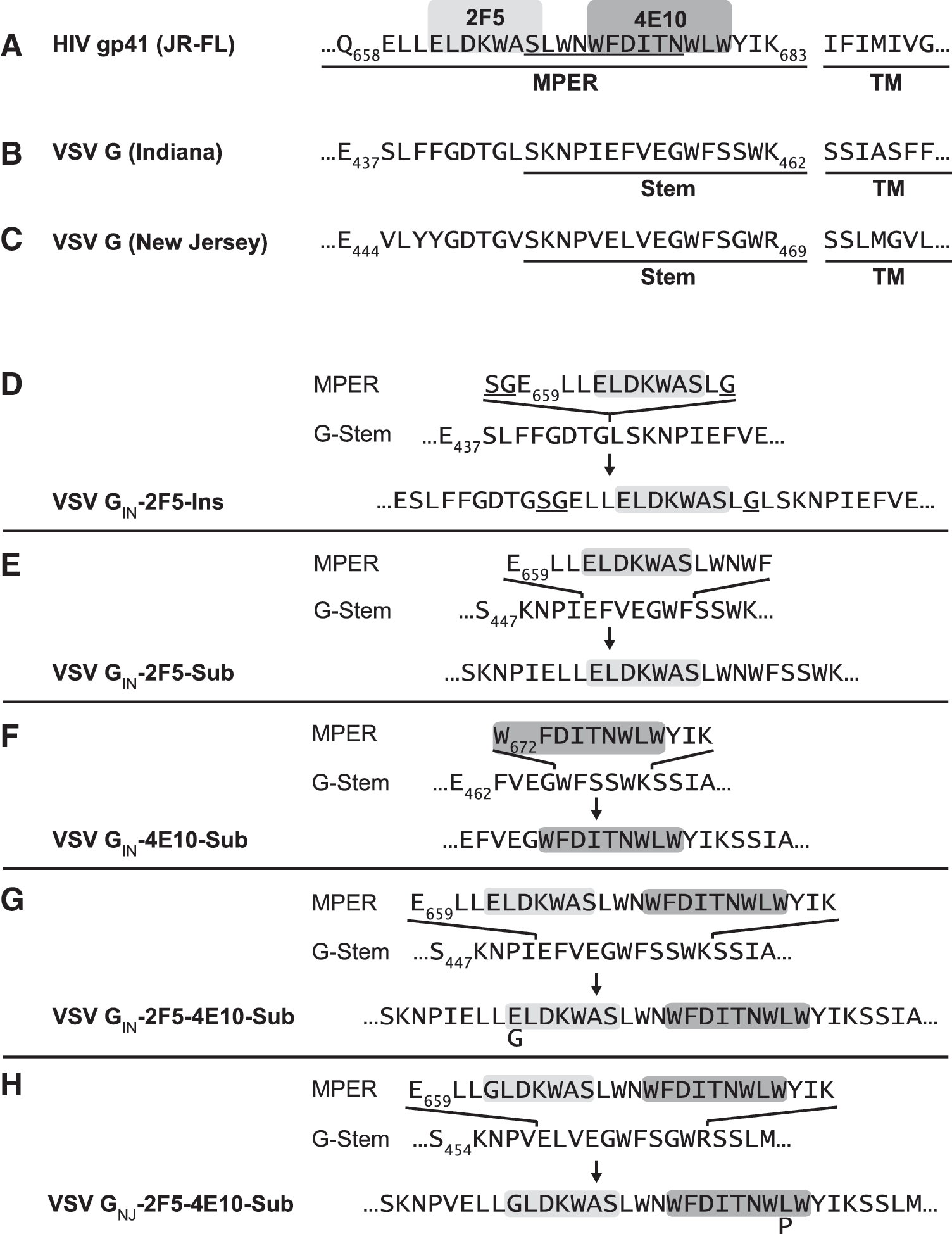
Introduction of HIV Env membrane-proximal external region (MPER) sequences into the stem region of vesicular stomatitis virus (VSV) G.
Drs. Theodora Hatziioannou and Paul Bieniasz (Aaron Diamond AIDS Research Center, New York, NY) provided plasmid pV1-GFP, which contains a green fluorescent protein (GFP) reporter gene controlled by a minimal HIV proviral genome. 51 The GFP gene was replaced with a firefly luciferase reporter coding sequence to generate pV1-Luc. Drs. Barbara Felber and George Pavlakis (National Cancer Institute, Frederick, MD) provided a Gag-Pol expression plasmid (162H) used to prepare HIV pseudoviruses as described below.
Antibodies
A rabbit polyclonal antiserum (Sigma V-4888) specific for the GIN cytoplasmic tail (C-tail) was used for Western blots. Dr. Daniel Pinschewer (University of Geneva, Switzerland) kindly provided the VI-10 hybridoma, which produces a VSV-neutralizing monoclonal antibody specific for the GIN ectodomain. 52 Anti-MPER human monoclonal antibodies 2F5 and 4E10 were obtained from Polymun (Vienna, Austria), and Dr. Michael Zwick (The Scripps Research Institute, La Jolla, CA) provided Z13e1. Anti-Rhodopsin antibody 1D4 was purchased from the University of British Columbia, Vancouver, Canada.
Cell culture, transient expression experiments, and HIV pseudovirus reporters
293T 53 and VERO cells 54 were cultured at 37°C in 5% CO2. Both cell lines were grown in Dulbecco's modified Eagle's medium (DMEM; Invitrogen) supplemented with 100 U of penicillin/ml, 100 μg of streptomycin/ml, and 10% heat-inactivated fetal bovine serum (FBS). G or G-MPER proteins were analyzed by transient expression in 293T cell monolayers using Lipofectamine 2000 (Invitrogen) as described in the manufacturer's protocol. Cells were lysed 24 h posttransfection, and clarified cell lysates were subjected to denaturing sodium dodecyl sulfate–polyacrylamide gel electrophoresis (SDS-PAGE) and analysis by Western blotting.
To analyze G and G-MPER trimers on the cell surface, chemical crosslinking was conducted with intact transfected 293T cells. 55 At 24 h posttransfection, cell monolayers were incubated for 30 min at room temperature in phosphate-buffered saline (PBS) (pH 7.4) containing 0, 200, or 500 μM 3,3′-dithiobis(sulfosuccinimidylpropionate) (DTSSP; Thermo Scientific). DTSSP is a cleavable, membrane-impermeable crosslinker that reacts with primary amines. Treated cells were lysed with PBS containing 2% CHAPS, 1 mM PMSF, complete protease inhibitor cocktail, and 50 mM Tris (pH 7.4), which quenched excess crosslinker. Samples of clarified cell lysates were subjected to SDS–PAGE except that DDT was omitted from the gel-loading buffer to prevent cleavage of the disulfide bonds between crosslinked proteins. Western blot was performed using the polyclonal antibody specific for the VSV G CT.
Transfected 293T cells also were analyzed by flow cytometry. Transfected monolayers were briefly trypsinized before cells were collected by low-speed centrifugation and washed with PBS. Cell pellets were resuspended in flow-cytometry buffer (PBS containing 1% FBS, 1 mM EDTA, and 0.05% sodium azide) at 107 cells per ml and aliquots were incubated (20–30 min) with primary antibody (1 μg per ml VI-10; 10 μg per ml 2F5, or 10 μg per ml 4E10) or buffer control lacking a primary antibody. After washing, labeled secondary antibody was added (2.5 μg/ml R-phycoerythrin goat antimouse IgG from Invitrogen or 1.25 μg/ml R-phycoerythrin goat antihuman IgG from Southern Biotech) for 20 min at room temperature. The cells were washed twice to remove secondary antibodies, suspended in flow-cytometry buffer, and analyzed with an LSR II flow cytometer (BD Biosciences). Data were processed using FlowJo 9.1 software (Tree Star, Inc.).
Cell-to-cell fusion mediated by G or G-MPER was analyzed using transfected 293T cells. 49 At 24 h posttransfection, cell monolayers were washed with PBS and then incubated for 1 min in low pH fusion buffer [1.85 mM NaH2PO4, 8.39 mM NaHPO4, 2.5 mM NaCl, 10 mM HEPES, and 10 mM 2-[N-morpholino]ethanesulfonic acid (MES), pH of 5.2]. The fusion medium was replaced with complete DMEM containing 5% FBS and 50 mM HEPES (pH 7.4) before returning the cells to the 37°C incubator for 1 h after which treatment with fusion buffer was repeated. After incubation for 4–6 h to allow syncytium formation, the cells were photographed using an Olympus IX51 microscope at 10× magnification.
Single-cycle lentivirus particles pseudotyped with VSV glycoproteins were produced with transfected 293T cells in six-well plates. Each well was transfected with 1 μg pV1-GFP or pV1-Luciferase, 1 μg plasmid 162H (Gag-Pol), and 0.25 μg pCI-Neo-ΔT7 VSV G or pCI-Neo-ΔT7 G-MPER using Lipofectamine 2000 (Life Technologies). At 72 h posttransfection, the medium supernatant was harvested and passed through a 0.45-μm cellulose acetate filter before Polybrene (American Bioanalytical) was added to a final concentration of 4 μg per ml. The concentration of Gag p24 in the lentivirus stocks was determined using the Lenti-X p24 Rapid Titer Kit (Clontech).
Pseudovirus infectivity was analyzed by infecting 293T cells for 4–6 h at 37°C before replacing the medium with fresh DMEM containing 10% FBS. GFP or luciferase expression was analyzed 72 h later. For pseudoviruses expressing GFP, fluorescence was detected using an Olympus IX51 fluorescence microscope. For luciferase reporters, cells were lysed with the Reporter-Lysis Buffer provided with the Steady-Glo Luciferase Assay System (Promega) and luciferase activity was analyzed according to the manufacturer's instructions. Luciferase values were normalized relative to cell extract protein concentrations.
VSV vectors
VSV was rescued from DNA by electroporating 293T or VERO cells with a viral genomic clone and a mixture of expression plasmids encoding phage T7 RNA polymerase and VSV N, P, M, G, and L. 56 Rescued viruses were serially passaged 10 times before the genomic nucleotide sequence was determined and virus was used to prepare stocks for use in subsequent experiments. VSV stocks were prepared by infecting VERO cells in complete DMEM containing 10% FBS at a multiplicity of infection (MOI) of 0.1. Approximately 48 h after infection, culture supernatants were harvested and clarified by centrifugation and filtration through a 0.45-μm membrane before virus was sedimented through a 10% sucrose cushion (90 min, 166,800×g, 4°C, Sorvall Surespin 630). Virus pellets were resuspended in TE buffer (10 mM Tris-Cl, pH 7.6, 1 mM EDTA) and then were centrifuged in a 35–55% sucrose gradient in a Beckman SW41Ti rotor for 18 h (100,000×g, 4°C). Fractions containing VSV were pooled and concentrated by centrifugation for 90 min (55,000×g, 4°C, SW41Ti) and the final virus pellet was resuspended in TE buffer containing 5% sucrose and aliquots were stored at −80°C. The protein composition of the purified VSV particles was determined by SDS–PAGE and Coomassie Brilliant Blue staining. The relative band intensity of N and G proteins was determined by densitometric analysis using the Chemidoc XRS imaging system (Bio-Rad).
Infectious VSV was quantified by plaque assay using VERO cells grown in six-well plates. Cells were infected with serial dilutions of VSV in DMEM containing 2% FBS for 1 h (37°C and 5% CO2) before the cells were washed with PBS and then overlaid with DMEM containing 2% FBS and 0.6% SeaKem LE agarose. When plaques were evident after 16–20 h, cells were fixed with 7% formaldehyde in PBS and stained with crystal violet solution.
The kinetics of a single-round infection was determined by infecting 106 VERO cells at an MOI equal to 5. Cells were infected for 1 h in DMEM containing 2% FBS before the monolayers were washed with PBS and the medium was replaced with DMEM containing 10% FBS. Aliquots of medium supernatant were harvested at 2, 4, 6, 8, and 24 h postinfection and the viral titer was determined by plaque assay as described above.
A plaque reduction assay was used to quantify antibody neutralization of VSV and 2,000 plaque-forming units (PFU) of VSV were incubated at 37°C for 1 h in PBS containing monoclonal antibodies VI-10, 2F5, 4E10, or Z13e1 at concentrations ranging from 0.00016 to 12.5 μg/ml. Subsequently, VERO cell monolayers were infected with the virus–antibody mixtures for 1 h before the virus suspension was removed and the cells were overlaid with DMEM containing 0.6% agarose and 2% FBS. A control sample without antibody was included in all experiments. The percentage of neutralization was calculated by the following formula: [1 – (number of plaques formed with antibody/number of plaques formed without antibody)]×100. Neutralization data were analyzed using GraphPad Prism (Version 4.0) software (GraphPad Software, Inc.) to determine the antibody concentration that inhibited plaque formation by 50% (inhibitory concentration 50 or IC50) using the sigmoid dose–response model with a variable slope.
Antibody binding to VSV particles was analyzed by ELISA. Microtest 96-well plates (BD Biosciences) were coated overnight (4°C) with monoclonal antibody VI-10 (1 μg per ml), which is specific for the VSV G ectodomain. The coated plates were washed with ELISA wash buffer (PBS containing 0.01% Tween-20) before purified virus was added (0.25 μg total viral protein per well) and incubation was continued for 1 h (37°C). The plates then were washed with ELISA wash buffer and blocked with ELISA blocking buffer (PBS supplemented with 3% nonfat powdered milk and 0.01% Tween-20). Serial dilutions (1:3) of 2F5 or 4E10 were prepared in ELISA blocking buffer from 30 μg down to 0.0003 μg per ml after which the antibody solutions were added to wells containing virus particles. The plates were incubated for 1 h at 37°C before washing to remove the primary antibody. Secondary antibody (goat antihuman IgG conjugated to horseradish peroxidase, Jackson ImmunoResearch) in ELISA blocking buffer was added and the plates were incubated at room temperature for 1 h before being washed with ELISA wash buffer. The colorimetric reactions were performed with the 1-Step Ultra TMB (3,3′-5,5′-tetramethylbenzidine) ELISA substrate (ThermoFisher) for 10 min before termination by adding an equivalent volume of 2 N sulfuric acid. Optical density was determined at 450 nm using a VERSAmax reader (Molecular Devices).
Rabbit immunogenicity study
New Zealand White female rabbits (four animals per group) were immunized with live VSV by intramuscular injection (1×10⁷ PFUs) at weeks 0, 6, 12, and 18. Vectors encoding the GIN-MPER were administered at weeks 0 and 6 and GNJ-MPER boosts were given at weeks 12 and 18. Sera were collected at weeks 0, 2, 6, 8, 12, 14, 18, and 21. The study was conducted at BIDQUAL, Inc. (Rockville, MD) following a protocol approved by their Institutional Animal Care and Use Committee.
MPER-specific serum IgG was quantified by ELISA. ELISA plates were coated with PBS containing 5 μg per ml of monoclonal antibody 1D4, which recognizes the rhodopsin epitope tag. After coating overnight at 4°C, the plates were washed and then blocked with PBST-BSA before adding a solution of PBST containing 0.5 μg per ml of MPER peptide containing a C-terminal rhodopsin tag (NEQELLELDKWASLWNWFNITNWLWYIKTETSQVAPA: the rhodopsin tag is italicized). After 1 h incubation with peptide, the plates were washed three times before incubating (1 h) with heat-inactivated rabbit sera diluted in PBST. The diluted serum was removed and the plates were washed with PBST-BSA before horseradish phosphatase-conjugated goat antirabbit IgG (BioLegend) was added and incubated for 1 h. The plates were then washed with PBST before One-step ULTRA TMB (Pierce) was added to the plates for 20 min. The color change reaction was stopped by the addition of 2 N H2SO4 before light absorbance was measured at 450 nm and endpoints were calculated using Prism 6 (GraphPad). The ELISAs were performed in duplicate and all incubation and washing steps were performed at room temperature.
Serum IgG epitope specificity was analyzed using peptide arrays. Peptide arrays consisting of 10-mers or 15-mers with single amino acid overlaps were synthesized across the full-length sequence of VSV GIN. Similarly, single amino acid overlapping 10-mer and 15-mer peptides were synthesized across the MPER-G-Stem grafts corresponding to construct VSV G-2F5 (LFFGDTGLSKNPIELLELDKWASLWNWFSSWKSSIASFFFI), construct VSV G-4E10 (GDTGLSKNPIEFVEGWFDITNWLWYIKSSIASFFFIIGLIIG), or construct VSV G2F5-4E10 (LFFGDTGLSKNPIELLELDKWASLWNWFNITNWLWYIKSSIASFFFIIGLIIG). Rabbit antibody binding to peptides was detected with an ELISA-like system 57 using peroxidase-conjugated swine antirabbit secondary antibody.
Results
Incorporation of MPER sequences into the G-stem region
MPER epitopes were introduced into the stem region of G to generate chimeric polypeptides collectively called G-MPERs (Fig. 1). To determine the effect of simply inserting a sequence into the membrane-proximal domain of G from the Indiana strain (GIN), the 2F5 epitope and several flanking MPER amino acids and linker residues (S and G) were added N-terminal to the minimal 14-amino G-stem region
49
(Fig. 1D, VSV GIN-2F5-Ins). In a second approach, 2F5, 4E10, or both epitopes were substituted for G-stem residues using features of both membrane-proximal domains to guide the boundaries of the sequence grafts (Fig. 1A–C). As noted by others,
9,58
there is no significant sequence identity between the MPER and G-stem, but there are some common features including (1) multiple aromatic amino acid residues, (2) an ExxE motif in which the xx residues are hydrophobic amino acids, and (3) a basic amino acid residue at the predicted interface with the lipid bilayer, which is common for single-pass transmembrane proteins.
59
For the VSV GIN-2F5-Sub construct (Fig. 1E), the G-stem sequence
Expression of G-MPER proteins was evaluated in transfected 293T cells. Similar quantities of unmodified GIN and the four GIN-MPER proteins were detected in Western blots conducted with total cell lysates using antibody specific for the GIN cytoplasmic tail, which is common to all of the polypeptides (Fig. 2A, top panel, lanes 2–6). There was no significant difference in steady-state quantities, although the amount of GIN with the double-epitope insert was slightly lower in some experiments (GIN-2F5-4E10-Sub, lane 6). A small decrease in electrophoretic mobility was observed for GIN-2F5-Ins (lane 3), which was consistent with an increase in molecular weight caused by the MPER epitope insertion without any compensatory removal of G-stem residues. Monoclonal antibodies 2F5 or 4E10 (Fig. 2A) also reacted specifically with the expected GIN-MPER polypeptides, and noticeably, 2F5 reacted more strongly with the GIN-2F5-Ins (lane 3), suggesting that the epitope might be more accessible in this chimeric polypeptide under the conditions used for Western blot analysis.

Transient expression of G-MPER glycoproteins. 293T cells were transfected with expression plasmids encoding GIN or GINMPER proteins illustrated in Fig. 1.
To evaluate the relative quantities of G or G-MPER incorporated into the plasma membrane, and to determine whether MPER antibody binding determinants were accessible on the cell surface, flow cytometry was performed with transfected 293T cells stained with antibodies 2F5, 4E10, or VI-10 (Fig. 2B). Positive staining with VI-10, which binds to the GIN ectodomain, demonstrated that GIN and all GIN-MPER proteins were expressed on the cell surface. MPER epitopes also were accessible to antibody as shown by binding with antibodies 2F5 or 4E10. The mean fluorescence intensity for GIN-2F5-4E10-Sub was generally lowest, indicating that grafting of the full-length MPER reduced the quantity of the glycoprotein incorporated into the plasma membrane.
Since functional G is a trimer and trimerization is required for efficient transport to the plasma membrane, 60 we analyzed transfected cells with a crosslinking agent to confirm that the G-MPERs were present as trimeric complexes on the cells surface. Transfected 293T cells were treated with the membrane-impermeable crosslinker DTSSP to covalently link G monomers in trimeric complexes. Following treatment, excess crosslinker was quenched and total cell lysates were subjected to SDS–PAGE under nonreducing conditions before GIN and GIN-MPER proteins were quantified by Western blotting using antiserum specific for the GIN cytoplasmic tail (Fig. 2C). Crosslinking produced bands corresponding to G dimers (110 kDa) or G trimers (165 kDa), which increased in quantity proportional to the concentration of DTSSP. Higher-order complexes also were detected and may be indicative of a high density of trimers on the transfected cell surface.
Next, we analyzed membrane fusion activity using a cell-to-cell fusion assay. G fusion activity can be analyzed using cell monolayers transiently expressing the glycoprotein since brief exposure to acidic buffer will trigger plasma membrane fusion. 49 As shown in Fig. 3A, cell monolayers expressing GIN, GIN-2F5-Sub, or GIN-4E10-Sub formed large syncytia after treatment with low pH buffer. Detectable syncytia were small and rare in cells expressing GIN-2F5-4E10-Sub, suggesting that the MPER graft diminished membrane fusion activity in this assay, but reduced protein expression at the cell surface might contribute to this phenotype as well (Fig. 2B). No syncytium formation was observed in cells transfected with GIN-2F5-Ins, indicating that it lacked detectable membrane fusion activity.
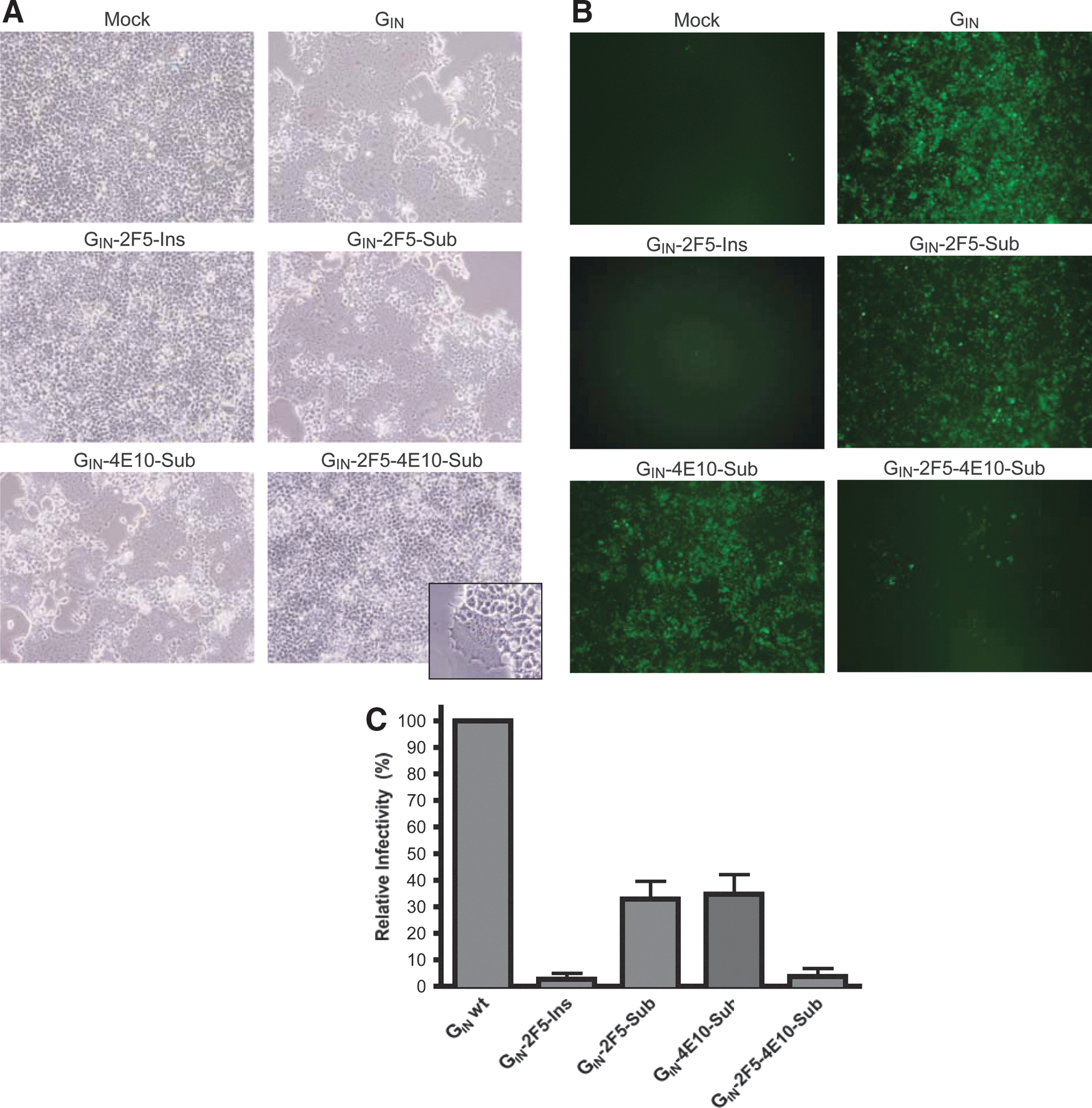
Analysis of G-MPER function.
To determine whether the chimeric proteins retained functions needed to direct infection, we used an HIV pseudovirus reporter system (Fig. 3B). Single-cycle pseudoviruses encoding GFP or luciferase were pseudotyped with GIN or GIN-MPER variants and then were used to infect 293T cell monolayers. Figure 3B shows GFP expression 3 days postinfection. GFP was observed easily in cells infected with pseudoviruses coated with GIN, GIN-2F5-Sub, or GIN-4E10-Sub. Much lower GFP expression was produced by particles pseudotyped with GIN-2F5-4E10-Sub and only background fluorescence was evident when the particles were pseudotyped with GIN-2F5-Ins. To determine the relative infectivity, similar experiments were conducted with pseudoviruses encoding a luciferase reporter. Luciferase activity produced by infection with GIN-MPER pseudoviruses relative to particles pseudotyped with GIN was averaged over three experiments (Fig. 3C). The results indicated that particles pseudotyped with GIN-2F5-Sub or GIN-4E10-Sub retained approximately 35% of the infectivity relative to particles containing GIN. The infectivity of particles containing GIN-2F5-Ins and GIN-2F5-4E10-Sub was reduced to about 2% and 5%, respectively.
Taken together, these results indicated that simply inserting the 2F5 epitope at the N-terminus of the G-stem region (GIN-2F5-Ins) eliminated detectable cell-to-cell fusion activity (Fig. 3A) and caused a defect in activities needed to promote pseudovirus infection (Fig. 3B). In contrast, grafting of MPER sequences into the stem region preserved some infectivity (35% of wild type), although grafting of the full-length MPER resulted in a significant loss of infectivity (5% of wild type) in these assays (Fig. 3A and B).
Characterization of VSV encoding G-MPER proteins
Recombinant VSVs were constructed in which the GIN gene was replaced by GIN-2F5-Sub, GIN-4E10-Sub, or GIN-2F5-4E10-Sub. The recombinant VSVs were serially passaged 10 times in VERO cells and their G gene was sequenced to ensure that the MPER grafts were stable. The expected grafted sequences were present except that VSV GIN-2F5-4E10-Sub acquired an adaptive mutation in the MPER region that resulted in an E-to-G substitution at position 662 (E659LL
We quantified virus propagation during a single round of infection to determine the effect of the MPER grafts on VSV replication. The results showed (Fig. 4A) that VSV GIN-2F5-Sub, VSV GIN-4E10-Sub, and VSV GIN-2F5-4E10-Sub(E662G) propagated at a rate comparable to unmodified VSV and reached similar titers after 24 h (∼1×10⁹ PFU per ml). We also analyzed replication of an early passage VSV GIN-2F5-4E10-Sub before the E662G substitution emerged and found that this virus produced about 10 times less infectious units at 24 h postinfection (∼1×10⁸ PFU per ml). This result indicated that the E662G substitution resulted in improved GIN-2F5-4E10-Sub function.

Characterization of VSV GIN-MPER vectors.
To determine if MPER epitopes incorporated in the G-stem affected the quantities of G-MPER incorporated into virus particles, we analyzed purified viruses by SDS–PAGE and Coomassie Brilliant Blue staining. The results in Fig. 4B showed that the quantities of GIN-2F5-Sub and GIN-4E10-Sub were about 50–60% compared to native G, and that GIN-2F5-4E10-Sub was slightly less at 40–50% for virus purified from either passage 1 or passage 10 (E662G). These results suggest that impaired G function (Fig. 2) rather than glycoprotein incorporation (Fig. 3B) was the primary cause of the partial defect in replication of the passage-1 VSV GIN-2F5-4E10-Sub (Fig. 2A).
An antibody-binding assay was carried out with purified virus to determine if the 2F5 and 4E10 epitopes were accessible on VSV particles. ELISA plates coated with anti-G antibody (VI-10) were used to capture VSV particles after which bound virus was incubated with increasing quantities of 2F5 or 4E10. The data showed that 2F5 binds equally to VSV GIN -2F5-Sub and VSV GIN-2F5-4E10-Sub (Fig. 4C) while 4E10 binds with slightly greater affinity to VSV GIN 2F5-4E10-Sub compared to VSV GIN 4E10-Sub (Fig. 4D). VSV GIN-2F5-4E10-Sub with and without the E662 adaptive mutation had similar binding profiles for both 2F5 and 4E10 (data not shown). These results demonstrated that MPER antibody binding determinants were present and were accessible on the surface of VSV particles with the G-MPER variants in their prefusion conformation.
A plaque reduction assay was used to analyze virus neutralization by antibodies 2F5, 4E10, Z13e1, and VI-10 (Fig. 5). As expected, the neutralization curves produced with anti-G monoclonal antibody VI-10 were similar for all viruses with 50% neutralization (IC50) at 0.001–0.003 μg/ml of VI-10 (Fig. 5A–D, and Table 1) while anti-MPER antibodies 2F5, 4E10, or Z13e1 did not neutralize VSV containing native G (Fig. 5A). VSV GIN-2F5-Sub (Fig. 5B) and VSV GIN-4E10-Sub (Fig. 5C) were neutralized by 2F5 (0.023 μg/ml IC50) and 4E10 (0.15 μg/ml IC50), respectively. VSV GIN-2F5-4E10-Sub was neutralized by 2F5 (0.035 μg/ml IC50), 4E10 (0.045 μg/ml IC50), and Z13e1 (0.105 μg/ml IC50) (Fig. 5D). 2F5 neutralized both VSV GIN-2F5-Sub and VSV GIN-2F5-4E10-Sub (E662G) to a similar extent. However, VSV GIN-2F5-4E10-Sub was three times more sensitive to neutralization by 4E10 than VSV GIN-4E10-Sub (Fig. 5C and D). This observation was additionally reflected in the improved binding of VSV GIN-2F5-4E10-Sub to 4E10 compared to VSV GIN-4E10-Sub (Fig. 4D). Additionally, VSV GIN-2F5-4E10-Sub (E662G) was neutralized by antibody Z13e1 61 (Fig. 5D).
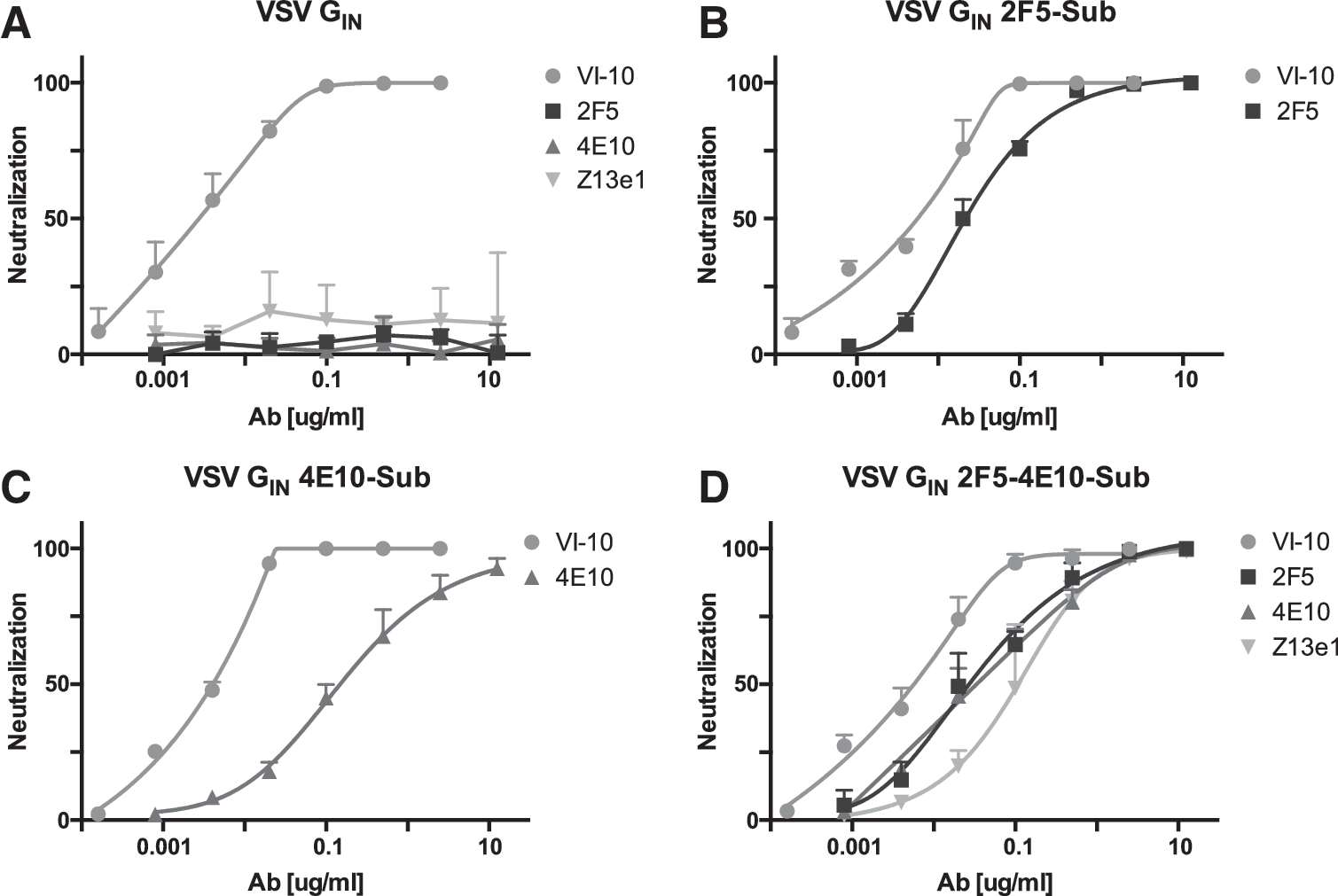
Antibody neutralization of VSV GIN-MPER. Recombinant VSV (2,000 PFU) expressing GIN
IC50 values for HIV were taken from a previous study. 62
Interestingly, 2F5 and 4E10 IC50 values (Table 1) indicated that 10–100 times less antibody was needed to inhibit VSV G-MPER infection than was needed to similarly reduce infection of HIV pseudovirions in the sensitive TZM-bl assay. 62 Perhaps the density of G-MPER on the VSV surface or accessibility of MPER epitopes resulted in an increased susceptibility to neutralization by the anti-MPER monoclonal antibodies.
G-MPER chimeras also were constructed in GNJ for the purpose of producing VSV vectors that could be used in a glycoprotein exchange prime/boost vaccination regimen.
63
Following the MPER grafting strategy used for the GIN, VSV vectors encoding GNJ-2F5-Sub or GNJ-4E10-Sub were rescued readily. In contrast, we were unable to rescue VSV GNJ-2F5-4E10-Sub. To solve this problem, we modified the MPER sequence by introducing the E662G substitution. Recombinant virus VSV GNJ-2F5-4E10-Sub (E662G) was viable, although a second amino acid substitution emerged in the MPER (L679P) at some point during plaque isolation and amplification (ELL
A virus neutralization assay was conducted with the VSV GNJ-MPER variants (Fig. 6). VSV GNJ-2F5-Sub was sensitive to neutralization by antibody 2F5 (Fig. 6A), and VSV GNJ-4E10-Sub was neutralized by 4E10 (Fig. 6B). Neutralization of VSV GNJ-2F5-4E10-Sub (E662G/L679P) occurred for 2F5, 4E10, and Z13e1 (Fig. 6C), although with a loss in potency for 2F5 and 4E10 compared to the viruses with the single epitope insertions. Thus, the modified MPER (E662G/L679P) retained antigenic properties similar to the wild-type sequence.
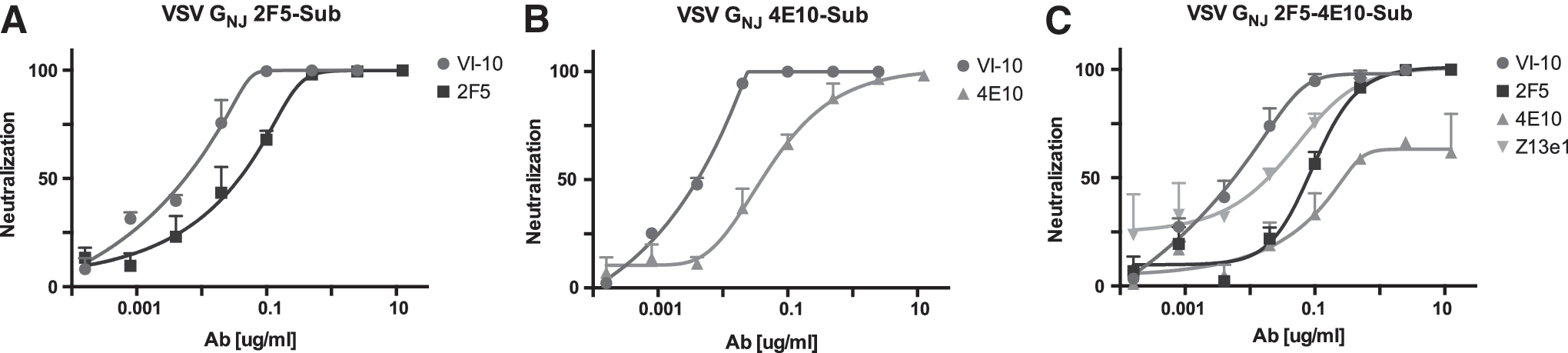
Antibody neutralization of VSV GNJ-MPER. Recombinant VSV (2,000 PFU) expressing GNJ-2F5-Sub
In summary, these results showed that 2F5 and 4E10 epitopes could be incorporated into the G-stem region while retaining G function if the MPER residues were grafted in place of stem residues. Our findings also indicated that the MPER epitopes incorporated in the G-stem region were present on the surface of infectious VSV particles and that anti-MPER antibody binding neutralized virus infectivity.
Immunogenicity of MPER sequence grafts in G
VSV G is strongly immunogenic. 64,65 Consequently, it could serve as a carrier that stimulates strong immune responses some of which would be directed against the grafted MPER sequences, or conversely, G epitopes might dominate the B cell response resulting in poor MPER immunogenicity. Thus, it was important to determine whether the MPER epitopes embedded in the G-stem region could elicit antibodies in an animal model, and accordingly, rabbits were vaccinated by intramuscular injection with live VSV G-MPER vectors. Over the course of 18 weeks, the animals were primed twice with VSV GIN-MPER and were then boosted twice with vectors encoding the corresponding GNJ-MPER. Vaccinated rabbits showed no evident signs of discomfort due to repeated vaccination with live VSV and all animals seroconverted for G (data not shown).
Vaccinated rabbit serum was evaluated first by ELISA using plates coated with a rhodopsin-tagged MPER peptide (Fig. 7). All vaccine groups contained animals that generated MPER-specific antibodies significantly higher than background levels measured at week 0 (cutoff for seroconversion was the mean of the week 0 endpoints plus 2×standard deviation). VSV G-2F5-4E10-Sub immunized animals generated the highest level of MPER-specific antibodies by week 21 and this response was significantly higher than the VSV G-2F5-Sub response. Of note, the greatest increase in MPER-specific antibody was observed in the VSV G-2F5-4E10-Sub group after the heterologous VSV GNJ-MPER boost.
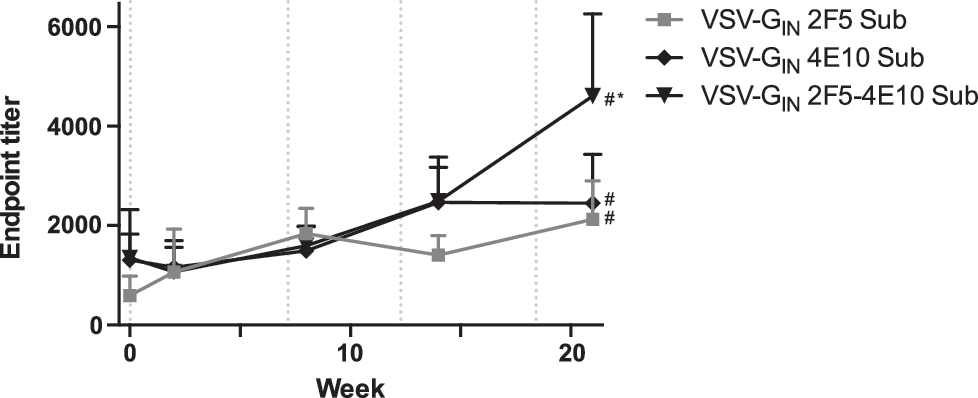
Immunogenicity of VSV G-MPER vectors. New Zealand White female rabbits were immunized with live VSV by intramuscular injection at weeks 0, 6, 12, and 18. Vectors encoding the GIN-MPER were administered at weeks 0 and 6 and GNJ-MPER boosts were given at weeks 12 and 18; dotted gray lines indicate the immunization schedule. Sera were collected at various time points postimmunization and MPER-specific serum IgG was quantified by MPER peptide ELISA. Sera were run in duplicate, n=4 per group. #p<0.05 compared to week 0; *p<0.05 compared to G-2F5-Sub at week 21.
HIV pseudovirus neutralization assays were also performed (data not shown), but no activity was detected. Thus, it is unclear whether the MPER-specific antibodies induced by G-MPER were nonneutralizing or whether the quantity present in immune serum was insufficient to register a response in the pseudovirus neutralization assay.
To analyze MPER binding activity with an alternative method we analyzed serum from two animals from each group (VSV G-2F5-Sub, VSV G-4E10-Sub, and VSV G-2F5-4E10) using peptide array technology. Sera from animals vaccinated with VSV G-2F5-Sub targeted the MPER graft region as shown in the terminal bleed of an animal using 10-mer (Fig. 8A) and 15-mer (Fig. 8B) overlapping peptides. Reactivity centered on the sequence ELDKWA, which includes the 2F5 core epitope 11 (Fig. 8C). The serum from an animal vaccinated with wild-type VSV GIN did not show any reactivity to the G-MPER peptide array (data not shown). Consistent with lower ELISA titers, animals immunized with the 4E10 graft did not respond against MPER determinants. Sera from two animals vaccinated with VSV G-2F5-4E10 did recognize the MPER, but the epitope boundaries could not be clearly delineated. This might have been caused by the presence of multiple MPER-specific antibodies with similar potency but differing fine specificity. Antigenic sites in the G ectodomain were detected for all animals (data not shown). Taken together, the mapping data indicated that the G-MPER graft was capable of eliciting antibodies with MPER specificity.
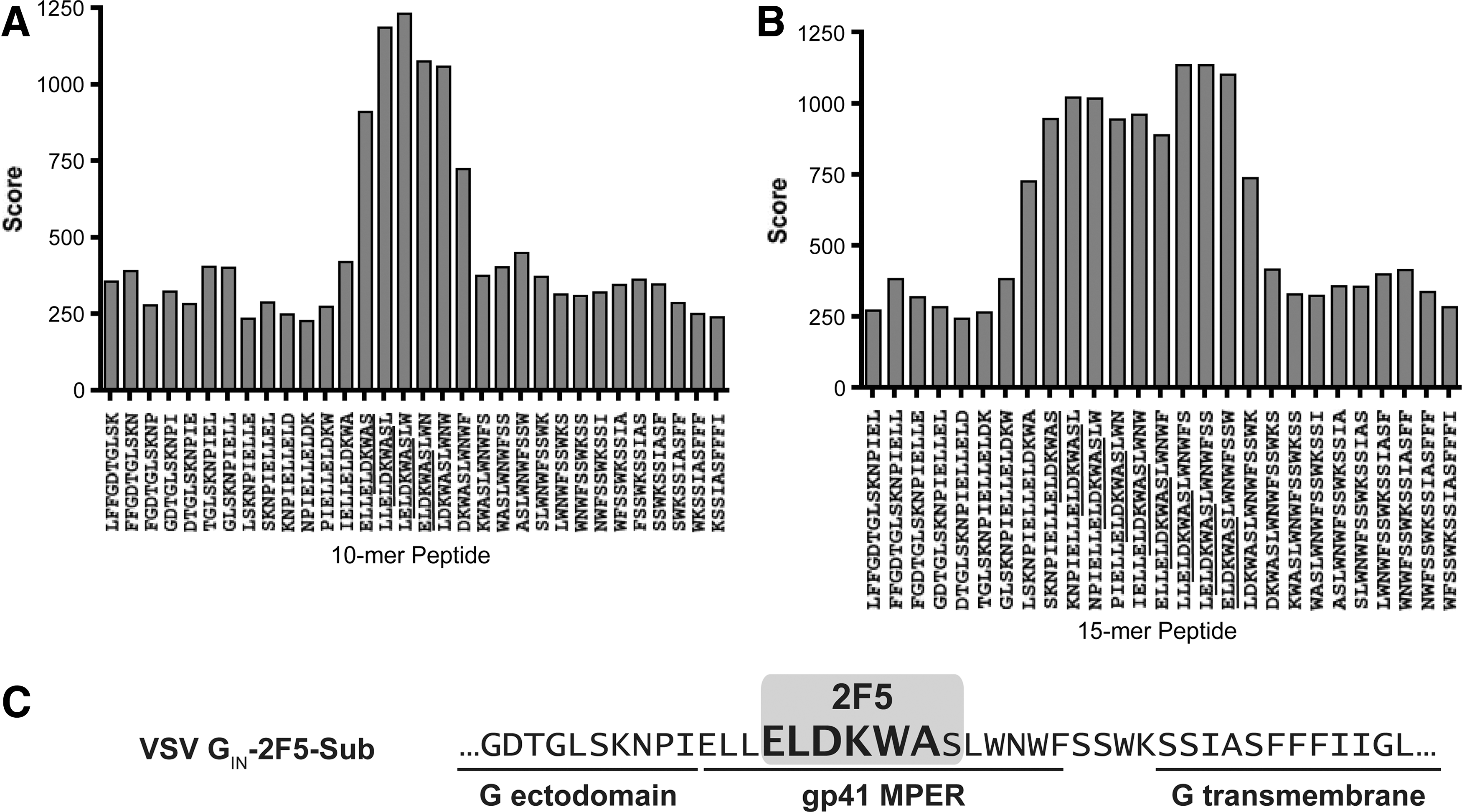
Epitope mapping using serum from a rabbit immunized with VSV G-MPER.
Discussion
It has proven difficult to develop experimental vaccines that elicit 2F5- or 4E10-like antibodies. 7 –9 Progress in developing immunogens has been made by inserting MPER sequences into carrier proteins such as polypeptide scaffolds that can present epitopes in a fixed conformation 66 –68 or by adding MPER sequences to integral membrane proteins able to display epitopes associated with the surface of virus-like particles (VLPs). 69,70 In fact, using the transmembrane protein carrier strategy, Ye et al. 70 did observe some HIV pseudovirus neutralization activity in serum from guinea pigs vaccinated with VLPs that presented gp41 sequences fused to a segment of influenza virus HA. To begin developing an approach in which the MPER was arrayed on replication-competent viruses and presented on the surface of virus-infected cells, we used live VSV vectors with functional G acting as the carrier for MPER sequences. Our results showed that replication-competent VSV vectors encoding functional G-MPER chimeras could be produced and that the antigenic properties of the MPER were preserved when sequences were grafted into the stem region of G.
VSV vectors have been tested before as MPER vaccine delivery platforms. Luo et al. 71 fused HIV MPER sequences to the porcine endogenous retrovirus p15E polypeptide to produce a secreted soluble fusion protein and used both plasmid DNA and VSV vectors to immunize rabbits. Antiserum with MPER specificity was produced in vaccinated rabbits and limited neutralization activity against two clade B HIV pseudoviruses was reported. Schlehuber et al. 72 constructed a functional G protein with the 2F5 epitope inserted into an exposed loop at position 191. VSV expressing this modified G-2F5 chimera was sensitive to neutralization by 2F5 antibody, but immunogenicity testing was not reported. Our approach differs from these in that we grafted MPER sequences into the stem domain of functional G to present a membrane-associated MPER immunogen.
Rabbits vaccinated with VSV G-MPER vectors produced anti-MPER antibodies detectable by ELISA, although the titers of the MPER-specific antibody were low (Fig. 7). All animals seroconverted for VSV G (data not shown) while one animal each from the VSV G-2F5-Sub and VSV G-4E10-Sub groups, and all four animals from the VSV G-2F5-4E10-Sub group produced MPER-specific antibodies by the end of the study. The ELISA endpoint titers were low in positive animals, but interpretation of these results must take into account that the ELISA is based on a soluble MPER peptide, and although this substrate is practical to use, it may not be optimal for detecting antibodies that might recognize the MPER associated with lipids. Nevertheless, the ELISA results showed that VSV G-4E10-Sub did not elicit detectable anti-MPER antibodies, suggesting that the 4E10 epitope was poorly immunogenic, possibly because it was positioned in the G-stem domain closest to the membrane. In the remaining eight vaccinated animals, 50% produced MPER-specific antiserum. Two of these were vaccinated with VSV G-2F5-Sub and two were vaccinated with VSV G-2F5-4E10-Sub, indicating that the 2F5 epitope was more immunogenic or that its position in the stem region affected immunogenicity. Analysis of the highest titer antiserum by peptide array showed that VSV G-2F5-Sub induced antibodies that recognized the core of the 2F5 epitope (Fig. 8). We did not detect HIV pseudovirus neutralization activity (data not shown) with the sensitive TZM-bl assay, 73 but it was difficult to clearly conclude whether this was due to the properties of the anti-MPER antibodies, the low magnitude of MPER-specific binding IgG (Table 1), or both. Overall, although it was encouraging to find that VSV G-MPERs containing 2F5 epitopes sequences were immunogenic, the rabbit study results also showed that MPER immunogenicity must be increased to advance VSV G-MPER vectors as a vaccine platform.
It is probable that the strong immunogenicity of natural epitopes in G 64,65 contributed to the low magnitude of response directed to the MPER grafts. This result also suggests that improved heterologous prime/boost regimens might be one approach that can be used to increase the magnitude of the response targeting the MPER. Alternatively, since the MPER embedded in G does elicit weak but detectable responses, the G-MPER technology might be better suited for use as an enhancement for other VSV-HIV vaccine candidates rather than being developed further as a stand-alone MPER vaccine. VSV-HIV vaccine vectors encoding Env or Gag, for example, could be built with a vector that expresses a functional G-MPER in place of G, which would provide a practical mechanism to codeliver the MPER epitopes along with other HIV immunogens.
Antibodies 2F5 and 4E10 bound to purified VSV G-MPER showing that their binding determinants were accessible on the surface of the virus particles (Fig. 4C and D). This is different from HIV virions, where the MPER is not readily accessible on the surface of neutralization-resistant strains and is exposed only during receptor engagement and membrane fusion. 38 It is also important to emphasize that the 2F5 and 4E10 bnAbs neutralized VSV G-MPER infectivity, indicating that the antibodies were engaging functional trimeric G-MPER spikes. In fact, the VSV G-MPER viruses were about 10-fold more sensitive to antibody neutralization than the HIV pseudovirions (Table 1). This observation might be related to the higher density of G-MPER on the VSV particles, which promoted binding of antibody quantities that sterically prevent infection, 74 or it also might be influenced by the increased accessibility of the MPER on the VSV G-MPER virion (Fig. 4C and D).
Two other factors could also have affected the observed neutralization sensitivity. First, a traditional plaque-reduction neutralization test was used to assess VSV neutralization, whereas HIV pseudovirion infectivity is routinely measured with a highly sensitive reporter system based on the TZM-bl cell line, 73 and second, VSV G promotes fusion after receptor-mediated endocytosis, 75 whereas Env directs fusion at the cell surface. 10,76
The grafting approach we used introduced MPER epitopes into the G-stem while retaining G function (Fig. 1E–G). In contrast, simply inserting the 2F5 epitope N-terminal into the minimal G-stem domain (Fig. 1D) caused a membrane fusion defect (Fig. 3). Similarly, Schlehuber et al. 72 observed that G function was impaired if the 2F5 epitope was inserted C-terminal to the stem between the TM and G-stem domains. The negative effect produced by simply inserting the 2F5 epitope either N- or C-terminal to the stem might be due to the addition of amino acids without some compensatory deletion of G-stem residues, which lengthens the membrane proximal domain. This explanation is consistent with our results showing that the longest functional sequence graft (GIN-2F5-4E10-Sub) did cause some loss of G fusion function (Fig. 3). A longer G-stem domain might disturb the G conformation, particularly in the membrane-proximal region, or impair the ability of G to undergo structural transitions required for membrane fusion. 45,75
Finally, although the 2F5 and 4E10 epitope grafts preserved G function and were quite stable in recombinant viruses, we did observe the emergence of amino acid substitutions in some G-MPERs. Serial passage of VSV GIN-2F5-4E10-Sub resulted in the E662G substitution in the MPER. This amino acid substitution proved to be advantageous since we had to engineer this mutation into VSV GNJ-2F5-4E10-Sub in order to rescue virus. Passage of VSV GNJ-2F5-4E10-Sub (E662G) also resulted in the relatively rapid emergence of an additional MPER substitution, L671P (Fig. 1H). The structural or functional consequence of the E662G and L671P mutations on the MPER placed in the context of the G-stem region is unknown, but several points are worth noting. First, an E662A substitution is common in HIV Env, particularly in Clade C isolates. 77 Possibly a smaller amino acid such as A or G is favorable at position 662 in some Envs as well as the G-2F5-4E10 chimera. Second, the 14-amino acid G-stem sequences in GIN and GNJ both naturally contain a G and P residue (Fig. 1). Conceivably the mutations seen in GNJ-2F5-4E10 reflect a specific need for these alpha helix-destabilizing amino acids 78 to be present in the G-stem region for it to function efficiently.
Footnotes
Acknowledgments
We thank Michael Caulfield, Mark Delboy, and Bimal Chakrabarti for critical reading of the manuscript, Stephen Kaminsky for helpful suggestions on experimental design, and Darin Chin, Alexei Carpov, and Drohpati Parohi for excellent technical support. We are grateful to Drs. Theodora Hatziioannou and Paul Bieniasz (Aaron Diamond AIDS Research Center, New York, NY), Barbara Felber and George Pavlakis (National Cancer Institute, Frederick, MD), Daniel Pinschewer (University of Geneva, Switzerland), and Michael Zwick (The Scripps Research Institute, La Jolla, CA) for providing reagents. IAVI's work is made possible by generous support from many donors including: the Bill and Melinda Gates Foundation; the Ministry of Foreign Affairs of Denmark; Irish Aid; the Ministry of Finance of Japan; the Ministry of Foreign Affairs of The Netherlands; the Norwegian Agency for Development Cooperation (NORAD); the United Kingdom Department for International Development (DFID), and the United States Agency for International Development (USAID). The full list of IAVI donors is available at
Author Disclosure Statement
No competing financial interests exit.