




Abstract

HIV
The estimated number of drug users across Vietnam is about 135,000 4 with many having been arrested and sent to mandatory “rehabilitation centers” over the past decade. 2
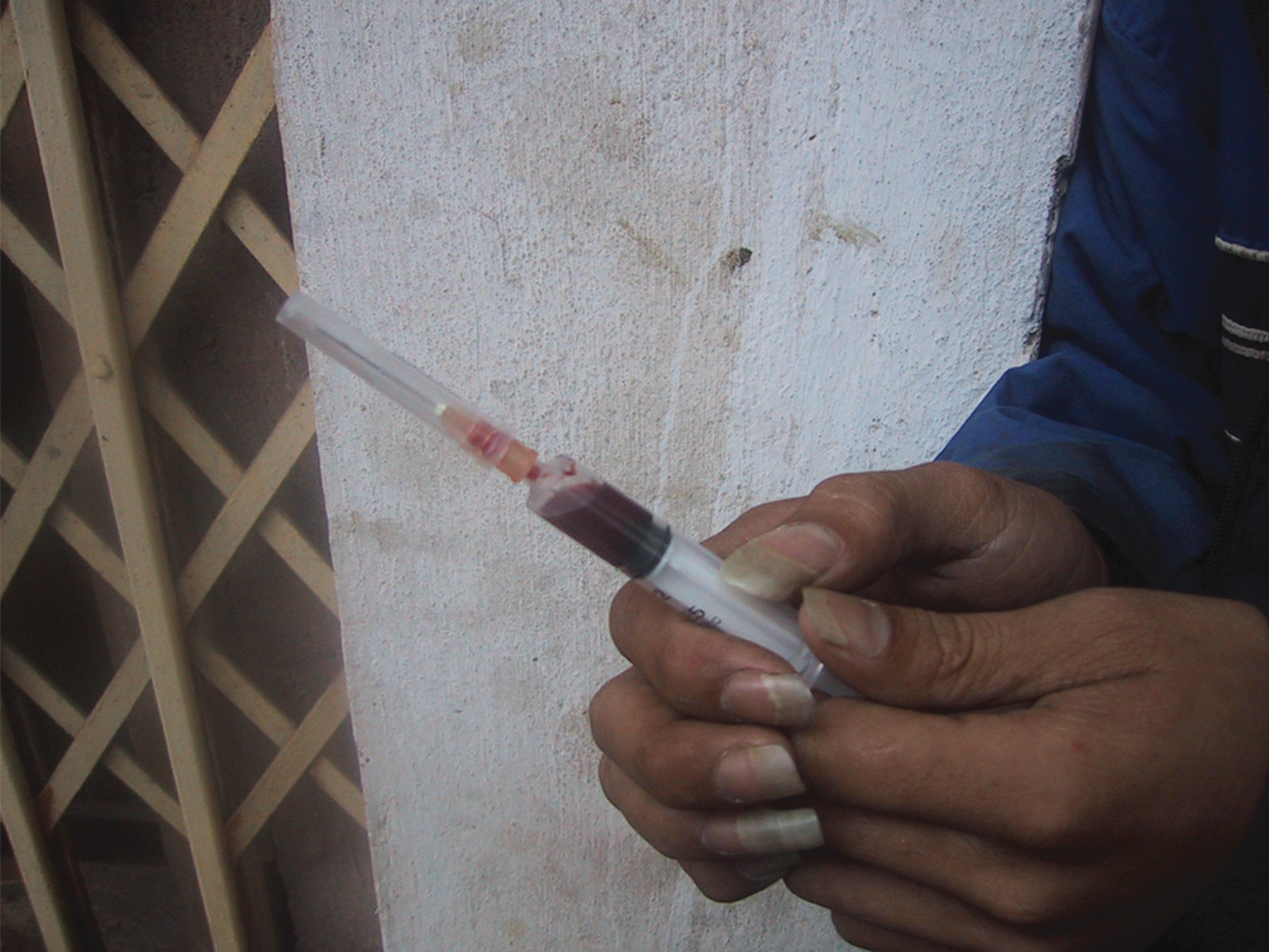
Recent surveillance statistics show that although HIV prevalence is decreasing among people who inject drugs many still report sharing of injecting equipment. 3 While doing field observations for the development of more effective harm reduction services in a northern Vietnamese city I was struck by this image in HIV research (see the photo).
It was early morning, around 7:30 am and while walking along the railway line one of the main town hot-spots it wasn't far before we came across a small group of people who were injecting heroin. I stopped and spent the next 30 minutes or so mingling and chatting with a group of about six men in their twenties. In the background I also noticed there were two people who were picking up the already used but discarded syringes and collecting any leftover heroin (and blood) from the high dead space syringes. Both men then injected the contents to stop them from feeling sick. I was initially very concerned and approached them to provide sterile syringes but quickly realized they knew very clearly what they were doing. Without money and with no other way to access heroin this early in the day they were doing what they could to avoid heroin withdrawal. On returning to the drop in center where the needles and syringes for the area were being provided I noticed a young man I met yesterday. On pulling the pictured syringe from his top pocket he explained he had already been tested several times for HIV and had been positive for some years.
If this young man was asked whether he had borrowed and used someone else's needle or syringe how would he answer this question in a research survey? His risk-taking behavior and that of others like him, although obviously being at huge risk for HIV infection, may be missed completely by such a question. It struck me that perhaps an extra question was required in epidemiological studies of HIV risk that could account for such local injecting practices.
Without field-based observational research an awareness of such injecting practices is likely to be unknown and, in effect, previous epidemiological studies of HIV potentially suffer from misclassification bias, because an unknown proportion of people classified as “never borrowing” may actually have been doing something that carries even more risk for HIV.
Footnotes
Author Disclosure Statement
PH is supported by a Curtin University Research Fellowship. The National Drug Research Institute at Curtin University is supported by funding from the Australian Government under the Substance Misuse Prevention and Service Improvement Grants Fund.