




Abstract
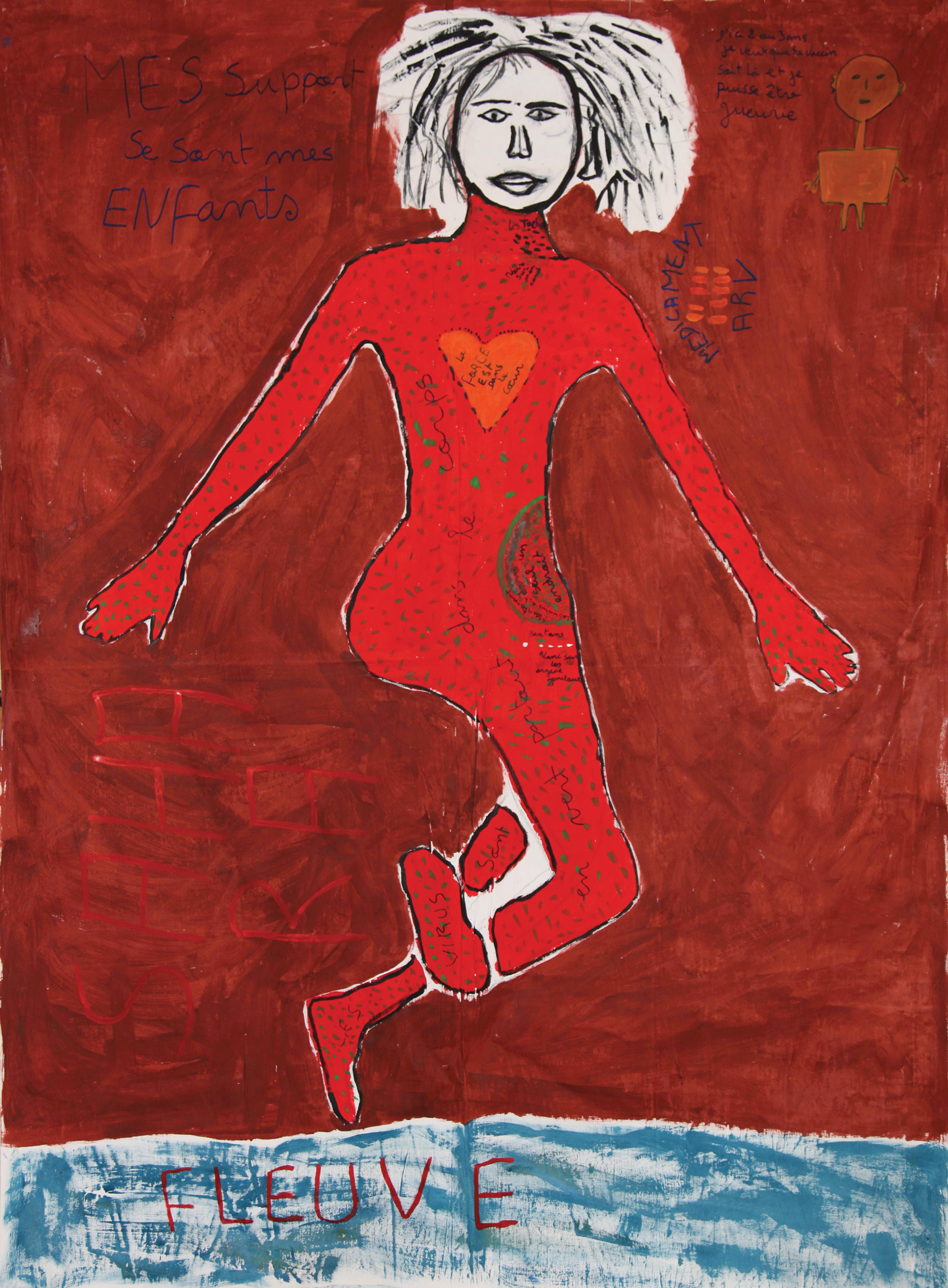
The image shows a body map created by a young HIV-positive African woman living in Belgium. It was created as part of a body-mapping workshop with 10 sub-Saharan African migrants living with HIV. The short text provided with the image describes experiences and results of this workshop. The participants experienced body-mapping as a valuable tool in coping with HIV and it supported them in disclosing HIV to others.
S
To support migrants living with HIV in coping with HIV, we conducted a 3-day body-mapping workshop with 10 participants facilitated by an artist and a psychologist. 2 We created a safe space, enabling participants to express themselves through real-size paintings of their bodies and sharing narratives about their lives with HIV, support systems, HIV disclosure, and future aspirations. Thorough informed consent procedures granted the participants full decisions over their artwork and its further use.
The secrecy around HIV evoked stress and anxiety for the participants, often linked to the migration context:
“The entire surface around my body is brown, the same color as the Sahara when the sun is going down. If you sleep in the sand there, it's wonderful. I want to walk without shoes again. I have painted blue for water because we need water in the Sahara. I miss my country, there is too much stress here. I have medication left for one month. The Social Welfare doesn't want to pay for it. I don't have a house anymore, I live with friends from back home…They don't know my situation, I am hiding my medication. If they knew that I'm HIV, I'm dead …” (female participant; artist of the image shown).
They perceived social and psychological HIV-related stigma from their own communities and from HIV service providers.
“I got disrespect from people who don't know me, yet they judge us. For us, HIV is linked to sex, bad characters…” (male participant).
“I saw a gynecologist who told me ‘Why do you want to have children? You will die anyway. Your children will be unhappy!’” (female participant).
The body-maps also expressed personal growth in coping with HIV:
“HIV uprooted me from my comfort zone, but also brought me leadership skills. I'm now the strongest woman I know!” (female participant).
Some shared the hope for a brighter future as future parent and successful migrants:
“I have painted the three children who are in my belly [after having undergone a hysterectomy], they are my hope, my future…” (female participant).
“My two year plan? I want to get a job, the Belgian citizenship and a wife to marry” (male participant).
The body-maps powerfully demonstrate the influence of structural factors on the ability of participants to cope with HIV. The culture of silence among African migrant communities in relation to HIV limits access to social support. 3,4 However, participants felt that body-mapping was a valuable tool for supporting them in coping with HIV and in HIV disclosure. This restored a feeling of self-esteem and empowerment. Some took the step to voluntarily disclose their status at the exhibition of the paintings concluding the workshop.
Footnotes
Author Disclosure Statement
No competing financial interests exist.