




Abstract
We report a novel HIV circulating recombinant form (CRF B/C) identified from 10 epidemiologically unlinked individuals in Sichuan province, China, all self-report infected by heterosexual behavior. Sequencing and analyzing the near-full-length genome of these strains revealed this recombinant form to be composed of subtype B (China and Thailand) and subtype C (China and India), with three subtype B segments inserted into the pol, vpu, and nef regions of the subtype C backbone. To our knowledge, this identified HIV-1 recombinant form differs from previously documented B/C forms in its distinct backbone, inserted fragment size, and breakpoints. In agreement with the current HIV nomenclature system, this novel recombinant form constitutes a novel CRF (CRF85_BC). Our present findings further enrich the diversity of the prevalent HIV-1 CRFs in China.
HIV-1
Sichuan has one of the highest HIV prevalence rates in China, and HIV-1 strains with different genotypes (B, C CRF07_BC, CRF08_BC, CRF01_AE, and CRF02_AG) and many different patterns of recombinant forms 2 have been found in this area. In this study, we detected a novel HIV-1 CRF, designed CRF85_BC, by near full-length genome (NFLG) analysis, from 10 heterosexual individuals with no obvious epidemiological linkages.
Ten HIV-1-positive plasma samples were all collected from patients who were residing in Yibin city of Sichuan province in southwestern China. All patients self-reported infection through heterosexual transmission (Table 1). Written informed consent was obtained from the subjects before sample collection.
For the NFLG amplification and sequencing, RNA was extracted from the patient's blood plasma sample using a QIAamp Viral Mini Kit (QIAGEN). RNA was then transcribed into cDNA using a Superscript III First-strand synthesis system (Invitrogen). With the near-endpoint diluted cDNA template, the NFLGs were amplified with TaKaRa LA Taq (TaKaRa) using the same nested polymerase chain reaction (PCR) amplification conditions in both of the two rounds, including an initial denaturation at 94°C for 2 min followed by 10 cycles of 94°C for 10 s and 68°C for 8 min 30 s, and then 20 cycles of 94°C for 10 s and 68°C for 8 min 30 s with the cumulative addition of 20 s at 68°C with each successive cycle, followed by a final extension at 68°C for 20 min. The positive PCR products were purified using a QIAquick Gel Extraction Kit (QIAGEN) and sequenced by an ABI 3730XL sequencer using BigDye terminators (Applied Biosystems). The chromatogram data were cleaned and assembled using Sequencherv4.9 (Gene Codes). 2
All NFLG sequences were aligned with HIV-1 subtypes/CRFs reference sequences using Genecutter (
In a molecular epidemiological surveillance of HIV-1 gag-RT genes among 400 newly diagnosed HIV-1-positive individuals in Sichuan, we found all the strains whose subtype could not be defined were from one specific city in Sichuan. For further analysis, we obtained the near full-length sequences from those samples. The 10 strains isolated from heterosexually infected patients in Yibin City clustered with the CRF07_BC and CRF08_BC reference sequences, but formed a distinct monophyletic cluster (bootstrap value 100%) distantly related to the CRF07_BC and CRF08_BC reference sequences (Fig. 1). The recombination structures were determined through boot scanning and informative sites analysis. The 10 NFLGs indeed share the same but unique recombination structures composed of B and subtype C and breakpoints. A total of six breakpoints were estimated at HXB2 positions (Fig. 2).
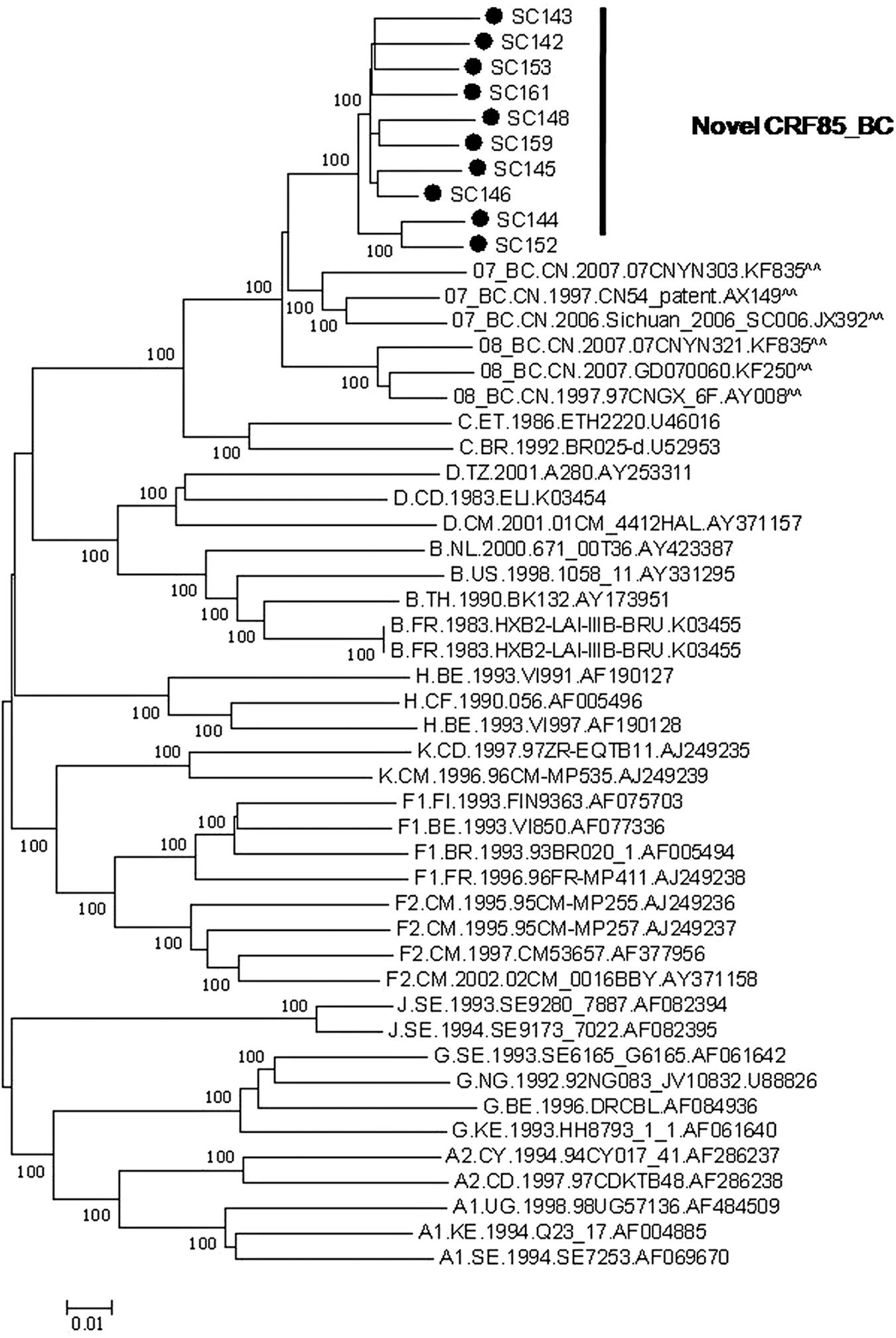
Phylogenetic tree analysis of the NFLG sequences of CRF85_BC. All HIV-1 group M reference sequences were used to construct the neighbor-joining phylogenetic tree with the kimura two-parameter model and 1,000 bootstrap replications test. NFLG, near full-length genome.
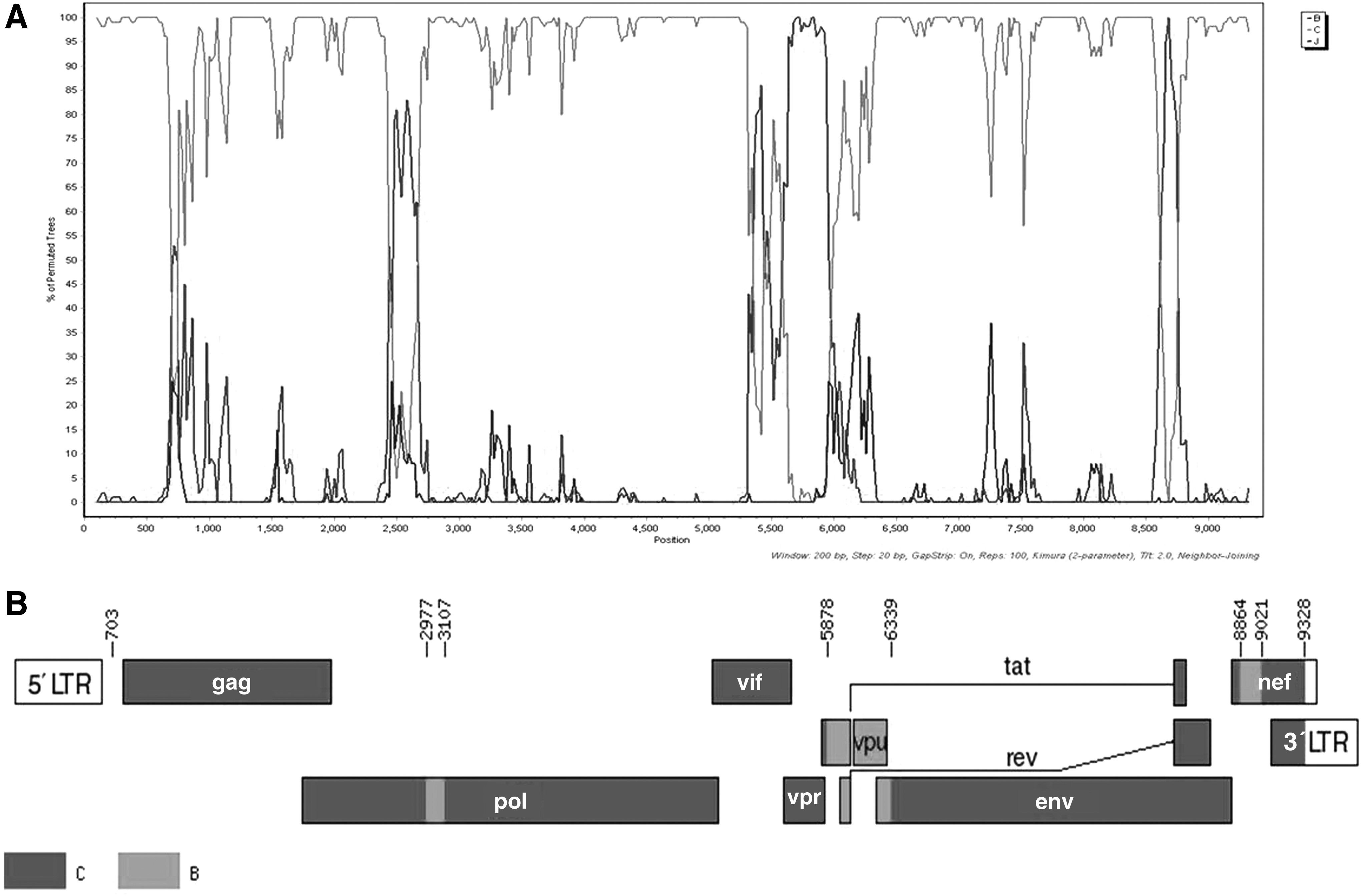
Recombination analysis of the novel identified CRF85_BC.
To confirm the subtype structure of CRF85_BC and to estimate likely parental origin of each region of the recombinant genome, as shown in Figure 3, subregion phylogenetic analyses were conducted. Region I (HXB2, positions 703 to 2,976), region III (HXB2, positions 3,107 to 5,877), region V (HXB2, positions 6,339 to 8,863), and region VII (HXB2, positions 9,021 to 9,328) were grouped within C, and clusters of the newly identified CRF are much closer to C. IN/CN (subtype C from India and China) than other subtype C clades. Region II (HXB2, positions 2,977 to 3,106), region IV (HXB2, positions 5,878 to 6,338), and region VI (HXB2, positions 8,864 to 9,020) were of subtype B’ origin (a variant of subtype B prevalent in Thailand and China, defined in B. TH/CN). Recombinant structures of these strains were distinct from the other CRFs B′ and C originated in China or any known CRFs reported to date.
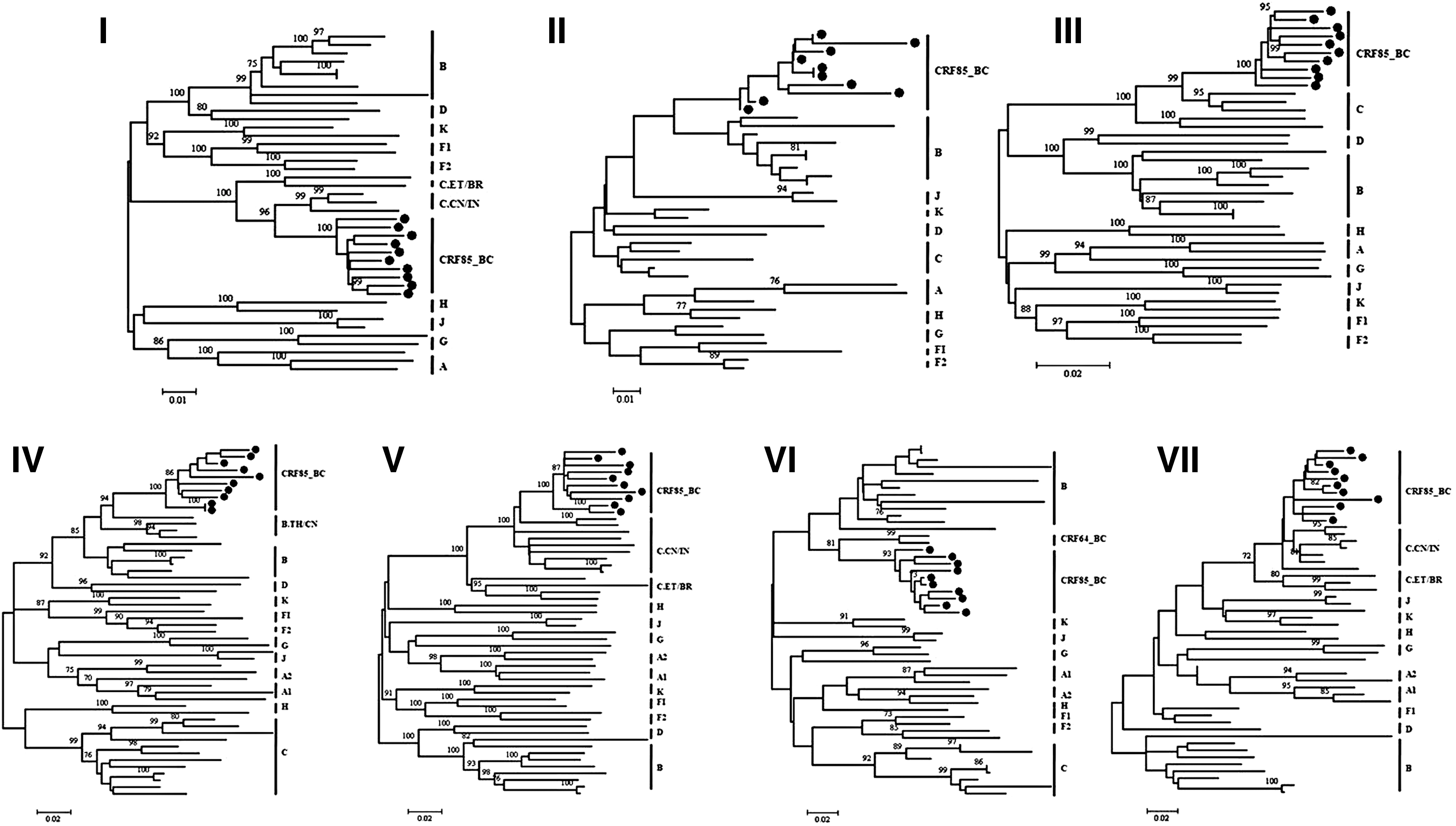
Subgenomic phylogenies estimated using the neighbor-joining method from alignments representing regions
In China, active inter-subtype recombination involving subtype B′ (the Thailand and China variant of subtype B) and subtype C are all identified among injection drug users (IDUs) in southwestern region of Yunnan province, 4 –7 the hotspot of HIV infection and recombination in China. 8 Cocirculation of subtypes B′ and C enables the generation of recombinants. And two closely related B′/C CRFs (CRF07_BC and CRF08_BC) had become the predominant strains in Sichuan, accounting for more than 60% of HIV-1 infections (L. Su et al., unpublished data). There was evidence to show that both strains have originated from Yunnan. 6,9 Yibin prefecture in Sichuan border near Yunnan showed a great increase in HIV epidemic in recent years. There is no evidence to show that this place had a history of B′ or C epidemic. So whether this new CRF (CRF85_BC) strain was originated locally or traveled in the heroin traffic route from Yunnan province to Liangshan region of Sichuan, 10 then to Yibin, still needs further investigation.
Unlike other CRFs identified in China, another interesting element is that all 10 subjects were found among the heterosexually infected population. As known, infection caused by multiple founder viruses happened more often in IDUs than in the heterosexually infected population. 11 Another report about the recombinant HIV-1 strains in sexually driven epidemics in China 8 was only in Dehong prefecture where three (B′, CRF07_BC, and CRF08_BC) of four most circulated HIV-1 strains in China were believed to have originated. 12 –14 For lacking the evidence on this new CRFs epidemic in other high-risk population, further molecular epidemiological investigation is needed to identify the influence of CRF85_BC on the HIV epidemic in Sichuan.
Nucleotide Sequences Accession Number
The NFLG sequences determined in this study are available in GenBank under Accession Numbers KU992928–KU992937.
Footnotes
Acknowledgments
This study was supported by the Chinese Government AIDS Program (grant number 2008ZX001-016), China 4th global fund AIDS Program (grant number CHN-405-G05-H), and Sichuan Provincial Health Department research project (grant number 120154).
Author Disclosure Statement
No competing financial interests exist.