




Abstract
To investigate the HIV-1 molecular epidemiology among young people (18 to 25 years old) in Hangzhou. Plasma samples from 262 newly diagnosed HIV-1-infected patients were collected between 2009 and 2013 from Hangzhou of Zhejiang province. HIV-1 nucleotide sequences of pol gene regions were amplified using a nested polymerase chain reaction method and sequenced. Phylogenetic and recombination analyses were used to determine the HIV-1 genotypes. Based on all sequences generated, the subtype/circulating recombinant forms (CRFs) distribution was as follows: CRF01_AE (68.70%), CRF07_BC (21.54%), subtype B (3.66%), CRF08_BC (2.44%), 01B (2.03%), BC (0.81%), and C (0.41%). We found that the percentage of CRF07_BC was increasing year by year among young people in Hangzhou. Novel CRFs such as CRF67_01B (HZ2011-15 CD4-4516) and CRF68_01B (HZ2011-20 CD4-4530 and HZ2011-29 CD4-4087) were first discovered in the area in this study. Our study presents a molecular epidemiology investigation describing the structure of HIV-1 strains cocirculating in young people in Hangzhou. Increasing CRF07_BC and new CRFs popular in young people are a challenge for future prevention in Hangzhou.
Introduction
I
China has recently experienced a critical change in its HIV-1/AIDS epidemic. 4 Many years ago, HIV/AIDS has predominantly affected high-risk populations, such as intravenous drug users (IDUs) 5 and plasma donors in rural areas. However, rates of HIV-1 transmission through sexual contact have rapidly increased recently. 6 Particularly concerning is the increasing trend of infection among men who have sex with men (MSM), especially in young people or students. 7 According to a joint survey conducted by the Chinese Ministry of Health and UNAIDS, MSM transmission accounts for 0.3% of all HIV/AIDS cases between 1985 and 2005, and the proportion of MSM among newly identified HIV cases in China increased to 29.4% in 2011. 4
Hangzhou is a tourist city, the capital of Zhejiang province, and also is the political, economic, and cultural center of the Zhejiang province. It accounts for the largest proportion of HIV/AIDS cases newly reported in Zhejiang province in recent years. For example, 931 HIV-infected live cases (25.35%, 931/3,673) were reported in 2015 (3,673 was the total number of reported live HIV/AIDS cases in Zhejiang province in 2015). There were 4,169 (27.23%, 4,169/15,309) HIV-infected live individuals in Hangzhou till 2015 (15,309 was the cumulative total number of reported live HIV/AIDS cases in Zhejiang province till 2015). This proportion (27.23%) was the most highest in Zhejiang province. We found that there were 96, 121, 145, 153, and 184 young (<25 years old) infected cases from 2009 to 2013 in Hangzhou, respectively. The proportions of HIV-infected young people among identified HIV-infected individuals were 22.86% (96/420), 23.87% (121/507), 24.21% (145/599), 20.29% (153/754), and 20.49% (184/898) from 2009 to 2013 in Hangzhou.
Our study systematically described HIV genotype profile and new CRFs among newly diagnosed HIV-infected young patients (18 to 25 years old) in Hangzhou. The new findings would help to better understand HIV genetic evolution among young people, and thus get optimal prevention and treatment of HIV infection among this population.
Materials and Methods
Ethics statement
This study was approved by Zhejiang Provincial Center of Disease Control and Prevention (Zhejiang CDC) Institutional Ethics Committee, and written informed consent was obtained from study participants. All experiments were performed in accordance with the approved guidelines and regulations, and the experimental protocols were approved by the institutional review boards of Zhejiang CDC.
Study subjects
This cross-sectional study was conducted in 13 districts in Hangzhou, based on cases' follow-up CD4 test. A total of 262 HIV-1-positive young patients' (age from 18 to 25) samples were collected by district CDC staff from 2009 to 2013 in Hangzhou. Data were collected using an interviewer-administered questionnaire. Every participant was assigned a unique and confidential identifier code for the questionnaire and specimens. Demographic variables were collected, including age, sex, ethnicity, transmission route, education, and current residence.
HIV-1 infection of patient was confirmed by Western blot assay (HIV BLOT 2.2, MP Diagnostics, Singapore). In this study, 5 ml anticoagulant whole blood with EDTA-3K was collected from the patients. The blood samples were separated into plasma and peripheral blood monocular cells. These samples were stored at −80°C until use according to standard procedures. All patients were newly confirmed HIV positive and treatment naive during sampling, and had no previous exposure to highly active antiretroviral therapy.
Amplification of HIV-1 pol gene and sequence assembly
HIV viral RNA was extracted from 140 μl of plasma by the QIAamp Mini-viral RNA kit (Qiagen, Germany) according to the manufacturer's instructions. The RNA was applied in the subsequent reverse transcription–polymerase chain reaction (PCR) and nested PCR to generate the pol fragments (HXB2: 2147-3462). The pol fragment covering the entire protease (PR) and the first 300 codons of the reverse transcriptase (RT) gene were amplified using the One-Step RT-PCR kit (Takara, China) and then subjected to nested PCR for the amplification of pol gene fragments, as described previously. 8 The PCR products were analyzed using 1% agarose gel electrophoresis. Positive samples were sent to Beijing Zixi Bio Tech Co. for purification and sequencing by using an ABI 3730XL automated DNA sequencer (Applied Biosystems, Carlsbad, CA).
Sequence analysis
In our study, sequence trimming and contig assembly were performed using Sequencher v5.0 (Gene Codes, Ann Arbor, MI). The ClustalW Multiple alignment was conducted by software Bio-Edit v7.2.0. After that, we made a few manual edits to fix obvious misalignments. The reference sequences were retrieved from the Los Alamos HIV sequence database (
Results
Demographic characteristics of the study patients
We got total of 246 (97.62%, 246/252) newly diagnosed HIV-positive young patients' sequences in this study. The demographics of these 246 study patients are shown in Table 1. The majority of the subjects were male (n = 223 [90.65%]), single (n = 230 [93.5%]), Han ethnicity (n = 233 [94.72%]), had achieved compulsory education (n = 173 [70.33%]), employed in the service industry (n = 86 [34.96%]), and infected through homosexual transmission (n = 171 [69.51%]).
HIV infection cases in young people 18–25 years old consecutively reported in ∼3 months of sampling each year from 2009 to 2013.
IDU, intravenous drug user.
HIV-1 subtypes and phylogenetic analysis
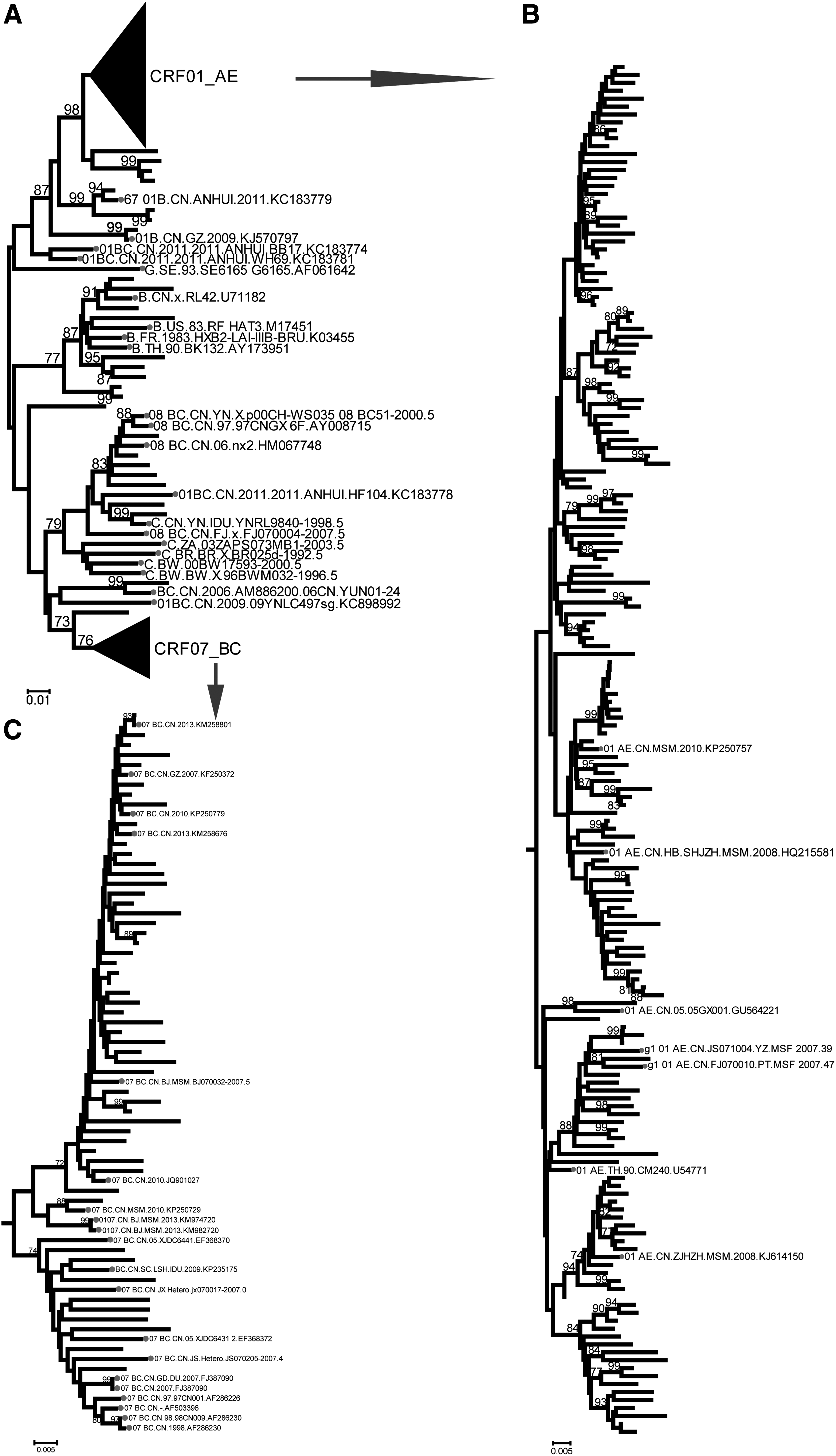
The partial gene of HIV-1 pol (1,316 bp, encoding the entire PR and first 300 RT gene region) was amplified and analyzed. Six of 252 samples failed to amplify, while 246 (97.62%) were successfully amplified, sequenced, and included in the phylogenetic analysis (Fig. 1A). CRF01_AE was the main subtype (68.70%, 169/246) (Fig. 1B), followed by CRF07_BC (21.54%, 53/246) (Fig. 1C), subtype B (3.66%, 9/246), CRF08_BC (2.44%, 6/246), 01B (2.03%, 5/246), BC (0.81%, 2/246), C (0.41%, 1/246), and 01_07 (0.41%, 1/246). Novel CRFs such as 01B (HZ2011-14 CD4-4214 and HZ2012-13 5101017094), CRF67_01B (HZ2011-15 CD4-4516), and CRF68_01B (HZ2011-20 CD4-4530 and HZ2011-29 CD4-4087) were first discovered in the area in this study (Table 2 and Fig. 3).
The number in parenthesis was the case number for each genotype.
CRF07_BC in young people
We observed that the percentage of CRF07_BC was increasing year by year (Tables 2 and 3). In fact, CRF07_BC was popular in IDU in early years. However, the percentage of HIV transmission through IDUs was only 7.55% in our study. In Table 3, we showed that CRF07_BC was transmitted through homosexuals in our study. These infected patients were male and single. We found that they had a high education level, such as 41.51 (22/53) junior college and above (Table 3). Then we made phylogenetic analysis in CRF07_BC transmission. As shown in Figure 2, CRF07_BC formed a concentrated cluster in the MSM population in Hangzhou, which is distinct from the strains of other CRF07_BCs. 13 In the meantime, we found that CRF07_BC was not aggregated with IDU reference sequences (Fig. 2).
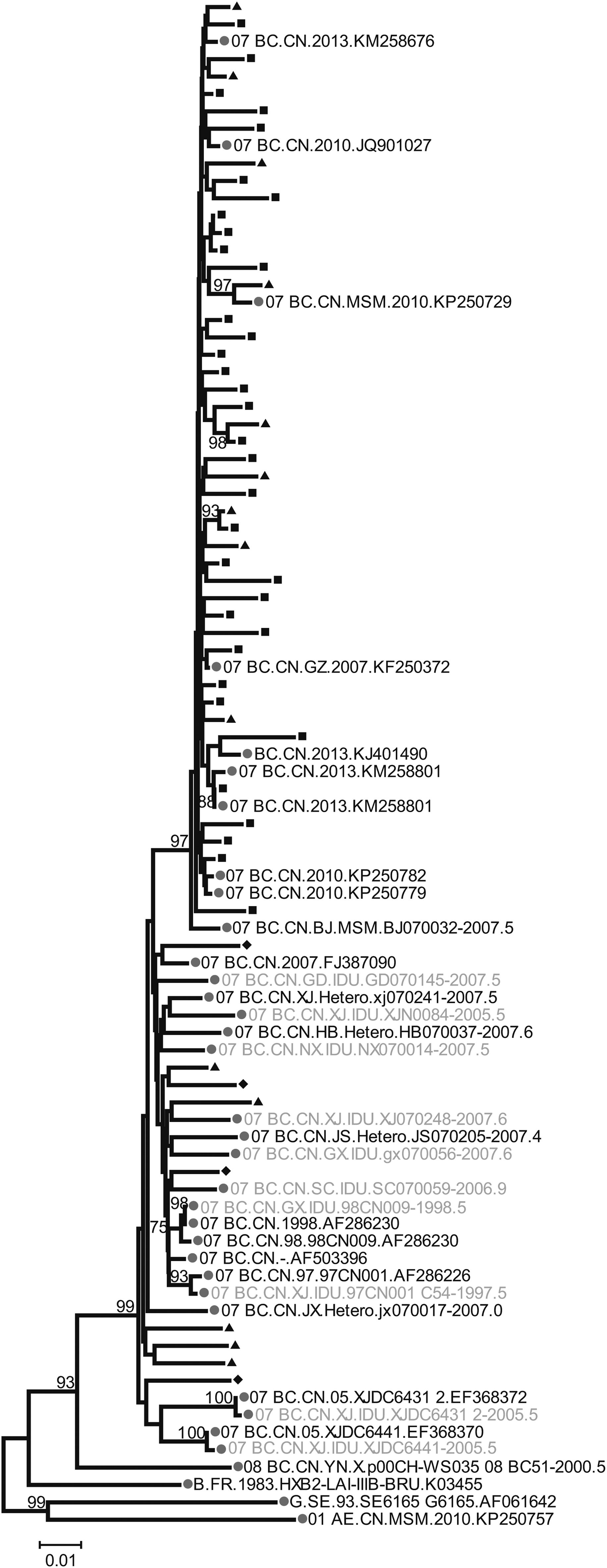
Neighbor-joining phylogenetic tree of CRF07_BC from 53 newly diagnosed HIV-positive individuals in 2009–2013. We added some new reference sequences to this phylogenetic tree, especially CRF07_BC sequences of injecting drug users (marked in gray). We observed there was no aggregation surrounding those new reference sequences. Samples analyzed in this part were labeled with different symbols indicating the transmission routes: square, man sex with man; triangle up, heterosexual; diamond, injecting drug user. Black solid sphere, reference sequences.
The cases in the table were young people, 18–25 years old.
Identification of 01B in Hangzhou among young people
There were five sequences that did not match known CRFs, and thus were classified as unique recombinant forms (URFs) (2.0%). They were determined as CRF01_AE/B (Figs. 3 and 4). All the five cases were infected through homosexual contact. Isolate HZ2011-14 CD4-4214 displayed a recombination structure with subtype B at positions 2,445–2,535; CRF01_AE was determined at positions 2,247–2,444 and 2,536–3,347. Isolate HZ2012-13 5101017094 displayed a recombination structure with CRF01_AE and subtype B determined at positions 2,297–2,877 and 2,878–3,230, respectively. Isolate HZ2011-15 CD4-4516 displayed a mosaic recombination pattern with CRF01_AE segments identified at positions 2,277–2,900 and 3,099–3,212; subtype B segments were identified at positions 2,901–3,098. Isolate HZ2011-20 CD4-4530 showed a recombination genomic structure, with CRF01_AE segments identified at positions 2,277–2,686 and 3,083–3,223; subtype B segments were identified at positions 2,687–3,082. Isolate HZ2011-29 CD4-4087 showed a recombination genomic structure, with CRF01_AE segments identified at positions 2,247–2,696 and 3,069–3,231; subtype B segments were identified at positions 2,697–3,068.
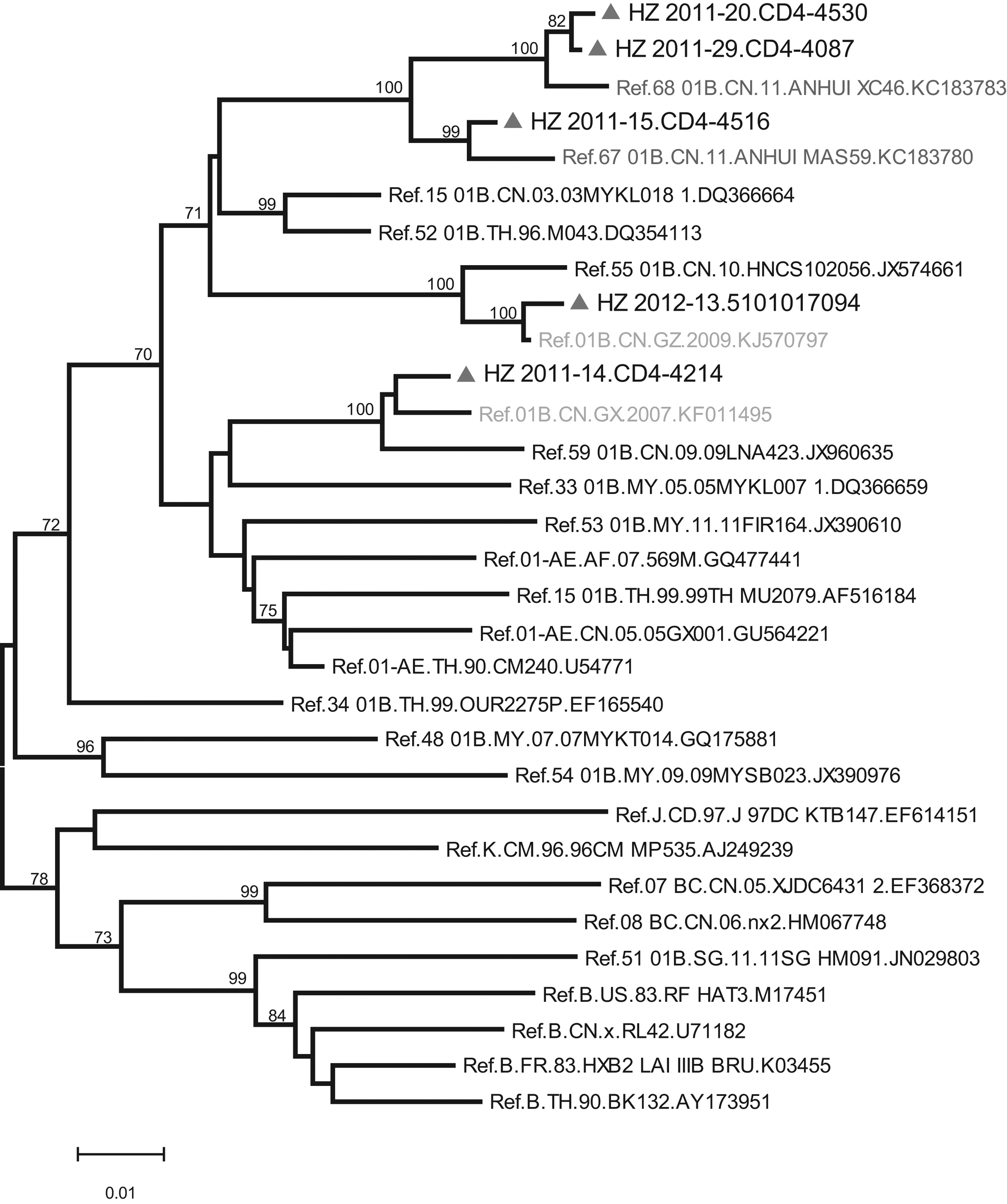
Neighbor-joining phylogenetic tree of CRF_01B from five special sequences. Novel HIV subtypes (triangle up), including CRF67_01B (one case: HZ2011-15.CD4-4516), CRF68_01B (two cases: HZ2011-20.CD4-4530 and HZ2011-29.CD4-4087), and CRF55_01B (one case: HZ2012-13.5101017094) were first discovered and reported in this population.
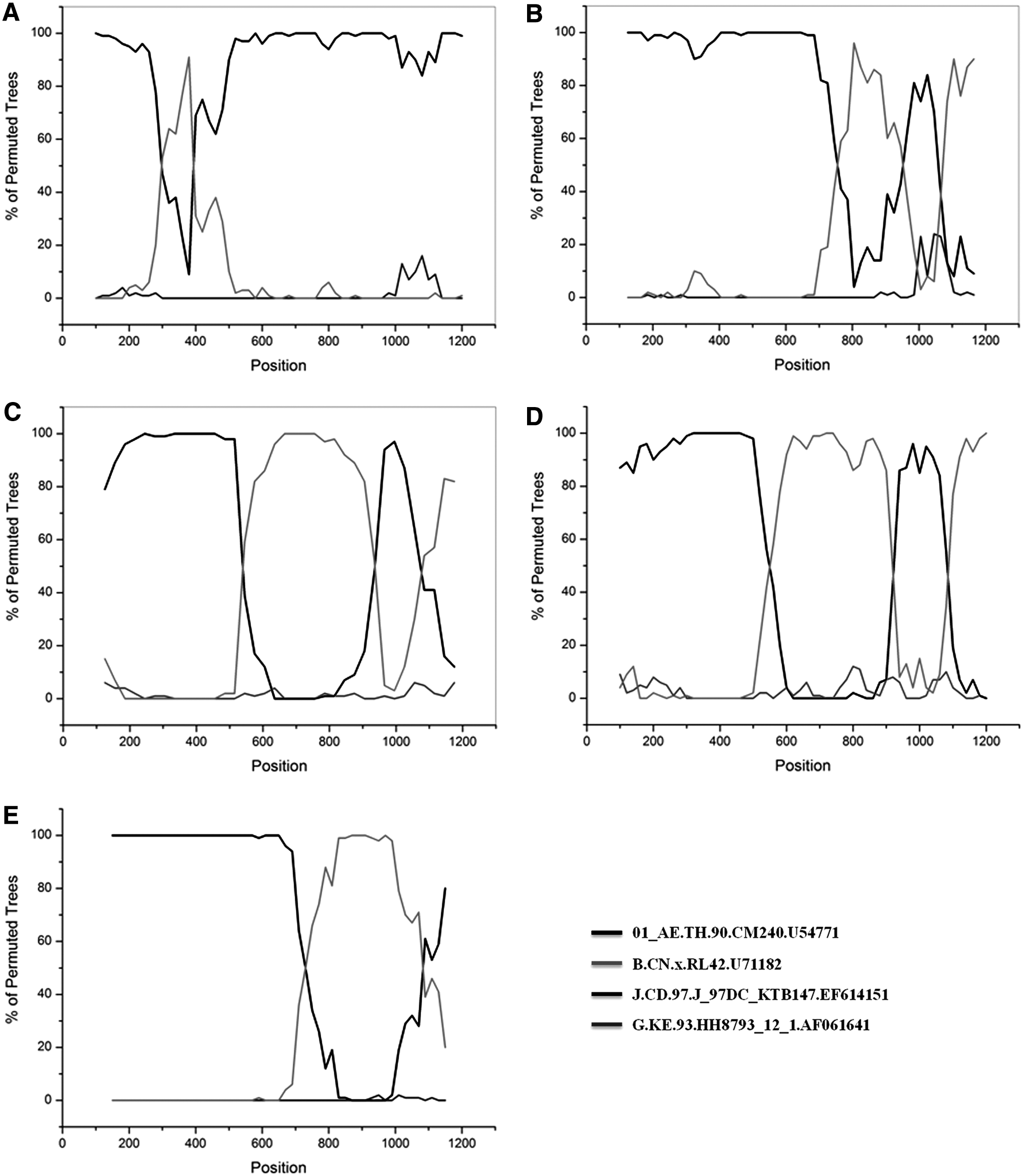
Bootscanning analysis of the recombination structures for the newly identified unique recombinant forms in Hangzhou young people. Bootscan plots of corresponding sample:
HZ2011-20 CD4-4530 and HZ2011-29 CD4-4087 had high identity (98%) with CRF68_01B sequences in Anhui, Jiangsu, and Beijng by HIV blast. Analyzing by HIV blast, HZ2011-15 CD4-4516 had high identity (99%) with CRF67_01B sequences in Anhui and Jiangsu.
Discussions
The increasing HIV genetic variants have profound implications for many aspects of the pandemic, including viral pathogenicity, transmission, diagnosis, clinical management, and vaccine development. 14 Although the pol segment gives some pieces of information on recombination, it can still provide important information about HIV subtype diversity. This study provided a latest update on the molecular diversity of HIV-1 among the young people (18–25 years old) in Hangzhou, China. Phylogenetic analysis revealed that CRF01_AE remained as the major CRF, consistent with previous studies in Zhejiang province. 8 However, we found the new spread trend of CRF07_BC in MSM. In the mean time, we got a new 01B subtype among young people in Hangzhou.
The first major finding in this study was that the new wave of the HIV epidemic among young people, especially MSM, was driven by the subtype CRF07_BC virus. In fact, CRF07_BC was found in northwest drug trafficking routes (Yunnan, Sichuan, Gansu, Ningxia, and Xinjiang) in 1996, 15 and CRF07_BC was found in another trafficking route (from Yunnan to Guangxi) in 1996. 7,16 The CRF07_BC cluster was not discovered in the second nationwide molecular epidemiological investigation in 2002, and was only found in a limited number of male homosexuals in the third nationwide molecular epidemiological investigation in 2007. 17 In fact, CRF07_BC (48.5%), CRF08_BC (23.6%), and CRF01_AE (21.2%) were the three main HIV-1 subtypes circulating among IDUs. 17 IDUs and heterosexuals were the two main risk groups for the spread of CRF07_BC, accounting for 68.8% (8,344 of 12,122) and 21.4% (2,595 of 12,122), respectively. 17 In our study, CRF07_BC transmitted by IDUs was 7.55% (4/53), heterosexuals was 26.42% (14/53), and MSM was 66.04% (35/53) (Table 3). Obviously, the proportion of IDUs and heterosexuals was not high. Why is this subtype increasing in MSM year by year among young people in Hangzhou? One possibility was that MSM had more sexual behaviors with IDUs, and may be more susceptible to infected B’/C recombinant strains. However, form the phylogenetic tree (Fig. 2), CRF07_BC in our study did not form a cluster with IDU reference sequences (marked in gray). This possibility may not be reasonable in young people in Hangzhou. Another reason might be the increasing proportion of MSM who use new drugs. 7 In fact, illicit drug use was uncommon among Chinese MSM 10 years ago. 18 In Beijing, the previous study results showed that the use of nitrite inhalants was alarmingly prevalent among MSM, and 47.3% of the participants used nitrite inhalants, which were associated with high risks of HIV infection in 2012, 19 while the proportion was only 0.8% during 2006–2007. 20 Drug use can relax safer sex norms and increase unprotected sex and risk of acquiring HIV. 17 The biggest worry is that the history of severe HIV epidemics in developed countries could be repeated in China MSM, which will be due to noninjection drug use among MSM in China. In our study, participants with CRF07_BC were male (90.57%) and single (92.45%). The most important thing is that their route of infection was MSM. Given that few Chinese MSM inject drugs, future study needs to explore real reasons driving the rapid transmission of the subtype CRF07_BC virus among MSM, which is the main subtype in Chinese IDUs in early years. Hence it is important to implement new prevention strategies targeted toward MSM populations, who use new drugs.
From this study, we observed that the proportion of students was high (15.85%, 39/246). These data were the second only to employees in the service industry (Table 1) and most of them were MSM. Young MSM (between 18 and 25 years old) have been shown to be a particularly high-risk population in many international settings. 21 –23 This situation also existed in Hangzhou. So we should analyze HIV-infected situation from students in future studies.
It is notable that the complexity and diversity of HIV-1 strains seem to increase in young people. CRF_01B circulated in most cities in China 7,24 and this became a new trend. CRF55_01B among MSM in China was first identified in 2012, 25 and recently reported an outbreak among MSM in Shenzhen with 9.2% (99/1,072) in all subtype sequences. 26 Anhui province first reported CRF67_01B and CRF68_01B in their study among MSM. 27 Xiaoxu et al. reported that B/CRF01_AE recombinants were remarkably common in Dongguan (5 of 16, 31.2%), Nanjing (3 of 18, 16.7%), and Changsha (2 of 23, 8.7%). 4 It is worth noting that the novel subtypes and URFs were mainly found in MSM, especially in young men. Novel HIV subtypes, including CRF67_01B (one case), CRF68_01B (two cases), and CRF55_01B (one case) were first discovered and reported in this population. Furthermore, five URFs consisting of a recombination of CRF01_AE with subtype B were identified in the study. In fact, their infectious route was homosexuality. They were MSM. One of their sequence was similar with Guangdong reference sequence, but he did not live in Guangdong. His partner was living in another province. Another young man, his household register, and lover were in Anhui, and his sequence was similar with Anhui reference sequence. We concluded these CRFs imported from other provinces to Hangzhou young people in this study. We have reported CRF55_01B (two cases) in another study not long ago. 8 The sporadic detection of CRF55_01B in Hangzhou might be a prelude of outbreak among MSM in the near future. It is worth closely tracking and monitoring. 8 MSM had higher rates of dual-variant and multiple-variant HIV infection than in heterosexual people, 28,29 which increased the chances of HIV recombination. These results revealed the fact that new viruses have generated and may be prevalent among young population, especially MSM. However, given the status that there were B and CRF01_AE cocirculating in MSM in China, 27,30 –32 it was not surprising that HIV-1 URFs generated through recombination between CRF01_AE and subtype B among the MSM. 8,33 We should monitor these new URF infection among young people, especially MSM.
The study had the limitation of small sample size and sampling bias (only 18–25 year old patients included). However, these data can reflect the situation of HIV infection among young people in Hangzhou.
Footnotes
Acknowledgment
This work was supported by National Science and Technology Major Project (No. 2008ZX10001-003 and 2012ZX10001-002).
Author Disclosure Statement
No competing financial interests exist.