




Abstract
Currently, HIV-1 CRF63_02A6 is the prevalent genetic variant of the HIV-infected subjects in the major part of the Siberian Federal District (Russia). The HIV-1 CRF63_02A6 R5-tropic pT11.17 and X4-tropic pMtBs.18 infectious molecular clones (IMCs) were constructed using the virus isolates recovered in 2015 and 2017 of male HIV-infected Russian residents (from Tomsk and Novosibirsk, respectively). Near full-length proviral HIV-1 sequences (9,644 and 9,748 bp) were subcloned in pBluescript II KS(–). The CRF63_02A6 IMC virions were obtained by transfecting HEK293T cells with the constructed plasmids and demonstrated a stable growth in peripheral blood mononuclear cell culture (p24 concentration increased >1,000-fold and the virus protein accumulation in culture liquid exceeded 100,000 pg/mL). The tropism of CRF63_02A6 IMCs was determined genotypically (using Geno2pheno) and phenotypically by cultivating the IMC virions in MT-2, U87-CD4-CCR5, and U87-CD4-CXCR4 cell cultures. The obtained HIV-1 CRF63_02A6 IMCs may be useful in basic and applied research.
Recently, a considerable increase in the genetic diversity of the circulating HIV-1 is observed owing to emergence and spreading of the new recombinant variants of the virus. We for the first time detected HIV-1 CRF63_02A6 (formerly CRF63_02A1) in the Siberian Federal District as early as 2008 and comprehensively described it in 2012; in 2014, this HIV-1 genetic variant got its nomenclature name. 1,2 Currently, HIV-1 CRF63_02A6 is detectable in >70% of the new HIV-1 infection cases in the Novosibirsk, Tomsk, and Kemerovo oblasts and Altai krai, having considerably replaced the HIV-1 subtype A6 variant, previously dominant there. 3
A team of the State Research Center of Virology and Biotechnology “Vector” recovered 59 isolates of HIV-1 CRF63_02A6 from the clinical specimens and examined their specific genetic and biological features. 4 However, it is still relevant to obtain more standardized HIV-1 models, such as infectious molecular clones (IMCs). The HIV-1 CRF63_02A6 IMC may be a convenient model for studying the relationship of virus genetic structure and biological properties. The goal of this study was to construct the IMCs of HIV-1 CRF63_02A6 isolates and characterize their biological standpoint. HIV-1 IMCs have a wide range of application in both basic and applied studies. 5 –8
An X4-tropic HIV-1 isolate 17RU22401 and an R5-tropic isolate T11 were used to obtain the HIV-1 CRF63_02A6 IMCs; the former isolate was recovered in 2017 of a HIV-infected resident of the Novosibirsk oblast (age, 30 years; an injection drug addict) and the latter, in 2015 of a HIV-infected Tomsk resident. These HIV-1 isolates are deposited with the State Collection of the State Research Center of Virology and Biotechnology “Vector”.
4
The full-length genome sequences were obtained for the selected HIV-1 variants. Phylogenetic analysis (MEGA 6.0.6) of nucleotide sequences of the isolates selected to construct the target IMCs confirmed that these isolates belong to HIV-1 CRF63_02A6. The HIV-1 tropism was genetically determined using the online service Geno2pheno (
Unipro UGENE 1.18.0 software was used for elaboration of the schemes for construction of the target IMC and in silico cloning. The primers for reverse transcription, polymerase chain reaction (PCR), and sequencing were designed using Oligo 7.60.
To construct an R5-tropic HIV-1 CRF63_02A6 IMC, the viral RNA of T11 isolate was extracted using a RealBest DeltaMag HBV/HCV/HIV Kit (Vector-Best, Novosibirsk, Russia). Three overlapping fragments covering the virus genome (2,778, 3,679, and 3,757 bp) were obtained by reverse transcription and PCR using LongRange 2Step RT-PCR (QIAGEN, Hilden, Germany) and Long PCR Enzyme Mix (Thermo Scientific, Carlsbad, CA) kits. The extended fragments of T11 isolate were subcloned with the help of a TOPO XL PCR Cloning Kit (Invitrogen, Carlsbad, CA). The missing regions of HIV-1 LTRs (546 and 551 bp) were produced by PCR using as a template the T11 proviral DNA extracted from infected cells with the help of a DNA/RNA 0207 kit (Litekh, Moscow, Russia). The HIV-1 LTRs were subcloned using a TOPO TA Cloning Kit (Invitrogen). The plasmid DNA was isolated using a QIAprep Spin Miniprep Kit (QIAGEN). The constructs with target insertions were sequenced using a BigDye Terminator v3.1 Cycle Sequencing Kit (Applied Biosystems, Foster City, CA) and the plasmid variants carrying the sequences closest to the HIV-1 consensus sequence were selected. Figure 1 shows the scheme used for constructing pT11.17, the HIV-1 CRF63_02A6 IMC based on the T11 isolate. The near full-length proviral T11.17 genome was assembled in a pBluescript II KS(–) cloning vector at NheI, Eco91I, SalI, NotI, and EcoRI restriction sites using the corresponding restriction endonucleases and T4 DNA ligase (Thermo Scientific).
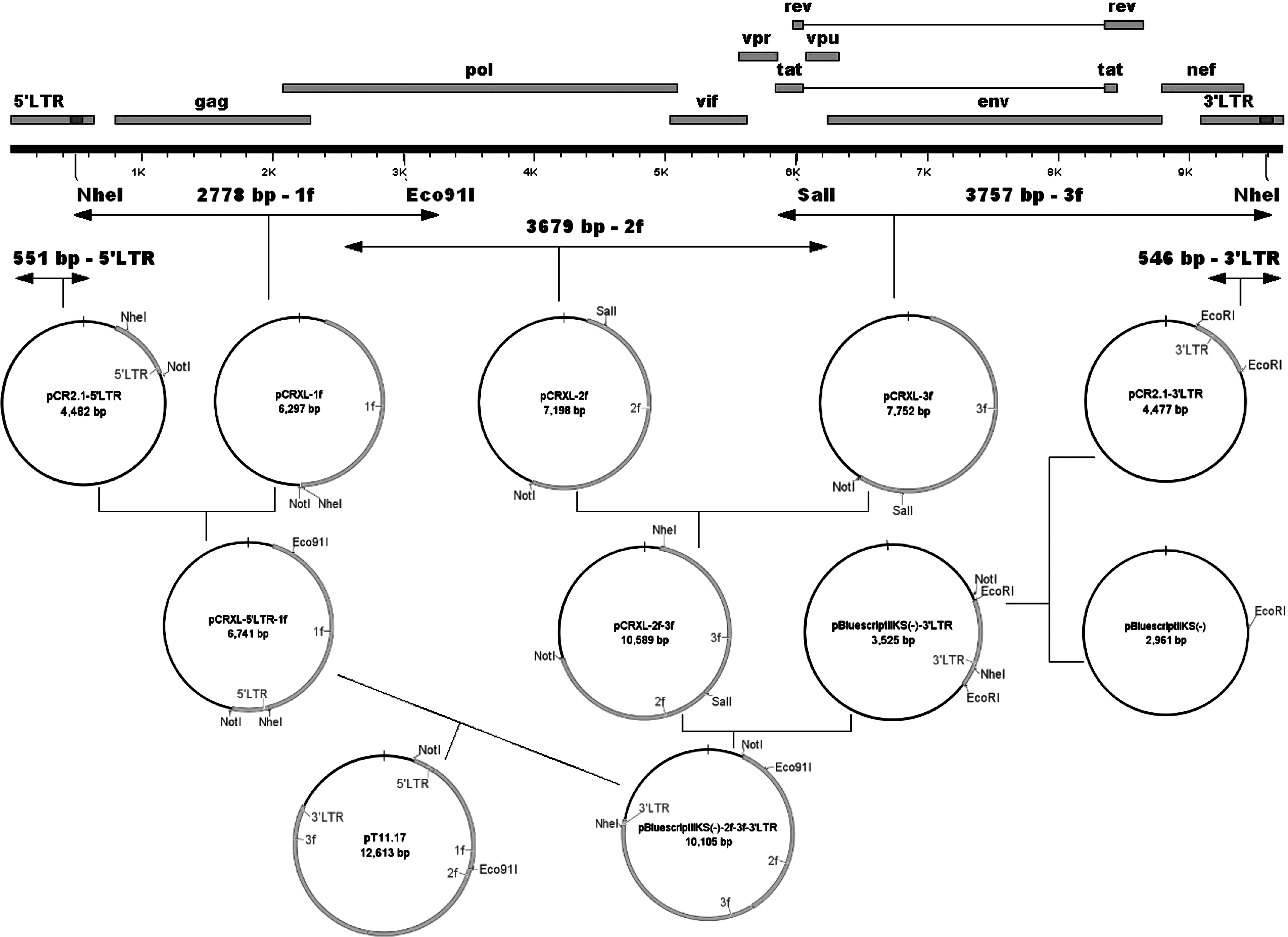
Construction of an R5-tropic HIV-1 CRF63_02A6 IMC. Reverse transcription, PCR, and cloning of three overlapping extended genome fragments of HIV-1 T11 isolate (with viral RNA as a template). PCR and cloning of T11 3′ and 5′ LTRs (with proviral DNA as a template). Successive assemblage of a near full-length proviral T11.17 genome in pBluescript II KS(–). IMC, infectious molecular clone; PCR, polymerase chain reaction.
To construct the HIV-1 CRF63_02A6 IMC utilizing the X4-tropic 17RU22401 virus isolate, the proviral DNA was extracted from infected cells and two overlapping fragments covering the virus genome (6,212 and 4,224 bp) were produced by PCR. The fragments were subcloned using a TOPO XL PCR Cloning Kit (Invitrogen). The near full-length proviral MtBs.18 genome was assembled in a pBluescript II KS(–)m (the pBluescript II KS(–) carrying additional sequence with NcoI site) cloning vector at EcoRI, NotI, and NcoI restriction sites using the corresponding restriction endonucleases (Thermo Scientific). The scheme for constructing pMtBs.18 is shown in Figure 2. Phylogenetic analysis of the full-length genome sequences of the produced pT11.17 and pMtBs.18 IMCs confirmed that they belonged to the HIV-1 CRF63_02A6 genetic cluster (Fig. 3).

Construction of an X4-tropic HIV-1 CRF63_02A6 IMC. PCR and cloning of two overlapping extended genome fragments of HIV-1 17RU22401 isolate (with proviral DNA as a template). Successive assemblage of a near full-length proviral MtBs.18 genome in pBluescript II KS(–).
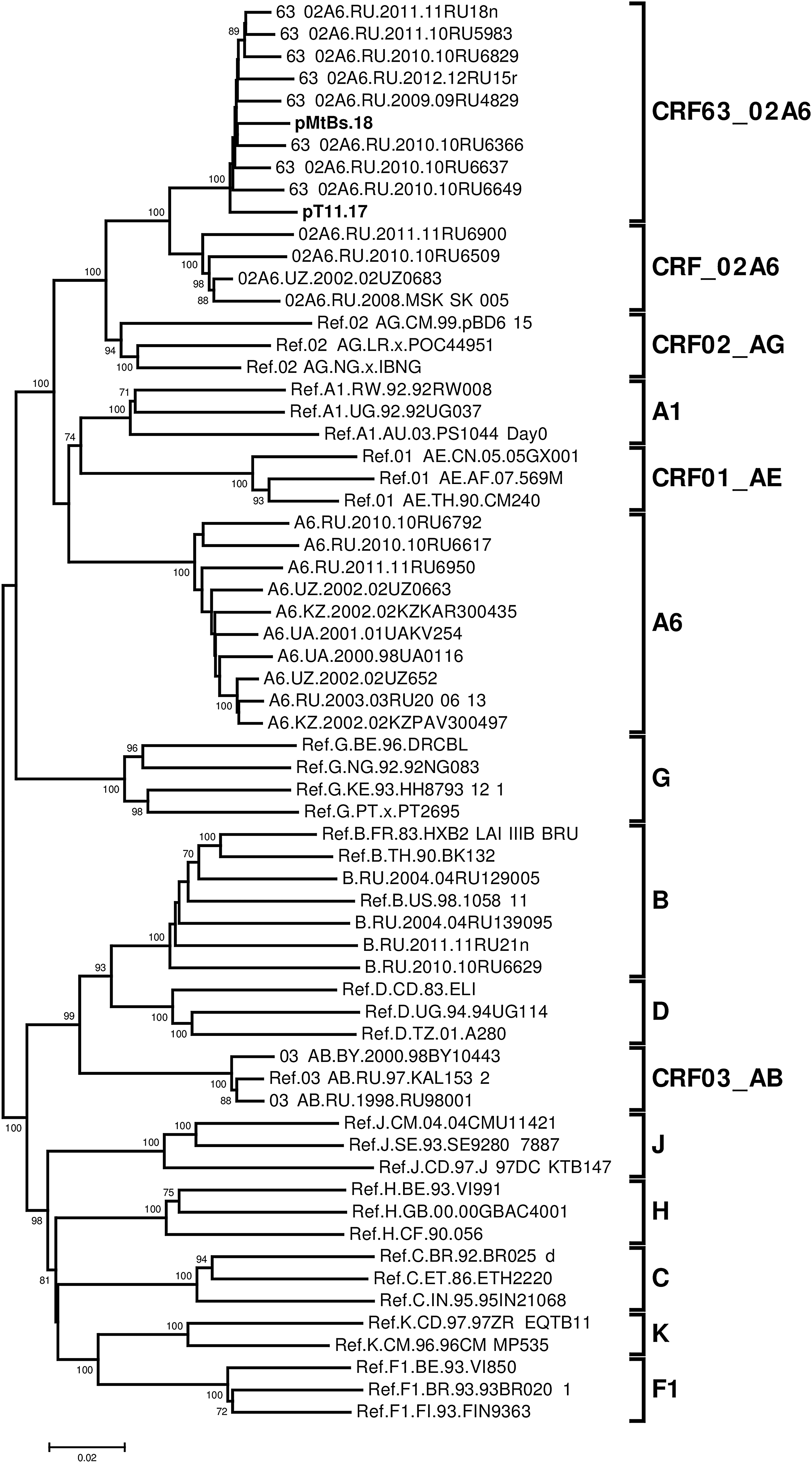
Phylogenetic relationship of full-length genomic sequences of pT11.17 and pMtBs.18 (in bold) with other HIV-1 strains. The tree was constructed using the neighbor-joining method and reliability of the branching pattern was confirmed by bootstrapping (1,000 replicates). The bootstrap values (%) for the cluster to the right (the values of 70% and higher) are shown at the nodes. Major sequence subtypes of HIV-1 group M are parenthesized (to the right). All HIV-1 group M reference sequences are extracted from the Los Alamos HIV database (
HEK293T cells (5,000 ng of the plasmid per T25 flask with 90% cell continuity) were transfected with pT11.17 and pMtBs.18 using Lipofectamine 2000 (Thermo Scientific); the concentration of p24 cell protein in the culture liquid was measured after 48 h using a HIV-1 p24-antigen-EIA-BEST kit (Vector-Best). To cultivate T11.17 and MtBs.18 in primary human cells, peripheral blood mononuclear cells (PBMCs) were isolated of three healthy donors as earlier described. 4 The PHA-stimulated PBMCs were infected with the produced T11.17 and MtBs.18 virions (adsorption conditions: 1-h incubation of 10 × 106 cells in 1 mL of the culture medium containing 50,000 pg of p24). After the adsorption, PBMCs were washed with clean culture medium to further cultivate the PBMCs infected with T11.17 and MtBs.18 for 14 days in the interleukin-containing medium. Every 3 days, the culture liquid was sampled to assess the p24 concentration and one-third of the medium was replaced with a fresh portion. The concentration of p24 virus protein increased >1,000-fold as compared with its initial concentration in the T11.17 and MtBs.18 culture media on day 10 of cultivation, which suggests that replication-competent viruses were produced. The pSG3.1 IMC, kindly provided by the NIH AIDS Reagent Program, 9 was used as a positive control of transfecting HEK293T and cultivating the produced IMC virions. The kinetics of T11.17, MtBs.18, and SG3.1 reproduction in PBMC culture are shown in Figure 4. Microscopy of the PBMCs infected with MtBs.18 demonstrates syncytium formation, characteristic of the X4-tropic HIV-1, starting from days 5 to 6 of cultivation unlike that for T11.17 (Fig. 5). The TCID50 values of the virus stocks in PBMC culture were determined for T11.17 and MtBs.18. The obtained T11.17 and MtBs.18 IMC virions were cultivated for 14 days in the MT-2, U87-CD4-CCR5, and U87-CD4-CXCR4 cells, kindly provided by the NIH AIDS Reagent Program, 10 –12 to get an additional confirmation of their tropism by a phenotypic method. 13–14 An increase in p24 concentration in culture liquid and the estimates of the cytopathic effect confirmed the tropisms of the obtained IMCs, determined using Geno2pheno (Figs. 6 and 7).

Replication kinetics of T11.17, MtBs.18, and SG3.1 IMC virions (with SG3.1 as a control) in the PBMC culture. The culture medium was sampled every 3 days to assess p24 concentration and one-third of the medium was replaced with a fresh portion. PBMC, peripheral blood mononuclear cell.

Microscopy of PBMCs during cultivation of the produced IMC virions.
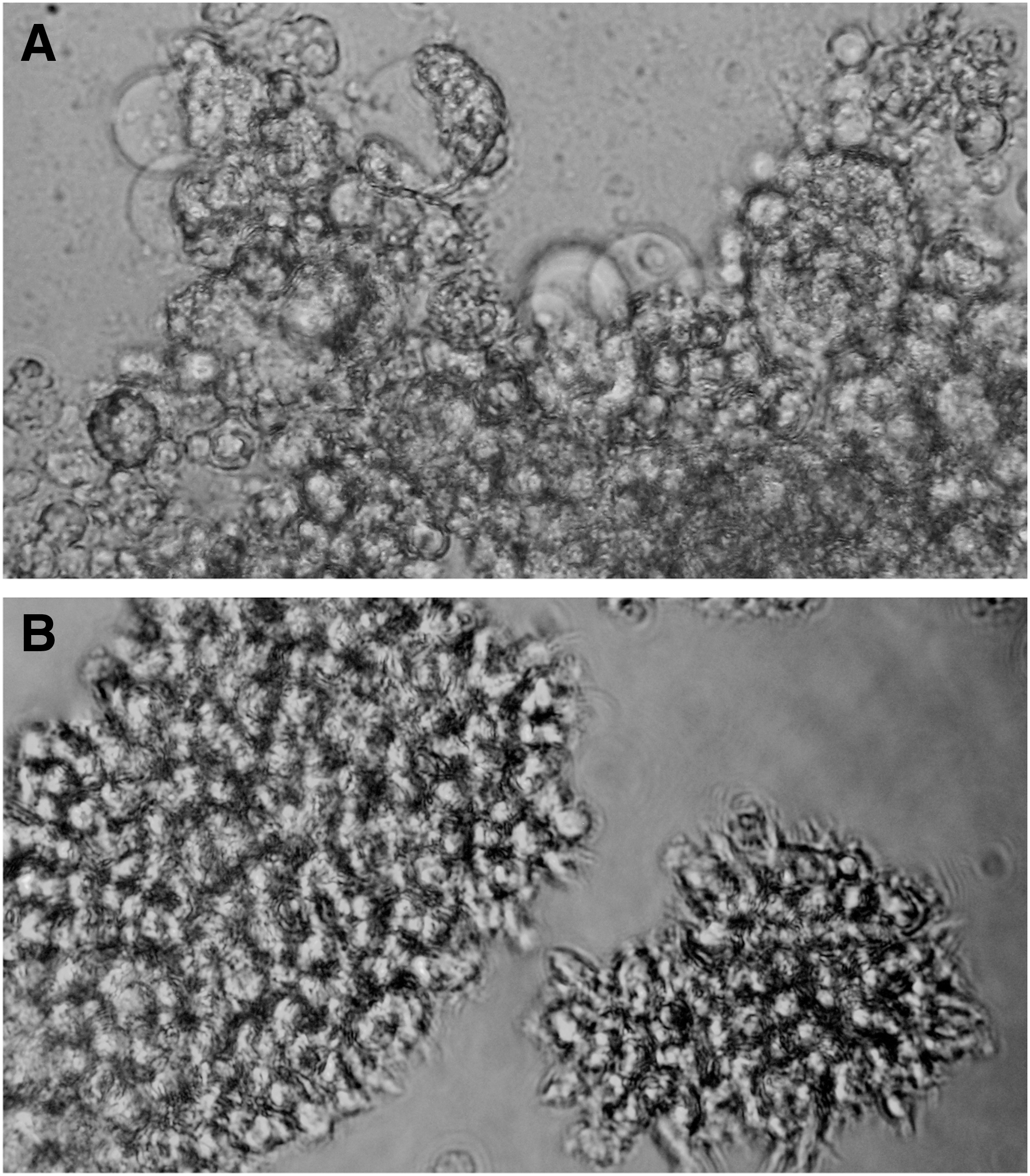
Microscopy of MT-2 cells during cultivation of the produced IMC virions.

Microscopy of U87-CD4-CCR5 and U87-CD4-CXCR4 cells during cultivation of the produced IMC virions. Morphological changes in
The aforementioned results demonstrate that we succeeded in producing two IMCs of HIV-1 CRF63_02A6—X4-tropic pMtBs.18 and R5-tropic pT11.17. The sequences of these IMCs are deposited with the GenBank. The obtained models of the HIV-1 CRF63_02A6, widespread in Russia, can be useful for studying the specific structure–function features of this virus and the resistance of HIV-1 CRF63_02A6 developing in response to antiretroviral therapy as well as for assessing the efficiency of antiretrovirals and vaccines in preclinical trials. The pT11.17 and pMtBs.18 can form the basis for a collection of the IMCs of the HIV-1 genetic variants specific for Russia.
Sequence Data
The complete sequences of the pMtBs.18 and pT11.17 IMCs have been deposited in the GenBank under the accession numbers MK984159 and MK984160, respectively.
Footnotes
Acknowledgments
The following reagents were obtained through the NIH AIDS Reagent Program, Division of AIDS, NIAID, NIH: pSG3.1 from Drs. Sajal Ghosh, Beatrice Hahn, and George Shaw; MT-2 cells from Dr. Douglas Richman; U87 CD4+CCR5 cells,
Author Disclosure Statement
No competing financial interests exist.
Funding Information
The study was supported by the State Research and Development Program 3-16.