




Abstract

Dear Editor:
Hidradenitis suppurativa (HS) is a disease characterized by chronic suppurating infection in the apocrine glands of the axilla, groin, and perineum. This disorder begins with the obstruction of the terminal follicular epithelium leading to inflammation, mucopurulent discharge, and scars 1 and markedly decreases quality of life for patients. Etiology of HS remains unknown, although various agents have been suggested to be triggering factors such as obesity, smoking, lithium, oral contraceptives, and genetic components. 2,3 All of these factors could lead to the occlusion of apocrine glands and secondary infections by cutaneous bacterials. In some cases, this condition is challenging to treat, particularly in HIV patients in whom immunologic compromise may affect the clinical course of this skin condition and its therapeutic response. We present a case of refractory HS in an HIV patient.
Our patient is a 47-year-old Caucasian male, a smoker and injection drug user, who had been suffering with HS for 18 years. He presented with periods of improvement and worsening, which impacted his social and professional activity due to pain. Different treatment approaches included isotretinoin (total dose, 120 mg/kg) and antibacterial therapies with tetracycline, erythromycin, cefalexine, and ciprofloxacin (based in antibiograms from bacterial cultures of the lesions, which were positive for Staphylococcus aureus and S. pyogenes), but no improvement was obtained. His medical history was significant for HIV disease diagnosed in 2002 that was treated with abacavir (300 mg/12 h), lamivudine (300 mg/24 h), and zidovudine (500 mg/24 h). He had no previous history of sexually transmitted infections. Clinical examination showed inflamed papules, painful tender erythematous-discharging nodules involving inguino-scrotal, perineum, and gluteal areas (Fig. 1). Laboratory investigations revealed elevated erythrocyte sedimentation rate (ESR; 41 mm in the first hour), C-reactive protein level, 1.1 mg/dL; red blood cells, 4.3×10⁶/μL; hemoglobin, 13.2 g/dL; hematocrit, 35.2%, platelets, 121,000 cells per microliter; white blood count, 7548 cells (neutrophils, 76%; lymphocytes, 19%; monocytes, 4%; eosinophils, 1%; basophils, 0.2%); CD4 lymphocytes, 623 cells per microliter; CD8 lymphocytes 824 cells per microliter; and viral load, 1335 copies per milliliter. Serology for syphilis and viral hepatitis were normal as well as the tuberculin test and a chest radiograph. Due to the refractory of the cutaneous lesion, infliximab at 300 mg dose (4.6 mg/kg) per infusion was administered, comprising four infusions (weeks 0, 2, 6, 10). After this treatment, there was a decrease in discharge from the skin lesions and in tenderness but recurrence was observed 2 weeks later. At this point and because of patient skin type, we decided to initiate neodymium-yttrium-aluminium-garnet (Nd:YAG) laser therapy with the following parameters: fluence of 40 J/cm (2), pulse duration of 35 ms, and spot size of 10 mm. Four-monthly laser sessions were performed. Scars and fistulae have persisted, with a partial response of inflammatory lesions such as nodules and papules. Since then, the patient has experienced moderately less pain.
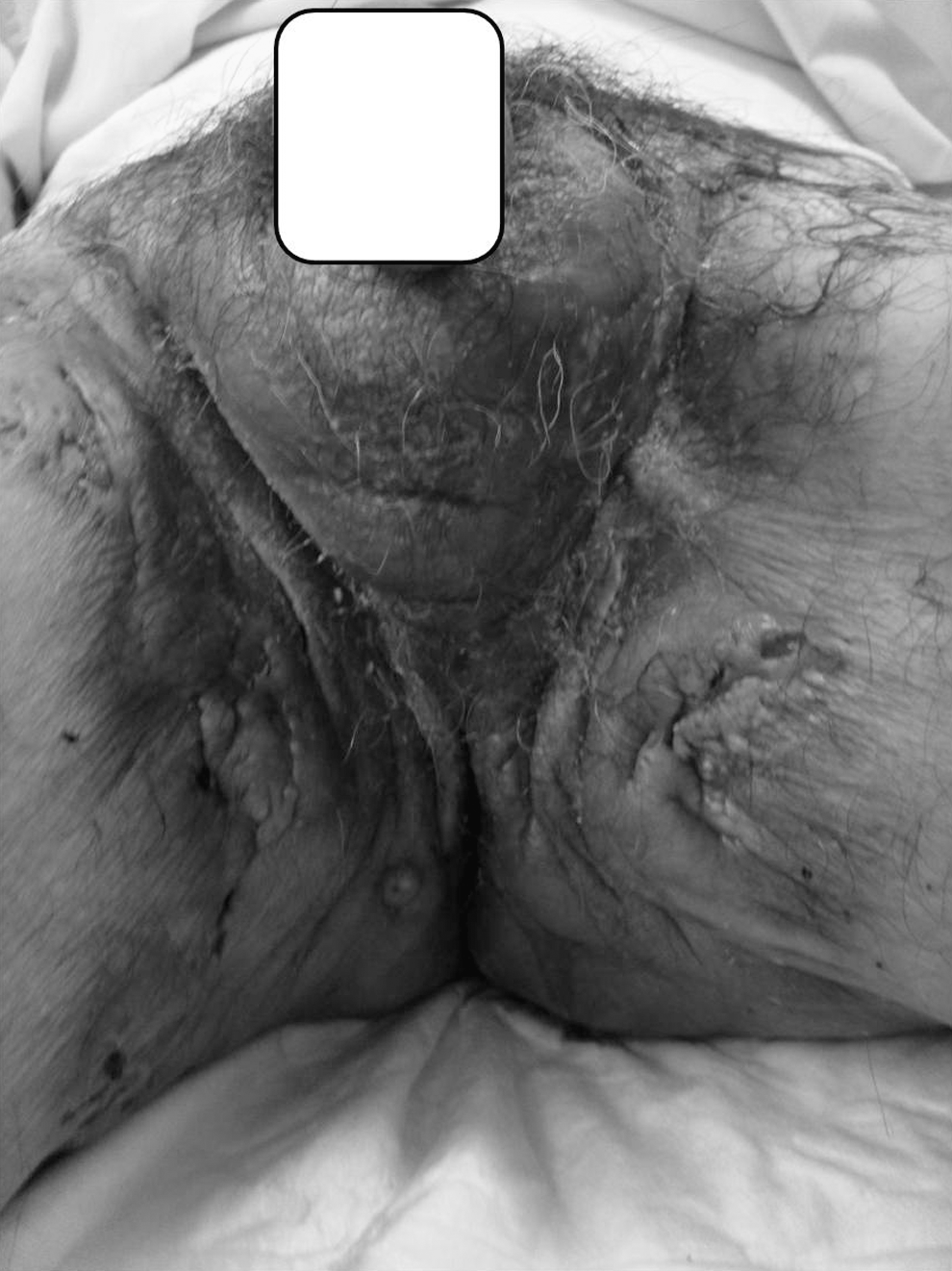
Severe hidradenitis suppurativa involving inguino-scrotal, perineum and gluteal areas.
HS in patients with HIV is a therapeutic challenge. One of the most effective drugs for HS are retinoids (isotretinoin), however, this medication should be used with caution in these patients due to it effect in raising triclycerides and transaminases. 4
Our case illustrates a severe stage of HS with widespread involved areas and difficult treatment. These outcomes may be due to the immunologic suppression in these patients as well as the HIV-associated endocrinogic disorders that can alter the course of the HS. 5 Some of these endocrinogic disorders in HIV patients include: (1) higher incidence of hypothyroidism and therefore more prevalence of obesity, 6 which is a risk factor to develop HS and increases its severity; (2) pancreatic dysfunction and diabetes mellitus, 6 which increases the incidence of infections; and (3) enhanced cortisol and decreased DHEA have been observed. The increased ratio cortisol/DHEA leads to an impairment of the immune cellular response and more incidence of infections. 7 Pathogenesis behind these endocrinopaties includes direct infection of endocrine glands by HIV or opportunistic organisms.
Infliximab is a chimerical mouse/human antibody that links with great affinity to the transmembrane and soluble forms of tumor necrosis factor α (TNF-α) inhibiting its activity. TNF-α is an important proinflammatory agent produced by macrophages and monocytes. This molecule can be found in the epidermis, sweat glands, and hair follicles, and induces an intracellular cascade leading to an inflammatory reaction. When used for HS, infliximab reduces local tissue levels of TNF-α, decreases the inflammatory cell infiltrate and level of proinflammatory cytokines such as interleukin 6. 8,9 Infliximab has been found to be effective in managing HS in HIV patients, 8 however, there are conflicting results regarding the possible negative impact of TNF blocker drugs on CD4 lymphocyte count. 10 In our case, we did not find any significant change in CD4 lymphocyte levels associated with infliximab treatment. Table 1 summarizes white blood cell count, levels of CD4, and viral load during the therapy with infliximab. However, this approach controlled the skin condition for only a few weeks. The Nd:YAG laser is a novel treatment option that causes the destruction of the follicular unit and abscess. 11 In our patient, this approach had no impact on scar tissue, but considerable relief of tenderness was observed.
Physicians should be aware of HS in HIV patients due to its atypical aggressiveness and therapeutic challenge. Different approaches may be considered in function of HS extension, CD4 lymphocytes count, lipid profile, and liver function test.