




Abstract

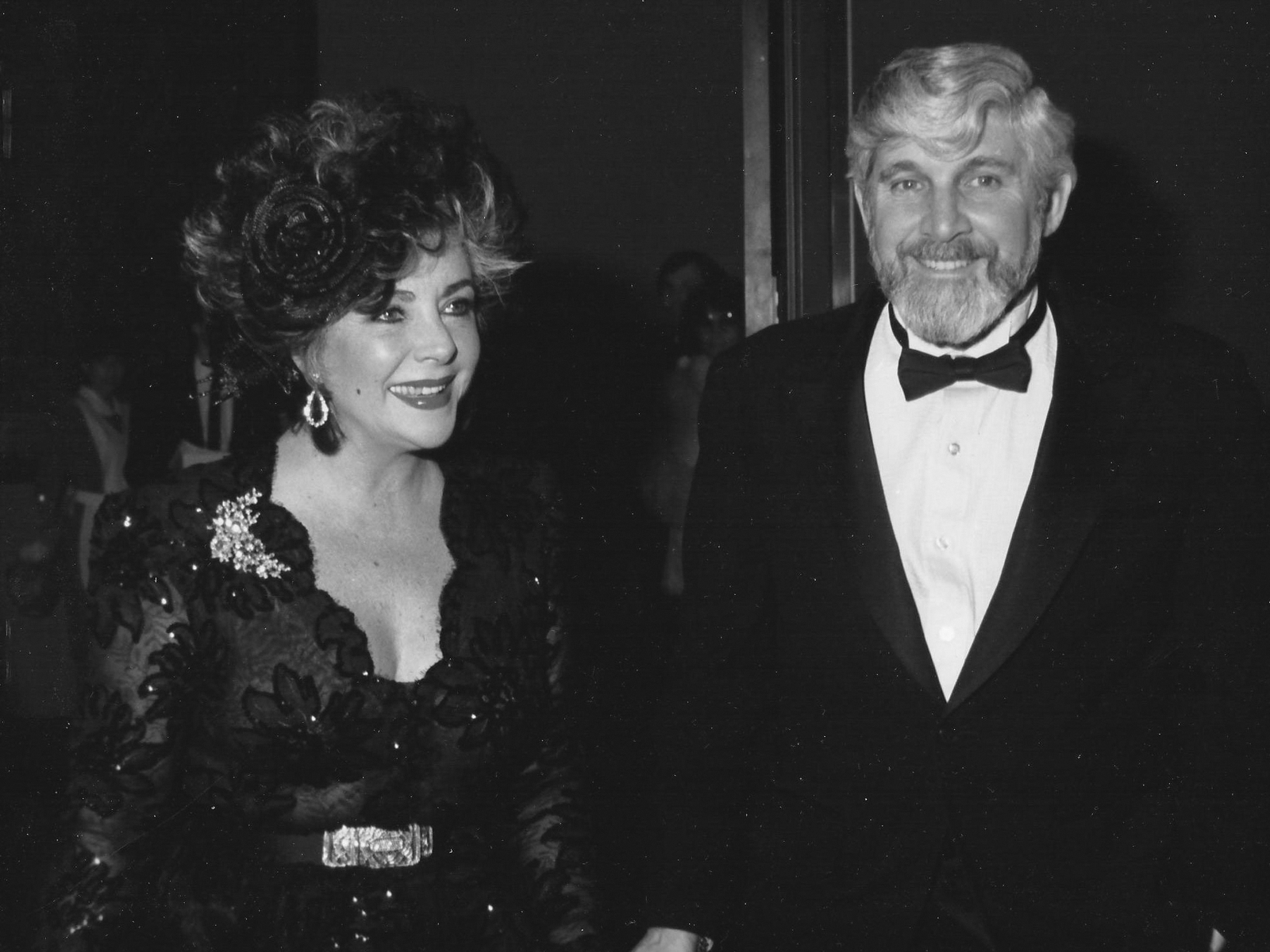
Dr. Silverman with Elizabeth Taylor at a 1986 amfAR fundraising event in San Francisco, California.
I
During this time of the first appearance of what was then designated as gay-related immune deficiency (GRID), fear began to travel across the gay community and within the medical establishment, then to the public at large. Superstition and condemnation were spreading as quickly as the disease itself. Because this mysterious syndrome was killing young men in their prime, and because its source and its method and ease of spread were unknown, this national anxiety came to be manifested in a rising level of discrimination against gay individuals, and the stigmatization of anyone with symptoms of the new disease. At the Health Department, in addition to being alarmed about the more obvious effects on those in the gay community, we were very apprehensive from a public health perspective because this was an emotional climate that could drive the problem underground, making it very difficult to confront.
In San Francisco, I was fortunate to be facing this baffling new epidemic along with some very committed and capable health care professionals, political leaders, and community advocates. But despite this supportive milieu, many here, as elsewhere, externalized their feelings of helplessness and fear, striking out against those infected, igniting an atmosphere of hysteria. Several religious organizations added fuel to the fire. Some physicians across the nation were refusing to treat people who were symptomatic, while others were demanding their isolation. Even in San Francisco, a few physicians were reacting unprofessionally, spreading fear and requiring their staff to wear “moon suits” when providing services to those living with HIV.
As this medical nightmare grew, it was clear that the health care community and all of those affected by HIV were facing another major obstacle: apathy from the Reagan Administration. Many politicians were resistant to grapple with the issue at all. Out of this sad state of affairs, the American Foundation for AIDS Research (amfAR) was created, to raise funds for the support of much-needed basic research, to affect public policy, and to provide objective information about the disease. I was brought onto the staff of amfAR as the National Spokesperson, and attended its first Board meeting in early 1986. When the Board gathered, the last person to arrive was Elizabeth Taylor, who was received with a standing round of applause. I had expected to meet an aloof movie star and was pleasantly surprised to find a down-to-earth, funny, yet very serious advocate for the mission of amfAR and the needs of those living with HIV. She was passionate about this new disease affecting young men, and irate that the government and the general public seemed to be ignoring it. The official silence made Elizabeth Taylor's celebrity even more valuable in creating an opening for a widespread, meaningful national discussion.
She had been affected greatly by the illness of her good friend, Rock Hudson, and others in the entertainment community, and was determined to help in confronting this troubling new syndrome. In becoming involved when she did, with no thought of the risk to her own standing and reputation, she brought attention not only to HIV/AIDS itself, but also to our new foundation. Perhaps the most valuable of all her contributions was her early outspokenness when almost all of the other celebrities in the entertainment field were reluctant to associate themselves with this troubling issue. Several months after that inaugural meeting, I was asked to join the Board and was elected President. Elizabeth and I worked closely thereafter for a number of years.
Early on, Elizabeth and I agreed that amfAR should look beyond the United States to deal with the epidemic as a worldwide problem, and appeal internationally in order to raise the needed funds. She brought Jonas Salk and I to a meeting at her home for the sole purpose of exploring what might be done to branch out globally. Later, Elizabeth and I became co-chairs of amfAR's International Committee, and with the funds that were raised, amfAR provided workshops in Kenya, Argentina, and Indonesia, as well as a program for sex workers in Nepal. Sadly, funding did not continue, but the interest in International HIV/AIDS issues was established. This focus has remained, and is now realized in amfAR's highly successful TREATAsia program, which brings together health providers from many Asian countries to cooperate in vital matters of HIV treatment, research, education, and training. Elizabeth remained willing to take on the politicians and anyone else who questioned the need for a forceful response in order to eliminate the stigma and discrimination associated with HIV/AIDS, and to eventually put an end to the epidemic. I will never forget the day in May 1986 when she went before Congress. The fact that she would be testifying must have been spread to all of the congressional offices, because as we walked through the halls, every office door was open and it seemed that every person in those offices was peering out to catch a glimpse of this Hollywood legend. At the hearing she read her testimony emotionally and eloquently. I had the strong impression that she had captured the attention and the sympathy of everyone in the room.
On May 31, 1987, President Reagan was invited by Elizabeth to deliver a speech at the Third International AIDS Conference amfAR dinner. This was only his second speech on AIDS in 6 years. By the time the President gave that speech, 40,000 Americans had already died of AIDS. The first part of the speech reflected the input of amfAR staff. Unfortunately, the second half was less than satisfactory, having been changed substantially by members of his staff to include, among other things, a call for mandatory testing of many groups. Members of the community in attendance were so angered that they booed, standing and turning their backs to the President. Sadly, after this belated speech, it took his administration even longer to direct the necessary funds to meet the medical and social needs arising from what was by now a full-scale, rapidly increasing epidemic.
In 1992, we had the opportunity for an audience with the King and Queen of Spain while in the country to receive the Prince of Asturias Award on behalf of amfAR. As we chatted with the King and Queen, Elizabeth, undeterred by traditions and unrestrained in her enthusiasm, did not hesitate to extol the virtues of condoms as a means to prevent the spread of HIV.
Despite a number of medical conditions that would have sidelined lesser individuals, Elizabeth participated in many fundraising events that would never have been as successful had she not made an appearance. Given her concern with the more immediate needs of patients, she later established the Elizabeth Taylor AIDS Foundation to raise and provide funds for the care of people with HIV/AIDS. But her commitment to the research and policy efforts of amfAR continued. These, and other memories of Elizabeth's contributions, will always remain with me.
Until her death, she fervently believed in this cause.