




Abstract
Dr. Gregg L. Semenza is recognized here as a Redox Pioneer because he has published three articles that have been cited more than 1,000 times, and 74 articles that have each been cited more than 100 times. Dr. Semenza is known for his seminal discovery of hypoxia-inducible factor-1 (HIF-1) and for identifying molecular mechanisms underlying transcriptional responses to hypoxia. The discovery of HIF-1 is regarded as a fundamental breakthrough in understanding the molecular basis of O2 sensing, and led to the identification of related transcriptional activators now known as the HIF family, which are the focus of many investigator's studies around the world. Understanding the molecular basis of cellular responses to hypoxia is of immense physiological significance and has tremendous implications for medicine. Compelling evidence now exists for the involvement of HIF-1 signaling in the progression of cancer, cardiovascular morbidities associated with aging and diabetes, and pulmonary vascular remodeling in response to chronic hypoxia. Dr. Semenza's findings have led to the development of inhibitors of the HIF-1 signaling pathway, which are currently being tested for treatment of cancer. He has received several honors for his scientific contributions, including the 2010 Gairdner Foundation International Award and election to the National Academy of Sciences of the United States of America. Antioxid. Redox Signal. 13, 559–564.

What makes a career in science tremendously fulfilling is the opportunity to examine life through one's own point of view, and then, in one's own voice, to tell others what one has found. What makes science endlessly exciting (and ultimately humbling) are the unexpected twists and turns in the pursuit of knowledge. As Hamlet said, “There are more things in heaven and earth, Horatio, than are dreamt of in your philosophy.”
Educational and Professional Training
Summary of Dr. Semenza's Top Contributions
The molecular mechanisms underlying how mammalian cells sense changes in O2 concentration and respond with alterations in gene expression remained an enigma for decades. In 1992, Dr. Semenza identified hypoxia-inducible factor 1 (HIF-1), a protein that activates transcription in response to hypoxia in all metazoan cells. His research established that complete HIF-1α deficiency is embryonic lethal, with failure of circulatory system development. Partial deficiency leads to impaired physiologic responses to hypoxia/ischemia. He further established the importance of HIF-1 signaling in cancer and cardiovascular disease. (Supplemental Tables 1 and 2; see
Description of Key Finding 1
Discovery, isolation, and purification of HIF-1
The glycoprotein hormone erythropoietin (EPO) regulates O2 levels in the blood by increasing the number of erythrocytes. Until the early 1990s, neither the precise cell types that produce EPO nor the mechanisms by which circulating oxygen levels regulate EPO production were known. In 1991, while investigating the basis of oxygen-regulated human EPO expression, Dr. Semenza identified a cis-acting DNA sequence in the EPO gene, which was designated the hypoxia-response element (HRE; 15). In 1992, he identified a nuclear factor, designated hypoxia-inducible factor1 (HIF-1), which binds to the HRE sequences necessary for transcriptional activation of the EPO gene in response to hypoxia. HIF-1 binding requires de novo protein synthesis, and HIF-1 activity was present only in cells cultured under hypoxia (17). Subsequently, his laboratory demonstrated that HIF-1 and its recognition sequence are common components of a general mammalian cellular response to hypoxia (23, 24); characterized the HIF-1 complex as a heterodimer composed of an O2-regulated 120-kDa HIF-1α subunit and ∼94-kDa constitutively expressed HIF-1β subunit; purified HIF-1 by DNA affinity chromatography; and isolated cDNA sequences encoding the subunits (22, 25) (Fig. 1).

Dr. Semenza's laboratory showed that overexpression of HIF-1α mimicked hypoxia-induced transcription. HIF-1 is present in all metazoan species that have been analyzed to date. It is established now that besides EPO, HIF-1 mediates transcriptional regulation of several hundred genes in response to hypoxia. Included among these are genes coding for secreted proteins that control angiogenesis (i.e., O2 delivery), as well as genes coding for enzymes and transporters that control energy metabolism (i.e., O2 use). The fundamental discovery by Semenza established the master transcriptional regulatory role of HIF-1 and the mechanism by which hypoxia regulates gene transcription.
Description of Key Finding 2
HIF-1 in cancer progression
Semenza's laboratory demonstrated that HIF-1α levels were increased in the majority of human cancers (32) as a result of intratumoral hypoxia and genetic alterations such as PTEN loss of function (31) or HER2neu gain of function (9). In mouse models, increasing HIF-1α levels in cancer cells increased tumor growth and promoted angiogenesis by increasing vascular endothelial growth factor expression, whereas decreasing HIF-1 activity had the opposite effect (19). In patients, increased HIF-1α levels in tumor biopsies were associated with decreased survival (1). Semenza's laboratory identified mechanisms by which HIF-1 promotes metastasis, including increased expression of extracellular matrix proteases (5) and repression of E-cadherin (6). Dr. Semenza also identified drugs that inhibit HIF-1 and showed that they block tumor growth and angiogenesis (7, 8, 30).
Description of Key Finding 3
HIF-1 and vascular morbidities associated with aging and diabetes
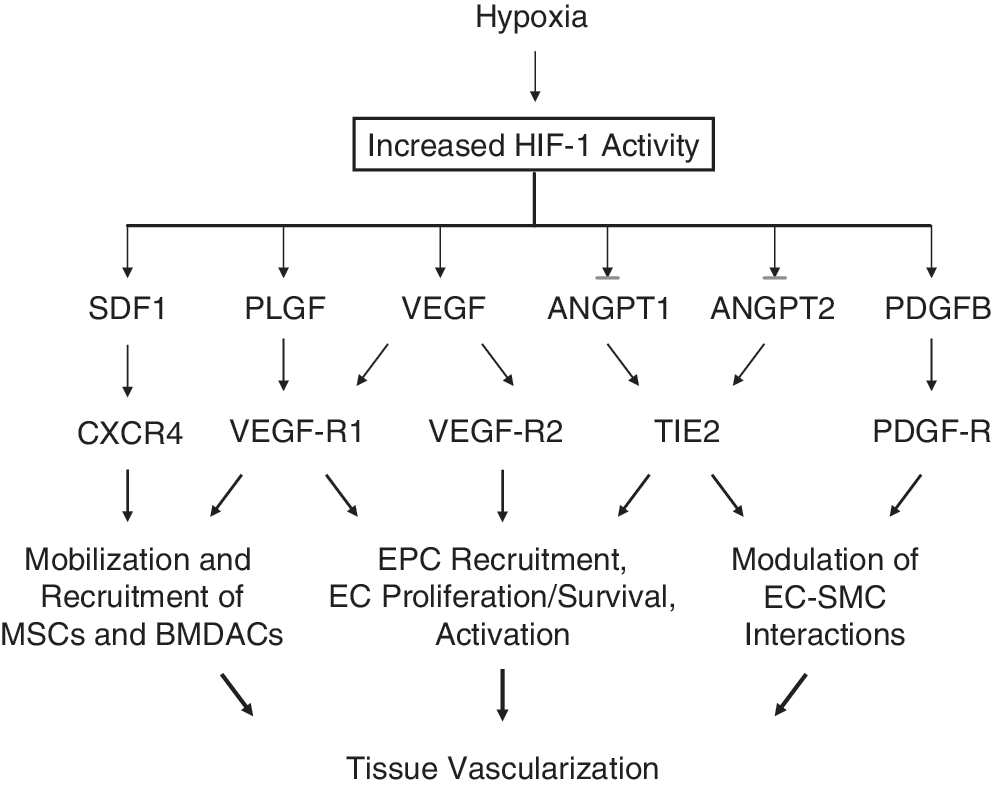
In addition to its involvement with cancer progression, recent studies from Semenza and his group implicate HIF-1 in vascular morbidities associated with aging and diabetes. Ischemia is a stimulus for production of angiogenic cytokines that activate local vascular cells and mobilize angiogenic cells to the circulation; these responses are impaired in elderly patients with peripheral arterial disease (PAD). HIF-1 mediates adaptive responses to ischemia, including production of angiogenic cytokines. However, HIF-1 expression and function is impaired with age. In a recent study, Semenza's group (2) reported that HIF-1α gene therapy can counteract the pathologic effects of aging in a mouse model of limb ischemia. In very old mice, HIF-1α gene therapy combined with administration of bone marrow–derived angiogenic cells that were treated with a chemical inducer of HIF-1 resulted in limb salvage (11). Diabetes is a major risk factor for ischemic disease. Treatment options for diabetes patients with PAD in whom revascularization is not possible are currently limited, resulting in a high incidence of limb amputation. By using a diabetic mouse model of limb ischemia, Semenza's laboratory (12) showed that HIF-1α gene therapy increased the recovery of limb perfusion and function, reduced tissue necrosis, and rescued the diabetes-associated impairment of circulating angiogenic cells. Figure 2 illustrates the regulation of vascularization by HIF-1. These findings highlight the therapeutic potential for HIF-1α gene therapy for alleviating the vascular morbidities associated with aging and diabetes.
Other Achievements
Role of HIF-1 in pulmonary hypertension and ischemic retinopathy
HIF-1 and pulmonary hypertension
Based on both experimental and clinical data, it has been proposed that HIF-1 plays an important role in the pathogenesis of pulmonary hypertension (13). In a mouse model of pulmonary hypertension, hypoxia-induced increases in right ventricular mass, right ventricular pressure, and medial wall thickness of pulmonary arterioles were impaired in mice that were heterozygous for a null allele at the locus encoding HIF-1α, compared with wild-type littermates (21). Electrophysiologic analyses revealed that hypoxia-induced hypertrophy and depolarization of pulmonary arterial smooth muscle cells from wild-type mice were significantly impaired in heterozygotes (18). HIF-1 regulates the expression of genes encoding voltage-gated K+ channels (27) and transient receptor potential calcium channels (26) to mediate those effects (Fig. 3). In clinical studies, examination of lungs of patients with severe pulmonary hypertension revealed dramatic overexpression of HIF-1α within proliferating endothelial cells of plexiform lesions that obliterate the lumen of pulmonary arterioles. These cells also expressed both VEGF and VEGF receptors, indicating that autocrine VEGF-VEGF receptor signaling may contribution to the pathogenesis of plexiform lesions (20). Together, these studies implicate HIF-1 in pathologic alterations of both smooth muscle and endothelial cell biology in patients with pulmonary hypertension.

HIF-1 and retinopathy
Digoxin and other cardiac glycosides inhibit HIF-1 transcriptional activity (30). A recent study (28) showed that in mouse models of ischemic retinopathy, intraocular or intraperitoneal injection of digoxin markedly reduced retinal levels of HIF-1α protein and blocked expression of mRNAs encoding multiple hypoxia-regulated proangiogenic proteins and their receptors. Because digoxin suppresses multiple pathways in addition to VEGF signaling, it may provide advantages over specific VEGF antagonists for treatment of patients with retinal and choroidal diseases complicated by neovascularization or excessive vascular permeability or both.
Current Position
Dr. Semenza is currently the C. Michael Armstrong Professor at The Johns Hopkins University School of Medicine, with appointments in the Departments of Pediatrics, Medicine, Oncology, Radiation Oncology, and Biological Chemistry. He also is the Founding Director of the Vascular Program at the Johns Hopkins Institute for Cell Engineering. He is an elected member of the Society for Pediatric Research, the American Society for Clinical Investigation, the Association of American Physicians, and the National Academy of Sciences USA. He currently serves on the Editorial Boards of Antioxidant and Redox Signaling, Cancer Biology and Therapy, Cancer Research, Cardiovascular Research, Circulation Research, Experimental Physiology, Journal of Clinical Investigation, Molecular and Cellular Biology, Molecular Cancer Therapeutics, and Oncogene, and as Editor-in-Chief of the Journal of Molecular Medicine. His research has been supported continuously for the last 22 years by grants from the National Institutes of Health (NCI, NEI, NHLBI, NIDDK, NIDR, and NIGMS).
According to Dr. Semenza, “What makes a career in science tremendously fulfilling is the opportunity to examine life through one's own point of view, and then, in one's own voice, to tell others what one has found. What makes science endlessly exciting (and ultimately humbling) are the unexpected twists and turns in the pursuit of knowledge. As Hamlet said, ‘There are more things in heaven and earth, Horatio, than are dreamt of in your philosophy.’”
Areas of Interest in Redox Biology
Metabolic responses to hypoxia
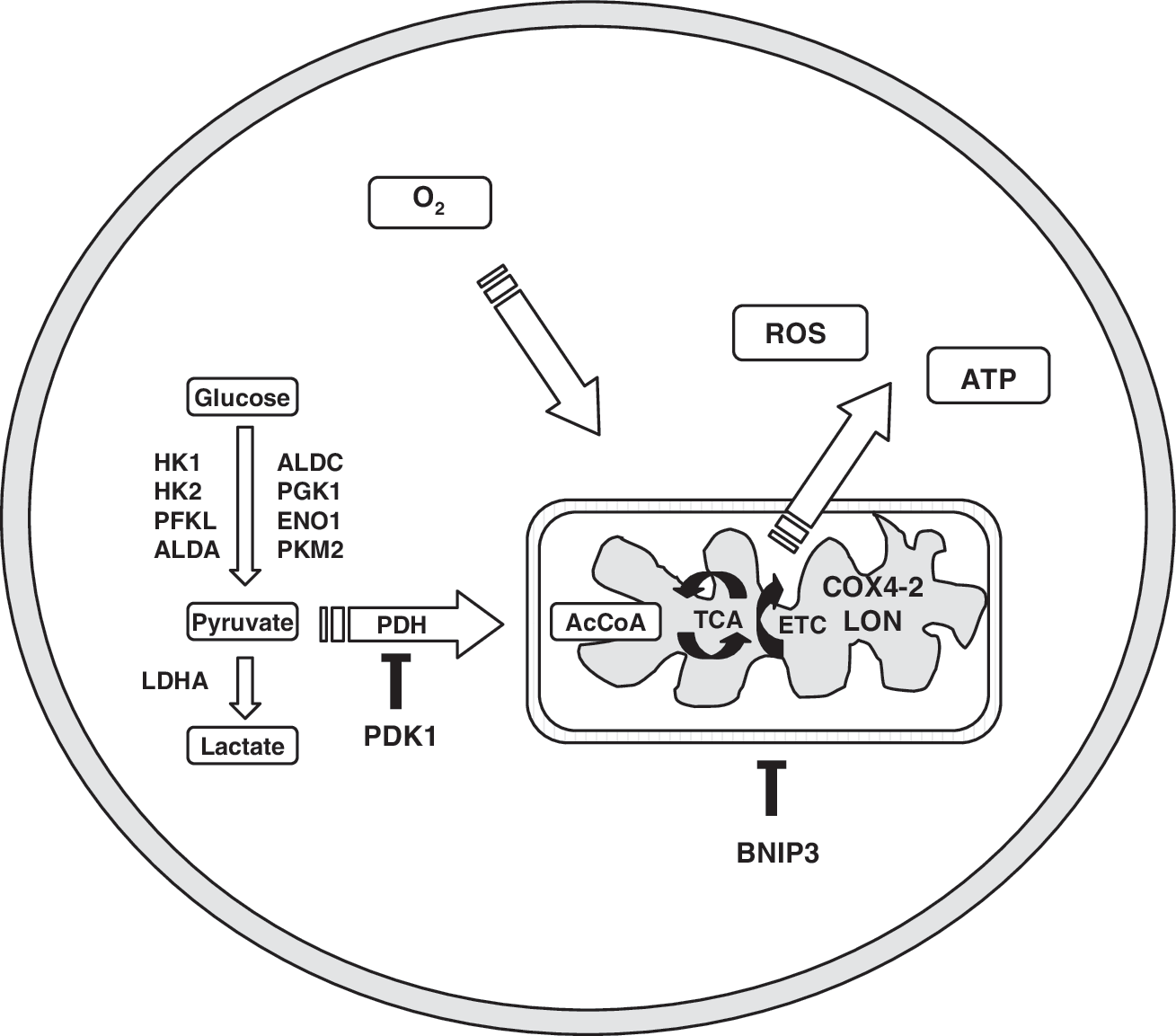
The Semenza laboratory demonstrated that HIF-1 mediates the switch from oxidative to glycolytic metabolism, the classic intracellular adaptation to hypoxia. Whereas conventional wisdom held that hypoxic cells switch to glycolysis as a default state when oxygen levels are limiting for oxidative phosphorylation, Semenza (30) demonstrated that O2 is not limiting for ATP synthesis when fibroblasts are exposed to 1% O2. Rather, the switch is required to prevent mitochondrial production of lethal levels of reactive oxygen species (ROS) under hypoxic conditions (4, 30). Semenza and collaborators identified three key mechanisms by which HIF-1 reduces cellular generation of ROS under hypoxic conditions. First, HIF-1 orchestrates a subunit switch in cytochrome c oxidase that increases the efficiency of complex IV of the electron transport chain (ETC) in hypoxic cells (3). Second, HIF-1 activates the expression of pyruvate dehydrogenase (PDH) kinase 1, which phosphorylates PDH and inactivates it, thereby blocking the conversion of pyruvate to acetyl coenzyme A for entry into the tricarboxylic acid cycle and thus reducing the delivery of NADH to the ETC (4). Third, HIF-1 activates the expression of BNIP3, a mitochondrial protein that triggers selective mitochondrial autophagy as another means of reducing mitochondrial ROS production (30). Regulation of glucose/energy metabolism and redox homeostasis appears to be the primordial function of HIF-1, which is present in the roundworm Caenorhabditis elegans, a simple metazoan organism consisting of only 103 cells that possesses no specialized systems for O2 delivery but must switch from oxidative to glycolytic metabolism when it burrows into soil (14).
Regulation of glucose and energy metabolism by HIF-1 is schematically illustrated in Fig. 4. This body of work represents a paradigm shift in our understanding of the control of cell metabolism that has placed HIF-1 at a critical nexus between oxygen and redox homeostasis.
HIF-1 and ROS generation during intermittent hypoxia
Sleep-disordered breathing with recurrent apnea is a major cause of morbidity and mortality. Affected individuals have increased risk of systemic hypertension. Sleep apnea results in chronic intermittent hypoxia (CIH). Exposure of rodents to CIH is sufficient to induce hypertension by activation of the carotid body and sympathetic nervous system, leading to increased levels of circulating catecholamines. CIH induces increased levels of reactive oxygen species (ROS), and antioxidant treatment blocks CIH-induced hypertension (10). HIF-1 activity is induced when mice or cultured cells are subjected to CIH, an effect that is blocked by antioxidants. The carotid bodies from mice that are heterozygous for a null (knockout) allele at the locus encoding HIF-1 appear histologically normal but do not respond to continuous hypoxia or CIH. In contrast to wild-type littermates, when heterozygous-null mice are subjected to CIH, they do not develop hypertension or increased levels of HIF-1, catecholamines, or ROS. The data suggest the existence of a feed-forward mechanism in which CIH-induced ROS activate HIF-1, which then promotes persistent oxidative stress, which may further amplify HIF-1 activation, with its consequent effects on gene expression and disease pathogenesis (16).
Footnotes
Reviewing Editor: Chandan K. Sen
Author note: I met Dr. Semenza for the first time in 2001 when he was visiting Case Western Reserve University to give a seminar on physiological consequences of HIF-1 activation. Since then, we have been collaborating, examining the physiological roles of HIF-1 activation, especially in acute O2 sensing in the carotid body and transcriptional responses to chronic intermittent hypoxia.
References
Supplementary Material
Please find the following supplemental material available below.
For Open Access articles published under a Creative Commons License, all supplemental material carries the same license as the article it is associated with.
For non-Open Access articles published, all supplemental material carries a non-exclusive license, and permission requests for re-use of supplemental material or any part of supplemental material shall be sent directly to the copyright owner as specified in the copyright notice associated with the article.
