




Abstract
This Forum addresses the functional and phenotypical diversity of monocytes and macrophages and explores new mechanisms that contribute to the plasticity of these cells. The contributors provide in-depth and comprehensive overviews on selected key mechanisms underlying macrophage plasticity and diversity and how they related to human disease and aging. What emerges from these contributions is the importance of the interactions of macrophages with their dynamic microenvironment and the need for a better mechanistic understanding of how these cells sense environmental cues, integrate and respond to these signals, and thereby themselves help shape their microenvironment. Antioxid. Redox Signal. 25, 756–757.
M
For me, one of the most fascinating aspects of macrophages is their tremendous phenotypic and functional diversity (2). Although we now know that differences in cellular ontogeny certainly contribute to the heterogeneity of macrophage populations, it is also the macrophages' enormous plasticity and ability to respond and adapt to the microenvironment that probably accounts for most of the phenotypic and functional diversity (1). In fact, we are just beginning to learn how monocytes and macrophages “sense” and respond to their environment (Fig. 1). We need a better understanding not only of the nature of the microenvironmental cues that drive their plasticity but also the underlying intracellular mechanisms that mediate both functional and phenotypic adaptation as well as memory.
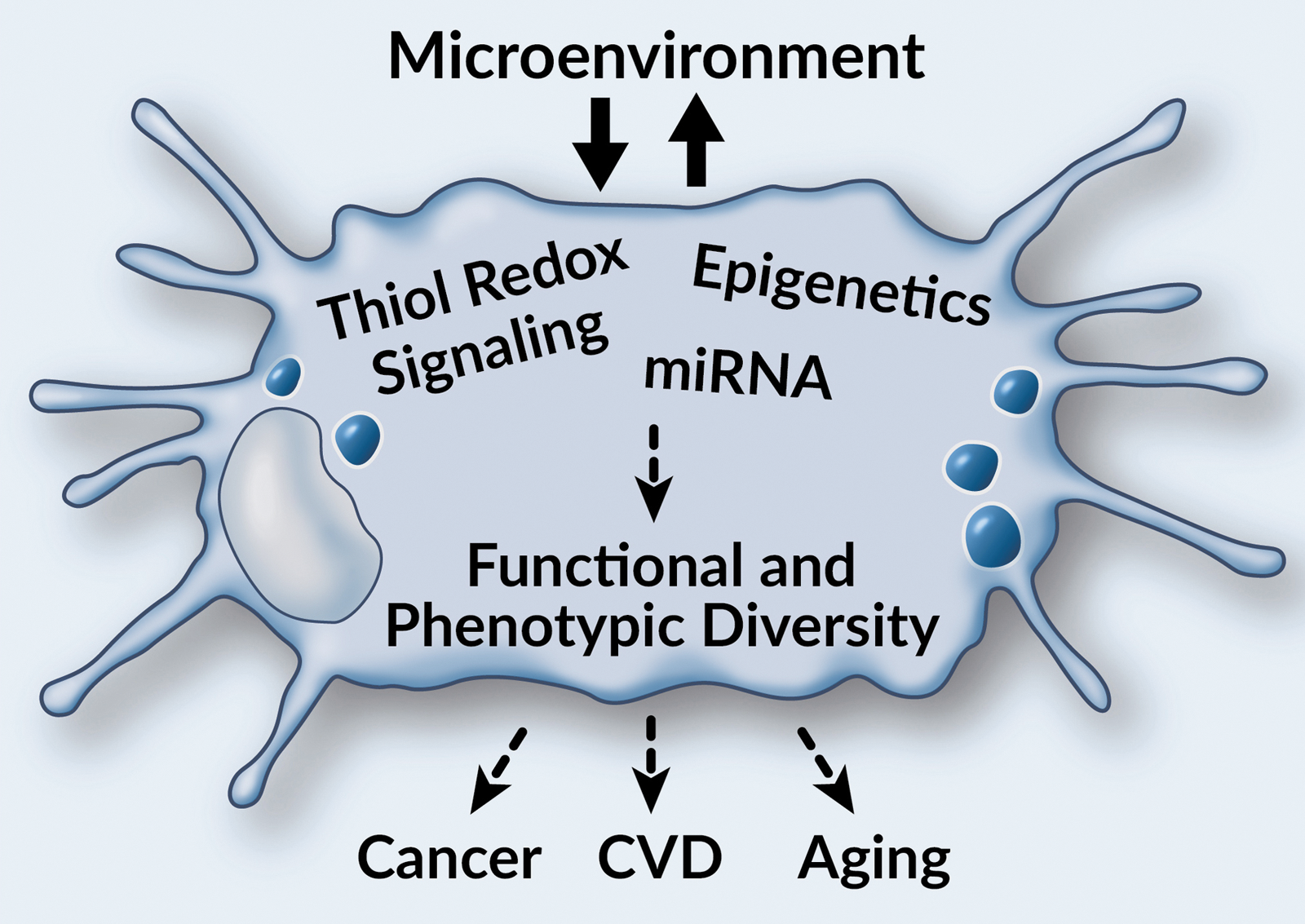
The focus of this Forum is to discuss recent advances and identify knowledge gaps in these areas of monocyte and macrophage biology. The goal was to review the current state of knowledge and, perhaps more importantly, to provide new perspectives to our understanding of mechanisms underlying the astounding functional adaptability and phenotypic plasticity of these cells. The Forum opens with a review by Short et al. on protein thiol redox signaling in monocytes and macrophages that focuses on the role of protein-S-glutathionylation as a novel signaling paradigm and its importance in monocyte and macrophage (dys)function and phenotype. The authors go on to examine the contribution of this reversible post-translational protein modification in monocytes and macrophages to the well-established relationship between metabolic disorders, (thiol) oxidative stress, and cardiovascular disease. This Forum is accompanied by an Original Research article by Ullevig et al. describing a new redox proteomics approach to detect and monitor (patho)physiologically relevant changes in protein-S-glutathionylation in macrophages. The authors identified a novel mechanism linking changes in the metabolic microenvironment to global alterations in macrophage signaling pathways and functionalities that appear to contribute to the plasticity of macrophages and their ability to rapidly adapt to their dynamic microenvironment. The authors also provide the first compelling evidence that thiol oxidative stress in macrophages induced by metabolic disorders in mice is a sexual dimorphic response. The second review by Drs. Hoeksema and de Winther provides a comprehensive overview of epigenetic processes in monocytes and macrophages and discusses in detail how these processes regulate cell differentiation and responses and provide these cells with their enormous plasticity. Dr. Roy covers in depth the importance of miRNA as yet another mechanism contributing to monocyte development and differentiation as well as to the functional and phenotypical diversity of macrophages. The review also addresses the role of miRNA released in macrophage-derived membrane vesicles in intercellular communication and thereby in shaping the macrophages' microenvironment. Drs. Movahedi and Van Ginderachter provide a comprehensive overview on the topic of tumor-associated macrophages (TAMs) phenotype and diversity. They summarize and discuss our current knowledge of both the origins of these TAMs and the contribution of microenvironment-dependent mechanisms to their heterogeneity. Dr. Albright et al. provide a state-of-the-art review on the impact of advanced age on monocytes and macrophages and discuss potential mechanisms leading to “inflamm-aging” and the roles these immune cells play in this process.
Although the reviews I invited for this Forum represent only a limited selection of topics in the vast field of monocyte and macrophage biology, I hope they provide a new and somewhat different approach to our understanding of the functional and phenotypical heterogeneity of monocytes and macrophages and the underlying mechanisms contributing to this diversity. I know all contributors made every effort to provide the reader with state-of-the-art information and I hope their contributions will stimulate new ideas and discoveries. In closing, I would like to thank all the authors for their valuable contributions.