




Abstract
Simple compounds like HCN, which have one C and one N, are proposed as the probable precursors for biomonomers. Formamide, a hydrolysis product of HCN, is known as the precursor of various biologically important compounds, for example, nucleobases (purines and pyrimidines). In this paper, we report our results on the synthesis of nucleobases, adenine, cytosine, purine, 9-(hydroxyacetyl) purine, and 4(3H)-pyrimidinone from formamide, using iron oxide (hematite) and oxide hydroxides (goethite and akaganeite) as a catalyst. Goethite and hematite produced purine in higher yield. The products formed were characterized by high-performance liquid chromatography and electrospray ionization mass spectrometry techniques. Results of our study reveal that iron oxides might have worked as efficient prebiotic catalysts. Key Words: Formamide—Goethite—Akaganeite—Hematite—Prebiotic catalyst—Nucleobases. Astrobiology 11, 225–233.
1. Introduction
S
Synthesis of adenine from ammonium cyanide followed by synthesis of amino acids, purine, and purine intermediates from HCN demonstrated the importance of hydrogen cyanide (Oró, 1960; Oró and Kamat, 1961; Oró and Kimbal, 1961). Molecules like amino acids, purines, pyrimidines, ribose, and deoxyribose sugar that formed on primitive Earth were readily available for further transformation during the course of chemical evolution (Palm and Calvin, 1962). Adenine was synthesized by electron irradiation of methane, ammonia, and water (Ponnamperuma et al., 1963). The occurrence of HCN on primitive Earth is supported by its facile formation under a variety of conditions. HCN has been synthesized from a diverse mixture of gases (Bar-Nun and Shaviv, 1975), including CO, N2, H2 and CO2, N2, and H2O by UV irradiation. HCN has long been known to act as a source for the purines, pyrimidines, and amino acids on primitive Earth (Oró, 1960; Ferris et al., 1978; Ferris and Hagan, 1984; Matthews, 1992). This hypothesis was also supported by the synthesis of uracil due to HCN hydrolysis and synthesis of adenine from HCN oligomerization through a new pathway (Voet and Schwartz, 1982). HCN chemistry provides a preferential route for the synthesis of purines and pyrimidines (Hayatsu and Anders, 1981). HCN undergoes hydrolysis to form formamide and formic acid (Sanchez et al., 1966). Formamide (NH2COH), being a simple amide that contains one carbon atom, has received great attention (Saladino et al., 2004a,b, 2007). This compound displays a high dielectric constant value and boiling point without an azeotropic effect and can be concentrated from dilute solutions simply by water evaporation (Saladino et al., 2005). Formamide was detected in gaseous phase in the interstellar medium (Crovisier, 2004), in long-period comet Hale-Bopp (Bockelee-Morvan et al., 2000), and tentatively in the solid phase of grains around the young stellar object W33A (Schutte et al., 1999). The reaction of formamide in the presence of CaCO3, silica, alumina, kaolin, and zeolite (Y type) yielded purine, adenine, cytosine, and 4(3H)-pyrimidinone as the main products (Saladino et al., 2001). The selectivity and reactivity of formamide can be finely tuned by the presence of minerals and metal oxides. These compounds are heterogeneous catalysts for the condensation of formamide to biomolecules, or alternatively they can control the degradation kinetics of formamide to other compounds that are useful intermediates for prebiotic syntheses (Saladino et al., 2008). Moreover, minerals are able to preserve newly synthesized biomolecules from chemical and photochemical degradations (Scappini et al., 2004; Gallori et al., 2006). Metal oxides characterized by photoreactivity, such as titanium dioxide (TiO2), served as efficient catalysts for the synthesis of different nucleobases from formamide (Saladino et al., 2003). Synthesis of monomers, building blocks of protein and nucleotides from formamide by using different metal oxides and minerals as catalysts, has extensively been studied (Saladino et al., 2004a, 2008). Minerals can catalyze in situ decomposition of formamide to other chemicals that are potentially useful for the construction of both purine and pyrimidine scaffolds, such as ammonia and HCN (Saladino et al., 2004b). Recently the role of clays in the prebiotic synthesis of amino sugar derivatives starting from a mixture of formamide and formaldehyde has also been reported. Since amino sugars are the key intermediates in the synthesis of complex nucleic acid derivatives, this procedure opens a novel pathway for the formation of nucleosides under plausible primordial conditions (Saladino et al., 2010).
Metal oxides are important constituents of Earth's crust and that of other planets; therefore the catalytic role of metal oxides in the course of chemical evolution and origin of life cannot be ruled out. Alumina under mild conditions catalyzes peptide bond formation (Basiuk and Sainz-Rojas, 2001). The iron oxide hydroxide minerals, goethite and akaganeite, were the likely constituents of the sediments present in, for instance, geothermal regions of primitive Earth. These might have adsorbed organics and catalyzed the condensation processes, which may have led to the origin of life. The binding and reactions of nucleotides and polynucleotides on iron oxide hydroxide polymorphs has been studied (Holms et al., 1993). Formation of β-FeOOH in sterile sea water or brine, as in the depths of the Red Sea, has been observed (Holms, 1984). Synthetic ferrihydrite was found to be an adsorbent for amino acids and a promoter for peptide bond formation (Matrajt and Blanot, 2004). Recently, the role of hematite on Mars (Arora et al., 2007) and the interaction of zinc oxide with various nucleotides, namely, 5′-AMP, 5′-GMP, 5′-CMP, and 5′-UMP have been investigated (Arora and Kamaluddin, 2007). The role of aluminum oxides in chemical evolution through interaction of ribose nucleotides has also been studied (Arora and Kamaluddin, 2009). The role of different minerals as an adsorbent for biomolecules (components of informational polymers) has extensively been studied. Reaction conditions have been simulated to those of the primitive Earth environment. One-pot synthesis of nucleic acid bases or their precursor has been demonstrated by reacting formamide and different metal sulfides (Saladino et al., 2008). The results clearly support the thought that processes of chemical evolution were more pronounced in a reducing atmosphere before the evolution of life on primitive Earth (Oparin, 1962). Formation of nucleic acid bases and their precursors from formamide has been found in relatively higher yield by iron in lower oxidation state present in its sulfides (Saladino et al., 2008). One of the aims of the present study was to further explore this concept by using iron oxides in different forms. Different forms of minerals that contain metals in the same oxidation state could also affect the yield of the products due to their regioselectivity. The results of the present study will also further our understanding in this direction. In our studies, iron in the form of oxides has been used in higher oxidized form, Fe(III).
2. Experimental Procedure
2.1. Materials and methods
Ferric nitrate, potassium hydroxide, ferric chloride, potassium dihydrogen phosphate, orthophosphoric acid (Merck), formamide (>99.5%), adenine, cytosine, purine, and 4(3H)-pyrimidinone were purchased from Sigma. All other chemicals used were of an analytical grade and were used without further purification. Millipore water was used throughout the studies.
2.2. Synthesis and characterization of goethite (α-FeOOH), akaganeite (β-FeOOH), and hematite (α-Fe2O3)
All the above synthesized iron oxides were characterized by powder X-ray diffraction with a Bruker AXS D8 powder diffractometer operating with Cu Kα radiation (40 kV, 45 mA, λ = 1.5418 Å) and a scanning speed 2°/min. The X-ray diffraction data of goethite, akaganeite, and hematite are in good agreement with the reported data (Murad, 1979; Hazemann et al., 1991). Data is given in a supplementary section (Figs. S1, S2, and S3; Supplementary Data are available online at

FE-SEM images of goethite (
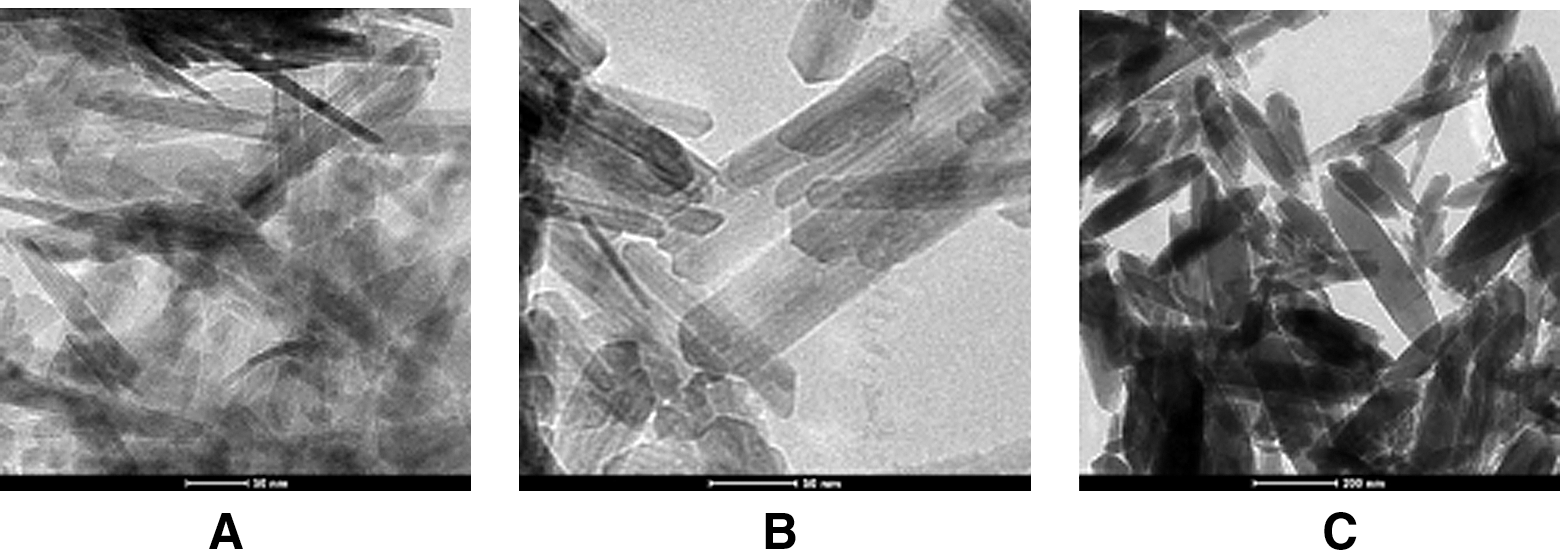
TEM images of goethite (

Selected area electron diffraction patterns for the goethite (
d-
d-
d-
2.3. Synthesis of nucleobases from formamide
In our experiment, the upper limit temperature of 180°C for the synthesis of nucleobases from formamide was set in accordance with the boiling point of formamide (211°C). The lowest temperature at which formamide undergoes appreciable thermal decomposition is reported to be 180–190°C (Kirkpatrick, 1944). Thus, the most favorable set of conditions for the synthesis of nucleobases from formamide would be a high concentration of formamide, the presence of a catalytic system, and a temperature range of 100–180°C (Saladino et al., 2001). We performed the reaction by taking neat formamide (5.7 g, 5 mL, 0.12 mol) at a temperature range of 100–160°C for 12–96 h in the presence of 50 mg of selected catalysts (goethite, akaganeite, and hematite). Blank experiments were also performed under similar conditions. The reaction mixture was centrifuged and filtered with 0.2 μm filter paper; then this mixture was divided into two parts, one for high-performance liquid chromatography (HPLC) analysis and the other for electrospray ionization mass spectrometry (ESI-MS) analysis. It was observed that product gradually started after 12 h, and concentration of the products became constant after 48 h. Hence, it was concluded that 48 h was the optimum time for the formation of the products (Fig. 4). Low yield of the products was observed below 150°C. We focused our attention on the formation and identification of purine and pyrimidine derivatives of the products formed in higher yield only. Other unknown peaks are under investigation. The main identified products were purine, 9-(hydroxyacetyl) purine, 4(3H)-pyrimidinone, cytosine, and adenine as shown (Table 4). Only purine was formed in the blank experiment.
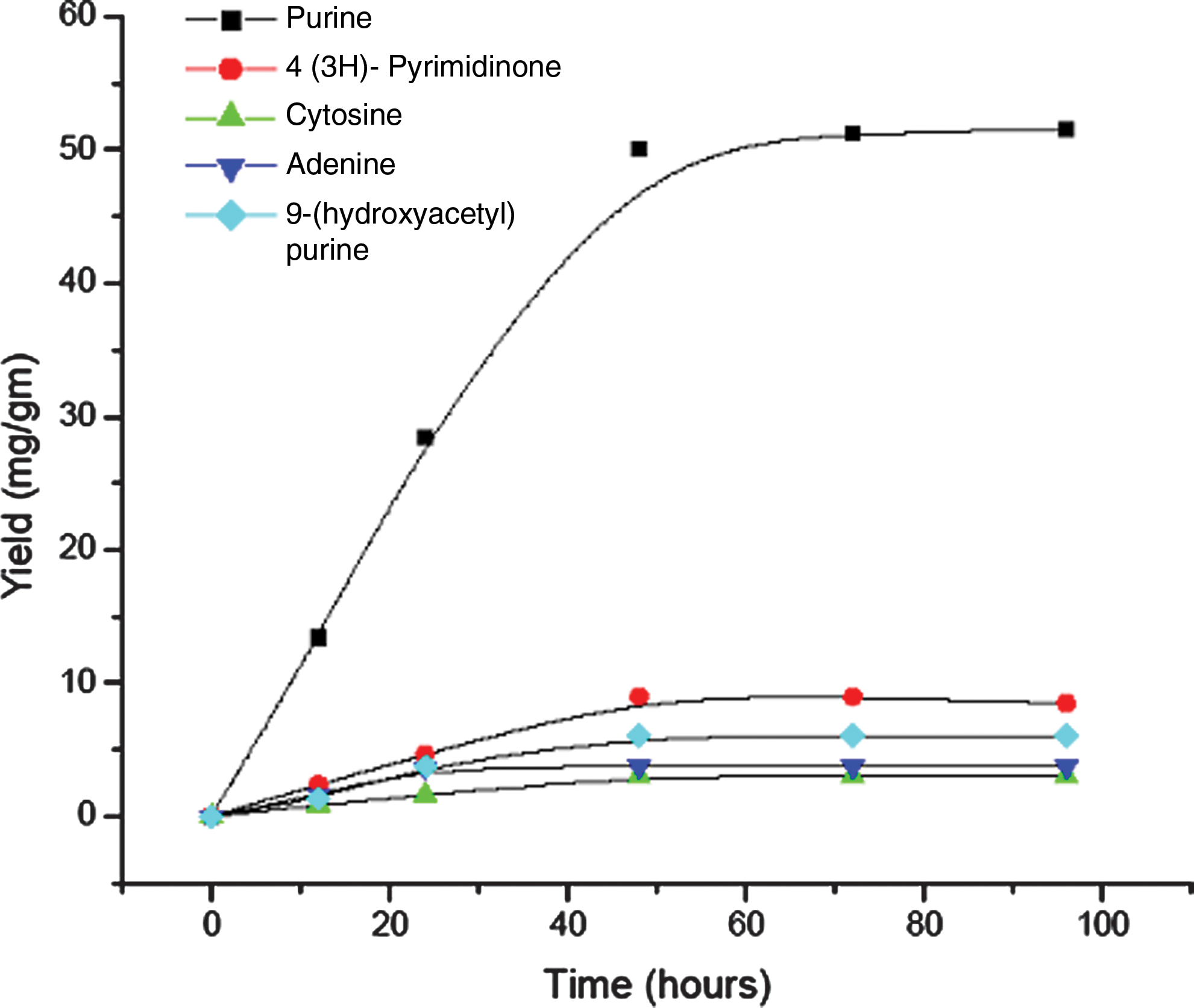
Time-dependent analysis of product formation (formamide heated with goethite). Color images available online at
Reactions were performed in the presence of 50 mg of catalyst.
Quantitative evaluation was performed by HPLC (Agilent 1100 series LC system) equipped with Agilent Hypersil (ODS 5 μm/200 × 2.2 cm) column. Mobile phase used was a buffer solution of (KH2PO4 + H3PO4) of pH ∼ 4.05, with a flow rate of 0.75 mL/min under isocratic condition, and detection of products formed was done by measuring absorbance at 260 nm. Because of the uncertainty of the number of formamide molecules involved in the synthesis of the recovered products, the yield was calculated as milligrams of the product formed per gram of formamide. The yields of products were calculated by comparing peak area with the standards.
Products were identified by co-injection analysis with authentic samples.
3. Results
Our studies on the formation of nucleobases from formamide showed that in the absence of a catalyst only purine was formed, while in the presence of goethite (α-FeOOH), akaganeite (β-FeOOH), and hematite (α-Fe2O3), formamide afforded a number of various nucleobases, namely, adenine, cytosine, purine, 9-(hydroxyacetyl) purine, and 4(3H)-pyrimidinone in good yields (Table 4).
The tentative identification of the product was performed by HPLC and confirmed by ESI-MS technique.
3.1. High-performance liquid chromatography analysis
All the solutions obtained from the reaction system were analyzed with an Agilent 1100 series LC system, which uses an Agilent Hypersil (ODS 5 μm/200 × 2.2 cm) column. The mobile phase used was a buffer solution of (KH2PO4 +H3PO4) of pH ∼ 4.05, with a flow rate of 0.75 mL/min under isocratic condition, and detection of the products formed was done by measuring absorbance at 260 nm.
The HPLC results (Fig. 5) show a number of peaks, including purines and pyrimidines, after analysis of all the reaction mixtures. The products identified were purine, 9-(hydroxyacetyl) purine, cytosine, 4(3H)-pyrimidinone, and adenine, all of which were confirmed by co-injection with authentic samples. It was observed that all three iron oxides used produced nearly the same products, with different yields. Goethite was found to afford the highest yield of purine, 9-(hydroxyacetyl) purine, 4(3H)-pyrimidinone, cytosine, and adenine from formamide. Hematite also produced a higher yield of purine compared to goethite, but other products in lesser yield. Akaganeite afforded the lowest yield of the products in comparison to the other iron oxides used. The yields were recorded in milligrams of product formed per gram of formamide.
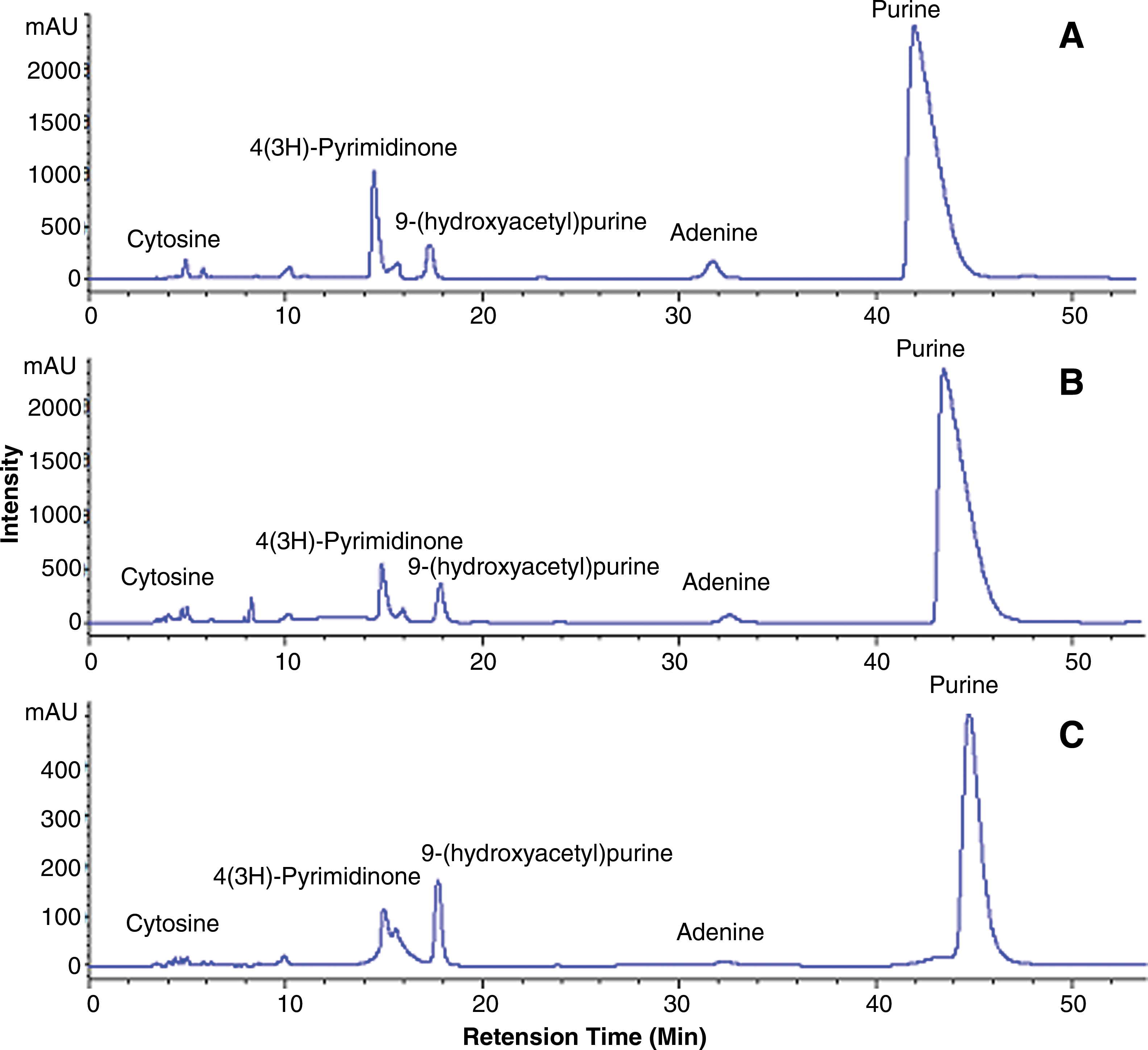
HPLC chromatograms of products obtained when (
3.2. Electrospray ionization mass spectrometry analysis
A Bruker Esquire 4000 (Bruker Daltonics Data Analysis 3.3, Germany) ion trap mass spectrometer interfaced to an ESI source was used for mass analysis for the formation of nucleobases from formamide in the presence of iron oxides. Ionization of analytes was carried out with the following setting of ESI: nebulizer gas flow 10 psi, dry gas 5 L/min, dry temperature 300°C, capillary voltage 4000 V. Calibration of mass-to-charge ratio (m/z) was performed by using an ES-tuning mix. The ESI-MS/MS experiments of the products were also performed under the same conditions by using positive ionization mode.
The spectra of the reaction mixture obtained were characterized by [M + nH]+ ions. Analysis of the reaction solutions by ESI-MS showed formation of cytosine [M + H]+ m/z 112, 4(3H)-pyrimidinone [M + H]+ m/z 97, purine [M + H]+ m/z 121, 9-(hydroxyacetyl) purine [M + H]+ m/z 179, adenine [M + H]+ m/z 136, and adenine [M + 3H]+ m/z 139 (Fig. 6). Figures 6 –8 illustrate the analysis results of the products formed by heating formamide with goethite, hematite, and akaganeite, respectively. As shown in Fig. 6 –8, the peaks at m/z 97, 112, 121, 179, 136, 139, and so on were identified as protonated 4(3H)-pyrimidinone, cytosine, purine, 9-(hydroxyacetyl) purine, and adenine, respectively. Figures S4–S8 belong to the tandem mass spectrometer (MS/MS) spectra of products formed (see Supplementary Information).
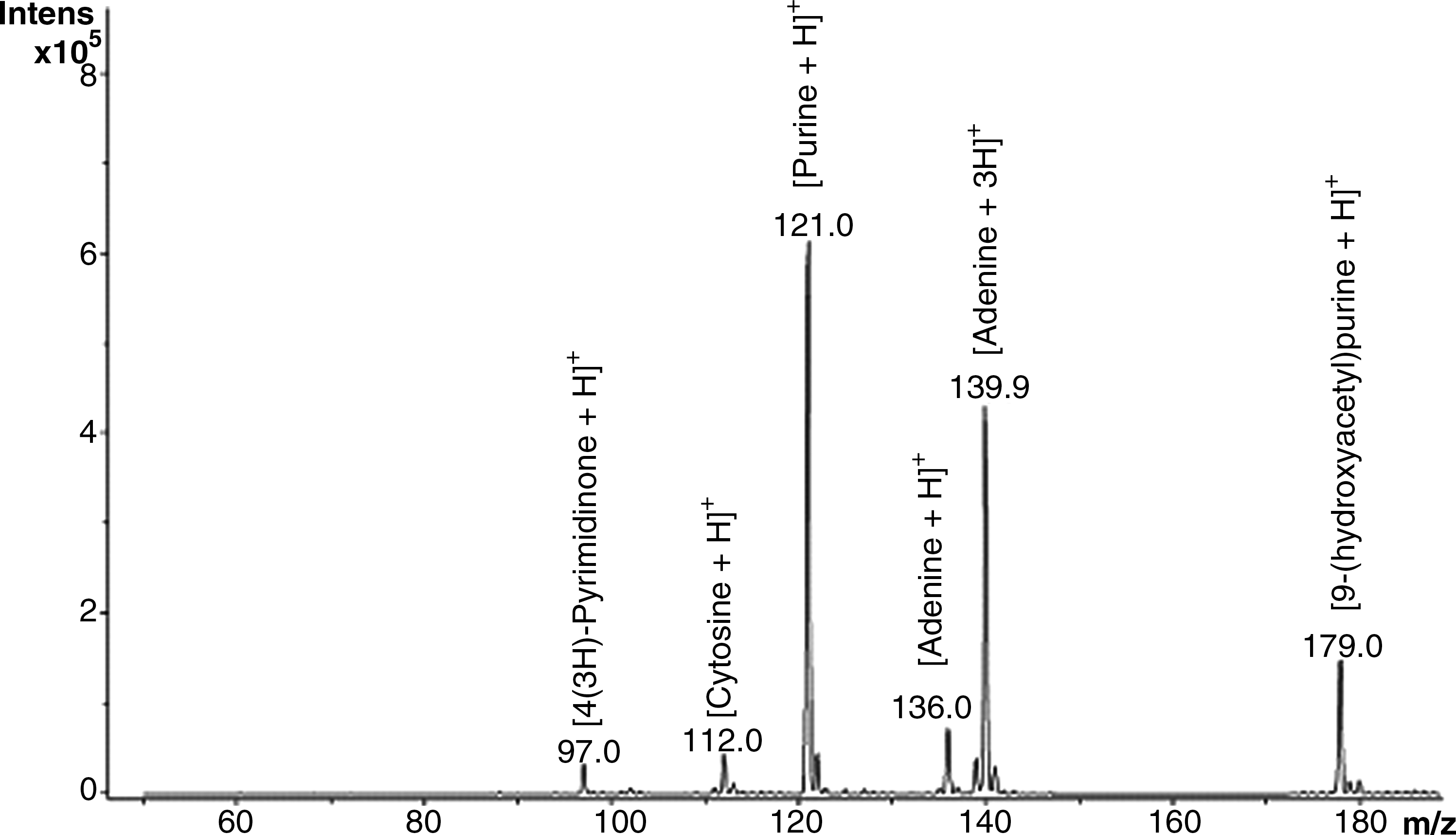
ESI-MS spectra resulting from formamide heated at 160°C for 48 h in the presence of goethite.
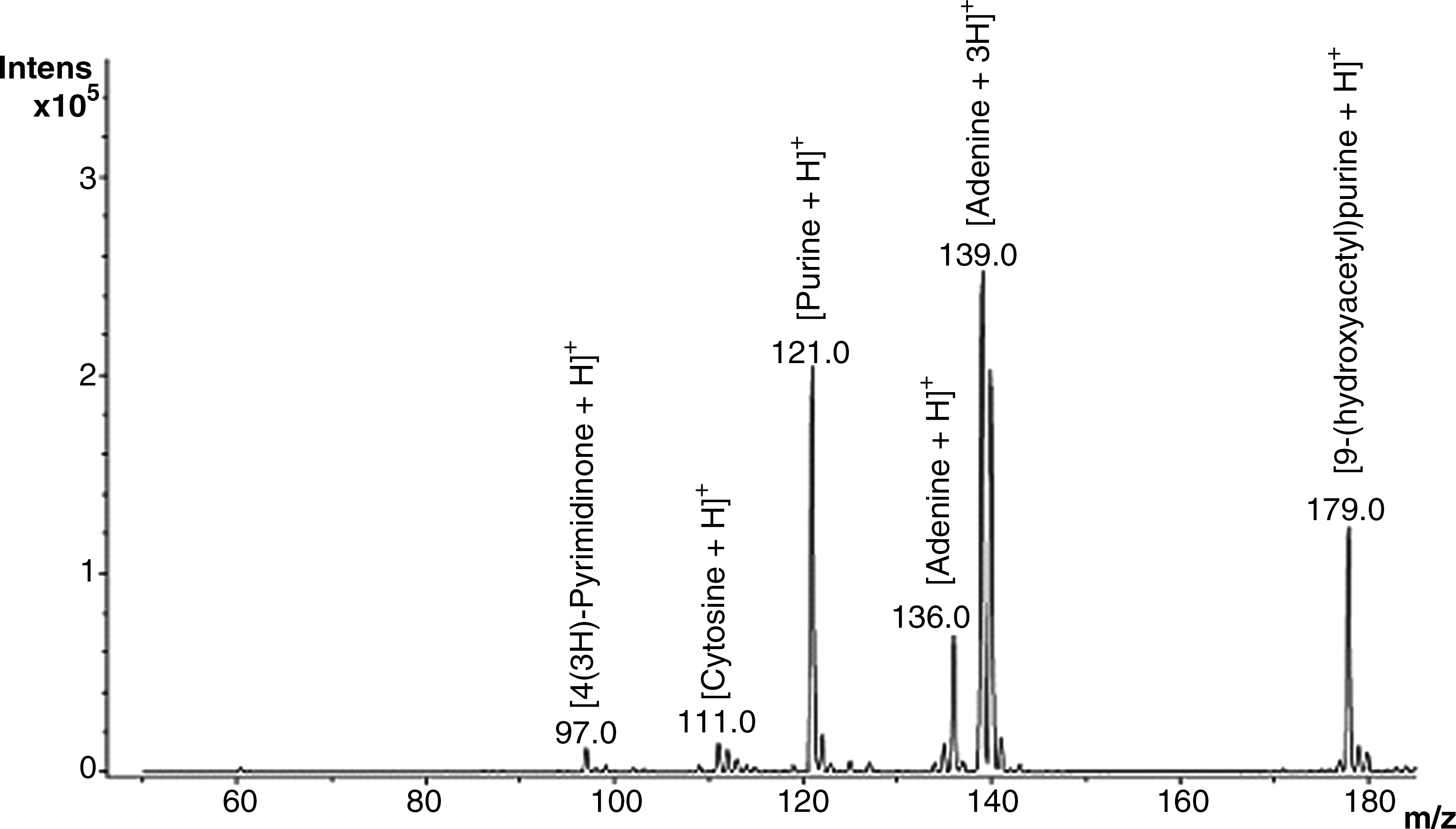
ESI-MS spectra resulting from formamide heated at 160°C for 48 h in the presence of hematite.
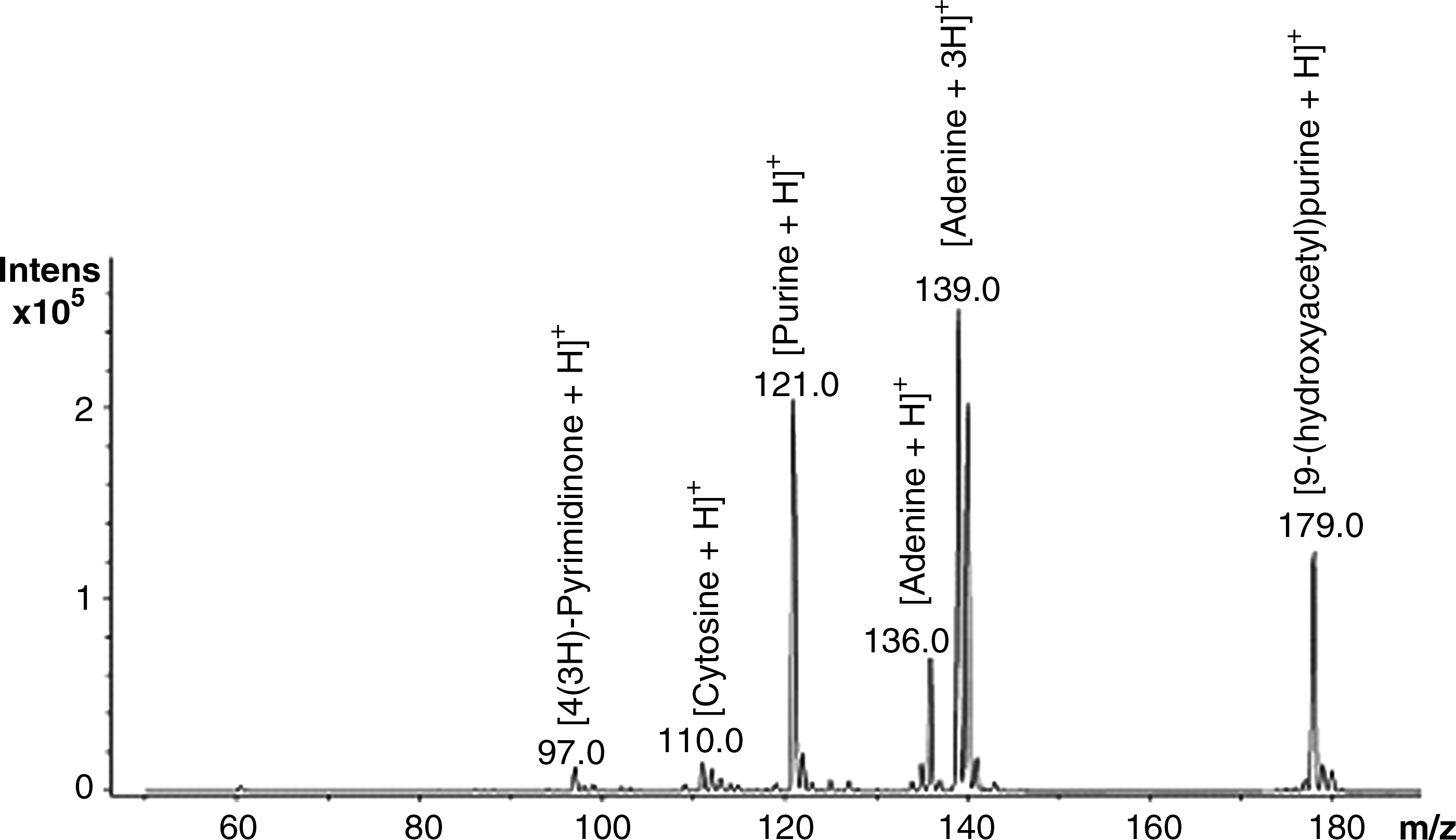
ESI-MS spectra resulting from formamide heated at 160°C for 48 h in the presence of akaganeite.
4. Discussion
The results obtained suggest that iron oxides are efficient catalysts for the formation of nucleobases from formamide. It is important to note from the above study that hematite and goethite afford almost the same yield of purine, while akaganeite affords low yield under the same defined condition of the experiment. The surface area of goethite is 57.34 m2/g, whereas akaganeite and hematite have 24.37 m2/g and 7 m2/g, respectively. Since the surface area of akaganeite is larger than that of hematite, it seems that the yield of the products cannot be explained only on the basis of the surface area of the catalysts, and that other factors such as structural shape, surface acidity, and so on should be considered as well. Goethite and hematite have a hexagonal close packing (hcp) structural arrangement, with an array of anions (O2− and OH-) stacked along the [010] direction. The Fe(III) ions occupy half the octahedral interstices within a layer, where the Fe ions are arranged in double rows separated by double rows of empty sites. The surfaces of the empty sites appear as grooves, which could possibly enhance the catalytic efficiency of goethite and hematite. In the case of akaganeite, the anions are arranged in a body centered cubic array instead of hcp or ccp. From the above observations, we propose that hematite and goethite, which have similarity in structural arrangement, are more suitable to afford a higher yield of products. Akaganeite, which has a body centered cubic arrangement (bcc), is not effective (as compared to goethite and hematite) in producing a high yield of products from formamide. In view of these results, we propose that iron oxides present on primitive Earth could have played a significant role in the synthesis of various biologically important compounds. These catalysts might have increased the thermal stability of nucleobases through molecular recognition processes or simply by their isolation from external environmental conditions.
A more oxidizing early atmosphere would have increased the chances for the existence of oxidized iron minerals like FeOOH and perhaps even manganates. Braterman and coworkers (1983) showed that the Archean banded iron formations may have formed in such an atmosphere due to photochemical reactions caused by visible light. Oxidized iron, mainly in the form of hematite (α-Fe2O3), is present in banded iron formations in the oldest sedimentary sequences on Earth. Both the oxides and oxide hydroxides of Fe(III) have a variable surface charge, which depends mainly on the surface density of protons or hydroxyl groups (Herbillon, 1988). In the contemporary world, oxidized iron minerals are normally precipitated at redox interfaces or at sharp pH gradients, or both. Such environments are, for instance, found in the pore water top layer of aquatic sediments, where groundwater reaches the surface of the pedosphere and where hydrothermal water is injected into the hydrosphere or the atmosphere. Iron oxide hydroxides are the common precipitates of newly oxidized iron. FeOOH polymorphs are relatively easily dehydrated to α-Fe2O3 (hematite) during late diagenesis in sediments (Berner, 1971), especially at slightly increased temperatures or due to the influence of thermal energy in geothermal areas of Earth. Geothermal heat accelerates the transformation.
It is assumed that minerals having metals in reduced form might have been more active during the course of chemical evolution. FeS minerals were shown as important for the synthesis and degradation of nucleic acid components (Saladino et al., 2008). From our study, it may be concluded that different forms of iron oxides that have a higher oxidation state of iron are also important for the formation of various biologically important molecules such as nucleobases from precursors like formamide.
5. Conclusions
The present study shows the potential importance of iron oxide and iron oxide hydroxides as prebiotic catalysts in chemical evolution and in the origin of life. They may have played a significant role in the synthesis of small molecules, such as nucleobases, and in the condensation of these small moieties into larger molecules that were ultimately responsible for the emergence of life on Earth. The present study also supports the hypothesis that formamide was a probable precursor to the formation of purine and pyrimidine bases during the course of chemical evolution and origin of life.
Footnotes
Acknowledgments
This work was supported by the Indian Space Research Organization (ISRO), Bangalore, India. One of the authors, Uma Shanker, is thankful to the Ministry of Human Resource and Development (MHRD), New Delhi, India, for a fellowship.
Abbreviations
EDX, energy-dispersive X-ray; ESI, electrospray ionization; FE-SEM, field emission electron microscope; HPLC, high-performance liquid chromatography; MS, mass spectrometer, mass spectrometry; MS/MS, tandem mass spectrometer, tandem mass spectrometry; m/z, mass-to-charge ratio; TEM, transmission electron microscope.
References
Supplementary Material
Please find the following supplemental material available below.
For Open Access articles published under a Creative Commons License, all supplemental material carries the same license as the article it is associated with.
For non-Open Access articles published, all supplemental material carries a non-exclusive license, and permission requests for re-use of supplemental material or any part of supplemental material shall be sent directly to the copyright owner as specified in the copyright notice associated with the article.
