




Abstract
Meteorite impacts are among the very few processes common to all planetary bodies with solid surfaces. Among the effects of impact on water-bearing targets is the formation of post-impact hydrothermal systems and associated mineral deposits. The Haughton impact structure (Devon Island, Nunavut, Canada, 75.2°N, 89.5°W) hosts a variety of hydrothermal mineral deposits that preserve assemblages of primary hydrothermal minerals commonly associated with secondary oxidative/hydrous weathering products. Hydrothermal mineral deposits at Haughton include intra-breccia calcite-marcasite vugs, small intra-breccia calcite or quartz vugs, intra-breccia gypsum megacryst vugs, hydrothermal pipe structures and associated surface “gossans,” banded Fe-oxyhydroxide deposits, and calcite and quartz veins and coatings in shattered target rocks. Of particular importance are sulfide-rich deposits and their associated assemblage of weathering products. Hydrothermal mineral assemblages were characterized structurally, texturally, and geochemically with X-ray diffraction, micro X-ray diffraction, optical and electron microscopy, and inductively coupled plasma atomic emission spectroscopy. Primary sulfides (marcasite and pyrite) are commonly associated with alteration minerals, including jarosite (K,Na,H3O)Fe3(SO4)2(OH)6, rozenite FeSO4·4(H2O), copiapite (Fe,Mg)Fe4(SO4)6(OH)2·20(H2O), fibroferrite Fe(SO4)(OH)·5(H2O), melanterite FeSO4·7(H2O), szomolnokite FeSO4·H2O, goethite α-FeO(OH), lepidocrocite γ-FeO(OH) and ferrihydrite Fe2O3·0.5(H2O). These alteration assemblages are consistent with geochemical conditions that were locally very different from the predominantly circumneutral, carbonate-buffered environment at Haughton.
Mineral assemblages associated with primary hydrothermal activity, and the weathering products of such deposits, provide constraints on possible microbial activity in the post-impact environment. The initial period of active hydrothermal circulation produced primary mineral assemblages, including Fe sulfides, and was succeeded by a period dominated by oxidation and low-temperature hydration of primary minerals by surface waters. Active hydrothermal circulation can enable the rapid delivery of nutrients to microbes. Nutrient availability following the cessation of hydrothermal circulation is likely more restricted; therefore, the biological importance of chemical energy from hydrothermal mineral deposits increases with time. Weathering of primary hydrothermal deposits and dissolution and reprecipitation of mobile weathering products also create many potential habitats for endolithic microbes. They also provide a mechanism that may preserve biological materials, potentially over geological timescales. Key Words: Impacts—Hydrothermal systems—Iron sulfides—Haughton Crater. Astrobiology 11, 537–550.
1. Introduction
1.1. Haughton impact structure: a post-impact hydrothermal system in a Mars analog environment
The Haughton impact structure is located on Devon Island, Nunavut, Canada (75.2°N, 89.5°W). A simplified geological map of the Haughton impact structure based on work by Osinski et al. (2005) is presented in Fig. 1. The target rock sequence consists of nearly flat-lying Ordovician carbonate rocks, with some evaporite and sandstone layers, that overlie the Precambrian basement of the Canadian Shield (Osinski et al., 2005a). Impacts produce heat both by direct impact heating and by enhanced heat flow from hot rocks excavated from depth in the central uplift (Osinski et al., 2005a, 2005b). Its relatively simple regional geology makes the Haughton impact structure valuable for the study of all impact processes (e.g., Osinski and Spray, 2005). Furthermore, Haughton is also the only terrestrial impact structure known to be set in a polar desert and has experienced a predominantly cold and relatively dry climate throughout most of its history. For this reason, it is exceptionally well preserved despite its age. The environmental conditions at Haughton are certainly not as extreme as those encountered on Mars at present. However, due to the setting in an environment that is by terrestrial standards extremely cold, dry, rocky, dusty, and sparsely vegetated, the site presents several properties analogous to those on Mars, either at the present day or sometime in the past (Lee, 1997; Lee and Osinski, 2005). Haughton, therefore, combines an excellent environment for Mars analog research with the opportunity for valuable research on impact and post-impact processes.
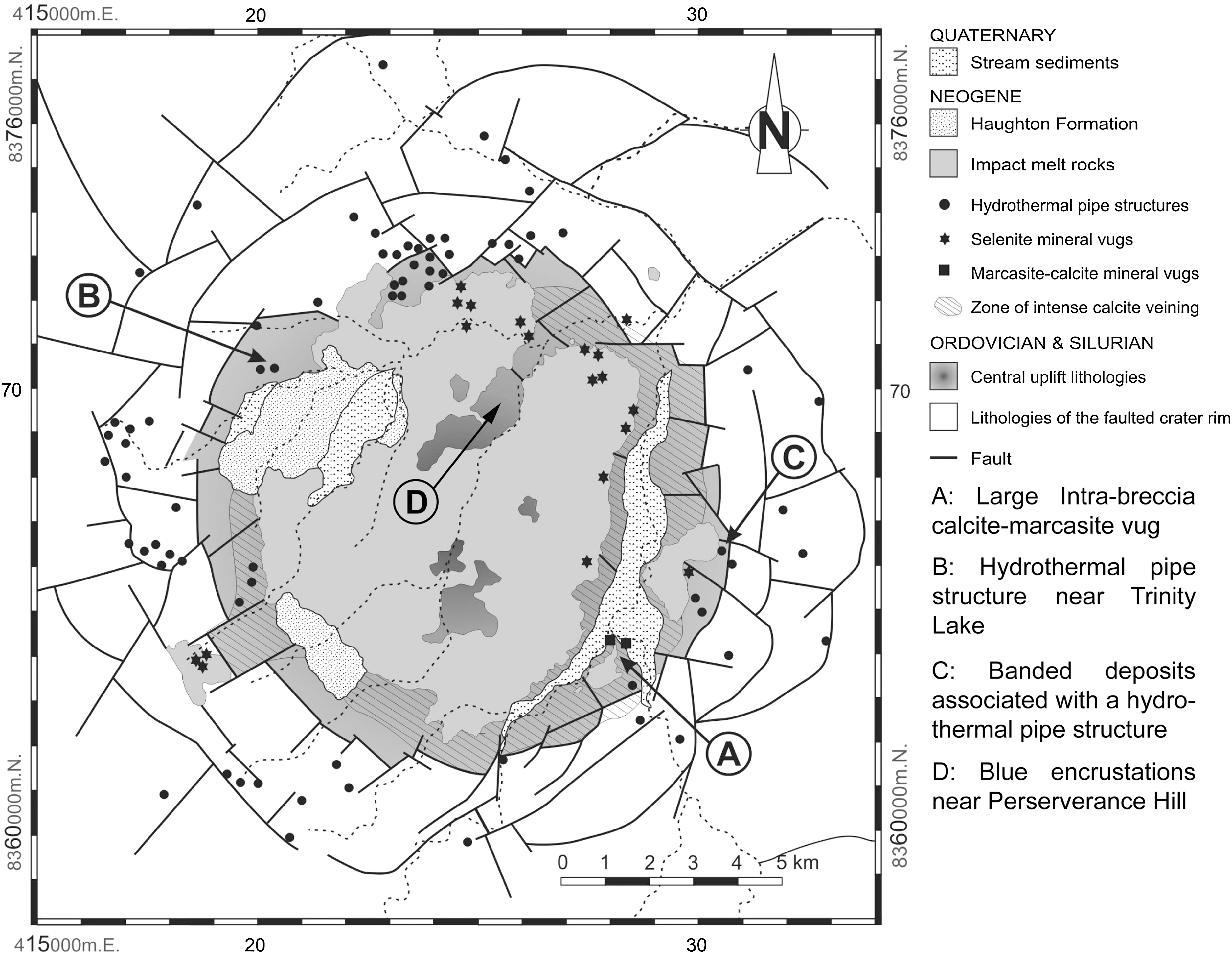
Map of the Haughton impact structure, showing the spatial distributions of different hydrothermal mineral deposit types and host rock lithologies; modified from Osinski et al. (2005a). Representative examples of many deposit types were studied in detail herein: (
Haughton hosts a well-exposed and well-preserved example of a post-impact hydrothermal system. There has been no tectonic, igneous, or other geothermal activity near Haughton since well before the impact event at ∼39 Ma (Sherlock et al., 2005); therefore, the heat source for the hydrothermal system must have been impact generated (Osinski et al., 2005b). In addition to its scientific value for understanding post-impact environments on Earth, this fossil hydrothermal system is of potential relevance to Mars. Impact structures in ice-rich areas of the martian surface, such as the northern plains, could potentially develop post-impact hydrothermal systems (Kring, 2003). Post-impact hydrothermal systems represent a long-lived source of thermal and chemical energy with associated liquid water; furthermore, the impact process creates many potentially habitable microenvironments such as porous impactites, which may be colonized by microbial life (e.g., Cockell and Lee, 2002; Cockell et al., 2002, 2003, 2005; Kring, 2003). Large impacts also deeply fracture the crust, and central uplifts may raise deep-seated crustal material by up to several kilometers (Melosh, 1989). On Earth, therefore, impacts provide a potential mechanism for interaction between the deep biosphere and the near surface. If a deep biosphere ever existed (or still exists) on Mars, impact structures are among the most promising areas for detection during near-future missions.
1.2. Styles of hydrothermal mineralization at Haughton
Osinski et al. (2001, 2005b) described several distinct settings and styles of hydrothermal mineralization at Haughton, as follows: (1) Vugs and veins hosted in impact melt breccias, with an increase in intensity of alteration toward the base. Vug and vein deposits may be further subdivided into those dominated by calcite and sulfides, calcite alone, quartz, and gypsum megacrysts; (2) Hydrothermal pipe structures and mineralization along fault surfaces around the faulted crater rim. The surface exposure of pipe deposits are commonly gossans dominated by secondary and/or remobilized minerals, including Fe oxyhydroxides and gypsum; (3) Intense calcite-and-quartz veining around the heavily faulted and fractured outer margin of the central uplift; (4) cementation of brecciated lithologies by quartz and/or calcite in the interior of the central uplift.
2. Materials and Methods
Samples were collected from various hydrothermal mineral assemblages throughout Haughton. Some materials collected, notably secondary minerals from the intra-breccia calcite-marcasite vugs, were clearly susceptible to dehydration during transport to the lab, based on observations at the field sites. These samples were carefully sealed in Falcon tubes (Becton, Dickinson and Company, Franklin Lakes, NJ, USA) for transport and prepared and analyzed within minutes of removal from the tubes. In addition, many of the samples were extremely porous and friable. Such materials were carefully wrapped in padding materials (paper towels, bubble wrap, polyurethane foam sponge) and placed in hard plastic containers.
2.1. Powder X-ray diffraction
Powders were prepared by grinding with an agate mortar and pestle for ∼30 min. Back-packed mounts were used to reduce the effects of preferred orientation and surface roughness effects. X-ray diffraction data were collected from 2° to 82° 2θ with a step size of 0.02° and scanning speed of 10° min with the Rigaku Rotaflex diffractometer (Rigaku, Tokyo, Japan) at the University of Western Ontario (UWO), operating at 45 kV and 160 mA with a Co rotating anode source (Co Kα, λ=1.7902 Å). Diffractograms were analyzed with the Bruker AXS EVA software package (Bruker AXS, 2005) and the International Center for Diffraction Data PDF-4 database.
2.2. Micro X-ray diffraction (μXRD)
Selected samples were analyzed mineralogically in situ by μXRD. Micro XRD data were collected in coupled scan geometry by the Bruker D8 Discover micro X-ray diffractometer (Bruker AXS, Madison, WI, USA) at the UWO, operating at 40 kV and 40 mA with a Cu sealed tube source (Cu Kα, λ=1.5418 Å), equipped with a HI-STAR two-dimensional detector and General Area Diffraction Detection System (GADDS) software. The two-dimensional GADDS images were integrated to produce conventional angle versus intensity diffractograms, which were analyzed with the Bruker AXS EVA software package (Bruker AXS, 2005) and the International Center for Diffraction Data PDF-4 database. More details on μXRD can be found in Flemming (2007), who presents a detailed introduction to μXRD for the geosciences.
2.3. Inductively coupled plasma–optical emission spectroscopy (ICP-OES)
Powders for ICP-OES were prepared from a selected set of the same samples as used for X-ray diffraction (XRD) to enable direct correlation of the chemical and structural data sets. The samples selected are representative of the large intra-breccia calcite-marcasite mineralized vugs and their associated weathering assemblages. Sample aliquots of 0.2 g each were fused at 1000°C with 1.5 g of LiBO2 flux and then digested in 100 mL of 5% HNO3. Concentrations of Na, Mg, Al, Si, P, K, Ca, Sc, Ti, Cr, Mn, Fe, Co, Ni, Cu, Zn, Sr, Y, Zr, Nb, Ba, Ce were determined with a Perkin Elmer Optima 7300 DV ICP-OES instrument. Loss on ignition was determined by weight differences pre- and post-ignition of the molten bead, and total carbon and sulfur were determined on the same sample split by the LECO method. These analytical techniques have been prepared and developed by ACME Analytical Laboratories, Vancouver, BC, Canada.
2.4. Scanning electron microscopy
Scanning electron microscopy (SEM) imaging, including secondary electron, backscattered electron, and qualitative chemical analysis with energy-dispersive X-ray spectroscopy (EDX) were carried out on a Hitachi S-4300SE/N field emission scanning electron microscope (FESEM) (Hitachi High Technologies America, Dallas, TX, USA) at Texas Tech University Imaging Center. Samples were carbon coated prior to analysis. Operating conditions were 15 kV accelerating voltage with a working distance of ∼10–13 mm. Additional FESEM imagery was collected for the banded materials with the Leo 1540 FIB/SEM CrossBeam field emission SEM at the Nanofabrication laboratory at UWO, equipped with an Oxford Instruments INCA EDX system that allows for qualitative elemental analysis.
3. Results
3.1. Mineralogy of the hydrothermal deposits at Haughton
Field observations, supported by powder XRD and μXRD analysis, ICP-OES chemical analysis, and SEM imaging, revealed a diversity of mineral assemblages associated with the hydrothermal mineral deposits of the Haughton impact structure. Hydrothermal mineral occurrences at Haughton include intra-breccia calcite-marcasite vugs, small intra-breccia calcite or quartz vugs, intra-breccia gypsum megacryst vugs, hydrothermal pipe structures and associated surface “gossans,” banded Fe-oxyhydroxide deposits, and calcite and quartz veining and coatings in shattered target rocks. The aforementioned deposit types represent a combination of hydrothermal precipitates with varying degrees of subsequent weathering, remobilization, and redeposition. Each deposit type was sampled in as complete a manner as possible, with particular attention to obtaining complete weathering product assemblages as well as primary high-temperature hydrothermal minerals and lower-temperature precipitates. This sampling strategy was designed to ensure that mineralogical boundary conditions for biological activity at all stages of post-impact hydrothermal system evolution could be investigated.
3.1.1. Intra-breccia calcite-marcasite vugs
Intra-breccia vugs with calcite and marcasite mineralization occur in the impact melt breccia and are associated with an array of weathering phases (Fig. 2A). Such vugs and associated vein networks may be several meters in size. One example of such a large vug has been erosionally exposed near the Haughton River (location A in Fig. 1) and was the focus of detailed study here. The main body of the vug is lined with sulfides, dominantly marcasite with minor pyrite (cf Osinski et al., 2001, 2005b). Layered deposits of calcite with a flowstone or travertine texture, and hydrothermal breccias surround the sulfide mineralization. The terminations of calcite layers are commonly encrusted with sulfides. Sulfide encrustations appear to begin as scattered euhedral crystals forming marcasite rosettes that eventually merge into continuous layers (Fig. 2B). Rare occurrences of alternating bands of coarsely crystalline calcite and marcasite±pyrite can be observed. Sulfides in the calcite-marcasite vugs are commonly partially replaced or overgrown by a mixture of secondary phases, including hydrous sulfates and Fe oxyhydroxides. Marcasite and pyrite dominate the primary hydrothermal assemblage. Weathering of primary sulfides has produced a variety of secondary assemblages. Dark brown, goethite-bearing material commonly forms pseudomorphs after primary sulfides. Sulfides and goethite-rich materials are coated with a powdery, fine-grained, rusty-orange to rusty-brown material consisting of a mixture of jarosite (K,Na,H3O)Fe3(SO4)2(OH)6, rozenite FeSO4·4(H2O), fibroferrite Fe(SO4)(OH)·5(H2O), goethite α-FeO(OH), and ferrihydrite Fe2O3·0.5(H2O). The uppermost exposed surfaces of weathering assemblages are commonly composed of low-density, fine-grained “fluffy” or “popcorn-textured” efflorescent growths consisting of fibroferrite, copiapite (Fe,Mg)Fe4(SO4)6(OH)2·20(H2O), and gypsum CaSO4·2H2O (Fig. 2C). Wet material in direct contact with ice and meltwater near the base of the vug contained fine-grained marcasite, pyrite, and blue-green transparent crystals of melanterite FeSO4·7(H2O) (Fig. 2D). Melanterite rapidly dehydrates to form a mixture of szomolnokite FeSO4·H2O with minor rozenite, an assemblage that is observed in close proximity to the melanterite-rich material at the base of the vug.
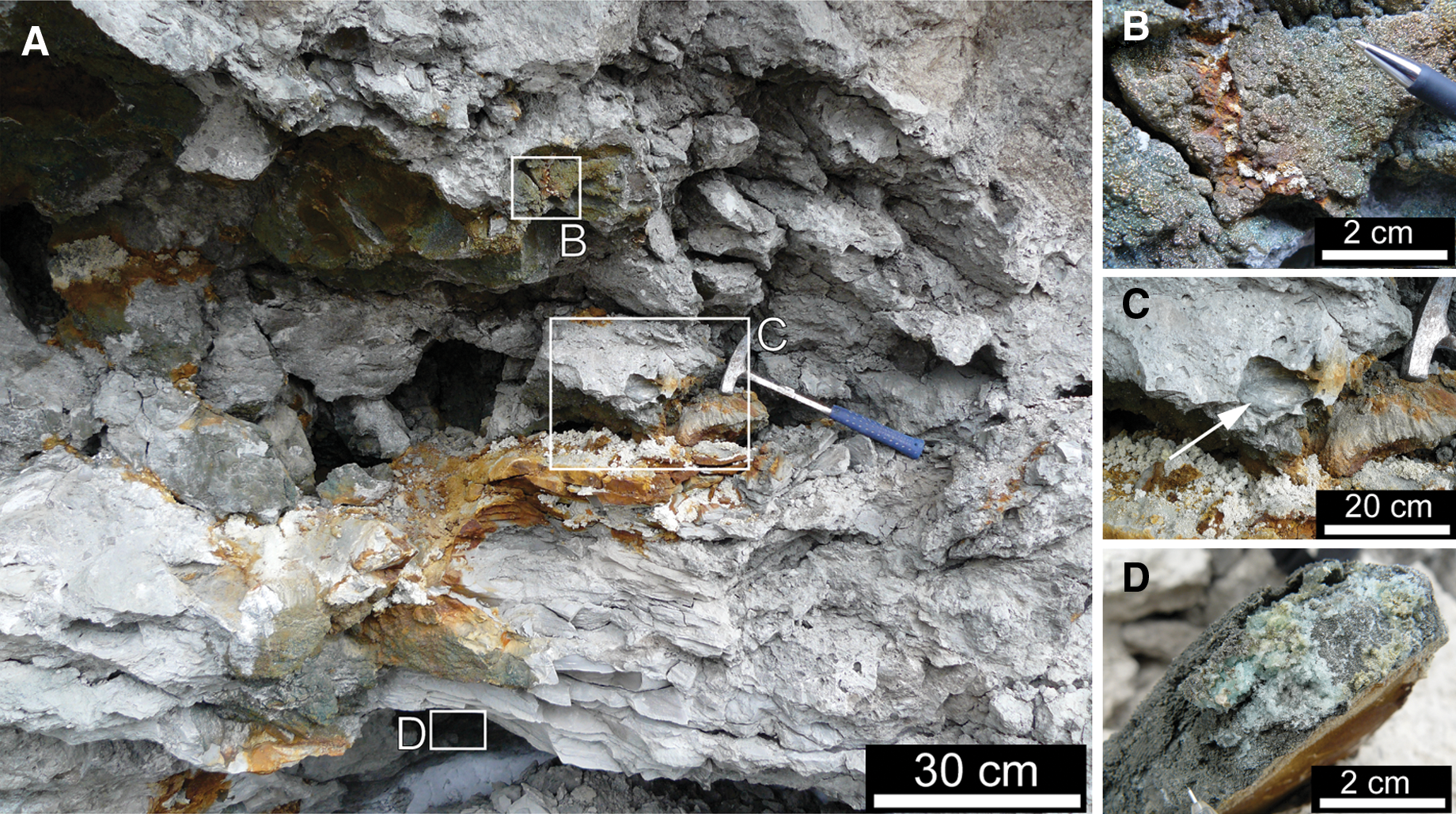
Mineralization in the large intra-breccia vug (Fig. 1, location A). (
A discontinuous sublinear feature, several meters in length and up to ∼0.5 m wide, consisting of highly friable, very fine-grained, gray to brownish-gray material extends along an apparent structural weakness away from the main vug and into the surrounding impact melt breccia. A small patch of this material is marked by the arrow in Fig. 2C. Samples collected from this area include a gray-white material consisting of a mixture of calcite and quartz with minor amounts of montmorillonite. The brownish-gray material also consists of calcite and rozenite, with minor amounts of montmorillonite, marcasite, pyrite, and gypsum. Chemical analysis of representative vug samples are summarized in Table 1.
Oxides, C, S, and LOI (Loss On Ignition) in weight percent; others in parts per million. Gp, gypsum; Cal, calcite; Mrc, marcasite; Qtz, quartz; Py, pyrite; Fib, fibroferrite; Cop, copiapite; Jrs, jarosite; Roz, rozenite; Mnt, montmorillonite; Gth, goethite; Frh, ferrihydrite.
3.1.2. Small intra-breccia calcite or quartz vugs
Small (up to tens of centimeters) vugs of calcite and/or quartz are commonly encountered in the impact melt breccia. Such small vugs may be concentrated at the tops of melt breccia hills by the preferential erosion of fine-grained impact melt breccia. Quartz in these vugs is commonly milky white and drusy-textured. Some vugs also contain opal-α, identified by μXRD. Calcite is fine-grained, colorless, or pale blue, sometimes with prismatic crystal terminations. Both quartz and calcite may have concentric banded textures. Sulfides and sulfates are rare in the small calcite or quartz vugs.
3.1.3. Intra-breccia gypsum megacryst vugs
Gypsum megacrysts occur within impact melt breccia and consist of aggregations of colorless, transparent crystals of gypsum protruding from the impact melt breccia (Osinski et al 2001, 2005b). The gypsum megacrysts form clusters of intergrown prismatic, lathlike, or platy crystals, with individual crystals up to ∼1 m in their longest dimension. Twinning on a (100) composition plane and cleavage along (010) planes were commonly observed. Some gypsum megacrysts contain inclusions that include microbial colonies and organic matter (Cockell et al., 2010), as well as fine-grained detrital material trapped along crystal edges or within cleavage planes. Fluid inclusions are common in the gypsum megacrysts (Osinski et al., 2005b).
3.1.4. Hydrothermal pipe structures and surface “gossans.”
Pipe-like structures are hosted in highly fractured carbonate rocks of the faulted rim of the Haughton structure (Osinski et al 2001, 2005b). A typical example of a hydrothermal pipe structure is located near Trinity Lake (location B in Fig. 1). The surface exposure of the pipe structures is commonly highly friable, porous Fe-oxyhydroxide stained materials, that previous workers (e.g., Osinski et al., 2005b) at Haughton have termed “gossans” by analogy with the oxidized, acid-leached zone of massive sulfide ore deposits (e.g., Wolf, 1981). Pipe structures and associated gossan deposits at Haughton are dominated by a variety of dissolution and reprecipitation textures, as shown in Fig. 3. Gossans contain abundant macroporosity, featuring delicate honeycomb and colonnade textures (Fig. 3A). Gossans are dominated by poorly sorted dolomite, calcite, and quartz clasts ranging in size from fine-silt to coarse pebbles, cemented by fine-grained Fe oxyhydroxides (ferrihydrite and minor goethite) and gypsum (Fig. 3B, 3C). The surface layers are commonly highly friable and porous, with textures consistent with formation by dissolution and reprecipitation. Thin rinds of goethite, which formerly surrounded carbonate clasts that have subsequently dissolved, are common in the gossans. Continuous layers of gypsum, up to a few centimeters thick, commonly occur in the near subsurface of the gossan deposits (Fig. 3C, 3D).

Mineralization at the hydrothermal pipe structure near Trinity Lake, representative of hydrothermal pipes hosted in the faulted rim of the Haughton impact structure. (
3.1.5. Banded Fe-oxyhydroxide deposits
A small stream has deeply eroded a hydrothermal pipe structure at one locality in the east of the crater (location C in Fig. 1), which has exposed a deposit of banded material consisting of alternating dark to pale rust-brown, millimeter- to micrometer-scale laminae (Fig. 4A). Darker layers contain abundant goethite, with ferrihydrite, dolomite, calcite, and traces of quartz (Fig. 4B, 4C). Lighter-colored materials are dominated by dolomite with some calcite, quartz, and traces of ferrihydrite and goethite. Goethite and ferrihydrite form thin coatings around dolomite grains. Vugs lined with coarse ∼several-millimeter-long euhedral calcite crystals also occur sparsely at this locality (Fig. 4D). The banded material contacts sharply and irregularly with brecciated dark gray-brown, organic-bearing dolomitic country rock with pervasive pale white calcite veining (Fig. 4B, 4C; Fig. 5). At the microscopic scale, the banded materials consist of clastic dolomite grains surrounded by veins of calcite with quartz (Fig. 5). It is possible that similar deposits occur at depth at other hydrothermal pipe locations, but no other locations with a similar exposure of the deeper parts of a hydrothermal pipe deposit are known.
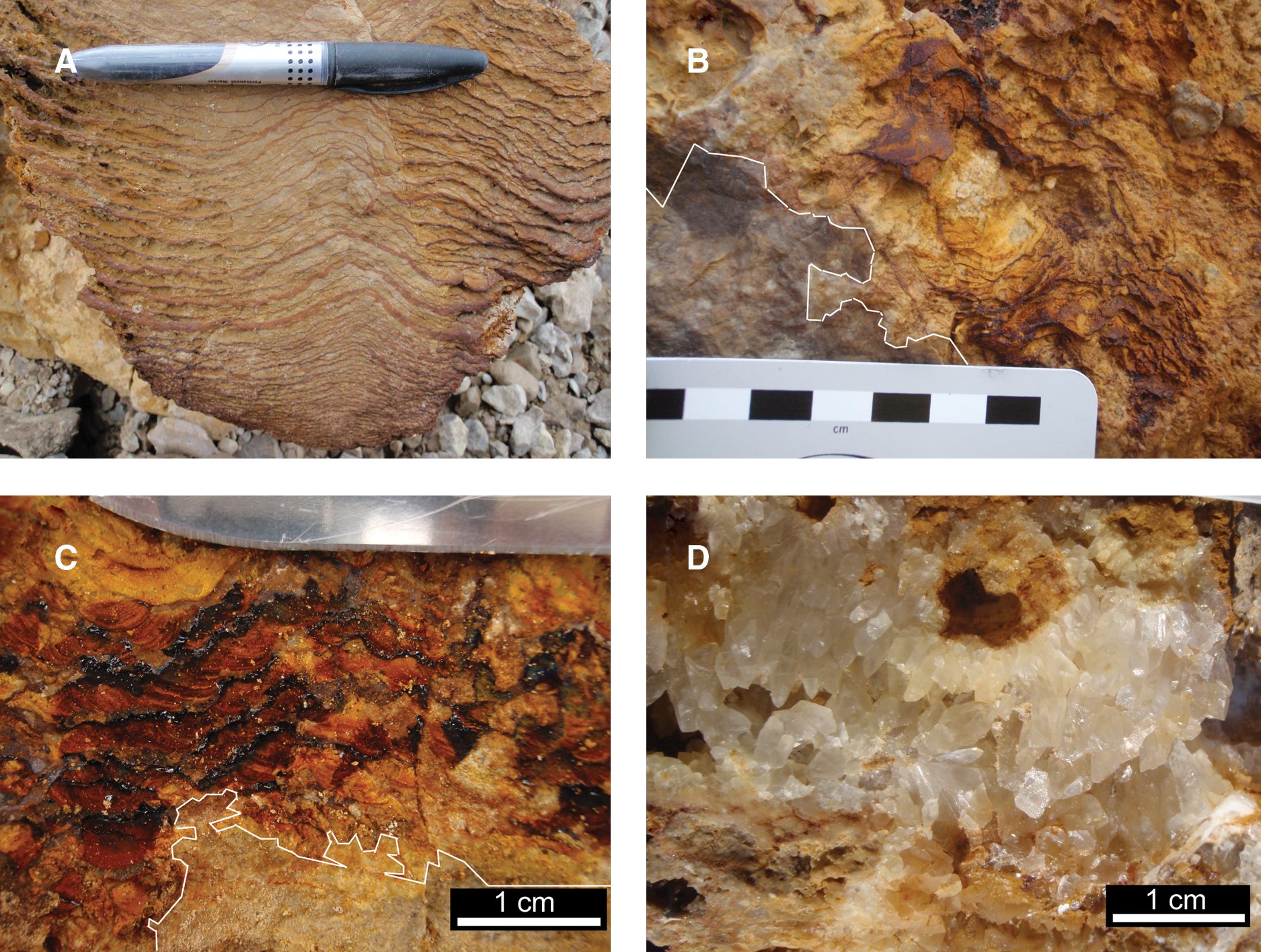
Banded deposits consisting of thin laminae of dark brown-black goethite-rich material, ranging in thickness from a few hundred microns to several millimeters, interspersed with lighter-colored yellow-tan-rust brown bands dominated by dolomite with some calcite and quartz (
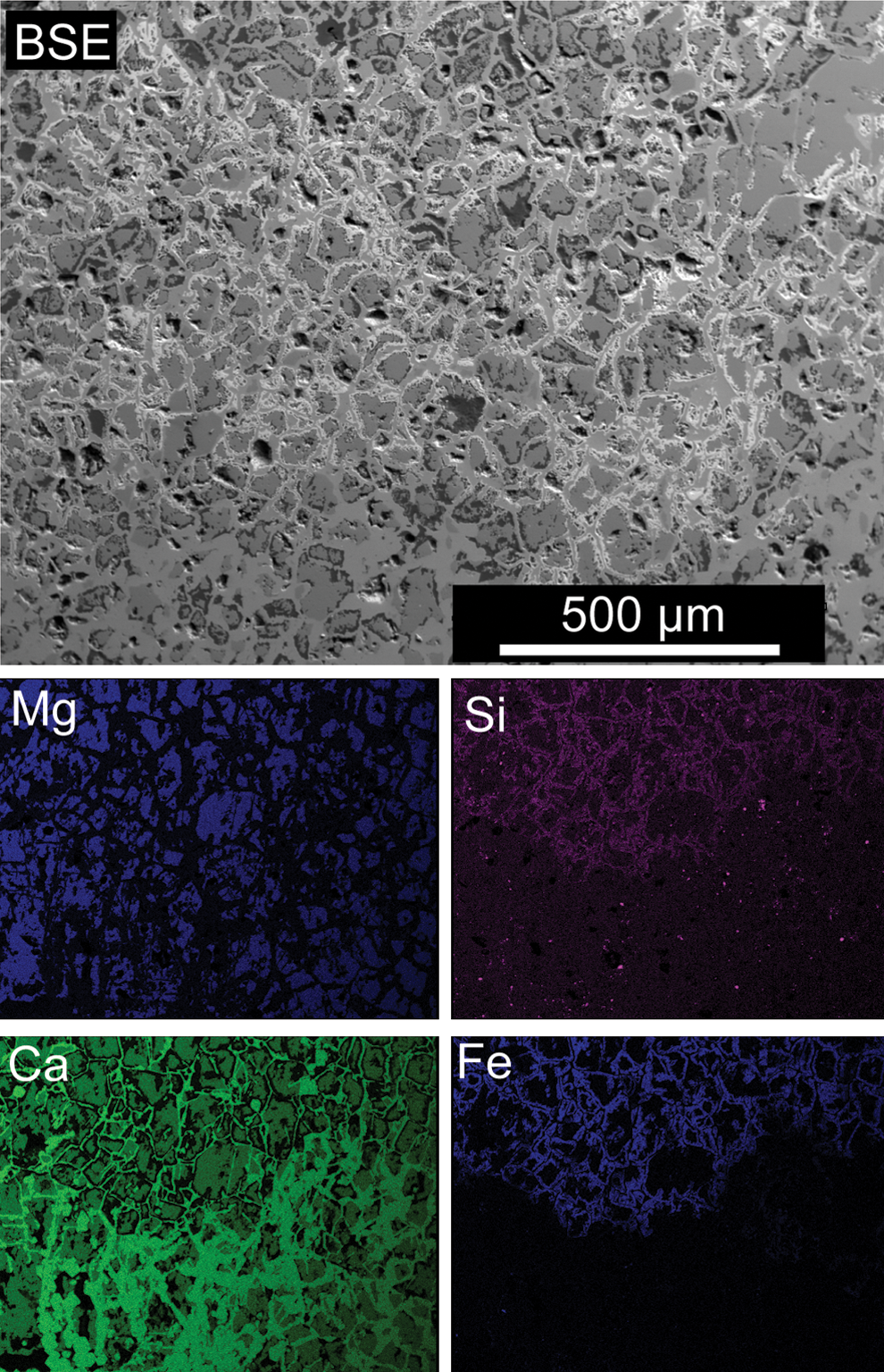
Representative scanning electron microscope–backscattered electron (SEM-BSE) image and EDX chemical mapping of the contact between brecciated dolomite with calcite veining and Fe-oxide/oxyhydroxide-rich material. The contact between these materials is very sharp at both the field and microscopic scales, as is particularly well illustrated by the Fe map. Note the presence of Si associated with the Fe-rich material, possibly indicative of a rapid change in the solubilities of both Si and Fe. Color images available online at
3.1.6. Veining in shattered target rocks, blue mineral coatings
Shattered dolomitic country rock commonly hosts pale tan-yellow quartz-rich veins. In many instances, preferential weathering of the carbonate has left the resistant veins as sharp raised relief on the exposed surfaces of the outcrops. Quartz veining is also very common in large meter-scale brecciated blocks that lie beneath the crater-fill melt rocks.
Numerous samples collected near Perseverance Hill, located in the central uplift (location D in Fig. 1), have thin coatings ranging in color from deep blue through sky blue to white. The blue coatings consist primarily of fibrous layers of microcrystalline quartz with traces of a sodalite-structured mineral, probably lazurite, (Na,Ca)8(AlSiO4)6(SO4,S,Cl)2. The quartz comprising the majority of the blue coatings is drusy-textured. Similar drusy-textured quartz coatings occur sporadically near the large calcite-marcasite intra-breccia vug; however, the intense blue-colored material has been observed only at Perseverance Hill.
4. Discussion
This study presents a detailed mineralogical characterization of the various styles of hydrothermal mineral deposits at Haughton and focuses on numerous weathering features that have not been studied in detail previously. Weathering assemblages are important from a planetary exploration perspective, as such materials are likely to form an obvious surface expression of hydrothermal systems in the impact crater environment in lieu of active or recent hydrothermal activity. The assemblages of primary and secondary minerals, furthermore, point toward potential metabolic pathways (such as those based upon the oxidation of Fe and S), which might have been exploited by microbes, analogous to microbial communities documented in acid rock drainage environments (e.g., Baker and Bandfield, 2003). Several stages or modes of microbial activity may have been present. First, a high-temperature thermophile or hyperthermophile stage may have occurred that featured high-temperature hydrothermal fluids. This stage would have been followed by, and would partly overlap with, a lower-temperature, neutral to acidic stage in which the oxidation of hydrothermally precipitated minerals such as marcasite and pyrite would have become progressively more important as cooling progressed. This stage would then have graded into a final “holdout” phase during which endolithic and/or hypolithic communities inhabiting such niches as porous impactites, fluid inclusions, and microhabitats within weathered hydrothermal mineral deposits would have been most important. Table 2 provides a summary of the hydrothermal mineral deposit types, their mineral assemblages and parageneses, and their implications for microbial colonization.
Details of individual assemblages within the secondary minerals of the calcite-marcasite vugs are given in Section 3.1.1 and Table 1.
4.1. Mineral constraints on physicochemical conditions in the post-impact environment
The textural relationship between calcite and marcasite indicates that marcasite most commonly precipitated after calcite (although rare instances of interlayered calcite-marcasite have been observed). Calcite and marcasite precipitation were likely associated with near-neutral pH and have been linked to pH increases due to the degassing of CO2 (Osinski et al., 2001). More-acidic conditions developed in spatially restricted areas during the subsequent aqueous weathering and oxidation of the hydrothermal marcasite deposits, as evidenced by the presence of low-pH phases, including copiapite, jarosite, fibroferrite, and rozenite in the weathered zones of the hydrothermal deposits (e.g., Jerz and Rimstidt, 2003). Locally acidic conditions occurred despite the presence of abundant carbonate, which might be expected to buffer the system at higher pH. The presence of highly acidic microenvironments in a circumneutral to mildly alkaline carbonate terrain highlights the potential for great variability in local physicochemical conditions that is possible in the post-impact environment. Such variability is an important consideration for microbial colonization. For example, Parnell et al. (2010) observed sulfur isotope fractionation between sulfides and sulfates from Haughton that are indicative of microbially mediated sulfate reduction.
The presence of gypsum megacryst vugs throughout the melt breccia units indicates that the parts of the hydrothermal system that produced gypsum vugs were more oxidized and near neutral pH. If the gypsum megacryst vugs were connected to parts of the hydrothermal systems that precipitated the calcite-marcasite vugs, some of the gypsum may be the result of the neutralization of H2SO4 by reaction with the carbonates in the impact melt breccia. Most of the gypsum, however, was likely remobilized from the impact melt breccia and target rocks by hydrothermal fluids. Previous work has shown that the gypsum megacrysts likely formed at lower temperatures than the calcite-marcasite vugs (Osinski et al., 2005b), either because they formed somewhat later or due to heterogeneities in temperature within the hydrothermal system. It is not possible to place temporal constraints on the microbial colonization of gypsum, because it is likely to be a continuous process, as new organisms are probably constantly being entrained, while older colonies persist.
Many of the Fe-sulfate–dominated weathering deposits also contain gypsum, commonly as thin powdery rinds or flaky to fibrous efflorescences on the outer surfaces of other sulfates, or as encrustations on the surfaces of distal host rock material. The presence of gypsum in such environments is consistent with neutralization over very small spatial scales. Fe3+ may be reprecipitated, perhaps as Fe oxyhydroxides (e.g., goethite, lepidocrocite, ferrihydrite), which are commonly associated with gypsum in the “gossan” deposits associated with hydrothermal pipes in the faulted rim. The target rocks at Haughton contain bedded gypsum, some of which was incorporated into the impactites (Osinski and Spray, 2003; Osinski et al., 2005a). Some of the gypsum in gossans therefore has likely been remobilized from pre-existing material by dissolution and reprecipitation, and some has likely formed via more complex pathways that involve sulfide precipitation and subsequent oxidation (Parnell et al., 2010).
4.2. Mineral constraints on possible geomicrobiology of the Haughton post-impact hydrothermal system
The sulfide weathering at Haughton points to potential metabolic pathways and can be used to illustrate the influence of mineralogy on geomicrobiology. Iron and sulfur oxidation reactions in aqueous solutions are particularly relevant to microbial colonization of the post-impact hydrothermal environment at Haughton. During the oxidation of FeS2 in the presence of water, S2− is oxidized to S6+ in the form of
Chemolithotrophic microorganisms, such as bacteria of the genera Acidithiobacillus, Thiomicrospira, and Sulfolobus, can catalyze the sulfide weathering process, gaining energy via the oxidation of reduced sulfur (e.g., Madigan and Martinko, 2006). Furthermore, some bacteria catalyze the oxidation of sulfides and thereby create and sustain very low pH environments: If iron-oxidizing bacteria are present, they will enhance the production of Fe3+ from Fe2+, via the reaction (e.g., Madigan and Martinko, 2006)
The Fe3+ produced by this process can also oxidize additional FeS2 via reactions such as (e.g., Madigan and Martinko, 2006)
The oxidation of S2− and/or S0 may provide energy for microbial metabolism. The predominant source of reduced sulfur at Haughton was likely the S2− present in hydrothermally precipitated sulfide minerals. Native sulfur was not detected among the hydrothermal and weathering assemblages investigated in the present study. Although chemolithoautotrophic carbon fixation processes are of high interest for extraterrestrial settings, it is likely that phototrophic microorganisms were important (perhaps dominant) contributors to primary productivity in the Haughton post-impact environment. Heterotrophic microorganisms were also likely abundant, given the availability of organic compounds from organic material derived from the target rocks (e.g., Parnell et al., 2005a, 2005b, 2007; Eglinton et al., 2006), as well as from primary production, both phototrophic and chemolithoautotrophic. In addition to the above-mentioned anaerobic metabolic pathways, processes that include anaerobic iron oxidation (using nitrate as the terminal electron acceptor), sulfur reduction, and iron reduction may be supported by primary hydrothermal mineral assemblages or their weathering products, or by materials (e.g., sulfate) mobilized in the post-impact hydrothermal environment. Such anaerobic metabolisms may have been locally important in anoxic microenvironments or in the subsurface.
4.3. Potential microbial habitats and metabolic strategies: eras of microbial activity in the post-impact environment
The hydrothermal mineral deposits at Haughton are consistent with a general progression from high-temperature, neutral to moderately acidic conditions to locally highly acidic conditions with progressive oxidation and hydration of primary sulfide minerals. As the intensity of hydrothermal activity decreased, chemical energy sources would have become increasingly important for any nonphototrophic microbial communities present. Stages of microbial activity may be subdivided as follows: A high-temperature “stage of thermal biology” (cf. Cockell and Lee, 2002), with active hydrothermal circulation. During this initial stage, heating from the passage of the shockwave, heat in melt rocks lining the crater, and the higher temperature of the rocks that comprised the central uplift provided the energy to drive the circulation of fluids. This stage corresponds with the deposition of the flowstone-travertine calcite plus marcasite intra-breccia vugs, hydrothermal pipe deposits, and possibly the deposition of intra-breccia gypsum megacrysts. Microbial life present during the stage of thermal biology would be expected to include thermophilic and hyperthermophilic organisms. Temperatures of hydrothermal fluids at Haughton in the range of 100–200°C were estimated by Osinski et al. (2005b), who used fluid inclusions. Auclair et al. (2009) estimated vug calcite formation temperatures of >130°C, using oxygen isotope thermometry.
Microbial metabolisms based upon chemical energy, from processes such as Fe2+ and S2− oxidation (and possibly reduction in anoxic regions), were progressively more important as the heat provided by the impact was exhausted and active hydrothermal fluid circulation ceased. This “acid rock drainage stage” corresponds with the Fe-sulfate and oxyhydroxide secondary stage associated with marcasite and possibly with the banded materials and gossans associated with hydrothermal pipes.
The final biological stage is characterized by “long-term holdouts” in habitable microenvironments, which may persist long after the cessation of hydrothermal circulation. Examples of such “holdout” environments include fluid inclusions (Edwards et al., 2005), porous impactites, and sheltered niches beneath or within rocks, where hypolithic or endolithic communities occur (e.g., Cockell et al., 2002; Cockell and Osinski, 2007). Hydrothermal mineral deposits important to this phase of biological activity include gypsum megacrysts, gypsum/anhydrite clasts within impact melt breccia, and the gossan deposits associated with hydrothermal pipes. Figure 6 presents a schematic representation of the potential succession and diversification of microbial habitats in the post-impact environment. Microbial communities have been observed in gypsum megacrysts at Haughton (Cockell et al., 2010).
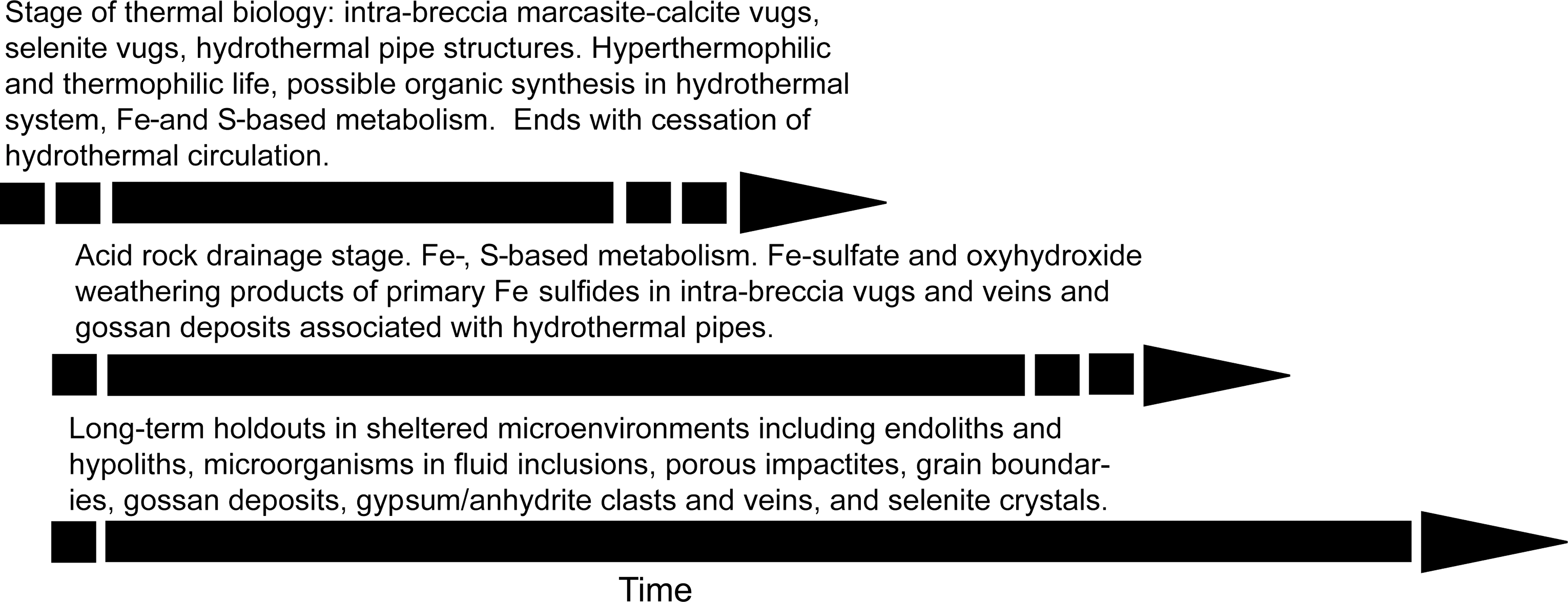
Schematic representation of the biogeochemical evolution of the post-impact hydrothermal environment. Stages of microbial activity may be conceptually subdivided as shown, although it is recognized that the stages are likely members of a continuum.
Physicochemical changes in the post-impact hydrothermal environment, as the initial heat pulse diminishes and hydrothermal mineral deposits weather, can provide evolutionary selection pressures that lead to diversification in metabolic strategies and habitats. Substantial ranges in pH, temperature, and redox state can occur over very short spatial (and probably temporal) scales and produce a large number of possible ecological niches in a limited area. The impact crater environment enables microbial life to “experiment” with a wide range of physicochemical conditions and offer possibilities for “opportunists” coming from outside. The impact crater is potentially a biodiversity hotspot with a high likelihood for colonization and diversification.
4.4. Potential for fossilization, mineralization, and long-term preservation
Gypsum crystals may trap microbes within fluid inclusions or between crystals. Halophilic microorganisms were reported by Edwards et al. (2005), and cyanobacterial colonies by Parnell et al. (2004), within gypsum crystals from Haughton (Cockell et al., 2010). Similar entombment could occur within the gypsum crystals associated with the gossan deposits at hydrothermal pipe localities.
Endolithic habitats within impactites have previously been described in numerous studies (e.g., Cockell and Lee, 2002; Cockell et al., 2002; Kring, 2003). Microbial communities that inhabit such impact-produced endolithic habitats (“long-term holdouts”) may be, in part, descended from microbial life that inhabits the more transient high-temperature hydrothermal environments following the impact and from the chemical weathering–influenced stage of microbial colonization (Fig. 6).
The banded materials bear a striking resemblance to microbialites or stromatolites. Stromatolites and other fossils are common in carbonate sediments. Therefore, it is possible that the banded materials are simply the result of infilling or staining of pre-existing structures in the rock; however, no such fossils have been observed from the host dolomitic country rock units anywhere near the locality in question. Cross-cutting and contact relations between the banded materials, calcite veins, and the dolomite host rock indicate that the banded materials postdate the impact and may have formed penecontemporaneously with the calcite veins. The textures of the banded materials are strongly suggestive of formation via a combination of physical and chemical sedimentation, possibly involving biological processes.
4.5. Potential for chemical and isotopic biosignatures
The hydrothermal mineral deposits at Haughton have the potential to contain chemical and isotopic signatures indicative of past biological activity. Parnell et al. (2010) reported isotopic evidence in the form of isotopically light sulfur from Haughton sulfides, which they interpreted as the result of microbial sulfate reduction by thermophilic microbes. The sulfur isotopic composition of the sulfates present in sulfide weathering assemblages, the gypsum, and other sulfates in intra-breccia vugs and veins could also contain signatures of microbially mediated sulfur redox reactions. Other chemical biosignatures might include concentrations of biologically important elements such as transition metals, C, N, Na, P, and Cl, and the presence of biogenic organic molecules. Finally, isotopically light carbon in carbonate minerals can be indicative of biological fractionation during microbial metabolic reactions.
5. Summary and Conclusions
The post-impact hydrothermal deposits at Haughton have provided numerous potential habitats and several possible chemical energy sources. Our results do not demonstrate unambiguous morphological or chemical biosignatures; they do, however, suggest several niches in which biological activity could play a role and biota may have gained and held a foothold. The wide distribution of oxidized and reduced sulfur species suggests the possibility of a complex sulfur cycle containing niches that could be occupied by both sulfur-oxidizing and sulfur-reducing microorganisms. Both Fe-oxidizing and Fe-reducing (in anoxic regions) metabolisms could similarly be present. In addition to the aforementioned chemolithotrophic niches, the porous, reworked deposits of gypsum, Fe oxyhydroxides, and hydrous Fe sulfates provide an abundance of sheltered microenvironments. The present study provides mineral and chemical context for biological activity in the post-impact environment, particularly during the little-studied (but extensive) time period after the cessation of hydrothermal activity.
It is now widely recognized that impact events can produce transient warm oases that are suitable for microbial colonization (Osinski et al., 2001; Cockell and Lee, 2002; Abramov and Kring, 2005; Versh et al., 2006). The movement of hydrothermal fluids in the post-impact environment (facilitated by extensive fracturing and faulting) should also lead to conditions conducive to the formation of various hydrothermal mineral deposits. The spatial distribution of post-impact hydrothermal deposits at Haughton should be broadly analogous to those in similar-sized impact structures in diverse planetary settings, because impact structures are broadly similar despite differences in lithology and other target parameters (e.g., Melosh, 1982, 1989; Grieve and Therriault, 2004; Osinski et al., 2008).
Post-impact hydrothermal environments produce a wide range of physicochemical conditions that may be conducive to colonization by a correspondingly diverse array of microbial life. Impactites and the weathered products of primary hydrothermal minerals also provide environments in which endolithic microorganisms may remain for geologically relevant timescales and where traces of such microbial life may be preserved or fossilized. The role of impact craters as microbial habitats may have been much more important on ancient Earth, when the impactor flux was higher, particularly during the Late Heavy Bombardment (e.g., Cockell, 2006).
The alteration, remobilization, and reprecipitation of post-impact hydrothermal minerals at Haughton required the action of transient near-surface liquid water and oxidative near-surface conditions. Such conditions are likely to have prevailed over much of martian history; therefore, the Haughton deposits are a useful terrestrial model for post-impact processes on Mars. Martian post-impact hydrothermal mineral deposits and their weathering products, especially Fe-sulfides, sulfates, and oxyhydroxides, may be analogous to those at Haughton. Mars lacks an oxygen-rich atmosphere, but the martian surface is highly oxidizing due to the presence of peroxides, perchlorates, and other oxidants (e.g., Clark et al., 1976; Squyres and Knoll, 2005). The martian crust contains abundant water, which could be mobilized in post-impact hydrothermal systems.
Because impact craters are expected to be a feature of any solid planetary surface, the importance of craters and their associated post-impact hydrothermal systems as biodiversity hotspots and environments of preservation is not limited to Earth. In particular, post-impact hydrothermal systems provide a spatially restricted near-surface environment with sources of thermal and chemical energy, combined with numerous habitable niches. Mars in particular is very likely to host post-impact hydrothermal deposits (e.g., Abramov and Kring, 2005; Schwenzer and Kring, 2009), and some form of post-impact hydrothermal activity could also occur on icy bodies, including Europa and Titan. The potential for microbial colonization of post-impact hydrothermal systems, and for continued habitation of such environments long after the cessation of hydrothermal activity, demonstrates that impact structures and associated hydrothermal systems are potential planetary biodiversity hotspots with high preservation potential.
Footnotes
Acknowledgments
Field studies were based at the Haughton Mars Project with support from the Polar Continental Shelf Project. Thanks to Callum Hetherington (Texas Tech Geosciences) for SEM assistance, hospitality, and many fruitful discussions; and to Mark Grimson (Texas Tech Imaging Center) for SEM assistance and training. Thanks are due to Kim Law (UWO) for assistance with the Rigaka Rotaflex diffractometer. Thanks also to Nicola Barry, Henry Ngo, and Mike Laliberty for assistance in the field and with sample preparation. Assistance with SEM measurements at the Nanofabrication Laboratory (UWO) from Todd Simpson is gratefully acknowledged. The S-4300SE/N FESEM at Texas Tech University Imaging Center is supported by NSF grant number NSF MRI 04-511. Financial support was provided by NSERC, the CSA Canadian Analogue Research Network program, the Northern Scientific Training Program, the Canadian Astrobiology Training Program, and the University of Western Ontario Academic Development Fund. M.R.M.I. gratefully acknowledges the Barringer Family Fund for Meteorite Impact Research for student research funding. Thoughtful and constructive comments from two anonymous reviewers led to substantial improvements in this manuscript and are gratefully acknowledged.
Author Disclosure Statement
No competing financial interests exist.
Abbreviations
EDX, energy-dispersive X-ray spectroscopy; FESEM, field emission scanning electron microscope; GADDS, General Area Diffraction Detection System; ICP-OES, inductively coupled plasma–optical emission spectroscopy; μXRD, micro X-ray diffraction; SEM, scanning electron microscope, scanning electron microscopy; UWO, University of Western Ontario; XRD, X-ray diffraction.