




Abstract
Endospores of Bacillus subtilis HA101 were applied to a simulated Mars Exploration Rover (MER) wheel and exposed to Mars-normal UV irradiation for 1, 3, or 6 h. The experiment was designed to simulate a contaminated rover wheel sitting on its landing platform before rolling off onto the martian terrain, as was encountered during the Spirit and Opportunity missions. When exposed to 1 h of Mars UV, a reduction of 81% of viable endospores was observed compared to the non-UV irradiated controls. When exposed for 3 or 6 h, reductions of 94.6% and 96.6%, respectively, were observed compared to controls. In a second experiment, the contaminated rover wheel was rolled over a bed of heat-sterilized Mars analog soil; then the analog soil was exposed to full martian conditions of UV irradiation, low pressure (6.9 mbar), low temperature (−10°C), and an anaerobic CO2 martian atmosphere for 24 h to determine whether endospores of B. subtilis on the contaminated rover wheel could be transferred to the surface of the analog soil and survive martian conditions. The experiment simulated conditions in which a rover wheel might come into contact with martian regolith immediately after landing, such as is designed for the upcoming Mars Science Laboratory (MSL) rover. The contaminated rover wheel transferred viable endospores of B. subtilis to the Mars analog soil, as demonstrated by 31.7% of samples showing positive growth. However, when contaminated soil samples were exposed to full martian conditions for 24 h, only 16.7% of samples exhibited positive growth—a 50% reduction in the number of soil samples positive for the transferred viable endospores. Key Words: Mars—Astrobiology—Planetary protection—Special regions—UV irradiation. Astrobiology 11, 477–485.
1. Introduction
P
Three rover missions have successfully landed on the surface of Mars with the use of air-bag deployment systems. Pathfinder's Sojourner rover landed in July 1997, and the Mars Exploration Rovers (MER) Spirit and Opportunity landed in January 2004. After landing, the Sojourner, Spirit, and Opportunity rovers remained on their landing platforms for 2, 12, and 7 sols, respectively, while systems were brought on line and calibrated. In contrast, the Mars Science Laboratory (MSL) rover Curiosity will land by using a new technique called Sky Crane Terminal Descent, which allows for a low-velocity stable touchdown in a steady-state condition ready for immediate mobility (Ten Kate et al., 2008).
Once on Mars, airbag-landed rovers rest upon platforms for several sols in what can be called a pre-rolloff stationary phase in which the rover wheels are not yet in contact with the martian surface. During the pre-rolloff stationary phases, the rovers are exposed to extremely harsh atmospheric conditions that include at least the following: biocidal solar UVC irradiation (190–280 nm), low pressure (6.9 mbar), severe desiccating conditions, extreme diurnal temperature fluctuations, and an anaerobic CO2-enriched atmosphere. Of these factors, research has shown UVC irradiation to be the primary factor that determines short-term survivability of microorganisms under simulated martian conditions (Schuerger et al., 2003, 2006; Newcombe et al., 2005; Berry et al., 2010). In fact, microorganisms found on sun-exposed surfaces of spacecraft are likely killed off within a few tens of minutes of exposure (Mancinelli and Klovstad, 2000; Schuerger et al., 2003, 2006; Berry et al., 2010). When a rover mission employs a stationary phase on the upper surface of a landing structure, significant bioburden reduction can be anticipated on the sun-exposed surfaces of the rover wheels. In contrast, during a direct orbit-to-landing mission, wheels will touch down immediately onto the martian terrain; thus, there is an increased risk for dispersing terrestrial microorganisms onto the martian terrain.
The objectives of the current study were to determine whether microbial contamination present on a simulated rover wheel can be (1) inactivated by direct UV irradiation during a simulation that would mimic a pre-rolloff stationary phase on a landing platform, (2) transferred to the martian terrain once a contaminated rover is deployed to the surface, and (3) inactivated by solar UV irradiation following transfer to the martian terrain. Bacillus subtilis endospores were chosen for this research based on the extensive number of studies in the literature in which this species was used for Mars simulations (Mancinelli and Klovstad, 2000; Schuerger et al., 2003; Rettberg et al., 2004; Newcombe et al., 2005; Schuerger et al., 2006; Osman et al., 2008; Berry et al., 2010; Fajardo-Cavazos et al., 2010; Nicholson et al., 2010) and based on the reported high resistance of endospores to stressful conditions in extreme environments (Horneck et al., 1994, 2010; Setlow, 1994; Nicholson et al., 2005).
2. Materials and Methods
2.1. Bacterial strain and culture protocols
Endospores of the bacterium Bacillus subtilis HA101 were prepared according to the procedures of Mancinelli and Klovstad (2000) as modified by Schuerger et al. (2003, 2006). Endospores were grown in nutrient broth (Difco medium, Fisher Scientific, Pittsburg, PA, USA) supplemented with 1 g KCl, 0.4 mL 1 M CaCl2, 0.2 mL 0.01 M FeCl3, 0.4 mL 0.01 M MnSO4, 0.2 mL 0.10 M MgSO4, and 0.8 mL of 25% glucose per liter of medium. Cultures were incubated at 30°C for 4 days, treated with DNase (0.3 mL of a 0.2 mg/mL solution) and Lysozyme (0.3 mL of a 20 mg/mL solution) for 30 min at 37°C, heat-shocked for 10 min at 80°C, and pelleted and washed 3 times in sterile deionized water (SDIW). After preparation, stock cultures were composed of >99% endospores, at concentrations of approximately 2×10⁹ spores/mL, and without spore clumping. All chemicals, except the nutrient broth medium, were obtained from Sigma-Aldrich, Inc. (St. Louis, MO, USA). Endospores were stored at 4°C in SDIW until used.
2.2. Mars Simulation Chamber
A Mars Simulation Chamber (MSC, described in Schuerger et al., 2008) was constructed of a cylindrical stainless steel low-pressure chamber measuring 70 cm long by 50 cm in diameter. Pressure setpoints were maintained with an electronic pressure controller and throttle valve system (models 651D and 253B-1-2CF-1, respectively; MKS Instruments, Inc., Andover, MA, USA). When required, a Mars gas mixture (see below) was delivered through a mass-flow controller (model 32907-63, Cole-Parmer Instruments, Vernon Hills, IL, USA). Temperature was regulated with a liquid nitrogen thermal control system (model TP1265, Sigma Systems Corp., San Diego, CA, USA). Mars UV irradiation was produced with one, 1000 W xenon-arc lamp (model 6269, Oriel Instruments, Stratford, CT, USA) and calibrated to deliver a Mars UV fluence rate similar to equatorial latitudes under clear sky conditions (optical depth 0.5). The MSC system can accurately simulate five key components of the surface environment on Mars, including (based on Viking and Pathfinder data; Kieffer, 1976; Owen, 1992; Golombek et al., 1997): (1) pressures down to 0.1 mbar; (2) UV irradiation from 200 to 400 nm; (3) dust loading in the atmosphere from optical depths of 0.1 (dust-free sky) to 3.5 (global dust storm) by using a series of neutral density filters (described by Schuerger et al., 2003); (4) temperatures from −100°C to 160°C; and (5) a gas mixture composed of the top five gases in the martian atmosphere [CO2 (95.54%), N2 (2.7%), Ar (1.6%), O2 (0.13%), and H2O (0.03%)]. The UVC (200–280 nm), UVB (280–320 nm), and UVA (320–400 nm) fluence rates were calibrated to deliver 4.1, 5.6, and 15.8 W/m2, respectively, (Schuerger et al., 2003, 2006, 2008) on the upper surfaces of the rover wheel or Mars analog soils. Visible (400–700 nm) and near-IR (700–1100 nm) irradiation were approximately 240 and 245 W/m2, respectively (Schuerger et al., 2006).
2.3. Survival of Bacillus subtilis endospores on external surfaces of a rover wheel
A simulated Mars rover wheel (Fig. 1A) was designed to mimic the general shape of the MER vehicles that landed on Mars in January 2004. The rover wheel was constructed of milled aluminum (completed by International Tool & Mold, Merritt Island, FL, USA) and coated with a chromium-oxide corrosion-resistant film called chemfilm [Military-spec C-5541F; also called iridite- or alodine-treated aluminum (Schuerger et al., 2005)]. The wheel measured 86 mm in diameter and was fitted with 15 ridges, each spanning the width of the wheel and measuring 4 mm high. Each depression that rested between two sequential ridges was designated a “lane” and permanently engraved from 1 to 15. The wheel was attached to a similarly chemfilm-treated aluminum handle. The wheel/handle system was designed to be heat sterilized at 130°C for long periods of time (weeks) without warping or bending. The tread of the wheel was given a gentle camber from the edges to the center that measured 2 mm (Fig. 1A). In preliminary experiments, thermocouples were attached to the top, side, and bottom lanes of the wheel to confirm that the UV light did not significantly raise the surface temperature of the rover wheel. All trials for up to 24 h indicated only a 1–2°C increase in temperature for lanes illuminated with the UV-enriched light. Before each experiment, the rover wheel was heat sterilized at 130°C for 16–24 h.
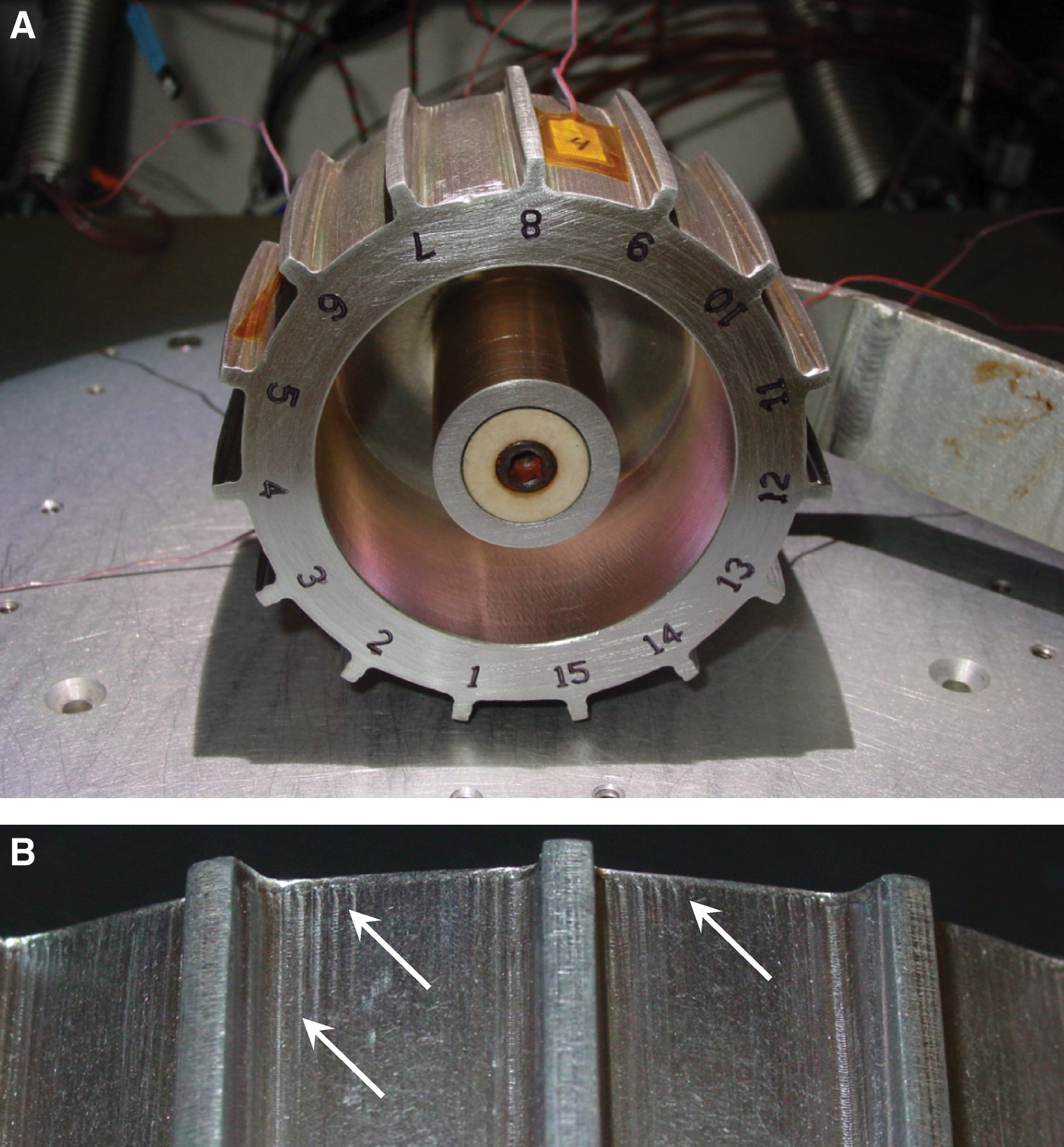
Simulated MER wheel illuminated by the UV-enriched light beam within the Mars chamber.
A 60 mL spray bottle was sterilized for 16–24 h in 70% ethanol and rinsed three times in SDIW. Endospores of B. subtilis were added to 20 mL of SDIW to yield a final concentration of 2×10⁵ spores/mL. For each repetition of the experiment, a set of three T=0 control samples were assayed with a most probable number (MPN) procedure (Koch, 1994; Mancinelli and Klovstad, 2000; Schuerger et al., 2003). Briefly, 1 mL of each sample was pipetted into a test tube containing 9 mL of 1×phosphate-buffered saline (8 g NaCl, 0.2 g KCl, 1.44 g Na2HPO4, 0.24 g KH2PO4, and 1 L 18 MΩ H2O and titrated to a pH of 7.4). Tubes were shaken for 2 min at 250 rpm on an Innova 2000 platform shaker (New Brunswick Scientific, Edison, NJ, USA). For each sample, a series of five, 10-fold dilutions were made in SDIW. Twenty microliters of each dilution, including the original sample tube, were pipetted into each of 16 wells of a 96-well microtitre plate previously filled with 180 μL of tryptic soy broth (TSB, Difco medium). All plates were incubated at 30°C for 48 h. Following incubation, the numbers of wells that exhibited positive growth were counted and the values converted into three-digit codes. The codes were used to generate MPN estimates of surviving bacterial cells in 1 mL of the original sample. When extremely low numbers of surviving endospores were anticipated for specific treatments, a second 96-well plate with 180 μL of TSB per well was inoculated with 20 μL per well from the original extraction fluid (i.e., no dilutions), and incubated at 30°C for 48 h. The numbers of positive wells were counted, and total viable endospores per sample were estimated based on the total volume of extraction fluid dispensed into the 96 wells (i.e., 1.96 mL dispensed into 96 wells). The minimum detection limit for the MPN assay was five endospores of B. subtilis per wheel lane.
Within a laminar flow hood, the rover wheel tread was sprayed with a suspension of B. subtilis endospores that delivered approximately 2×10⁵ viable endospores in 1 mL applied evenly over the full circumference of the tread (10 applications with each spray containing ≈100 μL, while the wheel was slowly rotated). The wheel was then allowed to dry in the laminar flow hood for 1.5 h. In preliminary experiments, six lanes of the contaminated rover wheel were chosen at random and sampled with sterile polyester-tipped swabs (catalog No. 23-400-122, Fisher Scientific) pre-wetted with SDIW; the assay was conducted three times (n=18). It was determined that, for the 2×10⁵ endospores deposited on the rover wheel tread (234 cm2), approximately 4×10² spores were recovered, on average, per lane for the non-UV irradiated controls. Each lane surface area was 13.2 cm2, which included the bottom surface and tread sidewalls of each lane. The overall efficiency of recovering viable endospores with this assay was ≈3%; that is, (4×10² spores per lane) * (15 lanes)=6×10³ spores recovered, which was ≈3% of the 2×10⁵ endospores applied to the entire rover wheel tread. For the actual experiment, the contaminated rover wheel was placed into the MSC, with lanes 7 and 8 in the nadir position relative to the incoming UV irradiation and lane 15 in the 180-degree off-nadir position (see Fig. 1A), and was exposed to martian UV irradiation for 1, 3, or 6 h. Each of the 15 lanes of the rover wheel were subsequently swiped with SDIW-wetted sterile polyester swabs, and the terminal 5 cm of each swab was dropped into a glass test tube containing 9 mL of sterile 1×phosphate-buffered saline. The samples were rotary shaken for 2 min, serially diluted in SDIW, and processed with the MPN assay, as described above. All MPN plates were incubated at 30°C for 48 h.
2.4. Contaminated Mars analog soil exposed to Mars UV irradiation
A second experiment was conducted to determine whether B. subtilis endospores could be inactivated when transferred from a contaminated rover wheel to Mars analog soil and exposed to UV irradiation under martian conditions. The Mars analog soil was derived from a surficial palagonite quarried from the Pu'u Nene volcanic cone at 1850 m on the south flank of Mauna Kea, Hawaii (Schuerger et al., 2003). The Mars analog soil is nearly identical to the Mars JSC-1 soil previously described by Allen et al. (1981, 1998) and Morris et al. (2001).
Before each experiment, a stainless steel tray (30×30×1.5 cm) with approximately 820 g of Mars analog soil was autoclaved at 121°C and 1.1 kg/cm2 for 30 min, cooled overnight, and autoclaved a second time. After an additional 24 h at room temperature, the soil tray, rover wheel, and 20 Spoonula (Cat. No. 1437510, Fisher Scientific) sample devices were heat sterilized at 130°C for 24 h. Each Spoonula was used to collect approximately 0.5 g of soil from the surface of the sterilized trays following treatment with the infested wheel tread (see below). All subsequent sterilization requirements utilized dry heat at 130°C for 24 h. The three-step process for sterilizing the Mars analog soil was required to inactivate refractory microorganisms that were not killed by a single autoclave run or dry-heat sterilization cycle (Schuerger, unpublished).
The rover wheel was sterilized and doped with 2×10⁵ endospores of B. subtilis, as described above. The infested rover wheel was then rolled four times (i.e., in four separate rows; Fig. 2) over the upper surface of Mars analog soil contained in one tray (30×30×1.5 cm); the distance traveled by the wheel was approximately 1 m in length. The rover wheel was rolled over the soil while maintained in an operating laminar flow hood to minimize the potential of room air and dust contaminating the Mars analog soil. The tray of potentially contaminated Mars analog soil was then either immediately processed for measuring the level of dispersed viable spores of B. subtilis (i.e., Earth controls), or aseptically transferred to the MSC system for a 24 h Mars simulation. The Mars analog soil tray within the MSC was exposed to UV irradiation, 6.9 mbar total atmospheric pressure, −10°C temperature, and Mars atmosphere for 24 h. Previous work by Moores et al. (2007) established that a 24 h exposure to the UVC flux used here (4.1 W/m2) was equivalent to approximately 5.6 sols on equatorial Mars. After exposure, each row of tread marks (6 cm wide; Fig. 2) was sampled five times with sterile Spoonulas (for a total of 20 samples). Soil samples were placed in 50 cc tubes with 20 mL of TSB media. Samples were incubated at 30°C for 48 h and rated for positive or negative growth.
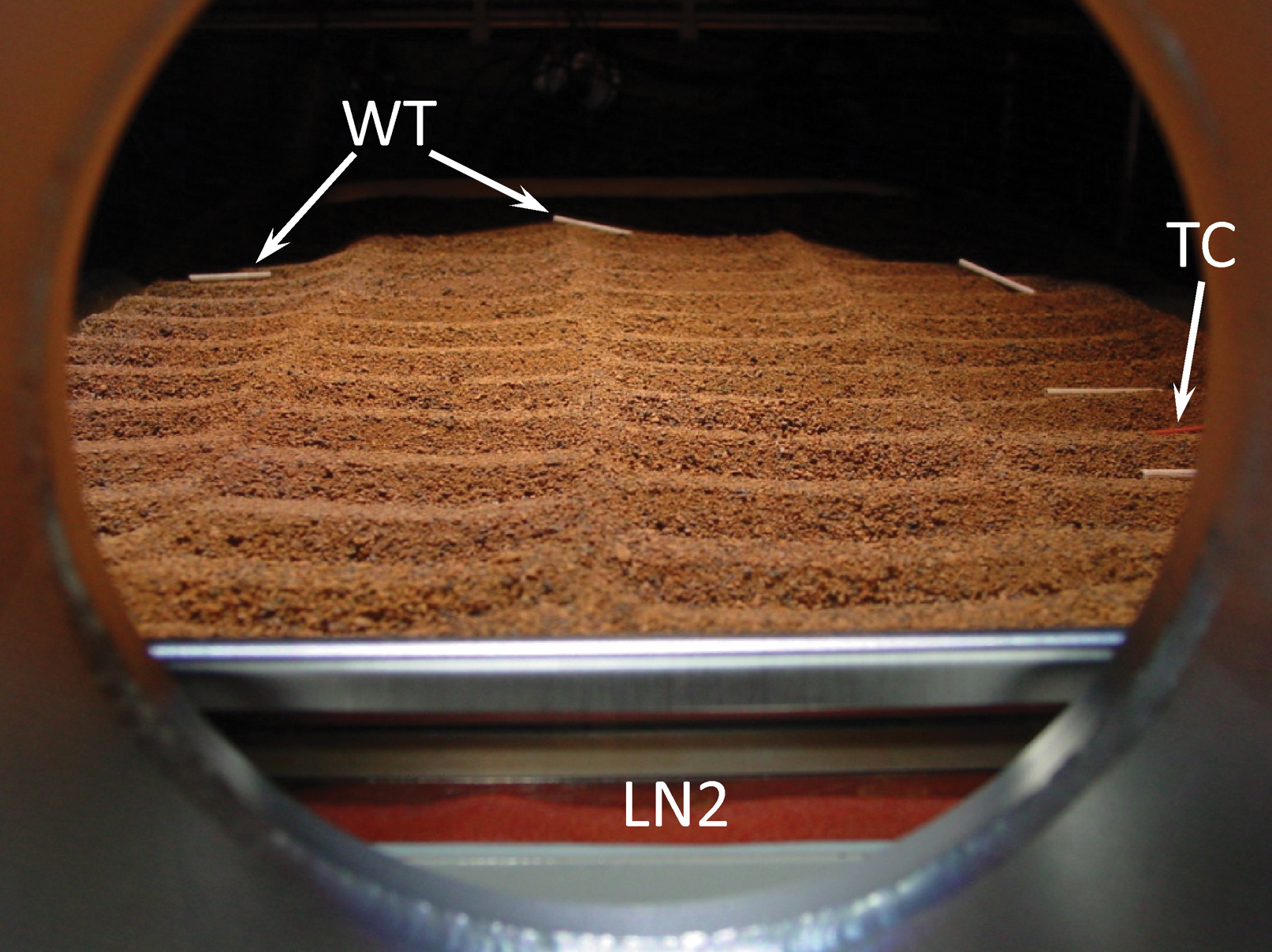
Tray of Mars analog soil within the Mars chamber during a surface simulation. Tread marks were created by rolling the contaminated rover wheel four times over an area that equates to approximately 1 m of traversed martian terrain. Heat-sterilized wooden toothpicks (WT) were used to mark the edges of the UV-enriched beam striking the upper surface of the Mars analog soil. A thermocouple (TC) was inserted into the soil to monitor the surface temperature (−10°C, +/− 2°C) of the UV-irradiated soil during all tests. The tray of Mars analog soil contained 820 g of Hawaiian palagonite and was placed directly onto the liquid nitrogen cold plate (LN2). Color images available online at
2.5. Statistical analyses
Statistical analyses were conducted with version 9.2 of the PC-based Statistical Analysis System (SAS Institute, Inc., Cary, NC, USA). Data for the biocidal effects of Mars solar UV irradiation on rover wheel contamination (n=5), and on the survival of B. subtilis on the surface of the Mars analog soil (n=6), were separately analyzed with analysis of variance (ANOVA) procedures followed by protected least-squares mean separation tests (P≤0.05).
3. Results
3.1. Survival of Bacillus subtilis endospores on external surfaces of a rover wheel
During the UV-irradiated rover wheel assay, the numbers of recovered endospores were lowest in lanes 7, 8, and 9 for all three UV time steps, and all lanes were significantly different from T=0 controls (P≤0.05; Fig. 3). Although lane 15 was the most protected from the direct UV irradiation and exhibited the highest survival rates for all three time steps of UV exposure, lane 15 still exhibited a 61% decline between 1 and 3 h, and an 18% decline between 3 and 6 h of UV exposure (P≤0.05). In general, the greatest level of inactivation occurred after 1 h of UV exposure. Significantly lower numbers also were observed for most wheel lanes between 1 and 3 h (P≤0.05) (94.6% overall reduction below controls for 3 h samples), but not between 3 and 6 h (P>0.10) (96.6% overall reduction below controls for 6 h samples) of UV exposures.
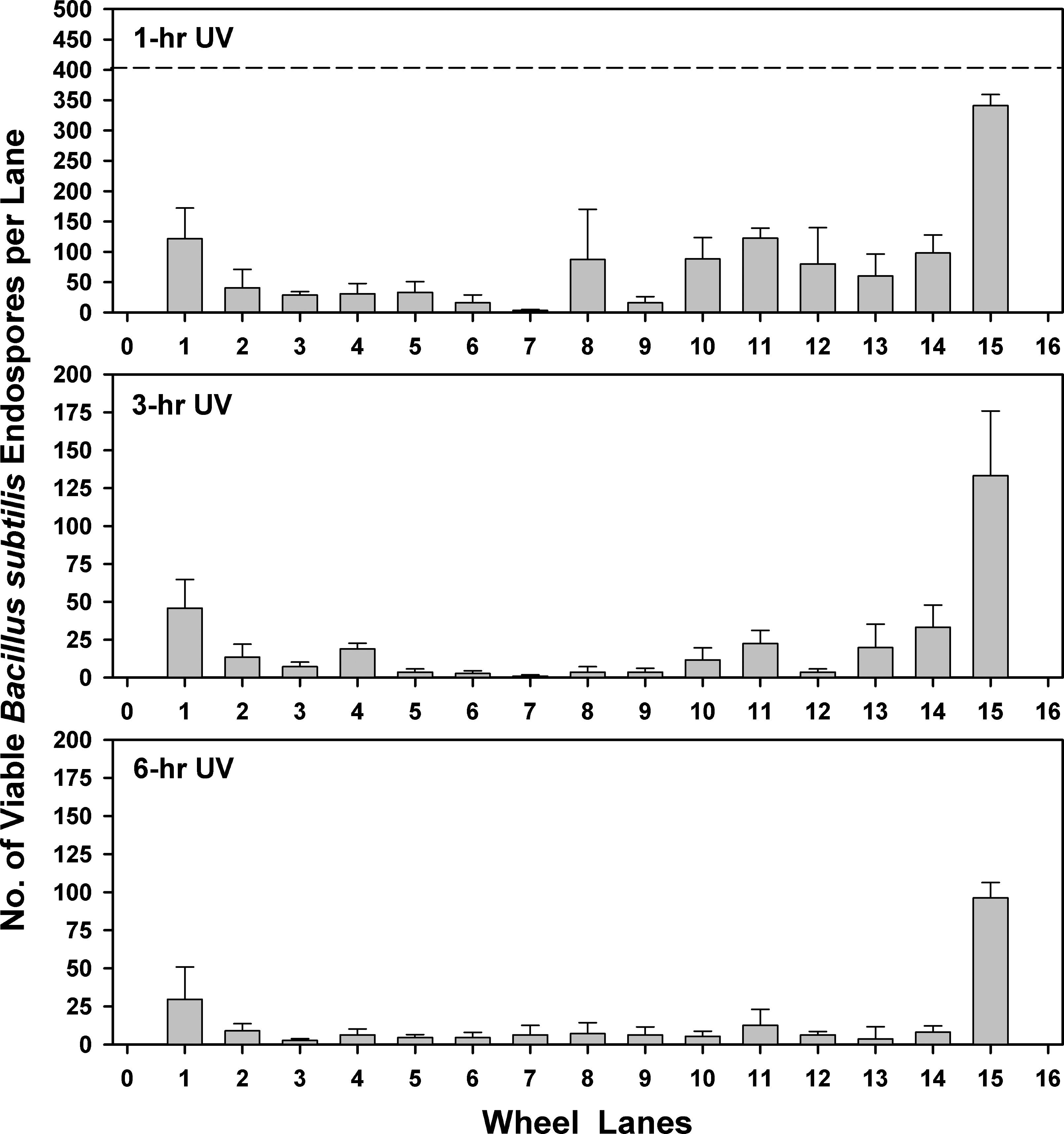
Effects of 1, 3, or 6 h of Mars UV irradiation on survival of endospores of Bacillus subtilis HA101 applied to tread surfaces on the simulated MER wheel. Lanes 7 and 8 were in the nadir position directly facing the UV-enriched light beam entering the Mars chamber. Lanes 1 and 15 were at the 180-degree-off-nadir position and shielded from all direct UV irradiation. The UVC (200–280 nm) fluence rate on lanes 7 and 8 was 4.1 W/m2. Data were analyzed with ANOVA and protected least-squares mean separation tests (P≤0.05; n=5; bars are standard errors of the means). Note the change in scales for the y axes for the 1, 3, and 6 h results. The dashed line indicates the T=0 starting population of 405 endospores recovered per lane on non-UV exposed controls. All lanes exposed for 1 h to Mars UV irradiation were significantly lower than the T=0 controls; most treatments were significantly different between 1 and 3 h (P≤0.05) but not between 3 and 6 h (P>0.10) of UV irradiation. Reductions in numbers of recovered B. subtilis endospores on lanes 1–6 and 10–15 were due to reflected UV irradiation off the liquid nitrogen cold plate and side walls of the Mars chamber.
When exposed to Mars UV irradiation for 1 h, the overall average for all lanes was 77.8 endospores recovered per lane, which was significantly lower than the T=0 average of 405 endospores per lane. After 1 h of UV, lanes 7 and 9 exhibited the least survival (Fig. 3), with the average number of recovered spores between 4 and 16 endospores per lane, respectively. Lane 8 endospore survival was similar to lanes 7 and 9 except for one out of five repetitions of the experiment, in which recovered endospores were dramatically higher from lane 8. In general, between 0 and 18 endospores were recovered at 1 h for lanes 7, 8, and 9 for most repetitions compared to 418 endospores for one repetition of the experiment in lane 8. When exposed to UV irradiation for 3 or 6 h, the overall averages were 21.6 or 13.9 endospores recovered per lane, respectively, with lanes 5–9 having the lowest survival rates.
3.2. Contaminated Mars analog soil exposed to Mars UV irradiation
Endospores of B. subtilis were transferred to the Mars analog soils when the contaminated rover wheel was rolled for an accumulated distance of ≈1 m over the upper surface of the soil. For Earth control samples, 31.7% of the 0.5 g soil samples (20 samples collected per repetition of the soils experiment for a total of 120 samples) had positive growth after incubation for 48 h at 30°C (Fig. 4). When the contaminated Mars analog soils were exposed for 24 h to Mars UV and environmental conditions, 16.7% of soil samples exhibited positive growth (P=0.05). Thus, there was ≈50% reduction in the number of positive soil samples for B. subtilis transferred to the Mars analog soils following a single 24 h simulation under martian conditions. Preliminary experiments (data not shown) demonstrated that the experimental procedures used to infest soils, transfer soils into the Mars chamber, expose the infested soils to the martian conditions, return the UV-exposed soils to the laminar flow bench, and then assay the soils were free of laboratory or airborne contamination. Thus, all positive growth was interpreted as surviving endospores of B. subtilis transferred from the rover wheel to the analog soil.
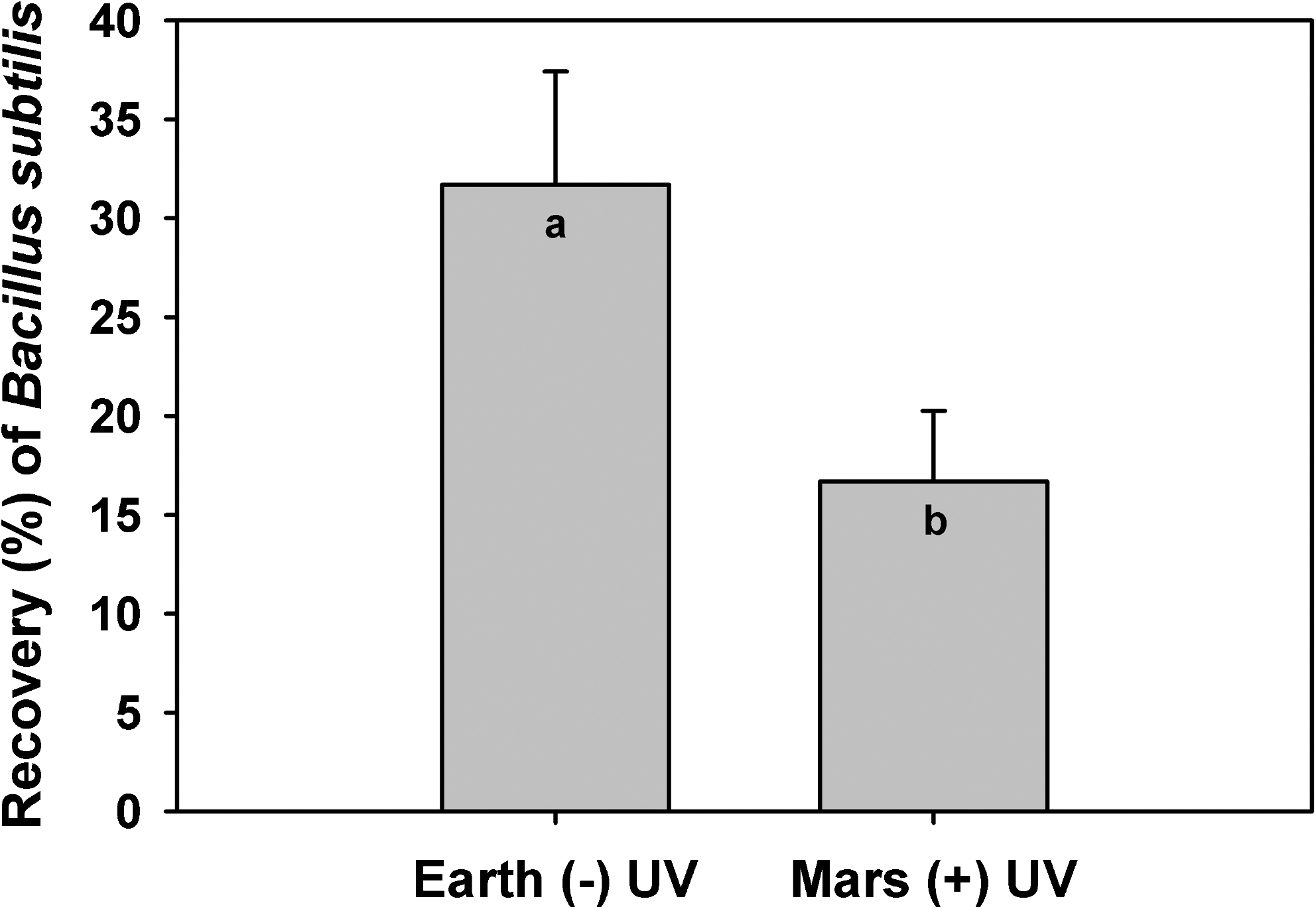
Recovery of viable endospores of Bacillus subtilis HA101 from Mars analog soils rolled with the simulated MER wheel contaminated with 2×10⁵ endospores. Data were analyzed with ANOVA and a protected least-squares mean separation test (P≤0.05; n=6; bars are standard errors of the means); different letters designate significantly different results for the Earth controls and the Mars simulations. For Earth controls, 31.7% of all 0.5 g samples were positive for B. subtilis, while only 16.7% of samples from the Mars simulations were positive. The Mars analog soils were exposed for 24 h to a full set of Mars conditions that equates to 5.6 sols on equatorial Mars.
4. Discussion
Current planetary protection protocols for Category IV Mars missions have several key objectives, including (1) preventing the forward contamination of landing sites, (2) avoiding operations that might compromise the scientific integrity of life-detection experiments, and (3) limiting the transfer of terrestrial microorganisms to Special Regions on Mars (Beaty et al., 2006; Committee on Preventing the Forward Contamination of Mars, 2006; COSPAR, 2008). Since 1960, 12 spacecraft are known to have successfully landed or crashed on Mars, with at least 10 additional vehicles currently in orbit (Greeley and Baston, 2001; Committee on Preventing the Forward Contamination of Mars, 2006; Smith et al., 2010). The total bioburden of Mars spacecraft at launch for Category IVa missions is constrained to <300 spores/m2 and 3×10⁵ total spores per vehicle (Barengoltz, 2005; Committee on Preventing the Forward Contamination of Mars, 2006; COSPAR, 2008). However, there may be an additional 2–3 orders of magnitude higher bioburden on spacecraft from non-spore-forming species (Dillion et al., 1973; La Duc et al., 2004; Schuerger, 2004). To achieve the prelaunch bioburden constraints with spores and decrease the total numbers of spore-forming and non-spore-forming microorganisms, spacecraft surfaces undergo several cycles of sterilization activities, with some sterilized components being placed behind sealed biocontainment barriers until landing (Barengoltz, 2005; Committee on Preventing the Forward Contamination of Mars, 2006; Debus, 2006). However, sterilized surfaces of rover wheels have not been placed behind biocontainment barriers prior to launch and, thus, may constitute potential sources of terrestrial contamination on Mars due to recontamination of wheel surfaces prior to launch. The primary goal of the current study was to assess whether Mars-normal UV irradiation could mitigate terrestrial contamination on rover wheels prior to rolloff from landing platforms (i.e., similar to the MER) or inactivate bacterial spores transferred to the martian terrain directly (i.e., similar to the planned MSL rover).
When the contaminated rover wheel was exposed to 1, 3, or 6 h of Mars-normal UV irradiation, survival rates of Bacillus subtilis endospores were reduced by 81%, 94.6%, and 96.6%, respectively, below non-UV irradiated controls. The most dramatic reduction in surface contamination was observed for wheel surfaces receiving direct UV irradiation (lanes 7, 8, and 9). However, significant reductions in surviving endospores were noted for all surfaces, including those that received only reflected UV photons from the liquid nitrogen cold plate or Mars chamber walls (lanes 1–4 and 11–15). These results are consistent with the work of Schuerger et al. (2005), except a slightly higher level of survival was observed in the current study. Schuerger et al. (2005) reported that B. subtilis HA101 endospores were fully inactivated on chemfilm-treated aluminum surfaces after only 1 h of UV exposure. In contrast, low levels of viable endospores were still recovered from lanes 7, 8, and 9 after 6 h of UV irradiation. Both the current work and the Schuerger et al. (2005) study used chemfilm-treated aluminum. The results of the two studies are explicable based on the use of smooth aluminum coupons in the Schuerger et al. (2005) study and the presence of long, deep, milling grooves on all wheel lanes in the current work (Fig. 1B). We conclude that the milling grooves observed on wheel surfaces allowed multilayered colonies of B. subtilis endospores to form, which in turn resulted in buried cells being protected from UV irradiation. Multilayered aggregates of bacterial spores have been shown to protect buried cells from UV irradiation (Mancinelli and Klovstad, 2000; Schuerger et al., 2005; Smith et al., 2009).
In a second series of experiments, endospores were easily transferred from the contaminated rover wheel onto the surface of a Mars analog soil. Once the contaminated rover wheel was rolled over an area equal to approximately 1 m of traversed martian terrain, 31.7% of samples collected from the soil surface were positive for B. subtilis. Repeating the wheel-contamination procedure on resterilized Mars analog soil and then subsequently exposing the contaminated soil to 24 h of UV irradiation under martian conditions, 16.7% of soil samples showed positive growth; a 50% reduction in the number of soil samples positive for B. subtilis. However, it should be noted that the full weight of a rover was not simulated here, and it is likely that a contaminated wheel on an actual Mars rover weighing many hundreds of kilograms would have significantly higher forces applied to the wheel/regolith interface than were tested here. Increased wheel/regolith contact pressures are likely to increase the transfer rate of terrestrial microorganisms to the martian surface. In addition, the current experiments tested only a single wheel transferring spores of B. subtilis to the Mars analog soil. In actual traverses on Mars, rover tracks are made by at least three wheels on each side of the rovers; thus, the second and third wheels would be expected to (1) deliver additional microbial bioloads to the martian terrain and (2) bury microbial spores or cells delivered earlier by wheels in the track. Lastly, spore assays conducted for prelaunch planetary protection requirements are only proxies for estimating the total bioburden on spacecraft; a much wider diversity of spore- and non-spore-forming species are present on spacecraft. Thus, the moderate rates of microbial transfer noted here might in fact be much higher on Mars, and with higher survival rates due to emplacement of both spore- and non-spore-forming species into buried UV-protected niches.
Based on the results presented here and on the literature cited above, several conclusions can be drawn. First, solar UV irradiation on Mars can inactivate significant numbers of microbial spores on contaminated rover wheels prior to rolloff from a landing platform. For example, the MER Spirit and Opportunity rested on the descent stage landing pads for 12 and 7 sols, respectively, prior to rolloff; and it is likely that any residual contamination from prelaunch processing of the MER was reduced between 3 (current study) and 6 (Schuerger et al., 2003, 2005, 2006) orders of magnitude before rolloff. The UV inactivation of residual contamination on the MER wheels would have been less than 6 orders of magnitude if deep and complex surface textures permitted the formation of multilayered microbial aggregates during payload processing. In addition, Schuerger et al. (2005) reported that hydrophobic surfaces promoted the formation of multilayered microbial aggregates due to the drying process of fluids on water-repellant surfaces. Hydrophilic metal surfaces did not exhibit the tendency to promote the formation of multilayered microbial aggregates. Thus, we recommend (1) that future rover wheels be finished with smooth hydrophilic surfaces to reduce the tendency to form UV-resistant multilayered microbial aggregates if treated with liquid sterilants prior to launch; (2) rover wheels should be heat sterilized and either placed within sterile biocontainment bags or resterilized with liquid sterilants just prior to transferring the rovers to a final pre-launch configuration; and (3) solar UV irradiation on Mars can be used after landing to inactivate residual post-sterilization contamination before rolloff from a stationary landing platform. In contrast, if a sky-crane or similar direct landing system is utilized (like on the MSL rover Curiosity), then greater care must be used during pre-launch processing of the rover to mitigate residual contamination on wheel surfaces.
Second, if residual contamination is present on rover wheels at the time of first contact with the martian terrain, it is likely that a portion of the adhered cells or spores will be transferred to the regolith. The preliminary results presented here indicate that relatively high numbers of spores (31.7% of samples collected were positive for B. subtilis) are transferred relatively easily to a Mars analog soil after a gentle traverse simulation on moderately coarse soil particles. As discussed above, we did not simulate the wheel/regolith forces that will be encountered with a several hundred kilogram rover on Mars, and the transfer rate might be higher than observed here. Furthermore, the effects of soil particle size and mineralogy may also have an effect on the transfer rates of wheel contamination to the martian surface. Thus, contaminated rover wheels are likely to transfer some terrestrial microorganisms to the martian terrain upon initial contact with the surface.
And third, the harsh martian conditions found at the surface will likely reduce the viability of transferred microbial contamination. We observed a 50% reduction in the numbers of soil samples with viable endospores of B. subtilis after only 24 h of UV irradiation under martian conditions that simulated 5.6 sols on equatorial Mars (Moores et al., 2007). Although additional experiments are required to constrain the decay rates for viable spores transferred from rover wheels to Mars soils, it seems likely that much longer exposure times and the presence of up to 14 biocidal factors on Mars (Schuerger and Nicholson, 2006; Schuerger et al., 2010) will significantly impact survival of terrestrial microorganisms inadvertently transferred to regolith or rock surfaces on the martian terrain.
Footnotes
Acknowledgments
The research was supported by grants from the NASA Planetary Protection Office (NNA05CS68G and NNX08AQ81A).
Abbreviations
ANOVA, analysis of variance; MER, Mars Exploration Rover; MPN, most probable number; MSC, Mars Simulation Chamber; MSL, Mars Science Laboratory; SDIW, sterile deionized water; TSB, tryptic soy broth.