




Abstract
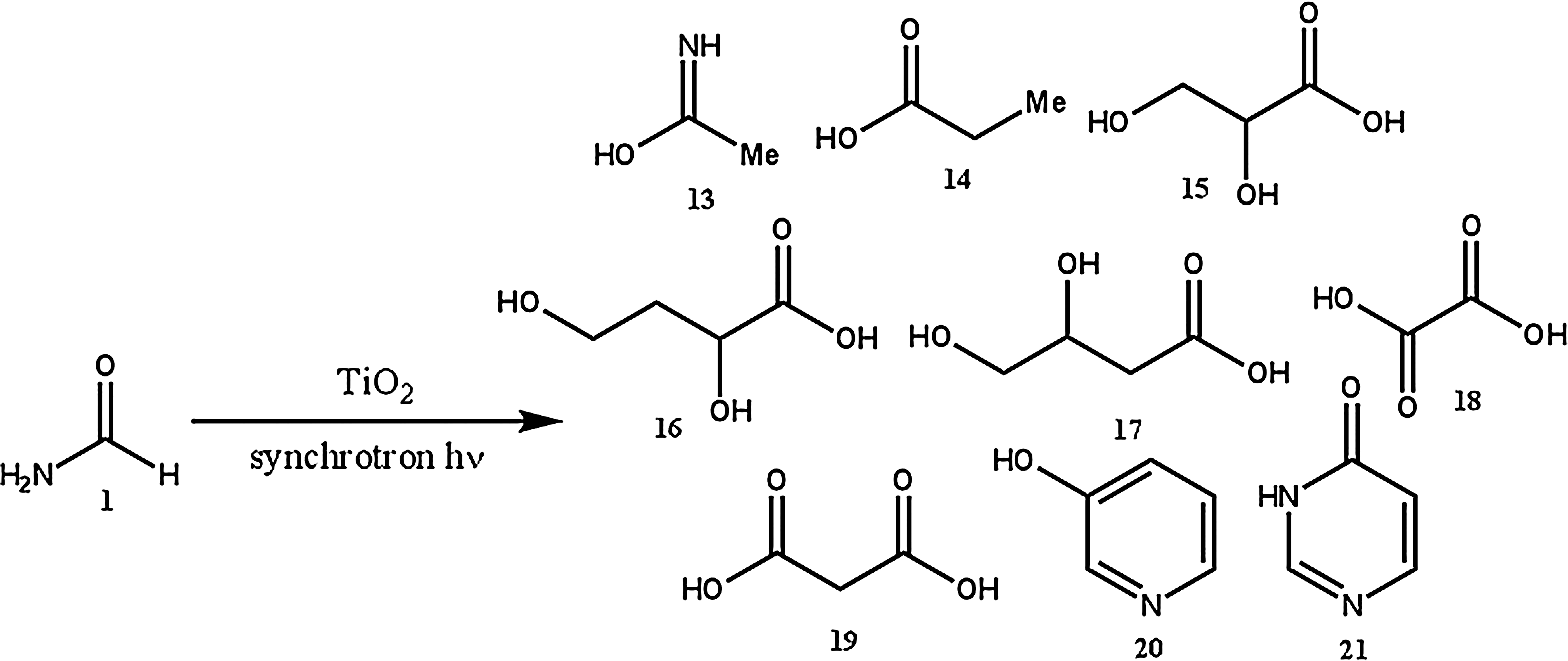
The emergence of the citric acid cycle is one of the most remarkable occurrences with regard to understanding the origin and evolution of metabolic pathways. Although the chemical steps of the cycle are preserved intact throughout nature, diverse organisms make wide use of its chemistry, and in some cases organisms use only a selected portion of the cycle. However, the origins of this cycle would have arisen in the more primitive anaerobic organism or even back in the proto-metabolism, which likely arose spontaneously under favorable prebiotic chemical conditions. In this context, we report that UV irradiation of formamide in the presence of titanium dioxide afforded 6 of the 11 carboxylic acid intermediates of the reductive version of the citric acid cycle. Since this cycle is the central metabolic pathway of contemporary biology, this report highlights the role of photochemical processes in the origin of the metabolic apparatus. Key Words: Catalysis—UV radiation—Metabolism—Origin of life—Prebiotic chemistry. Astrobiology 11, 815–824.
1. Introduction
Titanium dioxide catalyzes the photochemical degradation of formamide (HCONH2) (Friesen et al., 1999), a simple amide that is recognized as a possible prebiotic precursor for the synthesis of nucleic acid components (Saladino et al., 2005, 2007). Formamide has been detected in various space environments, including the interstellar medium (Rubin et al., 1971; Raunier et al., 2004), the long-period comet Hale-Bopp (Bockelée-Morvan et al., 2000), and the solid phase on grains around the young stellar object W33A (Schutte et al., 1999).
The effect of metal oxides and minerals on the prebiotic chemistry of formamide has been extensively studied, and it has been shown that the selectivity of the transformation is correlated to chemical properties and elemental composition of the catalyst. For example, TiO2 catalyzes the thermal condensation of formamide at 433 K in the dark to yield purine and pyrimidine nucleic acid bases and acyclonucleosides (Saladino et al., 2003, 2009). Similar results were obtained with iron sulfur and iron-copper sulfur minerals, such as pyrite (FeS2) and pyrrhotite (Fe(1-x)S) (Saladino et al., 2008).
The irradiation with ions and UV photons is an energetic process extremely relevant both to astrochemistry and astrobiology because it plays a fundamental role in driving the chemical complexity in space. Under physical conditions typically found in the interstellar medium, it is unlikely that complex molecules are formed in the gas phase at low temperatures. For this reason, surface catalysis by dust is considered responsible for the richness of molecules in space (Brucato and Nuth, 2010). However, organic molecules undergo deep transformations when exposed to harsh environments on the surface of planetary bodies. Organic compounds suffer surface charging, sputtering, and chemical and physical alterations by photons and charged particles from the solar wind, planetary magnetospheres, and background cosmic rays. Martian soil was observed to be lacking organic compounds of any kind (Benner et al., 2000). The absence of organic molecules on Mars has been ascribed to the presence of oxidizing agents on the planet's surface or to the action of plasmas generated in dust storms that may alter the chemistry locally.
However, primitive Earth and Mars experienced irradiation that was distinctly different from that of the present. During the Hadean period (since Earth formation to roughly 3.9 billion years ago), the primitive Earth surface was exposed to higher UV flux from the young Sun. This was due to the absence of oxygen and thus protective ozone in the primitive atmosphere and to a higher radiation flux at UV wavelengths (<250 nm) roughly 104 times greater than that experienced at Earth today (Canuto et al., 1983). The UV photons from the early Sun photolyzed carbonaceous material delivered by meteorites and, at the same time, may have increased the complexity of prebiotic organic compounds. Carboxylic acids have been extracted from the Murchison meteorite (CM2 carbonaceous chondrite) with an abundance of 380 ppm (Peltzer et al., 1984; Yuen et al., 1984). When these molecules reach the surface of Mars or Earth, they may be destroyed by harsh radiation environments. Benzoic and oxalic acids have been observed not to be UV-resistant compounds; they photolyze with a half time of 0.8 and 1.8 h, respectively (Stalport et al.,2009). Degradation processes by UV and other radiation and photocatalytic effects due to interaction with minerals are also considered (ten Kate, 2010) to be responsible of the absence of organics on the martian surface.
While interest has been focused primarily on the photodegradation of biomolecules due to minerals, less is known regarding the capability of dust to synthesize complex organics by photochemical processes. Particularly interesting is the capability of oxides to absorb photons and convert a fraction of their energy into chemical synthesis. In this context, the photocatalytic activity of TiO2 on the condensation of formamide to biomolecules was first investigated by irradiation with UV photons of a thin layer of amide on a single Ti(001) crystal surface (Senanayake and Idriss, 2006). Under these experimental conditions, the authors tentatively assigned purine and pyrimidine nucleic acid bases, including guanine, as reaction products. Furthermore, a combined thermal/UV photochemical condensation of formamide in the presence of mineral phosphates was recently reported to yield purine nucleic acid bases (Barks et al., 2010). In the present study, we examined the photocatalytic synthesis of biomolecules by synchrotron UV irradiation of formamide in the presence of anatase dust. This study is compatible with the prebiotic syntheses of biomolecules that might have occurred not only on planetary surfaces but also on primitive Earth.
2. Experimental Method
2.1. Ultraviolet irradiation
Due to its unique spectral and intensity characteristics, synchrotron radiation represents the most versatile radiation source for scientific experiments. DAFNE is a positron (e+) electron (e−) collider storage ring developed at the National Frascati Laboratory of the Italian National Institute of Nuclear Physics for high-luminosity particle physics experiments. Such experiments require high e+ and e− currents that can also be used to produce synchrotron radiation. The current level attained at DAFNE is higher in comparison to all synchrotron facilities granting high-intensity synchrotron radiation.
The monochromator is a Czerny-Turner optical configuration f/5.3 with a focal length of 460 mm (Jobin-Yvon mod. HR460MST2-2XM). It is equipped with a 2400 line/mm holographic grating with a spectral dispersion of 1.76 nm/mm, optimized for 250 nm, which covers the 190–600 nm spectral range with spectral resolution 0.1–0.3%. The radiation intensity at each wavelength was calibrated with a silicon photodiode. The current signal was amplified and converted into a voltage signal by a Keithley 427 Current Amplifier (with maximum gain of 109 V/A) and then recorded by a digital multimeter.
To maximize the impinging flux, we kept the entrance and exit slits at 3 mm. Taking into account the spectral dispersion, a broadening of illuminating wavelength of Δλ=2.14 nm was measured. The irradiation set was performed with radiation of 3.2 eV (387.5±2.14 nm), which corresponds to the band gap energy of anatase. The calibration between the electron current (I
0) and the monochromatic exit photon flux at 3.2 eV follows a linear behavior with the correlation coefficient of 0.998 (Supplementary Fig. S1; Supplementary material is available online at
Suspension of the TiO2 anatase in formamide was prepared in 5.0 mL suprasil cuvette with an optical path of 1.0 cm. All the suspensions were prepared to obtain a 2% concentration in weight of mineral. The suspensions were made with 4.3 mg of anatase and 1.790 g of formamide. To irradiate the cuvettes, they were placed in front of the exit slits of the monochromator at a distance of 15 cm, where the spot illuminates 2 cm2 of the cuvette optical window. The irradiation was performed at room temperature with 3.2 eV (387.5±2.14 nm) photons, which corresponds to the band gap energy of anatase. The integrated photon number and energy dose at 387.5 nm was 5.32×10¹⁵ and 2.7 mJ, respectively.
2.2. Gas chromatography–mass spectrometry analysis
Formamide (Fluka, >99%) was used without further purification, and high-purity TiO2 anatase was purchased from Sigma-Aldrich. Reactions were performed with commercially available material and with a TiO2 sample manually ground in an agate mortar. Formamide was irradiated under the experimental conditions previously described. At the end of the reaction, the mineral was recovered by centrifugation (6000 rpm, 10 min, Haereus Biofuge), the supernatant was decanted, and the excess formamide was removed by distillation under high vacuum (40°C, 4×10⁻⁴ bar). The crude product was analyzed by gas chromatography–mass spectrometry (GC-MS) after treatment with N,N-bis-trimethylsilyl trifluoroacetamide in pyridine (620 μL) at 60°C for 4 h in the presence of betulinic acid [3-hydroxy-20(29)-lupaene-oic acid] as an internal standard (3.0 mg). Mass spectrometry was performed with a Shimadzu QP5050A gas chromatograph–mass spectrometer with use of the column WCOT fused silica (film thickness, 0.25 μm; stationary phase, VF-5ms; Li, 0.25 mm; length, 30 m) and the following program: injection temperature 280°C, detector temperature 280°C, gradient 100°C for 2 min, then 10°C/min for 60 min. The chromatogram corresponding to UV irradiation of formamide pure (A) and with the presence of anatase (B) are reported in Fig. 1. The mass-to-charge ratio (m/z) value and the abundance of mass spectra peaks of compounds
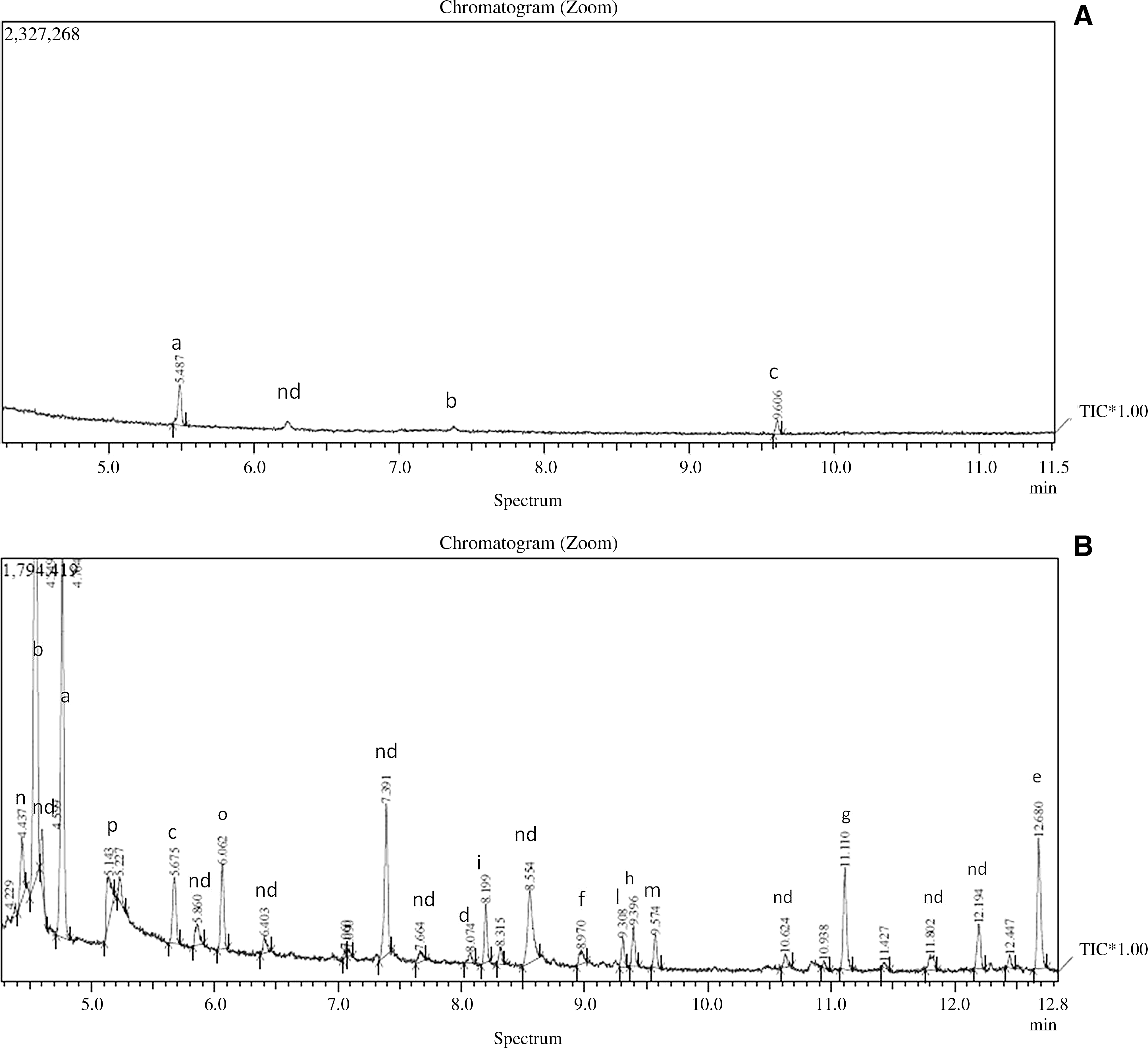
(
2.3. Grain size analysis
Grain sizes were measured through micrograph analyses obtained with a scanning electron microscope Zeiss EVO M15 equipped with elemental analysis unit Oxford INCA 250. A scanning electron micrograph of commercial Sigma-Aldrich anatase shows that it is formed of irregular aggregates of spheroid subunits, the aggregates ranging in size from tens to hundreds of microns (Fig. 2a). After manual grinding in an agate mortar, anatase is reduced in size and has a grain shape that resembles that of a subunit of the parent commercial sample (Fig. 3a). Subunit and ground sample diameters were measured at different ranges, and both size distributions were fitted with a log-normal distribution y=y0+A/(sqrt(2p)wx) exp(-(ln(x/xc))2/(2w 2)) (Figs. 2b and 3b). The results of the fitting procedure are reported in Table 1. They show that the mean diameters of Sigma-Aldrich subunits and ground anatase samples are 110.6±0.9 nm and 98.4±0.8 nm, respectively. Thus, the grinding procedure results in a disaggregation of commercial anatase into the subunit grains that comprise it.
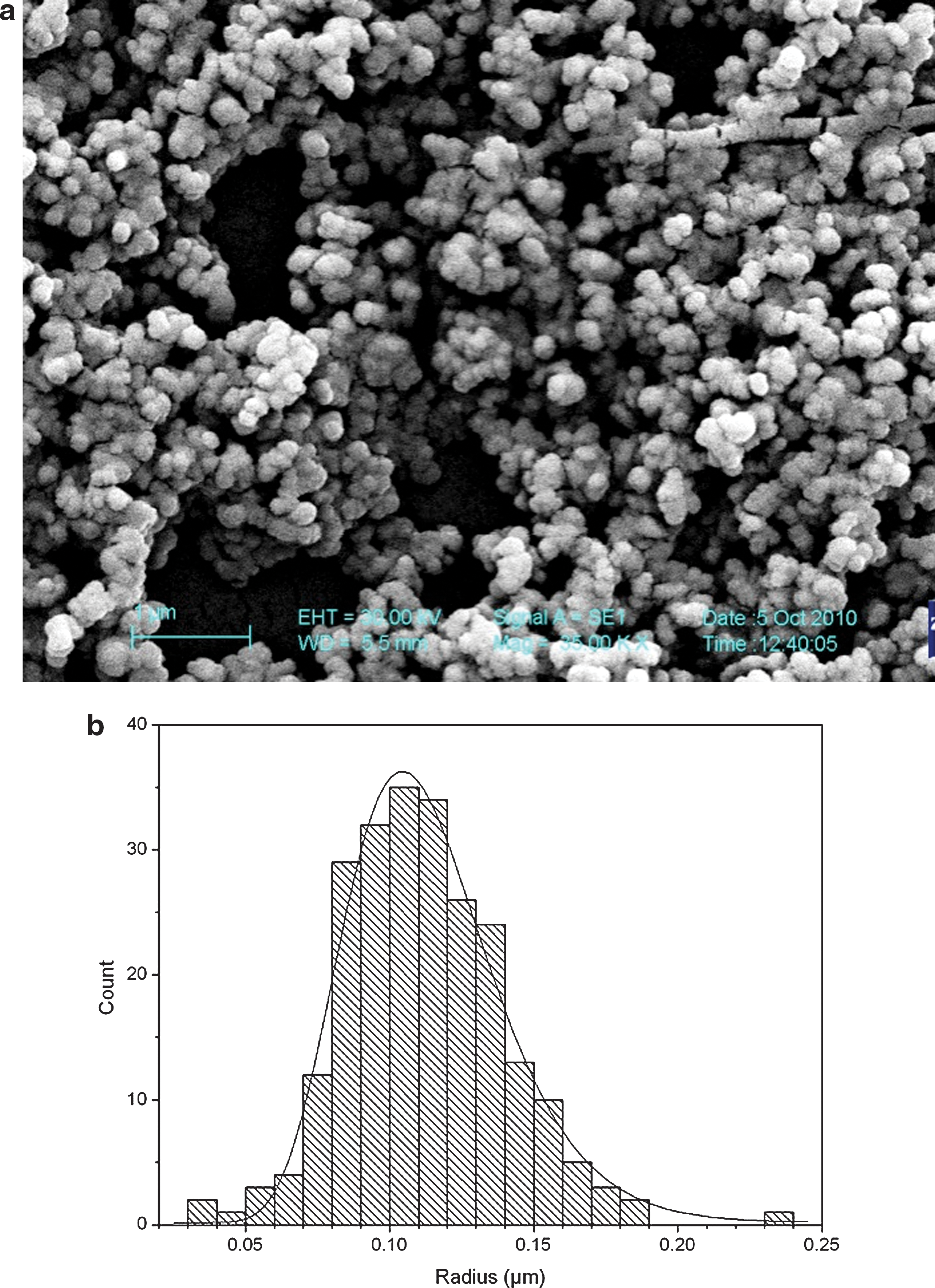
Scanning electron micrograph and diameter distributions of subunit grains as observed in commercial anatase (
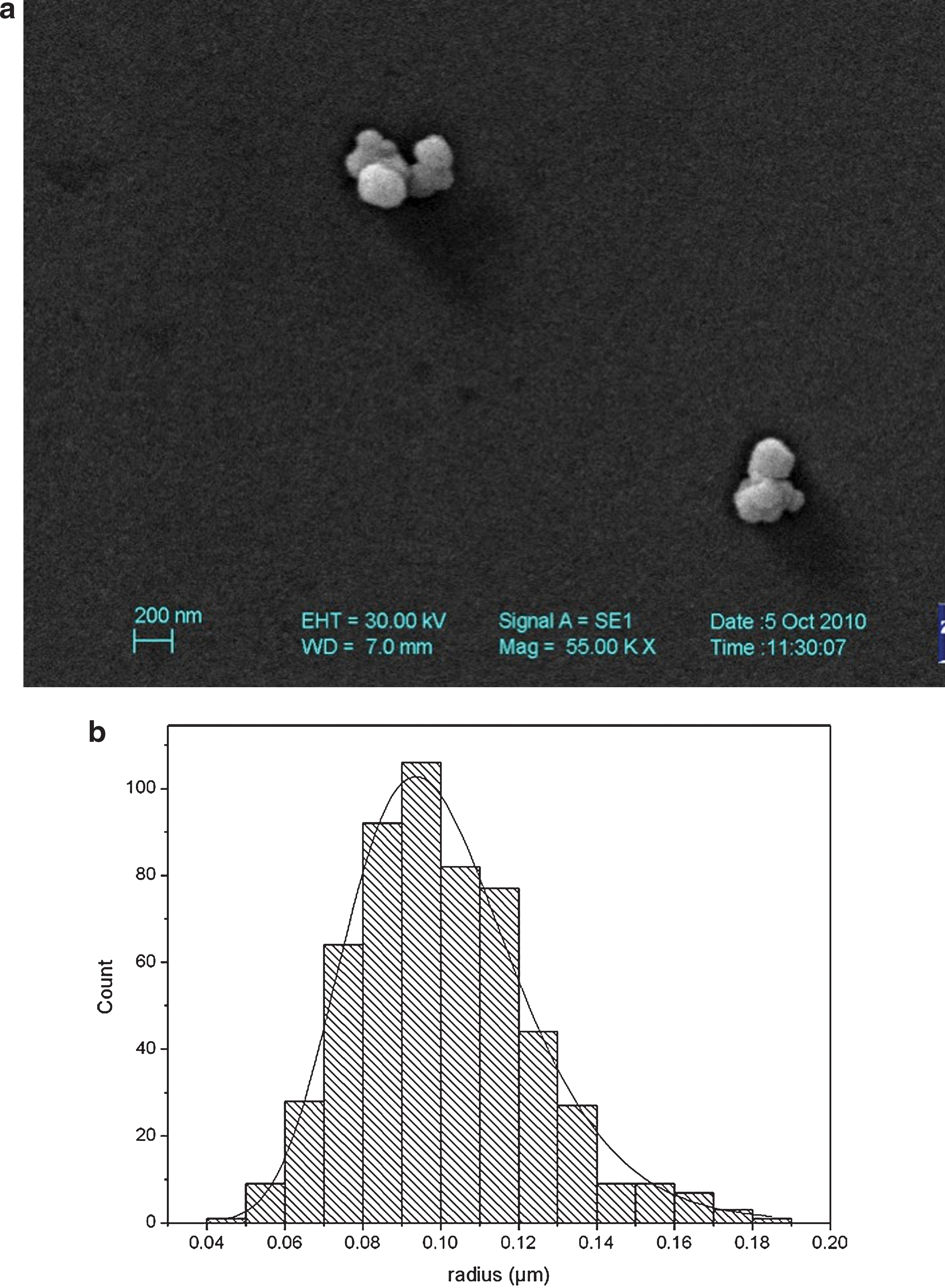
Scanning electron micrograph and diameter distributions of subunit grains as observed after grinding procedure (
3. Results
The origin of cellular metabolism is widely debated, and it is probably one of the most ancient biological networks that emerged through chemical selection. The first set of metabolism intermediates could have been accumulated both through redox processes and by the chemical energy produced in hydrothermal vent environments (Bassez, 2009; Loison et al., 2010). Organic molecules would have been delivered to early Earth by extraterrestrial objects such as comets, carbonaceous asteroids, and interplanetary dust particles, or they may have been synthesized by impact shocks, UV light, or electrical discharges (Chyba and Sagan, 1992). However, photochemical reactions might have occurred on Earth's primordial crust and on other planetary surfaces in the Solar System where UV radiation would have dominated and interacted with simple chemical precursors in suspension or adsorbed on minerals.
In the present study, we focused on a specific aspect of the radiation-solid-molecule interaction, taking into account that TiO2 behaves as a semiconductor at one specific value of wavelength. We carried out UV irradiation experiments at 273 K in quartz cuvettes (5.0 mL with 1.0 cm optical path) that were charged with neat formamide and 2 wt % TiO2 anatase. The experiments were performed with a radiation of 3.2 eV (387.5±2.14 nm), which corresponds to the band gap energy of anatase. We focused on the characterization of the more abundant products by GC-MS analysis by comparison with authentic samples and by use of selected mass spectrum libraries. The UV irradiation of neat formamide
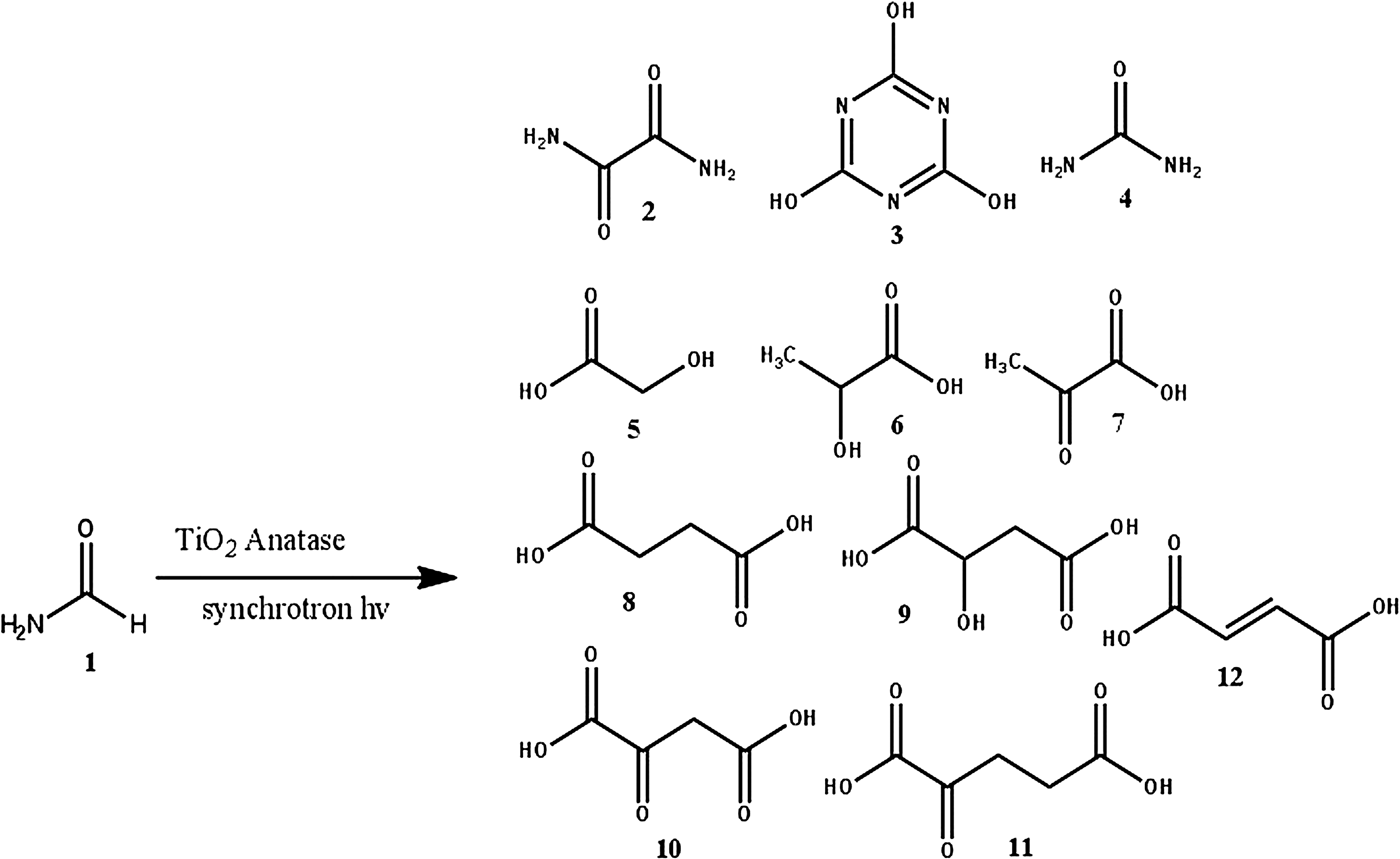
Reference compounds
Long-chain and other carboxylic acids
Product yield is expressed as milligrams of product with respect to initial amount in grams of formamide.
Data obtained with TiO2 anatase ground in an agate mortar.
n.d., not determined.
Product yield is expressed as milligrams of product with respect to initial amount in grams of formamide.
Data obtained with TiO2 anatase ground in an agate mortar.
n.d., not determined.
4. Discussion
Among the products obtained, carboxylic acids
The irradiation in our study was accomplished with monochromatic UV light at 3.2 eV. This energy corresponds to the band gap of anatase, and it is responsible for the creation of the electron-hole pair that undergoes charge transfer to adsorbed formamide on the grain surface, which has a lifetime of chemical reaction of the order of 10−10 to 10−5 s. In anatase grains, photon energies that exceed the band gap produce photoexcited electrons with higher energies that will be available for the chemical reactions and that will not affect the photochemical products (Shkrob and Chemerisov, 2009). The photochemical yield will rely on the anatase absorption cross section of UV photons, and just the efficiency of the photocatalytic synthesis will differ accordingly. In a more realistic scenario where solar photons hit at surfaces of Solar System objects with wavelengths down to 190 nm, a competitive approach between processes, such as photochemical synthesis and photodissociation of biomolecules, is needed, however, to model the presence of organics on mineral surfaces.
5. Conclusion
Our findings suggest that the synthesis of six intermediates of the citric acid cycle can be performed from formamide and TiO2 under simple photochemical conditions that are, in principle, plausible with a prebiotic scenario. From a Darwinian point of view, the citric acid cycle is postulated to have evolved by combination of several pre-existing enzymes from pathways for biosynthesis of aspartate and glutamate. The origins of this cycle may be found in the more primitive anaerobic organisms of the past where minerals might play the role as ancestors of enzymes (Szostak et al., 2001). The results obtained here suggest that biogenic and nonbiogenic carboxylic acids, correlated to a possible origin of the metabolism instead of the genetic apparatus, can be synthesized by photochemical reactions. Moreover, the comparison with thermal condensation experiments suggests that the formamide/TiO2 system can selectively afford intermediates of the genetic or metabolic systems, depending on the nature of the energy source, that is, thermal or electromagnetic, respectively. This predisposition would have allowed the synthesis of metabolic or genetic compounds to operate on early Earth or in space under geo- and cosmochemical conditions specific for each assembly sequence.
A collective study on formation and evolution of planetary atmospheres and surfaces would lead to a better understanding of conditions that might have been active on early planets and that have been beneficial for prebiotic complexification of organic material. Studies on heterogeneous photocatalysis would lead to a better understanding of the chemistry of those initial stages that occurred prior to the emergence of life and are no longer in existence on Earth.
Footnotes
Acknowledgments
This work was supported by Italian Space Agency (Agenzia Spaziale Italiana; ASI) contract n. I/015/07/0 and by MIUR PRIN-2008. This work was carried out in part at DAFNE collider storage ring at the National Frascati Laboratory (LNF) of the Italian National Institute of Nuclear Physics (INFN). We would like to thank Lorenzo Tozzetti of University of Florence Department of Physics and Astronomy, Antonio Grilli and Agostino Raco of INFN-LNF Frascati for their help in performing the experiments.
Author Disclosure Statement
No competing financial interests exist.
Abbreviations
GC-MS, gas chromatography–mass spectrometry; m/z, mass-to-charge ratio.
References
Supplementary Material
Please find the following supplemental material available below.
For Open Access articles published under a Creative Commons License, all supplemental material carries the same license as the article it is associated with.
For non-Open Access articles published, all supplemental material carries a non-exclusive license, and permission requests for re-use of supplemental material or any part of supplemental material shall be sent directly to the copyright owner as specified in the copyright notice associated with the article.
