




Abstract

My Pathway to Astrobiology
In 1985, Alain Leger and Louis d'Hendecourt, later my advisors in graduate school at the University of Paris VII, published the discovery of polycyclic aromatic hydrocarbons (PAHs) in the interstellar medium (Leger and d'Hendecourt, 1985). I applied to work in their group for a summer fellowship in Paris and actually stayed for a few years and completed my thesis in 1990 after studying the largest organic molecules in interstellar space. My transition from extracting enzymes from the skin secretions of Xenopus laevis frogs (and I will not go into detail here about how we achieved that) to observing carbon molecules in interstellar clouds with a 3.6 m telescope in Chile was ultra-short (only a few months). The 7-year-long scientific double life during my studies certainly shaped the way I pursue my research and career, the way I educate my students and postdocs, and it laid the foundation for my interest in astrobiology.
After my Ph.D., I was blessed to receive a number of prestigious fellowships from the European Space Agency, the French Space Agency, and the Marie Curie Program of the European Union. Using these scholarships, I became a real astrochemist working on ice and carbon chemistry in space both as a chemist, in the laboratory, and as an astronomer, by observing stars and clouds and analyzing astronomical data. I was lucky to be involved in analyzing the first data obtained with the Infrared Space Observatory (ISO) and remained engaged with the interpretation of ISO satellite data for many years at Leiden University. Another topic I have pursued continuously to date is the identification of the carriers of the diffuse interstellar bands (DIBs), hundreds of unknown features observed but unidentified for more than 100 years. Together with my colleague and husband, Bernard Foing, I reported in 1994 evidence for
In 1996 I was awarded the renowned APART (Austrian Program for Advanced Research and Technology) prize by the Austrian Academy of Sciences, which enabled me to focus on my habilitation on “Cosmic Dust.” (In many European countries you cannot become a professor without “habilitation”—an accreditation degree obtained 10 years or more after the Ph.D.) In 1999 I was particularly honored with an asteroid bearing my name, 9826 Ehrenfreund 2114 T-3. Although some of my colleagues promised to observe “body Ehrenfreund” (with either professional or garden-based telescopes), I have never had time to establish a stronger relationship with this particular object.
A New Generation of Astrobiologists
With my breadth of knowledge in molecular biology, astrophysics, and astrochemistry, it was a logical step to move into the new emerging field of astrobiology. In 1999 and 2000 I developed my expertise through two fruitful sabbaticals at the Scripps Institute in San Diego and at NASA Ames with Jeff Bada and Lou Allamandola, respectively. At Scripps I learned how to extract amino acids from extraterrestrial material, and at NASA Ames I learned how to effectively destroy them in laboratory simulations of the space environment—what complementary endeavors!
After completing my habilitation in 1999, I started my own astrobiology group at Leiden University with great support from the Netherlands Organisation for Scientific Research. Since 2000 I have carried the rare title: “Professor of Astrobiology.” Leading a group of very talented and fun graduate and undergraduate students and postdocs, we have explored together a number of rather diverse astrobiology avenues. They are, in alphabetical order: Oliver Botta, Nick Cox, James Garry, Zita Martins, Zan Peeters, Richard Quinn, Richard Ruiterkamp, Florian Selch, Inge ten Kate, Dennis Vos, and recently Kathryn Bryson, Joost Groen, and Michelle Kotler. Although their topics always related to the investigation of carbon pathways in interstellar regions and in the Solar System (Fig. 1), every group member pursued a different focus. These included astronomical observations of interstellar clouds, laboratory studies on the photostability of organics in the space environment, Mars simulations (survival of organics and microorganisms, oxidation processes), analyses of the organic composition of carbonaceous meteorites, ground validation of life-detection hardware for space missions, and microgravity research. Zita Martins detected and analyzed for the first time extraterrestrial amino acids in Antarctic CR meteorites with the highest concentrations of amino acids ever measured in a chondrite (Martins et al., 2007). She and Oliver Botta provided clear evidence that nucleobases measured in the Murchison meteorite are extraterrestrial and are among the compounds exogenously delivered to early Earth (Martins et al., 2008). Nick Cox and Dennis Vos have detected DIBs in many galactic and extragalactic regions (Cox et al., 2005; Vos et al., 2011), and Nick compiled the first detailed study of DIBs in recent supernovae and the Magellanic Clouds (Sollerman et al., 2005; Cox et al., 2006, 2007). Richard Ruiterkamp studied in detail the stability of benzene and larger aromatics against UV irradiation and proton radiolysis (Ruiterkamp et al., 2005). He also completed a successful Earth orbit experiment on Biopan V (after Biopan IV exploded) to provide us with the technical know-how to proceed with the long-term exposure experiment “Organics” on the Expose-R facility on the International Space Station (ISS; Ehrenfreund et al., 2007). Our experiment on EXPOSE-R, exposing PAHs and fullerenes to the space environment, was made flight ready by Zan Peeters, monitored by Kathie Bryson (NASA Ames), and retrieved in March 2011 after 2 years exposure on the outside of the ISS. Zan Peeters also showed that prebiotic molecules, including amino acids, small N-heterocycles, and nucleobases, have short lifetimes in irradiated space environments (Peeters et al., 2003, 2005). Inge ten Kate, James Garry, Richard Quinn, and Florian Selch constructed and upgraded several operational Mars environment simulation chambers and investigated organic thin films, soil analogues, and microorganisms as well as instrument hardware under simulated martian conditions (ten Kate, 2005, 2006; Quinn et al., 2005, 2007; Garry et al., 2006). These measurements provide consistent data sets on the degradation of organics under space conditions.
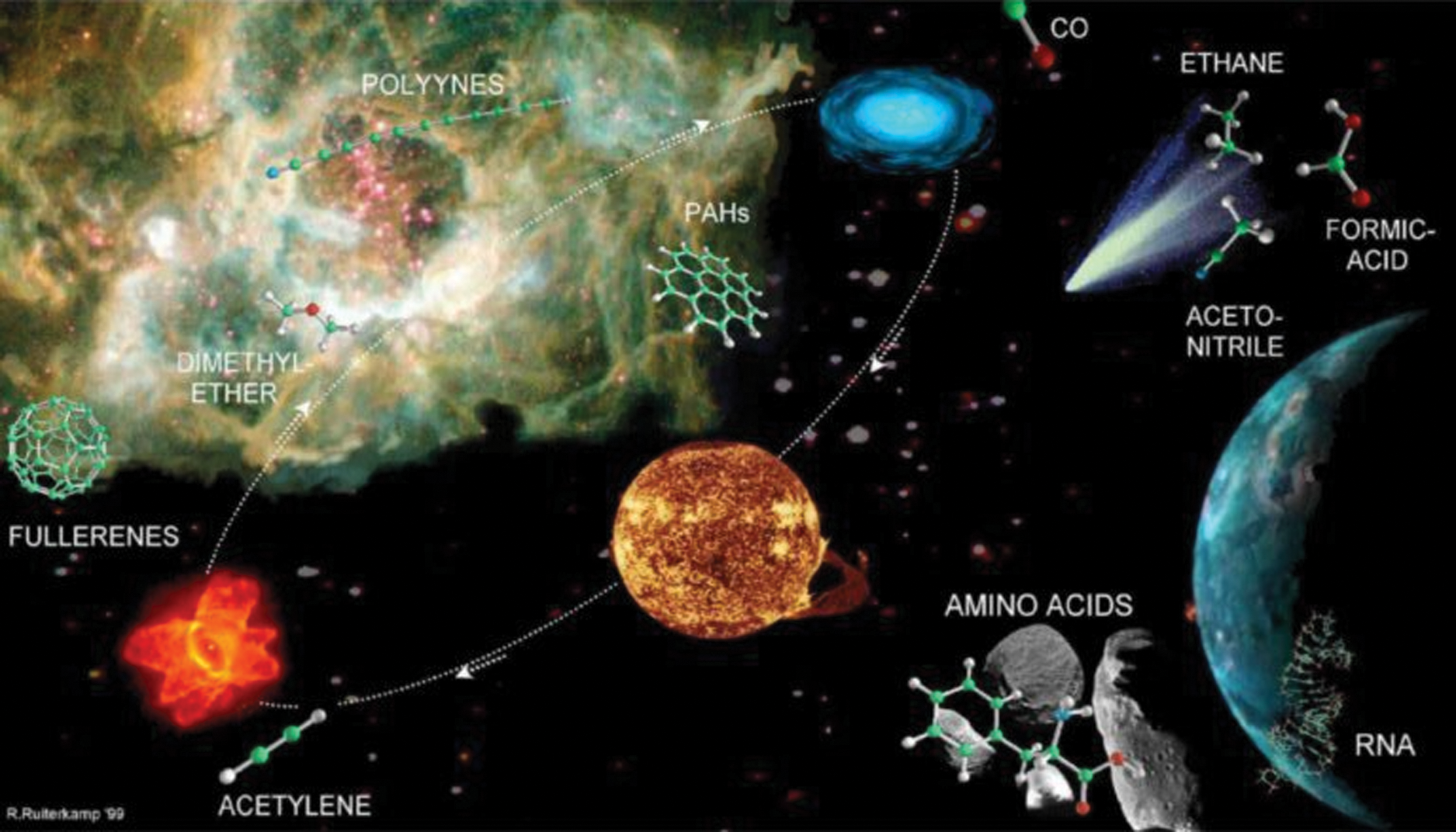
Gas and solid-state chemical reactions form a variety of organic molecules in circumstellar and interstellar environments. During the formation of the Solar System, this interstellar organic material was chemically processed and later integrated into the presolar nebula from which planets and small Solar System bodies formed (Ehrenfreund and Charnley, 2000; image designed by Richard Ruiterkamp). Color images available online at
In summary, these years were incredibly productive and often forced me to switch subjects between astronomy, engineering, chemistry, biology, and (of course) management within minutes. That certainly keeps the brain active. My biggest joy is to see all the group members succeeding and acting as seeds for astrobiology all over the world.
My Route to Policy
Having been active in numerous advisory bodies and through providing community service over many years, I finally decided to add the dimension of policy and international relations to my portfolio. In early 2008, I completed an M.A. in management and international relations after 14 months. My master's thesis focused on global space exploration and was parsed into several papers published over recent years in respected policy journals. To practice in this new area I moved in 2008 to the Space Policy Institute in Washington DC, where I now work on policy aspects of astrobiology and, in particular, on synergies between space exploration and Earth science. Astrobiology is one of the best-aligned areas for this focus because it addresses both, and so much more. I also concentrate on the policy aspects of global space exploration and the development of concepts for managing international space collaboration in the next decades. The Panel on Exploration (PEX) of COSPAR (the Committee on Space Research), which I chair together with Chris McKay (NASA Ames), supports PEX-associated space exploration activities, cooperative efforts, and capacity building.
Apart from my policy work, I am still strongly involved in astrobiology tasks: two in particular. I am part of the Wisconsin Astrobiology Research Consortium, led by Clark Johnson and funded by the NASA Astrobiology Institute, where I perform research on the habitability of Mars and investigate the stability of organic material in the space environment. This includes field research to demonstrate instrument capabilities in support of current and future planetary missions and to validate procedures and protocols for martian surface in situ and “sample return” science (Figs. 2 and 3). Over the past 8 years I have been involved in the development of several instruments for life detection. Some of them, hopefully, will fly as payloads on the ExoMars mission in 2018 and achieve exciting results.
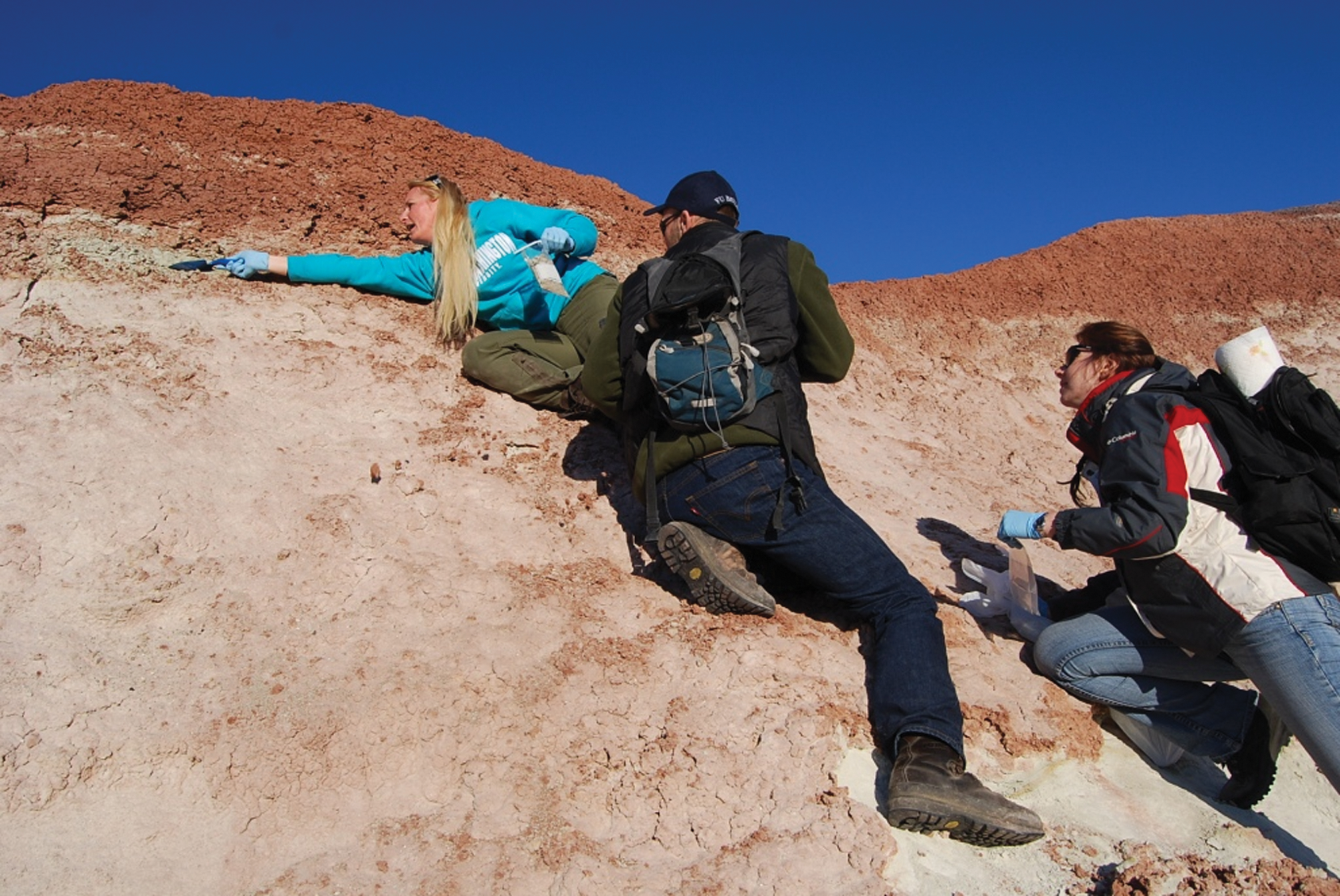
Field research at the Mars Desert Research Station, Utah, 2009 (with Christoph Gross and Cora Thiel). Color images available online at
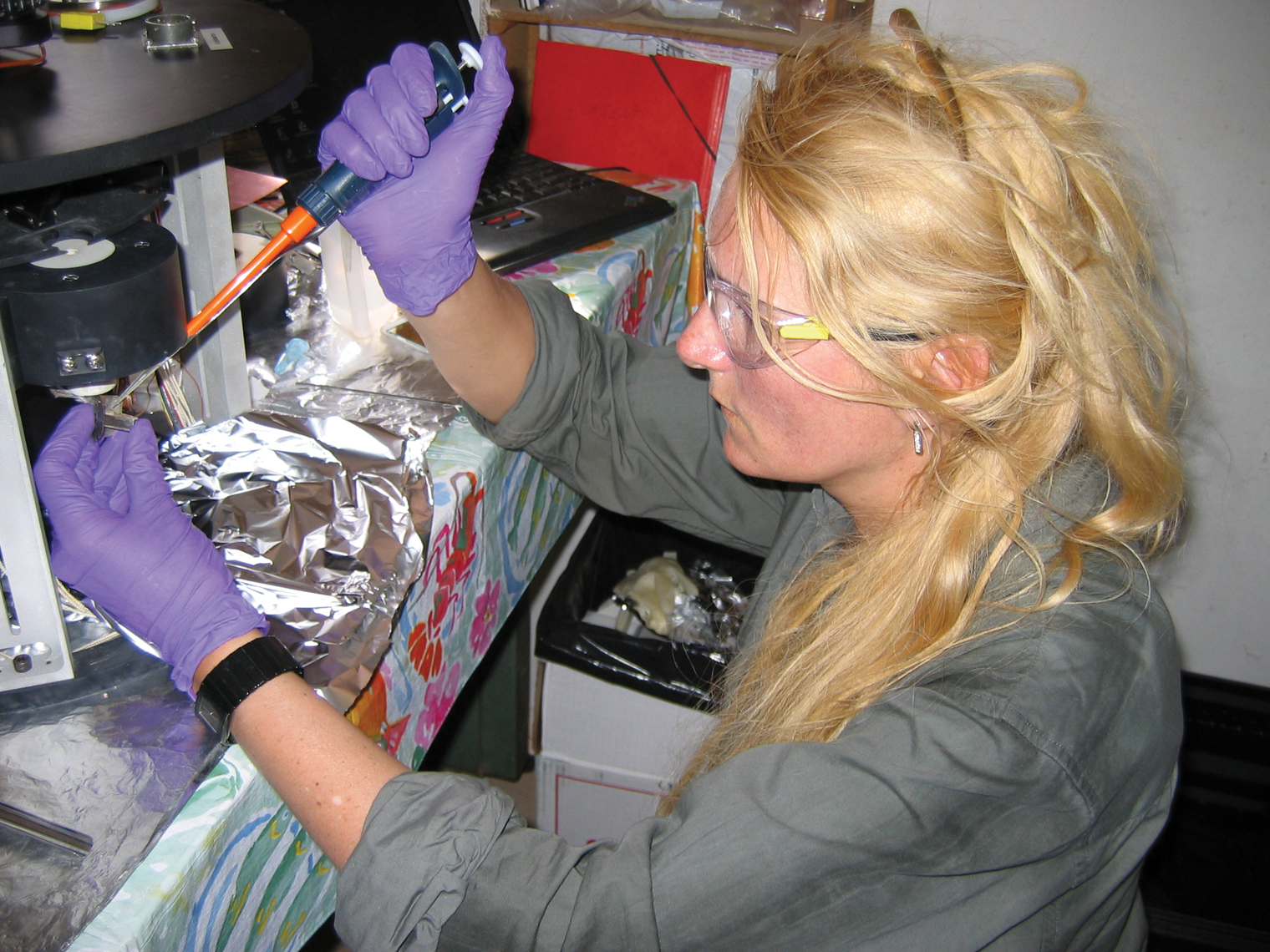
Testing and improving the capabilities of life-detection instruments in support of future Mars missions from a field lab in the Atacama Desert, Chile. Color images available online at
My Role with Space Missions
Since 2008 I have served as the project scientist for the O/OREOS (Organism/Organic Exposure to Orbital Stresses) satellite, currently in Earth orbit. This is the first technology demonstration mission of the NASA Astrobiology Small Payload Program founded by John Rummel (NASA Headquarters) in 2008. With O/OREOS I work with an outstanding astrobiology science team and the Small Satellite Engineering team at NASA Ames. O/OREOS is among the small satellites that are of great interest to researchers because they open the door to less-expensive cosmic research that can be conducted much more frequently than larger, and more expensive, missions. I am convinced that in the future the NASA Astrobiology Small Payload Program will provide both interesting opportunities for astrobiologists and important training and education for young researchers in the development, design, and operation of space instrumentation. The O/OREOS mission currently performs nominally and delivers daily science results.
Although I served over the last 15 years as principal investigator, co-investigator and/or team leader on experiments in low Earth orbit, on the ISS, and on many different astronomy and planetary ESA and NASA space missions, O/OREOS has been special. The short timescales from design to launch for small satellites allowed the whole O/OREOS team to follow all the relevant phases of a space mission, including conception, definition, design, procurement, development, integration and testing, commissioning, and on-orbit operation and science exploitation. Not to mention the excitement, panic, surprise, tears, and exhaustion—probably in that order.
What Are the Advantages of Being an Astrobiologist?
As an astrobiologist, I am • able to see the Universe, Earth, and life in a much broader context. • trained to look at everything from many different angles. • never bored: I was able to perform research in the lab, observe on telescopes, dig in the field, help to design and build space instrumentation—even operate a satellite. • now able to apply this broad knowledge to policy issues and spark cross-disciplinary research, connect people, and open new research avenues.
Some disadvantages are that astrobiologists always have to catch up with new publications, attend too many meetings, referee papers every other week on widely diverging subjects (yes, I might be your next referee!) and, therefore, never have a quiet moment (never, ever…). Sometimes it gets too much for all of us!
Nonetheless, my strongest character feature is perseverance. I focus on executing tasks, and I put everything on paper—which has resulted in more than 160 refereed publications. I have a strong urge to escape media attention (in contrast to some of my colleagues…) and I am definitely more the background type who enjoys making things work. I am never overly enthusiastic and always careful—which annoys some of my colleagues but helps tremendously in my role as a science policy advocate.
It is rather hard to pin down who most influenced me during my astrobiology career. One meets so many people and is exposed to so many topics. Certainly my thesis advisor, Louis d'Hendecourt, taught me to rely on intuition and always to think outside the box. I consider my academic background an incredible source of stability and ethics. My commitment to informing a new generation keeps me (and others) on track and engaged, in good and bad times, in the turbulent and funding-deprived research field of astrobiology.
In closing, I want to get a bit more philosophical. Astrobiology is not a field people fall into by accident—it is a field one chooses with deliberation. As I've described above, it is much harder to keep up with this field than it is to be focused on one limited topic, but it is very rewarding. In the future, I would like to see a stronger connection between astrobiology and astrophysics—findings concerning the early Universe and the formation of elements are crucial to understanding the formation of rocky planets and the possible origin and evolution of life on them. Access to Solar System material (from small bodies, planets, moons, etc.) will provide us with the information we seek to help us understand the origin of Solar System bodies…and life. At the moment Mars is the most promising planet in the search for extraterrestrial life because it is possible to travel there in a reasonable time and study it in situ or bring back a sample. Astrobiology will strongly profit from interaction with the artificial life community. Where bottom-up approaches meet top-down reasoning there will be interesting new avenues to pursue.
Astrobiology addresses key questions of our existence: how our Solar System formed, whether life exists beyond Earth, and what our future may be. It therefore provides a clear and credible vision to give overall direction to the pursuit of many science questions. Sometimes it is overwhelming to keep up with all the information and put the puzzle pieces together. But astrobiology is incredibly rich, always exciting, and well worth the effort.
Footnotes
Acknowledgments
I am grateful to all funding agencies, including the European Space Agency, the French Space Agency, the European Union, the Austrian Programme for Advanced Research and Technology, the Netherlands Organisation for Scientific Research, and NASA, for giving me the opportunity to contribute to the field of astrobiology, science policy, and space exploration. Many thanks to all my students, postdocs and colleagues.
Abbreviations
DIBs, diffuse interstellar bands; ISO, Infrared Space Observatory; ISS, International Space Station; O/OREOS, Organism/Organic Exposure to Orbital Stresses; PAHs, polycyclic aromatic hydrocarbons; PEX, Panel on Exploration.