




Abstract
Radiation Risk Radiometer-Dosimeter E (R3DE) served as a device for measuring ionizing and non-ionizing radiation as well as cosmic radiation reaching biological samples located on the EXPOSE platform EXPOSE-E. The duration of the mission was almost 1.5 years (2008–2009). With four channels, R3DE detected the wavelength ranges of photosynthetically active radiation (PAR, 400–700 nm), UVA (315–400 nm), UVB (280–315 nm), and UVC (<280 nm). In addition, the temperature was recorded. Cosmic ionizing radiation was assessed with a 256-channel spectrometer dosimeter (see separate report in this issue). The light and UV sensors of the device were calibrated with spectral measurement data obtained by the Solar Radiation and Climate Experiment (SORCE) satellite as standard. The data were corrected with respect to the cosine error of the diodes. Measurement frequency was 0.1 Hz. Due to errors in data transmission or temporary termination of EXPOSE power, not all data could be acquired. Radiation was not constant during the mission. At regular intervals of about 2 months, low or almost no radiation was encountered. The radiation dose during the mission was 1823.98 MJ m−2 for PAR, 269.03 MJ m−2 for UVA, 45.73 MJ m−2 for UVB, or 18.28 MJ m−2 for UVC. Registered sunshine duration during the mission was about 152 days (about 27% of mission time).The surface of EXPOSE was most likely turned away from the Sun for considerably longer. R3DE played a crucial role on EXPOSE-EuTEF (EuTEF, European Technology Exposure Facility), because evaluation of the astrobiology experiments depended on reliability of the data collected by the device. Observed effects in the samples were weighted by radiation doses measured by R3DE. Key Words: ISS—EXPOSE-E—R3DE—Radiation measurement—PAR—UV radiation. Astrobiology 12, 393–402.
1. Introduction
Radiation data were recorded with the Radiation Risk Radiometer-Dosimeter R3DE. The precursor of the measurement system for photosynthetically active radiation (PAR) and ultraviolet radiation (UV) of the R3DE (R3D, Radiation Risk Radiometer-Dosimeter) was the European Light Dosimeter Network (ELDONET) device. A worldwide grid of these devices successfully measured solar radiation impinging on Earth's surface (Häder et al., 1999; Häder and Lebert, 2006). Three different sensors attached to an Ulbrich integrating sphere measured the wavelength regions PAR, UVA, and UVB, respectively. The ELDONET system is still functioning after more than 10 years of successfully recording solar radiation in different locations around the world (Häder et al., 1999, 2007). R3DE is a successful miniaturization of an ELDONET device in combination with a radiometer that measures cosmic radiation (Dachev et al., 2012 in this issue). The radiometer for detection and recording of cosmic ionizing radiation is a 256-channel Liulin-type spectrometer dosimeter, which measures the dose rate in μGy h−1 and particle flux in cm−2 s−1 (Dachev et al., 2002; Häder and Dachev, 2003; Dachev, 2009). In this report, the data of light and UV radiation measurement will be presented, while cosmic radiation data are provided in Dachev et al. (2012). A precursor of the newly developed hardware, the R3DB instrument, was already successfully tested under space conditions during the Biopan-5 campaign of ESA in 2005 (on the Russian Foton-M2 satellite) (Häder et al., 2009). The device delivered valuable radiation data for the attached biological experiments (Horneck et al., 2002; Sancho et al., 2007). Also, during the Foton-M3 mission in 2007, a R3D device (R3D-B2) served as a reliable instrument in collecting radiation data from open space.
2. Materials and Methods
2.1. Optical part of R3DE
The EXPOSE-EuTEF facility (EuTEF, European Technology Exposure Facility) was mounted on a structure of the Columbus module in a way that the platform with the samples and the R3DE was directed toward the sky. The R3DE device was located in one of the chambers of the EuTEF. The device had a size of 76×76×36 mm and a weight of 120 g. A four-channel filter dosimeter provided recording of UVA (315–400 nm), UVB (280–315 nm), UVC (<280 nm) and PAR (400–700 nm) values, and the accumulative doses. In addition, the temperature was recorded. Sensor signals were amplified in a sensor-specific manner, 12-bit A/D-converted, and stored currently in the circuit board of the device. At 10 s time intervals, data were transferred to the host computer of the EXPOSE-Eviaan RS-422 interface and later transmitted by the ISS telemetry system to the ground control on Earth. The instrument was powered by the EXPOSE-E power supply. The measurement interval was 10 s per data set. Due to some switch-off events of platform power and data loss during data transmission, not all data could be retrieved. For calculation of radiation doses, missing data were extrapolated. Radiation was measured with suitable photodiodes equipped with filters (Figs. 1 and 2). The photodiode for PAR was additionally equipped with a Teflon disc as diffuser and provided correction of the cosine error. Teflon coating was not possible in the case of the UV photodiodes. For this reason, the response of the UV photodiodes, which deviates from a cosine dependence, had to be corrected (see below).
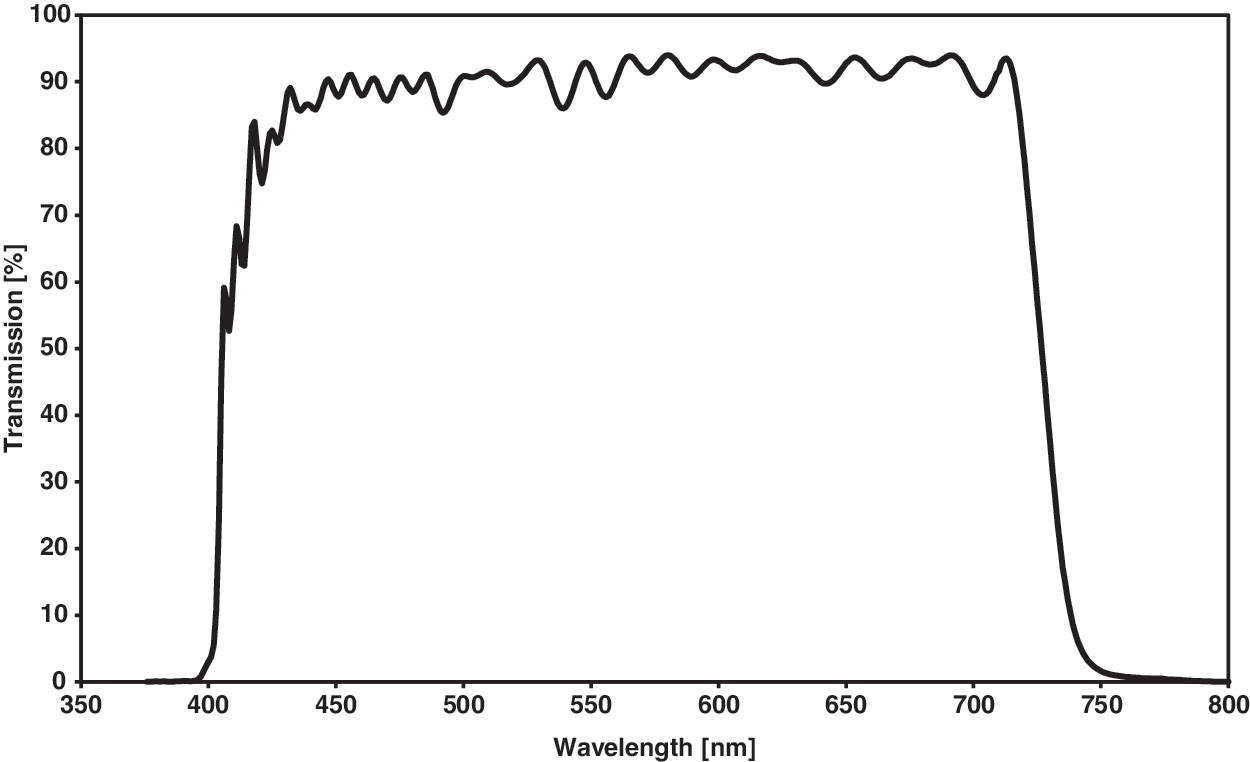
Transmission of the filter attached to the PAR-sensitive photodiode of the R3D.
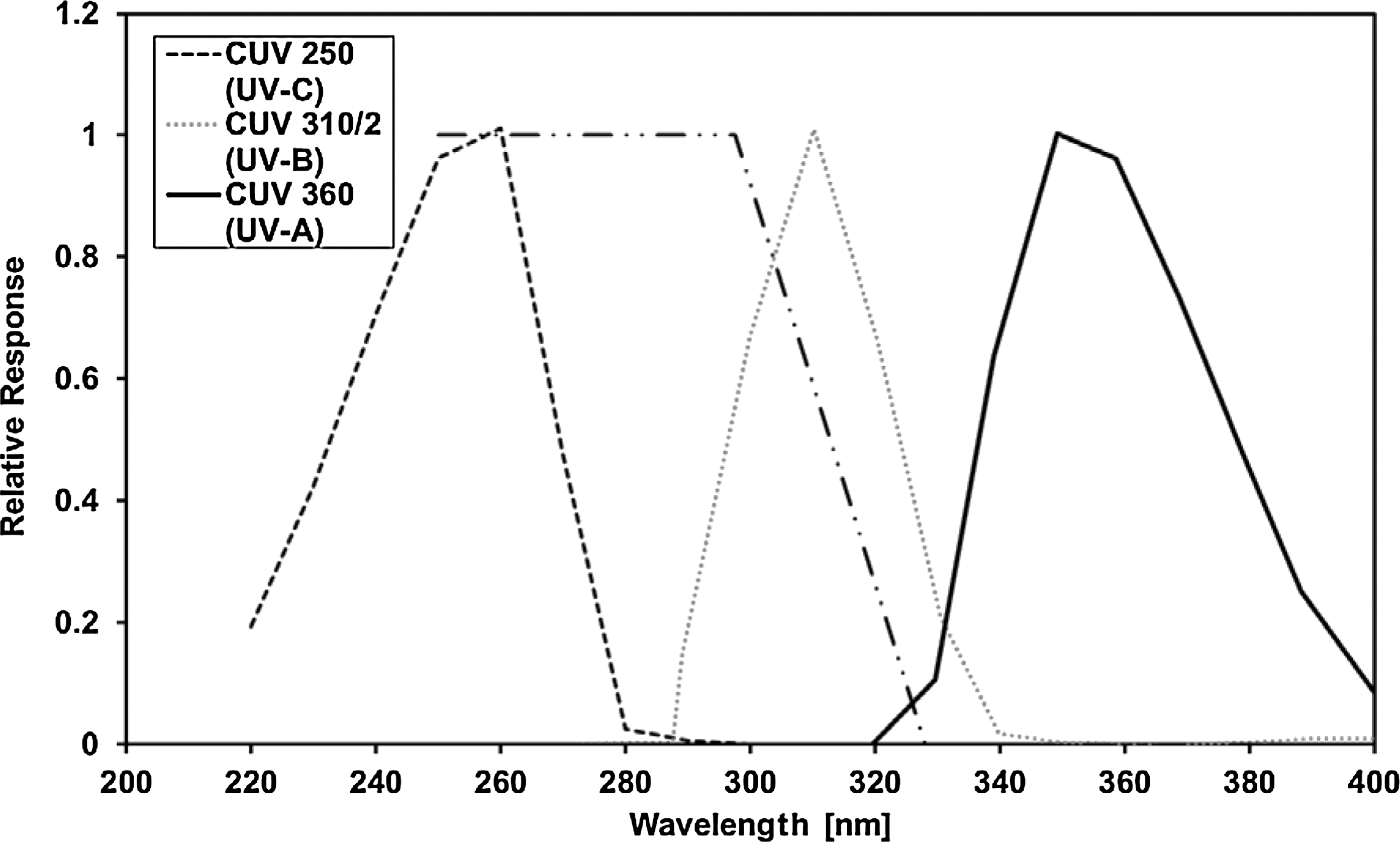
Transmission of the filters attached to the different UV diodes. In addition the CIE erythema action spectrum is presented (dash–two dots line).
Cosmic ionizing radiation was assessed with a 256-channel spectrometer-dosimeter that provided the two space radiation parameters: dose rate in μGy h−1 and particle flux in cm−2 s−1 (presented in Dachev et al., 2012).
2.2. Calibration
The EXPOSE-E facility was mounted on the Columbus module in a way that the platform was directed to space. As the orbit differs over the course of time, radiation reaching the platform was different in dependence of the beta angle of the ISS between the Sun. The R3DE channels were calibrated against the sun. The measurement data obtained with the spectroradiometer of the Solar Radiation and Climate Experiment (SORCE) satellite were used as standard (
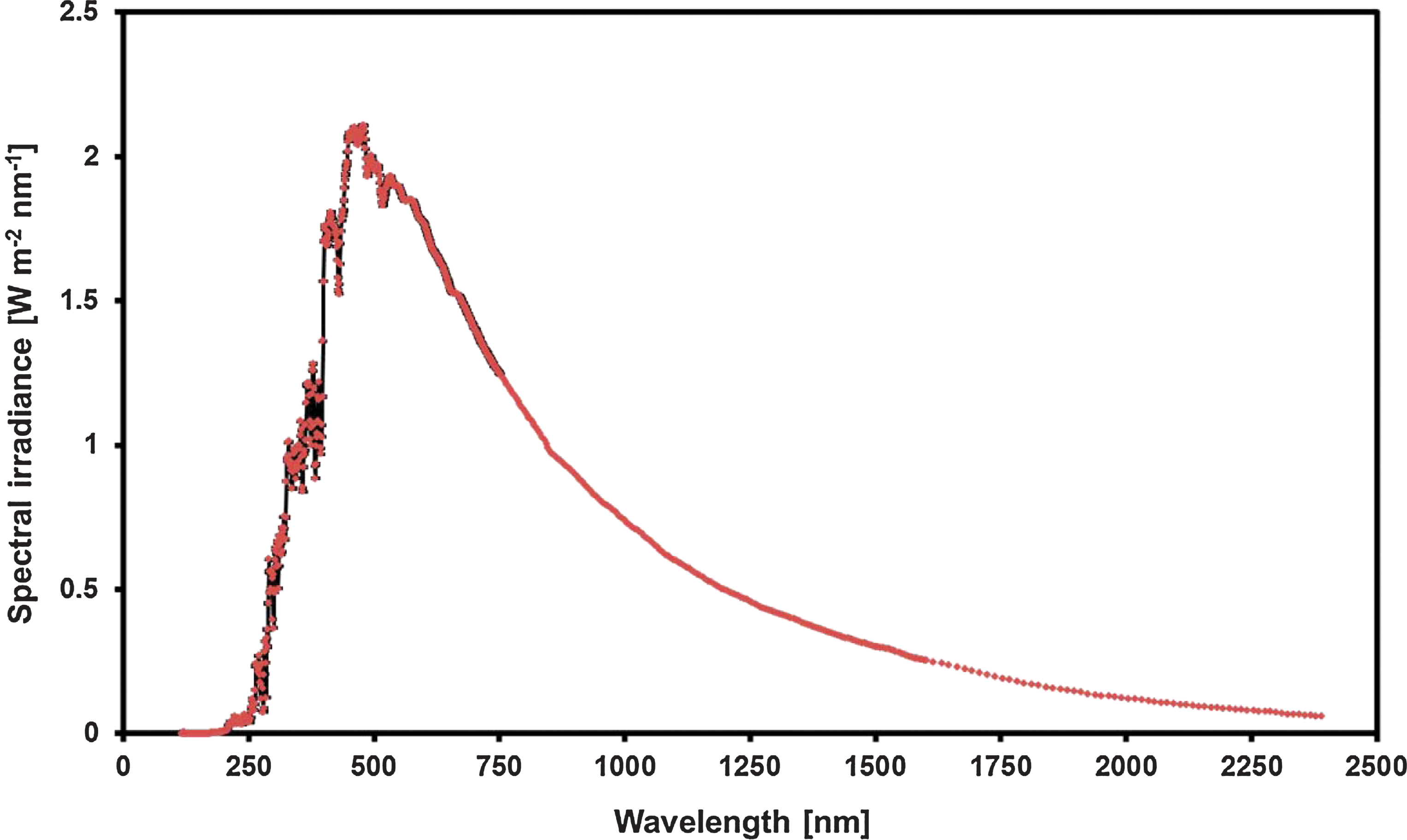
Solar spectral irradiation data obtained from the SORCE satellite. These data are the basis for calibration of the R3D instrument. Data:
The maximum value was obtained when the R3DE device directly faced the Sun (yaw, pitch, and roll at 0° and a beta angle of the ISS of 0°). Suitable orbit days 20/2/2008, 10/4/2008, and 8/6/2008 that fulfilled these prerequisites were used for calibration. To determine the radiation on the platform, the cosine responses of the photodiodes were calculated against the cosine of solar radiation. For each angle a factor was calculated in order to correct the deviation of the photodiode signal from the true cosine (Fig. 4). As the cosine response of the photodiodes decreased rapidly at an angle of 65°, no cosine correction was performed between 65° and 90°. For calculation, the SORCE data were used as standard, and the cosine correction was performed with a custom-made Java software program.
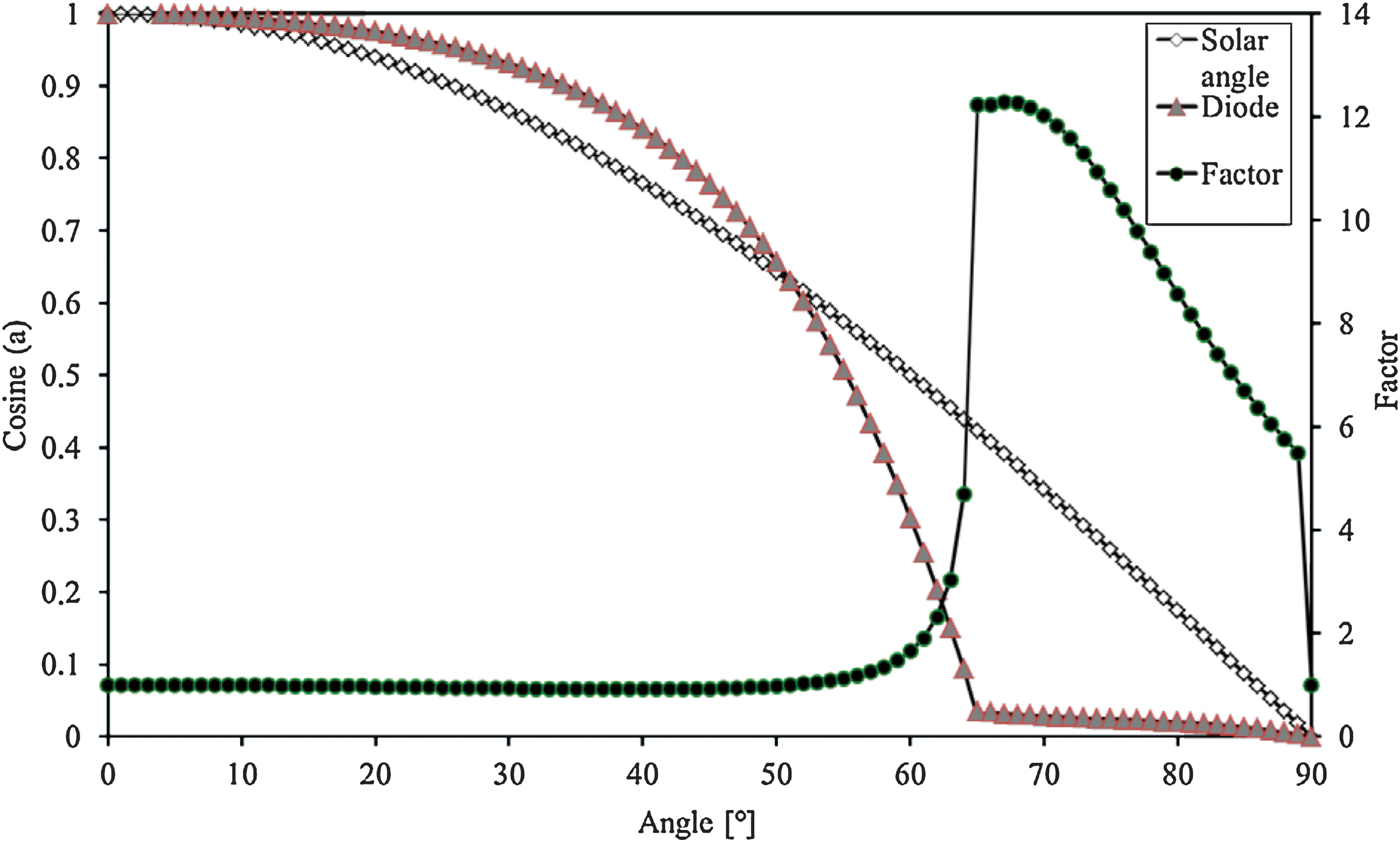
Cosine response of the photodiodes compared with the cosine of the vector of solar radiation. A factor was calculated to correct the obtained data from the sensor. Color images available online at
The temperature sensor was calibrated on ground by using defined ambient temperatures. In addition, the data were compared with other sensors on EXPOSE-E and found to coincide with data from other independent sensors.
3. Results
The mission lasted 562.785 days or 13506.835 hours. Due to the position of EXPOSE with respect to the Sun, radiation impinging on EXPOSE was not constant during the mission. The irradiance depended very much on the angle of the platform area to the vector of solar radiation (cosine dependency). Each orbit of the ISS lasted approximately 90 min (Fig. 5). Radiation followed a certain periodicity with long periods in which hardly any radiation reached the platform, about every 2 months (Figs. 6 –8). The temperature profile showed good coincidence with the radiation. During periods with low irradiation, the temperature went down, while during periods with more radiation received, the temperature rose (Fig. 9). The fluctuation of temperature was between -38°C to almost 58°C.
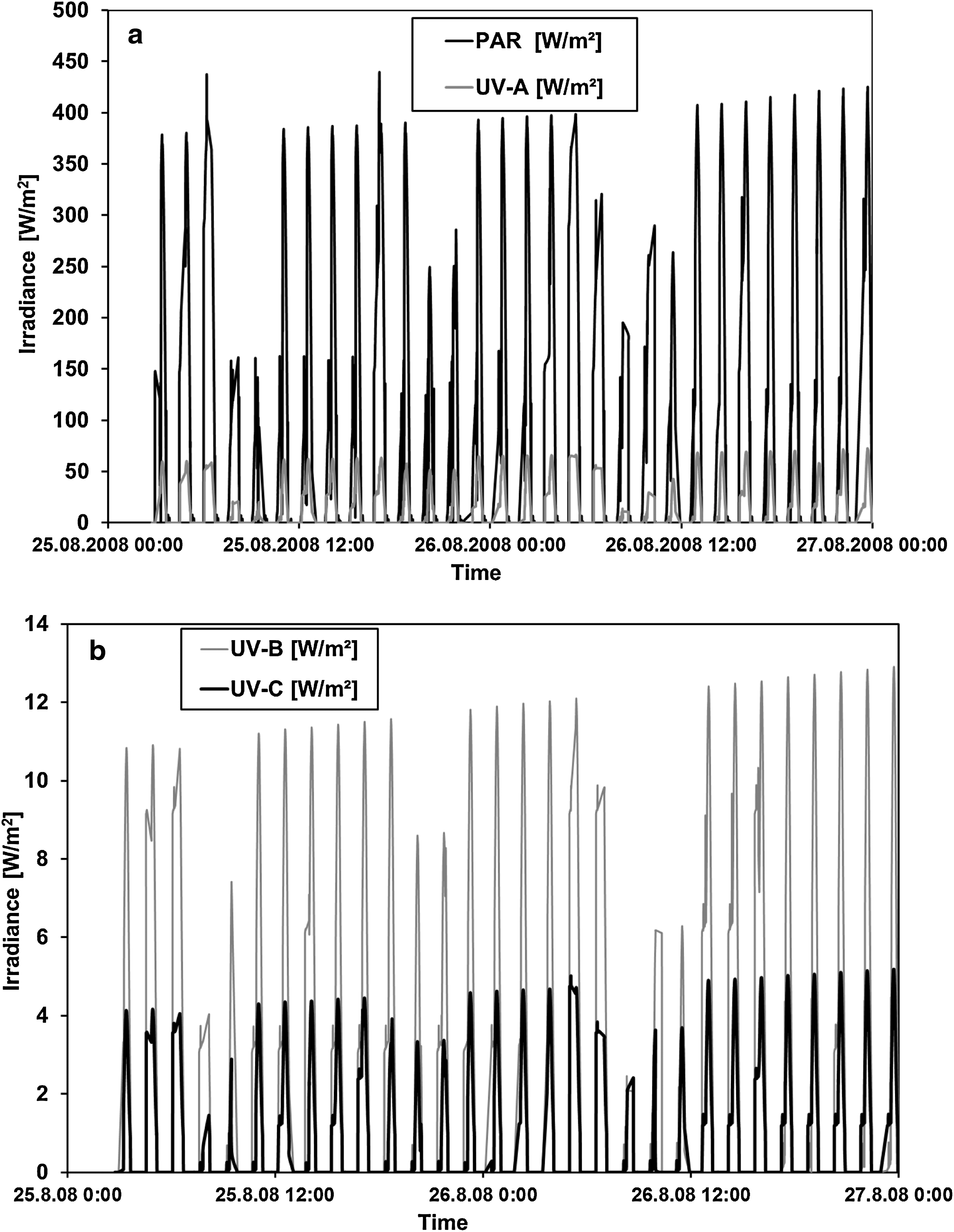
Radiation reaching EXPOSE-E due to the ISS orbit. The length of each orbit is about 90 min. The figure shows exemplary radiation data of 3 days (25.08.2008 to 27.08.2008). (

Sunshine duration per week detected by the R3D sensors. The different duration is most likely due to low UV signals (mainly UVC and UVB), which were under the threshold of the sensor. All data of 1 week were pooled and are presented as one data point (integral of light on sensor). Color images available online at
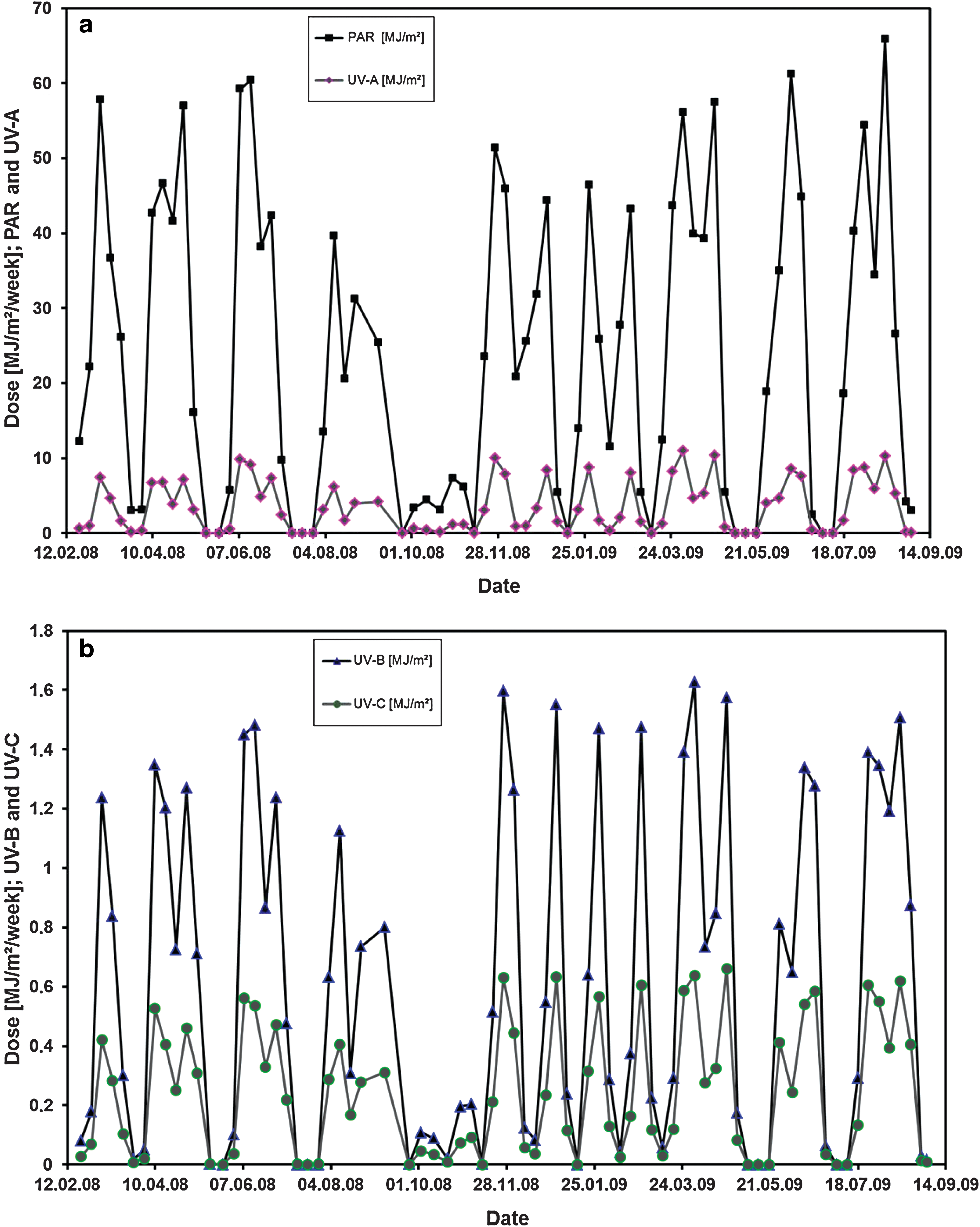
Radiation doses reaching EXPOSE-E during the mission. The figure shows the weekly radiation dose of (

Average irradiances for each week of the EXPOSE-E mission. (
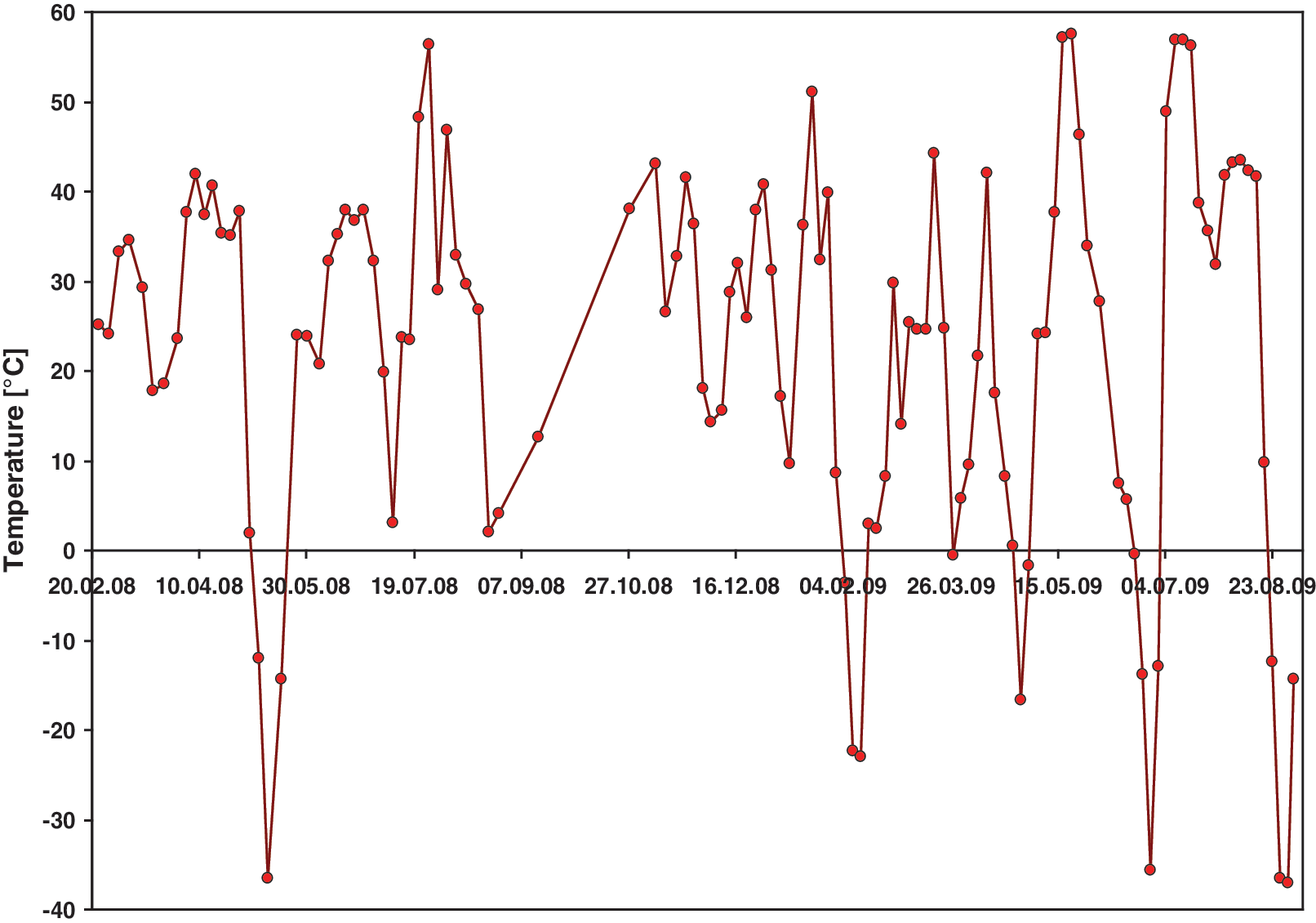
Mean temperature during each week of the EXPOSE-E mission. All data of 1 week were pooled and are presented as one data point. Color images available online at
The total radiation dose during the mission was 1823.98 MJ m−2 for PAR, 269.03 MJ m−2 for UVA, 45.73 MJ m−2 for UVB, or 18.28 MJ m−2 for UVC (Table 2). Sunshine duration during the mission reaching EXPOSE was about 152 days (about 27% of mission time).
The table shows calculated values for perceived doses of PAR, UVA, UVB, and UVC, as well as the average dose per hour and the average irradiance during the whole mission.
4. Discussion
The R3DE collected data during the whole period of the mission and delivered reliable and valuable data for the biological experiments located on the EXPOSE-E platform. During a considerably long time (about 73% of the mission time), no light was detected by the sensors. Flight maneuvers necessary at high beta angles to avoid overheating of the ISS (beta cutout) might be one reason for these gaps. During these periods, the surface of the platform was directed away from the solar radiation vector (bottom side of EXPOSE irradiated). The fact that the temperature sensor delivers values in phases in which no radiation was measured from the diodes indicates that the R3DE was shaded during these time periods and no technical problems prevented radiation measurements. This indicates that the platform area with the samples was relatively often directed opposite to the solar radiation vector. In addition, at disadvantageous angles between the ISS and the Sun, the R3DE may have been shaded by the mounting structure and/or the buffles of EXPOSE when the platform was directed toward the Sun. Also, reflection from the structure of the ISS or from antennas, solar panels, or instruments might have reached the platform.
In any case, UV radiation to which the samples were exposed was extremely high compared to Earth conditions. No UVC and at maximum 2 W m−2 UVB reaches the Earth's surface, although in some cases higher values for UVB have been reported; for example, Orce and Helbling measured 4.46 W m−2 UVB in Jujuy, Argentina (Orce and Helbling, 1997). Short-wavelength UV radiation is effectively filtered by the ozone layer. The source of ozone is oxygen produced by organisms that exhibit oxidative photosynthesis (Cockell and Raven, 2007). Formation of the ozone layer about 2 billion years ago is believed to have been a prerequisite for evolution of terrestrial life-forms. There are indications that early photosynthetic cyanobacteria were exposed to UVC, because different strains of cyanobacteria still possess scytonemin, a screening pigment, which, in addition to UVB and UVA, absorbs UVC (Dillon and Castenholz, 1999). Also, lichens have been found to produce high amounts of UV-screening substances, including considerable UVC absorbance (Marcano et al., 2010). During the Biopan-5 experiment, the lichens Rhizocarpon geographicum and Xanthoria elegans were exposed for 16 days to open space without any impact on survival, which indicates the importance of effective UV screens. Also the seed coat of plant seeds blocks UV transmission, which in combination with other properties makes dormant plant seeds very resistant to the harsh space climate (Tepfer and Leach, 2006). Without protection, UVB and UVC strongly impact living organisms. The wavelength range of about 280 nm has the most deleterious impact on proteins, and radiation of about 265 nm exhibits maximal effects on DNA/RNA (Kochevar, 1990; Gerber and Häder, 1992). In addition, damage of various other biomolecules due to photochemical reactions as well as oxidative stress result from excessive UV radiation (Balakumar et al., 1996; Langebartels et al., 2000; He and Häder, 2006). The radiation dose that reached the samples on EXPOSE-E was far greater than the recommended dose for UV-based water disinfection, which is 40 mJ cm−2 (400 J m−2). Physiologically inactive cells or organisms, such as, for example, desiccated spores, seeds, or lichens, are more susceptible to cell damage because of inactive repair mechanisms [e.g., photolyase, excision repair, replacement of damaged proteins (Lindberg et al., 1991; Keller and Horneck, 1992; Sinha and Häder, 2002)]. Therefore, radiation damages accumulate with increasing exposure time. Survival of organisms exposed to outer space is only possible in the case of effective shielding by screening pigments and/or UV-absorbing layers of cells at the surface of the specimen (Kumar et al., 1996; Horneck et al., 2001). In addition, the cells need to possess effective repair mechanisms with the capacity to repair numerous DNA damages, such as strand breaks and dimerization after rehydration (Britt, 1995; Roldán-Arjona et al., 2002; van den Bosch et al., 2002). It is very likely that surviving cells and organisms show considerably high mutation rates (Pfeifer et al., 2005; Moeller et al., 2012). Cells embedded into an inorganic matrix are better protected against solar radiation. Experiments concerning resistance to radiation and the space environment have contributed to the Lithopanspermia theory, which asserts that life can be transported between planets in meteorites that are generated by impacts at the surface of a planet with extant life-forms (Horneck, 1995; Horneck et al., 2001; Onofri et al., 2012).
5. Conclusion
The R3DE worked flawlessly throughout the whole mission period and delivered reliable radiation data necessary for evaluation of the astrobiology experiments located on EXPOSE-E. As in previous missions, the R3D instrument family proved to be very suitable for long-term space missions because of its robustness, long-term stability, and reliability. The observed effects of free space exposure on organisms and other exposed samples can be weighted with respect to the perceived dose.
Footnotes
Acknowledgments
The work was supported by DLR, ESA, the Bulgarian Academy of Sciences, and partially by grant DID 02/08 from the Bulgarian Science Fund and ESA. The authors gratefully acknowledge the support of Gerda Horneck, who made the implementation of R3DE possible by reducing the number of her own samples. Also thanks for the perfect technical support of KT and DLR.
Author Disclosure Statement
No competing financial interests exist.
Abbreviations
ELDONET, European Light Dosimeter Network; EuTEF, European Technology Exposure Facility; ISS, International Space Station; PAR, photosynthetically active radiation; R3D, Radiation Risk Radiometer-Dosimeter; R3DE, Radiation Risk Radiometer-Dosimeter E for the EXPOSE-E facility; SORCE, Solar Radiation and Climate Experiment.