




Abstract
The multi-user facility EXPOSE-E was designed by the European Space Agency to enable astrobiology research in space (low-Earth orbit). On 7 February 2008, EXPOSE-E was carried to the International Space Station (ISS) on the European Technology Exposure Facility (EuTEF) platform in the cargo bay of Space Shuttle STS-122 Atlantis. The facility was installed at the starboard cone of the Columbus module by extravehicular activity, where it remained in space for 1.5 years. EXPOSE-E was returned to Earth with STS-128 Discovery on 12 September 2009 for subsequent sample analysis. EXPOSE-E provided accommodation in three exposure trays for a variety of astrobiological test samples that were exposed to selected space conditions: either to space vacuum, solar electromagnetic radiation at >110 nm and cosmic radiation (trays 1 and 3) or to simulated martian surface conditions (tray 2). Data on UV radiation, cosmic radiation, and temperature were measured every 10 s and downlinked by telemetry. A parallel mission ground reference (MGR) experiment was performed on ground with a parallel set of hardware and samples under simulated space conditions. EXPOSE-E performed a successful 1.5-year mission in space. Key Words: Astrobiology—Spacecraft experiments—Spaceflight—ISS—External platform. Astrobiology 12, 374–386.
1. Introduction
To continue astrobiology research in LEO and to serve its astrobiology community, ESA initiated the ERA Follow-on Scientific Study under ESA Contract no. 8116/88/F/BZ (SC) (Horneck et al., 1988). Following the advice of the study team, ESA developed the EXPOSE facilities to be attached to the ISS for long-term exposure of organic and biological specimens to selected parameters of outer space (Rabbow et al., 2009; Cottin, 2011). So far, two EXPOSE missions have been flown: EXPOSE-E accommodating eight experiments (Table 1) and EXPOSE-R accommodating eight ESA-selected experiments and one IBMP experiment. EXPOSE-E was installed as payload of the European Technology Exposure Facility (EuTEF) outside the European Columbus module of the ISS from February 2008 to September 2009, and EXPOSE-R was installed outside the Russian Zvezda module from March 2009 to February 2011. For the follow-on mission EXPOSE-R2, which is to be flown in 2013, four experiments have been selected by ESA and one by IBMP for flight.
Here, we present the technical details of the EXPOSE-E mission. The results of the experiments accommodated in EXPOSE-E are reported separately (in this volume of Astrobiology: Bertrand et al., 2012; Cottin et al., 2012; Horneck et al., 2012; Moeller et al., 2012; Nicholson et al., 2012; Noblet et al., 2012; Onofri et al., 2012; Tepfer et al., 2012; Vaishampayan et al., 2012; Wassmann et al., 2012).
2. EXPOSE-E Payload
2.1. EXPOSE-E spaceflight hardware
The design of the EXPOSE-E facility is based on the heritage of the exposure platforms of the space shuttle missions SL1 and D2, and ERA of the EURECA mission (Rabbow et al., 2009; Horneck, 2011). The EXPOSE-E core flight hardware (Fig. 1) is a box-shaped structure (457×390 mm area and 190 mm height, 275 mm height with lids open) that is horizontally divided into two parts: the upper part served the five astrobiology and three dosimetry experiments (Table 1); the bottom part housed the auxiliary electronics.
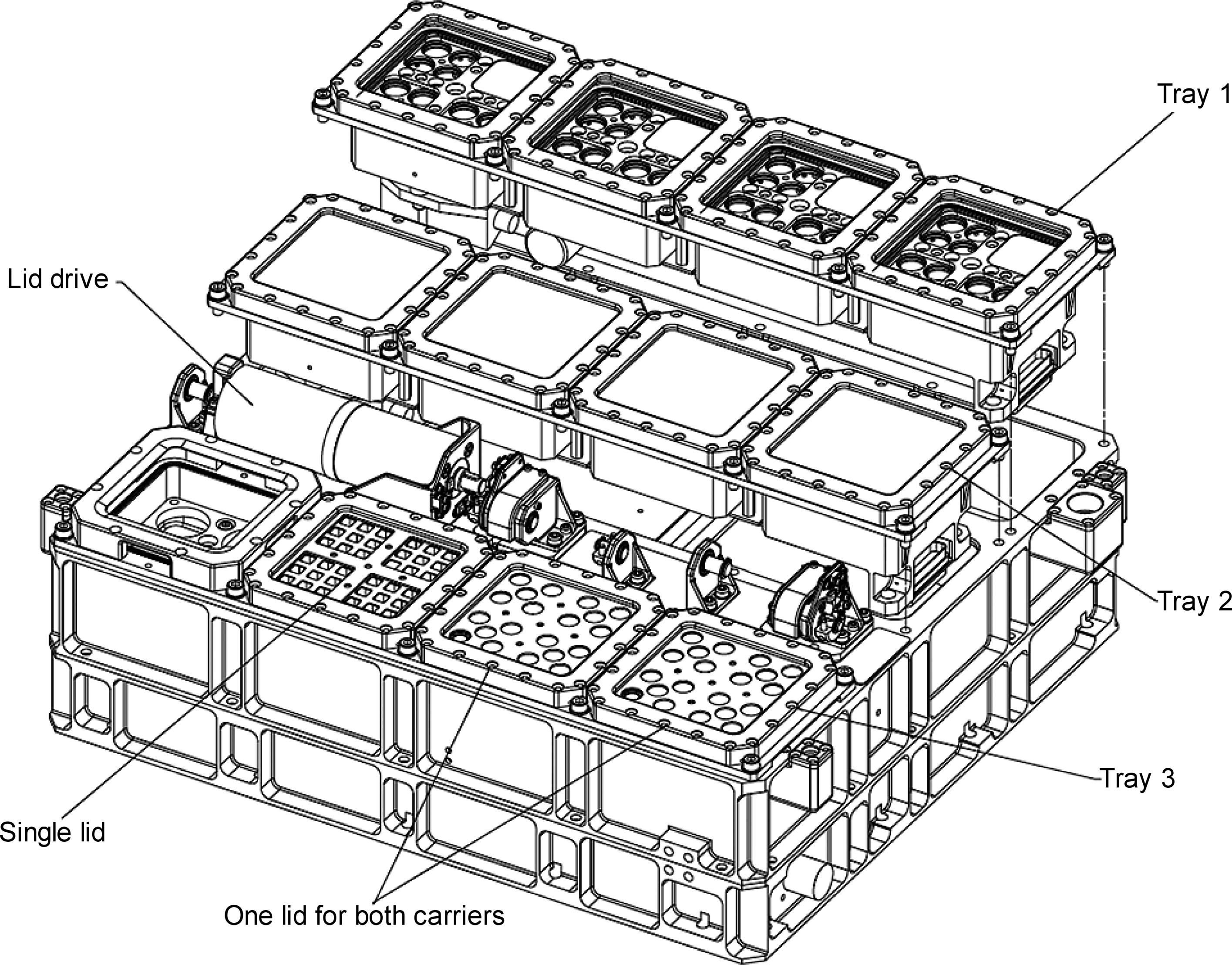
EXPOSE-E flight hardware, exploded view of the core facility and the three trays (courtesy of K.T.).
Three sample trays (each 420×105 mm area and 51 mm height, Fig. 2) were inserted into the upper part of the EXPOSE-E core facility. Each tray contained four rectangular cavities (77×77×36 mm) as compartments for the samples to be exposed (Table 1, Fig. 2). The trays were designed to provide environmental conditions as listed below: Sample tray No. 2 of EXPOSE-E with samples of the experiments ADAPT, PROTECT, and LIFE. Color images available online at • Trays 1 and 3: Space vacuum, two intensities of solar extraterrestrial electromagnetic radiation of λ>110 nm, cosmic ionizing radiation, and temperature fluctuation. • Tray 2: Simulated martian surface conditions with an atmosphere composed of 1.6% argon, 0.15% oxygen, and 2.7% nitrogen, and ∼370 ppm H2O in CO2 at a starting pressure of 103 Pa. The simulated conditions included two intensities of solar extraterrestrial electromagnetic radiation of λ>200 nm, which simulated the UV radiation climate on Mars, as well as cosmic ionizing radiation and temperature fluctuation.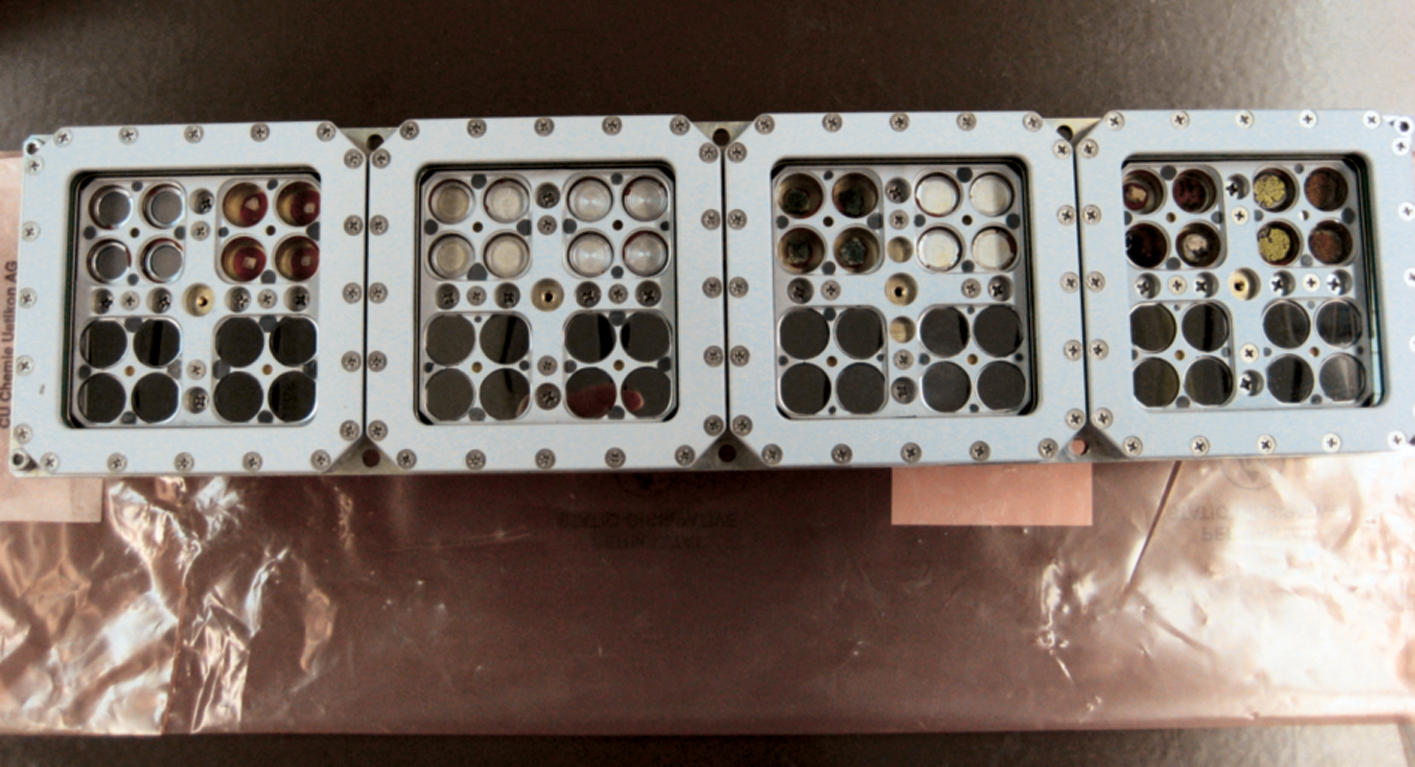
To reach those conditions, the following optical filtering system was applied: • In trays 1 and 2, each compartment was covered gastight by a 8 mm thick optical window to allow access of selected spectral ranges of solar electromagnetic radiation to the top samples: MgF2 window (MaTeck GmbH, Germany) for tray 1 and quartz (MaTeck GmbH, Germany) for tray 2, the latter complemented by a long-pass cutoff filter of approximately 50% transmission at 216 nm (Wisag AG, Switzerland). Two different fluxes of solar electromagnetic radiation were provided by covering one-half of the samples additionally with neutral-density filters (ND) of 0.1% transmission, either made of MgF2 (MaTeck GmbH, Germany; Moltech GmbH, Germany, coatings from Thin Film Physics AG, Switzerland) for tray 1 or of quartz (Moltech GmbH, Germany, coatings from Thin Film Physics AG, Switzerland) for tray 2. In addition, each sample hole of the sample carriers was covered by a 2 mm thick MgF2 or quartz window. • In tray 3, the sample carriers of PROCESS and SEEDS were individually covered by 1 mm thick MgF2 windows to minimize the UV transmission loss. Tray 3 also accommodated the active radiation dosimetry experiment R3DE.
Transmission scans were performed for all optical filters with a Hitatchi U-3310 double monochromator spectrophotometer in its operation range starting at 200 nm. From these data, the solar UV spectra below the filter combinations were calculated by using the NASA Solar Composite Reference Spectrum (
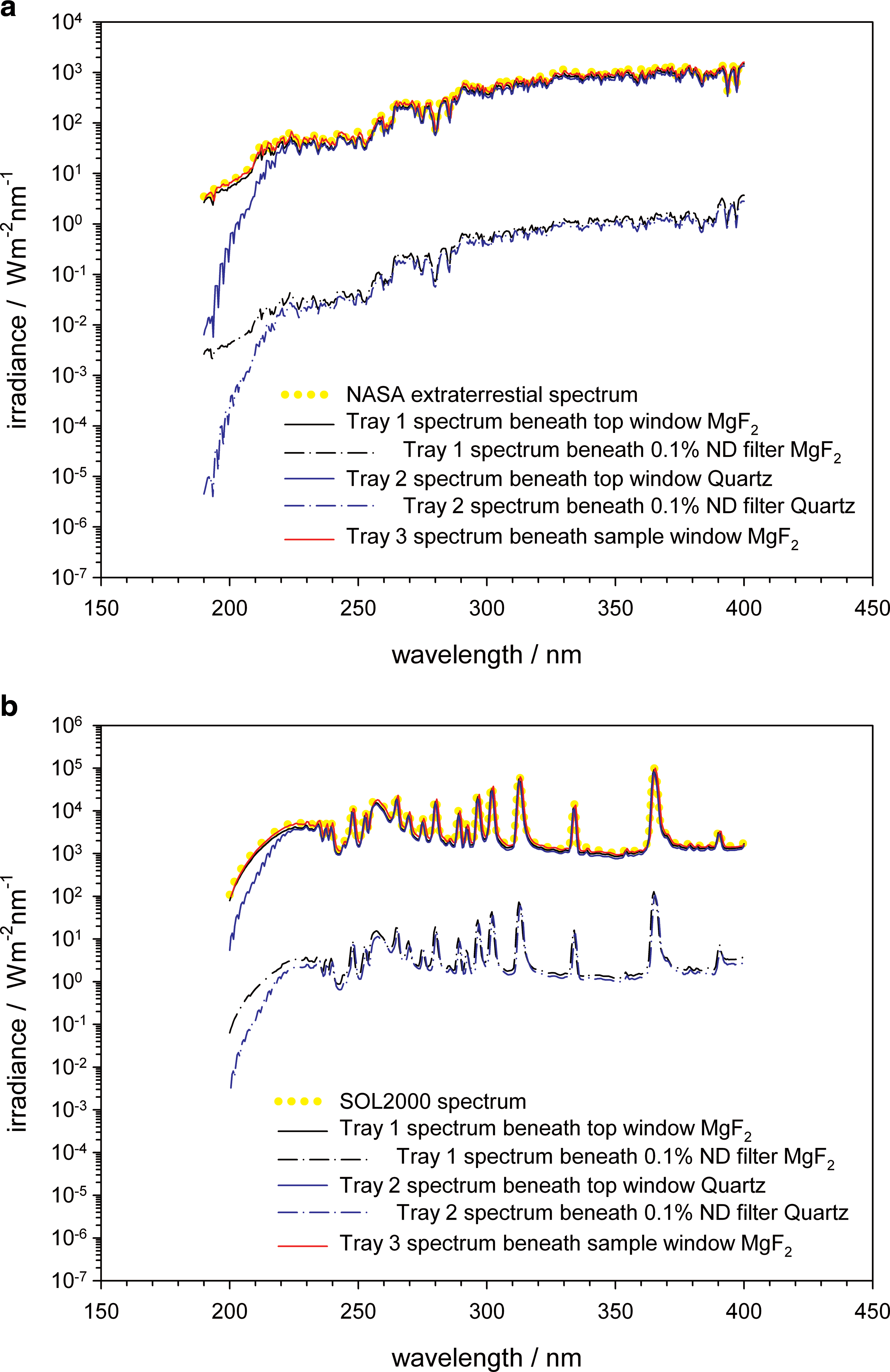
Calculated UV spectra beneath the optical filters of EXPOSE-E (
To reach the atmospheric conditions chosen, each tray was equipped with a valve (PhiTec, Switzerland). Before flight, after integration of the samples in an inert N2 atmosphere, the valves were closed. In tray 2, which was designed to simulate martian surface conditions, the N2 gas was exchanged with a Mars-simulating atmosphere composed of 1.6% argon, 0.15% oxygen, 2.7% nitrogen, and ∼370 ppm H2O in CO2 at a pressure of 103 Pa. Subsequent to the exchange, the valve of this tray was closed and remained so during the entire mission to maintain the atmosphere and pressure. The valves of trays 1 and 3, which were supposed to be vented, were commanded from the Mission Support Centers from ground to open in space for evacuation of the trays and to close before return, which thereby trapped the acquired vacuum. Only valves of trays 1 and 3 were commanded in this mission.
Temperature was kept above −12°C by the nominal heaters and above −25°C by the survival heaters during the EXPOSE-E mission. Movable lids on trays 2 (one lid) and 3 (two lids) (Figs. 4 and 5) allowed temporal coverage of the compartments by telecommand, for example, to avoid overheating of electronics and samples.
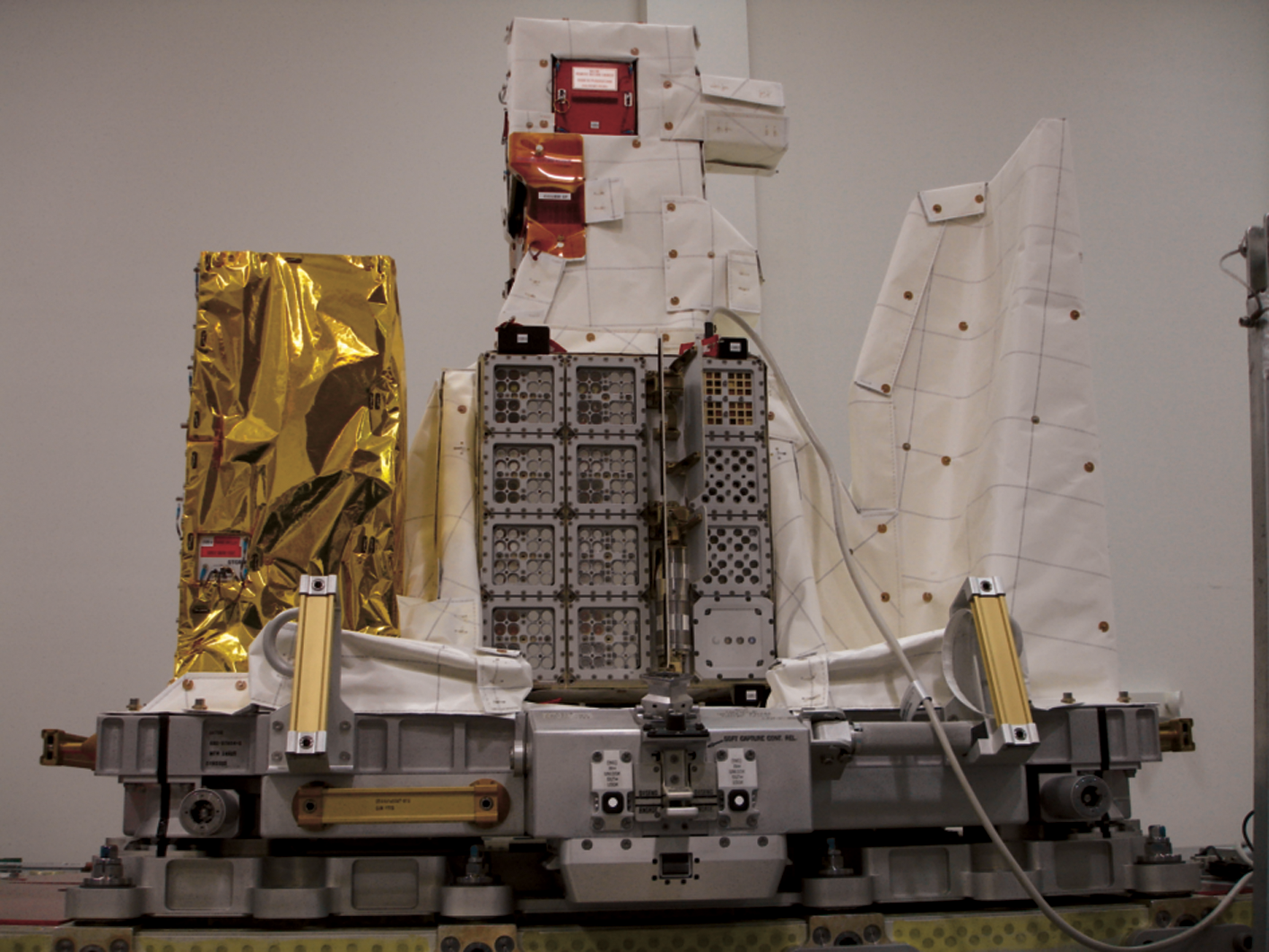
EXPOSE-E payload, fully integrated and accommodated onto EuTEF at Kennedy Space Center, USA. Arranged vertically from left to right are tray 1 and tray 2—experiments in the four compartments of both trays from bottom compartment to top are ADAPT, PROTECT, ½ ADAPT, and ½ PROTECT sharing the third compartment and LIFE in the top compartment; on the right, separated from tray 2 by the three open lids and their motor drives, is tray 3 with R3DE in the bottom compartment, two compartments with PROCESS, and the top compartment with SEEDS. On the right half of each compartment of trays 1 and 2 the mirroring effect of the 0.1% ND filters can be seen. On the left side of EXPOSE-E, the experiment MEDET (wrapped in golden multilayer insulation) is located. Color images available online at
To monitor the environment, the EXPOSE-E core facility was equipped with the following sensors: • Four UV sensors (OEC UV Photodiode EPD-280-0-0.3-C-D), one on each corner of EXPOSE-E. UV sensors 3 and 4 were close to the EuTEF platform, hence near the Columbus module and the ISS, while UV sensors 1 and 2 were installed at the space-facing corners. • One radiometer (Dexter 6M Thin Film Based Thermopile Detector) in close vicinity to sensor 1 completed the optical radiation measurement set. Radiation data of the sensors were corrected for each sensor's spectral sensitivity. • Ionizing radiation was measured by the passive experiments DOSIS/DOBIES (combined during the mission to the experiment DOSIS) and the active instrument R3DE. • Six temperature sensors (type S 651 PDX 24 B by MINCO) with two sensors beneath each tray provided data on the temperature distribution over EXPOSE-E. In addition, data from the temperature reference point (TRP) provided the basis for temperature regulations of EXPOSE-E; at temperatures increasing above 53°C, the lids were programmed to close automatically to reflect solar radiation, while heating systems were activated at temperatures below −25°C to keep EXPOSE-E electronics operating. All data were downlinked by telemetry. They were used for the mission ground reference (MGR) experiment (see below) and were made available to the investigators.
The fully accommodated EXPOSE-E payload installed onto the EuTEF platform for flight is shown in Fig. 4.
2.2. EXPOSE-E mission ground reference hardware
In parallel to the space mission, a complete ground model of the EXPOSE-E trays with a complete set of flight-identical experiment samples was used for the MGR performed at the Deutsches Zentrum für Luft- und Raumfahrt (DLR) Planetary and Space Simulation facilities (PSI) in Cologne, Germany (
3. EXPOSE-E Spaceflight Mission
3.1. EXPOSE-E mission overview
On 7 February 2008, EXPOSE-E and EuTEF (Fig. 4), to which it was attached, were launched on board Space Shuttle Atlantis, STS-122, from Kennedy Space Center in Florida, USA. On 15 February 2008, EuTEF was transferred by way of an extravehicular activity (EVA) from the shuttle cargo bay to its final position on the starboard cone of the ISS's Columbus module. On 20 February 2008, the mission started by commissioning, including opening of all three lids of trays 2 (one lid) and 3 (two lids) and the two valves of trays 1 and 3. The valve of tray 2 remained closed during the entire mission to keep the artificial martian atmosphere inserted on ground.
After 559 days of operations in open space (launch to landing 583 days) and a total amount of nearly 4 million data sets (precisely 3,888,887) telecommunicated to Earth, the mission was completed by closing the lids on 20 August 2009 and valves during de-commissioning on 1 September 2009. One day later, EuTEF was retrieved and stowed into the cargo bay of shuttle flight STS-128 by way of an EVA. Shuttle Discovery continued its travel with EuTEF and EXPOSE-E after landing in California, USA, on 12 September 2009, flying piggybacked on a Boeing 747 to Florida, where it arrived on 21 September 2009. EuTEF was de-integrated from the shuttle cargo bay and arrived in Tortona, Italy, on 26 October 2009. All three trays were detached from the EXPOSE-E core facility and directly transported to the DLR, Germany, where they arrived on 28 October 2009. The trays were opened at the DLR in a N2 atmosphere, and sample carriers from PROCESS and SEEDS and the samples of ADAPT, PROTECT, and LIFE were de-integrated under sterile conditions and distributed to the experimenter groups for analysis.
3.2. EXPOSE-E mission data collection
During the whole mission, EXPOSE-E was programmed to collect environmental data every 10 s from the six temperature sensors, the four UV sensors, the radiometer, and the R3DE experiment, complemented by health status and status data of the three lids and three valves. The data were downlinked via the Erasmus User Support and Operation Center in the Netherlands, which acted as the EuTEF Facility Responsible Center, and the Columbus Control Center in Oberpfaffenhofen, Germany. The EXPOSE-E data was forwarded in real time to the Microgravity User Support Center (MUSC) in Cologne, Germany, which acted as the EXPOSE-E Facility Support Center, where the data were archived, analyzed, and provided to the principal investigators on an FTP server and visualized on webpage
The following off-nominal events led to about 20% data loss during the EXPOSE-E mission: • Twenty-three times during the 1.5-year mission the EuTEF Data Handling and Power Unit suffered regularly from unscheduled Versa Module Eurocard reset line activations, which resulted in EuTEF internal military data bus (MIL-bus) and analog telemetry acquisition anomalies. To recover from these anomalies, repeated power cycling of the EuTEF platform and the EuTEF instruments, including EXPOSE-E, were commanded from the ground. EXPOSE-E responded flawlessly to all reactivating telecommands. Only ca. 0.2% data was lost during those off-nominal events. • After 6 months in space, certain activities of one EuTEF payload, the Plasma Contactor Electrical Grounding Payload (PLEGPAY), led to safety concerns for the ISS, and operations of the whole EuTEF platform were stopped. EuTEF was switched off from its nominal power; only limited “survival” power was provided for the survival heaters. Only short intervals of so-called intermittent activation phases of EuTEF and some of its instruments (excluding PLEGPAY) were performed in this time from 1 September to 5 November 2008. During the inactive phases, EXPOSE-E data acquisition was not possible. Temperature probably dropped; however, the EXPOSE-E survival heaters, which were still powered, kept the temperature of the EXPOSE-E electronics and samples above −25°C. This inactivation phase resulted in roughly 10.8% data loss. • On 20 March 2009, a one-time high-temperature peak was measured due to a specific ISS attitude, which was required for a solar array deployment activity. When temperature rose above the threshold of 53°C, EXPOSE-E automatically closed the three lids that covered seven compartments in trays 2 and 3. Their external white coating provided low absorptivity and high emissivity to the solar radiation and prevented overheating of the electronics and the samples. Further temperature increase to 58°C led to automatic switch off of the EXPOSE-E electronics, which was programmed as a second step to avoid overheating. The maximum temperature measured at the TRP of EXPOSE-E was 61°C. After temperature dropped to approximately 25°C at the TRP, EXPOSE-E was reactivated and lids were opened by telecommand on 21 March 2009. As a consequence, no environmental data were collected during this period.
3.3. EXPOSE-E mission environment
3.3.1. Solar UV irradiation
On EXPOSE-E, solar spectral UV and visible irradiances were measured every 10 s by the R3DE experiment (Schuster et al., 2012 in this issue) in addition to the housekeeping four UV sensors, which were located in each corner of the facility, and one broadband radiometer (Fig. 5). Data were transmitted by telemetry to the ground facilities. They provided important information on the fluctuations of the UV irradiance during the EXPOSE-E mission as a consequence of ISS attitude and orbit (Schuster et al., 2012 in this issue). Due to several off-nominal events that interfered with data acquisition (see above), roughly 20% of the UV data were lost. This severe data loss made it impossible to determine the total fluences at the sample sites from the incomplete data sets of those sensors.
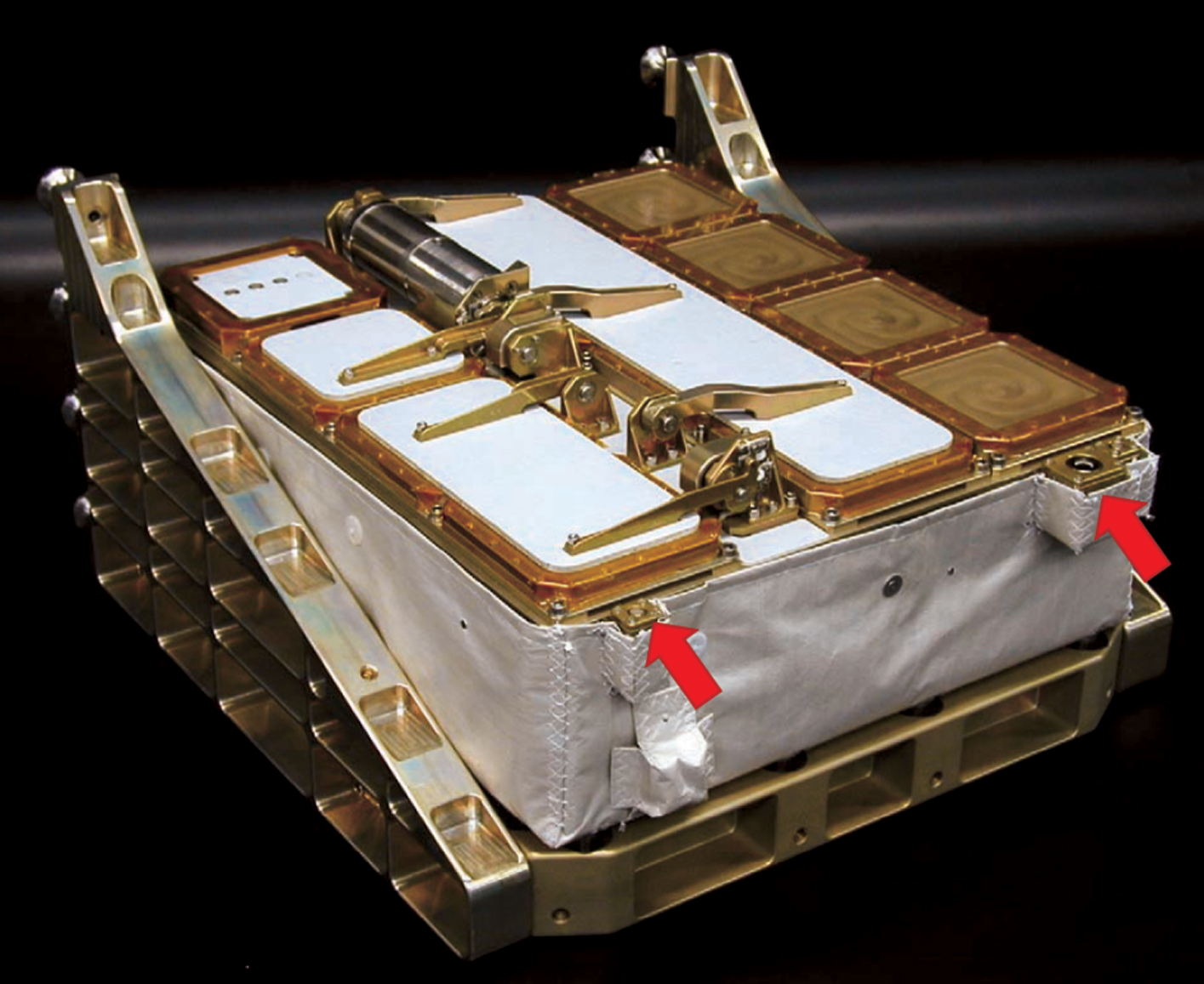
EXPOSE-E with the environmental sensors: the dosimeter R3D in compartment 1 of tray 3 (top left), and the attached radiometer (bottom right, arrow) and one of the four UV sensors at the EXPOSE-E corners (bottom left, arrow). Courtesy of K.T. Color images available online at
Model calculations were the only way to assess the total UV fluences at the sample site. They were performed by RedShift Design and Engineering BVBA, Belgium (T. Beuselinck, C. Van Bavinchove). To calculate shadow maps with respect to the upper side of EXPOSE-E, they used available ISS mission flight data of the ISS position in its orbit, ISS attitude, joint angles defining positions of solar arrays and radiators, evolution of the ISS configuration (3-D models including EuTEF), and information of visiting spacecraft and their docking positions (space shuttle, Soyuz, Progress, Automated Transfer Vehicle). From those shadow maps they calculated the resulting total insolation in solar constant hours (SCh) for each of the 12 compartments of EXPOSE-E and for a variety of fields of view (FOVs). It is important to note that, as a consequence of shadowing, the SCh differed substantially over the exposed area of EXPOSE-E (Fig. 6).
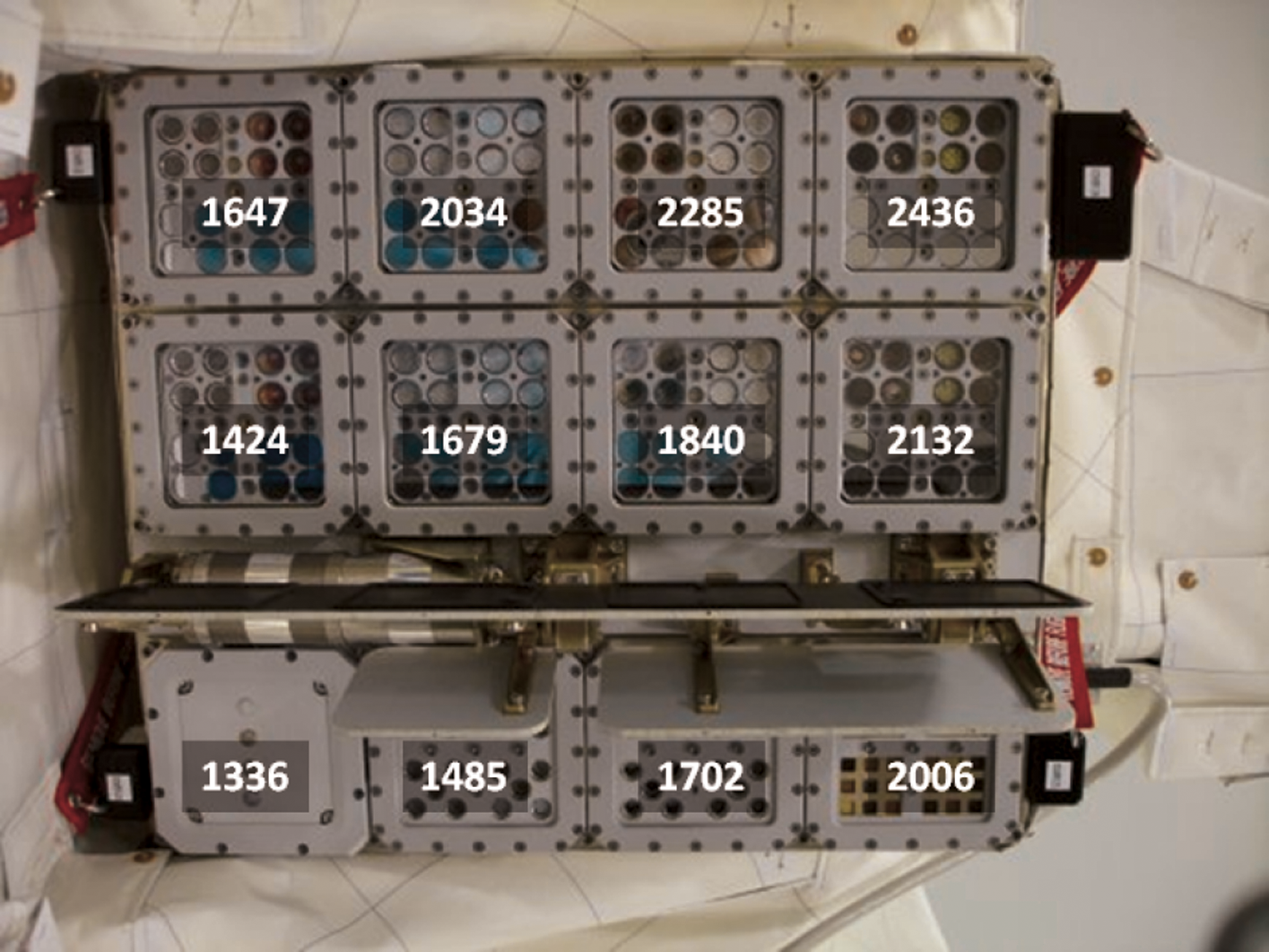
Variation of total mission SCh for 90° FOV over the EXPOSE-E hardware according to data calculated by RedShift for each compartment. Picture adapted, courtesy of K.T. Color images available online at
The corresponding fluences for the whole mission were calculated in three steps by using the Composite Solar Irradiance Reference Spectrum of the extraterrestrial sun ( • First, we restricted the fluence calculation to the biologically active UV region 200–400 nm as identified here by the subscript:200–400nm. For this wavelength range, the extraterrestrial solar irradiance was determined from the Composite Solar Irradiance Reference Spectra to amount to 110.23 • In a second step, the UV fluences for the individual compartments and experiments were determined with regard to the different sizes and heights of the different samples as well as different optical paths for the samples, leading to different FOVs (Table 2). As a compromise, the means of the corresponding individually determined FOVs of the samples per compartment were taken. • In a third step, the optical filter combination needed to be considered. For this, the solar UV spectrum at the sample site was convoluted with the transmission spectra of the corresponding filter combinations, measured before flight (Fig. 3A). The resulting calculated fluences at the sample sites of the different EXPOSE-E compartments are listed in Table 3.
n.a., not applicable.
The data revealed that (i) the 0.1% ND filters did not attenuate the UV200–400nm fluences by exactly 0.1%, and (ii) the UV200–400nm fluences beneath the optical filters on tray 3, which were much thinner than those on the other trays, were not significantly higher than for trays 1 and 2.
3.3.2. Cosmic radiation exposure
Dosimetry of the ionizing radiation faced by EXPOSE-E was performed with the two experiments R3DE (Dachev et al., 2012 in this issue) and DOSIS/DOBIES (Berger et al., 2012 in this issue). With R3DE, the averaged absorbed daily dose rates of the three essential components of the radiation field encountered at the orbit of the ISS were determined: 426 μGy·d−1 due to the protons of the South Atlantic Anomaly of the radiation belts, 91.1 μGy·d−1 due to galactic cosmic rays, and 8.6 μGy·d−1 caused by the energetic electrons from the outer radiation belt (Dachev et al., 2012 in this issue).
With the DOSIS/DOBIES experiment, the total mission dose and the dose gradient in very thin shielding layers (down to a few μm·cm−2) were determined for the samples in trays 1 and 2 with thermoluminescence dosimeters (Berger et al., 2012 in this issue). They were installed as stacks in special cavities between the sample holes of the top UV-exposed sample carriers and below the lower dark sample carriers in cavities of the eight compartments of the trays and analyzed after retrieval. The total mission dose reached values up to 180 mGy.
3.3.3. Temperature
In general, the mission temperature as measured by six temperature sensors fluctuated between +42.95°C as upper temperature and −21.71°C as lowest temperature (Fig. 7) with a temperature gradient of 2.5°C over the EXPOSE-E area itself. As shown in Fig. 7, approximately 10 periods with high temperatures alternated with 10 periods of low temperatures. This slow rhythm was due to the changing position of the orbital plane of the ISS with regard to the Sun. On top of that, there was a fast rhythm with a periodicity of 91 minutes according to day and night during each orbital loop. The temperature variations during each orbit spanned over 10°C during the hot periods and over 5°C during the cold periods. Temperature crossed the zero-Celsius value around 200 times, which resulted in ca. 100 freeze/thaw cycles during the whole mission.
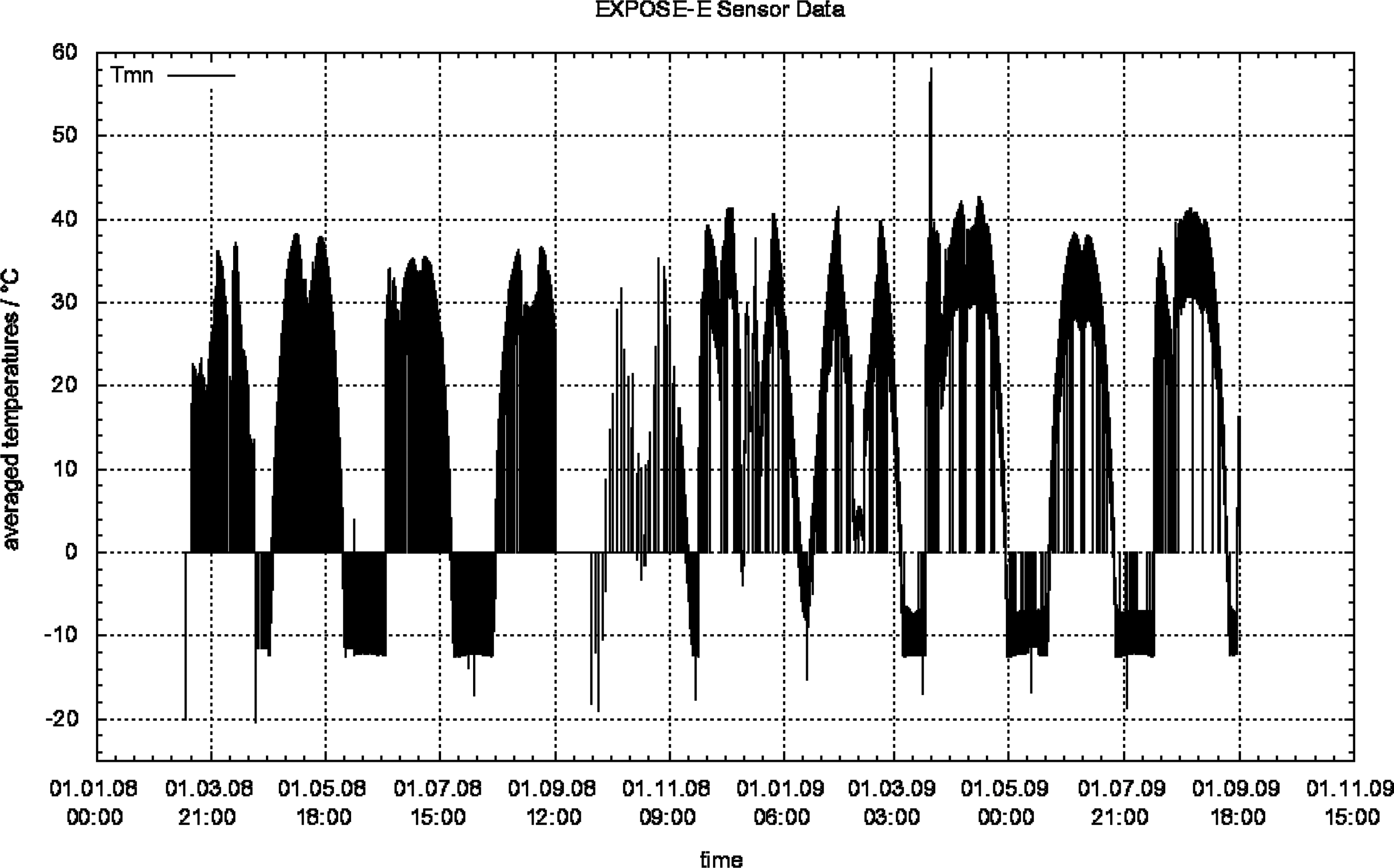
Temperature variations during the EXPOSE-E mission as averaged from the measurements of the six temperature sensors. Courtesy of K.T.
A one-time high-temperature peak was measured on 20 March 2009 due to a specific ISS attitude needed for a solar array deployment activity. When temperature rose above the threshold of 53°C, EXPOSE-E automatically closed the three lids that covered seven compartments in trays 2 and 3. During this period, temperature sensor 5 measured 59.61°C, and temperature peaked at 61°C for a time period shorter than 1 h as measured by the TRP of EXPOSE-E. On 21 March 2009, when temperature at the TRP dropped to approximately 25°C, EXPOSE-E was reactivated, and lids were opened by telecommand (a temperature of 60°C for less than a few hours was defined as maximum acceptable temperature range to be tolerated by the samples, as agreed by the investigators).
3.3.4. Space vacuum
The atmospheric pressure around EXPOSE-E was estimated from data provided by the Material Exposure and Degradation Experiment (MEDET) (Tighe et al., 2009) installed on EuTEF in close vicinity to EXPOSE-E (Fig. 4). It measured a pressure level of ≤10−7 Pa for the Wake direction and 10−4 Pa for the Ram direction. EXPOSE-E was mostly pointing toward Wake; however, during ISS maneuvering there may have been periods of several days when EXPOSE-E was pointing more toward the Ram direction.
On 15 May 2009, the ISS performed an ammonia-venting activity announced well in advance. To completely exclude the already unlikely risk of any ammonia gas penetrating through the open valves of EXPOSE-E and reaching the samples, the valves of trays 1 and 3 were closed by telecommand on 13 May 2009, to capture the space vacuum inside the trays. Valves were re-opened well after the end of the venting activity on 9 June 2009.
4. EXPOSE-E Mission Ground Reference (MGR)
4.1. EXPOSE-E MGR overview
All five astrobiology experiments were included in the MGR (the dosimetry experiments were not included in the MGR, because ionizing radiation was not an intended part of the mission simulation). In parallel and at the same time as the spaceflight preparation, three ground trays were loaded with a flight-identical set of samples and covered with a flight-identical optical filtering system. The environmental data obtained from EXPOSE-E on the ISS, for example, on temperature fluctuations and UV fluences, were fed into the MGR simulation program of the PSI at the DLR. Due to a belated availability of mission data, the MGR started with a delay of about 6 months on 12 September 2008, for a 1.5-year simulation—the same duration as the space mission—and ended on 12 April 2010. Thereafter, all samples were de-integrated under sterile conditions and distributed to the experimenters for analysis.
4.2. EXPOSE-E MGR environment
4.2.1. EXPOSE-E MGR UV irradiation
A solar simulator SOL 2000 without any optical filter was used and resulted in a continuous spectrum at wavelengths >200 nm. This spectrum was measured (calibrated Bentham 150 spectroradiometer Gigahertz, Tuerkenfeld, Germany) at the top of the EXPOSE-E MGR trays at the same site where the UV sensors of the EXPOSE-E flight model were attached. Irradiance of the biologically active UV range 200–400 nm was 1069.38
Mission ground reference UV irradiations were performed at the same final fluences for each compartment as calculated by RedShift for the flight compartments (Table 2). The individual compartments of trays 1 and 2 were separately UV irradiated according to the data given in Table 2, while the compartments of PROCESS and SEEDS in tray 3 were irradiated together because the carriers were located in a PSI facility (see below). For tray 3, the fluence applied was the means of the fluences calculated for the respective compartments 3-2, 3-3, and 3-4 (Table 2, in italics). The highest fluence was
4.2.2. EXPOSE-E MGR atmosphere and pressure
At the commencement of the MGR, tray 1, which was loaded with the test samples, was evacuated to reach a final pressure of 1.7×10⁻³ Pa, and then the valve was closed. The tray kept this pressure during the whole MGR. In tray 3, the sample carriers of the experiments PROCESS and SEEDS leaked, so tray 3 could not be evacuated. Therefore, these carriers were accommodated in a temperature-controlled vacuum facility of the PSI (
4.2.3. EXPOSE-E MGR temperature
Temperatures provided and measured at the tray structure (as in flight) during the MGR simulation ranged from −20°C to 59°C, according to flight data with a deviation of±2°C. Time periods with missing data were ignored.
5. Discussion
The EXPOSE-E mission orbiting on the ISS in space for 1.5 years and exposing its experiments to space conditions was an overall successful mission. Although some data losses were experienced and the final definition of the total mission fluence for the individual samples had to rely on calculations based on models, all samples were successfully transported to space, exposed to the specific space conditions (LEO) as intended, and returned to Earth safely for final analysis.
There are several lessons learned which may serve to improve and optimize future exposure experiments in space: • The problem of shadowing. Complex carriers like the ISS are by themselves shadow-casting obstacles for (optical) radiation exposure experiments mounted on its external platforms. This leads to a gradient in the insolation over the whole exposure area. In addition, shadowing on the EXPOSE-E surface was caused by the three lids when open (Fig. 4). They may have cast unpredictable shadow over some samples of EXPOSE-E while others were in full solar radiation. The lids were a remnant of the EXPOSE development history, when EXPOSE was supposed to be mounted on a Sun-pointing device to control the irradiation periods and to facilitate temperature control. All these shadowing effects were considered in the RedShift calculations. For example, the total mission SCh for two UV sensors are compared as follows: For UV sensor 1 it amounted to 2484 SCh, whereas UV sensor 3 showed 794 SCh, the lowest value. These data indicate a 68% variation of UV irradiance over the EXPOSE-E surface. Comparison of the SCh of the compartments nearest to these UV sensors, compartment 1-4 and 3-1, respectively, shows a deviation of 45%. When the FOV for the different samples was considered, the variation still was 41%, with the highest fluence at compartment 1-4 and the LIFE experiment, and the lowest fluence at compartment 2-1 and the experiment ADAPT. • The problem of data loss. On EXPOSE-E, three systems were accommodated to measure extraterrestrial solar optical radiation: (i) the four UV sensors mounted on the four edges of the facility, (ii) the radiometer of EXPOSE-E, and (iii) R3DE. All systems were activated via EXPOSE-E itself and the EuTEF platform, the interface to the ISS. As a consequence, inactivation of the platform or the EuTEF computer resulted in complete data loss from all measurement systems of EXPOSE-E. This happened repeatedly, for example, during the EuTEF internal MIL-bus and analog telemetry acquisition anomalies, the intermittent activation phase end of 2008, and during the high-temperature peak in March 2009. Therefore, redundant measurement systems as well as redundant and independent power systems should be required for future missions. In addition, integrating passive dosimeters, like DOSIS/DOBIES, which do not need any power, would be a useful compromise. • The safety concern. Safety is a major issue on manned spacecrafts, like the ISS and space shuttles. This may complicate the selection of test systems, which can pose possible hazards to crew members. Facilities like EXPOSE-E could also be implemented on unmanned free-flying satellites and thereby reduce the risk of safety problems that can jeopardize the experiments. In addition, access to space on unmanned spacecraft without respective safety considerations often is easier and faster. • The need for pressure measurements. During the EXPOSE-E spaceflight, the neighbor experiment MEDET provided pressure data that could be used for assessing the space vacuum in tray 1 and 3. If this constellation is not given and pressure data are required, a pressure detection system should be installed. • The need for studies in which space simulation facilities are used. Access to space simulation facilities, in addition to flight experiments, is important for (i) careful preparation of the space experiments, (ii) providing a mission parallel backup in case of major malfunctions or loss of experiments, (iii) providing valuable additional data for comparison and discrimination of effects induced by space parameters, especially if they show unexpected effects, and (iv) providing larger experimental space for additional experiments under space conditions, even if they are only simulated.
5.1. The need for advanced experiments in space
Several environmental conditions in space, particularly the solar extraterrestrial UV spectrum and its combination with other space parameters, cannot be accurately simulated. Therefore, access to space missions for experiments that expose samples to space conditions outside a spacecraft remains important. An exposure experiment such as EXPOSE-E, when accommodated on a manned space vehicle like the ISS, provides an ideal environment for a controlled and long-term exposure of passive experiments and complements the recent short-term astrobiological experiments on free-flying vehicles such as Biopan on the Bion and Foton satellites (Horneck et al., 2001; Rettberg et al., 2004; Demets et al., 2005; Sancho et al., 2007; Jönsson et al., 2008; de la Torre et al., 2010; Raggio et al., 2011). These retrievable capsules provide relatively easy access to space, though past missions have been rather short in duration, for example, 10–14 days. Currently, the Russian Bion program is using solar panels rather than batteries and continuing with KNA exposure facilities and flight durations of 4 weeks. • A new generation of scientific long-duration, free-flying satellites with the capacity to return to Earth via autonomous reentry would significantly increase the accessibility of space for scientific experiments without the safety restrictions and long lead preparations necessary for experimental use of a manned space vehicle. The next generation of space exposure facilities, either on free-flying satellites or on the ISS should include real-time in situ monitoring of the phenomena and their kinetics in response to the parameters of space, as has been demonstrated by NASA's Organism/Organic Exposure to Orbital Stresses (O/OREOS) nanosatellite project (Nicholson et al., 2011).
Footnotes
Acknowledgments
The whole EXPOSE-E mission would not have been possible without the support of ESA, the ERASMUS USOC and MUSC, the payload developer Kayser-Threde and RUAG, and the PIs and the experimenter groups of EXPOSE-E. The authors wish to express their gratitude to all who made this experiment a success.
Author Disclosure Statement
No competing financial interests exist for Elke Rabbow, DLR; Petra Rettberg, DLR; Simon Barczyck, DLR; Maria Bohmeier, DLR; André Parpart, DLR; Corinna Panitz, RWTH Aachen; Ralf von Heise-Rotenburg, Kayser-Threde; Tom Hoppenbrouwers, Space Applications Services; Rainer Willnecker, DLR; Pietro Baglioni, ESA; René Demets, ESA; Jan Dettmann, ESA; or Günther Reitz, DLR.
Abbreviations
DLR, Deutsches Zentrum für Luft- und Raumfahrt (German Aerospace Center); ERA, Exobiology Radiation Assembly; EURECA, European Retrievable Carrier; EuTEF, European Technology Exposure Facility; EVA, extravehicular activity; FOV, field of view; ISS, International Space Station; LEO, low-Earth orbit; MEDET, Material Exposure and Degradation Experiment; MGR, mission ground reference (mission parallel ground simulation); MIL-bus, military data bus; MUSC, Microgravity User Support Center; n.a., not applicable; ND, neutral density; PLEGPAY, Plasma Contactor Electrical Grounding Payload; PSI, Planetary and Space Simulation facilities (at DLR Cologne, Germany); SCh, solar constant hours; TRP, temperature reference point.