




Abstract

And I? I wanted to go higher. I wanted to be an astronaut. That was before I was diagnosed with a severe case of short-sightedness and realized I'd have to train with the military, when the toughest part of my day was getting up in the morning. No way—I'm a night owl.
Later, when I collided with books by Isaac Asimov (oh, the Foundation series …) and Carl Sagan's Cosmos series on TV, a new approach occurred to me (a girl has to adapt to situation changes). I could be an astronomer. I was inspired by Carl's description of the Universe. When I was fortunate enough to meet and talk to him years later, my impression of a charismatic scientist was confirmed. I also never missed an episode of Star Trek or Lost in Space when I was young. I was hooked. My family tried to laugh me out of it. An uncle suggested I should perhaps think of becoming an astrologer (much more money in that business). An aunt said she had a job for me in a bank (bright girl like you—you'll catch yourself a husband in a jiffy!). I remained unmoved and unmovable. I was going away to study astronomy; the Greek Sun was not enough for me. I wanted to be where the action was and where space missions were being developed. My father finally cut me a deal: he'd let me go “do my space hobby” in France (not in the US, no, no—too far away for a Greek girl of 18) if I promised to simultaneously study English literature. He was sure that diploma would provide my real bread and butter someday. To make doubly sure I didn't stray with all this free time on my hands (!?), his deal stipulated that I had to pass all the exams in June (no September second chances), go to Greece for three full summer months, and return for the next academic year all clean, nice and rested, with my suitcase full of feta cheese and keftedes (meatballs).
So I did. I got two masters' degrees, two pre-doctoral diplomas, and started two Ph.D.'s. I had about 250 pages of my thesis on English horror literature written before I finally quit and focused on astronomy, with my father's blessings since the scholarship enabling me to continue my work was awarded from the French Ministry of Education for my work at Paris Observatory in Meudon. He still encourages me to one day go back and finish my English thesis… I was at Meudon already then, getting my first “taste” of Titan from Voyager 1/IRIS data working with Daniel Gautier, one of the Cassini-Huygens mission's fathers, and Bruno Bézard (Fig. 1).
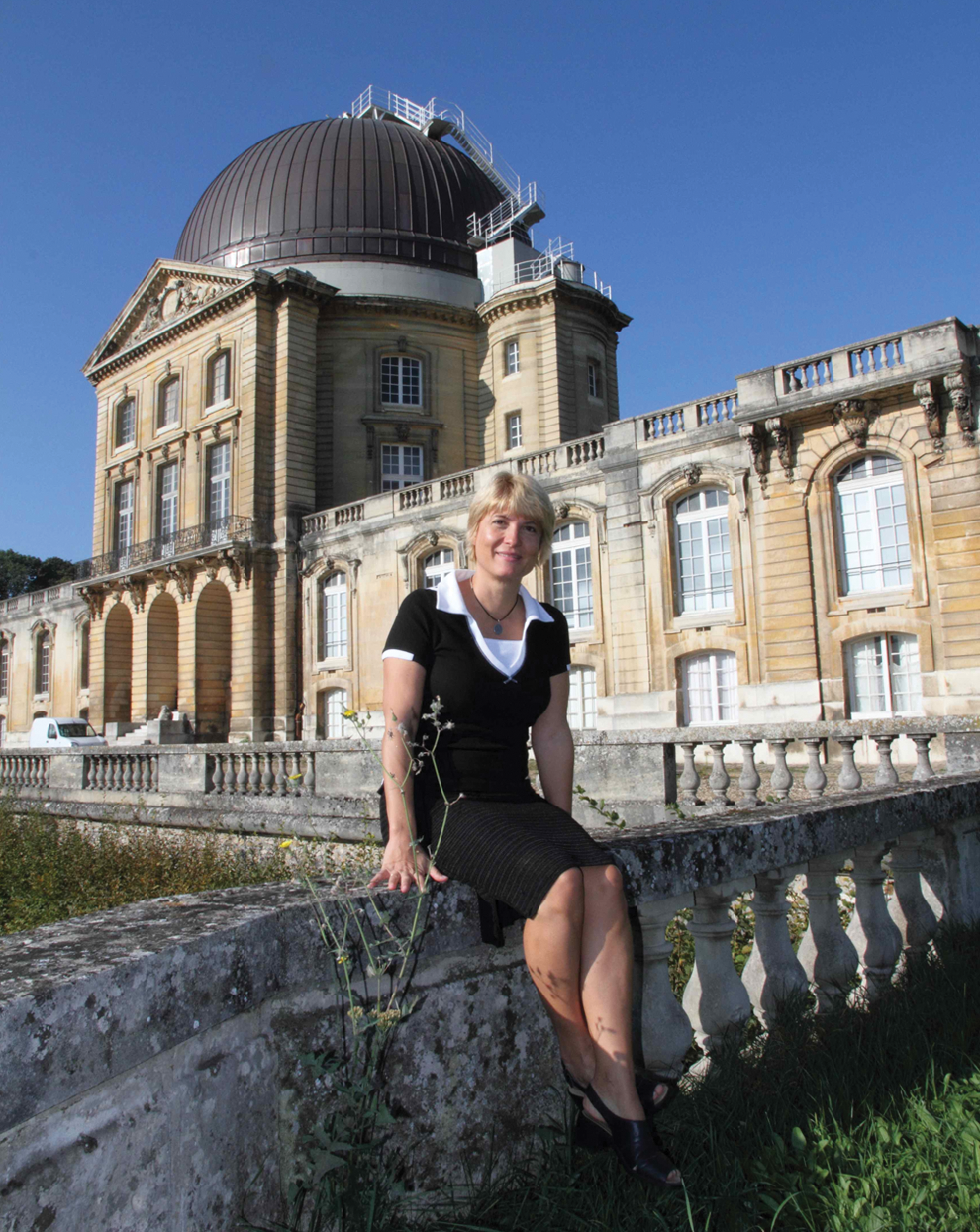
Athena in front of the Meudon Observatory. Color images available online at
Once I got a glimpse of Titan, I was hooked, bewitched, inspired, and haven't left the outer Solar System since. Right after my Ph.D. defense, I was engaged in three instrument proposals, all of which managed to get aboard Cassini-Huygens: Composite Infrared Spectrometer (CIRS) on the orbiter (I knew quite a lot by then about infrared spectral analysis of Titan) and Huygens Atmospheric Structure Instrument (HASI) and the Descent Imager Spectrometer (DISR) on the probe (Fig. 2). I was the luckiest girl in the world! The teams were fantastic, we threw ourselves into the definition of the instruments, we made observing plans, and then we watched the launch of Cassini-Huygens from Cape Canaveral in the lovely early morning of October 15, 1997 (Fig. 3). It remains one of my most memorable career and personal moments—just us and the alligators waiting for their breakfast. I cried to see the launch. I cried from joy and anticipation and thankfulness and pride to be part of this wonderful crowd of people: all the members of the teams, the ESA and NASA representatives who had us on our way to a big new adventure, and principal investigators like Mike Flasar, Marty Tomasko, and Marcello Fulchignoni.
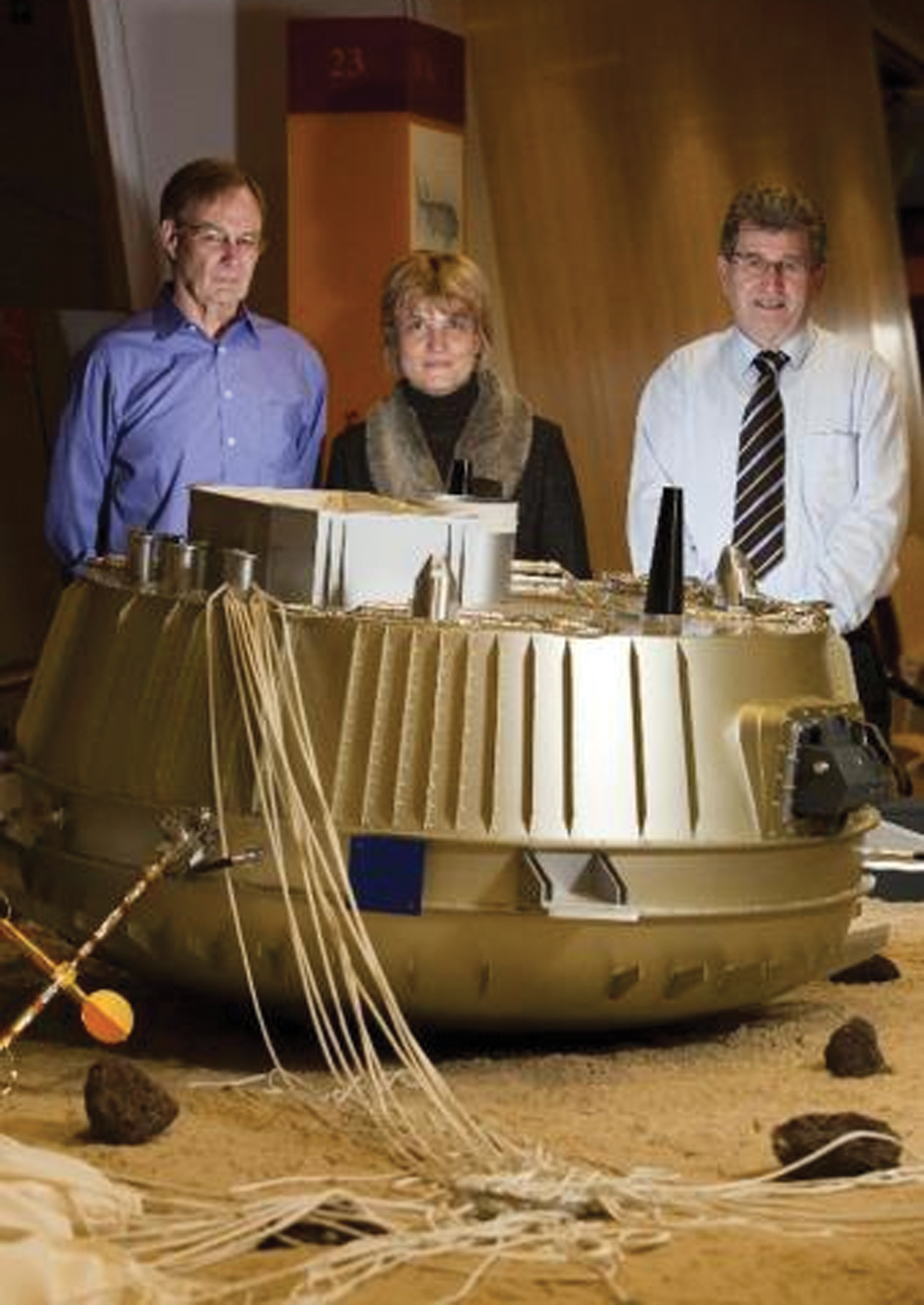
Robert Mitchell, Athena Coustenis, and Jean-Pierre Lebreton gazing at a replica of the Huygens probe during the 5th anniversary of Huygens in Barcelona in January 2010. Color images available online at
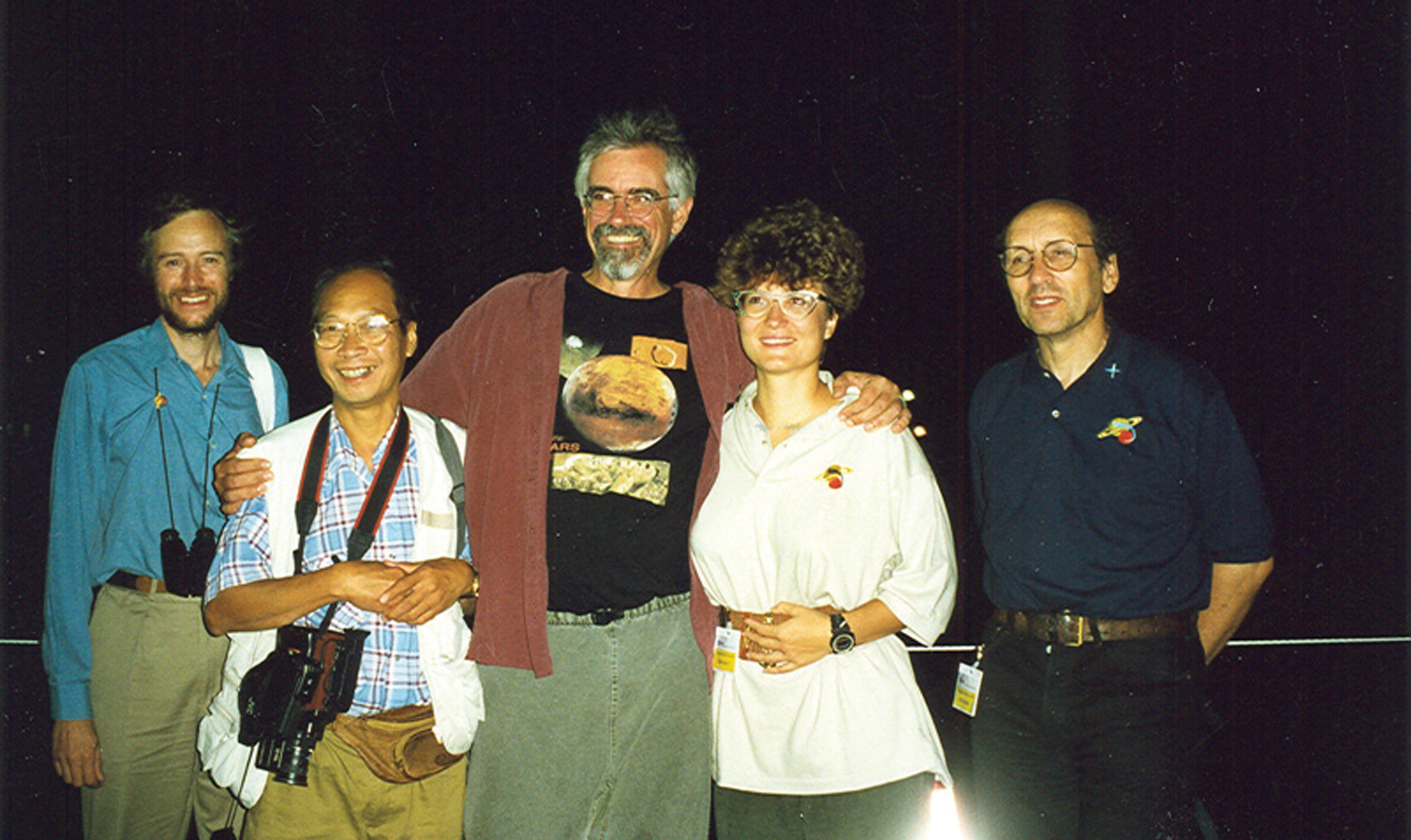
Some of the Descent Imager Spectrometer (DISR) Team at the Cassini launch in Cape Canaveral on October 15, 1997. From left to right: Bruno Bézard, Van Duoc Phan, Peter Smith, Athena Coustenis, and Gerard Epstein. Color images available online at
By then, the French National Center for Scientific Research had offered me a permanent position, and France had become my home. I am grateful to both my mother and host countries and feel quite European. While waiting for the mission to arrive safely at its destination, of course I had to occupy myself. I went to large telescopes all over the world (Hawaii and Chile mostly) and observed Titan with spectra and images. I used the Infrared Space Observatory. I attacked the problem of understanding Titan from all possible perspectives: models and observations, atmospheric chemistry and surface geology, inside and out and anything I could get my hands on.
And while I was waiting for Cassini to arrive, I also managed to “settle down,” as my mother had long hoped. I married Franck, with extraordinary computer skills in his repertoire, and brought into this world my little Callista, a star brighter than any in the sky. Neither of them cares very much about astronomy, but our association has worked wonders in making me happy and productive in both my personal and professional lives. It takes some organizing for me to attend meetings and be present for school shows and also able to follow all the mission's trajectories, but it was and is worth it.
In July 2004 the Cassini orbiter finally arrived at Saturn and entered into orbit around the planet, visiting the whole saturnian system. Even our wildest models and speculations hadn't prepared us for what we've seen since then with instruments performing beyond our expectations. During one freezing cold night, on January 15, 2005, at Darmstadt, ESA's control center in Germany, “we heard the baby cry,” as Jean-Pierre Lebreton announced after the successful descent and landing of the Huygens probe (Figs. 4 and 5). The images and all the data returned by that probe, the farthest landed man-made machine, are extraordinary and have taught us so much. Since then many scientists and engineers around the world have joined in this extraordinary adventure by processing and analyzing the huge amount of data returned (Fig. 6). The orbiter's lifetime has been extended to 2017, so I'll be busy for quite some time. Remember the Voyager flyby of 1980 allowed me, a decade later, to do research during my Ph.D. and for years afterwards. I have no doubt the Cassini-Huygens data will keep several future generations of astronomers busy.
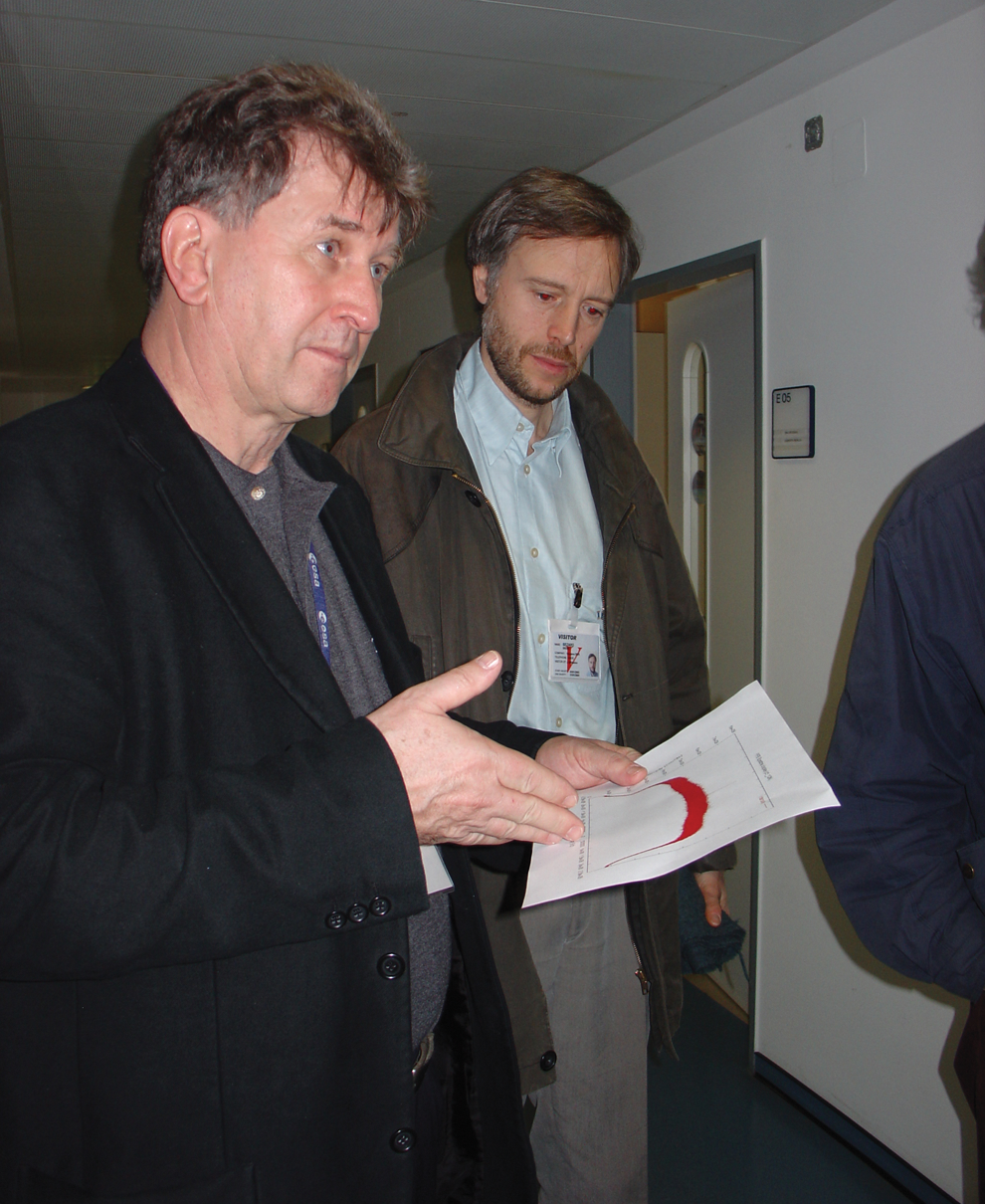
The Huygens signal arrives from Titan at the ESA Operations Center in Darmstadt. Jean-Pierre Lebreton, Huygens Project Scientist/Mission manager is on the left and Bruno Bézard on the right. Color images available online at
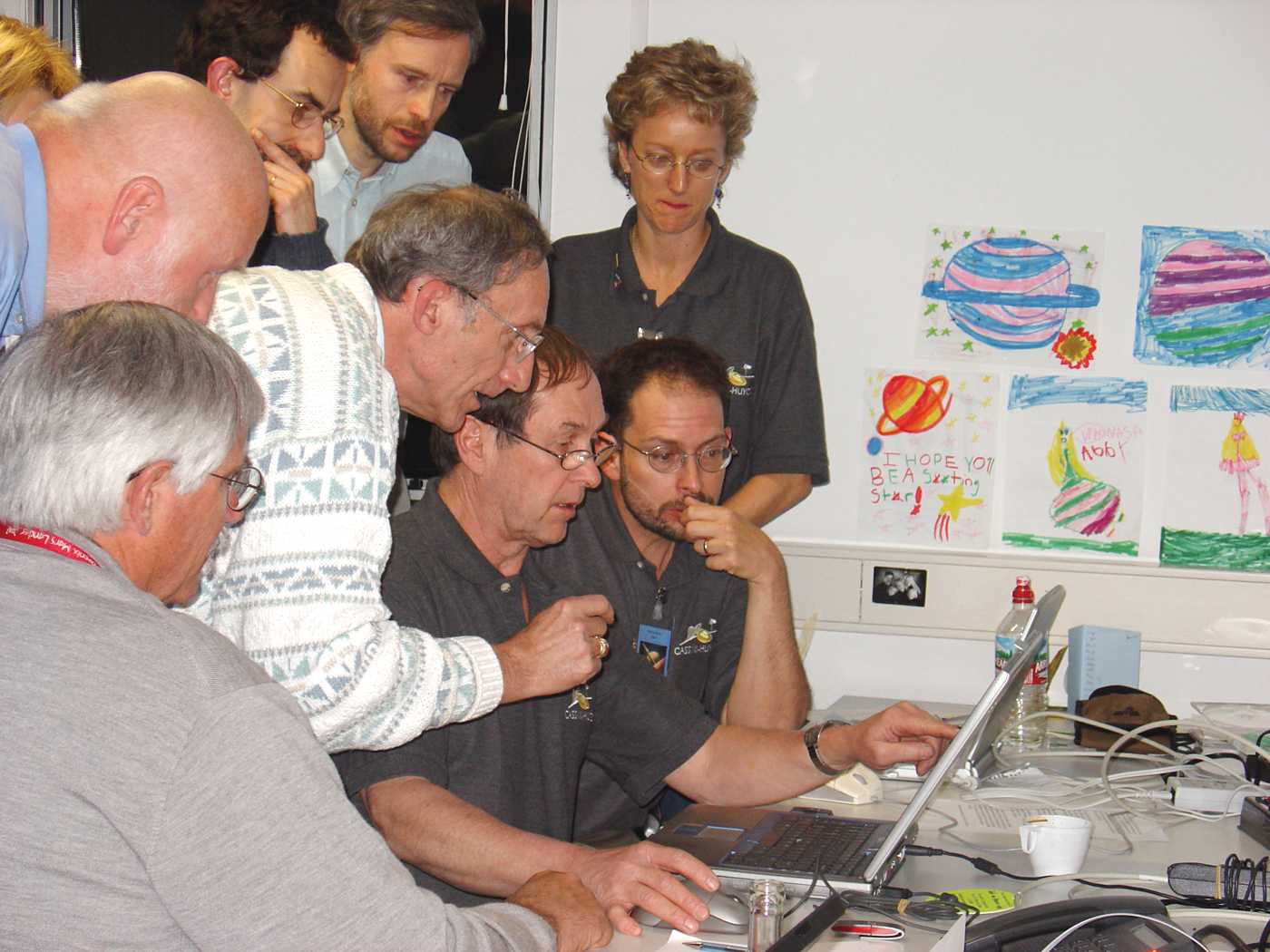
The DISR Team at work at Darmstadt trying to figure out what the Titan images are showing us with principal investigator Marty Tomasko in front and team members Bézard, Lellouch, Keller, Smith, Soderblom, Lunine, and Dafoe looking perplexed… Color images available online at
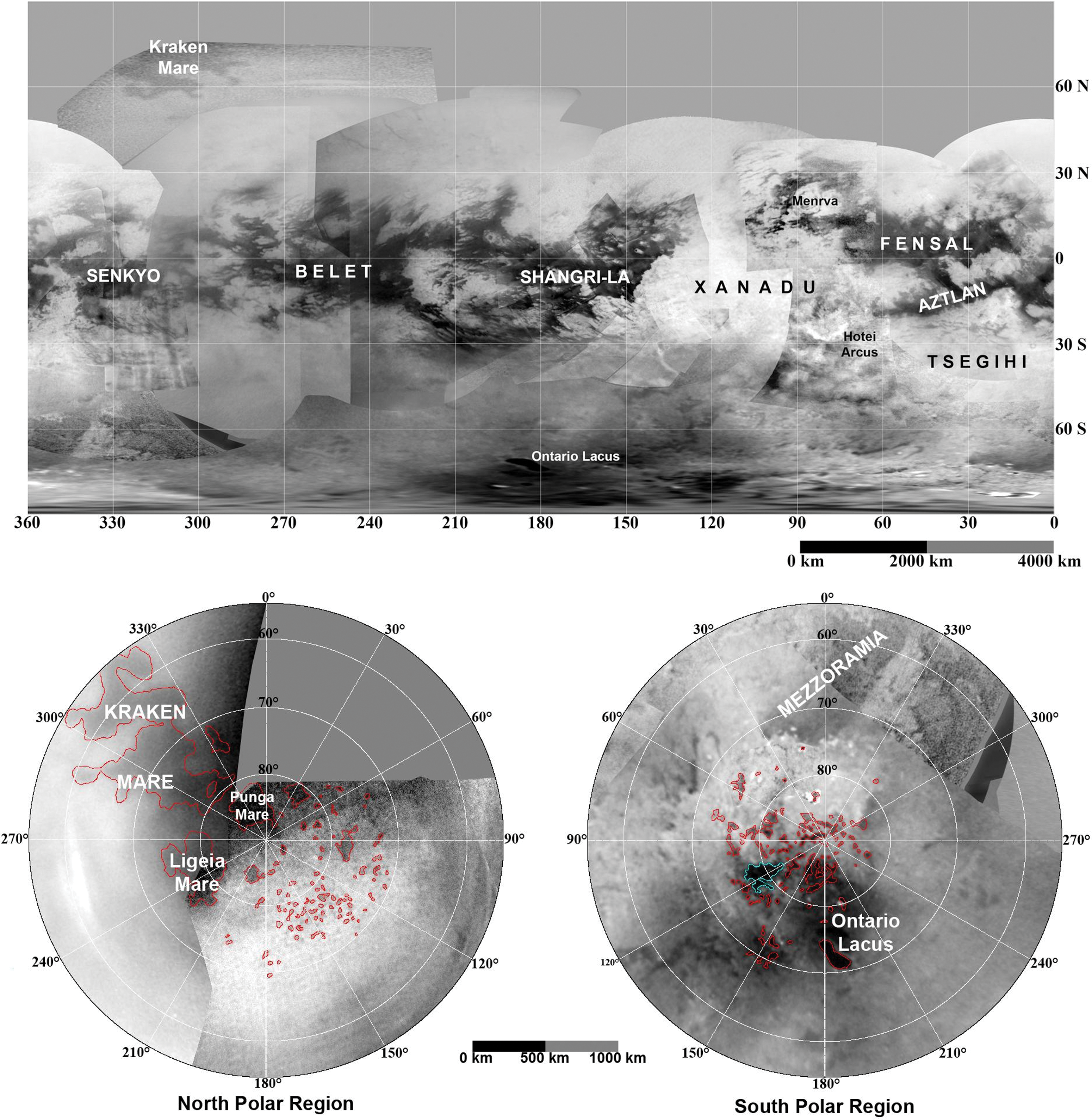
Titan's surface mapped. Image credit: NASA/JPL/Space Science Institute. Color images available online at
I came to astrobiology quite early in my research. How could I miss the implications put forward by many of my closest colleagues and friends in the field (Fig. 7), like François Raulin and Jonathan Lunine: “Titan: the frozen Earth,” “organic chemistry closest to our planet,” the “methane cycle mimicking the water cycle on Earth,” and so on. Of course, ancient Greek philosophers (them again!) had already thought of a universe consisting of “many worlds.” Thales, from Militos, and his students in the 7th century BCE argued for a universe full of other planets teeming with extraterrestrial life. They also proposed an idea with which we're all familiar today (through the Drake Equation, Carl Sagan's musings, and the contributions of many other scientists): a universe so full of stars must also have a large number of populated worlds. This proposal was defended by Epicurus and other Greek atomists who countered the geocentric models brought forward by Aristotle. The latter concept stuck, though, and hindered scientific progress in this arena for a long period of time. In 1862, scientist Camille Flammarion published La Pluralité des Mondes Habités (The Plurality of Inhabited Worlds), in which the conditions of habitability and the presence of life on habitable planets of our solar system is discussed. The public loved the book, but Urbain Le Verrier, then Director of the Paris Observatory, completely rejected Flammarion's arguments, as did many of his colleagues. Flammarion was consequently fired from the Observatory.
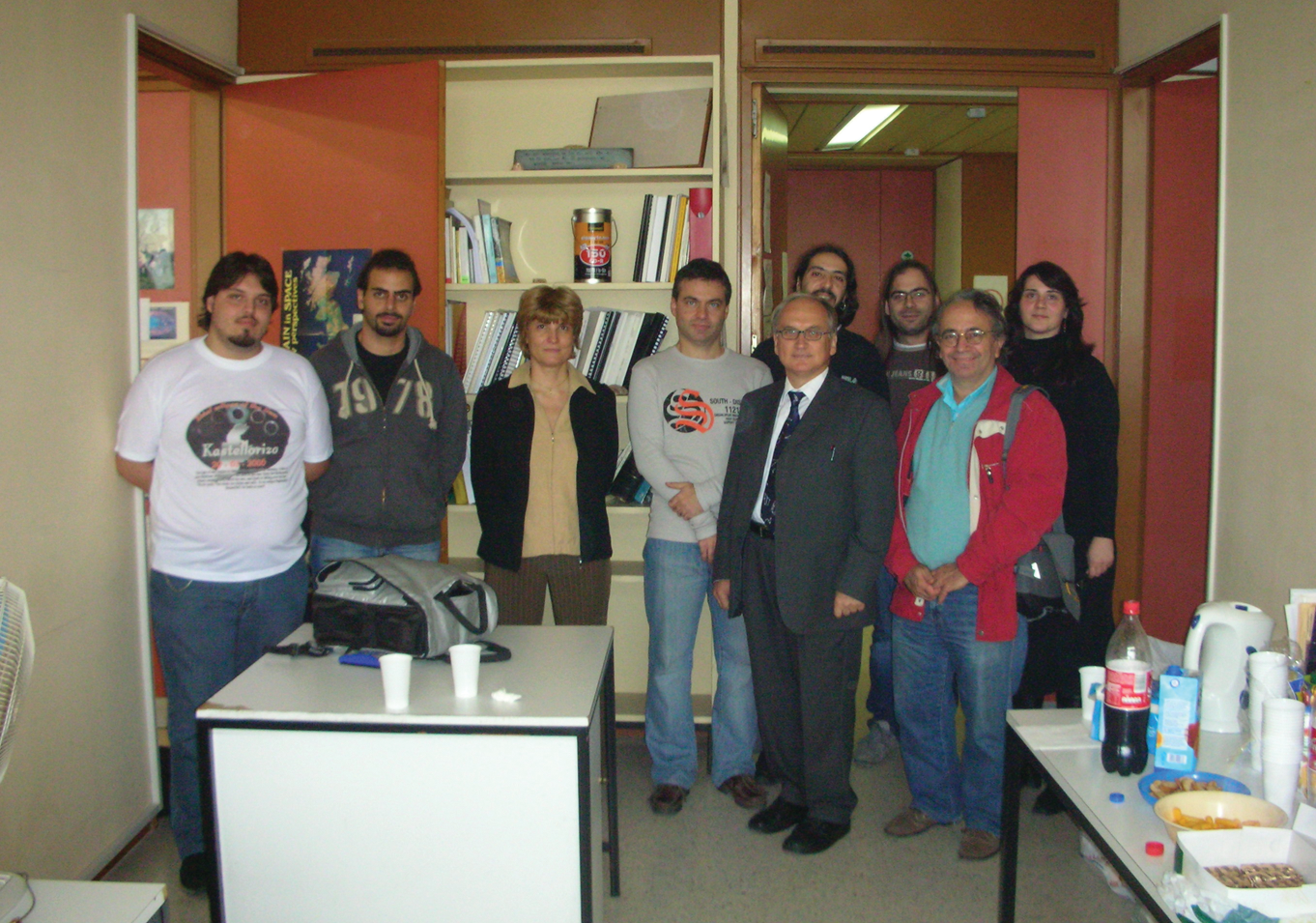
Athena with her colleagues and students at Athens University. Color images available online at
With better luck today, I'm allowed to be fascinated by the possibility that we could find information on how human beings arose or discover life-forms elsewhere, or both. Mars, Venus, Titan, Enceladus, Europa, and other such places have been our favorite targets for exploring habitats in the Solar System and pushing current models of the origin and evolution of life to their limits, and beyond. Subsurface liquid water oceans, organic constituents swimming in exposed hydrocarbon lakes, water-laden geysers, the possibility of water hiding beneath the CO2 ice fields of Mars—all these new opportunities for exploration in the field of astrobiology, with hopefully new space missions coming up in the next decade, make my everyday life and research work exciting and busy. Learning about and contributing to future missions to the saturnian and jovian systems are constant sources of anticipation and reward (Fig. 8). And I love sharing these new findings in astronomy with the public, always supportive and sometimes as passionate as we are.
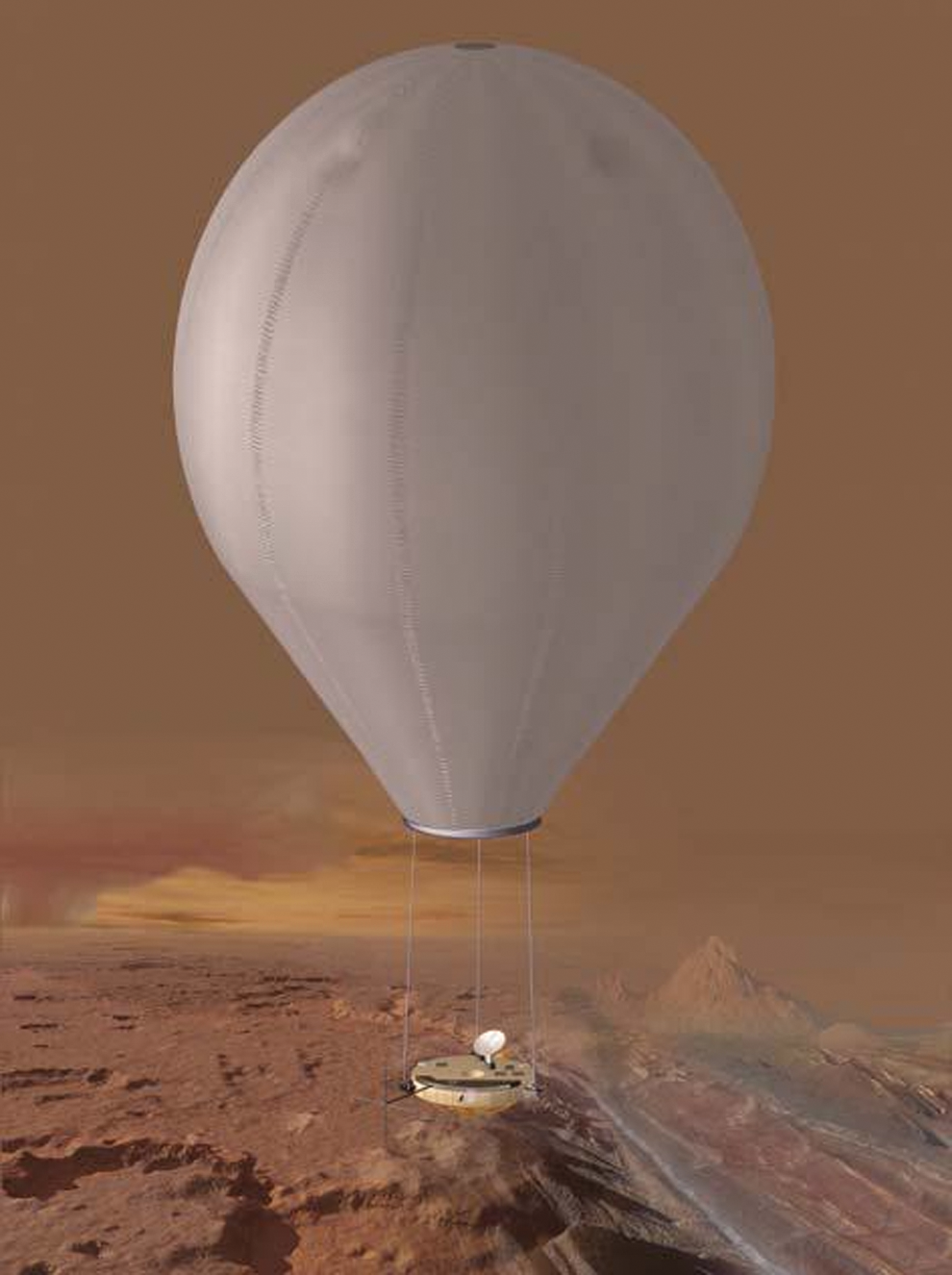
Titan Saturn System Mission. Image credit: NASA, TSSM NASA/ESA joint summary report. Color images available online at
For those who are interested in learning more about Titan, Cassini-Huygens, astrobiology, and Greek astronomy, I suggest these resources: