




Abstract
The Life Marker Chip (LMC) instrument is an immunoassay-based sensor that will attempt to detect signatures of life in the subsurface of Mars. The molecular reagents at the core of the LMC have no heritage of interplanetary mission use; therefore, the design of such an instrument must take into account a number of risk factors, including the radiation environment that will be encountered during a mission to Mars. To study the effects of space radiation on immunoassay reagents, primarily antibodies, a space study was performed on the European Space Agency's 2007 BIOPAN-6 low-Earth orbit (LEO) space exposure platform to complement a set of ground-based radiation studies. Two antibodies were used in the study, which were lyophilized and packaged in the intended LMC format and loaded into a custom-made sample holder unit that was mounted on the BIOPAN-6 platform. The BIOPAN mission went into LEO for 12 days, after which all samples were recovered and the antibody binding performance was measured via enzyme-linked immunosorbent assays (ELISA). The factors expected to affect antibody performance were the physical conditions of a space mission and the exposure to space conditions, primarily the radiation environment in LEO. Both antibodies survived inactivation by these factors, as concluded from the comparison between the flight samples and a number of shipping and storage controls. This work, in combination with the ground-based radiation tests on representative LMC antibodies, has helped to reduce the risk of using antibodies in a planetary exploration mission context. Key Words: Low-Earth orbit—Radiation—Life-detection instruments—Spaceflight—Mars. Astrobiology 13, 92–102.
1. Introduction
T
The current version of the LMC has been under development as part of the payload for the ExoMars mission rover. The ExoMars mission (Vago et al., 2006) is ESA's flagship mission to Mars, which is currently scheduled for launch in 2018*. The LMC for ExoMars has the ability to detect up to 25 different molecular targets of different origins that are associated with meteoritic infall, extinct or extant “Earth-like” life, prebiotic chemistry, and spacecraft contamination (Parnell et al., 2007). The LMC for ExoMars is designed to process regolith and crushed rock samples from up to four different locations and includes integrated sample extraction and analysis, which essentially makes the LMC an analytical laboratory in miniature.
The molecular reagents at the core of instruments like the LMC have no heritage of interplanetary mission use. Therefore, the design of such instruments must take into account a number of risk factors, among which is the radiation environment that will be encountered en route to, and on the surface of, planets. To study the effects of space radiation on lyophilized immunoassay reagents, primarily antibodies, a set of ground-based simulations (Derveni et al., 2012) and a space study were carried out. The latter, to be reported in this work, was part of ESA's 2007 BIOPAN-6 low-Earth orbit (LEO) mission.
The ground-based radiation studies confirmed that representative LMC antibodies, which were pretreated and packaged in the LMC-intended format, remain functional after exposure to levels of proton and neutron radiation that simulate those envisaged for a mission to Mars and even up to 250 times the ExoMars dose for proton radiation. Nevertheless, ground-based simulations of space radiation have their limitations. When accelerators are used to irradiate samples, typically high fluxes of a single, monoenergetic source of particles are produced in a narrow, unidirectional beam (Horneck, 1992), whereas in a space mission, a body is exposed to a low flux of particles of a broad spectrum of atomic mass and energy, moving in various directions. In addition to the issues related to the composition of the simulated radiation environment, ground-based studies offer no information concerning the performance of antibodies after exposure to the physical aspects of a space mission in terms of ground handling, launch, flight, and atmosphere reentry/recovery. This means that to gain a better understanding of the effects of a wider range of conditions that comprise a planetary exploration mission, ground-based simulations should ideally be combined with exposure to the environment in space and other mission parameters.
The BIOPAN multiuser experimental platform for the exposure of scientific experiments to space conditions in LEO was designed in 1990–1991 by Kayser-Threde under contract to ESA (Demets et al., 2005). LEO, which can generally be defined as the orbit between 0 and 2000 km from Earth's surface, is characterized by extreme environmental conditions (significant radiation levels and extreme temperatures compared to those on the surface of Earth and high vacuum), which render it an important location for in situ space studies. Chemical and biological experiments in LEO have been taking place for the past 40 years (reviewed by Horneck, 1998, 1999), which were intended to answer questions related to the molecular evolution of the interstellar medium, the possibility of interplanetary transfer of life, and the importance of solar UV radiation in terms of prebiotic and biological evolution. The natural radiation environment in LEO is composed of charged particles of cosmic and solar origin and particles in the radiation belts trapped by Earth's geomagnetic field (Stassinopoulos, 1988). Additionally, secondary radiation is produced from the interaction of cosmic rays with spacecraft shielding material, in the form of proton recoils, neutrons, and other by-products (Wilson et al., 1991). The composition of the radiation environment is not constant; spatial and temporal variations have been observed (Reitz, 2008), including variation due to solar activity. The intensity of the radiation exposure is also variable and closely related to a number of orbital (altitude, trajectory, etc.) and technical (spacecraft shielding) aspects of a mission in LEO.
BIOPAN (Fig. 1) is a circular, pan-shaped aluminum structure (38 cm in diameter, 23 cm in height, 27 kg mass) with a hinged lid that can open to 180° in orbit. A number of experimental modules can be mounted on two experiment support plates (top and bottom layer). Once in orbit, the BIOPAN structure is opened by telecommand to expose the experiments to space radiation, including unfiltered solar light, vacuum, and subzero temperatures. BIOPAN can carry a variety of experiments (typically 10 different experiments) of up to 3.5 kg in combined mass. The platform is mounted on the exterior of a FOTON retrievable capsule (FOTON is the project name of a set of Russian science satellite and reentry vehicle programs). During launch and reentry, BIOPAN is hermetically sealed and secured with a locking ring, while the whole structure is covered by an ablative shielding material to protect the experiments from the heat generated during reentry (Schulte et al., 2007).
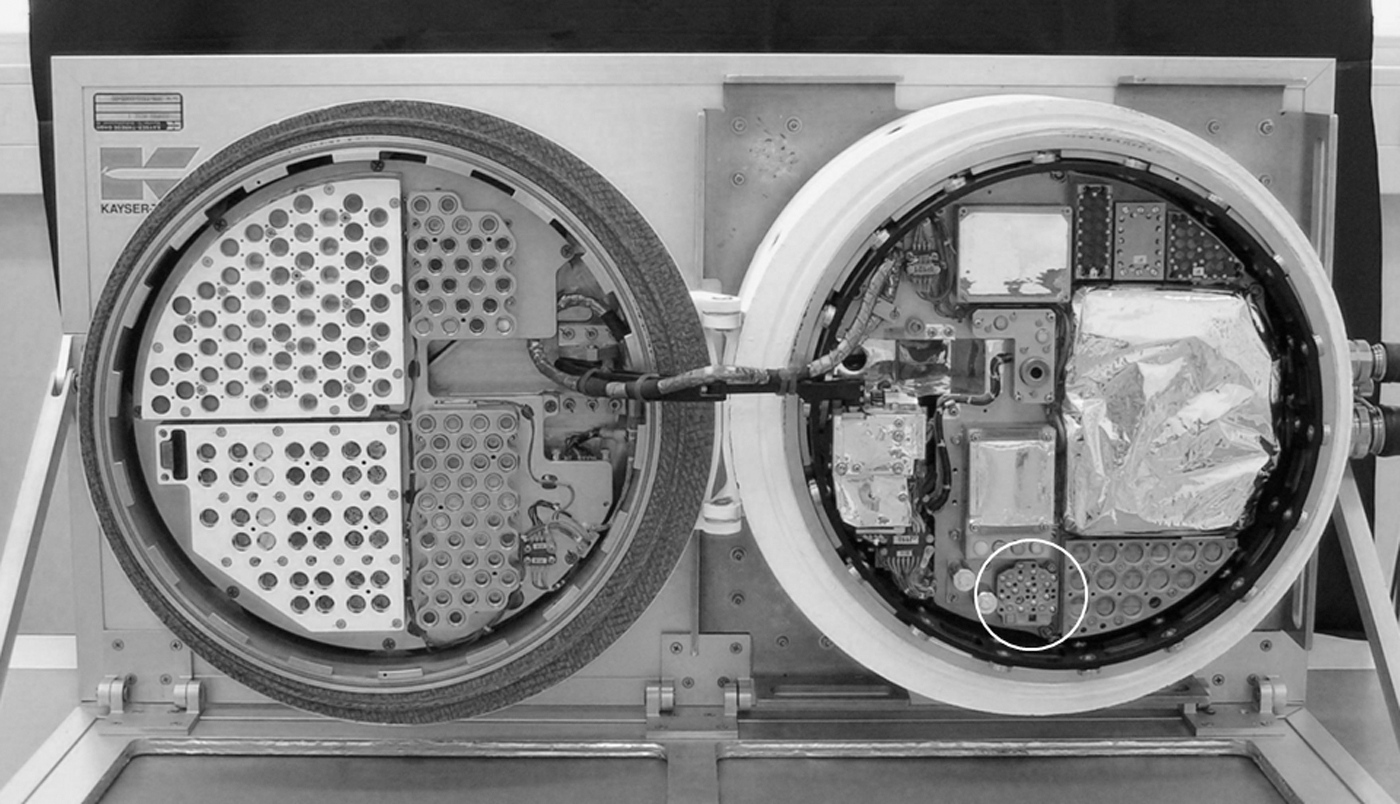
BIOPAN-6 platform with all participating experiments (LMC in the white circle) (Image credit: ESA).
To monitor the environmental conditions during the mission, BIOPAN is equipped with a suite of built-in sensors (in addition to researcher-provided detectors of various types), including thermometers, a broadband radiometer, UVB and UVC sensors, and pressure sensors. BIOPAN provides thermal control between +15°C and +25°C for the set of experiments mounted on the bottom layer (the top part is thermally passive, and its temperature follows the environmental conditions during orbital flight), with temperatures normally never exceeding the biologically critical limit of +30°C to +35°C. In addition to temperature consistency, the orbital parameters selected for all FOTON missions are similar, allowing experiments to be repeated under comparable conditions (Demets et al., 2005). After landing and recovery, all the experimental samples are returned to their owners for analysis at their respective laboratories.
BIOPAN-6 on board the FOTON M3 mission launched from the Baikonur Cosmodrome in Kazakhstan and went into LEO on September 14, 2007; it was retrieved on September 26, 2007. As with previous missions, the experiments on board BIOPAN-6 were designed to address research questions of different nature and scientific context (Table 1).
The aim of the present work was to reduce the risk and increase the technical readiness level of using LMC-related immunoassay reagents—especially antibodies—in a planetary exploration mission instrument. In this case, confidence in the use of antibodies would be increased if they were shown to survive exposure to the radiation environment in LEO. The LMC on BIOPAN-6 experiment was also an opportunity to factor in the physical aspects of a space mission, as the LMC antibodies had no history of spaceflight. These included the conditions during launch and reentry (shock and vibration loadings, acoustic energy during launch, etc.) and the general ground handling of samples, from the point of sample preparation all the way to recovery and analysis.
2. Materials and Methodology
2.1. BIOPAN radiation environment
The experiments inside BIOPAN are exposed to the radiation environment in LEO, predominantly solar radiation trapped in Earth's inner radiation belt and in the South Atlantic Anomaly. The composition of this radiation field is dominated by electrons in the range of 100 keV to 5 MeV and protons in the range of 1–30 MeV that have been captured by Earth's magnetic field (Fehér and Pálfalvi, 2008).
The radiation in LEO, with the exception of the South Atlantic Anomaly where anisotropic fluxes are observed, is isotropic. The irradiation of BIOPAN depends on how the spacecraft trajectory intersects the magnetosphere of Earth (i.e., orbit inclination and altitude), the flight duration, and the timing of the mission within the 11-year solar cycle. Given the series of previous BIOPAN flights and the desire for repetition of experimental conditions, with the exception of solar cycle events, the parameters for FOTON are highly consistent: the orbital inclination is always close to 63°, the spacecraft always cruises at an altitude around 300 km, and the flight duration is always close to 2 weeks. In terms of radiation doses, excluding solar irradiation, measurements from previous BIOPAN flights have recorded doses of up to 5.6 Gy/day (Reitz et al., 2002).
2.2. Selection of antibodies and strategy for sample preparation
Two antibodies were used in the LMC experiment on BIOPAN. Among the antibodies available in the lead authors' research group leading up to the BIOPAN flight (mid-2007), priority was given to those that were the most studied in immunoassay format. The antibodies used were a polyclonal antibody against chaperonin 60 (GroEL) from Sigma Aldrich (cat. no. G6532) and a recombinant antibody fragment (scAb—single chain antibody) against atrazine provided by Immunosolv Ltd. Chaperonin 60 was one of the early LMC targets under consideration as an extant life marker strongly associated with Earth life, and atrazine is a negative control marker (i.e., unlikely to be present on Mars); both were among the first assays to be developed from an extensive list of potential molecules that were of interest for the LMC instrument (Parnell et al., 2007).
In accordance with the antibody preparation strategy throughout the development of the LMC, the antibodies were packaged and exposed in a lyophilized state, freeze-dried into laser-cut glass fiber pads. Lyophilization was chosen as a method of sample preparation and storage early on in the development of the LMC, as this approach is widely used in the pharmaceutical and diagnostics industries as a means of increasing the shelf life of biological materials; in the context of the LMC, lyophilization is also expected to offer radioprotection via the elimination of radiolytic products of water. This format also facilitates handling during various steps of the LMC assembly and was used both in the BIOPAN experiment and the parallel ground-based radiation studies. Each antibody was freeze-dried into a separate pad, and multiple replicates of each antibody pad were prepared with the intent to confirm the reproducibility of the results obtained.
Two sets of control sample pads were prepared that were identical to the flight samples. These were a storage control set (stored away from light, at ambient atmosphere and temperature at Cranfield University for the duration of the BIOPAN mission) and a shipping control set, which was transported to the Baikonur Cosmodrome in the same way as the flight samples but not flown on board the mission. The shipping control set was stored at Baikonur Cosmodrome in the dark at ambient temperature before being returned to Cranfield University along with the flight sample set at the end of the mission. All three sample sets were analyzed in parallel.
2.3. Preparation of antibodies for exposure to BIOPAN mission conditions
The antibodies that were used in the LMC on BIOPAN-6 experiment had to be tested in a realistic simulation of the conditions envisaged for the LMC flight module. To this end, they were pretreated and packed in the LMC-intended format (freeze-dried into glass fiber pads) and sealed in an inert gaseous atmosphere (no exposure to space vacuum). The gas chosen both for BIOPAN and as a baseline for the ExoMars flight was argon, which would minimize the H2O and O2 content of the sample container, and the gas pressure was 1 atm at the time of sealing (for details on glass fiber pad preparation and antibody integration, please see the Supplementary Material available online at
Temperature during launch and reentry was not expected to be higher than +40°C, due to BIOPAN's thermal design and temperature controls on board, while low temperatures (in orbit) were not expected to be an issue for the LMC antibodies.
Finally, as radiation exposure was the high-priority factor to investigate (except solar UV radiation, which for a Mars flight is expected to be fully blocked by the structure of the ExoMars rover), it was decided that the antibodies would be exposed to space radiation under three different shielding thicknesses and combinations of materials. One of the shielding levels was deemed “zero shielding,” which blocked only UV radiation and helped to maintain the argon atmosphere around the samples. The second shielding level was labeled “ExoMars shielding,” as it corresponded to the level of shielding provided by the ExoMars rover on the surface of Mars (deemed to be equivalent to 4 mm of aluminum—Hands and Rodgers, 2006). The final shielding level was “maximum shielding,” which was the practical maximum level of shielding and was expected to minimize the effect of radiation, allowing the study of all other flight variables. The three shielding levels can be seen in detail in Table 2.
2.4. Dosimetry
In addition to the radiation measurements performed by other instruments on board BIOPAN-6 (RADO, R3D-B), the LMC sample antibody pads were each loaded in the sample holder unit with an individual Al2O3 optically stimulated luminescence (OSL) dosimeter, which would offer supplementary data on the radiation levels the samples were exposed to. Such OSL dosimeters have previously been used in space radiation measurements for heavy charged particles, where the OSL data combined with linear energy transfer measurements are a practical way for the characterization of the radiation profile (total absorbed dose and dose equivalent) of a space mission (Yukihara et al., 2006).
The dosimeters used in the LMC on BIOPAN-6 experiment were hand-cut Luxel+ Al2O3:C dosimeters (approximate size of 2×4×0.3 mm3) from Landauer, Inc., provided by Oklahoma State University.
2.5. Provision of LMC experimental hardware
A custom-made sample holder unit was prepared for the LMC on BIOPAN [designed and manufactured at the German Aerospace Centre (DLR)]. The machined aluminum (AlMgZnCu 1.5) unit had two main parts: the base plate, with a number of cylindrical wells to accommodate the antibody-loaded glass fiber pads and square wells for a number of printed microarrays (not reported in this paper), and a top plate with areas of varying thickness (Table 2) to correspond to the different shielding levels of the various samples. The aluminum parts of the structure were passivated with an Alodine 1200 treatment, while the stainless steel inserts were bonded in place with a two-part epoxy adhesive (Araldite AV 100/HV100). Sandwiched between the two plates was a 125 μm thick Kapton foil (grade HN polyimide film), which was intended to cover the sample wells and offer a minimal level of radiation protection, as described above. Between the Kapton foil and the bottom plate of the unit, a Viton elastomer sheet gasket (grade GLT, 0.5 mm thickness) served as a gas-tight seal after mechanical clamping of the two parts with assembly bolts also provided by DLR. A schematic overview of the LMC on BIOPAN sample unit and a picture of the Shipping Control Model can be seen in Fig. 2.
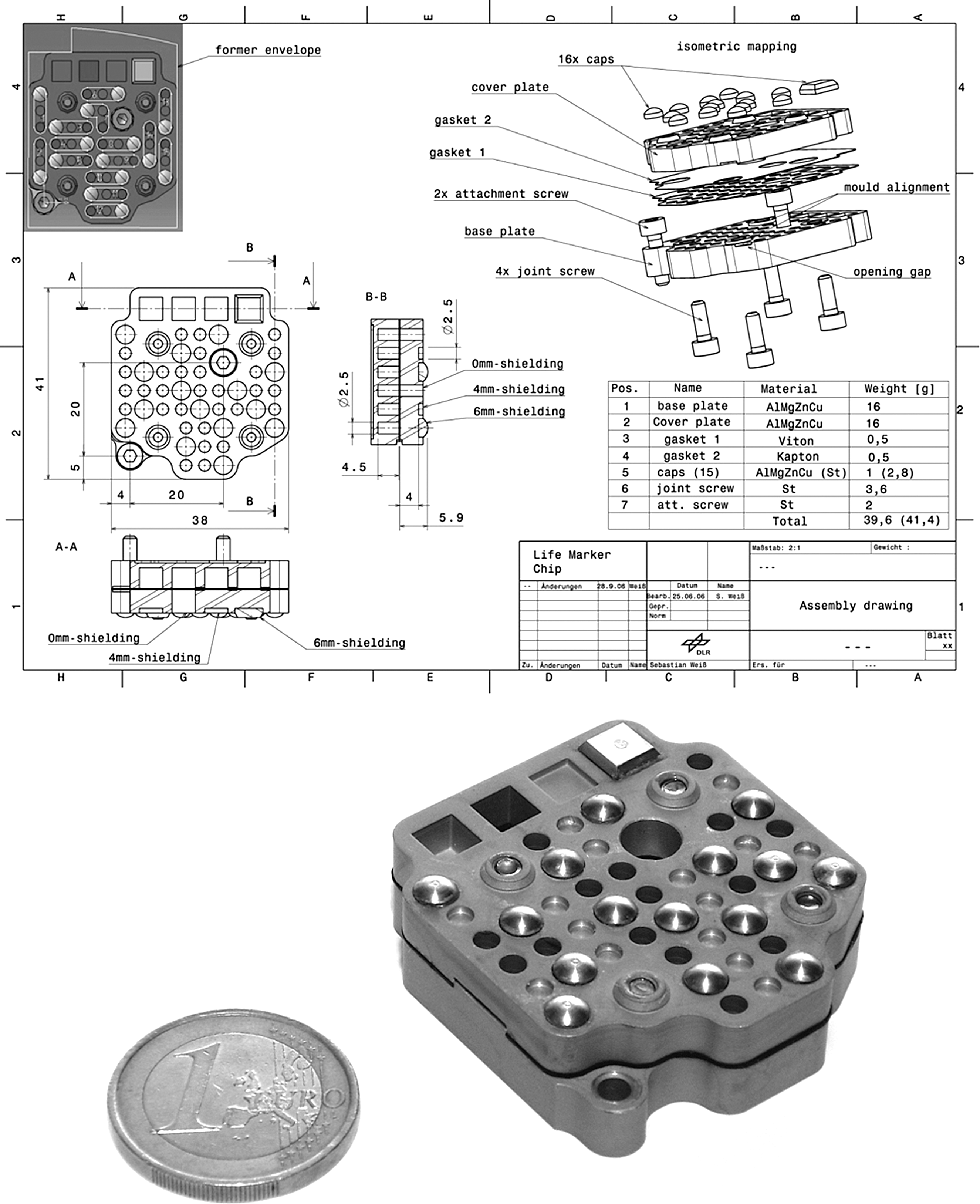
(Top) Design and (Bottom) Shipping Control Model of the sample holder unit for the LMC on BIOPAN-6 experiment with the top surface features being the various shielding levels over the cylindrical or square wells—stainless steel caps, recesses with 4 mm Al, and holes with exposed Kapton at their base (Image credits: DLR/Cranfield University).
The final mass of the sample holder was 37.2 g prior to sample loading, with a volume of 41×38×12 mm3. In addition to the flight model, a second identical unit was constructed and used as a shipping control sample holder.
2.6. Assembly of flight model and shipping control unit
The assembly of the flight sample holder unit and shipping control unit were performed at the same time in a class 100,000 clean room at Cranfield University. The Luxel+ dosimeters (Fig. 3A) were loaded in the wells first (1 dosimeter/well), followed by the lyophilized samples (1 pad/well) (Fig. 3B).
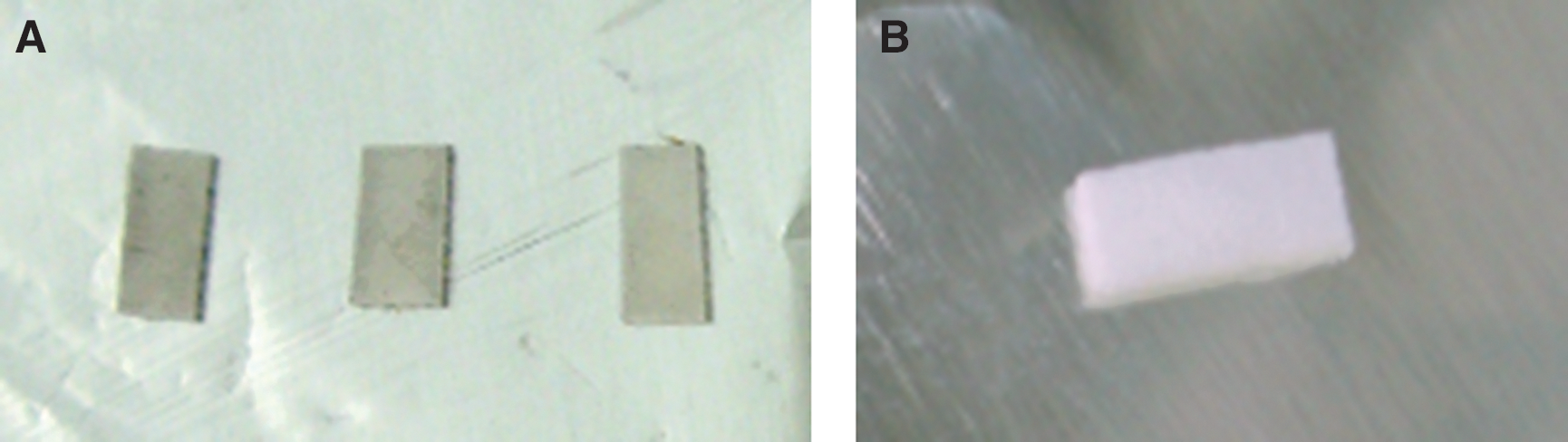
(
For the antibody samples, three replicates of each antibody type were loaded into wells of the same level of shielding. Once the sample loading was complete (Fig. 4A), the unit was placed in a container and purged with argon gas before the Viton gasket (Fig. 4B) followed by the Kapton foil (Fig. 4C) were put in their place over the sample area, and the cover plate was screwed in place (Fig. 4D).
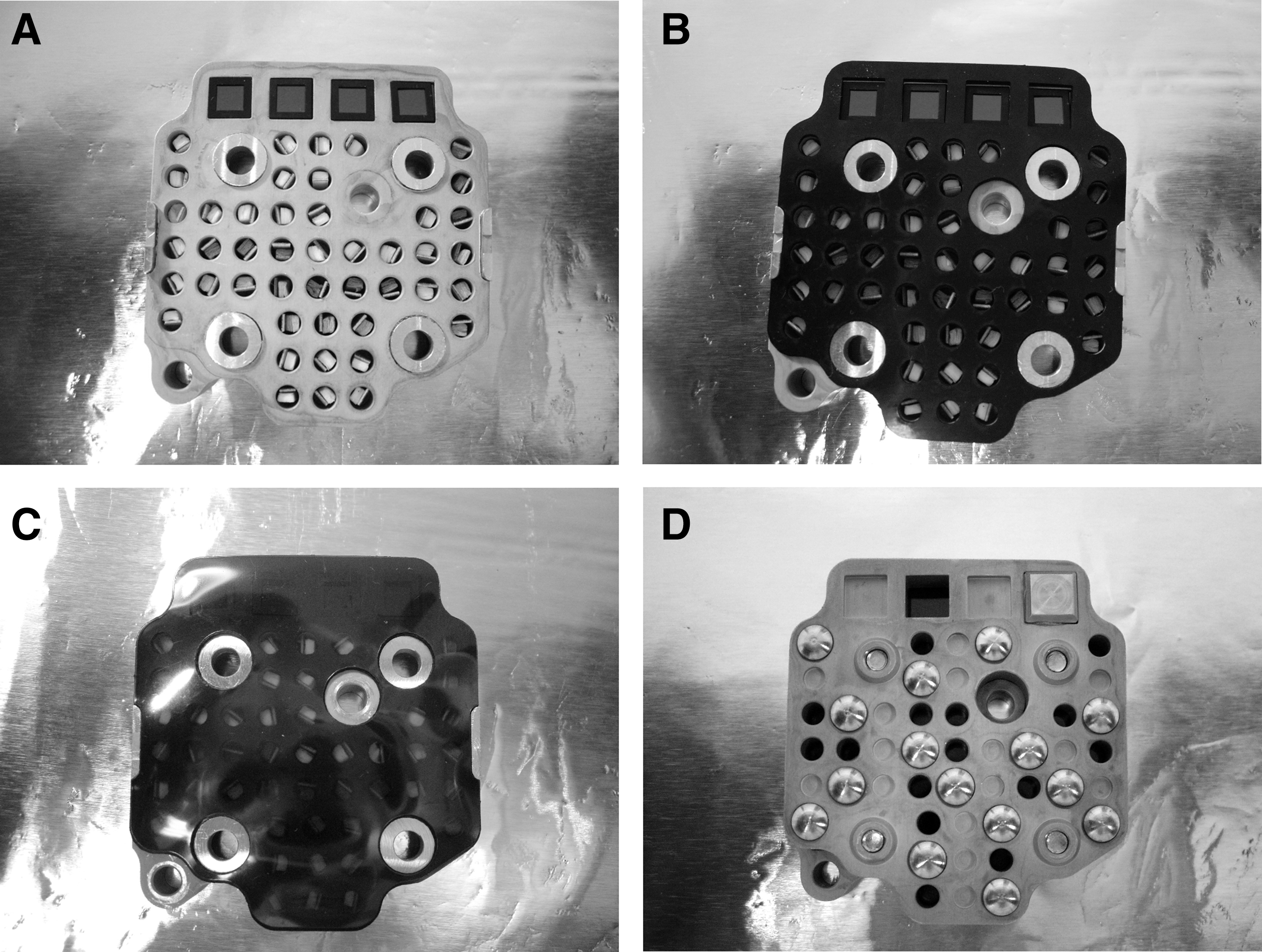
Flight Model of the LMC on BIOPAN-6 experiment. (
An important step in the assembly was the establishment of an argon atmosphere in all the sample-loaded wells in the unit, which was implemented by assembling the sealing covers for the unit inside an argon-filled box. The Flight Model (FM) and Shipping Control (SC) were assembled identically, and both units were kept at Cranfield University prior to being transported to ESTEC in the Netherlands and finally Baikonur in Kazakhstan (a detailed description of the flight of the LMC experiment on board BIOPAN-6 can be found in the Supplementary Material).
2.7. Analysis of samples from the LMC experiment on BIOPAN-6
Initially the LMC experiment on BIOPAN-6 was assessed by visual inspection of the sample holder units during their disassembly and sample recovery. The assembly process, with the loading of samples and the sealing of the units, had been recorded in detail, allowing a direct before/after comparison of the condition of the hardware and samples.
In order to rehydrate and remove the antibodies from the pads for subsequent functional testing, each pad was placed inside the narrow tapered end of a shortened 10 μL plastic pipette tip and placed inside a 1.5 mL Eppendorf tube. This approach allowed addition of 6 μL of phosphate-buffered saline solution to one end of the pad, wicking of the solution into the pad, and then centrifugation with separation of the pad from the resulting solution, allowing the efficient collection of the solution with any rehydrated and washed-out antibody. Each pad was subjected to 10 washes, yielding a ∼60 μL solution with an expected antibody dilution factor of 10, assuming 100% wash-out efficiency.
The solutions were used in standard enzyme-linked immunosorbent assays (ELISA). The ELISA were all binding assays so as to test the antibodies' ability to recognize and bind to their respective targets, and no inhibition/competition assays were performed due to the limited availability of recovered samples (the ELISA protocol can be found in the Supplementary Material).
All dosimeters from the LMC on BIOPAN experiment were removed from the sample wells in the sample holder units under safe light conditions and stored in individual Eppendorf tubes wrapped in aluminum foil to avoid accidental exposure to light and data alteration. They were shipped to Oklahoma State University for controlled illumination readout. Readout was performed by a Risø TL/OSL-DA-15 reader (Risø National Laboratory, Røskilde, Denmark) equipped with green light-emitting diodes for stimulation (broadband centered at 525 nm, ∼10 mW/cm2) and Hoya U-340 filters for light detection (7.5 mm thickness, Hoya Corporation). The dosimeters were stimulated for 300 s, and the total OSL area was used in the analysis. Calibration was performed for each individual dosimeter by using a reference dose from a 90Sr/90Y source calibrated against a 60Co gamma source in dose to water.
3. Results
3.1. Visual inspection
Visual inspection revealed no alterations or visible damage to the glass fiber pads, for example, no evidence of disruption of the glass fiber pads such as separation of fibers, even though there appeared to have been movement of the pads (rotation along long axis).
3.2. ELISA results for the anti-GroEL and anti-atrazine antibodies
The ELISA assays were run in parallel for the samples from the FM unit, the SC unit, and the set of storage controls that had remained in Cranfield University for the duration of the mission. The washout solution from each pad was serially diluted appropriately to give the binding curves for each antibody.
The ELISA results for the anti-GroEL antibody are shown in Fig. 5; they are essentially the recovered binding performance of the anti-GroEL antibody from each set of the three levels of shielding in the FM (shown as mean of the triplicate samples). The results are presented in comparison to storage and shipping controls, and a standard curve produced with the use of a stock anti-GroEL antibody solution (non-lyophilized).
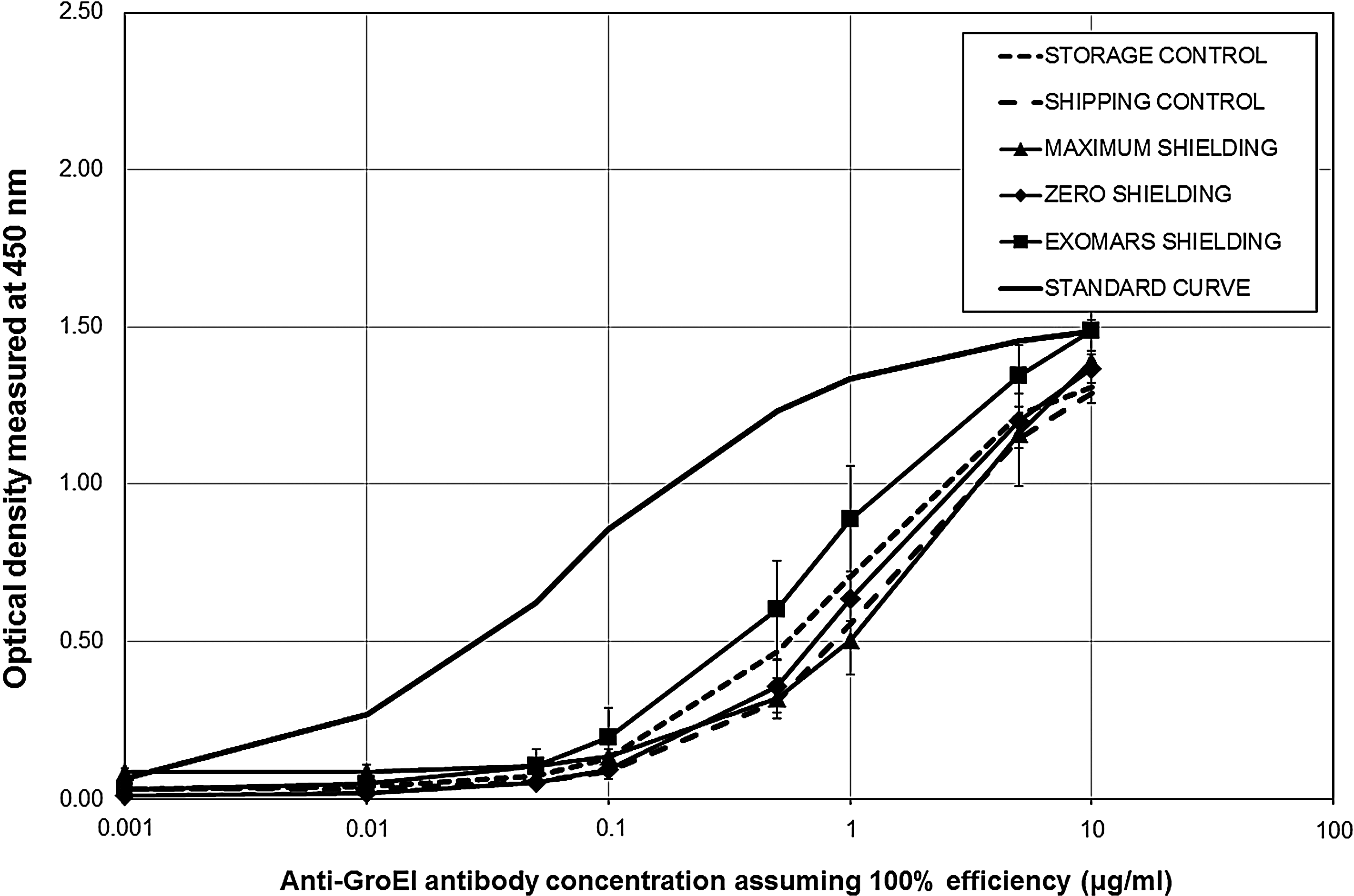
Binding performance of the anti-GroEL antibody samples in the LMC on BIOPAN-6 experiment—“efficiency” refers to pad wash-out efficiency. Error bars reflect the standard deviation among the three replicates of each type of pad that was analyzed.
From Fig. 5, it is evident that the FM samples behave very similarly to the SC and Storage Control samples. It is also apparent that the process of sample preparation of freeze-drying and/or subsequent antibody recovery results in a significant loss of antibody binding activity, that is, the standard curve shows a significantly lower assay midpoint. It is apparent that the three different levels of shielding of samples have no significant effect on their subsequent binding performance.
Similarly to the anti-GroEL results, the ELISA results for the anti-atrazine antibody are shown in Fig. 6.
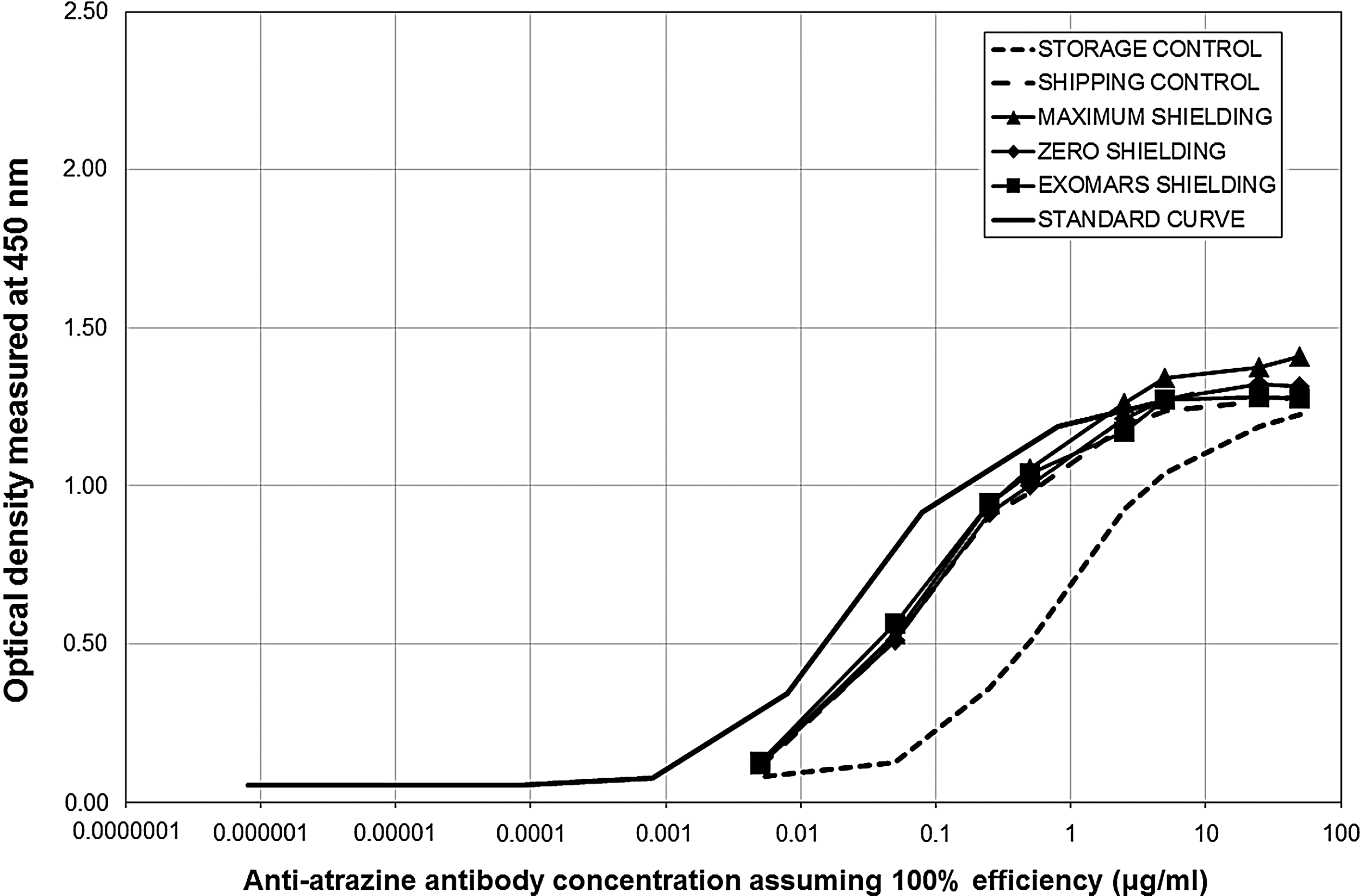
Binding performance of the anti-atrazine antibody samples in the LMC on BIOPAN-6 experiment—“efficiency” refers to pad wash-out efficiency. Error bars reflect the standard deviation among the three replicates of each type of pad that was analyzed.
From Fig. 6, it is evident that the FM samples behave very similarly to the SC samples, but the Storage Control samples show a lower level of binding activity. The process of sample preparation of freeze-drying and/or subsequent antibody recovery seems to result in lower loss of antibody binding activity compared to the anti-GroEL samples. It is evident that the three different levels of shielding of samples have no significant effect on their subsequent binding performance.
Table 3 summarizes the percentage of activity retention in all samples for both antibodies. The remaining activity percentage was calculated by using the assay midpoints (subtracting an assay's midpoint value from the midpoint value of the standard curve). Table 3 highlights the difference between the anti-GroEL and anti-atrazine antibodies; the anti-GroEL antibody shows significantly higher loss of activity during sample preparation and/or sample recovery compared to the anti-atrazine antibody.
3.3. Dosimetry results
The OSL dosimeters from the LMC on BIOPAN experiment were shipped to the Physics Department of Oklahoma State University for the read-out of the recorded data. This type of dosimeter can be reset by light, making it crucial to keep them in the dark at all times until analysis. Table 4 shows the radiation data collected by the dosimeters. The data from dosimeters of the same shielding level and sample unit have been averaged to facilitate data presentation.
The combined uncertainties (1 standard deviation) were calculated using the standard deviation of the mean.
values are presented in each case accompanied by the standard deviation of the mean (n=15).
As the dosimeters were all hand-cut, slight variations in size and mass were inevitable. This variation was taken into account during the readout by calibrating each individual detector.
From Table 4, all FM dosimeters appear to have recorded roughly 20 times the dose recorded by the SC dosimeters. For each of the shielding levels in the FM, a similar radiation dose was seen.
4. Discussion
The visual observation of the condition of the LMC components upon sample recovery showed no damage even though some movement of the pads inside the sample holder wells occurred. In the LMC instrument design for ExoMars, the pads are to be securely clamped into place; therefore, in comparison, the BIOPAN format represents a worst-case situation for holding of the pads. The vibration, acoustic, and shock conditions during BIOPAN launch and reentry are assumed to be similar to those expected for ExoMars; therefore, the lack of damage contributes to validating the choice of glass fiber pads as an appropriate platform for mechanical antibody packaging.
The core aspect of the study was to expose representative antibodies to radiation conditions in LEO and compare these to various control samples. For the two LMC-relevant antibodies used in the present work, it was concluded that exposure to the radiation environment in LEO did not have an observable effect in binding activity, and this included no effect of the varying levels of radiation shielding flown. Comparing samples of the two antibodies flown in LEO to identical samples retained on Earth, their binding performance appeared unaffected. One notable exception was the Storage Control samples for anti-atrazine samples that showed decreased binding activity, but the SC samples retained their activity similar to the FM samples. Therefore, the Storage Control sample results were considered anomalous.
To assess the effect of ground handling independently of the flight, the SC samples experienced the various environments associated with ground handling such as transport to the launch site. The lack of any significant differing in recovered binding activity between the SC and similar treated samples retained at Cranfield (Storage Controls), apart from the anti-atrazine antibody samples, implies that ground handling did not have a detrimental effect on the antibodies tested.
A key observation from this study was the significant (typically over 90% for anti-GroEL and over 70% for anti-atrazine) loss of activity due to the sample preparation and/or sample recovery, as seen when comparing the non-lyophilized antibody stock samples to the lyophilized samples. While a very significant loss, this did not invalidate the core objective of the study, that is, the assessment of the radiation effects, but it does highlight the need for further studies to reduce this loss if this approach is to be used in the preparation of antibodies for either the LMC on ExoMars experiment or further radiation studies. It is worth noting that a stand-alone storage study of lyophilized antibodies in the early stages of the development of the LMC (data not shown) clarified that the observed loss of significant activity in the present study was not related to the storage time period but to other factors. Within the ground-based radiation studies, we have demonstrated a decrease in the loss of antibody activity during lyophilization and/or recovery when protective lyophilization matrices are used in the preparation of the samples (Derveni et al., 2012).
It has been previously calculated that the effective total radiation dose expected for ExoMars is 66 Gy (Hands and Rodgers, 2006), a calculation based on a 2-year transit phase (based upon pre-2008 mission scenario for ExoMars). The radiation data from the flight of BIOPAN-5 gave an overall radiation dose of 24 Gy for the approximately 15-day flight, which corresponds to roughly one-third of the total radiation dose expected for ExoMars. It was expected that the 12-day flight of BIOPAN-6 would see a similar level of radiation and that this would have been a reasonable approximation of the Mars mission in terms of total dose. BIOPAN-6 only experienced a total dose of 4 Gy, primarily due to the low solar activity during the flight compared to previous BIOPAN flights. This represented only 1/16 of the expected ExoMars total dose and therefore was less representative of a Mars mission than intended. However, the BIOPAN study combined with the ground-based simulation has increased the confidence in antibodies' ability to resist inactivation by exposure to mission-relevant radiation environments. The positive BIOPAN contribution to this situation has been the exposure to a naturally occurring and heterogeneous radiation environment, while the compromised contribution was the unexpected lower dose.
The radiation levels recorded by the dosimeters from the FM and SC sample holder units were indicative of the radiation levels encountered by samples from the LMC on BIOPAN-6 experiment. As expected, the radiation values from dosimeters for the SC unit were very low (≈0.5 mGy), in agreement with the normal radiation exposure on Earth's surface. The data from all the dosimeters in the FM were approximately 20 times higher than those from the SC. The unexpected result was that dosimeters from all three shielding levels in the FM were the same. We expected that the “zero” shielding dosimeter values from the FM unit would be higher than the other shielding levels' values. A possible interpretation is that the zero-shielding dosimeters were optically reset due to solar light being able to pass through the Kapton foil cover, albeit at a reduced level. It is also noted that the levels seen by the dosimeters behind the two non-zero radiation shielding levels were, as expected, different from those seen by dosimeters that used an alternative instrument elsewhere in BIOPAN [i.e., 400 rad (equivalent to 4000 mGy) versus 2.4 mGy] that were not shielded. The factor of approximately 99.94% reduction is compatible with the use of 4 mm of aluminum and greater (including the 2 mm stainless steel) shielding.
The information collected from the BIOPAN mission and the storage and ground-based studies will be used in the design of any future work, which will involve experiments to assess the importance of individual factors (lyophilization matrix components, additional cryoprotectant agents, changes in rehydration methods, etc.) on antibody performance after recovery. At present, ESA has announced no plans for another BIOPAN mission; given the unlikelihood of short-term future flight opportunities for radiation effect testing, further ground-based radiation studies will be a key set of experiments in the space mission assessment of antibodies for the LMC. Additional ground-based testing will help clarify both the protection efficiency of our current and improved sample preparation methods and the effects on a much broader set of LMC-relevant antibodies and immunoassay reagents.
5. Conclusions
This study exploited a timely BIOPAN flight opportunity to demonstrate that representative antibodies being developed for use in the LMC experiment for the ExoMars mission could survive the combined mission effects of LEO radiation exposure, launch and reentry conditions, and ground handling. The two antibodies tested both retained their binding activity in postflight analysis, and this increases the confidence of using antibodies within the ExoMars mission, although it is difficult to robustly predict the behavior of additional arbitrary antibodies given the small sample set used in this work. Our data is in accordance with previously reported results on the effects of radiation on antibodies (le Postollec et al., 2009; Baqué et al., 2011; de Diego Castilla et al., 2011; Derveni et al, 2012) and provide further confirmation that antibodies in lyophilized format can survive high radiation doses (compared to the radiation levels on the surface of Earth).
Two issues arose during the study: the poor stability of the antibodies to the sample preparation and/or sample recovery and the low radiation dose seen by BIOPAN-6. Both issues have been addressed by a series of parallel ground-based tests with alternative lyophilization and sample recovery protocols, and higher radiation dose levels, including multiple mission doses as well as increased number of antibodies under test. There remains the need to study the radiation and mission stability of each of the final LMC antibodies, but the current study in conjunction with the ground-based testing suggests that the majority of antibodies would be expected to prove resistant.
Footnotes
Acknowledgments
Funding of the work by the Science and Technology Facilities Council (UK) and the European Space Agency is gratefully acknowledged.
Author Disclosure Statement
The authors would like to state that no competing financial interests exist.
Abbreviations
DLR, the German Aerospace Centre; ELISA, enzyme-linked immunosorbent assays; FM, Flight Model; LEO, low-Earth orbit; LMC, Life Marker Chip; OSL, optically stimulated luminescence; SC, Shipping Control.
*
As of April 2012, the ExoMars program is being renegotiated as a joint ESA/Roscosmos (Russia) mission.
References
Supplementary Material
Please find the following supplemental material available below.
For Open Access articles published under a Creative Commons License, all supplemental material carries the same license as the article it is associated with.
For non-Open Access articles published, all supplemental material carries a non-exclusive license, and permission requests for re-use of supplemental material or any part of supplemental material shall be sent directly to the copyright owner as specified in the copyright notice associated with the article.
