




Abstract
Several lines of evidence indicate the existence of salty liquid water below the icy surface of the satellite Europa. Depending on the chemical composition of the original interior brines, minerals that precipitate will be varied as will be the resulting physicochemical parameters of the evolving solutions such as pH and salinity. These parameters are determinants apropos to the study of the possible habitability of the satellite. In this work, experiments of fractional precipitation by cooling of several brines with different chemical composition (acid, alkaline, and neutral) were performed at 1 and 300 bar. The gradual decrease in temperature leads to mineral precipitation and changes in salinity and pH values. During the experiment, Raman spectroscopy was used to analyze quantitatively the variation of the salt concentration in the aqueous solutions. The obtained laboratory data indicate the manner in which cryomagma differentiation might occur on Europa. These endogenous processes of differentiation require planetary energy, which seems to have been plentiful during Europa's geological history. Ultimately, the dissipation of part of that energy is translated to a higher complexity of the cryopetrology in Europa's crust. From the results, we conclude that fractional differentiation processes of briny cryomagmas produce several types of igneous salty mineral suites on icy moons. Key Words: Europa—Salts—Chemical evolution—Raman spectroscopy—Volcanism. Astrobiology 13, 693–702.
1. Introduction
F
Several interpretations have been put forth about the hydrate signature observed around the lineaments and the disrupted terrains. McCord et al. (2010) postulated that materials located at the midpoint within these features have a higher signal and consequently are younger than those at the outer edges of these features, the outermost of which have water frost coverage. This observation suggests a succession of cryomagmas, composed of water, salts, and volatiles, which emerge and expand outward in a similar manner as occurs at terrestrial oceanic ridges (Rundquist and Sobolev, 2002). Nevertheless, theoretical models of Zolotov and Shock (2001) indicate that hydrated salts are more stable than water ice under surface conditions on Europa; however, after brine evolution, salts arriving at the surface will suffer a dehydration process. The same authors noted that a possible redeposition of sputtered water molecules can occur.
There are few models that consider compositional aspects during the evolution of Europa due to the scarce mineral and geochemical data available (Kargel, 1991; McCord et al., 1998, 1999). However, it may be assumed that, during the thermal evolution of the icy satellites, cryomagmas may have been produced in multicomponent systems if there was sufficient energy and then evolved and rose to the surface in the same way as occurs on terrestrial planets. When a cryomagma evolves, either during ascent or in a stabilized magmatic chamber or ocean level, the composition of the liquid solution can change due to several processes, as happened with primitive magmas on Earth (Bowen, 1922; Turner and Campbell, 1986). The slow decrease in temperature promotes crystal fractionation, since a gradual precipitation of various minerals occurs. Furthermore, the higher temperature of the cryomagmas with respect to the icy crust can eventually melt part of the crust, and an assimilation process will take place. If during the evolution to the surface the cryomagmatic fluid contacts with other liquids with different chemical compositions, they would mix. However, a certain buoyancy is necessary for cryomagmas to rise. For cryomagmas, a lower density may occur if the icy shell is not pure water ice or if the cryomagma has dissolved volatiles such as CO2. The endogenic hydrated materials at the surface would be interpreted as the last state to occur in the evolution of an inner cryomagma.
Neutral, acid, and alkaline liquid aqueous solutions have been proposed to exist in Europa's interior (Kargel, 1991; Kargel et al., 2000; Marion, 2001, 2002; Marion et al., 2005) due to the interaction of the rock and water systems. As mentioned earlier, the evolution of these brines to the surface may result in the non-water ice materials observed. Neutral brine, enriched mainly in magnesium sulfate (Kargel, 1991), would be the leachate at low temperature of a chondritic material, which has been proposed to be the original rock fraction of the satellite. In the case of the acid brine, it would come from the high-temperature devolatilization and venting of sulfur dioxide from hydrothermal systems into the ocean (Kargel et al., 2001), which would finally result in the enrichment of sulfuric acid. Pasek and Greenberg (2012) proposed another hypothesis about the origin of sulfuric acid, which advocates that the oxidants that formed at the surface migrate to the ocean, where they react with sulfides and form the acid. Natron (Na2CO3·10H2O) is one of the candidates that may be present in the dark areas of Europa. These carbonates could be formed if CO2 is vented in the aqueous reservoirs. There, CO2 would react with H2O and form carbonic acid (H2CO3). At pH above 8, the acid would be dissociated into bicarbonate (
In the present study, we performed experiments of fractional precipitation of four different brines. The compositions, selected from the previous theoretical studies cited, are the following: (a) neutral brine: MgSO4-Na2SO4-H2O; (b) alkaline brine: Na2SO4-Na2CO3-H2O; (c) acid brine from the ternary system: MgSO4-H2SO4-H2O; and (d) acid brine from the quaternary system: MgSO4-Na2SO4-H2SO4-H2O. There brines were studied at 1 and 300 bar to simulate the process at two differentiated depths from the surface. Assuming a crust of 20 km composed essentially of water ice, the aqueous systems would be at a depth of less than 100 m at 1 bar, while a pressure up to 300 bar would correspond with a depth of about 25 km (Marion et al., 2005). Raman spectroscopy was used to analyze, in situ, the concentration variation of the compounds while being cooled, since this allows a fast analysis without altering the sample and aids in quantitative identification of all the compounds of the system.
2. Materials and Methods
Reagents used to prepare the aqueous solutions for the experiments and calibrations were MgSO4·7H2O (≥99.5% purity, Sigma-Aldrich, USA), Na2SO4 (≥99.0% purity, Sigma-Aldrich, USA), Na2CO3·10H2O (≥99.0% purity, Sigma-Aldrich, USA), H2SO4 (95%, VWR, USA), and Milli-Q water, with total organic carbon lower than 5–10 ppb and resistivity higher than 18 MΩ cm. Initial molality concentrations (m) of the supersaturated solutions selected were taken from Marion (2001, 2002) and Marion et al. (2005) theoretical studies in order to compare the results: (a) neutral brine: 1.63 m Na2SO4, 2.93 m MgSO4; (b) alkaline brine: 4.50 m Na2CO3, 0.70 m Na2SO4; (c) acid brine from the ternary system: 3.82 m MgSO4, 0.26 m H2SO4; and (d) acid brine from the quaternary system: 2.87 m MgSO4, 0.81 m Na2SO4, 0.26 m H2SO4. Solutions were prepared by heating and stirring at about 323 K to effect complete dissolution of the salts.
The solutions were cooled until complete solidification of the brines (the eutectic). Thermostatization was performed with a cooling bath, the working temperature range of which was from 233 to 323 K (TE-8D, Techne, UK) with ethanol 96% as coolant. To perform the experiments at 1 bar, each aqueous solution was placed into a 50 mL round-bottom flask, which was sealed with a septum. A thermocouple type T (HiP, USA) with an accuracy of 0.02 K was inserted into the flask to measure the temperature of the solution in situ. Then the flask was immersed in the cooling bath.
For the experiments at 300 bar, a high-pressure cell was used. A sketch of the equipment is shown in Fig. 1. The cell is made of stainless steel 304, and it has a hollow cylinder form, whose dimensions are 148 mm (length)×50 mm (external diameter)×24 mm (internal diameter). Two screw caps close the cylinder at the ends. One cap has a semi-conical sapphire window of 8.60 mm length with base diameters of 9.35 and 5.05 mm, sealed with Teflon PTFE. The window allows for in situ analysis with an iHR550 Raman spectrometer (Horiba YobinYvon, France). The other cap is connected to a hydraulic compressor (Ruska 7615, Ovredal, Spain) by way of a stainless steel tube ¼″ thick. The stainless steel cell, which has a 67 mL capacity, supports 500 bar. In the caps, the cell has Teflon bronze O-rings that support both the low temperatures and the working pressures. The cell is equipped with a thermocouple T type (HiP, USA) and a pressure transducer S10 (Wika, Germany) with accuracy of±0.02 K and 0.1 bar, respectively; both sensors are in direct contact with the sample. One valve (V1 in Fig. 1) allows for isolation of the cell from the hydraulic compressor, and another valve (V2 in Fig. 1), situated above the cell, acts as a purge. To refrigerate the system, the cell is surrounded by rubber tubing through which passes coolant from the cooling bath. Pressure and temperature data were monitored and saved by a Labview program designed to read the sensors' signals.
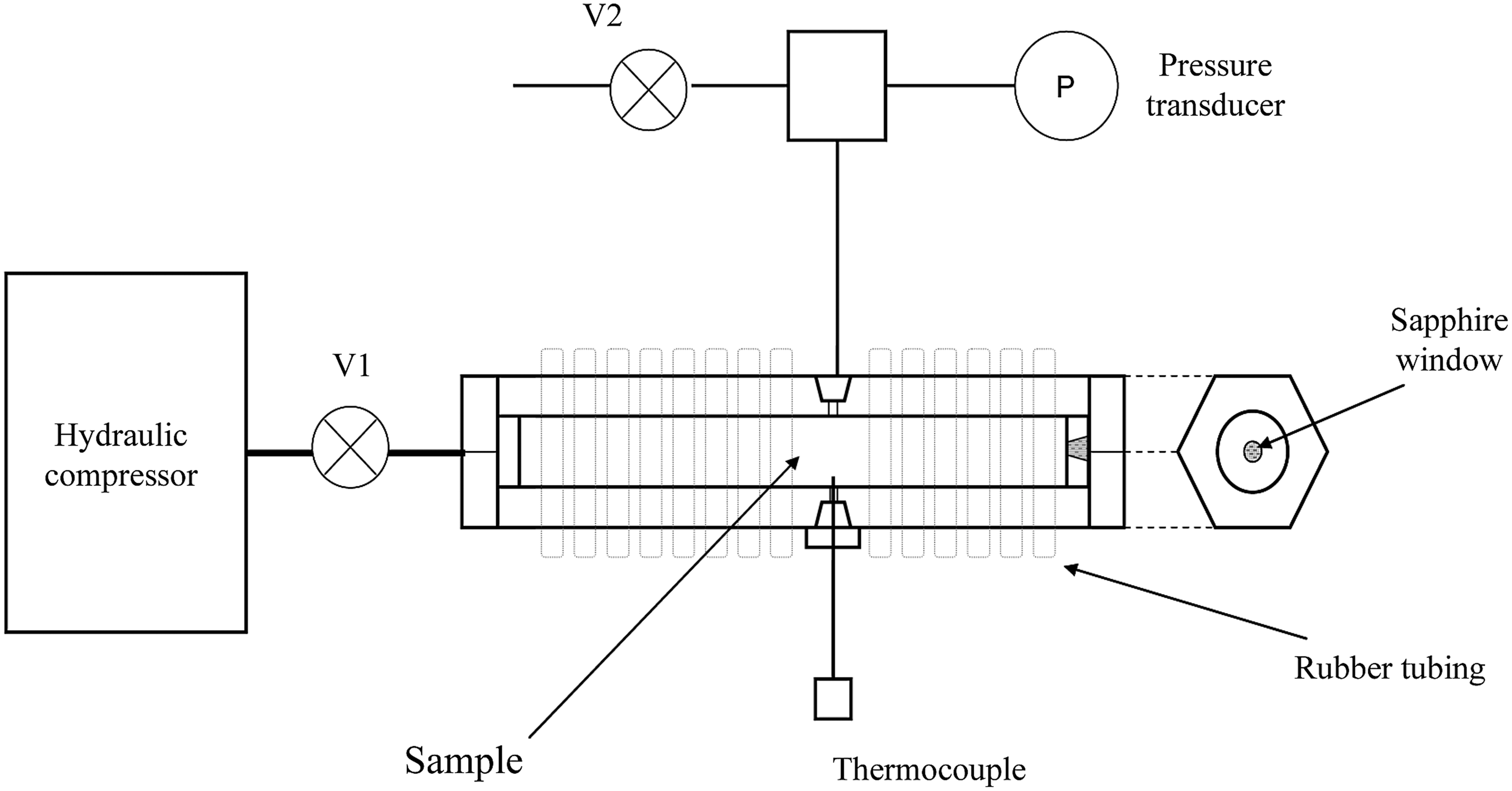
Sketch of the high-pressure cell, coupled to a hydraulic compressor.
Fractional precipitation experiments were performed by decreasing the temperature slowly from room temperature. Raman spectra of the supernatant were taken at several temperatures, including theoretical crystallization temperatures of each mineral phase. At each temperature step of the experiments, the system was kept isothermal during 24 h as a stabilization time to ensure that the measurement was made at equilibrium conditions. A kinetic study was carried out to select the stabilization time. As an example of this study, Fig. 2 shows the variation concentrations of sulfate (
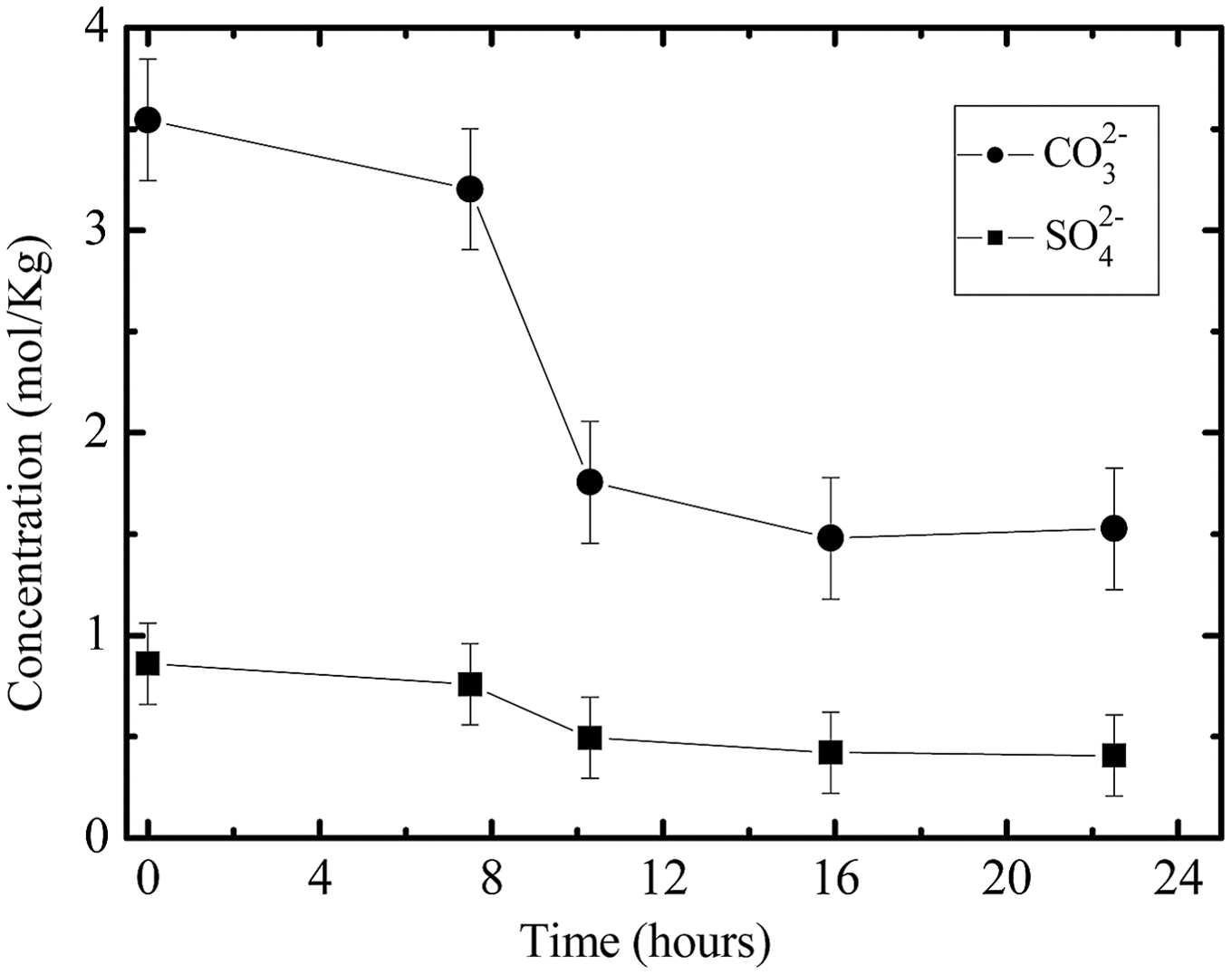
Concentrations of sulfate and carbonate ions versus time in a temperature drop step of the alkaline brine from 290 to 278 K at 300 bar.
Raman spectroscopy was employed to follow in situ the precipitation processes of the selected brines. Spectra were excited with a Nd:YAG solid state laser operating at 532 nm at 200 mW. After passing through a monochromator, the scattered light was detected with a CCD regulated at 203 K for heat-noise reduction. The monochromator is equipped with a diffraction grating with 600 grooves/mm. Since the CCD has 1024×256 pixels and the scattered Raman light is in a range of 325.1 to 2535.5 cm−1, the pixel resolution of the equipment is 2.16 cm−1/pixel (binning factor=1). Spectral resolution, with a width slit of 50 μm, is better than 10 cm−1. The diffraction grating is set in an automated turret that allows its rotation and scanning over a large wavelength range.
To quantify the concentration variation, previous calibrations with aqueous solutions of each single compound, that is, magnesium sulfate (MgSO4), sodium sulfate (Na2SO4), sodium carbonate (Na2CO3), and sulfuric acid (H2SO4), were made. As the area of the Raman peak is proportional to the concentration, aqueous solutions of known concentration were prepared and analyzed. The analysis consisted of normalizing the spectra of the aqueous solutions with the isosbestic point of the water located at 3468 cm−1 (Walrafen et al., 1986), once they were taken. Then the major peak of each compound was fitted to the curve that best matched (Gaussian, Lorentzian, or Voigt) to calculate its area. The areas obtained were adjusted to an empirical equation with the known concentrations of the aqueous solutions. These equations were employed to calculate the corresponding concentrations of the compounds at the supernatant during the fractional precipitations of the brines. The same calibration curves were employed for the experiments at 300 bar since it was confirmed that the Raman signal of each compound of the brines is similar at this pressure rather than at 1 bar.
The Raman spectra of the aqueous solutions of each compound with the analyzed peaks indicated are shown in Fig. 3. Both magnesium sulfate (MgSO4) and sodium sulfate (Na2SO4) have the major signal at 983 cm−1, which corresponds with the symmetric stretching mode υ1 of the

Raman spectra of the aqueous solutions of the single compounds that are used to make the calibrations: (
3. Results
To interpret the changes observed in the ion concentrations along the precipitation of each brine, we studied the variation of the Raman peaks of the aqueous solutions of each compound separately with regard to temperature. In the case of the salts, the ion signals (i.e.,
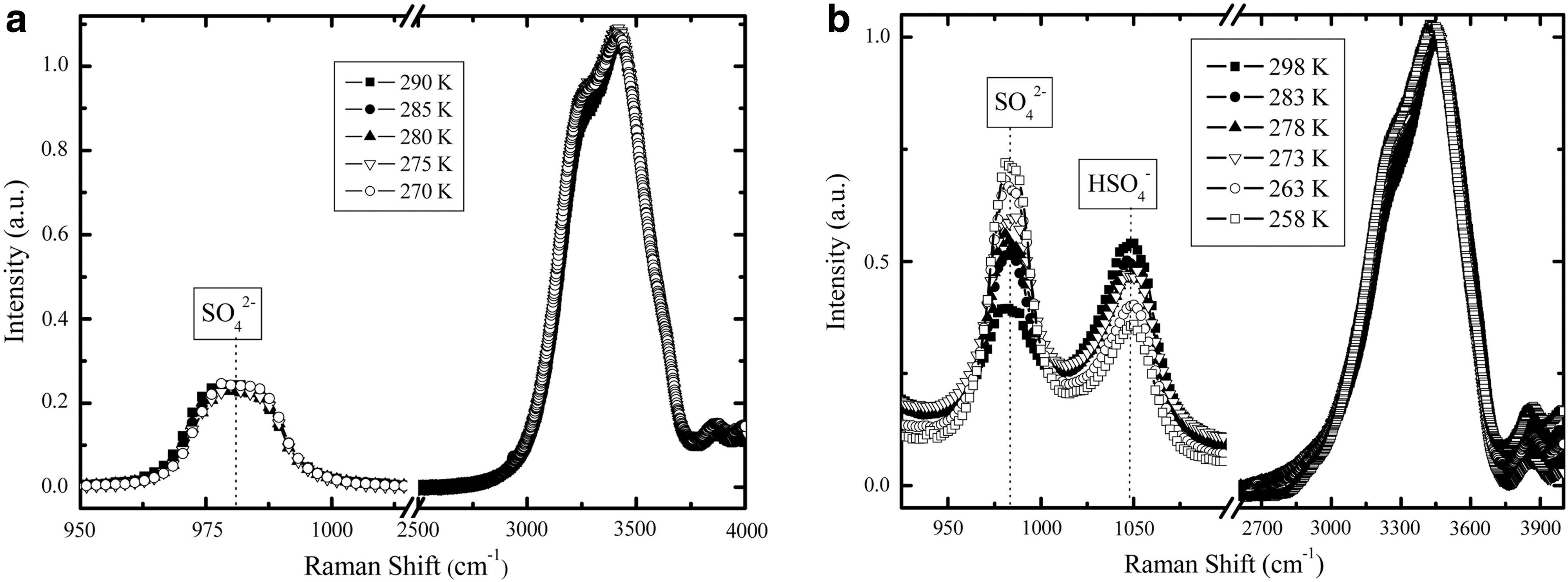
Comparison of the Raman spectra of aqueous solutions of (
The Raman spectra of the experiment performed at 1 bar of the quaternary acid brine is shown in Fig. 5. As can be seen, during the cooling from 298 to 258 K, the
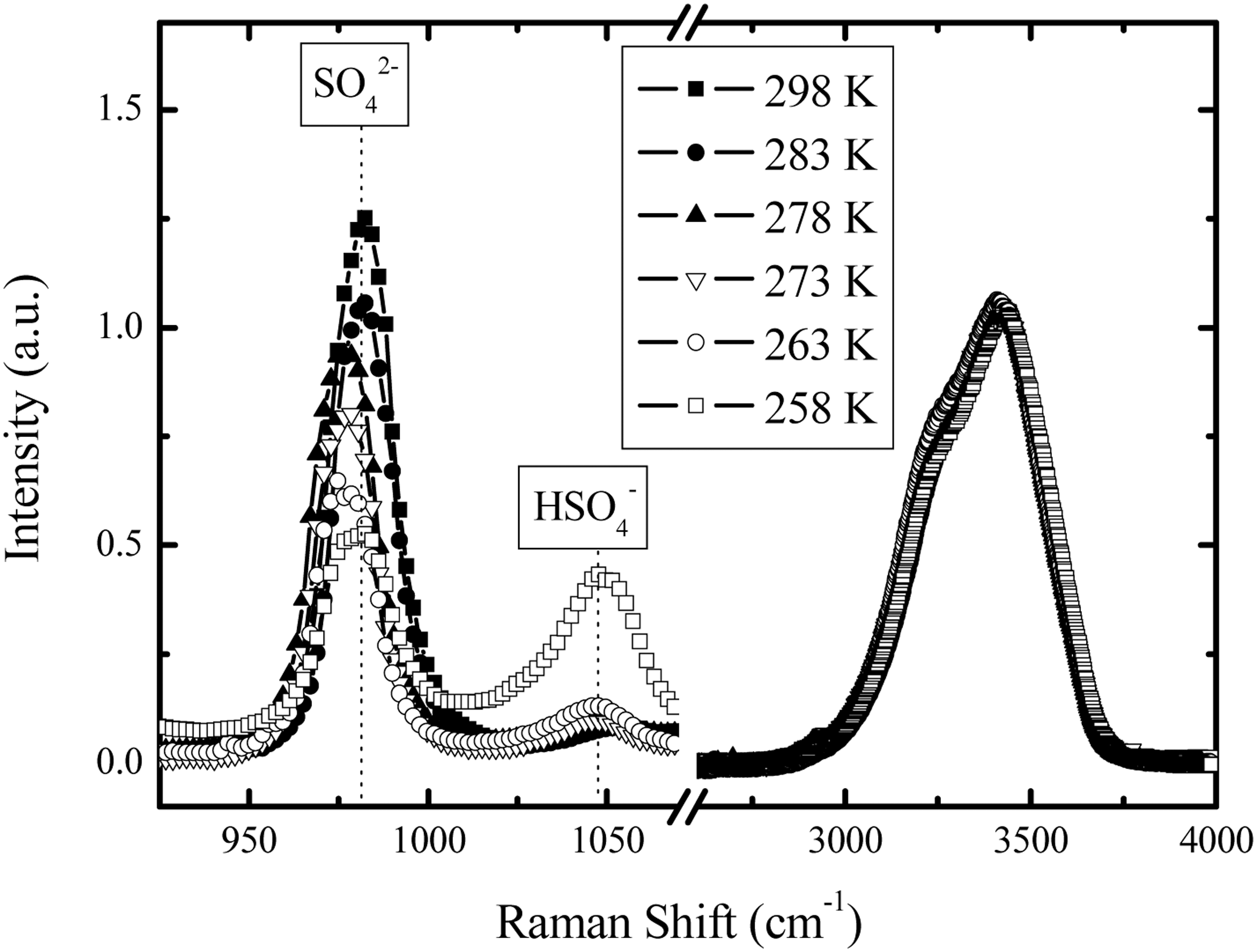
Raman spectra of the supernatant of the quaternary acid brine taken during the fractional precipitation. Peaks at 983 cm−1 and at 1049 cm−1 correspond with sulfate and bisulfate ion signals, respectively. Water interactions are appreciable in the O-H symmetric stretching mode (3200–4000 cm−1). Spectra have been normalized since the isosbestic point of the water (3468 cm−1).
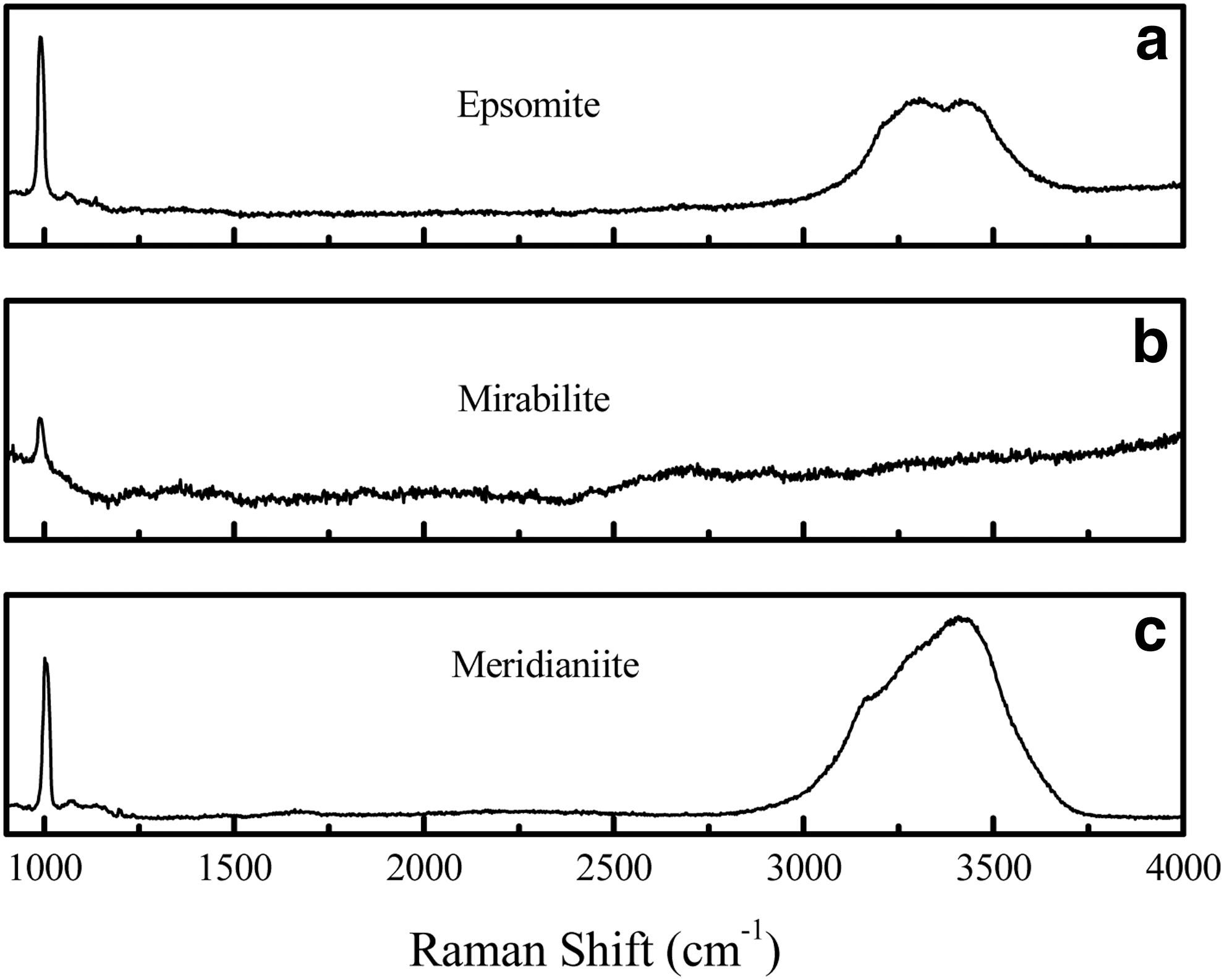
Raman spectra of the minerals obtained in the fractional precipitation of the quaternary acid brine; (
All the experimental results have good reproducibility, and their summaries are represented in Figs. 7, 8, 9, and 10. For the non-neutral brines, pH was calculated, and its variation during the evolution of the aqueous solutions is shown.

(
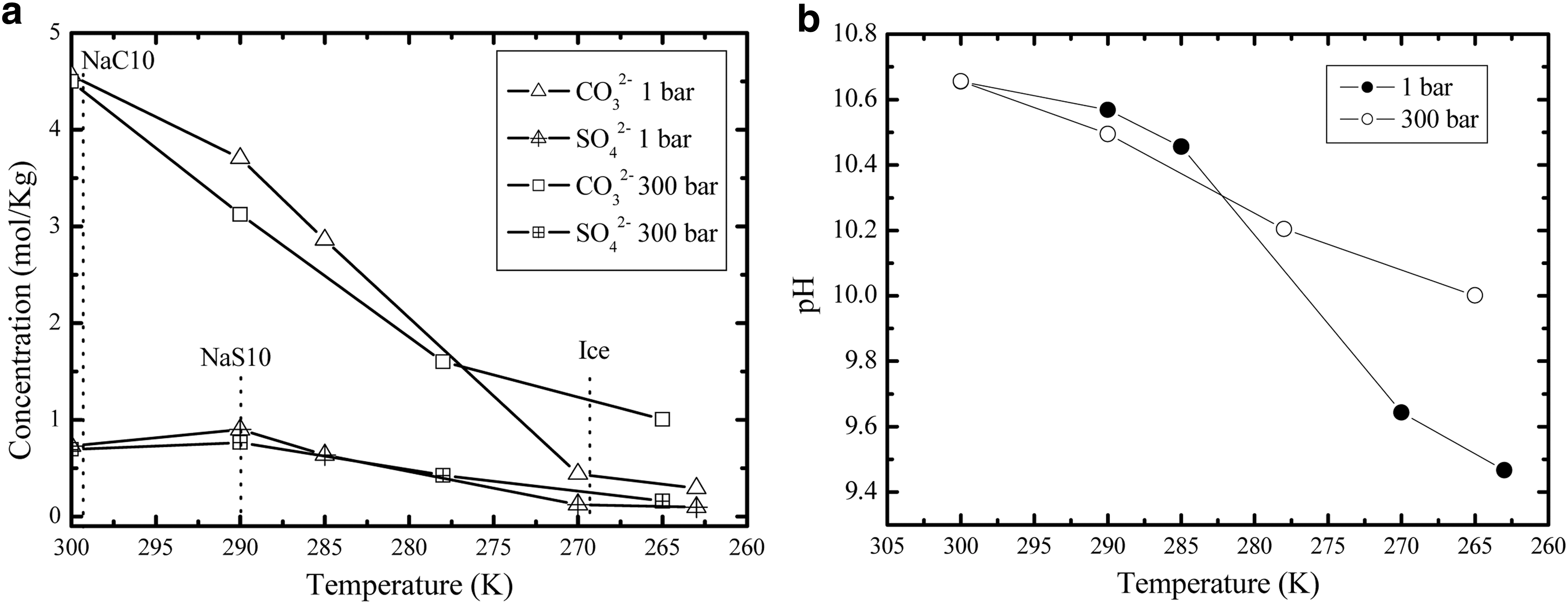
(
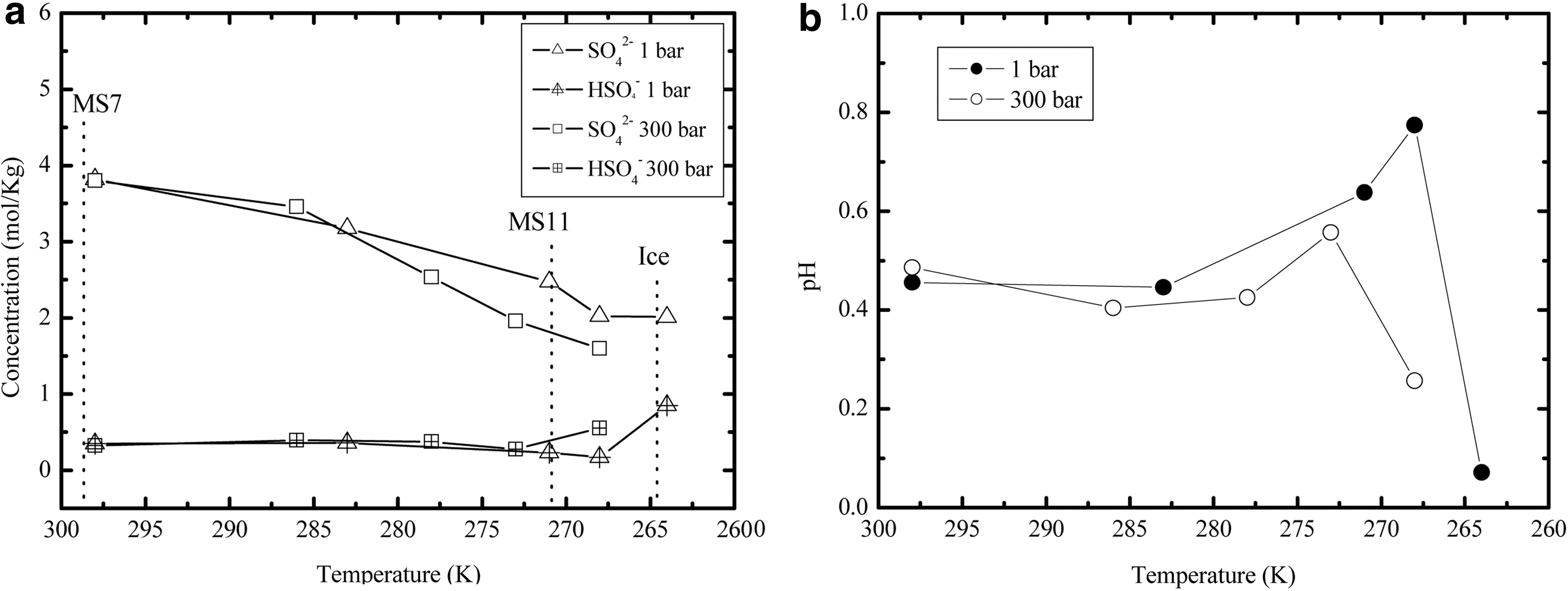
(
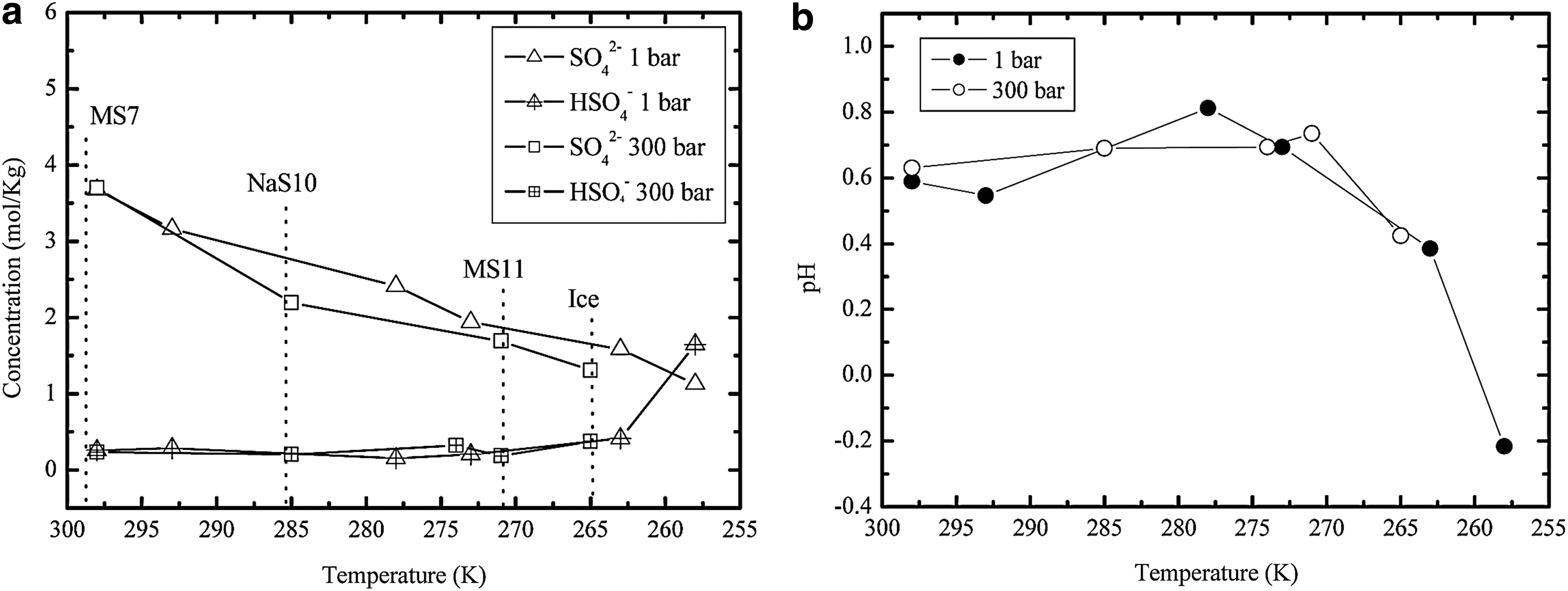
(
Figure 7a shows the decrease of the
Fractional precipitation of the alkaline brine (Na2SO4-Na2CO3-H2O) at both 1 and 300 bar is obvious in Fig. 8a. In this case, the phase diagram of Vard and William-Jones (1993) was employed to discern which minerals were crystallized upon cooling. The decrease in the
Figure 9a shows the precipitation of the sulfate minerals and the subsequent concentration of the sulfuric acid at the supernatant of the ternary acid brine (MgSO4-H2SO4-H2O) at 1 and 300 bar. Theoretical simulation performed by Marion (2002) at 1 bar was used to estimate which minerals were crystallized. The decrease in the
In Fig. 10a, the quaternary acid brine (MgSO4-Na2SO4-H2SO4-H2O) can be observed as having the same behavior as the ternary acid brine (Fig. 9a). To discern which minerals were formed, the theoretical simulation of Marion (2002) for the same system was used. Results obtained at 1 bar and at 300 bar are in agreement with the model. The gradual crystallization of epsomite (300 K), mirabilite (285 K), and meridianiite (271 K) caused the drop in the
Eutectic temperature of both acid brines was not measured since the amount of supernatant was insignificant.
The evolution of the sulfate minerals and ice is not affected by the presence of sulfuric acid since the crystallization temperatures and the concentrations at which the species precipitated were similar in both neutral and acid systems.
4. Discussion
In this work, extreme pH and neutral conditions were reproduced. The evolution of pH is opposite when comparing both extreme systems: while in the alkaline case the pH becomes less basic along the fractional precipitations, the systems with H2SO4 become more acid after the mineral precipitation. In the alkaline brine, lower temperatures promoted decreases in pH to values of about 9 due to the precipitation of carbonate minerals (Fig. 8). On the other hand, the evolution of the acid brines, before the eutectic was reached, resulted in a solution composed mostly of sulfuric acid, though not entirely; therefore the pH is around 0 (Figs. 9 and 10). However, moderate pH values may be the case for the hypothetical non-neutral aqueous cryomagmas on Europa if they were less saturated due to several circumstances such as a diluted concentration of the cryomagmas in origin, the mixture of two or more cryomagmas with different chemical composition in the crust, or the assimilation of part of the icy crust by the cryomagma.
Different initial saturation of cryomagmas on Europa would also modify the fractional precipitation evolution. For example, in the case of the neutral solution in the ternary system, epsomite did not crystallize at a magnesium sulfate concentration below 16% w/w (1.33 m) until the eutectic temperature of the system was reached (268.2 K) (Fitch, 1970); or in the alkaline case, if the concentration of carbonate in the solution was lower than 26.5% w/w (2.5 m), then the first mineral stabilized would have been nahcolite instead of natron (Vard and William-Jones, 1993).
With regard to Europa, the decrease in temperature, due to the evolution of the brine rising to the surface or the contact with the cooler icy crust, may cause crystal fractionation, as occurs in silicate systems of Earth's crust. The chemical composition of a cryomagma can also suffer changes due to other processes such as assimilation of the crust and/or mixing with other cryomagmas. As a consequence of these processes, several suites of low-temperature mineral assemblages (rocks made by hydrates and ices) may appear at the crust (Fig. 11). The most frequent tectonic process that occurs in the crust of Europa is fracturation. During faulting, fast decompression and cooling of the cryomagma with composition A may be produced (see Fig. 11). If solidus temperature is reached rapidly, the cryomagma would be flash frozen, and the composition of the final mineral assemblage at the surface would be the same as the original brine (FMA 1). If the cryomagma rises to the surface slowly enough to be differentiated due to the temperature decrease, the final mineral assemblage at the surface could be depleted in some phases by the fractionation of the brine (FMA 2). On the other hand, the crystallization process of the cryomagma may also occur because the chamber walls are cooler than the fluid. The cryomagma, with composition B, would then crystallize from the walls inward; the subsequent layers, including several mineral assemblages (MA 1, 2, 3), would be formed depending on the composition of the brine, as was demonstrated in these experiments. If the temperature of the brine is sufficient to partially melt the icy crust, the fluid within chamber C may be contaminated by material assimilation. Additionally, fluid C may mix with other D, changing the composition of the brine to E, resulting in a different complex mineral suite after evolving. The final stage and location of these suites would depend on the local tectonic/thermal regime and the subsequent exogenous alteration. These experiments help show the possible complexity of europan cryopetrology.
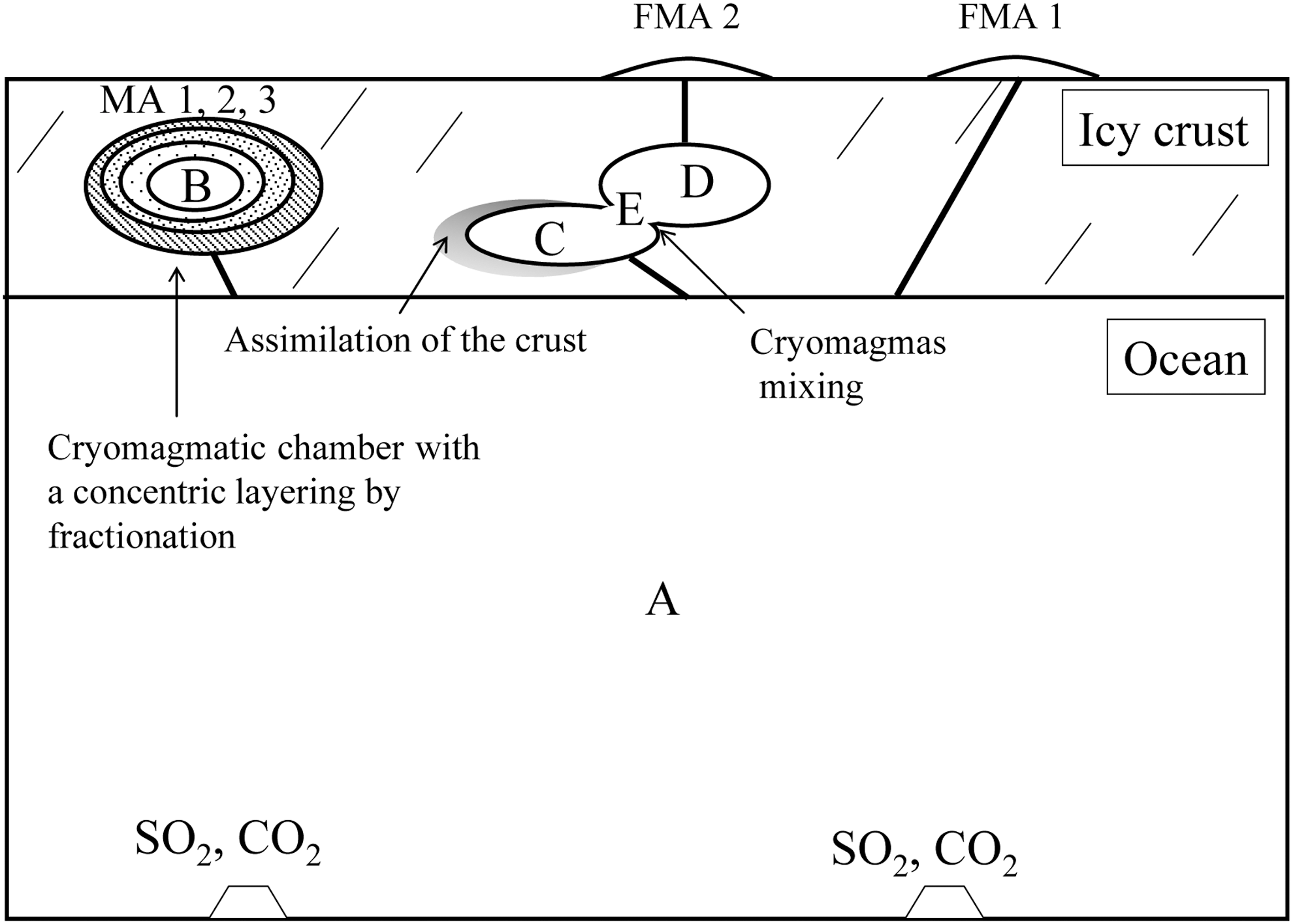
Igneous processes that may produce varied cryopetrology in Europa. The cryomagma may suffer flash freezing (by fast cooling), crystal fractionation (by slow cooling), contamination with the icy crust due to temperature differences and/or mixing processes with other cryomagmas (see the text for a detailed discussion).
5. Conclusions
If the non-water ice minerals observed at the surface of Europa are endogenous, then they are the product of the evolution of cryomagmas and they would be an open window to the characterization of the potential habitable environments of Europa. At depth, aqueous environments acquire acidity and other environmental attributes; and life, if it exists on Europa, would be intrinsically linked to cryomagmatic processes. If the suites of low-temperature mineral assemblages are determined with more detail during future space missions, then the conditions from which cryomagma is formed could be indirectly examined. One example would be the pH of the aqueous solutions, the extremes of which were simulated in our experiments and would be expressed at the surface by a specific mineral assemblage index. In the alkaline solution studied here, pH was calculated just before the eutectic was reached, obtaining 9.46 and 10.00 at 1 bar and 300 bar, respectively, in agreement with the theoretical model of Marion (2001). For the acid solutions, a drop in pH values in the range 1–0 was observed to be caused by the increase in sulfuric acid concentration between the two last temperatures of cooling, when ice began to form (Marion, 2002). In the present study, biological activity was not taken into account. If life exists on Europa, it may moderate the pH of the environment due to the consumption some oxidants, as Pasek and Greenberg (2012) postulated.
Raman spectroscopy is a useful technique to characterize cryomagmatic brines with different chemical compositions and measure their evolution levels. This analysis technique is strongly suggested for future, in situ planetary missions when aqueous solutions from melted ice or cryomagmas will be available.
Footnotes
Acknowledgments
The authors would like to thank Professor Giles Marion for his valuable help in improving this manuscript, and encouragement of this work. The researchers belong to the MALTA-Consolider and QUIMAPRES research teams (projects CSD2007-00045 and S2009/PPQ-1551). Additional support from MICINN under project CQT2009-14596-C02-01 is also acknowledged.
Author Disclosure Statement
No competing financial interests exist.