




Abstract

1. Introduction
The topic of life detection was examined from two different but partially overlapping perspectives: the “science perspective” arising from the desire to know whether life ever arose on Mars and the “planetary protection perspective” arising from the need to protect our own planet from contamination by any potentially harmful living extraterrestrial organisms that may be contained in returned samples. The former relates to detection of any kind of evidence of either ancient or present-day life, whereas the latter is concerned with evidence of present-day viable organisms.
A review of the topic of life detection is timely given the scope of recent advances in life-detection studies on Earth, the publication of the National Research Council's Planetary Science Decadal Survey (which identified seeking the signs of life via Mars sample return (MSR) as its highest priority in the flagship class of missions; National Research Council, 2011), as well as the strategic emphasis within both NASA and ESA on life detection. One of the primary approaches to life detection is via the study of extraterrestrial samples, although other astrobiological approaches also exist.
In the case of a potential MSR campaign, significant forward planning is required to ensure best possible practices are implemented throughout the campaign (iMARS Working Group, 2008; MEPAG E2E-iSAG, 2012): from the design and operation of a sample collection rover to containment and preservation of samples in transit, and appropriate handling and analysis of the samples after they have returned to Earth. The array of planned or possible life-detection strategies and measurements has implications for virtually every aspect of a sample return campaign. Thus, it is critical to understand these strategies and measurements well in advance to avoid compromising the fundamental scientific objectives and planetary protection requirements of an MSR campaign.
Much of the discussion summarized below assumed MSR would be a robotic endeavor. However, the mission may ultimately involve humans rather than robots. In that case, some aspects of laboratory analyses and sample handling may need to be reassessed.
The conference was also an introduction to a subsequent planetary protection workshop dealing specifically with the planetary protection test protocol.
2. Setting the Stage, Monday, February 13, 2012
The conference commenced with a status report and programmatic overview of a potential MSR campaign, including planning for life-detection tests on Earth. Beaty and Kminek then summarized the work of the NASA/ESA Joint Science Working Group (JSWG; Beaty et al., 2012)—an international team of scientists chartered to develop objectives and draft requirements for a proposed 2018 rover mission that would be the first step in an MSR campaign. The main tasks of the JSWG were to establish (1) the scientific objectives for the proposed joint mission, (2) engineering requirements to meet the scientific objectives, and (3) a reference surface mission scenario consistent with the scientific objectives and requirements. At the time of the meeting, it became evident that the United States' budget would not permit continuation of the proposed 2018 joint rover mission. Nonetheless, the process of developing the proposed 2018 rover concept through the JSWG and related activities was considered a valuable exercise in identifying and addressing some of the challenges associated with seeking signs of life through sample return. Some of the most important findings of the JSWG pertain to the need to have adequate scientific instrumentation and operational resources to evaluate and document the context of all samples at multiple scales.
Some of the greatest challenges of sample return studies (and MSR in particular) relate to planetary protection and avoidance of the potential contamination of samples by terrestrial organisms and organic materials. Rummel provided a brief history on the development of a Draft Test Protocol for Detecting Possible Biohazards in Martian Samples Returned to Earth (Rummel et al., 2002), which combines physical and chemical characterization, life-detection analyses, and biohazard testing, all under strict containment while safeguarding samples from possible Earth contamination. Implemented as a rigorous battery of tests, the draft protocol would ensure careful stewardship of valuable samples, while allowing multiple investigators to probe martian materials, using up-to-date technologies and methods. Rummel indicated that discussions at the meeting should focus on the utility of the draft protocol for future international missions and suggestions for updated instruments, methods, or protocols needed to both detect life and avoid “false positives” during sample analyses.
Steele's presentation captured the scientific and technological challenges involved with life detection and provided detailed examples from studies of martian meteorites. His presentation outlined an approach to life detection based on minimal assumptions about the nature of the organisms, which would build on information about abiotic background conditions and consider possible transitions from abiotic to biotic chemistry that might have led to life's emergence. Because we have no information on what the metabolism of extraterrestrial life might be, Steele suggested a focus on the processes that could produce organic chemical and life signatures on Mars—particularly abiotic chemistry, meteoritic infall, and possibly extant life. Such an approach is robust and makes minimal assumptions about the nature of extraterrestrial life as compared with Earth life, and would allow accurate deconvolution of different carbon pools. This approach avoids the “sample size of one” problem—that Earth life is the only kind we know of—a long-standing challenge to astrobiological investigation.
Chemical signatures include not only the molecules and isotopes involved but also their associated mineral assemblages and morphologies and the broader geological context in which they are found. A thorough understanding of the physical materials, the geochemical context, and associated processes is essential to seeking out the presence of life. Knowing which abiotic reactions are possible in certain contexts provides a baseline value from which anomalous concentrations or distribution of organics may be discerned and considered as possible biosignatures.
If a potential biosignature were found, determination as to whether it might be truly biogenic would involve extensive community deliberation. The evidence would need to be of a robust character, discernible through multiple lines of investigation and with reproducible results. It is widely accepted that comprehensive laboratory analyses of carefully selected returned samples (rather than in situ investigations alone) would be necessary to provide the extraordinary proof necessary for a convincing claim of extraterrestrial life detection.
Using the Viking mass spectrometer experiment as an example, Steele highlighted the need for caution regarding the limits of in situ investigations and the pitfalls of making simplistic assumptions about geochemical context. Bacterial concentrations as high as several million cells per gram of regolith could have fallen below Viking's detection limit. (Glavin et al., 2001). Combustion products from organic analysis might have been degraded beyond expectations due to the unanticipated presence of perchlorate, which has been discovered only recently at the Phoenix landing site (Navarro-González, 2010).
Clearly, examination of returned samples has the advantage of applying an array of tests that are not easily deployed in situ and might not have been considered during mission planning. As another example, Steele discussed the now-famous Antarctic meteorite, ALH84001 (samples “returned” by natural processes) and the controversial assertion that it contained potential signs of life from the Red Planet (McKay et al., 1996). Later studies have shown that the sample was contaminated by terrestrial bacteria (Steele et al., 2000), although a reduced macromolecular carbon phase along with polycyclic aromatic hydrocarbons (PAHs) present in the carbonate globules was possibly martian in origin (Steele et al., 2007). Steele also showed unpublished transmission electron microscopy studies (on samples separate from those in the Raman study) that confirmed the presence of reduced carbon, graphite, and PAHs intimately associated with magnetite in this meteorite and therefore confirmed these phases as martian (this data is now published Steele et al., 2012a).
A new and pristine member of the Shergottite family of martian meteorites (named “Tissint”; observed fall in Morocco July 2011) has recently been made available to the world's research community, and initial results started to emerge at this conference (more have been released since). Steele presented results that show the presence of isotopically light reduced carbon phases in 11 martian meteorites, including the Tissint meteorite (this work has subsequently been published by Steele et al., 2012b). These reduced (organic) carbon phases were formed during magmatic processes and therefore could not be a life signature; however, due to their provenance within the meteorite they are martian in origin. The study of these two examples of reduced carbon has begun the task of setting the abiotic baseline for Mars. The multiple techniques used by Steele to conduct these analyses show the importance of analysis of returned samples.
Steele summarized the background context for carbon on Mars by providing an overview of organic carbonaceous materials in martian meteorites (Table 1). Carbon in martian meteorites shows varying degrees of possibly biogenic lithology and is generally enriched in 12C relative to Earth standards.
NM, not measured.
Yamagishi and coauthors suggested that searches for microbial life on Mars might focus on biosignatures of methane-oxidizing organisms. They advocated prioritizing the search for active sources of methane then sampling 5–10 cm below the surface with a variety of organic detection techniques, suggesting that fluorescence microscopy could be used to detect candidate cells at the micron scale. This technique would form a natural complement to high-pressure liquid chromatography or a gas chromatography–mass spectrometry (GC-MS) approach like the one employed by Curiosity (Mahaffy et al., 2012).
In discussion, it was pointed out that fluorescence microscopy achieves a limit of 103 to 104 cells/g in soil, up to 5 orders of magnitude better than the sensitivity of the Viking experiments. The method can be applied to ices as well. Since wind transport of microbes (dead or living) may occur on Mars, this tool may be valuable even away from the context of a methane source.
Steininger and coauthors presented measurements of the organic content of samples from the Arctic obtained by using methods for organic detection similar to those of the Mars Organic Molecule Analyzer (MOMA) on the ExoMars 2018 payload (e.g., Brinckerhoff et al., 2012). Pyrolysis GC-MS was carried out by using both a commercial benchtop setup and an early MOMA test-bed instrument. Within the restricted temperature range of the test bed, the model MOMA instrument demonstrated an ability to detect hydrocarbons of moderate chain length (C9–C12) with fidelity comparable to the commercial instrument. MOMA is currently envisioned with additional capabilities of derivatization-GC-MS and laser desorption mass spectrometry.
In the opening talk of the afternoon session Chemical Clues, Bada discussed the likely stages involved in the transition from abiotic to biotic chemistry as well as life's earliest history on Earth (Fig. 1). With regard to the search for organic signs of life, he also discussed the importance of the plausible environmental conditions compatible with the origins of life as well as the time of life's origin in the context of planetary history. For example, while the idea of panspermia has intrigued researchers—especially the finding that some meteorites and comets contain many of the organic molecules thought to be important for the emergence of life—it is not clear that the infall of these meteorites to Earth or other bodies provides significant quantities of the key molecules needed to set in motion the processes involved in the origin of life. While abiotic amino acid synthesis on meteorite parent bodies has clearly occurred, there are no data showing that the processes involved in their synthesis progressed beyond simple compounds on timescales in the range of 104 to 105 years. This suggests that for chemical evolution to proceed beyond simple molecules and into those of increasing complexity would require perhaps millions of years or geochemical conditions such as those that occurred on early Earth at the time of life's origin.
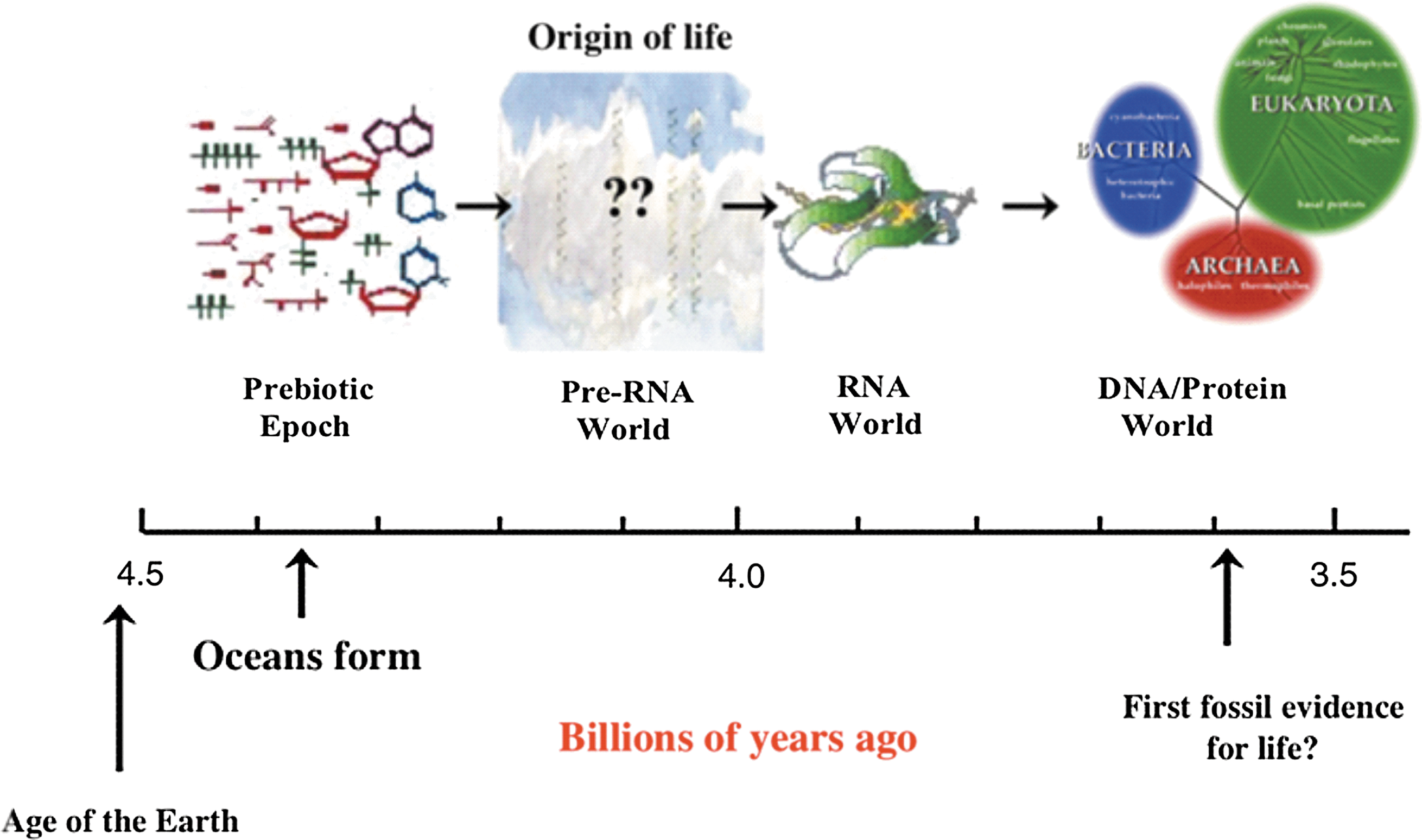
Timeline of key stages and events surrounding the origin of life on Earth. From the presentation given by Jeff Bada.
A scenario for life's origin based on “prebiotic soup”—giving rise to chemical evolution of simple molecules into ones with increasingly complex functions and eventually leading to self-sustaining molecular entities—is considered to be a credible pathway to life's genesis. Alternative pathways involving hydrothermal-based systems also provide a fruitful avenue for the study of life's emergence. Hydrothermal systems are hypothesized to provide a setting for the “metabolism-first” theory, in which proto-biotic systems supported by natural chemical reactions could have evolved into biochemistry similar to that which functions in modern organisms. These various scenarios straddle a line between living and nonliving systems that is difficult to define (and perhaps nonexistent). Fitting everything together is difficult but required for understanding the origins of replication, encapsulation into membranes, and catalysis.
From a molecular signature standpoint, the proto-biotic world of self-replicating molecular entities such as those based on RNA and its precursors is a promising avenue, as signs of such a transitional period might stand out from the abiotic portfolio of prebiotic organic compounds. This scenario requires a backbone to provide the scaffolding for nucleobases to permit base-pairing and the translation of genetic information. A plausible path for the development of life as it currently exists might proceed first from peptide nucleic acids (PNA) to the RNA world and then into the DNA world that characterizes all modern biochemistry. Searching for evidence of the molecules associated with these key steps in the origin and evolution of life as we know it provides a promising way to investigate the stage of biochemical evolution on other planetary bodies in our solar system.
Clearly, carbon as the basis of organic chemistry is essential to life, but its relation to other elements (e.g., nitrogen) may also provide a compelling basis for life detection. Likewise, homochirality may be a powerful indicator in future searches for life. The Urey instrument (Aubrey et al., 2008) would target these signatures through fluorescence and CE amino acid and D/L separation.
Subsequent discussions touched on a variety of topics related to biosignatures (e.g., evidence of water does not mean existence of life; discovery of life may not be preceded by the discovery of past or ongoing aqueous activity). A broader “follow the energy” (aka chemical disequilibrium) approach, as has been advocated in recent years (Hoehler et al., 2007), is well suited to sample investigation pathways.
An important component of the meeting highlighted instruments and methods useful for detecting and characterizing life and biosignatures. Talks in the afternoon session focused on the capabilities and limitations of specific instruments and methods for life-detection in geologic materials examined in situ on Mars and in geologic samples returned to Earth laboratories.
Bourbin described the use of electron paramagnetic resonance (EPR) as a tool for the study of the organic radicals in mature geological samples containing organic matter. An EPR study of chert samples that are of the same age but exhibit various metamorphic grades (but still lower or equal to greenschist facies) shows that metamorphism does not rule the evolution of the EPR lineshape. To test the resolution of this syngeneity marker, artificially contaminated material was studied, revealing that EPR may detect contamination with good temporal resolution. Thus, EPR could be a powerful tool for the study of organic matter in very ancient organic materials and have the capacity to detect contamination, which is necessary for discriminating false positives.
Mark Anderson discussed the application of atomic force microscopy (AFM) to the detection of long-chain polymers and soft organics on mineral surfaces. The technique provides very sensitive detection of polymeric strands by using the force spectroscopy mode of operation, in which force is measured when the AFM tip makes intermittent contact with a polymeric sample. As polymer strands are pulled from the surface onto the AFM tip, a characteristic detachment signal is measured in the force-distance plot. This method probes polymer length and folding information and is capable of detecting single molecules. Applications to synthetic proteins, fossil surfaces, and algae on mineral surfaces were presented as examples. AFM instruments have flown on two space missions, the Phoenix MECA experiment and the Rosetta MIDAS experiment, an important consideration with regard to deployment of this technique on possible future missions.
In contemporary biology, not all organisms are sampled in DNA analyses because the method used, polymerase chain reaction, or PCR, amplifies DNA between segments common to known organisms (the “conserved” ribosomal 16S gene). Multiple displacement amplification (MDA), as described by Stephenson, is about 104 times more sensitive than PCR for detecting and amplifying DNA from environmental samples or from a single organism. Because MDA copies the entire genome of an organism, it does not suffer the same primer restrictions as PCR amplification and can be accomplished on the same timescale. Products of MDA can serve as templates for PCR, allowing the species of contaminating organisms to be obtained.
In a related approach, Carr and coworkers described development of an instrument for sequencing nucleic acids. They noted that metagenomic analysis methods currently coming into greater use, which amplify all DNA in a given sample, circumvent possible selection biases of traditional PCR methods and have the advantage that they can in principle be carried out rapidly through massively parallel processing. An adjunct to this is the use of metagenomic sequencing of RNA for genome analysis and life detection, which would benefit from the parallel approach described and is even less biased to the nature of putative life on Mars. To support the future feasibility of their proposed approach, they pointed to one currently available technology for massively parallel sequencing, ion semiconductor sequencing, which uses an array of hydrogen ion sensors on a chip to sequence nucleic acid fragments previously amplified by PCR from single molecules. In the context of MSR, the authors suggested that having a capability for nucleic acid detection and sequencing would address uncertainties introduced by sample return, including sample degradation, and provide strong insight into the nature of sampled materials prior to their transport back to Earth.
Soto presented progress in understanding self-replicating proteins that challenge the definition of life, and technology for characterizing protein content and conformation in extraterrestrial samples. In recent years, it has become clear that the root cause of some human diseases—and perhaps many more yet to be uncovered—is autopropagation of a misfolded protein. More recently, it was demonstrated that many, if not all, proteins can adopt an alternate configuration under the right physical conditions. This nearly universal behavior has aspects of information preservation and propagation hitherto attributed at the molecular level only to RNA and DNA.
Drawing on recent findings on protein folding and prion diseases, Soto and coworkers, including co-author Diaz-Espinoza, have developed a method for efficiently reproducing prion replication in the test tube. This method, protein misfolding cyclic amplification (PMCA), amplifies the protein content and configuration of a sample, which allows for searches of new forms of self-propagating proteins. In addition to its utility in food and medical contexts, the technique holds promise as a tool to identify novel infectious proteins in many samples and possibly for understanding organic content and evolution in extraterrestrial samples.
Glavin discussed strategies for detecting distinct signatures of biochemistry in samples returned from Mars. He noted that the Curiosity rover would conduct the first search for amino acids on Mars with the onboard GC-MS and associated sample handling and processing facilities (Mahaffy et al., 2012). If any such materials are found, however, ruling out a nonbiological origin would require measurements of chirality and isotopic composition that are not among Curiosity's capabilities. After reviewing various analytical techniques for determining organic composition and chirality in meteorites, Glavin asserted that the search for indisputable chemical evidence of life on Mars may require measurements that go beyond current laboratory analytical capabilities, including molecular spatial resolution of amino acids, nucleobases, carboxylic acids, and other organic molecules important to life. Identifying molecular biosignatures of an extinct martian biota in a returned sample altered over time by the harsh radiation and oxidizing martian surface environments would be a challenge. Future instruments would need much lower detection limits combined with new sample handling/extraction technologies with the capacity to detect organic compounds in micron-sized grains. In addition, other nondestructive techniques need to be developed to enable spatially resolved measurements of organic compounds. In discussion, it was pointed out that a comparable analysis for amino acids might be applied to samples returned from the Moon by Apollo astronauts.
3. Evidence from Earth, Tuesday, February 14, 2012
The session Evidence from Earth explored analog terrestrial environments, the biosignatures preserved in such environments, and lessons learned from the study of terrestrial analogues that guide the search for life on other planets. Farmer commenced with a discussion on the use and limits of terrestrial analogues, noting that there are many sites on Earth that are proposed as analogues for Mars but no one site is an analogue for all aspects of Mars. Each site is relevant with respect to a specific scientific question or set of questions. Farmer noted that continental hydrothermal locations are considered to be especially relevant analogues in light of the discovery of probable sinter/fumaroles–like silica/carbonate deposits on Mars (e.g., at Home Plate in Gusev Crater). Hydrothermally deposited minerals such as silica, carbonate, and clays can preserve morphological biosignatures (microfossils, stromatolites, biomediated textures) and organo-geochemical biosignatures. In hydrothermal environments, conditions can change over time, with important consequences for the mineral types deposited.
Ehrenfreund, Quinn, and co-authors discussed signatures of extant life in extremely dry desert environments. Earth's driest deserts are relevant Mars analog sites because arid conditions have prevailed on Mars throughout much of its history. Despite the hyperarid conditions and the high UV flux, life does exist in such desert environments, but the inhospitable conditions have significant consequences for life strategies. Potential microbial habitats occur in the subsurface sand; in cracks, fractures, and pores in rocks; and in the silicate (clay)/Fe/Mn rock varnish on the surfaces of rocks. Traces of microorganisms may be preserved by mineral encrustation or chelation of degraded organics to clays. However, the problem of nutrient/water distribution in such environments leads to patchy distribution of biota and low overall concentration of biosignatures.
Corcoran examined traces of extant life associated with desert varnish. The relevance of desert varnish to Mars particularly arises from the fact that varnish-like coatings have been observed on some martian rocks (Guinness et al., 1997). Corcoran and coauthors used catalyzed reporter deposition–fluorescence in situ hybridization (CARD-FISH) to determine that varnish samples from the Mojave Desert contain a range of organisms similar to that found in other desert locations on Earth. Further work is planned to understand the relationship between the biota and the varnish.
At the other end of the scale of environmental extremes, ices can also play host to microorganisms. Price showed that there is sufficient liquid water at the triple junctions between ice crystals to allow windblown microorganisms to survive in that microscopic niche. However, the viability of long-term preservation of biosignatures in such environments is not clear.
In cave environments, microorganisms can survive in mineral matrices in various “distressed” states. Boston discussed how the survival strategies of these organisms can be thought of as lying somewhere between extant and extinct. To detect the biosignatures of these organisms requires combining methods for examining fossil and living organisms. Such organisms could exist in subsurface caves on Mars, but they are likely to remain inaccessible to foreseeable future missions.
Early Archean rock successions that contain the first vestiges of life's record on Earth are an important analogue for ancient biosignatures that may occur in martian rocks. Rocks and terrains from this period make useful subjects of study because of their great age (similar to the age of rocks formed on a more habitable early Mars), the types of biosignatures contained within them, and the nature of the challenges in detecting and analyzing these extremely ancient microbial signatures.
Allwood and Westall presented some of the key “lessons learned” from studies of Earth's earliest fossil record. The first stages of Earth's fossil record, formed during Archean times, show that there are several different types of signatures that microbial biology may imprint upon the geological record. Microbial biosignatures can be grouped as follows: (1) Microfossils: fossilized cellular remains of organisms (2) Macroscopic morphological features: stromatolites and other biologically influenced constructions, biominerals (3) Biomarkers: organic molecular fragments of uniquely biological origin (4) Isotopic signatures (e.g., fractionation patterns in the isotopes of C, S, and other elements)
Biosignatures degrade with time. However, the rate and extent of degradation are controlled by the physicochemical characteristics of the burial environment, particularly the chemistry, temperature, and amount of fluids percolating through the rocks. There are numerous pathways by which biosignatures can be preserved. Figure 2 illustrates typical pathways for preservation of microbial cellular remains. Early mineral encapsulation and anaerobic conditions aid preservation, but some minerals are more stable and less susceptible to alteration than others. The rapidity with which the microorganisms are encapsulated in a mineral matrix and the stability and impermeability of that mineral matrix are fundamentally important for the preservation of biosignatures. Thus, the identification of past environments that provide these conditions is vital for optimizing the chances of success in identifying any biosignatures that may be present.
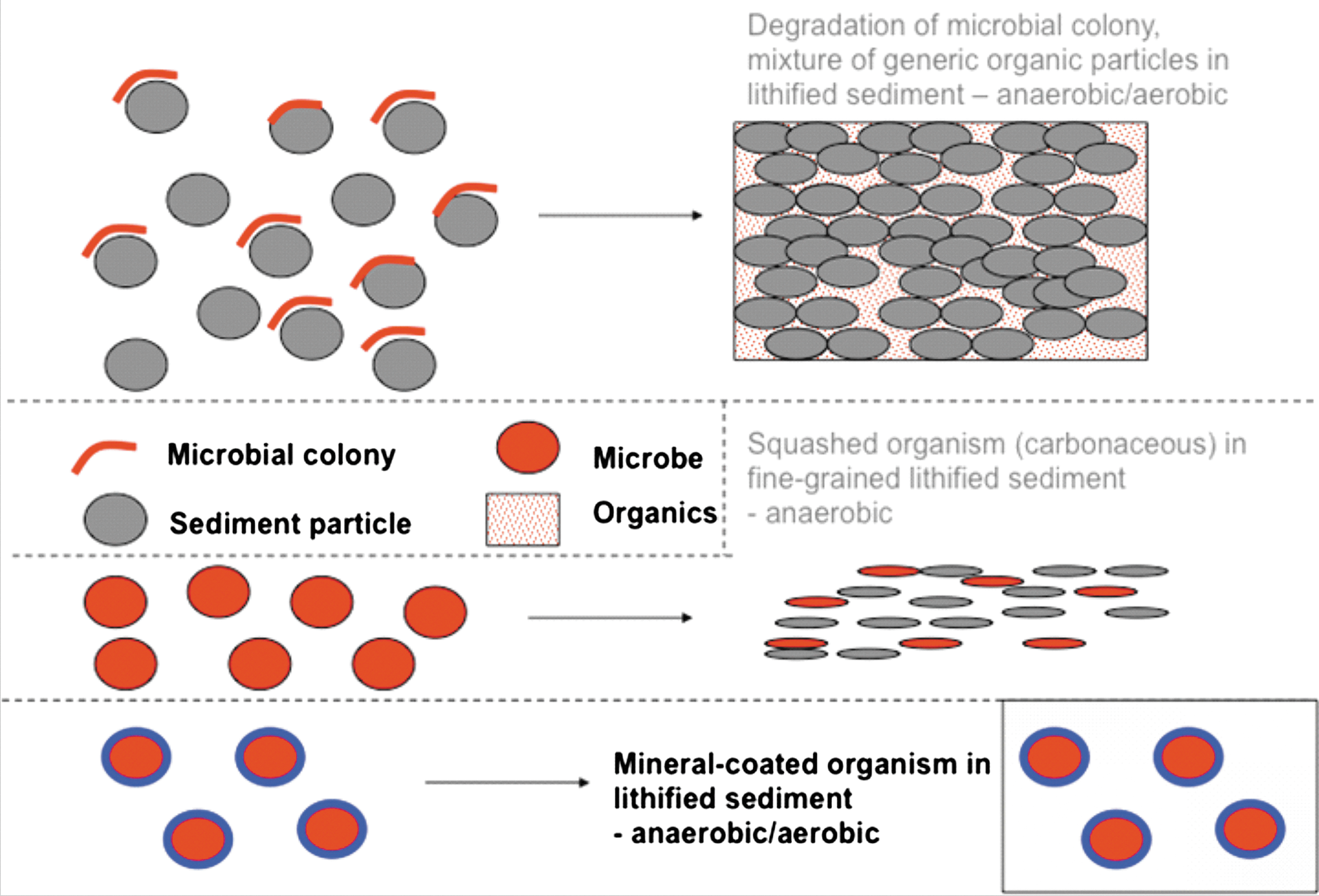
Schematic representation of pathways by which microbial cells can become preserved in sedimentary rocks. From the presentation given by Frances Westall.
Studies of the early terrestrial fossil record highlight the fundamental importance of understanding context for the interpretation of biosignatures. Context has multiple aspects, some of which may be contained within samples, most of which lie in the broader rock outcrops and regions where the samples were collected. If a particular feature of possible biological origin is observed (e.g., a microfossil, stromatolite, or isotopic signature), then the aspects of its context include (1) the properties and distribution of other similar features in the vicinity; (2) the type of geological setting and particular attributes of that setting; (3) the distribution of the potentially biological features relative to the geological setting; and (4) changes in the properties of the potentially biological features relative to changes in the geological setting (Fig. 3). A sufficiently detailed understanding of each of these facets of context is required to advance from simply observing possible clues to life to confidently identifying evidence of life.
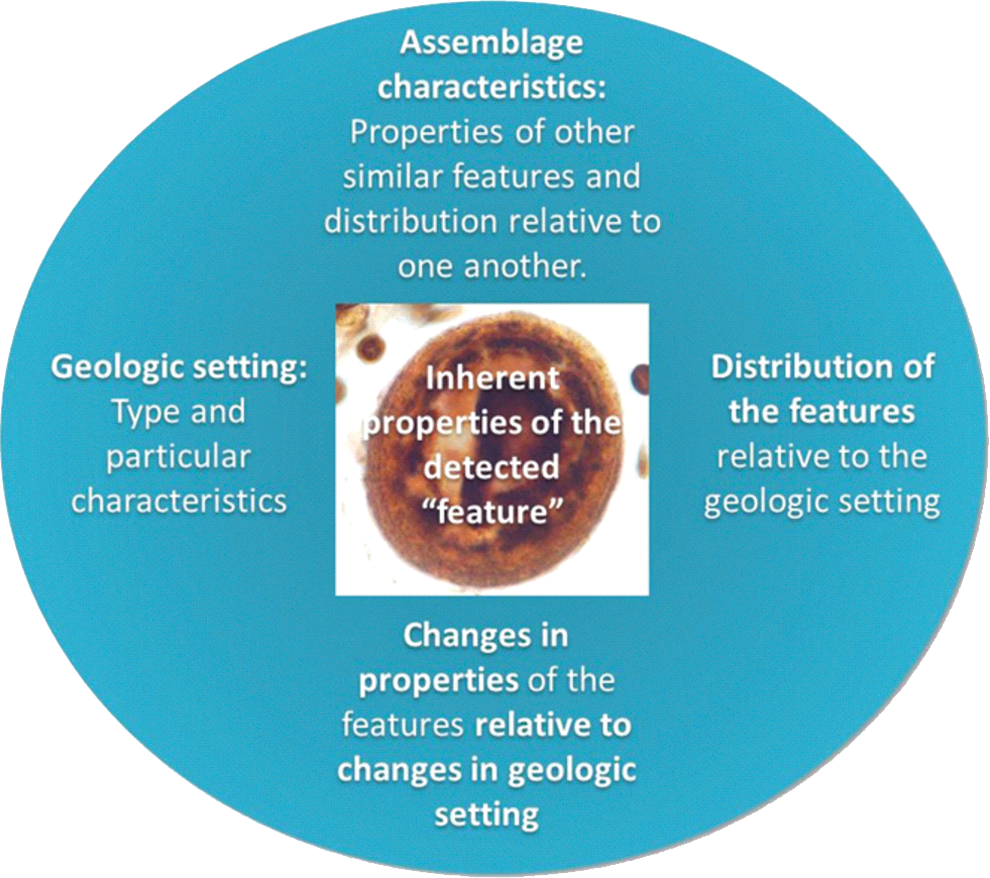
Summary of the different aspects of “context” that need to be understood in order to confidently interpret a feature of potentially biological origin. From the presentation given by Abigail Allwood.
Techniques for identifying and investigating signatures of both extant and extinct life are wide-ranging because of the different nature (physical, molecular, elemental, isotopic, etc.) and scales (macroscopic, microscopic) of the signatures and contextual information. These analyses can be inherently problematic. For instance, it is very difficult to cultivate most terrestrial microorganisms, especially extremophiles. Their dividing times may be extremely slow, especially for those adapted to low nutrient levels or temperatures. It is also difficult to distinguish between living cells that are surviving or simply in dormancy. The maximum limit of cell survival in geological materials, which is influenced also by ionizing radiation from space and from radionuclides in the geological setting, can range from several hundred thousand years to several million years (e.g., Kminek et al., 2003).
Another problem associated with biosignature recognition is the ability to distinguish between the signatures of abiogenic or prebiotic phenomena and biological features. Individually, many of the classical biosignatures (morphological features, isotopes, biominerals, bioconstructions) can be mimicked by abiological processes. Establishing biogenicity therefore requires a rigorous, multidisciplinary approach that tests all alternative hypotheses. This would be even more important if martian life remained at a very primitive stage of evolution with extremely small sizes similar to those of viruses. Heterogeneity in the distribution of the biosignatures and in their concentrations (likely to be limited) would have an impact on in situ search and analysis of returned samples. This has implications for the search strategy in situ and underlines the necessity of being able to exchange samples during sample collection for caching. The encapsulation of a biosignature by a mineral is necessary for its long-term preservation, but it also dilutes the original signature or may protect it so well that it is difficult to extract, as in the case of organics chelated to clay minerals. In such cases, sophisticated instrumentation would be needed to analyze the material, which underlies the necessity of sample return.
The terrestrial analog environments discussed at the conference are of interest because they contain actual or preserved traces of life. Study of the different types of biosignatures and their preservation and distribution in geological materials from these environments and others is essential for devising strategies for life detection either in situ on Mars or in returned samples.
Recently, an effort has been made to promote more extensive use of analog sites to inform science planning and data analysis for Mars missions. Hipkin reported that an analog sites workshop organized by the astrobiology community developed a framework to assess scientific value of different analog sites. This framework is designed to optimize recognition and utilization of the scientific value of different analog sites.
4. Signs from Specimens, Tuesday, February 14, 2012
A significant number of extraterrestrial rock specimens already exist on Earth in the form of meteorites. The session Signs from Specimens looked at some of the information that has been gleaned from meteorites, the challenges encountered in meteorite analyses, and some of the novel techniques used to resolve these challenges that could be applied to returned samples.
A major topic of interest was the ongoing analysis of potential evidence of life in meteorite specimen ALH84001 and how those experiences can be adapted to assist in future analyses of potential biosignatures in returned samples. While morphological features in ALH84001 originally thought to be of possible microbial origin are now accepted as probably abiotic, investigations now focus on the origins of unusual magnetite crystals in carbonate discs. Thomas-Keprta and D.S. McKay discussed recent findings relating to the analysis of the carbonate discs and magnetites. The key question is whether the magnetites are abiogenic products of thermal decomposition of the host carbonate or whether the magnetite and carbonate are unrelated in origin. The latter hypothesis infers that the magnetites acquired their unusual properties due to biological influences in an older environment. One of the major challenges in resolving the origin of these potentially biogenic features is the absence of any geological context beyond that in the meteorite itself. An understanding of the geological features and relationships in the host rocks on Mars from which ALH84001 was derived would almost certainly provide the necessary constraints to resolve the current uncertainties. This logic highlights the need for sample return, including an in situ mission capable of determining the context of samples.
The long-running controversy surrounding interpretation of potential biosignatures in the Allan Hills meteorite prompted consideration of the nature of biosignatures and whether it would be beneficial to develop a system of biosignature categorization and ranking. D.S. McKay presented his perspective that such a system could be useful because some biosignatures are more compelling or “reliable” than others. McKay proposed a system whereby various types of biosignatures range from “nearly indisputably biological” (98% probability of biogenicity) to “most likely non-biological to almost certainly non-biological” (<5% probability of biogenicity). However, additional discussion on the topic suggests that to apply this system and begin placing different types of potential biosignatures into the aforementioned categories, fundamental issues must be addressed, such as deciding upon a definition of life. Without knowing what defines life, it is impossible to arrive at a universal set of criteria by which to recognize and categorize evidence of life. The definition of life is not obvious, although several attributes have been put forward as characteristic of life, including reproduction, metabolism, motility, and accurate information transfer, although there are even possible exceptions to these criteria. An additional complication in applying such a biosignature ranking system is that the interpretation of potential biosignatures is strongly influenced by context: a feature that may be compelling evidence of biology in one setting may be far more ambiguous in another setting.
A major challenge to life-detection studies in meteorites is the contamination that occurs to them in the Earth environment prior to curation. Fries examined Antarctic meteorites to understand the level of terrestrial contamination that exists in those specimens even before they are collected. Of all the martian meteorites found on Earth, those found in the Antarctic environment may exhibit the least terrestrial alteration due to the dry, cold, biologically sparse conditions found there. A suite of Antarctic meteorites was collected by using rigorous, low-contamination collection methods and analyzed for microbial abundance and metabolic activity. No microbes were detected in the meteorites' “as-found” condition, so it is reasonable to expect that martian meteorites from Antarctica exhibit little or no microbial alteration in their terrestrial residence period. Additional measurements showed that microbial contamination commenced upon collection, however, in spite of careful collection. While microbial contamination can be limited by careful handling, it becomes increasingly problematic as meteorites are handled, prepared, and analyzed by multiple laboratories. This Antarctic meteorite study shows that the assumption of microbial sterility is unreasonable, so it is very important to carefully analyze the “as-found” condition of meteorites and other samples so as to quantify post-collection alteration.
Terrestrial microbes can (and do) alter just about every feature of interest for astrobiological studies of meteorites, including the chemical, isotopic, chiral, morphological, and mineralogical state. Recognizing such contamination is vitally important not only for avoiding false-positive life detection in extraterrestrial samples but also for interpreting the sample's geological history. Terrestrial contamination is likely to be greatly reduced in samples returned by a carefully planned mission, but to avoid false positives, samples could never be assumed to be completely uncontaminated. Dealing with the contamination issues in meteorites provides insights into how future scientists could recognize and deal with contamination of returned samples.
In addition to organic and biological contamination, meteorites undergo weathering in the terrestrial environment. Velbel described how alteration processes such as oxidation, hydrolysis, and hydration reactions fundamentally alter the properties of the specimens after release from containment and can occur on timescales measured in days to years. Effects of this alteration can often be identified as terrestrial in origin. However, the alteration may modify or obliterate primary evidence of prior low-temperature aqueous alteration, and Velbel indicated that it is likely that non-recognition of terrestrial alteration products would lead to incorrect interpretation of meteorite history. In the case of a sample return mission, one way of preserving some of the information susceptible to loss is to obtain that information with in situ instruments as the samples are being collected.
Nondestructive techniques used to study meteorites highlight some of the ways that returned samples could be analyzed without consuming any of the precious material. Flynn described recent advances in nondestructive, non-invasive three-dimensional screening tools for analyzing solid samples. Such techniques would be of particular interest for gleaning maximum information from valuable samples before subjecting them to destructive sample preparation and analytical techniques. Notable examples are computed microtomography (CMT), which reveals the internal three-dimensional structure with high resolution on centimeter-sized samples, and fluorescence microtomography (FMT; Fig. 4), which provides three-dimensional element and oxidation-state mapping on smaller samples. These techniques could be used to map sample composition and to search for gas- or fluid-filled inclusions or potentially fossils. Fossils imaged to date include small insects but no microbial specimens.
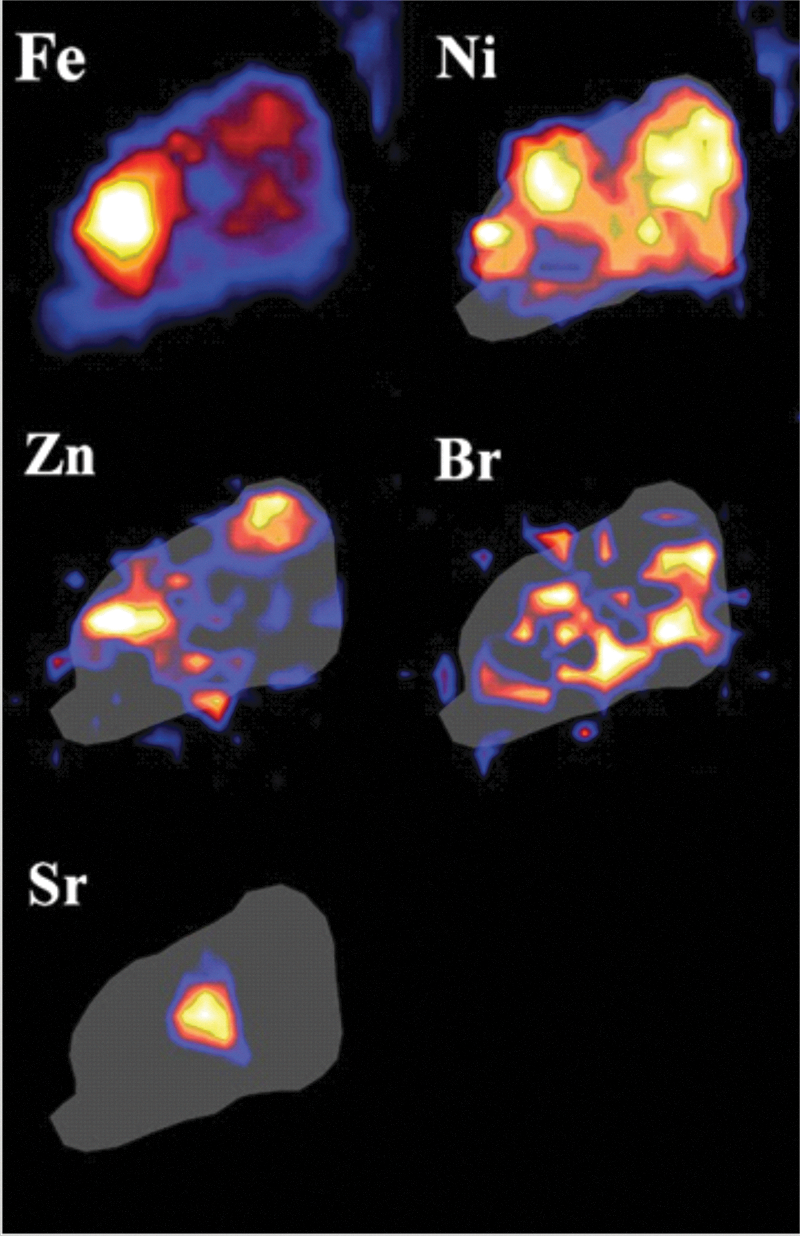
An example of a state-of-the-art microanalytical technique that can be used to non-invasively investigate samples in three dimensions. Reconstructed element maps of a 35 μm sized interplanetary dust particle, produced by fluorescence microtomography. Fluorescence microtomography maps show the 3-D distribution of Fe, Ni, Zn, Br, and Sr in the particle. Image obtained at the Advanced Photon Source, Argonne National Laboratory. From the presentation given by George J. Flynn.
The study of meteorites can provide evidence of past conditions on parent bodies. Zolensky and Fries highlighted the particular importance of fluid inclusions in meteorites for understanding processes involving organic materials on parent bodies. Most researchers believe that reactions with liquid water occurred in meteorite parent bodies after accretion and that these aqueous fluids would have mobilized organics. However, only aqueous alteration products had previously been detected, not actual inclusions that allowed direct measurement of fluids. The Monahans and Zag meteorites (Fig. 5) provide a unique opportunity to understand parent body characteristics through study of fluid inclusions. Inclusions in these meteorites contain a wide range of organic matter: primitive to thermally evolved macromolecular carbon and disordered carbon containing aliphatic compounds. These findings suggest that the parent body underwent aqueous alteration with a fluid (halite parent brine) that contained an organic component.
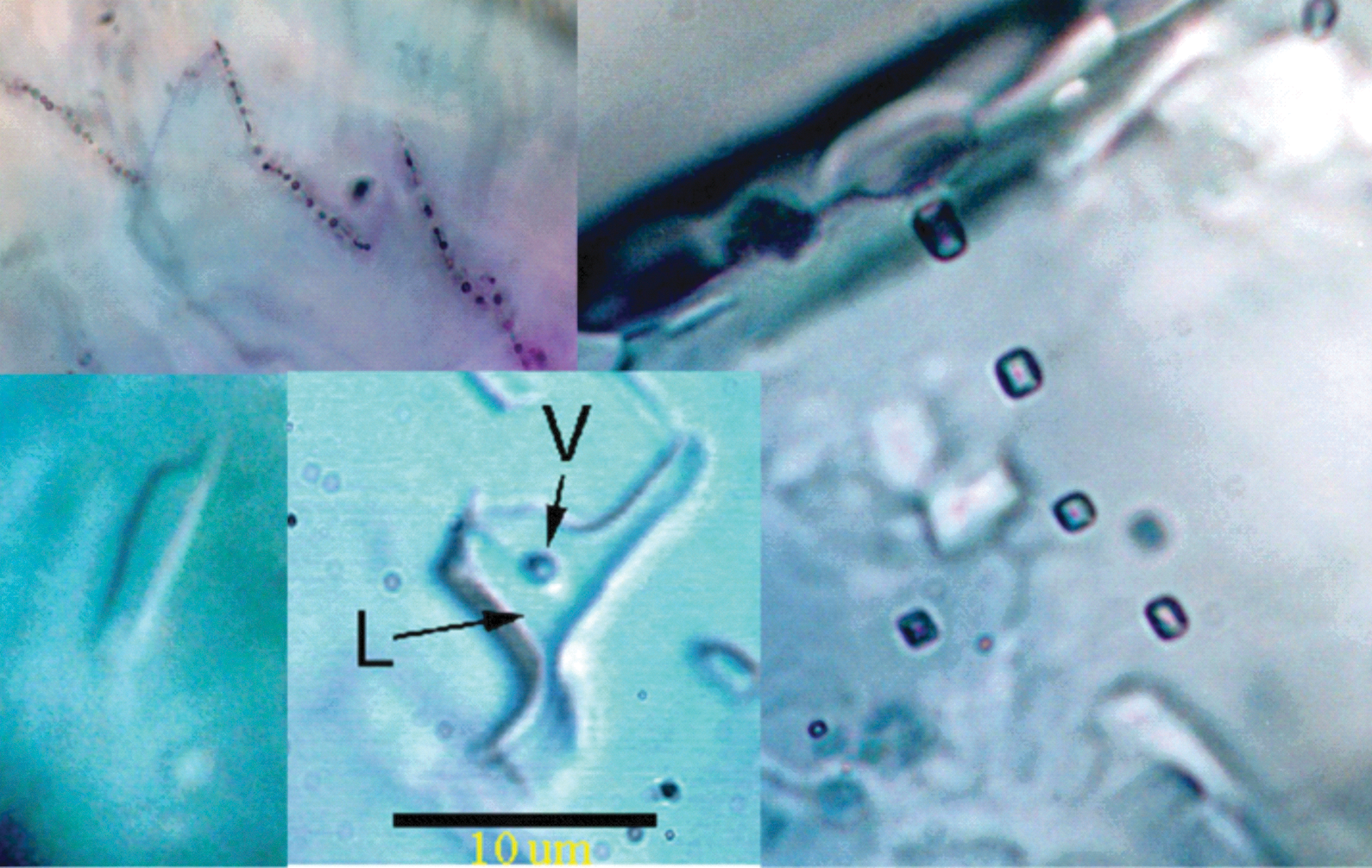
Fluid inclusions in halite found in H chondrite regolith breccias, but which formed in space around a separate cryovolcanically active body, perhaps similar to Enceladus. The fluid inclusions in the Monahans and Zag meteorites contain organic materials and may have information about possible life-supporting environments elsewhere in the solar system. From the presentation given by Mike Zolensky and Marc Fries.
5. Life in the Laboratory, Wednesday, February 15, 2012
The final conference session, Life in the Laboratory, focused on issues that would face researchers as they undertake sampling and testing of martian materials returned to Earth. Because both biosafety and science considerations would be involved, the future challenges touch upon technical, analytical, scientific, legal, and facilities concerns, each of which was discussed in some way by the session's five presentations.
Allen began by summarizing lessons learned from past sample handling experiences and their implications for future MSR missions. Drawing from experiences with lunar, meteoritic, cosmic dust, solar wind, and asteroid materials, Allen highlighted the importance of the curation process, which involves documentation, preservation, preparation, and distribution of samples for research, education, and public outreach. Using lessons learned from numerous mission experiences—from the Apollo program through recent asteroid sample studies—Allen emphasized that all facets of the handling process would need to be designed, built, and operated to provide the highest quality samples to the best laboratories for the most important analyses. Care is first needed upon receipt of materials, where preliminary documentation and cataloging sets the stage for archiving samples for research access. Proper preservation to minimize environmental and particle contamination depends upon use of appropriate gloveboxes, clean-room equipment, and laboratory conditions coupled with pristine and secure storage. Like all extraterrestrial materials, martian samples would need to be prepared and distributed by using methods that are scientifically rigorous and fully accountable to ensure access for the wide scientific community. For the first time since Apollo, sample curation personnel would need to interact closely with microbiological analyses and hazard assessments in order to accommodate the needs of both the research community and the public. In addition to being involved from the earliest mission design stages, this also implies planning for contingencies throughout the sample-processing chain as well as responding to unique and diverse sample types and requirements. These valuable samples would need to be prepared for curation and distribution that continues long after the mission is over. In summary, Allen noted that we must be prepared to answer key life- and hazard-related questions and must be prepared for the full range of answers.
Grimaldo and coauthors focused on containment challenges for handling and testing extraterrestrial samples. Overall, this requires an understanding of the design, construction, and operation of maximum Biological Safety Level 4 (BSL-4) biocontainment facilities (Fig. 6) to meet biosafety concerns, coupled with the need for extreme clean-room operations to accommodate planetary science cleanliness levels throughout the receiving facility. Special needs already identified include robotic manipulation of materials within Class III Biological Safety Cabinets, biocontainment barriers for imaging equipment, special suit and effluent decontamination processes, and the ability to decontaminate and maintain equipment within the containment barriers. The presentation drew from a 2001 study of the receiving facility concept coupled with experiences from recently constructed BSL-4 labs. Grimaldo illustrated the integration of class 10 cleanrooms within BSL-4 containment, coupled with protection from both gaseous and particulate chemical contaminants, along with high levels of security, control, and monitoring. Based on lessons learned, facility planning would need to start 10 years prior to sample return to accommodate design, construction, commissioning, and operational testing. Numerous construction challenges (materials and construction methods used, attention to finish, operational details, etc.) would also need to be acknowledged and addressed from the earliest phases.
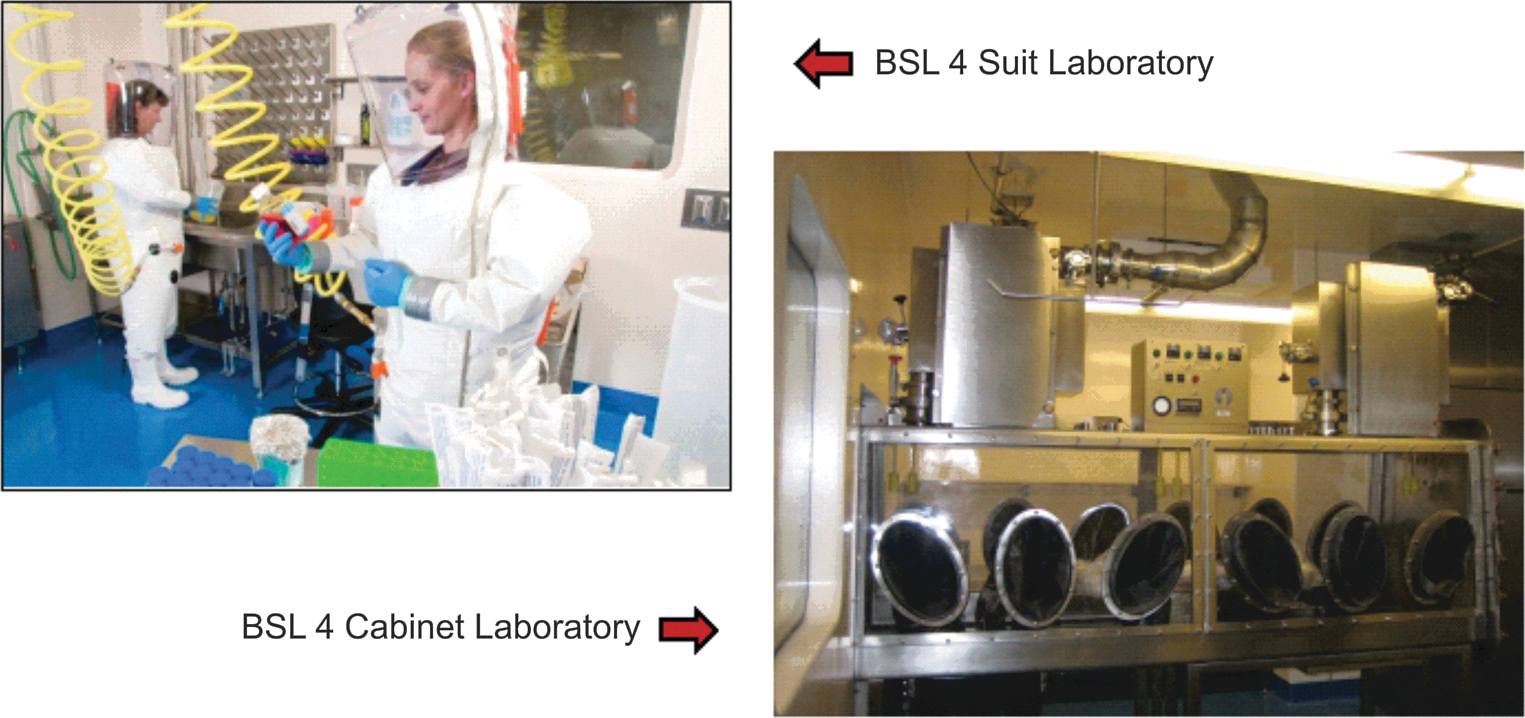
Photograph of a BSL-4 suit laboratory and a BSL-4 cabinet laboratory. Photos courtesy of the Galveston National Laboratory/UTMB.
Allton and Burkett focused on the technical tensions associated with achieving both particulate and molecular organic environmental cleanliness when handling returned samples. Drawing on experiences with multiple clean rooms at Johnson Space Center, the presentation first reviewed minimization of particulate contamination via use of clean environments and special non-shedding tools and containers that touch samples. Cleanability, smooth surface finishes, and sealed or isolated moving parts are characteristics for clean operations. However, the principal way to control particulate contamination is through HEPA/ULPA air filtration and positive pressure environments. Organic contamination is minimized by performing operations under high-purity cover gas, which can be achieved by specialty purification and filtration, typically in devices such as gloveboxes and isolation chambers. Also required is rigorous control of those materials which off-gas into the laboratory environment, whether tools, equipment, or laboratory construction materials. Because the combination of particle-clean and organically clean requirements will impact planning for sample handling, both types of technical challenges are critical for proper sample curation.
Blake and Allard recommended consideration of teleanalysis of returned samples as an opportunity for both NASA and the worldwide scientific community. Characterization of returned martian materials via telemicroscopy and other methods would be a logical extension of NASA's experiences with telerobotics and teleastronomy, allowing investigators to operate instruments and obtain real-time data via computer connection from distant locations. Setup and associated work would be accomplished via a permanent curatorial staff familiar with instruments and infrastructure needed for proper sample curation, preparation, and analysis. With teleanalysis, investigators can perform desired analyses under ultraclean containment, with samples never leaving the specialized facility. Benefits for individual researchers would be relatively minor costs (computer and data analysis software), access to pristine samples, and real-time data availability. Benefits to NASA would include investment in infrastructure and improved technology to make technical collaboration and research data more widely available, offering opportunities for reaching existing and new partner institutions and countries.
Bass and coauthors discussed the analytic environment needed to conduct life-detection experiments on returned samples and highlighted overall planning implications. The presentation reviewed various impacts on future sample receiving facilities, noting the combined requirements of BSL-4 biosafety laboratories with extraterrestrial sample curation facilities. Facility design planning would need to start early and require attention to stringent cleaning and contamination control specifications and instrumentation necessary to meet both biosafety and science needs. Topics for further consideration include the kinds of experiments that could or should be done in biocontainment, particularly for life detection, and whether human versus robotic handling (or a combination) would be advisable. Another important question is how to baseline subsample amounts for life-detection–biohazard testing while reserving much of the full sample for future scientific investigations.
6. Discussion
During the conference, a central, multiday discussion thread was pursued to try to reach high-level conclusions relating to life detection in extraterrestrial samples. An original goal of the discussion was to discern whether it is possible to develop a list of criteria for biogenicity and to rank those criteria according to how compelling they would be as evidence for life. It quickly became apparent that determining biogenicity is a very complex issue that does not lend itself easily to evaluation by predetermined criteria, and that there are more fundamental questions that must be answered about life in order to know how to recognize its signature among the record of abiotic processes on another planet.
6.1. What is life, and what are its properties?
Any discussion of life detection needs to commence with an understanding of what life is and what its properties are. Knowing the defining characteristics of life is critical for developing possible criteria for distinguishing biological signals from the plethora of abiotic “background” signals. The search for biotic signals is further complicated by the multiple possible states of life: viable present-day organisms, dormant extant organisms, recently deceased extant organisms, or ancient extinct organisms. The diversity of the technical presentations described in the earlier sections of this report in part reflect the diversity of attributes of life and the large variety of signatures that may provide evidence of its existence.
An additional consideration is that the strategies to search for life must inevitably be guided by our understanding of “life as we know it” and cannot practically be based on “life as we do not know it.” The problem with the latter is that we cannot develop an investigation strategy if we do not even know the properties that define that form of life. For the purpose of this conference and specifically for the application of detecting potential life in returned samples from Mars, the conference attendees assumed that the “life” being sought would be based on carbon chemistry that could subsist under physical conditions (temperature, pressure, etc.) present near the surface of Mars or Earth, and on timescales observable by humans.
Proceeding on the assumption of “life as we know it,” Farmer offered to the conference a list of “properties of life” (Table 2) that he had developed with his astrobiology students to help catalyze the discussion. The conference participants accepted this as a good starting point for understanding some of the key attributes of living systems and the effect they may have on the geological environment that may be subsequently sampled by humans.
6.2. Nomenclature: biosignatures versus evidence for life
The term “biosignature” is used inconsistently in the literature. In some instances, it refers to a particular feature that is suspected to be of biological origin or to provide clues to biological processing, such as a microfossil, stromatolite, isotopic pattern, gas trace, or mineral deposit, whereas in other cases it is used to refer to any feature or set of features that constitutes unambiguous evidence of life. Clearly, there is a vast difference between the two.
While the term “biosignature” will no doubt continue to be used in a variety of ways, here we propose that, due to the ambiguity associated with “biosignature,” a different, more literal phrase—such as “evidence of life”—be used to refer to a feature or set of phenomena judged to be of biological origin.
6.3. Strategies and criteria for life detection
Among the conference attendees, it was widely agreed that
Having agreed that detecting life requires a multifaceted suite of evidence, the conference attendees were encouraged to nominate (and rank by importance) criteria for the detection of life. A particular motivation for this exercise was to use the criteria to develop an understanding of the measurements that would need to be carried out as part of an MSR campaign and use that to guide planning from sample collection mission design to design of the sample receiving/analysis facility and analytical procedures. Among the audience were many scientists with extensive experience in life-detection studies of different kinds, many involving detection of evidence for microbial life in conditions where life's existence is far from easily accepted. However, when faced with the task of nominating specific criteria for identification of unambiguous evidence of life—and ranking those criteria according to their strength as evidence—it was widely agreed that this was an impossible task.
The problem is that identifying evidence of life is fundamentally about achieving wide acceptance of the suite of scientific evidence at hand. Achieving such community acceptance is challenging even when there is a specific case under discussion with an observable suite of evidence available for thorough, detailed, and iterative assessment. Reaching consensus on a general set of criteria for what constitutes “acceptable evidence” for life for any future case that might arise requires formulation of a complete set of hypothetical possibilities and analysis of the details of each of those possibilities when no specifics are available and almost infinite variations are conceivable. Thus, the principal conclusion arising from this discussion was that, in planning a future MSR campaign,
6.4. The “null hypothesis” and “positive hypothesis”
While a list of criteria for life detection was not assembled by scientists at the conference, important recommendations regarding strategy and approach were identified. One important proposal was the use of “null” or “positive” hypotheses.
Because of the importance of accurately determining whether returned samples contain—or do not contain—evidence of life, two rigorous, hypothesis-based approaches were proposed. The approach that is employed depends on whether it is the science or planetary protection perspective being considered: (1) Assume martian life is absent in the sample (the null hypothesis); then look for evidence that disproves the hypothesis. (2) Assume martian life is present in the sample (the positive hypothesis); then look for evidence that disproves the hypothesis.
Steele advocated for use of the null hypothesis in the search for evidence of life from the science perspective. This approach is commonly used in medical research, wherein experiments are designed to test the hypothesis that there is no effect of treatment or no correlation between observed phenomena (the “null” hypothesis). Statistically significant results that invalidate the null hypothesis constitute acceptable “proof” of an alternative one. The null hypothesis in life-detection research would be that “the observed phenomenon is the result of abiotic processes.” It was noted, however, that this approach is complicated in life-detection research by the need to define a more specific null hypothesis (e.g., the phenomenon was caused by abiotic process x, y, or z) in order that the hypothesis can be tested equally against biotic hypotheses.
The null hypothesis approach cannot be used for planetary protection investigations, which are safety-driven. Rather, the opposite approach is required: assumption of the positive hypothesis—that potentially hazardous martian life is assumed to be present in the samples until proven otherwise. A key consideration here is the ability to distinguish, with statistical confidence, between martian life and Earth contamination.
Disproving either the positive or the null hypothesis can only be accomplished by collecting a sufficient amount of statistically significant data so as to provide a high level of confidence in the countervailing conclusion.
6.5. The issue of confidence
Seeking absolute proof of life can work in many instances on Earth, where we have observational features that are universally accepted as indication of life, for example, trilobite fossils, DNA, biomarkers (molecular fossils, such as oleanane). However, as learned from experience with the Allan Hills meteorite and Earth's oldest rocks, this approach does not work well when applied to life detection in extraterrestrial or very ancient samples, where life's existence is very much in doubt.
Where the very existence of life is an extraordinary claim, a requirement of achieving “universal acceptance” is unrealistic. One approach explored by the conference participants involved grading different observations by the degree of reliability or probability that they reflect a biological origin. For example, observations could be rated as “strong evidence of life,” “possible evidence of life,” “indicators of abiotic processes,” or “indicators of Earth contamination.” This kind of approach was used by D.S. McKay et al. to support the hypothesis that indications of martian life were present in extraterrestrial meteorite ALH84001. D.S. McKay suggested a probabilistic rating scale for individual observations based on the strength and type of signatures found. Conceptually, results could be classified as “strong biosignatures” if they were much more likely to be produced by biological than nonbiological processes; “possible biosignatures” if produced by either biological or nonbiological processes; “indicators of abiotic processes” that would have been altered where biological activity was present; and “indicators of Earth contamination,” which could result from suboptimal hardware or sample preparation and/or containment. D.S. McKay also noted that a suite of measurements could collectively provide stronger support for a particular hypothesis, even when each measurement taken alone was inconclusive.
The participants in the conference recognized and discussed the potential value of having such a rating system and systematic terminology. However, the biosignature scale in the previous paragraph raised more concern than comfort among the conference participants. A recommendation for a “biosignature rating system” was not made, because it was recognized that there is no shortage of examples of observations that mean one thing with respect to life in one context and something completely different in an alternate context. As discussed earlier in this report, evidence of life relies on integrated suites of individual observations. Thus, any particular observation or class of feature cannot be given a generalized “strength rating” because the strength depends on the suite of observations of which it is part (see Fig. 7).

Summary of criteria discussed at the conference for sample-based life detection. Except in very unusual cases, none of these criteria were judged to be definitive.
The general consensus was that the suite of evidence that would lead to acceptance of the biogenic hypothesis in a given case will be unique to that case. Each case must therefore be evaluated on its own attributes and not measured solely against a predetermined metric that may overlook valuable evidence in the case at hand.
In summary, to optimize the chances of success at detecting evidence of life (if it exists) in extraterrestrial samples, it is important to adopt certain general, flexible approaches rather than to rely on preconceived ideas about what specific measurements are more valuable than others. This way, all available evidence relevant to detecting life is more likely to be recognized and properly interpreted.
6.6. Summary
A number of high-level conclusions were developed during the conference discussions, which represent significant refinements in thinking about life detection: (1) Employing a hypothesis-driven approach in the development of life-detection investigation strategies and measurements for science (null hypothesis) and planetary protection (positive hypothesis) provides a sound framework to the problem. This would feed into the development of a science and planetary protection test protocol (see workshop report). (2) Developing metrics for evaluating biosignatures permits gradations in the assessment. This is a task for the scientific community. Key is to develop a measure depending on the environmental conditions of specific samples. This element would certainly benefit from additional targeted field work (3) Describing the context of the samples in the environment from which they are acquired on Mars and the context of individual measurements on part of a sample with regard to the rest of the sample material facilitates relating individual observations to the coordinated investigation. This feeds into MSR mission planning.
The following list captures forward-looking considerations arising from the discussion, derived from the top-level conclusions that could be addressed through ongoing and new research: (a) Further analysis is needed in relation to the development and use of (b) The continuation of general research into (c) It is also important that the research community improve our understanding of the factors that affect the (d) The application of life-detection methodologies to the asteroid samples scheduled to be returned by (e) Further research is needed to develop principles and approaches for
Footnotes
Acknowledgments
The authors wish to thank the conference presenters and attendees for contributing to the intellectual content of this report. All presenters at the conference are listed at the following website:
Abbreviations
AFM, atomic force microscopy; BSL-4, Biological Safety Level 4; EPR, electron paramagnetic resonance; GC-MS, gas chromatography–mass spectrometry; JSWG, Joint Science Working Group; MDA, multiple displacement amplification; MOMA, Mars Organic Molecule Analyzer; MSR, Mars sample return; PAHs, polycyclic aromatic hydrocarbons; PCR, polymerase chain reaction.