




Abstract
The stratosphere is a known host to terrestrial microbes of most major biological lineages, but it is also host to incoming meteoric dust. Our goal is to (1) introduce DUSTER (Dust in the Upper Stratosphere Tracking Experiment and Retrieval), an active collector for the nondestructive collection of nano- to micrometer particles in the stratosphere between 30 and 40 km altitude, and (2) demonstrate that even a single particle can be collected free of resident atmospheric and laboratory contaminant particles. DUSTER improves the pervasive and persistent contamination problem in the field of aerobiology research. Here, we demonstrate the collector's advances by the identification of a (terrestrial) spore particle found among a population of nanometer-scale inorganic meteoric particles. This was possible because the size, shape, morphology, and chemical composition of each particle can be determined while still on the collector surface. Particles can be removed from DUSTER for specific laboratory analyses. So far, DUSTER has not been fitted for aerobiological purposes; that is, no attempts were made to sterilize the collector other than with isopropyl alcohol. Its design and laboratory protocols, however, allow adjustments to dedicated aerobiological sampling opportunities. Key Words: Aerobiology—Upper stratosphere—Dust collector—Single particles—Sampling. Astrobiology 14, 694–705.
1. Introduction
T
In summary, the upper stratosphere is host to a transient and most likely highly variable population of nano- to micrometer mineral particles (ultrafine volcanic and extraterrestrial dust) and microbial particles from Earth's troposphere. Balloon-borne collectors offer the best opportunities for mapping the nature of an upper stratospheric dust population including full characterization of the morphology, size, and chemical composition of each particle. We introduce a new balloon-borne collector, DUSTER, that is an active collector for the nondestructive collection of nano- to micrometer particles in the stratosphere between 30 and 40 km altitude. The aim of the DUSTER project is to collect and identify submicron particles in the upper stratosphere, both microbial and nonmicrobial, and define their sources. The instrument is designed to (1) minimize and control contamination, which can originate from dirty hardware (e.g., the balloon's gondola and balloon itself ) or from ground operations (e.g., during launch and landing and laboratory processing); (2) allow particle characterization while still on the collector; and (3) extract individual particles for additional analyses. The definition of contamination for DUSTER includes all particulate matter that is not identified as being collected in the upper stratosphere at the selected operating altitude following the strict protocol developed for this program (see Section 2.4).
2. Methods
2.1. Improvements needed in stratospheric dust collections
Smith (2013) highlighted the technical issues that need to be overcome for aerobiological sampling in the stratosphere. Initially, ultra-long collection flights might be the answer, but first improvements should be considered for sampling large volumes of low-density air with the use of pumps that do not generate prohibitively high amounts of heat that can affect flight hardware systems. Second, sampling devices should have separate chambers to ensure that collected particles are indeed collected at the predetermined altitudes. And third, a collector should be able to operate in an autonomous mode. We submit that there should be additional requirements for stratospheric collection of inorganic dust and aerobiological particles, namely, (1) strict contamination control during all stages from collector preparation to actual collection flight to all postcollection laboratory handling procedures and (2) the ability to determine whether even a single particle on the collector is unambiguously of stratospheric origin. Mindful of these requirements, we introduce DUSTER, designed for the nondestructive collection of particles that range from 200 nm to 40 μm in the upper stratosphere between 30 and 40 km altitude (∼12 to 3 mbar). DUSTER is also capable of collecting particles that range from 4 to 200 nm in diameter and can be either single nanoparticles or small clusters (Della Corte et al., 2013a).
2.2. Experimental design
DUSTER was specifically developed to avoid particulate contamination, but when contamination does occur, DUSTER has the capacity to recognize contaminant dust by tracking the particles on the collector surface during pre- and postflight laboratory procedures. The DUSTER program has two tightly interconnected components: the collector hardware and a set of strict laboratory protocols. The main focus of the DUSTER design and development was to build an instrument that could overcome the limitations identified in previous collections such as contamination control and the use of sticking material to entrap particles (Smith, 2013). Particular attention was paid to select a low-velocity collection method and a sample substrate that would prevent modifications of the collected particles. The guidelines during the design of the instrument were the following: • Cleanliness, high-quality contamination control, and identification of possible contaminants; • Limiting manipulation of collected particles and the substrates used for dust collection; • Dust collection with low impact velocity between particles and substrate.
When using balloons as a means to sample the upper stratosphere, active systems need to be used for stratospheric aerosol sampling and decoupling from the air stream. We selected inertial collection as the preferred collection method. It is a well-established technique for sampling solid atmospheric particles that is based on the decoupling between the gas flux and particles when proper acceleration is induced in the flux. Due to its inertia, a particle moving in a gas stream can strike slow-moving or stationary obstacles (impacting targets) in its path. As the gas stream deflects around the obstacle, the particle continues toward the object and slowly impacts and sticks on the collecting surface (Fig. 1).

A schematic view showing the interaction between the air flow and the mechanical elements that allow the aerodynamic separation and collection of solid particles dispersed in the air flow (source: Marple and Willeke, 1976).
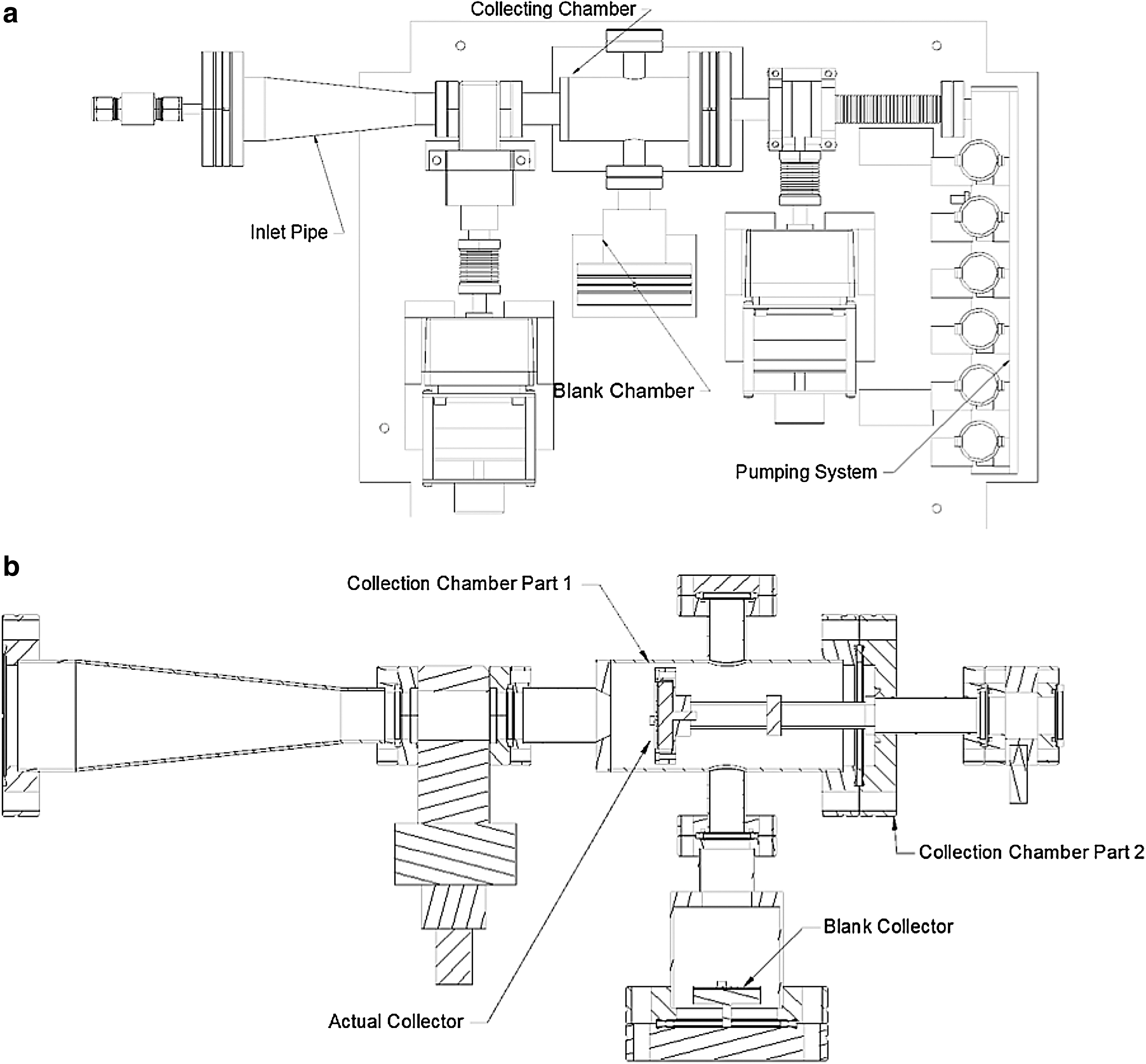
DUSTER is designed to allow the collection of particles directly onto substrates suitable for different analytical techniques, for example, electron microscopy, energy-dispersive X-ray (EDX) analysis, and infrared and micro-Raman spectroscopy, without the necessity of sample manipulation (Della Corte et al., 2012). The DUSTER design includes a collection chamber that can be sealed by ultrahigh vacuum (UHV) valves when in nonsampling mode plus a one-shot mechanism that seals the inlet pipe prior to reaching 20 km altitude during the ascent phase (Fig. 2). To simplify assembly and integration of the instrument, the collecting chamber consists of two separate parts connected by a ConFlat (CF) 40 flange. The substrate for dust collection is fixed on a dedicated support mounted on a part of the collecting chamber that is fixed in place just before sealing of the chamber. In part 1 of the chamber shown in Fig. 2, two CF 16 ports are shown; that is, one is closed by a blind flange, and the second is connected to a secondary chamber where a “blank collector” is housed in a secondary “blank chamber.” The blank collector, which is identical to the “actual collector” but not exposed directly to the airflow, was used to monitor particle contamination during all the pre- and postflight operations that were conducted inside a class 100 clean room. The entire assembly of the collection chamber plus the blank chamber is connected to the inlet that is open to the atmosphere and, on the other side, connected to the pumping system by two UHV valves.
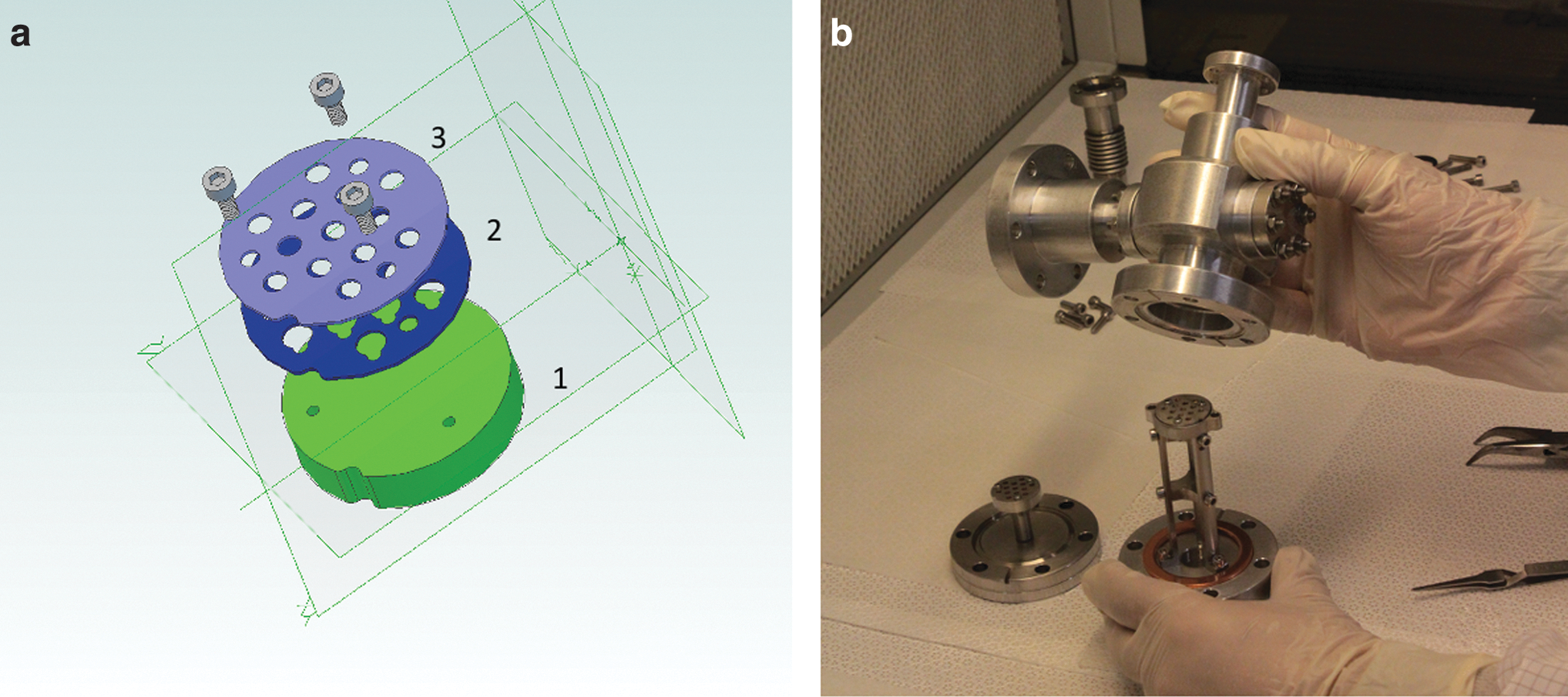
The collection substrate, which is identical for the “actual” and “blank” collectors, consists of 13 standard transmission electron microscope (TEM) grids covered with quantifoil or a holey carbon thin film for particle deposition. It is housed in a custom-made mechanical holder that consists of (1) a stainless steel round base (5 mm thick) that is 23 mm in diameter with a pin that allows its placement in the field-emission scanning electron microscope (FESEM) chamber, (2) a thin plate (0.5 mm) pierced with 13 holes each with a little buttonhole for easy manipulation of the TEM grids, and (3) a thin plate (0.5 mm) pierced with 13 holes [slightly smaller than those in (2)] to fix the TEM grids into their positions (Fig. 3).
To control contamination of the actual collector, the collecting chamber is assembled inside a class 100 clean room. All mechanical parts are cleaned in an ultrasonic bath of isopropyl alcohol prior to assembly inside the class 100 clean room. To keep the collecting chamber isolated from the external environment until the instrument reaches the operational altitude, two automated UHV valves seal the chamber. The inlet pipe, connected on one side to the gate valve and sealed on the other by a CF 40 flange, is cleaned and integrated inside the clean room. The CF 40 flange that seals the inlet pipe is kept fixed to the inlet during all preflight operations and is only released during the ascent when the atmospheric pressure reaches about 100 mbar (∼20 km altitude). This flange stays fixed to the inlet pipe to protect its cleanliness during (1) all preflight operations in the laboratory, (2) transportation to and at the balloon launch site, and (3) ascent through the troposphere into the lower stratosphere. It is released by a one-shot mechanism when the balloon carrying DUSTER reaches ∼20 km altitude just above the tropopause and most of the terrestrial airborne dust. As the balloon crosses the tropopause, it expands and might dislodge some of the dust from the launch site where the balloon was laid out during flight preparation (Della Corte et al., 2013a). DUSTER automatically seals off the UHV valves at the operative altitude as soon as collection is terminated. This operation is accomplished by telecommand from a ground station or autonomously by the onboard software. The collecting chamber is sealed off before the descent.
2.3. Pre- and postflight characterization of the collectors
Complete characterization of the entire collection substrates, that is, TEM grids mounted on the actual and the blank collectors, is performed by using high-resolution FESEM imaging prior to their integration in the collecting and blank chambers. A complete scan of the entire collector produces about 150,000 images (about 1200 for each TEM grid); a mosaic of each TEM grid is created by stitching together the acquired images (Fig. 4).

High-resolution imaging of the collecting surfaces permits a complete characterization of potentially preexisting particles. The 1200 images for each grid are acquired by an automatic procedure. The FESEM settings allow the acquisition of images of 1024×768 pixels and a magnification of 6500×resulting in a resolution of about 0.05 micron/pixel. As a result, we are able to completely characterize the TEM grid surface and identify all particles down to 0.1 micron in size.
2.4. Identification of collected particles
The FESEM scanning procedure is performed twice as follows: (1) just before integration of the collectors into DUSTER; (2) just after the removal of the collectors from DUSTER after the flight.
Integration and removal of the collectors in and from the instrument are performed in a class 100 clean room. In the time interval between these two operations, the collecting and the blank chambers remain sealed except during the time of operational sampling at altitude. In the operational phase, both collectors are always exposed to the same environment. The mosaics obtained from the pre- and postflight collector scans, for each TEM grid, are compared to check for the presence of new particles deposited on the collectors (Fig. 4). This procedure identifies all new particles, when compared to the preflight scans, present on both the actual collector and the blank collector following stratospheric flight. Due to the configuration of the collection chamber and the blank chamber (Fig. 2), particles found on the blank collector are contaminants; that is, they are not collected stratospheric particles. During active DUSTER sampling, the blank collector is always in contact with the air present in the collection chamber and acts as a monitoring surface, but the air-flux+dust is not directly impinging on the blank collector. Thus, it is impossible that a stratospheric particle could be deposited on the blank surface. The chemical composition of each collected particle is obtained with a ZEISS Supra FESEM that is equipped with an Oxford INCA Energy 350 system with a Si(Li) INCA X-sight PREMIUM EDX detector operating at an accelerating voltage of 10 or 20 keV. At these conditions, this instrument allows the detection of Kα peaks of elements with atomic number 6 (C) to 22 (Ti) and the L and M peaks of elements with atomic number >22. The same FESEM, but used at accelerating voltages of 2–4 kV, was the optimum voltage for good image resolution while avoiding electrical charging of the uncoated particles during scanning of the actual and blank collectors.
2.5. Protocol for stratospheric particle identification
Following identification of the new particles on each collector, a strict protocol is applied to select which particles are “true” stratospheric dust and which are contaminant dust, that is, all particulate matter that is identified as not collected in the upper stratosphere at the DUSTER operating altitude. This protocol foresees the following steps: (1) For each new particle found on the actual collector, that is, present in the postflight but not in the preflight FESEM mosaic images, we obtained high-resolution FESEM images and EDX analyses. (2) For each new particle found on the blank, that is, present in the postflight but not in the preflight FESEM mosaic images, we obtained high-resolution FESEM images and EDX analyses. (3) We made a comparison between the new set of particles found on the actual collector with the new set of particles found on the blank collector, using all data acquired in the previous steps on both morphology and composition of the particles. (4) The results from this comparison allowed us to eliminate from the actual collector all particles that have similar morphology and composition to those identified on the blank collector. (5) The resulting new particle set includes only collected stratospheric particles. (6) The remainder of the particles is classified as contamination.
Our rigid adherence to this protocol could potentially lead to the loss of some small fraction of particles that, in fact, were present in the stratosphere, but it also makes it possible to identify even a single stratospheric particle present on the actual collector.
2.6. Examples of assigning contaminant particle classification
The particle in Fig. 5a was found on the actual collector, while the particle shown in Fig. 5b was found on the blank collector during the 2011 DUSTER flight. Both particles are morphologically similar, nanometer-sized aggregates of subspherical nanograins. Both have similar compositions. By applying the protocol rules, their physiochemical similarities lead to the conclusion that they are contaminant particles. After reduction of the raw EDX data they are found to be Ti-oxide nanoparticles. Such particles are commonly used as white pigment base in paint, paper, plastics, and rubber (Klein, 1993). Figure 6 shows two similar irregularly shaped particles with a smooth surface and attached and/or embedded nanograins found on the actual collector from the 2011 DUSTER flight (Fig. 6a) and the blank collector (Fig. 6b). The reduced EDX data for both particles show similar C-S compositions of unknown origin. By applying the protocol rules, these particles are classified as contamination. DUSTER's unique design, maintaining strict standards of cleanliness during instrument assembling, and disassembling and rigorous adherence to the laboratory protocol allows individual particles to be recognized as collected stratospheric particles.


FESEM images and EDX data for two similar particles that were identified as new on the actual collector (
The selection procedure is not always as straightforward as in the previous examples. An example is shown in Fig. 7 of two particles, both with a smooth surface and sharp outlines not unlike layer silicate grains. Both particles (Fig. 7a, 7b) appear to have a layer structure. They are both micron-sized Si-Al-O (reduced EDX data) particles; the only real difference between the two is that the particle found on the actual collector (Fig. 7a) has thin flakes at its surface, whereas the surface of the particle found on the blank collector is absolutely smooth (Fig. 7b). Assuming both particles are kaolinite [Al2Si2O5(OH)4], the presence of similar flaky material, or the absence thereof, would not be considered a diagnostic difference. Although inconclusive, but erring in a conservative manner, the protocol rules dictate that these particles must be classified as contaminants.
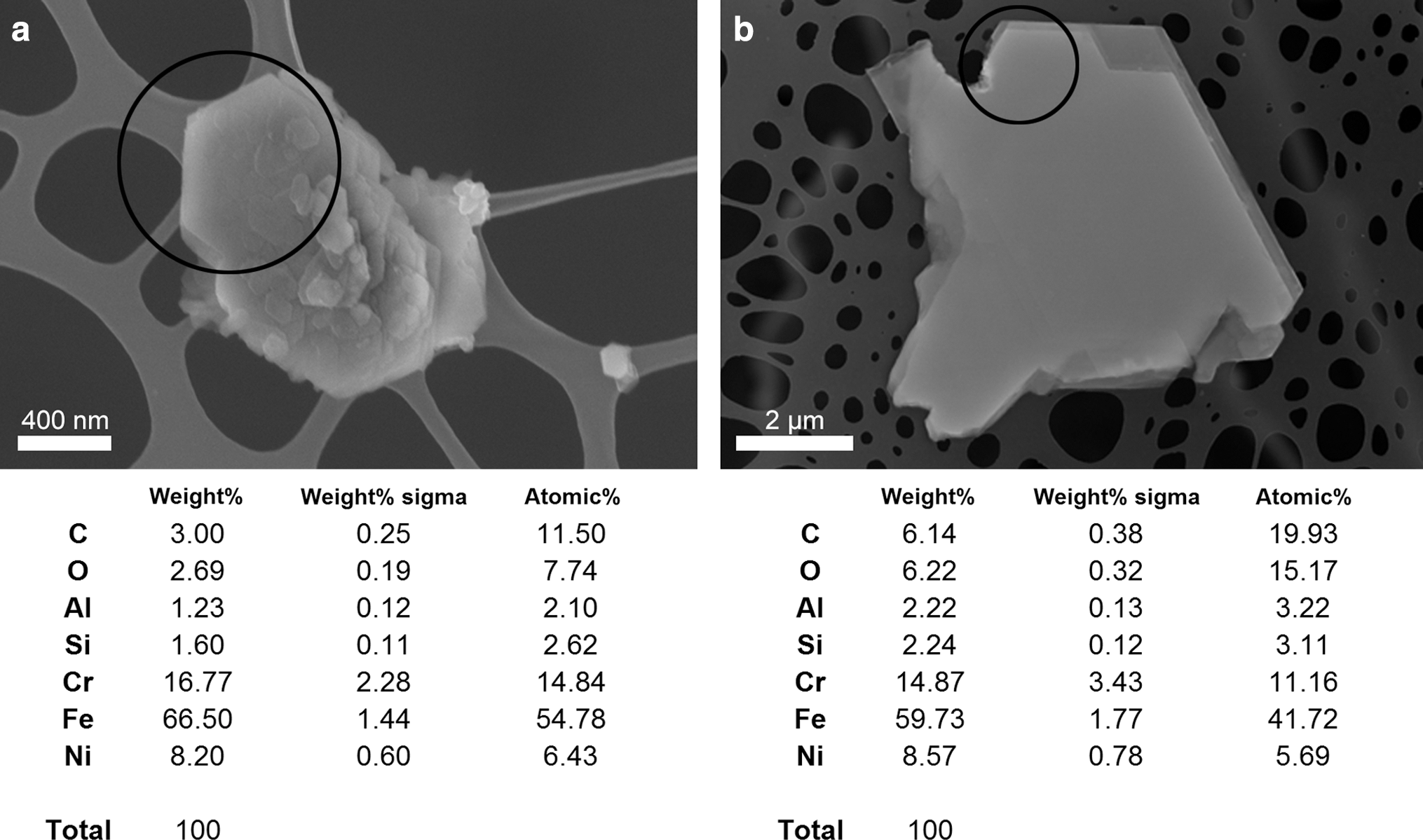
FESEM images and raw EDX data for two multilayered quasi-hexagonal (circles) (crystalline?) particles identified as new on the actual
3. Results
On 11 April 2011, DUSTER collected 26 stratospheric particles between 31.6 and 33.7 km altitude over northern Sweden (Fig. 8). They were mostly nanoparticles, with one distinct outlier of 7.7 microns (Fig. 9). Twenty-five particles were mineral matter divided into five compositional groups as follows: (1) eight Mg-Si-Al particles, (2) six Si-Al particles, (3) seven Si particles, (4) three Si,Fe particles, and (5) one Ca particle (Della Corte et al., 2013b). One particle stood clearly apart. It had no morphological counterpart among particles on the blank collector (Fig. 10). Strictly following DUSTER protocol, it was therefore a stratospheric particle. This filamentous particle consisted of five spherical units (∼2 microns in diameter) in different stages of disconnection (Fig. 11a). Their highly irregular spikey appearance was not found on mineral materials. The composition (Table 1) points to an organic nature, as it contained the major essential elements of all life (C, O, P, S), other major elements prominent in biological systems (Cl, K, Ca), and Br, which is only found in some microbes (Wackett et al., 2004). It is important to note that the EDX system used in this study cannot detect H and N. Thus, the normalized atomic abundances (Table 1) are artificially enhanced. Any amounts of H and/or N would lower these other normalized element abundances to the level of trace elements. The particle could be a chain of fungal spores arranged in a short filament. The spores could be a plant pathogen, Cladosporium herbarum (Dr. J. Wagner, private communication), or Scopulariopsis (Dr. J. Macher, private communication), but these assignments are quite preliminary. The platy arrowhead-shaped particle attached to the second unit from the top (Fig. 11b, 11c) is a foreign element. The composition shows an inorganic particle that is Ca(OH)2 or CaO2.
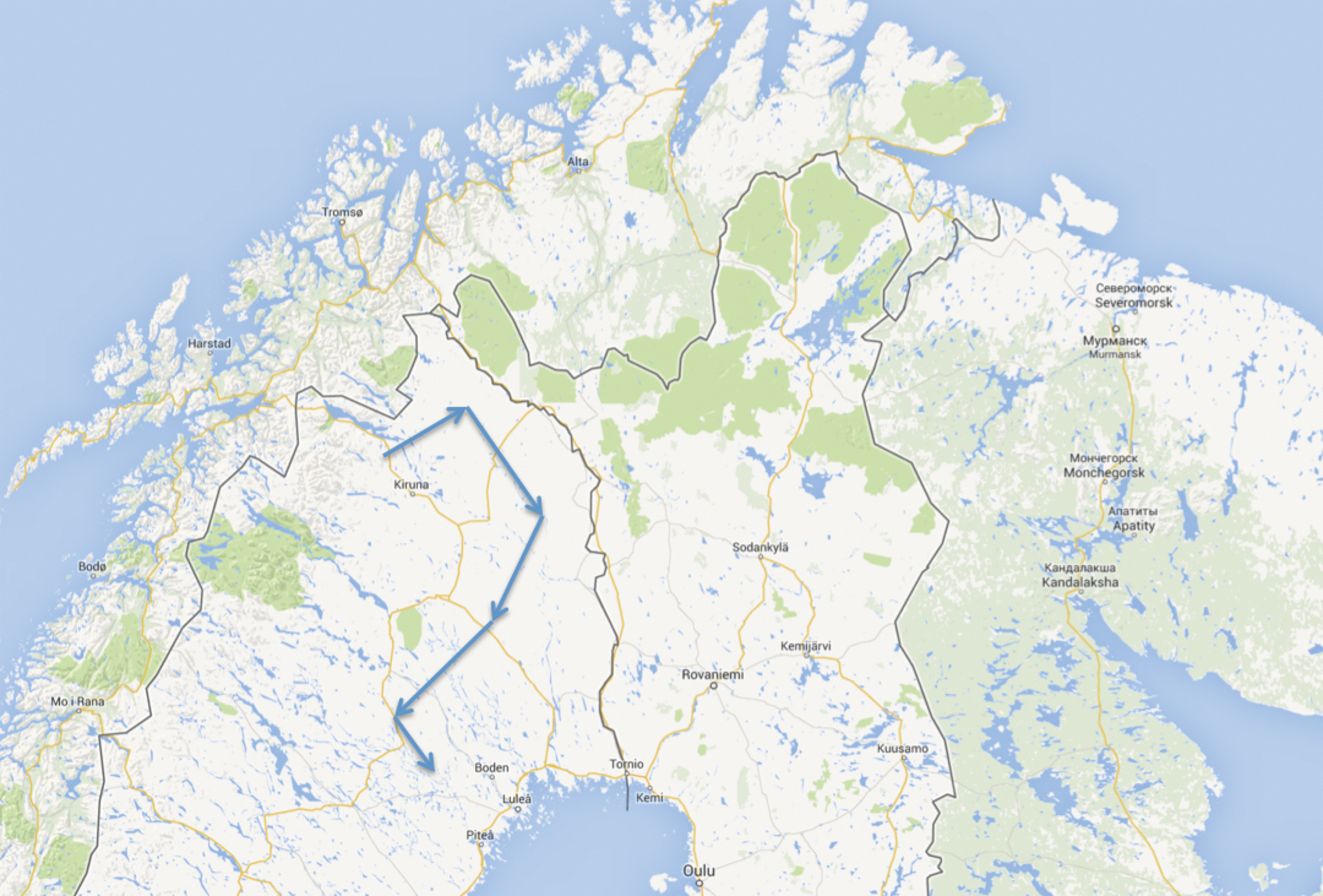
The DUSTER flight path across northern Sweden on 11 April 2011 (arrows) superimposed on a Google map. Its flight path followed the changing wind directions close to the time of the vernal turn-around event. DUSTER was launched from Esrange (Kiruna, Sweden) by the Centre National d'Etudes Spatiales (CNES) team. DUSTER was connected to the ETNA 2 (Equipment of TM/TC for Nacelle) CNES telemetry for remote control operations such as opening and closing the collector. During the 5.7 h balloon flight the collector was active for 2.8 h sampling 3.9 m3 of stratospheric air. Color images available online at

Histogram showing the size distribution of the stratospheric particles collected by the DUSTER 2011 campaign.
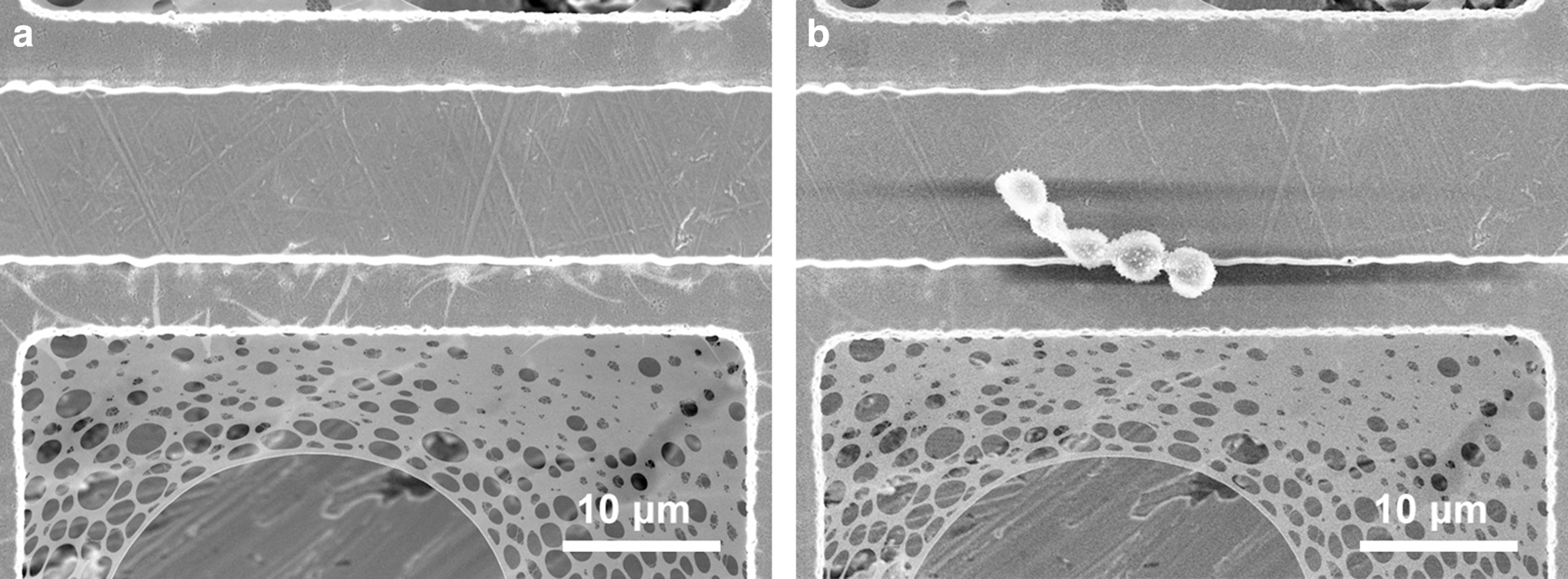
Scanning electron images showing a partial view of the Cu mesh grid and the holey carbon thin film that is the collection surface shown before
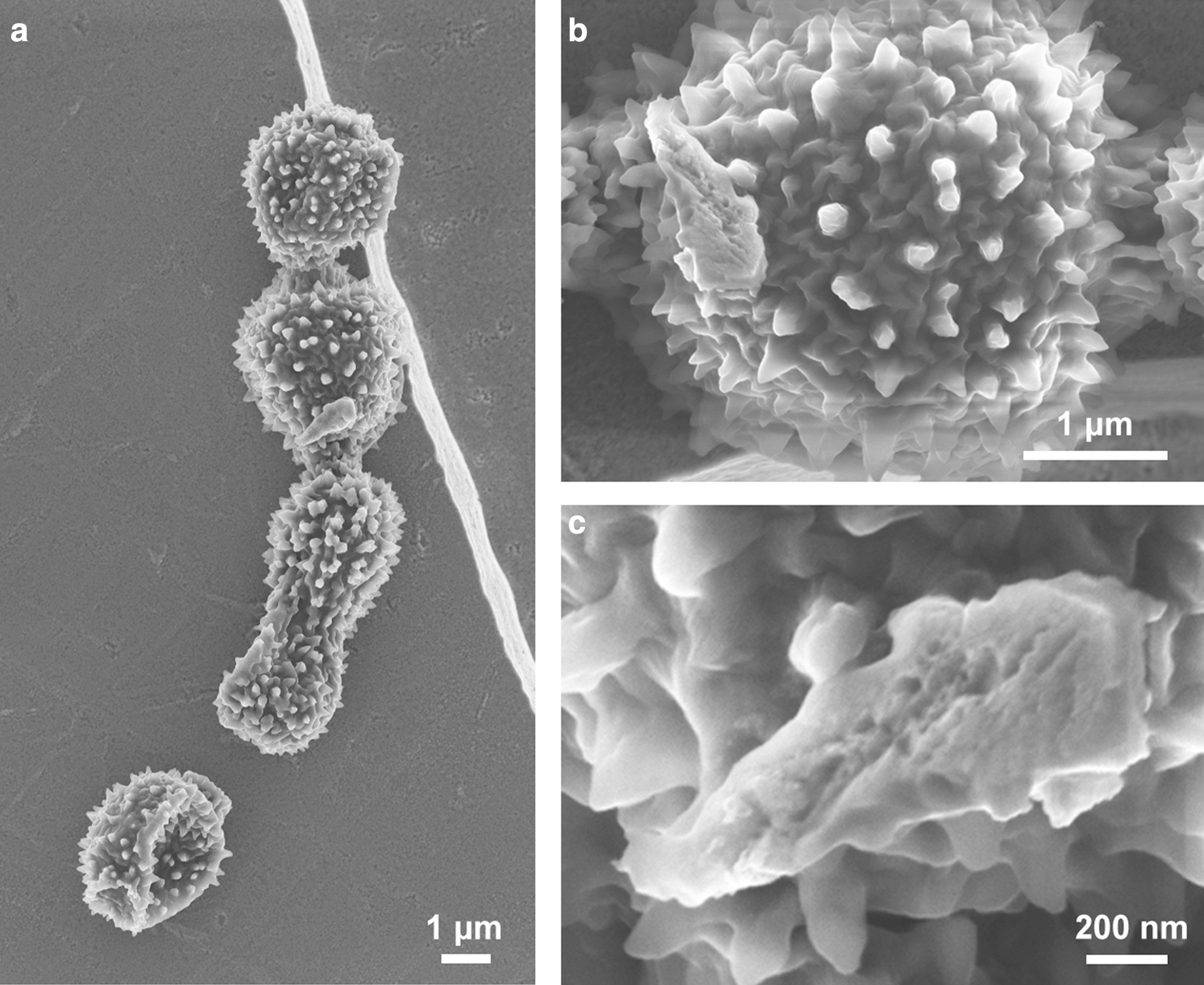
The single FESEM/EDX analysis of the arrow-shaped grain (not included in the mean calculation) shows higher Ca and O abundances compared to the average composition.
4. Discussion
All DUSTER collection flights conducted to date focused on inorganic extraterrestrial (meteoric) dust in the upper stratosphere. This dust might be a so-far-unrecognized component of the influx of extraterrestrial materials to Earth's atmosphere (Plane, 2012). For this purpose, class 100 cleanliness was maintained during all stages of the DUSTER procedures. The instrument was always cleaned in an ultrasonic bath of isopropyl alcohol. Individual collector substrates (TEM grids) are dismountable for further investigations. In this way, using focused ion beam analysis, Fourier transform infrared spectroscopy, and micro-Raman spectroscopy, we identified a collected Ca-carbonate particle as calcite or dolomite (Ciucci, 2011; De Angelis et al., 2011). By means of FESEM/EDX analyses, we identified fungal spores arranged in a short filament collected by DUSTER.
Rauf et al. (2010) reported that microbial aggregates and spheres appeared to be contaminated, or at least associated, with inorganic extraterrestrial dust. The spores presented here are associated with an inorganic nanoparticle, which could be an original feature. Perhaps cross contamination of two particles from different origins had occurred when both were still present in the upper stratosphere and stuck together by electrostatic force. This could have occurred during collection whereby two particles were deposited on top of each other on the collector surface. The frequency of particle-particle collision and sticking is unknown. It will be a function of particle number density, stratospheric residence time, particle size and mass, among others, which at this time remains unconstrained. Forming clusters of multiple identical particles in the upper stratosphere will be even less frequent. It would seem that clusters of multiple microbial or multiple inorganic particles will be a primary feature inherited from their source. During collection, a cluster either survives intact or it breaks apart and leaves a recognizable fragmentation pattern on the collector surface. The latter was observed for CaO and for carbon nanograins collected by DUSTER in 2008 (Della Corte et al., 2013a).
5. Conclusion
Much more work and many more collection flights will be needed to assess the frequency of cluster formation and breakup. It is conceivable that microbial particles could hitch a ride into the upper stratosphere and beyond attached to the surface of space-bound rockets or vehicles and possibly reenter the atmosphere, which ultimately might become a matter of planetary protection. It is beyond the scope of the present study to use microbe concentrations to assess the likelihood of terrestrial origin. In the meantime, DUSTER demonstrated that it works exactly as it was designed, that is, to recognize even a single captured particle as stratospheric and determine particle size, shape, morphology, and chemical composition while the particle is still at the collector. During the 2011 flight, DUSTER collected a single particle that could be identified as (1) a stratospheric particle and (2) an organic particle by FESEM-EDX analysis. We have not attempted to stain the collected fungal spores, but this is certainly an option in future DUSTER collections. DUSTER's design allows sterilization when required for dedicated bioaerosol collections. Because DUSTER has the capacity to control contamination significantly, it would be cost-effective to apply more sophisticated analytical techniques to individual stratospheric particles of terrestrial and extraterrestrial origin.
Footnotes
Acknowledgments
The DUSTER project was funded by the Italian Space Agency (ASI), PRIN2008/MIUR (Ministero dell'Istruzione dell'Università e della Ricerca), MAE (Ministero degli Affari Esteri). CNES graciously provided this flight opportunity. We thank E. Zona and S. Inarta at the Laboratorio di Fisica Cosmica INAF, Osservatorio Astronomico di Capodimonte-Università di Napoli Parthenope. F.J.M.R. was supported by grant NNX07AI39G from the NASA Cosmochemistry Program. We thank three anonymous reviewers who assisted us in introducing our new instrument.
Abbreviations
CF, ConFlat; DUSTER, Dust in the Upper Stratosphere Tracking Experiment and Retrieval; EDX, energy-dispersive X-ray; FESEM, field-emission scanning electron microscope; IDPs, interplanetary dust particles; TEM, transmission electron microscope; UHV, ultrahigh vacuum.