




Abstract
We propose that double metal cyanides that formed in primeval seas might have played a vital role in chemical evolution and the origin of life. An array of metal octacyanomolybdates (MOCMos) has been synthesized, and their role as catalyst in the formation of nucleobases from formamide has been studied. Formamide, a hydrolysis product of HCN, was taken as starting material for the formation of nucleobases. Recent studies support the presence of formamide on some celestial bodies. Metal octacyanomolybdates, MOCMos (M=Mn, Fe, Co, Ni, Cu, Zn, Cd), are found to be highly efficient catalysts in the conversion of formamide into different nucleobases. Neat formamide is converted to purine, 4(3H)-pyrimidinone, cytosine, adenine, 9-(hydroxyacetyl)-purine, and thymine in good yield when using MOCMos. The products formed were characterized by high-performance liquid chromatography and electrospray ionization mass spectrometry techniques. The results of our study show that insoluble double metal cyanides might have acted as efficient catalysts in the synthesis of various biologically important compounds (e.g., purines, pyrimidines) under primeval seas on Earth or elsewhere in our solar system. Key Words: Metal(II) octacyanomolybdate(IV)—Prebiotic catalyst—Formamide—Nucleobases. Astrobiology 14, 769–779.
1. Introduction
S
Formamide (HCONH2), the simplest amide, is one of the most abundant molecules in the Universe. The hydrolysis of formamide is a minor side process in most anhydrous conditions; thus this compound is treated as a prebiotic precursor for the formation of biologically important compounds. Recent studies support the presence of formamide on some extraterrestrial bodies in the Solar System, including Titan and Europa (Levy et al., 2000; Borucki et al., 2002; Parnell et al., 2006). Due to the prebiotic availability, relative stability, versatile reactivity, and low volatility compared to water, formamide is a potential prebiotic starting material for the nucleobases (Barks et al., 2010). Condensation is a unique property of formamide, forming both purine and pyrimidine nucleobases simply on heating at 110–160°C in the presence of minerals and metal oxides, as has been extensively demonstrated (Saladino et al., 2001, 2003, 2004, 2005, 2006). Interestingly, achiral nucleobases have been shown to play an important role in the formation of chiral biomolecules (Kawasaki et al., 2008; Mineki et al., 2012).
Egami (1974) reported that there exists a good correlation between the concentration of minor transition elements in the primeval seas and their biological abundance. He proposed that chemical evolution might have proceeded in the primeval seas. Egami proposed that molybdenum, zinc, iron, copper, manganese, and cobalt are the important transition biometals. The concentration of these metals in the primeval seas is estimated to be 7–100 nM. Molybdenum is the most abundant transition element in seawater, and its involvement occurred in different oxidation-reduction steps (Stiefel, 1973). Because of the ease of formation of cyanide under prebiotic conditions, cyanide is very likely to have been present on primitive Earth. Since the cyanide ion is a strong-field ligand, it is reasonable to assume that cyanide ions might have formed a number of insoluble and soluble double metal cyanide complexes by using transition metal ions abundantly present in the primeval seas.
Beck (1978) proposed the formation of transition metal cyanide complexes under prebiotic conditions. Keefe and Miller (1996) advocated the probability of the existence of hexacyanoferrate(II) on primitive Earth under cold conditions. Orgel (1974) suggested that the formation of cyano complexes of transition metals might have played important roles in chemical evolution. Recently, our attention has turned to polycyanides with higher coordination numbers. Octacyanometalates are a versatile class of compounds that adopt different spatial configurations depending on the surrounding ligands. Apart from their potential application in electroanalytical techniques (Schroder and Scholz, 2000), as molecular magnets (Sra et al., 2000), photomagnets (Ohkoshi et al., 2001a, 2001b, 2006; Rombaut et al., 2001; Catala et al., 2005), and ferromagnets (Nakagawa et al., 2008), it has been suggested that metal(II) octacyanomolybdates(IV) (MOCMos) play an important role in prebiotic synthesis.
A survey of the existing literature also reveals that inorganic minerals present on primitive Earth might have played an important role in the processes of chemical evolution that led to the synthesis of nucleobases from formamide and subsequently to biopolymers. To the best of our knowledge, there is no report on the catalytic activity of MOCMos complexes in the synthesis of nucleobases from formamide. The present work describes the synthesis of a series of MOCMos (M=Mn, Fe, Co, Ni, Cu, Zn, Cd) complexes and explores the effect of these complexes on the condensation of formamide for synthesis of nucleobases. The experiments were performed at a temperature of 160°C for 12–96 h. These data, in connection with the recent use of MOCMo as a catalyst for the polymerization of amino acids (Kumar and Kamaluddin, 2012), further support a major role of MOCMos in prebiotic processes.
2. Experimental Procedure
2.1. Materials and methods
Potassium cyanide (Loba Chemie), sodium borohydride (E. Merck), sodium molybdate (Rankem), manganese(II) nitrate (E. Merck), iron(II) nitrate (E. Merck), cobalt(II) nitrate (E. Merck), nickel(II) nitrate (E. Merck), copper(II) nitrate (E. Merck), zinc(II) nitrate (E. Merck), cadmium(II) nitrate (E. Merck), potassium dihydrogen phosphate, orthophosphoric acid (Merck), formamide (>99.5%), adenine, cytosine, thymine, purine, and 4(3H)-pyrimidinone were purchased from Sigma. All other chemicals used were of analytical grade and were used without further purification. Millipore water was used throughout the studies.
2.2. Preparation of metal octacyanomolybdate(IV)
Metal octacyanomolybdates were synthesized from potassium octacyanomolybdate(IV) K4[Mo(CN)8]·2H2O by the method of Szklarzewicz et al. (2007). Potassium octacyanomolybdate(IV) complex was synthesized by the method described in the literature (Schroder and Scholz, 2000). The method for the synthesis of MOCMos involved slow addition of dilute aqueous solutions of the respective metal(II) nitrate (0.1 M) into 0.1 M aqueous solution of potassium octacyanomolybdate(IV). These solutions were mixed in their stoichiometric ratio with constant stirring at room temperature. A slight excess of metal salt was used for complete precipitation. The reaction mixture was heated at 40°C for 5 h and then kept overnight at room temperature. After 24 h, the precipitate formed was filtered on a Buchner funnel, washed thoroughly with Millipore water, and dried at 60°C in an oven. The dried product was powdered and sieved to 100 mesh size.
2.3. Characterization techniques (CHN, AAS, TGA/DTA, FE-SEM, IR)
The percentage of carbon (C), hydrogen (H), and nitrogen (N) present in MOCMos was recorded on an Elementar Vario ELHI CHNS analyzer, while the percentage of transition metal was determined by atomic absorption spectroscopy (AAS; GBC Avanta M, Australia). To measure the water of crystallization present in MOCMos, thermogravimetric analysis (TGA) was carried out with a thermal analyzer (EXSTAR TG/DTA 6300, SII Nano Technology Inc., Japan). Molecular formulas of the synthesized metal(II) octacyanomolybdate(IV) complexes are shown in Table 1.
Values in parentheses are theoretical ones.
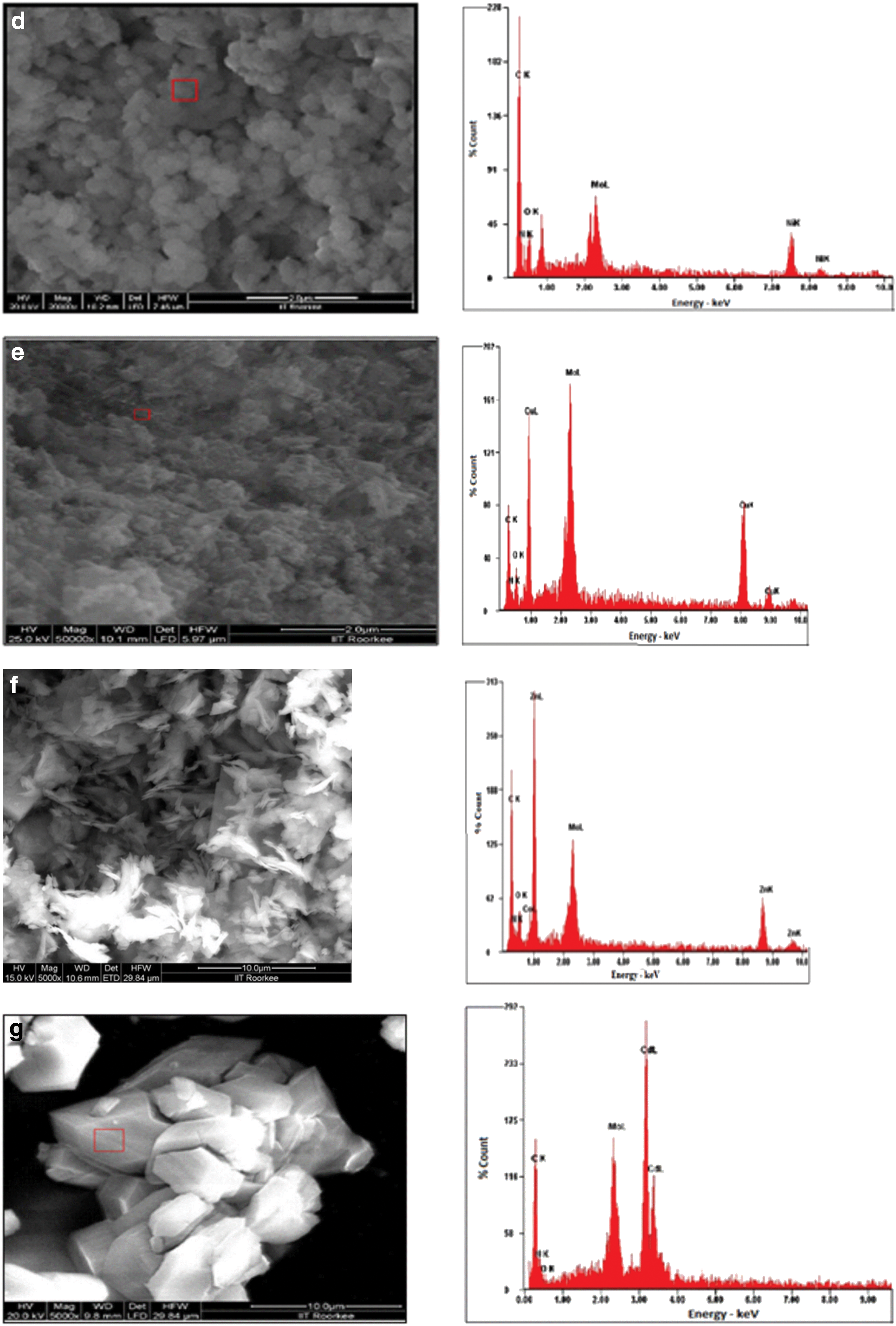
The morphology of the synthesized metal(II) octacyanomolybdate(IV) complexes was observed by field emission scanning electron microscopy (FE-SEM) with a FEI Quanta 200F microscope operating at 20 kV. The microscope was also used to record the energy-dispersive X-ray analysis (EDXA) spectra. FE-SEM images of all metal(II) octacyanomolybdate(IV) complexes except iron(II) octacyanomolybdate(IV) indicate that the particles of MOCMos are uniformly distributed over the surface. In the case of iron(II), octacyanomolybdate(IV) particles were found to be irregularly shaped and agglomerated. EDXA patterns also confirm the elemental composition of metal octacyanomolybdates(IV). FE-SEM images and EDXA patterns are shown in Fig. 1.
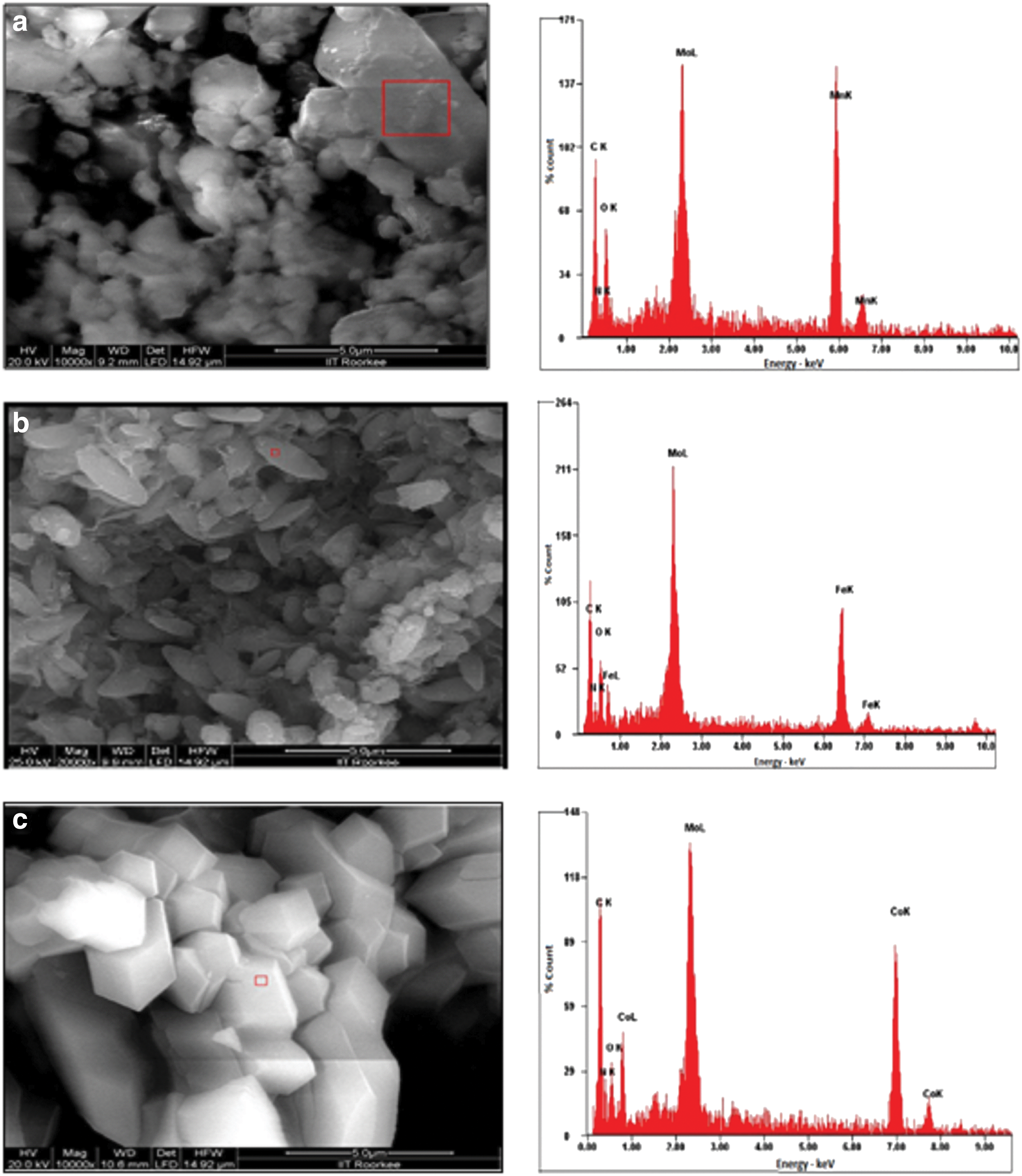
FE-SEM images and EDXA patterns: (
The IR spectra of all MOCMos were recorded by using KBr disc on a Perkin Elmer Fourier transform infrared spectrophotometer (Model Perkin Elmer-1600 series). Infrared vibration frequencies of the synthesized potassium octacyanomolybdate(IV) and metal(II) octacyanomolybdates (MOCMos) were in good agreement with reported values (McKnight and Haight, 1973). In MOCMos, C≡N stretches trend toward higher frequencies than those of K4[Mo(CN)8]·2H2O, suggesting coordination of the metal in the outer sphere of potassium octacyanomolybdate(IV). Typical IR spectra of potassium octacyanomolybdate(IV) and zinc(II) octacyanomolybdate(IV) are given in Fig. 2.
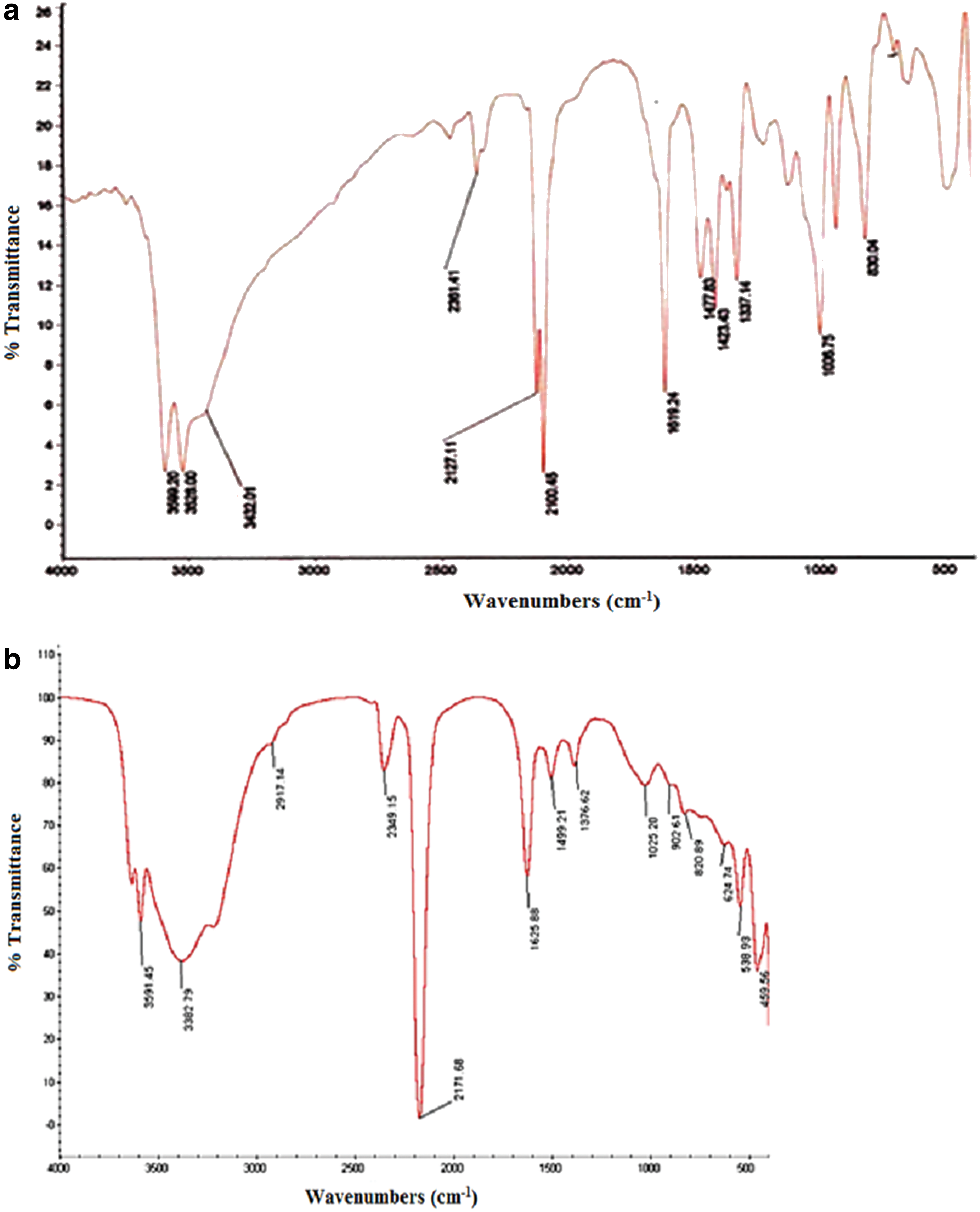
Infrared spectra of (
2.4. Surface area measurements
The Brunauer-Emmett-Teller gas adsorption method (Brunauer et al., 1938) was used to determine the surface area of MOCMo complexes on a surface area analyzer (Micromeritics ASAP 2010, UK). The surface area was determined by physical adsorption of N2 gas at its boiling temperature. The measured values of the surface areas of MOCMos are shown in Table 2.
2.5. Synthesis of nucleobases from formamide
The upper limit of temperature for the synthesis of nucleobases from formamide was set at 180°C in view of the boiling point of formamide (211°C). The lowest temperature at which formamide undergoes appreciable thermal decomposition is reported to be 180–190°C (Kirkpatrick, 1944). Thus, the most favorable set of conditions for the synthesis of nucleobases from formamide would be a high concentration of formamide, the presence of a catalytic system, and a temperature in the range of 100–180°C (Saladino et al., 2001). We performed the reaction taking neat formamide (5.7 g, 5 mL, 0.12 mol) at 160°C for 12–96 h in the presence of 50 mg of selected catalyst (Mn-, Fe-, Co-, Ni-, Cu-, Zn-, Cd-OCMo). Blank experiments were also performed under similar conditions. The reaction mixture was centrifuged and filtered with a 0.2 μm syringe filter (Axiva); then this mixture was divided into two parts, one for high-performance liquid chromatography (HPLC) analysis and the other for electrospray ionization mass spectrometry (ESI-MS) analysis.
2.6. Analytical methods
All solutions obtained from the reaction systems were analyzed by using HPLC (Waters 2489, binary system) with a Waters' Spherisorp 5 μm ODS2 4.6 mm×250 mm. The mobile phase used was a buffer solution of 0.1 M KH2PO4 acidified with H3PO4 to pH 4.05, with a flow rate of 0.75 mL/min under isocratic condition, and detection of the products formed was done by measuring the absorbance at 260 nm.
A Bruker Esquire 4000 (Bruker Daltonic, Bremen, Germany) ion trap mass spectrometer interfaced to an electrospray ionization source was used for mass analysis and detection. Ionization of analytes was carried out by using the following setting of electrospray ionization: nebulizer gas flow 10 psi, dry gas 5 L/min, dry temperature 300°C, capillary voltage 4000 V. Calibration MSn spectra were obtained after isolation of the appropriate precursor ions under similar experimental conditions.
3. Results
Metal octacyanomolybdates (Mn-, Fe-, Co-, Ni-, Cu-, Zn-, Cd-OCMo) were used as catalysts in the condensation of formamide. HPLC and ESI-MS analysis techniques were employed for the estimation and characterization of the products. It was found that in the blank, that is, in the absence of a catalyst, only purine was formed from formamide; but in the presence of different MOCMos, several nucleobases were formed in different yields.
3.1. High-performance liquid chromatography analysis
A typical HPLC chromatogram of products formed is shown in Fig. 3, when formamide was heated at 160°C for 48 h in the presence of MOCMos. The reaction products were identified by retention times and co-injection method with authentic samples. In the formamide-based reaction, the products detected are adenine, purine, 4(3H)-pyrimidinone, cytosine, 9-(hydroxyacetyl)-purine, and thymine, as shown in Fig. 4.
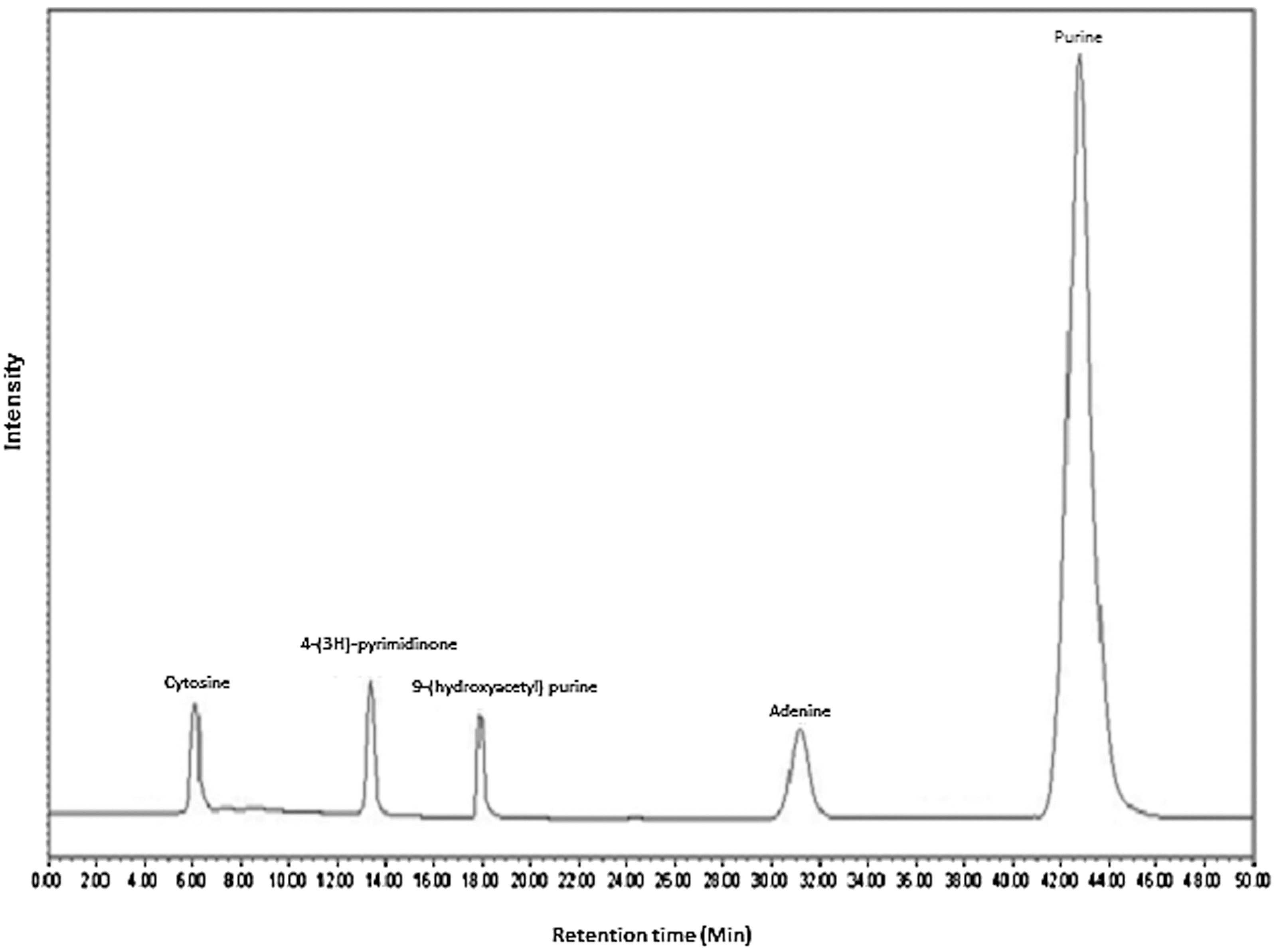
A typical HPLC chromatogram of product formation when formamide was heated at 160°C for 48 h in the presence of MOCMos. Retention times of analyzed products (in min): cytosine (6.0), 4(3H)-pyrimidinone (13.7), 9-(hydroxyacetyl)-purine (17.8), adenine (31.6), purine (43.4).

Synthesis of nucleobases from formamide in the presence of MOCMos at 160°C for 48 h.
It was found that the products gradually started to form after 12 h from the start of the reaction and that the concentration of the products became constant after 48 h. Hence, it was concluded that 48 h was the optimum time for the formation of the products. Progress of product formation is shown in Fig. 5. We focused our attention only on the formation and identification of purine and pyrimidine derivatives among the products formed in higher yield.
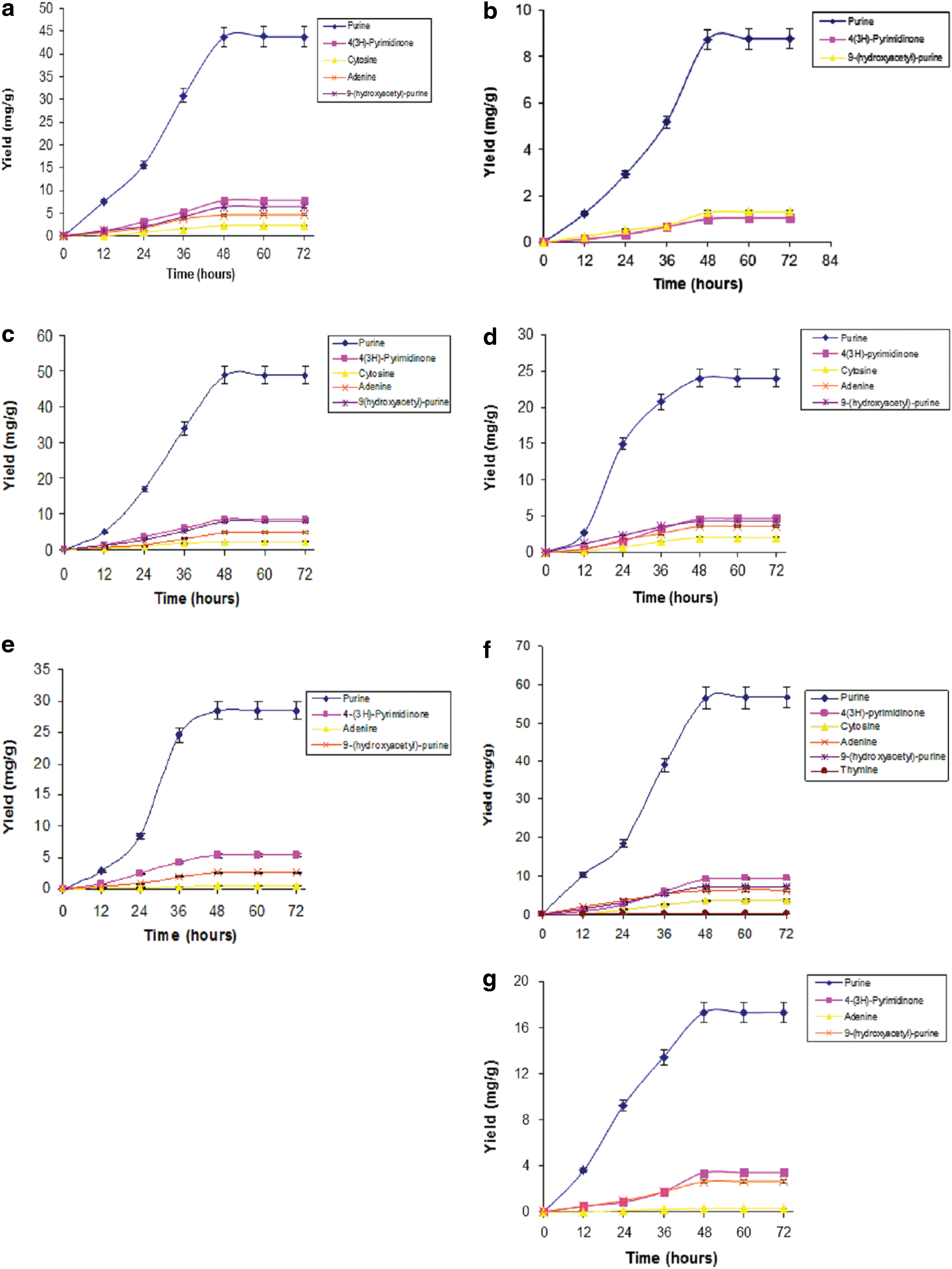
Time-dependent analysis of product formation at 160°C by (
Table 3 shows yields of products obtained from condensation of formamide at 160°C in the presence of MOCMos. ZnOCMo yielded purine, 4(3H)-pyrimidinone, cytosine, adenine, 9-(hydroxyacetyl)-purine, and thymine, whereas in the case of Mn-, Co-, Ni-OCMo, thymine was absent. Cu-, Cd-OCMo afforded all the above-mentioned nucleobases except cytosine and thymine, while FeOCMo yielded only purine, 4(3H)-pyrimidinone, and 9-(hydroxyacetyl)-purine. When the reaction was performed in the presence of Mn-, Co-, Zn-OCMo, a high increase in the yield of purine was observed along with other products. In the presence of CuOCMo, there was no appreciable increase in the yield of purine, but other products, 4(3H)-pyrimidinone, adenine, and 9-(hydroxyacetyl)-purine, were also obtained in the reaction mixture.
Reactions were performed in the presence of 50 mg of MOCMo.
Quantitative evaluation was performed by HPLC (Waters 2489, binary system) equipped with a column from Waters (Spherisorp 5 μm ODS2 4.6 mm×250 mm). UV detection was performed at 260 nm wavelength. The mobile phase used was a buffer solution of (KH2PO4+H3PO4) of pH ∼4.05, with a flow rate of 0.75 mL/min. The yields of products were calculated by comparing peak area with the standards.
Products were identified by co-injection analysis with authentic samples.
A different behavior for the product formation was found in the case of FeOCMo, where the yield of purine was found to be the lowest compared to the reaction performed in the absence of catalyst, while 4(3H)-pyrimidinone and 9-(hydroxyacetyl)-purine were found in very low yield as the main reaction products. In particular, the use of ZnOCMo resulted in a high yield of not only purine itself but also other purine and pyrimidine derivatives. A very small yield of thymine was also observed in the case of ZnOCMo.
3.2. Electrospray ionization mass spectrometry analysis
Figure 6 represents a typical ESI-MS spectrum of products obtained after heating formamide at 160°C for 48 h in the presence of MOCMos. The ESI-MS data obtained were scrutinized to characterize the products by an alternative technique. In the ESI-MS spectra, m/z 97 corresponds to 4(3H)-pyrimidinone [M+H]+ , 112 to cytosine [M+H]+ , 121 to purine [M+H]+ , 127 to thymine [M+H]+ , 136 to adenine [M+H]+ , 179 to 9-(hydroxyacetyl)-purine [M+H]+ . The ESI-MS data provided similar results to those obtained by HPLC.
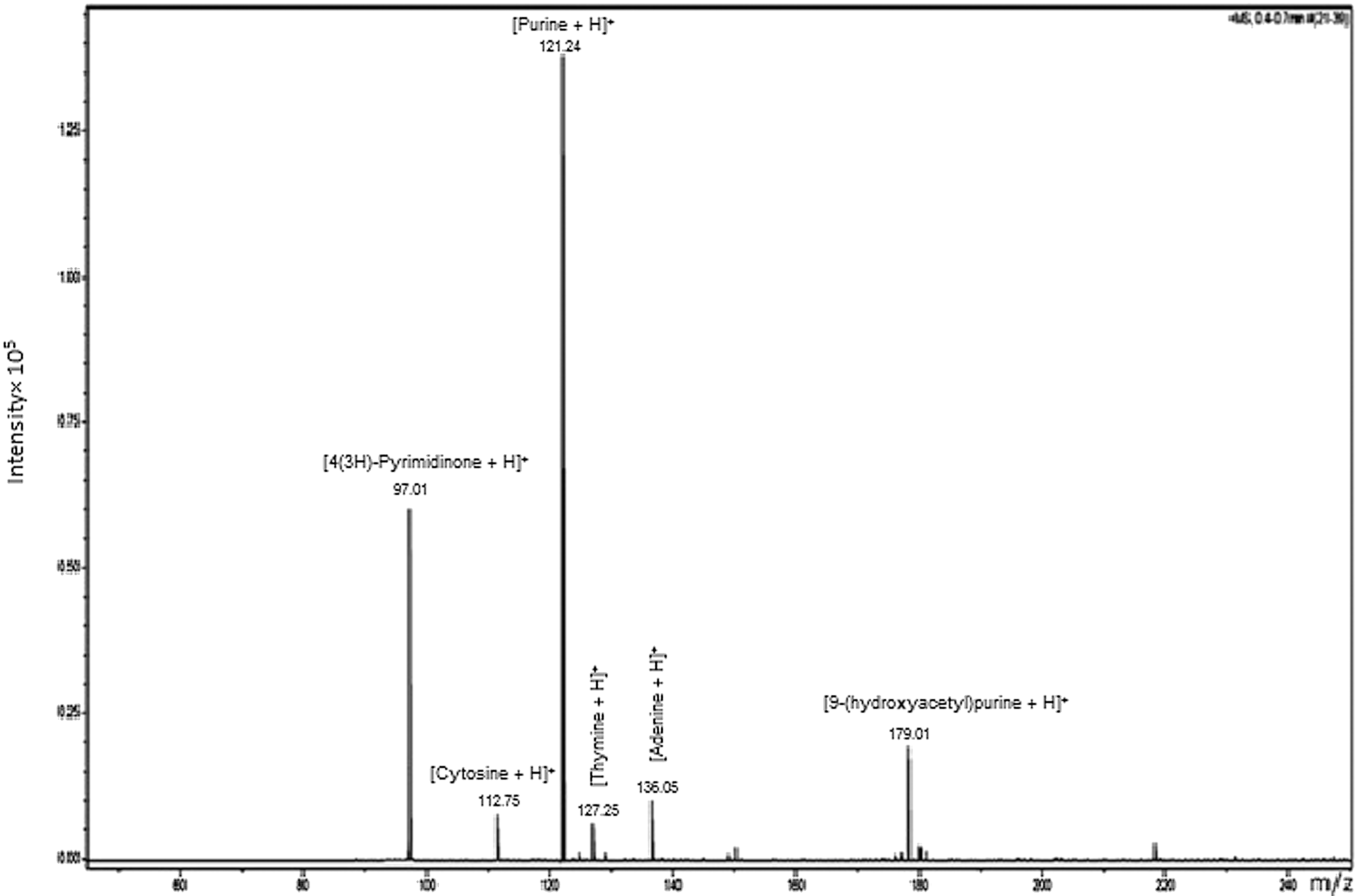
A typical ESI-MS spectrum showing the products formed when formamide was heated at 160°C for 48 h in the presence of MOCMos. m/z 97 corresponds to 4(3H)-pyrimidinone [M+H]+ , 112 to cytosine [M+H]+ , 121 to purine [M+H]+ , 127 to thymine [M+H]+ , 136 to adenine [M+H]+ , 179 to 9-(hydroxyacetyl)-purine [M+H]+ .
4. Discussion
The results reported here show that MOCMos are efficient catalysts for the synthesis of purine and pyrimidine nucleobases starting from the one-carbon atom precursor molecule, formamide. The yields of the products can be explained on the basis of several governing factors such as surface acidity, structural shape, and surface area of the catalyst. Surface acidity of montmorillonites was shown to be an important factor for the synthesis and degradation of nucleic acid components (Saladino et al., 2004). Different structural shapes of iron oxides were considered an important factor for nucleobase synthesis (Shanker et al., 2011).
As described by Saladino et al. (2001), the optimum conditions for the synthesis of nucleobases from formamide included a temperature range of 100–180°C, a high concentration of formamide, the presence of a catalyst, and a reaction time of 48 h to attain optimum yield. The reaction temperature appeared to be a crucial factor for the synthesis of purine and pyrimidine nucleobases from formamide. A temperature of 100°C or below was not suitable for the formation of nucleobases as observed by Saladino et al. (2001). Above 180°C and under atmospheric pressure, formamide thermally decomposes to ammonia (NH3) and carbon monoxide (CO). Therefore, a suitable temperature for synthesis of nucleobases from formamide would be in the range of 100–180°C. The theoretical study on possible steady-state concentration of formamide in the primeval seas was found to be 1×10⁻¹⁴ M at pH 7.0 and 100°C (Miyakawa et al., 2002). It is likely that low concentrations of formamide of the order of 1×10⁻¹⁴ M are not enough for the synthesis of nucleobases. This is why high concentration of the HCONH2 is necessary for the synthesis of nucleobases in good yield.
The presence of a catalytic system is also an important factor for the synthesis of nucleobases. Catalysts provide their surfaces to concentrate the formamide molecules, reduce the activation energy for the formation of products, and preserve synthesized nucleobases from degradation through adsorption processes.
The trend in the catalytic activity of MOCMos for the formation of nucleobases from formamide concerning the yield and products formed was found as follows:
Table 3 shows the yield of products formed from formamide as a function of the metal cations present in the outer sphere of the MOCMos. It was observed that outer-sphere metal in the MOCMo changes the catalytic activity and thus affects the yield of nucleobases where the products are different. The present study shows that octacyanomolybdate with zinc as an outer-sphere metal was the most effective for the production of nucleobases in high yield, whereas iron was the least effective, as shown in Table 3. The yield of purine was high for all MOCMos except FeOCMo.
The role of the surface of the catalyst in our reaction is an important factor for the synthesis of the products as shown in Table 3. ZnOCMo has a higher surface area compared to other MOCMos, as shown in Table 2; thus high yields were obtained by ZnOCMo for all the products formed. Formation of thymine from formamide was only found with ZnOCMo.
A possible interaction scheme between formamide and divalent metals present in the framework of MOCMos is given in Fig. 7. An electrostatic interaction may take place between an electronegative oxygen atom of formamide and the electropositive metal atom of MOCMos. The surfaces of the MOCMos are able to absorb formamide, which increases the local concentration of the molecule, favoring the process of condensation as well as activation of both electrophilic and nucleophilic sites in formamide by means of Coulombic interaction.

Possible interaction between metal(II) octacyanomolybdate(IV) and formamide molecule. (Color graphics available online at
A common problem encountered in the synthesis of nucleobases is the degradation of purines and pyrimidines at high temperatures (Levy and Miller, 1998). Octacyano complexes of Mo(IV) might have provided a local microenvironment that could possibly increase the thermal stability of nucleobases through a molecular recognition process or simply by their isolation from the external environmental condition.
5. Conclusions
Though a number of nucleobases have been synthesized earlier by using different catalysts, this is probably the first report of the catalytic importance of metal octacyanomolybdate(IV) compounds for nucleobase synthesis from formamide. The present study demonstrates the potential importance of a metal(II) octacyanomolybdate(IV) as a prebiotic catalyst in chemical evolution and the origin of life. The four main nucleobases found in ribonucleic acid are adenine, guanine, cytosine, and uracil. Among them, adenine and cytosine were formed in good yields, and a scenario in favor of their prebiotic formation can be envisaged. We conclude that these catalysts may have played an important role in the synthesis of small molecules, such as nucleobases, and in the condensation of small moieties into larger molecules that were finally an important parameter for the emergence of life on Earth.
Footnotes
Acknowledgments
This work was financially supported by the Indian Space Research Organisation (ISRO), Bangalore.
Abbreviations
EDXA, energy-dispersive X-ray analysis; ESI-MS, electrospray ionization mass spectrometry; FE-SEM, field emission scanning electron microscopy; HPLC, high-performance liquid chromatography; MOCMos, metal octacyanomolybdates; TGA, thermogravimetric analysis.