




Abstract
Discovering pathways leading to long-chain RNA formation under feasible prebiotic conditions is an essential step toward demonstrating the viability of the RNA World hypothesis. Intensive research efforts have provided evidence of RNA oligomerization by using circular ribonucleotides, imidazole-activated ribonucleotides with montmorillonite catalyst, and ribonucleotides in the presence of lipids. Additionally, mineral surfaces such as borates, apatite, and calcite have been shown to catalyze the formation of small organic compounds from inorganic precursors (Cleaves, 2008), pointing to possible geological sites for the origins of life. Indeed, the catalytic properties of these particular minerals provide compelling evidence for alkaline hydrothermal vents as a potential site for the origins of life since, at these vents, large metal-rich chimney structures can form that have been shown to be energetically favorable to diverse forms of life. Here, we test the ability of iron- and sulfur-rich chimneys to support RNA oligomerization reactions using imidazole-activated and non-activated ribonucleotides. The chimneys were synthesized in the laboratory in aqueous “ocean” solutions under conditions consistent with current understanding of early Earth. Effects of elemental composition, pH, inclusion of catalytic montmorillonite clay, doping of chimneys with small organic compounds, and in situ ribonucleotide activation on RNA polymerization were investigated. These experiments, under certain conditions, showed successful dimerization by using unmodified ribonucleotides, with the generation of RNA oligomers up to 4 units in length when imidazole-activated ribonucleotides were used instead. Elemental analysis of the chimney precipitates and the reaction solutions showed that most of the metal cations that were determined were preferentially partitioned into the chimneys. Key Words: RNA world—Hydrothermal systems—Prebiotic chemistry—Nucleic acids—Mass spectrometry. Astrobiology 15, 509–522.
1. Introduction
A
In contrast to modern oceans, which have a pH of ∼8.1 and significant concentrations of sodium, calcium, and magnesium ions, it is likely that the voluminous Archean oceans on early Earth would have flooded much of any continental crust formed at that time. The convective circulation of seawater through the crust would generate hydrothermal chemistries ranging from hot, acidic, metal-rich fluids near the ridge axes to cooler, alkaline fluids emanating farther from volcanic centers (Russell et al., 1989; Arndt and Nisbet, 2012). Alkaline serpentinizing systems may have been common on early Earth due to interactions of seawater with Mg-rich komatiitic lavas in both the deep sea off the mid-ocean ridge and shallower, continental settings. The likely result would be high-pH, hydrogen-rich vent fluids that could then have encountered a chemically contrasting, acidic, oxidizing primordial ocean (Russell et al., 1989, 2010). These alkaline hydrothermal systems are attractive sites for the emergence of metabolism and, therefore, of an RNA world, since the natural geochemical, pH, redox potential (Eh), and thermal gradients generated at these vents, combined with precipitation of catalytic hydrothermal minerals such as metal hydroxides and/or sulfides, may have driven the emergence of the earliest metabolic pathways (Russell and Hall, 2006; Baaske et al., 2007; Russell et al., 2014; Kreysing et al., 2015). The chemical interaction of olivine/pyroxene ocean crust and the mildly acidic, CO2/Fe2+-rich primordial ocean would have led to the production of high-pH, warm hydrothermal fluids enriched in trace silicate, Mo, W, and electron donors H2 and CH4, and would possibly have contained a range of simple organic molecules (Proskurowski et al., 2008; Konn et al., 2009; Charlou et al., 2010; Lang et al., 2010, 2012; Mielke et al., 2010; Russell et al., 2014). These vent fluids could also have contained millimolar levels of sulfide from dissolution of crustal sulfide minerals as shown in laboratory experiments simulating serpentinization processes under conditions that may have existed on early Earth (Mielke et al., 2010). The venting of such reduced, sulfide-containing alkaline fluid into the acidic, anoxic, Fe2+-containing ocean would have led to the formation of hydrothermal precipitates (forming “chimney” structures) containing a suite of minerals such as iron/nickel sulfides, double-layer oxyhydroxides, silicate clays, and carbonates. The formation of prebiotic hydrothermal chimneys containing iron sulfide and green rust has been simulated in laboratory studies (Mielke et al., 2010, 2011; Barge et al., 2014; Batista et al., 2014; Herschy et al., 2014). These simulated chimneys exhibit a high degree of self-organization and microscale compartmentalization, and are capable of incorporating and concentrating other components (e.g., phosphates and organic molecules) into the precipitate (McGlynn et al., 2012). These hydrothermal mounds could have been capable of sequestering and concentrating chemical components from the local environment, harnessing the ambient geochemical gradients across catalytic, inorganic precipitate membranes, and subsequently driving the first metabolic/organic reactions (Russell et al., 2014), including the reduction of oceanic CO2 from iron/nickel-sulfide hydrothermal mineral catalysts (Herschy et al., 2014; Yamaguchi et al., 2014).
Hydrothermal chimneys at alkaline vents on early Earth could not only operate as primordial chemical flow-through reactors but the inorganic mineral compartments within the chimneys could also contain cell-sized pockets of organic reactions (Russell et al., 1989, 2003, 2014), perhaps serving as a primitive mechanism for cellularization and leading to the subsequent evolution of organic membranes (Milner-White and Russell, 2005). The ability of iron-sulfide-containing hydrothermal chimneys to readily incorporate a variety of materials from their surroundings into the more concentrated and low-water-activity environment of the precipitate may have played a significant role in promoting a diversity of prebiotic chemical reactions. For example, it has been shown (McGlynn et al., 2012) that laboratory-generated analogues of prebiotic iron-sulfide chimneys can incorporate small peptides and strands of RNA into their mineral structures. The inclusion of these peptide and RNA strands within the chimney structure may allow for hydrogen-bonding interactions that would promote the sequestering of additional peptides or RNA monomers and oligomers, significantly improving the tendency of the chimney to concentrate important organic molecules from the surrounding environment. In the same way that modern organisms utilize iron-nickel sulfide and other metal cofactors in combination with RNA and proteins to conduct enzymatic catalysis, these metal-sulfide-containing hydrothermal chimneys and organic inclusions within the precipitate could also have played an essential role in forming catalytic centers for the generation of organic molecules and driving oligomerization reactions. The importance of these cofactors in prebiotic chemistry can be seen, for example, through pentose phosphate-like reactions that are catalyzed by metal ions and phosphate in an Archean ocean analogue (Keller et al., 2014). This could have led to an Archean ocean containing a dilute, but diverse, collection of metabolites with organics with metallic cofactors (Ralser, 2014). Additionally, some modern and primitive RNA-based enzymatic reactions have been shown to catalyze biochemical reactions, such as electron transfer, more efficiently with the inclusion of a Fe2+ cofactor instead of the modern Mg2+ cofactor, suggesting that Fe2+ [present in millimolar levels in early Earth oceans (Russell and Hall, 2006; Russell et al., 2014)] could have played a significant role in the origin of an RNA world and early metabolic pathways (Athavale et al., 2012; Hsiao et al., 2013).
We conducted laboratory experiments to investigate the possibility of RNA oligomerization in iron-sulfide-containing precipitates under conditions informed by current understanding of early Earth, thus simulating reactions that might have occurred at alkaline hydrothermal systems generating metal-sulfide-containing chimneys on early Earth. Simulated hydrothermal chimneys were formed by using injection chemical garden experiments (e.g., Mielke et al., 2011; McGlynn et al., 2012; Batista et al., 2014) to anaerobically synthesize iron-sulfide precipitates under different chemical conditions and incorporate simple ribonucleotides such as adenosine monophosphate (AMP) and imidazole-activated AMP (ImpA) into the precipitates. In some experiments, we also incorporated montmorillonite clay into the chimney system. Montmorillonite is a phyllosilicate clay, which is produced by water-rock interactions and thought to be common, if not abundant, on early Earth, and has been shown to catalyze oligomerization of imidazole-activated nucleotides (Ferris, 2002, 2005; Joshi et al., 2011). Clays have also been observed to form hydrogels when mixed with ocean water, thus concentrating nucleic acids and promoting RNA synthesis (Yang et al., 2013), and it is possible that similar effects could have occurred in hydrothermal systems on early Earth. Additionally, we investigated the effects of dopants on RNA oligomerization in the chimney systems. Finally, an elemental analysis of the chimneys was undertaken to explore the partitioning of elements between the ocean and chimneys and their possible effect on RNA oligomerization.
2. Materials and Methods
2.1. Materials
All reagents, except where noted, were purchased from Sigma (St. Louis, MO, USA). Montmorillonite in the form of volclay SPV-200 was a gift from The American Colloid Company (Arlington Heights, IL, USA). Low-molecular-weight oligonucleotide calibration standard comprising 4-mer, 5-mer, 7-mer, 9-mer, and 11-mer DNA oligonucleotides was purchased from Bruker Daltonics (Billerica, MA, USA). Ultrapure, 18 MΩ deionized was produced in-house and used for all sample preparations and experiments.
2.2. ImpA synthesis and montmorillonite clay activation
Monomeric AMP and guanosine monophosphate (GMP) were activated by adding imidazole to the 5′-phosphate (ImpA, ImpG), as described by Pfeffer et al. (2005). Prior to activation, GMP was converted from the disodium to the hydrogen form by using hydrogen-saturated Dowex 50WX8 cation exchange resin. Reactions that used catalytically activated montmorillonite clay, containing a mixture of Na+ and H+ within its interlayer, were prepared according to the procedure of Banin et al. (1985).
2.3. Chimney formation
Wheaton glass serum bottles (125 mL) were modified by removing their bases with a glass cutter. These bottles were inverted and sealed on the bottom (septum end) with a rubber septum and aluminum crimp seal, and on the top (cut open end) with parafilm to make an airtight seal and allow a nitrogen gas feed. This was the “ocean” vessel, which was used to contain the prebiotic seawater simulant (“ocean solution”) under an anaerobic nitrogen gas headspace (representing the anoxic early Earth atmosphere) throughout all experiments. Meanwhile, the synthetic alkaline hydrothermal solution (“syringe solution”) was slowly injected from the base of the ocean reservoir by a syringe pump, simulating the slow seepage of vent fluid out of the ocean crust into the surrounding seawater. Since the focus of this work is on prebiotic chemistry, modern ocean analogues were not tested, and “ocean” solutions were designed to simulate primordial, anoxic ocean analogues that were enriched in Fe2+. In our experiments, the ocean solution contained 10–100 mM FeCl2·4H2O and 150 mM NaCl dissolved in 80 mL of either ultrapure water or 10 mM MES buffer that was titrated to pH 5.5 or 6.5 by using 0.1 M NaOH. Ocean solutions were sparged with nitrogen gas for 1 h before use to ensure anaerobic conditions. The syringe solution contained 150 mM NaCl, 10–100 mM Na2S·9H2O, and/or 10–100 mM sodium silicate solution, dissolved in 10 mL of ultrapure water. This syringe solution was injected into the ocean solution by a syringe pump at a rate of 10–20 μL/min, leading to the formation of precipitated chimneys at the injection point. Chimneys were formed by using three different concentrations of iron and sulfide in the ocean and syringe solutions, respectively: low-concentration [10 mM FeCl2·4H2O, 10 mM Na2S·9H2O, 10 mM sodium silicate solution (waterglass)], medium-concentration (50 mM FeCl2·4H2O, 50 mM Na2S·9H2O, 50 mM sodium silicate solution), and high-concentration (100 mM FeCl2·4H2O, 100 mM Na2S·9H2O, 100 mM sodium silicate solution). The high-concentration solutions, which were an order of magnitude higher in iron and sulfide than would be expected in an early Earth vent system (Russell and Hall, 2006), were used to form larger chimney precipitates to facilitate generation of detectable amounts of oligomers on timescales suitable for laboratory experiments. All chimney-forming reactions were repeated two to four times, and all were conducted at room temperature. Controls, consisting of the same concentrations of reagents used for the chimney-forming reactions, including nucleotides, were run parallel to most of the chimney-forming experiments (see Supplementary Table S1; Supplementary Information is available online at
2.4. Addition of nucleotides and clay
In some experiments, nucleotides, clay, or both were incorporated into the synthetic chimney systems. Unactivated or imidazole-activated nucleotides (1–15 mM) were introduced as part of the injection solution or ocean solution during the chimney formation process or by injection of a second solution containing the nucleotide in 10–100 mM Na2S·9H2O and 150 mM NaCl after chimney formation was complete. Montmorillonite clay, either untreated or activated, was incorporated by adding ∼1 g of clay into the “ocean” solution prior to chimney formation and allowing the clay to settle to the bottom to form an “ocean floor,” through which the syringe solution was subsequently injected for chimney formation (Fig. 1).

Experimental setup for a typical chimney-forming reaction. (Color graphics available at
2.5. MALDI-TOF MS analysis
For matrix-assisted laser desorption ionization–time-of-flight mass spectrometry (MALDI-TOF MS) analysis, the ocean solution and chimney precipitate were collected separately at the end of the reaction period. The iron-sulfide chimneys were then dissolved by using 0.1 M HCl titration of hydrochloric acid, venting the evolved H2S gas overnight, and then titrating to pH 8 with 0.1 M NaOH to promote oligonucleotide dissociation from montmorillonite clay and iron-sulfide precipitates. Ocean samples were immediately staged for analysis upon collection, while chimney samples were staged directly after processing.
MALDI-TOF MS was performed with a Bruker Autoflex II instrument (Bruker Daltonics, Billerica, MA, USA). The target used was an AnchorChip var/387 steel surface, acquired from Bruker Daltonics. Following published protocols to reduce adduct formation, we subjected the samples to C18 zip tip desalting procedures and plated on the AnchorChip surface by using a matrix of 2,4,6-trihydroxyacetophenone (246-THAP) with an ammonium citrate co-matrix to reduce (Castleberry et al., 2008, Burcar et al., 2013). All analyses were performed in the negative ion mode. The reaction solutions were analyzed in reflectron mode with the following settings: ion source 1, 19.00 kV; ion source 2, 16.85 kV; lens, 8.5 kV; reflector, 20.0 kV; system energy, 115.7±5.0 μJ; pulsed ion ext., 80–400 ns. In all cases, relative laser power for desorption was 31–55% for all targets. Five hundred laser shots were applied per location. The shots were summed and smoothed by using the Savitsky Golay polynomial regression algorithm with a width of 0.2 m/z. Baseline subtraction was used on all spectra. Prior to analysis, the mass spectrometer was calibrated by using the low molecular oligonucleotide standards as external calibrants.
For all MALDI-TOF MS analyses, the observed peaks were compared to the known m/z values of linear oligomers for characterization of oligomerization products in the reaction solutions. For oligomers of poly(A), the following m/z values were used: 2-mers (675.44), 3-mers (1004.66), 4-mers (1333.88). Once the peaks are calibrated, successive poly(A) oligomers can be identified in the spectra by observing peaks that increase in value by 329.22 m/z, which is the mass corresponding to an AMP residue incorporated into the growing RNA oligomer.
2.6. Electron microprobe and LA-ICP-MS analysis
Chimney and ocean samples were analyzed in triplicate immediately after sampling to minimize atmospheric oxidation. Chemical analysis of the ocean solution was done by using solution mode inductively coupled plasma–mass spectrometry (ICP-MS), while the chimney precipitates were analyzed by electron microprobe for major and minor elements with laser ablation inductively coupled plasma–mass spectrometry (LA-ICP-MS) being used for trace elemental analysis. For ICP-MS, a blank solution was used to account for detector background for each mass.
For electron microprobe analysis, chimneys were removed from the vessel and mounted in epoxy resin for analysis. The major elements (Si, Al, S, Fe, Na) were analyzed by wave-dispersive X-ray spectrometry with a Cameca SX100 electron microprobe. Most of the chimney structure consisted of ∼1 μm aggregates that exhibited extreme volatility underneath the electron beam. The electron microprobe was defocused to a spot size of 30 μm with a beam current of 5 nA and an accelerating potential of 15 kV. Elements were standardized against synthetic glass standards and silicates. Na, Mg, Al, Si, and S Kα X-rays were collected through thallium acid pthalate crystals. Ca Kα X-rays were collected through large pentaerythritol crystals, and Fe Kα X-rays were measured through a large lithium fluoride crystal.
Ocean solutions were analyzed via ICP-MS, and chimneys were additionally analyzed by LA-ICP-MS at Rensselaer Polytechnic Institute. The “ocean” solutions were diluted ∼20-fold to prevent saturation of the detector during analysis. This system consists of a Bruker 820-MS (formerly Varian) quadrupole mass spectrometer outfitted with a Photon Machines 193 nm excimer laser. A laser spot size of 30 μm was used with a mass table consisting of 7Li, 11B, 23Na, 24Mg, 27Al, 29Si, 31P, 39K, 49Ti, 51V, 57Fe, and 66Zn; 29Si was used as an internal standard. A fluence of 6 J/cm2 was used with the laser pulse rate set at 8 Hz, and ablation occurred for ∼25 s of the total 100 s sampling time. A He carrier gas with a flow rate of 0.7 L/min was used in the sample chamber. All data were reduced with the Iolite v2.3 software package (Woodhead et al., 2007; Paton et al., 2010) and standardized against NIST 610.
3. Results
3.1. Chimney formation
Chimneys formed at different concentrations of Fe2+, HS−, and silica showed a varied range of morphologies and structures. Low-concentration chimneys [10 mM FeCl2·4H2O, 10 mM Na2S·9H2O, 10 mM sodium silicate solution (waterglass)] typically exhibited two types of macroscopic structures, which we termed “mounds” and “spindles” (Fig. 2a). The mounds, which were generated approximately 20% of the time, were more likely to form under extended chimney-synthesizing conditions (longer than 4 h), with spindles being the predominate morphology observed for all experimental durations. For the medium (50 mM FeCl2·4H2O, 50 mM Na2S·9H2O, 50 mM sodium silicate solution) and high (100 mM FeCl2·4H2O, 100 mM Na2S·9H2O, 100 mM sodium silicate solution) concentration chimneys, mounds were rarely formed; instead, large, multi-spired chemical gardens were typically observed (cf. Herschy et al., 2014) (Fig. 2b). Results of elemental analysis (discussed below and shown in Table 1) indicate that both mounds and spindles are composed primarily of Fe, Si, S, and, when present, Al. Based on previous work, these likely consisted of mackinawite (FeS), normally the first precipitate to form in iron-sulfide chimney experiments (Mielke et al., 2011), as well as minor greigite, some silicates, and iron oxyhydroxides. Based upon observations of the exhalation of injection solution from the chimney, the mound structures are presumed to have a single hollow center, while the spindles and garden structures formed multiple, hollow tubes that extended from the central precipitate. When untreated montmorillonite clay was added to the oceans to form a “sediment” layer through which the syringe solution was injected—with the potential to act as a flat-bed reactor—we observed no change in the morphology or structure of the medium- and high-concentration chimneys (cf. Russell et al., 2003, Fig. 27). However, for the low-concentration chimneys with montmorillonite, the chimney precipitate formed directly above the injection point, embedded within the sediment layer at the bottom of the “ocean,” and did not exhibit vertical structure (Fig. 3).
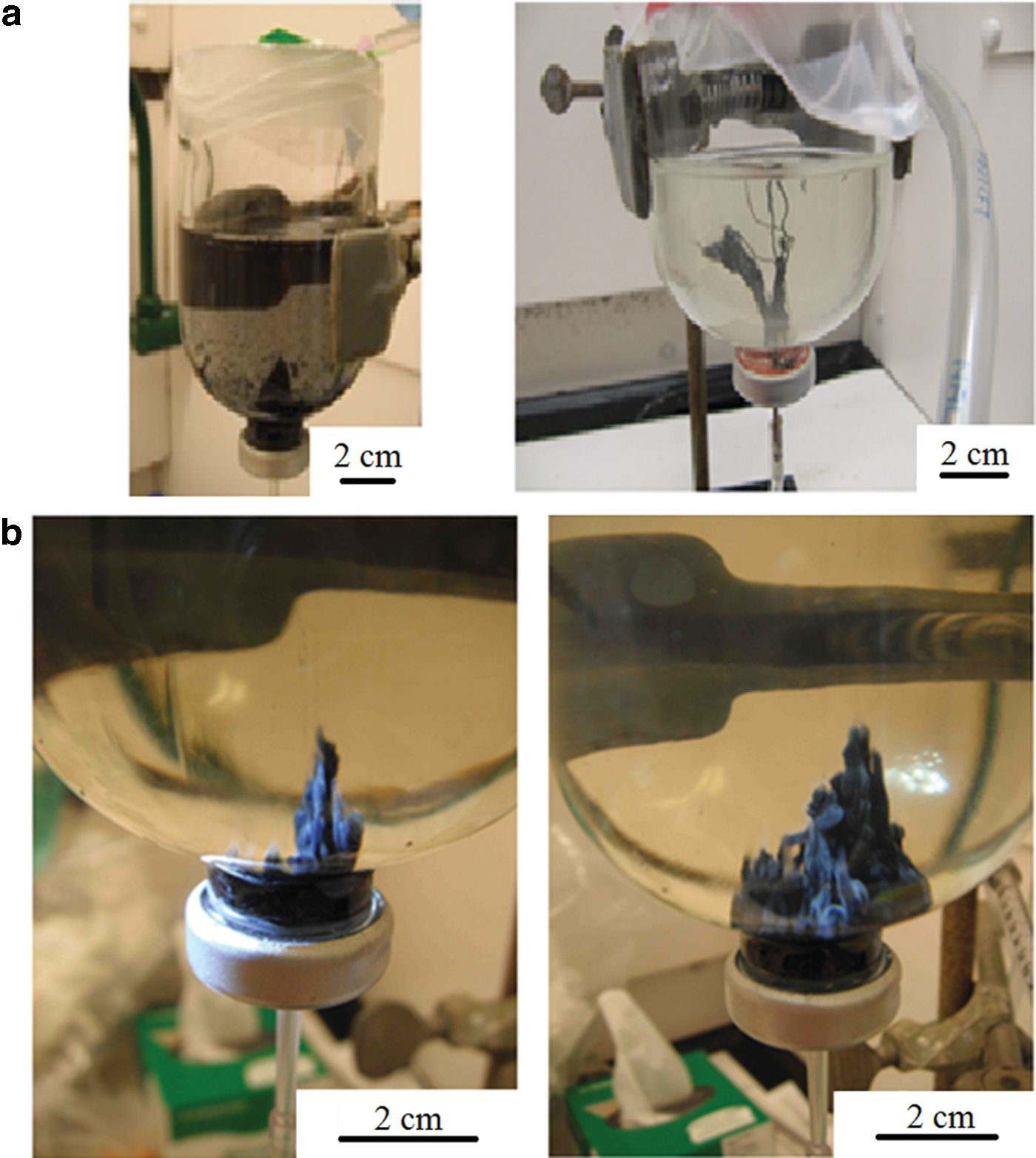
(
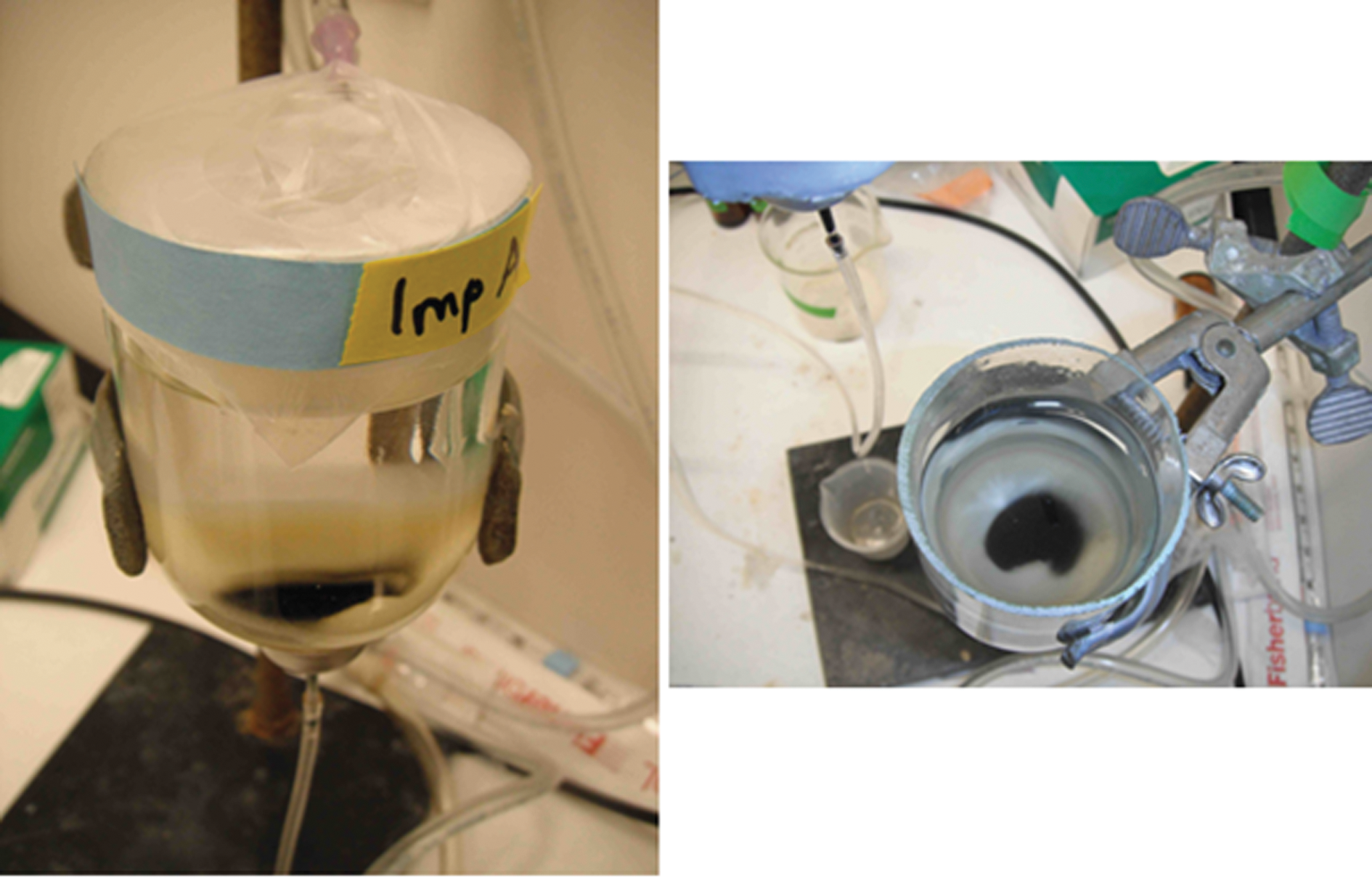
Chimneys embedded in unactivated montmorillonite clay from a low-concentration chimney-forming reaction. (Color graphics available at
Electron microprobe analysis, totals in wt % (errors<1% of totals); other results collected by LA/ICP-MS.
n.d.=not detected. n.m.=not measured.
3.2. Nucleotide oligomerization
To investigate abiotic nucleotide oligomerization in the synthetic chimney systems, we initially studied the inclusion of 15 mM of ImpA or AMP in the syringe solution injected into the “ocean” to form the chimney. In these experiments, the syringe solution was injected to form a chimney over the course of 16–18 h. The ocean solutions and chimneys were then collected for analysis of nucleotide and oligomerization products. For both high- and low-concentration chimneys, oligomerization products containing up to three residues (3-mers) were detected for ImpA (Fig. 4a and 4b, Table 2), while no oligomerization was detected for unactivated AMP (Fig. 4c, Table 2). When the chimneys were formed in the presence of untreated montmorillonite clay, the degree of oligomerization increased to 4-mers for ImpA and possibly 3-mers, with a strong signal indicative of 2-mers for AMP (Fig. 5, Table 2). The mass spectrum for the ImpA reaction under low-concentration conditions in the presence of clay also showed peaks consistent with aggregates of nucleotide monomers and/or smaller oligomers that were not observed for the reaction using AMP (Fig. 6). This aggregation is typical of what is seen for the majority of ImpA reactions studied under chimney-forming conditions and similar to aggregation observed for similar prebiotic reactions (Burcar et al., 2013).
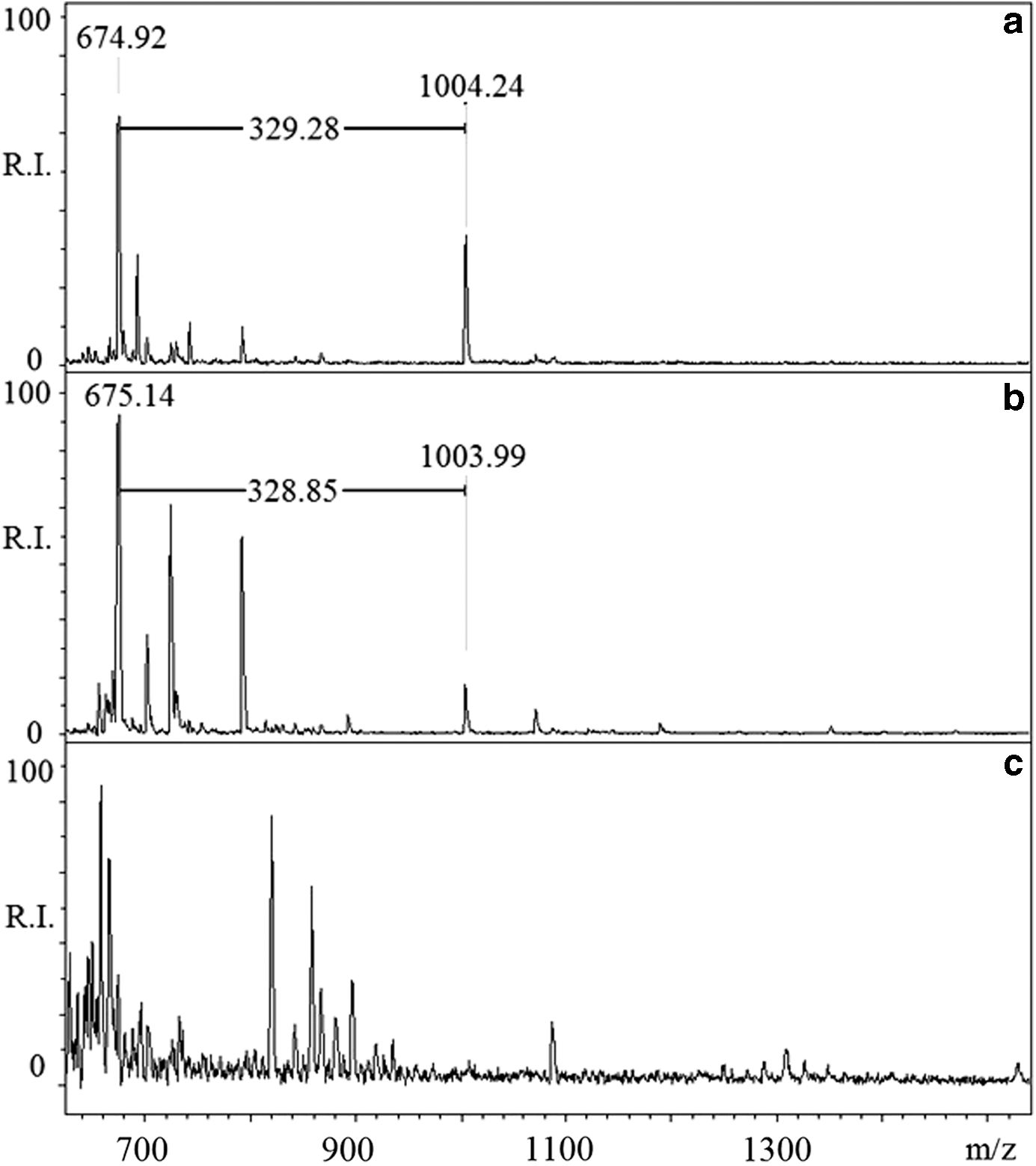
MALDI-TOF spectra of ocean solutions for oligomerization reactions under typical chimney-forming conditions. (
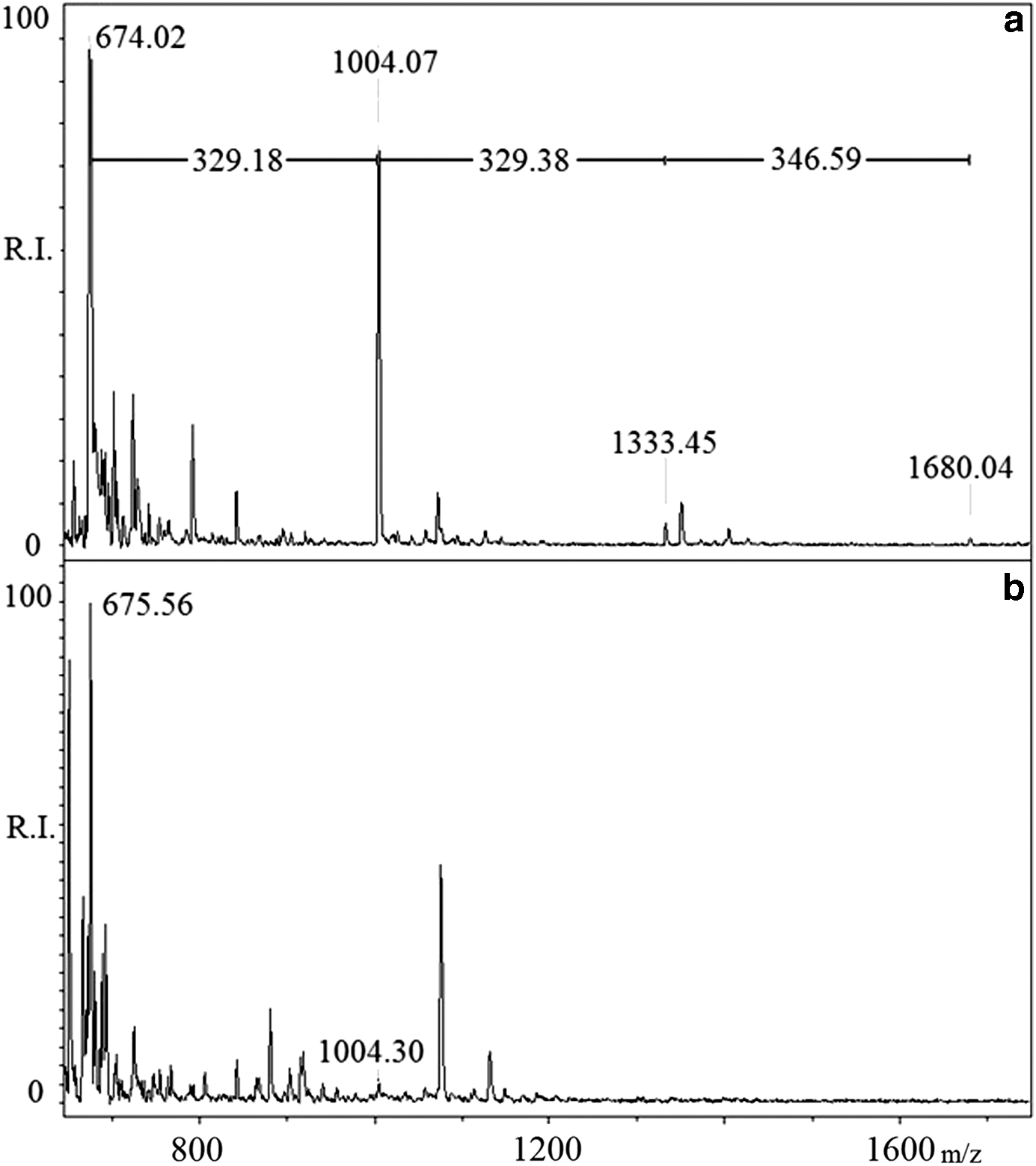
MALDI-TOF spectra of ocean solutions for oligomerization reactions under chimney-forming conditions with an untreated montmorillonite clay ocean floor. (
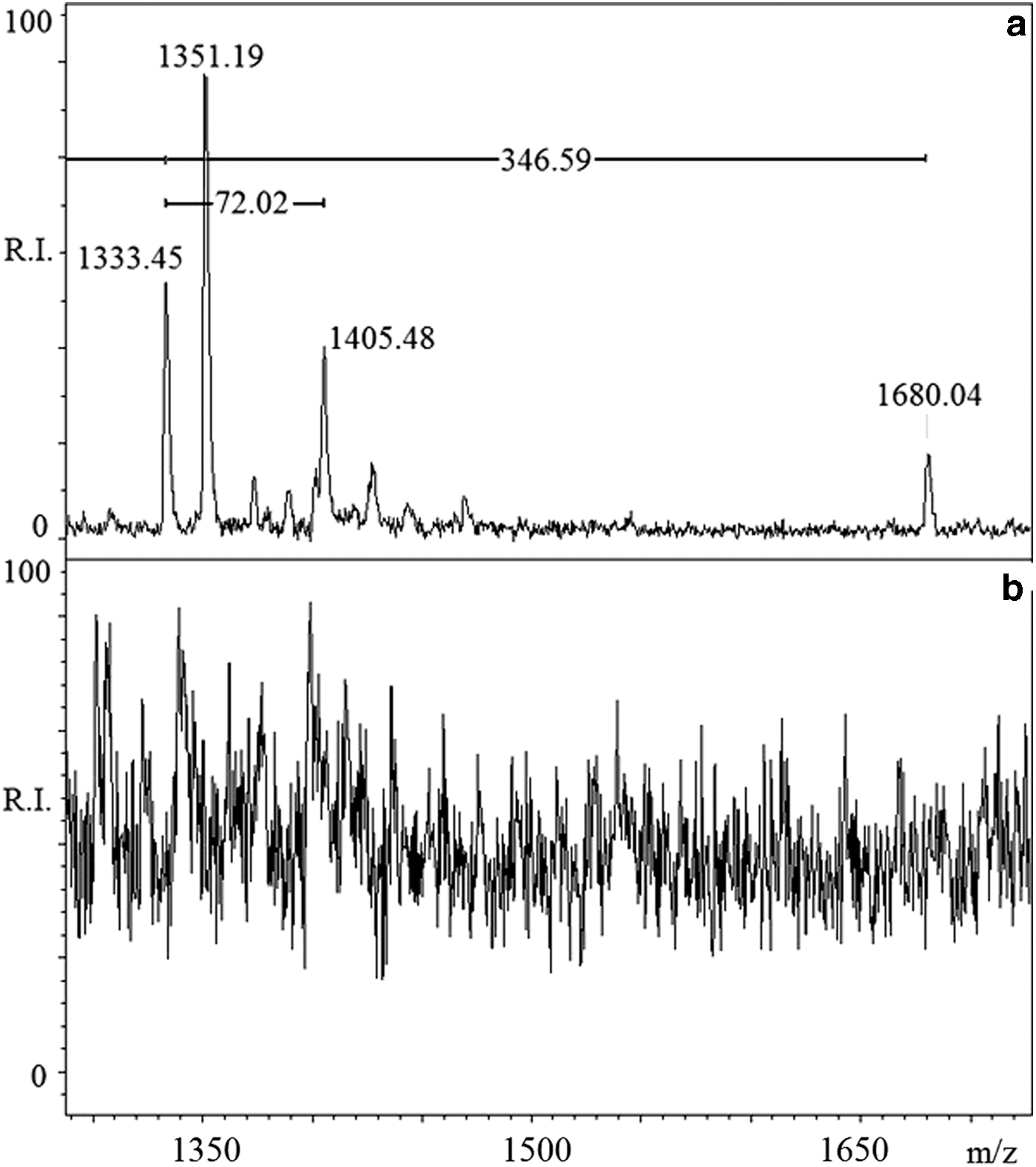
Expanded view of higher range of MALDI-TOF spectra of ocean solutions for oligomerization reactions under chimney-forming conditions with an untreated montmorillonite clay ocean floor. (
No chimney formed. bChimney very fragile. cNucleotide in ocean. dEDC in ocean. eChimney used for elemental analysis.
The iron-sulfide-containing chimneys formed as part of our experiments also incorporated silica into their structure (Mielke et al., 2011), thus sharing some chemical similarities to aluminosilicate montmorillonite clay. To further explore the effects of Al on oligomerization in simulated hydrothermal systems, we conducted experiments (without montmorillonite clay) in which 10–100 mM Al2(SO4)3 was added to the “ocean” solution in order to incorporate the highly charged Al3+ cation into the chimney. For these experiments, the chimneys were formed in 18 h by injecting the syringe solutions into the aluminum-enriched oceans; then 15 mM ImpA+10–100 mM Na2S·9H2O solutions were injected into the chimney over the course of 42–66 h. Under low-concentration chimney-generating conditions, these reactions showed the formation of 4-mers—a minor increase in oligomerization when compared to aluminum-free reactions (Table 2). The degree of oligomerization decreased with increasing chimney-generating concentrations until no oligomerization was observed under high-concentration conditions. Additionally, when montmorillonite was added to the low-concentration reaction, no oligomerization was observed (Table 2).
3.3. Effects of UMP and poly(U) on oligomerization
In one set of experiments, uridine monophosphate (UMP) or a mixture of poly(U) oligonucleotides was incorporated during chimney formation in order to determine their effects on AMP and ImpA oligomerization. Uridine can base-pair with adenine through Watson-Crick hydrogen bonding; therefore, a chimney rich in incorporated uridine might facilitate aggregation or templating of AMP or ImpA in a manner that would increase oligomerization efficiency. To initially test the effect of UMP upon oligomerization, 15 mM Na2UMP was added to the syringe solution for a low-concentration chimney-forming reaction over the course of 18 h without a montmorillonite clay ocean floor. After formation of this chimney was complete, 10 mL of a solution containing 15 mM ImpA or AMP and 10 mM Na2S·9H2O (without additional silica) was injected over the course of 16 h through the already-formed chimney. Analysis of the ocean solution showed that up to 4-mers were produced for the ImpA reaction, but no oligomerization was observed for the AMP (Table 2). In a second experiment, 3 mg of poly(U) and 15 mM of AMP were co-injected with the syringe solution during a low-concentration chimney-forming reaction conducted over the course of 16 h with an untreated montmorillonite clay ocean floor. No oligomerization was observed, which is in contrast to the strong 2-mer signal observed when AMP was added under the same experimental conditions in the absence of poly(U) (Table 2).
3.4. Effects of other dopants and pH
The stability of the activated nucleotide ImpA, ribose itself, and the nascent oligonucleotides under these experimental conditions and general prebiotic conditions may be an issue for attaining longer oligomerization products. Imidazole-activated nucleotides have been shown to hydrolyze over the course of 3 days for pH-neutral, aqueous reaction conditions (Kanavarioti et al., 1989). This degradation is reduced under high-pH conditions, such as that of the sulfide-rich syringe solution representing alkaline hydrothermal fluid, but adding imidazole or L-histidine (which has an attached imidazole group) to the syringe containing ImpA may provide additional ImpA stability through equilibrium effects. Additionally, dinucleosides of uridine have been shown to have a stability maximum around pH 4–5 (Järvinen et al., 1991), consistent with pH estimates for primordial oceans, which vary from ∼5.0–6.5 (Macleod et al., 1994; Amend and McCollom, 2009; Lane et al., 2010; Sleep et al., 2011; Bernhardt and Tate, 2012). Lastly, borate minerals have been observed to stabilize ribose for prebiotic synthetic reactions (Grew et al., 2011). These stability conditions were explored by adding 50 mM imidazole, 50 mM L-histidine, or 20–80 mM boric acid to the ImpA solutions, and by using 15 mM MES buffer in the ocean to control the pH at 5.5 or 6.5. These results are summarized in Table 2. Most notably, the addition of imidazole yielded 3- to 4-mers when used with ImpA solutions, while the L-histidine and boric acid interfered significantly with chimney formation. No significant differences in the polymerization products or aggregation were observed when the ocean was buffered at pH 5.5 or 6.5.
3.5. Other nucleotides
Other RNA monomers were investigated to study their oligomerization efficacy when utilizing the conditions yielding the longest ImpA and AMP oligomerization products (Table 1). Additionally, as an alternative to imidazolation of the nucleotides prior to their introduction into the simulated vent systems, we tried a new approach in which 1-ethyl-3-(3-dimethylaminopropyl)carbodiimide (EDC) was added along with imidazole and non-imidazole-activated nucleotides in the syringe solution during chimney formation (Burcar et al., 2015). Under aqueous conditions, similar methods have been shown to imidazolate the RNA monomers to form imidazole-activated monomers “on the fly” in order to avoid having to pre-synthesize these compounds and also allow reactivation of monomers that hydrolyze during the experimental time frame (Hermanson, 2013). For these reactions, imidazolated GMP (ImpG) was utilized for a series of reactions to directly compare to ImpA reactions, and unactivated GMP, UMP, and AMP were investigated with and without EDC and imidazole present. None of these chimney-forming reactions exhibited any detectable oligomerization under a range of experimental conditions; these results are summarized in Table 1.
3.6. Non-chimney-forming controls
A summary of all experimental results is included in the Supplementary Information (Table S1), including results for parallel, non-chimney-forming controls for those cases in which they were run. The purpose of these controls was to test whether oligomerization was due simply to the presence of the iron-sulfide-silicate precipitate material rather than on the chimney structure itself and the accompanying gradients of pH and concentration transected by the chimney walls. The controls produced precipitates from the direct mixing of the ocean and syringe solutions that looked distinctly different from the self-assembling, far-from-equilibrium chemical garden structures that formed when one solution was slowly injected into the other. As indicated in Table S1, none of these parallel controls showed oligomerization products. This indicates that the chimney structures and environments play a key role in the oligomerization reactions.
In addition, the impact of the reagents upon oligomerization under non-chimney-forming conditions was checked independently. Anoxic 15 mM solutions of AMP and ImpA in 10 mM pH 6.5 MES buffer were each subjected to the same concentration of reagents used for the chimney-forming reactions, separately and in combination, and were gently agitated for 3 days. The results are summarized in the Supplementary Information (Fig. S1, Table S2, Table S3). When ImpA was run in a 150 mM NaCl solution, trimers were observed in solution (Fig. S1a) consistent with previously studied aqueous reactions (Sawai and Orgel, 1975), but no oligomers were observed when all the chimney-forming chemicals were present (Fig. S1b) or when only the chemicals in the syringe solution were present (Fig. S1c). These controls support the conclusion that the oligomers are not formed solely through chemical interactions or from the nucleotides residing within the syringe solution prior to injection. Additionally, the presence of Na2S·9H2O in the non-chimney solution completely inhibits oligomerization, while FeCl2·4H2O and silicate only partially suppress oligomerization.
3.7. Chimney characterization
Immediately following the completion of two low-concentration chimney experiments, the ocean solutions were analyzed by ICP-MS, and the chimneys were analyzed with solid-phase LA-ICP-MS and electron microprobe. Elemental abundances for the chimneys and oceans are reported in Table 1. These data were used to calculate the element enrichment factor between the chimneys and the oceans (Fig. 7). The cations, including elements that are in trace abundance, are strongly concentrated in the chimneys relative to the ocean solutions. All the cations have enrichment factors>1, indicating that they are preferentially taken up into the chimneys compared to the ocean solution. Also note, only iron, aluminum, and sodium were intentionally added to the solution; the rest of the cations were presumably present as minor contaminants from the chimney-forming reagents, as they were not observed in the analytical blanks.

Elemental partitioning between the chimneys and the ocean solution for low-concentration chimneys formed at pH 5.5 and 6.5.
4. Discussion
Abiotic nucleotide polymerization of ImpA in simple, aqueous solutions has been widely reported to yield minor amounts of dimers and trimers in the absence of montmorillonite clay and 12-mers and higher in the presence of montmorillonite clay (Ferris and Ertem, 1993; Ferris, 2006). For these same experiments with AMP instead of ImpA, oligomerization has not been observed in the absence or presence of montmorillonite clay. In our simulated alkaline hydrothermal chimney systems, oligomerization was observed for both ImpA and AMP, although the ImpA oligomerization products were shorter than those observed for the montmorillonite-catalyzed reactions in simple solutions. No significant oligomerization was observed for the other nucleotides studied (ImpG, GMP, or UMP) under our experimental conditions. Since oligomerization of other nucleotides is essential for an RNA world, further studies are needed to improve extraction efficiency and detectability of oligomerization products and to identify conditions that promote oligomerization of other nucleotides. Nevertheless, the ImpA and AMP results are significant since they demonstrate for the first time that nucleotide oligomerization can occur in synthetic alkaline hydrothermal chimney systems and, further, oligomerization can occur for both the activated and unactivated nucleotide.
The detection of trimers for the ImpA oligomerization reactions in simple, iron-silicate-sulfide-containing synthetic hydrothermal chimneys (but not in the chemical controls run simultaneously under non-chimney-forming conditions) indicates that the chimney surfaces, morphology, and/or the pH/Eh gradients generated by the chimney-forming system play a key role in generating small oligomers. The addition of an ocean floor of untreated montmorillonite to the chimney-forming system increased the ImpA oligomerization to 4-mers under identical reaction conditions. A particularly exciting result is the detection of AMP dimers (and possibly trimers) for oligomerization reactions of unactivated AMP in the chimney-forming systems with an untreated montmorillonite floor. This was not observed in the controls, nor has it been previously reported for montmorillonite-catalyzed oligomerization reactions in aqueous solution.
The introduction of untreated montmorillonite into the chimney-forming system appears to improve overall oligomerization for both ImpA and AMP relative to that of the chimney alone. This improvement may be due to the presence of aluminum in the clay's phyllosilicate structure. Addition of Al3+ instead of aluminosilicate clay in the chimney-forming process yielded similar improvements for ImpA but not for AMP under similar conditions (S3), suggesting that the presence of more highly charged species such as Al3+ might be important in chimney-driven oligomerization reactions. However, when both montmorillonite clay and Al3+ were incorporated into the chimney-forming system, a decrease in oligomerization was observed. This is most likely due to the strong propensity of montmorillonite clay to absorb positively charged cations, which could reduce the availability of Al3+ for the oligomerization reaction and might also restrict access of the ribonucleotide to the catalytic interlayer within the montmorillonite.
Oligomer length for ImpA reactions was increased to 4-mers when UMP was incorporated into a preformed low-concentration chimney that subsequently had a solution of ImpA and Na2S injected through it. Since UMP forms Watson-Crick base pairs with AMP, this result suggests that hydrogen-bonding interactions might improve the association of activated nucleotides with the chimney surfaces or act in some other way to template and/or stabilize the reaction products. For AMP-based reactions, however, the incorporation of small oligomers of poly(U) during low-concentration chimney-forming reactions in which AMP was co-injected with the chimney-forming solution inhibited overall oligomerization. This seemingly contradictory result may be due to effects of poly(U) on the morphology of the forming chimneys or to interactions of AMP with the poly(U) that prevent AMP from accessing the catalytic sites in the chimney or clay.
We also observed that the addition of imidazole as a dopant led to a minor increase in oligomerization for ImpA-based reactions. This is likely due to equilibrium effects in which the presence of additional imidazole counters the hydrolysis of the imidazole-activated ribonucleotide. We also attempted to improve oligomerization using other agents, including boric acid and L-histidine, but these both destabilized the chimney precipitation structures and negatively impacted oligomerization. Since the pH of the injection solution was still highly alkaline in the presence of these dopants, the disruption of chimney formation is likely due to molecular interactions with the forming chimneys.
It is notable that no oligomerization was detected for nucleotides other than activated and non-activated AMP. Among the ribonucleotides, AMP generally shows the greatest oligomerization efficiencies, and it may therefore be the only one that yields detectable oligomerization products in the chimneys. This is possibly due to AMP undergoing base stacking, which may promote oligomerization reactions, while UMP does not undergo base-stacking, and GMP creates strong intermolecular complexes which may inhibit it under these reaction conditions. It is also possible that efficiency of extraction of the oligomerization products from the chimney systems varies among the nucleotides, which would impact their recovery and, therefore, our ability to detect them. However, we also cannot rule out the possibility that AMP interacts differently from the other nucleotides within the synthetic chimney systems.
A high degree of elemental partitioning between the chimney precipitate and the surrounding ocean water for most cations and transition metals was also observed. Fe and Zn—the only two transition metals measured in this study—were particularly enriched in the synthetic chimney precipitate, which is similar to modern hydrothermal metal-sulfide chimney systems (black smokers) as well as ancient massive sulfide deposits where Fe, Cu, Zn, Ni, and other metals are enriched from the surrounding fluids (McCaig et al., 2007; Nakamura et al., 2010; Hannington et al., 2011; Berkenbosch et al., 2012). These hydrothermal mineral precipitates of transition metal sulfides and oxyhydroxides are structurally similar to the active sites of some of the most ancient metalloenzymes and thus may have been able to catalyze and drive the first protometabolic redox reactions during the emergence of metabolism in an alkaline hydrothermal system (Nitschke et al., 2013). Sodium and potassium were less enriched in the chimney precipitate and presumably occur in precipitated clays. Further study is needed to determine how the incorporation of various cations affects chimney morphology and nucleotide oligomerization in the chimney-forming systems.
5. Conclusions
Iron-sulfide-silicate precipitates that formed at submarine alkaline hydrothermal vents could have constituted flow-through reactors to drive various reactions relevant to the emergence of life, and the tubular and porous morphologies of these precipitates could have sequestered and concentrated nucleotides and provided catalytic sites for oligomerization (Mielke et al., 2011; McGlynn et al., 2012; Russell et al., 2014). In this work, we studied RNA oligomerization reactions in laboratory analogues of hydrothermal iron-sulfide chimneys. In some cases, montmorillonite aluminosilicate clays were also present as additional catalytic sites. In the cases of ImpA and AMP, reactions in the laboratory chimney systems yielded oligomerization products up to tetramers and dimers, respectively. These experiments demonstrated for the first time that nucleotide oligomerization—for both the activated and unactivated nucleotide—can occur in synthetic alkaline hydrothermal chimney systems. Oligomerization of unactivated AMP in the chimney/montmorillonite system is particularly notable since, to the best of our knowledge, this has not been observed for montmorillonite-catalyzed oligomerization reactions in simple, aqueous solution. Among the nucleotides tested, only ImpA and AMP yielded detectable oligomerization products in the chimneys.
Control experiments indicated that the chimney surfaces, morphology, and/or chemical gradients generated by the chimney system play a role in the generation of small oligomers, though further investigation is needed to understand exactly how these individual features are involved. One critical component of the far-from-equilibrium geological system that was not included in our experiments is the thermal gradient between seawater and vent fluid, which would likely drive further accumulation of nucleotides, along with other small organic compounds, within hydrothermal chimney/clay precipitates, and even perhaps promote oligonucleotide replication (Baaske et al., 2007; Kreysing et al., 2015). Considerations of how geochemical and thermal gradients affect prebiotic chemistry in far-from-equilibrium geological environments have astrobiological significance beyond Earth as well (Martinez, 2014), as some icy moons of the outer planets may also host, or have hosted, water-rock interfaces that could drive serpentinization reactions (Vance et al., 2007).
Footnotes
Acknowledgments
This research was funded by the NASA Astrobiology Institute (NAI) through the New York Center for Astrobiology at Rensselaer Polytechnic Institute (Grant NNA09DA80A) and the Icy Worlds team at NASA's Jet Propulsion Laboratory. Parts of this research were carried out at the Jet Propulsion Laboratory, California Institute of Technology, under a contract with NASA. Additional funding was provided from the NAI through an Astrobiology Program Early Career Collaboration Award to B.T.B. and L.M.B. B.T.B. is supported through RPI's James P. Ferris Fellowship in Astrobiology, and L.M.B. is supported by the NAI through the NASA Postdoctoral Program, administered by Oak Ridge Associated Universities through a contract with NASA.
Abbreviations Used
References
Supplementary Material
Please find the following supplemental material available below.
For Open Access articles published under a Creative Commons License, all supplemental material carries the same license as the article it is associated with.
For non-Open Access articles published, all supplemental material carries a non-exclusive license, and permission requests for re-use of supplemental material or any part of supplemental material shall be sent directly to the copyright owner as specified in the copyright notice associated with the article.
