




Abstract
The analysis of the organic compounds present in the martian regolith is essential for understanding the history and habitability of Mars, as well as studying the signs of possible extant or extinct life. To date, pyrolysis, the only technique that has been used to extract organic compounds from the martian regolith, has not enabled the detection of unaltered native martian organics. The elevated temperatures required for pyrolysis extraction can cause native martian organics to react with perchlorate salts in the regolith and possibly result in the chlorohydrocarbons that have been detected by in situ instruments. Supercritical carbon dioxide (SCCO2) extraction is an alternative to pyrolysis that may be capable of delivering unaltered native organic species to an in situ detector. In this study, we report the SCCO2 extraction of unaltered coronene, a representative polycyclic aromatic hydrocarbon (PAH), from martian regolith simulants, in the presence of 3 parts per thousand (ppth) sodium perchlorate. PAHs are a class of nonpolar molecules of astrobiological interest and are delivered to the martian surface by meteoritic infall. We also determined that the extraction efficiency of coronene was unaffected by the presence of perchlorate on the regolith simulant, and that no sodium perchlorate was extracted by SCCO2. This indicates that SCCO2 extraction can provide de-salted samples that could be directly delivered to a variety of in situ detectors. SCCO2 was also used to extract trace native fluorescent organic compounds from the martian regolith simulant JSC Mars-1, providing further evidence that SCCO2 extraction may provide an alternative to pyrolysis to enable the delivery of unaltered native organic compounds to an in situ detector on a future Mars rover. Key Words: Biomarkers—Carbon dioxide—In situ measurement—Mars—Search for Mars’ organics. Astrobiology 16, 703–714.
1. Introduction
T
The recent discovery of organic molecules in the Sheepbed mudstone, such as chlorobenzene and trace levels of 1,2-dichloropropane, 1,2-dichloroethane, and 1,1- and 1,2-dichlorobutane, by way of the gas chromatograph–mass spectrometer (GC-MS) and evolved gas analyzer (EGA) instruments on SAM (Freissinet et al., 2015) has helped clarify the mystery of the missing organics in the martian regolith. As noted by Freissinet et al., although the presence of the aforementioned chlorohydrocarbons in the Sheepbed mudstone cannot be excluded, it is thought that they originated from reactions during pyrolysis between martian oxychlorine and the organic aromatic and aliphatic compounds indigenous to the sample. These results highlight the need to develop alternative in situ extraction techniques that would not suffer such shortcomings and would enable the delivery of unaltered martian organics to a detector. The challenge of detecting organics in the martian regolith is underscored by the fact that, despite a predicted organic matter infall rate onto the martian surface of approximately 105 kg per year (Flynn, 1996), which should result in up to 60 ppm organic carbon in the regolith (Steininger et al., 2012), SAM was unable to definitively detect the presence of any organic compounds in the regolith (Benner et al., 2000; Glavin et al., 2013; Ming et al., 2014) until careful analysis of results from the Sheepbed mudstone in Gale Crater had been completed (Freissinet et al., 2015).
Given the challenges posed by analyzing samples collected by TV extraction, alternative techniques that may enable definitive detection of unaltered martian organic carbon should be examined. Commonly suggested alternative techniques include (1) solvent-based extraction (Luong et al., 2014) using subcritical water (Amashukeli et al., 2008), surfactant solution, and organic solvents, or (2) laser desorption coupled with mass spectrometry (Johnson et al., 2014; Li et al., 2015). A third technique of great interest is supercritical fluid extraction; supercritical fluids can possess densities and solvating powers similar to those of liquids while exhibiting decreased surface tension similar to that of gases. This unique combination of properties enables supercritical fluids to efficiently “wet” high-surface-area regolith particles, as well as to penetrate into pores and dissolve soluble organics (Ramsey, 1998). When a gas is exposed to temperatures and pressures above its critical point, its physical properties resemble those of both liquids and gases. Supercritical fluids possess the solvating power of a liquid, which allows for their use as a replacement for solvents in many applications (Lucien and Foster, 2000). Supercritical fluids also have lower viscosities (10−4 vs. 10−3 N s m−2) and higher diffusivities (∼10−4 vs. 10−5 cm2 s−1) than liquids, enabling better extraction of organic compounds from microporous materials. This means that such a supercritical fluid is an extremely efficient processing medium that can solubilize molecules into a small volume and then leave them behind as the solvent returns to its gas phase (for a thorough treatment, see MacHugh and Krukonis, 1986). Also, because the gas is free to diffuse from the chamber, no rinsing away of residual solvent is necessary. The vessel may also be rinsed with additional supercritical fluid between samples to greatly reduce cross contamination (Rawa-Adkonis et al., 2003).
Supercritical carbon dioxide (SCCO2) extraction is of particular interest because carbon dioxide is a major component (95%) of the martian atmosphere and can be harvested from said atmosphere. This is to be demonstrated by the Mars Oxygen In Situ Resource Utilization Experiment (MOXIE) (Jeffrey et al., 2015). Utilizing martian CO2 would enhance the science capability of an in situ analysis suite by increasing the total number of possible extractions and system rinses, which also utilize SCCO2, with or without cosolvent. Employing martian CO2 would also improve mission flexibility by enabling additional experiments to be conducted beyond the initial scope of work. Additionally, SCCO2 extraction has been studied thoroughly as a sample preparation technique for analytical chemistry and has been used extensively for industrial-scale applications, which makes it a well-understood technique that should help with data analysis (Taylor, 1996). Lastly, the moderate temperatures and pressures of SCCO2 make it especially appropriate for use in an in situ extraction instrument operating in a martian environment.
The critical point of CO2 is at 73 atm and 31.1°C, as shown in the phase diagram presented in Fig. 1. This temperature does not harm even the most sensitive biomolecules. These mild conditions may prevent the degradation or destruction of thermally labile organic compounds (Lee, 1990). By adjusting temperature and pressure, the solvent properties of supercritical CO2 can be made similar to those of pentane, benzene, chlorinated hydrocarbons, chlorofluorocarbons, and pyridine, to mention only a few. Pure SCCO2 is best suited for the extraction of nonpolar (e.g., squalene, hopanes) or slightly polar organic molecules (e.g., long-chain carboxylic acids, sterols), while the addition of a small percentage of a polar cosolvent, such as water or methanol, further enables extraction of more polar molecules, including amino acids (Taylor, 1996).
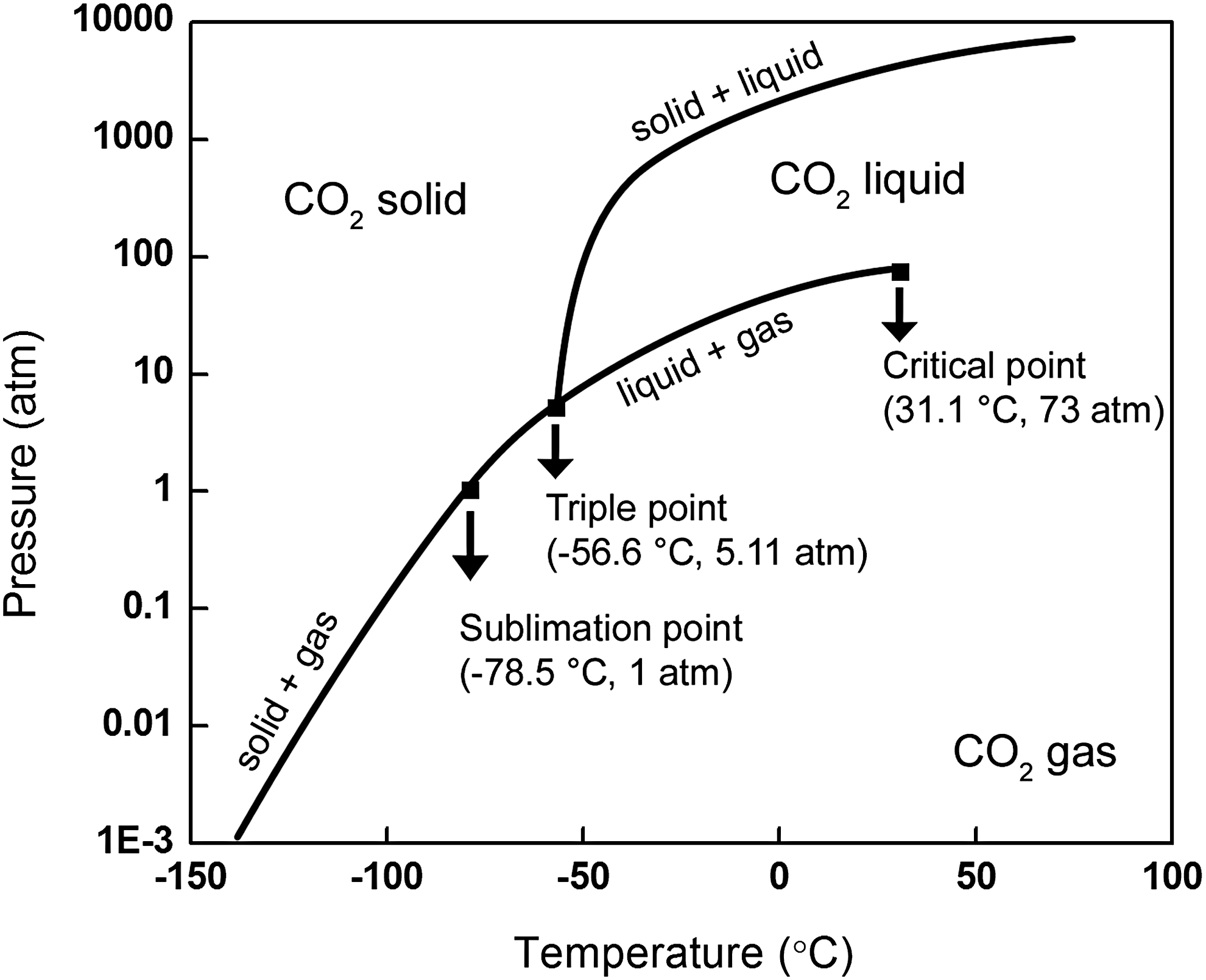
Phase diagram of CO2, showing the critical point occurs slightly above room temperature.
A class of organic compounds that may be present on the martian surface is polycyclic aromatic hydrocarbons (PAHs), which have been identified in carbonaceous chondritic meteorites (Sephton, 2002), martian meteorites (McKay et al., 1996; Becker et al., 1999; Steele et al., 2012), interplanetary dust particles, and interstellar matter (Alexander, 2011; Tielens, 2008). PAHs are expected to be present in the martian regolith because they are introduced through meteoritic infall (Flynn, 1996), and are postulated to have also been created abiotically on Mars (Zolotov and Shock, 1999). Direct evidence of PAHs on Mars comes from the discovery of PAHs at greater than 1 ppm in the interior fracture surfaces of martian meteorite ALH84001 (McKay et al., 1996). It is possible that unaltered PAHs exist on the martian surface because PAHs are chemically stable and able to persist over geological timescales (Neff, 1979), though they may be degraded by UV and cosmic radiation (Dartnell et al., 2012). PAHs can also be formed from biogenic precursors, such as sterols and other cyclic organic molecules (Wakeham et al., 1980), and could possibly be used as a biomarker for past life. PAHs are also of interest to the astrobiology community, with the theory of the aromatic world postulating that PAHs may have played a role in the origin of life (Ehrenfreund et al., 2006). Moreover, PAHs have even been extracted from meteorites by SCCO2, which makes the compound class an excellent candidate for this study (Gilmour and Pillinger, 1993; Sephton et al., 2001).
Once extracted, PAHs are amenable to a number of detection techniques including fluorescence spectroscopy (Parnell et al., 2007), microcapillary electrophoresis with laser-induced fluorescence (Stockton et al., 2009), mass spectrometry (Johnson et al., 2014), and gas chromatography–mass spectrometry (Stader et al., 2013). For this work, coronene was chosen as a representative PAH, as it was listed specifically as a high-priority target organic of meteoritic origin for the ExoMars mission (Parnell et al., 2007).
In this paper, we describe the extraction of coronene from two martian soil simulants using SCCO2. Coronene was first extracted from glass beads to baseline the performance of the SCCO2 extraction. The coronene extraction was then repeated in the presence of sodium perchlorate (3 ppth). Coronene was also extracted from the martian soil simulant JSC Mars-1 (Allen et al., 1998) with and without sodium perchlorate. The effect of soil simulant on coronene extraction efficiency as a function of coronene concentration was also studied. Lastly, unspiked JSC Mars-1 was subjected to SCCO2 extraction, and the amount of extracted coronene was then detected and quantified by fluorescence spectroscopy. Fluorescence spectroscopy showed that coronene was not chemically altered when extracted via SCCO2 from martian soil simulants in the presence of sodium perchlorate. Furthermore, it was demonstrated that the extraction efficiency of coronene was unaffected by the presence of sodium perchlorate, and that sodium perchlorate was not extracted with SCCO2, instead remaining on the soil simulant.
2. Methods
2.1. Materials
Glass beads (420–500 μm diameter) were purchased from Polymer Sciences. The martian regolith simulant, JSC Mars-1 (Allen et al., 1998), was purchased from Orbitec. Both glass beads and JSC Mars-1 were used as received. Coronene (97%) was purchased from Sigma-Aldrich. Reagent-grade acetone and dimethyl sulfoxide (DMSO) were purchased from Fischer Scientific. Sodium perchlorate (HPLC grade, ≥99%) was manufactured by Fluka. All water used was ultrapure, deionized water (18.2 MΩ cm−1). Carbon dioxide (purity is 99.999%) was purchased from Matheson.
2.2. Supercritical CO2 extraction system description
A diagram of the SCCO2 extraction system is shown in Fig. 2. Extractions were conducted in a commercial supercritical fluid extractor system, SFT-100, made by Supercritical Fluid Technologies, Inc., which comprises an oven, a shutoff valve, a manual restrictor valve that controls the flow rate of SCCO2. Both the oven and the valves can be regulated at temperatures from ambient to 200°C. The sample chamber was oriented vertically in the extractor oven such that SCCO2 flowed upward through the sample. Custom sample chambers for the martian regolith simulant were made with 1/4" o.d., 0.194" i.d., and 2.5" length stainless steel tubing with an internal volume of 1.21 mL. Stainless steel frits (2 μm) were installed on both ends of the sample chamber to prevent the escape of the martian regolith simulant. Downstream of the restrictor valve, the system vent line was composed of an 11.5 cm length of stainless steel tubing of 1/16" o.d. and 0.046" i.d. A Teledyne ISCO Model 500 HP syringe pump was used to increase the pressure of liquid CO2 from 800 psi, supplied by a cylinder of liquid CO2, to over 2800 psi. The total volume and flow rate of CO2 used in each extraction were derived from the speed and displacement of the pump piston.
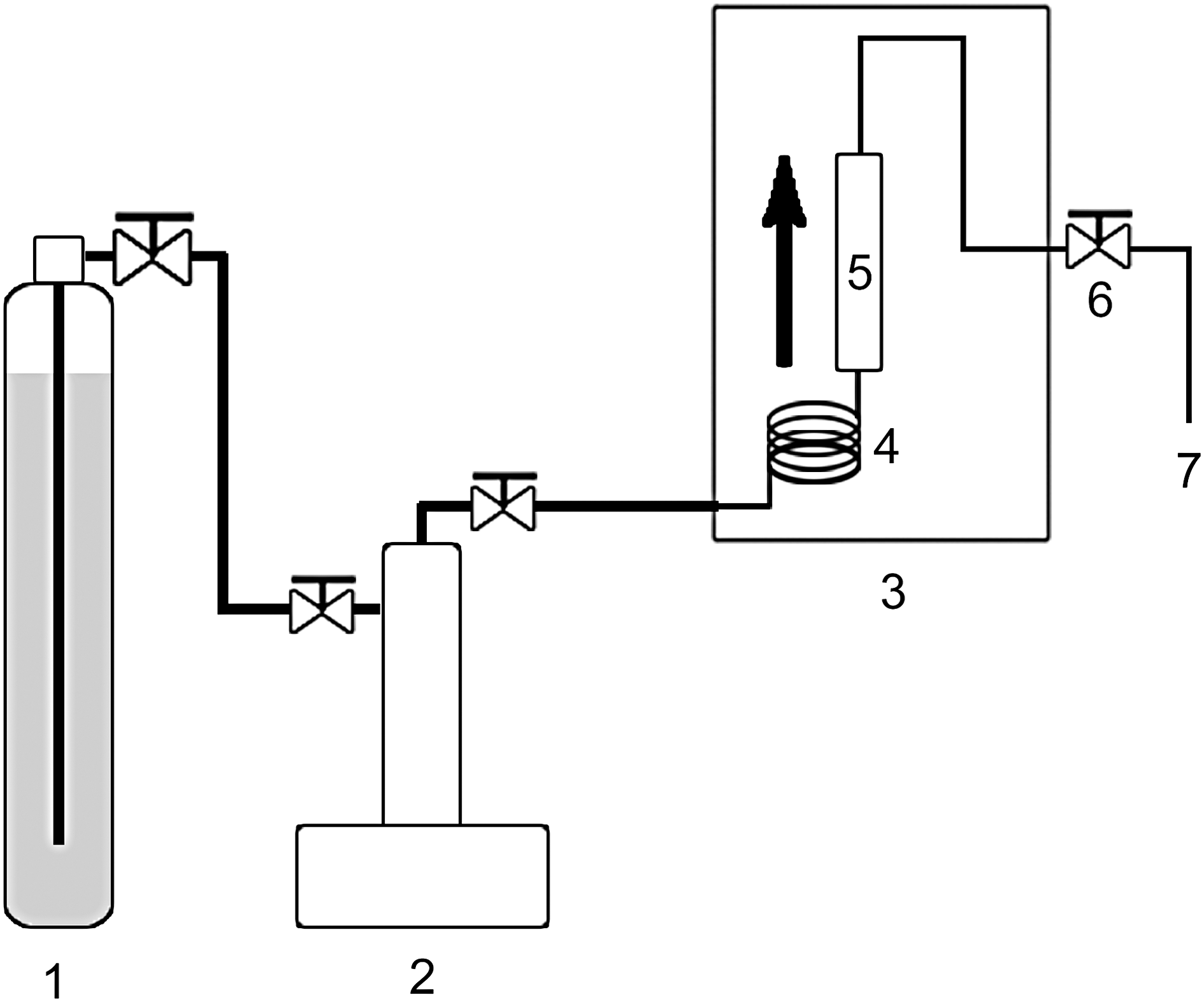
SCCO2 extraction system diagram. (1) A cylinder of liquid CO2 at 800 psi. (2) A syringe pump that increases the pressure of the liquid CO2 to 2800 psi. (3) The oven that maintains the extraction cell at the desired temperature. (4) A heat exchanger that equilibrates the CO2 to the oven's temperature before it enters the extraction cell during dynamic extraction. (5) A sample is loaded into the extraction cell, and SCCO2 flows upward through the sample as indicated by the arrow. (6) The restrictor valve that controls flow rate at the system. (7) Outlet.
2.3. Sample preparation
2.3.1. Coronene-spiked samples
Coronene stock solution was made by adding 2.4 mg coronene to 20 mL acetone and sonicating until dissolved. This solution was used for preparing both fluorescence spectroscopy standards and samples for SCCO2 extraction. Coronene-spiked regolith simulant samples for SCCO2 extraction were prepared by measuring 10 g of martian regolith simulant (either glass beads or JSC Mars-1) into a 20 mL scintillation vial. An appropriate quantity of coronene stock solution was added (e.g., 83.3 μL of 120 ppm stock solution was added to 10 g simulant, resulting in simulant spiked with 1 ppm coronene), followed by sufficient acetone to cover the regolith simulant. To prepare samples spiked with low part-per-billion levels of coronene, a 12 ppm stock solution was made by diluting the 120 ppm stock solution. The 12 ppm stock solution was then added to the regolith simulant (e.g., 8.3 μL of 12 ppm stock solution was added to 10 g simulant, resulting in simulant spiked with 10 ppb coronene), followed by sufficient acetone to cover the regolith simulant. The sample was then capped and sonicated for 5 min. The vial was then uncapped and loosely covered in foil, to protect the sample from potential UV degradation, until the acetone had evaporated. The sample was then moved to a vacuum desiccator and placed under active vacuum for 30 min to remove any remaining acetone residue.
2.3.2. Sodium perchlorate-spiked samples
Sodium perchlorate-spiked samples (3 ppth by mass) were prepared by adding 60 μL of 5 M sodium perchlorate stock solution in water to 10 g of regolith simulant in a 20 mL scintillation vial. Sufficient water was then added to cover the regolith simulant. JSC Mars-1 samples were then stirred with a clean Scoopula to ensure full wetting of the sample. For samples of both glass microbeads and JSC Mars-1, the vial was then capped and sonicated for 5 min. The vial was uncapped and covered loosely with foil until the water had evaporated. The sample was then moved to a vacuum desiccator and placed under active vacuum for 30 min to remove any remaining water.
2.3.3. Samples spiked with both coronene and sodium perchlorate
For samples spiked with coronene and sodium perchlorate, samples were first doped with 1 ppm coronene and then doped with 3 ppth sodium perchlorate.
2.4. Supercritical CO2 extraction of samples
2.4.1. Sample handling
For a given experiment, portions of the same 10 g batch of regolith simulant were used for three SCCO2 extractions and three acetone extractions, which were used as positive controls. To prevent degradation, regolith simulant samples were stored in sealed vials and protected from light until used. For each solvent or SCCO2 extraction, 1 g of glass beads or 0.8 g JSC Mars-1 was used. For each experiment, the following extracts were collected: solvent extract of spiked regolith, SCCO2 extract of spiked regolith, and solvent extract of regolith that had undergone SCCO2 extraction. The extracts of the regolith simulants were stored in sealed glass vials and protected from light. Both spiked regolith and extracts were stable for several months. Negative controls were prepared by extracting unspiked martian regolith simulants with SCCO2 or acetone.
2.4.2. Solvent extraction protocol
The acetone extract of coronene-spiked glass bead samples was prepared by rinsing 1 g of glass beads with 3 aliquots of 2 mL acetone that was collected in a 20 mL scintillation vial and then dried. Samples were protected from light exposure to prevent potential UV degradation. For glass beads spiked with only sodium perchlorate, the same procedure was used, except water was substituted for acetone. For JSC Mars-1 samples, acetone extracts were prepared by measuring 0.8 g of JSC Mars-1 into a glass test tube, followed by the addition of 5 mL of acetone. The test tube was capped and vortexed for 1 min, followed by centrifugation (Horizon Model 614B) for 8 min. The acetone was then decanted into a 20 mL scintillation vial, and the process was repeated twice, for a total of three rinses. The vial was then placed in a fume hood under a loose sheet of foil, to protect the sample from potential UV degradation, until dry. Fluorescence spectroscopy was used to verify quantitative solvent extraction of coronene from glass beads and JSC Mars-1 beyond the third rinse. A fourth rinse of glass beads resulted in no measurable coronene, while a fourth rinse of JSC Mars-1 resulted in a less than 1% extraction of coronene.
2.4.3. SCCO2 extraction protocol
All SCCO2 extractions were conducted by using the system described above. Each extraction consisted of a static extraction of 5 min, followed by a dynamic extraction of 18 g CO2 at a flow rate of 0.9 g min−1 for 20 min. Both static and dynamic extractions were conducted at 2800 psi and 40°C. After dynamic extraction, the system was depressurized, and the extracted coronene was collected by flushing the tubing downstream of the extraction vessel with 10 mL acetone that was collected in a 20 mL scintillation vial placed below the outlet of the system. A second 10 mL acetone rinse was done after the extract collection to ensure that the system was clean for the next experiment. Preliminary experiments were conducted to verify that all coronene precipitated out of the CO2 onto the inside walls of the outlet tubing during decompression. To determine that no coronene was carried out of the system by the CO2 during dynamic extraction, the CO2 was bubbled into a vial of acetone. No coronene was detected by fluorescence spectroscopy in this solvent-collected extract. Glass bead samples spiked with only sodium perchlorate were extracted by using the same procedure, except that the system was rinsed twice with 6 mL deionized water (DIW), rather than acetone, after extraction. The regolith simulant was then removed from the sample holder for solvent extraction to determine the quantity of coronene or sodium perchlorate that was not extracted by SCCO2.
2.5. Analysis of extracted samples
2.5.1. Fluorescence spectroscopy
The quantity of coronene extracted from the spiked regolith simulant was measured by fluorescence spectrometry. The extracts of regolith simulant were redissolved in 1 mL DMSO for analysis. Fluorescence spectra were collected with the Fluorolog-3 spectrofluorometer by JY Horiba Inc. (at 304 nm excitation) and analyzed with Peakfit version 4.12. The concentration of coronene was determined by using peak height at the emission wavelength of 447 nm. Figure 8 was created with MATLAB R2014a.
2.5.2. Conductivity measurements
The quantity of sodium chloride extracted from the spiked regolith was determined by conductivity measurements. The conductivity of the water solutions of sodium perchlorate solutions were measured with a Thermo Scientific Orion3 Star conductivity portable meter, equipped with an Orion 013115MD conductivity cell. Both sodium perchlorate standards and the samples extracted from the regolith simulant were made with DIW (18.2 MΩ cm−1). The conductivity of the DIW used to make all solutions was measured to be equivalent to a 2.3 ppm concentration of sodium perchlorate, which was considered to be the noise floor of the sensor. All extracted perchlorate sample solutions were diluted with DIW to a total volume of 10 mL to ensure that the conductivity probe would be fully immersed in the liquid. The salt concentration measured by the conductivity probe was used to calculate the amount of sodium perchlorate extracted by SCCO2, the amount not extracted by SCCO2, and the amount extracted only by water.
2.5.3. Data analysis and extraction efficiency calculation
All SCCO2 and solvent extractions were conducted in triplicate, and the resulting data are presented as the average along with the standard deviation for each experiment. Extraction efficiency was calculated as the percent of coronene extracted by SCCO2, relative to the amount extracted by acetone (positive control).
Acetone extracted all coronene from the martian regolith simulants (±10% of expected coronene doping) and thus was used as the most accurate measurement of the concentration of coronene on each batch of spiked simulant. Equation 1 was also used to calculate the extraction efficiency of sodium perchlorate, with the amount of sodium perchlorate extracted by water in the denominator. Extraction efficiency data are presented as the average of three extracted samples, along with their standard deviations.
3. Results
3.1. SCCO2 extraction of coronene in the presence of sodium perchlorate
The effect of sodium perchlorate on the SCCO2 extraction of coronene was studied by using martian regolith simulants that were spiked with 1 ppm coronene and either with no sodium perchlorate added or with 3 ppth sodium perchlorate added. Doping levels of coronene were confirmed with acetone extraction, and doping levels of sodium perchlorate were confirmed with water extraction. The extraction efficiency of coronene from glass beads and JSC Mars-1 was not affected by the presence of sodium perchlorate, as shown in Fig. 3. The extraction efficiency of coronene from glass beads without perchlorate was 57% ± 2%, and the extraction efficiency of coronene from glass beads with 3 ppth sodium perchlorate was 58% ± 4%. The extraction efficiency of coronene from JSC Mars-1 without perchlorate was 16% ± 2%, and the extraction efficiency of coronene from JSC Mars-1 with 3 ppth sodium perchlorate was 17% ± 1%. Tabulated data for the SCCO2 extraction of 1 ppm coronene, doped on martian regolith simulants, are shown in Table 1. The sum of the coronene extracted by SCCO2 and the coronene remaining on the regolith simulant after SCCO2 extraction indicates a 20–30% loss of coronene during the extraction and collection process.
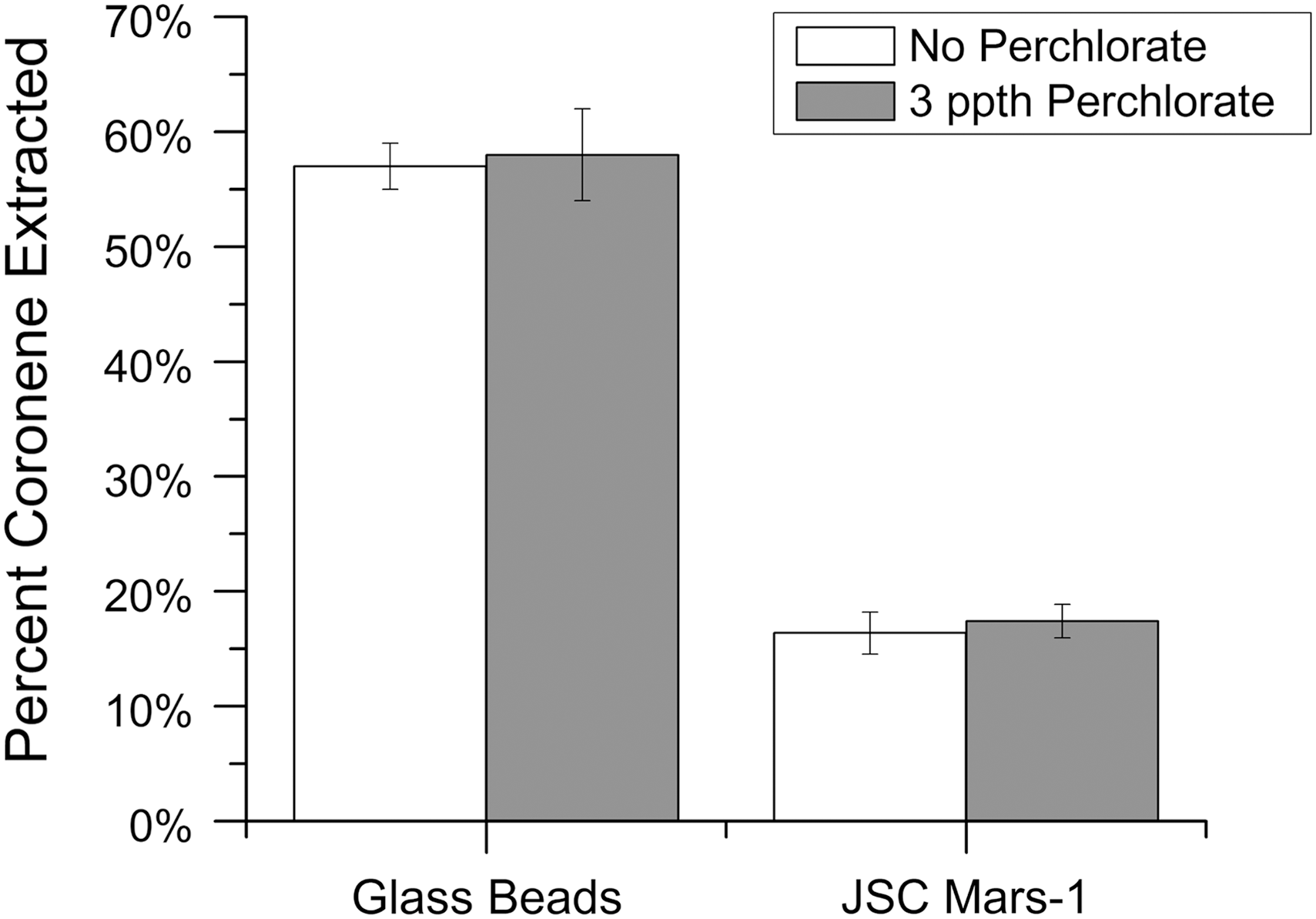
Extraction efficiencies of coronene from glass microbeads and JSC Mars-1 are unaffected by addition of 3 ppth sodium perchlorate, indicating that coronene was not destroyed while being extracted in the presence of perchlorate. Extraction efficiency of coronene from glass beads is higher than for JSC Mars-1, indicating the matrix affects the ease of extraction.
Regolith simulant samples were spiked with 1 ppm coronene. Results indicate that 20–30% of laboratory-doped coronene is lost during the extraction process.
Extracting coronene from martian regolith simulants with SCCO2 or acetone in the presence of perchlorates did not result in degradation of the coronene. The fluorescence spectra of coronene extracted by SCCO2 and acetone from glass beads and JSC Mars-1 are shown in Fig. 4, along with the spectra of a control sample that was not exposed to SCCO2. The amplitudes of the spectra have been normalized for comparison of the peak shapes.
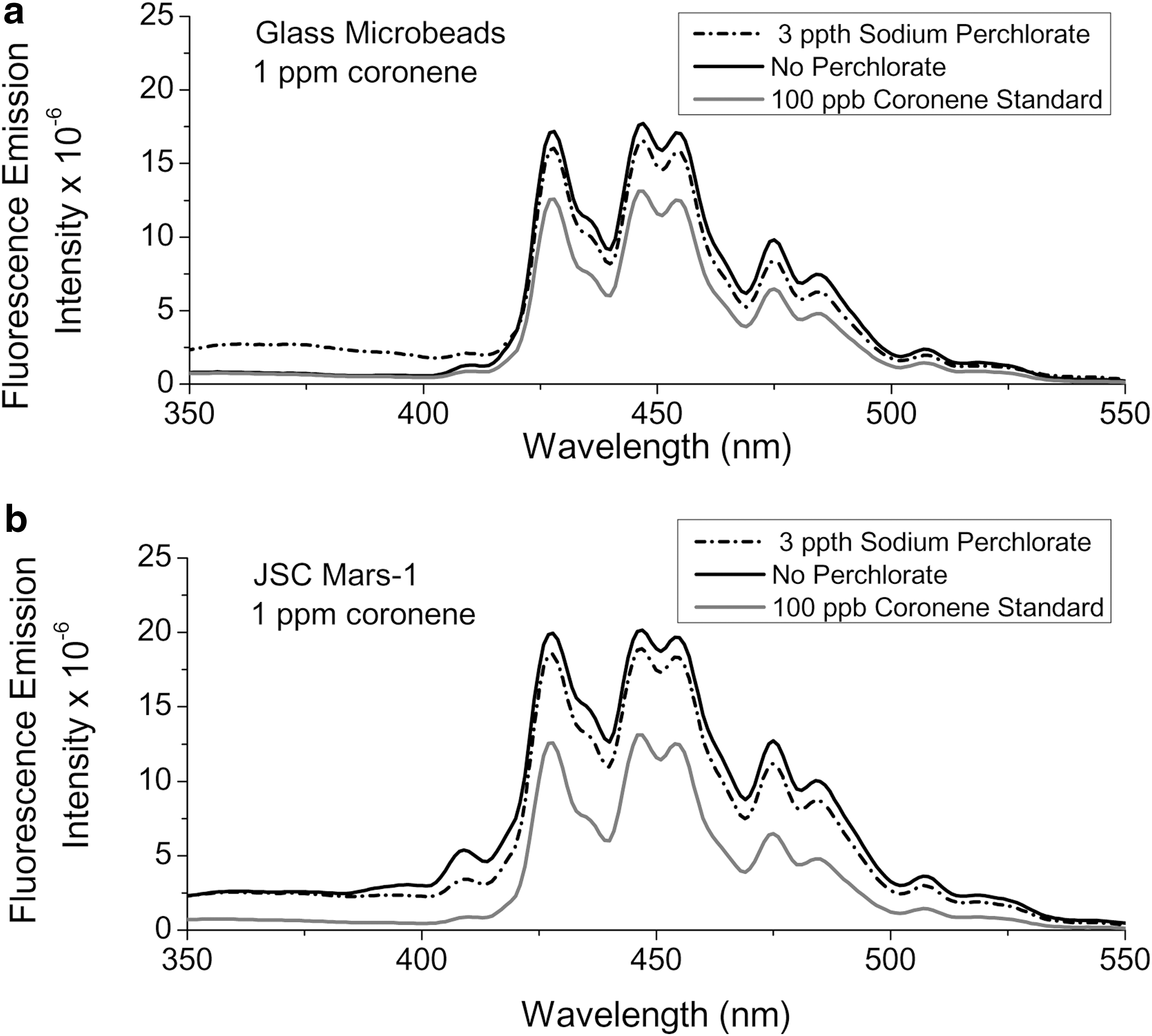
Fluorescence spectra of the SCCO2 extract of coronene spiked onto glass microbeads (
3.2. Perchlorate salts not extracted with SCCO2
Glass beads spiked with 3 ppth sodium perchlorate (without coronene) were extracted with SCCO2. Figure 5 shows that no measurable sodium perchlorate was extracted from the glass beads with SCCO2 and that the sodium perchlorate instead remained on the beads. To determine the amount of sodium perchlorate extracted, conductivity measurements were taken on the SCCO2 extract itself, on the water extract of glass beads that had undergone SCCO2 extraction, and on the control sample of the water extract of glass bead samples that had not undergone SCCO2 extraction. The conductivity of the SCCO2 extract was equivalent to 20 ppm sodium perchlorate on 1 g of glass beads, while the baseline conductivity of DIW was the equivalent of 2.3 ppm sodium perchlorate on 1 g glass beads. The concentration of sodium perchlorate on the water-extracted glass beads that had undergone SCCO2 extraction was 1.9 ppth, while the concentration of sodium perchlorate on the water-extracted glass beads that had not undergone SCCO2 extraction was 2.5 ppth, indicating that some loss occurred during SCCO2 extraction. Loss of sodium perchlorate (approximately 500 ppm) was probably due to the salt flaking off the glass beads during regular sample handling, which is unsurprising due to the low surface area and hard surface of the glass beads.
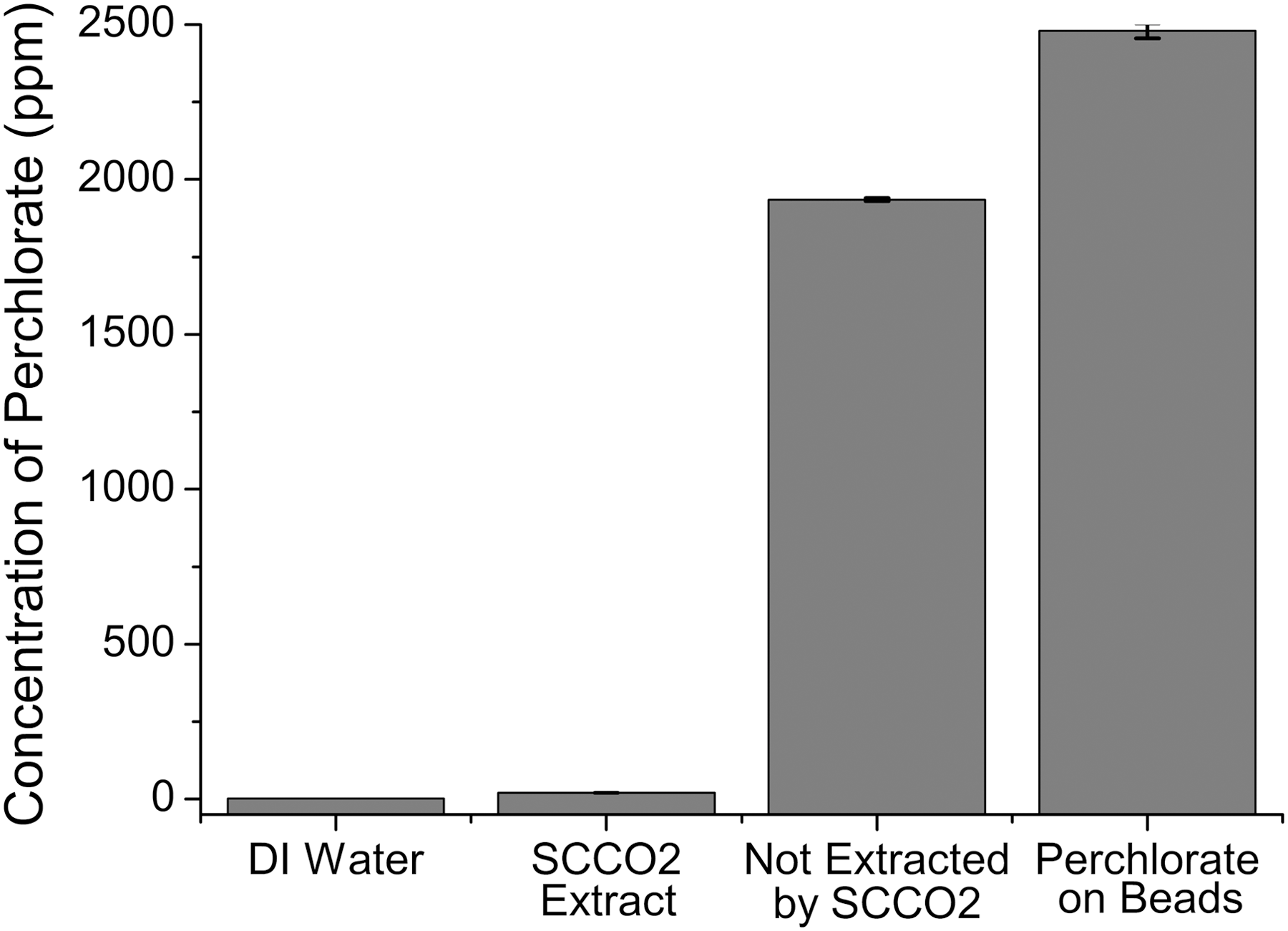
The amount of sodium perchlorate extracted from glass beads was measured with a conductivity probe. No measurable perchlorate was collected from the SCCO2 extraction of glass microbeads spiked with 3 ppth of sodium perchlorate. The measured concentration of perchlorate on glass microbeads that were extracted with water after SCCO2 extraction was 1.9 ppth, while 2.5 ppth perchlorate was measured on beads that only underwent water extraction.
3.3. Extraction efficiency versus concentration
The extraction efficiency of coronene from glass beads and JSC Mars-1 as a function of concentration was studied by extracting samples spiked with 10 ppb to 2 ppm of coronene. Figure 6 shows the effect of coronene doping level on SCCO2 extraction efficiency from glass beads and JSC Mars-1. The SCCO2 extraction efficiency of glass beads spiked with coronene at concentrations of 1 ppm or greater was over 50%, but when the doping level was decreased, extraction efficiency dropped. In contrast, extraction efficiency of coronene from JSC Mars-1 was approximately 20% for all samples within the concentration range that was tested.
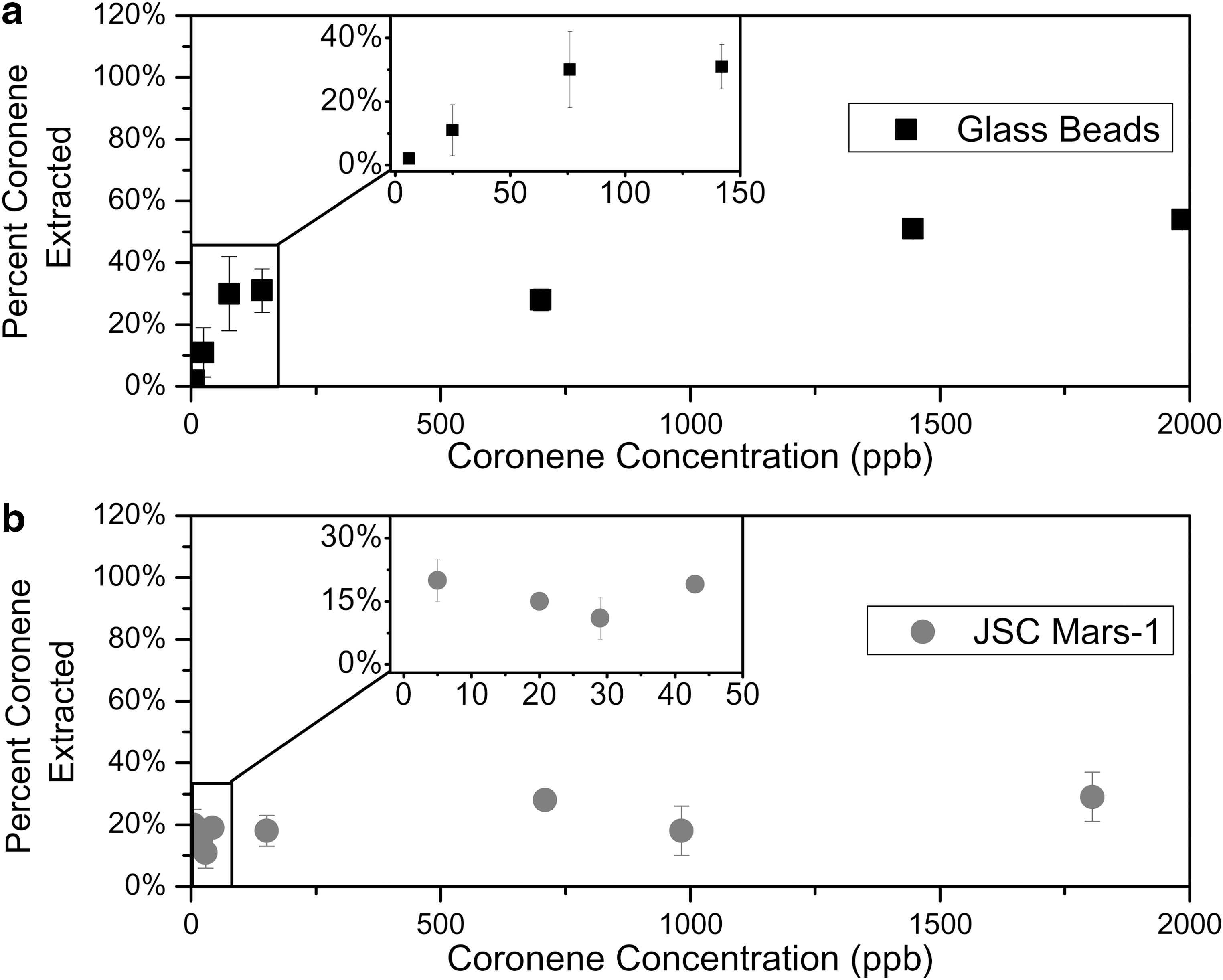
(
4. Discussion
4.1. Extraction of unaltered organics from martian regolith
To date, TV has been used exclusively to extract organics from the martian regolith for in situ detection (Biemann et al., 1976). While TV has enabled in situ sample analysis with Raman spectroscopy and mass spectrometry, either as a stand-alone technique or in combination with gas chromatography, there are challenges inherent to TV that have limited our ability to determine what organics are present in the martian regolith. The high temperatures of TV result in the thermal decomposition of minerals that can produce sufficient CO2 (Ming et al., 2014) to mask the combustion products of trace organics. Moreover, many compounds of interest require chemical derivatization to be amenable to pyrolysis (Buch et al., 2006; Stalport et al., 2012), which can further complicate sample analysis and present a potential for contamination (Glavin et al., 2013; Ming et al., 2014). Lastly, and most importantly for this work, the reaction of native organic compounds with native perchlorate salts at high temperatures may result in the formation of chlorinated hydrocarbons (Navarro-González et al., 2006), making it challenging, if not impossible, to identify the original native organics from which the chlorinated hydrocarbons were formed. Even without a strong oxidizer present, organics could decompose at pyrolysis temperatures, complicating the analysis of any data collected by the detector.
The successful extraction of coronene, without degradation, in the presence of 3 ppth sodium perchlorate demonstrates that SCCO2 extraction might facilitate extraction of native organics from martian regolith without degradation and thus enable the first direct detection of martian organics. To verify that the SCCO2 extraction protocol used for coronene was effective for other PAHs, anthracene and 9-phenylanthracene were also extracted, but extraction efficiency of these compounds was not quantified because significant fractions of each compound were lost due to their volatility during the sample preparation, SCCO2 extraction, and post-extraction sample concentration steps. Extension of this extraction technique to numerous compounds of astrobiological interest, including alkanes, alkenes, terpenes, carotenoids, long-chain amines, long-chain fatty acids, is possible without the addition of a cosolvent due to the compounds’ high solubility in SCCO2 (Gupta and Shim, 2006). Addition of a cosolvent, such as water or methanol, would enable the extraction of additional chemicals such as small alcohols, amines, and fatty acids, as well as amino acids (Gupta and Shim, 2006). In particular, cosolvent may enable the extraction of functionalized or partially oxidized PAHs, since they may be in the regolith in greater abundance than PAHs (Benner et al., 2000). The solubility of perchlorate in SCCO2/cosolvent mixtures, as well as the evaluation of contamination potential, must be examined.
4.2. Optimizing SCCO2 extraction conditions for in situ instruments
In the laboratory, extraction conditions are typically optimized such that the highest possible extraction efficiency is achieved, but optimizing SCCO2 extraction as part of an instrument suite for in situ chemical analysis of the martian regolith presents additional challenges due to the constraints inherent in robotic space exploration. One issue is the necessity of minimizing CO2 consumption: CO2 would either be brought to Mars as a limited consumable or harvested from the martian atmosphere, which would require scheduled power and time to operate. Figure 7 shows that, for the extraction of 1 ppm coronene from glass beads, the amount of CO2 used per extraction could be reduced from 18 g to 1 g with only a small drop in extraction efficiency. Additionally, Fig. 7 shows that the duration of the static extraction did not impact the extraction efficiency, which would reduce the time and power resources consumed. One caveat is that this may not extend to the extraction of all organics from actual martian regolith samples, so further study is required. Furthermore, the maximum achievable pressure of an extractor deployed on the martian surface would be limited by a pressure generator due to its mass, size, and power consumption, and thus impact the extraction of compounds that require high SCCO2 density for sufficient extraction.

(
4.3. Extraction of trace native fluorescent compounds from JSC Mars-1
It is well known that the extraction of native compounds from terrestrial soil is more challenging than the extraction of laboratory-spiked soil samples (Hawthorne et al., 1993). Fluorescence spectroscopy of the SCCO2 extract of unspiked JSC Mars-1 showed the presence of trace native fluorescent organics, as in Fig. 8a, indicating that the technique may be applicable to extraction of a range of native organics. The magnitude of the fluorescence intensity in Fig. 8a is equivalent to approximately 500 ppt to 1 ppb coronene, but no peaks are distinct enough to allow for identification of the compounds. For ease of comparison, Fig. 4, which shows a 100 ppb spectra of coronene, and Fig. 8 are presented on the same scale. As a negative control, the SCCO2 extractor was precleaned and then rinsed with acetone. This blank system rinse was treated identically to an extraction sample. The negative control, Fig. 8b, showed a much lower fluorescent emission than the SCCO2 extract of JSC Mars-1, indicating that SCCO2 was able to extract native fluorescent compounds from JSC Mars-1. The acetone extract of unspiked JSC Mars-1, Fig. 8c, resulted in a higher fluorescence signal than the SCCO2 extract, possibly due to the extraction of polar fluorescent compounds that are insoluble in SCCO2.

(
4.4. Advantages of SCCO2 extraction
One of the primary advantages of SCCO2 extraction is that SCCO2 does not extract salts from soil or rocks along with organics, which results in a sample that does not require a complex procedure along with additional hardware for de-salting the extracted sample before analysis. It is well known that the presence of salts in an extracted sample poses a challenge to gas chromatography, mass spectrometry (Watson, 1997), capillary electrophoresis (Stockton et al., 2009), and other techniques that may be used to analyze any compounds that are extracted from martian regolith. Because techniques such as subcritical water extraction (Luong et al., 2015), surfactant-aided liquid extraction (Court et al., 2010), and organic solvent extraction (Luong et al., 2014) utilize polar liquids, they may extract salts. Extracted samples can be de-salted prior to analysis, but this would add additional hardware, resource consumption, and complexity for an in situ chemical analysis suite that would be operated on the martian surface. The results shown in Fig. 5 indicate that pure SCCO2 does not extract salts along with organics, which results in a sample that does not require de-salting before analysis. SCCO2 extraction, using pure SCCO2, could deliver nonpolar or slightly polar organic molecules to analytical instruments without de-salting. The extraction of polar molecules with SCCO2 requires the addition of a small percentage of a cosolvent (Taylor, 1996). This is of particular interest because of the recent spectral evidence for hydrated salts and water in recurring slope lineae on Mars (Ojha et al., 2015), where water-soluble organics may be concentrated. Extraction of polar organics from recurring slope lineae locations may even be facilitated by the seasonal water already present in the regolith without addition of cosolvent. Under these conditions, it is possible that both organics and salts may be extracted by cosolvent-modified SCCO2, and work must be done to determine whether a de-salting step must be incorporated into an in situ analysis suite.
In addition, unlike conventional solvents, the solvent strength of a supercritical fluid can be varied by changes in pressure and to a lesser extent in temperature. This allows the supercritical fluid extraction to be optimized for a given class of analytes. Since solvent strength of a supercritical fluid primarily depends on pressure, less heating is involved in SCCO2 than conventional techniques. This is especially important under martian conditions.
5. Conclusions
Studying the organic molecules that may be present in modern martian regolith will improve our understanding of the current and past conditions on Mars and the planet's potential for harboring life. Technology must be developed to extract these native martian organics without degradation before detection and analysis. One option for overcoming the challenges inherent with standard evaporative extraction techniques is SCCO2 extraction, which operates at low enough temperatures to facilitate extraction without degradation, particularly in the presence of perchlorate salts. As a proof of concept, coronene, a PAH that represents a class of molecules that have been found to be ubiquitous in the Solar System and interstellar space, was extracted from martian regolith simulants by SCCO2. It was shown that the presence of 3 ppth sodium perchlorate did not measurably destroy or degrade the coronene during SCCO2 extraction. It was also shown that the choice of martian regolith simulant affected the extraction efficiency of coronene, and that the extraction efficiency of coronene from glass beads was a function of coronene concentration, while extraction efficiency of coronene from JSC Mars-1 was independent of concentration. Additionally, it was shown that SCCO2 was able to extract trace fluorescent organics from the martian regolith simulant JSC Mars-1, indicating that the technique may be able to extract native organics from actual martian regolith. With the completion of this study, work on SCCO2 extraction can extend to a variety of chemical classes of interest to the field of astrobiology. The successful extraction of the compound classes, including potential biomarkers of past and present life, from martian regolith simulants could open a new area of astrobiology.
Footnotes
Acknowledgments
The research described in this paper was carried out at the Jet Propulsion Laboratory, California Institute of Technology, under a contract with the National Aeronautics and Space Administration (NASA) and was supported by the NASA Astrobiology Science and Technology Instrument Development program. The JPL author's copyright for this paper is held by the California Institute of Technology. Government sponsorship is acknowledged.
Author Disclosure Statement
No competing financial interests exist.