




Abstract
Bioregenerative life-support systems (BLSS) address interactions between organisms and their environment as an integrated system through the study of factors that regulate the pools and fluxes of materials and energy through ecological systems. As a simple model, using BLSS is very important in the investigation of element cycling and energy flux for sustainable development on Earth. A 105-day experiment with a high degree of closure was carried out in this system from February to May, 2014, with three volunteers. The results indicate that 247 g·d−1 carbon was imported into the system from stored food. Most hydrogen is circulated as water, and more than 99% H2O can be lost through leaf transpiration into the atmosphere. A total of 1.8 g·d−1 “unknown oxygen” emerged between the input and output of the plant growth module. For the urine processing module, 20.5% nitrogen was reused and 5.35 g·d−1 was put into the nutrient solution. Key Words: Bioregenerative life-support systems (BLSS)—Lunar Palace-1—Artificial ecosystem—Element cycling—Energy flux. Astrobiology 17, 78–86.
1. Introduction
R
Moreover, when spaceflight exploration exceeds 2 years, it is necessary to establish bioregenerative life-support systems (BLSS) that can provide O2, food, water, and other basic living necessities for astronauts, such as the recycling of waste (Tong et al., 2011; Dong et al., 2014b). This technology is implemented to create sustainable life support in an Earth-like ecological environment that is open with respect to energy but closed with respect to mass. Further, environmental engineers have the capability to establish small-scale closed ecosystems, including biological units similar to BLSS on the ground to study mass circulation and migration as well as transformation principles of the natural ecosystem (Dong et al., 2014a). Recent advances in unit technologies, particularly in the development of high-efficiency plant cultivation (Nelson et al., 2005; Dong et al., 2014c), animal protein production (Li et al., 2013), nitrogen recovery from urine (Kabdasli et al., 2006), and bioconversion of solid wastes into soil-like substrate (Yu et al., 2008; Tikhomirov et al., 2011), provide unparalleled opportunities to improve closure coefficients of BLSS for reducing stowage and resupply of life-support materials and provide more reasonable and balanced diets for the crew. Furthermore, Russia (BIOS-3, 3–6 months) (Salisbury et al., 1997) and Japan (CEEF, 1–4 weeks) (Tako et al., 2008) have conducted crewed simulation experiments by integrating several BLSS unit components on the ground. These studies have demonstrated that differences in biological compartments and operational methods can be overcome, though they may result as well in discrepancies in mass circulation and migration in BLSS. As a simple model, BLSS are an invaluable tool in the investigation of element cycling and energy flux in Earth ecosystems.
In the present study, we established a ground-based experimental BLSS platform (Lunar Palace-1) by integrating atmosphere management, crop production, insect breeding, waste recovery, and water processing compartments. Lunar Palace-1 resembles a micro-biosphere that can provide human inhabitants with basic living requirements (Dong et al., 2015a). Oxygen, water, and food—key factors in the capacity for humans to live and work in space—regenerate in such a system through biotechnology. A long-term, high-closure experiment was carried out by way of Lunar Palace-1 from February to May, 2014. Three volunteers occupied the system for a 105-day experiment (Dong et al., 2016a), and we analyzed the element cycling and energy flux in and examined the quantitative relationships of material flux among different components of the system.
2. Materials and Methods
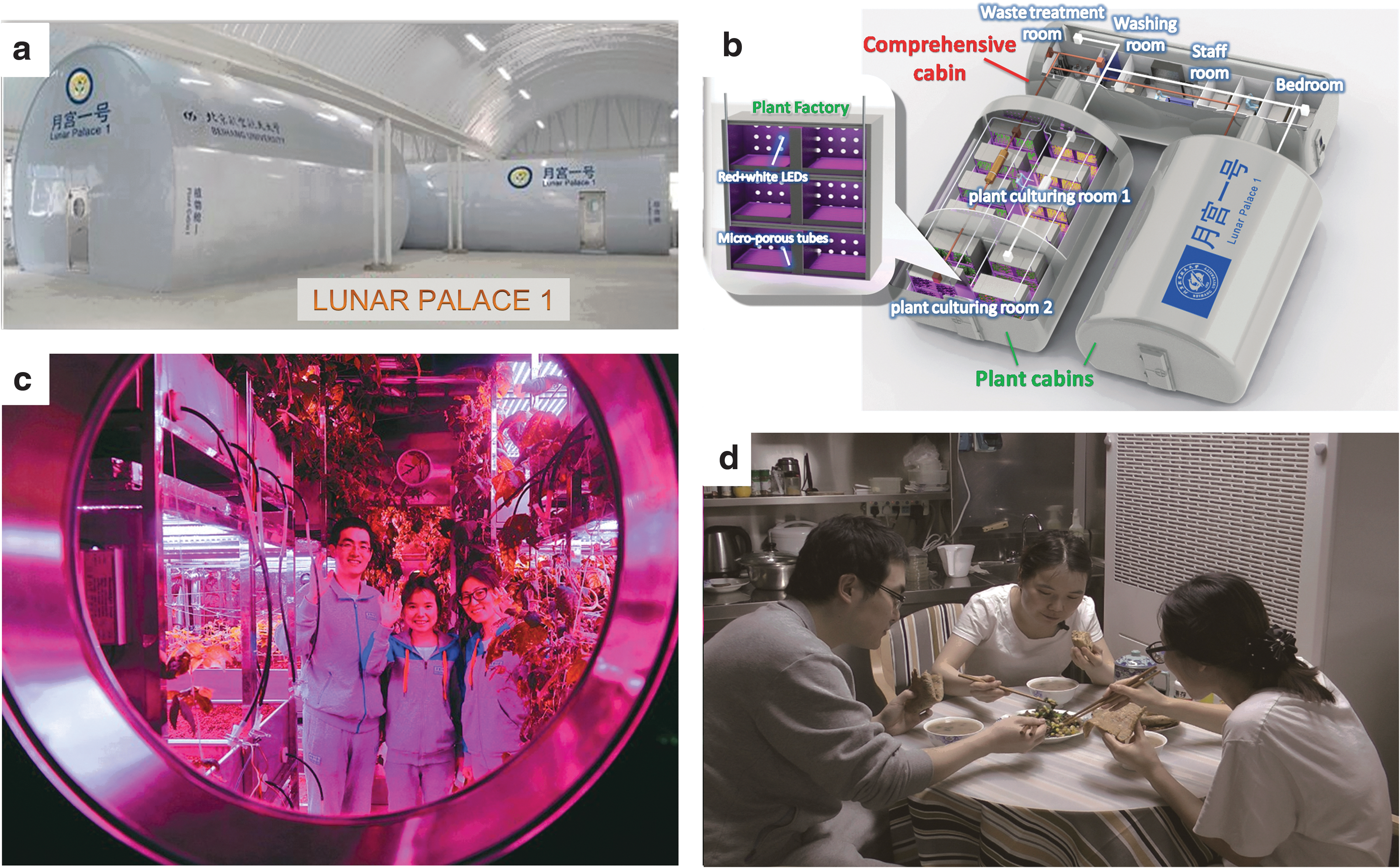
The Lunar Palace-1 facilities are located at the Institute of Environmental Biology and Life Support Technology, Beihang University, Beijing, China (Fig. 1a). The facility consists of one comprehensive cabin and one plant cabin. The comprehensive cabin includes four bedrooms, a washing room, a staff room for communication and work, and a room for waste disposal and insect culturing. The total area of Stage I of Lunar Palace-1 is 100 m2 with a total volume of 300 m3, which can provide life support for three crew members (Fig. 1b). The plant cabin is separated by two plant-culturing rooms, which control the environmental conditions according to the requirements of the plants growing.
(
The Lunar Palace-1 project started in March 2013 with system construction, followed by the commissioning of the facility, which led up to the 105-day mission that ended May 20. The three-person team comprised two women and one man (Fig. 1c, 1d). The three volunteers had passed physical and psychological tests before the experiment to ensure they could endure the physical constraints inside the enclosed cell (Wu and Wang, 2015). The planting module covers an area of 69 m2, where 5 food crops, 15 vegetable plants, and 1 fruit plant were cultivated. All plants were conveyor-type cultivated. The cultivation schedule was designed based on plant production, nutrient components, and human requirements (Table 1). The illumination conditions were set as follows: in room 1, continuous lighting was provided, with a light intensity of 500 μmol·m−2·s−1 (as tested from 20 cm below the light source); and in room 2, 12 h·d−1 lighting periods (light:dark = 12 h:12 h) were implemented with the same light intensity as for room 1. The lighting system was turned on at 6:00 and turned off at 18:00 in room 2. The modified Hoagland nutrient solution, for all crops, was the basic culture medium.
The water treatment module was subdivided into three units, which included the humidity condensate water processing unit, the sanitary wastewater treatment unit, and the urine treatment unit. With implementation of the air cooling facilities, plant transpiration of the plant cabin produced a large amount of humidity condensate water. The condensed water from the plant cabin and the comprehensive cabin was collected and pumped through water purification equipment. The purified water was then stored in a clean water tank. Most of the purified water was used for plant nutrient solution preparation, and the remainder served as drinking and sanitary water for the crew. Urine collected from the crew was treated with low-pressure distillation to recover water and part of the nitrogen. The recovered water was mixed with sanitary wastewater obtained from the comprehensive cabin before going through a biological activated carbon membrane reactor for purification. The purified water was then collected into a gray water tank before it was pumped into the nutrition tank for the preparation of plant nutrient solution. The solid residual urine obtained from distillation was collected, stored, and periodically sent out of the system.
The inedible biomass (mainly straw) was dried and ground into powder after the plants were harvested. Most of the straw powder was stored for fermentation, some as bedding for human feces, and a little for yellow mealworm (Tenebrio molitor L.) food fermentation (Li et al., 2015), together with some old vegetable leaves produced in the system (Li et al., 2016). The stored straw powder, human feces with straw bedding, and worm frass were together sent into a solid waste bioconverter that contained microbial inoculants capable of degrading plant waste. The CO2-enriched gas released from the solid waste bioconverter was passed through an air purifier and then into the plant cabin to supply CO2 for plant photosynthesis (Liu et al., 2016). Compressed solid residues that remained after fermentation were stored and periodically delivered out of the system.
Within the entire closed experiment (Fig. 2), the environmental parameters, including cabin temperature, humidity, air pressure, and air composition (O2, CO2), were monitored and controlled in real time. When the concentration of internal CO2 exceeded 5000 ppm, air balance was maintained by adjusting the solid waste bioconverter temperature, the lighting period for plants, and the intensity of crew activity. No extra water was imported into the system after the closed experiment began. The water consumption attributed to the crew and plant irrigation, as well as water recovered from air condensation, urine, and sanitary wastewater, was monitored and recorded. The O2 consumption and CO2 production rates during the process of solid waste treatment were calculated by testing the element composition of each material and building stoichiometric models (Hu et al., 2010).
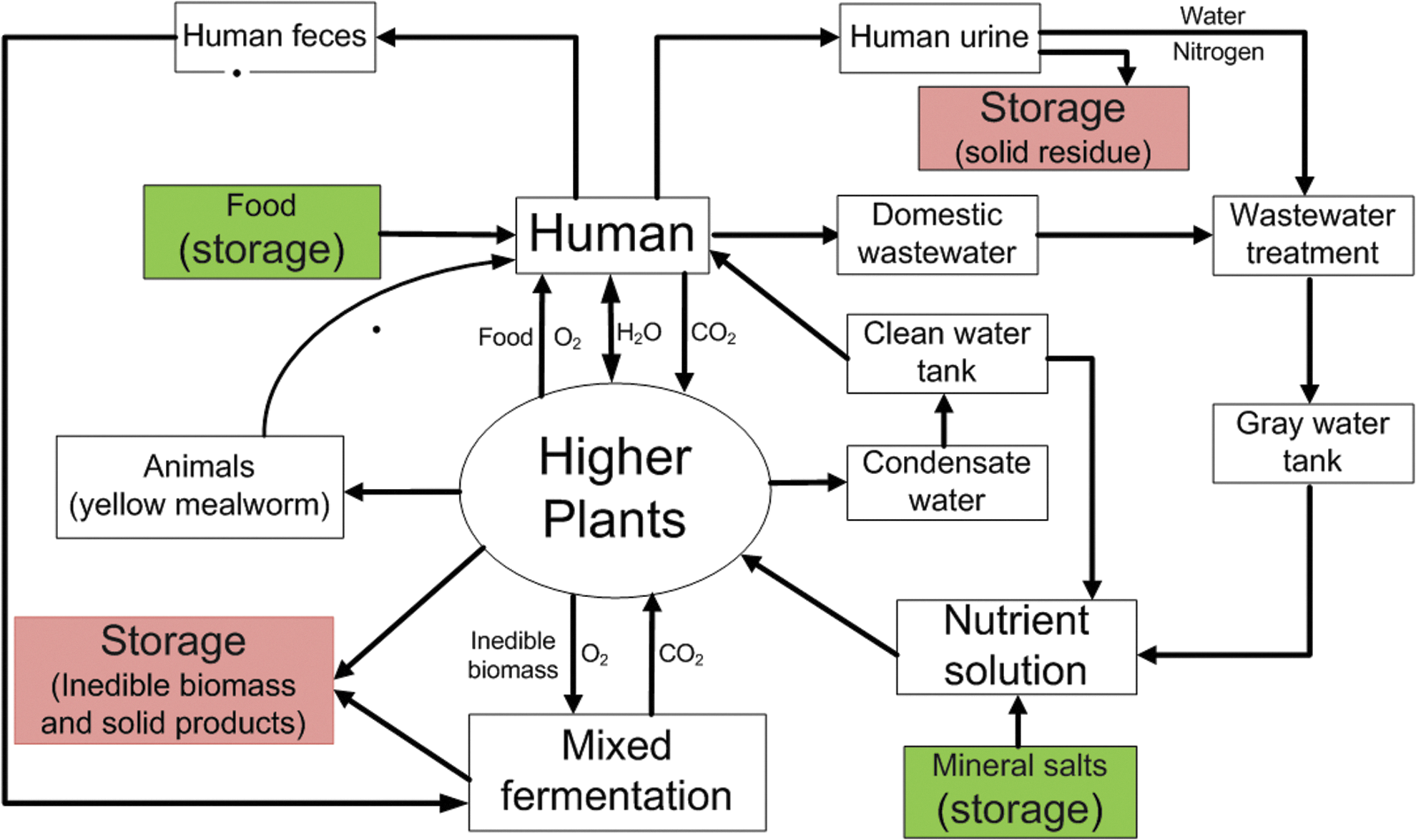
Materials cycling procedure during the 105-day experiment in Lunar Palace-1.
This study was approved by the Committee of the School of Biological Science and Medical Engineering in Beihang University, Beijing, China (Approval ID: 20140203, approval date Jan. 15, 2014). This study was carried out in strict accordance and compliance with the Statement on Ethical Conduct in Research Involving Humans guidelines of the Committee of the School of Biological Science and Medical Engineering in Beihang University. Written informed consent was obtained from all volunteers.
3. Results
The essential abiotic components of the small artificial ecosystem are water; the atmosphere, which supplies carbon and nitrogen; and soil minerals, which supply other nutrients required by organisms. Plants capture LED light energy and fixed carbon source photosynthetically from the artificial ecosystem. Light capture during photosynthesis responds almost instantaneously to fluctuations in light availability to a leaf. Humans are critical components of the small ecosystems because they transfer energy and materials and strongly influence the growth and development of plants and microbes.
The crew members in the present study grew 5 cereals, including wheat, corn, soybeans, peanuts, and chufa; 15 vegetables, including carrots, cucumbers, and water spinach; and 1 fruit, strawberries. The grown wheat provided the main source of calories for the crew and the primary source of oxygen. Meat was the primary laid-in food stock. However, meat was grown on the mission as well in the form of yellow mealworms, the primary protein source for the crew. Inedible material was used to raise mealworms as a source of animal protein. Human waste, food residue, and other by-products were treated by biotechniques and used for plant cultivation. In the comprehensive cabin, the carbon dioxide produced by the volunteers and any animal and rubbish processing was purified and sent to the plant cabins for photosynthesis, while the oxygen-enriched air produced in the plant cabins was sent to the comprehensive cabin to provide an atmosphere for breathing and for rubbish processing. Usually, we did not separate the two cabins, and the air could exchange through various pipelines with fans. At the same time, there were two air purifiers in the pipelines that improved the air quality.
Based on the system mass flow and closure coefficient, stoichiometric models were used for assessing material fluxes under the balanced condition of the system. An amount of 247 g·d−1 carbon was imported into the system from stored food and exported as inedible biomass, urinary residue, and fermentation residue (Fig. 3). In the plant growth module, plants, for example, acquired carbon primarily from the atmosphere, and most carbon released by respiration returned to the atmosphere.
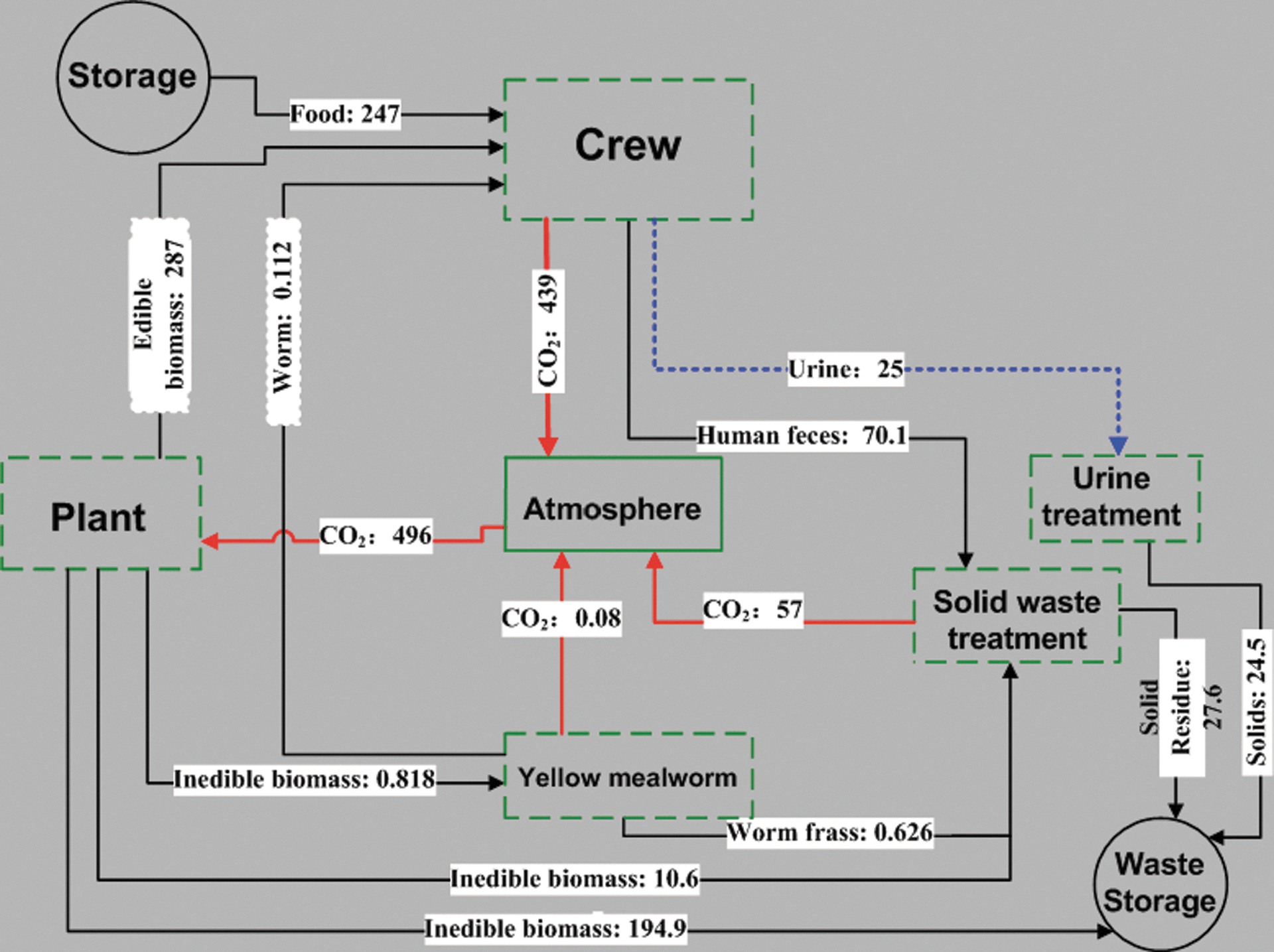
Carbon cycling and flux in Lunar Palace-1. The unit is g·d−1.
There are, however, relatively large pools of carbon stored in BLSS, so the activities of humans and microbes are somewhat buffered from variations in carbon uptake by plants. It is noteworthy that, in the present study, some CO2 around the plant roots may have been dissolved to HCO3 - and thus established the carbon balance of the root surface. In the solid waste treatment module, 0.4 g·d−1 emerged between the input and output. Changes in the microorganism community may have led to these results. Because the crew members emplaced human feces into the fermentation tank every day, community population and structure may have fluctuated.
The water cycle of the artificial ecosystems is also relatively closed, with water entering primarily by nutrient solution delivery, transpiration, and condensation and purification. In contrast to carbon, the ecosystem has a limited capacity to store water in plants and soil-like substrates, so the activity of organisms is closely linked to water inputs. A total of 30,060.21 g·d−1 H was introduced into the plant growth module, while 29,977.7 g·d−1 H was imported into the condensation system (Fig. 4). Most hydrogen circulated as water, and more than 99% H2O was lost through leaf transpiration into the atmosphere. Nutrient salts were introduced into the system every day, and the solution pH was controlled by elemental hydrogen. NH4H2PO4 and HNO3 were the main input form.
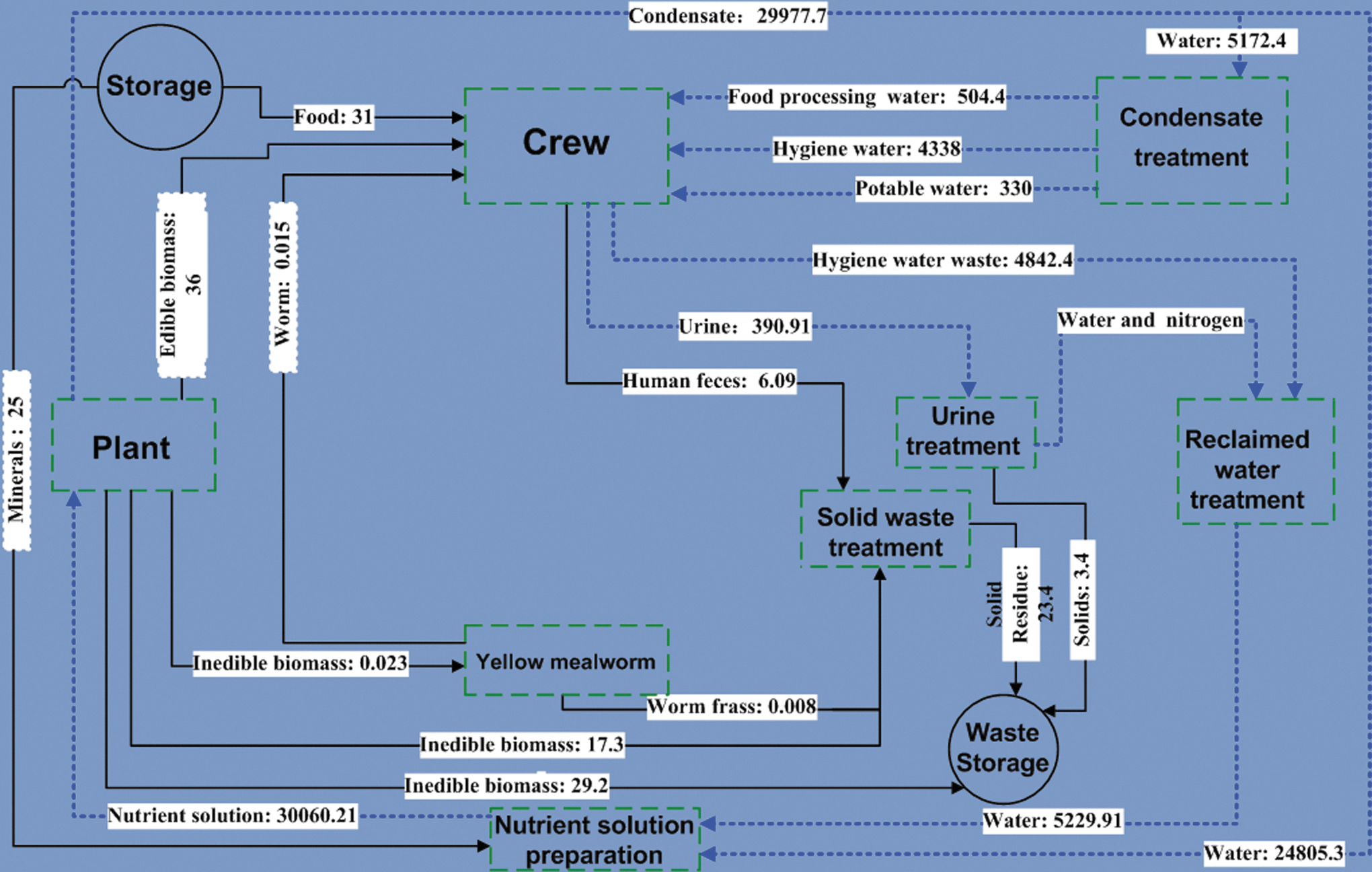
Hydrogen cycling and flux in Lunar Palace-1. The unit is g·d−1.
Similar to hydrogen, less than 1% oxygen from water was stored by plants (Fig. 5). However, input nutrient salts contained more oxygen, such as Ca(NO3)2•4H2O, KNO3, NH4H2PO4, and MgSO4•7H2O. A minor amount of active oxygen may have combined with Fe, N, C, or H and resulted in a new chemical balance, which we consider to be “unknown oxygen.” In addition, dissolved oxygen also played an important role in the oxygen cycle. A dissolved oxygen level that is too high or too low can affect water quality. Water will slowly absorb oxygen and other gasses from the atmosphere until equilibrium is reached at complete saturation. An amount of 1.8 g·d−1 emerged between the input and output of the plant growth module, which can be accounted for.
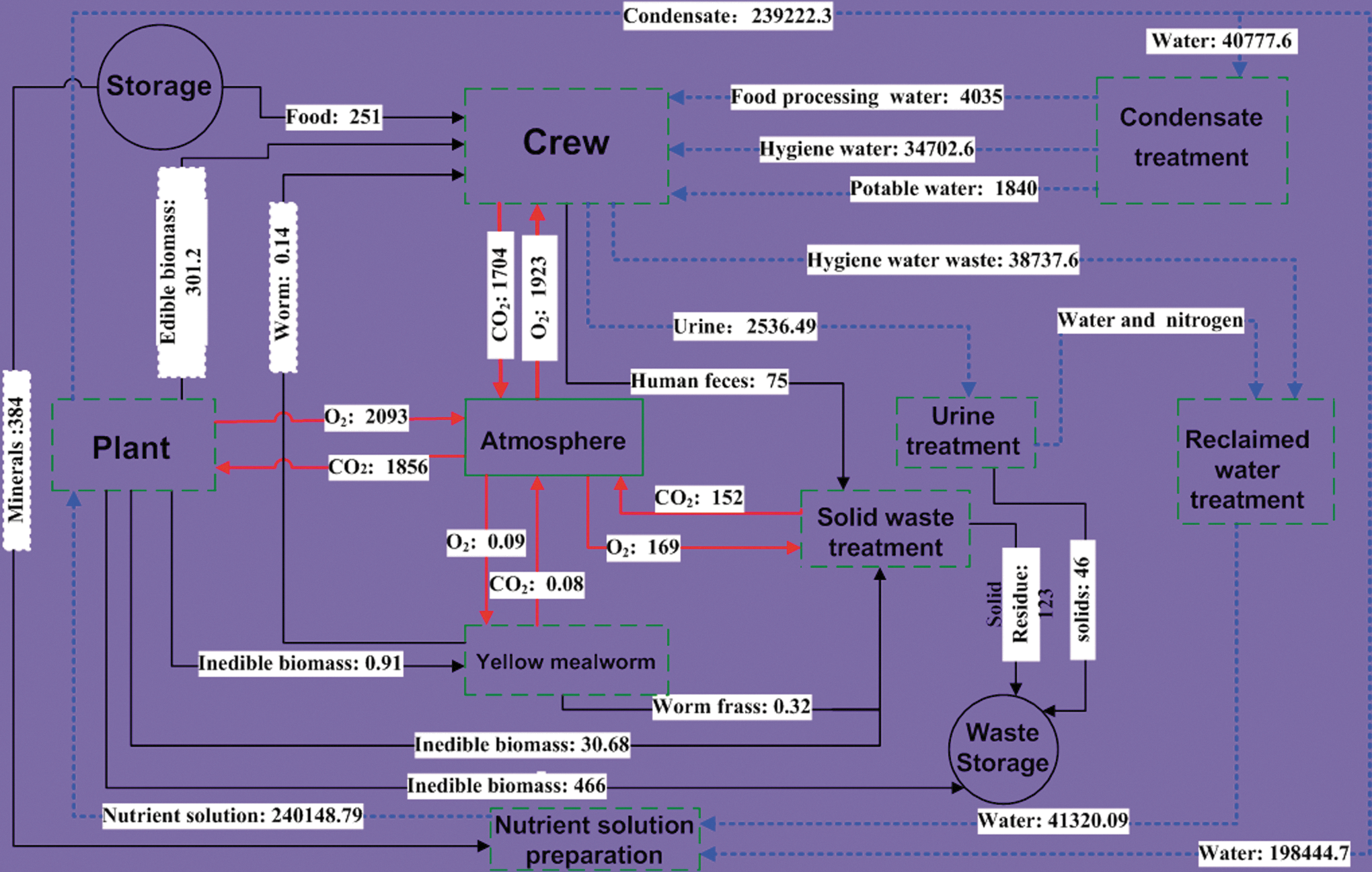
Oxygen cycling and flux in Lunar Palace-1. The unit is g·d−1.
Ca(NO3)2 and KNO3 were the main nitrogen input forms. Storage food included many amino acids, especially essential amino acids. A total of 48.961 g·d−1 nitrogen entered into the crew members, and 48.6 g·d−1 was released; 0.361 g·d−1 may have been lost by way of perspiration due to physical labor and exercise (Fig. 6). With regard to the urine processing module, 20.5% nitrogen was reused and 5.35 g·d−1 was put into the nutrient solution. However, 79.5% nitrogen was stored, so a future challenge will be to discern how to increase the recycling rate of nitrogen.
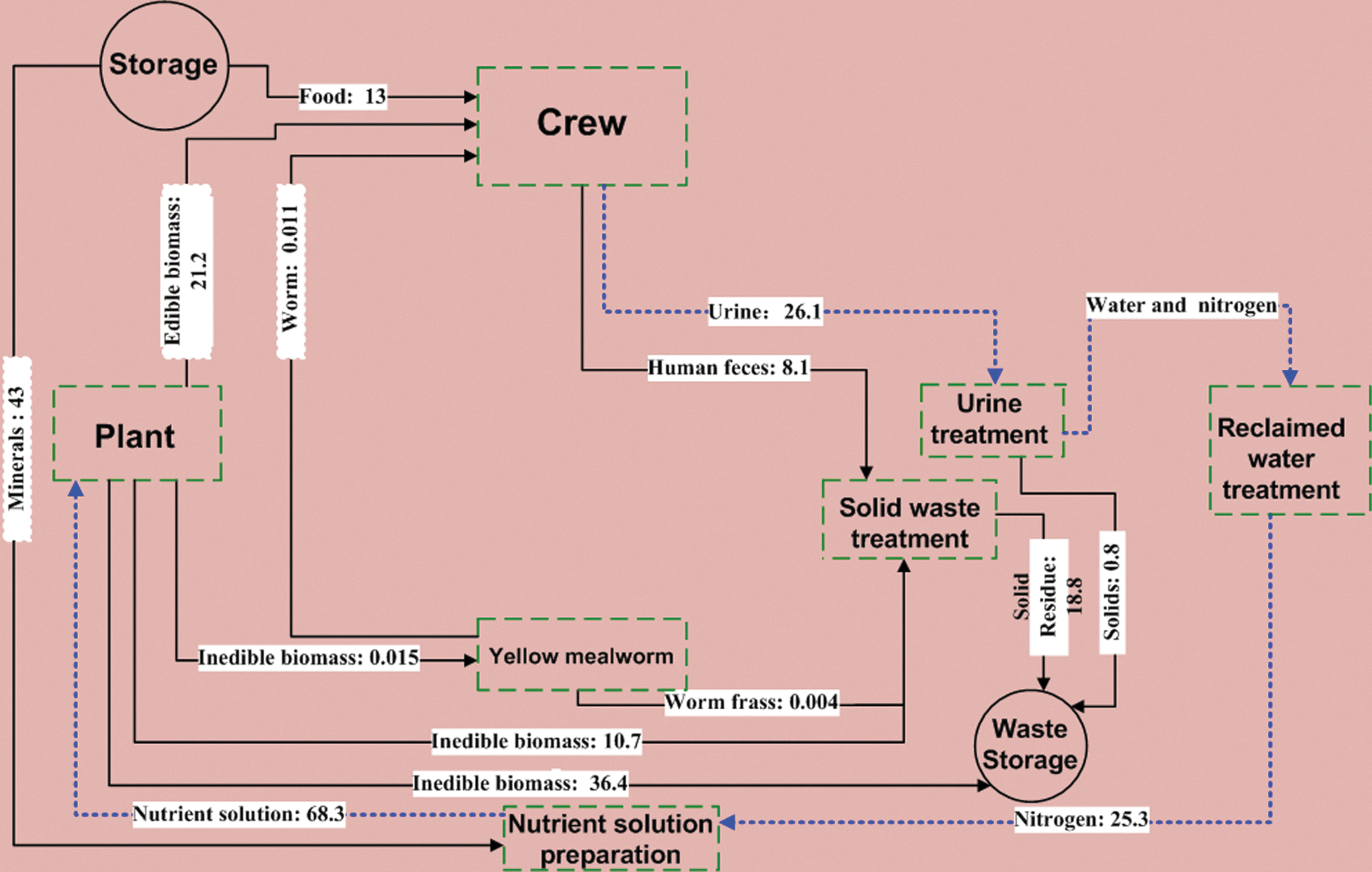
Nitrogen cycling and flux in Lunar Palace-1. The unit is g·d−1.
4. Discussion
Humans have been a natural component of many ecosystems for thousands of years. The cumulative impact of human activity extends well beyond an individual ecosystem and affects state factors such as climate through changes in atmospheric composition and potential biota through the introduction and extinction of species. Human activity has caused major changes in the structure and functioning of all ecosystems, which has resulted in novel conditions that have led to new types of ecosystems. Human activity has had an increasing impact on virtually all the processes that govern ecosystem properties. Our actions influence interactive controls such as water availability, disturbance regime, and biotic diversity. The growing scale and extent of human activity suggest that all ecosystems are being influenced, directly or indirectly. Therefore, all ecosystems are experiencing directional changes in ecosystem controls, which has created novel conditions and, in many cases, positive feedbacks that lead to new types of ecosystems.
For the closed artificial ecosystem, as depicted in the present study, green plants (primary producers) capture energy and transfer it to crew members (consumers) and decomposers (Dong et al., 2015b). At each transfer, some energy is lost from BLSS through respiration. Therefore, the productivity of plants constrains the quantity of consumers that BLSS can support. Plants respond to, and influence, their light, temperature, and moisture environment (Wheeler et al., 1996). Interactive controls are factors that regulate, and are regulated by, ecosystem characteristics. The energy flow through ecosystem maps is closely related to carbon flow in the processes of photosynthesis, trophic transfers, and respiratory release of carbon (Quantius et al., 2014). Decomposer microorganisms (microbes) break down dead organic material, which releases CO2 into the atmosphere and nutrients in forms that are available to other microbes and plants.
In such a system, O2 produced by higher plants is supplied for crew member respiration, as well as that of microorganisms that decompose solid wastes, such as inedible plant biomass and human waste, while CO2 produced by the crew and microorganisms is provided for plant growth. During a Lunar Palace mission, an excessively high CO2 level can affect plant growth and may harm crew member health; however, if CO2 levels are too low, plant growth may also be inhibited. Thus, keeping the balance between CO2 and O2 levels is essential to gas regulation within the system and is one of the key points for operational stability of the system.
In the present study, an efficient and controllable solid waste bioconverter based on the microbial fermentation and the CO2 generation of the bioconverter under the optimum fermentation conditions in the 105-day airtight experiment was built and monitored. Moreover, changes in CO2 production along with increases or decreases in temperature of the bioconverter, from 33°C to 45°C, were also investigated (Liu et al., 2016), and a positive correlation between the CO2 output and the fermentation temperature was obtained accordingly. Therefore, CO2 production can be adjusted effectively by changing the temperature of the bioconverter, which implies that it is feasible to regulate the balance between CO2 and O2 concentrations in BLSS by controlling the fermentation conditions of the solid waste treatment unit.
We now recognize that element cycles interact in important ways and cannot be understood in isolation. The availability of water and the availability of nitrogen are important determinants of the rate at which carbon cycles through the ecosystem. Conversely, the productivity of vegetation strongly influences the cycling rates of nitrogen and water. The biologically mediated movement of carbon and nitrogen through ecosystems depends on the physiological properties of plants, animals, and soil microorganisms. The traits of these organisms are the products of their evolutionary histories and the competitive interactions that sort species into communities where they successfully grow, survive, and reproduce. In contrast to carbon and water, mineral elements such as nitrogen are recycled rather tightly within Lunar Palace-1, with inputs and losses that are small relative to the quantities. These differences in the “buffering” of the cycles fundamentally influence the controls over rates and patterns of the cycling of materials through BLSS. Sufficient microbial medium density should be ensured so that the solid waste can be degraded as fast as possible. But if the medium density is too high, microorganisms will multiply rapidly in the beginning of the reaction, and excessive consumption of nitrogen may be induced (Sun et al., 2016).
Bioregenerative life-support systems are complex networks of interacting feedbacks. Negative feedbacks occur when two components of a system have opposite effects on one another. Negative feedbacks are the key to sustaining the small ecosystem because strong negative feedbacks provide resistance to changes in interactive controls and maintain the characteristics of ecosystems in their current state. The acquisition of water, nutrients, and light to support growth of one plant, for example, reduces availability of these resources to other plants, thereby constraining community productivity. The interactive controls both respond to and affect BLSS processes. The stability and resilience of BLSS depend on the strength of negative feedbacks that maintain the characteristics of BLSS in their current state. There are also positive feedbacks in BLSS in which both components of a system have a positive effect on one another or a negative effect on one another.
We believe that element cycling and energy flux responses in BLSS present one of the more difficult challenges to be confronted in future investigations. Because this kind of crewed BLSS experiment was the first attempted in China, experimental procedures or methods employed during this Lunar Palace-1 mission (2014) may not have been ideal. For future crewed BLSS investigation, we plan to implement, in 2017, a Lunar Palace-1 Stage II mission. This mission will include four crew members in a closed artificial environment and take place over the course of approximately one year.
5. Conclusion
Lunar Palace-1 provides a mechanistic basis for understanding processes that occur at global scales. Conversely, the global budgets of materials that cycle between the atmosphere, land, and oceans provide a context for understanding the broader significance of processes studied in a particular ecosystem. The essential biotic components of BLSS include plants that bring carbon and energy into the ecosystem, decomposers that break down dead organic matter and release CO2 and nutrients, and crew members that transfer energy and materials within the small ecosystem and modulate the activity of plants and decomposers. In the present study, a total of 247 g·d−1 carbon was imported into the system from stored food. Most hydrogen was circulated as water, and more than 99% H2O was lost through leaf transpiration. Also, “unknown oxygen” emerged between input and output of the plant growth module, and 79.5% nitrogen was stored. The question as to how to increase the recycling rate of nitrogen will be a crucial challenge in future investigative work.
Footnotes
Acknowledgments
This work was financially supported by Defense Industrial Technology Development Program (JCKY2016601C010) and the Innovation Foundation of BUAA for PhD Graduates. We thank the China Scholarship Council for supporting this work (fellowship to Chen Dong). We also thank Gerda Horneck for manuscript review and helpful comments.