




Abstract
To conduct crewed simulation experiments of bioregenerative life support systems on the ground is a critical step for human life support in deep-space exploration. An artificial closed ecosystem named Lunar Palace 1 was built through integrating efficient higher plant cultivation, animal protein production, urine nitrogen recycling, and bioconversion of solid waste. Subsequently, a 105-day, multicrew, closed integrative bioregenerative life support systems experiment in Lunar Palace 1 was carried out from February through May 2014. The results show that environmental conditions as well as the gas balance between O2 and CO2 in the system were well maintained during the 105-day experiment. A total of 21 plant species in this system kept a harmonious coexistent relationship, and 20.5% nitrogen recovery from urine, 41% solid waste degradation, and a small amount of insect in situ production were achieved. During the 105-day experiment, oxygen and water were recycled, and 55% of the food was regenerated. Key Words: Bioregenerative life support systems (BLSS)—Space agriculture—Space life support—Waste recycle—Water recycle. Astrobiology 16, 925–936.
1. Introduction
C
As a simple model, BLSS address the interactions among organisms and their environment as an integrated system through the study of factors that regulate the pools and fluxes of materials and energy through the ecosystem. The flow of energy and materials through organisms and the physical environment provides a framework for understanding the diversity of form and functioning of Earth's physical and biological processes. The unique contribution of BLSS is their focus on biotic and abiotic factors as interacting components of a single integrated system.
Despite progress in the technology of BLSS unit components, the development of feasible bioregenerative systems requires the integration of these units into a single system. Russian (BIOS-3, 3–6 months) (Gitelson et al., 1989; Salisbury et al., 1997) and Japanese investigators (CEEF, 1–4 weeks) (Tako et al., 2008, 2011) have conducted crewed simulation experiments by integrating several BLSS unit components on the ground. These studies demonstrate that the different biological components and operational methods result in changes of mass circulation and migration in BLSS (Nelson et al., 2009; Tong et al., 2012).The information on BLSS mass flow integrated with currently available new unit technologies, as mentioned above, is therefore needed to establish realistic BLSS in the future.
In the present study, we established a ground-based experimental BLSS platform (Lunar Palace 1) by integrating atmospheric management, crop production, insect breeding, waste recovery, and water-processing compartments. With this system, we performed a 105-day, multicrew, closed integrative experiment wherein several new technologies for BLSS that comprise high-efficiency plant cultivation, animal protein production, urine nitrogen recycling, and bioconversion of solid wastes into soil-like substrate were applied. The mass flow of the system was analyzed and compared with other published reports. Moreover, we also explored the quantitative relationships of material flux among different components of the system. Efforts like Lunar Palace 1 will yield important information in preparation for missions to the Moon or Mars.
2. Materials and Methods
2.1. Sealed research facility
The integrative, ground-based, experimental facility for Permanent Astrobase Life-support Artificial Closed Ecosystem (P.A.L.A.C.E.) was rigorously designed according to the definition of BLSS and is referred to as Lunar Palace 1. Lunar Palace 1 comprises a comprehensive cabin and two plant cultivation cabins. Its construction was divided into two stages. The first stage included construction of a 14 × 3 × 2.5 m comprehensive cabin and a 10 × 5.8 × 3.5 m plant cabin, which have the capacity to provide three crew members with a life support environment. In the second stage, another plant cabin will be built, with a capacity for five members to live. The present study was conducted by using the Lunar Palace 1 first-stage facility. The comprehensive cabin included four private bedrooms, a living room, a bathroom, and a room for waste treatment. The plant cultivation cabin was subdivided into two rooms, that is, plant-culture room 1 and 2. The environmental conditions within these two plant rooms were controlled separately, according to the growth demands of different plants. To provide a hermetic environment, the facility's shell was welded stainless steel plates, and all cabin doors were tightly sealed with silicon gaskets. We used far higher CO2 concentration changes to test the leakage rate of the closed system (Dempster et al., 2009; Tong et al., 2011), and a leakage rate of 0.04% per day was obtained (Dong et al., 2016a).
2.2. Key modules
New unit technologies, including nitrogen recovery from urine, soil-like substrate preparation by co-fermentation of straw and human feces, and animal protein production using plant wastes were integrated into Lunar Palace 1. In terms of function, Lunar Palace 1 was divided into three key modules: a higher plant cultivation module, a water treatment module, and a solid waste bioconversion and animal-rearing module.
2.3. Higher plant cultivation module
A spatial multilayer planting method was employed in the plant cultivation module to improve space-utilization efficiency of the plant cabin (Dong et al., 2015b). The plant cultivation module was composed of 13 three-layer plant trays, where five food crops, 15 vegetables, and one fruit were cultivated (Dong et al., 2016b). The total growing area for crops was 69 m2. Here, the plant species and abundance were designed based on a set of criteria of human nutritional requirements and dietary variety (Yang et al., 2002; Hu et al., 2010).The cultivation schedule for all varieties of plants is shown in Supplementary Table S1 (Supplementary Data are available online at
2.4. Water treatment module
This module was subdivided into three units, that is, a humidity condensate water processing unit, a sanitary wastewater treatment unit, and a urine treatment unit. The water processing procedures of the system are shown in Fig. 1. With air cooling facilities, plant transpiration of the plant cabin produced a large amount of humidity condensate water. The condensed water from the plant cabin and the comprehensive cabin was collected and pumped through water purification equipment. The purified water was then stored in a clean water tank. Most of the purified water was used for plant nutrient solution preparation, and the rest served as drinking water and sanitary water for the crew. The urine collected from the crew was treated with low-pressure distillation to recover water and part of the nitrogen. The recovered water was mixed with sanitary wastewater from the comprehensive cabin before going through a biological activated carbon membrane reactor for purification. The purified water was then collected into a gray-water tank before being pumped into the nutrition tank for the preparation of plant nutrient solution. The solid residual urine obtained from distillation was collected, stored, and periodically sent out of the system.
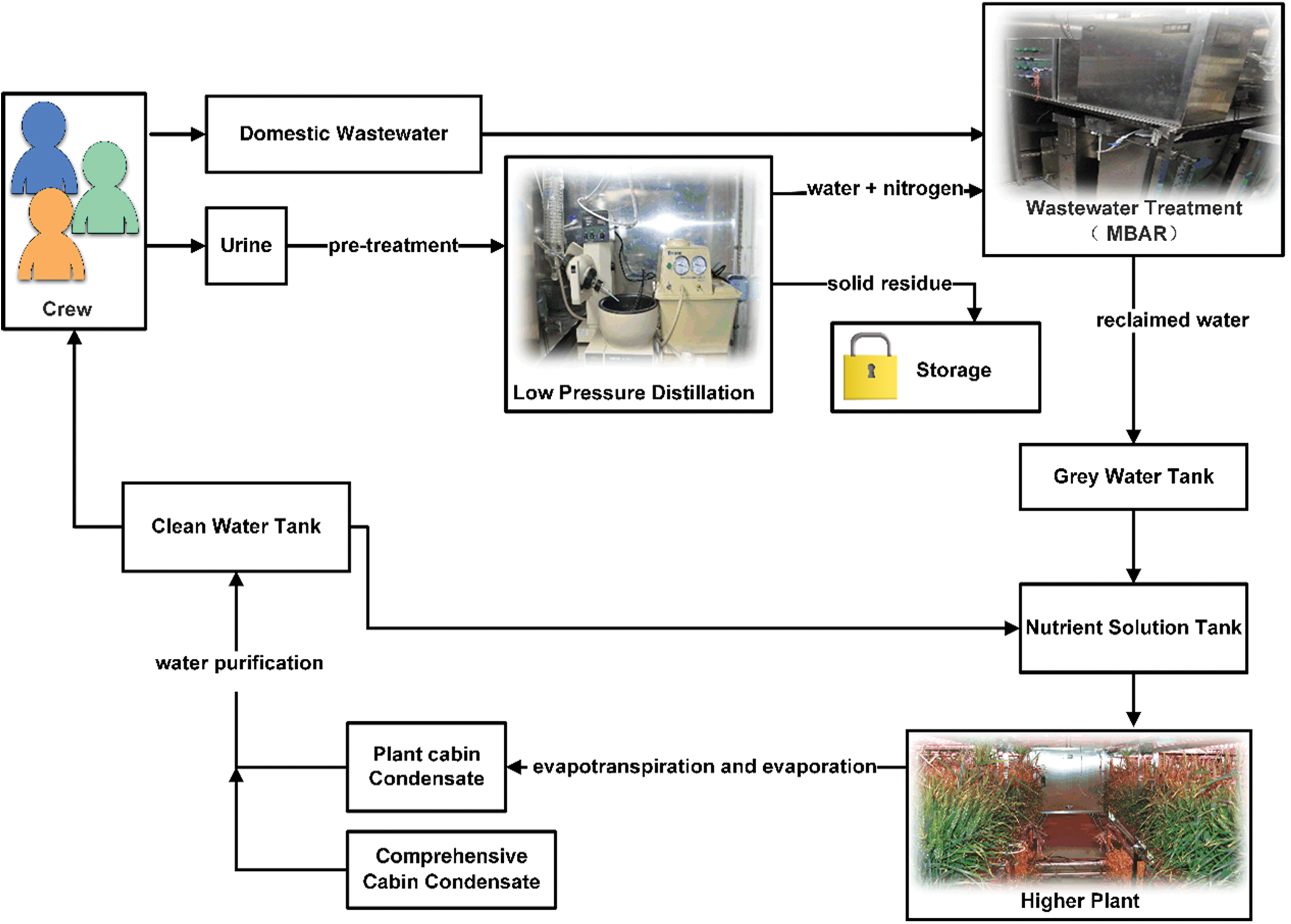
Water recovery procedures during the 105-day experiment in Lunar Palace 1.
2.5. Solid waste bioconversion and animal-rearing module
The inedible crop biomass (mainly stalks) was dried and ground into powder after the plants were harvested. A total of 85.8% of the straw powder was stored for fermentation, 13.9% as bedding for human feces, and 0.3% for insect (yellow mealworm, Tenebrio molitor L.) food fermentation, along with some old vegetable leaves produced in the system. The stored straw powder, the human feces with straw bedding, and worm frass were sent collectively into a solid waste bioconverter that contained microbial inoculants that are able to degrade plant waste. The CO2-enriched gas released from the solid waste bioconverter was passed through an air purifier and into the plant cabin to supply CO2 for plant photosynthesis. Moreover, to control and limit CO2 fluctuation, the CO2 emission rate from the bioconverter to the plant cabin was regulated by controlling the amount of running heat units inside the bioconverter based on a feedback signal of CO2 concentration. Compressed solid residues that remained after fermentation were stored and periodically exported from the system. The technological process of solid waste treatment is shown in Fig. 2.
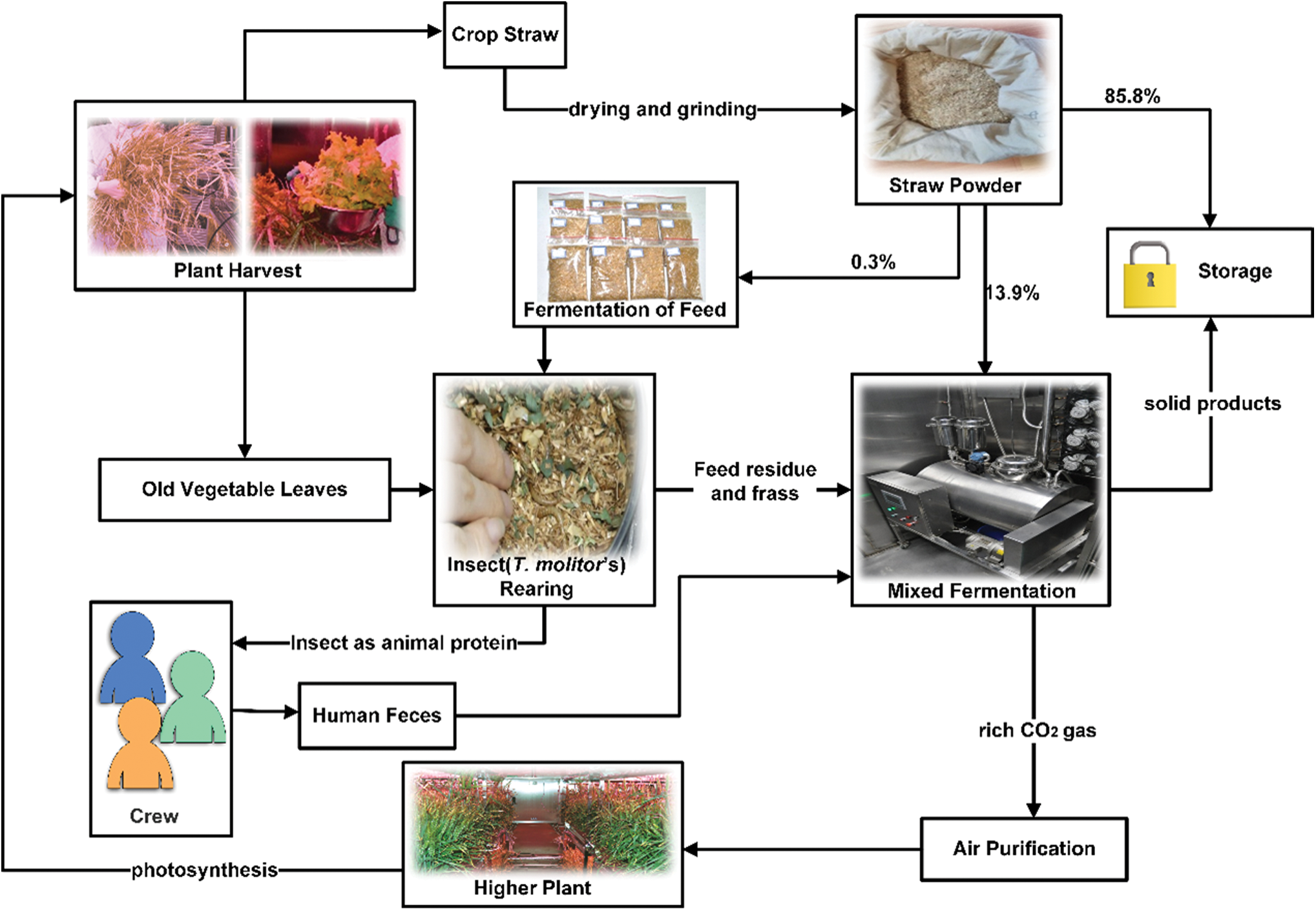
Solid waste processing procedures during the 105-day experiment in Lunar Palace 1.
2.6. Crew and substitutions
To test the toleration capacity of Lunar Palace 1 for crew members, a total of five volunteers was selected and trained to participate in a 105-day closed test experiment. The basic physical information gathered from these volunteers is listed in Table 1. The volunteers maintained good health and good psychological compatibilities and were devoid of habits detrimental to their overall health (e.g., smoking, drinking alcohol). The 105-day experiment was performed from February 3 to May 20, 2014. The study was approved by the Committee of the School of Biological Science and Medical Engineering in Beihang University, Beijing, China (Approval ID: 20140203, approval date January 15, 2014). This study was carried out in strict accordance and compliance with the Statement on Ethical Conduct in Research Involving Humans guidelines of the Science and Ethics Committee of the School of Biological Science and Medical Engineering in Beihang University. Written informed consent was obtained from all volunteers.
2.7. Environmental monitoring and control of the system
Within the entire closed experiment, environmental parameters that included cabin temperature, humidity, air pressure, and air composition (O2 and CO2 concentrations) were monitored continuously by a series of sensors located at a variety of positions within the system (Fig. 3). Accordingly, cabin temperature and humidity were controlled in real-time by air-conditioners and dehumidifiers. Furthermore, levels for 14 kinds of harmful trace gases were determined weekly with gas chromatography–mass spectrometry, using the EPA TO-14 method (EPA/625-96/010b). Seven representative air sampling points were selected in the plant chamber and comprehensive chamber. For crew and plant safety, air purification devices were installed in system ventilation pipes for removing harmful gases. The air purification devices were composed of an electrostatic precipitator, an activated charcoal matrix, and a catalytic reactor, and were run continuously for 24 h·d−1 without maintenance during the entire experimental period.

Distribution of different sensors, locations, points in Lunar Palace 1.
2.8. Dynamic monitoring and balance control in gas and water
By distributing the sensors at multiple points within the system, dynamic changes in CO2 and O2 concentrations were monitored and recorded in real-time. When the concentration of internal CO2 exceeded 5000 ppm (i.e., μmol/mol), the concentrations of O2 and CO2 were regulated by adjusting the solid waste bioconverter temperature, the lighting period of plants, and the intensity of crew activities. With respect to the water, no extra water was imported into the system during the experiment. The water consumption by the crew and plant irrigation, as well as water recovered from air condensation, urine, and sanitary wastewater, were monitored and recorded.
2.9. Biomass and waste measurements
The edible biomass, inedible biomass, and nutritional elements of the crops were measured after harvesting each batch of crops. The O2 production efficiencies were calculated with stoichiometric models (Tikhomirov et al., 2003; Hu and Bartsev, 2010). Urine and feces from the crew and worm frass were collected and weighed. The O2 consumption and CO2 production rates during the process of solid waste treatment were calculated by testing the element composition of each material and building stoichiometric models (Hu et al., 2010).
2.10. Crew basal metabolic rate measurements and external food supplements
During the entire experiment, the total energy expenditure (TEE) of each crew member was recorded through an energy consumption meter and expressed by using the Weir equation (Weir, 1949):
where UN is the nitrogen in urine (g·d−1), rO2 is the consumption of O2 (L·min−1), and rCO2 is the exhalation of CO2 (L·min−1). The unit of TEE is kilocalories per day (kcal·d−1).
The respiratory quotient (RQ), which is defined as rCO2/rO2, was calculated according to the crew's metabolism (Livingstone et al., 1990).
Thus, the daily O2 consumption and CO2 exhalation were obtained. Combined with the yield and nutrition of different crops and TEE of the crew, the daily diet composition of the crew and the quantity of external food supply were determined. External food such as meat was supplied into the system periodically.
2.11. The calculation of regeneration efficiency and closure coefficient of BLSS
The calculation formula of oxygen, water, and food regeneration efficiency (R) was as follows:
where mi is the amount of daily oxygen, water, or food supplied from outside (g); Mi is the amount of daily oxygen, water, or food consumption by the crew (g).
The closure coefficient (C) of the bioregenerative life-support system was calculated by the following equation (Gitelson and Lisovsky, 2003):
where m is the amount of outsourcing material consumption (g·d−1); M is the amount of material consumption by the crew (g·d−1).
3. Results
3.1. Atmospheric environment control during 105-day closed experiment
The air temperature and humidity of the comprehensive cabin and plant-culture rooms were stable over the 105-day experiment (Fig. 4A). Both temperature and humidity correspond to the standard of plant growth and human habitation in advanced life support systems (Hanford, 2006). We next determined the concentrations of 12 different harmful trace gases for both Pre-Test (from day −15 to day 0) and Test periods (from day 0 to day 105) to analyze air quality of the closed environment. The concentrations of ammonia, carbon monoxide, formaldehyde, hydrogen sulfide, toluene, ethylbenzene, acrolein, ethanol, ozone, methane, sulfur dioxide, and nitrogen dioxide did not exceed the spacecraft maximum allowable concentration (SMAC) (James, 2008) in either case (Fig. 4B). Furthermore, the concentrations of nitrogen oxides (NO x ) and total volatile organic compounds (TVOC) were also far lower than the SMAC.
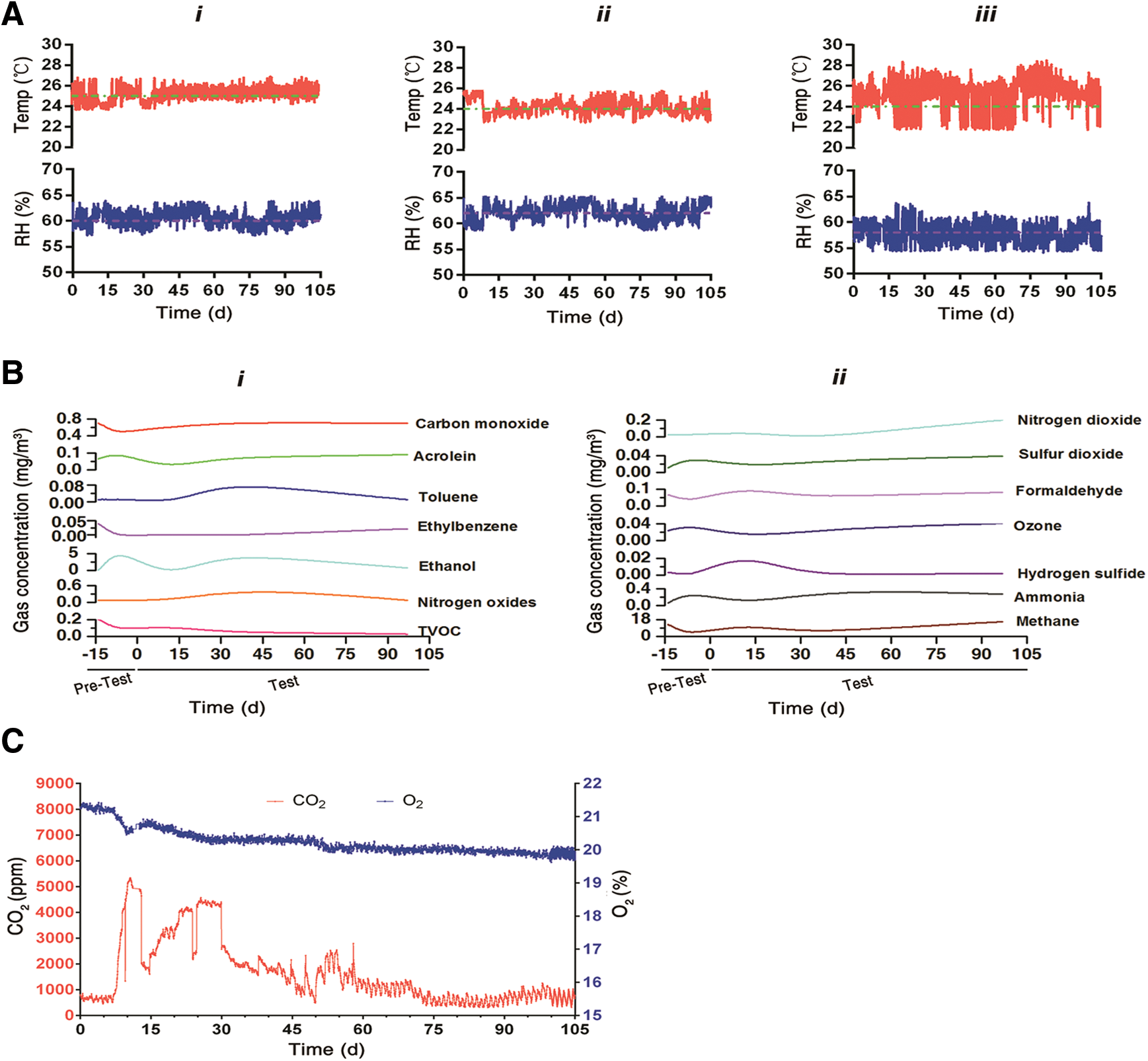
(
The O2 concentration in Lunar Palace 1 was maintained within the range of 19.5–21.5%, while the CO2 concentration was controlled between 500 and 5500 ppm (Fig. 4C). The variation of gas could be divided into two stages. The first stage was the first 26 days, when O2 and CO2 concentrations fluctuated greatly with crew substitutions (Fig. 5). We could clearly see that CO2 concentration rapidly increased from 900 to 5500 ppm from day 8 to day 11, when three male volunteers (A, B, and C) were confined. The second stage was from day 26 to day 105, when one male (A) and two females (D and E) were combined; fluctuation range of O2 and CO2 concentrations gradually narrowed with increasing time of closure and achieved a relative steady-state level at the end of the experiment.
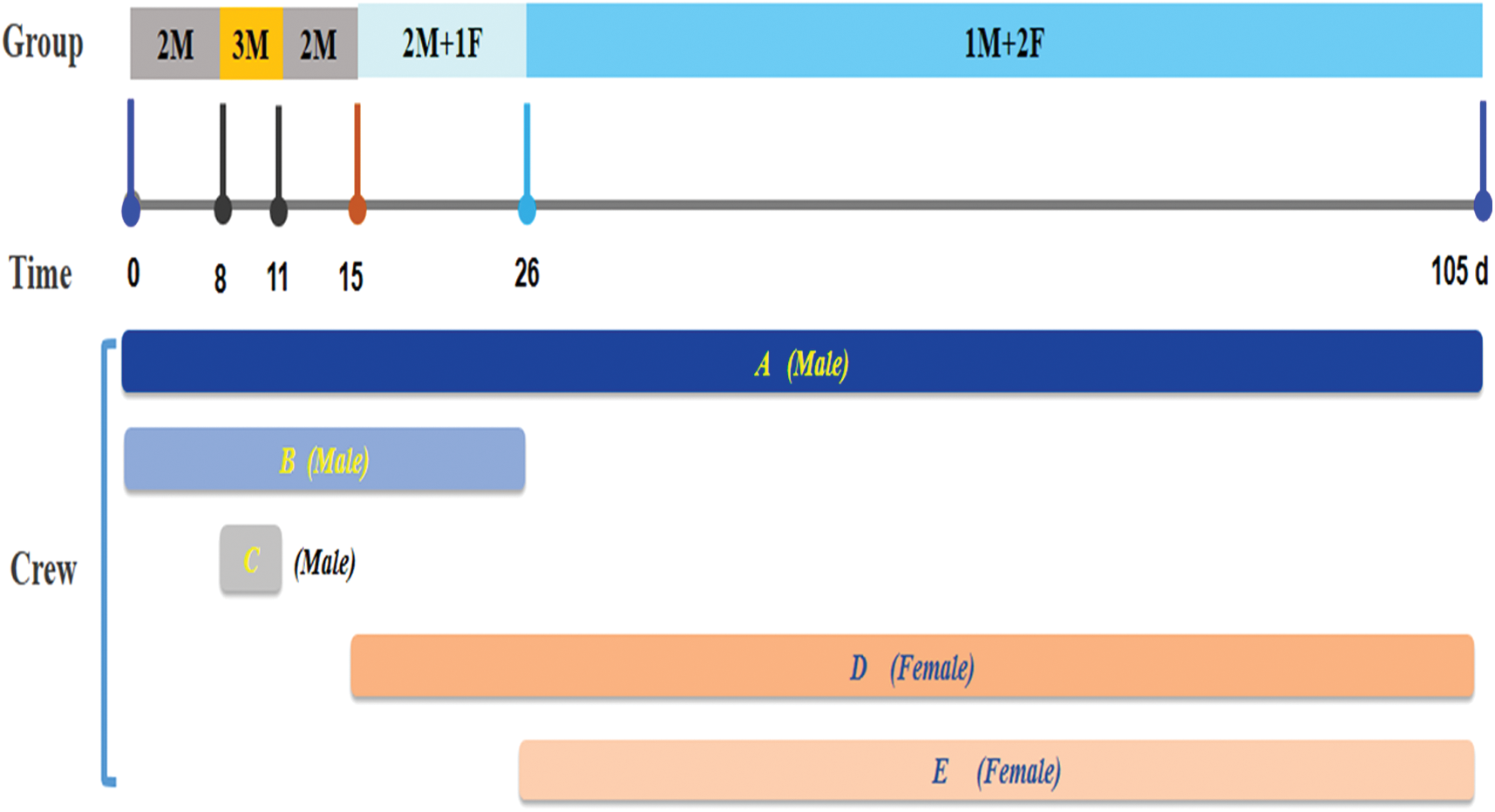
Crew substitutions during the 105-day experiment in Lunar Palace 1.
3.2. Water recovery
The data of daily water consumption and regeneration of the crew members A, D, and E are shown in Table 2. From these results, we found that 100% of water regeneration was achieved. The tiny difference between the daily water consumption (317.04 L) and regeneration (316.75 L) might be due to a statistical error. Therefore, the water pre-stored in the system was used and recycled continuously during the whole process of the 105-day experiment, and no extra water needed to be supplied from outside.
3.3. Food production and efficiency of O2 production
Tables 3 and 4 show the production efficiencies of edible biomass and O2 production ability of the crops during the 105-day closed experiment, respectively. For Lunar Palace 1, wheat was used as the main food crop and was thereby the major producer of O2. Its O2 production ability was 33.32 g·m−2·d−1 (Table 4). The O2 production ability of leafy vegetables was the lowest, with an average value of 7.23 g·m−2·d−1. Even so, it was still necessary to cultivate a certain area of leafy vegetables for matching between food supply and human nutritional requirements in the closed environment (Tako et al., 2011).
Mean ± SE.
3.4. Crew metabolism and waste treatment
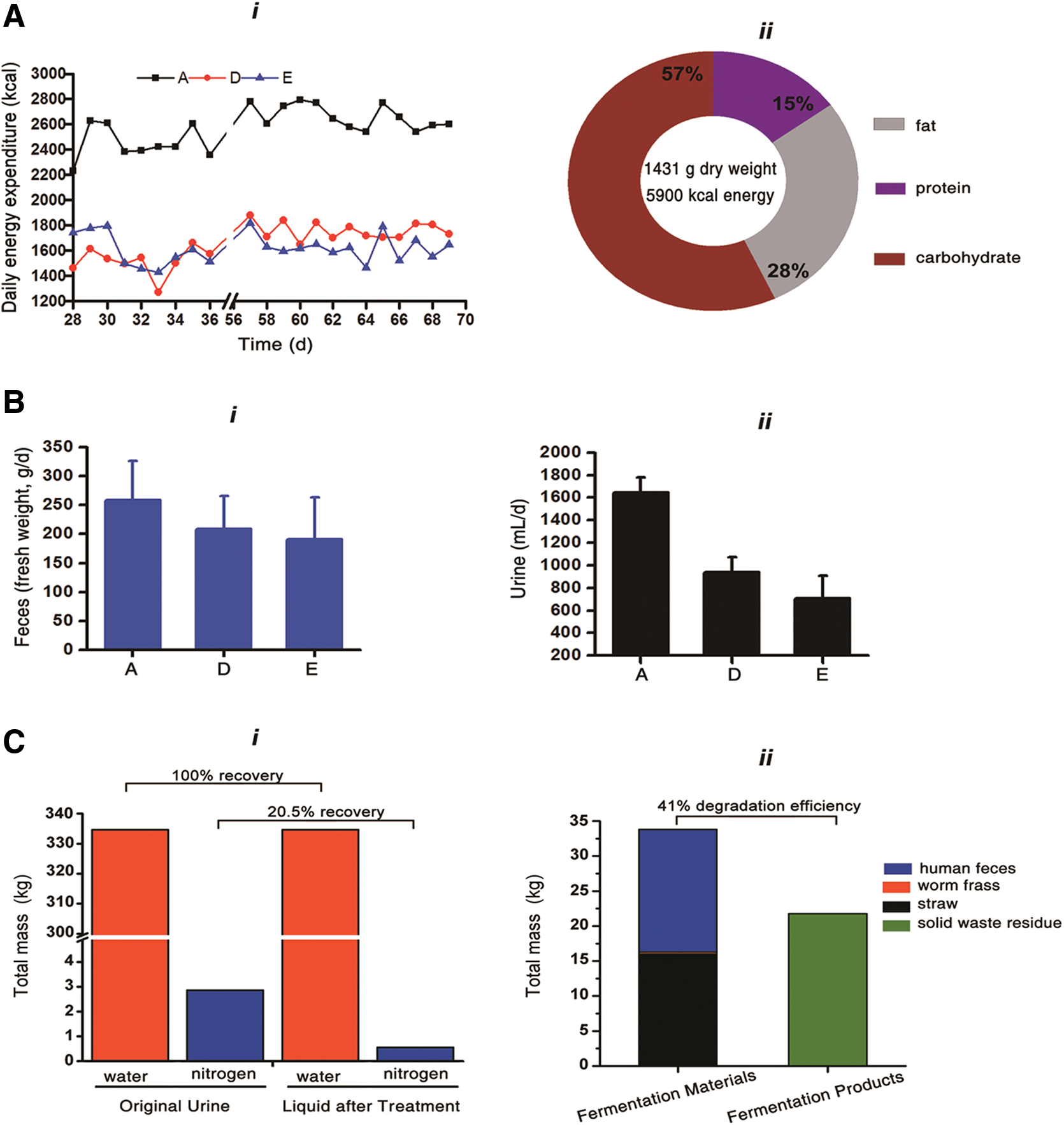
The average daily food consumption of the crew members A, D, and E was 1431 g per day, which is equal to 5900 kcal of energy, with 15% content for protein, 28% for fat, and 57% for carbohydrate (Fig. 6A-ii). The TEE evaluated by the accelerometer showed that the average daily energy expenditure for the male crew member A was 2600 kcal, and between 1600 and 1700 kcal for each of the two female members D and E (Fig. 6A-i). The sum of daily energy consumption of the three crew members approximately equaled their daily food energy intake in theory. However, a decrease of less than 2 kg in body weight of each crew member was observed when comparing the data before and after the closed experiment. This might be caused by many factors such as psychological factors, food-utilizing efficiency, and water consumption, and the issue needs to be further investigated. The average daily urine and feces produced by three members were 3295 mL and 658 g (fresh weight), respectively (Fig. 6B-i, 6B-ii).
(
During the entire closed experiment, the total urine processed by the crew was 346 L, from which 100% of water and 20.5% of nitrogen was recycled for plant irrigation (Fig. 6C-i). For solid waste treatment, 15,994 g (dry weight) of straw powder, 281 g (dry weight) of worm frass, and 17,566 g (dry weight) of human feces were added to the solid waste bioconverter (Fig. 6C-ii). After 105 days, a total of 21,760 g solid waste residue was discharged. Therefore, the degradation efficiency of solid waste reached 41.0%, and the average degradation rate of dry matter was 141 g·d−1.
3.5. System mass flow and closure coefficient
Stoichiometric models are widely used in assessing material fluxes under the balanced condition of the system. To simplify the calculation and gain more precise analysis, we chose four major elements, C, H, O, N, to perform the stoichiometry calculations. The molecular formula of each material was obtained through elemental analysis or by previous research (Tikhomirov et al., 2003; Hu et al., 2010). Consequently, the stoichiometric models for plant growth, crew metabolism, solid waste treatment, and animal rearing were identified as follows:
Plant growth

Human metabolism

Solid waste treatment

Animal rearing
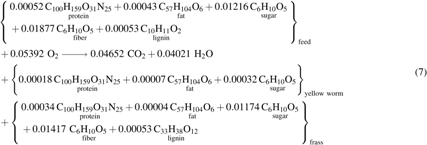
Based on the coefficients in Eqs. 4–7 and the quantity of water and food measured during the whole experiment, the mass flow relationships among solid materials, liquid, and gas in the system with an ideal stable state are illustrated graphically in Fig. 7. The O2 production rate of the plant cabin was 2093 g·d−1, most of which was consumed by human respiration (1923 g·d−1 of O2 consumption), though a small proportion was utilized in solid waste fermentation and animal rearing (170 g·d−1). To maintain mass balance, 1256 g·d−1 of exogenous food and salts for crew and minerals for plants was supplied into the system, and the equivalent mass of solid waste residue, plant inedible biomass, and residual solid from urine was stored daily and periodically sent out of the system.

Mass flow relationships among system components (g·d−1). Arrows indicate the material flow direction. Object boxes represent each biological unit. Solid matter, liquid, and gas flows are marked by black, blue, and red arrows, respectively. Data of solid matter was on a dry-weight basis.
The materials consumed by crew members under the stable running status of Lunar Palace 1 are shown in Table 5. Combined with Eqs. 2 and 3 (Gitelson and Lisovsky, 2003), we found that a regeneration rate of 100% was achieved for water and oxygen, and 55% for the food (61% of the plant food). The overall closure coefficient in Lunar Palace 1 was 97%.
4. Discussion
These results demonstrate that the maximum capacity of CO2 absorption with 69 m2 of crops in Lunar Palace 1 was insufficient to meet the breathing requirements for three male crew members but greater than or equal to the requirement of one male and two females. This is in agreement with an earlier report from the Russian BIOS-3 project and NASA testing, which indicated that ∼20–25 m2 of crops could only supply sufficient oxygen for one human (Yorio et al., 2001). In addition, the rapid rise of CO2 concentration from day 8 to day 11, once again, proved the good air-tightness of the system. Together, these data demonstrate that the atmospheric environment control in the system, including air-tightness, temperature, and relative humidity, as well as a reasonable fluctuation range of O2 and CO2, was well achieved.
According to Table 2, we also concluded that household water consumption was 47.24 kg·d−1, that is, 15.77 kg per capita per day. This number was between the water demand of an early planetary base and a mature planetary base (Hanford, 2006). Additionally, plant transpiration rate averaged 3.91 L · m−2·d−1, which was similar to that of previous studies (Tako et al., 2008; Wheeler et al., 2008).
In general, the energy metabolism level of the crew in Lunar Palace 1 was similar to that of an early study in CEEF (Komatsubara et al., 2005), but the daily energy intake was lower than the recommended values by Levine et al. (1996) (2900 kcal for the man and 2200 kcal for the woman). Interestingly, the daily fecal excretion by the crew in our study was far higher than daily mean fecal excretion of 110–170 g reported by Hanford (2006) and similar to the NASA STD-3000 (or 3001) (Gill and Vaughan, 2003). This could be attributed to the fact that vegetables accounted for the majority of the crew's food intake. A prior study by Hawk also showed that the daily mean fecal excretion for an individual on a vegetarian diet could be as much as 350 g (Oser, 1965).
Compared with the results of the Russian and Japanese systems, the food regeneration rate in Lunar Palace 1 was higher than in the BIOS-3 experiment that involved three crew members (48%) and was lower than in the BIOS-3 experiment with two crew members (78%) and was lower than in the Japanese system with two crew members (90%) (Gitelson and Lisovsky, 2003; Tako et al., 2011). We believe that the differences in closure coefficient and food regeneration rate between our system and other systems were due to differences in system design and participants.
Bioregenerative life-support systems are complex networks of interacting feedbacks. The acquisition of water, nutrients, and light to support growth of one plant, for example, reduces availability of these resources to other plants, thereby constraining community productivity. The interactive controls both respond to and affect ecosystem processes. There are also positive feedbacks in BLSS in which both components of a system have a positive effect on the other or both have a negative effect on one another.
5. Conclusions
Lunar Palace 1 provides a simplified system that can be studied in great detail and offers insight into processes that occur at global scales in Earth's biosphere. Conversely, the global budgets of materials that cycle between the atmosphere, land, and oceans provide a context for understanding the broader significance of processes studied in a particular ecosystem. The essential biotic components of BLSS include plants that bring carbon and energy into the ecosystem, decomposers that break down dead organic matter and release CO2 and nutrients, and crew members who transfer energy and materials within the small ecosystem and operate technical systems that support and control the activity of plants and decomposers.
Footnotes
Acknowledgments
We wish to thank the Lunar Palace-1 research and maintenance staff for support. This work was financially supported by Defense Industrial Technology Development Program (JCKY2016601C010).
Abbreviations Used
References
Supplementary Material
Please find the following supplemental material available below.
For Open Access articles published under a Creative Commons License, all supplemental material carries the same license as the article it is associated with.
For non-Open Access articles published, all supplemental material carries a non-exclusive license, and permission requests for re-use of supplemental material or any part of supplemental material shall be sent directly to the copyright owner as specified in the copyright notice associated with the article.
