




Abstract
Locations on Earth that provide insights into processes that may be occurring or may have occurred throughout martian history are often broadly deemed “Mars analog environments.” As no single locale can precisely represent a past or present martian environment, it is important to focus on characterization of terrestrial processes that produce analogous features to those observed in specific regions of Mars or, if possible, specific time periods during martian history. Here, we report on the preservation of ionic species in soil samples collected from the Tindouf region of Morocco and compare them with the McMurdo Dry Valleys of Antarctica, the Atacama Desert in Chile, the martian meteorite EETA79001, and the in situ Mars analyses from the Phoenix Wet Chemistry Laboratory (WCL). The Moroccan samples show the greatest similarity with those from Victoria Valley, Beacon Valley, and the Atacama, while being consistently depleted compared to University Valley and enriched compared to Taylor Valley. The NO3/Cl ratios are most similar to Victoria Valley and Atacama, while the SO4/Cl ratios are similar to those from Beacon Valley, Victoria Valley, and the Atacama. While perchlorate concentrations in the Moroccan samples are typically lower than those found in samples of other analog sites, conditions in the region are sufficiently arid to retain oxychlorines at detectable levels. Our results suggest that the Tindouf Basin in Morocco can serve as a suitable analogue for the soil geochemistry and subsequent aridification of the Noachian epoch on Mars.
1. Introduction
T
The relative ratios and distribution patterns of salts and their highly soluble anions are commonly examined in order to understand the effects of different degrees of aridity on the geochemical record (Claridge and Campbell, 1977; Cary et al., 1979; Keys and Williams, 1981; Bao et al., 2004; Ewing et al., 2006; Zhu and Yang, 2010; Tamppari et al., 2012; Toner et al., 2013; Jackson et al., 2015). The distribution profiles of accumulated salts in arid soils are a function of their production rates and the duration of aridity. The primary sink for these salts in temperate climates is rainwater flushing of soils to rivers and groundwater, while in polar regions, mobilization by snowmelt or deliquescence dominates. Thus, comparing environments with similar production mechanisms (generally atmospheric) but differing degrees of aridity can provide insight into the geochemical mechanisms that may have acted during the prolonged aridification of the martian surface. Here, we compare and contrast the ratios of soluble ions in previously suggested “Mars analogue” environments with the Tindouf Basin, Morocco, specifically the region of the strewn field of the martian meteorite, Tissint (Aoudjehane et al., 2012). In particular, we argue that there is no such thing as a unique terrestrial Mars analogue locale—rather, that Earth contains multiple locations that may serve as analogues for various specific processes at distinct time periods in martian history.
1.1. Introduction to terrestrial environments proposed as “Mars analogues”
1.1.1. McMurdo Dry Valleys, Antarctica
Due to their prolonged state as cold hyperarid deserts, the McMurdo Dry Valleys (MDV) are the most similar of any terrestrial site to the environmental and geological conditions on Mars (both past and present) and thus have been widely used as geochemical and geological Mars analogues (Mahaney, 2001; Dickinson and Rosen, 2003; Tamppari et al., 2012; Stroble et al., 2013). While the dry valleys are named as such due to their complete lack of rainfall, except for a few reported instances in coastal MDV, they experience precipitation in the form of snowfall, often blown in by the winds. In the upper valleys, most of this snow sublimates in the summer, but there is transfer between snow/soil/permafrost profiles that influences anion profiles (Toner et al., 2013). The different valleys within the MDV can be classified within three distinct climate regions depending on elevation and distance from the coast, which vary in temperature and aqueous availability (Marchant and Head, 2007). Individual valleys can thus be compared in order to understand the effects of the changing martian climate on soil geochemistry. In this way, the relative concentrations of soluble salts between the lower-elevation Taylor Valley, mid-elevation Beacon Valley, through the highest-elevation University Valley (Tamppari et al., 2012; Stroble et al., 2013; Jackson et al., 2016) can potentially provide insight into the shift in salt accumulation from the martian Noachian to the early Amazonian epochs. These localized environments, which can serve as geochemical analogues throughout the most abrupt climate change periods on Mars, are a uniquely valuable feature of the MDV. However, their remote location and extreme environment hinder accessibility.
1.1.2. Atacama Desert, Chile
The Atacama Desert is the most arid nonpolar desert on Earth. Sedimentological data suggest that it has existed as a stable arid region for the past 150 million years (Hartley et al., 2005), with evidence of cyclic variations between arid and hyperarid over the past 14 million years (Jordan et al., 2014). Although the average temperatures in the Atacama of about 16°C (McKay et al., 2003) are much warmer than those of modern Mars, the hyperarid core of the Atacama features Earth's lowest total precipitation, measured at <1 mm/yr in the Yungay region (Navarro-González et al., 2003), with even more hyperarid subregions recently identified (Azua-Bustos et al., 2015). The soils found in the Atacama are characterized by high levels of oxyanions such as sulfate (SO4 2-), nitrate (NO3 -), and perchlorate (ClO4 -), as the result of atmospheric or volcanic deposition and input from coastal fog in some regions (Bao et al., 2004; Michalski et al., 2004; Jackson et al., 2005). The relative accessibility of the Atacama has yielded key insights into the geochemistry of hyperarid soils and the processes that drive them (Bao et al., 2004; Hartley et al., 2005; Ewing et al., 2006).
1.1.3. Other warm deserts
To interpret data from hyperarid soils on Earth in terms of historical martian climates, it is necessary to extend these insights across degrees of aridity. Hyperarid soils on Earth are typically static under relevant timescales. Therefore, it is necessary to characterize environments with similar geological characteristics but different degrees of aridity for comparison. In this way, we can identify and differentiate the critical processes in these regions and potentially relate soil geochemistry to various martian epochs. The Moroccan desert has previously been proposed as Mars-relevant for operations testing (Ori et al., 2011). Here, we examine the northern Tindouf Basin in southeastern Morocco as a region suitable for use as an analogue for soil chemistry and aqueous geochemistry across different martian epochs.
2. Materials and Methods
2.1. Climate and geology of sample site
The study region is located on the northern edge of the Tindouf Basin, coincidently in the strewn field from which the Tissint martian meteorite fragments were recovered. The site is located between the El Aglâb mountains to the north and the Hamada Du Drâa desert to the south, near the El Ga'ïdat plateau (centered within a ∼6 km radius around 29°29'41.29′N, 07°34'50.50″W) (Aoudjehane et al., 2012) (Fig. 1). Broadly speaking, the environment is an inland desert (∼220 km inland) free of any evaporitic and sabkha features. The basin, located in the foothills on the southern margin of the Atlas Mountains, feeds into the Drâa River (Oued Drâa) watershed, which is dry most of the year at this location, consistent with the present-day climate of a warm arid desert (Peel et al., 2007). The Tindouf Basin contains approximately an 8 km thick base layer of Cambrian to Carboniferous marine sediment with approximately 100 m of Pliocene soils derived from the Atlas Mountains above it (Selley, 1997) and atmospheric input (this study). The study area is near the border with Algeria and lies entirely within a restricted-access zone controlled by the Moroccan military. The area is uninhabited and historically only used for military patrols along well-defined 4 × 4 tracks, although it has recently experienced substantial foot traffic by Bedouins seeking fragments of the Tissint meteorite.

Sampling locations in the Tindouf Basin region in southeastern Morocco.
We divided the study site into two geographically distinct, though physically proximate, regions in order to evaluate the influence of the landform variations on the soluble chemistry of the soils. The Ga'ïdat region is located at the southern edge of the site at an average elevation of 400 ± 15 m and consists of a plateau exhibiting little fluvial influence with stable well-developed surface features. The Aglâb region is located at the northern edge of the study site at the base of a mountain with an average elevation of 380 ± 0.5 m. The Aglâb region is characterized by alluvial fans, dry river beds, and variable topography indicative of ephemeral streams and other fluvial processes temporarily feeding the River Drâa.
2.2. Sampling procedures
Soil samples were collected from six sites at 11 pits in the Aglâb region and from six sites at 9 pits in the Ga'ïdat region (Fig. 1). Sampling sites were chosen in flat-surfaced areas at local topographic highs, without vegetation or foot tracks, generally with loose to consolidated desert pavement. At each sampling site, two shallow pits were dug to a depth of 20 cm; one at a location in which the soil was covered with desert pavement and a second at a similar location nearby without substantial pavement (Fig. 2). At each site, any surface cobbles were removed, and a “surface” soil/silt sample from 0–5 cm and a “depth” sample from 15–20 cm were collected and sealed in presterilized Whirl-Pak sample bags. The sampling depth was chosen as a layer of caliche was encountered in most areas beginning at 20–30 cm. This was repeated throughout the sampling field to obtain a well-represented coverage of the area.
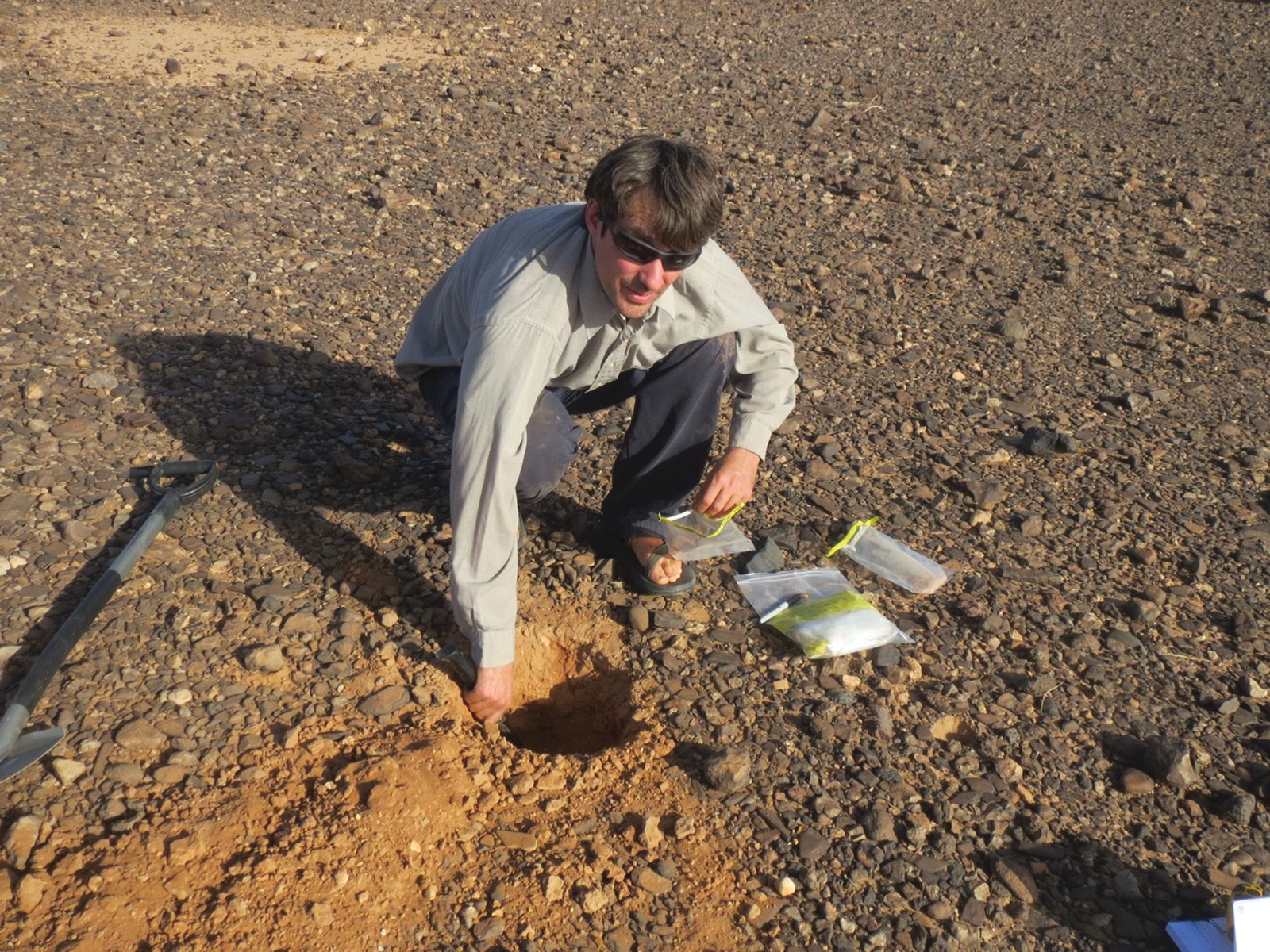
Image showing the two locations where pits were dug, the first at a location in which the soil was covered with desert pavement (foreground) and a second one nearby without substantial pavement (upper left corner).
2.3. Soluble content analysis
Soil samples were returned to the laboratory and split into sand (2 mm to 75 μm) and fine (<75 μm) fractions prior to leaching. A 1.0 g portion of both fractions of each sample was leached at a 1:10 soil:water ratio for 1 h with rocking on a Thermoline Labquake, and an aliquot of each leachate was then diluted to a conductivity of 50 μS/cm. The undiluted samples were analyzed for perchlorate (ClO4 −) and the diluted samples for inorganic anions by ion chromatography using a Dionex ICS2000 under the conditions listed in Table 1. Final concentrations for soil samples were determined by accounting for dilutions and summing the resulting concentrations, weighted by their compositional percentage.
Columns used for all samples were 25 cm × 4 mm.
2.4. Comparative studies
Ionic concentration of samples from this study were compared to soils in five other terrestrial sites of differing aridity and temperature, as well as leachate of the martian meteorite EETA79001, and the in situ martian soil analyses performed by the Wet Chemistry Laboratory (WCL) on board the Mars Phoenix lander. The soluble ionic distributions in these regions are compared in terms of the differences between preservation potential in these locales, with speculative links to soil geochemistry in different martian epochs.
3. Results
The measured anion content of the soil for the Aglâb and Ga'ïdat sampling regions is shown in Table 2. In both regions, the particle size distributions generally consist of a primarily sandy soil with a tendency for fine-grained particles to accumulate on the surface. The average particle distributions for depth and surface samples are 90–95 wt % and 75–90 wt % sand particles, respectively. A neutral soil pH is observed across the entire study region with an average pH of 7.1 ± 0.5 across all samples and differences between surface and subsurface pH values ranging from 0.3% to 2%. The electrical conductivity is less consistent across samples with the RSD values ranging from 130% to 200% both within and across regions, suggesting a heterogeneous distribution of salts, which is consistent with variability in our ionic measurements. The electrical conductivity and pH values for each pit at each site are listed in Table 3. The ionic concentrations are generally higher at depth than at the surface (Table 2). This is especially notable for perchlorate, which is below the limit of detection (LOD) of 2.5 × 10⁻⁴ mmol/kg in surface samples but present at up to 2.5 × 10⁻³ mmol/kg (250 ppb) at 20 cm.
The relative distribution of oxyanions is used to assess the differences between regions by normalizing against total measured anionic content. This allows for the comparison of the relative distribution patterns between samples without the confounding influence of variable salinity due to differential preservation and transport. Figure 3 shows the interquartile range (IQR) for the distribution of anions, normalized against the total measured anionic content. Chloride molar fractions exhibit the greatest variability within sampling regions, and nitrate the smallest. However, nitrate molar fractions exhibit the largest difference between sample sites, with a 72% difference in medians and a 39% difference in the IQR between the Aglâb and Ga'ïdat regions. This is compared to a 48% and 2% difference in median and IQR for chloride and a 2% and 7% difference in median and IQR for sulfate. Surface and depth molar fractions tend to be more consistent between the ions with the median difference of 25%, 10%, and 23% for chloride, sulfate, and nitrate, respectively, while IQR values differed by 20%, 20%, and 15%, respectively. However, differences in IQR for all ions and the difference in median for sulfate are greater between surface and depth samples than between sampling regions. Figure 4 shows the relationship between the concentrations of oxyanions (sulfate, nitrate, and perchlorate) and the chloride for the Moroccan soil samples from this study.
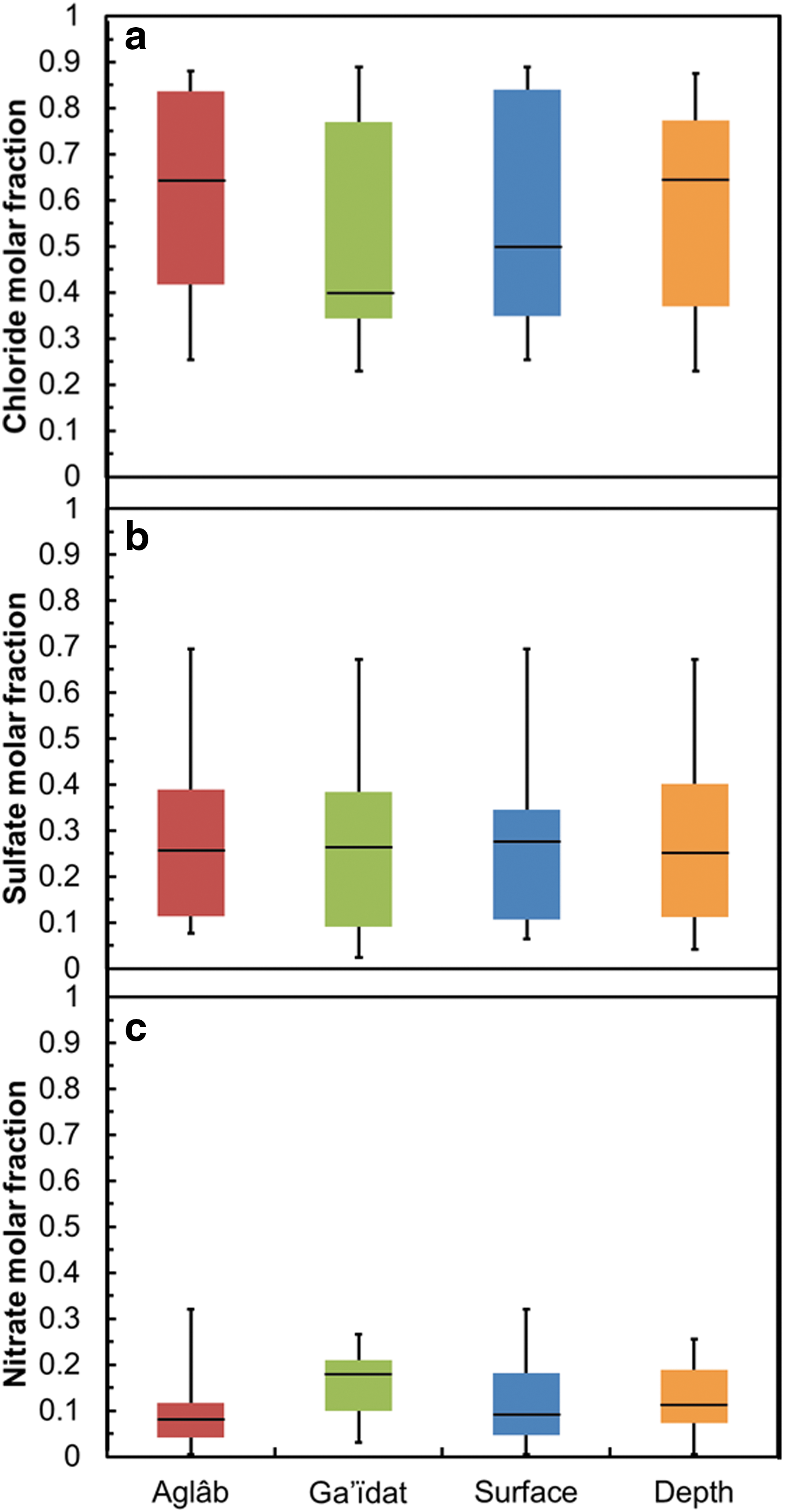
The IQR, normalized against the total measured anionic content, for the distribution of (
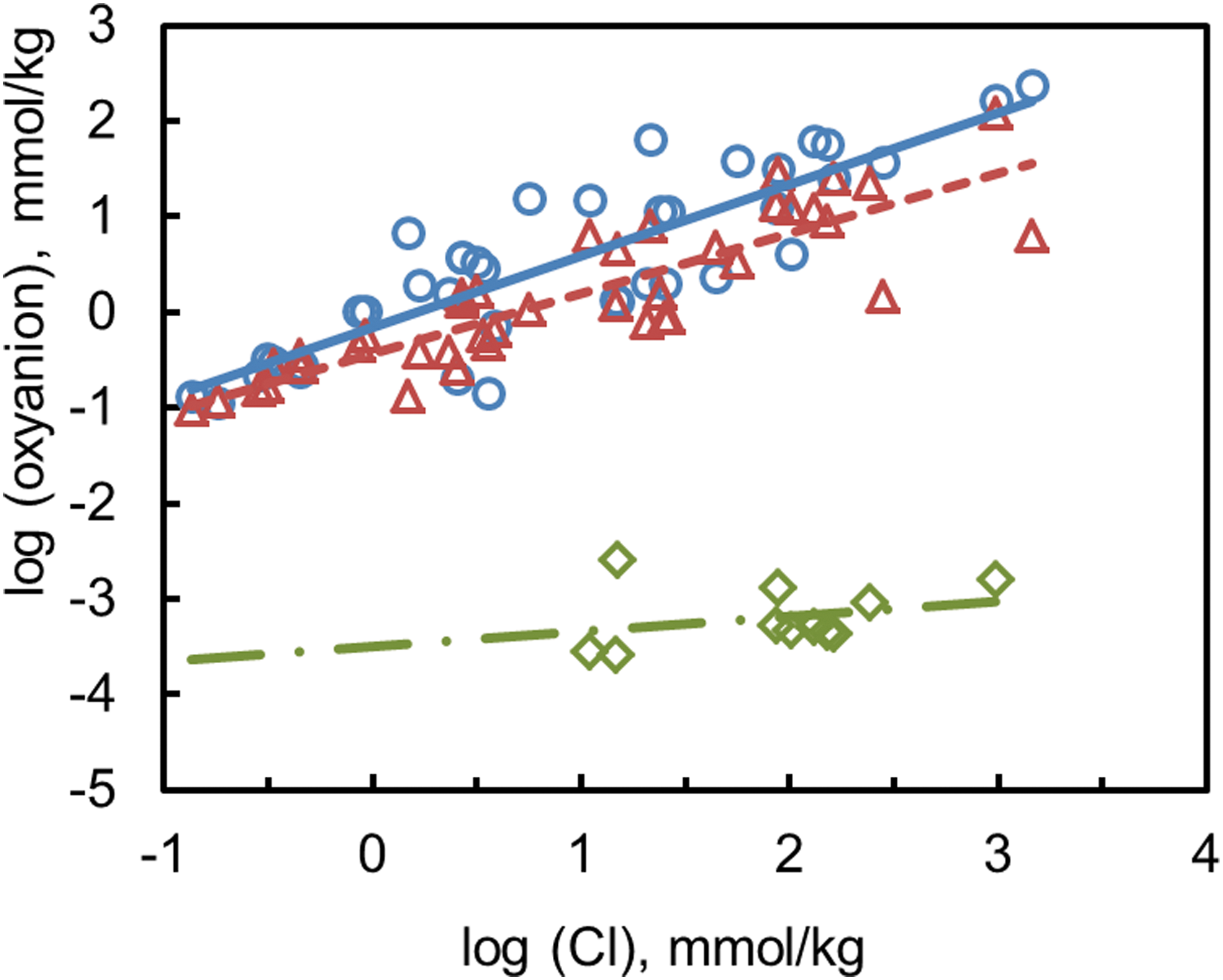
Logarithmic plot showing the linear correlation (line) of the concentrations of sulfate (blue open circle), nitrate (red open triangle), and perchlorate (green diamond), with the concentration of chloride for the Moroccan soil samples from this study.
4. Discussion
The relatively similar normalized ionic ratios observed throughout the two sampling regions can be summarized as an overall similarity in terms of salt origin, resulting in a geochemically homogenous area with outlier sample variations due to disparate localized transport processes. This is supported by a greater difference in the more soluble nitrate and chloride ions than sulfate, which would result from the distribution of these highly soluble anions in response to intermittent precipitation events and diurnal condensation.
The difference in the concentrations between the surface and the subsurface samples is greater than for the samples from the two regions. This is likely the result of differences in the availability of water to percolate through the soil and ubiquitous surface mixing by eolian processes. The higher-elevation, better-developed soil profiles on the Ga'ïdat plateau are generally less susceptible to variation, as evidenced by smaller relative standard deviations in both surface and depth conductivity measurements, likely due to the limited transport processes occurring in the region. On the other hand, the more complex Aglâb region, with its input from aqueous discharge from the nearby mountain and channeling from the surrounding areas in response to the surrounding higher-elevation landforms, results in greater variation depending on sampling location. Geomorphological differences aside, the regions can be reasonably considered to be the same in terms of their normalized soluble anion content and are treated as such for further comparison purposes.
Perchlorate is one the most soluble naturally occurring salts, so its presence near the surface implies either an extreme lack of rainfall or a barrier to vertical diffusion. At the hyperarid core of the Atacama Desert, where rainfall averages less than 1 mm/yr (McKay et al. 2003), perchlorate is generally leached from soil profiles to at least 50 cm depth (Jackson et al. 2015), presumably via exceedingly rare heavy rainfall events. In the Tindouf, significant rainfall events are typical in the winter months; thus we hypothesize that the sporadic perchlorate abundances observed at 15–20 cm depth (from LOD to 2.5 × 10⁻³ mmol/kg) reflect a localized hydrological control dominated by a vertical barrier at the hardpan caliche. In addition to plant uptake (which does not apply to our sample sites), local geomorphological effects have been shown to cause similar heterogeneity in the Amargosa Desert (Andraski et al., 2014). There, measured perchlorate deposition fluxes of 3.4 ng cm−2 yr−1 agree with higher-end theoretical predictions of atmospheric perchlorate production from the Atacama Desert (Catling et al., 2010). Assuming that these perchlorate production rates apply to the Tindouf, this yields an ∼103 year accumulation time for the 2.5 × 10⁻³ mmol/kg observed at 20 cm depth. We speculate that the caliche layer plays a role in the concentration of soil anions, absorbing moisture from significant rainfall events followed by extreme evaporation, and that only very significant rainfall years would flush out the entire system into the Drâa River.
4.1. Comparison with other proposed Mars analogue sites
On Earth, nitrate, chloride, and perchlorate in arid and semiarid soils are known to be primarily of atmospheric origin (Bao and Gu, 2004; Michalski et al., 2004). These ions are also highly water soluble and tend to accumulate in arid and semiarid environments (Walvoord et al., 2003; Jackson et al., 2015). As a result, the ratio of these ions in desert soils can be used in the interpretation of the aqueous processes in these areas. Figure 5 shows the correlation between the concentrations of oxyanions and chloride concentrations for sulfate, nitrate, and perchlorate for samples from Morocco (linear fit lines from Fig. 4) compared to samples from five terrestrial Mars analogue sites (Tamppari et al., 2012; Stroble et al., 2013), the martian meteorite EETA79001 (Kounaves et al., 2014), and the Mars Phoenix WCL analyses (Kounaves et al., 2010a).
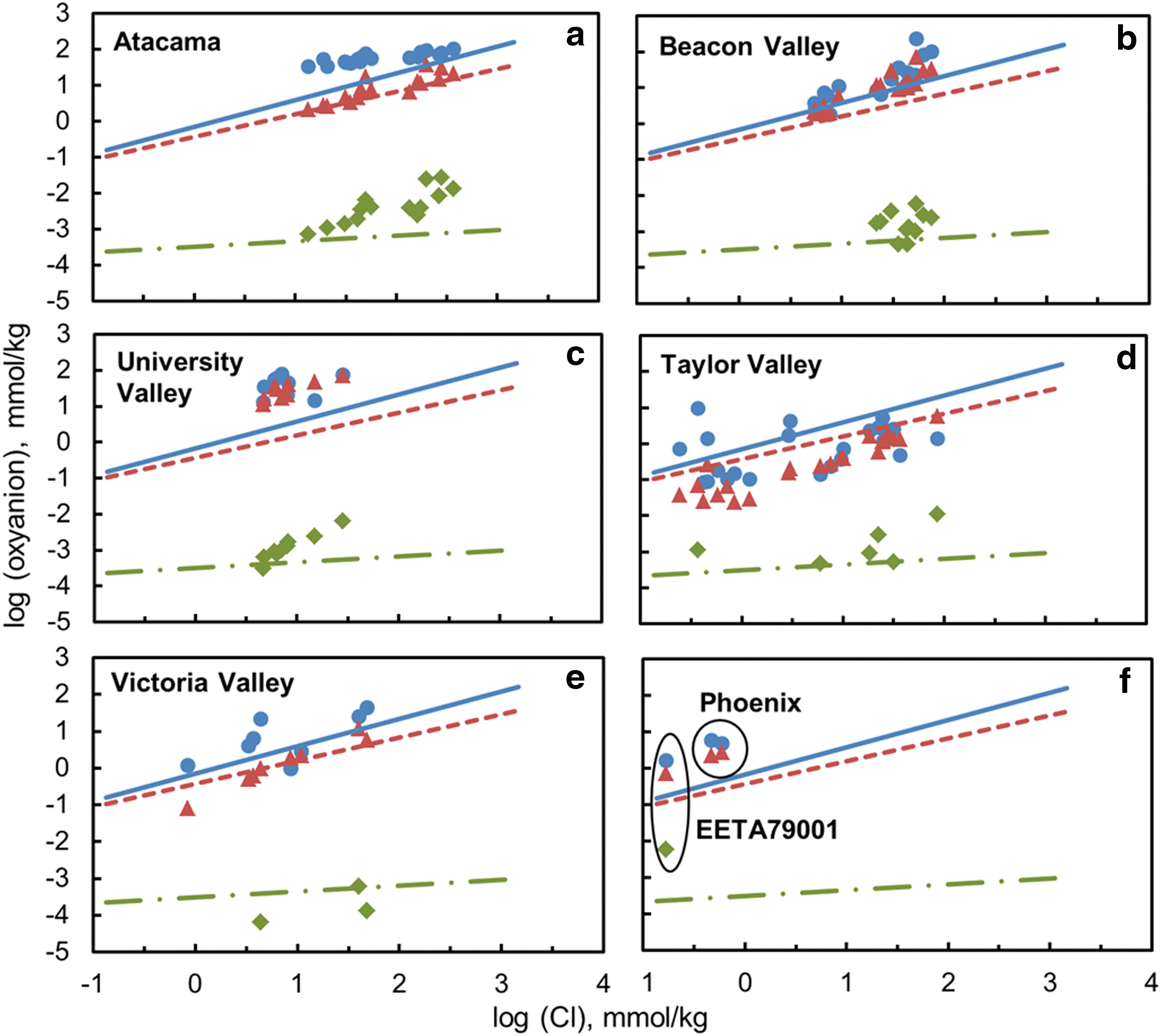
Logarithmic plots of oxyanion vs. chloride concentrations for sulfate (blue circle), nitrate (red triangle), and perchlorate (green diamond), for samples from Morocco (linear fit lines from Fig. 4) compared to samples from (
4.1.1. Atacama
Samples from the Atacama are similar to those from Morocco with regard to NO3/Cl ratios and correlation (Fig. 5a) but differ in their NO3/ClO4 ratio (Fig. 7), which is lower in samples from Morocco. The prolonged hyperarid conditions in the Atacama compared to Morocco may explain the lower NO3/ClO4 ratio observed in the Atacama. Since ClO4 − is highly soluble and quickly transported in the presence of water, the prolonged hyperarid conditions in this region would result in the greater accumulation of ClO4 −, which would reduce the NO3/ClO4 ratio.
4.1.2. Beacon Valley
The Beacon Valley samples have comparable NO3/Cl and SO4/Cl ratios to those observed in the Moroccan samples (Fig. 5b). However, the correlations in both cases demonstrate a greater increase in oxyanion species compared with Cl- in Beacon Valley. This consistently larger relative increase associated with samples from Beacon Valley indicates a preference for accumulation of oxyanions compared to chloride. This may be due to the higher inland elevation of Beacon Valley, which results in less input of Cl− from ocean spray and/or a more rapid accumulation of atmospherically derived oxyanion species. Both NO3 − and ClO4 − are highly soluble, and their persistence in an environment is indicative of the relative absence of aqueous transport processes. The correlation between NO3 −, ClO4 −, and Cl for Beacon Valley falls in the center when compared with the other investigated analog environments (Figs. 6 and 7), suggesting that Beacon Valley is an intermediate in terms of the processes that drive ionic ratios in these areas.
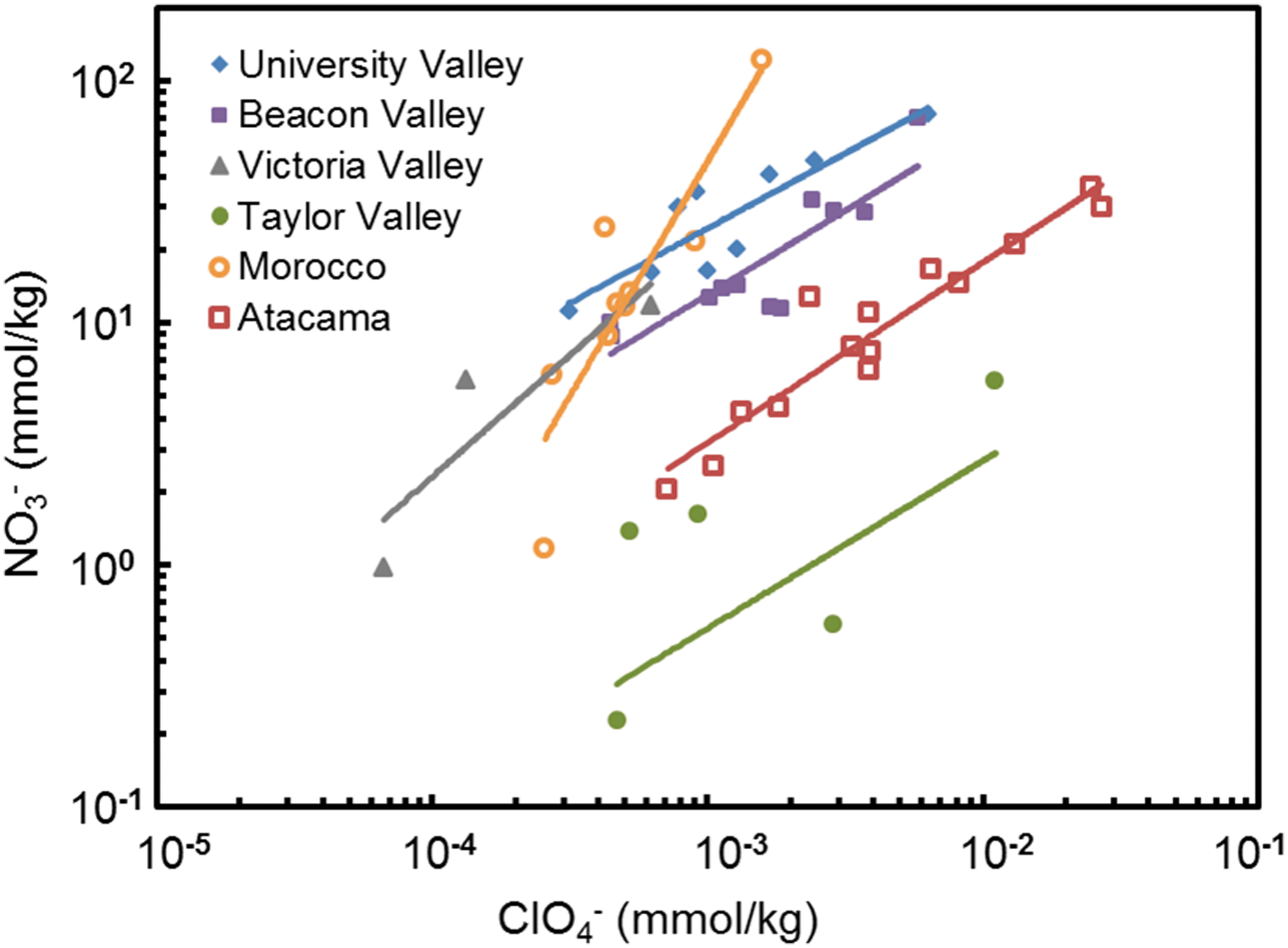
Correlation of nitrate and perchlorate concentrations for all the Mars analog sites in this study.

Correlation of NO3/ClO4 and Cl/NO3 average ratios for each Mars analog site.
4.1.3. University Valley
The University Valley NO3/ClO4 ratios are the most similar to those of the Moroccan samples (Fig. 7), but no other similarities are observed between the data sets. In general, oxyanion ratios and correlations are higher and steeper in University Valley than other analog sites (Fig. 5c). This is similar to the observations for Beacon Valley, wherein oxyanions accumulate and Cl- input is minimal, but extended to a more arid environment.
4.1.4. Taylor Valley
For Taylor Valley, the NO3 − is well correlated with Cl− (R 2 = 0.90) with a comparable slope to that observed in the Moroccan samples, but is relatively depleted in NO3 − with respect to Cl− (Fig. 5d). NO3 − is similarly well correlated to ClO4 − (R 2 = 0.85) with the shallowest slope observed across all investigated analog sites (Fig. 6) and a 2-order-of-magnitude shallower slope than is observed in the Moroccan samples. In general, oxyanion/Cl ratios are lower, and oxyanions tend to accumulate less compared to Cl− in Taylor Valley than in Morocco, with the exception of an enrichment of ClO4 − relative to Cl−. This may be the result of an increase in Cl− compared with NO3 − in Taylor Valley, as a result of input from ocean water spray.
4.1.5. Victoria Valley
The Victoria Valley samples are the most similar of the investigated sites to the Moroccan samples (Fig. 5e). Specifically, comparable ratios are observed between the regions for NO3/Cl and NO3/ClO4 (Fig. 7). However, while NO3/ClO4 ratios exhibit a similar correlation between the regions, Victoria Valley has an order-of-magnitude steeper slope in NO3/Cl correlation compared with Morocco. The similarity in ratios, but difference in linear fit, for Victoria Valley samples is likely related to differences in postdepositional processes such as aqueous transport, which may be more complicated in Victoria Valley compared with Morocco in part due to influences from shallow groundwater and permafrost in this polar region (Marchant and Head, 2007; Levy et al, 2011).
4.2. Comparison to direct measurements on martian samples
Figure 5f shows our results in comparison with two direct measurements of soluble species in martian samples, one from the in situ WCL analyses of martian soil by the Phoenix Mars lander (Kounaves et al., 2010a, 2010b) and the other from a carbonate clast in the martian meteorite EETA79001 (Kounaves et al., 2014). In general, oxyanion species are more concentrated in both the WCL and EETA79001 samples, while Cl− is depleted. Of note is the similarity between the relative SO4 2−, NO3 −, and ClO4 − values in EETA79001 measurements compared to the Moroccan samples. In general, it is observed that SO4/Cl, NO3/Cl, and ClO4/Cl ratios are consistently and similarly higher in EETA79001. Also, of note is the high concentration of ClO4 − that was measured by the Phoenix WCL compared to EETA79001. This may be indicative of a steady increase in ClO4 − concentration over time as Cl− has been shown to be easily oxidized to ClO4 − on mineral surfaces (Carrier and Kounaves, 2015). A similar tendency is noted in the analogue sites wherein ClO4/Cl ratios increase with increasing aridity. This observation supports the proposition that the higher-aridity locales such as University Valley can serve as analogues to more recent martian epochs, while the less-arid Victoria Valley would serve as an analogue to earlier epochs.
4.3. Comparison to the martian epochs
A summary of the martian epochs and their proposed corresponding terrestrial analogues are shown in Fig. 8. If we consider the MDV as analogues to the different martian epochs, depending on the extent of aqueous influence, we find that it decreases in the order University Valley > Beacon Valley > Victoria Valley > Taylor Valley. In this way, University and Beacon Valleys can be roughly considered as analogues to the Amazonian/Hesperian epochs, and Taylor and Victoria Valleys to the Hesperian/Noachian epochs. Due to the greater similarities between the lower-elevation Victoria Valley and the Moroccan samples as compared to the higher-elevation University Valley samples, and the likelihood that these similarities are the result of the greater influence of aqueous processes in these regions, we argue that the Moroccan sample locations are potential soil geochemistry analogues to the late Noachian epoch on Mars.
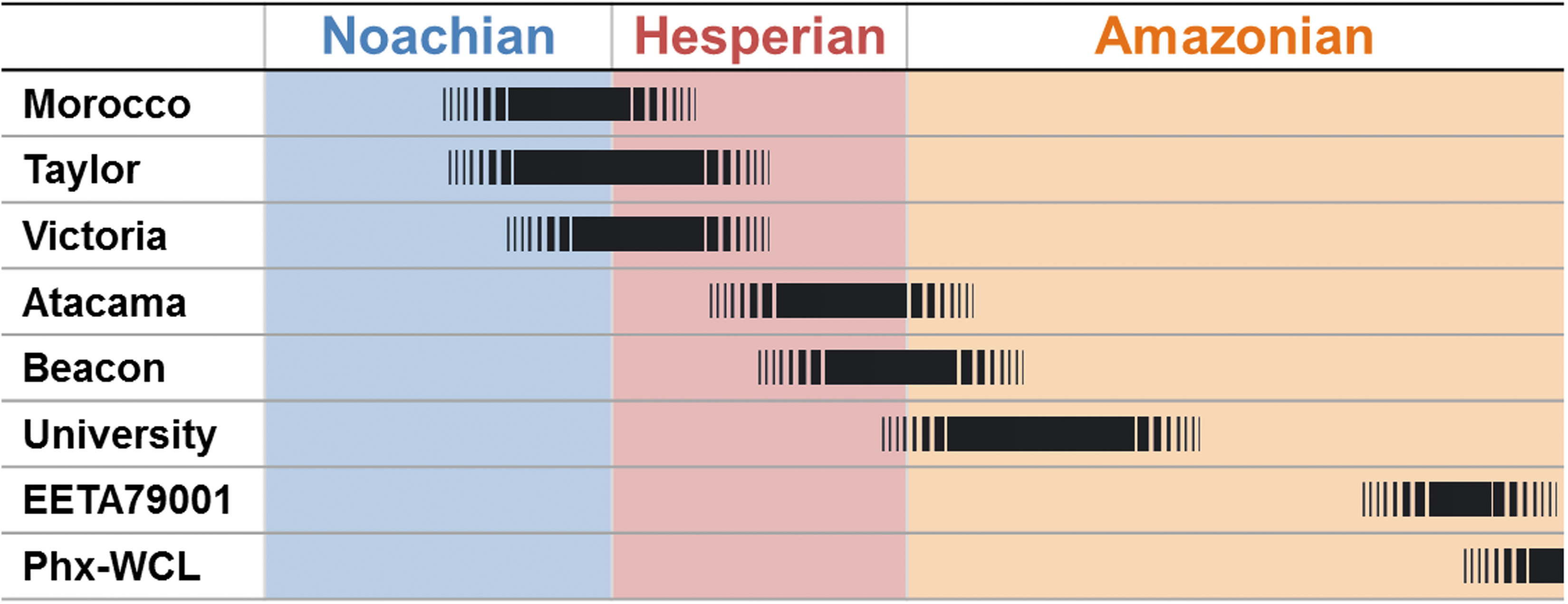
Proposed martian epochs most relevant to “Mars analogue sites,” based on soil anion geochemistry and aridity.
5. Conclusions
The utility of the Tindouf Basin region of southeastern Morocco as a more accessible analogue with a similar soil geochemistry to the MDV is demonstrated by the relative similarity of the distribution of ionic species between the Moroccan samples and other Mars analogue sites. In general, samples from this region of Morocco show the greatest similarity with samples from Victoria Valley, Beacon Valley, and the Atacama. Moroccan samples are consistently depleted in oxyanion species compared to University Valley and enriched compared to Taylor Valley. Specifically, NO3/Cl ratios are comparable to many proposed Mars analog sites, with the strongest similarities observed with Victoria Valley and Atacama samples. The SO4/Cl ratios are likewise similar to those from Beacon Valley and Victoria Valley and in the Atacama. While perchlorate values in Morocco are typically lower than other analog sites, conditions in the region are sufficiently arid to retain oxychlorines at detectable levels. Processes that may have preferentially increased the perchlorate in other regions could include rapid aqueous accumulation and evaporation of the highly soluble oxychlorines, or the production by direct UV oxidation of chlorine in chloride-bearing minerals, as has been suggested to occur on Mars (Carrier and Kounaves, 2015). The perchlorate in the Moroccan samples is most likely a result of slow accumulation via atmospheric production as occurs over most of Earth (Catling et al., 2010), though direct UV oxidation cannot be entirely ruled out.
Footnotes
Acknowledgments
We would like to thank the anonymous reviewers who helped improve this manuscript, and especially Joseph Levy for his review and insightful comments. We also thank the Ibn Battuta Centre, in particular Gian Gabrile Ori and Kamal Taj-Edine for their assistance with logistics and fieldwork. In addition, we would like to thank the Moroccan military for access as well as Aubrey Zerkle and Gordon Fontaine for their assistance in the field.
Disclosure Statement
No competing financial interests exist.