




Abstract
We review various laboratory strategies and methods that can be utilized to simulate prebiotic processes and origin of life in hydrothermal vent systems on icy/ocean worlds. Crucial steps that could be simulated in the laboratory include simulations of water-rock chemistry (e.g., serpentinization) to produce hydrothermal fluids, the types of mineral catalysts and energy gradients produced in vent interfaces where hydrothermal fluids interface with the surrounding seawater, and simulations of biologically relevant chemistry in flow-through gradient systems (i.e., far-from-equilibrium experiments). We describe some examples of experimental designs in detail, which are adaptable and could be used to test particular hypotheses about ocean world energetics or mineral/organic chemistry. Enceladus among the ocean worlds provides an ideal test case, since the pressure at the ocean floor is more easily simulated in the lab. Results for Enceladus could be extrapolated with further experiments and modeling to understand other ocean worlds. Key Words: Enceladus—Ocean worlds—Icy worlds—Hydrothermal vent—Iron sulfide—Gradient. Astrobiology 17, 820–833.
1. Introduction
T
Serpentinization—the hydrothermal alteration of olivine ocean crust—leads to exothermic production of serpentine and enrichment of OH-, H2, and methane in the resulting hydrothermal fluid, as observed in terrestrial serpentinite-hosted hydrothermal systems (Kelley et al., 2001, 2005). The influx of this alkaline, reduced hydrothermal fluid back into the ocean can produce mineral precipitates at the hydrothermal interface (as seen in the Lost City alkaline hydrothermal vent field; Kelley et al., 2001, 2005), and these precipitated “chimneys” can act to focus the redox/chemical gradients between ocean and hydrothermal fluids (Nakamura et al., 2010; Barge et al., 2015a, 2015b). Alkaline hydrothermal vents have also been proposed as a possible location for the origin of life on the early Earth (Russell and Hall, 2006; Russell et al., 2014). Some of the relevant processes proposed to have operated at an early Earth alkaline vent have been experimentally studied, for example, the presence of iron oxyhydroxide minerals that could concentrate and preserve organics and phosphorus species for reactions (Nalawalde, 2009; Arrhenius, 2003; Barthélémy et al., 2012), or sulfide-bearing mineral precipitates that resemble inorganic enzyme redox centers (Nitschke et al., 2013) and may have participated in prebiotic redox chemistry (Roldan et al., 2015; Yamaguchi et al., 2014). Other factors relevant to this model, such as an ambient geochemical pH gradient across an inorganic hydrothermal mineral membrane, have been simulated in experiments and models (Russell and Hall, 2006; Lane and Martin, 2012; Herschy et al., 2014; Russell et al., 2014; Barge et al., 2015a; White et al., 2015; Sojo et al., 2016), but a mechanism for harnessing this gradient for emerging bioenergetic reactions has yet to be successfully demonstrated in the laboratory (Jackson, 2016). Some of the conditions prompting study of alkaline hydrothermal vents on Earth as environments for the origin of life may also be present on icy moons; for example, primary carbon electron donors (CH4) and electron acceptors (CO2) are both present in Enceladus' plume (Glein et al., 2008) and may also be present on Europa (Sohl et al., 2010). The ice shells of Europa and Enceladus are charged with oxidants (Glein et al., 2008; Raulin et al., 2010), but interaction of the ocean with a rocky seafloor would supply hydrothermally reduced substrates (Vance et al., 2016), generating geochemical gradients at the interface where these fluids interact. Though the compositions of putative hydrothermal chimneys and sediments on icy worlds are unknown, they may contain minerals capable of interacting with organics and/or driving reactions (e.g., iron sulfides, silicates, carbonates). Recent studies suggest that hydrothermal chimneys containing iron-sulfide minerals such as mackinawite and greigite may be capable of catalyzing the reduction of CO2 at low temperatures (Roldan et al., 2015; White et al., 2015; Yamaguchi et al., 2014).
Whether mineral-organic reactions and ambient geochemical gradients in hydrothermal systems on icy worlds would have driven organic chemistry over billions of years leading the oceans to chemical equilibrium, or could have provided energy and disequilibrium sufficient to drive the emergence of life on these worlds, is unknown. Either way, some of the relevant physical and chemical processes along with their driving mechanisms can be simulated experimentally. A major difficulty in estimating the potential for the emergence of life on ocean worlds is that there are so many types of vents, even on Earth, that produce a variety of chimney systems with different mineral assemblages, fluid temperatures and compositions, flow rates and disequilibria. Identification of specific vent characteristics is key for effectively determining whether a specific vent would be capable of supporting life or any particular prebiotic reaction toward life. There are various experimental and analytical challenges to overcome in order to simulate all aspects of a hydrothermal origin of life model for the ocean worlds, some of which have not yet been demonstrated experimentally even for early Earth (Jackson, 2016; Wächtershäuser, 2016). Still, it is possible to devise laboratory systems to simulate important aspects of hydrothermal systems that can help in our understanding of their potential for prebiotic chemistry, for example, testing probable compositions of hydrothermal fluids produced by ocean/rock interaction; the modes of growth of hydrothermal chimneys or membranes and their ability to maintain gradients; the synthesis and reactivity of common hydrothermal minerals such as metal sulfides and/or oxyhydroxides; and the feedbacks when organics, phosphorus, and/or other relevant components are added to the mix. Some experiments in this regard have been done to simulate particular vent chemistries on early Earth (e.g., Mielke et al., 2010, 2011; McGlynn et al., 2012; Herschy et al., 2014; Barge et al., 2015a, 2015c; Burcar et al., 2015; White et al., 2015), and the experimental outcomes of such studies are highly dependent on chemical inputs and environmental parameters. In this paper, we review some laboratory methods and experimental designs that could be used to advance knowledge of possible prebiotic chemistry in hydrothermal systems on icy/ocean worlds. We argue that it should be possible to develop experiments to simulate vents on ocean worlds and, in doing so, distinguish between hypotheses about prebiotic chemistry and emergence of life on those worlds. Modular experimental setups capable of accommodating variations in geological and chemical inputs can then be further refined as more is discovered about the present and past conditions of the ocean worlds. Among the icy moons that are thought to have a water/rock interface, Enceladus (due to its small size) has Earth-like conditions of pressure and temperature at its seafloor (McKinnon, 2015; Sleep, 2015); this makes Enceladus a convenient test case for developing experimental methods to study how prebiotic chemistry could have proceeded in ocean world hydrothermal systems.
2. Simulating Serpentinizing Systems on Icy/Ocean Worlds
The process of serpentinization in terrestrial systems is relatively well understood: mafic/ultramafic olivine in the ocean floor reacts with water to form the lower-density serpentine, magnetite (Fe3O4), and brucite (Mg(OH)2), while releasing hydrogen gas, dissolved silica, Mg2+, and perhaps hydrogen sulfide (H2S) (Proskurowski et al., 2008). The production of H2-rich fluids from serpentinization has been observed in many terrestrial locales, as well as in low-temperature hydrothermal systems that release methane and hydrogen (Kelley and Früh-Green, 1999; Früh-Green et al., 2004; Sleep et al., 2004). Serpentinization reactions release large amounts of heat, so these processes are capable of driving long-term hydrothermal circulation in underwater systems on the order of 100,000 years (Kelley et al., 2001, 2005). Serpentinite-hosted (low-temperature, alkaline) hydrothermal vents likely also existed on the early Earth when life is thought to have emerged (Russell and Hall 1997, 2006).
The hydrothermal fluid produced from serpentinization in modern terrestrial systems is alkaline and reducing (H2- and possibly CH4-rich). The chemical energy at an alkaline hydrothermal vent on an ocean world would also be determined by the ocean composition compared to this vent fluid, as it is the pH/Eh/chemical gradients between the two that are significant. For example, it would be important to know whether the oceans contain more dissolved CO2, making them mildly acidic (Kasting 1987), or whether they would be more alkaline and carbonate-rich as is proposed for Enceladus (Glein et al., 2015). As in Earth's early oceans, a mildly acidic ocean pH and anoxic conditions would allow for higher concentrations of metals such as Fe(II) or Ni(II) if these were provided to the ocean by magmatic and tidal activity. The precise salinity and particular combinations of salts in icy world oceans are unknown, as is the exact concentration of compounds like carbonate, phosphate, O2/H2O2, nitrates, or other reactive components. A serpentinite-driven hydrothermal system on icy worlds may therefore contain various combinations of electron donors and electron acceptors, perhaps for example CO2 and CH4 (both detected in Enceladus' plume; Glein et al., 2008). The interactions of an acidic, CO2-rich, anoxic early Earth ocean with basaltic ocean crust would undergo serpentinization reactions, but the resulting hydrothermal fluid may differ in its pH, composition, and electron potential from fluids observed in modern serpentinizing systems (see Fig. 1). Along with the ocean composition, this would determine the chemical gradients present in the hydrothermal system.
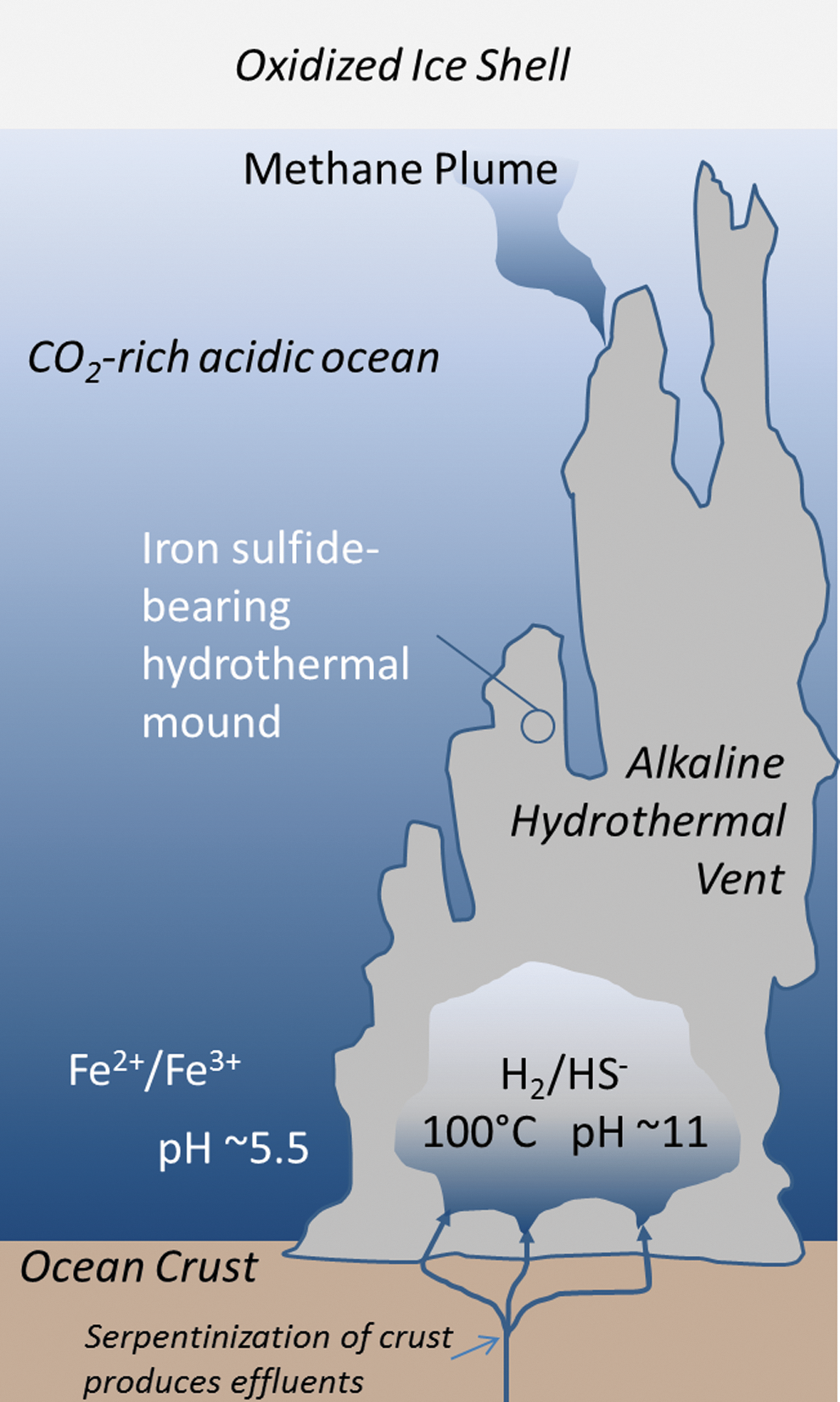
Depiction of an alkaline hydrothermal system on the early Earth or Enceladus. Circulation of seawater through ocean crust fuels water-rock reactions, gradually making the circulating fluid more alkaline and reducing through serpentinization of the crust. These exothermic reactions drive thermal circulation of the altering seawater repeatedly through partially altered rock (being converted from olivine and metal sulfides to serpentinite and brucite). The hydrothermal fluid eventually exhales back into the ocean, producing mineral precipitates at the water/rock interface. Such hydrothermal systems have been known to produce methane and theorized to be host to the earliest emergence of life on Earth and other wet, rocky planets such as the ocean worlds (Russell et al., 2014).
As in present-day hydrothermal vents, the hydrothermal fluids in a CO2-rich ocean on the early Earth would have been rendered alkaline as ocean waters convected within the oceanic crust through the dissolution of calcium and magnesium in komatiitic lavas or ultramafic crust during serpentinization to produce soluble hydroxides (Russell et al., 1989, 2010; Macleod et al., 1994). But, even knowing the oceanic conditions and/or acidity (as we do for Enceladus; Glein et al., 2015), how does one experimentally mimic the nonequilibrium, flow-through system of a hydrothermal vent? It is possible to simulate such conditions by using nonfluxing single-solution aging experiments (McCollom and Seewald, 2003; McCollom and Donaldson, 2016). However, these experiments do not simulate the continual mixing of fresh CO2-rich fluids with H2-rich hydrothermal fluids as well as simulate the water-rock interactions that could catalyze organic reactions in a flow-through system. Previous studies (Mielke et al., 2010; White et al., 2013) simulated serpentinization environments under hydrothermal pressures (100 bar H2) and temperatures (100–120°C) by using a custom-built hydrothermal reactor that was an open system capable of simulating the active passing of hydrothermal fluid through the seafloor. Two pressurized tanks containing simulated hydrothermal H2-rich fluid and CO2-rich ocean simulant were constantly and alternately flowed across a reactor bed containing synthesized basalts and chemically active hydrothermal mineral species (i.e., iron sulfides). Thus, this system simulated a hydrothermal vent environment under constant flux, while preventing the establishment of equilibrium. The resulting fluids were collected and the headspace analyzed in situ by tunable diode laser absorption spectroscopy to identify methane formation. Early experiments conducted with only iron sulfides and basaltic rock revealed high dissolution of sulfur in the resulting effluent (Mielke et al., 2010); this suggests hydrothermal fluid at off-ridge systems could be rich in sulfide as well as hydrogen and could promote the formation of iron-sulfide-dominated mounds when combined with dissolved iron and nickel in an anoxic, mildly acidic ocean. While some methane was detected in these reactor experiments (White et al., 2013), the source of methane was inconclusive; therefore, it remains unclear whether methane production actually resulted from reactions with CO2 in ocean fluids. The amount of CO2 in a given planetary atmosphere may also drastically change the capability for this system to produce methane. For example, on the early Earth the ocean pH could have been around 5.5–7 depending on pCO2 and other dissolved ions (Macleod et al., 1994; Halevy and Bachan, 2017), compared to a H2-rich hydrothermal fluid with very high pH. Proponents of the alkaline hydrothermal origin of life model suggest that these transmembrane pH and redox gradients could be harnessed for reactions such as the CO2 reduction or polypeptide formation (Martin and Russell 2007; Milner-White and Russell 2008; Sojo et al., 2016; Yamaguchi et al., 2014). If so, then variations in the pH gradient (i.e., considering different ocean and/or vent fluid chemistries) would affect whether certain prebiotic processes hypothesized for early Earth would be as effective or even possible at an alkaline hydrothermal system on an ocean world.
Though detailed tests are still in progress, the viability of this type of “hydrothermal reactor” has already been demonstrated, and the experimental setup provides a robust method for simulating the water/rock chemistry that could occur on any wet rocky planet, including Europa or Enceladus. The ocean chemistry and the composition of the rocky crust can be easily altered, and a system such as that reported by Mielke et al. (2010) allows for pressures to be introduced up to 100 bar in either fluid. For safety reasons, since H2 was used to pressurize the reactor under warm temperatures (100°C), higher pressures more akin to Earth's ocean floor were not tested. However, this reactor could be redesigned to simulate temperatures and higher pressures equivalent to a serpentinizing system on Earth's ocean floor or even other worlds. Enceladus has seafloor pressures that are more easily tested in the lab and would yield an ideal case for using such a reactor to determine the composition of simulated hydrothermal fluid based on ocean chemistry estimates. Regardless of how the reactor or flow paths are constructed, or which particular planetary conditions are being simulated, isotopic labeling of compounds (for example, C in “oceanic” CO2 or carbonate) should always be employed when attempting to simulate carbon reactions in hydrothermal systems in order to unambiguously determine the source of CH4 or any other organic products produced and thus determine reaction pathways in detail (e.g., McCollom, 2016). In addition, when possible, it would be optimal to use synthetic lab-made minerals in experiments to guard against contamination and false positives from carbon within field samples.
3. Importance of the Hydrothermal Precipitate: Chimneys and Inorganic Membranes
When the hydrothermal fluid generated from water-rock reactions seeps back into the ocean, mineral precipitates form at the temperature/Eh/pH interface; these can form sediments in a hydrothermal mound as well as chimney structures along the flow path of the hydrothermal fluid. Amorphous precipitates or sediments associated with vents that would form at, and just above, the fluid outflow of a seafloor vent system could play a role in the habitability or prebiotic potential of seafloor environments on icy/ocean worlds—containing, for example, metal oxyhydroxides or sulfides that might be capable of driving chemical reactions of phosphorus, nitrogen, and carbon compounds (Russell et al., 2014, and references therein). On top of hydrothermal sediments permeated by diffuse fluids, chimney structures can grow, venting the hydrothermal fluid through channels in the top or sides. Chimneys can develop into large and highly self-organized structures, for example, the predominantly carbonate chimneys at the Lost City alkaline hydrothermal field that reach up to 60 m tall (Ludwig et al., 2006).
The vertical single tube morphology of hydrothermal chimneys arises from the same type of processes that form “chemical gardens”—the term for self-assembling precipitates that form as a fluid containing one reactive ion is injected into a fluid containing a second reactive ion (Barge et al., 2015b). In chemical garden systems, precipitates form immediately at the fluid interface and rupture and re-precipitate as the internal fluid pressure increases. The end result is a vertical hollow structure, usually structurally stable yet still porous, that preserves the chemical disequilibrium between the inner and outer solutions for the duration of fluid flow and for some time thereafter (Cartwright et al., 2002). In chemical garden experiments, the precipitate wall is referred to as an inorganic membrane (Barge et al., 2015b), and similar terminology has been employed in the context of prebiotic chemistry within hydrothermal chimneys (Russell et al., 2014). However, in both cases these “membranes” can be tens or hundreds of microns thick (orders of magnitude thicker than a biological membrane), and a single inorganic membrane can constitute multiple thinner membrane layers (Barge et al., 2015a; Wang et al., 2017).
Hydrothermal chimneys vary in size and composition depending on the vent type, and in natural systems their composition can evolve over time. For example, the chimneys at Lost City are initially composed of brucite (Mg(OH)2) and aragonite and later convert to calcite (Ludwig et al., 2006), whereas black smoker vent chimneys first precipitate as anhydrite (CaSO4) and are later replaced by polymetallic sulfides (Haymon, 1983; Tivey et al., 1995). Hydrothermal systems may not even be physically obvious as chimneys if the vents are sediment-covered, resulting in diffusive fluid venting that could carry additional chemical signatures from the sediments (such as hydrocarbon enrichments; Proskurowski et al., 2008). The composition of putative hydrothermal chimneys on icy/ocean worlds would likewise depend on the compositions and chemical gradients between the ocean and hydrothermal fluids. Enceladus is presently thought to have a high-pH (∼11–12) ocean dominated by dissolved NaCl and Na2CO3 (Glein et al., 2015), though early in its history the hydrothermal vent systems may have had different nitrogen and carbon chemistry as well as H2 concentration (Glein et al., 2008); simulations of “early” versus “modern” Enceladus would likely yield different suites of mineral precipitates and thus varying potential for prebiotic chemistry. Other factors that would be significant in any experimental attempts at simulating ocean world vent systems include the amount of dissolved Fe2+ and other metals in the ocean and the concentration of other oxidants (such as O2 or H2O2; Hand et al., 2007), as well as the salinity/salt constituents and pH. The hydrothermal fluid on an icy world would depend on the ocean composition, the composition of the rocky interior, and subsequent water/rock chemical reactions (which, e.g., on Enceladus, would result from a more chondritic rock source). In a terrestrial serpentinization reactor experiment (e.g., Mielke et al., 2010), simulated basalt ocean crust is reacted with “early Earth” (Fe-rich, anoxic, carbonic) ocean water to yield a hydrothermal fluid rich in H2 and trace organics, but such an experiment could yield quite different results under icy world conditions.
Regardless of how the compositions of the ocean and hydrothermal fluids are determined, the continued separation of these contrasting solutions is the essential function of the hydrothermal chimney for maintaining an energetically rich, habitable environment (or environment that may drive prebiotic chemistry) on ocean worlds. Via the formation of a mineral precipitate structure at the hydrothermal fluid/seawater interface, the supply of reduced substrates does not immediately dissipate away into the ocean, but the redox gradient is instead focused with flow of substrates, ions, or even electrical current mediated through the precipitate itself (Kato et al., 2010; Nakamura et al., 2010; Ishii et al., 2015).
The growth of hydrothermal chimneys under any particular vent chemistry and their ability to mediate energy gradients can be simulated in the laboratory through injection chemical garden experiments (e.g., Turner and Campbell, 1987). However, characterizing the many interesting properties of these nonequilibrium systems can be challenging. The physical and chemical processes of chemical garden growth have been studied for over 100 years (Barge et al., 2015b, and references therein), and the mechanisms that generate the varied morphologies in self-organizing chemical systems are somewhat well understood. Chemical garden growth is typically studied by using crystal seed methods, in which crystals of a metal salt (e.g., ferrous chloride tetrahydrate, FeCl2•4H2O) are dissolved in an alkaline silicate solution, producing metal-silicate-oxyhydroxide precipitates at the fluid interface, which then rupture under osmotic pressure and reprecipitate, continuing in a vertical direction determined by buoyancy. Chemical gardens can also be formed by injecting one reactive solution into another, and in this case the internal growth pressure is provided only by the fluid flow. The latter method is appropriate for simulations of hydrothermal chimneys, since one can prepare the “hydrothermal” and “ocean” solutions as desired and observe the precipitate that is formed by injecting one into the other (Fig. 2). These sorts of experiments can inform us about what energetics and prebiotic chemistry we might expect to be possible in a given hydrothermal vent chemistry proposed for the early Earth or an icy world like Enceladus. Properties that can be investigated in this kind of experiment include chimney composition, morphology, gradients, and capability to drive organic and/or prebiotic reactions. However, since chemical gardens grown in this manner will produce unpredictable and non-reproducible structures, and the inside of the structure is inaccessible once it is grown, the details of whether a hydrothermal chimney could mediate pH or other gradients and its porosity to different ions would be better studied in more controlled types of experiments that allow simulation of the inorganic precipitate wall.

Laboratory simulations of hydrothermal chimney growth on icy/ocean worlds. The interface between alkaline, sulfide-containing hydrothermal fluid produced by serpentinization and a slightly acidic, Fe2+-containing ocean of the early Earth would produce a sharp pH/temperature change and lead to precipitation of an iron-sulfide-containing mound at the fluid interface. This can be simulated in the laboratory in injection chemical garden–type experiments, where a simulated alkaline, sulfide-rich hydrothermal solution is slowly fed into a reservoir of simulated acidic, Fe2+-containing ocean. As the “hydrothermal” solution is injected, an iron-sulfide chimney precipitate grows. When the precipitate is grown around an electrode and another electrode is placed in the “ocean” reservoir, one can measure the membrane potential generated by formation of the chimney. The chimneys can be grown from any chosen composition of simulated hydrothermal and ocean solutions, for example, containing silicate, phosphate, or organics, to simulate an ocean world like Enceladus.
4. Icy World Hydrothermal Chimney Properties Relevant to Habitability and Origin of Life
The larger-scale morphology of chimney structures is determined by various (usually non-reproducible) factors including convection, fluid dynamics, and the complex distribution of precipitates formed in multiple-reactant systems. For example, metal silicate chemical gardens can form relatively robust structures that can be removed intact from the precipitation vessel for analysis (Thouvenel-Romans et al., 2005; Barge et al., 2012, 2015c), but the rigidity of the structure is also affected by pH of precipitation and silicate concentration. In contrast, iron-sulfide chemical garden experiments tend to produce softer gelatinous structures at first that quickly disaggregate if the outer fluid is removed, though over time the iron-sulfide structure can become more crystalline, and increasing silicate concentration in iron-sulfide precipitates has been shown to increase structural stability (Mielke et al., 2011; White et al., 2015). It is also typical for chimneys in hydrothermal simulation experiments to have complex compositions with a variety of precipitate types, for example, iron(II)-hydroxide + iron(III)-hydroxide + iron carbonate + silicate + iron sulfides (e.g., Mielke et al., 2011; Batista et al., 2014; White et al., 2015). Each of these components could contribute to the structural stability, the electrochemical activity, and the chemical reactivity of the chimney.
Morphology: The morphology of a simulated hydrothermal chimney is determined by fluid dynamics and precipitation thresholds of the reactants involved. Experiments have shown that the morphology (i.e., tubes vs. convective plumes) and the electrochemical properties of the chimney (i.e., its ability to generate and maintain electrical potential from the fluid gradients) are independent of the flow rate of the alkaline solution but depend instead on the concentrations of iron and sulfide in the ocean and hydrothermal fluid (Batista et al., 2014; Barge et al., 2015a). This indicates that, in a hydrothermal system on an icy world regardless of the influx rate of the hydrothermal seepage, if serpentinization occurs and produces a sulfide- and/or silicate-containing hydrothermal fluid at sufficient concentration, the precipitate may be able to function as a gradient-mediating inorganic membrane. The conditions of precipitation, in particular temperature and pressure, may also greatly affect the precipitate's mineralogical and reactive or catalytic properties. It is likely there would be a temperature gradient where the hydrothermal fluid feeds back into the ocean, giving a range from about ∼10–100°C that could be relevant for experimentally testing mineralization and chemistry that might occur within the hydrothermal mound. Pressure is also significant because it affects carbonate precipitation, interplays with salinity to determine where liquid water/high-pressure ice interfaces would form (Vance et al., 2014), and affects heat production and dissolution of gases like H2 that determine the redox potential of the hydrothermal fluid (Vance et al., 2016).
In iron-silicate or iron-sulfide chemical garden experiments, scanning electron microscopy combined with electron dispersive X-ray analysis (among other techniques) has been used to analyze the crystal morphology of the inorganic membranes formed (Mielke et al., 2011; Barge et al., 2012; McGlynn et al., 2012; White et al., 2015). In high-silicate concentration experiments without sulfide, the interior of the chemical garden membrane walls was found to be crystalline, the outer walls appeared smooth, and compositional gradients were observed across the membrane wall representing the transition from metal-poor precipitates (on the alkaline side) to metal-rich precipitates (on the acidic side) (Barge et al., 2012). Iron-sulfide lab-grown chimneys have shown a similar compositional gradient following the imposed chemical gradient with more iron-sulfide-rich precipitates on the inner surface (Mielke et al., 2011). White et al. (2015) revealed that iron-sulfide chimneys grown under simulated early Earth alkaline hydrothermal conditions contained somewhat porous walls that could allow for a proton gradient to be maintained between the interior and exterior of the chimney (Fig. 3). Environmental scanning electron microscopy analysis of the iron-sulfide membranes also revealed an interior structure containing compartments tens of micrometers wide that were lined with nanoclusters composed of mackinawite and greigite (Mielke et al., 2011; White et al., 2015) (Fig. 3). Iron-hydroxide chimneys showed crystalline microstructures that varied depending on what other trace components are added to the injection solutions; for example, addition of an amino acid (alanine) to a mixed-oxidation-state iron-hydroxide chimney yielded precipitates that appeared more rounded compared to experiments where no organics were added (Barge et al., 2015c). One important consideration for attempting scanning electron microscope imaging of simulated hydrothermal chimneys is that drying of the sample and/or the vacuum of the scanning electron microscope can cause morphological alterations such as cracking, crystal voids from freeze-drying, or even mineralogical changes, so very careful sample treatment is required to be certain that observed micromorphologies are truly characteristics of the original sample (Wächtershäuser, 2016).
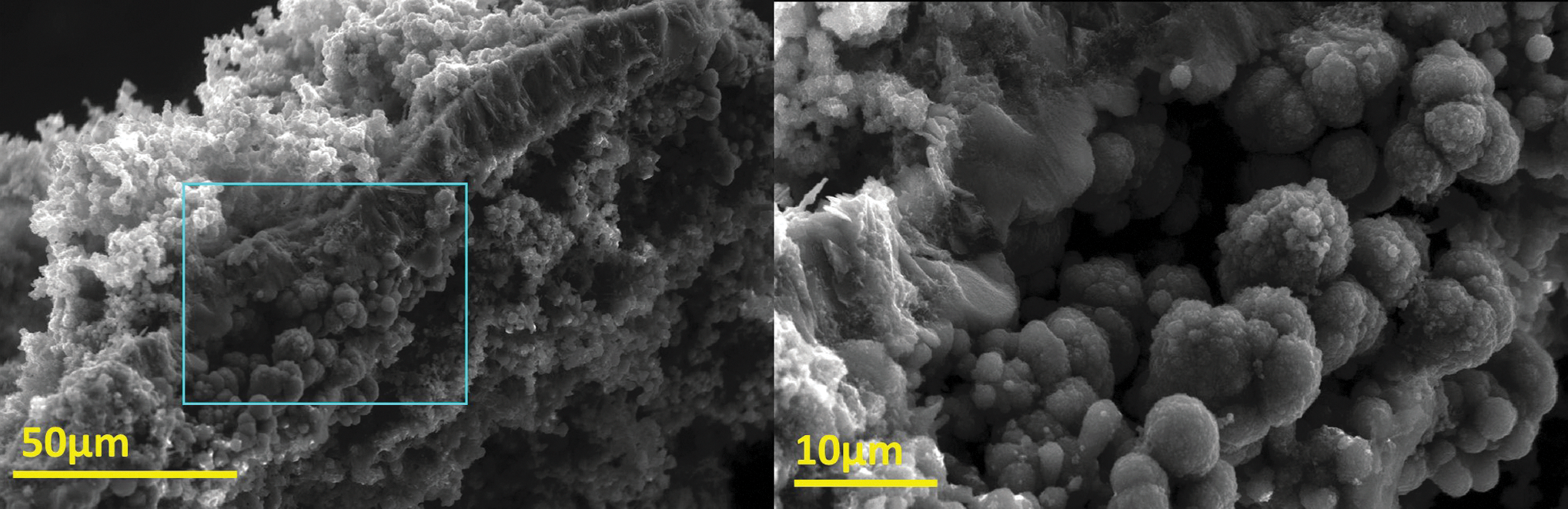
Environmental scanning electron microscope images of iron-sulfide chimneys formed under simulated ancient Earth alkaline hydrothermal conditions described by White et al. (2015). Analysis of the chimneys confirmed the presence of greigite [Fe3S4] and mackinawite [FeS], both of which are suggested to be effective catalysts in early organic formation leading to the emergence of life. Similar compositions could exist on icy worlds where CO2-rich fluids are in contact with the ocean floor. (Blue box inset is expanded on the right.)
Mineralogy: The solution compositions and temperature gradient between hydrothermal fluids and an icy-world ocean could have effects on the mineralogy and porosity of hydrothermal precipitates, which would determine their utility as possible reactants/catalysts and electrical conductors, as well as their capability to mediate ion gradients. White et al. (2015) studied the composition of simulated iron-sulfide hydrothermal precipitates in injection chemical garden experiments as a function of temperature and showed that iron sulfides, including mackinawite (FeS, the primary precipitate from Fe2+ and S2-; Rickard et al., 2006) as well as greigite (Fe3S4) form at moderate alkaline hydrothermal temperatures (70–75°C). In other work focusing on chimney morphology as a function of iron and sulfur concentration, greigite, lepidocrocite (FeOOH), and elemental sulfur were identified (Batista et al., 2014). Iron-sulfide chemistry is complicated, and a chimney containing iron sulfides in an early Earth alkaline hydrothermal vent system (or a vent system on an icy world) would likely consist of a mixture of these and other mineral phases, but with a large constituent of mackinawite and greigite as potential catalysts. These two iron-sulfide structures are also similar to biological metalloenzyme active centers (Baymann et al., 2003; Russell and Hall, 2006), and as shown in previous investigations, iron (± nickel) sulfides can act as catalysts for carbon dioxide reduction under simulated hydrothermal conditions (Vladimirov et al., 2004; Roldan et al., 2014; Yamaguchi et al., 2014).
One facet of simulated icy world chimneys that greatly affects their function as electron conductors or redox catalysts is the oxidation state of iron minerals throughout the chimney wall. In an ocean containing dissolved Fe2+ (with some Fe3+), sulfides and oxyhydroxides that precipitate would be mixed oxidation state, constituting for example magnetite, greigite, and/or various iron oxyhydroxides including green rust. Green rust is an iron double-layered hydroxide; the replacement of Fe2+ with Fe3+ in the structure gives the layers a positive charge, which is balanced by anions (e.g., CO3 2−, SO4 2−, Cl−) adsorbed in the interlayers. Green rust is metastable and in natural conditions will eventually decompose to magnetite or other minerals depending on the interlayer anions (Hansen and Poulsen, 1999). Its large adsorptive interlayer capacity allows it to incorporate and concentrate a variety of species, including carbonate and sulfate, phosphates, and biomolecules (Arrhenius, 2003; Nalawalde et al., 2009; Oh et al., 2009), and it can efficiently scavenge trace metals such as Ni2+ in mineral structure or adsorbed on the surface (Chaves et al., 2007; Zegeye et al., 2012). Green rust is also redox-active; for example, it can drive the reduction of single nitrogen-containing anions (Hansen et al., 1996; Choi et al., 2012).
The redox gradient between hydrothermal and ocean compositions then becomes significant in that it would determine the specific type and abundance of these and other reactive minerals, and furthermore the flow-through nature of a hydrothermal system enables the possibility of soluble components from one place in the gradient to transfer and react further at a different place within the gradient. Actually forming precipitates in a physical gradient setup, by interfacing different combinations of ocean/hydrothermal simulant of interest, is necessary to understand how abundant any of these minerals would be in a particular vent system on Enceladus or another icy world. The details of ocean composition and pH may impact, for example, the type of salt anions that would be intercalated within green rust in a particular environment and thus its stability, as well as presence of other oxidants (e.g., nitrate) that could change the Fe2+/Fe3+ ratio in the mineral and affect its reactivity. The amount of other bioavailable components produced or concentrated in such systems (e.g., organics, phosphorus, trace metals) should be characterized as well for the various mineral assemblages that form between combinations of hypothetical ocean/hydrothermal fluids.
Future directions: Future studies of hydrothermal precipitates that could drive prebiotic chemistry on Enceladus and other icy/ocean worlds should investigate temperature-dependent mineral formation under a range of chemical conditions, specifically in experiment setups that preserve the pH and chemical gradients between the ocean and hydrothermal solutions. Chemical garden precipitates formed at the interface of reactive cations and anions have properties that are different from the precipitates that would form from those same reactants in a solution-mixing experiment. In a chemical garden experiment, the steep chemical disequilibrium between the dissolving crystal or injected solution and the outer reservoir is what drives the macroscopic self-organization, the generation and maintenance of ion potentials, and the formation of microscopic structure within the membranes (Barge et al., 2015b). Without this far-from-equilibrium experimental setup, many of the properties of the hydrothermal precipitate that make it of interest to prebiotic chemistry are lost. This restriction does introduce certain practical difficulties: for example, it is more time-consuming to measure precipitate evolution over time because it cannot be simply sampled and left to continue forming; a new experiment must be started. It is also not as simple to do larger assays that allow quick tests of many chemical conditions. However, the techniques described here yield much insight into the self-organizing and potentially catalytic properties of hydrothermal chimneys on icy worlds, and individual experiments can be carried out on timescales reasonable for laboratory experimentation (several days). With increasing information (either mission- or modeling-based) about the chemical compositions of Europa's or Enceladus' oceans, it will be possible to mimic in lab the hydrothermal precipitates that form from various combinations of ocean and hydrothermal fluid compositions of interest. Studies relevant for the immediate future include temperature series of experiments using different solution compositions (e.g., mineralogy of very silicate-rich hydrothermal mounds that may be more structurally stable, or hydrothermal mounds containing trace amounts of other reactive metals). For the far future, to truly correlate the simulated hydrothermal fluids produced in Section 2 with hydrothermal mound precipitation, it will be important to test the effects of realistic seafloor pressure on chemical garden growth (this will be easier for Enceladus than for other ocean worlds).
5. Simulating Gradients and Energy within the Hydrothermal Mound
The gradients generated at putative icy world vents, and the available electron donors and acceptors within, would be key sources of energy for the origin of life and/or a possible biosphere in an icy world hydrothermal system. Thus, it is important to test the extent to which these energy gradients would be produced and mediated in hydrothermal sediments and across chimney walls. The alkaline hydrothermal model for the origin of life on Earth suggests that serpentinization-generated pH gradients and electron potentials were the precursors to modern chemiosmosis (Russell and Hall, 1997, 2006; Russell et al., 2010, 2014). This hypothesis, if true, would present a possible mechanism for the emergence of life on any wet rocky planet including icy worlds such as Enceladus that have ice shells above their oceans. The ambient pH gradient maintained across hydrothermal precipitates would provide a naturally occurring proton flux through the inorganic chimney membrane (Sojo et al., 2016), and the Eh difference between ocean and hydrothermal solutions could—with the right composition of fluids and minerals—generate an electrical current conducting through the precipitate, in theory causing the inner and outer membrane surfaces to behave as electrodes (e.g., Barge et al., 2014a; Figure 4). Gradients also exist in the hydrothermal mound as vent fluids seep through sediments beneath and around the chimney, which could lead to mineral-driven reactions (including organic synthesis) at various temperature, chemical, and mineralogical conditions. Understanding the electrochemical properties of the components of the hydrothermal chimney inorganic membranes and minerals in the hydrothermal mound thus becomes very significant for assessing the extent to which this system can drive prebiotic chemistry and whether or not inorganic membranes could harness geochemical gradients in an effective manner.
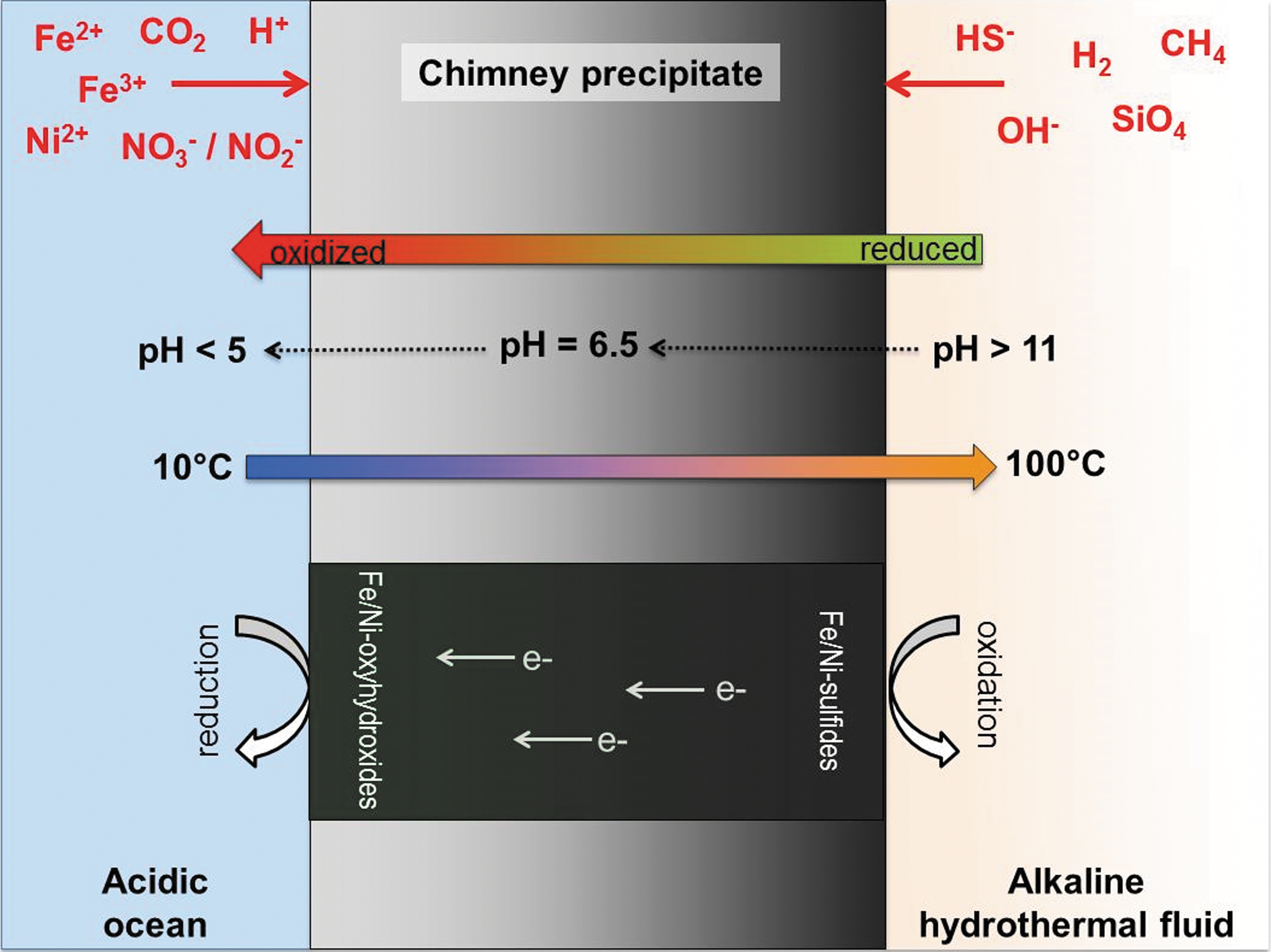
Model of a hydrothermal chimney on an icy world and possible ambient transmembrane gradients (modified from Barge et al., 2014a). A schematic of the chemical garden membrane separating contrasting solutions shows how there are pH, redox, compositional, and temperature gradients across the electron-conductive membrane. The compositional gradients produced by self-organizing precipitation yield both reduced (sulfide-rich) and oxidized (Fe- and OH- rich) mineral layers, and transfer of electrons through the precipitates' electrically conductive mineral phases could allow the inner and outer surfaces to function as electrodes, possibly capable of driving redox reactions or providing electrons for life depending on the ambient potential.
The proton/ion gradients across self-assembling inorganic membranes such as hydrothermal chimneys are fairly easily simulated via the influx of a simulated hydrothermal solution into a simulated ocean reservoir, since the membrane precipitate maintains the chemical differences between exterior and interior solutions as long as the disequilibrium (i.e., the injection flow) is maintained. However, to properly analyze pH evolution across chemical garden membranes, a means of continuously monitoring the inner solution is required, which can be difficult to accomplish without disrupting the membrane structure. The electron potential produced by the interfacing of reducing and oxidizing fluid is also difficult to simulate in injection chemical garden experiments, since the main electron donors (H2, CH4) and electron acceptors (CO2) for an early Earth serpentinizing system are gases, and the whole system would ideally be under greater than ambient pressure to keep them in solution. Nonetheless, various studies have recently developed methods to characterize the ability of simulated hydrothermal precipitates to generate and mediate proton and electron gradients, and these can give important insights into the energetics that might be possible at hydrothermal vents on icy worlds.
Inorganic membrane potentials and ion transport: Inorganic chemical garden membranes containing components likely to be present in a hydrothermal system on icy worlds (e.g., Fe(II), silicate, phosphate, and sulfide) have been shown to generate electrical potential between exterior and interior solutions during precipitation (Barge et al., 2012, 2014a, 2014b, 2015a, 2015b). The membrane potential across a chemical garden wall can be measured by placing an electrode at the solution injection point so that the precipitate membrane engulfs the electrode as it grows, and placing another in the external solution (Barge et al., 2012; Fig. 2). Iron-sulfide or iron-hydroxide chemical gardens can produce membrane potentials ≥0.6 V compared to iron-silicate-phosphate structures, which only produce voltages around ∼0.2–0.3 V (Glaab et al., 2012; Barge et al., 2012, 2015a), and depending on the precipitated mineral phases, the chimney wall may be moderately conductive (Nakamura et al., 2010).
Although hydrothermal chimneys can form slowly in nature through the interfacing of very dilute solutions of precipitating ions over long periods of time, this can be time-consuming to simulate in the laboratory. Measurement of electrical potentials in silicate-containing chemical gardens has only been accomplished in experiments utilizing extremely high reactant concentrations (Barge et al., 2012; Glaab et al., 2012) compared to those that would exist in a hydrothermal system. This is due to the often physically unstable nature of self-assembling precipitate structures. One method that has proved useful for circumventing this is to separate the ocean and hydrothermal solutions with a porous synthetic membrane at a flat interface instead of growing a chimney by injecting one solution into the other (Barge et al., 2014b, 2015a). The simulated chimney wall precipitates still form on this membrane template, but sampling and analysis of both solutions is possible throughout the experiment. This technique of forming template-supported precipitates between solution reservoirs has long been used to study the membrane potential, charged surfaces, and ion permeability of inorganic precipitate membranes (e.g., Sakashita et al., 1983; Ayalon, 1984; Siddiqi and Alvi, 1989) and can readily be applied to simulating a geological system. Previous experiments of this type have characterized inorganic membranes of varied composition, including iron sulfides that have been tested as a self-assembling membrane formed on the surface of agar or silica gel (Filtness et al., 2003; Russell and Hall, 2006) and (along with iron hydroxides) on dialysis tubing (Barge et al., 2015a).
In solution interface experiments (Fig. 5), iron-sulfide-containing membranes were grown on a dialysis tubing template between simulated early Earth ocean and hydrothermal solutions. This setup allows one to monitor the membrane potential throughout the experiment and conduct other electrochemical experiments to study the properties of the membrane. The chosen orientation of membrane template and ocean/hydrothermal solutions can vary depending on the specific experimental goals. For example, a membrane placed between two large solution reservoirs renders the supply of precipitating ions essentially infinite for certain reaction timescales, and thus the gradients are more consistent. With such methods, one can begin to determine the ability of hydrothermal chimney walls to mediate ion transport. As in chemical garden experiments, iron-sulfide membranes precipitated in solution interface experiments generated potentials between 0.5 and 1 V, depending on conditions such as reactant concentration and temperature (Fig. 6). Figure 6A shows that increased concentration of iron and sulfide from 10 to 100 mM leads to an increased membrane potential, probably because the membrane is thicker and less “leaky,” and thus it is able to maintain a good charge separation. Temperature can also affect the membrane potential, though more so at lower Fe and S concentrations (Fig. 6B, 6C). Over longer periods of time (hours to days), the potentials generated in this type of membrane or chemical garden experiment decrease as ions diffuse across the membrane and equilibrium is reached. The equilibration timescale can give an estimation of the ability of the structure to maintain its chemical disequilibrium (and the possible flow rates of ions across the membrane). For comparison, a membrane simulating a chemical garden precipitate of iron sulfide generated a potential of ∼0.6 V at room temperature and still maintained a voltage of ∼0.2 V two days after initial precipitation occurred (data not shown). In a real hydrothermal system, the membrane potential and chemical/pH gradients would be maintained by influx of the hydrothermal fluid for as long as the vent remains active.
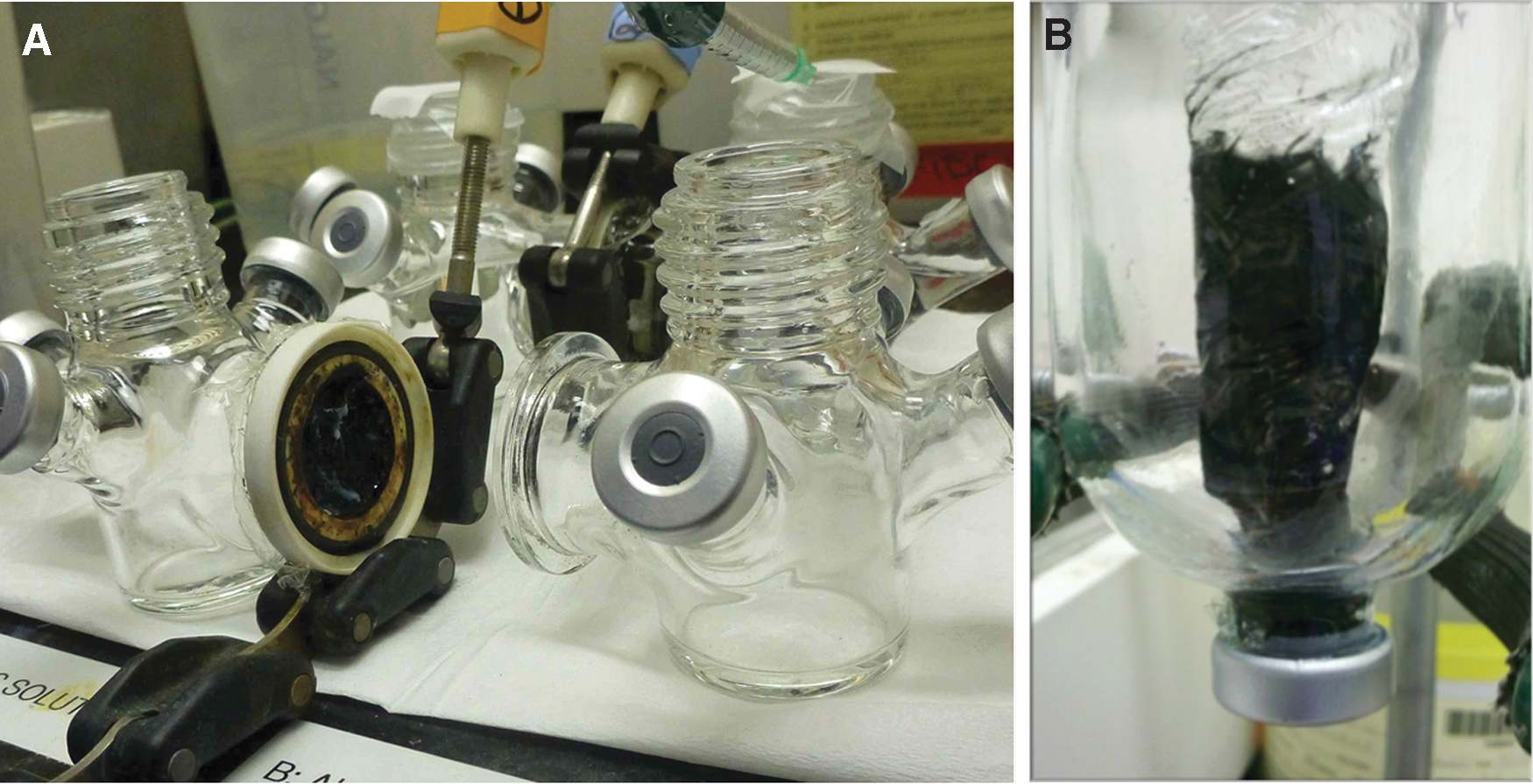
Examples of iron-sulfide inorganic membranes grown on dialysis tubing templates to simulate hydrothermal chimney gradients. (

Potentials generated across membrane precipitates formed between solutions of FeCl2•2H2O and Na2S•9H2O in an experimental setup similar to Fig. 5B, where a cylindrical template of dialysis tubing is placed between the two solutions. (
The potential generated by precipitation of inorganic membranes in laboratory experiments is affected by the potentials of the solutions on either side, the concentration gradients of ions between solutions (which is affected by their relative rates of diffusion through the membrane as well as their precipitation into the membrane), and any electron donors or acceptors that could be present in the system if it is sufficiently electroactive. Inorganic precipitate membranes are known to generate potentials that depend on the relative concentrations of electrolytes on either side, and from this one can derive the relative permeabilities of different ions through the membrane (e.g., Ayalon, 1984). These studies require precise electrode placement and careful setup but can be informative about the membrane's ability to act as an ion-exchange layer. A hydrothermal chimney precipitate on an icy world would likely be a heterogeneous structure, and under the right conditions this could give the precipitate cation or anion exchange properties, which in turn (in conjunction with electrical current, e.g., from a geochemical redox gradient) might drive intermembrane reactions or establish transmembrane ion gradients. This could have important effects for prebiotic energetics within the membrane (Barge et al., 2014a; Ding et al., 2016). The hypothesis that pH gradients across inorganic membranes can be harnessed to eventually drive reactions depends greatly on the small-scale properties of such membranes (Jackson, 2016). To experimentally test this idea, a method for growing very thin and controlled membranes and measuring their gradients, composition, and reaction products would be required. Some recent studies have utilized microfluidic reactors, where the two solutions are introduced in parallel flows to produce thin, straight precipitate walls, to investigate the inorganic membranes that form in various reaction systems (Batista and Steinbock, 2015; Wang et al., 2017). Reactors like this could also be built for different chemical conditions relevant to ocean worlds, although some method would still be required to generate inorganic membranes much thinner than have been grown in existing chemical garden work.
Electron transport and Eh potential: Electrical potentials can be generated across hydrothermal chimney walls and in the minerals surrounding the chimney due to the presence of electron donors in the hydrothermal fluid and oxidants in the surrounding seawater (Yamamoto et al., 2013, 2017). (On Enceladus this might include H2 or CH4 in vent fluid generated by serpentinization.) This geochemically generated electrical potential can be visualized in the experimental sense as a voltage applied between the “electrodes” of the inner and outer surfaces of the hydrothermal chimney; it is possible that these chimney surfaces, if partially composed of catalytic surfaces and/or reactive minerals like iron sulfides or green rust, may be able to drive redox reactions either of the components of the precipitate or of other dissolved components in the surrounding solutions. The electrochemical properties of simulated hydrothermal chimneys and/or sediments are therefore an important parameter to consider as we evaluate the utility of various conditions for precipitating suitably electrochemically active hydrothermal minerals on ocean worlds. Iron-sulfide (and nickel-sulfide) minerals may be significant in this regard. Mackinawite (FeS), a primary precipitate in iron-sulfide chemical garden or membrane experiments, is a semiconductor composed of layers of tetragonal sheets (Berner, 1962; Vaughan and Craig, 1978; White et al., 2015) that allows for electron conduction along its layers, and soluble forms of FeS could have the ability to activate CO2 and produce organic compounds under certain conditions (Rickard and Luther, 2007). Greigite (Fe3S4), produced in hydrothermal precipitation experiments at ∼70°C (White et al., 2015) (or at room temperature in the presence of pyruvate; Wang et al., 2015), is a catalyst and capacitor since it can accept and donate electrons. Both mackinawite and greigite crystal lattices bear similarities to inorganic active centers in various fundamental enzymes (hydrogenases, CO-dehydrogenase, acetyl-CoA synthase, nitrogenase, and other ferrodoxins) known to be present in the last universal common ancestor (Russell and Hall, 1997, 2006; Nitschke et al., 2013), and it has been proposed that these structures in prebiotic inorganic settings might have been capable of catalyzing similar reactions, albeit less efficiently (Martin and Russell, 2007; Milner-White and Russell, 2008). Green rust (iron oxyhydroxide), which might form hydrothermal precipitates in oceans containing dissolved Fe2+ and/or Fe3+ (also as a function of the degree of hydroxylation; Jolivet et al., 2004), can also function as an electron donor or acceptor (Antony et al., 2008). Electrical properties of putative ocean world hydrothermal chimneys could be studied by including electron donors and acceptors in the ocean and hydrothermal solutions in a chemical garden or other membrane experiment, using embedded electrodes across the precipitate to apply voltage or current to study individual redox reactions. Several studies have been done by using hydrothermal chimney material (either synthetic or field samples) as electrodes and/or electrocatalysts to drive redox reactions, including sulfide oxidation and CO2 reduction (Nakamura et al., 2010; Roldan et al., 2015; Yamaguchi et al., 2014). Similar experimental setups could be valuable for estimating energy available for prebiotic reactions, or even biological metabolisms, in vent systems on Enceladus or other ocean worlds.
6. Summary and Conclusions
In summary, much work has been done to develop methods to experimentally test the prebiotic chemistry and energetics of hydrothermal vent systems and chimneys on the early Earth. Many of these experiments are easily generalizable to other hypothesized planetary ocean and vent fluid chemistries and could allow for simulation of the mineral precipitates that would form in gradients on other worlds. Incorporating gradients into experiments in open, flow-through reactors is essential to simulate the processes that would have occurred in far-from-equilibrium systems such as hydrothermal vents. An analytical consideration is that some of the most interesting components (mineral precipitate catalysts, or organic products) may be metastable and/or maintained far from equilibrium; thus, in situ non-invasive analysis techniques in line with the experimental reactors would be preferable. Previous work, particularly involving iron sulfides and iron hydroxides, has shown that these minerals react with O2 and oxidize readily; thus, future studies on these precipitates as prebiotic catalysts on ocean worlds must be rigorously anaerobic (unless of course O2 or other strong oxidants are thought to be present in the icy world ocean, which would also have an effect on hydrothermal mineral chemistry). One major component that has not much been incorporated into this kind of work is increased pressure, which is important for reactant availability of, for example, CO2 or H2 as well as carbonate precipitation. Enceladus among the ocean worlds of interest provides an experimentally plausible test case for initial experiments in this vein, since with ∼1.2% Earth gravity under a ∼60 km thick ice + water layer (McKinnon, 2015) the seafloor pressure on Enceladus would only be ∼72 bar, which is most reasonable to simulate in the lab. By defining hypothesized geochemical conditions for the ocean and hydrothermal fluid—not just for modern, observable icy world oceans but also considering their primordial state if life could have emerged billions of years ago as it did on Earth—we can utilize prebiotic chemistry methods that have proved useful for early Earth vent simulations and test a variety of origin hypotheses, including the function of ambient geochemical gradients, the possible emergence of proto-metabolic pathways driven by geologically available inorganic or organic cofactors, condensation/dehydration reactions in hydrothermal precipitates such as gels or membranes, and the synthesis of nucleotides and amino acids.
Footnotes
Acknowledgments
This research was carried out at the Jet Propulsion Laboratory, California Institute of Technology, under a contract with the National Aeronautics and Space Administration. L.M.B. is supported by the NASA Astrobiology Institute (NAI) Icy Worlds. L.M.W. was supported by the NASA Harriet-Jenkins Fellowship program. Copyright 2017 California Institute of Technology. Government sponsorship acknowledged.
Author Disclosure Statement
No competing financial interests exist.