




Abstract
Gradients generated in hydrothermal systems provide a significant source of free energy for chemosynthetic life and may play a role in present-day habitability on ocean worlds. Electron/proton/ion gradients, particularly in the context of hydrothermal chimney structures, may also be relevant to the origins of life on Earth. Hydrothermal vents are similar in some ways to typical fuel cell devices: redox/pH gradients between seawater and hydrothermal fluid are analogous to the fuel cell oxidant and fuel reservoirs; the porous chimney wall is analogous to a separator or ion-exchange membrane and is also a conductive path for electrons; and the hydrothermal minerals are analogous to electrode catalysts. The modular and scalable characteristics of fuel cell systems make for a convenient planetary geology test bed in which geologically relevant components may be assembled and investigated in a controlled simulation environment. We have performed fuel cell experiments and electrochemical studies to better understand the catalytic potential of seafloor minerals and vent chimneys, using samples from a black smoker vent chimney as an initial demonstration. In a fuel cell with Na+-conducting Nafion® membranes and liquid fuel/oxidant reservoirs (simulating the vent environment), the black smoker mineral catalyst in the membrane electrode assembly was effective in reducing O2 and oxidizing sulfide. In a H2/O2 polymer electrolyte membrane (PEM) fuel cell with H+-conducting Nafion membranes, the black smoker catalyst was effective in reducing O2 but not in oxidizing H2. These fuel cell experiments accurately simulated the redox reactions that could occur in a geological setting with this particular catalyst, and also tested whether the minerals are sufficiently active to replace a commercial fuel cell catalyst. Similar experiments with other geocatalysts could be utilized to test which redox reactions could be driven in other hydrothermal systems, including hypothesized vent systems on other worlds.
1. Introduction
O
Often in vent systems, a hydrothermal chimney structure can grow as a result of the mixing of contrasting ocean and hydrothermal fluids, the vent fluid emanating through channels in the top or sides (Tivey, 2007). Chimneys can grow quite rapidly in some systems (e.g., one black smoker chimney grew 15 m high in 25 months; Kawagucci et al., 2013), and can develop into large and highly self-organized structures over long periods of time (e.g., the huge carbonate chimneys at the Lost City Hydrothermal Field which formed over tens of thousands of years; Ludwig et al., 2006). The redox/pH gradients between seawater and hydrothermal fluid can then generate electric currents through the chimney or surrounding minerals (Nakamura et al., 2010; Yamamoto et al., 2013; 2017). Hydrothermal chimneys and mounds can serve several important functions with respect to habitability: (1) they can concentrate organics, phosphates, and other biologically relevant components emanating from the subsurface (Barge et al., 2015a); (2) the minerals can catalyze redox chemistry, for example, reduce oceanic CO2 and generate organic carbon (Yamaguchi et al., 2014); and (3) the conductive minerals could serve as electron donors/acceptors for life that can transfer electrons directly to/from minerals through extracellular electron transfer (Reguera et al., 2005; Pirbadian et al., 2014; Ishii et al., 2015; Shi et al., 2017). Alkaline vent chimneys, formed at moderate-temperature serpentinizing systems such as the Lost City Hydrothermal Field (Kelley et al., 2001), have been proposed as possible environments for the emergence of metabolism due to their ability to harness geochemical redox/pH gradients with minerals that can act as electrocatalysts (Branscomb and Russell, 2013; Russell et al., 2014). Inorganic metal catalysts (e.g., Fe/Ni-sulfide containing metalloenzymes) appeared very early on in the emergence of bioenergetics (Beinert, 2000; Baymann et al., 2003; Hedderich, 2004; Volbeda, 2006), and this has led to the hypothesis that metal sulfide-containing mineral precipitates formed in early Earth vent systems may have catalyzed redox reactions in vents toward the emergence of metabolism (McGlynn et al., 2009; Nitschke et al., 2013; Russell et al., 2013). This also raises the question of whether such a process could occur on other ocean worlds, since serpentinization has also been proposed to occur on Europa, Enceladus, and early Mars (Vance et al., 2007; Ehlmann et al., 2010; Hsu et al., 2015; Waite et al., 2017), as well as Earth-like exoplanets.
In hydrothermal vents, the chimney systems described above can be considered as “environmental fuel cells” since they function in a similar manner to typical fuel cell devices (Yamamoto et al., 2013; Barge et al., 2014). Indeed, the fuel-cell-like properties of hydrothermal vents have been directly demonstrated in field studies where a black smoker chimney produced enough electrical energy to power a light-emitting diode on the seafloor (Yamamoto et al., 2013), as well as in the laboratory where black smoker chimney material was found to be electrically conductive and catalyzed redox reactions (Nakamura et al., 2010: oxidation of sulfide to S0 while reducing O2). Similar effects have been observed in experiments that simulate the growth of hydrothermal chimneys under early Earth conditions; chimneys generate electrical potential and current as they grow, and the magnitude of the electrochemical gradients depends on the solution chemistry as well as the redox ability of the system (Barge et al., 2015a). From an origin of life perspective, there is much interest in characterizing the electrochemical properties of simulated early Earth vent minerals to investigate the emergence of prebiotically relevant redox reactions (McGlynn et al., 2012; Herschy et al., 2014; Barge et al., 2015b; Roldan et al., 2015; Yamaguchi et al., 2014).
For characterizing the electrochemical properties of vent environments relevant to habitability and emergence of life, we have proposed that fuel cell experiments could be useful in this regard (Barge et al., 2014). Hydrothermal chimneys have some similarities to typical fuel cell devices, which are built as redox reactors in which the reduction and oxidation half-reactions are separated by an electrolyte membrane. The overall reaction occurring in a typical polymer electrolyte membrane (PEM) fuel cell is the oxidation of hydrogen and reduction of oxygen to form water. These reactions happen in two separate compartments divided by an ion-conducting, electrically insulating membrane, such as Nafion®. Electrons generated at the anode must pass through the external load to the cathode, while ions make this transit through the membrane. At the cathode, electrons and ions meet to catalytically reduce oxygen, producing electrical work (rather than heat from combustion). The voltage across the fuel cell is determined by the oxidant and reductant species present at each electrode and their half-reactions. In practice, this voltage is reduced by activation losses, concentration losses, ohmic losses, and mass transport losses, which become more severe as more current is driven from the cell (O'Hayre et al., 2016). The catalyst is important in optimizing the kinetics. As in the PEM fuel cell, the redox species separated by a hydrothermal chimney wall would establish a voltage across it according to the thermodynamics of the reactions and the reactive affinity of the chimney surface. Reaction products could be transmitted through the chimney wall: electrons by the minerals' inherent conductivity and hydrated ions through the porous structure. Since the chimney provides both an electronic and an ionic pathway, in the fuel cell analogy, the chimney wall is both the electrolyte and the load.
In an effort to develop methods for analyzing the fuel-cell-like characteristics of geothermal vents in a quantitative manner, we have constructed a PEM fuel cell and conducted electrochemical experiments to create a planetary geology test-bed system in which components may be substituted by materials more closely connected to geological environments. Our experimental approach was twofold: (1) to test whether this geological sample can function as an alternative H2-O2 fuel cell catalyst, and (2) to test fuel cells as simulators for the electrochemistry of a geothermal vent system.
2. Materials and Methods
Mineral samples from black smoker hydrothermal chimneys were procured from the Iheya Hydrothermal Field, Okinawa Trough. In such systems, the high-temperature (∼300°C) vent fluids first cause precipitation of anhydrite (CaSO4) which forms the initial chimney wall; later, metal sulfides are deposited in the chimney interior, and gradually become incorporated with and replace anhydrite as chimney growth proceeds (Haymon, 1983; Hannington et al., 1995; Tivey, 1995). Black smoker hydrothermal precipitates containing chalcopyrite and pyrite have been shown to be electrically conductive (Nakamura et al., 2010) and even capable of generating thermoelectricity (Ang et al., 2015). In this study we performed mineralogical characterization on samples from black smoker chimneys of different age. The samples were collected with the remotely operated vehicle Hyper-Dolphin deployed from its mother vessel Kaiyo (KY14-01 cruise; JAMSTEC). The first sample was an “infant chimney” newly grown from an artificial drilling-induced hydrothermal vent created in a borehole by the Integrated Ocean Drilling Program (IODP) Expedition 331 (Takai et al., 2011; Kawagucci et al., 2013). The hydrothermal fluid fed into the ocean through pipes installed in boreholes, mixing with the seawater to precipitate new chimneys of various sizes over several years. Some of these new chimneys were only tens of centimeters high, whereas another grew to a height of 15 m (Kawagucci et al., 2013; Nozaki et al., 2016); the sample we characterized is from a smaller chimney which formed within the pipe in one of the boreholes. These infant chimneys are enriched in both metal sulfides and anhydrite and these represent the materials that would form in a chimney at a new fluid outflow. We also analyzed a second sample from a flange structure of a black smoker chimney that was older and thus more enriched in metal sulfides and contained less sulfate/sulfur. For electrode fabrication, we used the older chimney sample to make the electrodes from the most electrochemically reactive components of a black smoker mineral assemblage.
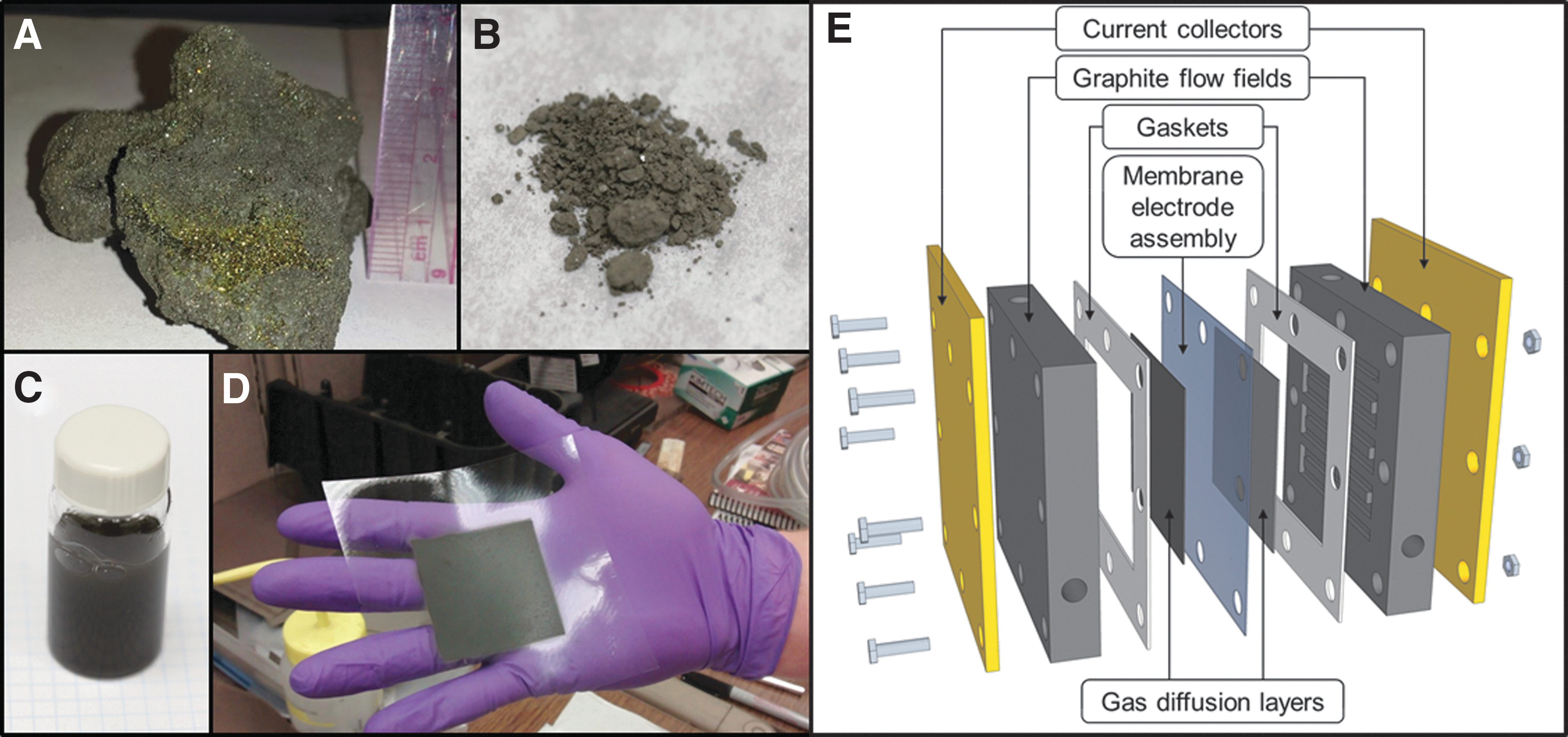
We created “geo-electrodes” by ball milling the sample to create a fine powder and suspending 500 mg in 1:1 by volume isopropanol/water with Nafion ionomer (75 mg Nafion ionomer or 15% of powder mass). This ink was deposited onto glassy carbon disk electrodes (GCE, 5 mm diameter) for electrochemical (voltammetry) tests and onto a Nafion membrane to form the membrane electrode assembly (MEA) for use in a fuel cell (Fig. 1). Area-specific measurements refer to the geometric surface area of the electrode. High-resolution imaging was carried out on the chimney sample (before and after ball milling) and the geoelectrode ink with an environmental scanning electron microscope (ESEM); images were obtained by using a voltage of 20 kV and a working distance of 10 mm. Raman analysis on the chimney material was carried out by a Horiba Jobin-Yvon Raman U1000 system featuring a 532 nm laser for excitation. Several powdered aliquots from the chimney sample were analyzed by using a 50× long-working distance microscope objective. The measured power at the sample surface was ∼3 mW, and the laser spot size was ∼5 μm. All of the spectra were recorded as single acquisitions and short integration times (5–10 s).
Voltammetry experiments were carried out in an O-ring sealed glass three-electrode cell made in-house. The working electrode, coated with the black smoker material under study, was a glassy carbon (GC) disk sheathed in Teflon; one to several drops of geoelectrode ink was deposited onto this electrode and dried. When platinum was used as the working electrode, a similar ink of platinum black powder (Alfa Aesar) was deposited onto the GC disk. The counter electrode, completing the circuit, was a platinum wire of ∼20 cm2 submerged surface area. The reference electrode was a silver chloride electrode in a fritted glass tube. The cell was filled with 20 mL of the electrolyte of interest for each test. Depending on the test, the cell solution was sparged (1 atm of gas pressure) before each experiment either with argon to remove any air from the cell, or with oxygen or hydrogen to saturate the solution with H2 or O2 as reactant. In sulfide oxidation tests, the cell solution was 20 mM Na2S•9H2O (Sigma-Aldrich) dissolved in 0.6 M NaCl that had been sparged with argon. Experiments were conducted over a timescale of one to several hours, during which the electrode film showed no evidence of instability. Between experiments, the GCE was cleaned with 50 μm alumina and deionized water.
Cyclic and linear sweep voltammetry tests (CV and LSV, respectively) were conducted with a Solartron 1286 potentiostat by sweeping the potential (at either 10 or 50 mV/s) of the working electrode (coated with geological sample) over a programmed voltage range (either from 0.05 to 1.25 V vs. standard hydrogen electrode [SHE] or −1.25–1.5 V vs. SHE for CV experiments or from 1.75 to −0.75 V vs. SHE for LSV). The resultant current peaks observed over these ranges indicated the presence (or absence) of electrochemical reactions occurring at certain potentials. The comparison of these peaks with those obtained without catalyst and with those without reactants provides evidence of the affinity of the surface for various reactions, including hydrogen oxidation, oxygen reduction, and sulfide oxidation.
Fuel cell experiments to test H2 oxidation and O2 reduction were conducted by fabricating a MEA using a 25 cm2 (active area) proton-conducting membrane (DuPont Nafion® 212) with the geocatalyst ink spray coated on one side (6 mg/cm2) and platinum black on the other (8 mg/cm2). Relatively high platinum loadings were used to ensure that the geoelectrode side would be rate limiting. This MEA was then mounted (as usual for a typical H2/O2 fuel cell) in between two gas diffusion layers (GDLs) made from Toray 060 carbon paper, and graphite flow field plates with H2 gas fed into one side and O2 gas fed into the other (fuel cell hardware FC-25-01, Electrochem, Inc., Fig. 1E). Open circuit voltage (OCV) and fuel cell experiments were analyzed with a Solartron 1286 potentiostat. For fuel cell experiments, the potentiostat was used in potential stair-step mode, where current was measured as the cell voltage was reduced in 0.05 V increments from OCV to ∼0.05 V with 30 s (enough for the voltage to stabilize) for each step. The final current measured before the next step was taken to be the best approximation of the steady-state current produced by the cell at that voltage.
Fuel cell experiments to test the Na2S/O2 configuration were performed by fabricating a MEA using a 25 cm2 sodium-conducting membrane (DuPont Nafion 117) with the geocatalyst ink spray coated on both sides (3 mg/cm2 per side). This MEA was placed in the same fuel cell hardware, except this time both reservoirs were supplied with liquid. Oxygen gas was bubbled through 0.6 M aqueous NaCl, and this solution was pumped through the cathode flow field. A second solution of 0.6 M NaCl with 20 mM Na2S•9H2O (Sigma-Aldrich) added was pumped through the anode flow field in a closed loop to minimize O2 contamination. Electrochemical experiments were done in the same manner as for the H2/O2 fuel cell.
3. Results
3.1. Characterization of the chimney catalyst
Before ball milling, powder from the black smoker chimney samples exhibited large (20–100 μm wide) crystals of various metal (Zn, Fe, Ni, and Cu) sulfides (Fig. 2A, B). After ball milling, a variety of particle sizes and agglomerations of particles were seen though the overall particle size was substantially smaller (∼1–5 μm) (Fig. 2C). Milling reduces the average particle size, thereby increasing the surface area; however, it should have no effect on the thermodynamics of the sample, which manifests itself in the observed voltage. ESEM images of the electrode ink (consisting of ball-milled chimney sample mixed with water, alcohol, and Nafion ionomer) appeared similar to the ball-milled powder itself with small particle sizes; though after this ink was used as catalyst on a GCE working electrode for CV in NaCl solutions, some crystals were again apparent (Fig. 2D). We also performed a test where the ball-milled, washed geocatalyst powder was soaked in 2 N H2SO4 for 1 week. After a week, a yellowish haze appeared above the sample in the solution and opening the vial revealed a sulfurous smell, indicating that the geocatalyst is likely to release dissolved sulfide in an acidic environment (such as a protonated Nafion membrane).
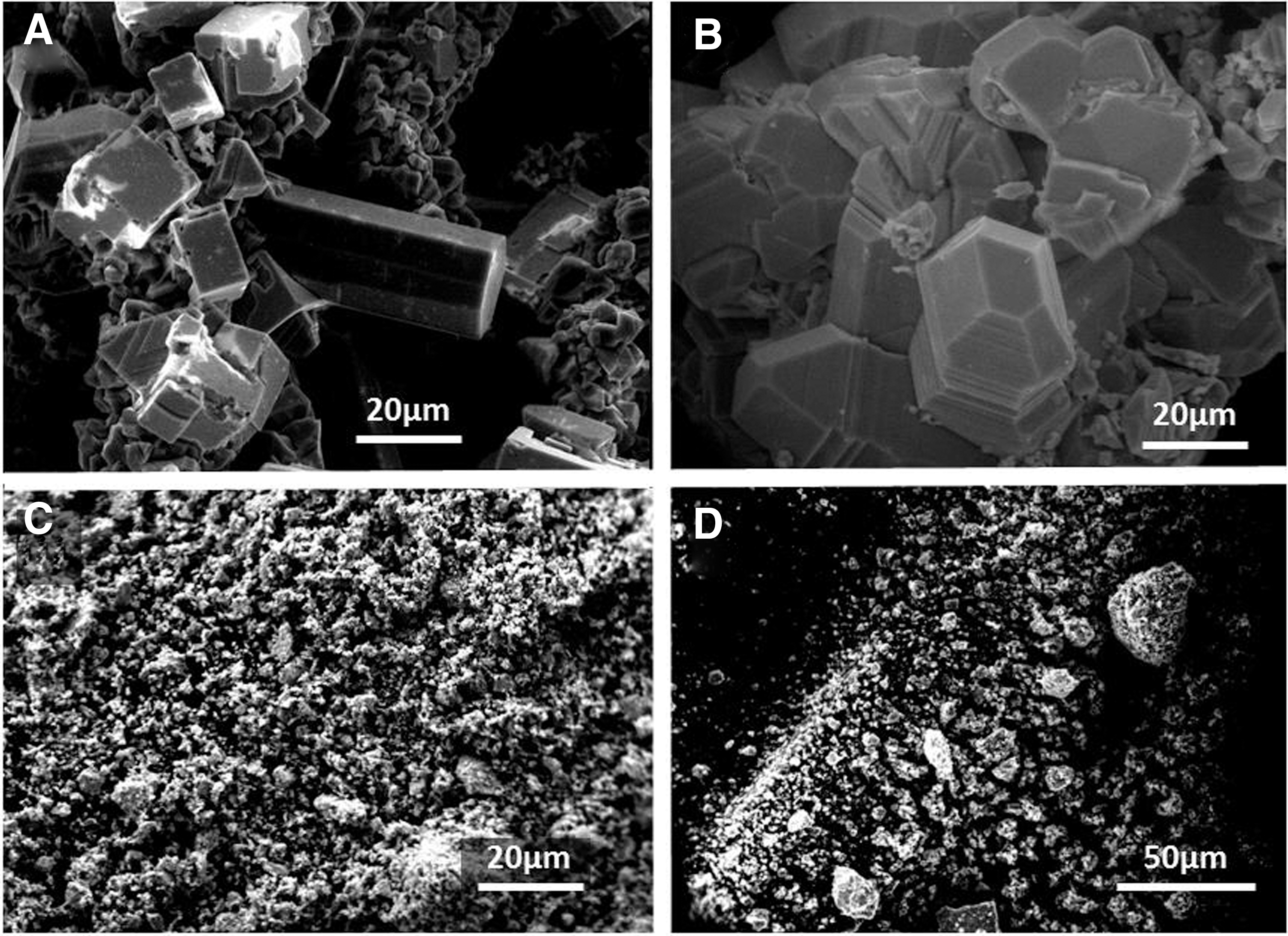
Environmental scanning electron microscope images of black smoker chimney samples showing initial large crystals
Figure 3 shows five representative Raman spectra (A–E) of powdered aliquots from the black smoker sample from the “infant” chimney. We carefully controlled the laser power delivered to the sample to avoid laser-induced damage during the Raman analyses. We monitored the samples using a coboresighted microimaging device attached to the Raman system. We did not observe material degradation during spectral acquisition. All the spectra feature bands at ∼177, 217, 299, 319, 350, 393, 420, 488, 611, and 666 cm−1, which are consistent with the vibrational modes of sphalerite; sphalerite is a zinc sulfide that contains variable amounts of iron and other metals, for example manganese (White et al., 2006). Some of these bands are also characteristic of isocubanite, CuFe2S3, and chalcopyrite, CuFeS (White, 2009). Variable abundance of cations—Fe, Mn—in sphalerite and the presence of additional sulfides—isocubanite—likely account for the slight differences in the positions, shape, and relative intensities of the bands in this spectral region. Spectrum C features intense bands at ∼609, 674, 1017, 1128, and 1160 cm−1, consistent with the vibrational modes of anhydrite (White, 2009). Spectrum B shows a strong band at ∼1008 cm−1 characteristic of gypsum. This interpretation is supported by the doublet observed in the OH stretching region between 3400 and 3600 cm−1. Spectra D and E feature three intense bands at ∼148, 216, and 469 cm−1 that are consistent with orthorhombic sulfur, S8 (Harvey and Butler, 1986), and a doublet around 1000 cm−1 that we assign to iron sulfates (Sobron et al., 2014).

Raman analysis of “infant” black smoker chimney samples in two relevant spectral ranges. The spectra are intensity scaled and offset for visualization purposes. Spectra
Figure 4 shows 10 selected Raman spectra of a sample from a flange of an older black smoker chimney. Similar to the spectra of powdered aliquots in Figure 3, we did not observe microscopic or visible damage within the sample after the analysis. The spectra show spectral bands similar to those discussed above, with the exception that we did not observe sulfate bands in any of the more than 40 spectra we recorded from this sample. We did observe that the Raman spectra from the older chimney sample show weaker sulfur and stronger chalcopyrite bands relative to younger materials, indicating lower sulfur and higher chalcopyrite abundances in the older chimney sample. We monitored these differences through the ∼470 cm−1 S-S stretching band in elemental sulfur and the complex envelope of bands in the 130–250 cm−1 range characteristic of chalcopyrite. As expected, this older chimney sample is more metal-sulfide rich and less enriched in sulfur/sulfates than the infant chimney sample, so we chose to use this sample which is more rich in electrically conductive minerals for electrode fabrication.
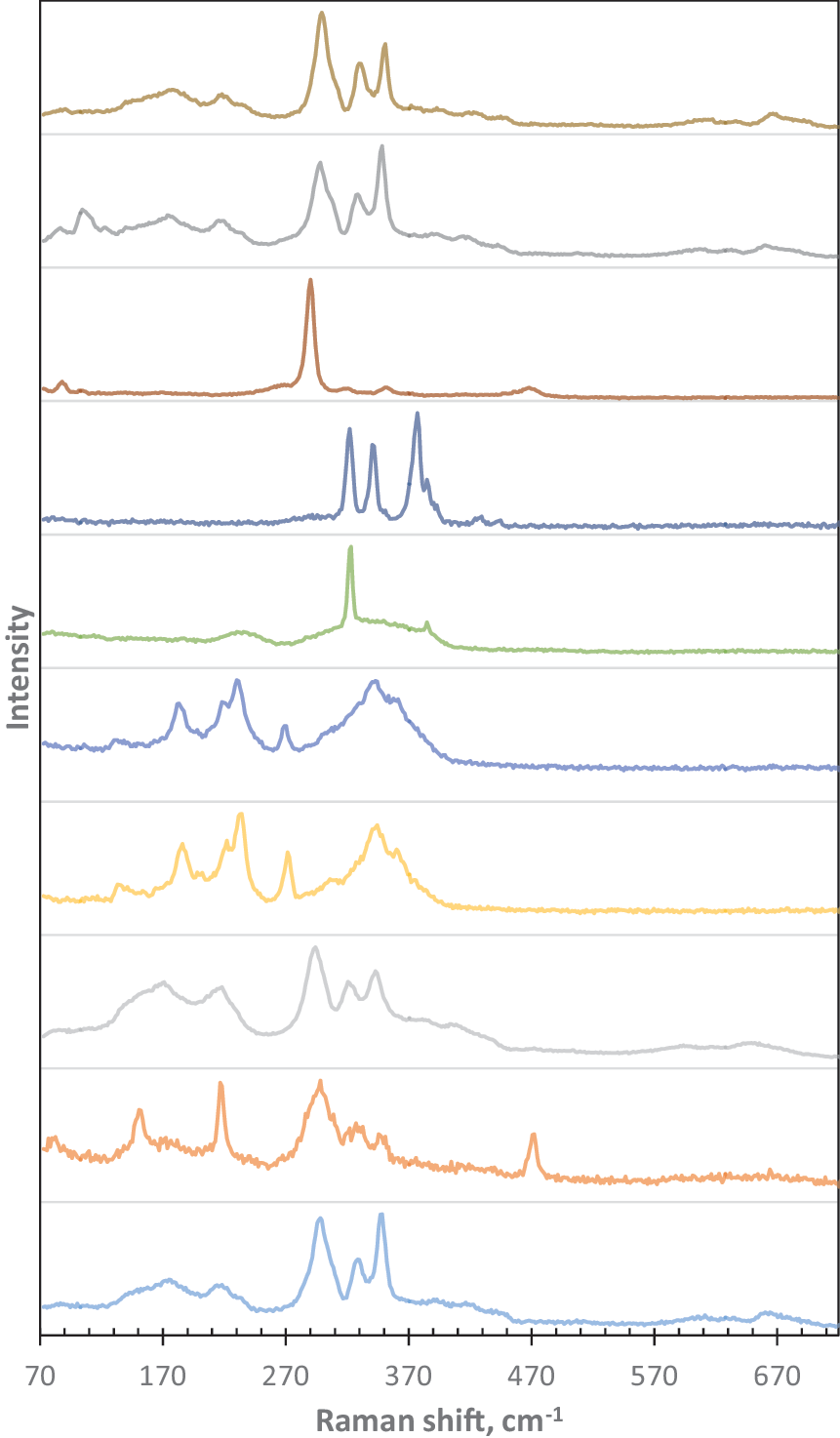
Raman analysis of a sample from a flange structure of an older black smoker chimney. Spectra were taken at various representative locations on the sample.
3.2. Approach 1: testing the geological sample as an alternative PEM fuel cell catalyst
3.2.1. Voltammetry tests of H2 oxidation and O2 reduction
Typical PEM fuel cells use a Nafion membrane, which provides proton conductivity through hydrated sulfonic acid side chains; that is, a very acidic environment with an estimated pH of around 1. Voltammetry tests of the black smoker geocatalyst were conducted in sulfuric acid to simulate the Nafion environment: background tests with no added H2 or O2 were conducted to determine the affinity of the surface for adsorbing H- and O-intermediates from water, which can be correlated with catalytic activity for those reactants. In these background CV tests (Fig. 5), the working electrode was either geocatalyst or Pt black ink deposited onto the GCE; we observed reversible oxygen adsorption/desorption (evident from the approximately equal size oxidative and reductive peaks spaced approximately equidistant from the reversible Pt–O potential) (Nicholson, 1965; Hamann et al., 2007) with the geocatalyst with much less magnitude than platinum. Some possible hydrogen adsorption was observed but only at very strong reducing potentials where water decomposition also occurs. In voltammetry tests (at both 10 and 50 mV/s) of the geocatalyst where the cell H2SO4 solution was saturated with oxygen, reduction current was observed beginning near 0 V (vs. SHE), whereas in an identical experiment where the cell solution was degassed with argon, the curve was flat until the potential reached the hydrogen evolution region (Fig. 5). This confirms that dissolved oxygen can be reduced on the surface of the geological catalyst; however, the overpotential is much greater than on Pt (i.e., the reaction occurs at a more negative potential). Although the geocatalyst can reduce dissolved oxygen, it can only barely oxidize dissolved hydrogen; that is, the geocatalyst is predicted to function as the cathode half of the PEM fuel cell but not as the anode. Despite the lower solubility of H2 versus O2 in water, it is easily oxidized in solution by traditional fuel cell catalysts (Kim et al., 1995).

3.2.2. Fuel cell tests of H2 oxidation and O2 reduction
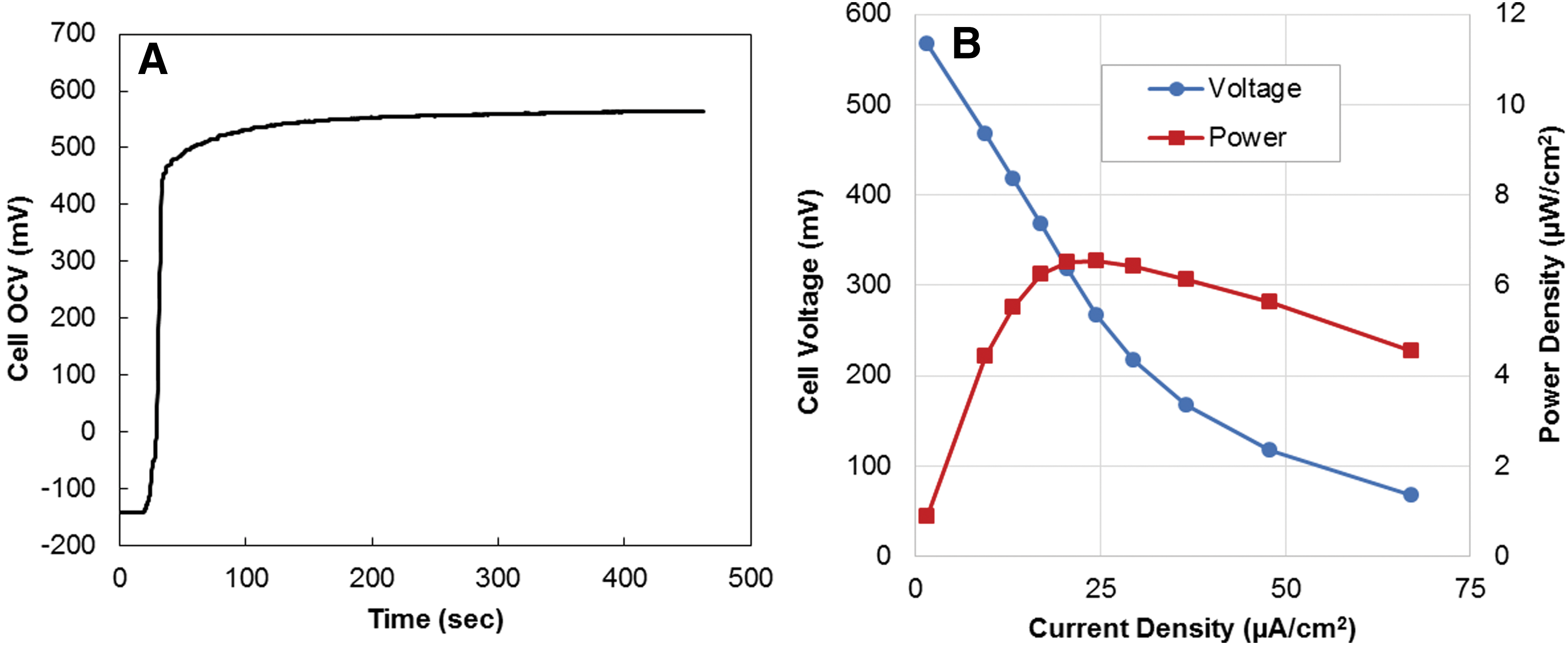
When a PEM fuel cell (O2 reduction/H2 oxidation) was constructed using the geoelectrode on the cathode (oxygen side) with Pt on the anode (hydrogen side), we first observed that the OCV was ∼0.6 V under saturated oxygen and hydrogen, compared with negligible potential when the fuel cell was initially purged with argon (Fig. 6A). Incrementally stepping the voltage down from the OCV yielded a power density curve showing a maximum power of 6.63 μW/cm2 at ∼330 mV (Fig. 6B). A control where the cathode side was blank Nafion (and the anode side was still Pt) showed a considerably higher initial OCV (∼0.8 V); however, it was virtually impossible to draw any current from the “blank” cell, and therefore no power was produced. These tests indicate that the geocatalyst functions for the oxygen reduction reaction (ORR), confirming the voltammetry tests.
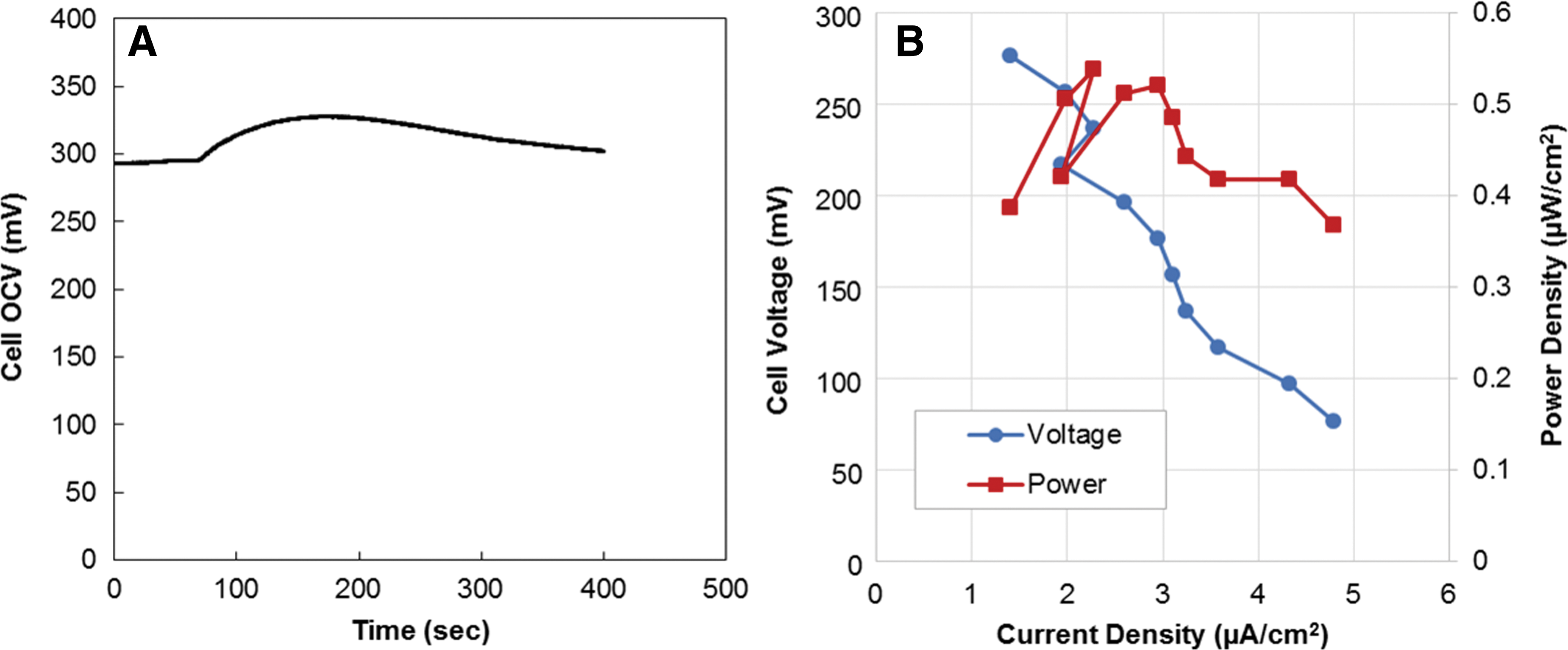
The geoelectrode was also tested as the anode catalyst by purging and swapping supply lines to the cell and reversing the polarity of the potentiostat. This time, however, the OCV did not change significantly when H2 was introduced into the geoelectrode (anode) with O2 present on the platinum cathode (Fig. 7A). Stepping the potential down from the OCV did not yield any significant current in this configuration (Fig. 7B).
3.3. Approach 2: testing PEM fuel cell as a geothermal vent simulator
3.3.1. Voltammetry tests of sulfide oxidation and O2 reduction
In voltammetry tests of the geocatalyst using 0.6 M NaCl as a simulant for seawater, only low-level background currents were observed over the stable range of water, and a linear sweep to the low and high end shows the stability limits of water as hydrogen or oxygen begins to evolve (data not shown). The geocatalyst was overall much more stable in NaCl versus sulfuric acid, because as described in Section 3.1, the acid begins to dissolve the metal sulfides. In CV tests using cell solutions of 20 mM Na2S + 0.6 M NaCl to represent the sulfide in the black smoker vent fluid, we observed a multistep oxidation process with two oxidation peaks between 0 and 1.0 V, suggesting oxidation of S2− to sulfur (or polysulfide intermediates) in multiple stages. The multistep oxidation process was reversible but decreased slightly with each CV cycle, indicating possible poisoning of the electrode and catalyst surface deactivation (Fig. 8, red diamonds); however, sweeping the electrode to reducing potentials appeared to clean and (partially) reactivate it (green circles). The reduction current, which reaches a peak near −1.2 V before decreasing again before the onset of hydrogen evolution, is interpreted as consumption of the products formed on the electrode during the positive scan; if these adhere to the electrode, we expect to see self-poisoning behavior; that is, broad peaks and progressive decrease in current with each cycle (red curve, 0–0.5 V). Pushing the electrode to more negative potential apparently reduces these surface species, resulting in a clear catalyst surface and well-defined, approximately equal peak magnitudes on each cycle (green curve). These prominent peaks were not observed during CVs of the geoelectrode in ocean simulant without sodium sulfide, demonstrating that any redox activity of the catalyst itself is negligible in comparison (black line). An experiment with a blank GCE (no geocatalyst) in the same solution (20 mM Na2S + 0.6 M NaCl) showed negligible background current, confirming the increased affinity of the geocatalyst for the oxidation of sulfide in NaCl solution compared with a blank GCE. Various types of carbon have been previously shown to interact with sulfide to varying degrees (Lawrence et al., 2007), so it is not surprising that the geocatalyst sample shows different affinity to sulfide compared with a GCE. In voltammetry experiments with sulfide solutions, the aging of the solution was also a factor since the sulfide evaporated over time (as H2S) leaving the solution less concentrated in the anolyte, so we observed that using fresh solutions was crucial.
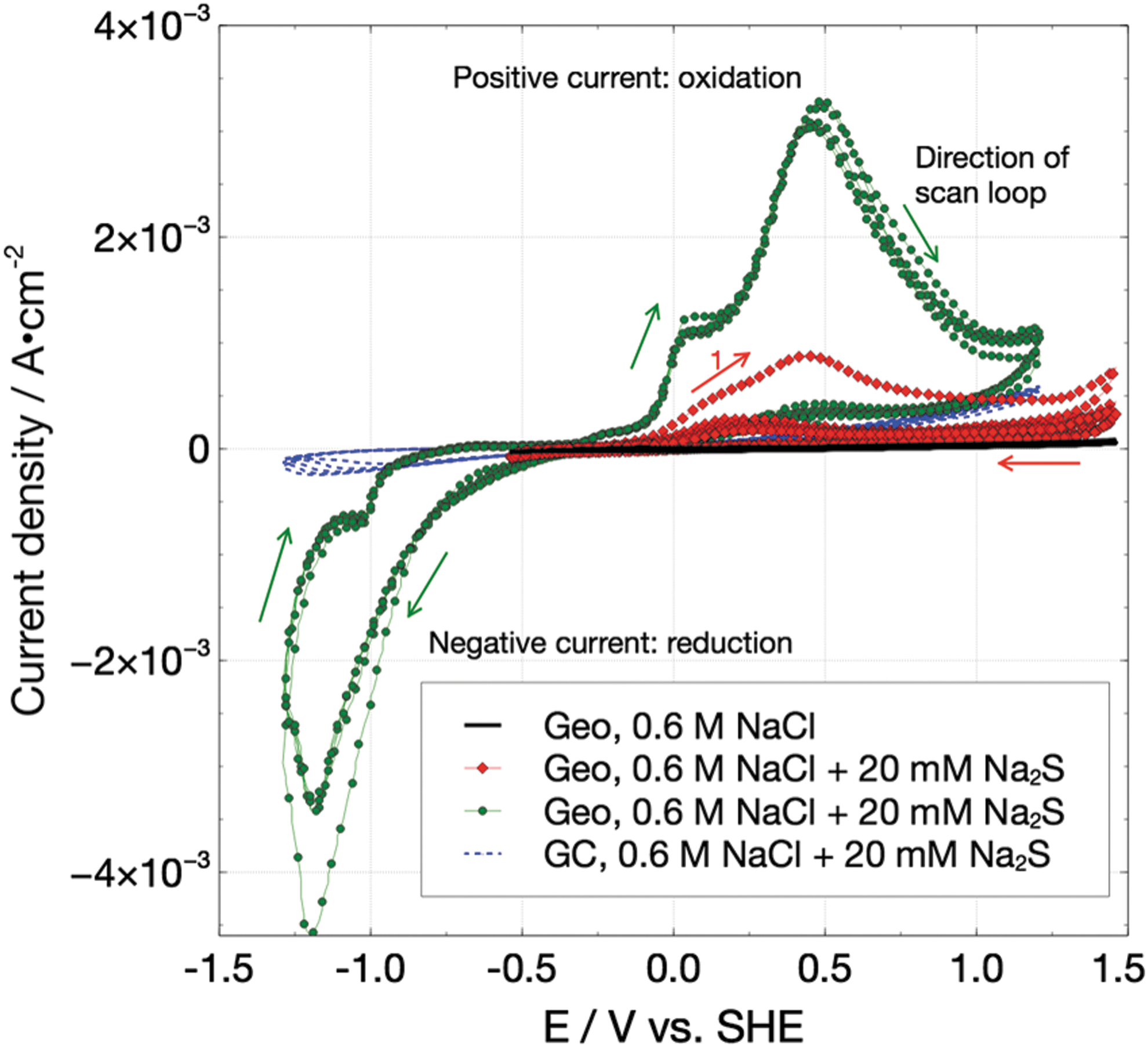
Cyclic voltammogram of glassy carbon electrode with and without geoelectrode coating in simulated seawater showing multistep sulfide oxidation peak (red diamonds, green circles) compared with plain GCE where negligible activity is seen (blue dotted). The geoelectrode also shows no peaks in this voltage range in the absence of added Na2S (black). (Sweep rate: 10 mV s−1; 0.6 M NaCl +20 mM Na2S; oxidation currents are positive; reduction currents are negative.) GCE, glassy carbon disk electrodes.
3.3.2. Fuel cell tests of sulfide oxidation and O2 reduction
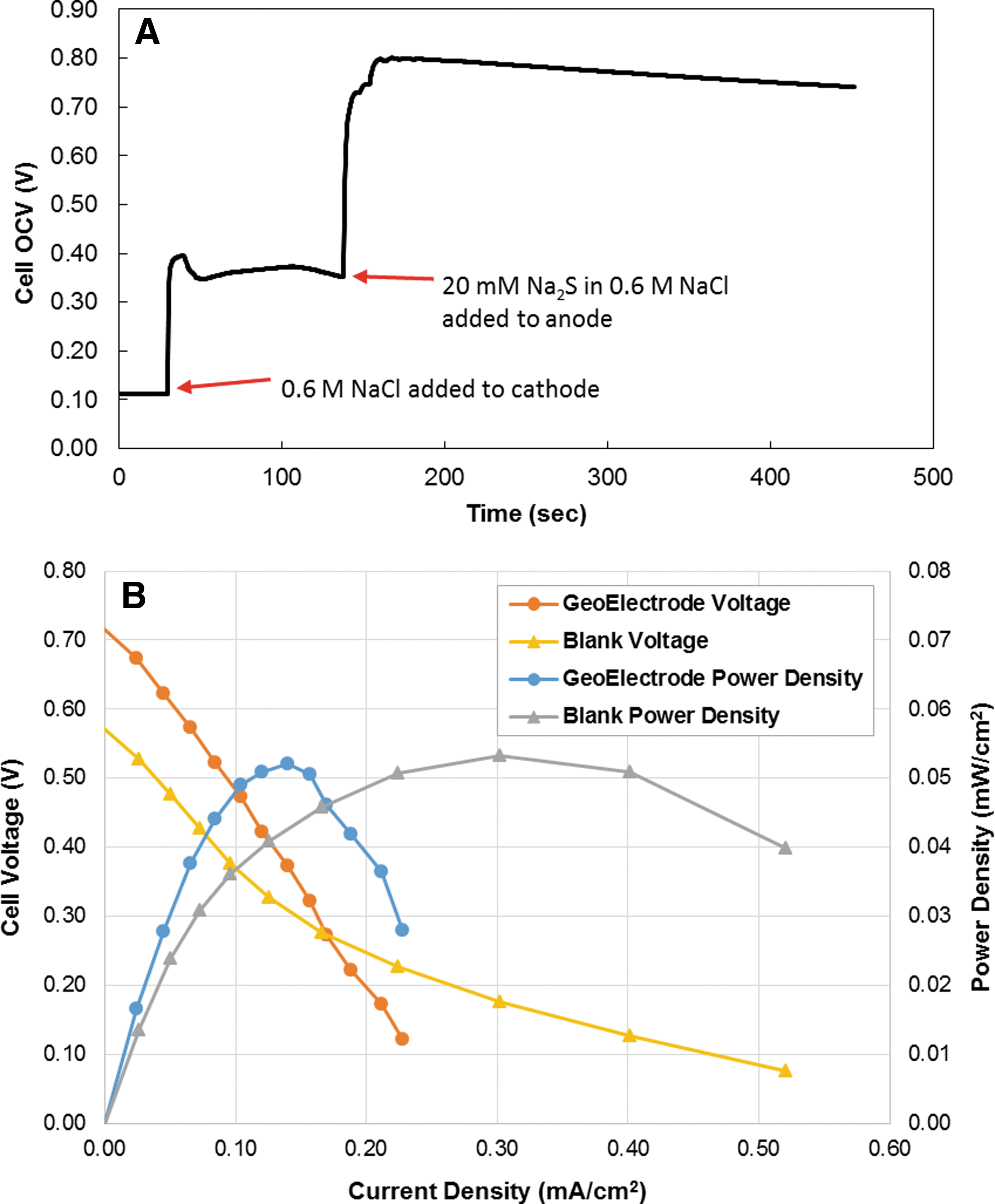
To construct a fuel cell capable of simulating the redox reactions in the vent, we employed liquid instead of gas reductant/oxidant reservoirs. We fabricated a MEA using Nafion 117 in its sodium-containing form (instead of Nafion-H+) that transports sodium cations to the cathode to be compatible with NaCl-based “seawater” solutions, with the geocatalyst on anode and cathode (Fig. 9). In this configuration, the properties of the catalyst itself are being investigated separately from ion conduction (which is handled by the Nafion membrane). When the oxygen-bubbled NaCl solution was added to the cathode, the OCV increased to ∼0.35 V; then when the sulfide/NaCl solution was added to the anode, the OCV further increased to ∼0.8 V, but then declined steadily at ∼0.2 mV/s. The declining OCV may have been due to various factors, including a drop in Na2S concentration from reaction with O2; interaction of O2 (as bubbles) with cathode and/or anode; or poisoning at the anode. Incrementally stepping the voltage down from the OCV yielded a viable I–V curve, showing that sulfide oxidation occurred. (We also observed that repeating the fuel cell experiment with the same sulfide solution yielded different results each time, resulting in a decrease in initial OCV and an increase in the rate of voltage decline with each step; this is likely due to the sulfide evaporating from the solution over time and possible poisoning of the electrode.) However, an identical “blank” experiment with O2/Na2S using a carbon paper/Nafion MEA with no geocatalyst on either side yielded similar results (Fig. 10). In fact, the blank experiment was capable of higher current density, although at lower voltage; this indicates that the high surface area carbon paper was active on its own. Even when the carbon paper was removed from the fuel cell, leaving a cell consisting of only Nafion between two end plates, the OCV was different but the fuel cell still delivered current. These tests indicate that sulfide oxidation is an extremely facile reaction on a wide variety of surfaces.
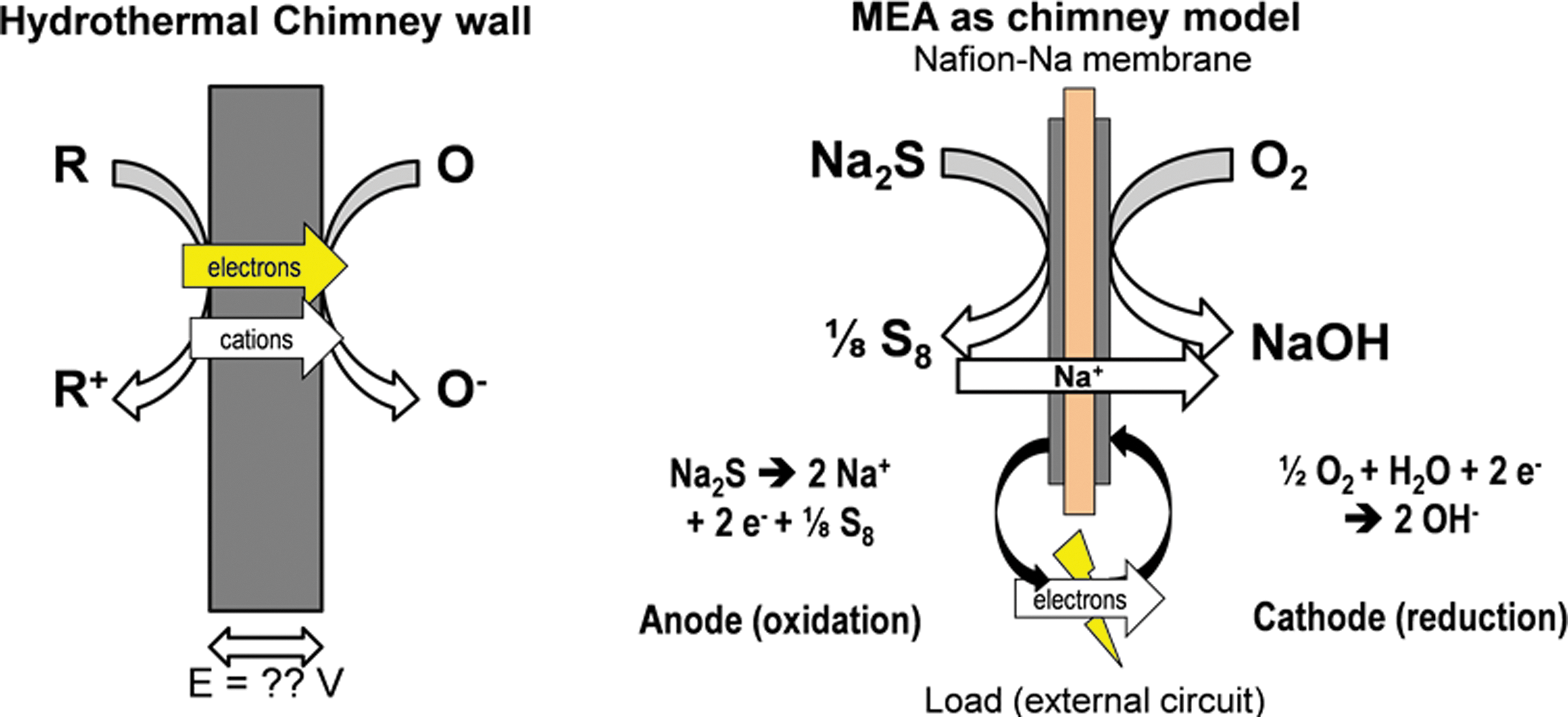
MEA as model of the redox reactions in a hydrothermal chimney. L: Hydrothermal chimney wall is conductive to electrons and cations, and oxidation/reduction occurs on the mineral surfaces. R: Chimney simulated as MEA with geocatalyst electrodes representing the chimney surfaces for oxidation/reduction, and the Nafion–Na membrane representing the conduction of sodium ions.
4. Discussion
Our experimental approach was twofold: to test/develop PEM fuel cells as geothermal vent simulators and to use these PEMs to demonstrate the proof of concept that such materials can be used for H2/O2 fuel cells. We were successful in using this particular geomaterial—a sample from a black smoker hydrothermal chimney—as a catalyst for O2 reduction in a fuel cell. This type of vent is thought to generate electrical currents across the conductive chimney wall through the reduction of seawater O2 (combined with oxidation of hydrothermal sulfide) (Nakamura et al., 2010); this cathode reaction was also successful in our PEM fuel cell using the chimney as the catalyst. The fact that the same ORR occurs both in the PEM fuel cell and in the natural environment means that it might be possible, based on studies of field settings, to predict which other geocatalysts would work well in a PEM fuel cell. In recent work, an iron–nickel alloy from a meteorite was used as catalyst in a H2/air PEM fuel cell, which generated an OCV comparable with this study and was also able to draw modest current (Barge et al., 2014). These preliminary experiments are encouraging for seeking additional geomaterials and evaluating their function in fuel cells. For example, awaruite (Ni3Fe), a naturally occurring alloy formed in serpentinizing systems, can catalyze abiotic methane formation from dissolved bicarbonate (Horita and Berndt, 1999). Other interesting target samples relevant to geobiology/astrobiology include Fe/Ni-sulfides (which can catalyze synthesis of prebiotically relevant organics such as pyruvate, amino acids, and peptides; Cody et al., 2000; Huber et al., 2003; Novikov and Copley, 2013) or layered double hydroxides including green rust which are known for their redox activity (Hansen and Koch, 1998; Djebbi et al., 2016); all of these minerals can be found in natural environments and may also be present on other worlds. It was relatively simple to make electrode ink using the rock sample we procured from a black smoker even though particle size after ball milling was still fairly heterogeneous, and further experimentation of ink “recipes” containing components such as carbon, Nafion ionomer, or Pt black could lead to determination of an optimal mixture for a variety of geological samples. This preliminary study has laid the groundwork for future experiments to rigorously test potential geocatalysts and evaluate them for energy conversion.
We also advanced method development for using fuel cells to simulate geothermal vent environments or other nonequilibrium geological electrochemical settings. A fuel cell has many intrinsic properties that are relevant to simulating far-from-equilibrium natural systems, including redox and pH gradients, and the fact that it is an open, flow-through system. Precise control of fuel cell design parameters—that is, geometric surface area, catalyst loading, electrolyte composition, and fuel/oxidant flow properties—provides a standardized system for material evaluation while minimizing natural variances. The geocatalyst produced reasonable voltage/power density curves, confirming that the chimney can do oxygen reduction, and this type of data can be used to extrapolate properties of the system such as kinetics, overpotential to drive specific redox reactions, and activity of seafloor minerals on a mass or surface area basis. Because of the differences between a fuel cell GDL and a GCE (particularly in active surface area) it was imperative to do concurrent voltammetry (half-cell) tests alongside fuel cell tests when simulating the vent system.
Fuel cells are modular, and there are many options for material choices for the end plates, ion-exchange membrane, and GDLs, and we found that to simulate geothermal vent systems it is crucial to use specific materials adapted to the relevant chemical conditions. Nafion proton-conducting membrane, as typically used in PEM fuel cells, provides an acidic environment, which as we have shown can cause leaching of ions from sulfide mineral catalysts. Nafion can be used in the basic form by exchanging the protons for Na+ ions, which we use in the geothermal simulator tests to be more analogous to Na+-containing seawater. Anion-exchange membranes (generally based on quaternary ammonium salts) might be a better tool and closer analogue to the hydrothermal chimney environment. Also, typical carbon paper GDLs and carbon end plates were problematic in our sulfide-containing fuel cell due to their high surface area which appears to enable them to promote sulfide oxidation—a very facile reaction—on their own. Future work should consider materials that are more inert; for example, polymer end plates with low surface area current collectors.
With appropriate material choices, the PEM fuel cell is a technique that has great potential for simulating geothermal vents and other geoelectrochemical systems. Since the hydrothermal chimney wall is also a conductive load for electron flow, the redox reactions should occur spontaneously in the downhill direction: the chimney will behave as a fuel cell under constant load. In the fuel cell analogy, the anode and cathode represent oxidation of dissolved sulfide anions and reduction of dissolved oxygen, respectively; the ion transport across the chimney wall is modeled by the Nafion membrane, and the chimney wall's electronic properties can be modeled by a resistor across the fuel cell. As in the PEM fuel cell, the redox species separated by the chimney wall establish a voltage across it according to the thermodynamics of the reactions and the catalytic active surface. We observed that sulfide oxidation is enhanced by the presence of the geocatalyst in voltammetry experiments; the fact that sulfide oxidation did not uniquely occur on the geocatalyst in fuel cell experiments simply reflects that sulfide oxidation is easily facilitated when the conductive (in our case graphite) electrode/catalyst surface is large enough. In the vent system it is possible that while the chimney minerals do play a crucial role in reducing oxygen (as also implied by our experiments), there is a very low threshold for facilitating sulfide oxidation on the chimney interior, and all that is needed is a high conductive mineral surface area exposed to the vent fluid.
This PEM fuel cell experiment shows promise for simulating a natural vent system, and one major benefit of this is the possibility of using these techniques for simulating systems that lack accessible field analogues; for example geothermal vents on the early Earth that could have played a role in the emergence of life (Russell and Hall, 2006; Russell et al., 2014), or putative vents on Europa, Enceladus, or other ocean worlds (Vance et al., 2007; Hsu et al., 2015; Waite et al., 2017). Depending on what reductants and oxidants are available in a particular hydrothermal system, it might be possible for environments to provide electrical energy for life without the chimney minerals being particularly electrocatalytic. Other reactions of interest, such as H2 oxidation, may require a higher overpotential or more specific mineral catalyst. In general, with the vent simulation PEM fuel cell, it should be possible to test what types of vents are active for various chemical reactions such as hydrogen oxidation or oxygen reduction, both of which would be highly relevant to predicting habitability and biosignatures for exploration of ocean worlds (Vance et al., 2016). Further method development can also enable the use of lab-synthesized mineral precipitates as catalysts, more closely approximating materials that may have driven reactions in hydrothermal systems on early Earth.
5. Conclusion
In voltammetry tests using electrode catalyst made of black smoker material, oxygen reduction was observed but hydrogen oxidation was uncertain, indicating that the geocatalyst can function as the cathode half of the PEM fuel cell but not as the anode. This was confirmed in PEM fuel cell tests where the geocatalyst functioned for ORR. The acidic environment of the Nafion-H+ membrane may affect the black smoker catalyst as confirmed by acid soak testing of the geocatalyst powder. The geocatalyst was more stable in NaCl solutions, which were used to simulate seawater. In voltammetry tests using aqueous NaCl containing dissolved sulfide to simulate vent fluid, a multistep sulfide oxidation process was observed. This multistep oxidation was reversible but also showed signs of possible electrode poisoning and catalyst surface deactivation. Fuel cells simulating vents were constructed by using Nafion-H+ or Nafion-Na+, and either gas or liquid reactant reservoirs. These fuel cell experiments were able to simulate ORR, which is proposed to occur in this black smoker system; and revealed that sulfide oxidation is extremely facile even in the absence of the geocatalyst. Sulfide oxidation appears to be driven by the components in the standard fuel cell/MEA (the graphite end plates and carbon paper diffusion layers), indicating that other more inert materials would need to be chosen for constructing a more accurate fuel cell vent simulation.
Overall, these preliminary experiments can provide a basis for exploring redox-active geological samples as PEM fuel cell catalysts. There are many minerals of interest from hydrothermal systems and other environments that are known to catalyze redox reactions in natural settings, and these could be evaluated for ORR and hydrogen oxidation. Conversely, the PEM fuel cell setup—with informed choices of materials and operating procedures—can be an effective simulator of geological environments containing redox-active materials, allowing for evaluation of energy present in a variety of systems.
Footnotes
Acknowledgments
This research was carried out at the Jet Propulsion Laboratory, California Institute of Technology, under a contract with the National Aeronautics and Space Administration. This work was supported by a JPL Spontaneous Research and Technology Development Award. L.M.B. was supported by the NASA Astrobiology Institute (NAI) Icy Worlds, and P.S. was supported by the NAI SETI Institute Fingerprints of Life. We thank Ivria Doloboff for ESEM imaging; Ryan Cameron for assistance with experiments; Ken Takai and Masahiro Yamamoto for giving us the black smoker chimney samples; and Ryuhei Nakamura for useful discussions. We thank Prof. Alian Wang of Washington University in St. Louis for her assistance with the Raman analyses. Copyright 2018 California Institute of Technology, all rights reserved.
Author Disclosure Statement
No competing financial interests exist.