




Abstract
Boron is associated with several Archean stromatolite deposits, including the tourmaline-rich Barberton stromatolites in South Africa and tourmaline-bearing pyritic laminae associated with stromatolites of the 3.48 Ga Dresser Formation in the Pilbara Craton, Australia. Boron is also a critical element in prebiotic organic chemistry, including in the formation of ribose, a crucial component in RNA. As geological evidence and advances in prebiotic chemistry are now suggesting that hot spring activity may be associated with the origins of life, an understanding of boron and its mobility and isotopic fractionation in geothermal settings may provide important insights into the setting for the origin of life.
Here, we report on the boron isotopic compositions and elemental concentrations in a range of fluid, sediment, and mineral samples from the active, boron-rich Puga geothermal system in the Himalayas, India. This includes one of the lowest boron isotope values ever recorded in modern settings: diatom-rich sediments (δ11B = −41.0‰) in a multiphase fractionation system where evaporation is not the dominant form of isotope fractionation. Instead, the extreme boron isotopic fractionation is ascribed to the incorporation of tetrahedral 10B borate anions in precipitating amorphous silica. These findings expand the known limits and drivers of boron isotope fractionation, as well as provide insight into the concentration and fractionation of boron in Archean hot spring environments.
1. Introduction
Boron is considered a critical element in prebiotic organic chemistry, required as stable borate complexes to help form carbohydrates, including the ribose found in RNA (Scorei, 2012). As hot springs display the required wetting-drying cycles and elemental compositions to favor polymerization (Deamer and Georgiou, 2015), boron-rich hot springs are now considered an important environment for the origin of life (Mulkidjanian et al., 2012).
In addition to its connection to prebiotic chemistry, boron is also associated with geological sites containing some of the earliest evidence of life, including the metasomatically replaced, tourmaline-rich silicified stromatolites from c. 3.45 Ga metasedimentary rocks of the Barberton greenstone belt (Byerly et al., 1986). This ancient example was originally interpreted by Byerly and Palmer (1991), who suggested that the original source of boron was fractionated and reworked multiple times to produce a range of fractionated boron isotopic values (δ11B = −10.5‰ to −0.2‰). A more recent study (Farber et al., 2015) used spot analysis to observe a wider range of boron isotope values within tourmaline from these rocks (δ11B = −20.7‰ to 10.2‰) and concluded that these values could not have originated from fractionation alone and that another (unknown) source of boron must be present in the system.
Another key example of boron associated with early life on Earth is the tourmaline-bearing pyritic laminae that immediately overlie pyritized stromatolites in the c. 3.48 Ga Dresser Formation (Van Kranendonk et al., 2008, 2019). Although the initial report interpreted the tourmaline as a detrital mineral, recent work has indicated the presence of terrestrial hot spring deposits at this level of the Dresser Formation stratigraphy, suggesting the possibility that the tourmaline found in the Dresser pyritic laminates derives from hot spring activity (Djokic et al., 2017; Van Kranendonk et al., 2019). Other early life examples are also affiliated with hot spring activity (e.g., Sugitani et al., 2015), supporting earlier reports of chemotrophic metabolisms for the earliest, primitive life (e.g., Woese et al., 1990; Pace, 1997; Shen et al., 2001; Ueno et al., 2006; Philippot et al., 2007).
Thus, knowledge on the occurrence and abundances of boron in various Earth environments (including hot springs) is of significant value in understanding where and how this element could have been concentrated on early Earth, so as to be readily available to help facilitate the important prebiotic step of RNA formation. This study aims to explore and expand on current understanding of boron distribution and isotope fractionation within hot spring systems, to help interpret boron-rich systems associated with the origin of life.
Boron stable isotopes can serve as an invaluable tool in determining its source and environment of deposition in both modern and ancient environments. Boron has two naturally occurring stable isotopes 10B and 11B, with relative abundance of 19.8% to 80.2%, respectively (Xiao et al., 2013). The predominant aqueous species of boron are trigonal B(OH)3 and tetrahedral B(OH)4 −, with 11B being preferentially partitioned into the more strongly bonded trigonal boric acid (Barth, 1993). This isotopic preference between the trigonal and tetrahedral species, combined with the large mass difference between isotopes (∼10%), results in the large range of B isotope fractionation found in nature (δ11B range = −70‰ to +75‰; Xiao et al., 2013). The drivers for this fractionation are predominately pH (at pH <7 the majority of boron is in the 11B-enriched trigonal boric acid form) as well as the presence or formation of clay or silica (as the 11B-depleted tetrahedral borate anion is preferentially substitute for tetrahedral silicon within clays; Palmer and Slack, 1989). These drivers for fractionation result in distinct δ11B values for different environments, including present-day seawater (δ11B = 39.5‰ due to 10B removal by clays); nonmarine evaporites (a light boron isotope reservoir at δ11B = −30.1‰ to 10.2‰ due to incorporation of tetrahedral borate anions during precipitation); and granites (δ11B = −9.7‰ to 6.8‰) (Barth, 1993; Marschall and Jiang, 2011). These δ11B values have been successfully used to determine the source and environment of deposition of boron (including tourmaline) in both ancient and modern environments (Palmer and Slack, 1989; Yuan et al., 2014).
Modern-day boron-rich hot springs, though less commonly investigated, have been studied, including the volcanic sulfur springs in St. Lucia, Lesser Antilles (Stout et al., 2009), and sections of the El Tatio hot springs in northern Chile (Cortecci et al., 2005). One of the more notable boron-rich hot springs, and the focus of this study, is the Puga hot spring system in Ladakh, India. The relatively unexplored Puga system was selected due to its diverse range of intact borate sinters, owing to its extremely low rainfall, as the highly soluble borates are rarely present in locations with high precipitation (Ghosh et al., 2012). Beyond this, the Puga system is an astrobiologically significant early Earth analog, with lower atmospheric oxygen partial pressures and heavy exposure to UV radiation due to its altitude (Pandey et al., 2017).
What remains unknown from the Puga hot spring field is the isotopic composition of the boron and the mechanisms responsible for the concentration and fractionation of boron in this system. Boron isotopes have not been analyzed at Puga, despite their application in interpreting surface and groundwater systems in the region, notably boron-rich salt lakes and geothermal waters, including the Yangbajing geothermal waters (−12.3‰ and −11.4‰) and the Yangyi geothermal waters (−9.7‰ and −5.0‰) in Tibet (Lü et al., 2013; Yuan et al., 2014). Boron isotopes have also been used to determine the source of boron in other significant hot spring systems (Palmer and Sturchio, 1990).
In order to better understand the source of boron and the concentration mechanism responsible for the high levels of boron in the Puga System, we present the results of high-precision geochemistry of [B] and its isotopes from a variety of sampled materials, including hot spring fluids, rocks, and sediments. The results include some of the most fractionated boron isotopes ever recorded, in a setting where boron isotopic fractionation is not dominated by evaporation. Rather, the isotopic fractionation, as well as the concentration mechanism for relatively high [B] in deposited hot spring materials, is related to adsorption onto hot spring silica. These results have important implications for understanding Archean occurrences of concentrated B in sedimentary rocks and, perhaps, for the setting for the origin of life. A companion article describes the microbial component of the Puga hot springs (Chilton et al., unpublished data).
2. Puga Hot Springs
The boron-rich Puga geothermal system is located in the southeastern part of the Ladakh region in the Himalayas, India (Fig. 1; Saxena and D'Amore, 1984; Craig et al., 2013). The system extends for over 5 km at an average altitude of around 4400 m above sea level along the Puga Nala stream that runs along the east-west trending Puga Valley.
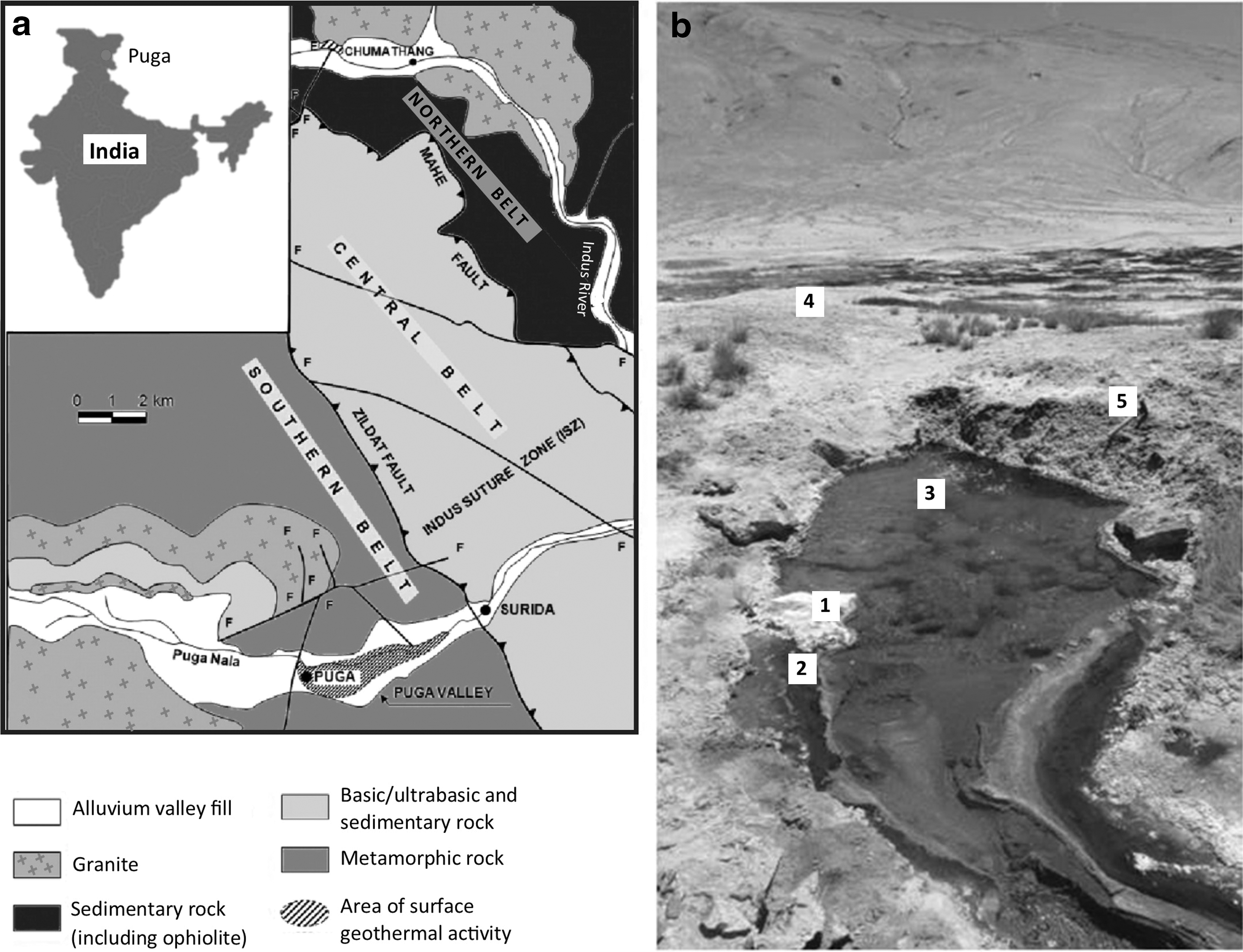
(
The Puga Valley is located just south of the Indus Suture Zone (ISZ), an area of intense tectonic activity that marks the active collision boundary between the Asian and Indian continents (Harinarayana et al., 2004). The regional geology shows that the Puga Valley is underlain by a succession of sedimentary and metasedimentary units consisting of Precambrian paragneiss, schist, and phyllite (Craig et al., 2013). These units are interbedded with layers of limestone and are locally intruded by Paleogene granites (Singh et al., 2005).
The regional geology comprises three tectonic belts. The Northern Belt consists of the Indus Group sedimentary sequence and the Ladakh granites, and hosts the comparatively low-boron Chumathang geothermal system (Craig et al., 2013). The Central Belt consists of the ISZ, an area subjected to intense tectonic activity and uplift. The Southern Belt contains the comparatively boron-rich Puga system.
Geothermal activity within the Puga Valley is situated in a down-faulted block bounded by the NNE–SSW trending Kiagor Tso Fault to the west and the NW–SE trending Zildat Fault (which forms part of the ISZ to the east, Fig. 1). The presence of native sulfur and sulfate in the northern part of the valley represents an old line of fumarolic activity and suggests the location of buried faults that make up the northern boundary of the system (Shankar et al., 1976).
The floor of the Puga Valley is predominately filled with alluvial cover consisting of fluvial and aeolian sediments and glacial deposits extending down to depths of 15–65 m (Harinarayana et al., 2006). Beyond these depths, these deposits form reconsolidated breccia/conglomerate due to mineral precipitation from circulating hydrothermal fluids (Shankar et al., 1976; Singh et al., 2010).
The surface of the valley exhibits a range of geothermal activity over an area of 4 × 1 km, including geysers, mud pools, and suspected eruption craters, 2–10 m across (Harinarayana et al., 2006). These geothermally active areas also exhibit a range of boron-bearing minerals (borax, kernite, and tincalconite) encrusting the surface of soil and rocks surrounding geothermal pools, and in larger (approximately 20 m2) evaporative basins (Ghosh et al., 2012).
Late stage magmatic activity has been suggested as the heat source for the Puga geothermal system (Chowdhury et al., 1974; Saxena and D'Amore, 1984), due to high enrichments of Li, Rb, and Cs in hydrothermal fluids. Results from magnetotelluric studies support this model, via imaging of a subsurface granite (Harinarayana et al., 2004; Azeez and Harinarayana, 2007).
The geochemistry of the Puga geothermal system has been studied (Saxena and D'Amore, 1984), as well as the oxygen and hydrogen isotopes of the fluids (Giggenbach et al., 1983; Tiwari et al., 2016), and biosignatures (Ghosh et al., 2012). Boron concentrations [B] recorded for fluid samples in the Puga region (Giggenbach et al., 1983; Saxena and D'Amore, 1984) fit into a narrow range of approximately 120–160 μg·g−1 across the geothermal field.
3. Materials and Methods
3.1. Sample collection
Samples were collected from seven sites at the Puga geothermal system, including six fluids, one mud-fluid mixture, and six solids (Figs. 2 and 3). Fluid samples and a mud-fluid mixture sample were collected directly from hot springs or geysers and stored in acid-washed high-density polyethylene bottles. Conductivity, pH, and temperature were measured in situ with a water quality tester, TPS Aqua-TP (121136/1). As the temperature of the fluid samples exceeded the maximum operating temperature (45°C) of the filter membrane, the samples were collected without filtering. In order to examine whether or not any elemental and isotope fractionation occurs by phase separation during cooling after sample collection, both sample aliquots that were unacidified and sample aliquots acidified by 69% HNO3 were conditioned at each sampling site. The mud-fluid mixture sample was centrifuged in the laboratory into fluid and mud samples; the centrifuged fluid was filtered with a 0.22 μm polyethersulfone membrane. Solid samples were put in plastic bags at each site and transferred to the laboratory.
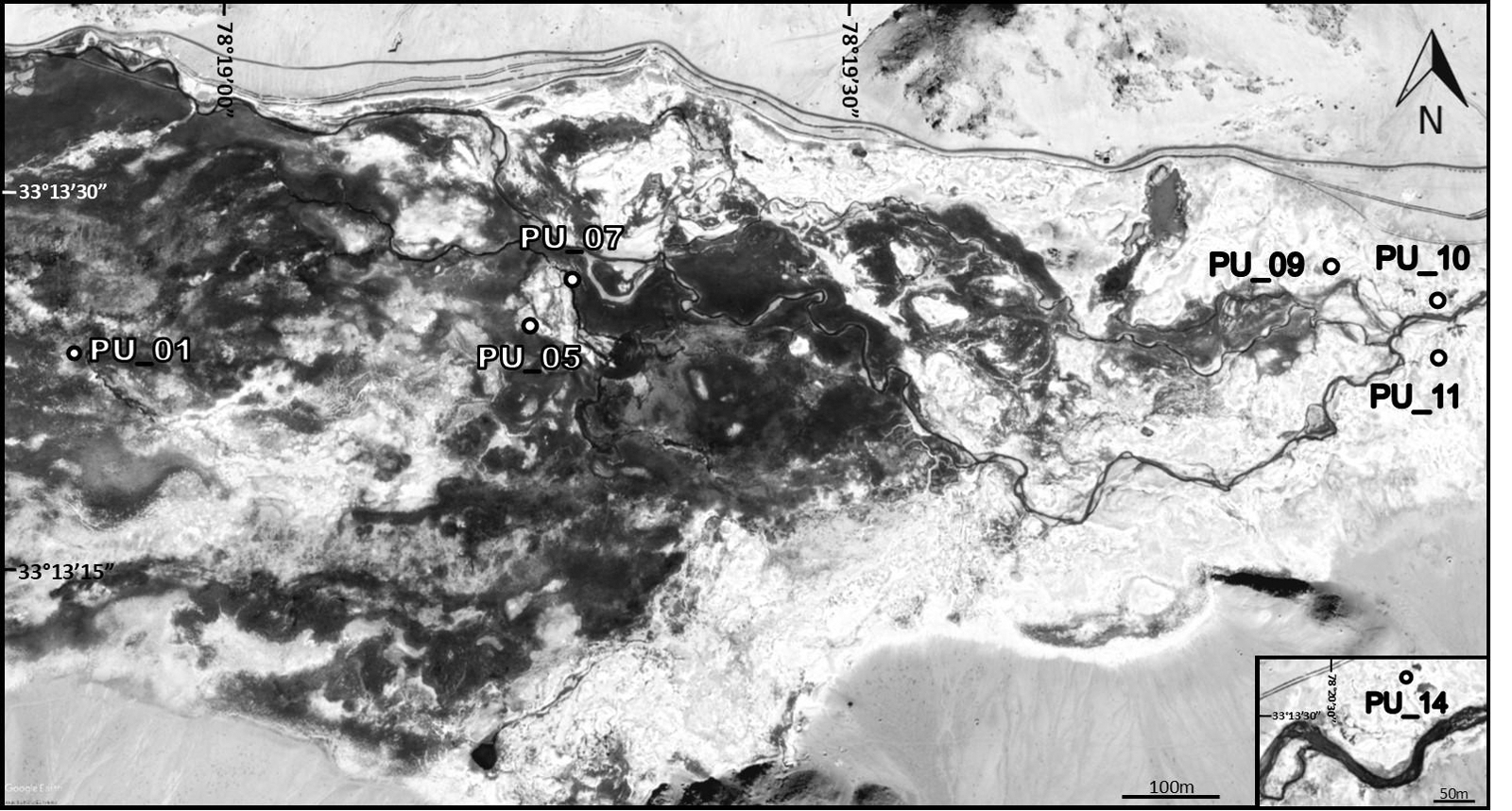
Aerial image of the Puga geothermal system with locations of sample sites 01, 05, 07, 09, 10, and 11 marked (circles). Insert is aerial image of sample site 14, located 100 m east of image field of view (both aerial photographs from Google Earth).
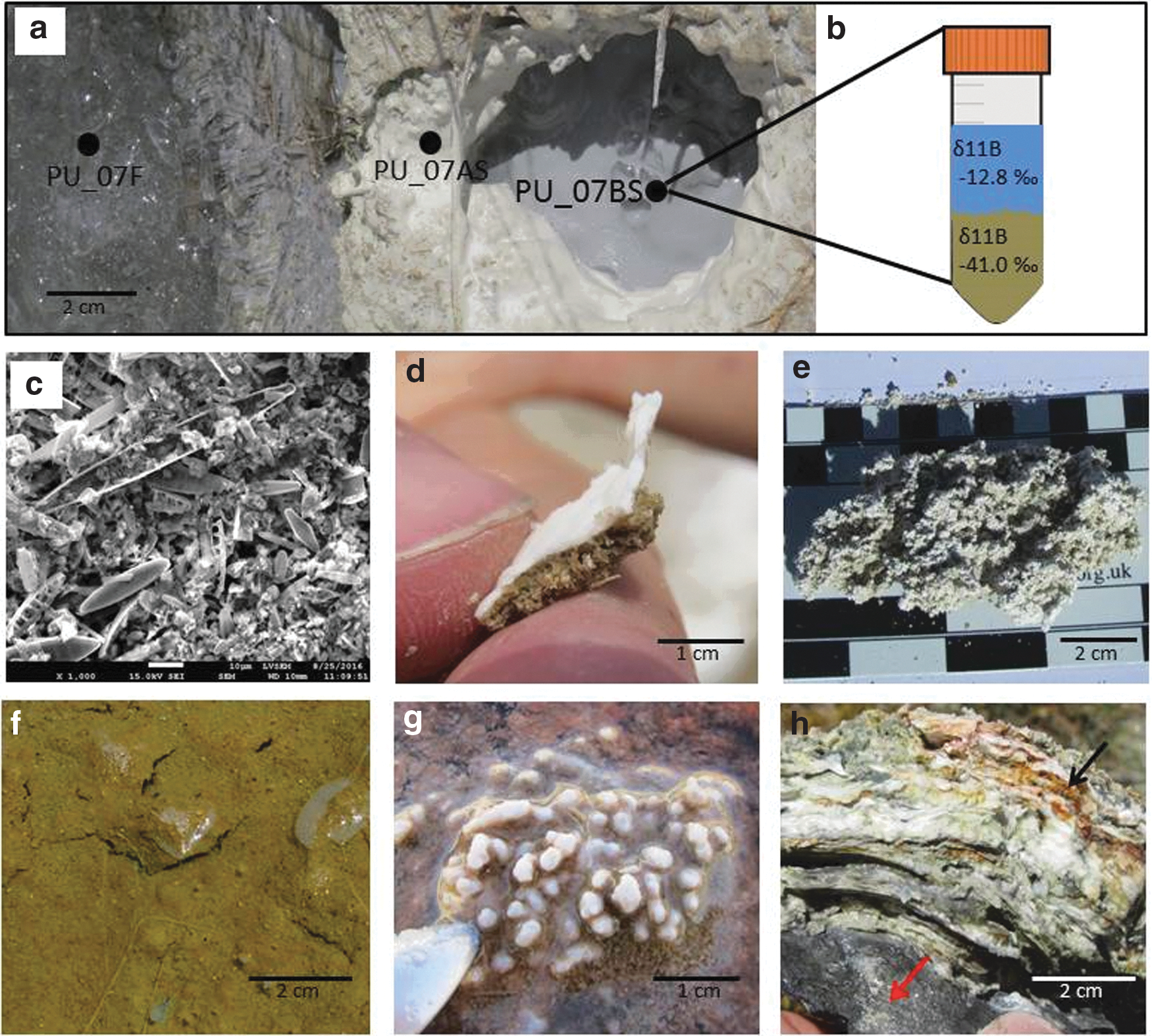
Photographs of rock and sediment samples collected at Puga geothermal system. (
3.2. Analytical techniques
All experiments listed below were carried out at the Pheasant Memorial Laboratory for Geochemistry and Cosmochemistry at the Institute for Planetary Materials, Okayama University (Nakamura et al., 2003, 2012).
3.3. X-ray diffraction
Solid samples were ground and analyzed for their bulk mineralogy with a Rigaku Smartlab powder X-ray diffractometer (XRD) at 40 kV and 30 mA, using Cu Kα radiation. The scan range, rate, and interval were 2° to 60° in 2θ, 2°/min, and 0.01°, respectively. Data processing and phase identification were performed with Qual2.0, POW Crystallography Open Database, as described by Altomare et al. (2015).
3.4. Scanning electron microscopy
Textural observations and major element abundances were determined for all rock and sediment samples by using a field-emission scanning electron microscope (FE-SEM, JEOL JSM-7001F) equipped with an energy-dispersive X-ray spectrometer (EDS), Oxford Aztec X-Max and Oxford X-act. The EDS was run under conditions of 10 kV acceleration voltage, 5 nA beam current, and 50 s integration time.
3.5. Electron microprobe analysis
Elemental maps of sample PUG11S2a_B were produced with a field-emission electron probe microanalyzer, JEOL JXA-8530F in wavelength-dispersive mode. Major elements were mapped under conditions of 15 kV acceleration voltage, 300 nA beam current, 5 μm in pixel size, 20 ms in dwell time, and boron was mapped under modified conditions of 5 kV acceleration voltage, 200 nA beam current, 2∼5 μm in pixel size, 20∼100 ms in dwell time. Reference materials of silicate and oxide minerals and synthetic compounds on ASTIMEX MINM25-53 were used for calibration.
3.6. Secondary ion mass spectrometry
Secondary ion mass spectrometry, using a modified Cameca IMF-5F, was used for in situ boron concentration analysis for sample PU_11AS, according to Nakano and Nakamura (2001). The sample was coated with 0.3 μm gold. A primary O- beam was accelerated at −12.5 keV to impact the sample with an energy of −17 keV, resulting in a ∼10 μm crater. Secondary ions were positively accelerated at +4.5 keV, and kinetic energy filtering was applied to minimize molecular ion interference. Secondary ions were counted with an electron multiplier using magnetic peak jumping. The elemental abundances were estimated by [Si] on predetermined sites, obtained by FE-SEM-EDS in advance, and relative ion yield, Y. The Y was obtained by analyzing a series of reference materials and expressed as Y ≡ {I(11B+)/I(28Si+)}/([B]/[SiO2]). By using reference glasses, gl-hawaii ([B] = 1.6 μg·g−1) and gl-NIST614 ([B] = 1.2 μg·g−1), a detection limit (∼2 μg·g−1) was established. A total analytical uncertainty was estimated as ∼10%, taking into account in-run precision, among-run reproducibility, and deviation from self-calibrated abundances (accuracy of the calibration curve), through repeated analyses of reference glasses including gl-NIST610 and gl-NIST612, besides the above-mentioned two.
3.7. Inductively coupled plasma mass spectrometry
Major and minor element, Na, Mg, Al, P, S, K, Ca, Sc, V, Cr, Mn, Fe, Co, Ni, Cu, Zn, and Ga were determined by inductively coupled plasma sector field mass spectrometry (ICP-SFMS) (Thermo Fisher Scientific Element XR) after Makishima and Nakamura (2001, 2006). Trace elements Li, B, Be, Rb, Sr, Y, Cs, Ba, REE, Pb, Th, U were determined by inductively coupled plasma quadrupole mass spectrometry (ICP-QMS) (Agilent7500Cs) after Makishima and Nakamura (2006) and Lu et al. (2007).
To determine extremely low concentrations in part-per-trillion level of elements in fluids such as rare earth elements (REEs), Th, and U, the fluid samples were preconcentrated by the freeze-drying method outlined in the work of Hoang et al. (2018). Fluid sample (100 mL) in a polypropylene bottle was solidified at −70°C by a freezer, and H2O was sublimated 2 Pa by a dryer. By sublimation, the volume of fluid sample was reduced from 100 mL to 3–5 mL after 42 h.
Samples were decomposed by two different methods; elements except boron were decomposed by using the method described by Yokoyama et al. (1999). As for boron, the samples were decomposed by using mannitol solution (Makishima et al., 1997), and its concentration was determined by applying isotope dilution method (Lu et al., 2007). Samarium in solid samples and Sr in fluid samples were determined by isotope dilution method, and then other trace elements were determined by Sm or Sr internal standardization method (Nakamura et al., 2003; Makishima and Nakamura, 2006). Sulfur in fluid samples was determined by isotope dilution following oxidation of sulfur into sulfate (Makishima and Nakamura, 2001).
3.8. Thermal ionization mass spectrometry
Boron isotope analysis was performed by thermal ionization mass spectrometry in static multicollection mode, on a Thermo Fisher Scientific Triton TI, after Nakamura et al. (1992) and Nakano and Nakamura (1998). Samples were decomposed by the protocol described in the work of Nakamura et al. (2003), followed by the mannitol addition to suppress boron volatilization and isotope fractionation (Ishikawa and Nakamura, 1990). 11B/10B values are expressed as per mil deviation (δ11B) relative to the NIST NBS951 standard. The δ11B values of the NBS951 with 2σ reproducibility were 4.055 ± 0.001 (n = 6), with an internal analytical uncertainty of 0.2‰.
4. Results
4.1. Fluid samples
Six fluid samples and one fluid fraction of centrifuged and filtered mud sample (assigned PU_07BF with suffix F for filtered) from the Puga geothermal field have been analyzed for their δ11B isotope values, as well as for major, minor, and trace elements (Table 1). Results are averages of two replicate analyses of each sample. The results show uniformity of δ11B values and relatively uniform boron (and most other element) concentrations in all samples, except for the filtered mud sample PU_07BF.
Temperature, pH, Conductivity, Elemental Abundances, and δ11B of Fluid Samples
B.D.L. means below detection limit; N/A means not available.
4.2. Solid samples
Seven solid samples (detailed below), selected based on their diversity of features and environment of deposition, were collected for a range of locations across the Puga system. Geochemical data for these samples is supplied in Table 2, and a summary of their typical features and mineralogy is presented in Table 3.
Elemental Abundances (ppm) and δ11B Values (‰) of the Puga Rock and Sediment Samples
Summary of Solid Samples Mineralogy, Locality, and Typical Features
4.3. Pool rim sediment (PU_07AS)
A sample of white sediment that was deposited around the rim of a mud pool (Fig. 3a: PU_07AS) has a major mineral composition of muscovite and sulfur (Supplementary Information, Table S1; Supplementary Data are available online at
4.4. Suspended sediment in mud pool (PU_07BR)
The residue (sediment fraction) of centrifuged mud from sample PU_07BS is here designated PU_07BR (with suffix R for residue). Scanning electron microscope analysis revealed that the sample contains a high abundance of diatoms (Fig. 3c). The δ11B value of this sample (−41.0‰) (Fig. 3b; Table 2) is the lowest value recorded in this study and, indeed, from any hot spring in the world.
4.5. Evaporite paste (PU_05S)
A white paste-like evaporative deposit (Fig. 3d) forms a ∼2 mm thick layer covering loose sediment in a small basin ∼20 m away from the upwelling water source of PU_07B. Halite is the main mineral component of the paste layer, as detected by XRD (Supplementary Information, Table S1). The sample is highly enriched in Li (0.542 cg·g−1) and Mg (1.47 cg·g−1) (Table 2) compared to other samples in the area. The average δ11B value (−14.5‰) is slightly more negative compared to the average fluid values.
4.6. Puffy evaporative crust (PU_10S)
Puffy evaporative crusts (Fig. 3e), with similar textures to those described in Ghazifard and Khorashadizadeh (2011), are abundant throughout the Puga geothermal system in areas without flowing water. XRD results of a sample of this crust (PU_10S) show that the main minerals present are tincalconite, halite, and muscovite. The crust contains the highest boron concentration (9.97 cg·g−1) (Table 2) of all the samples collected in this study, and the least fractionated δ11B value (−14.3‰) of all the rock and sediment samples collected.
4.7. Hot spring sediment (PU_11BS)
Dark, fine sediment was collected from a pond to the side of hot spring pool PU_11. The pool's temperature was 84.5°C, and it had a pH of 6.8 (Table 1). The sediment (sample PU_11BS) is covered by a light brown biofilm (Fig. 3f) and has a strong odor of hydrogen sulfide. The main minerals present in the sediment are quartz and muscovite, and the sample is comparatively enriched in Fe (2.62 cg·g−1), Cu (16.8 μg·g−1), and Pb (77.5 μg·g−1) (Table 2) compared to other samples.
4.8. Digitate nodules (PU_14S)
Insoluble, white digitate sinter nodules (δ11B = −37.8‰, Table 2), similar to those described in the work of Lynne et al. (2012), were collected from a shallow pool surrounding the hot spring outflow at site PU_14 (Fig. 3g). The outflow was slowly bubbling, but no geyser or splashing was observed at the locality of the sinter nodules. The nodules are primarily amorphous silica and calcite and are enriched in Sr (1220 μg·g−1). The silica nodules are partly submerged and are surrounded by soft biofilms.
4.9. Laminated crust (PU_11AS)
Sample PU_11AS (δ11B = −34.1‰, Table 2) is a thinly laminated, white, amorphous silica+quartz crust (Fig. 3h). It is largely composed of silica-encrusted, hollow (potentially microbial) filaments (Fig. 4a–4c), with biofilms, calcite layering, and illite, K-feldspar and albite grains interbedded between laminae of amorphous silica (Fig. 4d–4f). The sample was partially submerged, 10 m down flow from a hot spring source (PU_11). Boron concentrations vary throughout the sample, from 300 μg·g−1 in calcite to a maximum of 1.8 cg·g−1 in amorphous silica, averaging 0.8 cg·g−1 across a transect of the sample (Fig. 4e). In a digested and homogenized sample of the silica crust, the boron concentration was 0.42 cg·g−1, and the δ11B = −34.1‰ (Table 2). Variations in Mg, Ca, and Na were measured across the sample (electron probe microanalysis [EPMA] map, Fig. 4d), but no correlation between the concentration of boron and major elemental variation was identified. XRD analysis of the white crust revealed predominantly amorphous silica and quartz but no borate minerals (e.g., tincalconite or borax). The sample exhibits a range of replaced and/or encrusted filaments and tubes on a 1 micron scale (Fig. 4g), which is strongly suggestive of a biological influence (e.g., Jones and Renaut, 2003; Fernandez-Turiel et al., 2005).
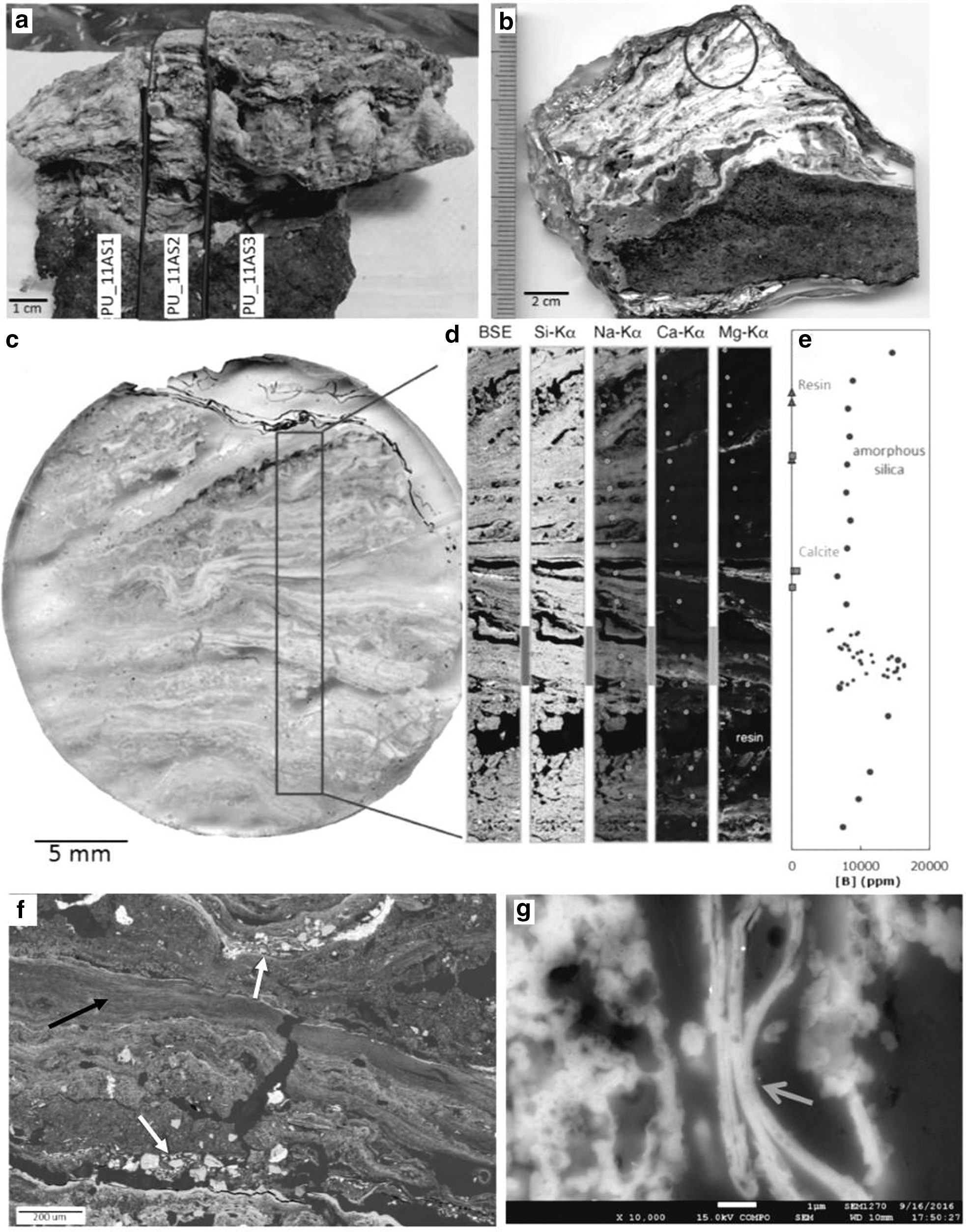
Images and analytical results for laminated crust sample (PU_11AS). (
5. Discussion
5.1. Boron isotope fractionation in the Puga system
δ11B values of fluid samples from the Puga geothermal field show remarkable uniformity (−13.1‰ to −12.2‰; Table 1) across a range of fluid compositions from different springs, consistent with the relatively homogeneous trace element composition previously noted in the Puga system (Shanker et al., 2000). The consistency in δ11B is strongly suggestive of a single, and/or homogenized, source of boron (Lü et al., 2013).
Geothermal δ11B values are known to reflect their host rock (Palmer and Sturchio, 1990). However, δ11B values for the surrounding intrusive granites at Puga are yet to be analyzed, such that this model cannot be tested at this locality. Nonetheless, as granites are generally known to have negative δ11B values that lie within the range of the Puga system fluids (−16‰ to −8‰; Marschall and Jiang, 2011), the young (Paleogene) intrusive granites that underlie the Puga area (Shanker et al., 2000) are the most likely source of the boron in the Puga geothermal system (e.g., Saxena and D'Amore, 1984). This is supported by trace element and magnetotelluric studies that suggest a shallow magmatic intrusion as the source of the hydrothermal activity at Puga (Chowdhury et al., 1974; Azeez and Harinarayana, 2007).
Contrary to the consistent δ11B values of the Puga fluids, sediment and rock samples from Puga demonstrate a large variability in [B] and in δ11B (Table 2, Fig. 5). These samples returned δ11B values that strongly diverge away from the average δ11B of the Puga fluid samples, with values up to −41.0‰. The sediment and rock samples vary from slightly fractionated evaporite pastes (−14.5‰) to significantly fractionated amorphous silica crusts (sample PU_11AS, −34.1‰) and diatom-rich suspended sediments (sample PU_07BR, −41.0‰) from pool PU_07B under conditions of 25°C and pH 5.9 (Table 1).
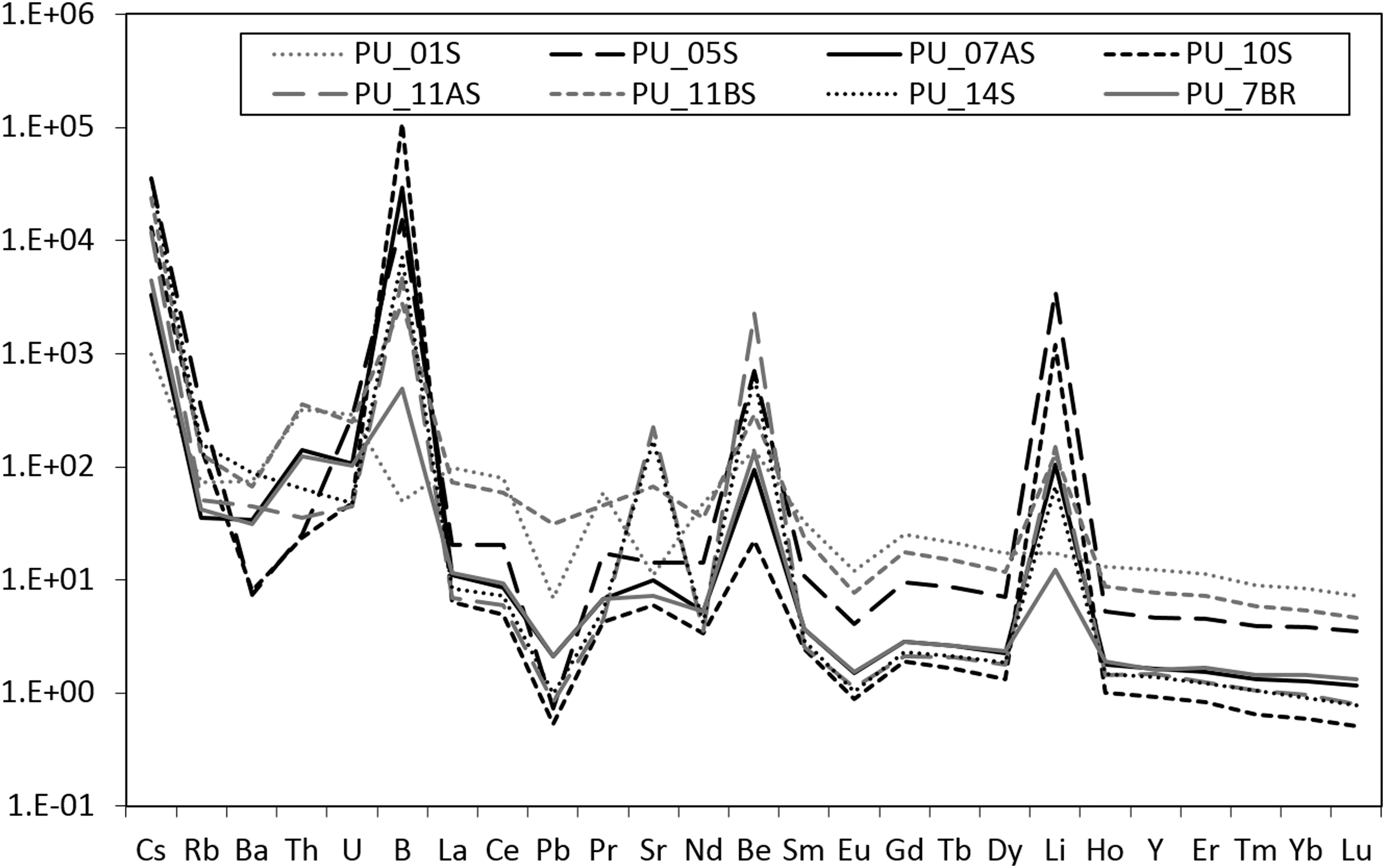
Elemental abundances for a selection of rock and sediment samples from Puga, normalized by those of upper continental crust (recommended composition given in Rudnick and Gao [2003]). The Puga samples are significantly concentrated in B, Cs, and Li.
The highly negative δ11B values observed in the laminated crust (PU_11AS) and the diatom-rich suspended sediment (PU_07BR) lie within what has previously been identified as the field of a nonmarine evaporitic setting, or the range of inheritance from intrusive granites (Palmer and Slack, 1989; Marschall and Jiang, 2011). However, an evaporative process driving B isotopic fractionation can be excluded for the diatom-rich sample, as the fluid (PU_07BF) in which the diatoms are suspended is not highly fractionated (Table 1), as expected for an evaporating fluid (Vengosh et al., 1992). Another result supporting the exclusion of an evaporative process driving these significantly fractionated B isotopes is that the diatom-rich sediments are found in the lowest-temperature (25°C), least-active pool (PU_07B), while all other pools have a temperature range from 62°C to 84.5°C (the boiling point at the high altitude of the Puga system). If evaporation (which would be more prevalent in the other boiling pools) is the cause for the significant B isotopic shift, the higher-temperature boiling pools should exhibit greater B isotope fractionation. As this is not the case, it is clear that evaporation is not the dominant driver of the B isotopic fractionation in the diatom-rich sediment.
A non-evaporative origin for the B fractionation is further supported by the results obtained from the puffy evaporative crust (PU_10S). This crust, which is a representative example of crusts that cover extensive parts of the Puga hot spring area, is composed predominantly of tincalconite (Na2B4O7·5H2O) as the main boron-bearing material and was produced predominantly through evaporative processes. However, despite its evaporative origin, this crust exhibits the smallest shift in δ11B values (−14.3‰) from the original fluid. Thus, evaporation cannot be the dominant factor in the boron fractionation process for the highly fractionated silica samples observed at Puga, and other fractionation processes must be considered.
The extreme boron isotopic fractionation observed within only select silica samples arising from an influence by intrusive granites can be discounted on the basis that, if this was the case, then highly negative values would be pervasive throughout the Puga system, present in all fluid samples, and not exclusively in specific materials, as is observed in this study.
Thus, the highly negative δ11B recorded in the laminated amorphous silica crust and diatom-rich suspended sediment are interpreted to originate from the preferential incorporation of tetrahedral 10B borate anions in precipitating amorphous silica (Ichikuni, 1968; Ishikawa and Nakamura, 1993). Significant negative fractionation of δ11B values for diatoms has previously been recorded from marine settings, where the siliceous diatoms record values of +4.5‰, precipitated from seawater that has highly positive δ11B values (39.5‰), yielding Δ δ11Bseawater-diatom = −35‰ (Ishikawa and Nakamura, 1993). As the boron source for the Puga system is already negatively fractionated (average δ11B = −12.6‰; Table 1), silica precipitation here yields Δ δ11Bhot spring fluid-diatom = −28.4‰ and Δ δ11Bhot spring fluid-sinter nodules = −25.2‰, producing some of the lowest δ11B values ever recorded (−41.0‰ and −37.8‰, respectively) (Palmer and Slack, 1989; Marschall and Jiang, 2011). This model (Fig. 6) of silica precipitation driving boron isotope fractionation is supported by the relatively small fractionation in the tincalconite-bearing, silica-absent, puffy evaporative crust compared to the average Puga fluids (Δ δ11B = −1.7‰).
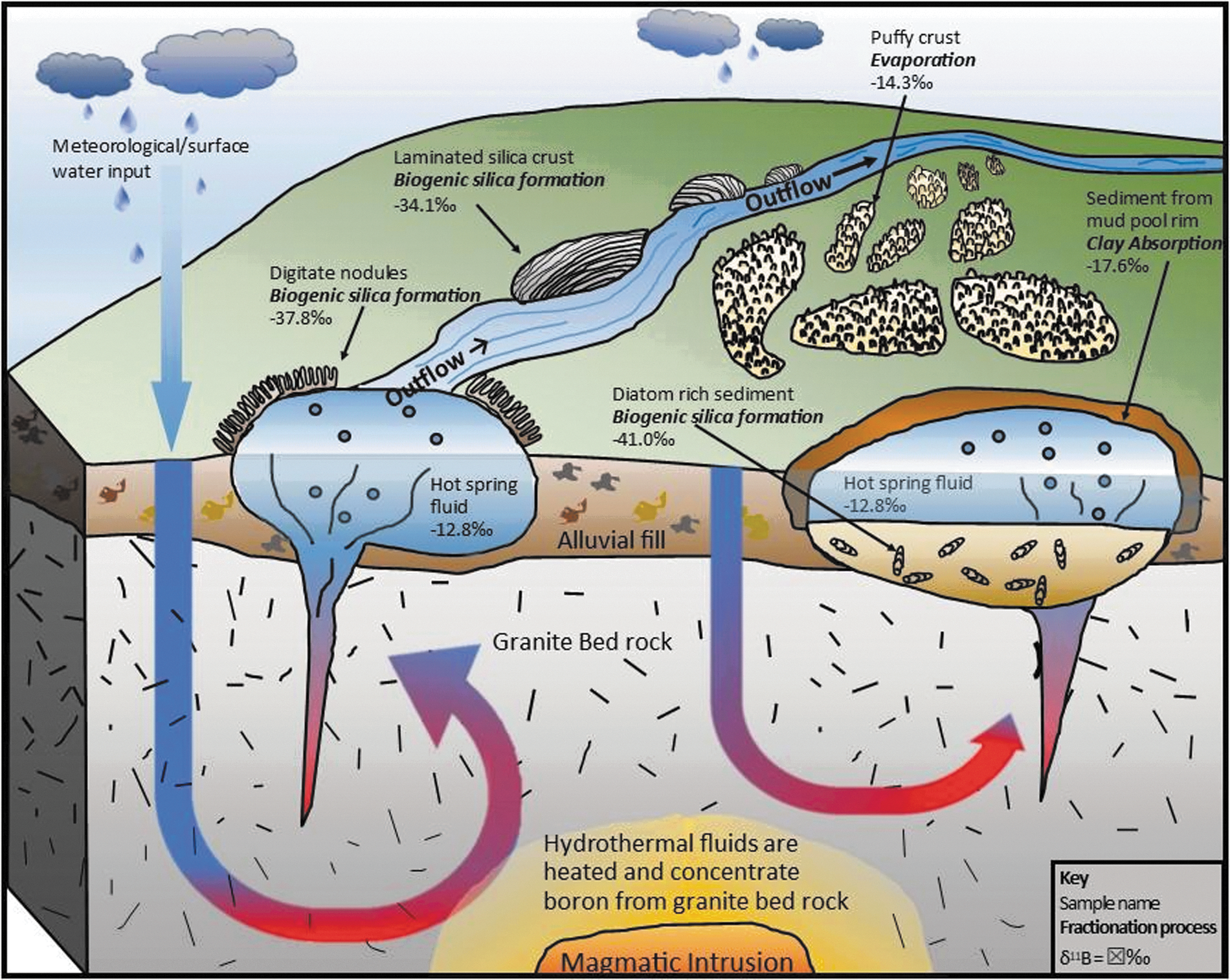
Model of boron fractionation in the Puga system, showing that the presence of silica (diatom-rich sediment, digitate nodules, and silica crusts) is driving boron isotope fractionation, along with the source of boron (surficial water mixing with magmatic fluids).
The presence of mica (muscovite) in the diatom sample and illite grains interbedded in the laminated silica crust may also have contributed to the large δ11B fractionation, as mica can cause B isotope fractionation in fluid systems (Wunder et al., 2005). However, given that the majority of the highly fractionated laminated crust (PU_11AS) is silica, with only minor illite (2.3%, Supplementary Data S3), and that the boron concentration of the illite is low (average 110 ppm, Supplementary Table S2) compared to silica (average 8,000 ppm), the overall influence of the illite on boron fractionation in the laminated crust sample is considered to be minor.
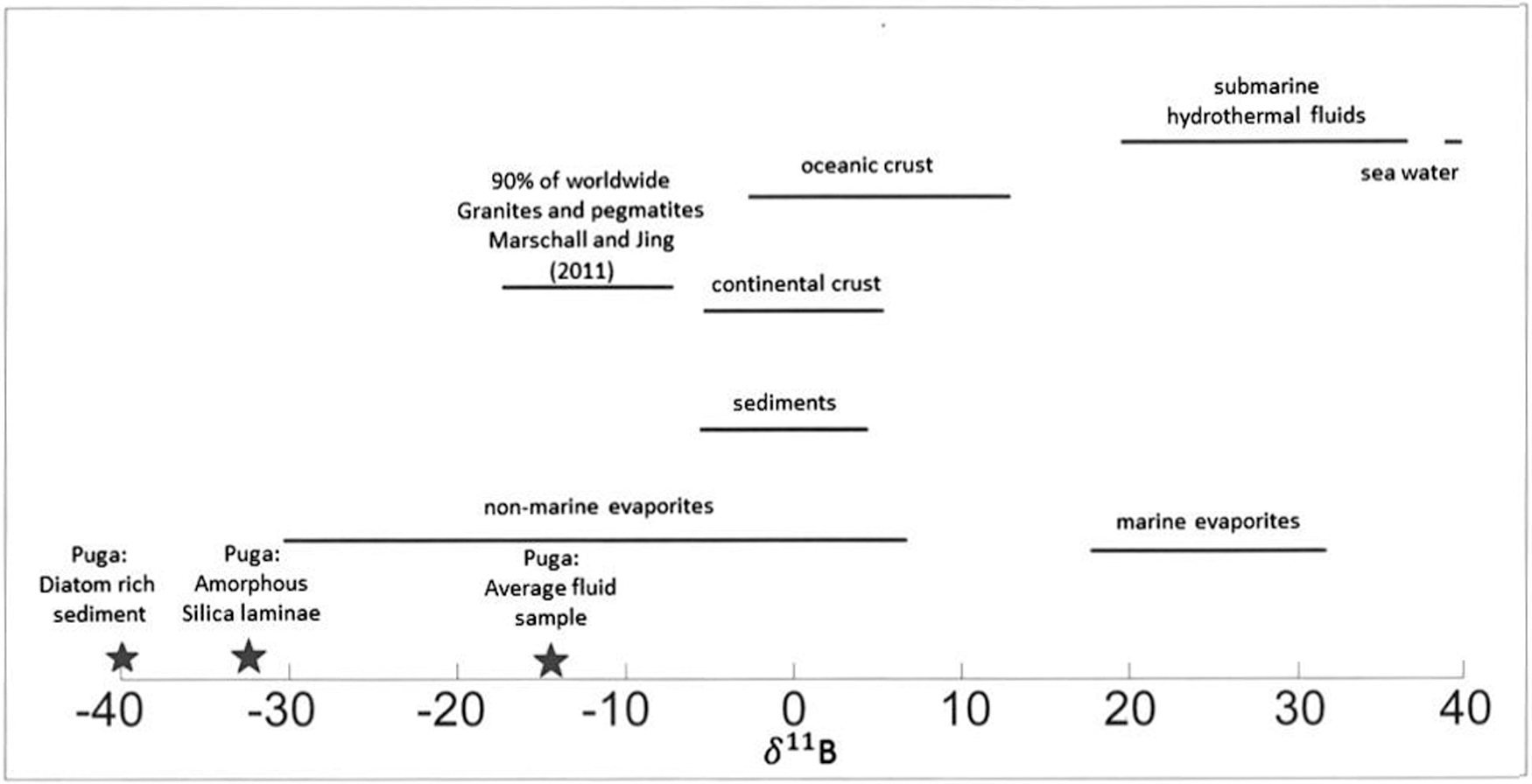
This result adds new insight to the interpretation of boron isotopes. The lowest δ11B values ever recorded are in coal (−70‰), potentially due to either the source organic material being deposited with an initially light isotopic ratio or by fluid exchange after deposition (Williams and Hervig, 2004). The next lowest δ11B values are generally attributed to nonmarine evaporites, with the lowest value found in the literature at −32‰ (Fig. 7; Palmer and Slack, 1989; Barth, 1993; Garnier et al., 2008; Xiao et al., 2013). Boron sourced from granites is known to fall within a moderately negative range (−16‰ to −8‰; van Hinsberg et al., 2011, and references therein), but these do not fall close to the values found in hot spring materials from this study. Therefore, our results not only present the lowest, non-coal boron isotope values found in nature, they also question what are the major driving processes for extremely light δ11B values, suggesting that biogenic silica can play a significant role in producing these values.
5.2. Elemental concentrations in the Puga system
The high concentration of boron (over 1.8 cg·g−1 and an Upper Continental crust normalized abundance of 13,700; Fig. 5, Supplementary Table S2) in the sample of laminated siliceous hot spring crust from Puga (PU_11AS; Fig. 4) is the result of precipitation of amorphous silica from boron-rich hydrothermal waters (Ichikuni, 1968; McKenzie et al., 2001). Quartz was also identified in the laminated crust, but it is unlikely that this mineral is the main source of the boron, as quartz generally has a very low boron content, except when associated with tourmaline (Dennen, 1966), a mineral that has not been observed at Puga. The boron source in this Puga sample is also not due to the co-precipitation of discrete borate minerals (including tincalconite and borax), as shown by XRD data (Supplementary Information, Table S1) along with the absence of sodium (an element in tincalconite, borax, and kernite) in the sample (EPMA maps; Fig. 4d).
The B isotope fractionation model proposed above (silica incorporation is dominant over evaporation) is also reflected in the abundances of various elements in the solid samples. Figure 8 depicts the concentration of various elements (B, Na, Ca, and Sr) over δ11B values. B and Na abundance are slightly correlated to higher (less fractionated) δ11B values; that is, materials with high B and Na concentrations have δ11B values closer to the source fluid. This is due to the fact that both B and Na are the main elements in tincalconite, borax, and kernite, which are exclusively (slightly δ11B fractionated) evaporative minerals in the Puga system and are not present in any of the highly fractionated silica-rich sediments. Alternatively, higher Ca and Sr abundance is slightly correlated to lower (more fractionated) δ11B values. However, this is probably due to the presence of calcite in both silica sinter samples (as shown in XRD), as calcium carbonates readily incorporate Sr due to similar valance and ionic radius (Gowd et al., 2010). The anomaly of the diatom-rich sample not displaying high [Sr] despite its high fractionated δ11B values supports this, as there was no calcite present in the sample. Beyond this, the elevated Ca values in evaporative and sediment samples are probably due to trace detritus plagioclase and other non-calcite Ca-bearing minerals (as calcite was not observed in XRD).
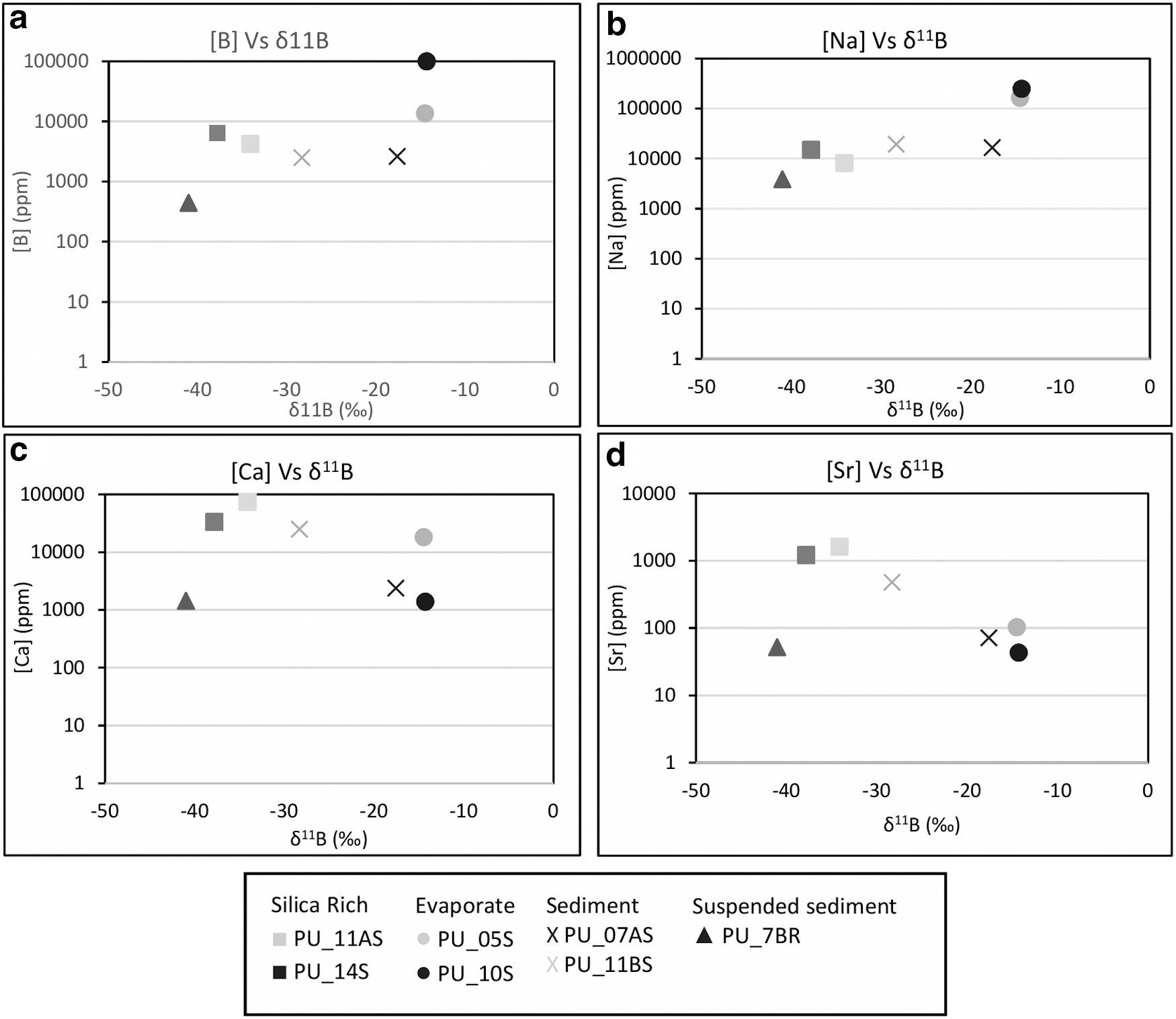
Correlations of the concentration (ppm, logarithmic scale) of various elements (
In Puga, the major and trace element compositions of the fluids in all but one fluid sample (PU_07BF) are moderately consistent and show elevated concentrations of elements, including iron. Sample PU_07BF, despite having been centrifuged repeatedly and filtered by the 0.22 micron membrane, contains nearly 3 orders of magnitude higher-than-average iron concentrations than the other pool fluids, in addition to higher boron and REE concentrations (Table 1). These elevated concentrations are potentially due to a suspended colloid in the solution, which has been shown to adsorb and concentrate certain elements, including boron (Horowitz et al., 1996), as well as remain in the filtrate after 0.22 micron filtering (Lin et al., 2007).
The presence of iron-rich colloids, along with the formation of boron-rich, amorphous silica crusts found in the Puga geothermal system, may act as a modern-day analog for the formation of tourmaline-bearing pyritic lamina in the c. 3.48 Ga Dresser Formation (Van Kranendonk et al., 2008, 2019).
5.3. Further implications
The δ11B values of six fluid samples collected from across the Puga geothermal field are remarkably uniform, at values common for intrusive granites, which are interpreted as the source for boron in this field. Sediment and rock samples from Puga, on the other hand, demonstrate a large variability in δ11B, ranging from weakly fractionated evaporite pastes (−14.5‰) to significantly fractionated amorphous silica crusts (−34.1‰) and diatom-rich suspended sediments (−41.0‰). The significantly fractionated silica crusts and diatom-rich sediments are likely due to the incorporation, and consequent fractionation, of boron into silica. These results are significant as they are one of the lowest non-coal terrestrial δ11B values found in the world, which expands the range of global δ11B values, outside of the range of nonmarine evaporites.
The Puga geothermal field provides an example of a multistage, fractionated δ11B system, where an original δ11B source (host rock and geothermal fluids) has been fractionated multiple times—due to evaporation, precipitation, and absorption into silica and mica—producing a wide range of δ11B values (up to Δ δ11B 28.4‰) in rocks and sediments.
Boron isotope systematics have been used to understand the geothermal environments of Archean systems, including the study by Farber et al. (2015) of tourmaline-bearing, silicified stromatolites from the Barberton Greenstone Belt in South Africa. Farber et al. (2015) concluded that the large range of boron isotope values observed (Δ δ11B 30.9‰) in the Barberton tourmaline cannot be from a single B source, and that another source must be present. However, these new results from Puga provide an example of how a single B source can be fractionated up to Δ δ11B 28.4‰ in a range of materials, including adsorption onto silica. These results cast doubt on Farber and coauthors' 2015 interpretation of the Barberton δ11B values, as the Puga samples demonstrate that observing a large δ11B shift alone does not exclude the potential that the boron could have come from a single source.
This study highlights the complexity of δ11B fractionation in a terrestrial hydrothermal system, demonstrating that the incorporation of boron in biogenic silica (e.g., Puga diatoms and laminated crusts) is a strong driver of boron isotope fractionation. This complexity should be considered when interpreting other δ11B values in both Archean and modern environments to ensure that the whole δ11B narrative, including potential multiple fractionation stages, is properly explored.
Footnotes
Acknowledgments
This is contribution 1153 from the ARC Centre of Excellence for Core to Crust Fluid Systems, who funded this project. We are thankful to Ryoji Tanaka for the XRD analysis of solid samples and to Masahiro Yamanaka and Kayo Tanaka for their technical support on chemical analysis and assistance maintaining the laboratory. We would also like to thank the Ladakh Spaceward bound program, including Mark Boryta and Siddharth Pandey, for their assistance in logistics and sampling at Puga. The authors would like to thank AINSE Ltd for providing financial assistance (as the recipient of the 2016 AINSE Honours scholarship to L.S.).
Author Disclosure Statement
The authors declare no competing financial interests.
Supplementary Information is available in the online version of the article. Correspondence and requests for materials should be addressed to L.S.
Abbreviations Used
References
Supplementary Material
Please find the following supplemental material available below.
For Open Access articles published under a Creative Commons License, all supplemental material carries the same license as the article it is associated with.
For non-Open Access articles published, all supplemental material carries a non-exclusive license, and permission requests for re-use of supplemental material or any part of supplemental material shall be sent directly to the copyright owner as specified in the copyright notice associated with the article.
