




Abstract
Accreted ice retains and preserves traces of the ocean from which it formed. In this work, we study two classes of accreted ice found on Earth—frazil ice, which forms through crystallization within a supercooled water column, and congelation ice, which forms through directional freezing at an existing interface—and discuss where each might be found in the ice shells of ocean worlds. We focus our study on terrestrial ice formed in low temperature gradient environments (e.g., beneath ice shelves), consistent with conditions expected at the ice-ocean interfaces of Europa and Enceladus, and we highlight the juxtaposition of compositional trends in relation to ice formed in higher temperature gradient environments (e.g., at the ocean surface). Observations from Antarctic sub-ice-shelf congelation ice and marine ice show that the purity of frazil ice can be nearly two orders of magnitude higher than congelation ice formed in the same low temperature gradient environment (∼0.1% vs. ∼10% of the ocean salinity). In addition, where congelation ice can maintain a planar ice-water interface on a microstructural scale, the efficiency of salt rejection is enhanced (∼1% of the ocean salinity) and lattice soluble impurities such as chloride are preferentially incorporated. We conclude that an ice shell that forms by gradual thickening as its interior cools would be composed of congelation ice, whereas frazil ice will accumulate where the ice shell thins on local (rifts and basal fractures) or regional (latitudinal gradients) scales through the operation of an “ice pump.”
Introduction
The ice shells of ocean worlds govern the feasibility of surface-ice-ocean exchange, believed to be significant for supporting habitats within the sub-ice oceans (Soderlund et al., 2020). The dynamic features and young surfaces of Europa and Enceladus provide compelling evidence that their subsurface oceans are continuously interacting with their overlying ice shells (Howell and Pappalardo, 2018; Spencer et al., 2018). Because existing observations are mostly confined to the surface, much attention has been directed toward the properties of the uppermost layer of the ice shell, where the native ice could be modified by exogenic processes (Brown and Hand, 2013).
Although observations of the surface provide important constraints on processes operating in the subsurface (Zolotov and Shock, 2001), the properties of the subsurface itself have received less focus. Processes occurring at the ice-ocean interface, such as accretion, are likely responsible for governing and modulating bulk properties of the ice shell (Zolotov and Shock, 2001; Peddinti and McNamara, 2015; Buffo et al., 2020). Ice formed from the freezing of ocean water, referred to here as accreted ice, might serve as a fingerprint of the ocean below, recording signals of circulation (Langhorne and Robinson, 1986), composition and salinity (Petrich and Eicken, 2017), and potentially life (Martin and McMinn, 2018).
The ice-ocean interfaces of these alien worlds and the processes that mold and shape them may be similar to those found in Earth's cryosphere. The extensive research conducted in pursuit of understanding ice on Earth represents a foundation from which to build an understanding of ice on other worlds. Previous work has leveraged sea ice as an analogue to interpret surface features and connect them to processes that may be operating within Europa's ice shell (Greeley et al., 1998), yet these authors advised caution in drawing direct analogies between Earth and Europa given their distinct environmental conditions. Although recent works have revisited terrestrial analogues to improve our understanding of potential ice-ocean interactions on other worlds (Buffo et al., 2020; Schmidt, 2020; Soderlund et al., 2020), only a small fraction of this vast and relatively untapped resource has been leveraged to date.
In this work, we demonstrate that ice forming in the low-temperature gradient environment beneath ice shelves can serve as a more relevant terrestrial analogue than sea ice for ice forming beneath the ice shells of ocean worlds, particularly Europa and Enceladus (Section 2). We present two fundamental classes of accreted ice analogues: frazil ice and congelation ice (Section 3) and examine how their formation mechanisms influence bulk ice salinity at low temperature gradients (Section 4). We identify where each class of accreted ice might form on icy ocean worlds (Section 5), highlighting the implications for geophysical processes, bulk composition, and astrobiology (Section 6).
Physicochemical Environments of Europa and Enceladus
The exotic appearances of the ice shells of ocean worlds can sometimes mask the more mundane reality that they are primarily composed of hexagonal water ice, the dominant ice on Earth. Furthermore, at the ice-ocean interface, where accretion of ice occurs, the physical conditions (e.g., composition, salinity, temperature, pressure) could be similar to those found in Earth's polar regions. Table 1 depicts the observational and modeled constraints on the conditions at the ice-ocean interfaces of Europa and Enceladus and demonstrates their similarity to Earth.
Constraints on the Conditions at the Ice-Ocean Interfaces of Earth, Europa, and Enceladus from Observations and Models
Constraints on the Conditions at the Ice-Ocean Interfaces of Earth, Europa, and Enceladus from Observations and Models
Two possible ocean compositions are presented for Europa: (i) a sulfate-dominated ocean and (ii) a carbonate-dominated ocean. The estimates of ice thickness for Europa refer to estimates from crater and thermodynamic analyses. The pressure and temperature estimates are derived from the ice thickness ranges presented here and assume pure water ice at a density of 917 kg/m3 and a freshwater ocean.
Note that Kargel (1991) obtained models predicting peritectic and eutectic Europan oceans.
The composition and salinity of accreted ice serves as a signature of the environment in which it formed (Zolotov and Kargel, 2009; Buffo et al., 2020). Although the compositions of the subsurface oceans on Europa and Enceladus have not been measured directly, constraints exist from theory and interpretations of data collected by both space-based and Earth-based platforms (Zolotov and Shock, 2001; Postberg et al., 2011). Because the composition of the source water influences the properties of the ice (i.e., phase behavior governs brine volume fraction, which influences thermophysical, dielectric, and mechanical properties) (Petrich and Eicken, 2017), it should be considered when evaluating the relevance of terrestrial accreted ice as an analogue.
Measurements of Enceladus plume material by Cassini represent the only in situ observations of apparent oceanic material in the outer solar system (Glein et al., 2018). These observations, coupled with geochemical models (Zolotov, 2007; Glein et al., 2015), suggest that the enceladan ocean is highly alkaline and dominantly composed of sodium and chloride (Glein et al., 2018; Postberg et al., 2018). Assuming the plume material represents a relatively unfractionated (i.e., flash-frozen) sample of oceanic material (Fox-Powell and Cousins, 2021), the salinity of the enceladan ocean could be up to ∼20 ppt—only slightly less than Earth's (∼35 ppt) (Postberg et al., 2011)—although later work argues for an upper limit salinity of ∼40 ppt based on the detection of silica nanoparticles in the plume material (Hsu et al., 2015). However, recent ocean modeling studies demonstrated that low salinity layers could be present at the ice-ocean interface near the poles, which would imply that the salinity inferred from plume material may be lower than the bulk ocean salinity (Lobo et al., 2021; Zeng and Jansen, 2021).
Although a plume sample remains elusive for Europa, geochemical models of Europa's ocean chemistry have attempted to constrain the dominant species by using observations of Europa's surface and atmosphere. For example, the Europa K1a model of Zolotov and Shock (2001) was tuned by Earth-based observations of chemical species detected in Europa's tenuous atmosphere (Brown, 2001). This model suggested that Europa's ocean composition is broadly comparable to that of the Earth's, where the dominant ionic species are sulfate, magnesium, sodium, and chloride. Other geochemical models identify similar dominant species, although their relative abundance (NaCl-dominated vs. MgSO4-dominated) remains the subject of debate (Kargel et al., 2000; Zolotov, 2008; Zolotov and Kargel, 2009). Results from a more recent model suggest that a carbonate-dominated europan ocean is also possible (Melwani Daswani et al., 2021).
Early interpretations of Galileo NIMS data were consistent with the presence of hydrated sulfate or carbonate salts in regions associated with resurfacing (McCord et al., 1998, 1999). Later analysis by Carlson et al. (2005) suggested that the signature could instead be attributed to hydrated sulfuric acid. This would also explain the apparent enhancement observed on the trailing hemisphere, where the surface is highly irradiated and bombarded by Iogenic sulfur. Higher spectral resolution observations acquired by Earth-based platforms were able to identify the features associated with magnesium sulfate salts but found that they were confined to the trailing hemisphere and spatially correlated with sulfuric acid (Brown and Hand, 2013).
Brown and Hand (2013) used the spatial correlation of the magnesium sulfate with radiation products to argue that sulfate salts are a radiation product and that the ice shell and ocean are dominantly composed of chloride salts, which have no distinct spectral feature in the near-infrared. These results were supported by additional Earth-based observations, which were able to confirm that acid-dominant components were concentrated along the trailing hemisphere and salt-dominant components were associated with endogenous surface features (Fischer et al., 2015). In addition, because the salt-dominant component lacked spectral features consistent with hydrated sulfate minerals, the authors proposed that the spectrum may instead be associated with chloride evaporite deposits.
Laboratory experiments have demonstrated that when sodium chloride is exposed to conditions similar to those expected at Europa's surface, it darkens into a color consistent with that observed across Europa's surface, particularly in features believed to be associated with material from the sub-ice ocean (Hand and Carlson, 2015). Recent observations of Europa's surface with the Hubble Space Telescope revealed a spectral feature consistent with irradiated sodium chloride that was again highly correlated with endogenous features (Trumbo et al., 2019). These laboratory, Earth-based, and space-based observations collectively indicate that chloride salts are being entrained in the ice shell. Similar to Earth and Enceladus, chloride may represent an important component of Europa's ocean composition.
Although measurements of Europa's induced magnetic field by the Galileo magnetometer support the existence of a global subsurface ocean, constraining the salinity of the ocean from these measurements is a challenge as the signal is a convolution of electrical conductivity and ice/ocean thicknesses. Gravitational measurements from Galileo flybys provide an upper limit of ∼200 km to the thickness of the ice/ocean layer (Anderson et al., 1998).
Using this thickness constraint and a minimum value of 0.7 for the normalized amplitude of the induced dipole moment relative to the primary field, Zimmer et al. (2000) were able to estimate a minimum ocean conductivity of 0.072 S/m. Later work by Schilling et al. (2007) further constrained the parameter space to obtain a minimum conductivity of 0.5 S/m for a 100 km ocean. For terrestrial seawater at 0 °C, this translates to a practical salinity (PSS-78) of ∼5 (Lewis and Perkin, 1981). Hand and Chyba (2007) used the induced magnetic field amplitude of 0.97 obtained by Schilling et al. (2004) to argue for an ice shell <15 km thick overlying an ocean of conductivity that could range from 3 S/m (practical salinity of ∼36 at 0 °C) to 23 S/m (practical salinity undefined).
More recent work by Vance et al. (2021b) argued that the reduction in electrical conductivity with decreasing temperature could raise these salinity estimates for colder oceans associated with thicker ice shells. This suggests, because of the broad parameter space of possible ocean salinities, that a valid ocean analogue could span in salinity from brackish to hypersaline.
The surfaces of icy ocean worlds are directly exposed to the vacuum of space and have measured temperatures ranging from 86 K to 132 K on Europa (Spencer et al., 1999) and from 32 K to 145 K on Enceladus (Spencer et al., 2006). At the south pole of Enceladus, the temperature approaches 200 K near a set of linear features, referred to as tiger stripes, which are spatially correlated with the plumes observed by Cassini and are believed to serve as a conduit to the subsurface ocean (Spencer et al., 2018; Hemingway et al., 2020).
The conditions at depth, however, could be relatively mild. The equivalent of one Earth atmosphere of pressure translates to ∼100 m of ice on Europa and ∼1 km of ice on Enceladus (Fig. 1a). This suggests that the near-vacuum conditions at the surface of these bodies become irrelevant at relatively shallow depths, well below the hypothesized ice shell thicknesses of Europa and Enceladus (Table 1). The pressure ranges expected beneath these ice shells are consistent with what is expected beneath floating ice on Earth, which can be up to a few kilometers thick (Table 1 and Fig. 1).

Pressure at the ice-ocean interface for the range of ice shell thicknesses on Earth (green axis), Europa (purple axis), and Enceladus (blue axis) represented
The melting temperature of ice does not vary significantly with pressure for ice shell thicknesses of ∼1 m to a few kilometers on Europa and ∼10 m to tens of kilometers on Enceladus. This suggests that for both Europa and Enceladus, neglecting the influence of impurities, the temperature at the ice-ocean interface is likely to be depressed by only a few degrees (∼3 K beneath a 30 km ice shell on Europa, ∼0.5 K beneath a 50 km ice shell on Enceladus). Note that although the influence of pressure on melting temperature is minor, it is critical to driving “ice pumps” beneath ice shelves on Earth, a basal ice redistribution process introduced and further discussed in Section 3.2. The pressure-melting temperature represents an upper limit for the temperature at the ice-ocean interface since impurities within the ocean can further reduce the equilibrium temperature.
Freezing point depression is a mechanism that is often invoked to explain the presence of liquid water in otherwise cryogenic environments (Toner et al., 2014; Hammond et al., 2018). For an ideal solution with low concentrations of impurities, freezing point depression is dependent on the concentration of dissolved impurities, but not their composition. As the eutectic point is approached, this colligative assumption breaks down and composition becomes relevant to the freezing point depression. For the range of plausible salinities and ice shell thicknesses hypothesized for Europa, this implies that the temperature at the ice-ocean interface could range from the pressure-melting point to the eutectic point of a salt solution.
For a sodium chloride ocean, the maximum freezing point depression would be ∼21 K at a concentration of 232 ppt (Drebushchak et al., 2019), whereas for a magnesium sulfate ocean, the maximum corresponds to only ∼4 K at a concentration of 174 ppt (Pillay et al., 2005). Ammonia, initially implicated in promoting resurfacing processes at Enceladus (Squyres et al., 1983), can depress the freezing point of water by almost 100 K at a concentration of 354 ppt (Leliwa-Kopystyński et al., 2002); however, only trace amounts were detected in the Enceladus plume material (Waite et al., 2009, 2017; Fox-Powell and Cousins, 2021). If the plume observation is representative of the concentration of ammonia within the subsurface ocean, it would amount to a freezing point depression on the order of a degree.
The composition and concentration of impurities, in addition to the overburden pressure, defines where multiphase systems can exist within the ice shell and creates the opportunity for complex reactive transport processes that are important to the habitability of these worlds (Hammond et al., 2018; Kalousová et al., 2014; Buffo et al., 2020; Hesse et al., 2022).
Although the physicochemical environments of Europa and Enceladus may share similar characteristics to ice-ocean interfaces on Earth, a critical distinction between the ice-ocean interfaces of ocean worlds in the outer solar system and Earth involves the spatiotemporal scales of processes operating at that interface (Vance et al., 2021a). Timescales of freezing processes beneath the ice shells of ocean worlds are likely orders of magnitude slower than sea ice on Earth (i.e., sea ice growth occurs on seasonal cycles, whereas the ice shells of ocean worlds are potentially the product of more than a hundred million years of accretion and ablation).
The temperature gradient at the ice-ocean interface is an important consequence of these vastly different spatiotemporal scales. If the ice is actively thickening and in a conductive thermal regime, the temperature profile is approximately linear throughout the shell, and the magnitude of the temperature gradient is governed by the thickness of the ice layer and temperature at the surface and base of the ice layer (Petrich and Eicken, 2017). As such, the thick ice shells of ocean worlds are subject to lower temperature gradients and freezing rates than experienced by sea ice on Earth (Table 2).
Estimates of Ice Shell Growth Rates for Europa and Enceladus Compared with Measured Sea Ice Growth Rates on Earth
Estimates of Ice Shell Growth Rates for Europa and Enceladus Compared with Measured Sea Ice Growth Rates on Earth
Growth rates are expressed in terms of the published units and in cm/s for direct comparison. All modeled freezing rates for Europa and Enceladus neglect the influence of salts and thus may be higher than reality.
Furthermore, as the ice shell approaches equilibrium thickness, the growth rates should decrease to zero. Therefore, we consider the estimated freezing rates for Europa and Enceladus in Table 2 to represent upper bounds, which are notably over an order of magnitude lower than sea ice growth rates measured on Earth. Although sea ice is one of the most ubiquitous and most studied forms of accreted ice on Earth, we propose that there are other forms of ice that may represent more relevant analogues for ice accreting at the ice-ocean interface of ocean worlds.
Ice that accretes beneath the thick ice shelves of Antarctica forms in a significantly lower temperature gradient environment than sea ice and could approach growth velocities that are relevant to the ice-ocean interfaces beneath the ice shells of ocean worlds. In this work, we adopt the genetic terminology of Tison et al. (1998) and focus our study on two classes of accreted ice found beneath ice shelves: frazil ice and congelation ice (Fig. 2). Although naturally accreted ice is rarely composed entirely of frazil or congelation ice, these broad classifications facilitate discussions of bulk ice properties in the context of their formation mechanisms and will allow us to examine how each might influence the bulk salinity of the ice shells of ocean worlds.

Genetic classification of accreted ice and characteristics of the microstructural interface morphology for congelation ice.
Ice that crystallizes within a supercooled water column, as opposed to at a solid interface, is referred to as frazil ice. Frazil ice is formed in the presence of turbulent water that has been supercooled by tenths to hundredths of a degree (Weeks and Ackley, 1986; Mager et al., 2013; Robinson et al., 2019), where increased supercooling generally promotes increased frazil production (Ettema et al., 1984). There are a number of mechanisms in nature that can promote supercooling and thus the production of frazil ice. Examples of such mechanisms include the adiabatic rise of water masses to a lower-pressure environment and double diffusion occurring between two adjacent water bodies at different temperatures and salinities (Mager et al., 2013).
Ice crystals formed from collisions of larger ice crystals, the refreezing of spray, or snow can serve as nucleation sites for frazil ice crystals (Osterkamp, 1977). It was long believed that foreign particles, such as organic matter, could serve as nucleation sites for frazil ice, but no experimental or field observations have demonstrated that this is possible at the degrees of supercooling observed in nature (<1°C) (Daly, 1984; Robinson et al., 2019).
Turbulence is also necessary to promote secondary nucleation, responsible for generating meaningful quantities of frazil crystals (Ettema et al., 1984). Because frazil ice forms from individual crystals that can nucleate independent of each other, it has a granular texture and no preferred orientation (Fig. 2). Once a stable frazil ice layer has formed, congelation ice growth can occur.
Congelation ice refers to ice produced by the direct freezing of water at an existing ice interface, driven by conductive heat losses (Weeks and Ackley, 1986). In congelation ice, the microstructural morphology of the ice-water interface (e.g., planar, cellular, dendritic) is highly dependent on the purity of the source water and the growth velocity (Harrison and Tiller, 1963; Lofgren and Weeks, 1969; Wettlaufer, 1992, 1998). Ultimately, the microstructural morphology of the ice-ocean interface is related to the phenomenon of constitutional supercooling (Harrison and Tiller, 1963; Eicken, 2003), originally proposed and studied in the field of metallurgy (Rutter and Chalmers, 1953; Jackson, 2004).
Constitutional supercooling refers to supercooling that occurs in advance of the freezing front. The role of constitutional supercooling in congelation ice growth is critical to governing its substructure and, in turn, its properties (Eicken, 2003; Weeks, 2010; Petrich and Eicken, 2017). The rejection of impurities locally enhances the concentration and depresses the freezing point at the interface, promoting supercooling ahead of the interface. If perturbations occur in the presence of constitutional supercooling, the supercooled fluid serves as a heat sink that promotes further growth, forming cells or dendrites. In the absence of this supercooled layer, small perturbations in the interface morphology are not energetically favorable and a planar interface remains stable.
Characteristics of the interface are significant to the efficiency of impurity incorporation in ice (Nagashima and Furukawa, 1997). A planar interface is more efficient at rejecting impurities, whereas a cellular interface retains impurities through the entrapment of brine between cells (Osterkamp and Weber, 1970; Eicken, 2003; Weeks, 2010; Petrich and Eicken, 2017). For the growth rates typical of sea ice on Earth (Table 2), it has been demonstrated that congelation ice forming from seawater will always result in the development of a cellular interface (Wettlaufer, 1992). Congelation ice is typically characterized by a columnar texture, where crystals preferentially elongate parallel to the direction of the temperature gradient (Harrison and Tiller, 1963; Tison et al., 1998).
In low salinity environments, such as freshwater lakes, constitutional supercooling during freezing is minimal and the morphology of the microstructural interface can remain planar for higher growth velocities than it would for seawater (Leppäranta, 2015).
Marine ice and sub-ice-shelf congelation ice
Marine ice is specific to frazil ice that collects and consolidates beneath ice shelves or within ice shelf rifts that are characterized by a low temperature gradient environment. The formation of marine ice is generally believed to occur in two phases, defined by Tison et al. (2001) as (i) the frazil ice phase and (ii) the consolidation phase.
The frazil phase encompasses the formation and accumulation of frazil ice crystals beneath the ice shelf. These crystals preferentially form and collect where the ice draft thins rapidly—features such as inverted channels, rifts, or crevasses beneath the ice shelf (Tison et al., 1993; Khazendar et al., 2001; Khazendar and Jenkins, 2003). The consolidation phase involves the buoyancy-driven compaction of accumulated frazil crystals. In this phase, crystals agglomerate and collect, forming a permeable layer. As more frazil accumulates, buoyant pressure builds up at the ice-water interface, compressing the layer and forcing out interstitial water, reducing the brine volume fraction. The bulk density of the ice-brine system is, thus, counter-intuitively reduced by compaction. At a certain stage in the consolidation phase, the ice becomes impermeable and any remaining brine is trapped in the ice as inclusions at triple-junctions and along grain boundaries (Moore et al., 1994).
The final stage of consolidation involves the freezing of remaining interstitial water through congelation growth, analogous to the incorporation of frazil ice layers beneath growing sea ice known as platelet ice. Unlike platelet ice, this interstitial congelation growth occurs at a much slower rate due to the insulation from atmospheric thermal forcing by overlying glacial ice. The lower unconsolidated portion of the marine ice layer is a hydraulically connected region that can extend from tens of meters up to ∼100 m from the base of the ice shelf (Craven et al., 2009). The formation of marine ice beneath ice shelves is part of a process that has been referred to as an “ice pump,” where the pressure dependence of the freezing point supports the operation of a continuous cycle involving the melting of ice at depth and the accretion of ice at a shallower location (Lewis and Perkin, 1986).
The term “marine ice” is sometimes broadly applied to ice that forms beneath ice shelves. Here, however, we distinguish between marine ice and sub-ice-shelf congelation ice to emphasize the distinct formation mechanisms between these forms of accreted ice. Because the ice-ocean interface beneath ice shelves is fairly insulated from atmospheric forcing (i.e., the ocean is shielded from frigid air temperatures by hundreds of meters of ice), the formation of congelation ice at the base of an ice shelf is rare (Fig. 4); however, it has been observed beneath certain ice shelves in Antarctica (Gow and Epstein, 1972; Zotikov et al., 1980; Souchez et al., 1991).
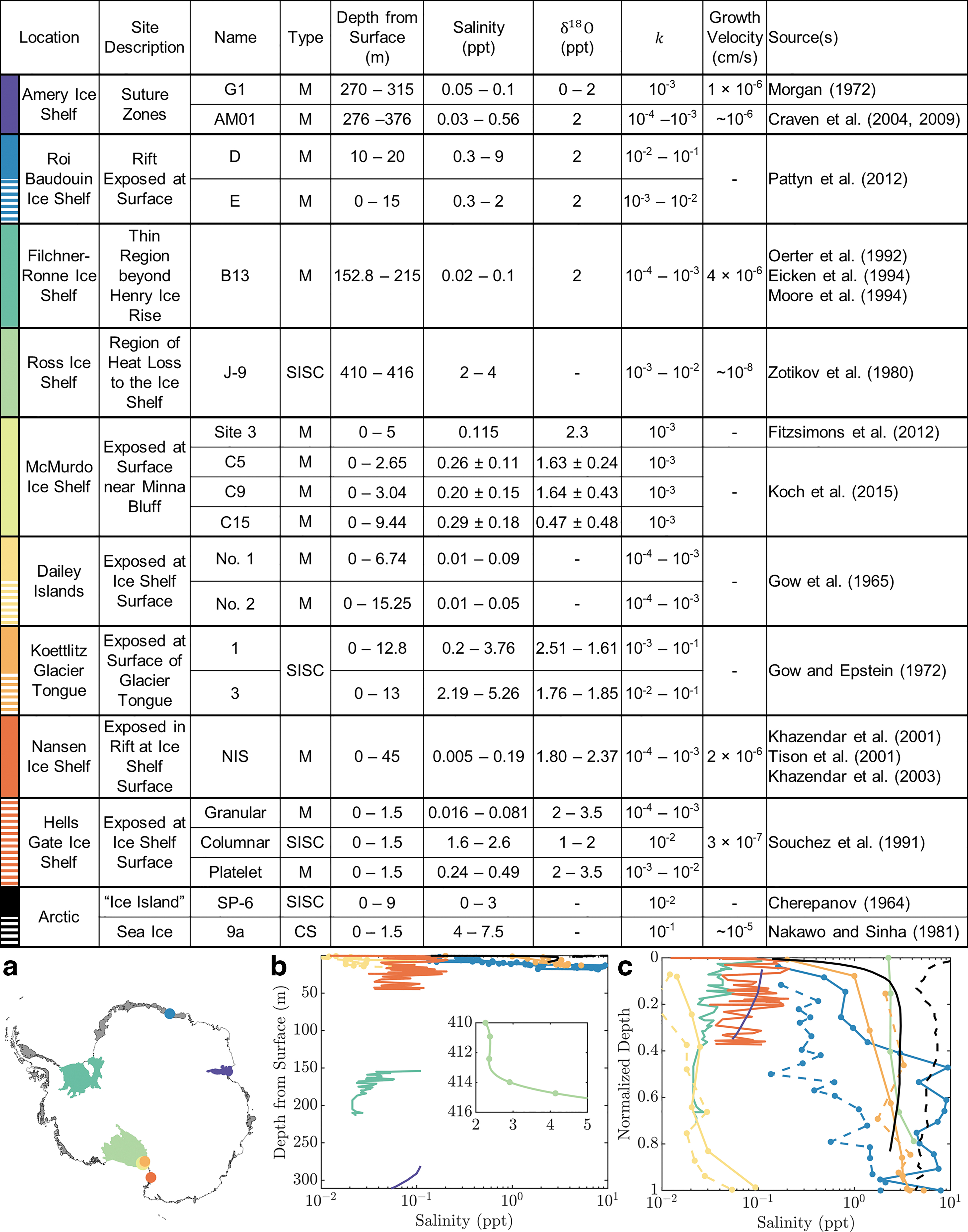
A summary of properties and characteristics of terrestrial accreted ice from published ice core data. The first two columns specify the location where the ice core was collected and a description of the sample site. The sites are color and texture coded by the ice shelf and presented in the map of Antarctica in
A simple model to predict the formation of congelation ice beneath an ice shelf was proposed by the Ross Ice Shelf Project (RISP) and summarized by Neal (1979). When water at the pressure-melting temperature flows in the direction of increasing ice shelf thickness, it must dissipate heat to remain at the pressure-melting temperature. Under conditions where the thickness gradient and flow speed are such that the sensible heat conduction to the overlying ice layer exceeds that which must be dissipated at the boundary layer to maintain the pressure-melting temperature, bottom freezing will occur (Neal, 1979).
The J-9 Ross Ice Shelf core represents a unique and valuable sample of congelation ice acquired at a depth of ∼400 m within a zone of bottom freezing (Zotikov et al., 1980). The published sample is uniquely well characterized for sub-ice-shelf congelation ice and includes measurements of salinity, grain size, texture, and freezing rate. The freezing rate estimate was obtained from an observed transition in growth conditions at the bottom 2 cm, which was attributed to localized melting caused by a drilling expedition the previous year (Zotikov et al., 1980). The estimate was validated by a simple heat transfer calculation (Zotikov et al., 1980) and represents the only estimate of sub-ice-shelf congelation ice growth rate obtained through direct inspection of a sample of the basal accreted ice.
Congelation ice can also form beneath ice shelves experiencing high rates of surface ablation (e.g., locations with strong katabatic winds) (Souchez et al., 1991).
We review published studies characterizing the bulk salinity of accreted ice to develop an understanding for how salt entrainment processes might scale to the ice shells of ocean worlds. As ice forms, salts are rejected from the crystal lattice to the grain boundaries as brine. Select impurities, specifically chloride, fluoride, ammonium, and acids (H+), are soluble within the ice lattice and are accommodated as defects within the ice crystal.
The total concentration of salts in ice, including both those accommodated within the lattice and those along grain boundaries, is referred to as the bulk salinity (Hunke et al., 2011). Because the efficiency of salt entrainment in ice is correlated to the ice growth velocity, we explore relationships modeling the bulk salinity of ice as a function of growth velocity and show that only salt entrainment in the slowest growth velocity regime is relevant to the bulk salinity of the ice shells of Europa and Enceladus. We then focus our study on ice cores collected in environments that represent ice-ocean accretion within this regime.
Congelation ice across growth regimes
The partitioning of salt into ice,
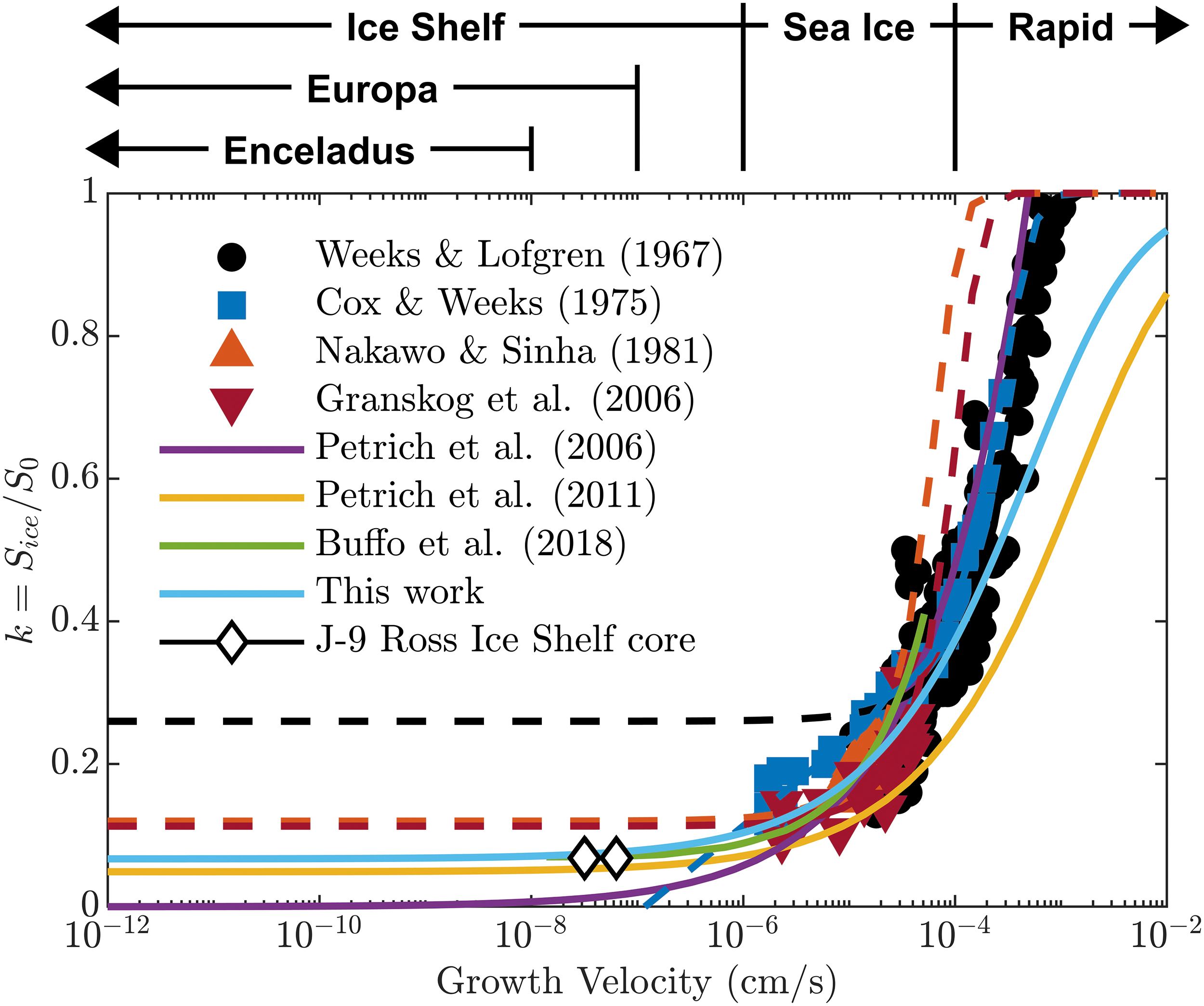
Summary of relationships representing the effective solute distribution coefficient, k = Sice/S 0, as a function of ice growth velocity. The markers represent data points from experimental or field data. Solid lines through data points represent least squares fits of the data to published models for the solute distribution coefficient, where dashed lines represent extensions of the model beyond the available data range. The green curve is a smoothed representation of multiple runs of the mushy-layer model of Buffo et al. (2018), assuming a critical porosity inferred from the salinity of the J-9 core from Ross Ice Shelf, Antarctica. The light blue curve represents the model presented in Equation 6.
Parameterizations of salt partitioning based on growth velocity represent a computationally inexpensive approach to augment simple freezing models that do not directly model ice desalination processes. Furthermore, representing the salinity of ice as a fraction of ocean salinity allows salt entrainment in ice to be parameterized independent of the source water salinity. Even though more complex numerical models of ice desalination processes exist (Griewank and Notz, 2013; Buffo et al., 2018; Wells et al., 2019), effective solute distribution coefficients are invaluable for certain planetary applications where high-resolution salinity profiles are not needed and properties of the ocean are poorly constrained.
At growth velocities above those naturally occurring on Earth (Fig. 3), ice experiences minimal fractionation (
Published measurements of sea ice growth rates span from
The dataset of Nakawo and Sinha (1981) is particularly valuable because of the high sampling frequency of ice salinity and temperature they obtained over the growth season that produced nearly continuous profiles of ice salinity and growth rate. Although growth velocities for the sea ice regime and above are not directly applicable to accretion occurring at the ice-ocean interface of ocean worlds (Fig. 3), this represents the regime where the effective solute distribution coefficient is the most sensitive to growth velocity and where more significant variations in bulk ice shell salinity might occur.
At a certain stage in growth, the salinity profile of the ice no longer evolves in time due to progressive brine drainage. This salinity has been referred to as the stable salinity (Nakawo and Sinha, 1981; Petrich et al., 2006) or steady-state salinity (Petrich et al., 2011). The natural congelation ice samples of Nakawo and Sinha (1981) in Fig. 3 are believed to be representative of this stable salinity and, as such, fall below the experimental data, which were not given sufficient time to reach this steady-state condition.
The Baltic sea ice samples of Granskog et al. (2006) in Fig. 3 represent the stable salinity of ice formed from a lower salinity source water. These data suggest that a lower salinity source water may enhance the efficiency of salt rejection, possibly due to a change in interface morphology (Granskog et al., 2006). Their data are consistent with those of Weeks and Lofgren (1967), which included samples formed from low salinity source waters.
Because salt in ice is predominantly trapped interstitially as brine, the steady-state salinity is believed to be coupled to a critical porosity (∼5%) below which ice is believed to be impermeable to brine transport (Golden et al., 1998, 2007). The critical porosity is typically a prescribed parameter in numerical models of sea ice desalination (Petrich et al., 2011; Griewank and Notz, 2013; Buffo et al., 2018, 2020; Wells et al., 2019) and governs the finite ice salinity that the model asymptotically approaches as the growth velocity approaches zero (i.e., the system reaches equilibrium) (Fig. 3).
The distribution coefficient associated with this limit has been referred to as the effective equilibrium distribution coefficient,
Figure 3 demonstrates that at the growth velocities predicted for the ice shells of ocean worlds, the effective equilibrium solute distribution coefficient should govern the bulk salinity of the ice shell.
For ocean worlds, we are interested in the accretion of ice in low temperature gradient environments characterized by growth velocities within the ice shelf regime (
We provide characteristics of the environment in which the ice formed, including depth from the surface as a proxy for temperature gradient (i.e., deeper ice implying a lower temperature gradient) and estimates of growth velocity where available. We also include properties of the ice such as salinity and δ18O where known, which can serve as a proxy for modification of the seawater by glacial meltwater (i.e., values close to 2‰ implying minimal modification). δ18O is often used to determine the origin of the ice (i.e., marine or meteoric) when the salinity signal is ambiguous (Gow and Epstein, 1972; Morgan, 1972; Oerter et al., 1992). Estimates for the effective solute distribution coefficient were obtained by dividing the ice salinity by the salinity of seawater, assumed to be 35 ppt.
Although it represents a relevant analogue, we exclude the ice core from Lake Vostok because the mechanism of accretion remains debated, and the properties of the lake water are not well constrained (Souchez et al., 2000, 2004; Lipenkov et al., 2015). Table 3 presents the values of
Equilibrium Distribution Coefficients Inferred from Published Samples of Natural Accreted Ice from Earth
Equilibrium Distribution Coefficients Inferred from Published Samples of Natural Accreted Ice from Earth
Values were derived by using the minimum salinity observed in the core and an ocean salinity of 35 ppt. Where a trend (either increasing or decreasing) was absent in the salinity profile, the mean salinity was adopted instead. Only ice cores where meltwater did not appear to contribute significantly to the salinity signal (i.e.,
M = marine ice; SISC = sub-ice-shelf congelation ice.
Samples of congelation ice formed in low temperature gradient environments are limited (Fig. 4). Unlike sea ice, where growth velocities can be estimated by periodic measurements over the growth season (Nakawo and Sinha, 1981), estimates of growth velocity for congelation ice beneath ice shelves are obtained using models. Certain ice cores collected from ice shelves in Antarctica (Ross Ice Shelf, Koettlitz Glacier Tongue, Hells Gate Ice Shelf) were observed to have the columnar texture indicative of congelation ice (Gow and Epstein, 1972; Zotikov et al., 1980; Souchez et al., 1991).
Published estimates of the growth velocities associated with accreted ice found beneath ice shelves (Fig. 4) are well within the asymptotic growth velocity regime of the models in Fig. 3. Because of its extensive thickness, the sea ice island SP-6 likely approaches temperature gradients within this regime and is, thus, also classified as sub-ice-shelf congelation ice (Fig. 4). The salinity of accreted ice at these low temperature gradients can, thus, be used to estimate
The bottom 2 cm of the Ross Ice Shelf core was described to have a “waffle-like” texture (Fig. 2), consistent with an actively growing congelation ice layer (Zotikov et al., 1980), often referred to as a “skeletal layer” (Buffo et al., 2020). The salinity profile reveals a transition at ∼2 m above the ice-ocean interface from constant to monotonically increasing with depth (Fig. 4b). In sea ice, an increase in salinity with depth near the base is recognized to be a feature of growing sea ice (Eicken, 1992). The increasing salinity observed near the base of the Ross Ice Shelf core and the description of the basal texture suggest that the bottom 2 m of the Ross Ice Shelf core is in a state of active desalination. However, the constant salinity observed above this transition can be considered the stable salinity, attained at growth rates within the asymptotic regime (Figs. 3 and 4), and can thus be used to obtain an estimate of
The salinity profiles associated with the Koettlitz Glacier Tongue ice cores do not appear to have achieved a stable salinity, particularly the ice sampled from Hole 3 (Fig. 4c). This interpretation is supported by samples of seawater obtained from the bottom of Hole 3, which was found to be enriched in salt, suggesting that the ice in this location is also actively desalinating (Gow and Epstein, 1972). In addition, the δ18O signal shows slight modification of the ice source water by glacial meltwater. These observations suggest that the Koettlitz Glacier Tongue ice cores may not be representative of an equilibrium state of salt partitioning, although the salinity profile of Hole 1 suggests that a stable salinity could fall between 2 and 3 ppt, which is similar to the Ross Ice Shelf core. A salinity profile was not available for the Hells Gate Ice Shelf columnar ice (Souchez et al., 1991); however, the δ18O signal presents with some evidence of modification by glacial meltwater. Therefore, we adopt the maximum observed salinity to estimate a value for
The salinity profile associated with Ice Island SP-6 drops off sharply near the ice-atmosphere interface (Fig. 4c), which is indicative of post-genetic brine redistribution (Eicken, 1992). As such, for SP-6, we adopt the mean salinity to estimate
The equilibrium distribution coefficients derived from these congelation cores are similar to one another and on the order of 10−2 (Table 3). Of the sub-ice-shelf congelation cores considered here, the salinity profile associated with the Ross Ice Shelf core shows the least evidence of post-genetic desalination or brine redistribution. As such, we argue that the stable salinity of this ice core is representative of the effective equilibrium solute distribution coefficient for natural congelation ice,
Notably, this value is similar to the critical porosity of 5% for sea ice discussed in the previous section and is consistent with the upper bound of 0.07 in Petrich and Eicken (2017). The observation that the critical porosity appears to govern the bulk salinity of congelation ice even at low temperature gradients (i.e., growth velocities ∼10−8 cm/s) lends credence to its potential for governing the stable salinity of an ice shell formed through directional freezing.
Marine ice
The distribution coefficients associated with marine ice can be lower than the equilibrium distribution coefficients for congelation ice by up to two orders of magnitude (Table 3 and Fig. 4), generally falling between
The salinity profiles of the Roi Baudouin Ice Shelf cores are anomalously high relative to those of other marine ice cores (Fig. 4b, c) and approach values comparable to that of sea ice. Recent consolidation was proposed as an explanation for the high salinity of the Roi Baudouin cores (Pattyn et al., 2012), implying that young marine ice may initially present with salinities commensurate with sea ice but will gradually desalinate and approach a steady state over time due to increased accumulation and consolidation. This interpretation is supported by their salinity profiles, which depict a stable salinity similar to that of the marine ice at McMurdo Ice Shelf that transitions to an increasing salinity with depth (Fig. 4c).
An alternative explanation is that the Roi Baudouin marine ice formed in a high-temperature gradient environment and is analogous to platelet ice. However, the site is not unlike the rift at Nansen Ice Shelf where the salinity of the marine ice there was found to be similar to other marine samples (Khazendar et al., 2001; Tison et al., 2001). The rift at Nansen Ice Shelf is located in an area with strong katabatic winds, which could result in the ablation of the marine ice that originally infilled the rift (Khazendar et al., 2001).
This suggests that the marine ice exposed at the surface may have formed at a lower depth, much like at Hells Gate Ice Shelf where katabatic winds expose basal marine ice at the surface near the ice shelf terminus (Souchez et al., 1991). Marine ice at Nansen Ice Shelf may have initially shared characteristics with that of Roi Baudouin but became more homogenous and consolidated over time.
The age of the marine ice appears to be a more dominant factor in governing the bulk salinity than the temperature gradient, supporting the idea that the consolidation mechanism is a compaction and not congelation process. This is evident from the plots in Fig. 4c that demonstrate that increased depth does not correlate to decreased salinity. Although the Dailey Island cores correspond to the lowest salinity marine ice samples (Fig. 4c), because
The salinities of the Nansen Ice Shelf core, Filchner-Ronne Ice Shelf core, and the Amery Ice Shelf core are approximately equal although they were sampled from depths that differed by more than 100 m from each other. The profiles associated with the Amery Ice Shelf and Nansen Ice Shelf cores suggest that the salinity could continue decreasing beyond the region sampled. As such, the equilibrium distribution coefficients derived from these cores may be overestimates (Table 3). The Filchner-Ronne Ice Shelf core, on the other hand, shows evidence of achieving a stable salinity near the base of the core. We, thus, adopt
Accretion Beneath the Ice Shells of Ocean Worlds
Although there have been no direct observations of the interior of the ice shells of ocean worlds, features observed at the surfaces or inferred about the ice shell topography have led to the development of hypotheses for processes that either directly appeal to the accretion of ice at the ice-ocean interface or are consistent with conditions that promote it (Soderlund et al., 2020). These features are scars of processes that modify bulk ice shell properties and serve as a record of heterogeneities introduced into the native shell.
Bulk salinity of a congelation ice shell
We estimate the bulk salinity of a congelation ice shell using a 1D solidification model known as the Stefan problem, where heat is conducted from the interface through the overlying ice. This model has been previously applied to Europa's ice shell (Quick and Marsh, 2015; Buffo et al., 2021b); however, we specifically adopt the form published in Lior (1996). The analytical solution to this problem represents the temperature in the ice, T, as a function of position, x, and time, t, and is given by
where Ts
is the surface temperature, Tf
is the freezing temperature,
where
where cp
is the specific heat capacity of ice, and L is the latent heat of fusion. The position of the ice-water interface as a function of time can be expressed in terms of these variables as
and the velocity of the ice-water interface is
which corresponds to the time derivative of Equation 4. We use Equation 5 to estimate ice shell growth rate as a function of the ice-water interface position, represented by ice thickness (Fig. 5). We assume the ocean is at the melting temperature of 270 K and that the thermophysical properties of the ice shell are represented by pure ice at this same temperature and a pressure of 1 atm (Feistel and Wagner, 2006).

We evaluate four cases, assuming upper boundary conditions of 50 K, 100 K, 200 K, and 250 K to approximate surface temperatures expected at icy ocean worlds. 50 K represents a lower bound surface temperature for both Europa and Enceladus, 100 K represents the mean annual surface temperature of Europa's ice shell (Ojakangas and Stevenson, 1989; Ashkenazy, 2019), 200 K represents the maximum temperature near the tiger stripes of Enceladus (Spencer et al., 2018), and 250 K is intended to represent a terrestrial boundary condition. Higher surface temperatures result in lower growth rates for a given ice shell thickness. Using this model, we can estimate an upper bound on ice shell growth rate and thus estimate the maximum salinity of the bulk ice shell.
Instead of explicitly modeling salt rejection, as in the works of Buffo et al. (2020) and Buffo et al. (2021a), we represent the incorporation of salt as a function of growth velocity by using a model for
where
We fit Equation 6 to the data of Nakawo and Sinha (1981) to obtain
We find that the growth velocity transitions to the ice shelf regime (Fig. 3) below ∼100 m depth for all surface temperatures considered. This is similar to the results of Buffo et al. (2020), which found that the salinity profile approaches an asymptotic value below ∼300 m. This supports the conclusion that the bulk salinity for a large fraction of the ice shell will correspond to a value approaching the effective equilibrium solute distribution coefficient.
Note that the lower limit bulk ice shell salinity predicted by Buffo et al. (2020) corresponds to an effective equilibrium solute distribution coefficient governed by the apparent critical porosity in congelation ice (∼0.05). We instead adopt an effective equilibrium solute distribution coefficient of
Although the critical porosity appears to be a significant factor governing the effective equilibrium solute distribution coefficient in natural congelation ice, as the growth velocity approaches zero, the ice-water interface geometry should become planar and as a result will be incapable of entrapping brine (Eicken, 1998). A planar interface is generally stable for lake ice on Earth because of the relative purity of the water (≲1 ppt); however, the same phenomenon can occur if the growth velocity falls below a critical growth velocity for a higher salinity of water (Wettlaufer, 1992; Maus, 2007a).
The development of a stable planar interface under the appropriate growth conditions is a phenomenon that has been studied in both nature and laboratory experiments for decades (Weeks and Lofgren, 1967; Grothe et al., 2014). In experiments, the transition from a cellular to planar interface coincides with a drastic change in appearance (cloudy to clear) and a reduction in effective solute distribution coefficient that can exceed an order of magnitude (Weeks and Lofgren, 1967; Osterkamp and Weber, 1970; Kvajić and Brajović, 1971; Maus, 2007b). This suggests the potential existence of a congelation ice shell where the bulk salinity is not governed by the critical porosity.
Although the existence of a critical growth velocity is not controversial, the magnitude of the critical growth velocity is challenging to constrain. Morphological stability theory, originally proposed by Mullins and Sekerka (1964), has been leveraged by a number of authors to investigate the development of a cellular interface in the freezing of saltwater systems (Wettlaufer, 1992; Maus, 2007a). The theory has been augmented through the years (Coriell et al., 1985; Sekerka et al., 2015) and is still an active area of research (Maus, 2020).
The theory predicts the existence of a critical growth velocity below which a planar ice-water interface should be stable for any wavelength perturbation. The magnitude of this critical growth velocity is poorly constrained by the theory and is highly sensitive to parameters, including the solution concentration (i.e., salinity), the interfacial solute distribution coefficient (
To illustrate the onset of this transition during the thickening of an ice shell (Fig. 5), we adopt the values obtained by Wettlaufer (1992) from a linear stability analysis applied to the interface morphology of a sodium chloride system for a solution concentration approximately equal to the Earth's ocean (∼35 ppt). The critical growth velocity of
Their results demonstrate that the more efficient the ice is at rejecting the solute, the lower the critical velocity for the onset of interface instability for a given solution concentration. The upper estimate for critical growth velocity is reached for an ice shell thickness less than ∼10 km for all surface temperatures considered (Fig. 5). Again, note that we adopt the values in Fig. 5 for illustration purposes only and the true value could be orders of magnitude lower.
Below the critical velocity, we assume that a planar-ice water interface remains stable and that the bulk salinity of the ice shell will be governed by the equilibrium distribution coefficient (note the absence of “effective”) for congelation ice, where impurities are retained predominantly within the ice lattice (i.e., not incorporated interstitially as brine). However, soluble salts can be accommodated in the ice lattice only up to a certain concentration referred to as the solubility limit. From both natural and artificial samples, the solubility limit for chloride in ice has been inferred to be ∼300 μM (Seidensticker, 1972; Gross et al., 1977; Moore et al., 1994), although in the presence of ammonium the solubility limit increases (Gross et al., 1977).
There is some evidence that the solubility limit may be higher in ice that has undergone recrystallization (Moore et al., 1994), suggesting that marine ice may be able to accommodate more chloride than sub-ice shelf congelation ice. The chloride distribution coefficients obtained by Gross et al. (1977) represent salt entrainment through incorporation of impurities in the ice lattice and serve as the lower bound of equilibrium distribution coefficients for congelation ice.
Their values are similar to earlier works that estimated equilibrium distribution coefficients on the order of 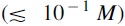 and did not occupy interstitial sites, the average equilibrium distribution coefficient was determined to be
Note that this distribution coefficient applies to chloride and not the associated cation pair, which was found to be significantly less soluble (Gross et al., 1977). In the presence of ammonium, the equilibrium distribution coefficient increased to
Although the distribution coefficient almost doubled at this transition, it was independent of the solution concentration both below and above this transition. It is unclear whether a solution composed entirely of insoluble salts, such as magnesium sulfate, would be accommodated as efficiently because it would be limited to interstitial sites. It is also possible that because of its inability to be accommodated in the lattice, a solution dominant in lattice insoluble salts may promote interface breakdown and enhance interstitial entrapment.
These models imply that the native bulk salinity of a congelation ice shell should be <10% of the ocean salinity, where sub-ice-shelf congelation ice cores imply a bulk salinity between 6% and 7%. There are two cases where we might expect a higher salinity layer to be present near the ice shelf surface: (i) catastrophic melting and subsequent refreezing of an ice shell, although this would likely only extend to ∼100 m depth, and (ii) rapid refreezing of intrusive features, if they extend far enough into the cold ice shell interior (Buffo et al., 2020).
If the ice shell growth velocity is sufficiently slow, such that a planar interface remains stable as the ice shell thickens, the ice shell salinity reduces to <1% of the ocean salinity. For a planar interface at near-equilibrium conditions, the salts entrained are dominantly lattice soluble salts, such as chloride. The experiments of Gross et al. (1977) suggest that the ice chlorinity will be 0.27% of the ocean chlorinity. In the case that the chlorides cannot be entirely accommodated within the lattice, the ice shell chlorinity will be 0.47% of the ocean chlorinity and permit some interstitial incorporation of impurities.
Diagenetic processes can operate to alter the bulk ice shell salinity post-accretion. The flushing of interstitial impurities by meltwater could locally reduce the ice shell salinity, whereas refreezing of meltwater could locally enhance the ice shell salinity. In the ice shells of ocean worlds, meltwater may be generated through tidal heating (Sotin et al., 2002), through frictional heating caused by tectonic activity (Gaidos and Nimmo, 2000; Nimmo and Gaidos, 2002), or by convective currents (Kalousová et al., 2014).
Whether this melt can drain through the ice shell is critically dependent on the ice shell permeability (Kalousová et al., 2014; Hesse et al., 2022). If interstitial impurities are removed due to flushing or drainage, the bulk salinity would be governed by the concentration of impurities accommodated in the ice lattice. For ice saturated with chloride, this would imply an ice shell chlorinity of ∼10 mg/kg, which is on the order of ice shell salinity predicted by Steinbrügge et al. (2020).
Fluctuations in ice shell growth rates have the potential to generate vertical and regional heterogeneities in ice shell salinity. However, predicted growth rates suggest that fluctuations are likely to fall within the low growth velocity regime (Table 2 and Fig. 3), where the effective solute distribution coefficient is relatively insensitive to changes in growth velocity. Peddinti and McNamara (2019) predict an increase in growth rate from 5.67 to 8.22 km/Myr associated with the merging of convective cells within Europa's ice shell, which translates to growth velocities of
Growth rate estimates obtained by other authors are typically on the order of
At Enceladus, observed topographic anomalies are believed to be maintained by melting/freezing less than a few millimeters per year (Čadek et al., 2019; Kang et al., 2021), which translates to growth velocities on the order of
The ice-ocean interfaces of icy ocean worlds represent dynamic environments characterized by gradients in ice thickness on both regional and local scales (Nimmo et al., 2007; Nimmo and Bills, 2010; Čadek et al., 2019; Hemingway and Mittal, 2019; Soderlund et al., 2020).
Rifts and basal features, such as crevasses and troughs, represent favorable locations for the formation and accretion of frazil ice in an ice shell. A number of processes have been demonstrated to generate stresses that are sufficient to cause fracturing in the ice shell, including impacts (Roberts and Stickle, 2021; Turtle and Pierazzo, 2001), pressurization due to cooling and thickening (Nimmo, 2004b; Manga and Wang, 2007; Johnston and Montési, 2017; Hemingway et al., 2020), tidal forcing/nonsynchronous rotation (Helfenstein and Parmentier, 1985; Geissler et al., 1998; Greenberg et al., 1998; Hoppa, 1999; Lee et al., 2005; Hurford et al., 2007; Rhoden et al., 2012; Patthoff et al., 2019), and true polar wander (Schenk et al., 2008; Rhoden et al., 2011; Tajeddine et al., 2017).
The fracturing of an ice shell has important implications for surface-ice-ocean exchange and, as such, has been studied extensively. Early work by Crawford and Stevenson (1988) examined both surface and basal fractures as resurfacing mechanisms for Europa's ice shell. They found that direct conduits extending from the surface through an ice shell were unlikely due to the need for high stresses applied rapidly that cannot be supplied by any process believed to be operating at Europa. Basal fractures were also shown to be incapable of extending to the surface; however, they extended over an order of magnitude farther than surface fractures.
Although basal ice is ductile, Crawford and Stevenson (1988) argue that crack initiation and propagation is possible if the ice is strained sufficiently rapidly compared with the Maxwell time. This condition is possibly satisfied by the eccentricity tides that are ∼105 s and comparable to the Maxwell time of ∼104 s (Crawford and Stevenson, 1988).
The model of Lee et al. (2005) showed that surface fractures could penetrate the entire brittle part of the ice shell, in the case where a brittle and ductile layer are mechanically decoupled. They did not study basal fractures, citing that they were less likely to occur than surface fractures based on the increase in ice strength with depth, due to pore closure, and their interpretation of the results of Crawford and Stevenson (1988).
Rudolph and Manga (2009) show that in the presence of a relaxed basal layer, fractures on Europa cannot penetrate the ice shell for thicknesses greater than a few kilometers. Because the gravitational acceleration at Enceladus is a fraction of that at Europa, fractures could penetrate the ice shell for thicknesses up to tens of kilometers (Rudolph and Manga, 2009).
The ice shell thickness where the tiger stripes are located is believed to be <10 km (Hemingway et al., 2020), supporting the interpretation that these features are fractures connecting the ice shell surface to a subsurface ocean (Postberg et al., 2011; Spencer et al., 2018). The ice collapse model of Walker and Schmidt (2015) suggests that basal fractures could form above a subsurface water pocket; however, this mechanism would not necessarily translate to the formation of basal fractures at an ice-ocean interface.
Hemingway et al. (2020) argue that a surface fracture could penetrate a ductile ice layer in an ice shell, so long as it is not too thick, because the layer will exhibit elasticity on timescales that are relevant to fracture propagation. Walker et al. (2021) show that tensile fractures initiating from the base of an ice shell can propagate further into the interior than surface fractures. Furthermore, they showed that a connection between the surface and ice-ocean interface can be achieved if basal tensile fractures connect to the surface through shear failure.
Broadly, these works suggest that basal fractures extending into the ice shell interior are possible—if the basal ice is subject to a sufficiently high strain rate—and that rifts extending through the entirety of an ice shell are unlikely for Europa but possible under specific conditions. Still, many authors attribute surface features at Europa such as domes, pits, and lenticulae to the presence of sills within the ice shell and implicate vertical fractures extending from the ice-ocean interface in their formation (Michaut and Manga, 2014; Craft et al., 2016).
Furthermore, observations and interpretations of putative plume activity at Europa (Sparks et al., 2017; Jia et al., 2018) and Enceladus (Postberg et al., 2011) provide strong evidence that fractures in the ice shell serve as a connection between the surface and some subsurface water reservoir. Where cracks may penetrate the entirety of an ice shell, such as the tiger stripes at Enceladus, the resulting plumes would likely include samples of relatively unfractionated ice formed from agglomerated frazil crystals that nucleated within the turbulent, supercooled water column as the ocean water was brought to the surface.
Given the fast rate of ice formation, the salinity and compositional signal likely experiences minimal fractionation,
Ice shell thickness variations on regional scales have been inferred from models and observations of ocean worlds. Models of the ice shell thickness of Enceladus based on observations of the shape (Tajeddine et al., 2017) and gravity (Iess et al., 2014) by Cassini suggest the presence of lateral variations in the ice shell thickness (Čadek et al., 2019). Limb profiles of Europa suggest either a thin ice shell (<35 km) with lateral thickness variations below the detection threshold or a thicker shell in which lateral flow or convection promote a uniform ice shell thickness (Nimmo et al., 2007).
Although the ice shell thickness of Europa is more poorly constrained than Enceladus (Billings and Kattenhorn, 2005; Howell, 2021), multiple models have demonstrated that variations in surface temperature and basal heat flux could promote lateral thickness gradients (Soderlund et al., 2013; Ashkenazy et al., 2018; Čadek et al., 2019; Soderlund, 2019). These lateral thickness gradients could plausibly occur in any icy ocean world with large surface temperature gradients in latitude and/or heterogeneous tidal heating. Because these lateral thickness gradients are unstable (from both a mechanical and a thermodynamic perspective), mechanisms will operate to homogenize the ice shell thickness.
Two mechanisms have been proposed for the homogenization of ice shell thickness: (i) the pressure gradient induced by the variable ice thickness will drive basal ice flow from thicker to thinner regions of the ice shell (Ojakangas and Stevenson 1989; Nimmo 2004a; Nimmo et al., 2007; Ashkenazy et al., 2018) and (ii) an “ice pump,” described by Lewis and Perkin (1986), will operate to melt ice where the ice shell is thick and accrete ice where the ice shell is thin (Vance and Goodman, 2009; Soderlund et al., 2013).
Both properties likely play a role in homogenizing ice shell thickness gradients, although environmental factors such as ocean circulation and tidal velocity will determine which process dominates (Goodman 2018). The ice flux resulting from viscous flow at the base of the ice shell has been estimated to range from fractions of a millimeter to centimeters per year at Europa (Ashkenazy et al., 2018) and less than a few millimeters per year at Enceladus (i.e., on the same timescales as melting) (Kamata and Nimmo 2017), whereas marine ice accretion rates on Earth, driven by the “ice pump,” are on the order of meters per year (Craven et al., 2009).
We, thus focus our discussion on the “ice pump,” which could infill these features on shorter timescales than viscous flow. As the buoyant meltwater is transported along the ice-ocean interface in the direction of decreasing ice thickness, it will become supercooled due to the reduction in pressure and prime the generation of frazil ice.
For terrestrial ice shelves, the ice pump process is approximately adiabatic (Foldvik and Kvinge, 1974; Tison et al., 1998; Koch et al., 2015; Hoppmann et al., 2020). Neglecting heat transfer between water masses is likely only a valid assumption over certain spatiotemporal scales, which may be exceeded when applied to regional scale thickness gradients in the ice shells of ocean worlds. Crevasses, troughs, and rifts, on the other hand, represent high gradient features that can promote substantial supercooling through the operation of a highly localized ice pump.
The magnitude of potential supercooling will be governed by the feature's vertical extent in the ice shell, equivalent to the difference in the pressure melting temperature expected by a reduction in overburden pressure (Fig. 1). These high gradient features also provide a means to shelter the frazil ice from potentially strong sub-ice currents (Soderlund et al., 2020), allowing crystals to accumulate and consolidate, forming marine ice. This process is analogous to the infilling of rifts at the Nansen and Roi Baudouin Ice Shelves by marine ice (Fig. 4).
The texture of the Nansen Ice Shelf core was not columnar, suggesting that no congelation growth had occurred within the rift (Khazendar et al., 2001). This suggests that the infilling of high gradient features in the ice shells of ocean worlds would likely be dominated by frazil ice, as opposed to congelation ice, by nature of both the localized ice pump and the relatively low temperature gradients expected near the base of the ice shell. In this case, the salinity profile will likely decrease with depth within the consolidated layer.
At the permeable-impermeable boundary, the salinity may appear to level off before increasing again as the brine volume fraction increases with depth (Fig. 4). It is possible that if the fracture penetrated far enough into the ice shell such that the surrounding ice was substantially colder, congelation ice could play more of a role as modeled in Buffo et al. (2020).
Implications of Accretion at the Ice-Ocean Interface
Geophysical implications of heterogeneous accretion
The accretion of frazil ice within basal features in a congelation ice shell has significant implications for processes governing surface-ice-ocean exchange. Frazil ice accretion serves as a vehicle to deliver both sensible heat and latent heat into the ice shell interior. Sensible heat is delivered through the introduction of warm ice (relative to the ice shell interior), as frazil ice infills and consolidates within basal features. The relative warmth of marine ice within an ice shelf is supported by borehole measurements from Amery Ice Shelf, which show that the temperature profile within the marine ice layer is nearly isothermal at a temperature close to the freezing point of the underlying seawater (Craven et al., 2009).
The gradual consolidation and interstitial freezing of brine pockets further releases latent heat into the ice shell, serving as an additional mechanism to thermally perturb the ice shell. Because of the timescales of tidal cycles on Enceladus, it is unlikely that a highly consolidated marine ice would be able to form within the tiger stripes; however, the formation and accumulation of frazil in the fissures could be capable of modulating eruptions, a role previously attributed to turbulent dissipation alone (Kite and Rubin, 2016).
Marine ice is more ductile than meteoric ice (Holland et al., 2009; Jansen et al., 2013; Kulessa et al., 2014; McGrath et al., 2014); however, it is still an open area of research as to whether this could be an intrinsic material property or can be attributed to elevated temperatures alone (Dierckx and Tison, 2013; Craw, 2020). The infilling of basal features by more ductile ice could affect the mechanical properties of the ice shell. On Earth, marine ice accretion is believed to play an important role in stabilizing ice shelves against collapse through the infilling of regions of weakness (Holland et al., 2009; Khazendar et al., 2009; Kulessa et al., 2014) and could play a similar role in ice shells.
The observation that fractures propagating in ice shelves arrest when encountering features infilled with marine ice (McGrath et al., 2014) could guide inferences of subsurface properties of an ice shell by using observations of the fractured surface terrain. The accretion of marine ice within suture zones has been shown to channel shear deformation, enabling the decoupling of adjacent units of ice flowing at different velocities (Jansen et al., 2013). As such, accretion in pre-existing fractures could facilitate strike-slip and lateral displacement, believed to be responsible for the linea observed on Europa's surface (Hoppa, 1999; Hoppa et al., 2000; Prockter et al., 2000; Hammond, 2020).
Enhanced ductility within these features might also favor heating over fracturing when subject to tidal deformation, potentially resulting in positive feedback. The enhanced ductility would also increase the Rayleigh number (ratio of buoyancy to diffusion), influencing convective vigor and modulating its responses to tidal forcing. This suggests that marine ice accretion could also play a role in transitioning between convective and conductive regimes in an ice shell.
The marine ice infilling these features is not only warmer but could also be significantly purer than the native ice shell material (Table 3). As such, marine ice is both thermally and compositionally buoyant, which could further promote the formation of narrow diapirs that are believed to be responsible for forming Europa's domes (Pappalardo and Barr, 2004). Soderlund et al. (2013) proposed that marine ice accretion on regional scales, modulated by thickness gradients established by heterogeneous ocean-driven heating, could play a role in the formation of chaos terrain through a similar mechanism (Schmidt et al., 2011).
Fractionation
To constrain the habitability of an ocean world, it is important to determine whether the composition of the ice shell is representative of the underlying ocean. Knowledge of the composition of the sub-ice ocean would help decipher whether the ocean is in an oxidizing or reducing state (Zolotov, 2008), which, in turn, would help guide future life-detection missions. In a reducing ocean, organisms might concentrate at the ice-ocean interface where surface oxidants delivered to the ocean could drive metabolism-supporting redox gradients, whereas in an oxidizing ocean organisms might concentrate at the sea floor where water-rock interactions and/or hydrothermal activity could supply reductants (Vance et al., 2016; Russell et al., 2017).
Directly sampling the sub-ice ocean to constrain its composition is a significant engineering challenge (Bryson et al., 2020). Studying the surface or near-surface composition, though still an engineering challenge, represents a more feasible approach in pursuit of constraining the composition and thus redox state of the sub-ice ocean (Hand, 2017). The mode of salt entrainment, whether salt is accommodated within the ice lattice or interstitially as brine pockets, can influence the ice shell composition. A cellular interface would be more favorable for the entrapment of brine pockets than a planar interface, resulting in a bulk ice composition that is more representative of the underlying ocean in terms of the relative concentrations of major ionic species.
Because there are very few studies of the chemistry of low-temperature gradient ice, we include studies of sea ice, in addition to marine ice, to identify processes that can result in fractionation of an ice shell.
The composition of sea ice is generally assumed to be representative of seawater (Petrich and Eicken, 2017), although published studies of accreted ice chemistry suggest that some chemical fractionation occurs in sea and marine ice (Table 4). There does not appear to be any evidence that sulfate or calcium is consistently either enriched or depleted in sea ice, although potassium appears to be depleted across all sea ice samples presented in Table 4.
Fractionation Reported in Samples of Sea Ice and Marine Ice
Fractionation Reported in Samples of Sea Ice and Marine Ice
Enrichment (+) and depletion (−) is taken in reference to what is observed in seawater. Where the fractionation is described as equal ( = ), the relative composition is considered to be within the uncertainty of seawater. Where the fractionation is described as (+/−), some ice cores analyzed in the study were enriched whereas others were depleted depending on sampling location. Where the fractionation is described as ( = /−), the samples broadly suggested relative depletion, but the signal was not consistent across all depths. The fractionation presented for Maus et al. (2011) corresponds to that of the bulk ice. The marine ice sample in Warren et al. (1993) corresponds to the basal ice from Amery Ice Shelf. Ice type follows the same coding described in Fig. 4.
CS = congelation sea ice; M = marine ice.
This is consistent with the idea that the degree of fractionation should scale with ion diffusivity, because potassium represents the fastest diffusing ion and thus is more efficiently removed from the ice through networks of brine channels (Maus et al., 2011). The consistent enrichment of magnesium observed in sea ice (Table 4) cannot be attributed to known cryohydrate precipitation and is likely related to its slow diffusivity relative to chloride (Granskog et al., 2004; Maus et al., 2011). Although calcium and sulfate are also slow diffusing relative to chloride, these ions participate in cryohydrate formation early on in sea ice growth (T > −8°C), which could further influence the fractionation signal.
Studies of fractionation in multi-year sea ice cores (Anderson and Jones, 1985; Gjessing et al., 1993) and changes in fractionation with depth observed in young sea ice cores (Maus et al., 2011) suggest that the fractionation signal may evolve as the ice thickens and ages. The mixing model of Reeburgh and Springer-Young (1983) suggests that melt produced from warming as the ice ages removes ionic species conservatively; however, the sea ice samples of Gjessing et al. (1993) show strong sulfate depletion due to washout from melting snow.
The enrichment observed in certain low salinity samples was interpreted to be the result of refreezing of meltwater (Gjessing et al., 1993). Although mirabilite precipitation is often implicated in observed sulfate enrichment (Granskog et al., 2004), the results of Gjessing et al. (1993) and Maus et al. (2011) suggest that sulfate enrichment could be due to the relatively low diffusivity of sulfate. Because chloride can be accommodated in the lattice, it can be preserved in the ice as other insoluble ions retained in interstitial brine are rejected (Moore et al., 1994).
This phenomenon can be observed in samples of marine ice, where the degree of fractionation appears to increase and chloride becomes more enriched as brine volume fraction and salinity decreases (Moore et al., 1994). Snow ice similarly appears to retain chloride relative to other ions when flushed by meltwater, through a process termed preferential elution (Brimblecombe et al., 1987; Davies et al., 1987). Some studies have shown that sodium is removed at a similar rate to chloride and is the least mobile cation (Brimblecombe et al., 1985, 1987; Tsiouris et al., 1985; Davies et al., 1987), which has been attributed to the role of sea salt in atmospheric condensation by Tsiouris et al. (1985) but could also be related to adsorption effects (Davies et al., 1987). These early works were validated by a recent study that was able to quantify the ion exclusion rates governing the process of preferential elution (Costa et al., 2020).
These studies of terrestrial ice fractionation allow us to identify the processes that may alter the chemical fingerprint of the sub-ice oceans of Europa and Enceladus in their ice shells: differential diffusion and flushing by meltwater. An ice shell that entrains salt through the entrapment of brine pockets should initially be representative of the underlying ocean. This is also true for locations where frazil ice accretion occurs, although there will be some chloride enrichment that will decrease with depth, inversely correlated to salinity and brine volume fraction.
If permeable brine networks remain stable over geologic time, differential diffusion may result in a relative enrichment in magnesium and depletion in potassium. This diffusion can still occur through the ice crystals in the absence of brine networks, although far less efficiently (Price, 2000). The presence of magnesium in the ice shell supports the hypothesis put forth by Brown and Hand (2013) that magnesium salts from the ocean contribute to the radiolytic formation of magnesium sulfate salts at the surface of Europa.
The presence of sulfate salts at surface of the ice shell is not necessarily incompatible with their early precipitation. If the ice becomes impermeable at a temperature above which any cryohydrates precipitate, then the composition of the ice should not differ significantly from that of the sub-ice ocean. If cryohydrates were to precipitate in a permeable medium, there is the potential that flushing from melt could remove these impurities from the ice, assuming brine veins were large enough to transport the minerals.
In the case where a planar microstructural ice-water interface remains stable at very low growth velocities, only impurities that are soluble in the ice lattice, such as chloride, would be incorporated in the ice shell. A similar mechanism to generate an ice shell dominated by chloride is by continuous flushing of interstitial impurities by meltwater. In the case where all brine is drained from the ice shell, chloride could still be preserved within the ice lattice.
This indicates that although chloride salts have been observed on the surface and are correlated with endogenous features (Trumbo et al., 2019), this does not necessarily imply that the ocean is dominantly composed of chloride salts.
Furthermore, the association of chloride with resurfacing features is compatible with the near-surface injection of a chloride-rich brine, where sulfate minerals remain in the subsurface, consistent with the hypothesis of Schmidt et al. (2011) for chaos terrain formation and evolution. Vance et al. (2019) also suggest that an ocean rich in sulfates may not be reflected in Europa's surface composition and attribute this to fractional crystallization (i.e., sulfate minerals precipitate out of solution earlier than chloride minerals). The drainage and subsequent refreezing of melt will likely play an important role in redistributing sulfate in the ice shell, generating regions of local sulfate depletion and enrichment, respectively (Gjessing et al., 1993; Maus et al., 2011).
Constraining the detailed physical structure and chemical characteristics of planetary ices has important implications for potential ice-ocean habitats and their ability to retain biosignatures. In icy world systems (e.g., Europa, Enceladus), the stratigraphic and structural evolution of the ice shell, including porosity, temperature, and chemistry, will determine the spatial habitability of the respective cryosphere and determine the preservation/degradation of biosignatures as they are transported through the ice shell (Schmidt, 2020).
Water activity, the availability of water in an environment (Grant, 2004), is an important metric that governs the ability for organisms to grow and reproduce (Stevenson et al., 2015). Water activity strongly influences the ability of organisms to persist in extreme environments such as hypersaline brines on Earth and the surface of Mars (Oren, 2008; Tosca et al., 2008).
Liquid vein networks and brine pockets are important habitats in both sea ice and glacial ice on Earth (Price, 2000, 2007, 2009). Although the brine channels that form in sea ice are recognized as a significant cryosphere habitat (Loose et al., 2011; Arrigo, 2014), the ice must maintain sufficient permeability to enable nutrient exchange in support of maintaining these habitats. For this reason, the cool, impermeable sea ice interior is considered to be a less favorable environment for organisms relative to the ice-water interface, even though the interior represents an environment where sunlight is more accessible (Arrigo, 2014).
Beneath glacier ice, nutrient exchange within liquid vein networks is considered important to maintaining in-ice habitats in the absence of sunlight (Price, 2000, 2007, 2009). Even so, the discovery of sub-ice-shelf anemones that burrow into relatively impermeable glacial ice suggests that organisms may not be inhibited by the lack of available pathways through the ice (Daly et al., 2013). The complex relationship between ice permeability and habitability is highlighted by studies of sea ice microorganisms that generate extracellular polysaccharide substances (EPS) (Krembs et al., 2011; Raymond, 2011). Although the brine volume fraction in ice is increased in the presence of EPS, the similarly enhanced tortuosity results in a net decrease in permeability, which allows brine to be retained in the ice (Ewert and Deming, 2013).
The ability for ice to entrain biosignatures can also be examined independently from its suitability as a habitat. Studies of sea ice have shown that frazil ice can concentrate biological material through mechanical incorporation resulting from the buoyant consolidation of frazil ice crystals (Garrison et al., 1983, 1989; Clarke and Ackley, 1984). Frazil ice also possesses the unique ability to scavenge material, as it is transported through a water column (Garrison et al., 1989; Reimnitz et al., 1993; Arrigo et al., 2010).
A notable example of these scavenging capabilities can be observed in McMurdo Sound, where benthic fauna, mobilized by anchor ice (i.e., frazil ice that accretes at the seabed), have been found at the surface of the ice shelf (Mager et al., 2013). There have not been many dedicated studies examining the incorporation of biosignatures in marine ice; however, one study of protists in the marine ice of Amery Ice Shelf revealed that these organisms were likely sourced from melting sea ice in the neighboring bay and were entrained in the ice as the meltwater was transported beneath the ice shelf (Roberts et al., 2006). This is significant because although marine ice did not serve as the original habitat to these organisms, it could incorporate and preserve these life forms even in the uppermost portion of the ice.
On ocean worlds, radiolytically generated oxidants transported from the surface may represent a viable alternative to sunlight for sub-ice organisms (Chyba, 2000). If oxidant-limited, organisms within the sub-ice ocean will preferentially inhabit the ice-ocean interface where the ice shell serves as source of oxidants. Vertical motion of the ice-water interface driven by tidal deflection of the ice shell could promote nutrient exchange by permitting an influx of ocean water into the ice interior that might replenish habitats at the ice-ocean interface, similar to the tidally driven recharge of nutrients in sea ice (Arrigo et al., 1995; Arrigo and Thomas, 2004).
The enhanced permeability of frazil ice relative to congelation ice may translate to more efficient tidally driven nutrient exchange at interfaces dominated by such an ice texture and thus perhaps a more favorable habitat. An impermeable ice shell interior may imply a lower concentration of preserved biosignatures if organisms migrate with brine toward the ice-ocean interface. Alternatively, the presence of EPS might prevent the drainage of brine habitats, through altering the structure of the ice, and preserve biosignatures even as the habitat becomes progressively more depleted in nutrients over time.
Even if the ice-ocean interface is not inhabited, if life is present in the source water where frazil ice forms, biosignatures will likely be entrained as the frazil ice rises buoyantly to accumulate and consolidate at the ice-ocean interface. Because the relatively pure frazil ice is also buoyant relative to the surrounding ice shell, it can serve as a vehicle to deliver samples toward the surface where they might be sampled by a lander. Features associated with conditions favorable to the accretion of frazil ice can, thus, serve as promising sites for in situ investigations searching for signs of life.
An additional constraint on biological viability as well as biosignature preservation is the chaotropicity and kosmostropicity of fluids within the shell. A measure of the tendency for solutes to stabilize (kosmotropes) or destabilize (chaotropes) proteins and membranes, chao-/kosmo-tropicity impacts the habitability of brines and could limit the survivability of detectable biosignatures as they are transported through the ice shell and subjected to thermal cycling (Hallsworth et al., 2007; Oren, 2013; Pontefract et al., 2017). In many naturally occurring, charge balanced systems, the presence of kosmostropes offsets the destabilizing nature of chaotropes (e.g., seawater); however, if ions are preferentially fractionated through freezing or precipitation reactions, this balance can be upset and lead to toxic chaotropic solutions (Pontefract et al., 2017; Buffo et al., 2022).
One notable chaotrope is chloride, suggesting that an amplified presence in an ice shell due to fractionation could challenge resident biology if concentrations are high enough (Fox-Powell et al., 2016). The ice salinity and fractionation, thus, play an important role in determining the contemporary habitability of the ice shell as well as in controlling the preservation of relict biosignatures. As such, constraining the ice-ocean interface dynamics—which govern the solute entrainment within and biogeochemical evolution of the shell—is an imperative part of assessing the habitability of ice-ocean worlds and designing life detection missions (Des Marais et al., 2008; National Research Council, 2011; Hendrix et al., 2019).
Conclusions
We have demonstrated that conditions at the ice-ocean interfaces of Europa and Enceladus (e.g., composition, temperature, and pressure) could be similar to those found on Earth. We show that ice that forms in the low temperature gradient environment beneath ice shelves in Antarctica could represent a more relevant analogue than sea ice. Through a systematic review of published ice core samples collected in this low temperature gradient regime, we argue that the critical factors governing the bulk salinity of ice at the low growth velocity conditions expected at the ice-ocean interfaces of icy ocean worlds are the mechanism of accreted ice formation (frazil vs. congelation) and the microstructural interface geometry (planar vs. cellular).
Figure 6 summarizes scenarios that are compatible with the formation of frazil and congelation ice beneath the ice shells of ocean worlds. Estimates of the bulk salinity associated with each mechanism are shown, expressed in terms of an effective equilibrium solute distribution coefficient, which is defined as the ratio of the bulk ice salinity to the salinity of the source water as the growth velocity approaches zero.

Sketch depicting bulk properties of
Cooling of the ocean will promote directional freezing and the formation of a congelation ice shell. Samples of sub-ice-shelf-congelation ice allow us to estimate the bulk salinity of an ice shell formed through congelation growth to be ∼1% to ∼10% of the ocean salinity. The upper bound effective equilibrium solute distribution coefficient derived from sub-ice-shelf congelation ice cores,
The lower bound effective solute distribution coefficient,
If fluctuations in ice shell growth rate occur that allow for transitions in interface morphology, the bulk ice shell salinity could change by an order of magnitude. The bulk salinity of frazil ice, which accumulates and consolidates in ice shell rifts and basal features, is estimated to be ∼0.1% of the ocean salinity by using an effective equilibrium solute distribution coefficient of
Accretion at the ice ocean interface can influence ice shell geophysical processes, composition, the distribution of habitats and biosignatures, and dielectric properties. The infilling of ice shell crevasses and troughs by frazil ice can serve as a mechanism for introducing thermocompositional heterogeneities into the ice shell, which could promote diapirism, influence convection, and locally enhance tidal dissipation.
Studies of fractionation in sea ice suggest that the composition of a congelation ice shell should be approximately representative of the ocean; however, over timescales relevant to the age of the ice shell, diffusion could redistribute impurities such that the ice shell fractionation scales with both age and the mobility of impurities, provided sufficient permeability and concentration gradients are maintained. This would imply a relative enrichment in magnesium and depletion in potassium.
Frazil ice accreting within basal features will become progressively more enriched in chlorides as salinity and brine volume fraction decrease toward the upper end of the ice column. Sulfates will be locally depleted and enriched where melt drainage and refreezing within the ice shell occurs, respectively. Low salinity samples of marine ice and studies of preferential elution in snow melt suggest that if interstitial salts are preferentially removed, such as through flushing of meltwater generated by tidal heating or tectonic activity, the ice shell will be enriched in chlorides.
An ice shell that maintains a planar interface during freezing would also be enriched in chlorides, further supporting the idea that a chloride-dominated surface is not an unambiguous indicator of a chloride-dominated ocean. An enrichment of chlorides could challenge the habitability of brine and preservation of biosignatures within the ice shell.
Locations where frazil ice forms serve as promising targets for sampling potential biosignatures entrained from the ocean given the efficient scavenging abilities of loose crystals, high permeability within the unconsolidated layer that can be recharged with oceanic material by tidal action, and the potential for thermocompositional buoyancy to deliver the material to the surface.
Congelation ice may promote higher brine volume fractions relative to frazil ice at a given temperature due to its higher salinity; however, if the ice is impermeable, this may not translate to a sustainable habitat.
The accretion of ice at the ice-ocean interface will govern the entrainment of oceanic material in the ice shell and serves as the primary filter controlling fingerprints of the ocean observable at the surface, including salinity, the relative concentration of major ionic species, as well as biosignatures. Understanding the eutectic behavior of planetary ice shells, which is directly dependent on the ice shell's composition, will improve habitability investigations for icy ocean worlds by constraining brine volume fraction estimates as well as predictions of interstitial brine chemistry and water activity.
Studies of terrestrial accreted ice can support verification and validation of planned and future missions to icy ocean worlds and serve to constrain the parameter space and detection limits for in situ and remote instrument design. Future work should leverage natural samples of these ices for improved characterization of thermal, mechanical, and electrical properties in support of these missions.
Footnotes
Acknowledgments
We would like to thank two anonymous reviewers for their insightful and constructive feedback. This work benefited from correspondence with Austin Green, John C. Moore, Lisa Craw, Lynnae Quick, Natalie Robinson, Sean Hsu, Sönke Maus, and Yosef Ashkenazy.
Author Disclosure Statement
No competing financial interests exist.
Funding Information
N.S.W. was supported by the G. Unger Vetlesen Foundation and the Zonta International Amelia Earhart Fellowship. K.M.S. was supported by NASA grant NNX14AR28G. D.D.B. was supported by the G. Unger Vetlesen Foundation.
Abbreviations Used
Associate Editor: Christopher McKay