




Abstract
The aim of this study was to investigate the biomimetic precipitation processes that follow the chemical-garden reaction of brines of CaCl2 and sulfate salts with silicate in alkaline conditions under a Mars-type CO2-rich atmosphere. We characterize the precipitates with environmental scanning electron microscope micrography, micro-Raman spectroscopy, and X-ray diffractometry. Our analysis results indicate that self-assembled carbonate structures formed with calcium chloride can have vesicular and filamentary features. With magnesium sulfate as a reactant a tentative assignment with Raman spectroscopy indicates the presence of natroxalate in the precipitate. These morphologies and compounds appear through rapid sequestration of atmospheric CO2 by alkaline solutions of silica and salts.
1. Introduction
One of the most controversial issues in the investigation of the past habitability of Mars is the search for potential microfossil records of life on the surface of Mars, in martian meteorites, or in samples to be brought back to Earth with the future Mars Sample Return mission. Microfossils (Moore et al., 2017) and biomineralized and biomimetic carbonates (Yu et al., 2002) are, for instance, investigated in Earth rock samples to understand the evolution of life on Earth through its different ages (Perri et al., 2012). Biomarkers and other geochemical signals provide supporting evidence for the existence of life (Röling et al., 2015; Yung et al., 2018). However, it is currently difficult to determine whether Mars was ever home to life. In the search for preserved traces of ancient life on Mars, a first intuitive criterion is the simple visual detection of mineralized biomimetic forms (McMahon and Cosmidis, 2021). But abiotic processes may also produce mineralized biomimetic precipitation patterns, shapes, and forms (Barge et al., 2016; Sainz-Díaz et al., 2021). These structures should be well characterized to allow investigators to distinguish true fossils from abiotic precipitation structures (Barge et al., 2017; McMahon, 2019; McMahon and Cosmidis, 2021).
Recent geochemical and mineralogical observations with the Curiosity rover at Gale Crater on Mars have demonstrated the existence of a past aqueous environment with multiple stages of aqueous alteration under a variety of environmental conditions, where silicate and mixed cation sulfates are present (Yen et al., 2017). An evolution of the fluids at the ancient lake environment of Gale Crater from acidic to neutral/alkaline conditions allowed the introduction of additional silica, carbonates, and possibly phosphates and oxalates (Yen et al., 2017). These aqueous environments were exposed to the martian atmosphere, which is thought to have always been rich in CO2 (Kahn, 1985).
Carbonates have also been detected in several martian meteorites by remote sensing from orbiting spacecraft and in situ by different Mars rovers such as Spirit, which identified outcrops with 16–30% wt of carbonate minerals in Gusev crater (Niles et al., 2013). Moreover, remote sensing observations of the Jezero Crater region, the landing site where the Perseverance rover is operating, have found deposits of carbonates (Horgan et al., 2020). It has been postulated that these carbonate deposits were formed in a fluvio-lacustrine environment, and because of their coexistence with an aqueous environment, it is speculated that they may have preserved signatures of life. The Perseverance rover is already taking samples from these environments, which are to be brought back to Earth a decade from now. Therefore, this carbonate-rich region is of high interest for the Mars sample return program and for the search of life.
The localized presence of carbonates on Mars, however, is still not fully understood (Bandfield et al., 2003). The small-scale presence of both carbonates and oxalates on Mars may also be of interest as a biomarker for microorganism activity (Gázquez et al., 2014). A number of missions to Mars, from Viking to the Mars Science Laboratory Curiosity rover, have indicated the detection of oxalate minerals (Applin et al., 2015). Results obtained with different detecting methods have indicated that these organic compounds may have formed in situ in Gale crater (Aaron et al., 2019; Franz et al., 2020). The origin of the oxalate minerals is not clear; a possible path could be an abiotic one, in which CO2 is photocatalytically reduced on semiconductor mineral surfaces (Franz et al., 2020). Another possible origin is that oxalic acid may have been exposed to oxidative diagenesis on the planet's surface (Applin et al., 2015).
Silicates are common minerals in soils and sediments on Earth, Mars, and in interplanetary space (Hanner and Bradley, 2004; Fairén et al., 2017). Silicates can be formed by self-organizing reaction-precipitation processes in which tubular structures may appear. These tubular morphologies range in size from micrometer-scale fibers to decameter-scale hydrothermal vents on the ocean floor (Barge et al., 2015). The tubular structures can be considered a plausible marker for the ancient presence of water on Mars and other planets (Barge et al., 2016; Sainz-Díaz et al., 2021).
Chemical gardens are self-assembled tubular structures that abiotically form biomimetic shapes with plant-like assemblages on the reaction of metallic salts immersed in a solution with anions such as silicates, carbonates, phosphates, and other mineral groups (Barge et al., 2015; Escamilla-Roa et al., 2019; Cardoso et al., 2020). A semipermeable membrane is formed that surrounds the salt seed, which impedes the passage of ions from the seed but allows the inflow of water from the external solution driven by osmosis. The internal part swells with water that dissolves the salt seed. This water inside the membrane increases the internal pressure. Depending on the properties of the membrane, this can increase its volume or break apart the membrane. In this case, the internal solution flows out and reacts with the external solution, which forms a tube around the flow by precipitation. The morphology of the structures formed is a product of the forced convection, which is driven by osmotic pressure due to the semipermeable membrane and free convection from buoyancy, since the ejected solution has a generally lower density than the external solution. The final result is a combination of tri-dimensional structures with different sizes and shapes that resemble a garden with plants (Barge et al., 2015).
Recently, observations from the Curiosity rover at Gale crater showed that magnesium sulfate brines may have percolated locally through the ground and destabilized silica minerals, thus altering the local composition (Bristow et al., 2021). Given that sulfate deposits are globally distributed on present-day Mars, it has been suggested that these reactions were widespread on ancient Mars and that these briny environments may have produced the last sedimentary rocks before Mars lost its water. There is, therefore, a need to understand the reaction of certain minerals with water and brines and with the atmosphere to disentangle abiotic from biological processes that may lead to the precipitation and sedimentation of carbonates in biomimetic forms.
The aim of this work is to investigate the formation of carbonate structures that may arise from abiotic reaction-precipitation processes of silicate in alkaline conditions with plausible martian salts such as chlorides (CaCl2) and sulfates (FeSO4·7H2O and MgSO4·7H2O) under a Mars-like CO2 rich atmosphere. Of particular interest are those products that may have been formed abiotically in the aqueous past history of the planet.
2. Materials and Methods
All reagents were purchased from Sigma Aldrich and used at analytical purity. All structures were formed starting from an alkaline solution (pH ∼11) of sodium silicate (Na2SiO3·5H2O) at 1 M concentration with CaCl2 and sulfate salts such as FeSO4·7H2O and MgSO4·7H2O. After the growth of the tubes, the precipitates were washed with Milli-Q water to remove excess silicate solution. Some experiments used Mojave Martian Simulant (MMS)-1 unsorted grade obtained from The Martian Garden, TX, which has the composition of high-quality iron-rich basalt and is used primarily as a Mars regolith simulant. The MMS-1 consists of SiO2 (57.3% of the total), Al2O3 (12.9%) and Fe2O3 (9.1%), and other element oxides such as CaO, K2O, MgO, MnO, Na2O, and P2O5 (0.1–4.9%) (Peters et al., 2008; Caporale et al., 2020).
2.1. Analytical techniques
Several analytical techniques were used to characterize the precipitates. A primary tool was a Jeol JSM-IT300 environmental scanning electron microscope (ESEM). Chemical analysis of the micromorphology observed by ESEM was performed in situ in the microscope using energy-dispersive X-ray spectroscopy (EDX) analysis. Micro-Raman spectroscopy analyses were performed with a JASCO NRS-5100 spectrometer connected to a microscope using a visible/near-infrared laser of wavelength 785 nm, output power 54.9 mW, with two cycles of 20 s of acquisition time and attenuator open. Powder X-ray diffraction (XRD) was performed with a PANalytical X'Pert PRO diffractometer with a Cu K-alpha radiation source (λ = 1.5405 Å). Identification of the crystallographic phases in diffractograms was performed using the X-powder program (Martin, 2004).
2.2. Methods
All experiments were performed in solid–liquid phase with the seed growth method: hydrated salts were placed at the bottom of a laboratory tube or flask reactor with 3 mL of silicate solution. Depending on the experimental conditions, the self-assembling precipitates formed were left in silicate solution for 3, 4, or 24 h, as required for the salt to be dissolved completely and then precipitate upon reaction. After growth of the self-assembling tubes, they were washed twice with Milli-Q purified water and then dried in air at room temperature.
To characterize in a comparative manner the role of the environment on the growth of carbonates in silicate solution, three different types of experiments were performed as follows: CaCl2 and sulfates in a silicate solution in the presence of CO2 at Earth atmospheric conditions (i.e., 400 ppm of CO2 at 1 bar). For the case of sulfates, this experiment was also tested with the martian soil analog Mojave Mars Simulant, which is made up of basaltic rocks composed mainly of plagioclase, feldspar, and pyroxene, along with minor olivine and magnetite (Peters et al., 2008), to reproduce the effect of martian regolith on the crystal growth of sulfate salts. CaCl2 and sulfates in a silicate solution with a CO2 enriched atmosphere, within a closed experimental box, under ambient laboratory conditions (1 bar). CaCl2 and MgSO4·7H2O in a silicate solution in a dedicated Mars simulating facility (Vakkada Ramachandran et al., 2020), under an almost pure CO2 atmosphere at 10 mbar, with traces of water at 85% relative humidity (RH), simulating the evaporation/reaction and mineral precipitation in present-day Mars surface conditions.
3. Results
3.1. Self-assembling structures grown under Earth atmosphere conditions
For these experiments, we used 0.02 g of CaCl2 (Fig. 1a) or 0.02 g of FeSO4·7H2O (Fig. 1b). To emulate the role of the martian surface, sulfates FeSO4·7H2O (0.02 g) and MgSO4·7H2O (0.02 g) were also tested, mixed with a martian soil analog (3 g of Mojave Mars Simulant), and placed at the bottom of a laboratory test tube (Fig. 1c, d). We then carefully added 3 mL of sodium silicate (Na2SiO3·5H2O) solution at 1 M, pH ∼11, to each one of the tubes. The test tube was left open and exposed to the ambient air, with about 400 ppm of CO2 at laboratory conditions. The salts dissolved in the solution and the reaction/precipitation process began. Chemical garden structures appeared; these were left in silicate solution for 24 h.

Growth of chemical garden structures after 24 h of reaction precipitation in silicate solution with:
3.2. Highly saturated CO2 atmosphere in laboratory conditions
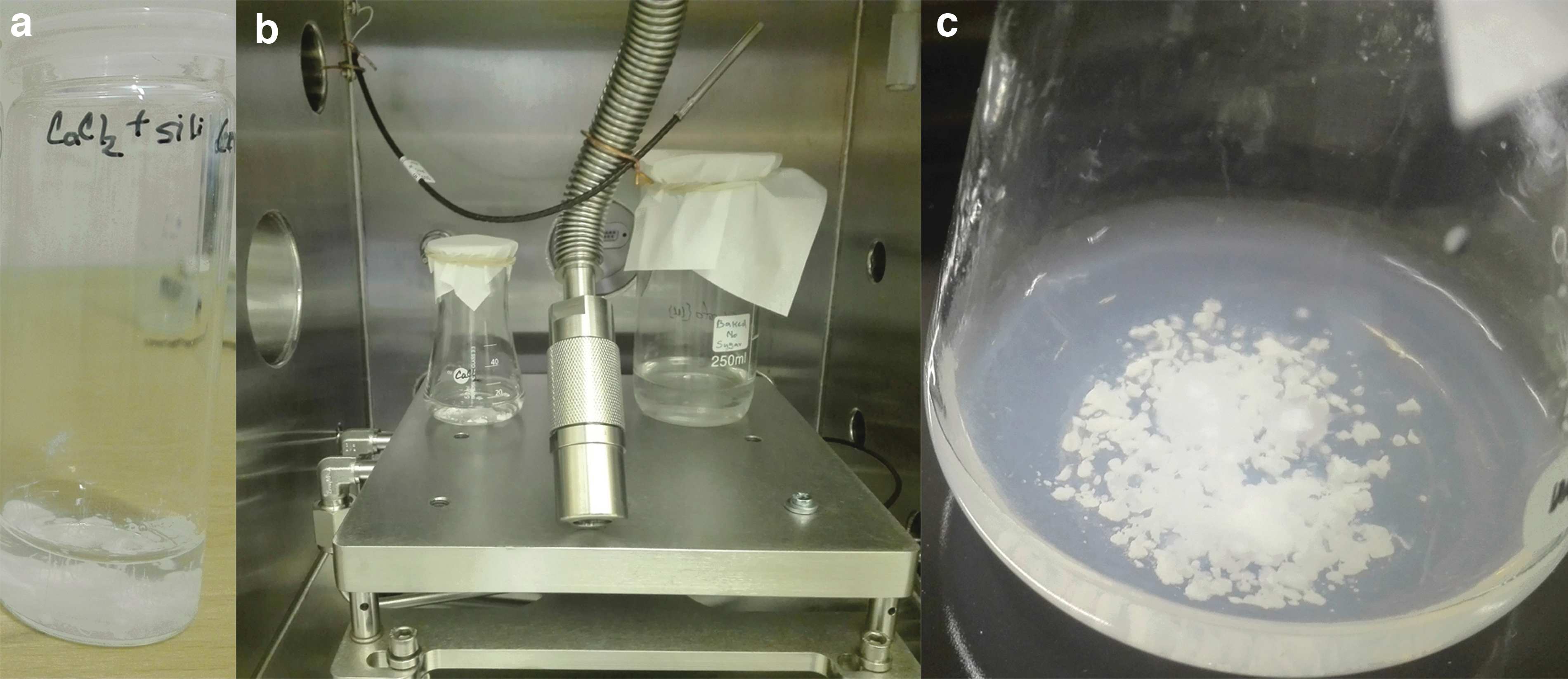
Next, we reproduced the same experiments described above within an enclosed environment, a sealed box where the concentration of CO2 was artificially increased by introducing the samples and running simultaneously a reaction for the release of CO2 in an independent container in the same chamber: 10 g of NaHCO3 and 150 mL of an aqueous solution of CH3COOH at 30% (v/v). This procedure released CO2 continuously and maintained a high concentration of CO2 in the chamber. Initially, some tubular and spherical forms were observed (Fig. 2a). After 4 h, the transparent silicate solution attained a whitish color.
3.3. Under pure CO2 Mars atmosphere conditions
In the next experiment, two flasks with CaCl2 and MgSO4·7H2O in silicate solution were placed within the Mars simulating facility SpaceQ (Vakkada Ramachandran et al., 2020) (Fig. 2b). The flasks were covered with a high efficiency particulate air (HEPA) filter to avoid splashing during depressurization, while also allowing a gaseous interchange between the atmosphere and the liquid phases during the reaction/precipitation process. The chamber was closed; air was evacuated by a pump, and pure CO2 was injected from a bottle up to a pressure of 1050 Pa. The process was carried out during 3 h at 20°C, maintaining a CO2 atmosphere of 1050 Pa. The RH was monitored within the chamber with a Vaisala probe, and the ambient value was raised to 85% RH. Again, after 3 h, silicate changed to a whitish solution, and the precipitates had a granular form as in the experiment of Section 3.2, which suggests that an increased CO2 concentration leads to this precipitation pattern (Fig. 2c).
Thus, we observed the abiotic formation of biomimetic forms with terrestrial CO2 levels. With a high concentration of CO2 as under Mars conditions, the morphology changed to a granular structure in our experiments. This was probably due to the fact that the formation of these structures in our laboratory experiments was very rapid. Slower reaction rates under other conditions would have facilitated the observation of biomimetic forms. Further experiments will be performed following this hypothesis in the future.
3.4. Experiments with sulfate salts
The experiments under ambient conditions show numerous long fine tubes with green, red, and white colors (Fig. 1). In the experiments with a CO2-enriched atmosphere, we did not observe macroscopic growth like that observed in the chemical gardens grown in a terrestrial atmosphere. As in the case of CaCl2, the precipitates had the form of spherical aggregates, and the silicate turned white, presumably due to enhanced incorporation of CO2 from the increased concentration of CO2 in the atmosphere (Fig. 2b).
4. Discussion
4.1. Materials obtained with calcium chloride
In the experiments described in Section 3.1, with calcium chloride and low levels of CO2 (i.e., ambient conditions), the micrographs of the samples suggest the formation of different polymorphs of calcium carbonate:
A needle-shaped morphology can be seen (Fig. 3a). This morphology has been reported in many calcium carbonate growth studies (Reddy and Nancollas, 1976).
In addition, rhombohedral crystals formed in the interior of tubes (Fig. 3b).

ESEM micrographs of precipitates of CaCl2 and silicate solutions after 24 h of exposure to ambient conditions.
EDX microanalysis results show that both the rhombohedral forms and the needles are composed of oxygen, carbon, and calcium; this finding, along with the resulting morphologies, suggests the formation of polymorphs of calcium carbonate as needle crystals of aragonite (Fig. 3a) and rhombohedral crystals of calcite (Fig. 3b). On the external surface of the tube, the principal component is SiO2. This compositional gradient has also been observed in previous chemical garden experiments (Cartwright et al., 2011; Sainz-Díaz et al., 2018; Escamilla-Roa et al., 2019).
In the experiments performed with the procedure described in Section 3.2, which included a CO2 enriched atmosphere under ambient conditions, the crystals grown inside the tubes are composed of multiple phases of accumulated prisms or needles (Fig. 4). These shapes have been previously reported (Cardoso et al., 2016).
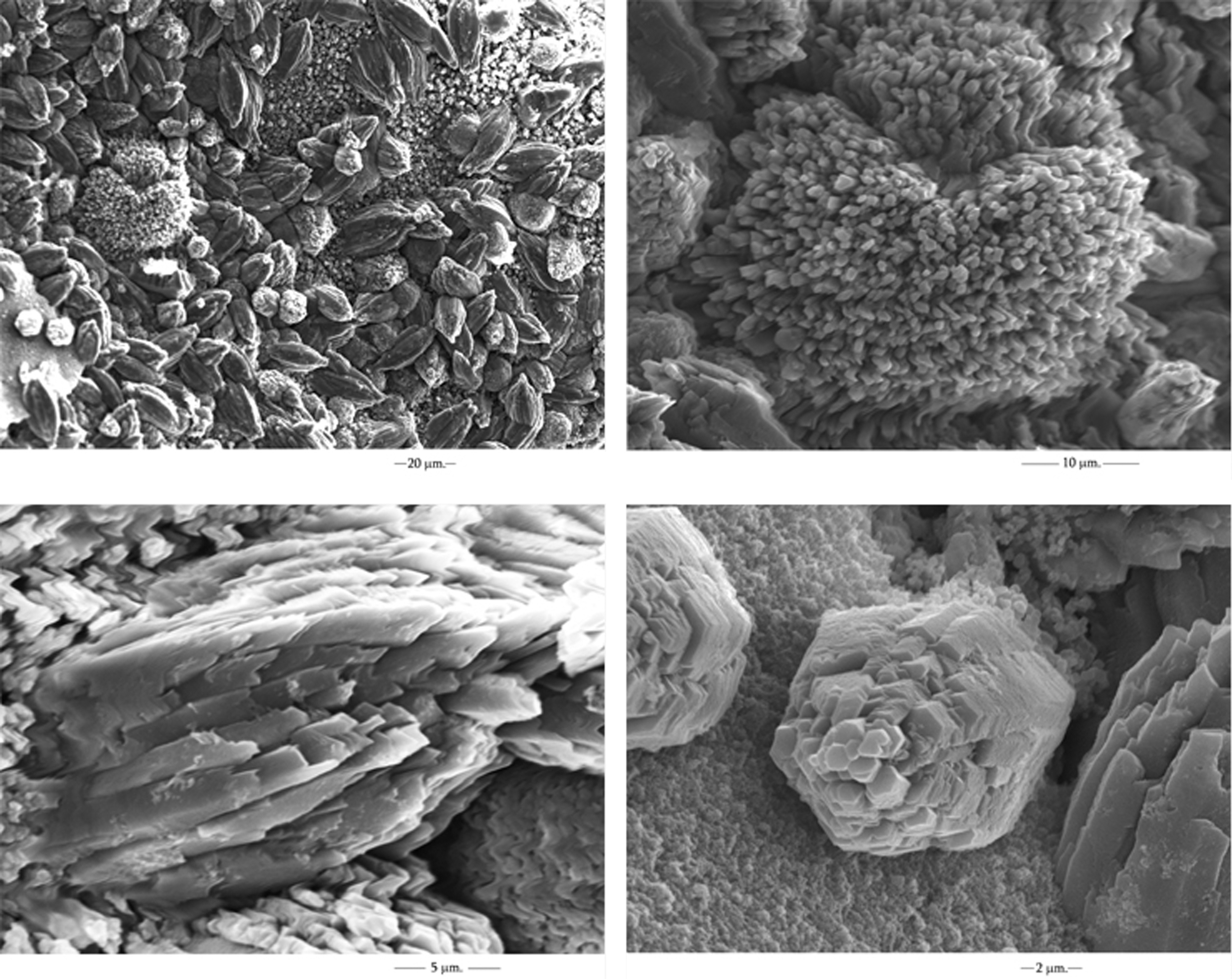
ESEM micrographs of precipitates of CaCl2 and silicate solutions after 4 h of exposure to a CO2 enriched atmosphere under ambient conditions, forming carbonate calcium precipitates with various prismatic shapes. The images show, with increasing magnification, from top to bottom, left to right, with 20, 10, 5, and 2 μm scale bars, respectively.
In the experiments described in Section 3.3, the samples were precipitated in the Mars chamber under a pure CO2 atmosphere. The micrographs of the interior of the tube surface show needle forms (Fig. 5a, b). In this case, the precipitates that formed at the bottom of the flasks were additionally characterized using micro-Raman measurements that required a long acquisition time of 12 h. This analysis required a pretreatment of the samples in single focal planes and consisted of milling, embedding into resin in the test tube, and cutting and polishing the sample surface to give a cross section. After ESEM analysis of these prepared samples (Fig. 5c–f), we observed spheres of about 10 to 30 μm size. A thick external wall can be seen in some of the spheres, while others are externally covered with filaments. In addition, some spheres show secondary quasi-independent spheres with thick walls emerging from the external border. These peculiar forms are reminiscent of micropeloids formed in abiotic carbonates (Cölfen and Antonietti, 1998; Bosak et al., 2004; Pedley et al., 2009).

ESEM micrographs of precipitates of CaCl2 and silicate solutions (pretreatment), after 3 h of exposure to pure CO2 atmosphere in the Mars simulating facility at 1050 Pa, that formed spherical precipitates of calcium carbonate with a thick peripheral external wall and thin needles of prismatic cross section. Here,

To determine the chemical composition of the spherical aggregates, we performed an in situ chemical analysis of the micromorphology observed in the ESEM using EDX. The spectra obtained correspond to several points in a small region of the micrographs. The EDX analysis results suggest that the points close to needles that surround a sphere should correspond to calcium carbonate (Fig. 6a). We found, however, a large proportion of silicon in the outer part of the sphere that corresponds to silicate (Fig. 6b). These points are shown with a red arrow in the micrograph. To corroborate that the needles are formed of carbonate, we analyzed a small area marked by the green box in the micrograph (Fig. 6c). The spectrum confirms that the needles are formed of calcium carbonate. The spectra obtained in several points in the inner part of the solid structure show the same composition as described in the above structures, that is, in relative proportions, oxygen, carbon, and calcium are much more prevalent than silicon. In the tube outer wall, however, silicon is more prevalent.
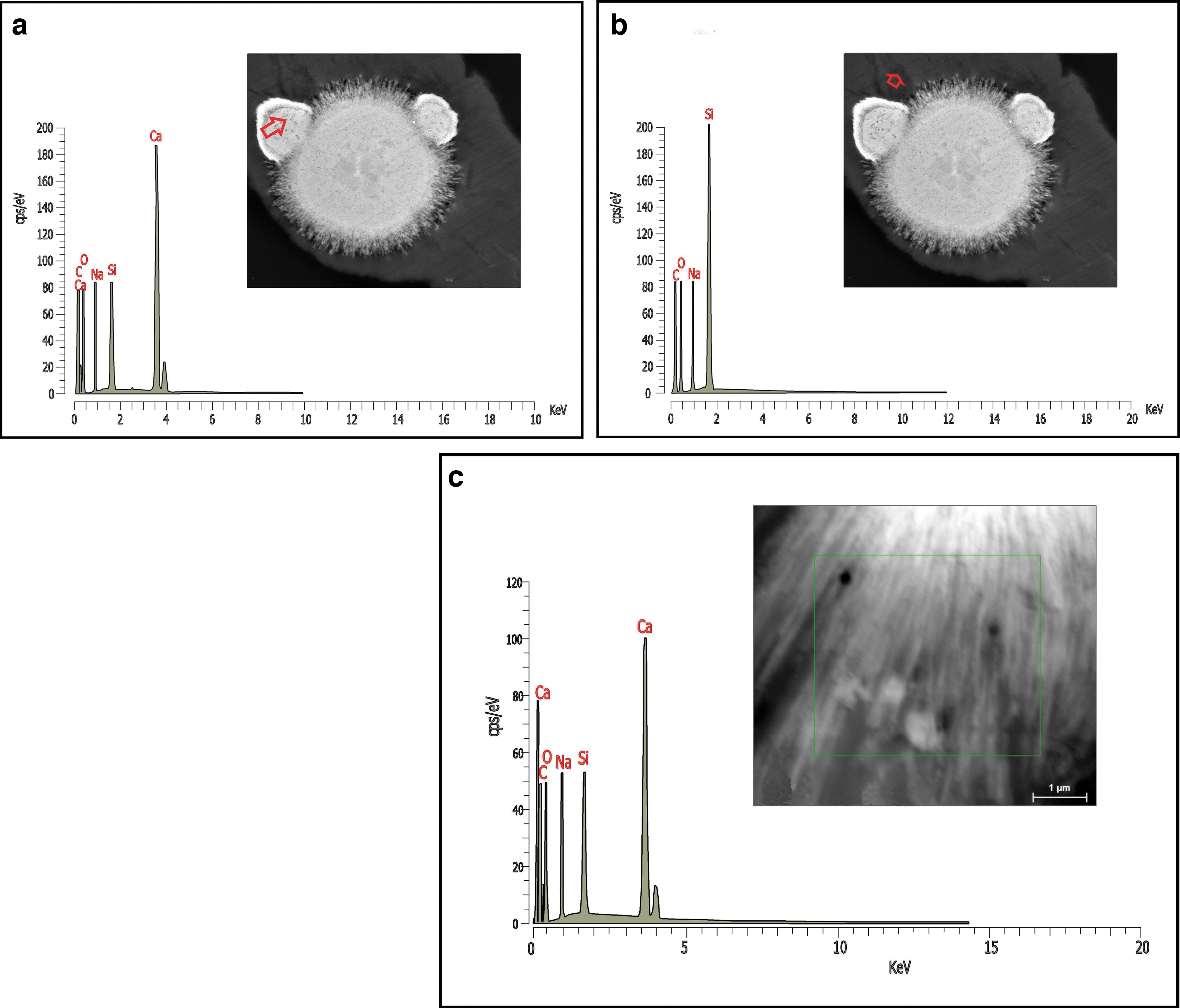
Chemical microanalysis of the electron microscopy images of the samples formed under CO2 in the Mars chamber
To verify that the interior surface is rich in calcium carbonate and the exterior surface of the structures is composed of silicate, micro-Raman analysis was performed. The single point micro-Raman spectra of the sample without additional CO2 measured in the zone of rhombohedral crystals have characteristic bands at 1089, 740 and 299 cm−1 that correspond to vaterite (Wehrmeister et al., 2011; Gopi and Subramanian, 2013; Cardoso et al., 2016) (Fig. 7a), which was confirmed by ESEM and microanalysis (Fig. 7b).

The spectra of the samples with enriched CO2 indicate the possible formation of a double carbonate of sodium and calcium, gaylussite, whose characteristic peaks appear at 1068 and 272 cm−1 in accord with findings from previous works (Cardoso et al., 2019) (Fig. 8a). Bands that correspond to silicates were observed at 978 and 675 cm−1. In the Mars chamber sample, we found some large crystals also of gaylussite with a small amount of calcite.
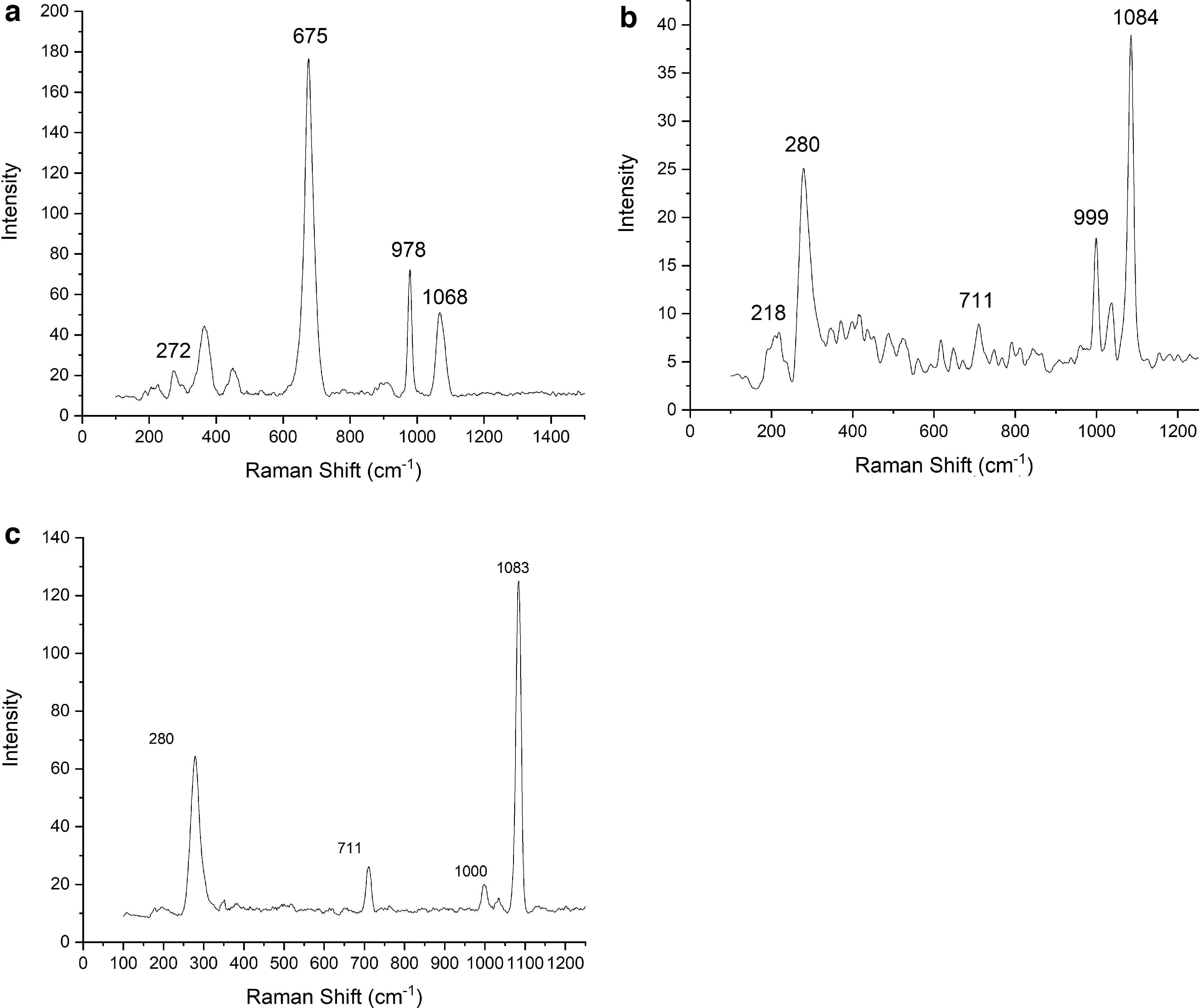
Raman spectra of the solids obtained with CaCl2 and silicate under a CO2 enriched atmosphere
The spectra of the solids obtained under the CO2 atmosphere in the Mars Chamber show main bands at 1084, 1083, 711, 280, and 218 cm−1, which correspond to calcite, and bands at 1084, 205, and 200 cm−1 that correspond to aragonite (Kontoyannis and Vagenas, 2000). In all spectra, there is also a peak at 1000–999 cm−1 that corresponds to stretching motions in the Si–O–Si bonds of silicates. These results are in good agreement with previous studies of calcium carbonate growth with NaOH solution (Cardoso et al., 2016).
The XRD patterns confirm the coexistence of carbonate polymorphs (Fig. 9). In the samples with CO2 enriched atmosphere, calcite, aragonite, and vaterite have the following reflections: calcite at 29°, 39°; aragonite at 25°, 26°, 48°, 50°; and vaterite at 24.8°, 31°, 33°, 43° (2θ units). These values are in agreement with previous studies of calcium carbonate formation (Lafuente et al., 2015; Takabait et al., 2016).
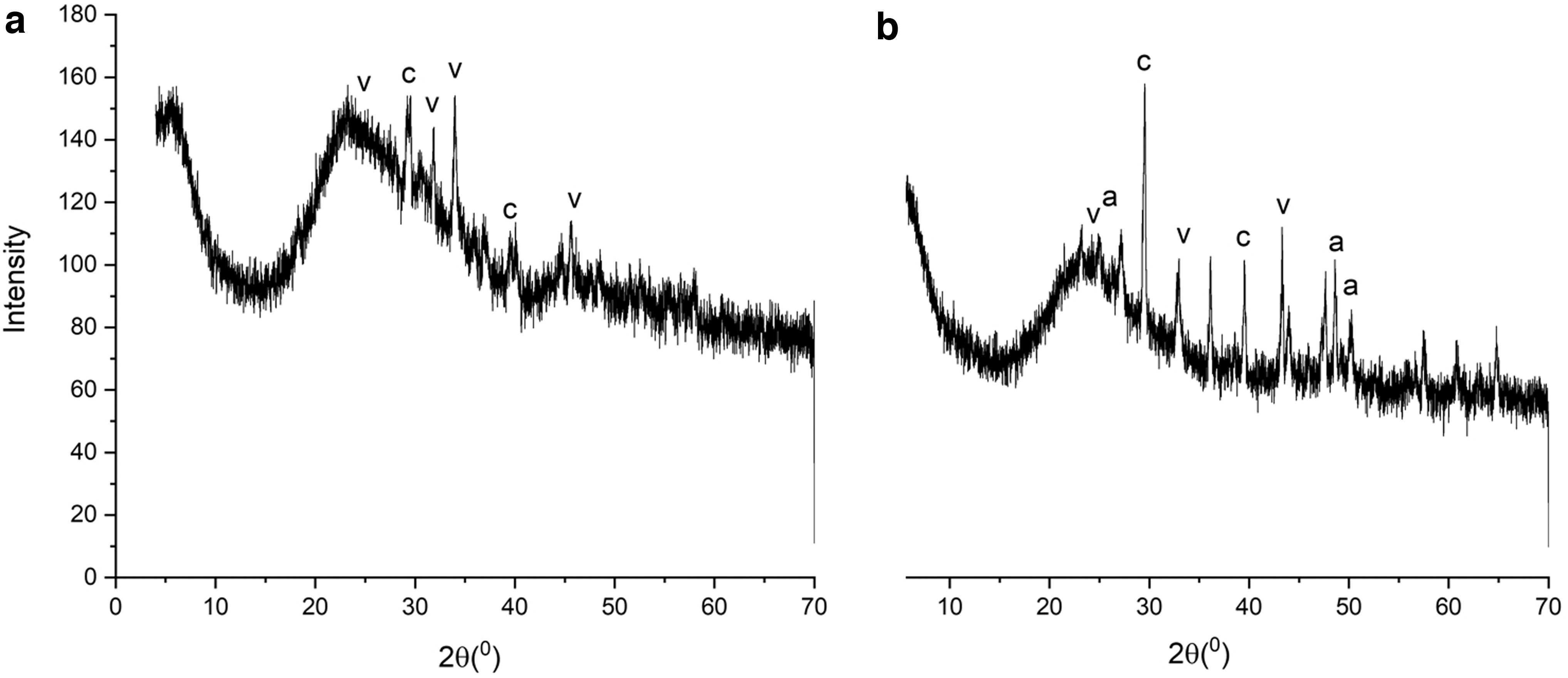
Powder X-ray diffraction patterns of the solid structure obtained with CaCl2, silicate and with CO2 atmosphere under
4.2. Materials obtained with sulfate salts
The ESEM micrographs of the samples formed with MgSO4·7H2O and Mojave soil and FeSO4·7H2O, in experiments of Section 2.1, are shown in Fig. 10. The structures formed with MgSO4 show forms reminiscent of calcite crystals with a pseudo-octahedral morphology (Song et al., 2009) (Fig. 10a). Even though the preparation did not include any calcium salt, we presume that this morphology is the result of the interaction with Mojave soil (Peters et al., 2008), given that calcium may have been present as a trace element.

ESEM micrographs of two sulfate salts with silicate solutions:
The structures of FeSO4·7H2O are similar to structures described in the work of Barge et al. (2016). Clusters of platy crystals were observed in the inner surface of tubes from FeSO4, in accord with previous works (Barge et al., 2016) (Fig. 10b).
Chemical microanalysis of the sample formed with MgSO4 shows that Ca, C, and O are in a major proportion. This analysis indicates that the composition of this crystalline form likely corresponds to calcium carbonate; Mg and Si are also present but in minor proportion (Fig. 11a). As described by other authors, the Mg2+ cation induces the formation of aragonite (Reddy and Nancollas, 1976). However, in this case we observed crystal growth of pseudo-dodecahedral calcite, possibly due to the additive adsorption of a cation such as magnesium on the [011] faces inhibiting the step growth (Song et al., 2009). Even though the preparation did not include any calcium salt, the precipitated calcium comes from the Mojave soil (Peters et al., 2008). Conversely, Mg, O, and Si are found in a large proportion in the wall of the tube; this suggests that the wall was formed of magnesium silicate (Fig. 11b). This behavior was observed in a previous study of magnesium salts (Sainz-Díaz et al., 2018). In contrast, the micrographs of the iron sulfate structures are similar to those described previously (Barge et al., 2016). Chemical microanalysis of a small region of the micrograph marked by the white box indicates that Fe, O, and Si are in a large proportion. This suggests a possible composition of FeO and iron silicate (Fig. 11c) as has been previously observed (Barge et al., 2016).

Chemical microanalysis of internal surface of the solid structures with sulfate salts: possible formation of CaCO3 and silicate in

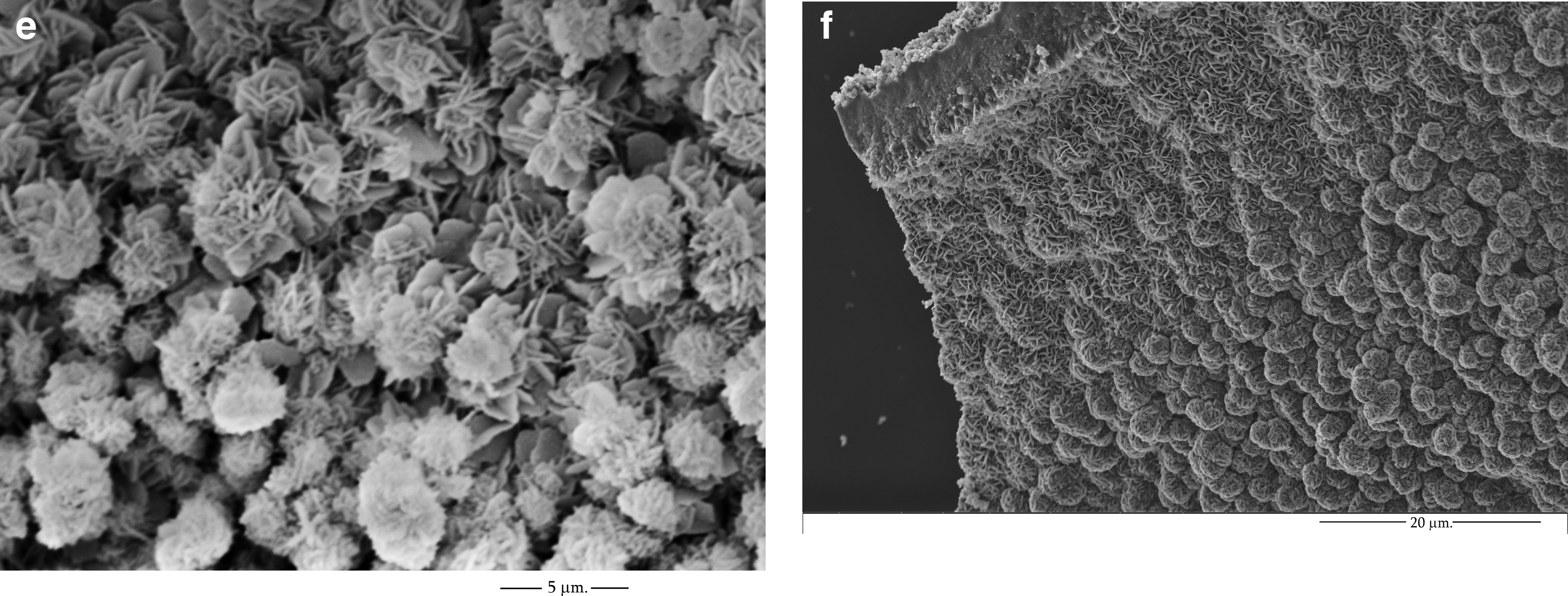
ESEM micrographs of the samples formed with MgSO4·7H2O in a CO2-enriched atmosphere in experiments of Section 2.2 are shown in Fig. 12. The internal surface is formed of crystal aggregates that constitute rosette structures, spherical aggregates, elongated filaments, and honeycombs (Fig. 12a–e). The external surface is formed principally by a thick wall of aggregated spheres of amorphous silicate (Fig. 12f). The microstructures in the internal surface are similar to those reported previously in the growth of self-assembling tubular structures of magnesium salts (He, 2006; Sainz-Díaz et al., 2018).

ESEM micrographs of inner tube surface of MgSO4·7H2O in a CO2 atmosphere, crystalline aggregates are show: spherical
Micro-Raman analyses were performed on the structures formed from magnesium sulfates with and without an additional CO2 atmosphere. Raman spectra of the sample with a terrestrial CO2 level (Fig. 13a) have several broad and intense bands that could be attributed tentatively to minerals like galuskinite (Ca7(SiO4)CO3) at 1080, 850–870 cm−1; hydroxylated magnesium silicate such as balangeroite (Mg2Si8O27(OH)20); and antigorite (Mg3Si2O5(OH)), which appears at 678 cm−1 (Lafuente et al., 2015). This stretching vibration is in agreement with previous theoretical Raman calculations of a MgCl2 chemical garden in which the MgSiO3 frequency corresponds to 680 cm−1 assigned to Mg-O-Si groups (Sainz-Díaz et al., 2018). In addition, we can identify brucite (Mg(OH)2), whose peaks appear at 280–300 cm−1 (Lafuente et al., 2015), MgO at 282 cm−1 (Sainz-Díaz et al., 2018), and two peaks at 980 and 444 cm−1 may correspond to MgSO4·7H2O. The effect of the Mg2+ cation on the crystal growth of the solid structures with silicate is similar in both cases and independent of the salt used.

Point Raman spectra of MgSO4·7H2O and silicate:
Like the previous spectra, the structures formed in a CO2-enriched atmosphere have intense and broad peaks (Fig. 13b, c). There are two characteristic burkeite (Na4(SO4)(CO3)) bands at 1065 and 452 cm−1 (Lafuente et al., 2015). There is as well, however, one broad peak characteristic of MgO and brucite whose band is around 280 cm−1 as confirmed below with XRD analysis. As with the previous sample, hydroxylated magnesium silicate such as balangeroite appears at 678 cm−1, while magnesium sulfate has two broad bands around 980 and 444 cm−1, which indicate stretching motions in the S–O bond (Guerrero-Fernández et al., 2010). No characteristic peak of hydromagnesite (Mg5(CO3)4(OH)2·4H2O) (signal at 1130 cm−1) was found. However, XRD analysis (Fig. 14) was performed to corroborate the brucite signals, the results of which indicate the presence of amorphous and other crystalline phases. The principal peaks can be assigned to magnesium hydroxides like brucite (Mg(OH)2) whose reflections are at 18.5°, 38.0°, 51°, 59° (2θ units).

X-ray diffractogram structures formed from magnesium sulfate and CO2 atmosphere. The letters indicate the positions of brucite (Mg(OH)2) reflections.
Comparing the Raman spectra from normal and CO2-enriched ambient pressure atmospheres, we observe that both have common structures; that is, Mg is incorporated into silicate forming hydroxylated magnesium silicate that could correspond to mineral structures such as balangeroite or antigorite. In addition, MgO and MgOH are present. These results confirm our previous study of self-assembling tubular structures of magnesium salts formed with MgCl2, in which the internal surface contains mainly magnesium oxide/hydroxide such as brucite and the external surface is formed predominantly of magnesium silicates (Sainz-Díaz et al., 2018).
It is relevant to highlight the appearance of the peak at 1363 cm−1 only in the case of a CO2-enriched atmosphere. This peak may be attributed tentatively to natroxalate- or sodium oxalate-, Na2(C2O4), an organic carbonate mineral, whose ν(O-C-O) frequency appears at 1358 and γ(O-C-O) 470 cm−1 (included in the broad peak at 450–452 cm−1), according to previous works (Frost et al., 2003; Colmenero and Timón, 2018). The detection of an oxalate mineral in the abiotically produced precipitate in a CO2-rich atmosphere is important given that such organic minerals are frequently taken as indicators of biomineralization (Revilla-López et al., 2019). Recent in situ observations of Gale crater from the Curiosity Sample Analysis at Mars instrument have identified the presence of carbonates by isotopic analysis of CO2 and O2. This analysis determined that organic materials like oxalates were formed in situ on Mars and preserved (Franz et al., 2020). Also, in addition to the brucite peaks, there are two peaks at 35° and 41° (2θ units) that could correspond to a natroxalate signal. As with the above analysis, this study is in agreement with our previous results (Sainz-Díaz et al., 2018).
Raman spectra of the sample FeSO4·7H2O with a CO2-enriched atmosphere show the most intense peak at 991 cm−1 that is characteristic of silicate structures (Fig. 13d). Two peaks at 390 and 540 cm−1could be attributed tentatively to FeOOH found previously in goethite (Lafuente et al., 2015). The peaks at 1056 and 690 cm−1 could correspond to NaFeSi2O2 (1050 and 690 cm−1) (Lafuente et al., 2015). As was discussed previously with magnesium sulfate, we do not find the peak characteristic of siderite (FeCO3), whose signal appears at 250, 300, and 1090 cm−1. These results are in good agreement with previous work on tubular structures of iron sulfate (Barge et al., 2016).
5. Conclusions
ESEM micrographs, chemical microanalysis, micro-Raman spectra, and XRD results show that terrestrial environmental conditions with 400 ppm of CO2, CaCl2, magnesium sulfate, martian regolith, and sodium silicate solution can fix atmospheric CO2 such that biomimetic self-assembled carbonate structures form with vesicular and needle-shaped features and microstructures of calcium carbonate with morphologies associated with crystals of calcite, vaterite, and aragonite.
To investigate the role of atmospheric CO2 in the formation of carbonate precipitates in alkaline brines of silica with other salts like CaCl2, magnesium, and iron sulfates, we analyzed the products of a set of experiments with increasing CO2 concentrations. These experiments confirm that the calcium carbonate crystal polymorphs can be formed within a pure CO2 atmosphere. Moreover, our results suggest that Mg2+ cations induce the formation of CaCO3 in the form of calcite crystals. This evidence has been confirmed by micro-Raman spectroscopy. In contrast, we confirm the behavior of magnesium salts described in previous works in which MgO/MgOH precipitates in the internal surface of the chemical garden formations and magnesium silicate is a part of the external surface. Thus, we can consider that magnesium is part of the wall of the tubes.
Our experiments suggest that calcium carbonate and natroxalate (Na2C2O4) may appear abiotically from precipitation of basic solutions that may have existed on Mars. However, we have not observed the formation of iron and magnesium carbonates like siderite and hydromagnesite.
This pathway that leads to the formation of carbonate precipitates may have had environmental implications in atmospheric CO2 sequestration. Our results show that carbonate biomimetic forms can be easily formed by an abiotic reaction in a CO2 rich atmosphere, and thus, the microscopic composition of these structures should not be used alone as a biomarker.
Footnotes
Acknowledgments
E.E.-R. acknowledges Rafael Esteso for his help and advice with the experimental setups and photography, Abhilash Vakkada Ramachandran for his help with the Mars Chamber experiment, and Carlos Pimentel for the fruitful discussion about platonic carbonates.
Author Disclosure Statement
No competing financial interests exist.
Funding Information
The authors acknowledge the contribution of the European COST Action CA17120 supported by the EU Framework Programme Horizon 2020 and the Spanish MINECO projects FIS2016-77692-C2 and PCIN-2017-098. M.P.Z. acknowledges the partial support of the Spanish State Research Agency (AEI) Project No. MDM-2017-0737 and of the Spanish Ministry of Science and Innovation project PID2019-104205GB-C21.
Associate Editor: Christopher McKay