




Abstract
Introduction:
In recent decades, digital transformation and digital technologies have increasingly enabled flexible working arrangements. Internationally, the COVID-19 pandemic contributed significantly to a surge in flexible working arrangements. Paralleling these changes in the nature of work, the momentum of neurodiversity initiatives has resulted in more organizations recognizing the benefits of recruiting neurodivergent talents, many of whom have flexible working arrangements. While these arrangements have been associated with various positive outcomes, it is important to recognize that they may not be universally advantageous for autistic employees.
Methods:
This study adopted a qualitative descriptive design. Based on interviews with autistic employees and supervisors/line managers of autistic workers in flexible working arrangements (N = 18) across various industries in Australia, we identified the benefits, challenges, and necessary supports for autistic employees working flexibly. Utilizing a Job Demands-Resources (JD-R) perspective, we identified the essential components under job resources, personal resources, job demands, and personal demands important for autistic employees working remotely.
Results:
We identified eight main themes related to benefits and eight related to challenges, along with 13 themes categorized across organizational, team, and individual levels that facilitate flexible working arrangements. These themes were associated with job and personal resources, as well as job and personal demands, according to the JD-R model.
Conclusion:
Drawing from the research findings and utilizing the JD-R perspective, our framework advances our knowledge of flexible working arrangements theory, identifying best practices for enhancing the well-being and productivity of autistic employees in flexible working arrangement settings, informing the creation of diverse and productive work environments for autistic employees. This framework has the potential to equip managers, autistic employees, and stakeholders with practical tools and insights contributing toward further inclusion of autistic workers in employment.
Community Brief
Why is this an important issue?
While internationally there is recognition of the need to include more autistic individuals in employment, autistic individuals continue to experience many barriers in the workplace. Understanding the barriers and facilitators that autistic people experience when working flexibly (in relation to where and when work is completed) can help their inclusion at work making the workforce more diverse.
What was the purpose of this study?
We wanted to know the benefits to autistic individuals of working flexibly, what they need, and how to support them.
What did the researchers do?
We spoke to 14 autistic staff about their experiences in flexible working arrangements and four line managers/supervisors about their experiences in providing and supporting autistic staff working flexibly.
What were the results of the study?
We found that having clear job duties and goals, support from managers and colleagues, flexible work guidelines, and education about autism were helpful for doing well, maintaining mental well-being and feeling good when working flexibly. Furthermore, not having to mask their autism helped reduce burnout. For autistic individuals, being able to make their own decisions and organize themselves was important. However, some things made it harder to work flexibly, such as communicating and engaging in online meetings, being alone too much, getting too focused on one thing, and being easily distracted.
What do these findings add to what was already known?
We used a model of job demands and resources to explain our discoveries that may help employers and autistic employees understand how to make work better for autistic individuals working in flexible arrangements.
What are the potential weaknesses in the study?
Most of the participants in our study were autistic females, and we did not look at any other conditions they may have had. In the future, we should do research with more participants, of different genders and with different conditions to support our findings. Also, because we only studied a small group of people with data collected at a single point in time, we are unsure if our findings apply to other situations.
How will these findings help autistic adults now or in the future?
Our findings will help autistic adults understand the advantages and difficulties that come with flexible working arrangements and provide a guideline for employers in supporting autistic employees to work flexibly.
Introduction
Advancements in digital transformation and digital technology have made flexible working arrangements a growing trend in the last decades.1–3 Although not a new human resource management (HRM) practice, flexible working arrangements were recently catapulted to the forefront of workplaces in response to the COVID pandemic. 4 Flexible work is defined as nontraditional work arrangements, taking into account a person’s personal needs and circumstances, enabling a worker to conduct some part of their work from home or another nontraditional workplace. 5 Broadly, flexible work includes flexibility around where (i.e., work geography, also referred to as “telecommuting” or “flexplace”) as well as when work is completed (i.e., timing of work, also referred to as “flextime” and “scheduling flexibility”). 6 In this study, we adopted the term “flexible working arrangements” referring to flexibility around both where and when work is completed. Research on flexplace and flextime is pertinent given the recent moves toward more flexible working arrangements internationally. For example, in 2021, 41% of employees in Australia were regularly working from home, up from 32% in 2019, 7 while in the United States, 58% of employees reported having the opportunity to work from home at least 1 day a week. 8 Similarly, there has been a growing trend toward flextime coinciding with rising numbers of employees working under contracts, shift work arrangements, and accepting “gig work.” 9
Despite flexible working arrangements being linked to a range of positive outcomes (e.g., job satisfaction, organization commitment, balancing work and family, reduced commuting time),2,10,11 they may not be universally beneficial.6,9 While these arrangements can offer some advantages for employees and organizations, they can also hinder communication, induce stress, and blur the boundaries between work and personal life.5,10,12 The extent to which flexible working arrangements are beneficial or not may be influenced by factors such as employee demographics, including gender, age, health status, and marital and parental status.13–15
The mixed effects of flexible working arrangements suggest the need for an in-depth understanding as to how this HRM practice may be experienced by different working populations with the goal of informing both theory and practice. This includes autistic individuals whose communication and social interaction challenges, and differences in behavior, interests, and sensory processing may impact on their experience of working flexibly. Understanding their experience in working flexibly is of increasing importance given the growing number of individuals with an autism diagnosis entering the employment market. 16 In fact, it is estimated that 500,000 autistic adults would have entered the American labor force by 2020. 17 Despite this significant influx, little HRM scholarship has considered the unique opportunities and challenges associated with autistic employees.18,19
Flexible working arrangements and autism
The onset of the COVID-19 pandemic in 2020, when remote working became the prevailing norm, resulted in a shift in attitudes toward flexible working practices. 20 In Australia, multiple lockdowns were imposed from early 2020 to late 2021, during which staff solely worked from home. When we conducted this study, a hybrid model was in place, allowing staff to work flexibly from home for part of the week. Furthermore, there is a growing momentum of neurodiversity initiatives, that is, more organizations or employers are recognizing the strengths and talents of neurodivergent individuals.21–26 They value their diverse perspectives and support individual needs, creating a more inclusive and equitable workplace.21,25 Employment opportunities embracing working flexibly have the potential to promote greater inclusion of individuals with diverse needs, including neurodivergent individuals.5,27 While this potential is widely recognized, it remains largely theoretical, as evidenced by the minimal alteration in global workforce participation by people with disabilities over the last two decades.28,29
Flexible working arrangements afford autistic individuals with greater opportunities to tailor their working environment to their requirements such as when working from home. Working flexibly can eliminate many of the common barriers to employment experienced by autistic individuals associated with commuting, sensory overload, and social anxiety. 11 Opportunities to work flexibly can enable autistic individuals in constructing supportive environments, maximizing their ability to concentrate, affording personal comfort, ultimately increasing their productivity and overall well-being. 30
While flexible working arrangements offer potential opportunities and benefits, they also likely present some distinct challenges to autistic workers, including disruptions to workplace structures and routines, which may lead to disorientation. 12 Common social challenges associated with an autism diagnosis, including difficulties interpreting body language and tone during virtual calls, may make online meetings more difficult. 31 Furthermore, the tendency to hyperfocus may result in autistic employees working long hours, potentially affecting work-life balance. 10 Therefore, it is crucial to acknowledge the distinct requirements of autistic employees and implement human resource practices tailored toward their needs to enhance their opportunity to contribute at work. 32
The Job Demands-Resources model
One theoretical framework that provides insights into this dynamic is the Job Demands-Resources (JD-R) model. 33 The JD-R model is a heuristic model that distinguishes between job demands and resources to understand employee performance and well-being.34,35 Job demands are defined as “physical, social, or organizational aspects of the job that require sustained physical or mental effort and are therefore associated with certain physiological and psychological costs.” 36 Job resources refer to the “physical, psychological, social, or organizational aspects of the job that […] may be functional in achieving work goals, reducing job demands, and its related costs.” 36 The perception of job demands and resources is based on subjective experience. 37
Job demands and resources are linked to performance and well-being outcomes via two independent pathways. 35 First, the health impairment pathway is primarily driven by job demands because of its tax on energy resources and contribution to exhaustion. The second motivational pathway is the result of job resources, working to energize and foster engagement. 38 Prior research suggests that job demands are negatively related to customer satisfaction 39 and may contribute to diminished mental health. 40 Indeed, there is a consensus that job demands are negatively related to performance and well-being as explained by the health impairment pathway.33,34
A core principle of the JD-R framework is the assumption that all characteristics of the work environment, not just some factors such as rewards, autonomy, or support, can be classified into two broad categories: job demands or job resources that influence employees’ well-being and performance. 26 In addition, JD-R suggests personal demands and resources also play a role, as employees must balance work responsibilities with personal challenges and support.26,41
In the context of flexible working arrangements, job demands might include technological barriers while job resources could include flexible work hours and reduced commuting time. Personal demands may include distractions from family, and personal resources could consist of effective time management. According to the JD-R model, when employees have sufficient resources to manage their demands, their engagement and well-being increase, whereas a lack of resources can lead to burnout and decreased performance. 42 Previous work, informed by the JD-R theory by Tomczak and Kulikowski, 43 developed a conceptual framework that provides insights into the phenomenon of occupational burnout among autistic employees, identifying the essential resources and demands playing a significant role for this group of employees within the workplace. Figure 1 depicts the JD-R model, illustrating how job and personal resources, as well as job and personal demands, influence employee engagement or performance. We used this framework to guide the identification of important factors for autistic employees in flexible working arrangement settings based on the findings of this study.

The Job Demands-Resources (JD-R) model of resources and demands influencing engagement or performance in working flexibly, constituting a framework for identifying the important factors for employees in the flexible working arrangement settings of this study (Adapted from Tomczak and Kulikowski 43 ).
While there is a significant body of research addressing accommodation and support for autistic individuals in various employment aspects, including workplace redesign,44,45 autism education or awareness training,46–50
workplace inclusion initiatives such as peer mentoring,51–54
mental health,55,56 disclosure,57,58 and employment support tool,23,59 there is a notably scarcity of literature related to flexible working arrangements. The most appropriate strategies for supporting autistic employees working flexibly are not well understood,
10
with limited available research regarding the understanding of how these arrangements can be leveraged in enabling the employment of more autistic individuals,5,45 the impact of flexible work,
12
and the needs of autistic workers working in these arrangements.
10
In working toward addressing this need, this study applied the JD-R model to explore how job and personal demands and resources shape autistic employees’ experiences with flexible working arrangements. By examining the lived experience and narratives shared by both autistic employees and line managers/supervisors in relation to the benefits, challenges, and supports involved in flexible working arrangements,
60
we identified the key factors associated with flexible working arrangements for autistic employees drawing from the theoretical framework of JD-R theory and research on occupational burnout among autistic employees.
43
Thus, we used the following questions to guide our research:
What are the benefits of flexible working arrangements for autistic individuals? What are the challenges/barriers that autistic individuals face with respect to flexible working arrangements? What are the facilitators/supports for autistic individuals with respect to flexible working arrangements?
Through this study, we contribute to the autism literature by applying the JD-R framework to the discussion of best practices for improving the well-being and productivity of autistic employees within flexible work arrangement settings.
Methods
Research design
In response to the research questions, this study adopted a qualitative descriptive design with the rationale of providing a straightforward and comprehensive description of experiences and perceptions in everyday terms.61–63 The qualitative descriptive approach is less theory-driven, providing researchers with the flexibility to start with or without a theoretical framework for the targeted phenomenon and not necessarily stay committed to a specific theory or framework if their findings suggest an alternative direction.62,64 We conducted one-on-one interviews with participants exploring their experiences and perspectives in a clear and detailed manner, focusing on understanding the lived experience of autistic individuals working under flexible working arrangements.65,66 Given the lack of existing theory and research on autistic adults in HRM, a qualitative exploration of their lived experience was an appropriate starting point. We then deductively framed the factors important in understanding the experience of flexible working arrangements for autistic employees according to the JD-R theory. 33 We obtained ethical approval from the Curtin University Human Resource Ethics Committee in Western Australia (HR141/2014). This study used the term “autistic” to describe individuals with Autism Spectrum Disorder (ASD) as it is the preferred terminology among autistic adults. 67
Participants
We recruited autistic adults with experience of flexible working arrangements and line managers and supervisors with experience in providing support to autistic staff in these arrangements via purposeful snowball sampling. 68 We utilized snowball sampling to reach a broader pool of potential participants nationwide. We circulated the recruitment flyers through emails to our industry partners, advertised on our research team’s (Curtin Autism Research Group) and disability service providers’ websites, and our research team's Facebook. Participation was entirely voluntary with no incentive given. We emailed informed consent packages to participants and collected the signed consent forms before conducting the interviews. In total, 14 employed autistic adults and four line managers and supervisors participated in the study, resulting in a similar sample size to previously published research. 60 The average age of the autistic adults was 37.5 years, with 10 females and four males, while all line managers and supervisors were females in their 40s or 50s. Nearly 90% of the autistic adults (n = 12) disclosed their diagnosis to their line managers or employers, with two also sharing it with coworkers. Participants represented various industries, including mining resources, finance, technology-informed services, nonprofit organizations, and government departments, providing a common trend and a wider range of perspectives and viewpoints. Half of the participants adopted flexible working arrangements due to the COVID-19 pandemic, while the other half had such arrangements for individual reasons unrelated to the pandemic. Table 1 presents the characteristics of all participants.
Information on the Study Participants
E, employees; S, supervisors/line managers; M, male; F, female.
Interview instrument
We developed the semistructured interview schedules (see Table 2 for a sample of interview questions), comprising open-ended questions on flexible working arrangements for autistic adults and line managers and supervisors with the goal of facilitating an in-depth understanding of the participants’ experiences. Questions aimed to elicit participant attitudes about flexible working arrangements, including the benefits and associated challenges for autistic individuals; the support from employers; and recommendations on how to improve autistic workers’ experience of these arrangements.
Sample Interview Questions for Flexible Working Arrangements
Data collection and analysis
The first author with over 15 years of experience in qualitative research conducted the semistructured interviews individually with participants, via phone or online, lasting on average for 38 minutes between October 2021 and July 2022 until data saturation was reached. We recorded the interviews, transcribed verbatim, and imported into NVivo (Version 12) 69 in preparation for thematic analysis,70,71 with all identifying information (e.g., names) anonymized. We applied the six phases of thematic analysis as described by Braun and Clarke 70 to address the research questions of this study: (1) data familiarization—a researcher read the transcripts line-by-line familiarizing themselves with the data; (2) initial code generation—created initial codes, representing the views of participants; (3) creating themes—grouped the common topics and issues, resulting in candidate theme; (4) reviewing themes; (5) defining and naming themes; and (6) producing the report. Figure 2 illustrates the analysis process to identify themes addressing the research questions. The first and the fourth author (who has more than five years of experience in qualitative data analysis) were involved in the data analysis, while the last authors with over 20 years of experience in qualitative research verified the codes and themes generated. We addressed the trustworthiness of the data analysis by establishing an audit trail of decision-making documenting the steps taken from raw data to final interpretation, including the software used, as well as how we coded the data, categorized and interpreted in alignment with the research objectives.72–74 It also documented peer debriefing meetings and team consensus on themes, including collaboration with an autistic researcher who is a member of the authorship team, the sixth author.70,75Small and Calarco 76 developed a qualitative literacy framework that identifies one precondition and five criteria for evaluating the quality of qualitative research. The precondition is called exposure (the need for direct contact (often signified by total hours) with the study participants), while the five criteria include cognitive empathy (understanding participants’ own understanding), heterogeneity (diversity of experiences represented), palpability (evidence is concrete, not abstract), follow-up (gathering additional data to unanticipated questions that arise), and self-awareness (how the researcher’s presence and assumptions influence the study). Below, we described the steps we took during our qualitative data collection and analysis that relate to their criteria.
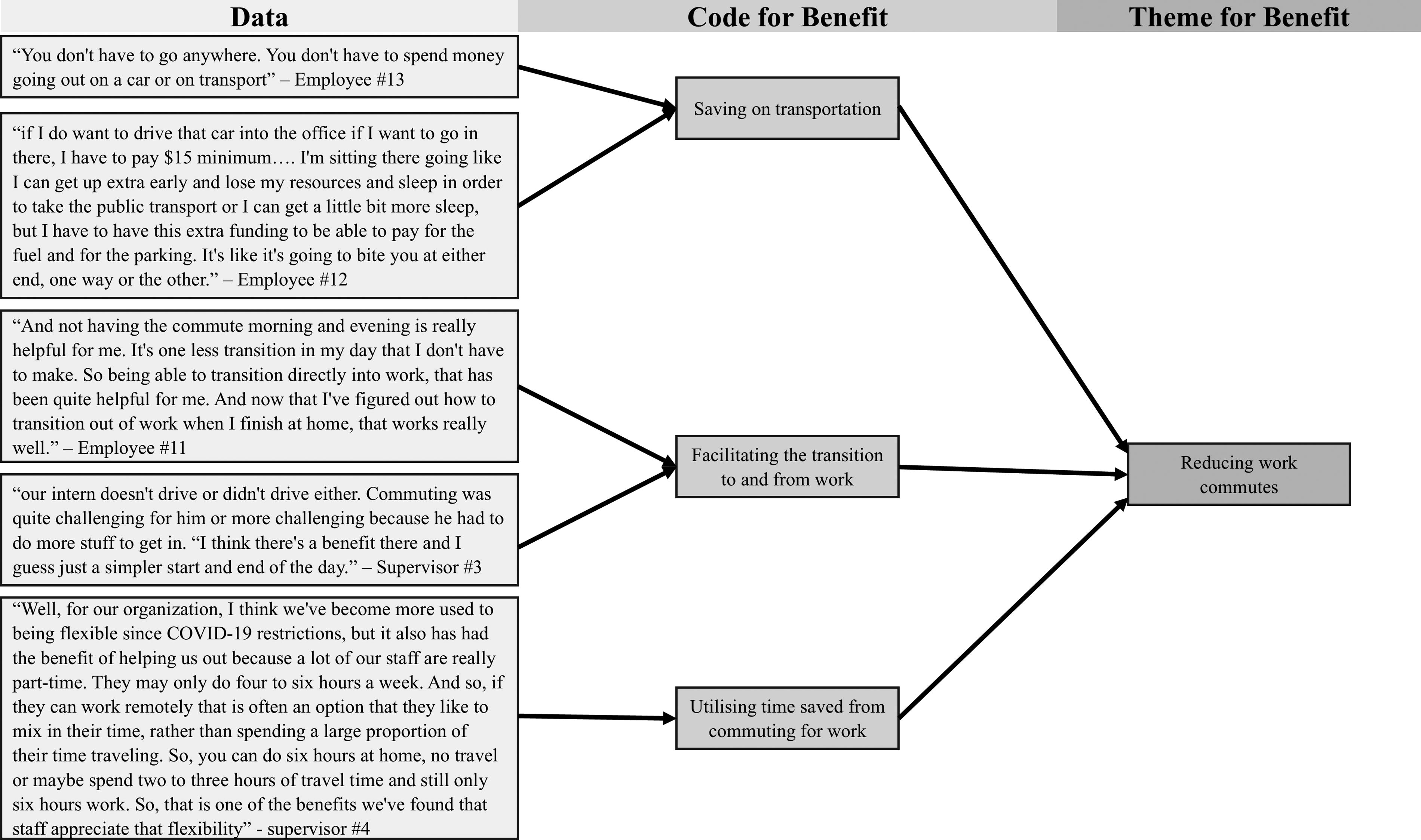
Analysis process for the overarching theme “Reducing work commutes.”
In this study, we targeted 20 participants for an interview of 60 minutes to yield 1200 minutes of recorded data or until we reached data saturation. We used semistructured interviews because they provide a flexible and detailed way to gather data, allowing us to probe further into key topics and explore participants’ independent thoughts in greater detail 77 (Exposure). We established trust with participants to encourage sharing in-depth details about their experiences and perspectives (Cognitive empathy). For instance, we explained the purpose of the study, how the data would be used, and the steps taken to ensure confidentiality. We acknowledged participants’ emotions and summarized what they said to demonstrate that we understood and valued their input. Furthermore, we conducted interviews with participants with different roles (autistic employees and line managers/supervisors) from different industries allowing us to have diverse perspectives (Heterogeneity) and we asked for concrete evidence ensuring the data are grounded in the real experiences of participants (Palpability). We gathered additional data covering unanticipated questions as they arose, encouraging participants to elaborate further on the new lines of enquiry. Data collection continued until we reached data saturation. We deemed saturation to be achieved when no new codes emerged during the coding of the last interviews 78 (Follow up). We, the first author (female), the fourth author (female, parent of an autistic young adult), and the last author (female) aged in our 50s and involved in the data collection and analysis, possess extensive expertise in conducting qualitative research focusing on autism. With over 15 years of hands-on research experience, working alongside autistic colleagues, we have developed a deep understanding of the unique needs, behaviors, and challenges of autistic individuals, allowing us to approach the research without bias, with a high level of empathy and sensitivity (Self-awareness).
Results
Several themes pertaining to the benefits, barriers/challenges, and facilitators/supports relating to participants’ experiences of flexible working arrangements for autistic workers emerged from the data analysis and are detailed below. We used pseudonyms in all sample quotes.
Perceived benefits of flexible working arrangements
The findings revealed that flexible working arrangements were beneficial to autistic employees for multiple reasons.
Reducing sensory overload
Many autistic workers experienced their workplace as exhausting, largely because of sensory overload, requiring them to direct their attention and energy toward blocking out stimuli, including conversations, air-conditioning noise, the scent of perfumes, and the aroma of microwaved food. This depletion of their energy resources left them with limited capacity to concentrate on their tasks, leading to exhaustion and at times meltdowns:
“So, for me, I have sensitivity to mechanical noises, so humming and buzzing, or the noise of air conditioning. Some fans I might find soothing, other ones it’s aggravating to me. And I also get overload simply from the volume of input … And, when I reach a certain level of overload, the wheels fall off, I get really irritable and I’m not able to modulate my emotions and I can get quite weepy.” (Employee #11)
Another participant expressed her apprehension while being in the office: “When I do go into the office, I sit there quite stiff, and I’m scared to move … scared to be noticed or anything like that. I find that it’s just noisy … It’s just really quite confusing. I never understood why I felt like that.” (Employee #8)
Consistent with the view expressed by autistic employees, a supervisor perceived that, in general, a “quiet place” without distractions, such as a home environment, was beneficial to autistic staff:
“I think for neurodiverse people …if they can come and be in a quiet space, a bit like in your home environment or in a place where you’re comfortable, I find that that can be better for them for certain types of jobs.” (Supervisor #3)
Autonomy over communication and socialization
For autistic employees working from home meant having greater control over the amount of communication they engaged in with coworkers, positively impacting their anxiety, productivity, and the quality of work:
“For me, the key benefits are that my anxiety is just hugely reduced. In the office … I just find the people milling around me and coming up to my desk and just having constant access to me stressful … At home, you can control that a lot more … you can kind of receive that communication on your own terms. And obviously, there’s a lot less distraction and noise and traffic … And because my anxiety’s reduced, I’m able to think clearly and think better.” (Employee #7)
Reducing interaction and anxiety
For autistic participants, working from home reduced expectations for them to engage socially with coworkers, both during working hours and at social events, diminishing the mental exhaustion that stemmed from conforming with the office environment and expectations:
“For me, [working from home is] meeting all my needs around like reducing my sensory overload and issues with focus and anxiety around socializing. Because I’m very good at masking, but it really drains me.” (Employee #6)
One employee participant conveyed the negative impact of office distractions on her work performance, expressing a strong desire to continue working remotely from home:
“Once I tried it [working from home], I thought, wow, I actually feel it’s so much better for me. I can manage my time and my interaction with other people … once I started working from home, I didn’t want to stop.” (Employee #8)
Reducing burnout
For autistic participants, working from home was associated with feeling less burnout, given it reduced the amount of energy they had to expend on filtering out distractions: “I was able to work longer and with less distractions. And feel less burnt out at the end of the day. So, I felt it was a real win-win.” (Employee #5). Working from home also removed the need for autistic participants to “mask” their autism, to hide their differences: “…dealing with autistic burnout [in the office], how much work there was with sort of essentially, with masking … how much more work it took for me to be in those spaces.” (Employee #12).
For one participant working in the office resulted in severe exhaustion, requiring her to spend her weekends recuperating from the mental demands of her job:
“In the past [when working in the office], I was always really exhausted … by the time I’d get home from work, there’d be nothing left for me really. And most of the time, I’d spend the weekends just recovering from work.” (Employee #8)
Better work-life balance
Working from home for autistic employees was associated with improving their work-life balance: “[When working from home] I could be less stressed because I could actually balance my work life and my home life better … It’s so much more beneficial for me to have that flexibility for my life by being [at home] rather than being in the office.” (Employee #12). A supervisor commented that her staff gained a greater work-life balance by starting early in the day: “People have got their life balance back. I’ve got someone who starts at 6:00 am every day by choice, so that they can finish work early, and enjoy their afternoons outdoors exercising.” (Supervisor #2)
Time saved from commuting enabled participants to spend time with their families and engage in recreational activities, benefiting their mental well-being:
On days where I was working from home, I could go for a walk in the park with my son. So, [l] felt healthier because I was able to get some exercise in. When working in the office, I don’t. I get home an hour later. I don’t have time. By the time you do all the parent stuff and it’s dark and who wants to be walking in the middle of winter by themselves in a park? (Employee #10)
Being able to work at home with their pets also helped autistic workers in regulating their emotions: “I have access while I’m at home to my sausage dog. She’s not an official therapy animal or anything like that, but obviously, animals are very, very regulating.” (Employee #12)
Availability of flextime
With the support of line managers, autistic participants were able to make personalized adjustments to their working hours and break schedule, which aligned with their needs: “They know that sometimes I shift my start time, if I haven’t had a great night or I’m a bit slower and then the finish time and breaks within the day is up to me … and work a little bit later, because I do tend to be quite productive.” (Employee #11)
The participants’ ability to flexibly arrange their working hours throughout the week enabled them to attend appointments, and meet their personal care and family’s needs:
“Yeah, my hours are pretty flexible as well … I’ve got an appointment on the Wednesday afternoon, I can go into work for the morning, then leave, go to whatever appointment I need to … All I have to do is give them is a heads up that I’m going to be doing that.” (Employee #2) Another employee noted: “I’ve got two autistic children, they’ve got a lot of NDIS (National Disability Insurance Scheme) appointments and stuff like that. It’s quite good because I can just go back and forth and do a couple of things during the day, manage my own time … I guess [working from home is] pretty flexible.” (Employee #8)
Improving productivity
Autistic participants perceived working from home as more productive, given there were less distractions, and they were more comfortable than when working at the office: “I’m definitely more productive at home. Part of that’s the lesser distractions at home versus the office and the more comfortable environment.” (Employee #3) Working from home supported autistic participants, particularly working mothers, in effectively managing their time and work schedules, reducing the need to take personal days, improving their productivity:
“Even, say, on a weekend, if I was busy all week with work and then I’ve got two kids as well … and then the weekend I’d often be busy still too. And by the time Monday comes, sometimes I’d just call in sick because I was just like, “I don’t have energy. I can’t get myself back into this.” And I feel like now, because I’m able to manage myself better and have work fit in with that, I think I’m more productive, and I’m well … I think they’re getting more out of me because I’m actually more present and aware.” (Employee #8)
Removing work commutes
Working from home enabled autistic employees to transition directly to work without having to commute, “It’s one less transition in my day that I don’t have to make. So being able to transition directly into work, that has been quite helpful for me. And now that I’ve figured out how to transition out of work when I finish at home, that works really well.” (Employee #11) Removing the need to commute to work was seen by supervisors as particularly relevant to supporting autistic employees, particularly when they did not drive: “So, our intern doesn’t drive or didn’t drive either. So commuting was quite challenging for him … [working from home is] just a simpler start and end of the day.” (Supervisor #3)
A supervisor commented that the time saved in commuting could be utilized for working, which was seen as particularly beneficial in supporting part-time staff members:
“A lot of our staff are really part-time. They may only do four to six hours a week. And so, if they can work remotely that is often an option that they like to mix in their time, rather than spending a large proportion of their time traveling … staff appreciate that flexibility.” (Supervisor #4). Furthermore, working from home also helped autistic employees save on transportation and parking costs: “You don’t have to go anywhere. You don’t have to spend money going out on a car or transport.” (Employee #13).
Challenges of flexible working arrangements
While both autistic workers and their supervisors identified many benefits for autistic workers in working flexibly, they also highlighted some challenges and barriers associated with these arrangements.
Social isolation
Working from home removed many valuable opportunities for autistic participants to observe their coworkers engaging in social interactions, observations they found helpful in shaping their own social skills and connecting with others:
“When I’m in an office environment with people, I rely on seeing how they interact with each other, and what kind of friction points they have with each other, what kind of preferences they have for conversation or for talking about things… I miss out on that when I’m working from home.” (Employee #11)
Autistic employees also expressed concern about social isolation resulting from flexible working arrangements. “It’s a bit more isolating. I had an injury about a year ago and I did most of my work from home, very little in the office and I felt like people forgot about me a little bit, so if you’re not there.” (Employee #5) Participants feared that working from home exclusively would result in them losing their connection with their coworkers: “and sometimes it’s nice to like, just chat with [co-workers] in person, catch it up face-to-face. So, it’s more of the social aspect of it, I guess. It’s the main challenge.” (Employee #1) Autistic participants generally preferred a hybrid model, balancing time at home and time in the office: “I still want to have connections with people … I don’t think I’d ever want to be full-time at home, but I think I like the combination, as long as there are connections to other people.” (Employee #1)
A supervisor acknowledged the difficulty of maintaining a connection with autistic staff working remotely, limiting their capacity to ensure they were progressing effectively, noting the importance of checking in regularly:
“Yeah, so I think the main challenge is if you are working remotely is staying connected to your colleagues. So, you need to have some sort of parameters setup, so that you actually do talk to each other, each week.” (Supervisor #4)
Autistic participants noted that they were not able to access their line managers as readily when working from home, compared with when working in the office, “if you have a question, you can’t just go to their desk.” (Employee #5) Furthermore, the absence of immediate feedback and less opportunities to support colleagues were challenges associated with working from home:
“For me, working from home, adjusting to doing it was a bit challenging initially, because you don’t get as much positive feedback from your co-workers and you don’t have that quick and easy interaction of being able to turn to someone to ask a question. And I also get a lot of my job satisfaction out of helping others with their work.” (Employee #11)
Engaging in technology-mediated communication
Autistic participants highlighted some practices that resulted from working from home, or working virtually commonly used by neurotypical workers, were at times annoying or challenging to interpret. One participant expressed discomfort at enabling their web camera when communicating with team members via videoconferences, “I don’t like videos. I don’t like being on camera and looking at myself.” (Employee #4) Another found that the use of emojis during online team meetings was difficult to interpret: “I’ll just get a thumbs up sign. But I think as a neurodiverse person, I’m less equipped to even try and address with them, ‘Hey, look, this isn’t working, you are making other people’s jobs harder [using emoji’s] and it’s not appropriate.’” (Employee #3) Online group meetings were also described as difficult, with autistic participants preferring one-to-one virtual meetings: “So group meetings where people are kind of taking turns …. I do have a tendency to interrupt over the top of people because you can’t do those subtle body language things that let people come to you. Because I can’t read when someone’s about to start talking. I do that really badly.” (Employee #11) Participants highlighted that the virtual nature of working remotely meant that at times they attended consecutive meetings without being able to take a break: “Back-to-back, where pretty much the next meeting had already started before you joined it.” (Employee #10)
Inadequate management style
Autistic employees expressed frustration when working remotely that their productivity was more closely scrutinized, resulting in them feeling micromanaged: “And then if you are doing things like working from home, there’s lots of auditing that happens … in my previous job, we were audited every week, in terms of what tasks we had completed and had to have evidence of that … I don’t like it, being micromanaged and treated like a child.” (Employee #10)
Another participant reflected that management requiring her to report on her work on an ongoing basis, justified by her position as a part-time worker with flexible working arrangements, caused her stress: “The administration, that becomes much more when you’re not working in a normal full-time role, is very painful. And I think it’s even more painful for people with autism, especially co-occurring ADHD who struggle with executive function because that’s what we struggle with the most, and yet that’s what’s being increased just because we’re not working traditional 9:00 to 5:00, five days a week.” (Employee #6)
Lack of understanding of individual support needs
The lack of understanding of neurodiversity and the need for reasonable adjustments for the autistic staff by employers and coworkers in some organizations were a challenge:
“That ability to meet the person where they are and make sure that the adjustments are something that works for that particular individual, rather than trying to peg it to your own really poor understanding of a particular disability or your understanding of it in a different setting. That was a real issue for me at the [Company XYZ], because they did not understand why I hadn’t needed reasonable adjustments in my previous workplaces.” (Employee #11)
Neurodivergent participants expressed not wanting to be seen as a burden to their employers, associating this perception as negatively impacting their mental well-being; rather they wanted to be valued for their contribution to the workplace:
“I think feeling like we’re not a burden is number one. So having an employer that truly values us and shows that through helping us to navigate the flexible work by doing things like agreeing to whatever timings we need … that they don’t mind any adjustments we need, because the minute they start getting annoyed or closed off to the adjustments, we automatically feel like we’re a burden and that’s not a nice feeling for anyone, but when you’re autistic and you feel that way in everyday life it’s even worse. And I think that would really affect the mental health of employees.” (Employee #6)
Being hyperfocused
Many autistic individuals reflected on their ability to hyperfocus, to intensely focus on tasks for long periods of time, resulting in them working beyond agreed hours without taking breaks. Establishing a routine, even when working from home, was important in helping them manage this tendency:
“If I hadn’t known to establish a routine, it would be quite difficult … I really enjoy the job that I do. It’s easy for me to get hyper-focused. And so, the opposite is the problem for me is that I can work too long. The boundaries of, ‘Oh, everyone’s leaving the office,’ that doesn’t necessarily… If the dog’s still asleep and hasn’t asked to go for a walk, I might not get up or do anything.” (Employee #12)
A supervisor also recognized this tendency in their autistic staff, reflecting how hyperfocusing could negatively impact their well-being: “whereas I sometimes worried about him at home because I could see he had very intense focus and he didn’t always stop himself, whereas other people go, oh, hang on, I’ve had enough of work or, I’m tired or whatever… He had a partner at home though, so I think hopefully she was hauling him out for dinner or something if it got too long.” (Supervisor #1)
Being hyperfocused could result in overworking on something that the autistic staff might not be remunerated for or neglecting other important work:
“So, also some [autistic employees] might tend to hyper-focus, for example, hyper-focus on something and then if we’re not communicating regularly, then it’s very easy for somebody to go off track and then spend more hours than they should … without clear communication and checking in with each other that sometimes can be a challenge.” (Supervisor #4)
Making transitions
For autistic participants, while commuting between work and home took time, the commute also supported their transition and segregation between home and work activities, “without the commute home, it removes a part of that break that actually allows your mind to separate between the two locations [office and home].” (Employee #12) Working from home removed the need to commute, with some autistic participants reflecting that this hindered their ability to segregate work and home: “It was a challenge for me when I first started working from home though, I didn’t realize the way that I was using that 20 minutes in the car on the way home. That was a transition period for me. And that really eased me into home … When I lost that commute, I suddenly found that my evenings, that I’d be thinking about work, that I wouldn’t be doing pleasurable activities.” (Employee #11)
Distractions
Participants reflected that working flexibly was complicated at times by distractions from household chores and family members:
“I had my mother who used to appear at odd times. She just did not know how to stay at home and did not realize that I had set working hours that she wasn’t supposed to be [at my place] … I’d be on the phone –[with] somebody and she’d just appear and I’ll be going, ‘Yeah, my Mum’s just lurking around outside.’ I just had to say to her, “I’m sorry, but I do quite a few conference call type things and if I’m doing that I can’t just stop and talk to you. (Employee #4)
Another participant confirmed this barrier by stating:
“I think the key challenges for me, working from home, is it’s just me, myself, and I at home. Occasionally, I can get distracted doing things that I need to do for the house, during work hours … I’ll be like, ‘Oh, I’ll just go put the laundry on.’” (Employee #14)
IT support and technology
Some participants highlighted the challenges they had with work equipment, IT support, or timely access certain services when working flexibly:
“There have been challenges with the work equipment … Dealing with IT and other areas of the business to support that has been difficult. But also, there’ve been challenges getting them to just put [the equipment I need] in [my home] office.” (Employee #3) Accessing systems remotely was also difficult at times: “The only annoyance is sometimes our… What do you call it? Our VDI, it’s or our virtual gateway, would go down, therefore you couldn’t log on from home.” (Employee #4) Problems with remote connection were also noted by a supervisor as a challenge: “The key challenges are technology or network disruptions. I have a colleague in [Country A] in particular, and the network connectivity that she has, means every second day, she’s almost losing access to the network. That’s probably my main challenge.” (Supervisor #2).
Facilitators of flexible working arrangements
Data analysis revealed several factors at the organizational, team, and personal levels facilitating flexible working arrangements.
Organizational level
Autism/neurodiversity awareness education
While neurodiverse awareness training was seen as a key aspect in enabling others to appropriately supporting their neurodiverse colleagues, an autistic participant observed that, “There’s a lot of missing education. There isn’t really training that people can get on neurodiversity at the moment, not through my organization.” (Employee #12) Participants expressed their desire for their workplaces to receive comprehensive neurodiversity training:
“If you don’t have standardized training to bring everyone up to scratch, then what are they meant to know? If they just go and do a Google, the resource that they find, is it actually helpful? Is it harmful?” (Employee #12)
Ergonomic support
Most organizations provided ergonomic guidelines for staff in setting up their workspaces at home:
“And some guides and stuff like it’s when a team member for … moves to a flexible work arrangement that includes working from home, their manager is supposed to help them complete a working from home ergonomic checklist … So, you’re not like hunched over trying to look at [the monitor] … And I do think that’s helpful, useful.” (Employee #1)
A participant noted that their organization took an innovative approach to providing ergonomic support to their workers at home, requiring them to photograph their workstation, submitting it to management who supported them in ensuring the setup adhered to ergonomic standards: “They do, yeah, we’re super-lucky. We have a team who … actually created these guidelines for everybody, for their home. And then we even had to take photos, me included, we had to take photos of our setup and send them back.” (Supervisor #2).
Another participant perceived working from home as a “reasonable adjustment” for staff with disabilities, believing that employers should invest in ensuring that these staff had a workstation at home comparable with the office, ensuring that they had a safe and effective work environment:
“It’s a reasonable adjustment for disability to let you work from home. And what that means is that they need to provide you with the equipment to safely work from home.” (Employee #11)
Individual’s needs documentation
Line managers were key in supporting individual staff, in documenting and advocating for their needs and workplace adjustments:
“So far, I’ve had a really good experience and I think that’s mostly because my manager’s very understanding … my manager contacted our HR people to check if they had any support or any formal documentation process to make sure I could have my adjustments at work and at home, and they didn’t. So, we made something up ourselves and we’ve done it in a formal document and signed it.” (Employee #5)
Flexible working guidelines/handbook
Autistic participants mentioned it would be helpful if they knew what support they could request for flexible working arrangements: Participants sought access to “working from home guideline policy, where we knew who to contact about what. That’d be great to start off with, and then having those sort of informal network mentoring relationships in place would also be really helpful.” (Employee #6). This was seen as reducing the need “to ask around,” which contributed to anxiety: “So for me to get answers to all those things, I mean I have to have conversations with people and I don’t like conversations with people because they cause me so much anxiety and I feel I’m going to say the wrong thing and I’m going to waste their time, and I’m not asking the right person or I’m going to ask a dumb question.” (Employee #6)
Technological support
While most employers provided a laptop for staff working at home, some participants provided their own peripherals, such as monitors or a mouse: “So [Company ABC] will provide a [Company ABC] laptop, you can take home. Everyone in the organization gets a laptop. They also provide a Bluetooth headset. So that’s standard technology issue for everybody. We don’t have a policy of supplying any other equipment. So, anything else that you need to work from home is on the individual. Obviously, that can be tax deductible, if it’s related to your work, but Company ABC doesn’t supply anything.” (Supervisor #3)
Employers ensured that their work network could be accessed remotely by staff without any issues: “So before this was kind of, not everyone worked from home before COVID, but once that ramped up, they suddenly had to really roll out this en masse to a lot of people. So basically, like access tokens, so people could log onto the work network from home. So, they did provide that. And they also scaled the capability and the capacity of their remote working network. So, it wouldn’t crash when a bazillion people suddenly trying to connect at once because everyone was working from home.” (Employee #1)
Flexi remote workdays
Participants commented on the flexibility of the number of remote workdays, which could be adjusted based on the nature of their tasks to maintain productivity:
“I think what probably supports you in working from home, is not having hard and fast rules around the number of days you’re allowed to work at home or when they occur, that it’s actually reflective of the type of work that you might be doing. So, there’s work that might be better done at home. So, I know if I have to do lots of reading of really boring documents, really, I would rather be at home reading them because I can go and sit on the lounge and I can get myself comfy. Whereas if you’re sitting at your desk and honestly there are some days where you feel brain dead from reading documents.” (Employee #10)
Team level
Role clarity
Having clear work expectations and parameters, established early and collaboratively with their supervisors, helped autistic participants in self-managing when working from home: “… making sure that everyone has a clear understanding of their job description and also the parameters around that, what their hours are and what the expectations are basically.” (Supervisor #4) Role clarity was described as an interactive process between the autistic employee and colleagues, facilitated by open and honest communication, allowing codesign of job requirements with autistic staff: “In co-design with my colleagues on the Spectrum, so what we found seems to work is sort of just acknowledging a few things right at the beginning. So, we do an exercise based on universal design principles and we break down… how will this team work effectively? And then everyone lists the requirements or the things that they need to work effectively and to feel safe and supported in their role. So, this might look like, and everyone will do it separately. Then we’ll bring the activity together and collate it so that we’ve got a record for everyone to share. So, then we will cover things like the preferred method of communication, whether that’s email or text, the preferred days, because everyone’s part-time.” (Supervisor #4)
A supervisor mentioned “team coordination” where there was a common workday that the whole team could meet: “I’ve got part-time workers too, who only work two days a week. I’ve got people who work four days a week. I’ve got a very, very diverse team. And we manage our rosters around that. We make sure that we don’t have team events that would exclude team members who aren’t normally working on those days.” (Supervisor #2) Autistic participants expressed their desire to report directly to a single individual, limiting their need for conversations: “If possible, and I’d prefer to only directly report to one person because it just makes things a lot easier than having to juggle keeping multiple people up to date and multiple social communications and stuff.” (Employee #6)
Goal clarity
Establishing and tracking goals were reported to be a useful strategy for autistic employees. The goals are used to align work within teams and obtain regular feedback. “What I do is I have a weekly review process. What I do is, with my team, we send an email through to our Director every Friday afternoon. And basically, it’s got a summary of everything that we accomplished that week, and what the focus is for the next week. So, it’s really good because I can use that during the week. I can mark things off and transfer it to, “Okay, so this is done,” or I can see what I had listed.” (Employee #12) Supervisors also described a similar strategy when supporting their autistic workers into smaller goals based on a priority system: “We set regular lists or task lists in order of priority. I try not to make the list extremely long. So, there may be a list that involves the work schedule for all the work required for a fortnight in order of priority.” (Supervisor #4)
Trust from line managers/supervisors
Autistic participants described the importance of being able to trust their line managers or supervisor, in underpinning the success of their working from home arrangements: “there’s a build-up trust there, I guess that is really important to have. And that’s partly on me as well, but to, they know I’m not frivolously taking, I’m not abusing the flexible work system.” (Employee #1)
A supervisor also highlighted that working from home built trust in workplace relationships: “I support flexible working for all of my people. I don’t mind what time they start, what time they want to finish. I don’t mind if they want to drop a day during a week to work on a weekend.” (Supervisor #2)
Supervisor support
Autistic participants acknowledged the role of supportive supervisors. Support manifested in two distinct ways: interpersonal and practical. The first form of support was interpersonal and emphasized understanding autistic employees’ needs and challenges: “With my manager, I’m lucky because I still do suffer anxiety quite badly and I have done for quite a few years. So, she’s aware of that and she’ll say to me, ‘If you’re having a bad morning or something, just send me a text. And then you can log on later if you’re okay.’ (Employee #4) The importance of interpersonal support was also apparent among supervisors, “… one of the critical things to making it work well, is having a good relationship for communication and making it safe for [an autistic staff member] to ask you anything. … I think investing in that relationship up front is quite important and if you don’t have that trusted relationship where it’s safe to ask, what might seem like a trivial question … You’ve got to have that safe environment to ask those things.” (Supervisor #3)
Supervisors were key in ensuring that autistic workers received the accommodations they needed to succeed: “… if I tell them what’s going on for me in terms of sensory difficulties or difficulties when the work’s too boring, I need some more interesting things. I need to be able to swap tasks more. They’re really responsive to that. And they will adjust my work to give me extra things or let me shift things around more. They checked in with me to make sure that the adjustments that they provided were working for me and are continuing to work for me.” (Employee #11) Supervisors also noted the importance of being able to offer personalized support and adjustments: “My strategy is just to treat every individual individually… I’ve got some neurodiverse [employees] who permanently work from home. They don’t like their cameras on, they don’t like to socialize. But that’s absolutely fine. They communicate via email, rather than phone. And they’re performing amazing work. The way I do it is tailored to every individual.” (Supervisor #2)
Peer support
Peers adapting to the needs and challenges of their neurodivergent colleagues aided in alleviating autistic participants’ anxiety and stress. For one participant, this was particularly important when communicating on the phone: “I have a lot of anxiety around phone calls, mostly through having to remember what people say because I have poor working memory and also the social aspect of saying the right things … I like having stuff in writing so I can think about my response and know that I can go back and reread if I forget anything. So, I said I want limited phone calls.” (Employee #6)
Individual level
Self-organization
Participants highlighted the importance of autistic employees and their line managers agreeing on expectations relating to time management and completing tasks remotely: “If you don’t have the rules in place, and you don’t have the agreements in place, from the employer and the employee, and for yourself, then working from home is not going to work. You’re going to be really unproductive at home. Or you’re going to be really unproductive at the office.” (Employee #14)
Participants highlighted that working from home could be particularly difficult and distracting for neurodivergent employees new to these arrangements: “There is potential for people to struggle if they don’t have experience with setting themselves a working routine from home. That is something that can be a difficulty.” (Employee #12). Establishing a clear plan, negotiated between autistic staff and their line managers, was noted as key in setting everyone up for success: “There’s little rules that you have to set for yourself, and then there are bigger rules that you have to set with your employer [when working from home].” (Employee #14)
A supervisor commented that the more line managers understood their team’s working styles and preferences, the more effectively they were in supporting their team: “Be open with your managers and other people that you work with. You don’t need to tell every single person in the team. But if you’ve got a team lead or something like that, that does most of your monitoring of day-to-day work in your team, if they know how you prefer to work, the better; the more information you can give them the better.” (Supervisor #1)
Conducive workspace
Autistic participants noted the importance of having a designated and an appropriately furnished workspace in ensuring they were productive when working from home: “You have to be serious about [working from home], like replicating the office, like you got to have a good chair and all those kinds of things so that you actually are comfortable. You don’t want to sit down and then five minutes later, get up because it’s not conducive to work here. So, I think just making it a proper workspace I guess is important.” (Employee #8)
An autistic participant further highlighted the importance of communicating with family members that they should avoid disturbing them when working from home in ensuring they were able to concentrate: “I’ve got my own office at the end of the house and just making that delineation, I guess, between this is work and this is Mum and [Jane]. This is a working lady down the end here. So just setting up that environment, and I guess getting used to that routine, that new routine where you don’t have that physical distance from home anymore.” (Employee #8)
Storing personal devices away from workstations while working from home was a strategy utilized by several autistic participants in minimizing distractions during working hours: “So, it’s very important to me to have that separation of work device/home device. So, I won’t check my Facebook on the work computer. And I gather that’s similar to an office maybe. So, it’s very important for me to compartmentalize and say that 9:00 am I’ve got to be at my little office desk and not at the home computer where it’s open.” (Employee #3)
Based on the findings, we identified the important factors influencing autistic employee well-being into job and personal demands (challenges) and resources (supports) based on the JD-R model and the work of Tomczak and colleagues. 43 Table 3 summarizes how these factors aligned within the flexible working arrangement context.
Job Resources, Personal Resources, Job Demands, and Personal Demands That are Important for Autistic Employees Working Flexibly
JD-R, Job Demands-Resources.
Discussion
Clearly digital transformations 79 and digital technologies, allowing for flexible workspaces 25 and remote working arrangements, have strong synergies with calls for more enabling environments by neurodiversity advocates.12,80 Previous research has highlighted that autistic employees evaluate technology-based workplace accommodations positively and recognize the potential of these advances in supporting their inclusion in the workforce.81,82
Findings from the present qualitative study pointed to the benefits and challenges of remote working arrangements for autistic staff, highlighting the role of facilitators within the working environment previously identified in a literature review. 83 Importantly, these environmental dimensions included the following: adjustments for managing environmental stimulation (auditory, visual, tactile, olfactory, and modality unspecific sensory accommodations); adjustments for managing social stimulation; adjustments for providing environmental control; nonstimulation-specific adjustments; and related outcomes (including occupational longevity, performance, health, and well-being). These findings align with previous research highlighting the importance of environmental factors in supporting the inclusion of autistic workers in the workplace. 24
Adding to previous work examining the benefits of remote working arrangements for autistic individuals,11,81,84,85 the present study points to the importance of strategies such as flexible work schedules and reducing distractions and sensory overload within the working environment, being able to control the environment, and choosing preferred ways of communicating. While working remotely had obvious benefits, including removing the need to commute to a workplace, it was also associated with reducing burnout for autistic workers, increasing their work-life balance, and improving their productivity.
In line with previous work exploring the challenges of remote working arrangements for autistic workers (see Szulc et al., 11 Tomczak et al., 81 and Das et al. 84 ), we point out the need to consider how conversations are conducted and feedback from line managers is delivered, and a preference for engaging in technology-mediated communication. The present study, however, adds understanding in relation to the importance of implementing a clear management style, considering the transition to remote working, the tendency of autistic workers to hyperfocus, and the need to manage distractions within the home environment.
The findings from this study point to the need for remote working guidelines for autistic workers to extend beyond simply considering issues such as IT support. We propose a foundation for a broad set of recommendations tailored to flexible working arrangement settings for autistic workers, framed within an established human resources framework, the JD-R theory. Taken together these findings have significant utility to workplaces internationally, in providing a framework for organizations to develop guidelines tailored to their workplace, ultimately enabling them to more effectively support autistic workers in remote working arrangements.
Implications
The present study contributes to the field of human resources practice for autistic employees, informing both our theoretical understanding and in providing a practical framework for remote working arrangements. The use of the JD-R model as presented by Tomczak and Kulikowski 43 in framing the findings of the present study revealed important findings, including that autistic individuals working from home may need support in ensuring they do not experience occupational burnout in relation to their work.
Related to the provision of personalized flexibility, job resources indicate that organizations may consider the utility of conducting and documenting individual needs analyses for autistic employees. Our interviewees indicated that individual needs analyses were useful in facilitating alternative working arrangements as well as helping supervisors and managers understand how to best support and enable their autistic employees. Personal resources such as autonomy allowed our interviewees to better cope with communication and socialization, which helped to reduce their anxiety, however, job demands such as micromanagement depleted personal resources, making our interviewees feel powerless and stressed. Both autistic employees and line managers/supervisors recommended some strategies that aligned with the JD-R theory through job and work resources. These included goal clarity, breaking down tasks and setting a timeline for completion and weekly review of progress; role clarity, providing job description and outlining expected patterns of work behaviors agreed by both supervisors and autistic employees; rules and expectations, establishing rules and expectations agreed by both supervisors and autistic employees; and building a trust relationship between supervisors and autistic employees. Autistic employees also identified a lack of awareness initiatives in their organizations about neurodiversity. Autistic employees recommended organizations invest in training and awareness initiatives to support inclusivity in the workplace as well as enable supervisors, line managers, and peers to work more effectively together.
Our results also provide practical guidance for autistic employees. Through our analysis, we identified several resources that enabled autistic employees who were working flexibly. Some of these resources included goal and role clarity that supported clear work expectations and parameters, as well as processes and systems to track goal process. Providing goal and role clarity supported both autistic employees and their line managers and supervisors when working flexibly. Additional considerations such as creating a suitable work environment at home that limits distractions and addresses potential sources of sensory overload were important.
The personal demands that relate to the tendency of autistic individuals to hyperfocus and rely on self-management to take breaks may place autistic individuals working remotely at greater risk of burnout 86 if not counterbalanced by resources such as using break reminder apps. Future research should explore this phenomenon further.
The in-depth analysis presented in Table 3 clearly outlines the multidimensional facilitators and barriers of working remotely for autistic employees, at the level of organizations, teams, and the individual. This article presents the most in-depth exploration to date of the experience of autistic workers working in these modern working arrangements. While we applaud the increasing willingness of companies to accommodate autistic workers in these arrangements, it is important to the success of these arrangements and the well-being of autistic workers that they are optimally supported. We believe that this article presents a framework that could underpin future practical tools and workplace guidelines, working toward closing the research–practice gap. 87
The framework that we identified (see Table 3) can serve as a valuable guideline for employers to implement necessary adjustments and provide support tailored to the needs of autistic employees. Autistic employees can also make necessary adjustments at a personal level to work effectively within a flexible working arrangement setting. By understanding the specific demands (challenges) and resources identified in this study, employers can create a more inclusive and supportive work environment that encourages open communication and understanding. This, in turn, may empower autistic employees to disclose their conditions, fostering a culture of acceptance and enabling better management of individual needs within the workplace.
Equally important were findings related to potential points of tension. Although ASD is characterized by social difficulties and anxiety that may be attenuated through flexible working arrangements, participants also disclosed concerns about social isolation and loneliness. As such, autistic employees should be cognizant of the potential drawbacks of working flexibly for their sense of connectedness. Another point of tension is related to transitions between work and home. Although working from home may be perceived as beneficial due to diminished commuting times, transitioning into and out of work may be particularly challenging for autistic employees without the environmental cues of work and home. Indeed, several participants described difficulties disconnecting from work due to hyperfocusing on tasks. Finally, participants also described benefits and drawbacks of technology-mediated communication. On one hand, the use of text-based chat systems allowed autistic employees time to think of and articulate their responses with less social pressure than in face-to-face interactions. On the other hand, such chat-based systems introduced additional ambiguity into social interactions such as the use of emojis and “reactions.” Furthermore, teleconferences that include audio, visual, and text stimuli may be particularly challenging for autistic employees as sources of sensory overload. As such, autistic employees working flexibly should be aware of the relative advantages and disadvantages of working under such arrangements and proactively manage the potential risks through deliberate planning.
Limitations and future research
Despite the novel insights generated by this research, it is not without limitations. First, the purpose of this research was to generate new knowledge as to the experiences of autistic employees working flexibly; however, our sample included highly functional autistic employees who were predominantly female. Consistent with previous qualitative research on autistic employees, most of the sample comprised autistic female individuals,10,88 all of whom were engaging in employment. Future research should constructively replicate and extend our research among a sample of participants who represent a greater range of functionality as well as gender identities to elaborate our findings. Second, while the sample size was small, we provided a detailed description of the sample (Table 1) and conducted in-depth interviews to generate rich, detailed data that offered deep insights into participants’ perspectives and experiences, ensuring we reached data saturation. Third, snowball sampling may lead to recruiting individuals within their social circles (such as gender group or industry), thereby limiting sample diversity. 89 We addressed this issue by circulating recruitment flyers to our industry partners and promoting our study on social media and our website to reach a broader range of potential participants. Fourth, our emphasis on autistic employees means we did not systematically capture co-occurring diagnoses and other physical limitations. As such, future research should examine the potential influence of co-occurring diagnoses that may shape the experiences of these employees working flexibly. Future research should consider the view of individuals representing other neurodivergent and gender groups, thus allowing insight into the intersectionality of experiences. Fifth, all participants were working in Australia and thus the broader context of employment law (including rights to request flexible working arrangements) may influence the pattern of results. 10 Future research should examine the experience of autistic workers working in other countries to uncover how macrolevel sociolegal policies and practices, or the absence of such policies and practices in the case of unsupportive national contexts (see Erbil, Ozbilgin, Gundoglu, 2024), 90 may shape the experiences of autistic employees working flexibly. Sixth, given the novel research questions explored in this study and the lack of existing theory, we adopted a qualitative research design that yielded rich in-depth data and insight. With this said, such data are cross-sectional with data collected at a single point in time and the brief exposure to people’s lived experiences may limit their chance to fully narrate their own experience and restrict the researcher to further investigating conflicting responses; however, it is an inherent characteristic of the utilized research design. Thus, future research could extend our qualitative design through longitudinal interviews, or by adopting a quantitative longitudinal design to further unpack the job demands and resources identified herein, particularly with respect to the points of tension. Finally, the supervisors and managers who voluntarily participated in this research were overwhelmingly supportive of flexible working arrangements for autistic employees, representing a sampling bias, although at the same time they were the most informative group in terms of scope and the purpose of the research. Future research may seek to identify supervisors and managers who are less supportive of such alternative working arrangements to obtain a more diverse perspective on the relative advantages and disadvantages. Another area warranting in-depth research, particularly in the context of flexible work options, is the potential reduction of the adverse phenomenon of “masking” within the working autistic community, as well as the willingness to disclose neurodivergent traits.
Conclusion
This study contributes to the understanding of how to support autistic workers in flexible working arrangements. Drawing from the research findings and utilizing the JD-R perspective, our framework identified the essential components under job resources, personal resources, job demands, and personal demands important for autistic employees working flexibly. This framework can assist employers, managers, or supervisors in supporting autistic employees within flexible working arrangements. Flexible working arrangements clearly have many potential benefits for autistic workers, increasing the diversity of workforce, tapping into a pool of talented and skilled workers, and ultimately improving outcomes for autistic employees. Our framework advances our knowledge of flexible working arrangements theory, identifying best practices for enhancing the well-being and productivity of autistic employees in flexible working arrangement settings and informing the creation of diverse and productive work environments for autistic employees.
Footnotes
Acknowledgments
The authors gratefully acknowledge the participants who donated their time to be part of this research.
Authorship Confirmation Statement
E.A.L.L. participated in the study design, collected, analyzed and interpreted the data, and drafted the article. J.A.C., M.T.T., T.P., and B.V. contributed to the data analysis and drafted the article. T.T. contributed to the study design and drafted the article. S.B. contributed to the study design, interpretation of data, and drafted the article. S.G. secured the funding, participated in the study design, and contributed to the interpretation of data and article draft. This article has been given solely to this journal and is not published, in press, or submitted elsewhere.
Author Disclosure Statement
S.B. discloses that he has, in the last 3 years, acted as an author, consultant, or lecturer for Medice, LinusBio, and Takeda. He receives royalties for textbooks and diagnostic tools from Hogrefe, Liber, Ernst Reinhardt, Kohlhammer, and UTB. S.B. is a partner in NeuroSupportSolutions. J.A.C. also receives royalties for textbooks from Wiley. The remaining authors have no conflicts of interest to report.
Funding Information
This work was funded by the Ian Potter Foundation (Grant No. 31110575).