




Abstract
Background:
The emerging literature about parenthood indicates specific differences in autistic individuals’ experiences compared with non-autistic ones.
Methods:
We conducted a systematic search of the literature across PubMed, Embase, Web of Science, and CINAHL Complete to identify articles related to pregnancy, childbirth, and parenthood in autistic individuals. The search was completed on March 5, 2024, and identified 35,581 records. Inclusion criteria included the use of semistructured interviews or focus groups for data collection and interpretative phenomenological analysis or thematic analysis for data analysis as the best methods for exploring our subject.
Results:
After applying inclusion and exclusion criteria, six articles were included in the systematic review and underwent thematic synthesis. Each study comprised between 7 and 24 autistic participants (all females except three). Their methodological quality was assessed with the Critical Appraisal Skills Programme tool for qualitative studies. We identified three key themes as follows: 1. Parental Challenges and Adaptations; 2. Social Relations and Support; and 3. Identity and Personal Growth. Our analysis identified that autistic individuals face diverse challenges in becoming parents and parenting, including primarily sensory and communication difficulties, which impact their ability to interact with professionals and to manage daily tasks, requiring the implementation of diverse strategies and adaptations to cope. Autistic adults reported a strong emotional connection they build with their children, the need to advocate for them when they are also neurodivergent, and the difficulty in finding formal and informal support fulfilling their specific needs.
Conclusion:
The educational approach of autistic parents seems influenced by their autism, bringing both strengths and challenges to create, ultimately, a supportive parenting environment. The experience of becoming a parent and raising a child is described as a key step in their personal development. These findings will help autistic parents by promoting a better understanding of their experiences, challenges, and strengths by health care professionals and social workers.
Community Brief
Why is this an important issue?
Many people are diagnosed autistic as adults, and some autistic children want to become parents when they grow up. However, there are few specific supports for autistic parents. Research shows that their experience of parenthood has unique aspects, which can be both strengths and challenges.
What was the purpose of this study?
We conducted a comprehensive review of the literature on pregnancy, childbirth, and parenthood in autistic adults. Our goal was to identify, synthesize, and analyze qualitative studies to pinpoint the strengths, challenges, and specific needs of autistic adults in this area and to propose supportive interventions.
What did the researchers do?
We performed a thorough search across four scientific databases to find relevant articles. We selected the applicable studies and analyzed their data by coding the results line by line. We reused codes from previous studies and created new ones as necessary. We then organized these codes into related areas to develop descriptive themes and combined them into analytical themes.
What were the results of the study?
We identified three key themes as follows: 1. Parental Challenges and Adaptations; 2. Social Relations and Support; and 3. Identity and Personal Growth. We found that autistic individuals encounter several challenges in becoming parents and raising children, mainly due to sensory and communication difficulties. These issues affect their interactions with professionals and their management of daily tasks. Despite this, autistic adults report deep emotional connections with their children, a strong need to advocate for them, and difficulties in finding adequate support. Their parenting style, shaped by their autistic traits, presents both strengths and challenges. They view parenthood as a major milestone in their personal growth.
What do these findings add to what was already known?
Our work identifies and describes the unique strengths, challenges, and needs of autistic adults in their parenting journey. It allows us to propose interventions to support autistic parents and highlights areas for future research.
What are the potential weaknesses in the study?
As a qualitative literature review, our study did not include data from quantitative or mixed-method studies. By focusing on studies using the most adequate methodology, we may have missed some other qualitative studies offering new insights. Some participants were included based on self-reported diagnoses rather than confirmed by a mental health professional. In addition, the studies included very few men and no autistic parents with intellectual disability or borderline intellectual ability, which limits the generalizability of our findings to these populations.
What do the authors recommend for future research on this topic?
Study the parenting experiences of autistic men, focusing on how sensory challenges affect their involvement with their children. Assess the importance of support from relatives and strategies to mobilize it. Describe the parenting style of autistic parents to enhance professional understanding and reduce bias. Identify obstacles to parenthood for autistic adults to develop suitable support. Examine the prevalence of autism in the children of autistic adults, which appears significant but remains unexplored.
How will these findings help autistic adults now or in the future?
These findings highlight the challenges autistic adults face in parenting and suggest interventions to support them. They also help counteract biases among health care professionals and society, fostering better understanding and support for autistic parents.
Background
A significant shift in autism research has occurred, from a traditional focus on childhood perspectives toward recognizing autism as a lifelong condition. This awareness has opened the way to exploring the periods of adolescence and adulthood of autistic individuals. While studies mainly focused on the cognitive and behavioral features of autism, a gap persists in our understanding of the lived experiences of autistic individuals. Little is known about how autistic adults, generally with average or above-average intellectual abilities, go through the steps of becoming a parent and parenting a child. This has emerged in recent years as an extensive and underexplored subject, seeking not only to highlight the challenges faced but also the strengths demonstrated by autistic adults in the exercise of their parenthood.
The question of parenting in autism raises a cascade of fascinating questions, each contributing to a deeper understanding of the subtleties that define the parenting experiences of adults on the autism spectrum. The sensory particularities characteristic of autism1–3 call for in-depth exploration of their impact on the prenatal and childbirth experiences of autistic mothers,4,5 as well as on the apprehension by autistic men and women of the sensory stimuli induced by living with children. 6 Differences in communication seem to affect interactions with prenatal health careers and obstetrical staff, as well as later with the pediatric setting, educational system, and social services.7–10 Difficulties in executive functioning are frequent in autism and may also have a primary influence on the parenting practices of adults with autism. 11
Within a rapidly evolving literature, specific aspects of the parenting experience of adults with autism begin to be highlighted. Four recent reviews summarize the available knowledge about pregnancy and parenthood in autistic individuals. McDonnell & DeLucia 12 mention difficulties communicating with health care providers and higher rates of complications during pregnancy and childbirth, as well as feelings of isolation, low parenting competence, and difficulties communicating with professionals about their child during parenthood. Samuel et al. 5 focus on sensory and body change issues for autistic women during pregnancy and childbirth and report other challenges, including communication difficulties in health care settings and lack of appropriate information and supports for pregnancy and birth. Exploring pregnancy stories, Ferrara et al. 13 confirm that autistic women face difficulties with sensory processing, depression and anxiety, and relationships with specialists, making it difficult to carry out the daily activities necessary for a healthy pregnancy. Grant et al. 14 highlight the potential impact of sensory challenges and interoceptive differences on breastfeeding, as well as the lack of comprehensive and available support, underscoring the urgent need for infant feeding services to accommodate the needs of autistic parents. Three recent surveys compared pregnancy, childbirth, and postnatal experiences of autistic and non-autistic women.4,9,15 Compared with non-autistic participants, autistic participants reported heightened sensory and physical experiences during pregnancy and childbirth. They experienced lower satisfaction with pregnancy, childbirth, and postpartum care, with greater difficulties participating in antenatal classes, feeling misunderstood and judged in their parenting by professionals, which prevented them from asking for support and lowered their perceptions of their relationships with health care professionals. Autistic women were also more likely to experience additional psychiatric conditions, including prenatal depression (24% vs. 9% of non-autistic women) and anxiety (38% vs. 14% of non-autistic women), postnatal depression (30% vs. 13% of non-autistic mothers) and anxiety (19% vs. 7% of non-autistic mothers), as well as selective mutism.
While these few studies offer valuable insights, a more in-depth understanding of the experiences of autistic adults in the realms of the perinatal period and parenthood is urgently needed, with the overarching goal of identifying best practices, developing targeted interventions, and fostering societal awareness. This article is intended as a comprehensive review of the literature focusing on autistic individuals’ experiences of pregnancy, childbirth, and parenting experiences. We chose to focus on qualitative research because it is particularly well-suited to exploring the nuanced and subjective experiences of autistic parents. Qualitative methods provide a deeper understanding of the lived experiences and personal insights that might be overlooked by quantitative approaches, making them the most appropriate choice for this review. This exploration aims not only to shed light on challenges but also on the unique strengths that characterize the parenting journey of adults on the autism spectrum. This detailed understanding is critical for improving the well-being of autistic parents and their children, by developing inclusive and personalized interventions and supports that are able to meet their specific needs.
Methods
Protocol
We prospectively registered the protocol for this systematic review with the PROSPERO International Prospective Register of Systematic Reviews on February 19, 2024 (registration number: PROSPERO CRD42024511234).
Search strategy
We performed a preliminary search of the PubMed database to analyze titles, abstracts, and keywords and subject terms in the articles to guide the systematic search. We conducted a systematic search across four databases, including PubMed, Embase, Web of Science, and CINAHL Complete, starting from January 1, 2000, using the following search query: (autis*) AND (parent* OR mother* OR pregnan*). We chose the date of January 1, 2000, because an initial preliminary search revealed an absence of publications about parenting by people with autism spectrum disorders before this date. We intentionally designed the query to be broad, aiming to capture as many relevant publications as possible about pregnancy, childbirth, and parenthood in autistic individuals, ensuring the most comprehensive coverage possible given the limited existing literature. We used specific refiners for each database as follows: none for PubMed; sources (limited to Embase) and publication types (limited to articles and reviews) for Embase; database (limited to Web of Science Core Collection), publication types (limited to articles and review articles), and language (limited to English) for Web of Science; and sources (Exclude MEDLINE records), source types (limited to academic journals), and language (limited to English) for CINAHL Complete. In addition, we searched the reference lists of relevant studies and review articles to complement the other relevant literature. The search strategy for the databases is shown in Supplementary Data S1.
Eligibility criteria
We defined the eligibility criteria following the SPIDER framework based on PICO adapted for qualitative reviews, which includes the terms Sample, Phenomenon of Interest, Design, Evaluation, and Research type. 16 Inclusion criteria were the following: (1) sample: individuals with a clinical diagnosis of autism; (2) phenomenon of interest: pregnancy, childbirth, and parenthood; (3) design: semistructured interviews or focus groups; (4) evaluation: experiences and perspectives; and (5) research type: qualitative method using interpretative phenomenological analysis (IPA) or thematic analysis for data analysis.
The exclusion criteria encompassed the following: (1) not an article; (2) studies in languages other than English; (3) not a clinical study (for example, literature review or case report); (4) quantitative or mixed method; (5) studies focusing on one specific aspect of parenthood; (6) studies focusing on one specific period; (7) data collection using other methods than semistructured interviews and/or focus groups; (8) data analysis using other methods than IPA or thematic analysis; and (9) full text not available.
In line with the aim of our study, drawing a thematic meta-synthesis, we limited our selection of studies to qualitative ones, excluding mixed-methods (due to the difference in presentation of the results section of this type of studies and the subsequent difficulty of analyzing them in the same way as qualitative studies) and quantitative methods. We chose to restrict the inclusion criteria regarding study methodology to those offering the best possible quality and best meeting our objective of exploring parenthood in adults with autism spectrum disorder. For this reason, we included only studies using semistructured interviews or focus groups for data collection in our review because they provide rich data, ensure consistency, and leverage group dynamics for deeper insights, making them ideal for exploring complex phenomena such as parenting. Other methods, such as self-reports, are less suitable as they often focus on individual stories, which may lack comparability and generalizability. We chose to include only studies using IPA and thematic analysis for data analysis because these methods were the best fit to explore the subject of parenting among autistic individuals. Indeed, IPA provides an in-depth exploration of individual experiences, focusing on how participants make sense of their personal and social worlds, allowing a detailed examination of subjective experiences and capturing nuances that other data analysis methods might miss. Thematic analysis enables the identification of patterns among several personal reports, making this method adequate for ensuring a comprehensive synthesis regarding parenting among autistic people. Other methods, such as grounded theory (which focuses on theory generation rather than exploring existing phenomena in depth) or narrative analysis (which focuses on individual stories and personal narratives), were less suitable for our purpose. As for studies with a qualitative descriptive design, they often lack scientific rigor due to unclear decision-making processes and methodological ambiguity. The lack of transparency and precise definition of this approach, as well as the absence of clear justification for its use, limits the credibility and reproducibility of results. We chose to exclude studies focusing on one specific aspect of parenthood because we expected that several articles would provide data specifically on breastfeeding or sensory sensitivities, for example, whose results would have been difficult to synthesize with those of studies exploring parenting more broadly. These articles would merit a separate literature review. Similarly, we expected to find studies of parenting by autistic people specifically during the COVID-19 epidemic, given that this period gave rise to numerous qualitative studies focusing on the experiences of different groups of individuals and different aspects of daily life. The results of such studies would have lacked generalizability to periods outside the COVID-19 epidemic, so we chose not to include them in our literature review.
Study selection
M.P. reviewed the titles and abstracts of all results of each database for preliminary screening using eligibility criteria. After duplicates were removed, she reviewed the full texts of studies identified from this stage for secondary screening to select eligible studies for inclusion in the analysis. She then searched their reference lists to identify additional studies, which were screened for potential inclusion in the analysis following the same procedure. M.M. was not involved in the selection process.
Assessment of methodological quality of individual studies
We assessed the methodological quality of the included studies using the Critical Appraisal Skills Programme (CASP) tool for qualitative studies, which provides a systematic assessment of the reliability and validity of published articles. 17 The CASP checklist is designed to help the evaluator think about several important quality aspects in a structured way. It contains three sections (“Are the results of the study valid?”; “What are the results?”; and “Will the results help locally?”) with a total of 10 questions addressing the possibility of bias in research design, conduct, and analysis. Each question is rated “yes,” “no,” or “can’t tell,” and several prompts below each question highlight the important issues to consider. A “Comments” space allows for recording the arguments supporting the answer. We used the tool to determine if studies were at low, moderate, or high risk of bias. We graded studies fully meeting the 10 criteria as being at low risk of bias, those partially meeting the criteria as being at moderate risk of bias, and those not meeting the quality standards at all as being at high risk of bias. Given the lack of consensus about the role and function of study quality assessment as part of systematic reviews, we did not exclude articles from the review based on their rating.
Data extraction process
We extracted study characteristics from each included article using a data extraction template comprising the first author and year of publication, research objective, sample size, data collection and analysis methods, and themes of the main findings. We used a second template to record participants’ characteristics, such as the number of participants by gender, age at inclusion in the study, age at autism diagnosis, total number of children, number of children with an autism spectrum condition, and children’s ages. We imported data from the results sections of studies included in the review verbatim into a Microsoft Word sheet for analysis.
Strategy for data synthesis
We conducted an interpretive synthesis of qualitative findings from included studies following the methods of thematic synthesis described by Thomas & Harden. 18 The inductive and iterative process of thematic synthesis involved three stages as follows: coding the text line by line, crafting descriptive themes closely tied to the primary data, and engaging in interpretative development of analytical themes to generate novel explanations.
In the first step, we coded data line by line. The line-by-line coding process involved closely examining each line of the text to identify and code relevant pieces of information. Initially, each line of the textual data was read and labeled with one or several codes that capture its meaning or significance. These codes are descriptive labels that summarize the content of the line in a few words or short phrases. We also coded specific aspects of study design to identify potential biases, such as sampling methods, participant selection, data collection techniques, and the researchers’ potential influence on the findings. We reused codes from previous studies in subsequent studies, and we developed new codes as the analysis of included studies progressed. The next phase involved organizing these codes into related areas to construct descriptive themes. In the last stage, we generated analytical themes through the examination of each category and combined them when similarities were found.
Assessment of confidence in cumulative evidence
We assessed confidence in the findings following the GRADE-CERQual (Grading of Recommendations Assessment, Development, and Evaluation–Confidence in the Evidence from Reviews of Qualitative research) approach. 19 This method focuses on the following four components: the methodological limitations of included studies and, for each review finding, its coherence, adequacy, and relevance. We summarized findings in several categories within each descriptive theme. Assessing the four components for each category enabled us to grade each summarized review finding as high, moderate, low, or very low confidence.
Report of findings
We reported the findings for this review following the Preferred Reporting Items for Systematic Reviews and Meta-Analyses (PRISMA) recommendations. 20 Please refer to the PRISMA 2020 checklist in Supplementary Data S2.
Community involvement and reflexivity
Reflexivity, crucial in qualitative literature, involves recognizing and reflecting on how the researcher’s background, preconceptions, and behavior shape the research process. 21 M.P. took into account the potential influence of her insider researcher status as an autistic parent and her position as a developmental pediatrician within a university neurodevelopmental disorders assessment service in order to acknowledge and mitigate any potential biases or preconceptions that could affect her interpretation and analysis of the data.22,23 Indeed, this dual role may have brought both a deeper understanding of the challenges faced by autistic parents and, conversely, a risk of overidentification with the participants, which could lead to biased interpretations. To address this, M.P. took deliberate moments during the research process to reflect on how this dual role might influence her interpretation of the data. By consciously examining potential biases and considering how her personal and professional experiences could shape her understanding, she aimed to mitigate the impact of any preconceived notions or emotional responses that arose during data collection and analysis. This reflective practice helped her maintain a critical perspective and ensure that the analysis remained as objective and grounded in the participants’ narratives as possible. Likewise, M.M. reflected on her clinical activity as a psychiatrist within a university department specializing in the assessment and care of autistic adults, mostly without associated intellectual developmental disorder, and their families. Her professional experience provided valuable insights into the complexities of adult autism, such as the diversity of presentations or the specific challenges faced by autistic individuals in navigating daily life and accessing appropriate support. However, this clinical background also carried the risk of introducing biases related to clinical interpretations of autistic behavior and parental experiences. Working predominantly with autistic adults in a clinical setting may have shaped her expectations about the challenges and support needs of autistic parents, possibly leading to a focus on difficulties rather than a balanced view of both challenges and strengths, which might contrast with the more holistic and nuanced understanding of parenting experiences explored in the research. To address these potential biases, M.M. made a conscious effort to separate her clinical perspective from her research role, aiming to critically examine her own assumptions and interpretations. She considered how her clinical training and experience might unduly influence her understanding of the data and counteracted these effects by regularly questioning and revisiting her interpretations. To further mitigate potential biases and ensure our perspectives did not unduly influence the analysis, we confronted our respective interpretations of the analyzed data and compared our individual insights to identify and minimize any subjective influences. This process enabled us to identify and challenge subjective influences to ensure that our interpretations remained grounded in the participants’ narratives.
In addition, we submitted our work to colleagues experienced in qualitative research and autism studies to obtain an external check on our interpretations, offering critical feedback and enhancing the credibility of our findings. Being conscious of the importance of transparency in the research process, we explicitly acknowledged our positionality as researchers and clinicians within the article and described the precautions taken to mitigate potential biases. This transparency is intended not only to strengthen the trustworthiness of our findings but also to invite readers to critically engage with our interpretations, understanding the context from which they were developed. By integrating these reflexive practices, we aimed to ensure that our analysis was as objective and comprehensive as possible, while remaining respectful of the complex realities of autistic parents’ experiences.
Results
Description of the studies
We initially identified 35,581 articles through the search completed on March 5, 2024. We assessed 63 full-text articles for eligibility and included 6 studies (Fig. 1). All six studies originated from the United Kingdom. The characteristics of each study included are presented in Table 1. Each study comprised between 7 and 24 autistic participants (all females except three). See Table 2 for participants’ demographics.
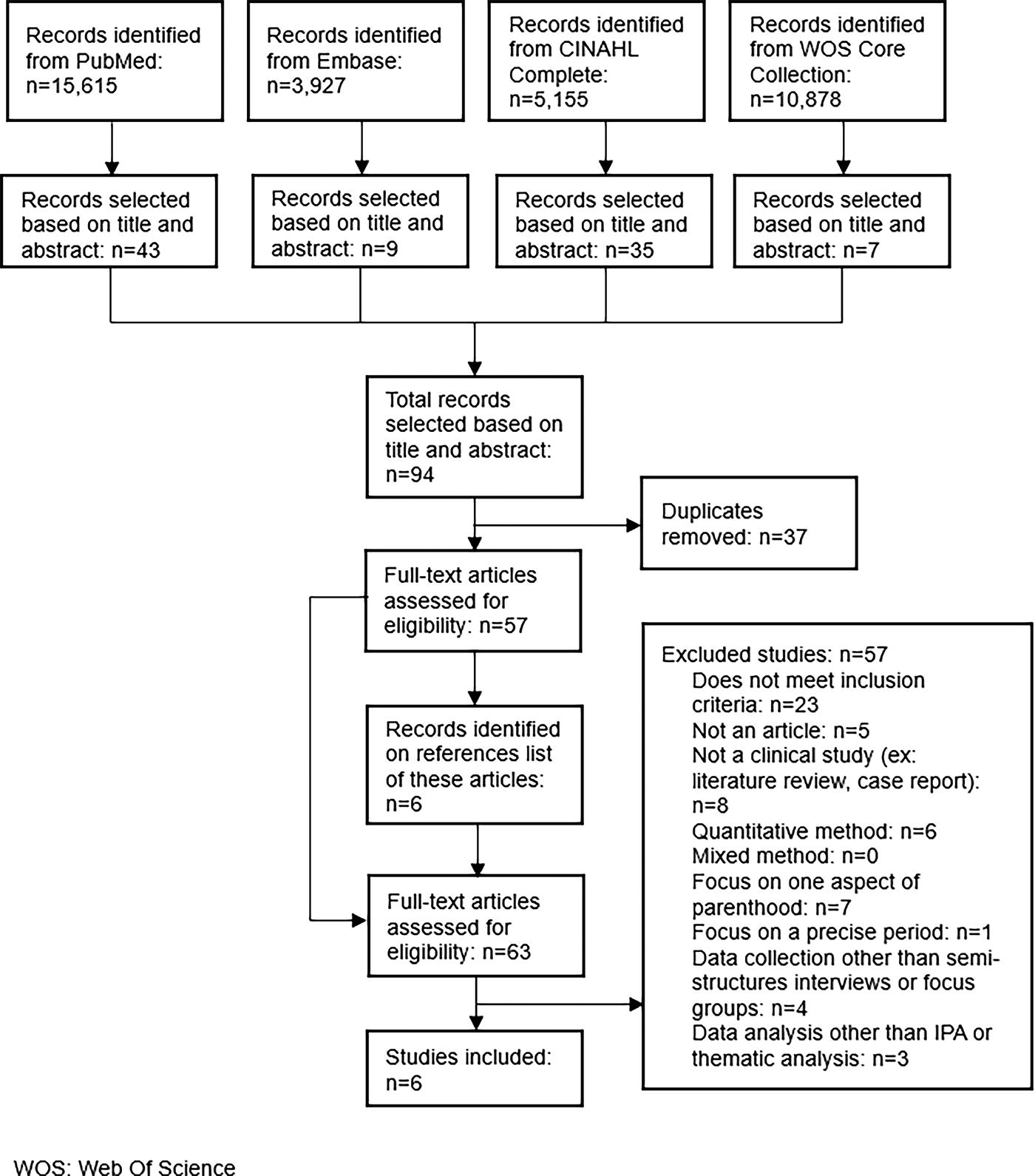
Flow diagram.
Main Characteristics of the Included Studies
Participant Demographics
ASC: autism spectrum condition.
Quality appraisal based on the CASP tool showed that the overall quality of these six studies was moderate to high (Table 3), with five studies demonstrating a moderate risk of bias (1 or 2 items out of 10 rated as “can’t tell” or “no”) and one study (Smit 2022) 24 demonstrating a low risk of bias (all items rated as “yes”). Four articles insufficiently reported how researchers had handled the effects of the study on the participants during and after the study (Dugdale 2021; Hampton 2022; Hampton 2023; Winnard 2022).25–28 Two articles failed to address the role of the researchers’ contributions to the findings (Hampton 2022; Hwang 2023).26,29 One article lacked rigor in data analysis (Hwang 2023). 29
Quality Appraisal According to the CASP Checklist
The GRADE-CERQual assessment of the findings showed “high confidence” (N = 23) or “moderate confidence” (N = 7) in the 30 categories (Supplementary Data S3). We noted minor concerns about coherence for seven categories, justified by data being supported by only one study in five cases. We rated adequacy as “minor concerns” for 10 categories, due to a slight poverty of data. We classified the relevance of eight categories as “minor concerns.”
Among the 63 full-text articles assessed for eligibility, we excluded 6 for using a quantitative method4,9,15,30–32 and none for using a mixed method. We excluded seven studies focusing on specific aspects of parenthood, such as sensory experiences,6,33 autistic working mothers, 34 experiences of infant feeding 35 or breastfeeding,36,37 and interacting with statutory services. 10 The study on autistic working mothers produced the following themes: 1. Well-being: Work gives me purpose; 2. Challenges: It’s hard being an autistic working mother; and 3. The invisible disability: Everyone thinks I look okay. The study on experiences of autistic parents interacting with statutory services regarding their autistic child identified the following themes: 1. The wider system is the problem and 2. Feeling judged and stigmatized. One of the two studies on breastfeeding proposed the following themes: 1. Intense sensory perception; 2. Focused determination; and 3. One size doesn’t fit all. One study focused on the COVID-19 epidemic period. 38 We excluded four studies using methods other than semistructured interviews or focus groups for data collection;39–42 one of these collected data from a single autistic mother and analyzed it through thematic analysis, identifying the following themes: 1. Communication and service issues with health care professionals; 2. Sensory issues; and 3. Challenges of parenting. We excluded three studies using methods other than IPA or thematic analysis for data analysis,7,8,43 with one reporting the following themes: 1. Having difficulty communicating; 2. Feeling stressed in an uncertain environment; and 3. Being an autistic mother.
Description of the themes
We identified three analytical themes describing experiences of autistic parents as follows: 1. Parental challenges and adaptations; 2. Social relations and support; and 3. Identity and personal growth. Several descriptive themes support each analytical theme (Table 4).
Analytical and Their Descriptive Themes
Parental challenges and adaptations
This analytical theme is supported by the following four descriptive themes: “Sensory and Communication Challenges,” “Specific Challenges of Pregnancy,” “Healthcare and Other Professional Interactions,” and “Parenting Strategies and Adaptations.” These descriptive themes report the various challenges faced by autistic parents in their parenting journey and the adaptations they develop to cope with these challenges, ensuring the well-being of both themselves and their children.
Sensory and communication challenges
Autistic parents face significant sensory challenges and communication difficulties, which impact their pregnancy, childbirth experiences, daily parenting tasks, and interactions with health care professionals. These challenges often intensify during pregnancy, making everyday tasks more difficult and increasing stress levels. Sally (Hampton 2023) describes this heightened sensitivity as follows: “I have like a sensory processing disorder with noises and light touching and smells and sounds and all of that is magnified and amplified.”
Everyday tasks become more challenging, preventing autistic parents from engaging in routine activities. Isla (Hampton 2023) mentions that “some things that I would be able to cope with normally, I wouldn’t be able to cope with or would stress me out even more. Just general things like the supermarket and stuff.”
During childbirth, the sensory overload from stimuli such as pain and touch can lead to feelings of loss of control and heightened anxiety. Sally (Hampton 2022) reported, “I didn’t have a problem with the contractions and all the other pains, but just having someone touch me while doing all those things would set me over my limits.” This can result in significant distress and meltdowns, as Morgan (Hampton 2022) noted: “I was in pain but confined to the bed […] And like all of that was really sensory crazy, I just felt really trapped like I couldn’t move, so like I was quite overwhelmed and had a couple of meltdowns.”
These sensory issues continue to affect routine newborn care and daily parenting tasks. Debbie (Hampton 2022) shared that breastfeeding could be particularly difficult: “about halfway through a feed I feel like there’s some sort of needle that being threaded up almost right the way to my back.” Chiara (Winnard 2022) also highlighted challenges in meal preparation: “I have lots of sensory issues around food and I am having to have almost my own mini meltdowns of hell preparing all this food.”
When both parent and child share the autism diagnosis, their sensory needs can conflict. Emily (Dugdale 2021) expressed this difficulty: “he drives me nuts with his sensory needs, he likes being on top of me and all over me and climbing on me and I’m directly the opposite.”
Communication challenges for autistic parents stem from their literal interpretation of language and difficulties with nonliteral or nuanced wording, often leading to misunderstandings with health care providers. Tara (Hampton 2022) shared her experience as follows: “I just kind of got a general feeling that they thought I was exaggerating things and trying to make things seem further along or a bigger deal than they were. But I’m quite literal.” During labor, Juliette (Hampton 2023) worried, “am I going to be able to not just communicate during labor but to understand what people are saying to me?”
Miscommunication can also lead to meltdowns. Isla (Hampton 2022) described a frustrating experience as follows: “They kept saying that they were going to break my waters and we’d wait like 5 hours and go and chase them up and they’d be like ‘oh no, we haven’t got anyone to do it now,’ but they hadn’t come and told us that. And so on the fourth time that happened, I just completely lost it and cried for about 6 hours.”
To address these challenges, autistic parents advocate for informed and structured antenatal care. Beatrice (Hampton 2023) suggested, “If everything could be structured and written down so that I could see, ‘this week you’re going to see this person, these are the things we’re going to talk about, these are the possible outcomes’.” They also emphasize the need for clear direct communication from health care professionals. Melinda (Hampton 2022) highlighted this need as follows: “I needed 100% clear information at all times and no fluffy language. I need to know what’s going on. I did have a few midwives who would not be so clear about things and I did say ‘I need you to be clear, I’m autistic’ and some of them got it and some didn’t.”
In summary, the heightened sensory and communication challenges faced by autistic parents necessitate specific support and adaptations. This includes creating sensory-friendly environments, providing clear and structured communication, and understanding the unique needs of autistic parents to improve their overall experience and effectiveness in their parenting roles.
Specific challenges of pregnancy
Autistic parents report significant difficulties adapting to the physical and psychological changes that accompany pregnancy.
Coping with social expectations and increased attention during pregnancy proves exhausting for many autistic parents. Lily (Hampton 2023) explains, “they just come up to you and say, ‘Oh how long left?’ or ‘How many months are you?’, ‘Is it a boy or a girl?’, and in everyday life that’s exhausting for me.” This reflects the broader challenge of meeting societal expectations about pregnancy. Olivia (Hampton 2023) shares, “I’m supposed to act a certain way, give certain answers when people ask me, ‘Isn’t being pregnant great?’” Despite these pressures, autistic parents emphasize that their desire to become parents is driven by personal choice rather than societal expectations. Participant 6 (Hwang 2023) stated, “I had my child because I wanted her, not because it was ‘expected’ nor because I want someone to look after me when I’m old.”
The physical and mental fatigue associated with pregnancy can exacerbate the usual challenges of autism. This fatigue negatively impacts cognitive functioning, as Simone (Hampton 2023) notes, “things that autism generally makes harder for me, so if I need to go into a store and process lots of different options, I don’t have the energy to do that anymore.” In addition, communication difficulties are often heightened during pregnancy. Juliette (Hampton 2023) mentions, “because you’re more tired and you’re thinking about a lot of things when you’re pregnant, I find speech has been a lot more difficult to understand or process.”
Enhanced sensitivity to hormonal changes during pregnancy can lead to mood swings, anxiety, and heightened emotional responses. Olivia (Hampton 2023) observes, “I find that I’m pretty hormonally sensitive, which talking to other women with Asperger’s I think they are too. So I’ve just been really moody and extra anxiety.” Autistic parents also perceive how autism influences their pregnancy experiences. Clarissa (Hampton 2023) comments, “I know ASD can be associated with loose ligament issues, but my hips for three out of the four [children] completely unraveled.”
Sensory challenges are often intensified during pregnancy, significantly impacting everyday life. Sophie (Dugdale 2021) shares, “I had to stop work at six weeks because my body was just in sensory overload.” Adapting to physical changes during pregnancy is also difficult due to the impact on body autonomy, balance, and spatial awareness. Simone (Hampton 2023) explains, “with my body changing shape, my center of gravity changing, my balance changing, it feels like, OK, I’ve had 30 years to get used to this body and now it’s different, the rules have changed. I have to figure out new ways of moving and being in my body.”
In summary, autistic parents face significant challenges in adapting to the physical and psychological changes of pregnancy. These challenges are compounded by societal expectations, increased fatigue, and heightened sensitivity to hormonal changes, necessitating tailored support and understanding from health care providers.
Health care and other professional interactions
Autistic parents report specific needs when interacting with health care and support professionals and express concerns about disclosing their autism.
Establishing trust with professionals is crucial for autistic parents. They need attentive relationships and a feeling of being understood in their way of perceiving and interacting with the world, as well as their mode of thinking. Sally (Hampton 2022) noted, “it was really nice that they got to know all of my weirdness and quirks and preferences.” Continuity of care is also emphasized, with parents preferring interactions with permanent health care providers who understand their peculiarities. Ethyl (Hampton 2022) shared, “[My health visitor] knows that I’m not fantastic at socializing and how difficult the little one’s been at the start.” The importance of this understanding is reiterated by Ethyl (Hampton 2023), stating, “She understands me so it’s helpful having her instead of having to explain or having someone else who doesn’t understand.”
Meeting new professionals often proves challenging and negatively impacts the quality of care. Yvette (Hampton 2022) explains, “With a new person, I find that quite difficult. I felt that I had to kind of strategize, if I said something too concerning, I didn’t know how she’d react, so I felt that I had to be super OK and fake it a bit.”
They often adopt specific strategies to manage these interactions effectively. Some parents find it helpful to explicitly request clear and direct communication from health care providers to avoid misunderstandings, as reported by Melinda (Hampton 2022) as follows: “I did say ‘I need you to be clear, I’m autistic.’” Parents often ask for sensory accommodations to reduce stress and sensory overload during medical visits, as explained by Yvette (Hampton 2022) as follows: “When they moved me around they put something over my eyes so I wouldn’t be blinded.” Some parents find it helpful to use written communication or take notes during appointments to ensure that they have a clear understanding of the information provided. Juliette (Hampton 2023) shared that “[her healthcare provider] writes things down as she’s saying them and then gives [her] the notes so that […] [she] can always read the note afterwards.” Finally, having a trusted family member or advocate present during appointments can help autistic parents communicate their needs more effectively, as stated by Jolene (Hampton 2023) as follows: “I’ve always tried if I can to have my mum with me at the appointments.”
Autistic parents often regret the lack of autism awareness among health care professionals. Yvette (Hampton 2022) described an encounter where professionals referenced a celebrity to understand autism, reflecting a significant gap in knowledge. Pervasive stereotypes in health care settings can lead to disrespectful treatment. Judith (Smit 2022) shared, “I couldn’t do anything about it because they were talking to me like they were CBeebies [a children’s television channel in the UK] presenters.” They advocate for support systems that recognize and respect their autistic condition. Oliva (Dugdale 2021) emphasized, “People really need to listen to Autistic parents … we’re not thick, we see things from a different perspective.”
Encounters with autism specialists often make parents feel validated and acknowledged as experts of their own and their children’s needs. Leah (Dugdale 2021) felt “validated,” and Alice (Dugdale 2021) appreciated being “accepted as the experts.” Disclosing their diagnosis can shift perceptions and improve their credibility regarding their child’s support needs. Emily (Dugdale 2021) reported a transition from being “disregarded” to being taken “seriously.”
Professionals must consider that parents of autistic children might also be autistic. Zoe (Dugdale 2021) noted that children’s services often do not inquire about parents’ diagnoses, missing crucial information. Recognizing the unique dynamic of autistic parents with autistic children is essential. Leah (Dugdale 2021) highlighted, “[Professionals need a] consciousness that a two-for, like an autistic parent with an autistic child is its own thing.”
Disclosing autism in health care settings is often a dilemma due to fears of stigma and misunderstanding. Olivia (Hampton 2023) expressed concern that professionals might dismiss her symptoms as hypochondriac behavior. Many parents report “masking” their traits to avoid negative judgments and to appear competent. Emily (Dugdale 2021) noted concerns about how disclosure might change the treatment they receive, stating, “I’m not comfortable sharing I’m autistic, because of the treatment, like the way things change” (Judith, Smit 2022). Stereotypes can lead to patronizing treatment, impacting trust and satisfaction with care. Emily (Dugdale 2021) shared, “… when he [GP] realized I was autistic, he wanted me to write down all of the times and dosages for (NAME-son)’s medicine (LAUGH), I was sat there going, no it’s fine.” Professionals’ disbelief or invalidation of their diagnosis can lead to anxiety and reluctance to seek help. Debbie (Hampton 2023) mentioned, “I had a doctor the other day say, ‘I’ve worked with autistic kids, and you’re not like them’.”
Despite these challenges, disclosing their diagnosis can lead to accommodations that significantly improve the childbirth process. Yvette (Hampton 2022) shared positive experiences of being provided with sensory accommodations and consistent care. However, Irene (Hampton 2022) highlighted a lack of awareness among providers, stating, “I don’t think any of them were aware of how to handle autism at all.”
Postnatally, interactions with social services often reflect the same lack of understanding. Participant 6 (Hwang 2023) criticized the poor education and understanding of autism among service providers. Obtaining appropriate social support remains a struggle, as highlighted by Participant 2 (Hwang 2023): “I haven’t got anyone. I need supports as my child needs supports … I don’t know where I can get support. I have seen no support.” Sometimes, support is lacking despite the good intentions of professionals, as Yvette (Hampton 2022) shared, “they said they were going to fund someone to come and help me with certain things but then they couldn’t fund it.” In other cases, support is available but not specifically for autism, as Debbie (Hampton 2022) noted, “I’ve also got extra health visitor appointments […] It’s quite nice to have that extra support. I wouldn’t have got that just for my autism, which kind of sucks.”
A lack of understanding of autism-specific needs can lead to mistrust and heightened anxiety among autistic parents. Participant 7 (Hwang 2023) expressed this sentiment, “Spent 2 years proving myself to others (i.e., Authorities) to a point where I never felt relaxed, always judged, always had to think about how it looks to them what I am doing with my child or why I am doing what I am doing.”
In summary, autistic parents face significant challenges in interactions with health care and support professionals, highlighting the need for improved understanding, clear communication, and appropriate accommodations. These adjustments can help build trust, reduce anxiety, and provide better support tailored to their unique needs.
Parenting strategies and adaptations
Autistic parents develop tailored adaptations to meet their particular needs, emphasizing anticipation, structure, and routine.
Their need for predictability and structure often causes anxiety about childbirth and parenthood. Melinda (Hampton 2023) expressed this anxiety as follows: “there’s the uncertainty of when it’s going to be and how long it’s going to take and what’s going to happen, that uncertainty is adding to my fear of it.” To mitigate this, they engage in detailed anticipatory planning for childbirth, such as making birth plans or visiting birthing centers in advance. Pearl (Hampton 2023) highlighted the importance of familiarity: “just like the room I’m going to be in or the ward, that sort of thing would make a huge difference to me, just so I can anticipate what it sounds like, what it smells like, that would really help.”
Proactive measures are taken to cope with the heightened sensory stimuli of hospitals. Jolene (Hampton 2023) shared her plan: “I’m due to go into one of the birthing centers where you can have your own music on, and the lights are quite low, and they don’t have a lot of people coming in and out. I think that will help me a lot with my sensory issues.”
Autistic parents often develop and rely on strategies to overcome parenting challenges, particularly in anticipating situations that neurotypical parents might approach intuitively and preparing for various scenarios. Participant 5 (Hwang 2023) noted, “I had the ‘learned scripts’ to cope with everyday situations bringing up a child.” Their educational approach provides routine and structure, responding to their personal needs and benefiting their children by promoting a stable and predictable environment. Jade (Winnard 2022) stated, “For me, I suppose one of my biggest traits is that I need structure and I need routine and obviously that helps kids, well the evidence is kids kind of prefer structure and routine.” However, some find it difficult to establish routines due to “demands being put on you all the time” (Ava, Dugdale 2021), leading to “demand overload” (Leah, Dugdale 2021).
Their engagement in meeting their children’s needs is reflected in their perseverance in applying recommended parenting practices such as breastfeeding or establishing sleep routines. Morgan (Hampton 2022) shared, “I’ve persevered with the breastfeeding and kept on doing that, that’s been something that’s really important to me.” Autistic parents also adapt to their children’s needs, even if initially difficult. Zoé (Dugdale 2021) noted, “I’m not a very touchy-feely person, but … I had to get used to not minding … if my son’s like climbing all over me … at first it got to me … but once I’d got used to it, you know, I just get on with it.”
Despite their willingness, autistic parents express concerns about managing daily tasks alongside parenting responsibilities due to common executive functioning challenges. Yvette (Hampton 2023) stated, “once I’ve got going I’m alright, but getting going can be very slow. I worry about looking after myself, cooking and things can be very difficult, so I guess support with that would be useful.” They find juggling multiple roles particularly challenging. Chiara (Winnard 2022) shared, “I just couldn’t multi-task and have a work head and a parent head because I have to be all-consuming in what I am doing.”
The need for help with practical aspects of parenting and ways to obtain it is frequently highlighted. Ava (Dugdale 2021) found having an Au Pair beneficial as follows: “I have an Au Pair so I just get more of the quality time with her … I’m not stressed all the time … that makes a huge difference the fact that I get enough down time.” Some parents noted that although they find adapting to change challenging, parenting facilitated greater acceptance of these aspects. Alice (Dugdale 2021) observed, “Autistic people aren’t famous for coping well with change, but you know, it is what it is and you just have to kind of adjust as you go and just learn as you go.”
However, due to a lack of flexibility, adapting their parenting style and communication to their evolving child can be difficult and stressful, particularly during the transition to adolescence when children seek more independence. Participant 5 (Hwang 2023) described this period as the most difficult as follows: “The most difficult moment for me was when my daughter hit adolescence.” Participant 3 (Hwang 2023) shared similar struggles as follows: “as they reach this age [adolescence], they rebel to a certain degree, asserting their independence, so I think that is what I have found most challenging.”
In summary, autistic parents use tailored strategies emphasizing anticipation, structure, and routine to manage their unique challenges. They actively plan and adapt their approaches to ensure a stable and supportive environment for their children, despite facing significant personal and external difficulties.
Social relations and support
Three descriptive themes support this analytical theme. They are as follows: “Emotional and Empathetic Connections,” “Support Networks and Social Challenges,” and “Advocacy and Navigating Systems.” These descriptive themes refer to the social dynamics of parenting for autistic individuals. They delve into the establishment of deep emotional bonds with their children, the hurdles in forming supportive networks, and the proactive advocacy efforts undertaken by autistic parents to navigate complex systems and access necessary support services for themselves and their children.
Emotional and empathetic connections
Autistic parents report profound emotional connections with their children, especially when the child shares the autism diagnosis.
They experience strong feelings of love toward their children, falling in love with them even before birth. As Alice (Dugdale 2021) expressed, “You sort of fall in love with this child in your head before you’ve even met them.” Sophie (Dugdale 2021) shared, “The first time I saw her it was like the most amazing feeling … and I looked in her eyes and it was like I’d know her forever … I can’t even ex, it was beautiful.” This affection is often reciprocated by the children, both physically and verbally, creating a sense of mutual trust and security. Ava (Dugdale 2021) noted, “Really often she will say ‘you’re the best mum in the world’ and gives lots of kisses, she is very huggie and kissie.” This connection induces a sense of trust in children toward their parents, as Alice (Dugdale 2021) highlighted as follows: “Well, they both come to me when they’re upset about something, they both take comfort from me and if we go into a new situation they like to be close to me and they use me as a safe base.”
Autistic parents exhibit heightened empathy toward their children, particularly in recognizing and responding to nonverbal cues. Olivia (Hampton 2022) mentioned, “You’re so used to looking for the super vague, sub-textual clues from adults but the good thing about babies is that they kind of have universal cries and I’m good at listening to noises.” This sensitivity, while sometimes overwhelming, enhances the parent–child bond and facilitates an understanding of their child’s needs. Grace (Dugdale 2021) explained, “We have lots and lots of empathy, but if it’s too much to deal with you have to just shut it off because it’s so overwhelming.” Lydia (Hampton 2022) shared, “Babies are very sensory-oriented, which I fully understand. In some sense it makes it easier for me to anticipate his needs, like ‘oh, he probably just wants to be held, he needs that contact to feel secure’.”
The connection is particularly strong when both parent and child share the autism diagnosis. Zoe (Dugdale 2021) noted, “We’re the same … I can usually figure out what they want or need when they can’t always verbalize it and help them in ways that other family members can’t.” Autistic parents often describe an intuitive connection with their children, sharing a “special bond” (Oliva, Dugdale 2021) or a “natural relationship” (Alice, Dugdale 2021). Leah (Dugdale 2021) stated, “I’m the one who can get through to him,” emphasizing their instinctive understanding. Chiara (Winnard 2022) found joy in sharing her children’s mode of thinking as follows: “I get a lot of joy from the way their brains work, we unpick the day and unpick situations and we work it out together.” This mutual understanding fosters familial relationships based on respect and acceptance, as Denise (Smit 2022) pointed out: “There’s a sort of radical acceptance that you have to sort of head into because we have a shared experience of that.”
Empathy in autistic parents is intensified by their own traumatic experiences, leading them to deeply feel their children’s emotions. Sasha (Smit 2022) shared, “The empathy is so extreme that I feel like, I feel I take on all of their anxiety.” As she explained, her extreme empathy is connected to her negative experiences in school, where she felt unsupported and mistreated by teachers. This past trauma amplifies her ability to empathize with her children’s anxieties and concerns about friendships and school.
This deep empathy, while beneficial, can blur the lines between their children’s emotions and their own. Carol (Smit 2022) mentioned, “Sometimes I feel him so deeply. So like when he’s got his worries and fears and pain, uhm, I feel like I feel what he feels and I have to kind of remind myself that we’re separate and they’re his feelings.” This profound empathetic response of autistic parents is not just a product of their autism, but also a consequence of their own unresolved trauma. By feeling their children’s emotions so deeply, they may inadvertently relive their own past traumas, which exacerbates their emotional response and complicates their parenting experience.
Despite these challenges, autistic parents work against stereotypes that question their ability to maintain healthy parent–child relationships. Participant 5 (Hwang 2023) stated, “I believe that my children are very much separate individuals to me, and that I should respect their choices and beliefs. I don’t see my children as an extension of myself and have few sentimental feelings towards family in general.” They describe parenting as a significant source of emotional fulfillment, highlighting the deep love they feel toward their children. Chiara (Winnard 2022) emphasized, “Well good things about being a parent is the absolute love you get from your children and the love you give to your children and what you can share with them.” Witnessing their child’s development and expressing pride in it are particularly rewarding experiences for autistic parents. Emily (Dugdale 2021) noted, “Seeing his progression and celebrating the wins and the small things that other parents would take for granted … for us is a huge celebration.”
In summary, autistic parents report profound emotional connections with their children, characterized by deep empathy, intuitive understanding, and mutual trust. These connections, while sometimes overwhelming, highlight the unique strengths and perspectives autistic parents bring to their parenting roles.
Support networks and social challenges
Autistic parents highlight the importance of informal support networks and the challenges they encounter in building them, which often lead to feelings of isolation.
Backing from family and friends provides the practical and emotional support missing from formal health care services, but parents with autism often lack such circles. Kayleigh (Hampton 2022) expressed this sentiment: “Everyone goes on about how you need a mum network, but I don’t have that.” Morgan (Hampton 2023) shared a similar experience as follows: “And also having a lack of friends, I feel like I’ve got a lack of female […] people who’ve been through pregnancy.” Despite the existence of social networks for young parents, these may not meet the specific needs of autistic parents, leading to apprehension about feeling alone. Kayleigh (Hampton 2023) worried, “I know everyone says about going to mother and baby groups, which I will go to, but I just don’t want to sit in a room with a load of women I have nothing in common with.”
Those who attempt to join traditional networks often find it difficult to create affinities with other members. Kayleigh (Hampton 2022) noted, “I’ve been going to a baby group, but I don’t feel like I’ve made much of a connection with anyone. I keep going, but I’ve found it really hard.” In contrast, parents with autism value the benefit of peer support from other autistic parents. Simone (Hampton 2022) found comfort in this shared experience as follows: “It’s nice to talk to other people who have similar sensory experiences and social experiences while also dealing with pregnancy and babies.” Sharing the experience of being an autistic parent or parenting children with autism or other specific needs provides a sense of support and understanding. Emily (Dugdale 2021) emphasized, “I have got some friends who have children who are very diverse themselves and therefore they get it far more than most.” However, they lament the difficulty in finding such specific support networks. Irene (Hampton 2023) expressed this challenge as follows: “I don’t really know anyone else with autism who’s had a baby and there’s not really much out there to find out about it, so that’s been quite isolating as well.”
When their children reach school age, autistic parents find themselves struggling to socialize with other parents. Zoe (Dugdale 2021) mentioned this difficulty due to challenges with “conversation that’s not like answering questions or specific.” (Olivia, Dugdale 2021). Amy (Winnard 2022) also highlighted the overwhelming social demands as follows: “The school thing was a nightmare because that made me make contact with other parents, which I had to avoid like the plague because I didn’t want to get, because I never, because you are totally unscripted.” They regret the impact of their social discomfort on their children’s social opportunities. Jade (Winnard 2022) reflected, “… they didn’t really play with their friends that much outside of the school. But then I suppose, whether they could pick up on the fact I didn’t want to do it I don’t know.”
In summary, autistic parents underscore the crucial role of informal support networks while also highlighting the significant challenges they face in building and maintaining these networks. The lack of tailored support networks often results in feelings of isolation and affects their children’s social opportunities.
Advocacy and navigating systems
Autistic parents report the need to advocate for appropriate recognition of their needs and those of their children in order to obtain adequate support.
They often feel that their need for support is not taken seriously. Alice (Dugdale 2021) explained, “they [professionals] didn’t understand why we were asking for it.” Emily (Dugdale 2021) noted that their feelings or needs and the outward expression of these were “two very different things.” Since autistic parents may demonstrate fewer nonverbal emotional cues, professionals might deny their needs even when they are clearly verbally formulated. Lucy (Dugdale 2021) highlighted this issue, stating, “they don’t believe you if you just say it, they want you to perform it.”
Autistic parents denounce the lack of appropriate resources and support services to meet their needs. Participant 3 (Hwang 2023) mentioned, “I haven’t requested any help, as I was told after diagnosis that there was no help available.” They face difficulties accessing mental health services because few are equipped to understand and address the specific challenges posed by autism. Their course often involves long waiting lists, lack of expertise, or resorting to private care for obtaining support. Denise (Smit 2022) shared her experience as follows: “I’m paying for my own counseling now. I’m on a waiting list for, um, secondary services within our borough, uh, secondary psychological services within our borough have said they don’t have the expertise because they’ve got nobody who’s got experience with autism.” They advocate for more customized support that addresses their specific challenges and strengths, while respecting individual differences and needs. Participant 7 (Hwang 2023) argued, “Not every autistic person is the same or requires the same treatment or help … Not to be judged by your label straight away by professional people.”
Autistic parents also face barriers in obtaining recognition and support for their children, especially in health care settings. Chiara (Winnard 2022) described her struggle as follows: “I have to fight, my goodness, I have to fight for them, especially my son and the local authority and getting a diagnosis.” They often feel “parent-blamed” (Sophie, Dugdale 2021) or “treated as a problem parent” (Leah, Dugdale 2021) when advocating for their child’s needs. Many parents encountered significant dismissals of their concerns, constantly being “pushed away” (Sophie, Dugdale 2021) by professionals or accused of “making stuff up” (Zoe, Dugdale 2021). This lack of validation and support from professionals creates frustration and isolation.
The same struggle is reported within the education system, particularly when advocating for children with Special Educational Needs. Carol (Smit 2022) emphasized “there’s a real pressure to get it right.” Interactions with educational professionals greatly impact parents’ well-being based on the level of support and understanding their children receive. Rick (Smit 2022) shared a negative experience, “you’ll get really, really awful teachers. And you wouldn’t have to deal with them if you weren’t a parent.” Conversely, Sasha (Smit 2022) mentioned a positive interaction, “Like the teacher that Grace had last year, uhm, was really good with her. And he was really good with me, and I felt supported.”
Despite a few positive experiences, misunderstandings of their needs and those of their children lead to “undue stress” (Lucy, Dugdale 2021) and “anxiety” (Sophie, Dugdale 2021). Many parents describe accessing the right support as a “fight” (Olivia, Ava, Leah, Dugdale 2021), a “battle” (Emily, Dugdale 2021), a “mission” (Grace, Dugdale 2021), or a constant “pushing” (Alice, Dugdale 2021). Some participants even felt they were “losing” (Olivia, Dugdale 2021) this struggle, resulting in a sense of hopelessness and withdrawal from support services. This lack of appropriate support and validation from professionals takes a significant emotional toll, making it increasingly difficult for them to advocate for their children’s needs and access necessary resources.
Identity and personal growth
Two descriptive themes support this analytical theme. They are as follows: “Traces of Autism in Parenthood” and “Parenting as Personal Growth.” These themes explore the impact of parenthood on the personal identity and growth of autistic parents, discussing how becoming parents can lead to shifts in self-perception and the development of a new identity centered around parenthood.
Traces of autism in parenthood
Autistic parents evoke the challenges and strengths that autism brings to their parenting experiences.
They perceive their parenting style as both similar to and distinct from that of non-autistic parents, often resulting in their methods being labeled as wrong or strange by others. This underscores the diversity in parenting approaches and challenges the notion of a one-size-fits-all model of “good parenting.” Participant 1 (Hwang 2023) emphasized, “We don’t have any criteria to prove that we are good or capable parents. Our parenting style would be different from others so-called ‘normal’ parenting style.”
Autistic parents often reframe traditional parenting expectations and deliberately depart from societal norms to focus on what works best for their family. Amy (Winnard 2022) advocated for personalized understanding and support as follows: “Just get to know your kid and get to know them as an individual and deal with their stuff, not everything that you read in a book.” They demonstrate a high level of self-awareness regarding their educational styles, recognizing both their strengths and areas where autism may introduce challenges, allowing them to apply strategies that meet both their needs and those of their children. Participant 6 (Hwang 2023) remarked, “I don’t feel that my autism has really impacted my parenting. I try to be a good parent and do what I think needs doing.”
Autistic parents recognize their analytical thinking, extensive “research” (Ava, Alice), and meticulous planning of “practical matters” (Lucy) as positive aspects. They attribute these strengths to their “special interest” (Alice), “desire for certainty” (Zoe), or “Black and White thinking” (Lucy) style (Dugdale 2021). Driven by their own adverse experiences, they aim to create a supportive, accepting, and understanding environment for their children. Judith (Smit 2022) expressed this motivation: “But the biggest thing for parenthood, parenting, for me, it was just that questioning everything. Because I don’t want my kids to think like I did. That I was the problem. When I was young, if people treated me badly, I assumed it was my fault.”
Balancing self-care with the demands of parenthood is a significant struggle for autistic parents, as they strive to ensure their own wellness. Irene (Hampton 2022) stated, “Usually when I feel overloaded and therefore low, I deal with that by doing very little to recover, but you can’t do that with a baby.” Their own autism-related challenges sometimes hinder their ability to effectively address their children’s autistic needs. Olivia (Dugdale 2021) acknowledged, “I’ve got needs myself, I can’t do it and my kids are entitled to this support but I’m going to have to say that they can’t have it because I can’t do the accounts.”
Autistic parents often grapple with perfectionism and a desire to protect their children from negative experiences. This internal pressure can lead to self-criticism and a constant questioning of their parenting abilities. Carol (Smit 2022) highlighted this, saying, “The perfectionist trait is there strong and true.” However, they also acknowledge the unattainable nature of perfection in parenting. Sasha (Smit 2022) reflected, “That’s just not something you can be as a parent. You know, there is no perfect parent, and all children need parenting in different ways. But I think for a long time, I just constantly felt like I was failing as a parent.”
Parenting as personal growth
Autistic parents describe the impact of parenting on their personal development, leading to shifts in self-perception and an evolving personal identity through parenthood.
They express profound love and joy toward their children, describing these emotions as transformative and enriching to their lives. Tara (Smit 2022) shared, “Since having them, I have had a lot more emotions than I had before if that makes sense. A complete love for them which has made me appreciate them and enjoy being alive/aware.” Maggie (Smit 2022) echoed this sentiment: “I enjoy the feeling of pride as I watch them grow and learn.” This feeling encourages them to provide the best education to support their children’s interests. Amy (Winnard 2022) noted, “When you are growing your own kids and seeing all these things it feeds into you as well and makes you want to be, makes you want to do better.”
Autistic parents prioritize fostering their children’s independence and comprehension of the world. Guiding them through learning experiences, moral development, and supporting their interests often leads to mutual growth and development for both parent and child. Hannah (Winnard 2022) explained, “Making sure they know right from wrong and are safe, erm they don’t get into trouble. Support them, erm, with things they want to do. It might involve things they want to do, like going swimming or anything they want to do. (Pause) Looking after them by making sure they have what they need and go to school.”
Autistic parents also expressed feelings of guilt, believing they may have “passed on something possibly genetic” (Olivia, Dugdale 2021) to their children because of their own experiences facing similar challenges. This often fuels a strong desire to protect their children from the difficulties they themselves have encountered. Sophie (Dugdale 2021) reflected, “I feel bad that she feels so anxious a lot of the time [Crying] and I feel bad because I used to feel like that … I don’t want her to feel the way that I did.”
They often feel like a “failure” (Zoe, Olivia) or an “imposter” (Grace) as a parent, with the impression of “doing everything wrong” (Sophie, Dugdale 2021). Nevertheless, having children helped them move from self-criticism to seeing themselves positively. Judith (Smit 2022) said, “Since having children, I’m starting to see myself through their eyes.” Olivia (Dugdale 2021) felt “proud of [her]” for adapting to meet her children’s needs, for example, by going against her cognitive rigidity as follows: “I was more laid back than I thought I would be, I was always a stickler for having rules in place more” (Emily, Dugdale 2021).
Parenting their children contributed significantly to their personal growth and self-acceptance. Lucy (Dugdale 2021) reflected, “It’s taught me so much patience … it’s taught me to find joy in the little things, it’s taught me to live in the moment for me … to communicate on my terms, it’s taught me that there’s nothing wrong with how I communicate erm because these small people are understanding me and these small people have no life experience, no knowledge of communication, can understand exactly what I’m saying.” Consequently, they feel like they have lost their personal identity to discover a new one. Andrea (Smit 2022) expressed, “I wasn’t prepared for the loss of my own identity […] I’ve lost a lot of my selfishness.”
Those who have autistic children often adopt and cherish a neurodiverse family identity, viewing it as reinforcing their collective resilience. Rick (Smit 2022) illustrated this as follows: “There’s a photo of me and the three kids together […] when they say that one person in a hundred is autistic, and we go out en-masse to mess with the statistics.”
Discussion
Summary of findings and implications for clinical practice
Sensory and communication challenges, which are core features of the autism spectrum condition, 44 appear to be heightened during pregnancy and childbirth, as previously reported.5,6,33 According to Morgan’s review, 45 autistic individuals often experience heightened sensory sensitivities that can make everyday tasks more difficult. Sensory overload from routine activities can lead to significant stress and anxiety, hindering their ability to manage these tasks effectively. This sensory overload negatively affects both their mental and physical health, contributing to chronic stress and reducing their capacity to engage in and enjoy daily activities. Furthermore, these sensory challenges can impact interactions with professionals and accessing services, as autistic parents may struggle with environments that are not sensory-friendly. This can lead to difficulties in advocating for their children and themselves, further complicating their parenting role. In our meta-synthesis, autistic mothers testify to the impact of sensory sensitivities on their ability to provide routine newborn care and carry out daily parenting tasks, suggesting the need for specific support like environmental adaptations or personal support to help manage the most sensory overwhelming tasks incumbent on a parent. In health care environments, sensory accommodations tailored to individual needs can be implemented to create a more inclusive and comfortable experience. Prior to appointments, providing patients with a sensory preferences questionnaire allows them to communicate their specific sensitivities and preferred accommodations, enabling health care providers to better adapt the environment and interactions accordingly. Offering flexible scheduling options, such as appointments during quieter times or in less crowded settings, can further reduce sensory overload in waiting areas, making the experience less overwhelming. Once in the health care facility, various environmental modifications can be made to enhance comfort. Adjustable lighting in consultation rooms, with the option to dim lights or use natural lighting, when possible, helps create a soothing atmosphere, avoiding the discomfort caused by harsh fluorescent lights. Minimizing background noise by soundproofing materials and, if necessary, white noise machines, can also significantly reduce auditory distractions. Patients should be encouraged to use noise-canceling headphones or earplugs if they find the environment overwhelming. Moreover, creating a designated quiet area in the waiting room with comfortable seating, soft lighting, and minimal decorations can offer a calm retreat for those who need a low-stimulation environment before their appointment. Additional tools and aids can be provided to support sensory regulation during visits. A sensory kit available at the reception desk, containing items such as stress balls, fidget toys, or weighted lap pads, can help patients manage anxiety and sensory overload. To effectively implement these accommodations, it is crucial to educate health care professionals about sensory processing differences and their potential impact on autistic parents.
Training should focus on practical strategies for creating a sensory-friendly environment that reduces anxiety, ultimately leading to more positive health care experiences for autistic individuals. Interactions with health care providers can lack fluidity, convey misunderstandings, and increase anxiety due to particularities of the autistic individual’s communication, 46 particularly in the hospital setting. 47 Autistic women advocate for clear and explicit communication, as well as sustained information on the care they receive. Several easy to set up proposals can be drawn up to fulfill this need, for example, providing a written summary of an oral interaction or what is planned for the continuation of care can ensure that autistic parents understand and retain critical information. In addition, making the patient reformulate the information given and inviting them to ask questions can verify good comprehension, which requires dedicating enough time for communication. 48 To facilitate these interactions, health care providers can use standardized templates for communication. These could include the following elements: 1) Summary of key points: A section listing the main topics discussed during the appointment, written in simple language and avoiding medical jargon. 2) Instructions and recommendations: A clear and concise outline of any instructions or recommendations given, presented in bullet points with step-by-step guidance. 3) Next steps: A checklist of the next steps in the care plan, with specific actions and timelines to be followed by both the patient and health care provider. 4) Questions and notes: A designated space for patients to write down any questions they have or notes they want to remember, both during and after the appointment. 5) Contact information: Clear contact details of health care professionals or support services for follow-up questions or assistance. These templates should be designed to be simple and clear, using bullet points and avoiding medical jargon. In addition to written templates, digital tools such as secure messaging platforms can be utilized to share these summaries electronically, allowing patients to review the information at their own pace and refer to it as needed. Furthermore, visual aids, such as diagrams or pictograms, can be incorporated into the templates to accommodate those who may benefit from visual representations of complex information. When implementing these strategies, it is crucial to consider the cultural context. In cultures where direct communication may be less common, health care providers should ensure that their communication style aligns with cultural norms while still providing the clarity needed for autistic patients. For instance, in some cultures, written communication might need to be more formal or verbal explanations might require the presence of a family member to bridge cultural and communication gaps.
Sensory and communication challenges are part of a multitude of barriers to accessing care for autistic individuals, among which can also be mentioned struggles with attending, including a lack of predictability and the waiting room environment, doubt toward professionals who demonstrate poor awareness of autism, or resignation facing the lack of existing appropriate support. 49 A recent systematic review indicates that health care professionals report only moderate levels of autism knowledge and self-efficacy. 50 This lack of knowledge, as well as negative attitudes and beliefs about autistic individuals, induces discrimination in health care, prevents adequate access to necessary health care, 51 and can negatively affect the therapeutic alliance. 52 There is an urgent need to provide basic training about autism to every health care professional, 53 as autism training programs were found to improve physician behavior and patient outcomes. 54 Other simple adjustments can be made to improve quality of care for autistic individuals. For example, it seems important for autistic patients to work with a consistent provider whom they find familiar and trusted. 55 Health care facilities can implement guidelines for continuity of care, ensuring that autistic patients are always seen by the same health care provider or team who are well-versed in their needs and communication preferences. This can be facilitated using patient records that highlight specific accommodations required by autistic patients. In culturally diverse settings, it may be necessary to involve cultural mediators or interpreters who are trained in autism to ensure that communication is effective and culturally sensitive.
Research has extensively shown that relatives of autistic individuals often exhibit higher rates of subclinical autistic traits, known as the “broader autism phenotype”, 56 and potentially undiagnosed autism. 9 In fact, the diagnosis of a child can sometimes serve as a catalyst for diagnosing a parent, leading to the recognition that they might be on the autism spectrum. 57 Parents of autistic children who themselves have significant autistic traits reported that interaction of their own and their children’s autistic traits can both help and hinder parent–child relationships. Their shared experience of autism facilitates mutual comprehension, but their similar cognitive functioning can induce difficulties when parent and child needs related to their autistic traits differ. 58 In parents with high autistic traits, impaired communication, poor attention switching, and lack of imagination are related to parenting difficulties. 59 In our meta-synthesis, autistic mothers report an enhanced emotional bond with their children, especially when these children are autistic themselves, while recognizing that this can be overwhelming. A recent study 30 highlights that autistic mothers face significant stress and sensory overload when their autistic children exhibit behaviors that conflict with their own sensory processing needs, which can hinder their ability to maintain daily routines and manage parenting responsibilities effectively. Differences in communication styles and social abilities between the parent and child can exacerbate these challenges, leading to frustration for both parties. This underscores the importance of tailored support and interventions to bridge communication gaps between autistic parents and their autistic children and manage the sensory issues of each. Therefore, it is important for professionals to identify parent–child autistic dyads and consider the specific needs that potentially autistic parents can share with their autistic child or the challenges they may encounter due to their own autistic traits.
Autistic women have expressed the difficulties they faced in having to conform to neurotypical societal expectations and increased social solicitations while being pregnant. This brings to light the urgent need to destigmatize neurodivergence and not to set preconceived expectations for everyone regarding the way they communicate and approach the diverse stages in life. 60
Anxiety co-occurs in 15%–42% of autistic adults 61 and increases during childbirth and the perinatal period, with rates approximated at 78% of women during the prenatal period, 54% at 2–3 months postbirth, and 45% at 6 months. 31 Feelings of anxiety can be dismissed by health care professionals due to an atypical behavioral manifestation in people with an autism spectrum condition, which tend to internalize their emotions and demonstrate poor change in facial expression. 8 Anticipation seems to be one of the major coping strategies used by autistic parents and could be leveraged to help reduce anxiety. Preparation for labor allows women to familiarize themselves with the labor process and environment. 62 Similarly, specific preparation for parenthood taking into account the autistic way of thinking and communication could reduce anxiety in the postpartum period. Despite the advent of therapeutic education programs in the last 10 years, these programs are mostly addressed to parents of children with an autism spectrum condition, and there is to our knowledge no article to date describing this type of support for autistic parents. 63 Nevertheless, therapeutic patient education interventions focused on autistic adults and their relatives can improve the support provided by family and friends, as psychoeducation interventions have proven to be feasible and show encouraging results in autistic adolescents and adults.64–66 Health care providers can develop specialized prenatal and postnatal educational programs for autistic parents, which could include detailed plans and routines for childcare, coping strategies for sensory issues, and guidelines for managing anxiety. These programs should be adaptable to different cultural contexts, ensuring that the materials and approaches are relevant to the cultural backgrounds of the parents involved.
Displaying routine in their educational approach is expected from autistic parents, as repetitive behaviors is one of the core features of the autism spectrum condition. 44 Surprisingly, autistic mothers do not show more routine in their parenting style than do non-autistic mothers. 31 Providing routines should be supported, as routines are associated with positive developmental outcomes in children, covering cognitive, self-regulation, social–emotional, academic skills, and overall mental and physical health. 67
Consistent with previous findings of difficulty with multitasking, organization, and domestic responsibilities, 9 autistic parents highlight the need for extra support to help manage the challenges caused by their executive functioning impairment. Concrete actions such as occasional human assistance should be discussed and proposed to support the accomplishment of daily tasks. This could include offering support services that provide assistance with household management and childcare, particularly during periods of increased stress or sensory overload. These support services should be culturally sensitive, considering the specific social and familial structures that might influence the availability and type of support needed by autistic parents in different cultural contexts.
Informal social support is known to bolster individual functioning, 68 but autistic individuals report having few friendships or relations with individuals outside the family circle. Support groups for adults diagnosed with Asperger syndrome have been found beneficial by participants, notably for providing information and advice. 69 This type of support could be beneficial for autistic parents when traditional young parents support groups do not fulfill their needs. Such groups should therefore be adapted to autistic participants, with highly structured activities, small groups or dyads, use of explicit language, and alternative modes of communication. 70 Facebook autism support groups have been identified as a source of informational, social, and emotional support for autism-related users, 71 demonstrating the potential value of social media support groups for autistic parents. Health care providers can encourage participation in these groups and provide information on reputable online communities, ensuring that autistic parents have access to peer support that understands their unique experiences. In culturally diverse settings, it may be beneficial to establish support groups that cater to specific cultural communities, allowing parents to receive support from others who share their cultural background and experiences.
Some autistic parents regret that their own social difficulties restrict their children’s opportunities to socialize with their peers. As real-life autism support groups allow autistic individuals to meet in an environment that is conducive to their way of interacting with the world and their challenges, groups for children of autistic parents could take place at the same time, creating socialization occasions for children and a suitable environment for autistic parents to discuss.
Autistic parents denounce a lack of appropriate resources and difficulties accessing support for themselves, notably mental health services. They report being rejected by services because of autism co-occurring with the mental health problems for which they seek support and highlight low levels of confidence and competence among professionals involved in mental health care for autistic adults. 72 Parents also describe challenges in getting the right support from health care and educational systems for their autistic child. This is consistent with findings that parents feel unsupported, with no clear pathway to support following autism diagnosis and gaps in statutory services provision, with access to support depending on parents’ own learning and research about autism. 73 While these difficulties are common to both autistic and non-autistic parents, autistic parents also report the specific experience of feeling judged and stigmatized for being autistic. They fear being considered less capable to parent their child and are often reluctant to disclose their diagnosis. 10 This underlines the need for a better awareness and availability of statutory services professionals toward autism, both in children and adults.
Autistic parents report a positive impact of parenthood on their personal development, but also difficulties related to the confrontation between their needs and those of their children. It has previously been reported that parenthood led parents with autistic traits to acquire skills that were limited by their autistic mode of thinking, like participating in informal conversations or becoming less rigid. Nevertheless, they also described a negative impact on their own well-being due to the overwhelming responsibilities of parenthood. 58
It should be noted that the implementation of the proposed recommendations in health care settings should always take into account the cultural context. This involves not only adapting communication styles and support structures to align with cultural norms but also ensuring that health care providers receive training that includes cultural competence and sensitivity. By doing so, the health care system can provide more effective, inclusive, and personalized care to autistic parents, thereby improving their overall parenting experience and well-being.
Implications for future research
Literature exploring experiences of pregnancy, childbirth, and parenting among autistic individuals is scarce, despite a growing interest in recent years. Many areas remain to be explored. The physical changes during pregnancy appear to have somatic and emotional impacts related to the specific autistic perception and functioning but remain unexplored, as well as the apparent worsening of cognitive functioning and communication difficulties induced by fatigue when carrying or parenting a child. Our review included only three autistic males, whereas autistic fathers are probably at least as numerous as autistic mothers, considering the ratio of four men to one woman with autism and average or above-average intellectual abilities that are usually put forward. The underrepresentation of autistic fathers in our review limits our understanding of their unique experiences and challenges in parenthood. Future research should focus not only on women’s perspectives on parenthood but also on men’s. To address this gap, future studies should use targeted recruitment strategies to ensure a more balanced representation of autistic fathers. This could involve collaborating with autism advocacy groups and community organizations to reach a broader population of autistic men. In addition, researchers could utilize social media platforms and online communities where autistic men are active to disseminate information about studies and encourage participation. Emphasizing the need for studies specifically focusing on autistic fathers is crucial. Research should notably investigate the impact of sensory challenges on their involvement with their children. For instance, sensory withdrawal needs might affect their ability to engage fully with their children, and understanding this dynamic is essential for providing adequate support. Furthermore, exploring how autistic fathers balance their sensory needs with parenting responsibilities could offer valuable insights into developing tailored interventions and resources. Among the 63 studies we reviewed in full, including the 6 articles included in our meta-synthesis, none involved autistic parents with intellectual disability or borderline intellectual ability or at least specified this aspect in the description of the participants. It would be interesting to study this population more specifically, as these parents would likely present exacerbated but also unique and additional challenges and needs compared with autistic parents without intellectual disability or borderline intellectual ability. As the deficiencies of formal support for autistics adults and children are well known and need to be addressed, we are beginning to catch a glimpse on the importance of informal social support. Research is needed to explore in what forms and by what means this support could be set up. Very little is known about the specificities of the autistic parenting style. More awareness of the distinctions between neurotypical and autistic child-rearing approaches is needed to provide appropriate help and avoid misconceptions by professionals, notably those in social services.
The low proportion of autistic adults becoming parents, suggested by the difficulty in recruiting participants for studies exploring pregnancy, childbirth, and parenting experiences of autistic individuals, raises questions about the actual rate of autistic adults becoming parents on the one hand and the perceived barriers to parenthood they encounter on the other hand, even though autistic parents have been shown to be just as effective as neurotypical parents. Several hypotheses might explain the perceived low proportion of autistic adults becoming parents. One possibility is the issue of late diagnosis. Many autistic adults may not know they are autistic before becoming parents, which complicates the identification and reporting of parenthood rates among this population. Studies such as those by Lai et al. (2015) 74 highlight that late diagnosis is common, and many individuals may have children before receiving an autism diagnosis, thereby making it difficult to accurately assess the proportion of autistic adults who become parents. Moreover, societal and personal barriers might also contribute to a low percentage of autistic adults becoming parents. As we saw in our meta-synthesis, autistic individuals may face significant challenges related to social interactions, sensory sensitivities, and executive functioning, which can deter them from pursuing parenthood. In addition, stigma and a lack of supportive resources could play a role in discouraging autistic adults from becoming parents.7,75 The difficulty in recruiting participants was noted during our search and review process. Many studies struggled to include a substantial number of autistic parents, which limited the generalizability of their findings. For example, Rogers (2016) 42 managed to include only one autistic mother, despite a well-thought-out recruitment program. From our review, it was clear that among the 63 studies we read in full, there was consistently a low number of autistic parents included per study. To improve the inclusion of autistic parents in studies, several strategies could be considered. Researchers should work closely with autism advocacy groups and communities to build trust and encourage participation. Utilizing social media and online platforms, which are commonly used by autistic individuals, can also enhance recruitment efforts. In addition, offering flexible participation options, such as online interviews or asynchronous focus groups, might accommodate the needs and preferences of autistic parents more effectively. Another solution is to design participatory studies, where autistic individuals are involved in the development of the study. This approach could encourage autistic individuals to participate, as they would feel more included and understood. Finally, providing clear information about the study’s aims, the importance of their contribution, and ensuring a supportive and understanding research environment can help alleviate potential concerns and encourage participation. Finally, exploration is needed regarding the prevalence of autism in children of autistic adults, which appears to be significantly higher than in the general population according to the four studies included in the review reporting these data, while we found no additional evidence in the current literature. In addition, the impact of autism co-occurring in both the parent and child should be further investigated. This could potentially lead to greater acceptance of autistic traits within the family unit and help prevent the development of behavioral disorders.
Strengths and limitations
We conducted the initial identification of studies for this systematic review across four databases with an unrestrictive search query, to avoid missing out on relevant articles. We chose to only include studies collecting data through semistructured interviews or focus groups and analyzing data using IPA or thematic analysis. This has led to the exclusion of some qualitative studies, even though literature on the theme of parenthood in autism is scarce. However, of the seven studies concerned, two generated themes and these were redundant with those of the studies included in our meta-synthesis. Nevertheless, as the scientific literature on the subject of parenting by adults with autism spectrum disorders continues to expand, it would be interesting to update this review of the literature by accepting the inclusion of qualitative studies with less rigorous designs, such as self-reports or descriptive designs, in order to best capture the full range of subjective experiences of those involved, including more personal, less generalizable, but equally relevant points of view. We identified several studies using a quantitative design. Compared to qualitative studies, quantitative methods offer distinct advantages in studying the parenting experiences of autistic individuals. They provide broader generalizability by collecting data from larger samples, allowing for findings that apply to a wider population. These methods enable objective measurement and statistical analysis, revealing correlations and causations. Quantitative approaches complement qualitative insights by confirming whether personal experiences are common, facilitating trend analysis over time, and providing robust evidence for policy and practice improvements, thus advocating for better support services based on statistical findings. Although we did not identify any studies using a mixed-method approach, this design could also offer a more comprehensive understanding of autistic parenting. By combining quantitative data, which measure the prevalence and intensity of challenges encountered by autistic parents, with qualitative insights that explore personal experiences, this approach can examine various areas such as support systems, parenting styles, and the impact on children, mental health, social perceptions, or the balance between parenting and professional life. In addition, mixed-methods research can track longitudinal changes and inform policy and advocacy efforts through robust multifaceted evidence. Therefore, a more comprehensive literature review could be achieved without restrictions based on study design.
The methodology used for conducting our work complies with the highest standards. Our data analysis follows the proven method of thematic synthesis described by Thomas & Harden, 18 which is frequently used in systematic review of qualitative evidence. We assessed confidence in our findings using the GRADE-CERQual approach, and the report of findings follows the PRISMA recommendations.
Despite requiring a clinical diagnosis of autism as part of the eligibility criteria, participants were considered autistic according to varying criteria across studies. We realized that three of the studies included in our review recruited participants based partially or entirely on self-declaration of being autistic. This was the case for the two studies conducted by Hampton, where “a diagnosis of autism was established based on self-report.” However, these studies reported AQ scores between 24 and 49 for autistic participants, indicating a high probability of autism. In the study conducted by Smith, five participants were formally diagnosed, whereas four were self-diagnosed. Including self-identified individuals leaves room for the possibility that individuals incorrectly identifying themselves as autistic may have been included. In addition, the predominance of female participants, with only three male participants, as well as the fact that all the included studies are from the United Kingdom, limits the generalizability of the findings to all parents diagnosed with an autism spectrum condition. Cultural and health care system differences can significantly impact the experiences of autistic parents. For instance, in countries with different cultural attitudes toward autism, such as those involving stigma or varying degrees of acceptance, or in regions where awareness and understanding of autism are limited, autistic parents may face additional challenges. In addition, the level and type of health care and social support available can vary widely between countries, affecting access to resources, diagnosis, and support services for both parents and their children. For example, in some cultures, familial expectations and social norms may place additional pressure on autistic parents, influencing their parenting experiences and strategies. It is also important to consider how cultural beliefs about parenting roles and child-rearing practices can intersect with autism, potentially shaping the way autistic parents perceive and approach their parenting role. To date, most studies published on the topic of autistic adult parenting have been conducted in developed, English-speaking countries, predominantly in Western contexts. Future research should aim to include populations from non-Western countries to better understand the unique cultural factors that may influence the experiences of autistic parents in these regions. Gathering data from diverse cultural backgrounds would not only highlight the particularities of these populations but also allow for meaningful comparisons with the existing findings from Western countries, enriching the global understanding of autistic parenting. To gain a more nuanced understanding of these dynamics, it is essential to conduct research that includes a broader range of cultural contexts. Such comparative studies would offer valuable insights into the unique challenges and strengths of autistic parents in diverse regions and enable more accurate cross-cultural comparisons. This comprehensive approach would ultimately inform the development of culturally sensitive support interventions and policies tailored to the specific needs of autistic parents worldwide. Furthermore, the study’s scope was restricted to those parents who felt sufficiently capable of committing the time and effort required for participation. Consequently, parents facing particularly challenging circumstances may have been disinclined to participate due to apprehensions about disclosing their difficulties. Thus, the study likely reflects only the experiences of a subset within the autistic parents’ community.
Footnotes
Acknowledgments
None
Authorship Confirmation Statement
M.P. conceived and designed the review protocol, performed the literature search and data analysis, and drafted the article. M.M. assisted with editing the article and provided critical revisions to the work. Both authors reviewed and approved the final version of the article. This article has been submitted solely to this journal and is not published, in press, nor submitted elsewhere.
Author Disclosure Statement
The authors declare having no competing interests.
Funding Information
The authors did not receive any funding for this study.

References
Supplementary Material
Please find the following supplemental material available below.
For Open Access articles published under a Creative Commons License, all supplemental material carries the same license as the article it is associated with.
For non-Open Access articles published, all supplemental material carries a non-exclusive license, and permission requests for re-use of supplemental material or any part of supplemental material shall be sent directly to the copyright owner as specified in the copyright notice associated with the article.
