




Abstract
Background:
Autistic adults experience significantly lower quality of life (QoL) than non-Autistic adults. Accordingly, the autism community has identified QoL as a critical outcome for intervention research and person-centered care. However, existing QoL measures, developed without Autistic input, are often inaccessible, vulnerable to neurotypical biases, and fail to comprehensively capture the nuances of QoL as experienced by Autistic people.
Methods:
Our Autistic-led research team completed semistructured interviews with 25 Autistic adults living in the United States. In the present study, we use reflexive thematic analysis to identify themes in Autistic adults’ perceptions of QoL, particularly as it relates to defining Autistic Quality of Life (AQoL) for this population.
Results:
Based on Autistic adults’ conceptualizations of QoL, we developed the following themes: (1) QoL is a complex construct, (2) satisfaction of “needs,” (3) life is worth living, (4) emotional and physical well-being, (5) relationships in all forms, and (6) self-determination. Subthemes include components of QoL that may be unique or more common to the Autistic experience, such as the importance of having access to sensory-friendly spaces or foods, sharing a connection with animals, and being accepted by society.
Conclusion:
Autistic adults shared what QoL means to them and endorsed the importance of components that are not captured by existing QoL measures created by and for non-Autistic people. Results of this study have the potential to inform a novel measure of AQoL that is directly based on Autistic experiences and is co-created with Autistic people. This is a critical need identified by the autism community, as it shapes individualized approaches to care and research.
Community Brief
Why is this an important issue?
Autistic people experience lower quality of life (QoL) than non-Autistic people. However, the surveys we currently use to measure QoL might not be accurate for Autistic people because they were not developed for Autistic people, and Autistic people did not help create them.
What was the purpose of this study?
Our team, a group of Autistic and non-Autistic researchers, wants to create a new survey that accurately measures Autistic QoL (AQoL). To do this, we first needed to find out what QoL means to Autistic adults. That was the goal of this study.
What did the researchers do?
We interviewed 25 Autistic adults. Each interview lasted about an hour. We asked questions such as, “What does quality of life mean to you?” After all interviews were done, our research team identified common themes from the Autistic adults’ responses.
What were the results of the study?
We identified six main themes in Autistic adults’ descriptions of what QoL means to them:
QoL is a complex construct—QoL can include many aspects of a person’s life and may be defined differently based upon a person’s priorities. Satisfaction of “needs” —QoL is feeling like one’s needs are being met. To some participants, this means having food, water, and shelter. Others mention needs specific to their Autistic identity (an environment that accommodates sensory differences). Life is worth living—QoL is more than having basic needs met. It is feeling satisfied or enjoying one’s life. Emotional and physical well-being—QoL is feeling mentally and physically healthy. Relationships in all forms—QoL is having meaningful relationships with people, animals, and society. Self-determination—QoL is having the freedom to make choices about things a person does, ways a person spends time, and the way a person’s identity is expressed.
What do these findings add to what was already known?
Autistic adults’ perspectives have largely been left out of QoL research. One important finding from this study is that although there were similarities in themes for how Autistic participants described QoL, the way it was defined and examples that were given varied widely. Having a measure with narrow options may not fully represent QoL for Autistic people. This suggests that a measure of QoL might need to include a section that is tailored to each individual and their priorities.
What are potential weaknesses in the study?
Autistic adults who participated in our interviews communicated through spoken language. In addition, all Autistic participants were living in the United States, and most identified as White women. Non-speaking Autistic adults, or Autistic adults living outside of the United States, or with other racial, ethnic, and gender identities might think about QoL differently than the participants in our sample.
How will these findings help autistic adults now or in the future?
Our findings show that there are components of QoL that are important to Autistic people that are not included in surveys currently used to measure QoL. Knowing these components will help us create a new survey that accurately measures AQoL. It is important to have a way to accurately measure AQoL in research and care settings so that we know the strategies and therapies used are improving AQoL.
Introduction
Quality of Life (QoL) as a construct is complex, as researchers from distinct academic disciplines have long debated the definition and its acceptance among varying populations.1–5 Early conceptualizations considered QoL to be synonymous with a person’s life circumstances, measured objectively (e.g., physical health based upon a predetermined criterion, frequency of participation in community activities). This perspective was challenged by researchers who referred to QoL as an individual’s personal satisfaction or self-reported perceptions (e.g., sense of belonging in the community).6,7 However, Felce and Perry acknowledged the contributions that each of these models put forth and defined QoL as follows: “overall general wellbeing that comprises objective descriptors and subjective evaluations of physical, material, social, and emotional wellbeing together with the extent of personal development and purposeful activity, all weighted by a personal set of values.” 8 This definition is compatible with the widely accepted definition established by the World Health Organization (WHO). 9 According to the WHO, QoL represents an individual’s perceived position in life based upon their standards and expectations. Moreover, an individual’s QoL is influenced by the broader cultural and social contexts in which they are situated. 9
The dimensions or domains that make up QoL and the indicators used to operationalize the domains vary throughout the literature. The WHOQOL Group defined the following six domains of QoL: physical, psychological, level of independence, social relationships, environment, and spirituality/religion/personal beliefs. 9 Alternatively, the field of intellectual and developmental disabilities (I/DD) generally subscribes to a QoL framework that includes the following eight domains: personal development, self-determination, interpersonal relations, social inclusion, rights, and emotional, physical, and material well-being.6,7,10 Despite the lack of consistency in the set of QoL domains, conceptualizations of QoL emphasize the objective, subjective, and multidimensional nature of the construct.4,8,10,11
QoL as a construct has been pivotal in shifting toward personalized care in the field of I/DD and has become an important outcome measure in research and practice. 7 However, the Autistic community has contested the universal application of QoL frameworks and subsequent measures that have been developed without the input of Autistic people and endorse neurotypical assumptions about what constitutes a high QoL.12,13 Furthermore, new constructs have emerged related to the idea of QoL; these are similar but not entirely the same as QoL, and include new frameworks about Autistic flourishing 14 and well-being. 15
Despite new frameworks on flourishing or well-being, the concern with measures remains, since QoL is an established construct. When using measures established for non-Autistic populations, QoL is significantly lower for Autistic people when compared with non-Autistic people,16,17 with notable discrepancies in the social relationships, psychological health, and physical health domains.18,19 Researchers offered several explanations for such discrepancies, beyond inherent differences between groups. First, prior research relied on parent proxy reports to capture the QoL of Autistic people. Although caregivers can offer a valuable perspective on the QoL of the individuals they care for, particularly those with higher support needs, such ratings are often lower than those from self-reports.18–20 Second, QoL measures were originally designed and validated for non-Autistic samples, 18 which can result in inaccessible measures 21 and a misalignment between the QoL construct that is being measured and the priorities of Autistic people. For example, existing measures often include a social relationship domain that encompasses items grounded in neuro-normative assumptions of success and preferences (e.g., How satisfied are you with the support you get from your friends?). These dominant views disregard specific ways that Autistic people experience high QoL, different but not worse than neuro-normative preferences. 22
Concerns about existing QoL measures activated conversations about the need to engage Autistic people as research participants or partners on the research team during the adaptation of an existing or the development of a novel QoL instrument. 18 In consultation with the autism community, several research teams adapted existing and widely used QoL measures to align with priorities of Autistic people.23–25 Although an important contribution to the autism field, several issues remain. In particular, additions made to the WHO-QOL-BREF 26 resulted in a longer assessment, potentially limiting its accessibility and feasibility for Autistic adults.24,25 In another evaluation aiming to address QoL, a set of scales deemed to be relevant to QoL for Autistic people were selected from the Patient-Reported Outcome Measurement Information System (PROMIS®; www.nihPromis.org) to create the PROMIS Autism Battery-Lifespan (PAB-L). 23 Selection of items from the PROMIS to create the PAB-L used neuro-normative scales and items, and was developed without starting with Autistic perspectives, further exacerbating measure development issues and misalignment with priorities of Autistic people. Ultimately, this may result in a measure that does not capture nuances impacting Autistic people’s QoL such as sensory experiences, development of Autistic identity, and society’s perceptions about autism, and could therefore be unaligned with the priorities of Autistic people.
Given these limitations, an autism-specific measure of QoL is critical to detecting meaningful outcomes in intervention research and person-centered care. 7 The Autistic community and researchers recommended that future research should aim to improve QoL outcome measures through community-partnered work, with Autistic priorities at the forefront and Autistic individuals meaningfully contributing to the research design and process.12,21 The current study aims to address this need, as it prioritizes the voices of Autistic people throughout all phases of the research project. From the beginning, we use a qualitative methodology to explore what QoL means from an Autistic perspective. These perspectives will aid us in understanding the constructs that make up an Autistic QoL, which can later inform a novel measure based upon the authentic experiences of Autistic people.
Methods
We received ethical approval from the University of North Carolina at Chapel Hill Institutional Review Board before initiating study procedures (approval number: 22-0082). We used the COnsolidated criteria for REporting Qualitative research checklist to guide reporting of study design features, analysis and findings, and positionality of the research team (see Supplementary Data S1 for completed checklist). 27
Researcher positionality
The project had the following two phases: a nonresearch phase to identify key constructs for QoL through open-ended surveys from 159 individuals. This phase involved Autistic and non-Autistic females.
The second qualitative research phase, reported here, included six researchers: three with doctoral training and three without doctoral training. Of these members, one identified as Autistic and five identified as non-Autistic. All research team members identified as White, non-Hispanic women. The interview team included a clinical psychologist, an openly Autistic Diversity, Equity, Inclusion, and Belonging (DEIB) disability consultant, a postdoctoral research fellow, and a postbaccalaureate research assistant. Two of the individuals on the interview team were also members of the coding team. The coding team included a non-Autistic female postdoctoral research fellow and two non-Autistic postbaccalaureate research assistants. During the analysis phase, the Autistic lead of the study provided consultation and reviewed the final themes. All members of the research team adhere to a neurodiversity-affirming, strengths-based approach and seek to promote the lived experiences of Autistic people in research. Team members who were novel to qualitative interviewing received additional training before leading an interview. This included practice sessions with a scientific member of the research team, observing a scientific member of the research team conduct an interview, and being observed by a scientific member of the research team to ensure that the interview protocol was followed.
Qualitative research paradigm
The theoretical orientation that guided data collection and analysis was interpretivist, as we sought to understand how Autistic people make meaning of QoL and reinforce the notion that QoL is subjective. We viewed the participant’s contributions as knowledge that was created from their experiences navigating the world as an Autistic person. However, the research team was involved in the design of the semistructured interview protocol, prompted participants to further discuss particular experiences, and interpreted the data, all of which are informed by their own understanding and views. 28 Such contributions of the research team could have influenced the information shared by participants and data presented in the Results section of the article.
Participants
During the planning phase of the qualitative study, our team intended to recruit 15 Autistic adults for participation. However, given that the larger project had a broad aim of exploring QoL from an Autistic perspective and involved a cross-case analysis, we determined that additional interviews were needed to achieve information power. 29
Our research team recruited participants using convenience sampling. The principal investigator sent an email and flyer attachment to the directors of four academic partnership groups that focus on the well-being of Autistic people. In the email, she requested that the directors forward our message to individuals who may be interested in participating in our study. The recruitment email stated that participation was voluntary and compensated, involved a virtual, 30- to 60-minute interview about the meaning of QoL and situations when they experienced a good or poor quality of life, and listed ways to complete the screening questionnaire or find out more information about the study. Inclusion criteria required participants to: (1) be residents of the United States; (2) have a self-identified or formal diagnosis of autism, (3) be at least 18 years of age, (4) report English as their first language, and (5) have access to and the ability to participate in a Zoom interview either verbally or nonverbally.
Twenty-five Autistic adults between the ages of 20 and 59 (M = 32.80, SD = 11.48) participated. Most Autistic adults reported having a professional diagnosis of autism (96%), and identified as women (68%), White (92%), and not Hispanic or Latino/a/x (96%). Table 1 shows participant demographics. One additional adult participated in the interview but was excluded from the study when they identified they no longer resided in the United States.
Participant-Level Demographic Information
Materials
Our research team developed a semistructured interview protocol that facilitated data collection. This protocol went through several iterations based on feedback from members of the research team. The Autistic lead first drafted an interview guide and sought feedback from several autism researchers and Autistic self-advocates. Recommendations included modifying interview questions to elicit open-ended participant responses that reflect a person’s experiences with QoL. The lead author (S.L.) incorporated expert suggestions, met with the internal research team (B.L.H. and B.M.) to discuss the updated interview guide, and made requested revisions. This process occurred four times before the internal research team determined that the interview guide was finalized (see Supplementary Data S2 for a finalized version of the interview protocol). The first half of the interview included eight questions with follow-up prompts. We designed these questions to elicit the Autistic adults’ conceptualization of QoL as a construct (e.g., What does quality of life mean to you?) and previous experiences with high or low QoL (e.g., Have you ever experienced what you would consider to be a poor quality of life for any length of time?).
The second half of the interview involved the research team showing participants a visual of QoL categories that were generated from survey responses with Autistic people, developed by the Autism Level UP! Organization (https://www.autismlevelup.com). We asked Autistic adults to provide feedback on the categories and offer additional suggestions that had not already been captured (e.g., Are there categories that are missing from this list that you feel are important for a high/good quality of life? If so, what?). We concluded the interview with an open-ended question that offered Autistic adults the opportunity to share any additional information about QoL. The current study focuses on the first half of the interviews, as we wanted to highlight Autistic adults’ authentic perceptions of QoL, without influence from predetermined categories.
Research team members piloted the demographic questionnaire and interview protocol internally to ensure that the protocol was accessible for Autistic adults and study procedures could be completed within a 1-hour time frame. Modifications that resulted from this pilot phase included the research team providing participants with background information about the Autism Level UP! Organization and how the categories were agreed upon.
Procedures
After receiving the recruitment email, interested Autistic adults completed a screening questionnaire to confirm their eligibility. Individuals who met the inclusion criteria were prompted to use Calendly to schedule a 1-hour semistructured qualitative interview via Zoom. A research team member sent participants the consent form and interview protocol in advance for their review.
We scheduled all interviews to include at least two research team members. During the scheduled meeting time, one research team member was responsible for logistical elements of the interview (e.g., audio recording, screen sharing), while the other was responsible for interviewing the Autistic adult. Cofacilitators commenced each interview with brief positionality statements that included name, status as a neurodivergent or neurotypical person, research or personal interests, and discussion of the purpose of the interviews.
A research team member reviewed the informed consent document with the Autistic adult and provided them the opportunity to ask study-related questions. Individuals who chose to participate were asked to complete a brief demographic questionnaire via REDCap before beginning the interview. Autistic adults were given the option to complete the interview using spoken communication or the chat function, take breaks as needed throughout the interview, turn off their camera, and bring a person or pet to accompany them and provide support during the interview. All Autistic adults received a $25 gift card for their participation. We collected data in February and March 2023.
Data analysis
We audio-recorded and transcribed interviews verbatim. Interviews spanned from 37 to 77 minutes, lasting on average 53 minutes. One Autistic adult opted not to be audio-recorded. In this situation, a research team member took notes to try to capture the responses verbatim. All interview transcripts were imported into Dedoose, a qualitative software designed to manage and analyze data. 30
We used the six-phase reflexive thematic analysis framework to guide our analysis. 31 This process involved familiarization with the data through listening to audio recordings and reading and rereading the transcripts. Members of the coding team fully immersed themselves in the data through such processes. Next, we generated inductive codes, as we wanted to prioritize the voices of the participants, rather than existing theoretical frameworks. Together, we developed an initial codebook and applied codes to each transcript independently. Coding was an iterative process, such that the coding team met weekly to refine the codebook and each transcript went through multiple rounds of coding. During weekly meetings, the team discussed coding discrepancies and resolved disagreements through discussion. The coding team generated initial themes from the codes applied to the dataset, refined them, and defined and named them. Throughout each phase of analysis, coders reflected upon their positionality and how their views informed the codes and themes that were ultimately created.
Trustworthiness
We followed a framework put forth by Creswell and Poth to ensure our study is trustworthy and of high quality.32,33 Research team members described their positionality (e.g., past experiences, values, and biases) and engaged in reflexivity, as we strongly believe the positions and views we hold can inform the interpretation of the results. Furthermore, multiple members of the research team coded each transcript and drew conclusions that were then examined and revised as a group, which addresses the credibility of the study. Lastly, an autism researcher (T.B.) who was not directly involved in data collection and analysis provided feedback regarding the accuracy of the data and how it relates to the final themes.
Results
Participants’ reflections of what QoL means included broad conceptualizations of the construct and discussion of the specific elements that constitute good QoL. Our thematic analysis of Autistic adult interviews resulted in 6 themes and 14 subthemes (Fig. 1).
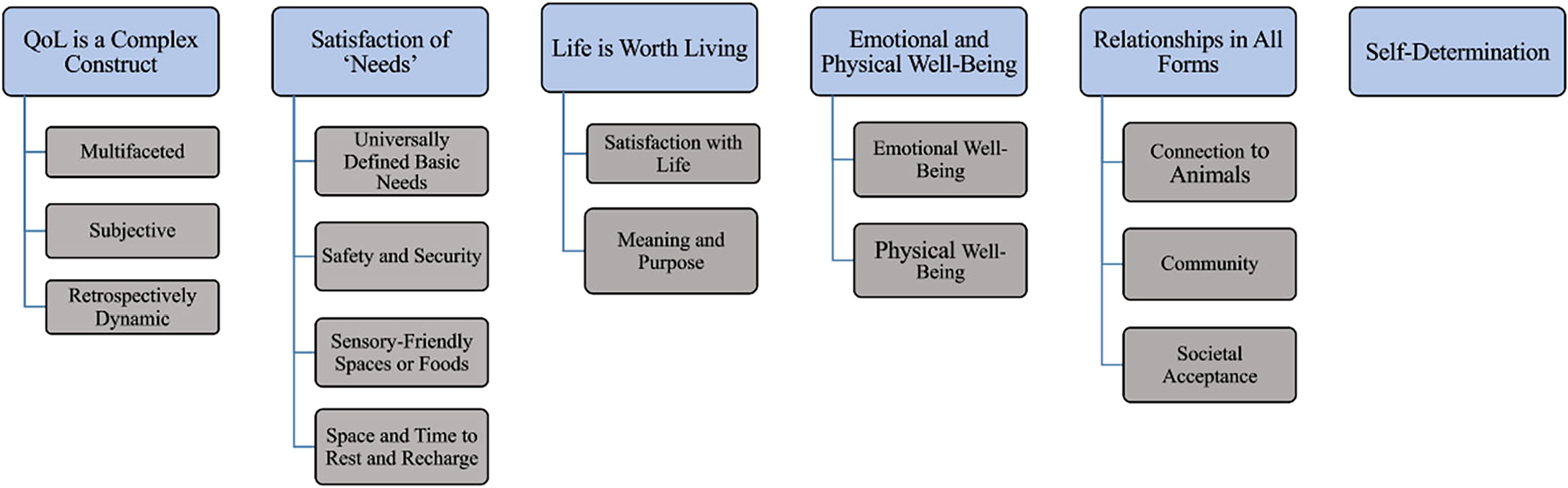
Major themes and subthemes.
Theme 1. QoL is a complex construct
Some participants found it challenging to articulate the meaning of QoL, given the complexity of the construct. Furthermore, participants homed in on complex features of the QoL construct that are particularly noteworthy. As described by participants, “QoL is something that’s really multifaceted” (P41), such that it encompasses “satisfaction across a number of different areas” (P15) of one’s life. Other participants indicated that QoL is a subjective construct and can “mean a lot of things to different people” (P41), depending on the identities and priorities of an individual. One participant reflected on both the multidimensionality and subjectivity of the QoL construct and drew upon its resemblance to The Wheel of Life:
I think a lot of like the balance of life wheel with all the spokes… but then also how you - like your perspective on all of those things as well, because you can - people can perceive those things differently. (P42)
In addition to there being differences across how individuals conceptualize QoL as a construct in the present, some participants mentioned that their own perceptions of QoL are retrospectively dynamic. Autistic adults reflected on prior experiences that, at the time, they considered to be good QoL, but in hindsight perceive their QoL differently. For example, a participant highlighted, “… there’s definitely been like periods in my life where I’ve perceived having a better QoL. Um, but like retrospectively looking back on it, not so much” (P41). Similarly, another participant recalled being in an abusive marriage, but stated, “if you’re blissfully innocent, it feels like a good QoL” (P35). In retrospect, both participants concluded that they consider their prior selves to have experienced a poor QoL based upon their own current standards.
Theme 2: Satisfaction of “needs”
Participants shared that an important component of QoL is feeling like all their needs are met. In defining QoL, some participants specified needs that are universally defined basic needs (i.e., food, water, shelter), or physiological needs essential to survival. Several participants used Maslow’s hierarchy of needs as a framework for their own understanding of QoL. 34
I think the main part of it is making sure that all my needs, whether that’s like fulfillment needs, safety needs, you know, social needs are being met and that’s just like examples. I think like the best like example of… what kind of needs I’m talking about is like Maslow’s hierarchy of needs. Um, not in any particular order, in any hierarchy, but those are a good example of the kind of needs that I’m thinking of. (P34)
Another participant did not explicitly mention Maslow’s hierarchy of needs but did share that they thought if there were “a universal QoL [it] would be safe and stable housing, food security, and emotionally and physically safe” (P1), which is also aligned with the needs considered to be most basic in Maslow’s framework. 34 Other participants also shared the importance of safety and security, most often very broadly. For example, participants shared the importance of “just like overall, like safety” (P32) and “being, ideally, financially secure” (P44). Others mentioned their living space being an area of comfort and safety as an influential factor in their perception of their QoL.
… personally, when I think about QoL… having a living space that feels very comfortable and very safe is, like, massively important to me feeling like life is going well. (P13)
Relatedly, participants shared that satisfaction of their sensory needs is important for their QoL, specifically having sensory-friendly spaces or foods. One participant shared that “having food that is a good, good textures, good taste” (P39) was necessary for their QoL, whereas another reflected on the importance of their environment meeting their sensory needs:
I guess QoL would be similar to everyone else, but Autistic people might have, like, more specific problems. Like, like, I’m really sensitive to a lot of like textures or sounds like I can’t sleep unless my room is like completely dark, completely quiet and stuff. So that was, so like having a roommate freshman year of college was kind of rough to deal with and it made me like not want to go back to my room a lot of the time because it wouldn’t be like the environment that I wanted it to be. (P46)
For other participants, their environment was related to their need for space and time to rest and recharge to maintain their QoL. Furthermore, participants shared that it was important that this time was free of social interaction, with one stating, “I need a certain amount of [alone time] to recharge. And it’s hard to find that balance.” (P30), and another sharing the activities that help them recharge when they take their necessary alone time:
Space and time. Just quiet time. You know, time to read and study things on my own, time to meditate. All that is very important. I really love social time, but I’m mostly introverted, and so I need that time to recharge. (P39)
Theme 3. Life is worth living
According to participants, QoL represents building or having a life worth living. This was captured through participants’ responses about their “satisfaction with life” (P54). Some participants emphasized that QoL encompasses more than survival and having one’s basic needs satisfied and is the presence of exciting adventures. For example, one participant mentioned that QoL is “having like enough money to save yourself and have some leftover for like fun” (P32). Similarly, another participant described a time in her life when the school she attended paid for a luxury “one bedroom apartment in [City] with a balcony and a pool. And like [she] was just living.” (P54). This participant had her “basic needs more than met and [she] was really satisfied with everything in life” (P54). Furthermore, for P29, enjoyment of life includes experiencing love and friendship, and thriving:
QoL… I guess I think it means more than like baseline survival. Like survival is food, water, shelter. The things that keep you just not dying. QoL [is] like actually having an enjoyment of life so you can enjoy what life is and experience like love and friendships and all that. Then that would be QoL to me, like more than surviving. Is it thriving, not surviving? I think I’ve heard of thriving before, [laugh] like more than the baseline of you won’t die today. (P29)
Some participants broadly defined QoL as feeling content or at peace with their lives, while others referenced enjoyment as a key ingredient. One participant stated that QoL is when they are “experiencing peace and joy throughout [their] day” (P44), and another participant indicated that QoL is “the extent at which, um, your life is healthy, comfortable, enjoyable.” (P40).
Several participants highlighted that QoL includes having meaning and purpose in one’s life: “QoL basically means… that you actually feel like you have meaning to your life and like…you feel like content and satisfied with your, with your like place in the world and like who, who you are” (P10). The response of another Autistic adult paralleled this sentiment, “… feeling like I have purpose contributes to my QoL” (P4). Moreover, participants connected QoL to engaging meaningfully in an occupation that aligns with their passions:
And I think also, this being able to sort of do what you want to do, like doing what you’re passionate about, because you know, if you’re stuck doing a job that’s boring to you that’s gonna suck. (P17)
Theme 4: Emotional and physical well-being
Participants stated that mental and physical well-being is a core component of their QoL. Some participants broadly referenced the role that health and well-being play in defining QoL: “Um, the extent at which um your life is healthy, comfortable, enjoyable” (P40). Others described the specific areas of well-being that determine their QoL: “I guess it’s like how well you feel emotionally, physically, psychologically” (P35). Moreover, participants explained how physical and emotional well-being is not merely enough to satisfy this component of QoL, but it is also influenced by “how hard you have to work to maintain …maintain yourself, to maintain that state of like being healthy, physically or mentally” (P48).
Emotional well-being is a component that many participants said was essential to achieving a high or good QoL: “I think of a quality of life, um, as like related to what my mood is at the time. I see it as, like, if I have a good quality of life, I have a positive mood” (P4), and described emotional well-being and QoL as interrelated and dependent. Another participant also described QoL as “emotional well-being. Like feeling OK” (P53). Participants also connected stress levels to their QoL, explaining that QoL “just means um like low stress levels” (P51). The notion that QoL is better when an individual is experiencing no or minimal stress was reflected across participants: “Well, honestly it’s… having some time where I don’t have to deal with anything stressful” (P11). Physical well-being was also commonly referenced when participants were asked to share what QoL means to them: “Well, I always have to divide it into sections. So for me it would be where you are at… physical health wise” (P1). The participants in our sample emphasized how “good health” (P32) greatly contributed to one’s QoL.
Theme 5: Relationships in all forms
Participants indicated that feeling love and connection is a vital piece of their QoL. This concept of relationships in all forms reflects the connections between participants and animals, people, and society.
Connection to animals is an element of QoL that many participants acknowledged during the interview: “I’ve had dogs forever, uh since I was in college, I’ve always had dogs. I like dogs a lot. But that’s actually a huge part of my QoL” (P54). Another participant echoed the important role that their pets play in their QoL: “for me, my-, my pets make a huge impact on my QoL” (P41). One participant described how caring for her pet has a positive influence on the way she cares for herself:
I also have a cat who… I feel like, it’s very cheesy to say, but I feel like having another thing to take care of, or like a creature to take care of, inspires me to take better care of myself. Um… and also that like, I know that he likes me and wants to spend time with me regardless of, like, how I’m feeling, or if I’m like having kind of an off day and not communicating very much. (P13)
Many participants described how positive relationships with others (e.g., partners, friends, family) provide them with a community that is essential to their QoL. For example, when asked to define QoL, one participant stated, “having like people in your life that are like supportive and like accept you for who you are” (P32). Similarly, one participant shared the importance of having relationships with friends and family who are “accepting of like, uhm, how [she] communicate[s], or [her] quirks and things like that” (P46). Moreover, when sharing about experiencing a positive or good QoL, one participant attributed that to having a supportive community:
Community was a big one. Through one of my special interests, I found a community of people who are interested in the same thing and it’s become like a second family to me. Like I could never ever have anticipated that it’s made every difference in my life. (P20)
Another important element of QoL for many Autistic adults is feeling accepted by a broader society for their authentic self. One participant described how societal acceptance contributes to their QoL:
I guess I think it means to be being accepted as an Autistic person. And well, I guess… what this is being accepted means is being able to be myself like, not be bullied like, and like to not have to act neurotypical frankly, because I’m not. (P17)
Another participant similarly notes how “respect, tolerance, acceptance, honesty” (P39) are core components of their QoL, specifically for the neurodiverse and marginalized pieces of their identity: “Now part of that is for being on the spectrum but part of that is also the other things about me that are different, like being socialist or, um, you know, uh, being pansexual or polyamorous, or things like that” (P39). Another participant shared that QoL means “that I don’t feel like I have to change the way that I, kind of, navigate my day or navigate my life, um, for the people around me” (P13).
Theme 6: Self-determination
Autistic adults reflected on self-determination as a core component of QoL, underscoring the significance of autonomy and agency in one’s life. Autonomy was described by several participants as having the freedom to move through life without disruption. This included having the freedom to pursue desired or necessary activities in a way that one prefers. For example, one participant mentioned that QoL is, “… being able to be independent and being able to do things, my own way, on my own time…” (P34). Similarly, another participant emphasized that QoL is having the freedom to choose when to engage in energy-demanding activities versus when to pursue more fulfilling activities that are aligned with one’s interests: “So I feel like I have a good ability to balance my responsibilities and also the things that are more fulfilling for me, whether that’s taking more time for myself or leaning more into things that are energy demanding, but I don’t feel like I have to...and that has been really fulfilling” (P13). Interestingly, several participants implied that the extent to which one is independent varies; however, QoL is “being as independent as possible” (P39). For one participant, their QoL is directly aligned with their ability to be independent: “… like at times when I have had a better QoL, I’ve been able to be more independent, I’ve been able to stay on top of my daily tasks and keep up with the day-to-day” (P4).
Several participants described QoL as being in control of one’s life and making choices that align with values and preferences. For example, one participant indicated that it is essential for them to be involved with communities that are ethical, and having the freedom to choose not to engage with institutions or communities that one deems unethical:
A thing that’s important to me, that may or may not be related to being on the spectrum is having like an ethical environment. So, being able to act, to make ethical choices, to not have to give in to like, say a company I think is unethical or a community institution or something. And for me it’s I know that this is a minor thing to a lot of people, but it’s a really big thing to me. And again, it may not be completely related to being on the spectrum…But having an ethical environment where I’m free to be ethical. (P39)
Discussion
In this study, led by an Autistic self-advocate, Autistic adults reflected upon what QoL means to them, a key element that has often been omitted in the development of QoL measures.7,18 Capturing such perspectives aligns with the priorities of Autistic adults 12 and addresses researcher recommendations to qualitatively examine Autistic adults’ conceptualizations of the QoL construct.18,21 Furthermore, this work sparks the emergence of a construct that is not fully captured by existing QoL measures originally developed for neurotypical people or those that were later tailored for the autism community. 13 Notably, the themes bring to light the nuanced understanding of QoL in the Autistic community. These themes, particularly when viewed through the lens of neurodiversity and autism-specific experiences, highlight gaps in current QoL assessment tools.
Participant responses underscored the complexity of QoL, placing emphasis on the subjective and multifaceted nature of the construct. This finding aligns with existing QoL frameworks that highlight the importance of multidimensionality and subjective components when developing QoL measures.6,7,11,35 Furthermore, Autistic participants reflected upon the dynamic nature of QoL, recalling specific events that were perceived differently over time. This theme addresses the need for a QoL tool that captures the subjective nature of QoL, 7 can be completed throughout one’s life, and taps into QoL domains that are a priority to the individual at that time.
Personalized interventions have been developed to address the heterogeneity of experiences and improve intervention outcomes for Autistic children 36 and non-Autistic children with mental health and behavioral challenges. 37 Such intervention approaches and the perspectives of Autistic adults within the current study provide justification for the development of a personalized tool that may better inform intervention choices and meaningfully assess QoL outcomes based upon the needs and priorities of the Autistic person. Furthermore, such a tool can push back against the neurotypical goals that are often imposed on Autistic people by a non-Autistic majority society, and instead capture what Autistic individuals consider important to have a high QoL and thrive in the world.
Some participants mentioned that QoL includes the satisfaction of physiological needs, the first stage in Maslow’s hierarchy of needs. 38 However, many participants emphasized that satisfaction of “needs” goes beyond basic physiological needs and encompasses sensory, emotional, and safety-related aspects that are intrinsic to the Autistic experience. For example, Autistic people report experiences of victimization throughout childhood and adulthood at a higher rate than non-Autistic people. Such experiences include, but are not limited to, bullying and physical, sexual, and psychological abuse,39–41 with perpetrators often being individuals who have a close interpersonal relationship with the Autistic person. 42 The prevalence of victimization within the Autistic community and participants’ identification of safety and security as a critical component of QoL suggest that existing measures may overlook or inadequately address such concerns.
Participants also referred to QoL as one’s perceived satisfaction with their own life, which further emphasizes the subjective nature of the construct and aligns with recent literature encouraging future research and intervention to focus on Autistic flourishing. 14 For some people, reaching a high QoL involves pursuing exciting adventures, while others consider a high QoL to be feeling content and at peace with one’s place in life. Autistic adults also described QoL as having meaning or purpose in their lives, which ranged from perceptions of overall fulfillment to volunteer opportunities and engagement in professional opportunities that align with one’s passions. Although current QoL measures consider work as anything that occupies an individuals’ time (e.g., paid work, volunteer work), items related to work do not capture the breadth of such experiences and are often limited to capturing an individual’s capacity to engage in work. 26 This is a narrow view of how work contributes to QoL, as participants in this study emphasize the importance of having choice in the work that they pursue (i.e., work volition) 43 and work that aligns with their interests and goals, while contributing to their overall happiness.
Similarly, the emphasis on physical and mental well-being in the Autistic context requires a more nuanced exploration of how Autistic people navigate their well-being, which may not align with the existing QoL measures that center on objective health instead of an individual’s perceived well-being.14,21 Participants in this study referred to QoL as feeling mentally and physically healthy, with an important emphasis on the stress and effort required to maintain mental and physical well-being. Standard QoL physical and psychological health-related domains are constructed around the medical model, which has historically constricted perceptions of and attitudes toward the health and well-being of Autistic people. 44 According to our participants, QoL is determined by an individual’s perception of how well they feel across all areas of health, which reinforces the need for QoL measures to include a subjective component.
Autistic adults also highlighted the importance of relationships in all forms, which included connections with animals, nature, and a supportive and accepting community. This theme describes the diverse ways in which Autistic adults experience and value relationships, which may differ from neuronormative assumptions that constrain relationships to those that are interpersonal. For example, some Autistic people who experience loneliness may be inclined to connect with animals rather than people, 45 given the breakdown of social interaction that often occurs between Autistic and non-Autistic people (e.g., “double empathy” problem). 46 This finding further suggests the need for a measure that is developed in partnership with Autistic people, as domains and items prioritized by a neurotypical-majority society may lack validity.18,21
The construct of self-determination, highlighted in the study, underscores the significance of autonomy and choice in enhancing the QoL for Autistic adults. This aspect is often inadequately represented in existing QoL measures, which may not account for the unique challenges and barriers to autonomy faced by Autistic people in a society built by and for the neuromajority.
Limitations and future research
This study highlights important perspectives from Autistic people; however, it does not reflect the diversity of the spectrum. This article represents data conducted from a semistructured interview, and, although accommodations were offered to participants (e.g., use of the chat, breaks), all interviews were conducted with Autistic adults using spoken language. Thus, our findings may not represent a comprehensive picture of QoL for Autistic people, particularly nonspeaking Autistic individuals. In addition, our sample resided in the United States, and was primarily White women; thus, our findings lack the perspectives of Autistic people living outside of the United States, as well as gender-diverse Autistic individuals and Autistic individuals from diverse racial and ethnic backgrounds. There may be important areas, core components, or conceptualizations of QoL that our findings do not capture due to a lack of geographic, gender, racial, and ethnic diversity. For example, although the Autistic adults in this study identified self-determination as a core component of QoL, Autistic adults living outside of the United States may evaluate the importance of self-determination on QoL differently due to differing cultural norms and values. 47 Future research could expand upon our findings by including increased diversity within the autism spectrum and across demographic characteristics, such as geographic location (e.g., country), age, gender, race, and ethnicity. Furthermore, researchers could explore differences in the way that men, women, and gender-diverse Autistic people conceptualize QoL as a construct.
Moreover, future projects should focus on creating and validating QoL instruments to accurately assess and improve QoL for Autistic people, guided by priorities and lived experiences of the Autistic community. Furthermore, authentic engagement with Autistic research team members should guide all phases of the project from development to dissemination. Our findings suggest that measure development should include universal, autism-specific, and personalized components to capture the subjective and dynamic nature of QoL.
Conclusion
In conclusion, the constructs identified in this study point to the need for a more inclusive and autism-specific approach to measuring QoL. While some aspects of QoL as defined by Autistic people are universal, the Autistic experience introduces specific nuances that are not fully captured by existing measures. These findings advocate for the development of Autistic Quality of Life (AQoL) assessment tools that are coproduced with Autistic people, ensuring that measures are reflective of their experiences and priorities.
Footnotes
Acknowledgments
The authors would like to thank all the study participants for their time and sharing their experiences with the research team. This work would not have been possible without them! The authors would also like to thank Dr. Amy Laurent, Dr. Jacquelyn Fede, Bryn Healy, and Dr. Christina Nicolaidis for their collaboration and mentorship.
Authorship Confirmation Statement
S.C.L.: Conceptualization, formal analysis, investigation, project administration, supervision, writing—original draft, and writing—review and editing. B.K.: Conceptualization, investigation, formal analysis, writing—original draft, and writing—review and editing. J.H.: Conceptualization, formal analysis, writing—original draft, and writing—review and editing. B.L.H.: Funding acquisition, investigation, writing—original draft, and writing—review and editing. B.M.: Funding acquisition, investigation, and writing—review and editing. T.B.: Funding acquisition, investigation, and writing—review and editing.
Author Disclosure Statement
The authors have no conflicts of interest to declare.
Funding Information
This project is supported by the Health Resources and Services Administration (HRSA) of the US Department of Health and Human Services (HHS) under award UT2MC39440, the Autism Intervention Research Network on Physical Health. The information, content, and/or conclusions are those of the author and should not be construed as the official position of, nor should any endorsements be inferred by, the HRSA, HHS, or the U.S. Government.

References
Supplementary Material
Please find the following supplemental material available below.
For Open Access articles published under a Creative Commons License, all supplemental material carries the same license as the article it is associated with.
For non-Open Access articles published, all supplemental material carries a non-exclusive license, and permission requests for re-use of supplemental material or any part of supplemental material shall be sent directly to the copyright owner as specified in the copyright notice associated with the article.
