




Abstract
There is an increasing demand for publicly funded research datasets to be made available for the research community. However, there are multiple issues associated with the use of accessible data, particularly in the Autistic community, where individuals have understandable reservations as to who is accessing these data, what the associated objectives are regarding the use of these data, and why there is insufficient follow-up to individuals who have offered their time to provide their data. These issues particularly extend toward brain imaging research, in which Autistic individuals have expressed long-standing ethical concerns as to how and why this research is performed. This perspective piece aims to outline concerns from the Autistic community in relation to both magnetic resonance imaging (MRI) and the functionality of the open-access scientific framework, utilizing these approaches as examples to outline discipline-wide concerns and barriers to ethical research. This work will also address a bias in research regarding who can reasonably tolerate an MRI scan as an Autistic person and whether certain Autistic characteristics are being disproportionally highlighted and/or suppressed through these research practices. Lastly, this perspective piece will focus on methods with which MRI, open-science philosophy, and general research disciplines can improve practice to conduct ethical autism research.
Community Brief
Why is this topic important?
Over the past 20 years, we have seen a significant increase in autism research. However, this increase in research output has not always aligned with research aims and priorities of the Autistic community. Understanding and addressing Autistic people’s concerns around research practice, including the use of brain imaging techniques such as magnetic resonance imaging (MRI) and the use of anonymized databases of brain images that are accessible to researchers, are required to ensure ethical research. Autistic individuals have historically faced medicalized and dehumanizing language by scientific communities, making it essential to prioritize their voices and needs in the research process.
What is the purpose of this article?
This perspective piece aims to shed light on the ethical complexities surrounding autism research, focusing on the understandable concerns the Autistic community has regarding MRI techniques and publicly accessible brain imaging data. For instance, only some members of the Autistic community can take part in MRI scans due to overwhelming sensory aspects associated with the process. There are also many ways with which anonymized databases of brain images could potentially be misused, or used to harm the Autistic identity, such as conducting research focusing on “treating” autism. By exploring the in-depth perspectives of Autistic individuals, this article seeks to provide recommendations for researchers and clinicians to improve their practices and conduct autism-affirming research.
What personal or professional perspectives do the authors bring to this topic?
The authors associated with this perspective piece are members of the Eating Disorders and Autism Collaborative (EDAC) research network, and one of the primary authors of this piece is Autistic, allowing this piece to consider a variety of lived experience and professional perspectives. EDAC conducted workshops with Autistic individuals and professionals to better understand their perspectives firsthand, which led to the generation of quotes for this article.
What is already known about this topic?
Existing research has highlighted concerns the Autistic community have regarding the long-term use of their data, as well as how an Autistic experience of an MRI scan significantly differs relative to a non-Autistic experience. Broad concerns have been raised about the ethical implications of research practices, including the potential for data misuse, lack of representation, and medicalization of autism.
What do the authors recommend?
The authors recommend several measures to improve MRI research and the use of accessible brain imaging data to make the practice more aligned with the priorities of the Autistic community. Recommendations include reframing research objectives to focus on support rather than treatment, enhancing communication during MRI procedures, and implementing more flexible consent procedures for sharing data.
How will these recommendations help Autistic adults now or in the future?
By adopting these recommended practices, researchers can better respect the autonomy and preferences of Autistic individuals, leading to more inclusive and ethical research outcomes. This will not only aim to currently benefit Autistic individuals by ensuring their voices are heard but also aim to pave the way for more respectful and supportive research practices in the future.
Introduction
We want to be understood and help research, but it’s a big risk to have to be open with people who have historically treated us terribly.—Eating Disorders and Autism Collaborative (EDAC) Collaborator 1
Over the past 20 years, the number of autism diagnoses has significantly increased.1,2 In the United Kingdom (UK), prevalence rates have increased by 140.3% within primary/secondary school children and adolescents over the past 9 years. 3 Changes in classification criteria have partly led to increased prevalence, alongside an increase in rates of diagnoses 4 due to heightened awareness of autism and associated Autistic characteristics. 5 These factors have contributed toward misinformed perceptions of an “autism epidemic,” 6 subsequently increasing autism research output and funding.7,8 However, this increased focus on autism research risks harming the Autistic community when researchers or organizations promote ableist perceptions of Autistic people by using medicalized narratives and dehumanizing descriptions of Autistic individuals. 9
The Autistic community has raised multiple concerns about some of the research that has been conducted to date. SPECTRUM10K, 10 a recent project aiming to investigate genetic underpinnings related to autism, was met with extensive criticism. Autistic individuals took concern with how data would be used and who would be able to access their scientific material for future research.11–13 Concerns range across multiple scientific disciplines but are particularly embedded within genetic research. Autistic people understandably worry as to what their genetic information would be used for,11–13 such as genetic “screening” mechanisms, which have been considered as means with which to eradicate Autistic people or reflect a new wave of eugenics.14,15 With significant resources and funding directed toward research “treating” autism relative to studies focusing on support for the Autistic community, there are relevant and significant concerns that some autism research is not conducted for or with Autistic people.15–17
But also like to do research that Autistic people actually want, not what parents want or like medical professionals want.—EDAC Collaborator 1
Concerns across use of data and consent further expand when considering the open-science framework, which encourages that data are made publicly available for future use and research.18,19 While there are significant benefits associated with open-access data, such as the generation of robust and timely scientific work, as well as promoting interdisciplinary cross-collaboration across institutions and countries, the open-science framework leaves Autistic individuals unclear what research their data contribute toward. The view of autism proposed by the medical model 20 promotes research that aims to “treat” autism rather than provide an “understanding” of autism that Autistic people wish to see implemented in health services, work, and school settings.
To work toward conducting ethical autism research, EDAC 21 ran five workshops with researchers, clinicians, and 20 Autistic individuals with lived/living experience of an eating disorder. EDAC obtained consent for participants to be recorded and for transcripts to be used for qualitative research, and ethical approval for this work was obtained from the Research Ethics Committee at the University of Edinburgh (23-24CLPS183). Workshops covered concerns/barriers regarding the generation of co-produced research, 22 including “deep dives” into particular research methodologies, with a focus on developing best practice guidelines of how to ethically design, conduct, and disseminate co-produced research with this population (see edacresearch.co.uk for associated guidelines). From discussions, participants raised concerns regarding certain research methodologies and long-term use of data, primarily from workshop 3, which underpin this article (Fig. 1.). This perspective piece aims to untangle ethical complexities surrounding research, using magnetic resonance imaging (MRI) and the open-access scientific framework as examples, which need to be addressed to both support the Autistic community and alleviate concerns regarding transparency of research protocols/objectives. This work will also aim to provide suggestions as to how scientific/academic communities can improve open-access data collection, dissemination of MRI protocols/data, and co-production of research with the Autistic community.
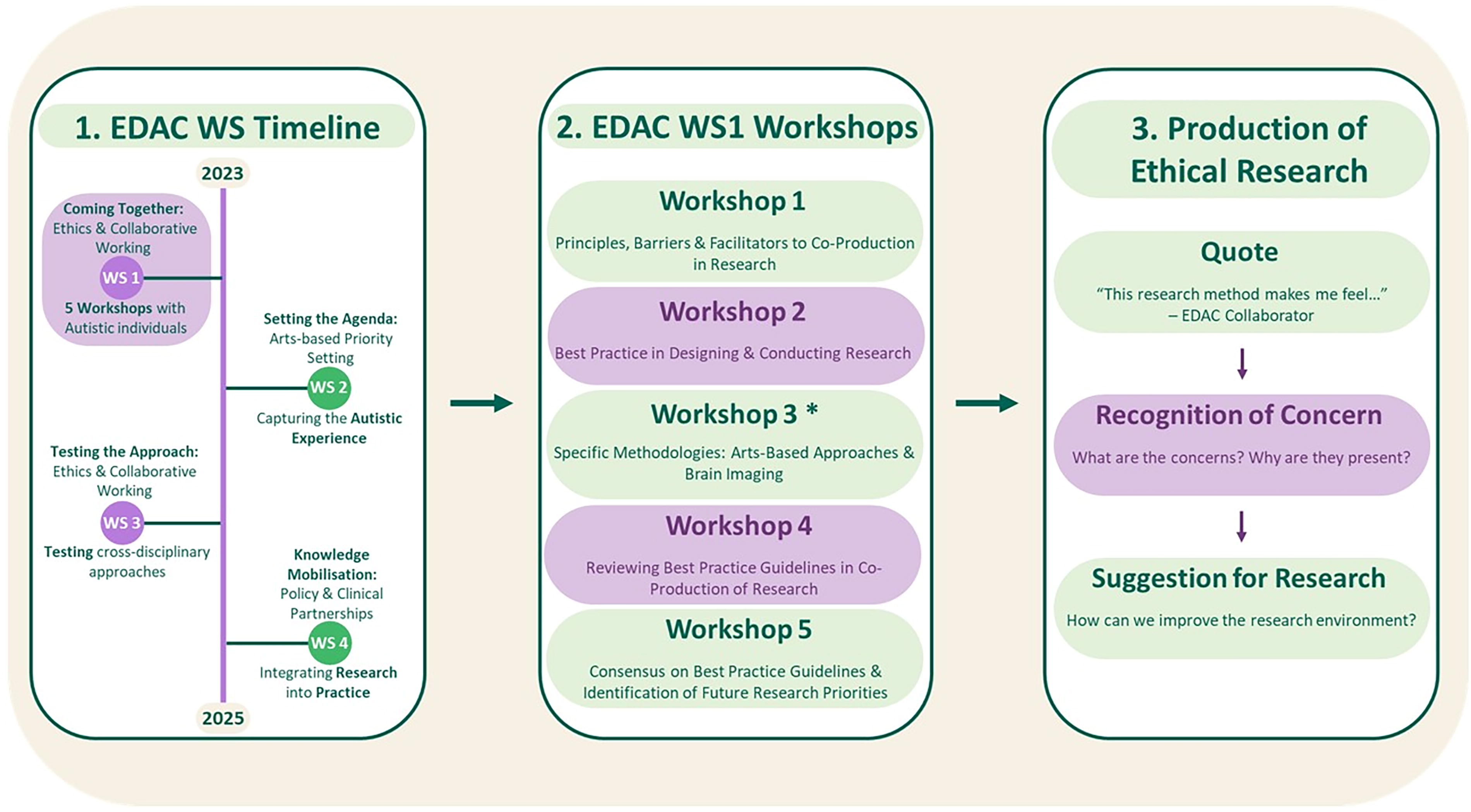
Visual detailing (1) the EDAC research network’s WS timeline; (2) the five EDAC WS1 workshops; and (3) the use of transcript material from the workshops, which led to quotes discussing how to ethically co-produce and guide priorities for autism research. The material used for this perspective piece has been derived from “WS1—Coming Together.” This image has been adapted from Duffy & Gillespie-Smith et al. 21 *—Transcripts from workshop 3 were predominantly used for this piece, but transcripts from all five workshops were also incorporated into the current perspective piece. EDAC, Eating Disorders and Autism Collaborative; WS, Work Stream.
A Focus on MRI
How does MRI work? What is the premise, and why is it used in autism research?
Neuroimaging techniques are methods researchers use to visualize and evaluate brain structure and/or function.23,24 These approaches allow researchers, clinicians, and professionals to understand how the brain works23–25 ; how to identify structural/functional differences across individuals, communities, or populations 25 ; or to assist researchers in diagnosing or identifying certain neurological conditions (i.e., Alzheimer’s disease, cancer, stroke) or forms of brain injury/trauma.24,25 A prominent neuroimaging technique is MRI, which utilizes strong magnetic fields and radio waves to create detailed images of different tissues located within the body. MRI scanners visualize areas of the body using the reaction of the nucleus (a single proton) of the hydrogen atom in water.23,26 MRI visualizes many different physiological states including the presence of inflammation, oedema, reduced blood flow, or presence of cancerous lesions. Functional MRI is an MRI technique focusing on changes in cerebral blood flow that can identify which brain regions are active when performing certain activities or when experiencing certain emotions/states of mind. Clinicians generally use neuroimaging techniques to aid in the diagnosis of neuropathology such as cancer, stroke, or epilepsy in clinical settings. However, MRI can also serve as a powerful technique to further our understanding of neurodivergence by exploring the unique neurological characteristics of Autistic brains. 27
What are the concerns surrounding MRI techniques in autism research?
While useful to identify brain regions associated with individual Autistic characteristics, MRI is not formally used to diagnose autism, with additional concerns associated with its use in research. During EDAC workshops, some Autistic people considered undergoing an MRI scan for clinical or research purposes to be an invasive procedure. This rationale is varied and highly individual but includes both the Autistic sensory processing system that experiences sounds/lights/physical sensations differently and extreme anxiety around uncertainty/unpredictability.28–30 Additionally, Autistic collaborators voiced concerns regarding whether population-based samples used for scanning are representative, as only a subgroup of Autistic individuals can tolerate the confined space and intense sensory features associated with undergoing an MRI scan. Unrepresentative sampling increases potential that any existing neuroimaging findings in Autistic groups may only reflect a small proportion of the Autistic community who have specific sensory profiles that can cope with confined spaces and loud noise. MRI scanners produce loud knocking/tapping sounds and require that individuals lie flat and still in a tunnel-like space for 15–90 minutes, 31 which can be inaccessible for some Autistic people.28,30
It can maybe feel a little bit, potentially intrusive. […] what is it you’re looking at my brain for, is it to put something right that’s perceived as wrong or you know, […] what is the purpose of it?—EDAC Collaborator 2
There are valid concerns that the rationale behind early identification of autism is to potentially “treat” or “mitigate” Autistic traits.32,33 The Autistic community has expressed understandable concerns regarding the medicalization of autism20,34–36 and principles behind MRI research/use (as well as across scientific disciplines). Like many other scientific disciplines, MRI has focused on finding “brain abnormalities” rather than “brain differences” associated with their autism,28–30,37 thereby framing Autistic characteristics as something to “treat” rather than support. The Autistic community has been consistently clear that research needs to focus on support and improving their quality of life, not on treatment or cures of autism. 38 As such, some Autistic individuals during EDAC workshops considered MRI techniques to be a physically and potentially identity-centered invasive technique. While concerns exist across multiple research domains, they are fundamental to autism and neuroimaging research.
I think any sort of brain imaging that’s taken, I think there needs to be clarity about what the purpose of it is. You know, help to explain to Autistic people what’s going to happen, as part of the process […] just being clear about you know, what the purpose of that imaging is, what’s gonna be done with it, and whether you’ve got any say in terms of what it’s going to be used for.—EDAC Collaborator 2
Is there an implicit bias in autism MRI research?
You know, if you’re going to ignore lived experience and not have a partnership, there are gonna be factors that you’re not gonna highlight that may be giving you skewed results.—EDAC Collaborator 3
It is a challenge facing researchers across disciplines to ensure that study participants are representative of the target population to address the primary aims, objectives, and questions associated with the research. On a general basis, recruitment processes exhibit biases in that individuals participating tend to be healthier and wealthier and have a higher proportion of female individuals taking part in research. 39 Achieving a representative sample is also particularly challenging in autism research, which depends on awareness/identification of autism, with significant further disparities in access to diagnostic services between genders 40 and different racial, ethnic, and sociodemographic groups,41–43 creating a research bias whereby only a subsect of the Autistic population is included in research. For instance, discrepancies in autism awareness, geographical location, and access to health care contribute to increased levels and acceptance of self-diagnosis within the Autistic community. 44 Although self-diagnosis is a positive inclusive approach, it may lead to a research bias where most participants involved in research are those who are self-diagnosed and waiting for a clinical diagnosis. Across those formally diagnosed, there is a further paucity of research conducted on Autistic individuals who experience intellectual disability or who are minimally speaking/non-speaking. 45 As only some Autistic people can tolerate MRI scans, researchers are not capturing aspects of the community in which sensory differences do not allow for tolerable scanning experiences.
Every Autistic person is different, there is no one size fits all for lived experience.—EDAC Collaborator 3
The Open-Access Data Framework and Data-Sharing Policies
What are open-access data? What are the benefits and disadvantages of open-access research?
Multiple institutions and organizations encourage open access to data, which is increasingly requested/required from funders of scientific research. 46 Researchers generally see data-sharing policies as highly beneficial, allowing them to assess the validity or reproducibility of existing research findings, conduct large-scale studies at reduced time/cost, and enhance multidisciplinary and/or international collaboration.47–50 Despite intended benefits, providing open-access data involves risks such as a lack of standardized formats to assess data, potential misinterpretation/misuse of original data by external researchers, and importantly, failure to adhere to the confidentiality or privacy of participants providing data.49,51 For any data collection to take place in the UK, an individual/organization must comply with the Data Protection Act (DPA), 52 a UK data privacy law that establishes policy on the collection, processing, storage, and transfer of personal data derived from the General Data Protection Regulation (GDPR) implemented in the European Union.53,54 National and international transfer of data across organizations and institutions has been a prominent area regulated by the DPA, in which the level of protection for the data subject as guaranteed by the DPA is not undermined upon the transfer of data from one institution to another, with adequate levels of protection for transferred data implemented.52,53 Similar data protection policies are implemented on a widespread and international scale to protect the rights and identity of study participants and provide clear and explicit consent.
Despite policies established by data privacy laws, researchers can potentially openly share data and adhere to these policies while not considering ethical complexities of doing so, such as sharing data that (1) are limited in quality (e.g., datasets created by individuals with varying levels of research expertise in collecting and analyzing data); (2) are outdated (e.g., datasets using outdated tools to classify individuals with a certain condition or classifying individuals with outdated conditions); and (3) do not consider additional measures of consent that would benefit vulnerable participants or communities.49,51 This can lead to findings that are not representative or applicable to the population.
What are the present ethical concerns and reservations from the Autistic community about the use of their data via open-access means?
Data privacy policies provide safeguards over management of personal data, but Autistic EDAC collaborators have concerns about how anonymized data may be used in future studies. Under a UK-centered context via the DPA, anonymous data are not identifiable, 55 therefore no longer covered by the GDPR and possibly reused for further ethically approved research. This concerns the Autistic community because their data may be used for studies that they have not explicitly consented to, as the DPA does not require consent for data anonymization. Participants may consent to participating in research exploring genetic factors related to autism, but those same data could potentially be used to research cures with the aim of eradicating autism and, therefore, Autistic individuals—which participants did not consent to and the Autistic community is highly against.11–13,56
We’re being seen as more of an academic challenge to explain than we are as actually something to fundamentally support.—EDAC Collaborator 4
This fear is not unfounded; many nonprofits dedicate themselves to curing autism 57 with related research regularly ongoing. 58 While some researchers have provided assurance that curing autism is not their aim, 59 this contrasts the history of autism research. For many Autistic people and their allies, attempts to cure autism entail eradication of the Autistic community because autism is an inherent part of who they are; without autism, they simply would not exist. 60 “Cure-to-eradication” pipelines are already in effect as seen in noninvasive prenatal testing, which has led to an 84% increase in abortions since 2021 in which fetuses present with Down’s syndrome.61,62 This raises ethical questions about the type of society we want to live in, whose lives are valued, and why this is the case.63,64
Like our individual brain scans might not be used for anything bad right now, but like 50 years from now, what’s the conversation going to be like for MRI scans and Autistic people? It’s kind of like a broader concern, I guess.—EDAC Collaborator 1
Suggestions to Improve MRI and Open-Access Research for the Autistic Community
Specifics of improvement concerning MRI research and how this may translate to other scientific fields
Notwithstanding specific and discipline-wide barriers toward conducting ethical autism research, MRI remains a valuable tool with which to better understand and support Autistic people. Like multiple research fields, scientists need to dissolve barriers regarding research framing, the level of communication/knowledge provision, and levels of collaboration between researchers and the Autistic community. One method with which to improve upon MRI research involves its framing. For many disorders and conditions, data are evaluated in “case–control” formats, in which those with given conditions (i.e., a “case”) are examined alongside “healthy individuals” (i.e., a “control”). As autism consists of a different neurotype, using case–control assessments in autism-related research medicalizes their identity. Alternatively, Autistic people advocate for observational cohort studies, in which individuals or groups are observed without the presence of intervention. Our Autistic EDAC research collaborators suggested this framing, stating that a case–control assessment would instead aim to investigate healthy/happy Autistic brains, relative to Autistic brains with the presence of a co-occurring disorder (e.g., a psychological/neurological condition). Reappraising research in this manner would serve to reflect identity-affirming research, and work to provide further support, as opposed to providing an intervention for autism.
I think the goal should always be to have a happy and content Autistic person, rather than comparing them to just neurotypicals […] I just think it, like it should be […] this is a healthy Autistic person versus somebody who had a mental health problem and is Autistic. […] it would be really nice to see that culture emerge in especially imaging research that is a bit more quantitative.—EDAC Collaborator 5
MRI researchers are also aware that autism-specific sensory sensitivities can be present during the scanning experience. To improve MRI for Autistic individuals 65 and pediatric populations, researchers have been working to reduce noise associated with MRI scans for over 20 years by altering engineering modalities and specific sequences to capture MR images.66–68 Researchers have also been working to reduce anxiety, discomfort, and sensory stressors associated with MRI.69,70 Researchers generally provide individuals with ear plugs/protectors and 70 offer weighted blankets or music/podcasts as individually preferred, 31 and individuals are accompanied by family members. 70 Further suggestions include that researchers provide improved scheduling to reduce waiting time, 65 quiet waiting rooms, 71 reduced staff presence, 65 and adjustable light fixtures.65,69 Scientists have also made advancements in the engineering and implementation of portable MRI, which could scan within a more comfortable and stress-reducing environment (such as an individual’s home), and across a shorter time frame. 72
The Autistic EDAC collaborators we spoke with suggested that researchers need to improve upon important facets of the research process, such as optimal communication and familiarization between researchers and Autistic individuals. Improved researcher-to-individual interaction includes researchers providing information/context on MRI scanners and associated experiences of scans, professionals being equipped with knowledge/communication skills to support Autistic individuals, and researchers practicing flexibility to provide individualized support.29,69 Tailored communication modalities have already benefited Autistic people and professionals in health service settings outside of MRI environments. 73 Researchers use familiarization methods within an MRI setting including pre-scan informational leaflets/pamphlets, 74 in-person visits to the scanner,65,75,76 mock-scanner simulations, 77 visual cues, 78 or picture schedules 65 and visual timers in-scan to provide information on the scan duration. 76 Methods of interpersonal/social support include radiographers providing pictures and named IDs of themselves for familiarization of the radiographer staff 78 and adapting communication styles to the needs of Autistic research participants on an individual basis.65,69,75,78 These approaches have previously been incorporated within imaging research and have served to make the MRI environment more accessible to Autistic individuals. However, it is fundamental researchers implement these support methods as standard research practice rather than intermittently across individual studies, institutions, and organizations. Indeed, it could be argued that these approaches of familiarization, support, and clear communication would be of benefit to all individuals participating in MRI studies. An effective means to standardize these amendments across organizations would be to implement “best practice” guidelines for flexible MRI environments across research fields, and researchers need to work with the Autistic community to fully understand and implement these supportive processes/protocols.
I think naturally as an Autistic person there’s an in-built curiosity about needing clarity, you know, asking lots of questions, “what’s this for?” “what’s gonna be done with it?” you know “what can I expect?” and I think the more you can do to kind of alleviate some of those concerns is, is really important. – EDAC Collaborator 2
Enhancement of open-access guidelines and provision of more frequent and detailed consent
There needs to be a lot of work done to kind of repair and like kind of reverse a lot of the damaging research that’s been done, which has kind of really harmed the Autistic community by kind of framing autism […] as a really kind of negative thing.—EDAC Collaborator 1
Researchers should consider enhancement of procedural aspects of the open-access data framework that could facilitate Autistic people participating in research and increase confidence in providing data. For instance, Autistic individuals may feel more comfortable consenting to open-access use of their data if guidelines gave individuals the option to flag which organization their data do/do not contribute toward. This option would allow Autistic people to actively participate in research decisions and engage with identity-affirming research rather than “cure”-based research. 79 Researchers could also incorporate this approach within specific research fields, in which Autistic individuals would be able to provide information on what domains of research they would like their data to contribute to. For instance, Autistic research participants could provide notes such as “no genetic research” or “no cure-based research,” either to the researcher before their data are shared or via an online portal once data have been made publicly available. An ideal (yet unlikely) modality of data collection and transfer would be to flag for consent on a study-to-study basis, which could also provide researchers and professionals with a deeper understanding and knowledge on the preferences and boundaries of the Autistic community. Outside of data flagging, it is fundamental that Autistic people can access research they are involved in and/or reflect their experience. Research teams should provide accessible summaries of research findings, alongside building trusting and mutually beneficial relationships with the Autistic community.
Importantly, issues concerning the use of “proxy consent” in Autistic individuals with intellectual disability exist, in which there is an increased risk of neurotypical parents or guardians undermining Autistic perspectives. 80 Proxy consent, while essential in certain cases, is inconsistent and unstandardized 81 and may contribute toward Autistic individuals with co-occurring intellectual disability participating in research that is based on the values of their proxies who consented in their name. In such cases, regular reassessment of a participant’s consent, appointing an independent advocate, or respecting participant dissent/discomfort regardless of initial parental/guardian proxy consent is essential toward ensuring researchers respect the participant’s voice throughout the research process. 79 Research teams should also seek to engage with the participant and proxy equally and work toward providing accessible descriptions of study objectives and protocols in manners appropriate to all parties involved in the research.
I think that’s the real issue for getting a sort of true and holistic input into studies from participants, and it is also a, a more vulnerable subset of individuals who might actually not fully understand at times what they are getting involved in how that research would be used and I think that brings up a lot of other ethical considerations in research.—EDAC Collaborator 5
Without researchers providing increased flexibility across consent procedures for open-access data, there is a possibility that Autistic research participants may find themselves a participant in studies with aims that may not align with their personal beliefs or interests, or aims that they would not have provided informed consent to. A lack of respect for individual autonomy during the consent process has potential to strengthen the present mistrust Autistic individuals feel toward the research community, and overlooking the diverse preferences and needs of the Autistic community in the consent process risks scientists exploiting their shared data.11–13 A more granular approach to determining and obtaining consent for open-access data collection would not only respect the autonomy and agency of Autistic individuals but also aims to foster a collaborative and inclusive research environment leading to representative findings that can improve support services for the Autistic community.
I think part of that is around the consent process as well as being very clear, you know, not just about the expectations during, but what’s gonna happen afterwards and […] what the parameters of that consent is, and being very explicit if, you know, there may be an intention further down the line for that (research) to go wider. […] making the parameters clear—EDAC Collaborator 2
Conclusion
As the utility of research datasets/repositories rises, researchers become increasingly responsible for managing these data and framing their research. Ethical complexities persist between the research community and the Autistic community, such as the provision of transparency concerning data access, communication regarding the framing of research, potential biases in representative samples, and insufficient follow-up procedures regarding what research provided data contribute to. These concerns extend across scientific domains, including MRI, where Autistic individuals have raised ethical and emotional concerns. This work has elucidated the ethical risks associated with research corresponding to MRI and general scientific practice and open-access data and general scientific practice, underscoring a need for scientific disciplines to provide more inclusive and transparent research practice. Moving forward, research communities must engage with Autistic individuals and co-produce research effectively to increase the validity, robustness, and impact of findings from studies utilizing publicly accessible forms of data.
Footnotes
Acknowledgments
The authors would like to give their extensive thanks toward their research collaborators and experts by experience, who participated in workshops discussing barriers and facilitators toward co-production of research as part of the EDAC network. Quotes discussing concerns regarding use of MRI and open-access data within these workshops were used for this article. The authors would also like to thank the Scottish Women’s Autism Network for their ongoing support and assistance in recruitment for these workshops.
Authorship Confirmation Statement
The article has been submitted solely to Autism in Adulthood.
M.S.: Conceptualization, investigation, writing—original draft, writing—review and editing, visualization, and supervision. E.M.: Conceptualization, investigation, writing—original draft, writing—review and editing, and supervision. G.W.: Writing—review and editing, project administration, and funding acquisition. J.K.-G.: Writing—review and editing. K.T.: Writing—review and editing and funding acquisition. K.G.-S.: Conceptualization and funding acquisition. F.D.: Conceptualization, writing—review and editing, supervision, project administration, and funding acquisition.
Author Disclosure Statement
The authors have no conflicts of interest to report.
Funding Information
M.S., E.M., G.W., K.G.-S., and F.D. are supported by UK Research and Innovation (Medical Research Council [MRC], Economic and Social Research Council [ESRC], Arts and Humanities Research Council [AHRC]), the National Institute for Health and Care Research, and the Medical Research Foundation as part of the EDAC network (grant number: