




Abstract
Background:
Research has highlighted a relationship between autistic motherhood and autistic burnout, although autistic mothers’ experiences of autistic burnout have not been explored in depth.
Method:
To address this research gap, we used a participatory approach and a qualitative methodology with the aim of understanding: (1) how autistic mothers experience autistic burnout in relation to their parenting role and (2) what support they need to prevent and recover from this. We recruited 13 autistic mothers via social media to participate in an online semi-structured interview. We analyzed these interviews using inductive reflexive thematic analysis.
Results:
We developed four main themes. Theme 1, “Depletion,” focuses on the contributory factors to autistic burnout. Theme 2, “You have to just get up and keep going,” demonstrates how autistic mothers continued to care for and maintain their relationships with their children while experiencing autistic burnout. Theme 3, “New realizations,” reveals how autistic burnout impacted autistic mothers’ self-understanding and self-awareness. Theme 4, “We need support too,” discusses the availability and accessibility of support for autistic mothers and their subsequent experiences of this. Findings highlight that autistic mothers’ difficulties associated with their autistic burnout are compounded by a lack of autism acceptance and understanding from others, although they felt that burnout did not impact their parenting capacity.
Conclusions:
We provide several recommendations to improve outcomes for autistic mothers, including a need for increased autistic-led training for professionals, and for the development of formal, autistic-led peer support services and community groups.
Community Brief
Why is this an important issue?
Autistic mothers experience a lot of pressures (e.g., social demands), which can be very stressful and might lead to autistic burnout (extreme exhaustion experienced by autistic people that can make it hard for them to think and act). So far, we know very little about the experience of burnout in autistic motherhood. Knowing more could help us put better support in place.
What was the purpose of this study?
We aimed to explore the experience of autistic burnout in motherhood.
What did the researchers do?
We interviewed 13 autistic mothers about their experiences of burnout. Our questions included things such as “how did you first realize you were experiencing autistic burnout?” We used an inductive, reflexive thematic analysis. This is a form of qualitative analysis where researchers look at what people have said and develop common themes (or patterns) across participants.
What were the results of the study?
We developed four main themes. In theme 1, “Depletion,” we focused on the things that led to autistic burnout, such as feeling responsible for too many things at home. In theme 2, “You have to just get up and keep going,” we explored how autistic mothers continue to care for their children during autistic burnout. In theme 3, “New realizations,” we looked at how autistic burnout impacted autistic mothers’ self-understanding and self-awareness. In theme 4, “We need support too,” we explored where mothers went for support, whether it was helpful, and what would make support better in the future.
What do these findings add to what was already known?
Our findings show how the demands of motherhood might lead to autistic burnout among autistic mothers. We found that some things involved in maternal burnout (e.g., having a lot of things to remember) are the same as in non-autistic mothers, but some aspects of autistic maternal burnout are different (e.g., our mothers reported feeling closer to their children as a result, not more distant).
What are potential weaknesses in the study?
We only interviewed a small number of people. While this is not an issue in qualitative research, it does mean that more research is needed to see whether our findings apply to a larger, more representative group. We did not explore the experiences of parents who do not identify as mothers, and there are likely some unique aspects to these different experiences worth investigating.
How will these findings help autistic adults now or in the future?
Our findings further the understanding of the unique features of autistic burnout and contribute toward a growing evidence base that emphasizes the need for well-resourced autistic community support networks. These networks provide insider understanding and emotional support but are often reliant upon exhausted community members. We suggest that better support would include both professional aid (from well-trained professionals with a solid knowledge of autistic burnout) and community knowledge to ensure more sustainable and effective support for autistic people.
Introduction
Motherhood is inherently challenging, 1 reflected in the high prevalence rates of mental health issues 2 and maternal burnout. 3 Motherhood is more distinctively challenging for autistic mothers who are judged against neuronormative 4 and ableist 5 standards of “being” and “doing” 6 that deny them the power and privilege to mother authentically without being shamed and othered. 7 Autistic mothers have conveyed their difficulties in fulfilling normative expectations of motherhood 8 with discrepancies between their actual and ideal/ought selves 9 leading to increased negative self-comparison and self-judgment.8,10,11 Autistic mothers of autistic children have also discussed the conflict that arises from wanting to mother in nonconforming ways that accommodate their children’s autistic needs (such as enforcing fewer boundaries) 12 while also wanting to avoid negative judgment for these practices.4,12 This is significant given the discrimination faced by autistic parents, that is, they are disproportionately more likely than non-autistic parents to have their parenting scrutinized by professionals13–15 despite there being no significant differences in their reported family outcomes (e.g., whether the child’s health and developmental needs are met).16,17 Griffiths and colleagues 14 found that 19% of autistic parents reported having their ability to care for their child questioned by an educational, medical, or social work professional compared with only 4% of non-autistic parents. Furthermore, 4% of autistic parents reported that professionals’ concerns had led to them losing custody of their children, compared with <1% of non-autistic parents. 14
In the context of their mother role, autistic mothers have reported challenges directly related to their neurodivergence, such as increased difficulty multitasking, adapting routines, and managing unpredictability.15,18,19 They have also described the experience of extreme overwhelm resulting from aversive sensorium associated with attending to the physical and emotional needs of children,13,19 for example, breastfeeding.11,18,20 In the context of autistic motherhood, sensory input is often unavoidable and uncontrollable (e.g., smells associated with nappy changes). This can lead to increased risk of physical and mental health problems, especially given the barriers to accessing any self-regulatory “downtime.”11,21 Autistic mothers’ sense of overwhelm can also be triggered by their hyperempathy toward their children, experiencing their children’s emotions as if they were their own.13,22 This is consistent with findings that a significant proportion of autistic adults demonstrate a high degree of affective empathy, 23 which can be both emotionally and physically distressing. 24
Autistic mothers have also recounted difficulties managing the increased social demands of motherhood,11,13 citing high levels of anxiety around unstructured interactions with other parents when dropping off or collecting their children from school,12,19 and in settings such as baby groups, where social difficulties are compounded by sensory sensitivities.11,12,18 Autistic mothers have described needing to “perform neurotypical parenting” 25 and mask in social situations with other parents, 26 maintaining that this supports not only their own social acceptance but that of their children, in this sense becoming a “double burden.” 12
Unsurprisingly, autistic mothers have reported poorer psychosocial outcomes compared with non-autistic mothers, such as significantly higher levels of stress, depression, anxiety, and isolation.15,18 Pohl et al. 15 found that 68% of autistic mothers often felt they were not coping in the context of motherhood. However, despite their difficulties, autistic mothers are less likely to seek support, with anxieties around being judged as unable to cope or being misdiagnosed with mental health problems acting as barriers.11,13,15,19
The “relentless nature of motherhood” 18 combined with the unmet needs of autistic mothers13,15,19 increases the risk of autistic burnout.27,28 Autistic burnout is predominantly characterized by exhaustion, social withdrawal, and heightened expression of autistic traits27,29,30 and can be acute as well as chronic in nature. 27 Autistic people have reported the negative impacts of burnout on their physical and mental health, functional independence, and quality of life, consequently leading to their increased suicidality.27,29,30 Reducing demands, “unmasking,” and engaging with personal interests are identified as key factors that facilitate recovery from autistic burnout.29,31 However, recovery is a complex, ongoing process, with experiences of burnout fundamentally changing how autistic adults understand themselves. Little is known about autistic burnout among autistic mothers.
Autistic mothers’ narratives around autistic burnout that have featured within their broader accounts of motherhood25,32 appear to distinguish this from parental burnout. 3 Autistic burnout may result from the overwhelming stressors associated with mothering and the overwhelming stressors associated with mothering in a predominantly neurotypical world. In addition, the symptoms typically associated with parental burnout, such as emotional distancing from children or a loss of parental efficacy, 3 have not been reported by autistic mothers, who have instead described their “intense connection and closeness” with their children. 13
Autistic burnout is currently an emerging area of research,27,29,31,33 and to our knowledge, there have not yet been any studies that have focused exclusively on autistic mothers. Therefore, this study aims to understand how autistic burnout is experienced by autistic mothers in relation to their mothering role, with an aim to prevent occurrence and aid support and recovery.
Methods
Research questions
We had two primary research questions:
How do autistic mothers experience autistic burnout in relation to their parenting role? What support do autistic mothers need to help them prevent and recover from autistic burnout?
Participants
We used purposive sampling to recruit participants who were (1) over the age of 18, (2) currently living in the UK, (3) formally diagnosed or self-identified34,35 as autistic, (4) identified as a mother (birthing or nonbirthing),36,37 and (5) self-identified as having experienced autistic burnout (self-defined by participants) in motherhood. Our exclusion criteria stated that autistic mothers who had experienced a significant mental health issue (e.g., suicidality) within the past 12 months could not take part, due to ethical restrictions.
We recruited 13 participants via social media channels (e.g., Facebook) with assistance from Maternity Autism Research Group and Autistic Parents UK, who shared the study details on their own platforms. Forty-two people completed the initial consent form; however, 8 of these did not provide a follow-up email to arrange interview, 19 did not book an interview slot, and 2 did not attend the interview due to clashing commitments. The remaining 13 participants (see Table 1) were aged between 34 and 52 years (mean [M] = 41.03, standard deviation [SD] = 5.57). This study received ethical approval from the University of Sunderland Ethics Committee (022382) on September 11, 2023.
Participant Demographics
F, female; ID, identification; NB, non-binary.
Materials and procedure
We developed a semi-structured interview with questions centered around participants’ experiences of burnout (e.g., what do you think the triggers were that led you to experience autistic burnout in motherhood?) and their recovery (e.g., have you sought help from others to recover from autistic burnout?; for full interview schedule, see Supplementary Data S1).
We used Qualtrics (www.qualtrics.com) to present participants with the study information sheet and consent form. We asked participants to provide demographic details (e.g., age and gender) via open-text responses and a valid email address to arrange interviews. We asked participants to share any accommodations they needed and offered a copy of the interview schedule in advance to minimize uncertainty.
We offered multiple modalities for participation (e.g., spoken or typed interview). We held synchronous interviews on Microsoft Teams, with participants giving either spoken interviews (n = 11) or using the Teams chat function to type their responses (n = 1). One participant emailed their answers in a word document. After the interview, we gave a full debrief, providing relevant details of support organizations.
We conducted all interviews in January 2024, with synchronous interviews lasting between 37 and 74 minutes (M = 51 minutes). After completion, we transcribed interviews verbatim and rechecked these against the original audio recording to ensure accuracy. We sent anonymized transcripts back to participants for approval, with a reminder of their right to withdraw (for up to 2 weeks). At this stage, two participants provided follow-up information to be subsequently added to their transcripts.
Researcher positionality
A.F. is an autistic, white, cisgender woman with a young child; she also has lived experience of autistic burnout in motherhood. D.M. is a neurodivergent, White, cisgender man without children. A.P. is an autistic, white, cisgender woman who also does not have children.
Analysis
We used reflexive thematic analysis, following the six-stage method outlined by Braun and Clarke. 38 A.F. engaged in data familiarization via the transcription process and rereading of the transcripts. She then coded the data using an inductive approach based on both semantic content (including in vivo coding to capture participant experiences in their own words, emphasizing their authentic understandings of their reality) and latent content based on her interpretation of implicit, underlying meaning in the dataset. A.F. grouped codes to develop candidate themes and then refined these to ensure that they were distinct from each other and conveyed a clear narrative. At the end of this stage of the analysis, A.F. reread the transcripts to confirm whether the data had been summarized accurately. A.F.’s position as an “insider” 39 and the experiential knowledge associated with this influenced her motivation for the study. A.F. engaged in reflexive writing throughout the research process to further reduce the impact of potential biases arising from insider status. She used reflexive journaling to critically explore emotional responses to participants and her interpretation of the data and ultimately to maintain an awareness of her power in coconstructing the knowledge alongside the participants.
Results
We developed four main themes: (1) “Depletion,” (2) “You just have to get up and keep going,” (3) “New realizations,” and (4) “We need support too” (see Fig. 1). We identify all participants using pseudonyms throughout.
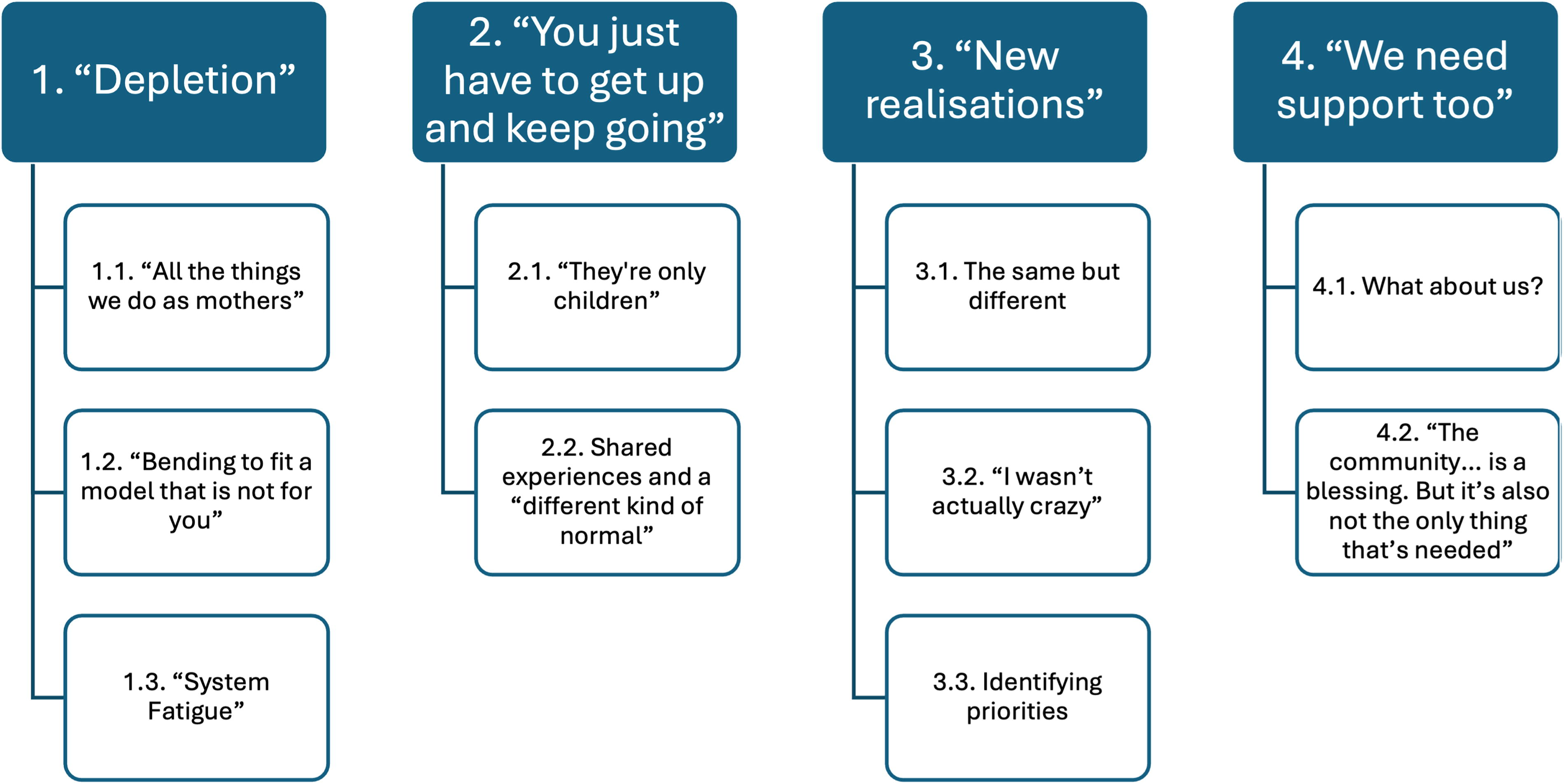
Themes and subthemes.
Theme 1. “Depletion”
Participants described how the demands of their mother role impacted their energy (subtheme 1.1.), which they often conceptualized using the metaphor of a “battery” or “spoons.” 40 Participants discussed the exhaustion associated with trying to be the mother that they thought they were expected to be (subtheme 1.2.), as well as that which ensued from interacting with wider systems in relation to their children (subtheme 1.3.).
Subtheme 1.1. “All the things we do as mothers.”
Most participants, whether they lived with a partner or not, described being primarily responsible for doing “all the things” (Aspen) related to caring for children and managing the family home. Many reported additional external pressures from studying and employment:
At the end of the [work] day, I still have about two and a half hours of solid work when I get home…Like the cleaning, the cooking, get them bathed, getting them to bed, laying out stuff for tomorrow. (Sage)
Caring for my Autistic children and my husband who is physically and mentally disabled…Trying to do a master’s degree with a two-year-old and a seven-year-old. (Hollis)
The demands on autistic mothers were often exacerbated by little to no external support system (e.g., no close family nearby) or finding external assistance “more draining” through the social expectation it created.
Several participants reported specific demands related to caring for their autistic children, such as managing their “meltdowns” or their “impulsive” behaviors. Some further described how their “intuition” and unique insight into their autistic children meant that they were “the only one often that can understand [them]” (Ash)—as a result, mothers felt they often had to play the role of translator for their child. Almost half (6) of the mothers were also home educating their children because schools were unable to meet their needs. Though there were clear benefits of home education (such as reduced distress for children), taking on the educator role was cognitively demanding.
The multiplicity of demands described by all participants in their mother role both “completely, completely drained” their energy levels and prevented them from recovering. There was little opportunity to “lay down” or “spend time alone” to “recharge the social battery,” let alone engage with personal interests, and the constant presence of their children in the home environment contributed toward an inability to switch off: “I couldn’t go and listen to music, I couldn’t go take myself off and draw or paint or like…so I could do nothing because she was there all the time” (Ash).
This resulted in a “constant decline” for participants across “basically all sides of [their] functioning” (Sage), although the extent and subsequent impact of this were often overlooked by others. Participants felt they were just expected “to manage it and go through in ways that they [neurotypical people] would do” (Willow).
Subtheme 1.2. “Bending to fit a model that is not for you.”
Societal expectations of “proper” motherhood were widely considered to have contributed to participants’ autistic burnout. For one participant, the essentialization of motherhood 41 and reinforcement of this from family members, professionals, and other mothers led them to perceive a lack of reproductive agency. Adair described how becoming pregnant “with a sense of duty” had caused them to experience significant distress and isolation:
I didn’t want to be pregnant, and I hated my pregnancy…So, I mean you can understand how burnout comes, you know, comes as a result of all that.
Several participants had internalized extremely high standards of themselves, describing how their energy had been depleted by doing the things they believed that they “should” do as mothers, including pushing themselves “to do activities” with their child and “trying to be happy because everybody expects you to be happy as a new mum” (Juniper). Adair referred to this as “bending to fit a model that is not for you,” implying that they perceived an obligation to pursue normative ideals, despite being aware that these were unattainable for them.
Many participants also discussed the cumulative negative impact of masking on burnout and how it made them feel “exhausted and stressed.” They noted how masking supported them to “tick those boxes” (Aspen) for what society expects of them and avoid negative judgment in their mother role, but that ultimately it led to burnout:
So the triggers were all of like the masking kind of behaviours that I had right, of like not really listening to what I needed…It literally was killing me. (Willow).
However, reflecting the “double bind” of masking, 42 unmasking also increased mothers’ sense of shame and vulnerability due to the fact they were no longer able to conceal their “difference” to appear “normal.” This also had a serious impact on physical and mental health, leading to “burnout that lasts for extended periods” (Hollis).
Subtheme 1.3. “System fatigue.”
Several participants discussed their experiences of advocating for their children in the context of education, health, and social care systems. The cognitive and emotional effort associated with this was reflected in their descriptions of “fighting a battle.” Laurel recounted having to deal with “like 50 people, might be more. 100?” in relation to service involvement. They emphasized the chaos of the systems they had to deal with, saying “none of them talk to each other.” This was echoed by other participants and meant that they had been required to constantly retell their “family story to a revolving door of SLTs, OTs, teachers, and adjoining officialdom,” which was “exhausting and unproductive” (Adair). Some participants also reported experiences of judgment and discrimination by professionals in response to their attempts to seek support and advocate for their children. Their reflections were suggestive of a systemic lack of autism awareness and acceptance, which further contributed to their autistic burnout, leaving them feeling “judged” and “treated unequally.”
One participant also described the cognitive dissonance, which arose from their deficit framing of their autistic child within these systems, which was necessary for them to receive support but “absolutely not how [I] think about them” (Laurel).
Theme 2. “You have to just get up and keep going”
Participants maintained their focus on meeting the needs of their children, emphasizing that their children were not responsible for their burnout (subtheme 2.1.). Participants also maintained solid relationships with their children and described how they drew on their experiences of autistic burnout to foster a positive, neuroaffirming environment (subtheme 2.2.).
Subtheme 2.1. “They’re only children.”
Some mothers experienced feelings of doubt and shame that they were unable to model the behaviors that they thought they “should” during periods of autistic burnout:
I’m the adult, I shouldn’t be doing this. I’m supposed to be demonstrating emotional regulation, and yet I can’t regulate my own emotions at times. (Olive)
Participants described being “good enough” mothers during such periods, fulfilling their children’s basic needs but often struggling to engage with them as much as they would have liked:
I’m almost like I can’t. So it’s like being a bit like a zombie. I’m like, OK, I can do these practical things. I can, you know, I can feed you and I can make sure…But there are days where our kind of basic interaction is very low. (Juniper)
Despite this, participants reported close, positive relationships with their children, with whom they felt a “sense of belonging.” They emphasized that burnout “doesn’t mean that I don’t love my child,” with Willow explaining “my children are like my world.”
While burnout exacerbated participants’ difficulties coping with overwhelming sensory stimuli associated with their children (e.g., “noisy” and active play), they did not believe their children had done anything wrong and recognized that they were just “acting like kids.” Participants showed an understanding of their children in the context of their individual developmental stages, recognizing “it’s difficult for them as children to really like, be mindful of everyone’s needs” (Laurel).
As such, participants were clear that they would not try to prevent their children from being children, and they instead developed strategies and accommodations to manage their own personal responses in situations where they felt overwhelmed. Several participants reported using noise cancelling headphones and removing themselves from the situation where possible, making sure their child “was somewhere safe” before finding a quiet space to decompress.
Participants also expressed a desire to protect their children from any negative impacts of their autistic burnout and discussed how they had actively tried to prevent them from internalizing any sense of blame or responsibility for their experiences:
She is getting used to the idea that yes, it does have an impact on me, but I really emphasise to her it is not your fault, like nobody did anything wrong. This is just the way things are and we have to try to navigate that. (Aspen)
For some participants, experiences in their own childhood meant that the importance of protecting their children was something that they could particularly “resonate with.” They wanted their own children to grow up feeling “emotionally supported,” recognizing the impact that their own parents’ behavior had on them:
My mum was very probably autistic as well, and she was having these types of behaviours. And that had had an impact on me as well. (Alder)
Subtheme 2.2. Shared experiences and “a different kind of normal.”
Across participants’ narratives, there was a sense that their experiences of burnout had enabled them to validate and connect with their children on an emotional level, “so, it’s like we’re kind of going together on this journey” (Ash). Participants implied that the universality of certain emotions, which were particularly heightened during burnout, supported them and their children to relate to each other in a positive way:
I sometimes get a little bit like snappy with them, you know? I mean, it doesn’t make me feel good when that happens…But I think as well…It’s also like a teaching experience for my kids because they can get that way with me as well. (Willow)
Recognizing shared energy needs within the home created space for meaningful connection between mothers and children, enabling them to spend quality downtime in parallel with each other:
Now Saturdays are our day where we don’t make any plans. I’m not gonna try and push myself to do anything other than making sure he’s kind of hygienic. And that’s really positive cause he really looks forward to it. (Juniper)
This, in turn, strengthened their relationship: “Our relationship is really strong because of that, ‘cause we’ve got a lot in common” (Hazel).
Participants also reflected on the importance of open communication with their children during burnout, which enabled them to develop a shared understanding of their needs as individuals, and overcome previous barriers within their relationship:
I would say, look, I’m really sensory overwhelmed right now and I just need you to not speak to me or not touch me for the next half an hour or whatever it is, because I just need to regulate. And that kind of works. Because before it was…Obviously to him it was perceived as a rejection because he’s just got a mum who’s stressed, who then doesn’t want a hug. (Juniper)
Those who discussed their autistic needs expressed that by doing so they hoped to help their children to be “more understanding and more knowledgeable” (Oren) and to reduce any stigma by recognizing “a different type of normal” (Hazel). Participants also reflected that this could help their autistic children to “recognise that I understand [them]” (Juniper), furthering their closeness.
Some participants experienced more frequent periods of being nonspeaking due to autistic burnout and used alternative forms of communication to accommodate. These included messaging their children or using tools such as “emotions thermometers” to communicate as a family.
Theme 3. New realizations
Participants’ experiences of burnout impacted their self-understanding and awareness by precipitating their autistic identification (subtheme 3.1.) and enabling them to contextualize and reframe the difficulties that they had experienced across their lifetime (subtheme 3.2.). Participants’ experiences of autistic burnout also supported them to reflect on and adjust their priorities in relation to motherhood, manage their energy levels, and prevent future burnout (subtheme 3.3.).
Subtheme 3.1. The same but different
For many participants, the experience of autistic burnout led them to realize that they were, and had always been, autistic. This “new realization” was often followed by a significant period of adjustment as participants negotiated their new and intersecting autistic and mother identities:
People always say you’re the same person you always were before you knew you were autistic. And I’m like, I’m absolutely not the same person. I think because it’s coincided with me having a baby. Like, when you have a baby anyway you end up being a completely different person. (Oren)
Some expressed feeling more like their real selves, whereas others experienced grieving for the person that they were “before.” Autistic identification was widely considered to be a positive outcome of burnout in that it supported participants to better understand themselves: “it was really a lifesaver actually” (Hazel). However, not all participants were positive about their autistic identity in itself:
It just makes me feel like I can’t cope. And like I haven’t got the resilience to do what I need to do because I have this thing. (Oren)
For Oren, acceptance of their autistic identity was made more difficult by the lack of postidentification support (“it still blows my brain that you get told this massive thing and then there’s nothing”) and the conflict between societal stereotypes of autistic people and the way that they viewed themselves.
Participants’ knowledge of the autistic stereotypes and stigmas also influenced their decision making around whether to disclose their new autistic identity. While certain participants described being “really open” about being autistic, others were more “cautious” of the potential impact that this could have on the way that people perceive them in their mother role. Participants’ narratives around disclosure highlighted the unique challenges faced by autistic mothers, such as concerns over being perceived as a “fit parent” or even “having their children removed.”
Subtheme 3.2. “I wasn’t actually crazy.”
Participants’ experiences of autistic burnout and autistic identification enabled them to contextualize and reframe current and historic difficulties. Many participants recognized that they had experienced autistic burnout at different points throughout their lives, often being misdiagnosed with a specific mental health problem (e.g., depression).
Participants’ understanding and insight into autistic burnout as a “genuine” and distinct autistic experience meant that they were less likely to perceive their difficulties as “doing life badly” (Ayla), which decreased their sense of shame. This shift in perspective also supported participants’ acceptance that they could not overcome autistic burnout by trying “harder” which for many had compounded their difficulties in the past:
And when I think about those, what were previously depressive episodes, they have got worse each time. And it’s because of that, because each time it’s like pushing to get out of them, and then this whole load of masking for however long afterwards, and then another one. (Juniper)
These comments highlight the importance of having fitting terminology to describe and understand one’s own experiences, especially when they seem to fall outside of the remit for typical expressions of mental health difficulties (e.g., depression).
Subtheme 3.3. Identifying priorities
Participants discussed how their experiences of autistic burnout had encouraged them to consider what they could “actually put down” as mothers, which often involved them adjusting their expectations and standards of themselves in the context of this role. This included shrugging off demands such as “the mum’s book group at school” (Ash) or “pressuring myself to be cooking fresh meals from scratch every day because I don’t need to” (Juniper).
Many participants reported an increased awareness of the importance of recognizing and accommodating their own needs, such as “stimming” and “pictures of the steps of the morning so I can make our own social story” (Ash), which reduced the stress associated with the demands discussed in theme 1.
For some participants, making use of accommodations had also required them to overcome their “internalised ableism” (Hollis), for example, recognizing and accepting that things such as taxis or cleaners “might be luxuries to other people…actually to us they’re necessities, like we can’t really function without them” (Juniper).
Overall, participants’ reflections on their needs and priorities were emphasized across their accounts of trying to prevent future burnout, stating that they were not “willing to go back to the place that I was…I’m not” (Laurel) and as such were “trying to do everything I can to protect myself” (Olive).
Participants also described how autistic burnout had supported them to understand that their children “don’t have to take priority all the time” (Hazel). This was “a massive learning curve” for participants, associated with a significant shift in how they perceived their maternal identity as they came to reject “idealizing,” self-sacrificing notions of motherhood: “Their needs are always met. I need some of mine to be met” (Hazel).
Theme 4. We need support too
Participants discussed the accessibility of support and their positive and negative experiences of this. We developed two subthemes: 4.1. “What about us?” reflects the lack of visibility and representations of autistic mothers; 4.2. “The community…is a blessing. But it’s also not the only thing that’s needed” considers the benefits and risks of autistic community peer support and establishes how professionals’ lack of knowledge acts as a barrier to services for autistic mothers.
Subtheme 4.1. What about us?
Many participants had accessed information about autistic burnout and how to recover from it through internet searches, books, and podcasts, noting “there isn’t a whole load out there” (Juniper). Participants emphasized that the advice and support available from these sources often failed to consider the circumstances and needs of autistic people with children. Thus, they found much of it was not “relevant” as the pressures identified in theme 1 were not considered:
There’s nothing, or very little, geared towards me as a mother… The guidance is always take time for yourself. You know. Do what you love. Well, in my current situation that’s just not possible. (Oren)
It was clear from their accounts that the typical recommendations for recovery from burnout were not realistic given that our participants reported very little real ability to take time for themselves to lessen demands.
Subtheme 4.2. “The community…is a blessing. But it’s also not the only thing that’s needed.”
Most participants discussed the value of advice and peer support from the autistic community and their narratives around this highlighted the significance of autistic mothers’ experiential expertise:
And even if they’re putting out suggestions, even if they don’t work for me, it’s like they are slightly more realistic suggestions because these are people with children who are living it. (Oren)
The predominantly online nature of this support was easily accessible to participants and allowed them to engage flexibly, accounting for their communication preferences and energy levels during burnout because “it’s less pressure than the in person” (Sage). The online community was also perceived to be a safe place where autistic mothers could be their authentic selves and not “worry about being too much or too little” (Ash). Participants emphasized how the acceptance and validation from those who “understood” served to empower them through a sense of collective resistance against normative notions of motherhood:
It takes away a lot of the shame and a lot of what I should be doing as a parent, and these very high standards that I kind of hold for myself of like, oh actually, this is normal for an autistic mum to be going through. (Juniper)
However, participants also recognized that an overreliance on other autistic people within the community risks increasing those individuals’ own burnout, indicating a need for peer relationships to be boundaried:
I feel like there does need to be more kind of like professional support because you have to also realise that those people are going through their own struggles. They have their own like lifetime of traumas and ableism and stuff…I feel like, you know, they’re not your therapist. They’re your friends. (Willow)
This was exemplified by a participant who described their experiences of vicarious burnout from supporting an autistic friend. These accounts not only highlight the importance of having a strong support network and the opportunity to meet people with similar experiences but also suggest that peer support alone is not adequate when dealing with serious burnout.
Accordingly, participants stressed the need for professionals who understand autistic people and “take it [burnout] seriously” (Sage). Many had experienced “stigmatizing ignorance” from professionals. This acted as a barrier to accessing support, citing dismissal, disbelief, and being treated as though they were “stupid,” with Hazel recalling a professional, who said, “I’ll speak to you very slowly” when they disclosed being autistic.
Some participants had sought neuroaffirming support privately, describing their experiences of this as “absolutely night and day” compared with their previous experiences of support:
I finally have somebody in front of me who understands me. And she definitely did help me through the burnout. (Alder)
These comments demonstrate the positive impact that professional support can have when it is provided by people with an up-to-date understanding of autistic people and the challenges they might face.
Discussion
Our study aimed to explore autistic mothers’ experiences of autistic burnout. We found that the pressures of motherhood were often amplified, with mothers struggling to balance their own needs with those of their children, and the systems they had to navigate to ensure that their child was also supported. However, despite finding certain aspects of motherhood (such as a lack of alone time or sensory bombardment) stressful, they made a concerted effort not to let burnout impact their children. Recognition that they were autistic gave them the ability to better recognize their own needs and start to remove some of the pressures put on themselves, but they also identified a need for better professional support.
Participants were the primary caregivers for their children and carried out the majority of the domestic duties within the family home, which is consistent with existing literature around the disproportionate burden placed on both non-autistic43,44 and autistic mothers. 25 Participants were responsible for managing the invisible family load, 44 including planning, remembering, and worrying about their children’s well-being across the multiple dimensions (i.e., managerial, cognitive, and affective). 44 Managing this is associated with psychological distress and exhaustion among non-autistic mothers. 43 However, the autistic mothers within our study reported having to manage both their invisible disability and their stigmatized identity, compounding the negative effects of family load stress. These findings echo Heyworth et al. 25 who found that autistic mothers report acute difficulty managing their demanding everyday family life, ultimately leading to their burnout.
The added complexity of parenting autistic children created additional pressures. Many of these have been reported previously by autistic mothers, such as needing to “translate” their autistic children to others around them.13,45 Participants reported home-educating primarily due to the negative impacts of mainstream education on their autistic children’s health and well-being.46,47 These findings align with existing research, in which non-autistic parents have described home-education as a double-edged sword, 48 and suggest that there needs to be better understanding and accommodation for the experiences of home-educating autistic parents, preventing their autistic burnout.
Autistic mothers continued to be able to meet their children’s needs while experiencing autistic burnout, showing that while autistic mothers face additional challenges and barriers in their role, they are no less capable of caring for their children than non-autistic mothers.11,13,15 This is particularly significant given recent evidence indicating that only 35.6% of education and social care professionals believed that “autistic mothers are just as capable of raising healthy, happy children as parents without autism.” 49 Recognition of autistic mothers’ strengths and caring capacities is crucial in destigmatizing narratives, which suggest that autistic parents are less able to understand and respond to their children. Such stigma acts as a barrier to accessing support for autistic mothers 15 and, when internalized, can lead to poorer psychosocial outcomes. 50
Participants used their experiences of autistic burnout to facilitate discussions with their children about autism and increase their children’s understanding and acceptance. 51 Through these discussions, and by being their authentic autistic selves (e.g., by stimming) participants aimed to encourage a positive autistic identity for their children.10,52 Findings that participants maintained and even strengthened their relationships with their children during periods of autistic burnout further support a distinction with non-autistic parental burnout. 3
Participants’ narratives around their autistic identification and the period of adjustment following on from this echo those which have been shared previously by late-diagnosed autistic women.10,53–55 Participants demonstrated varying levels of acceptance of their autistic identity, which may, in part, be explained by the wide range in their years since identification. 52 A lack of appropriate postidentification support 56 was cited as a barrier to participants’ acceptance; thus, our findings further endorse the priority for postidentification support. By providing biographical illumination, 57 autistic identification also supported participants in reconceptualizing their previous mental health issues, commonly (mis)diagnosed as depression, as periods of autistic burnout. This served to alleviate their shame around their experiences and around the fact that treatments and approaches had either not reduced their distress or had exacerbated it. These findings are consistent with Kentrou et al. 58 in which 31.7% of autistic women reported at least one perceived psychiatric misdiagnosis prior to their autistic identification. Findings highlight the importance of professionals recognizing the clinical presentation of autistic burnout to prevent the diagnostic overshadowing and underdiagnosis of autism. 54 The self-awareness developed because of autistic burnout often promoted participants’ use of self-accommodation strategies, which, in turn, supported them to proactively manage their energy levels. Self-accommodation has previously been associated with increased autonomy and improved quality of life for autistic women. 59 Thus, supporting autistic mothers to identify potential accommodations may be beneficial for the recovery and/or prevention of their autistic burnout.
The impact of stigma was significant for participants navigating their autistic mother identity and deciding whether to disclose. Many reported their anticipation of stigma from professionals and associated fears that they would be perceived as unfit mothers. These findings are supported by existing literature around the negative consequences of stigma for autistic people 60 and for autistic mothers specifically.15,19 They reinforce the need for greater understanding, acceptance, and positive representation of autism in order to challenge this at a systemic level. 50 Challenging stigma can contribute to making disclosure a psychologically safe process for autistic mothers. This can enable them to access the accommodations and support needed to thrive, supporting both the prevention of and recovery from autistic burnout. Perceived stigma is also associated with increased masking,42,61 and masking was identified in this study and existing literature as a key contributory factor to burnout.28,30,31 Thus, reducing stigma may ameliorate autistic mothers’ autistic burnout by enabling them to unmask safely.
Participants were reluctant to seek formal support due to fears that they would be dismissed by professionals who lacked knowledge and understanding of autism and autistic burnout. The value of autism training in increasing professionals’ knowledge and self-efficacy when working with autistic individuals is essential, 49 as is training that takes a coproduction approach. 62 Community knowledge played a crucial part in mothers’ support systems, with connection to the online autistic community enabling participants to benefit from peer support for parenting challenges and autistic burnout. This demonstrates the value of integrating lived experience when improving professional understanding and support, to ensure it acknowledges community-specific needs. These findings also show the value of autistic community connectedness 63 for autistic mothers. Although peer support alone was deemed inadequate and participants were mindful of each other’s energy, community connections allowed them to feel accepted and validated by others, in turn facilitating their own self-acceptance and self-compassion. 64
Limitations and future directions
This study provides valuable insights into the experiences of autistic mothers; however, we encountered several limitations. We did not ask participants about any cooccurring disabilities, although two mothers voluntarily disclosed information relating to these (specifically cooccurring attention-deficit/hyperactivity disorder). Future research would benefit from exploring the influence of any cooccurring conditions on autistic mothers’ experiences of autistic burnout, particularly cooccurring intellectual disability (ID). Autistic people with ID are significantly underrepresented in existing research 65 including on autistic motherhood, meaning their experiences and needs remain poorly understood.
Our sample was primarily white, and thus there are likely important intersectional issues that have not been considered. It also consisted of exclusively late-identified autistic mothers, many of whom experienced autistic burnout prior to their identification. Further research is needed to examine any differences in the prevalence rates and subjective experiences of autistic burnout between those who are early and late diagnosed to ensure a more comprehensive understanding of autistic burnout overall.
Conclusion
To our knowledge, this is the first study to explicitly examine how autistic mothers experience autistic burnout in relation to their parenting role and how they can be supported. Our findings highlight the incredible pressure that autistic mothers experience, including expectations to perform normative motherhood, while meeting the needs of their children and the systems meant to support them. Despite this, they parent with compassion underpinned by their own desire to create a safe and accepting space for their child. Our findings have important implications for professionals working with autistic mothers (e.g., health care professionals) and highlight the additional need for neuroaffirming support that recognizes the unique needs of autistic mothers and the pressures that they face.
Footnotes
Acknowledgments
The authors would like to thank everyone who gave their time to take part in this research. The authors would also like to thank Autistic Parents UK and Kieran Rose for their support in recruiting participants.
Authorship Confirmation Statement
A.F. and A.P. designed this study. A.F. collected and analyzed the data, with feedback from D.M. and A.P. A.F. wrote the first draft of the article. A.P. and D.M. provided feedback and edited the article. The article has been submitted solely to Autism in Adulthood.
Author Disclosure Statement
The authors declare the following potential conflicts of interest with respect to the research, authorship, and publication of this article: A.P. has accepted speaker fees to discuss her work on autism, neurodiversity, relationships, and inclusivity at conferences and training events. She has also received royalties from Pavilion Publishing for a book on autistic masking and stigma.
Data Availability
Data for this project are not openly available.
Funding Information
This work did not receive any funding.

References
Supplementary Material
Please find the following supplemental material available below.
For Open Access articles published under a Creative Commons License, all supplemental material carries the same license as the article it is associated with.
For non-Open Access articles published, all supplemental material carries a non-exclusive license, and permission requests for re-use of supplemental material or any part of supplemental material shall be sent directly to the copyright owner as specified in the copyright notice associated with the article.
