




Abstract
Background:
Menstruation is a biological process, which can be irregular, painful, and co-occur with fatigue, social withdrawal, and increased emotions. There is some evidence to suggest that Autistic people experience menstruation differently from non-Autistic people.
Methods:
This systematic review (PROSPERO registration: CRD42023399674) searched four databases in February 2023. We used thematic synthesis to analyze qualitative studies of experiences related to menstruation for Autistic people and people providing support to Autistic people. We also appraised the quality of studies with a Critical Appraisal Skills Programme (CASP) checklist.
Results:
Our thematic synthesis of 12 (eight peer-reviewed; four gray literature) sources identified differing priorities between parents, professionals, and Autistic people. Autistic people reported physical, emotional, and social impacts of menstruation. Furthermore, there were reports of increased Autism-specific experiences during menstruation such as increased sensory sensitivities, burnout, and anxiety, which were often unseen by those who supported them. Autistic people’s menstruation priorities were obtaining knowledge and skills ahead of their first period. However, parents and professionals focused on external behaviors, including hygiene and obtaining independence in managing periods. Sources poorly described participant demographics and had a limited focus on Autistic perspectives.
Conclusions:
We conclude that there needs to be tailored support to meet the needs of both Autistic individuals and those who support them. This should be informed by research which centers Autistic people.
Community Brief
Why is this an important issue?
A lot of Autism research has focused on men and boys. We know that women get worse treatment in health care, and their experiences of things like period pain can be dismissed by doctors. The health care experiences of Autistic women and others assigned female at birth have only recently started to be researched. So far, Autistic people’s experiences of periods have not been reviewed.
What is the purpose of the review?
The review aimed to look at views and experiences of autism and periods from Autistic people and those who support them.
What did the authors do to review the literature?
We searched four academic databases to identify studies relevant to the review. We also searched for nonacademic sources, like blogs.
What studies did the authors find?
Through a screening process, we found 12 sources about Autistic experiences of periods. We then did a thematic synthesis to describe key themes within the texts.
In summary, what did those studies show?
We identified six themes from the included literature as follows: education and skill development, preparation, personal awareness, management, impact, and support. We found differing priorities between parents, professionals, and Autistic people when it comes to talking about, and getting support for, periods. Autistic people reported physical, emotional, social, and autism-specific differences during their period. Autistic people’s priorities were obtaining knowledge and skills ahead of time. However, parents and professionals focused on external behaviors, including hygiene and obtaining independence.
What are the remaining gaps in the literature?
The reduced focus on Autistic people’s experiences may have shaped current menstrual support for Autistic people and limited how impactful it could be. Additional research is needed to further understand gynecological experiences, especially those which are unique, for Autistic menstruators. More research is also needed to support Autistic menstruators across the lifespan. Autistic peer support and the “hidden curriculum” are both topics worthy of further exploration within the menstruation research literature.
Based on this review, what do the authors recommend?
We hope our review can lead to the development of better support for Autistic people in the lead up to, and during, their periods. This support should be informed by research, considering the differing needs of those involved. Future research and the development of supports should center the Autistic voice so it can help improve the lives of Autistic people who menstruate.
Introduction
Menstruation involves the passage of menstrual blood from the uterus through the cervix and vagina roughly every month, beginning at puberty and ending at menopause for people with wombs. 1 In our prefunding consultation, in recognition of the fact that many Autistic individuals are gender diverse, we received strong feedback to use gender-neutral language in our study. As such, we do so in this article. However, within the introduction, the historical treatment of those assigned female at birth will be discussed, and sources that have used gendered language will be quoted directly.
Menstruation encompasses physical, social, and emotional experiences, the majority of which have been identified as negative by those who experience them. 2 In a general population, there are many debilitating conditions that are triggered by the menstrual cycle, including dysmenorrhea (painful periods), 3 endometriosis, 4 adenomyosis, 5 irregular periods, 6 and premenstrual syndrome (PMS). 7 Severe emotional changes can also occur through premenstrual dysphoric disorder (PMDD), and an exacerbation of both anxiety 8 and depressive symptoms, typically in response to heavy menstrual bleeding. 9 There also remains stigma and prejudice against those who menstruate, 10 fostering shame amongst menstruators 11 and impacting participation in social activities, 12 plus there remains significant period poverty across the globe. 13
There has been a long history of gender bias impacting the effectiveness of menstrual health care, 14 which may be further exacerbated for those who are marginalized due to gender identity, disability, ethnicity, and other demographic characteristics. 15 In a general population, women report higher levels of pain more frequently and yet are more likely to be inadequately treated in comparison with their male counterparts, 16 as a result of structural and internalized sexism. 17 Recently, there has been an increased acknowledgment of the significant impacts of gynecological conditions, which were previously neglected in research literature, including endometriosis 18 and other conditions previously dismissed as psychogenic. 19
Autistic people are known to experience significant barriers to health care, at patient, health care provider, and system levels.20,21 These reduce their likelihood of being appropriately supported to access health care across the lifespan.22,23 Autism has historically been discussed within the context of boys and men,24,25 leading to missed or differing diagnoses of Autistic women, impacting their quality of life. 26 In addition, historically, Autistic experiences have been framed within a medical model perspective, presenting Autism negatively, rather than the more nuanced understanding of Autism the social model encourages. 27 Expectancy biases and gender stereotypes, alongside masking, 26 may also contribute toward a delay in diagnosis for non-cis-male individuals 28 and a reduced understanding of the Autistic experience in female and trans populations. 29
Historically, there was little research on the reproductive health experiences of Autistic people, although this is a growing area of interest. 30 For example, a recent review has found that Autistic people experienced additional sensory challenges in relation to breastfeeding, 31 and there is emerging evidence that Autistic people experience menopause differently from non-Autistic people. 25 Moreover, published research has found that Autistic individuals experienced poorer gynecological outcomes, 32 impacting physical, mental, and social well-being. 33 Through cross-sectional research, it is suggested that Autistic menstruators experience increased rates of dysmenorrhea, PMS, 34 endometriosis, and polycystic ovary syndrome (PCOS). 35 Menses (the shedding of menstrual blood and tissue) for Autistic people can impact social activities and relationships and increase negative experiences such as anxiety, depression, and irritability. 36 There are also additional sensory and emotional self-regulation challenges during this time and correspondingly increased meltdowns. 32
To better understand and develop support for Autistic menstruators, there is a need to collate the experiences faced by them and those who support them. To the authors’ knowledge, there has not been a systematic review specific to experiences of Autistic menstruation conducted previously.
Materials and Methods
Aim
Our aim was to undertake a systematic review with meta-synthesis to better understand the views, experiences, and impact of menstruation on Autistic people.
Our research is reported in line with PRISMA reporting standards. 37 A copy of the completed PRISMA checklist is available in the appendix (Supplementary Material 1).
Community involvement
Our review was led by an Autistic researcher (R.E.) and benefited from the involvement of two other Autistic researchers (G.W., A.G.), an Autistic primary care doctor (S.C.K.S.), and four lay Autistic people with relevant lived experience (S.C., M.C., W.H., K.W.), all of whom are authors. Our thematic synthesis involved the community members at each phase of the data analysis, where ideas were discussed, reshaped, and solidified. The discussion for this article was built collaboratively by the full research team.
Search strategy
We identified our search terms by hand searching keywords of relevant articles and terms used in systematic reviews focused on menstruation in a general population.38–40
Autism-related search terms were generated using similar reviews.31,41 The search strategy involved two strings of terms relating to Autism and menstruation as follows:
Autism; Autism, Autism Spectrum Disorder, ASD, Autism Spectrum Condition, ASC, Neurodiverse, Neurodivergent, Autistic Disorder, Child Development Disorder, Asperger’s, Neurodevelopmental Disorder, Neurodevelopmental Condition, and Menstruation; Menstruation, menses, menstrual cycle, menstruators, ovulation, ovulating, menarche, menstrual period, follicular phase adrenarche, premenarche, catamenia, amenorrhea, premenstrual dysphoric disorder, PDD, premenstrual syndrome, premenstrual exacerbation, PME, PMS, menstrual age, menarche age, age at menarche, menarchal age, menarcheal age, puberal haemorrhage, puberal hemorrhage, menstrual haemorrhage, menstrual hemorrhage, period products, menstrual products, dysmenorrhea, menstrual pain, heavy menstrual bleeding, painful menstruation, period pain, menorrhagia, oligomenorrhea, adenomyosis.
Following the publication of our protocol (PROSPERO registration number: CRD42023399674), we searched four electronic databases to reflect a range of academic disciplines; Medline (via Ebscohost), APA PsychInfo (via Ebscohost), CINAHL (via Ebscohost), and Web of Science (via Clarivate). Database searches were limited to the English language, full text, and by publication date (2013 to present). Searches were undertaken in February 2023. Gray literature was searched for using citation tracking, additional searching through Google Scholar, and the Swansea University online library, plus other search engines. One systematic review, which focused on educational interventions about menstruation, 42 was searched for additional sources, but none were identified. A sibling article focusing on menopause is registered on PROSPERO (registration number: CRD42023450736) and is in progress, so was not a topic covered in this review.
Sources were screened against the following criteria:
Inclusion criteria
Population: Autistic people (including self-identified) and those who support them, including health professionals, family, and friends.
Context: No limitations.
Phenomenon: Views and experiences of menstruation.
Exclusion criteria
Articles which do not focus on the population described above and menstruation.
No qualitative data (note: open text survey responses, commentaries, and gray literature containing personal experiences were included).
Published before 2013.
Not English language.
Full text not available.
Screening and data extraction
Two reviewers (R.E. and A.G.) independently reviewed all titles and abstracts identified against the inclusion and exclusion criteria. The full texts of potentially relevant studies were reviewed by two reviewers (R.E. and A.G.). Inconsistencies at both stages were resolved through discussion, and it was not necessary to involve a third reviewer. Following this, contextual information, including findings to be included in the thematic synthesis, was extracted from sources using a structured summary tool (see Supplementary Material 2).
Quality assessment
We evaluated all studies for quality using the CASP qualitative checklist 43 by one researcher (R.E.). A sample of 10% was independently appraised by a second reviewer (G.W.). Any disagreements were discussed and resolved at this time. Each study was provided with an overall assessment of quality as follows: high (7–10), medium (4–6), and low (0–3), as has been used in other qualitative systematic reviews. 44
Data analysis
The thematic synthesis approach was adopted following Thomas and Harden’s 45 framework. This process included an inductive multiple-stage approach, with stage 1 and 2 compromising the coding of the text and development of descriptive themes and stage 3 being the generation of analytical themes. 45 Thematic synthesis is aligned with critical realism, 46 which was adopted in this review. A critical realist perspective considers unobservable constructs, such as social contexts and perceptions, which in turn impact findings in the “observable” world. 47
As part of the thematic synthesis, three online meetings (total 7 hours), broadly reflecting the three Thomas and Harden (2008) stages, 45 were held between May and July 2023, to: discuss the themes initially developed by R.E., generate analytical themes, and develop discussion points. These meetings were made accessible to meet the needs of the lay members involved. We describe our process of building an accessible space with this group elsewhere. 48
Stages 1 and 2: Coding and development of descriptive themes
Structured summaries of each source, containing information about the study or source, as well as all results related to Autism and menstruation, were uploaded into NVivo 13. 49 Findings were inductively coded line-by-line by one researcher (R.E.). A second researcher (G.W.) independently inductively coded the first five sources, identified by a random number generator, to ensure codes with similar meanings were developed. Multiple lines were attributed to more than one code. Following discussion, minor changes were made to the descriptive coding framework, the remaining 7 items were coded by R.E., and a written document and thematic map were produced and shared with the full research team for discussion.
Stage 3: Generation of analytical themes
We then generated analytical themes, with coding iteratively expanded and collapsed upon. Written work and thematic maps were updated following each meeting.
Results
Studies identified
We identified 3802 unique records through database searches (see Fig. 1). Fifteen articles were assessed for full text eligibility, and four articles were included through the database search. Two further peer reviewed articles were found through search engines. Two additional peer reviewed studies, which were published following our database search, were identified from citation tracking.50,51 Four pieces of gray literature were identified as follows: an article on an advocacy website, a blog entry, a business report, and a master’s dissertation. In total, we included 12 sources in the review.
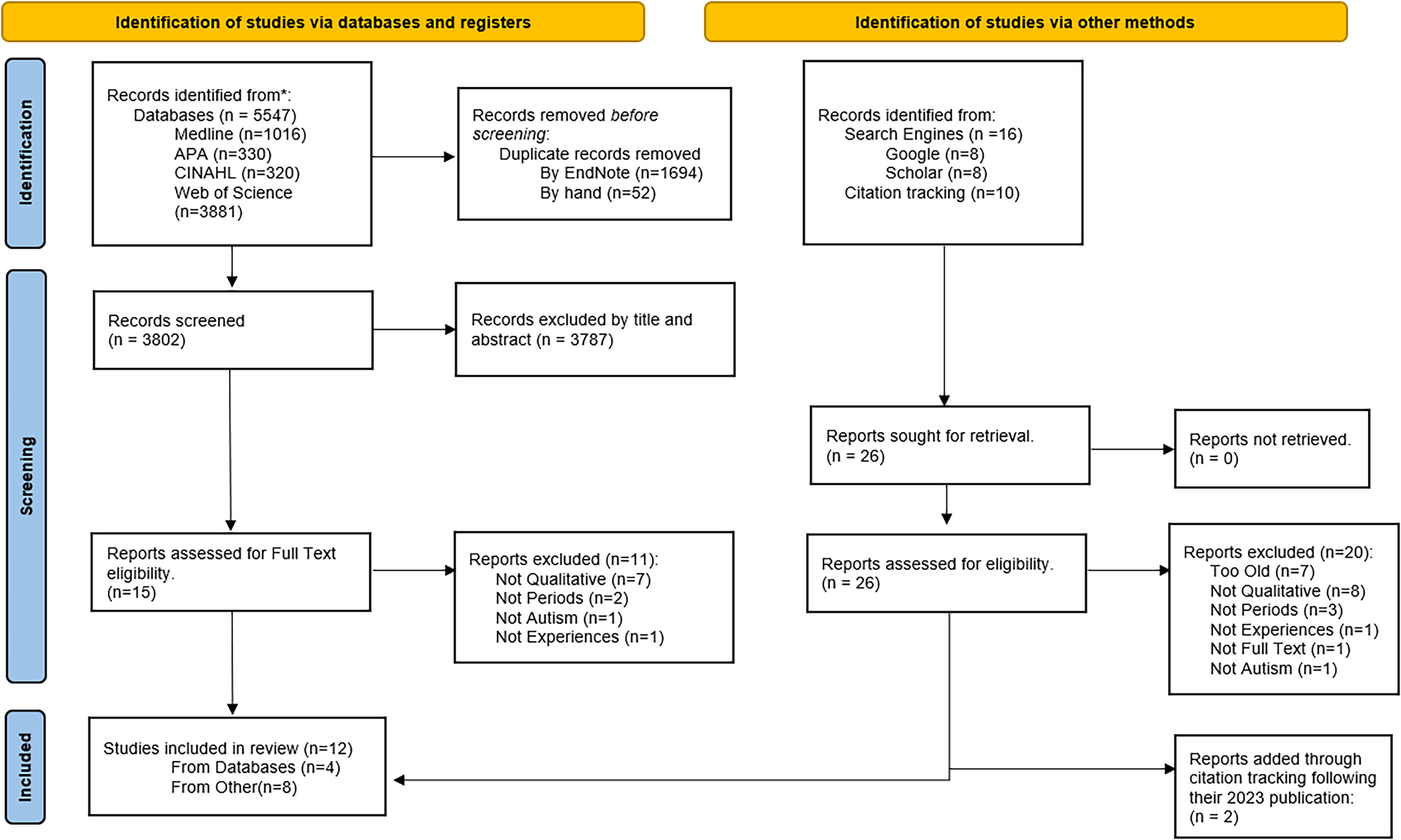
Flow diagram showing the selection of reports included in the review.
Characteristics of included studies
Our sources included participants from the United Kingdom (UK) (n = 4), the United States (n = 3), or Australia (n = 3), with others based online (n = 3) (see Table 1). Most sources did not have a specific setting (n = 9). Participants were recruited through social media (n = 4), subscription-based organizational correspondence (n = 3), and schools (n = 2). Described participants included the following: Autistic people (n = 195) of which the majority were adults (n = 172), parents of Autistic children and young people (n = 76), educators of Autistic people (n = 10), and other non-Autistic people (total n = 134). Three articles gained input from more than one participant group32,50,52; the remaining articles included contributions from either Autistic people (n = 5) or parents and professionals (n = 4). The most frequently used data collection method was semi-structured interviews (n = 7), with thematic analysis the most used data analysis strategy (n = 7). There were mixed uses of descriptive language across the sources, with seven using identity-first language and five using person-first language. When assessed against the CASP qualitative critical appraisal tool, 43 all nine empirical sources were identified as high quality (see Supplementary Material 3). Three sources were not included in the quality review because they were not empirical in nature53,54 or did not describe their research process. 55
Summary of Included Studies
Thematic synthesis
We identified the following six themes from the included literature: education and skill development, preparation, personal awareness of puberty-related changes, management, impact of bleeding, and support, which are outlined below. A graphical representation of the themes can be seen in Figure 2.
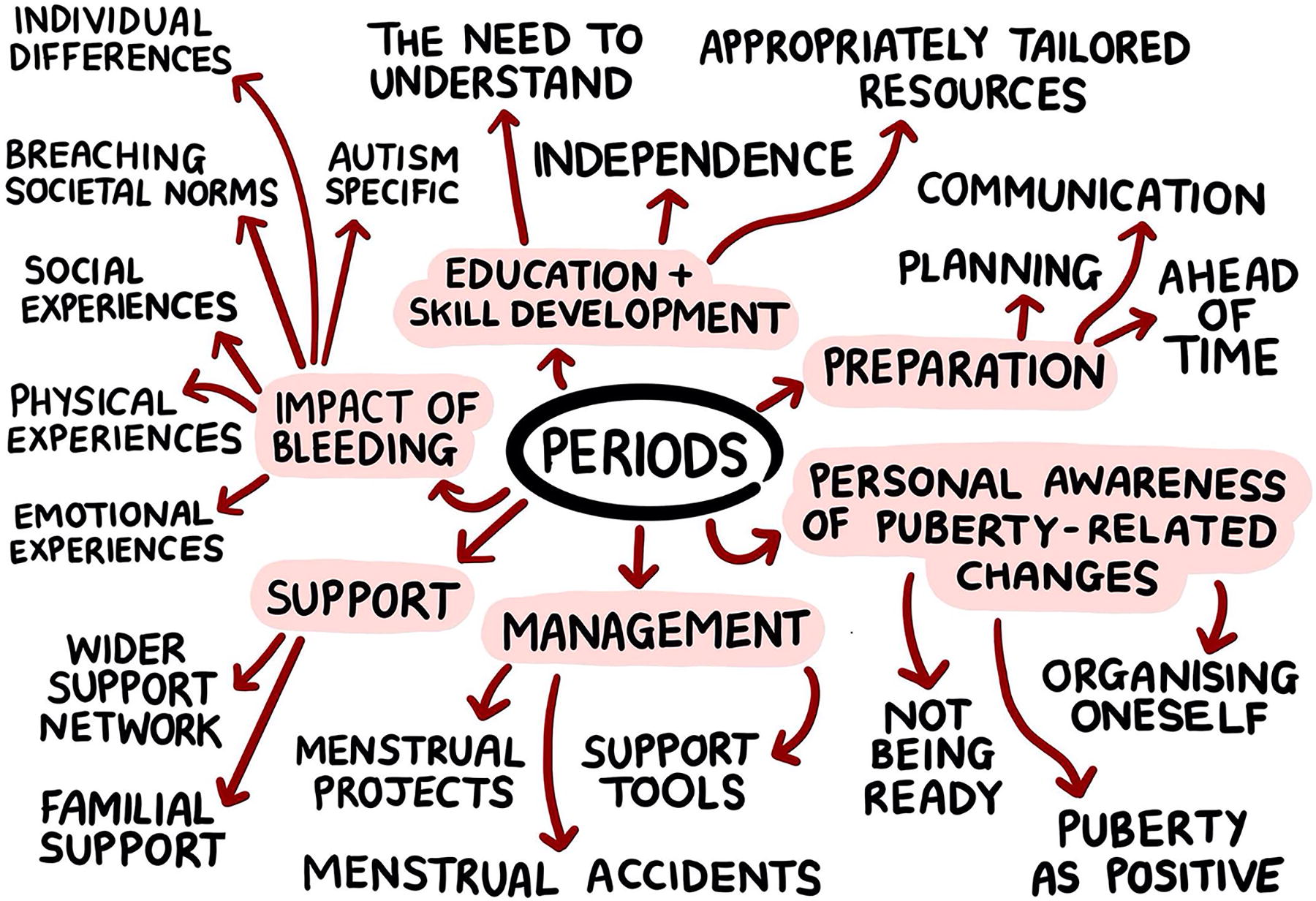
Graphical representation of themes.
Following our thematic synthesis, we note which voices were represented and differences in our analysis between groups. Table 2 shows which themes are covered in which sources by participant group.
Themes Covered in Articles by Participant Group
Online source. Cells shaded gray are where these participants were not involved in the source.
Non-Autistic participants in this study included parents, professionals, and siblings; however, it was not clear which of these groups’ quotes were attributed to and so were not included in this table.
Theme 1: Education and skill development
This theme was split into three subthemes. The need to understand biological knowledge was emphasized by all groups of participants.32,50,52,53,55,60
“I think a lot of issues could be addressed through education too, for example I hardly know the basics of my own cycle and what I know is from basic biology at school… Especially in school, there was nothing and I needed that. It was taboo at school, and it was too awkward to talk about it so I learned nothing, and I could have benefited from learning.” (Non-Autistic Participant 1) 50
Similarly, addressing the taboos surrounding periods plus emphasizing that menstruation was normal and something one could speak about was also discussed by both Autistic32,50,52,60 and non-Autistic contributors.32,50,52,55
“I think culturally, I think especially people without uteruses who haven’t experienced it, they tend to not really believe that pain. Especially, if that person looks like a woman. Women are often disbelieved by people or seen as over-exaggerating, so I think it’s probably not taken as seriously.” (Autistic Participant 17) 50
For education providers and parents, there was a focus on providing appropriately tailored resources.32,52,55,57,60 It was clarified that knowledge transfer should be through resources which used appropriate language32,50,55,57 and were suited for current understanding.52,57
“…When I saw opportunity for [a] video, I thought [since] she’s always been such a visual learner, I thought this is really great, because the more we can discuss it then she can get more comfortable with it. Everyone presents it in a little different way, and I thought she picked up information from each source a little bit differently.” (Parent 8 (46)) 52
There were comments made, the majority from parents, suggesting that Autistic menstruators should prioritize “basic, functional skill” development 57 and work toward managing oneself, with the goal of reaching independence.52,56,57
“I’m confident by the time she’s 19 [in 8 years], she’ll be pretty good. I mean I don’t know how fully independent she’ll be, but I’m confident she’ll be able to, with her watch [a vibrating watch, set to vibrate at set intervals, to remind the daughter to go to the toilet to change her pad], take herself to the loo and change her pad” (Parent) 57
Reflections on independence, all from non-Autistic contributors, included general reflections on the level of support required by some children in relation to periods52,57 and setting independence and menstrual management as an end goal to skill development.56,57
Theme 2: Preparation
This theme related to the time before and during the onset of menarche (the first menstrual period) and has three subthemes. Considering planning,50,52,55,60 Autistic people discussed feelings of shock and anxiety when their period started, often regardless of how well-informed they felt,50,52,55,60 with some alluding to interoceptive differences as a contributing factor.
“So, even though I’d had those sessions where they give you the biology side of it like, this is what happens, it didn’t really connect into practical for me. I understood the biology, it was just that I didn’t realise that was what it was, which seems stupid now.” (Autistic participant) 60
There was also a mention of distress for Autistic people who wished their periods were more predictable.52,60 It was emphasized that Autistic children and young people benefited from frequent and open communication about menstruation.52,56,57,59,60
“Then after she had that discussion, we talked about it here and there. I actually let her ask me questions about it, rather than me initiating it, and I think that also helps. I could see how it could be very scary though for both the mother and child, but for me I didn’t get that feeling just because I had a lot of support and I had a pediatrician that took the time to spend time and talk about that.” (Parent 2) 52
Also, both Autistic and non-Autistic contributors recommended that knowledge and support items should be provided ahead of time.32,52,53,55,60
“Several autistic respondents noted specifically that “it was helpful to know beforehand that I wasn’t dying” (Autistic Participant 7) from the bleeding and/or pain. 32
There was some disagreement as to who should provide this (the parents, educators,52,57 or medical professionals52,57) and when (upon onset of menstruation 57 or beforehand 57 ).
Theme 3: Personal awareness of puberty-related changes
The “Personal Awareness of Puberty Related Changes” theme was split into three subthemes. There were four sources in which puberty was discussed positively.51,52,57,60
“Well, once you get older you start to feel more mature, and your body’s changing and you start to notice something different about yourself.” (Daughter 5) 52
However, the majority of contributions discussed negative emotional reactions to biological changes. Often Autistic people reported feelings of not being ready50,52,55,59,60 by questioning what was happening50,52,55,57,59,60 and acknowledging the remaining gaps in their knowledge.32,50,52,55,56,60
“I feel like there is a link between the Autism and the way that I experience my period, because it was really distressing for me when I started developing… it was so distressing for me that change. I had no context to it.” (Autistic Participant 11) 50
Some Autistic participants were unsure as to whether they would experience puberty in a similar way to their neurotypical peers, if at all.52,55,60
“Though I logically knew this as a fact of life, I felt so removed from others that it was shocking and traumatising when I got my period for the first time. I remember my mother, asking me what I’d expected, and I remember telling her that I thought I might be “like an alien” – a genetic anomaly that was exempt from such things.” (Autistic contributor) 55
There were several reflections about organizing oneself50,52,53,55,58,60 with a disconnection felt by several Autistic contributors between themselves and their body,50,52,53,55,60 impacting their ability to judge when their periods were due,52,53,55,58 and additional precautions they took to rectify this.52,60
“My period is very irregular which I find distressing… I never know when it’s going to come so I can’t properly prepare myself for it.” (Autistic contributor) 55
“She has taken ownership of it and is very vigilant, almost sometimes a little too vigilant with checking her pads…” (Parent 8) 52
Theme 4: Management
The theme of “Management” includes three subthemes. There were eight sources in which specific menstrual products were discussed,32,51–53,55–57,60 including tampons,52,53,55,57,60 pads,32,52,53,55,57,60 menstrual cups,53,60 and period pants. 60
“Tampons are, in my opinion, better than pads, but they’re still not without their flaws. Anyone who told me that you could pee while having a tampon in must have a magic trick or their anatomy might be slightly different which enables this to happen, but I found that the stream would somehow come into contact with the string, which would then absorb into the tampon itself and render it completely useless.” (Autistic contributor) 53
The usage and disposal of these products were also described with all parental contributions reflecting on incorrect usage,52,56 for example, children having an inflexibility with trying new menstrual products 52 and their frustration with this:
“She’s more worried about leaking, and so she will at times, we’ve discussed, you know I’ve found her wearing up to three pads at a time, and so we talked about how instead of doing that I could get like overnight pads, you know there was a different product, and so that helped. It was more of an anxiety about having an accident or leakage, than comfort. I was kind of surprised how she could walk around with three pads! Would’ve drove me nuts!” (Parent 8) 52
“I’m frustrated that she’s so rigid. She won’t. I tried to show her… You know like even [with] tampons, it would make your life so much easier. But, she just doesn’t care. So, I’ve tried different things. Especially with the tampon, that didn’t get me anywhere. I think the sensory [thing is an issue]. I think the thought of her sticking something in her is just beyond what she can deal with.” Parent 9 52
Eight sources spoke of support tools32,50,52,53,55,57,59,60 that Autistic people, their families, and carers employed, most frequently the use of hormonal management, specifically the contraceptive pill.50,52,55,57,59,60
“I took her to the [doctors], we had to talk about it when I took her to the doctor to get her on the pill. Kind of explain why, why you’re taking this pill and you know, to make [her period] less and there are other options too to make it even more less. I wanted to start with this one. But you know it’s, it’s more just you know, just maintenance. It’s maintenance.” (Parent 9) 52
There was also a discussion surrounding menstrual accidents,32,52,53,55–60 both reflecting on past incidences52,53,55,60 and either making changes to ensure they happen less frequently or reporting how accidents lessened over time.32,52
“A lot of it for [her] is awareness, and so now that she’s aware that ‘Whoops! You can have an accident’, or you could like have it through your clothes, um she’s more conscientious of what she wears, what color she wears or sitting on towels during like a heavy day. She does that all by herself now, I don’t have to do that…” (Parent 2) 52
Theme 5: Impact of bleeding
The theme of “Impact of bleeding” was split into six subthemes. There were comments remarking on the individual differences50–52,54,55,57 of Autistic menstruation, with an acknowledgment that there were different “normals” for different people,32,50,52,57,60 including with how pain is perceived and communicated.50,52,57
“I feel like when I experience things in my body, I experience it quite intensely… things like period pain and all of that, I think can have quite an impact on my mood and my anxiety because some-thing is happening within my body and its sort of out of sorts, I struggle to remove my focus from it… it becomes a focus for me until it is done.” (Autistic Participant 16). 50
Autistic menstruators were directly compared, both positively 56 and negatively,52,56,58 to their neurotypical peers and siblings, mostly by parents.
“So yeah I would like to stop doing that…And I do see my friends and their (neurotypically developing) girls seem to take all that responsibility onto themselves and it would be nice not to have to do it but it’s the way it is.” (Sharon, mother) 56
Eight sources spoke of Autistic children breaching societal norms,32,50,52,56–60 including parental expectations58,59 and those which were gender specific.50,52,59 Five sources discussed social experiences,50,52,54,57,60 with concerns about “missing out” from all participant groups,50,52,57,60 with two contrasting comments from Autistic people about actively choosing to reduce activities during their period.54,60
“She’s expressing concerns, like she can’t go to track practice or basketball because ‘I have my period’ and we talked about that you can’t stop living when you have your period and so you can [still] do those things, and just you know make sure that you’re fully prepared. If I let her, she wouldn’t have gone, but we made her go and then she realized that she didn’t have to let it stop her. But she’s more resistant sometimes when it comes to physical activity or going places, she’ll be like ‘Oh well, I can’t go out with you guys because I have my period’ and I’m just like ‘Oh well, it’s portable, so let’s go!’ So just walking her through that.” (Parent 8 (46)) 52
“I try to avoid any social events during my PMS because social interaction is just too exhausting then. If it was possible, I would avoid any events at all, except for lying on the sofa while watching TV and eating chocolate.” (Autistic contributor) 54
The most frequently reported emotional experiences32,50–52,54,55,57–60 included the following: mood swings,32,50,52,55,59,60 anxiety,32,50,52,54,55,60 and increased emotional experiences such as sadness32,50,52,55,57,60 and embarrassment.50,52,55,58,60 Physical experiences32,50–52,54,55,57,60 included pain and discomfort, PMS, and the impact of menstruation on co-occurring conditions, such as epilepsy. Autism specific32,52,54–60 reflections differed according to stakeholder group. Autistic participants reflected on menstrual-related experiences, which are inherently related to being Autistic, including increased meltdowns,32,52,54,55,60 overwhelm,50,52,55,60 or burnout, 55 reduced capacity to mask,32,52,54 increased sensory sensitivities,32,50,52,54,55,60 and differences in executive functioning.32,50,52,54,55
“I think having periods as an autistic person is really overstimulating… it takes so much energy… period pain, and the bloating, and the back pain, and the breast pain, and the joint aches, it’s just super overstimulating.”(Autistic Participant 5) 50
Parental reports of these experiences were significantly fewer. Instead, parents often focused on perceived attitudes and behaviors, attributing these to their child being Autistic, 56 including their child’s logical and factual attitude, 52 and differing levels of what parents considered to be appropriate personal hygiene.52,56,58,59 Parents spoke of their child’s inherent vulnerability,52,56–58 expressing concern about their indiscretion and reliance on others.56,57
“Because misinformation is bad for a Neurotypical kid, it’s really bad for our kids. You know, because that makes them a lot more vulnerable.” (Parent 3) 52
There were a mix of comments with regard to the future, all made by parents, with parents feeling excited, 52 worried, 52 or mixed about their child’s future. 52 Multiple non-Autistic reports were of a judgmental or infantilizing nature,52,56–59 often remarking on how their child’s actions impacted themselves52,56,59 or others52,59 negatively.
“Some additional worries were in regard to appearance, embarrassment and lack of advocacy skills. ‘[she has] no interest in appropriate dressing’; ‘she wears ill-fitting clothes’.” (Parents) 58
Theme 6: Support
The theme of “Support” consists of two subthemes. Most comments were regarding wider support networks,32,50,52,53,55,57,60 including school and educators,32,50,52,53,55,57 medical professionals,50,52,55,57 extended family,32,52,60 other menstruators,32,50,52,57,60 and other Autistic people,32,60 which were made by parents and professionals. Two references were made by an Autistic person gaining support from their peers,32,60 with others being unsure as to whether they could discuss such a topic in their social circle. 60
“So, it was kind of like ‘okay yeah I can now talk about it’ then realised that you can’t talk about it… I wanted to ask my friends, the little friends I had like what do I do about it, and they were like ‘you don’t talk about it’…” (Autistic participant) 60
Autistic people’s comments were primarily about knowing who to talk to and what to say,32,52,60 with an emphasis on knowledge being provided in advance, such as help with preparing a “script for what to say to a nurse…” (p.4290). 32 Contrary to this, educators debated the most appropriate time to introduce these topics to students. 57 In terms of familial support,32,50,52,55–57,59,60 Autistic people reported positive incidences of both parental practical support52,56,57,60 and taking the lead.52,55,57,60 Parents reported feeling proud and confident about their child,52,57 having to take a more active role in their child’s care practices through prompting52,56,59 and relying on external support networks.52,57
Discussion
Our review highlights that there are Autism-specific experiences of periods, which may vary compared with non-Autistic experiences. However, there is a discrepancy in how these are discussed between Autistic people and non-Autistic supporters. Autistic people often used a value-neutral perspective when discussing their Autism-specific experiences. 61 In contrast, parents often used a medical model perspective, attributing their child’s logical thinking and practical approach to menstruation, somewhat negatively, to their child being Autistic, often comparing this to neurotypical peers and siblings. In doing so, they reinforced the neurotypical body mind as the “norm,” 62 and sometimes displayed frustration at these differences. 63 Three studies detailed parental foci on the progression of their child toward independently managing their menstruation, whereas no Autistic participant spoke of this—a phenomenon identified elsewhere in the literature. 64 Viewing Autistic menstruation experiences through non-Autistic models of reference may negatively impact research and support provided.
We identified a perceived vulnerability in Autistic people among non-Autistic adults (see: Theme 5, “Autism Specific” subtheme) as demonstrated elsewhere in the literature. 65 Furthermore, there was very little focus as to how professionals and parents could foster empowerment, teach consent, and encourage decision-making in Autistic people. Research highlights an assumption that menstruation is something Autistic people cannot cope with 66 and that sexual education is less important for Autistic and disabled students. 67 Parental attitudes toward their child’s menarche also socially reinforce the stigma surrounding periods, 68 especially for disabled people who experience multiple layers of discrimination. 66 Unfortunately, the perceived vulnerability of Autistic individuals could become a self-fulfilling prophecy, as the infantilizing of Autistic and disabled young people has led to minimal tailored support, as highlighted by parents in this review and in other research literature focused on Autistic people. 69 Within this review, most of the comments surrounding support were made by parents and professionals (74%). Recently, attempts have been made to improve health care practices for Autistic people, 70 although to date these are not yet effective in removing the known inequalities. 71
For Autistic people, “normalising” period pain invites danger, due to the increased prevalence of dysmenorrhea and PMS,34,72 as well as alexithymia, 73 and potential differences in pain sensitivity. 50 Alongside this, communication differences in quantifying pain, 74 and understanding internal pain indicators, 75 may likely reinforce reduced support-seeking behaviors, 50 in a context where health care is often inaccessible to Autistic people. 76 There is often a societal assumption that knowledge is obtained through social osmosis 77 with a perceived shared understanding between parents and children, 78 which this synthesis challenges in an Autistic population, where parents under described physical symptoms compared with Autistic menstruators. Comments from professionals, parents, and other non-Autistic contributors were often limited by what they were able to see, based on the external behaviors of their children, with less focus and understanding of emotional, internal, or mental states.
There is a notable difference between Autistic people having a strong biological understanding of periods (see: Theme 1, “the need to understand” subtheme) and applying this information to their own experiences (see: Theme 2, “planning” subtheme), as has been identified in relation to birth 79 and breastfeeding where interoceptive differences were identified as a barrier.31,80 Education about menstruation typically focuses on biological knowledge and related products, 81 rather than teaching the application of knowledge given to one’s own circumstances and experiences. Not meeting hygiene, social, or gender expectations was often viewed by non-Autistic adults as reflecting a lack of interest on the part of the Autistic person, 56 rather than an absence of holistic support.
There were few reports of Autistic people discussing menstruation with their peers (n = 2). However, general population studies show that social learning is important. 82 Menstruation is shaped by sociocultural contexts, 2 including values and social conventions. 83 Therefore, Autistic children are perhaps at a disadvantage compared with their neurotypical peers who rely on the “hidden curriculum” of unwritten cultural, social, and academic messages communicated, explicitly or implicitly, to, or between, learners 84 for knowledge transfer. Furthermore, social exclusion for Autistic young people creates fewer opportunities to establish a framework of reference to understand “normal” period experiences, impacting their help-seeking behaviors. 50 This may also result in self-silencing behaviors, 85 in which people feel unable to have these conversations due to lower sexual awareness, social anxiety, 86 menstruation stigma, 71 or the fear of being “dismissed, humiliated or invalidated” (p.7). 55
Recommendations
Multiple participants discussed the need for tailored support. Building on these recommendations, our thematic synthesis identified additional recommendations. Any support developed should be created for Autistic young people, Autistic adults, and their supporters, with each group’s needs reflected in the content and format, including accessibility to those with learning disabilities. Resources should be holistic in nature, including information on menstrual supplies, facilities, supportive environments, and accessible health care, 87 and modified to fit Autistic communication preferences, 88 such as using age-appropriate pragmatic language 89 and visual elements. 90 Being provided with materials at home, school, or otherwise, ahead of time, aligns with initiatives to end period poverty and achieve period dignity. 13 Supporters should be helped to be prepared for the potential questions Autistic children will have on Autism-specific menstrual experiences, so they are more able to provide the knowledge that the young person needs. Any resources developed should be neurodiversity affirming, and coproduced using established frameworks, 91 reducing both the pathologizing of Autism and the stigma surrounding menstruation. Autistic peer support and the “hidden curriculum” are both topics worthy of further exploration within the menstruation research literature. Further research should also include describing the way in which consent for health care procedures, such as beginning a contraceptive, is obtained in Autistic young people. All future research should centre Autistic people to address current gaps in understanding.
Strengths and limitations
This review is the first of its kind to collate the views and experiences of Autistic people, and those who support them, with regard to menstruation. The research team consisted of Autistic individuals, including lay coresearchers, who were involved at each stage of the synthesis. 45 We limited our database searches to the English language and articles published in the past decade, which may have impacted our coverage of the available research literature. In addition, demographic information was described poorly in many of the articles, including regarding co-occurring conditions and learning disabilities. In addition, most of the Autistic participants, regardless of age, reflected on their first period and teenage years, largely failing to demonstrate older Autistic adults’ experiences of menstruation. Finally, there was limited information on who was involved in the development of educational interventions, including the extent of any Autistic involvement within health care and educational institutions.
Conclusion
Our systematic review of Autistic experiences of periods has highlighted discrepancies between the needs and priorities of the Autistic and non-Autistic participants. Currently, there is a parent-dominated narrative with fewer in-depth Autistic contributions, minimizing how much is understood of the Autistic menstrual experience, especially those which are internal individual experiences, including pain. Despite steps being taken in recent decades to address the gaps in knowledge in gynecological care, further research is needed to understand the gynecological experiences of Autistic menstruators, including those from underserved communities, such as those with learning disabilities. This knowledge would aid in the development of person-centered interventions for Autistic people, their families, and carers.
Footnotes
Authorship Confirmation Statement
R.E.: Conceptualization, data curation, formal analysis, methodology, project administration, visualization, writing—original draft preparation, and writing—review and editing; G.W.: Data curation, formal analysis, validation, writing—original draft preparation, and writing—review and editing; S.C.: Formal analysis, writing—original draft preparation, and writing—review and editing; M.C: Formal analysis, writing—original draft preparation, and writing—review and editing; W.H..: Formal analysis, writing—original draft preparation, and writing—review and editing; K.W.: Formal analysis, writing—original draft preparation, and writing—review and editing; S.C.K.S.: Conceptualization, formal analysis, methodology, writing—original draft preparation, and writing—review and editing; A.G.: Conceptualization, data curation, formal analysis, funding acquisition, methodology, supervision, validation, visualization, and writing—review and editing. The article has been submitted solely to Autism in Adulthood.
Data Availability Statement
This study was a systematic review that did not produce any new data. Accordingly, there are no data to be made available.
Author Disclosure Statement
W.H. and K.W. are directors for Autistic UK. M.C. provides Autism consultancy. The remaining authors declare no competing interests.
Funding Information
The author(s) disclosed receipt of the following financial support for the research, authorship, and/or publication of this article. This work was supported by the Wellcome Trust [grant number 225274_Z_22_Z].

References
Supplementary Material
Please find the following supplemental material available below.
For Open Access articles published under a Creative Commons License, all supplemental material carries the same license as the article it is associated with.
For non-Open Access articles published, all supplemental material carries a non-exclusive license, and permission requests for re-use of supplemental material or any part of supplemental material shall be sent directly to the copyright owner as specified in the copyright notice associated with the article.
