




Abstract
Introduction:
Airway management in morbidly obese patients is a technical challenge for the anesthesiologists. In this study, we aimed to compare the McGrath MAC with C-MAC videolaryngoscopes for tracheal intubation in morbidly obese patients.
Materials and Methods:
Eighty morbidly obese patients, scheduled for bariatric surgery, were randomly allocated to two study groups: McGrath-MAC® and C-MAC®. The preoperative airway assessment, incidence and attempts for successful intubation, time to intubation, position for successful intubation, percentage of glottic opening (POGO score), ease of intubation, hemodynamic response, and adverse events of tracheal intubation were recorded.
Results:
Incidence and attempts for successful intubation and position for successful intubation were similar. Time to intubation was significantly shorter in C-MAC than McGrath (p < 0.001). The POGO scores were similar in both groups (p = 0.057). The heart rate and mean arterial pressure of McGrath was significantly higher than C-MAC after tracheal intubation at first minute (p = 0.002). Also adverse events of tracheal intubation were similar.
Conclusions:
Both devices were efficient and improved the glottic view. However, the C-MAC demonstrated shorter tracheal intubation times, better glottic visualization, and less hemodynamic response than the McGrath. We, therefore, conclude that the C-MAC videolaryngoscope may contribute advantages in performing tracheal intubations in morbidly obese patients.
Introduction
Obesity is a chronic disease that negatively affects patients' quality and duration of life, and it is an increasingly global problem. 1 Moreover, morbid obesity can pose a technical challenge for anesthesiologists, because it can negatively affect airway management and respiratory function due to increased truncal fatty tissue. 2 In particular, increased body mass index (BMI) is associated with increased difficulties in intubation, and studies have reported that morbid obesity increases the risk of difficult intubations by anywhere from 1.42 times to 3 or even 6 times, as compared with nonobese patients.3,4
To reduce the challenges associated with intubation in morbidly obese patients, some studies have recommended the use of videolaryngoscopes as a part of routine practice in anesthesia for morbidly obese patients. 5 Direct laryngoscopies can be challenging in morbidly obese patients as they have limited space for laryngoscope positioning, limited neck mobility, increased fatty tissue in the upper airway, and larger tongues. 6 In comparison, videolaryngoscopes require less head and neck movement during laryngoscopy and intubation, provide a good optical view of the larynx, improve Cormack and Lehane grading, and produce less cardiovascular response, leading to overall improvements in laryngeal views and safety for morbidly obese patients. 7 Videolaryngoscopy has thus begun to play an important role in the airway management of morbidly obese patients who have experienced unanticipated difficulties or even failures of typical laryngoscopic intubation. 8
We hypothesized that the C-MAC videolaryngoscope, having a good hand/eye coordination and the high visual quality of the monitor, would provide more advantages regarding intubation time, glottic view, and adverse events when used in a clinical setting. To date, however, there has been no detailed randomized study comparing the performance of the McGrath (McGRATH-MAC®; Aircraft Medical Ltd., Edinburgh, UK) and C-MAC (Karl Storz, Tuttlingen, Germany) videolaryngoscopes commonly preferred and recommended in morbidly obese patients (Fig. 1). The present study sought to address this gap by performing a prospective randomized clinical study to compare the performance of the McGrath MAC and C-MAC videolaryngoscopes during tracheal intubations in morbidly obese patients undergoing bariatric surgery. Our primary outcome measures were time to intubation and incidence for successful intubations. Our study also recorded position requirements for successful intubations, Cormack Lehane grades, glottic view (measured as percentage of glottic opening [POGO] scores), ease of intubation, patient hemodynamic responses, and adverse events during intubation as secondary outcome measures.
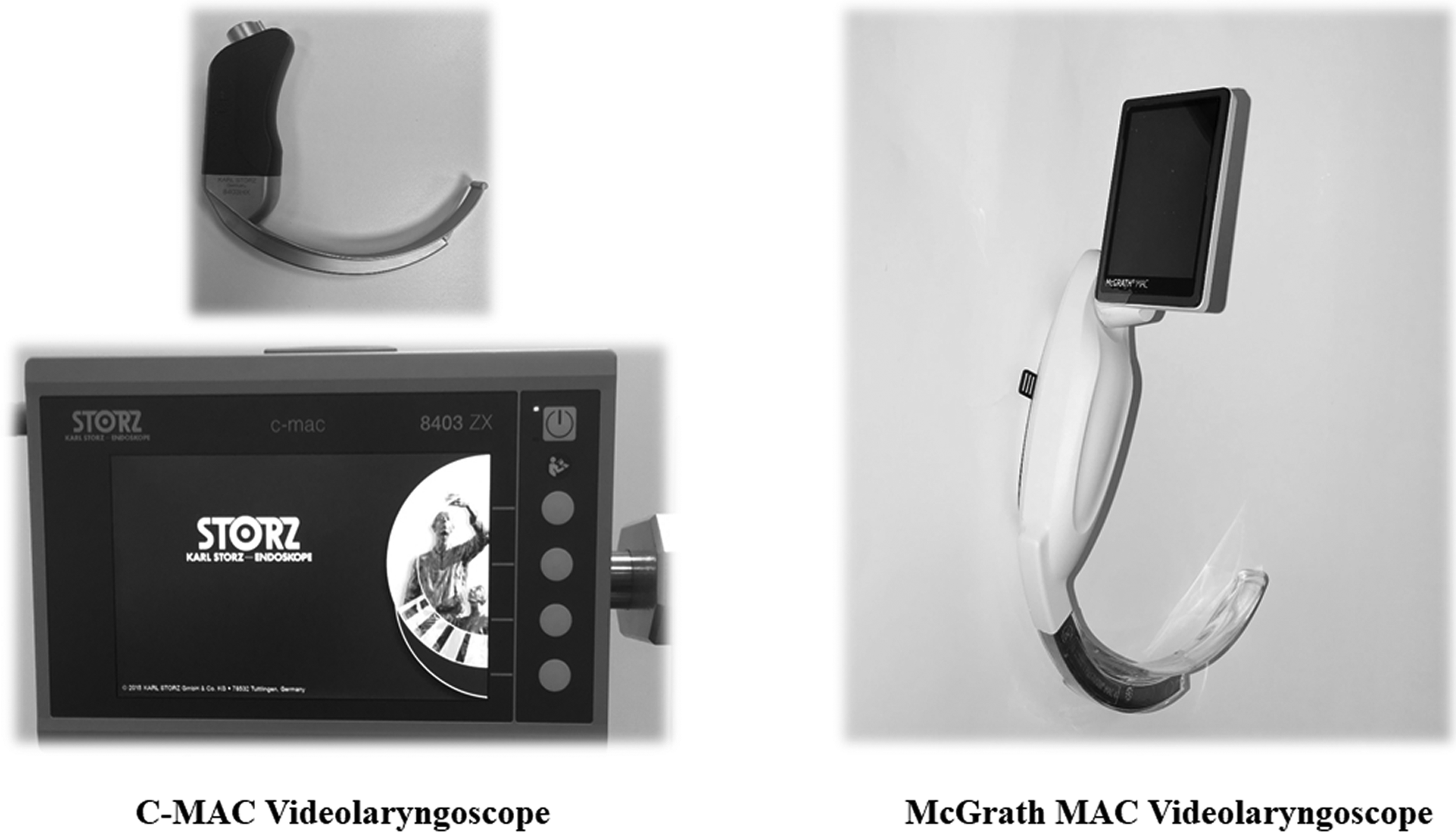
C-MAC and McGrath MAC videolaryngoscopes.
Materials and Methods
Protocol
This study was approved by the Local Ethics Committee and has been registered with the U.S. National Institutes of Health (ClinicalTrials.gov). We obtained written informed consent from all patients involved in this study. We conducted a prospective, randomized, controlled clinical study with 80 morbidly obese adult patients undergoing bariatric surgery from 8 September to 20 October 2018 at a university hospital. This study was not sponsored by any industry and did not receive any specific grant from funding agencies in the public, commercial, or not-for-profit sectors. This study was prepared in accordance with the Consolidated Standards of Reporting Trials. 9
Study participants
Our study participants (n = 80) were morbidly obese patients with American Society of Anesthesiology (ASA) scores of III who were 18–65 years of age, had a BMI ≥40 kg/m2, and were presenting for bariatric surgery at our hospital. All surgery patients meeting these criteria during the study period were interviewed before surgery to obtain written informed consent to participate in the study. Patients who were under 18 to over 65 years of age, pregnant or who had a BMI ≤40 kg/m2, an allergy to anesthetic drugs, uncontrolled cerebrovascular disease, or drug and alcohol addiction were excluded, as were all patients who refused written informed consent.
Preoperative procedures
Preanesthetic evaluations were performed on all patients 1 day before surgery. Age, gender, height, weight, BMI, ideal body weight (IBW), ASA physical status, and type of surgery were recorded. On the day of surgery, patients were taken to the operating room without premedication. Standard monitoring procedures were used, including heart rate (HR), noninvasive blood pressure, electrocardiogram, peripheral oxygen saturation (SpO2), mean arterial pressure (MAP), and body temperature monitoring by esophageal probe.
General anesthesia protocol
A standardized general anesthesia protocol was administered to all patients. After preoxygenation (100% 4 L/min O2 for 3 min), patients were induced with propofol (1–2 mg/kg), rocuronium (0.8 mg/kg), and fentanyl (1–2 μg/kg) through the intravenous (IV) route at doses calculated according to IBWs. Mask ventilation and tracheal intubation using either the McGrath MAC or C-MAC videolaryngoscopes with the blade size 4 were performed by one of the two anesthesiologists, both of whom had >7 years of clinical experience and had performed at least 100 successful intubations using both videolaryngoscopes. The vocal cords and endotracheal tube insertions were visualized using the monitor of the McGrath MAC or the C-MAC; endotracheal tubes with an internal diameter of 7.0 or 7.5 mm were used for female and male patients, respectively. Approximately 45–60° angulated stylets (Mallinckrodt intubating stylet, Covidien, Ireland) like a “hockey stick” were used for both the groups. End-tidal carbon dioxide (EtCO2) was continuously monitored after intubation. Tidal volume and ventilation rate were adjusted to maintain the EtCO2 partial pressure of arterial blood at 35–45 mmHg. Additional rocuronium was intermittently injected according to need based on Train of Four (TOF; Dräger AG, Lübeck, Germany) values. TOF responses were assessed by ulnar nerve stimulation and adductor muscle response. Additional fentanyl (25 μg/kg) was titrated for analgesia, as needed, if HR and/or MAP increased by 20% above baseline during surgery. Anesthesia was maintained in both groups by desflurane inhalation in a 0.5 O2 oxygen/air mixture. Desflurane was discontinued with the beginning of skin sutures and fresh gas flow was changed to 4 L/min of oxygen. In patients who did not experience complications during surgery, sugammadex (IV, 2–4 mg/kg; Bridion®, MSD, Greenville) was then administrated to reverse residual muscle relaxation at the end of surgery.
Randomization
This study was planned as a randomized prospective study. Eighty patients qualified for this study and were randomly assigned to either the McGrath MAC (n = 40) or C-MAC (n = 40) group; randomization (1:1) was based on a computer-generated random numbers table, using MedCalc v. 16 statistical software for Windows (medcalc.com.tr). Flow diagram is presented in Figure 2. All patients received standard surgical procedures determined by the same team of surgeons with experience in gastroenterology surgery. Patient pneumoperitoneum pressure ranged from 10 to 12 mmHg and pneumoperitoneum levels ranged from 30 to 45 degrees. Surgical management of sleeve gastrectomy and gastric bypass surgeries was not changed in any way.

Flow diagram.
Postoperative management
All patients were transferred to the postanesthesia care unit (PACU) after surgery. Patients were then transferred to the general surgery intensive care unit when they achieved a score of 9 or higher on the Modified Aldrete's score (range 0–12; scores of 9 and above indicate that the patient can be discharged from the PACU). 10 In all patients, postoperative analgesia was achieved using appropriate IV doses of tramadol (0.5–1 mg/kg) and paracetamol (1 g) at the time of beginning skin sutures. 11
Outcome measures
Primary outcome measures were time to intubation and incidence for successful intubations. Time to intubation was defined as the time from when the anesthesiologist picked up the videolaryngoscope to when the anesthesiologist successfully placed the endotracheal tube through the vocal cords, which was assessed by the detection of meaningful EtCO2 levels using capnography. An observer who was blinded to the patient group continuously watched a monitor to measure the time to intubation; another investigator performed external laryngeal manipulation to facilitate intubation if required. The characteristics of each tracheal intubation were recorded perioperatively for both groups as secondary outcome measures, including the position requirements for successful intubations (the position at which successful intubation was achieved, neutral vs. sniffing position, i.e., head extension and neck flexion), Cormack Lehane grades (laryngeal view during endotracheal intubation with the videolaryngoscope on a grade of 1 = full view of the glottis, 2 = partial view of the glottis, 3 = only epiglottis visible, 4 = neither glottis nor epiglottis visible), glottic view (measured as POGO scores), ease of intubation, patient hemodynamic responses, and adverse events during intubation. POGO scores were measured on a scale of 1–4 (1 = 75–100% glottic opening; 2 = 50–75%; 3 = 25–50%; 4 = 0–25%). Ease of intubation was defined on a grade of 1–3 (1 = no external manipulation of larynx was required; 2 = external manipulation of larynx was required; 3 = failed intubation on first two attempts). Incidence, attempts and position for successful intubation, Cormack Lehane grades, POGO scores, and ease of intubation were also recorded by the anesthesiologist who performed the tracheal intubation. Also demographic characteristics, comorbidities, and preoperative airway assessment, including each patient's Mallampati score (1–4), thyromental distance (cm), and mouth opening (cm), were recorded 1 day before surgery. HR, MAP, respiratory rate, and SpO2 were recorded at baseline before anesthesia (T0), before intubation (T1), 1 min after intubation (T2), 2 min after intubation (T3), 3 min after intubation (T4), and 5 min after intubation (T5). In addition, adverse events of tracheal intubation, including dental trauma, blood on blade, cuff burst, laryngospasm, bradycardia (HR <65 beats/min), and hypoxemia (SpO2 <90%), were recorded during the 15-min perioperative period. Hoarseness and sore throat were also recorded during the first 24 h after surgery.
Sample size
Statistical power analysis was performed based on a pilot study on 14 morbidly obese patients in our institution showing mean time to intubation of 45 ± 18.0 s [standard deviation (SD)] with the McGrath MAC. For power calculations (OpenEpi, Version 3), equal SD for both groups was assumed. To show a difference of 12 s between the two groups and with an alpha of 0.05 and two tailed and a power of 80%, we calculated that a minimum of 36 patients per group should be included in this study. We ultimately included a total of 80 patients to allow for patient dropout.
Statistical analyses
Data were analyzed using the Statistical Package for the Social Sciences program (SPSS 22.0; IBM). The Kolmogorov–Smirnov normality test was used to test whether quantitative variables showed a normal distribution. As some patient preoperative and anesthetic characteristics were distributed abnormally, nonparametric statistics was used. Quantitative data are presented as mean or SD and categorical data are shown as numbers or percentages. Continuous variables were compared between the groups using a Mann–Whitney U test. Categorical variables were summarized using frequencies and percentages, and were compared between the groups using a chi-square test or Fisher's exact test. A repeated measures analysis of variance was used to compare hemodynamic data within each group, whereas an unpaired t-test was used for comparisons between the two groups. Results were evaluated at a 95% confidence interval at a significance level of p < 0.05.
Results
Both groups were similar with respect to age, gender, height, weight, BMI, IBW, ASA physical status, use of drugs, smoking, comorbidities, Mallampati scores, thyromental distance, mouth opening, and type of surgery. The mean duration of anesthesia was also similar in both groups, as was the mean duration of surgery. Demographic characteristics, preoperative airway assessments, and procedure data are presented in Table 1.
Demographic Characteristics, Preoperative Airway Assessment, and Procedure Data
ASA, American Society of Anesthesiology; BMI, body mass index; cm, centimeter; kg, kilogram; min, minutes; n, number; SD, standard deviation.
Incidence of and number of attempts required for successful intubation, as well as Cormack Lehane grades and the position needed for successful intubation (neutral/sniffing: 35/5 for McGrath and 34/6 for C-MAC, p = 0.745), were similar in both groups. Time to intubation was significantly shorter in the C-MAC group (38.65 ± 17.57 s) than the McGrath group (55.20 ± 6.32 s; p < 0.001). Differences in POGO scores between the two groups were not significant (p = 0.057), although 31 patients in the C-MAC group had a glottic view of more than 50% compared with only 24 patients in the McGrath group. In both groups, no patients ultimately failed tracheal intubation, but two patients in each group required three attempts to achieve successful intubation. There was no significant difference between the groups in terms of ease of intubation grading (p = 0.163). A comparison of the intubation characteristics is presented in Table 2.
Comparison of Characteristics of Tracheal Intubation
p < 0.05 was considered statistically significant.
POGO, percentage of glottic view; s, second.
There were significant decreases in HR and MAP between T0 and T1 within each group (p < 0.001 for both groups). This was followed by significant increases in HR and MAP between T0 and T2 within each group (p < 0.001 for both groups). An unpaired t-test showed that the HR of the McGrath group (96.45 ± 10.56 beats/min) at T2 was significantly higher than that of the C-MAC group (91.30 ± 5.95 beats/min; p = 0.002). Similarly, the MAP of the McGrath group (104.72 ± 13.10 mmHg) at T2 was significantly higher than that of the C-MAC group (96.40 ± 6.90 mmHg; p = 0.003). The analyses of patient HR and MAP at various time points are presented in Tables 3 and 4.
Heart Rate of Patients at Various Time points in Two Groups
p < 0.05 was considered statistically significant.
Post hoc analyses (pairwise comparison) compares baseline mean HR with mean HR before intubation, 1st, 2nd, 3rd, and 5th min after intubation within each group.
ANOVA, analysis of variance; HR, heart rate.
Mean Arterial Pressure of Patients at Various Time points in Two Groups
p < 0.05 was considered statistically significant.
Post hoc analyses (pairwise comparison) compares baseline MAP with MAP before intubation, 1st, 2nd, 3rd, and 5th min after intubation within each group.
MAP, mean arterial pressure.
During the first 5-min perioperative period, one case of hypoxemia was observed in the C-MAC group and none of the patients had any dental trauma, blood on blade, cuff burst, laryngospasm, and bradycardia. During the first 24-h postoperative period, three patients in the McGrath group experienced hoarseness and one patient in the C-MAC group experienced sore throat, but these differences were also not statistically significant. Adverse events of tracheal intubation are presented in Table 5.
Adverse Events of Tracheal Intubation

p < 0.05 was considered statistically significant. The two groups were similar with respect to adverse events of tracheal intubation.
Discussion
Our study examined that the C-MAC videolaryngoscope demonstrated shorter time to intubation, better glottic visualization, and less hemodynamic response than the McGrath MAC. Obesity is a known risk factor for difficult intubation, and it has been previously established that the use of videolaryngoscopes in morbidly obese patients not only improves glottic view but also makes intubation efforts easier and less traumatic than with the use of direct laryngoscopes. A number of previous studies have compared the use of videolaryngoscopes to Macintosh direct laryngoscopes, and all videolaryngoscopes have been shown to improve intubation conditions, including increased intubation success rates, better glottic views, and shorter time to intubation for both routine and difficult airway management.12–17 For example, Marrel et al. reported that, compared with direct laryngoscopes, videolaryngoscopes allow a better visualization of glottic anatomy, thereby improving intubation conditions and also probably facilitating faster endotracheal intubation, thus reducing the incidence of difficult intubations in morbidly obese patients. 18 Similarly, Cavus et al. and Dhonneur et al. reported that videolaryngoscopes provide an efficient method for tracheal intubations in morbidly obese patients with difficult airways.8,19
However, a number of different videolaryngoscopes exist, and as yet no study has conclusively documented which one produces optimal results in morbidly obese patients. One study reported that POGO scores in morbidly obese patients were better using the McGrath than the other videolaryngoscopes (King Vision, APA, or Airtraq Avant). 20 Another study, using manikins, found that the durations of tracheal intubation attempts were similar using the C-MAC, Macintosh, and Airtraq laryngoscopes in easy laryngoscopies, but that in difficult laryngoscopies, the C-MAC demonstrated the shortest tracheal intubation times, whereas the Airtraq provided the best glottic view, and the Macintosh provided the worst view. 15 Another study, conducted in patients with normal airways, found that time to intubation was significantly shorter with the Glidescope than the McGrath (40.5 s vs. 53.3 s, respectively), and that glottic views and attempts required for intubation were similar between the two. 21
Given the relative scarcity of studies comparing specific types of videolaryngoscopes and associated outcome measures in morbidly obese patients,18,19,22 we therefore thought that a comparison of the McGrath and C-MAC videolaryngoscopes, which are both commonly used in clinical practice for difficult airway management, including in morbidly obese patients, would contribute useful and practical data on their intubation conditions and related adverse events. It is known that both videolaryngoscopes are shaped like the Macintosh blade with the addition of a micro camera at the tip of the blade. However, the C-MAC videolaryngoscope has more advantages than the McGrath MAC, such as a high visual quality of the monitor, no fogging of the laryngoscope, and real-time recording of image and video sequences. The present study thus yields important information about the use of two specific videolaryngoscopes in patients with difficult airway management.
Consistent with the results of previous studies recommending the use of videolaryngoscopes in patients with difficult airway management, we found that all patients included in our study were successfully intubated with no more than three attempts. Both groups had relatively good POGO scores, with no glottic view of 25% or less, and the overall ease of intubation was acceptable. We, therefore, conclude that both the McGrath and C-MAC videolaryngoscopes improve tracheal intubation conditions, and that they should both be considered efficient airway devices in morbidly obese patients. Moreover, we found no statistically significant differences between the two videolaryngoscopes with respect to thyromental distance, mouth opening, number of intubation attempts, position for successful intubation, POGO scores, ease of intubation, or adverse events of intubation. In terms of hemodynamic responses, although significant increases in HR and MAP were observed in both groups 1 min after tracheal intubation, as compared with baseline, all participants returned to baseline values or lower within 5 min of tracheal intubation.
Importantly, however, the time to intubation was significantly shorter using the C-MAC (38.65 ± 17.57 s) than the McGrath (55.20 ± 6.32 s; p < 0.001), and the C-MAC was thus superior in this regard. Moreover, although glottic views (as measured by POGO scores) were not significantly different between the two groups (p = 0.057), glottic views exceeded 50% in 31 patients using the C-MAC compared with only 24 using the McGrath; we thus consider that the C-MAC videolaryngoscope provided a better glottic view than the McGrath. All other primary outcome measures were similar between the two groups.
Hemodynamic responses after tracheal intubation, including increases in HR and MAP, can be potentially dangerous in patients with higher cardiovascular risks, including in morbidly obese patients. More specifically, while temporary attacks of tachycardia and hypertension have no meaningful clinical consequences in healthy populations, they can pose problems in patients with cardiovascular disease or patients who are at risk of cardiovascular disease. The use of videolaryngoscopes has been shown to reduce cardiovascular responses and risks compared with the use of direct laryngoscopes, 23 and a limited cardiovascular response may also improve postoperative outcomes. 24 We, therefore, also compared the cardiovascular responses in patients using the two different videolaryngoscopes, using HR and MAP after tracheal intubation as assessment measures. We found that in both groups, there were significant increases in both HR and MAP between baseline and 1 min after tracheal intubation (T2). However, patient HRs and MAPs were significantly higher at T2 using the McGrath than the C-MAC. We, therefore, conclude that the C-MAC causes smaller (and acceptable) hemodynamic responses than the McGrath. However, by T4 or T5, patient HRs and MAPs in both groups returned to baseline values or even lower and had no meaningful clinical outcome in either group. Nonetheless, we can conclude that patient hemodynamic responses were more attenuated when using the C-MAC than the McGrath.
In addition to the above outcome measures, pharyngolaryngeal lesions and adverse events secondary to tracheal intubation are very important for anesthesiologists' due to their impact on patients' comfort. Many conditions related to tracheal intubation, such as dental trauma, oropharyngeal bleeding, cuff burst, laryngospasm, bradycardia, hypoxemia during the perioperative period, and hoarseness and sore throat during the postoperative period, can influence clinical outcomes. One study reported that patient hoarseness and sore throat were increased by up to 50% of patients in the first few hours after extubation, 25 whereas another study reported that dental damage was reduced in videolaryngoscopes, especially in obese patients, and that videolaryngoscopes provided an overall less traumatic intubation than direct laryngoscopes. 22 In the present study, we observed perioperative hypoxemia in one patient using the C-MAC. Three patients demonstrated hoarseness after using the McGrath, whereas one patient reported a sore throat after using the C-MAC. However, none of these differences was statistically significant.
Limitations
Our study had some limitations. First, all assessments during the intraoperative period were performed by a nonblinded anesthesiologist, potentially leading to bias. Second, some of the measurements evaluated in this study, such as the ease of intubation, were subjective.
Conclusion
Our study compared the performance of the McGrath and C-MAC videolaryngoscopes in tracheal intubations in morbidly obese patients. We found that both devices were efficient and improved the glottic view, with no failed intubations and no meaningful adverse events. However, the C-MAC videolaryngoscope demonstrated shorter tracheal intubation times, better glottic visualization, and less hemodynamic response than the McGrath. We, therefore, conclude that the C-MAC videolaryngoscope may contribute advantages in performing tracheal intubations in morbidly obese patients.
Footnotes
Acknowledgments
This study was not sponsored by any industry and did not receive any specific grant from funding agencies in the public, commercial, or not-for-profit sectors. This study was presented as an oral presentation in the 52nd National Congress of Turkish Society of Anesthesiology and Reanimation (TARK 2018) Antalya, Turkey. This article is edited and revised for clarity, consistency, and correctness according to the requirements and guidelines by Scribendi.
Ethical Statement
All procedures performed in studies involving human participants were in accordance with the ethical standards of the Institutional and/or National Research Committee and with the 1964 Helsinki Declaration and its later amendments or comparable ethical standards. Informed consent was obtained from all individual participants included in the study. The study was approved by the Local Ethics Committee of Inonu University (Protocol no. 2018/96). This trial is registered at the U.S. National Institutes of Health ( ) # NCT03657927.
Author Disclosure Statement
No competing financial interests exist.