




Abstract
Introduction:
Panniculectomies are performed relatively infrequently despite demand for this procedure among bariatric surgery patients.
Materials and Methods:
In this multicomponent study, a survey of postbariatric surgery patients more than 6 months postop was distributed at the Edmonton Adult Bariatric Specialty Clinic from July 2017 to April 2018 and a survey of 245 plastic, bariatric, and general surgeons in the province of Alberta was administered online.
Results:
Of 87 postbariatric surgery patients surveyed, 90.6% were satisfied with the result of their bariatric surgery, yet 69.1% reported at least one issue relating to excess skin and 90.7% were interested in undergoing panniculectomy for excess abdominal skin. Among 22 general and 11 plastic surgeons surveyed, 41% of whom reported performing panniculectomy, 74% agreed that postbariatric panniculectomy is a medical necessity, but the majority of surgeons not already performing panniculectomy would not include it in their practice due to lack of interest, lack of operating room time, and inadequate financial compensation.
Conclusion:
There is significant demand for panniculectomy, but few surgeons are interested in performing panniculectomy, leaving a considerable care gap.
Introduction
Approximately one in five Canadian adults has a body mass index (BMI) in the obese range, similar to other developed nations. 1 Bariatric surgery is proven superior to nonsurgical interventions, such as diet change and physical activity, for sustained weight loss, resulting in decreased obesity-related morbidity 2 and improved quality of life. 3 Following massive weight loss (loss of >50% of excess body weight) after bariatric surgery, many patients go on to develop a large amount of excess tissue on the anterior abdomen, called a panniculus. This apron of excess skin and fat is prone to infection and ulceration, and can be a physical barrier to mobility and further weight loss. 4
Most patients who have undergone massive weight loss following bariatric surgery are highly interested in additional surgery to deal with their abdominal panniculus.5–8 There is evidence to suggest body contouring procedures, including panniculectomy, are associated with improved quality of life 9 and greater weight loss 10 after bariatric surgery. Unfortunately, the reported rate of panniculectomy and other abdominoplasty procedures in the postbariatric surgery population is <20%.11–13 Furthermore, the clinical outcomes associated with performing panniculectomy in postbariatric surgery patients remain scarcely reported in the literature.
This study investigates the discrepancy between patient demand and procedure rate for abdominal panniculectomy after bariatric surgery. The study was carried out at the Edmonton Adult Bariatric Specialty Clinic, a large-volume, province-wide, multidisciplinary clinic accredited as a Metabolic and Bariatric Surgery Center for Excellence by the Metabolic and Bariatric Surgery Accreditation and Quality Improvement Program (MBSAQIP). General and plastic surgeons, and postbariatric surgery patients were surveyed using standard validated survey methodology.
Materials and Methods
Study location
The surgeon survey was administered online to general and plastic surgeons working in the province of Alberta under Alberta Health Services. The patient survey was administered to eligible patients attending the Edmonton Bariatric Specialty Clinic at the Royal Alexandra Hospital in Edmonton, Alberta. Ethics approval for this study was obtained from the Health Research Ethics Board at the University of Alberta on June 8, 2017 (Pro00072848).
Survey design and administration
All survey questions were designed by the research team and internally tested before formal survey administration. Informed consent was obtained from all participants in both surveys. For patient surveys, eligible participants included patients attending the Edmonton Adult Bariatric Specialty Clinic in follow-up, between July 2017 and April 2018, who underwent bariatric surgery at least 6 months previously. Paper-based surveys were administered on a convenience basis by administrative staff upon patient check-in, and participation was voluntary. For surgeon surveys, all plastic, general, and bariatric surgeons in Alberta were eligible to participate. A list of 303 surgeons was obtained from the College of Physicians and Surgeons of Alberta (CPSA). From this list, we collected a total of 245 email addresses from public and institutional directories. Surgeon surveys were administered online through SurveyMonkey (SurveyMonkey Canada, Inc.). A total of three reminder emails were sent to eligible study participants over a 3 months' time period to encourage participation.
Results
Patient study
During the study period, an average of 100 patients were seen in the bariatric clinic each month, reaching ∼900 patients. Among these, a total of 87 eligible patients (85% female) completed the survey, a median of 10 months (range 6–131 months) postoperatively from bariatric surgery. Respondents had a median age of 48 years (range 29–68 years), a median preoperative BMI of 45.4 kg/m2, and a median current BMI of 34.9 kg/m2 (data not shown). Overall, 90.6% of patients reported being satisfied with the overall result of their bariatric surgery (data not shown). With regard to body image following bariatric surgery, 82.8% of patients reported improved body image postoperatively, whereas only 17.2% reported no change or worsening body image (Table 1). Despite the high overall satisfaction, over two thirds of patients (69.1%) reported at least one issue relating to excess skin following bariatric surgery. The most frequently reported issues, in decreasing order, included feeling unattractive (46.0%), the development of rashes, sores or infections (43.7%), and difficulty finding clothes that fit (33.3%) (Fig. 1). Only 1 of 87 patients surveyed had undergone an operation to remove her panniculus. Of the remaining 86 respondents, 90.7% were at least somewhat interested in undergoing panniculectomy or abdominoplasty for excess abdominal skin (Table 1).
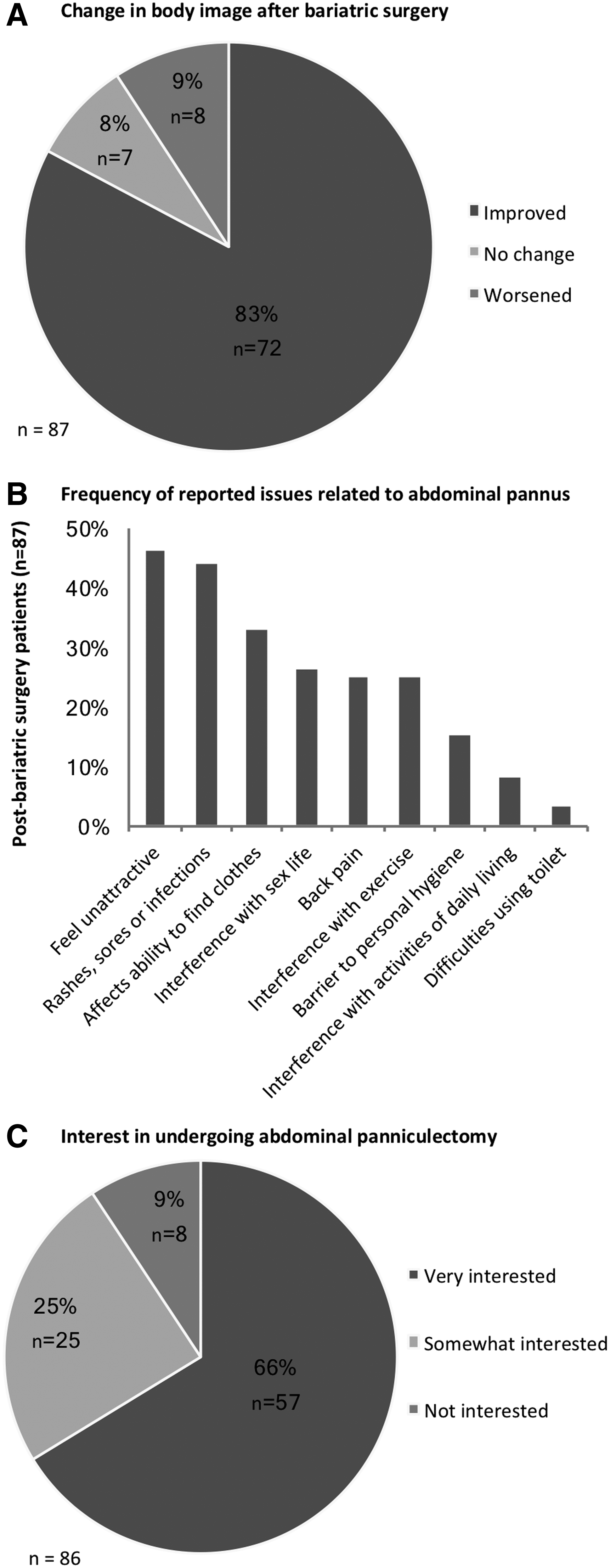
Issues related to excess abdominal pannus in postbariatric surgery patients included feeling unattractive (46.0%), developing rashes, sores, or infections (43.7%), and difficulty finding clothes that fit (33.3%).
Change in Body Image Among a Cohort of 87 Bariatric Surgery Patients and Interest in Abdominal Panniculectomy Among the 86 Patients Who Had Not Already Undergone the Procedure
Surgeon study
After distributing surveys to 245 general and plastic surgeons in Alberta, a 13% response rate was obtained with data from 22 general and 11 plastic surgeons listed in Table 2. Of the total respondents, 41% personally performed panniculectomy, while 74% of respondents considered panniculectomy a medical necessity in postbariatric surgery patients following massive weight loss. When questioned about potential benefits of panniculectomy in postbariatric surgery patients, we found that surgeons who do not perform the procedure perceived more benefits to patients compared with those surgeons actually performing panniculectomy (Fig. 2). Among surgeons not performing panniculectomy, 12% indicated already being capable of performing panniculectomy and only an additional 12% were interested in adding panniculectomy to their skill set. Most respondents (55%) not performing panniculectomy felt that they could technically do panniculectomy without additional training. The greatest barrier to performing panniculectomy was an overall lack of interest in doing the surgery (67%). Other barriers included the lack of operating room time (50%) and inadequate financial compensation (33%).
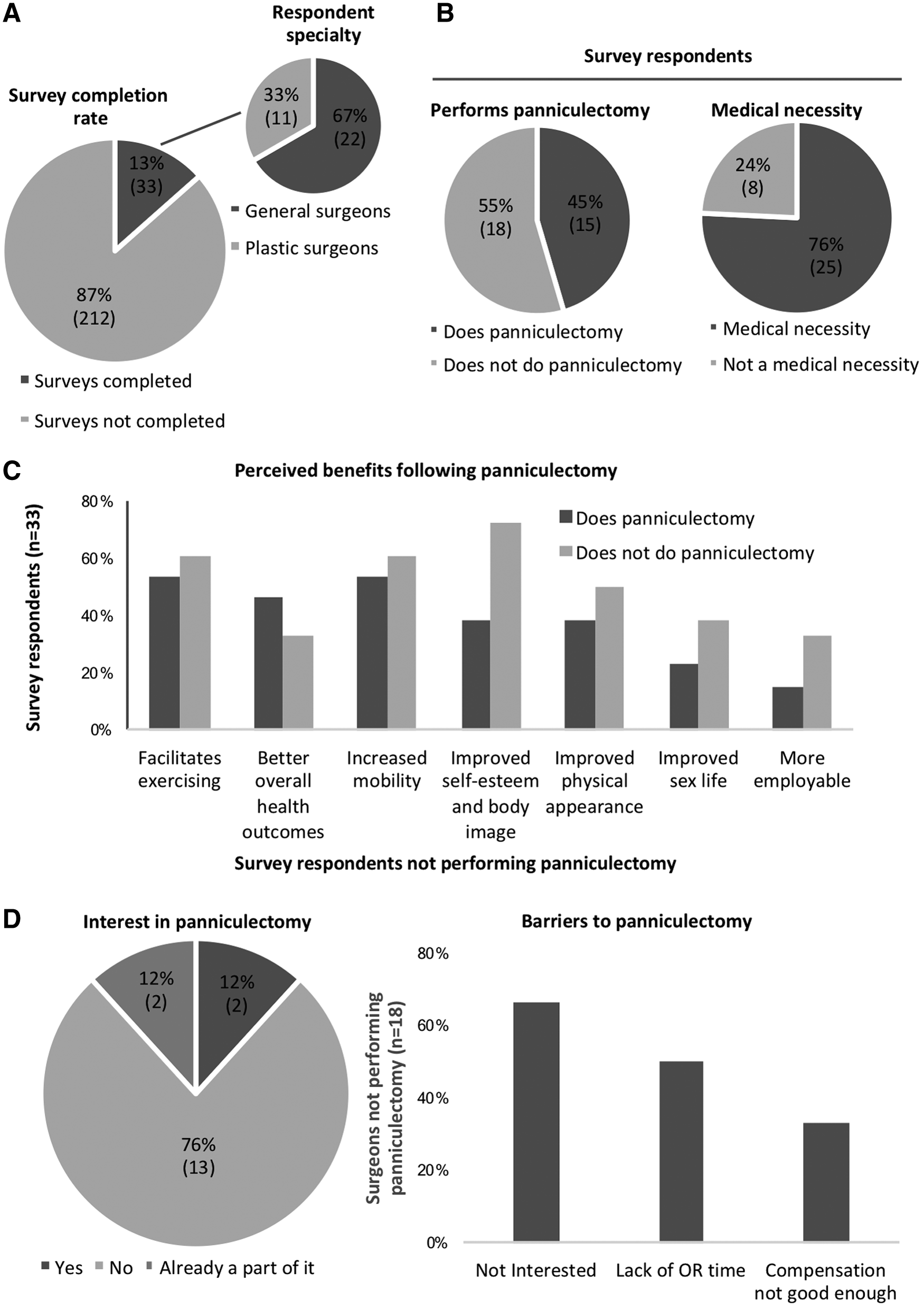
Key results from the survey of 33 general and plastic surgeons. Reported opinions on panniculectomy according to surgeon practice.
Surgical Practice Characteristics and Opinions on Postbariatric Panniculectomy Among 33 Surgeons
One surgeon not performing panniculectomy did not complete this section of the survey.
OR, operating room.
Discussion
The province of study is residence to more than 4 million Canadians, with similar obesity rates to the rest of Canada, 20.2% versus 23.9%, respectively. 14 In conducting a survey of postbariatric surgery patients in Alberta, we demonstrated a high level of satisfaction with weight loss following bariatric surgery consistent with the preexisting literature.5,6 Patients frequently identified new medical and psychosocial issues arising due to the development of a panniculus. The vast majority of patients surveyed (90.7%) were interested in additional surgery to remove this excess abdominal wall tissue. Only 1 of 87 patients surveyed had previously undergone such a procedure, suggesting that patients in our province continue to have limited access to panniculectomy, despite the procedure being publically funded when deemed medically necessary. By comparison, in a study of 37,806 patients who underwent bariatric surgery in New York State, 6.8% underwent surgery for removal of excess abdominal skin. 13 Access to body contouring procedures, such as panniculectomy, is of clear clinical value given the potential for both greater weight loss and improved quality of life in the bariatric surgery population.9,10 A strength of our survey is that we identified patients from a prominent bariatric center with a large catchment area, including three territories and the larger northern half of our province. One limitation of our survey is that the median assessment point is only 10 months postbariatric surgery, which may miss patients who later undergo panniculectomy, as many patients wait more than 24 postbariatric surgery. 12
While recent data suggests that plastic surgeons perform ∼80% of panniculectomies in the United States, 15 our survey's 11 plastic surgeon respondents, 10 of whom perform panniculectomy, represented only one third of the surgeon survey respondents. A majority (56%) of the 17 respondents who did not perform panniculectomy as part of their practice felt they could do so without any extra training (data not shown). Most surgeons recognized panniculectomy as necessary to patient care following massive weight loss, however, 76% were not interested in adding this to their regular practice. Despite the low response rate (13%), our study clearly demonstrates that a potential barrier to performing panniculectomy in Alberta is a lack of will among surgeons capable of performing the procedure, despite the growing patient need.
This disinterest may result from apprehension regarding the operative risk in postbariatric surgery patients. Transfusion rates of 5–11% and reoperation rates of 11–17% have been previously reported in cases of postbariatric panniculectomy.16–18 A chart review of 56 consecutive patients undergoing abdominal panniculectomy by one of the authors (C. d.G.), identified 15 patients with blood loss requiring transfusion, 3 patients developing hematomas requiring reoperation, 1 patient experiencing a wound dehiscence and skin necrosis requiring reoperation, and 1 patient with a wound infection requiring readmission (data not published). We believe, however, that the clinical and psychological benefits of panniculectomy surpass the risk of blood transfusion. Moreover, a review of 79 panniculectomy cases carried out in France did not identify a significant difference in postoperative morbidity when comparing patients who had undergone bariatric surgery to a similar cohort of patients with no history of bariatric surgery, again supporting the feasibility of panniculectomy in the postbariatric population. 19
Emerging evidence has identified risk factors for postoperative complications specific to panniculectomy patients, including age, American Society of Anesthesiologists class, BMI, smoking, diabetes, and concurrent incisional hernia repair.15,16 Given that many of these risk factors improve after bariatric surgery, future studies can use this information to determine the optimal timing for panniculectomy in postbariatric surgery patients.
Conclusion
This study will increase awareness to surgeons about the need for panniculectomy in postbariatric surgery patients. Although few surgeons are eager to learn panniculectomy according to our results, it would be prudent to capitalize on those interested in adding this procedure from a training and resource allocation standpoint to meet increasing demand from postbariatric surgery patients. Further studies to investigate this apparent discrepancy between surgeons and postbariatric surgery patients with respect to interest in abdominal panniculectomy are warranted.
Footnotes
Author Disclosure Statement
No competing financial interests exist.
Funding Information
No funding was received for this article.