




Abstract
Background:
Thyroid diseases are common in bariatric surgery candidates, and some of these thyroid diseases require surgical treatment. Combined bariatric surgery and thyroidectomy have not been reported yet. This study aimed to evaluate the efficacy and safety of this combined surgery.
Methods:
A retrospective study was conducted on all patients undergoing combined laparoscopic bariatric surgery and thyroidectomy between March 2015 and April 2021. Perioperative and follow-up outcomes were collected and analyzed.
Results:
Combined surgery was successfully conducted in 14 patients, with a mean body mass index of 35.7 ± 5.6 kg/m2. Two patients underwent Roux-en-Y gastric bypass, 12 underwent sleeve gastrectomy, and all received unilateral or bilateral thyroid surgery with/without central lymph node dissection. The average operative time was 259.3 ± 54.8 (170–318) minutes. Two patients encountered postoperative transient hypocalcemia, and one experienced transient recurrent laryngeal nerve (RLN) paralysis. No reoperation, mortalities, or readmission was identified. The median duration of follow-up is 27 months; all patients had no hypocalcemia or RLN paralysis at the last follow-up.
Conclusion:
Combined laparoscopic bariatric surgery and thyroidectomy are effective and safe for elected patients. Strict operation indications, rich experience in laparoscopic surgery, and appropriate postoperative management are keys to the success of combined surgery.
Introduction
Obesity has become a global public health disease now. It can lead to some related diseases, such as obstructive sleep apnea syndrome, hyperglycemia, type 2 diabetes mellitus (T2DM), hypertension, and so on. 1
In some obese patients, thyroid nodules (benign or malignant) could also be found. Compared with normal-weight patients, overweight patients have a 25% higher risk of encountering thyroid cancer, and obese patients have a 55% higher risk. 2 In addition to thyroid cancer, it was indicated that obesity is related to larger thyroid nodules.3,4 Laparoscopic bariatric surgery and thyroidectomy represent two standard treatment options for morbid obesity and thyroid diseases. However, simultaneous obesity and thyroid interventions have not been reported yet. In the literature, some simultaneous surgery has been reported in obese patients, such as combined bariatric surgery and cholecystectomy, as well as concomitant bariatric and ventral/incisional hernia surgery.5,6 Combined surgery can avoid the risk of one more operation and anesthesia; it can also prevent the need for two hospitalizations, reducing hospital stays and economic burden. Therefore, it is worthwhile to explore the clinical outcomes of managing both thyroid problems and morbid obesity in a single-stage operation.
As a high-volume center of laparoscopic surgery in the local region, we began to carry out laparoscopic bariatric surgery and thyroidectomy separately about 20 years ago. After accumulating abundant clinical experience, we tried to perform bariatric surgery and thyroidectomy in the same procedure for elected patients. At this moment, we made this study to assess the efficacy and safety of combined laparoscopic bariatric and thyroid surgery.
Materials and Methods
Study design and preoperative management
A retrospective review was conducted on all patients undergoing combined laparoscopic bariatric and thyroid surgery at our hospital from March 2015 to April 2021. The indications for bariatric surgery were consistent with International Federation for the Surgery of Obesity and Metabolic Disorders-Asia Pacific Chapter Consensus Statements (2011), which were patients with body mass index (BMI) ≥32.5 kg/m2 or patients with inadequately controlled T2DM or metabolic syndrome for suitable Asian candidates with BMI ≥27.5. 7 The indications for thyroid surgery were patients with thyroid cancer or benign thyroid nodule that had caused symptoms of pressure. Informed consent was obtained from all individual participants, and ethics approval was waived by the local ethics committee. Statistical analysis was done with SPSS 20.0 version (California, Inc.). A descriptive analysis was done.
Before surgery, patients' baseline data were collected, including age, gender, BMI, and surgical method. In addition, the blood sample was tested for metabolic status, thyroid function, parathyroid hormone, and serum calcium levels. Vocal cord function was checked by laryngoscopy.
Operative methods
Both bariatric surgery and thyroidectomy were performed by laparoscopic method. Regarding surgical sequence, our principle is to perform thyroid surgery first, because it is a cleaner operation compared to bariatric surgery. However, if the thyroid nodule was considered malignant by intraoperative frozen pathological examination, surgical equipment needs to be changed before bariatric surgery, so as to prevent the spread of thyroid cancer cells.
Thyroid surgery
Thyroid surgery was carried out with two small incisions beside the right areola and one beside the left areola (Fig. 1), which had been previously described in detail (Fig. 2). 8 All patients received intraoperative frozen pathology examination. For unilateral benign goiters, near-total or total thyroid lobectomy was conducted for patients. For bilateral benign goiters, near-total or total thyroidectomy was conducted. And for papillary thyroid carcinoma with lymph nodal metastases in the central region, central lymph node dissection (CLND) was also performed. The recurrent laryngeal nerve (RLN) and parathyroid gland would be protected as much as possible during the procedure. A Neck drainage tube was routinely placed.
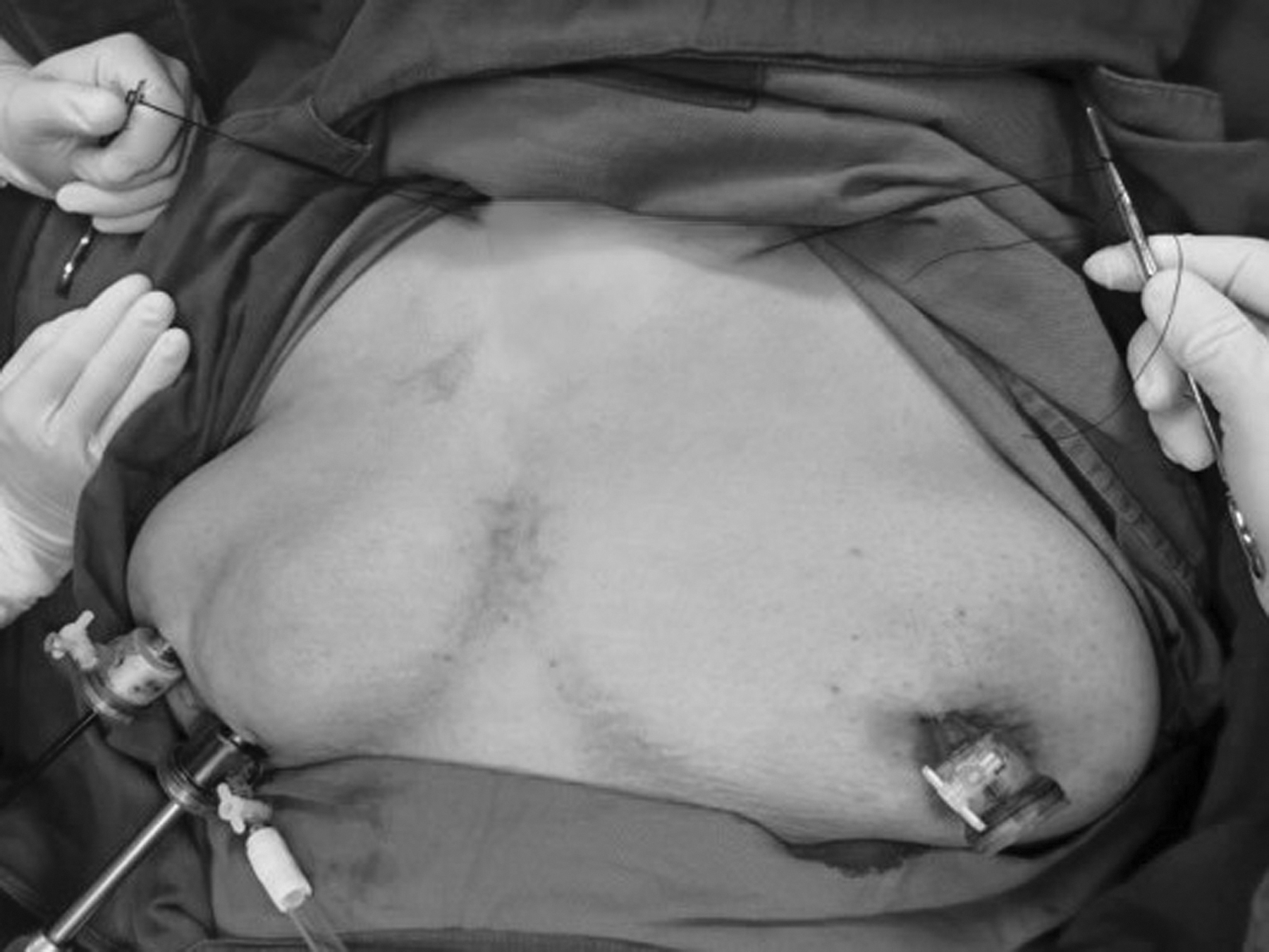
Location of trocars in the thyroid surgery.

Surgical field in endoscopic thyroidectomy.
Bariatric surgery
There are two main types of bariatric surgery in our centers, which are Roux-en-Y gastric bypass (RYGB) and sleeve gastrectomy (SG) (Fig. 3). During RYGB, a 10–25 mL gastric pouch was created, with a biliopancreatic limb of 25–100 cm and a Roux limb of 100–175 cm according to patients' preoperative BMI and blood glucose levels. And during SG, a 36F or 38F bougie was adopted, with the resection of greater curvature starting 2–4 cm above the pylorus. The stomach fundus was also removed, and the remnant gastric capacity was 60–80 mL.
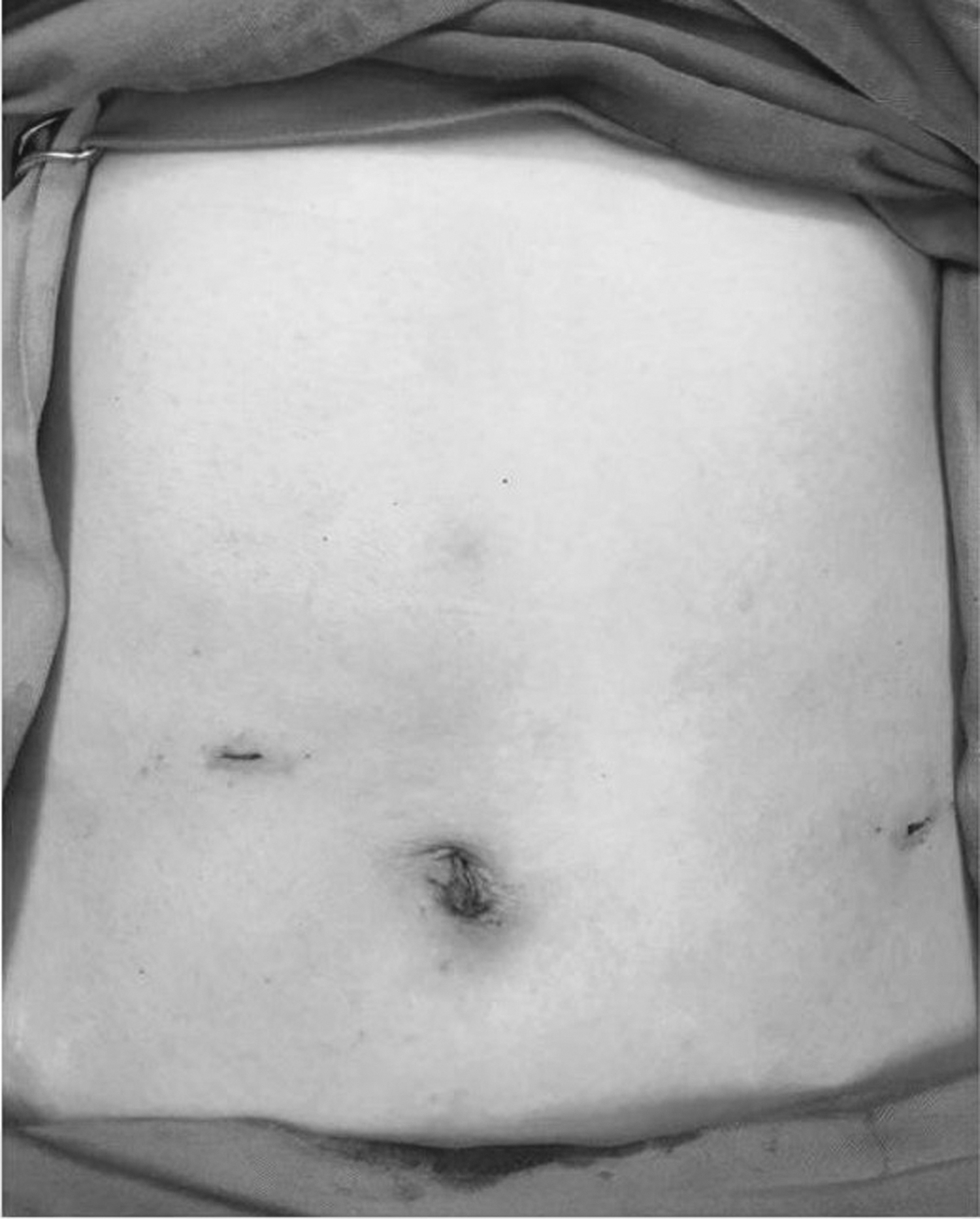
Skin incisions in the laparoscopic sleeve gastrectomy.
Postoperative management and follow-up
After combined surgery, all patients were advised to take some gastric mucosal protective drug (Talcid®, one tablet/day), proton pump inhibitor (Ilaprazole enteric-coated tablet®, one tablet/day), calcium tablet (Caltrate®, one tablet/day), multivitamin supplementations (Centrum®, one tablet/day), as well as levothyroxine (LT4). In addition, patients were regularly followed up at 1, 3, 6, and 12 months and then annually after that. At every time point, comprehensive functional assessments would be performed, including routine physical examination, the change of weight and obesity-related comorbidities, and fasting blood analyses. Surgical complications after bariatric surgery and thyroidectomy were also recorded during the process.
Results
There are 428 cases of RYGB procedure, 955 cases of SG procedure, and 1511 cases of thyroid surgery in our team between March 2015 and April 2021. Among these patients, 14 patients underwent combined laparoscopic bariatric and thyroid surgery. Data about the clinical characteristic of these 14 patients (9 female and 5 male) are presented in Table 1. The mean BMI before surgery was 35.7 ± 5.6 (27.5–47.3) kg/m2. Thirteen of the 14 patients encountered fatty liver disease, 7 encountered hyperuricemia, 5 encountered T2DM, 5 encountered hyperlipidemia, and 2 encountered hypertension. RYGB procedure was conducted in 2 patients and SG in 12 patients. Regarding thyroid problems, 4 patients were diagnosed with multinodular goiter, and 10 received surgery due to papillary thyroid carcinoma. Both laparoscopic bariatric surgery and thyroidectomy were performed successfully in these 14 patients, with an average operative time of 259.3 ± 54.8 (170–318) minutes (Table 2).
Clinical Characteristic of Included Patients
BMI, body mass index; CLND, central lymph node dissection; FLD, fatty liver disease; RYGB, Roux-en-Y gastric bypass; SG, sleeve gastrectomy; T2DM, type 2 diabetes mellitus.
Intra- and Postoperative Data of Included Patients
LOHS, length of hospital stays; PTG, parathyroid gland; RLN, recurrent laryngeal nerve.
Presented as number of positive lymph nodes/total number of lymph nodes.
Based on the first blood test after combined surgery.
The estimated blood loss during surgery was between 5 and 50 mL. After surgery, 13 patients were discharged from the hospital within 3–7 days, while the eighth patient was released after 14 days because of postoperative hypocalcemia. With respect to postoperative complications, three patients suffered from minor complications, including two cases of transient hypocalcemia and one case of transient RLN paralysis. There was no permanent hypocalcemia or RLN paralysis that occurred. No conversion, reoperation, mortalities, or readmission within postoperative 30 days was identified. The median (interquartile range) duration of follow-up is 27 (14.8, 61.8) months; all patients had no hypocalcemia or RLN paralysis at the last follow-up. During the follow-up, 10 patients had available data about postoperative weight and LT4 dose at 6 and 12 months. The data showed that these patients had (51.6 ± 6.3)% of excess weight loss at postoperative 12 months; the LT4 dose remained unchanged for eight patients and increased for two patients (one from 100 to 125 μg/d and the other from 50 to 75 μg/d).
Discussion
To the best of our knowledge, our study represents the first report in the literature to assess the outcomes of combined laparoscopic bariatric surgery and thyroidectomy. We found that combined laparoscopic bariatric surgery and thyroidectomy are effective and safe.
As one of the earliest hospitals to carry out bariatric surgery in Mainland China, our hospital began to perform laparoscopic bariatric surgery in 2000, with the first RYGB procedure finished in 2004 and the first SG procedure in 2007.9,10 Regarding thyroid surgery, we began to conduct endoscopic thyroidectomy using chest-areola approach in 2002 and endoscopic thyroidectomy using complete areola approach in 2005. 11 After accumulating about 300 cases of bariatric surgery and 2000 cases of thyroid surgery in our team, we began to conduct the first combined laparoscopic bariatric and thyroid surgery in 2015. Therefore, rich experience in laparoscopic surgery is essential for combined surgery.
With respect to operative time, it was indicated in the literature that the average operative time was about 140 minutes for endoscopic thyroidectomy, 12 200 minutes for endoscopic thyroidectomy + CLND, 13 150 minutes for RYGB procedure, 14 and 90 minutes for SG procedure. 15 In our study, the average operative time for combined surgery was 259.3 ± 54.8 (170–318) minutes. To be more specific, it was 305.0 ± 17.0 (293–317) minutes for RYGB + thyroid surgery and 251.7 ± 55.5 (170–318) minutes for SG + thyroid surgery. Therefore, the operative time of combined surgery in our study seems acceptable. In addition, with the accumulation of surgical experience, the operative time would reduce.
Generally speaking, patients undergoing single bariatric surgery or endoscopic surgery in our hospital would be charged within postoperative 3–7 days. For these patients receiving combined surgery, most of them were also released from hospital within postoperative 3–7 days, except for one patient who needed to stay for 14 days because of postoperative hypocalcemia. Compared with the literature data, we found that it was not an extended hospital stay for combined surgery, because the time period was consistent with previous study, which only enrolled patients undergoing endoscopic thyroidectomy. 12 Furthermore, due to the fact that there is not a family physician system in China, surgical patients would not be discharged until they are almost totally back to normal. When focusing on surgical methods, we found that both RYGB and SG could be successfully performed. However, only eight patients provided available data about weight change at postoperative 12 months, which revealed that these patients could have significant weight reduction.
In terms of thyroid surgery, near-total or total thyroid lobectomy with/without CLND was successfully conducted. Therefore, no matter whether it is benign thyroid nodule or papillary thyroid carcinoma, combined surgery could be chosen when appropriate.
To promote the application of simultaneous bariatric surgery and thyroidectomy in clinical practice, we concluded some indications and contraindications based on our experience. At first, combined surgery should be limited to slightly and moderately obese patients (preferably BMI <40 kg/m2), because super obese patients always have a thick neck, which would negatively affect the procedure of endoscopic thyroid surgery. When considering thyroid diseases, combined surgery should be limited to early papillary thyroid carcinoma without lateral neck metastasis or benign thyroid nodule with nodule diameter <4 cm, because a nodule >4 cm would make operative space very limited. As for the contradictions, we summarize them as follows: (1) nodule diameter >4 cm; (2) papillary thyroid carcinoma with lateral neck metastasis; (3) substernal goiter; and (4) poor general condition that cannot tolerate general anesthesia. Nonetheless, these contradictions may reduce gradually with the improvement of operative skills and development of surgical equipment.
There is no publication in the literature regarding complications of simultaneous bariatric surgery and thyroidectomy. However, some studies about patients receiving bariatric surgery and thyroidectomy at different times have been reported (Table 3). Table 3 indicates that no matter whether bariatric surgery or thyroid surgery was performed as the first-stage operation, postoperative hypocalcemia is the most important challenge.16–35 Some studies indicated that malabsorptive procedure (such as RYGB) is more likely to cause calcium deficiency compared with restrictive procedure (such as SG). However, the two patients who encountered transient hypocalcemia in our studies underwent SG instead of RYGB.3,32 Therefore, the type of bariatric surgery may not be the main influencing factor for postoperative hypocalcemia. Another possible explanation is attributed to the relatively few patients enrolled.
Literature Results of Patients Undergoing Both Bariatric and Thyroid Surgery at Different Time
AGB, adjustable gastric banding; BPD, biliopancreatic diversion; NA, not available; NTT, near-total thyroidectomy; SIPS, stomach intestinal pylorus-sparing; TT, total thyroidectomy.
To prevent postoperative hypocalcemia in combined surgery, we recommend routine inspection of the resected thyroid gland in case of mistaken resection of parathyroid tissue. Once parathyroid tissue was identified, it should be cut into pieces and reimplanted into sternocleidomastoid muscle. In addition, postoperative calcium supplements should be routinely suggested for all patients undergoing combined surgery. Another postoperative complication in our study was RLN paralysis. Our experience with this complication is that high-definition laparoscopic devices and excellent laparoscopic skills are conducive to exposing and protecting RLN. Moreover, near-total thyroidectomy can be chosen under challenging situations, which can help preserve the RLN and superior parathyroid gland.
There are several limitations to this study. First, the sample size is relatively small. In addition, the long-term follow-up data about postoperative LT4 dose are scarce for some patients, which stop us from further analyzing the change of LT4 dose requirement after combined surgery. Nevertheless, this study has irreplaceable value in being the first publication to evaluate the outcomes of combined laparoscopic bariatric surgery and thyroidectomy, which can enrich the literature data about combined surgery. What's more, in addition to the periareolar approach described in the study, endoscopic transaxillary and transoral approaches are common approaches for thyroidectomy. Based on our results, combined bariatric surgery and thyroidectomy with transaxillary and transoral approaches may also be a good choice for elected patients; however, the results need to be further evaluated.
Conclusion
Combined laparoscopic bariatric surgery and thyroidectomy are effective and safe for elected patients. Strict operation indications, rich experience in laparoscopic surgery, and appropriate postoperative management are keys to the success of this combined surgery. However, more clinical studies with more significant sample numbers need to confirm the results.
Footnotes
Authors' Contributions
B.S.G., Z.P.W., T.H.C., C.C.W., and J.G.Y. performed combined bariatric surgery and thyroidectomy. B.S.G., Y.Y.C., W.J.M., S.F.H., and W.J.L. were major contributors in writing the article and analyzing the data. B.S.G. and Y.Y.C. collected the data. And all authors contributed to the follow-up of patients. All authors have read and approved the submitted article.
Availability of Data and Materials
The datasets generated and analyzed during the current study are not publicly available as the data also form part of an ongoing study but are available from the corresponding author on reasonable request.
Author Disclosure Statement
The authors declare that they have no conflicts of interest.
Funding Information
The work was supported by the Fundamental Research Funds for the Central Universities (Grant No. 21622304) and the Basic and Applied Basic Research Project of Guangzhou Basic Research Program (Grant No. SL2023A04J01245).