




Abstract

Dear Editor:
A female infant was born via cesarean section to a 28-year-old gravida 1, para 1 mother at 40 weeks of gestation. The infant was admitted to the neonatal intensive care unit becasue of rapid breathing and had the final diagnosis of transient tachypnea of the newborn. Expressed breastmilk was brought by the mother on Day 2 that was dark brown in color, coming out of both breasts (Fig. 1a). The mother denied any history of pain, trauma, or recent infection. Examination of the breasts revealed no engorgement, tenderness, or erythema. The nipples and areola had no erosions, ulcers, or cracks. The mother was reassured, so that breastfeeding continued, and the breastmilk decolorized within 72 hours (Fig. 1b and c).
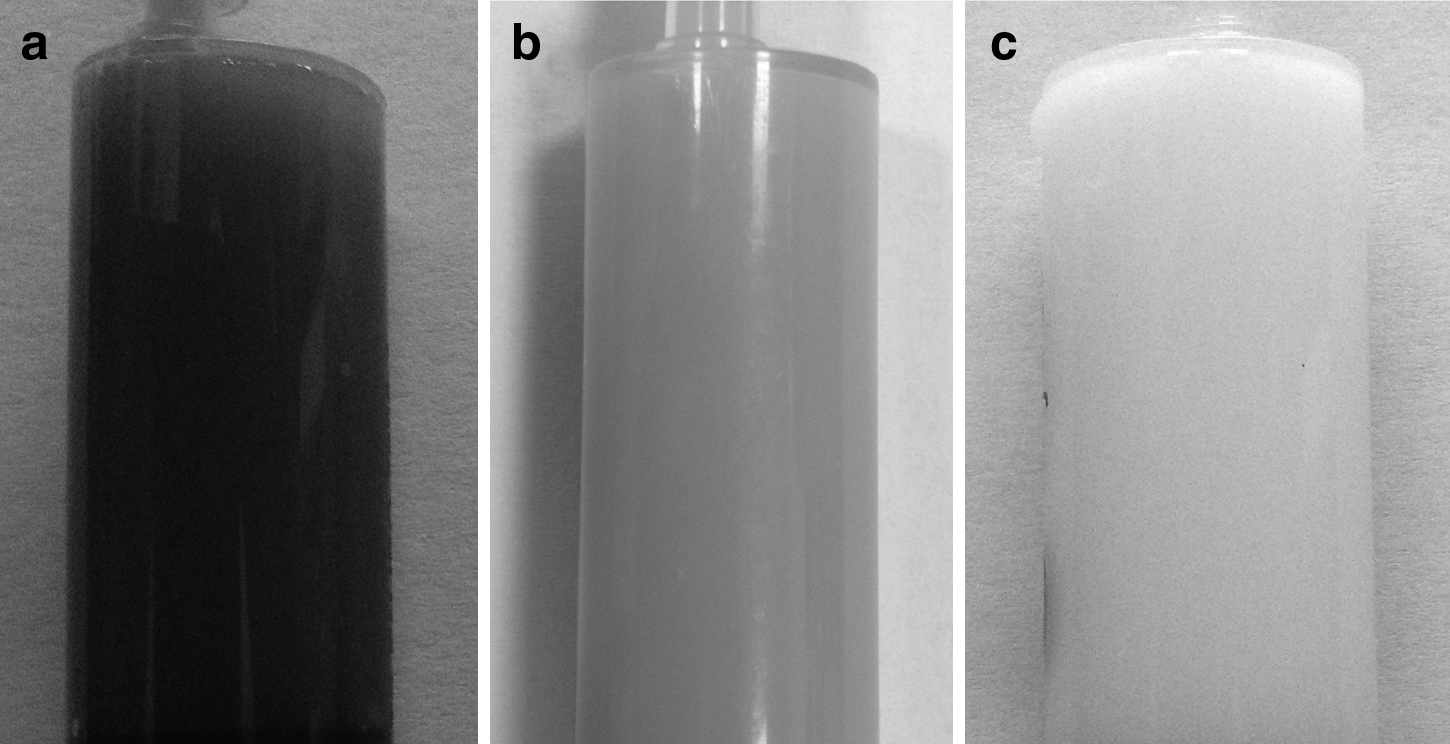
Changes in the color of breastmilk can be of concern for nursing mothers. When malignant causes are appropriately ruled out, brown-colored breastmilk usually results from an obvious or subtle hemorrhage of the areola or nipples, both of which cause pain during suckling. 3 However, there is another distinctly uncommon condition termed "rusty-pipe syndrome." The condition is painless and remains unnoticed unless the mother is expressing the milk. It is commonly bilateral, and most cases begin at birth or in early lactation. It is thought to be due to the delicate network of capillaries, which get traumatized easily and result in blood leaking into breast secretions. To continue breastfeeding is recommended as the condition is self-limited, and most cases clear within the first week. 4
During our search for the name of this condition, we have encountered only one report 4 in the MedLine literature database to describe this benign and self-limited condition. We thought it would be appropriate to bring it to the attention of staff engaged in breastfeeding of newborn infants.