




Abstract
Abstract
Background:
It is well known that breast milk is the best nutritional source for infant growth. However, there has been no information about the quality of breast milk from individuals who daily consume a trans fatty acid (TFA)-enriched diet.
Subjects and Methods:
We performed compositional and functional analyses with breast milk from lactating mothers, in terms of lipid content and zebrafish embryo survivability, among individuals who daily consumed TFA-enriched food (n = 5), normal diet as control (n = 5), and powder formula (n = 5).
Results:
In lipid content of breast milk, the control group showed 2.5- and 4.5-fold higher cholesterol content than the TFA group and infant formula, respectively. The TFA group and infant formula showed 1.8- and 2.0-fold higher triglyceride (TG) than the control group. Moreover, the TFA group and formula showed 1.4- and 4.8-fold higher glucose levels compared with control. The TFA group also showed 25% lower protein content than control. Microinjection with breast milk (50 nL) from the TFA group showed significantly lower zebrafish embryo survivability (50% ± 4%) compared with the control (66% ± 5%), whereas microinjection with formula showed the lowest survivability (39% ± 5%) with the slowest developmental speed. Immunodetection revealed that breast milk from the TFA group showed smaller-sized apoA-I (25.5 ± 0.6 kDa) than that from the control group (27.5 ± 1.5 kDa), whereas formula did not contain apoA-I. Larger apoA-I size in breast milk was directly associated with higher embryo survivability.
Conclusions:
Breast milk from the TFA group showed increased TG and loss of cholesterol, lactalbumin (14 kDa), and apoA-I proteins, resulting in functional impairment of development and growth.
Introduction
H
Trans fatty acid (TFA) is an artificial and hydrogenated unsaturated fatty acid with deleterious effects on various aspects of human health, 5 including cardiovascular toxicity, 6 neurotoxicity, 7 and embryonic toxicity. 8 High TFA content is also associated with increased risk of cancers,9,10 such as human breast and colorectal cancers, and teratogenicity. 11 A Canadian study observed that the total TFA content of women's breast milk was reduced in response to mandatory TFA labeling regulations and recommendations. 12 The study suggests that TFA consumption by lactating mothers is directly related to increased TFA content in breast milk. However, change of specific nutritional composition and bioactive factors have not been characterized in breast milk from those who consumed TFA frequently.
Apolipoprotein A-I (apoA-I) is the principal protein behind the beneficial functions of high-density lipoprotein (HDL), which has potent antioxidant, anti-inflammatory, and antiatherosclerotic activities in blood. 13 ApoA-I is found in human breast milk, 14 although the reason why is still unknown. Since apoA-I is a major protein of HDL, which participates in reverse cholesterol transport in blood, it is possible that apoA-I is a cholesterol carrier in breast milk and provides antioxidant ability.
Although many studies have analyzed the ingredients of breast milk, there has been no report on embryo growth in the context of nutrition. This study investigated differences in the quality of breast milk based on nutritional composition and pollutant exposure, especially in breast milk from trans fat-consuming women. We compared breast milk in terms of macronutrient composition, enzyme activity, embryo survivability, and embryo development.
Subjects and Methods
Recruiting of breast milk donor
Control breast milk was obtained from healthy lactating women (average age 31 ± 6 years, n = 5) volunteers in the Seoul Metropolitan area, South Korea. The TFA group (average age 32 ± 3 years, n = 5), who lived in Seoul Metropolitan area, consumed TFA-enriched food daily, at least two-serving size, such as French fries and processed foods, before and during pregnancy and lactation period.
All lactating women consumed a typical Korean diet, which is enriched with rice and vegetables, and no changes in dietary patterns were observed in the past 3 years based on the survey. The questionnaire was a survey for the food frequency per week. The TFA group consumed at least three food items containing trans fat per day and five times per week. As shown in the Supplementary Table S1 (Supplementary Data are available online at www.liebertpub.com/bfm), average consumption of trans fat was 8.3 ± 0.9 g per week in the TFA group. TFA consumption per week was maintained for 6 months before the survey. The questionnaire was a survey for the food frequency per week. Informed consent was obtained from all participants before enrollment in the study, and the Institutional Review Board at Yeungnam University (Gyeongsan, South Korea) approved the protocol (IRB #7002016-A-2015-043).
Quantification of lipids, glucose, and proteins in breast milk
Breast milk was obtained and stored at −70°C without further dilution or concentration until analysis. Breast milk (around 100 mL) was collected from both breasts from each mother and then mixed well and aliquoted into 1 mL aliquots. We did not homogenize breast milk. Aliquots were stored in a −80°C freezer until analysis. Once thawed, aliquots were not refrozen.
Commercially available protein powder formula was dissolved in water as recommended by the manufacturer. Total cholesterol (TC) and triglycerides (TGs) were determined in breast milk and formula without further dilution using commercially available assay kits (cholesterol, T-CHO, and triglycerides, Cleantech TS-S; Wako Pure Chemical). Glucose level was measured using a commercially available assay kit (Asan Pharmaceutical), as in our previous report. 15
SDS-PAGE and western blot
Protein compositions of breast milk were compared by sodium dodecyl sulfate–polyacrylamide gel electrophoresis (SDS-PAGE) under the same dilution of phosphate-buffered saline, and the bands were visualized by Coomassie blue staining.
Total protein compositions and apolipoprotein A-I (apoA-I) contents were compared through SDS-PAGE with identical protein loading quantities (5 μg of total protein per lane) from breast milk, and expression levels of apoA-I were analyzed through immunodetection. Anti-human apoA-I antibody (ab7613; Abcam) was used to detect the expression level. Relative molecular weight size and band intensity (BI) were compared through band scanning with Chemi Doc® XR (Bio-Rad) using Quantity One software (version 4.5.2). The BI was compared by Student's t-test using the SPSS program (version 14.0; SPSS, Inc.) from three independent blots.
Zebrafish and embryos
Wild-type zebrafish and embryos were maintained according to standard protocols. 16 Zebrafish maintenance and experimental procedures were approved by the Committee of Animal Care and Use of Yeungnam University (Gyeongsan, Korea). Zebrafish and embryos were maintained in a system cage (3-L volume acrylic tank) and six-well plates, respectively, at 28°C during treatment under a 14-hour light:10-hour dark cycle.
Microinjection of zebrafish embryos
To compare antioxidant and anti-inflammatory activities between the Transfat group and control group, breast milk was injected into zebrafish embryos, as in our previous report. 17 Embryos at 1 day postfertilization (dpf) were individually microinjected using a pneumatic picopump (PV820; World Precision Instruments) equipped with a magnetic manipulator (MM33; Kantec) and a pulled microcapillary pipette-using device (PC-10; Narishigen). To minimize bias, injections were performed at the same position on each yolk. Filter-sterilized solution of each breast milk sample (50 nL) was injected into flasks of embryos as in our previous report.
We repeated injection experiments five times with each individual breast milk sample for more than 100 eggs for control and Transfat group to get reliable results. Following injection, live embryos were observed under a stereomicroscope (Motic SMZ 168, Hong Kong) and photographed using a Motic cam2300 CCD camera. Correlations of embryo survival between apoA-I size, cholesterol, and TG content were analyzed by regression analysis using Sigma Plot (Systat Software, Inc.) through polynomial equation linear regression.
Imaging of reactive oxygen species
After injection with breast milk, changes in reactive oxygen species (ROS) levels in larvae were imaged by dihydroethidium (DHE; cat #37291; BioChemika) staining, as previously described. 18 Images were obtained by fluorescence microscopy (Ex = 588 nm and Em = 605 nm) on a Nikon Eclipse TE2000 Instrument. To avoid bias, red fluorescence was measured in the trunk area away from the injection site. Quantification of the stained area was carried out through computer-assisted morphometry using Image Proplus software (version 4.5.1.22; Media Cybernetics).
Statistical analysis
All data are expressed as the mean ± standard deviation from at least three independent experiments with duplicate samples. In comparison with three groups, data in the same group were evaluated through one-way analysis of variance using SPSS (version 14.0;), and differences between the means were assessed using Duncan's multiple-range test. Data comparisons for band size and intensity from western blots were assessed by Student's t-test using the SPSS program (version 14.0; SPSS, Inc.) between two groups. Statistical significance was defined as p < 0.05.
Results
Composition analysis
Breast milk from the control group showed a total cholesterol concentration of 55 ± 25 mg/dL, whereas breast milk from the TFA group and formula showed total cholesterol concentrations of 22 ± 9 and 11 ± 6 mg/dL, respectively, as shown in Figure 1A. Infant formula showed the highest triglyceride level around 3,212 ± 463 mg/dL, whereas breast milk from the control group showed a triglyceride level of 1,564 ± 786 mg/dL. Breast milk from the TFA group showed a 1.8-fold higher TG level around 2,841 ± 1107 mg/dL (Fig. 1B), suggesting that TFA consumption was directly associated with higher secretion of TGs into breast milk.
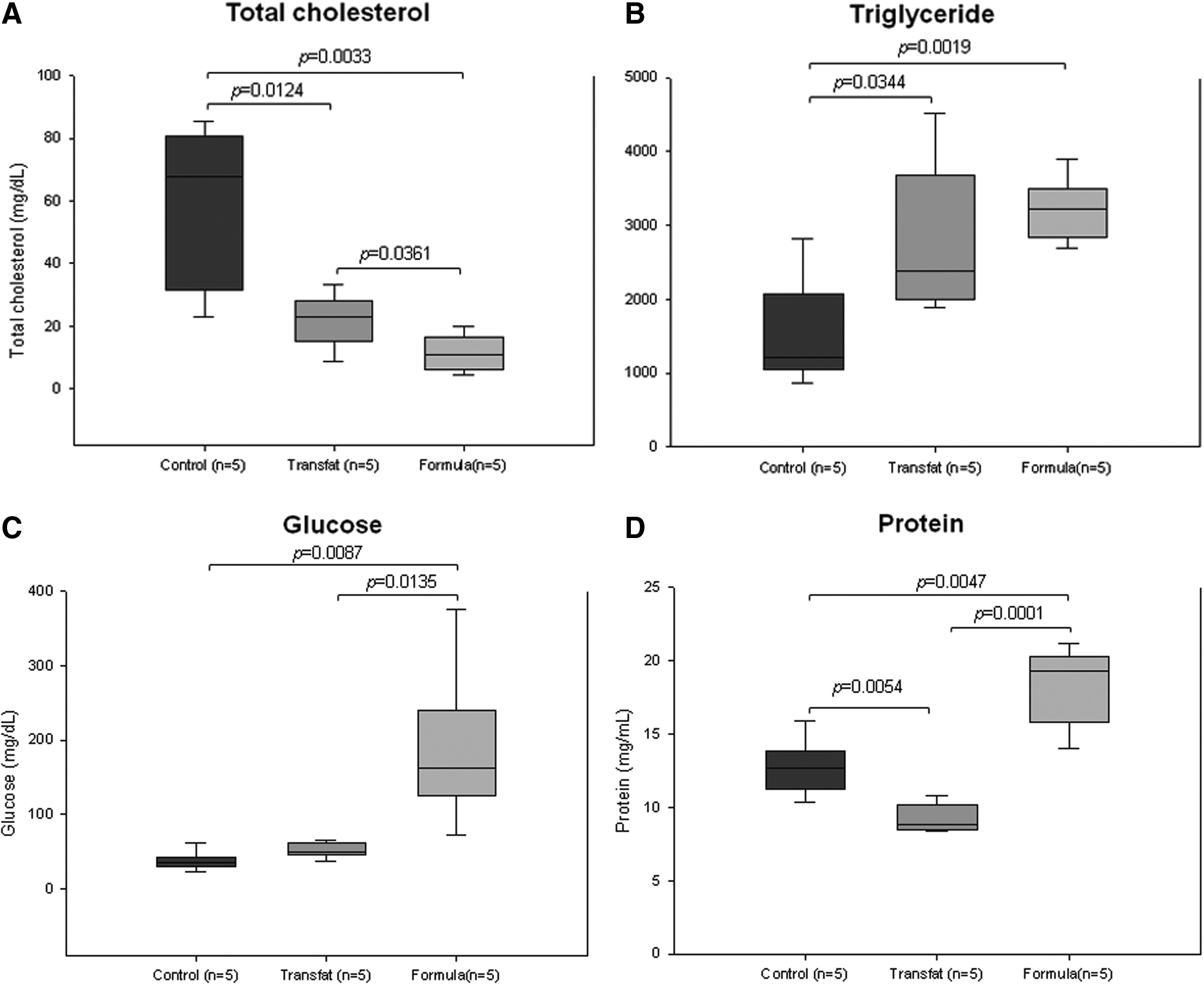
Compositional analysis of breast milk from control and TFA groups and formula. Total cholesterol
Glucose content of breast milk was similar between the control and TFA groups, around 39–53 mg/dL. However, infant formula showed around fivefold higher glucose content, 190 ± 113 mg/dL (Fig. 1C). Breast milk from the TFA group showed the lowest content of total proteins, around 9 mg/mL, whereas formula showed twofold higher protein content (Fig. 1D). As formula is made from plant-based oil and whey protein, it is enriched in ω-6 fatty acid and milk proteins such as casein. Shortly, commercially available formula was found to contain higher triglyceride and glucose contents, but a remarkably lower cholesterol level than breast milk due to its vegetable oil-derived production.
Embryo survivability and developmental speed
As shown in Figure 2A, at 8 hours postinjection, the control breast milk group showed 84% survivability, whereas the TFA group and formula caused 77% and 62% survivability, respectively. At 48 hours postinjection, the control breast milk group showed 66% survivability, whereas the TFA group and formula caused 50% and 39% survivability, respectively. However, the noninjected group and H2O-injected group showed 88% and 79% of survival, respectively, at 48 hours postinjection. This result suggests that the difference in embryonic cell death occurring in early phase of postinjection depends on the breast milk and formula.
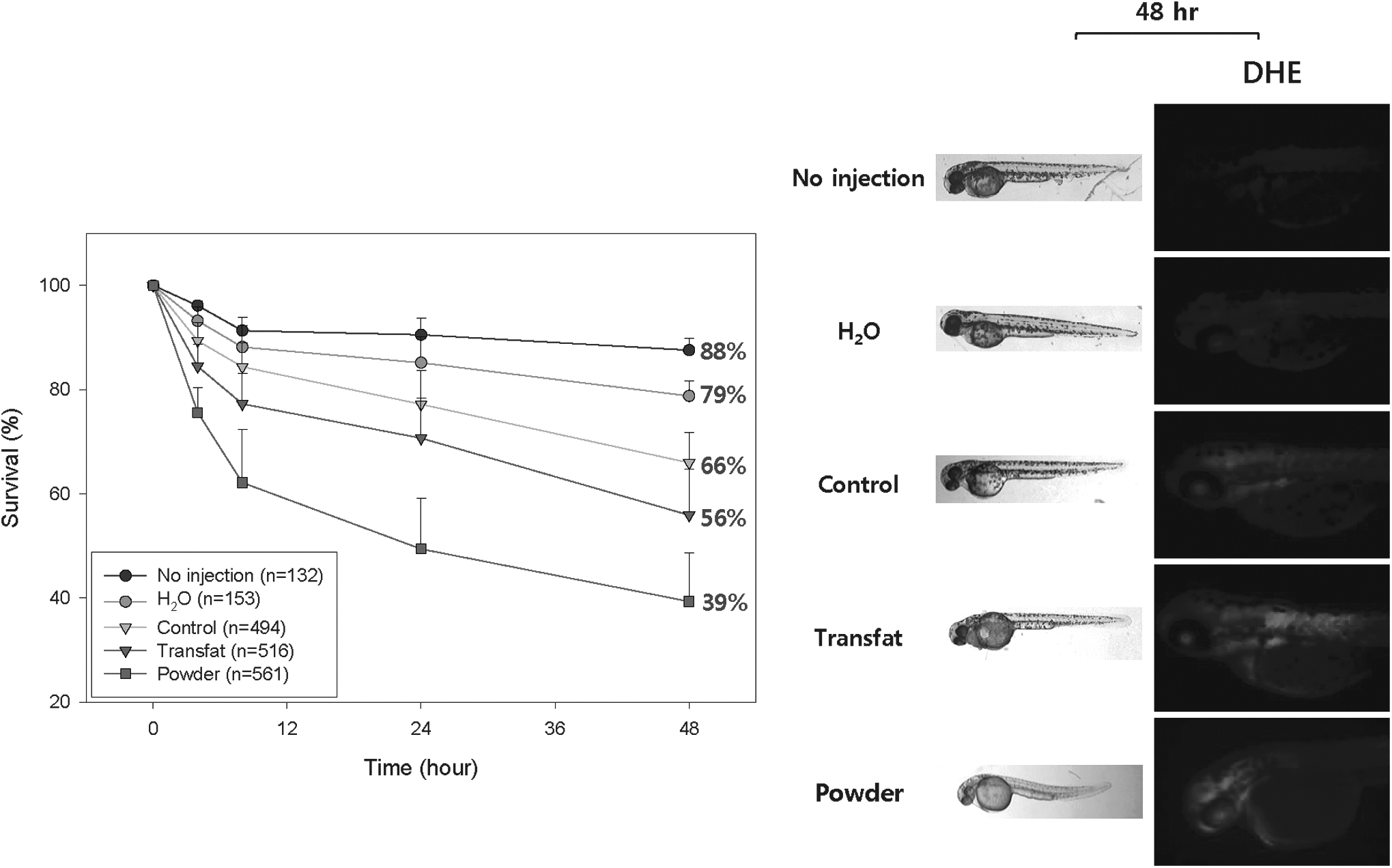
Embryo survivability after microinjection with breast milk from control and TFA groups and formula. DHE, dihydroethidium.
DHE staining revealed that control group breast milk-injected embryos showed the fastest developmental speed with the lowest ROS production, whereas the TFA group and infant formula showed slower developmental speeds and 1.5- and 1.6-fold higher ROS production than H2O-injected embryos (Fig. 2). Especially, the infant formula-injected group showed the highest mortality, lowest eye pigmentation, and slowest skeletal development as indicated by the arrowhead (Fig. 3).
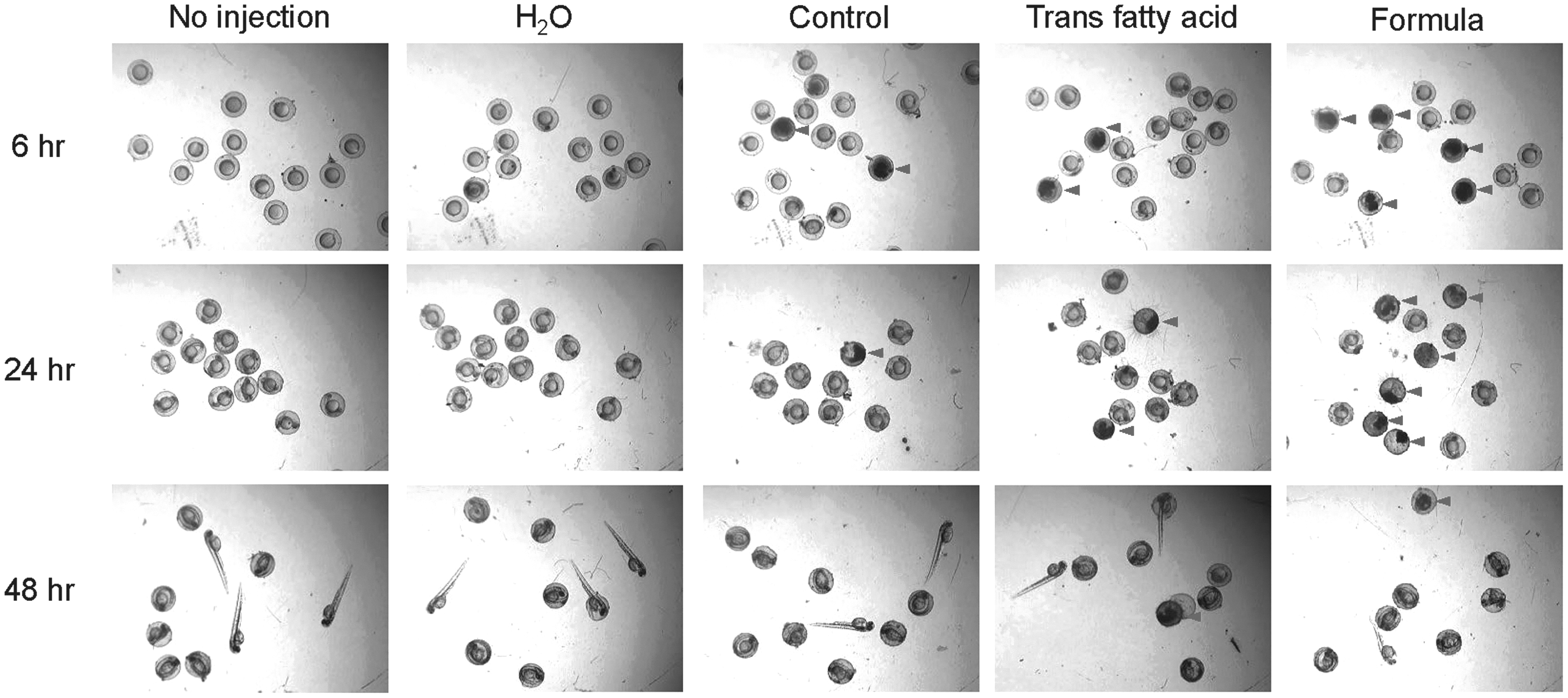
Extent of ROS production by microinjection with breast milk from control and TFA groups and formula. ROS, reactive oxygen species.
Electrophoretic analysis of protein composition
SDS-PAGE analysis detected totally different protein compositions between breast milk and infant formula, as shown in Figure 4. Control breast milk showed a stronger lactalbumin band (14 kDa) indicated by the arrowhead, while infant formula showed a strong casein band (20 kDa), which was not detected in breast milk. Especially, lactalbumin, which is enriched with essential amino acids for growth, showed no band for TFA breast milk and infant formula.
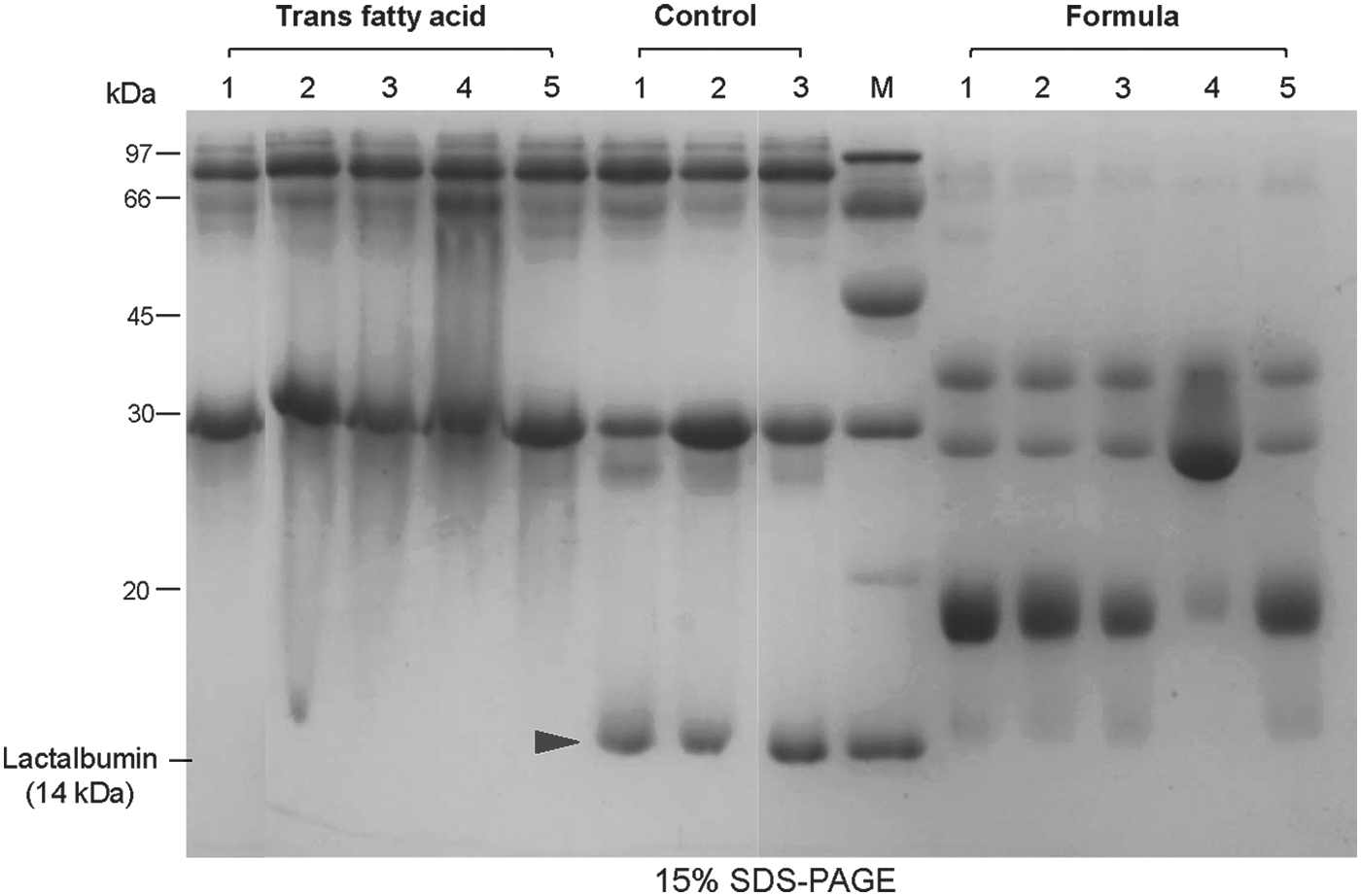
Electrophoretic profiles of breast milk from control and TFA groups and formula (15% SDS-PAGE). SDS-PAGE, sodium dodecyl sulfate–polyacrylamide gel electrophoresis.
Expression level of apoA-I
Western blotting with apoA-I antibody, which can recognize full-length apoA-I (28 kDa), detected a distinct band in 1/4-diluted breast milk from both the control and TFA groups, as shown in Figure 5A. However, formula did not show any apoA-I band as formula protein contains mostly whey protein. Densitometric analysis revealed that apoA-I from the TFA group had a band size of 26.4 ± 1.2 kDa, whereas that from the control group showed a band size of 28.7 ± 1.5 kDa, suggesting that putative modification or cleavage occurred in apoA-I from breast milk of the TFA group. More interestingly, embryo survivability was positively correlated with higher molecular weight of apoA-I, as shown in Figure 5B; larger apoA-I in breast milk correlated well with higher survivability.
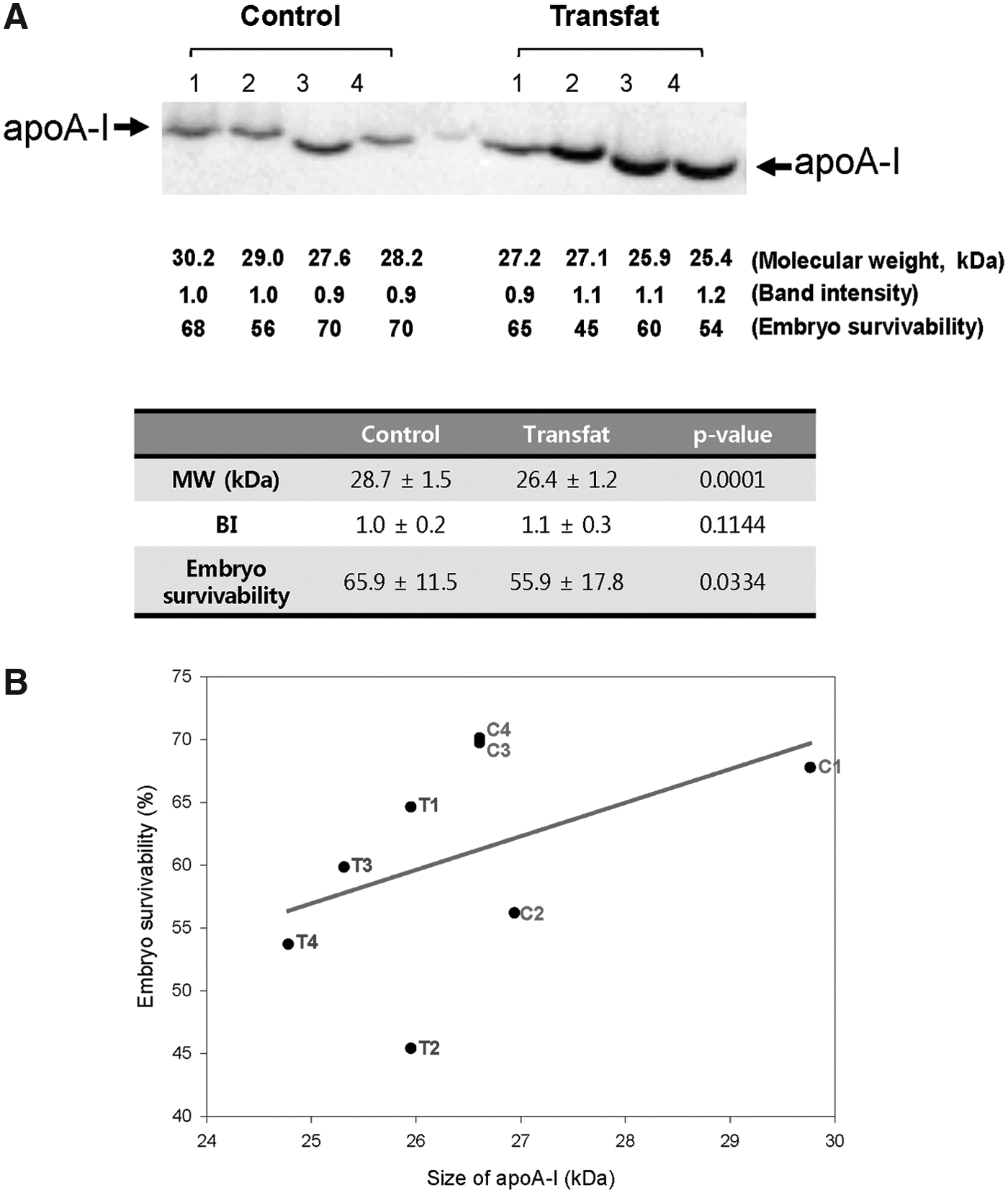
Immunodetection of apoA-I for size comparison between control and TFA groups
Influential factors for embryo survivability
Higher cholesterol content in breast milk was well associated with higher embryo survivability and faster developmental speed, as shown in Figure 6A. However, embryo survivability was negatively correlated with TG level in breast milk, as shown in Figure 6B. Although powder formula showed the highest contents of TG, glucose, and proteins, formula showed the lowest survivability. These results suggest that cholesterol and apoA-I in breast milk are essential for neonate growth and development since they are directly associated with embryo survivability (Figs. 1 and 2).

Correlations of cholesterol
Discussion
It has been well established that breast milk is important to optimize not only infant growth and development but also immunization and anti-infectious activity. Although breast milk compositions were roughly identified, 19 it is still unknown what kind of macronutrients are important for growth and defense activity. In addition, the quality of breast milk might differ depending on the mother's lifestyle, such as smoking status, dietary habits such as trans fat consumption, 20 and exposure to environmental pollutants, such as particulate matter, phthalate, and bisphenol. Therefore, it is critical to monitor the quality of breast milk using an appropriate evaluation system.
In the current study, breast milk from the TFA group showed remarkably lower cholesterol and protein contents than that from the control (Fig. 1) and resulted in lower survivability of zebrafish embryos with higher ROS production (Figs. 2 and 3). Breast milk from the TFA group showed increased TG levels and loss of lactalbumin (Fig. 4). Reduced cholesterol in breast milk from the TFA group has been reported previously, 21 in which human subjects showed reduced serum cholesterol upon TFA consumption for 4 weeks. Increased TG levels in breast milk upon TFA consumption is in good agreement with our previous report, which observed that TFA consumption for 20 weeks increased serum TG levels and fatty liver changes with adverse effects on lipoprotein metabolism. The TFA group also showed less and smaller-sized apoA-I in breast milk (Fig. 5) compared with the control.
ApoA-I is the major protein of HDL and important for maintaining antioxidant and anti-inflammatory properties in serum. 22 Lactalbumin consists of many peptides having antibacterial and antihypertensive effects. 23 Zebrafish embryo survivability was directly correlated with apoA-I size (Fig. 5), and breast milk from the TFA group containing smaller-sized apoA-I resulted in greater embryo death. This result is in good agreement with our previous report, which found that elderly subjects (71 ± 4 years old) showed functionally impaired and truncated apoA-I, as well as lower cholesterol levels than young and healthy control subjects (22 ± 2 years old). 24 These reports suggest that the functionality and properties of apoA-I in serum are reproduced in breast milk in terms of lipid and lipoprotein levels. We reported that smoker HDL is functionally and structurally modified, resulting in atherogenesis and diabetes. We also reported that apoA-I modified by oxidation and glycation through smoking causes inflammatory death of zebrafish embryos and more rapid atherogenesis. 25 Glycated apoA-I is more aggregated and fragmented with altered electromobility. 26
Interestingly, a proteomic approach revealed a considerable amount of apoA-I in breast milk, although its precise role remains unknown. 14 In addition to cholesterol delivery, apoA-I has antiviral and antibacterial activities in blood.27,28 In the current study, higher apoA-I content and larger apoA-I size were directly associated with embryo survivability. To the best of our knowledge, this is the first report showing that TFA consumption can lower cholesterol and apoA-I size in breast milk.
Breast milk contains considerable amounts of cholesterol, oleic acid, and essential fatty acids, whereas formula does not since its lipids are made from plant oil lacking cholesterol and long-chain polyunsaturated fatty acids. 1 Higher cholesterol in breast milk is associated with a normal level of serum cholesterol in adults since breast milk-fed infants show a threefold lower cholesterol synthesis rate than formula-fed infants. 29 A longitudinal study revealed that breast feeding is associated with 10% risk reduction for cardiovascular disease in adulthood. 30
High content of TFA is also associated with increased risk of cancer9,10 and teratogenicity. 11 The current study demonstrated an association between TFA consumption and slower developmental speed and lower embryo survivability (Figs. 2 and 3) through reduced cholesterol and apoA-I contents. Modification of apoA-I is directly related to production of dysfunctional HDL, which has more atherogenic and inflammatory properties that exacerbate cellular senescence. 31
In conclusion, the current findings show that dietary habits such as TFA consumption can influence the quality of breast milk by lowering cholesterol and protein contents while raising TG levels. Loss of lactalbumin and smaller-sized apoA-I is well correlated with lower embryo survivability. Further studies are necessary to investigate the molecular mechanism by which TFA consumption contributes to loss of cholesterol and apoA-I secretion in breast milk.
Footnotes
Acknowledgments
This work was supported by a grant from the Mid-Carrier Researcher Program (2014-11049455) and Medical Research Center Program (2015R1A5A2009124) through the National Research Foundation (NRF), funded by the Ministry of Science, ICT, and Future Planning of Korea.
Disclosure Statement
No competing financial interests exist.
References
Supplementary Material
Please find the following supplemental material available below.
For Open Access articles published under a Creative Commons License, all supplemental material carries the same license as the article it is associated with.
For non-Open Access articles published, all supplemental material carries a non-exclusive license, and permission requests for re-use of supplemental material or any part of supplemental material shall be sent directly to the copyright owner as specified in the copyright notice associated with the article.
