




Abstract
Abstract
Background:
To determine the quality of breast milk (BM), we compared the functions of BM from ex-smokers and nonsmokers.
Subjects and Methods:
We analyzed the contents of lipids, glucose, and protein in BM from ex-smokers (10 cigarettes/day for 13 ± 3 years) as well as infant formula.
Results:
Nonsmokers' BM showed 2.4- and 1.4-fold higher cholesterol and protein contents, respectively, than BM from smokers. Infant formula contained almost no cholesterol, but did show remarkably higher glucose and triglyceride levels than BM. Microinjection of BM (50 nL) from nonsmokers and smokers into zebrafish embryos resulted in 59% and 44% survival, respectively, whereas formula injection resulted in 31% survival. The higher cholesterol and protein contents of BM were directly correlated with higher embryo survivability, suggesting that cholesterol content is directly and critically associated with growth of neonate infants. Smokers' BM contained smaller-sized apolipoproteinA-I (apoA-I) (24.4 ± 0.2 kDa) than BM from nonsmokers (26.7 ± 0.4 kDa), suggesting that putative modification and cleavage occurred in apoA-I. BM containing higher molecular weight apoA-I resulted in higher embryo survivability.
Conclusions:
Smoking before pregnancy can affect the composition and quality of BM, resulting in almost complete loss of cholesterol and protein, especially lactoferrin, lactalbumin, and apoA-I, accompanied by proteolytic degradation. These impairment effects of BM are associated with elevation of oxidative stress and lower embryo survivability.
Introduction
H
Incidence of cardiovascular disease (CVD) and diabetes is closely related with lipid metabolism and aging stress. 4 High-density lipoprotein (HDL) cholesterol is inversely correlated with incidence of CVD and has potent antioxidant and anti-inflammatory activities. 5 However, HDL can be transformed into dysfunctional HDL, which is more atherogenic, through induction of aging stress such as oxidation and glycation. 6
Apolipoprotein A-I (apoA-I) is the principal protein responsible for the beneficial functions of HDL, which include potent antioxidant, anti-inflammatory, and antiatherosclerotic activities in blood. 7 Interestingly, apoA-I is found in human BM. 8 Since apoA-I is the major protein of HDL, which participates in reverse cholesterol transport in blood, it is possible that apoA-I interacts with cholesterol in BM and provides antioxidant activity.
Smoking is a major stressor promoting HDL oxidation and glycation, resulting in loss of the beneficial functions of HDL. Recently, our research group reported that HDL from young smokers (22 ± 2 years old) contains a high amount of dysfunctional HDL with higher proportions of glycated and oxidized species. 9 Furthermore, apoA-I from smoker HDL shows severe truncation and multimerization with smaller HDL particles. These changes are very similar to the functional and structural properties of HDL from the elderly, as we reported previously.9,10
It is well known that maternal smoking is associated with small infant size and fetal growth restriction, 11 which are associated not only with perinatal mortality or morbidity, but also subsequent adult hypertension, atherosclerosis, diabetes, and metabolic disorders. 12 Maternal smoking in terms of both amount and duration is associated with reduced birth weight and gestational age, whereas parental smoking is associated with only slightly reduced birth weight. 13
To compare BM quality in a live animal model, we employed a zebrafish embryo model, as in our previous report. 14 Zebrafish have well-developed innate and acquired immune systems that are very similar to the mammalian immune system. 15 Zebrafish embryos are very useful for analyzing quality of BM through injection since they are externally fertilized, optically transparent, and larger in size with hundreds of eggs per laying.
This study was designed to investigate quality differences among BMs from various sources according to cigarette exposure, namely nonsmokers and ex-smokers, in lactating mothers. We compared BMs in terms of macronutrient composition, including lipid and protein contents, enzyme activity, embryo survivability, and embryo development.
Materials and Methods
Recruiting of BM donors
During July 2015 and December 2016, BMs were obtained from lactating women volunteers (aged 27–40 years) in the Daegu and Seoul metropolitan areas, South Korea. The smoker group had smoked 10 cigarettes daily for around 16 ± 5 years before pregnancy and quit smoking as soon as they learned of their pregnancy.
We excluded subjects who had consumed any prescribed drugs for treatment of hyperlipidemia, diabetes mellitus, or hypertension. All subjects had unremarkable medical records without illicit drug use or past history of systemic diseases. Informed consent was obtained from all participants before enrollment in the study, and the Institutional Review Board at Yeungnam University (Gyeongsan, South Korea) approved the protocol (IRB #7002016-A-2015-043).
Anthropometric analysis
Blood pressure was measured each morning at 2-week intervals by an Omron HBP-9020 (Kyoto, Japan). Height, body weight, body mass index (BMI), total body fat (%), total body fat mass (kg), and visceral fat mass (kg) were measured individually at the same time of day at 2-week intervals using an X-Scan Plus II Body Composition Analyzer (Jawon Medical, Gyeongsan, Korea), as in our previous report. 16
Quantification of lipids, glucose, and proteins
BM was obtained and stored in −70°C without further dilution or concentration until analysis. Commercially available protein powder formula was dissolved in water as recommended by the manufacturer. BM and formula without further dilution were assessed for total cholesterol (TC) and triglycerides (TG) using commercially available assay kits (cholesterol, T-CHO, and TG, Cleantech TS-S; Wako Pure Chemical, Osaka, Japan). Glucose level was measured using a commercially available assay kit (Asan Pharmaceutical, Hwasung, Korea).
Sodium dodecyl sulfate–polyacrylamide gel electrophoresis and western blotting
Protein compositions of individual BMs were compared by sodium dodecyl sulfate–polyacrylamide gel electrophoresis (SDS-PAGE) at the same dilution with PBS, and bands were visualized by Coomassie Blue staining.
Total protein compositions and apoA-I contents were compared through SDS-PAGE with identical protein loading quantities (5 μg of total protein per lane) from individual BMs, and expression levels of apolipoproteins were analyzed through immunodetection. Anti-human apoA-I antibodies (ab7613, ab33470, ab52945; Abcam, Cambridge, United Kingdom) were used to measure expression levels of apoA-I and N-terminal or C-terminal fragmentation. Relative molecular weight size and band intensity (BI) were compared through band scanning with ChemiDoc® XR (Bio-Rad) using Quantity One software (version 4.5.2).
Microinjection of zebrafish embryos
Wild-type zebrafish and embryos were maintained according to standard protocols. To compare antioxidant and anti-inflammatory activities between smokers and the control, BM was injected into zebrafish embryos, as in our previous report. 17 Embryos at 1 day postfertilization (dpf) were individually microinjected using a pneumatic picopump (PV820; World Precision Instruments, Sarasota, FL) equipped with a magnetic manipulator (MM33; Kantec, Bensenville, IL) and a pulled microcapillary pipette-using device (PC-10; Narishige, Tokyo, Japan). To minimize bias, injections were performed at the same position on each yolk. Filter-sterilized solution of BM and formula (50 nL) was injected into flasks of embryos. Following injection, live embryos were observed under a stereomicroscope (Motic SMZ 168; Hong Kong) and photographed using a Motic cam2300 CCD camera.
Imaging of reactive oxygen species
After injection, changes in reactive oxygen species (ROS) levels in larvae were imaged by Dihydroethidium (DHE; cat no. 37291; BioChemika) staining, as previously described. 18 Images were obtained by fluorescence microscopy (Ex = 588 nm and Em = 605 nm) on a Nikon Eclipse TE2000 instrument (Tokyo, Japan). To avoid bias, red fluorescence was measured in the trunk area away from the injection site. Quantification of the stained area was carried out through computer-assisted morphometry using Image-Pro Plus software (version 4.5.1.22; Media Cybernetics, Bethesda, MD).
Statistical analysis
All data are expressed as the mean ± standard deviation of at least three independent experiments with duplicate samples. Comparisons between results were made by Student's t-test using the SPSS program (version 12.0; SPSS, Inc., Chicago, IL). Statistical significance was defined as p < 0.05.
Results
Participants
As shown in Table 1, all participants had ordinary and nonhazardous jobs and were healthy with normal blood pressure levels. All participants had consumed a typical Korean diet, which is enriched with rice, vegetables, fish, and a small amount of meat for the past 5 years. Most participants rarely exercised, and their occupations were indoors. Therefore, exposure to air pollution was minimal, and dietary patterns were similar among all participants. Gender ratios of newborn babies from both groups were similar.
At least 30 minutes exercise per times with moderate intensity.
Nutrition: typical Korean diet, which is enriched with rice, vegetables, fish, and a small amount of meat.
Absence of disease: known and diagnosed disease at participated period.
p < 0.05; **p < 0.01 versus control.
BP, blood pressure; BMI, body mass index; F, female; M, male.
Higher body fat in smokers
From the anthropometric analysis, as shown in Table 1, smokers had remarkably higher BMIs than nonsmokers despite both groups being of similar age with normal blood pressure levels. Smokers showed 1.4-fold higher total body fat percentage and twofold higher visceral fat mass than the control group. There was no significant difference in either birth weight or gestational age between the groups.
Compositional analysis
The nonsmoker group had a TC content of 60 ± 21 mg/dL, whereas the smoker group and formula group had TC contents of 25 ± 10 and 11 ± 6 mg/dL, respectively, as shown in Figure 1A. The formula group had the highest triglyceride level (around 3,212 ± 231 mg/dL), whereas the nonsmoker group had a triglyceride level of 1,494 ± 1,042 mg/dL. The smoker group had the second highest triglyceride level (2,618 ± 602 mg/dL), which was almost twofold higher than that of the nonsmoker group (control), as shown in Figure 1B. Glucose level was very similar between the smoker and nonsmoker groups (around 44–51 mg/dL). However, the glucose content of infant formula was 189 ± 56 mg/dL, which was fivefold higher than that of BM (Fig. 1C). The smoker group had significantly lower protein content (around 8 ± 1 mg/mL) than the control group (around 12 ± 2 mg/mL), whereas powder formula had 1.8-fold higher protein content than BM. In summary, powder formula contained higher triglyceride and glucose contents than BM, but remarkably lower cholesterol content. These compositional differences between BM and formula might be due to vegetable oil, which is enriched in ω-6 without cholesterol.
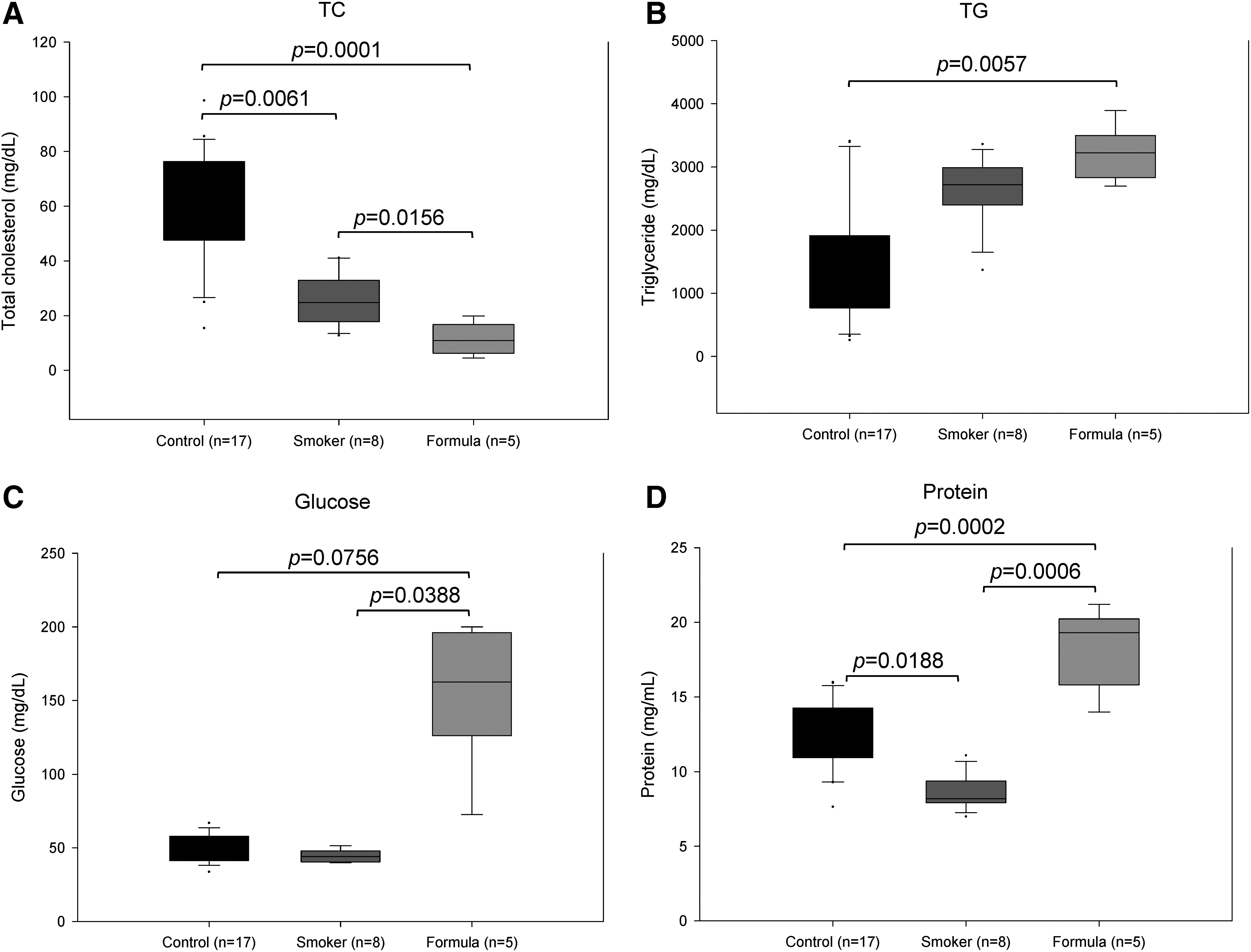
Compositional analysis of BM from nonsmokers (control) and smokers as well as formula. Total cholesterol
Embryo survivability
As shown in Figure 2A, BM from nonsmokers resulted in 75% survivability at 8 hours postinjection, whereas BM from smokers and formula resulted in 50% and 55% survival rates, respectively. At 48 hours postinjection, BM from nonsmokers resulted in 60% survivability, whereas BM from smokers and formula resulted in 39% and 35% survival rates, respectively. This result suggests that the difference in embryo survivability can be traced to the early phase of postinjection.
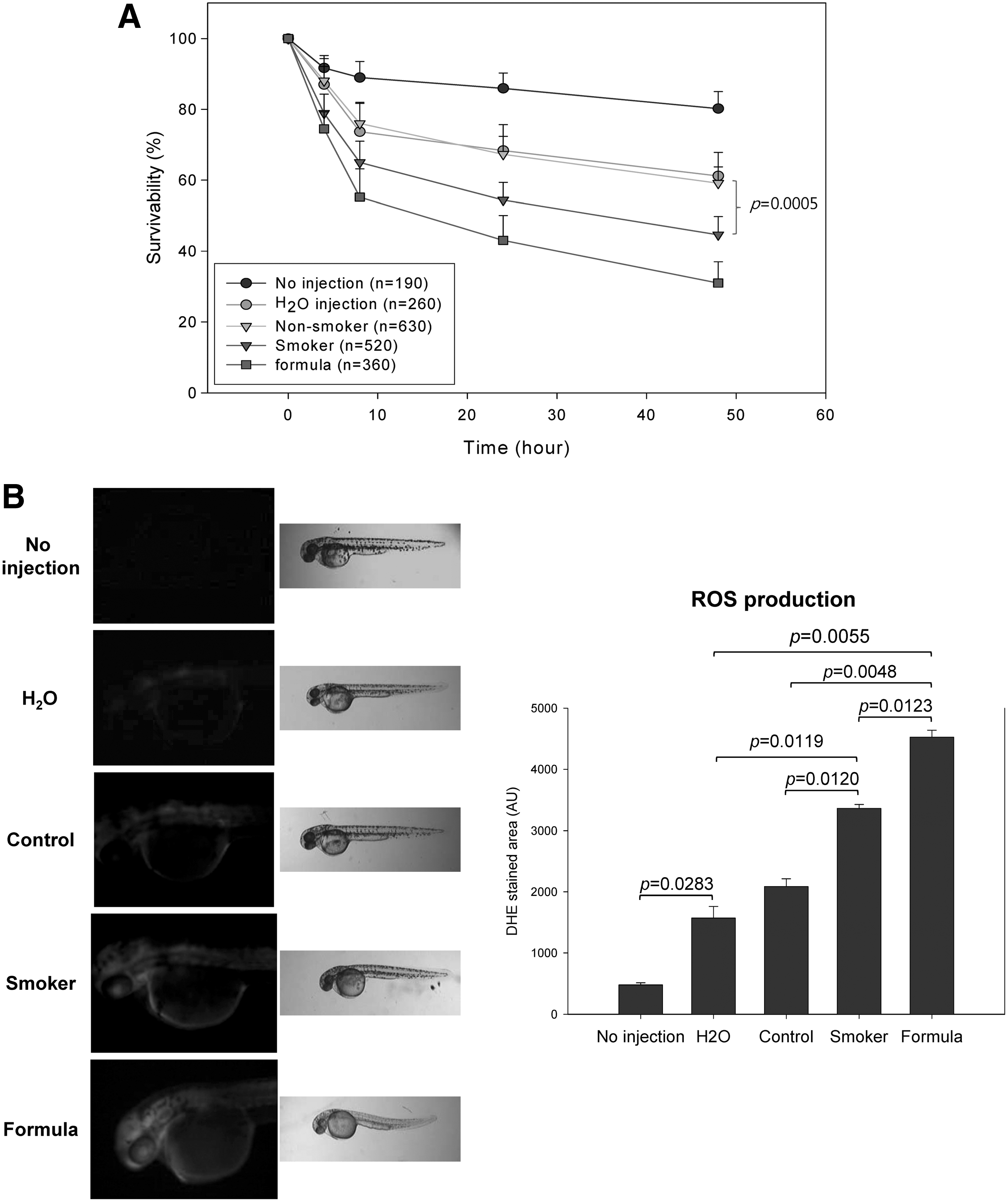
Embryo survivability after microinjection with BM from nonsmokers (control) and smokers as well as formula
Developmental speed and ROS production
As shown in Figure 2B, DHE staining revealed that control BM-injected embryos showed the fastest developmental speed and lowest ROS production, whereas smokers' BM and infant formula were associated with slower developmental speed as well as 1.5- and 1.6-fold higher ROS production in embryos than the control (H2O-injected embryos). Especially, the formula group showed the slowest skeletal development speed and least eye pigmentation (photo of Fig. 2B).
Electrophoretic analysis of protein composition
SDS-PAGE analysis revealed totally different protein compositions between BM and infant formula, as shown in Figure 3. BM showed stronger lactoferrin (80 kDa) and lactalbumin (14 kDa) bands, whereas infant formula showed a stronger casein band (20 kDa), which was not detected in BM. Especially, the nonsmoker group showed a 1.9-fold stronger lactoferrin band than the smoker group. Lactalbumin, which is enriched with essential amino acids for growth, did not show bands in the smoker and infant formula groups, as indicated by an arrow head. Control BM showed an apoA-I band (27 kDa), whereas the smoker and infant formula groups did not show an apoA-I band. From the densitometric analysis, BI of smokers' apoA-I was 46% less than that of control, whereas formula showed no apoA-I (Inset table of Fig. 3). These results suggest that smoking is associated with reduced amounts of apoA-I and lactoferrin in BM.
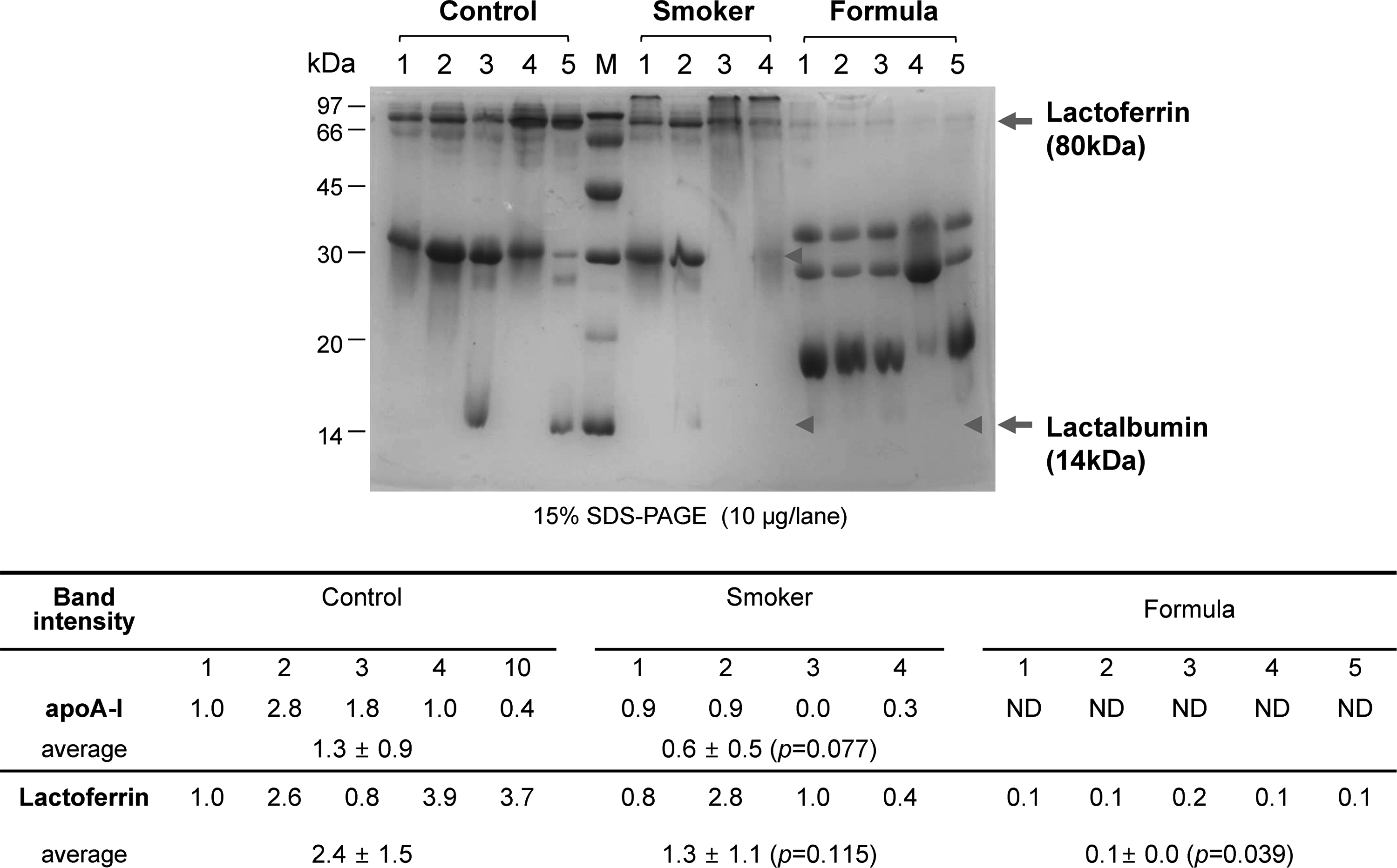
Electrophoretic profiles of BM from nonsmokers (control) and smokers as well as formula (15% SDS-PAGE). ND, not detected; SDS-PAGE, sodium dodecyl sulfate–polyacrylamide gel electrophoresis.
Contents of apoA-I
ApoA-I (28 kDa in human serum) was detected as a distinct band in 1/4-diluted BM from both smokers and nonsmokers, as shown in Figure 4A. Densitometric analysis revealed that apoA-I from smokers showed a band size of 24.4 ± 0.2 kDa, whereas the control group showed a band size of 26.7 ± 0.4 kDa, suggesting that apoA-I from smokers' BM might have undergone putative modification or cleavage.
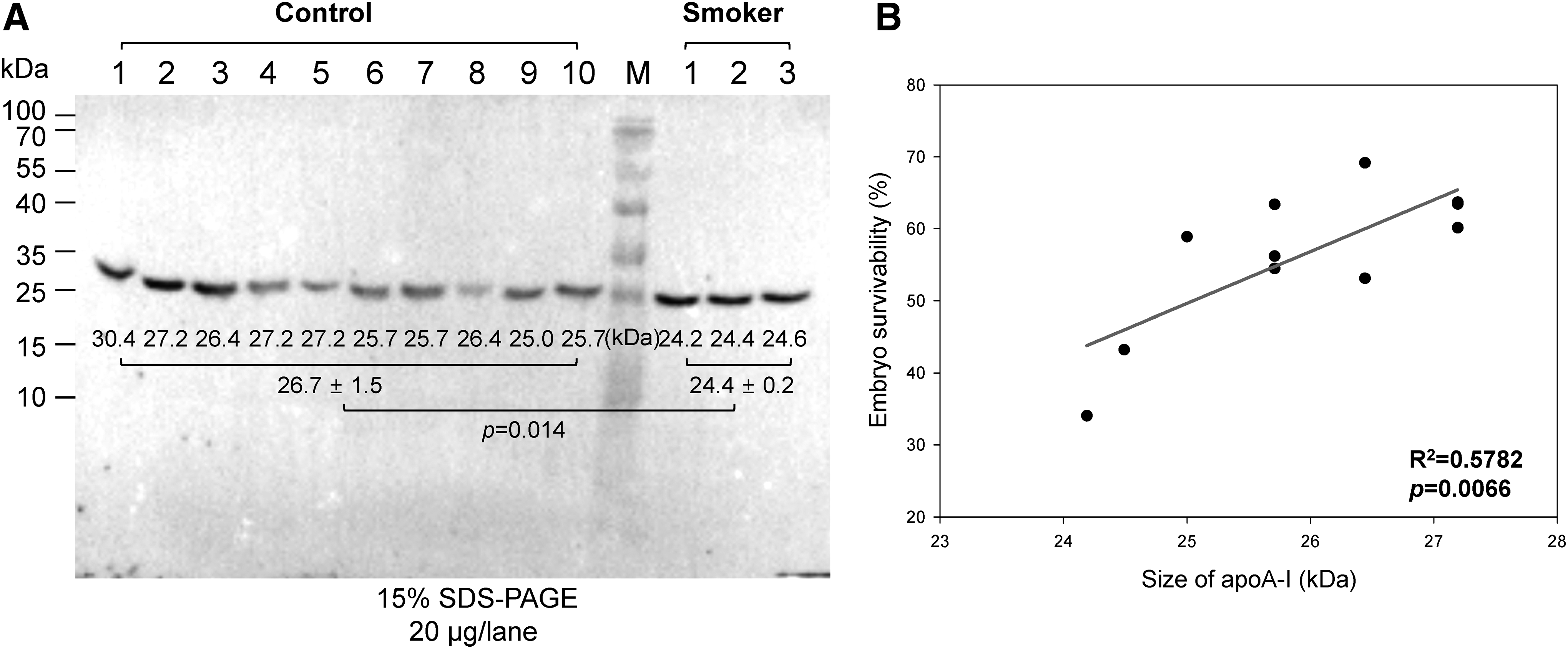
Immunodetection of apoA-I for size comparison between control and smokers' BM
Western blotting using apoA-I antibody, which recognizes full-length apoA-I, revealed the control group had larger-sized apoA-I (26.7 ± 0.4 kDa) than the smoker group (24.4 ± 0.2 kDa, p = 0.0014). Although the reason why is unclear, apoA-I from smokers was smaller than that from the control group due to putative cleavage at the N- or C-terminus. More interestingly, embryo survivability was positively correlated with higher molecular weight apoA-I, as shown in Figure 4B. However, formula did not show an apoA-I band, as shown in Figure 4B, since formula protein originated almost entirely from whey.
Influential factors for embryo survivability
The higher cholesterol content in BM was strongly associated with improved embryo survivability and faster developmental speed. As shown in Figure 5, embryo survivability was positively correlated with cholesterol content and negatively correlated with systolic blood pressure of lactating women, whereas triglyceride and glucose levels showed no correlation (data not shown).
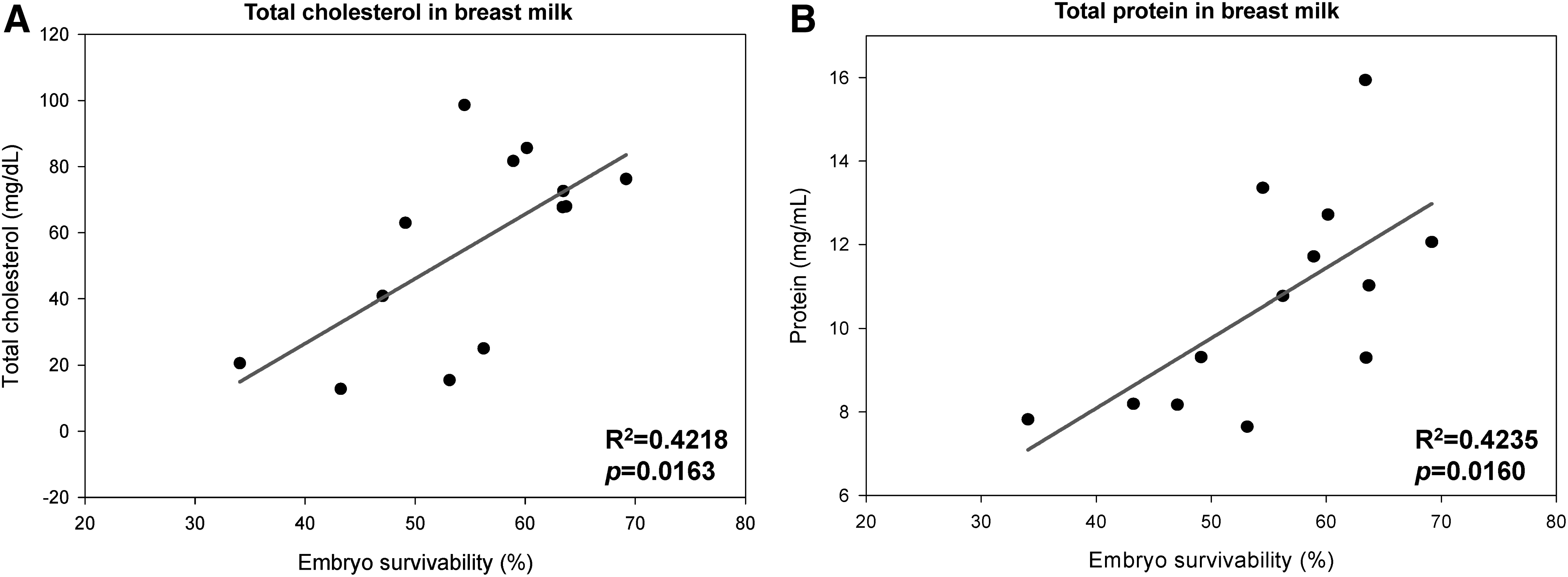
Correlations of cholesterol
Although powder formulas contained the highest amounts of TG, glucose, and protein, formulas showed the lowest rates of survivability. These results suggest that cholesterol in BM is essential for neonatal growth and development, as cholesterol content is essential to embryo survivability (Figs. 1 and 5A). Interestingly, the higher protein content of BM was associated with higher embryo survivability (Fig. 5B).
Discussion
It is well established that BM is nutritionally important to not only optimal infant growth and development, but also immunization and anti-infectious activity. Although the macrocomposition of BM has been identified, 19 the types of micronutrients important for growth and anti-inflammatory activity remain to be identified. It is plausible that the quality of BM, specifically its nutritional composition, is highly dependent on the mother's lifestyle, including smoking and dietary habits. Furthermore, exposure to environmental pollutants such as particulate matter, phthalate, and bisphenol can vary between individuals depending on lifestyle. As quality of BM differs according to nutritional status and environmental exposure, it is necessary to monitor the quality of BM using an appropriate evaluation system. Based on our current results, it is recommended that lactating women with a history of smoking and/or exposure to environmental pollutants such as phthalate, bisphenol, and particulate matter (PM10 and PM2.5) take a quality test during their breast feeding period to ensure functionality.
In the current study, smokers' BM showed lower cholesterol and protein contents (Fig. 1), although smokers had a higher body fat percentage and visceral fat mass than the control group (Table 1). Microinjection of smokers' BM resulted in lower survivability of zebrafish embryos along with higher ROS production (Fig. 2). Smokers showed less lactoferrin, lactalbumin, and apoA-I contents in BM (Fig. 3) as well as smaller-sized apoA-I (Fig. 4) than the control. Lactalbumin is an origination of many peptides with antibacterial and antihypertension effects. 20 ApoA-I is the major protein of HDL, which has potent anti-inflammatory and anti-infectious effects. 7 Zebrafish embryo survivability was directly correlated with apoA-I size (Fig. 4), and BM containing smaller-sized apoA-I resulted in greater embryo death. Embryo survivability was directly associated with higher cholesterol and protein contents as well as larger apoA-I size in BM (Fig. 5). Higher cholesterol content and full-sized apoA-I in BM were shown to be directly correlated with higher embryo survivability through maintenance of higher quality BM. Smokers' BM showed lower cholesterol content, smaller apoA-I size, and lower apoA-I quantity, resulting in reduced embryo survivability. These results are in good agreement with our previous report that elderly subjects (71 ± 4 years old) show functionally impaired and C-terminally truncated apoA-I in HDL along with less cholesterol than young and healthy subjects (22 ± 2 years old). ApoA-I is the major protein in HDL and has many beneficial functions such as antioxidant and anti-inflammatory activities. BM contains considerable amounts of cholesterol and apoA-I, 8 although the exact functions of apoA-I in BM are unknown. Taken together, apoA-I or an HDL-like molecule in BM might play a putative role in growth of neonates.
BM contains considerable amounts of cholesterol, oleic acid, and essential fatty acids. On the other hand, formula does not contain cholesterol or long-chain polyunsaturated fatty acids since its lipids are derived from plant oil. 1 The higher cholesterol content of BM is associated with normal levels of serum cholesterol in adults, as BM-fed infants show a threefold lower rate of cholesterol synthesis than formula-fed infants. 21 A longitudinal study revealed that breast feeding is associated with 10% reduction of CVD risk in adulthood. 22
A prior study comparing milk from Taiwanese mothers to infant formula showed that human BM contains a more desirable ratio of ω-6/ω-3 fatty acids than infant formula. The study found that although saturated fatty acids are predominant in BM and formula, infant formula has at least threefold higher saturated fatty acid content than human BM. 23 Furthermore, formula is enriched with ω-6 fatty acids since it is produced from plant-based oil, 2 suggesting it is more inflammatory. Our group reported that ω-6 fatty acids are more atherogenic through impairment of HDL functions and structural stability. 24 Our recent article showed that ω-6-rHDL and ω-3-rHDL have different physiological activities in terms of atherosclerosis, inflammation, and cellular senescence through impairment of HDL function along with smaller particle size. ω-3-rHDL shows atheroprotective and embryoprotective activities in human cells and zebrafish, which is in good agreement with our current results that formula-injected embryos showed the lowest survivability (Fig. 2).
We previously reported that apoA-I modified by oxidation and glycation can increase inflammatory death of zebrafish embryos as well as atherogenesis. 14 Glycated apoA-I was shown to be more aggregated and fragmented with altered electromobility. 25 In an animal study, serum apoA-I content was shown to be remarkably reduced in acute phase, whereas albumin content was not. 26 Interestingly, proteomic analysis revealed a considerable amount of apoA-I in BM, although its precise role remains unknown. 8 In addition to cholesterol delivery, apoA-I has antiviral 27 and antibacterial activities in blood. 28 In the current study, higher apoA-I content and larger apoA-I size were directly associated with embryo survivability. To the best of our knowledge, this is the first report demonstrating that smokers' BM contains lower cholesterol content and smaller-sized apoA-I, suggesting impaired functionality.
Mammary alveolar cells produce milk fat globules (MFG), enriched with TG, phospholipids, and cholesterol along with minor protein components such as polypeptides and filaments.2,29 However, these protein components remain to be investigated. Since a considerable amount of apoA-I is found in BM, it is probable that apoA-I contributes to formation of the lipid bilayer. As apoA-I is comprised of 10 amphipathic helices for association with the phospholipid lipid bilayer complex, the fat globule structure is strengthened by insertion of apoA-I. It is well known that proteoliposomes have a more solid structure for carrying lipid cargo than liposomes, which contain no apolipoprotein. Although it has been suggested that the supramolecular structure of MFG might differ from those of other lipoproteic objects, its structural organization remains unknown.
BM contains sixfold higher cholesterol content than formula powder, although its total fatty acid content is similar. 19 In a Lebanese study, smokers' milk was found to contain 26% and 12% less lipid and protein contents than nonsmokers, 30 although no difference in functionality was observed. A recent Polish study showed that BM from smoking mothers contains more IL-1α than that from nonsmokers, although contents of other cytokines, such as IL-1β, IL-6, IL-8, and IL-10 were not found to be different between the groups. These reports are in good agreement with our current findings showing differences in BM between smokers and nonsmokers (Fig. 1). Recently, our group reported that BM from frequent trans fatty acid consumers shows high triglyceride and glucose levels, but low cholesterol and apoA-I levels with impaired functionality for growth, 31 suggesting that quality of BM can be influenced by dietary habits.
It remains unclear why smokers' BM contained much less cholesterol and smaller-sized apoA-I despite similar triglyceride levels as well as higher BMIs and body fat percentages. Similarly, in our previous report, young smokers' blood showed smaller HDL and modified apoA-I with severe cytotoxicity. 32 The smokers' HDL, namely dysfunctional HDL, was triglyceride enriched and easily oxidized. Future studies should be carried out to elucidate how smoking causes impairment of apoA-I in BM and blood. Until now, there has been no report evaluating the functionality of BM. To the best of our knowledge, the current study is the first report to evaluate the quality of BM using live zebrafish embryos.
In conclusion, the current findings show that smoking before pregnancy can affect the composition and quality of BM, which might influence the growth rate of neonates. Loss of cholesterol and protein, especially lactalbumin and apoA-I, combined with modification of apoA-I is well correlated with lower embryo survivability and elevation of oxidative stress.
Footnotes
Acknowledgments
This work was supported by a grant from the Mid-Carrier Researcher Program (2014-11049455) and Medical Research Center Program (2015R1A5A2009124) through the National Research Foundation (NRF), funded by the Ministry of Science, ICT, and Future Planning of Korea.
Disclosure Statement
No competing financial interests exist.