




Abstract
Abstract
Background:
Exclusive breastfeeding is the best way to accomplish optimal growth and health in infants. Low milk volume is a major problem that leads to nonexclusive breastfeeding.
Objective:
This study aimed to examine the effects of mixed herbal supplementation, including fenugreek, ginger, and turmeric on human milk volume and nutrient content.
Methods:
The study design was a randomized double-blind controlled trial. Fifty exclusively breastfeeding mothers were randomly divided into two groups. The herbal group (n = 25) received mixed herbal supplementation containing fenugreek, ginger, and turmeric, three capsules three times daily for 4 weeks. The control group (n = 25) took a placebo. Anthropometric and dietary data, blood pressure, heart rate, and blood and milk samples were collected at baseline and 4 weeks after the intervention. Milk volume was measured using a manual breast pump and recorded for 2 days at baseline, week 2, and week 4.
Results:
Breastfeeding mothers receiving herbal supplementation had a 49% increase in milk volume at week 2 and a 103% increase at week 4. These increases were greater than mothers in the placebo group (p < 0.05). There was no difference in milk nutrient content for both groups. Moreover, there were no differences in adverse effects observed in the placebo and herbal groups.
Conclusion:
Mixed herbal supplementation that contained fenugreek, ginger, and turmeric can increase human milk volume without adverse effects.
Introduction
B
Owing to these problems, many breastfeeding mothers try to find out what can increase their milk volume, including traditional foods and medicine or herbal supplementation. Fenugreek (Trigonalla foenum graccum), turmeric (Curcuma longa linn), and ginger (Zingiber offcinale) are the main ingredients in Thai traditional medicine, especially galactagogue herbal medicine. 4
Fenugreek is used worldwide as a galactagogue and has been proven safe and effective. 5 The major chemical compounds in fenugreek are diosgenin, apigenin, and luteolin. These compounds stimulate the anterior pituitary to enhance human milk production. 6 Fenugreek is commonly used as a single herb, but in some places, including Thailand, it is combined with other galactagogue herbs. 7 Turmeric and ginger are commonly used in Thai traditional medicine, especially in postpartum care. 4 Paritakul et al. studied the effect of ginger versus placebo on milk volume. 8 They found that milk volume was greater in mothers in the ginger group at day 3, without adverse effects. It is believed that turmeric and ginger stimulate blood circulation and enhance milk production. Many galactagogue herbs are used to enhance milk volume, even though their mechanisms are unclear. Breastfeeding mothers still use them because they believe that these herbs work and are safer than pharmaceutical medicine.
However, the clinical studies of the effectiveness and adverse effects of these mixed herbal supplements are lacking. Thus, this study aimed to examine the effects of mixed herbal supplementation, including fenugreek, ginger, and turmeric on human milk volume, nutrient content, and adverse effects. It was hypothesized that herbal supplementation would increase human milk production without serious adverse effects.
Materials and Methods
Design and subjects
The study design was a randomized double-blind placebo-controlled trial. This study was approved by the Ethical Review Committee for Human Research, Faculty of Public Health, Mahidol University (COA. NO. MUPH 2017-141). Furthermore, this study was conducted in accordance with the Declaration of Helsinki on human subjects. All participants were informed and gave their consent before enrollment. This study was registered with Thai Clinical Trials Registry (registration number: TCTR20180627001).
The study was conducted at the Faculty of Public Heath, Mahidol University, Thailand. Fifty breastfeeding mothers were enrolled according to the following selection criteria: aged 20–40 years, 1 month postpartum with exclusive breastfeeding, and willing to participate in this study. The exclusion criteria included having chronic disease, using a galactagogue herb or medicine, smoking, drinking, having twins, and being separated from their infant. The power analysis was based on the ability to detect a 20% difference in milk volume in the primary analysis of the herbal supplement versus the placebo assuming a 10% SD of effect (α = 0.05 and β-1 = 0.8) and an anticipated dropout rate of 10%. To satisfy these specifications, 50 subjects were required and were recruited.
Participants were randomly assigned to the herbal supplement (n = 25) or placebo (n = 25). The random allocation sequence was provided by an independent consultant and was computer generated using a randomization plan from www.randomization.com with randomization in blocks of 10. A list of consecutive study numbers was generated. Herb supplement groups were allocated by research assistant, but the allocation was concealed by assigning each participant with a unique number. Participants, principal investigators, and the researcher were blinded to group allocation.
The intervention
The participants received three capsules of herbs (Fenucaps; Herbal Acharn's Home Co. Ltd., Thailand) or placebo (corn starch) three times per day before meals for 4 weeks. The herbs contained 200 mg fenugreek seed, 120 mg ginger, and 100 mg turmeric per capsule. During the 4-week intervention period, the participants were asked to maintain their habitual diet and lifestyle. Placebo capsules were manufactured to match the herb capsules in shape, size, and color.
Data collection
The data collection consisted of five parts: (1) general characteristics and blood chemistry, including age, weight, body mass index, blood pressure, heart rate, hemoglobin (Hb), hematocrit (Hct), blood glucose, total cholesterol (TC), triglyceride (TG), low density lipoprotein-cholesterol (LDL-C), high density lipoprotein-cholesterol (HDL-C), aspartate aminotransferase (AST), alanine aminotransferase (ALT), alkaline phosphatase (ALP), and blood urea nitrogen (BUN), creatinine, and albumin; (2) dietary intakes of subjects; (3) energy and nutrient content of milk samples; (4) milk volume; and (5) record of adverse effects in mothers and infants.
Measurement
At the screening appointment, the researcher trained subjects to use a manual breast pump (Festeval; Zenith Infant Product Co. Ltd., Thailand) for measuring milk volume and collecting their milk samples. Before subsequent appointments, participants who trained measured milk volume for 2 days by recording from pump bottle and collected 250 mL from pooled milk by aliquot in a breast milk plastic storage bag, and then kept it frozen until their appointment with the researchers.
At baseline, food intake, milk volume, and a milk sample were collected for the researchers. Anthropometrical measurements, blood pressure, and heart rate were assessed, in addition to fasting blood chemistry. Then the intervention started and participants were assessed in 2 weeks.
Two weeks into the intervention, the milk volume record was given to the researchers. The interventions were continued and followed up for another 2 weeks.
On the fourth week of the intervention, the capsule count (both herbal supplement and placebo groups) was used to monitor compliance. Anthropometrical parameters, dietary intake, milk volume and nutrient content, and blood chemistry were measured. Moreover, the researchers interviewed participants about adverse effects during the intervention period.
Data analyses
Dietary assessment was collected by food record and calculated by using INMUCAL-nutrient computer program (Institute of Nutrition, Mahidol University). 9 All biochemical analyses were carried out at N Health Asia Lab, Bangkok, Thailand, which is a medical laboratory with ISO15189:2007 certification. Human milk samples were analyzed for energy and nutrient composition (carbohydrate, protein, fat, vitamin A, vitamin C, calcium, and iron) at Asia Medical and Agricultural Laboratory and Research Center (AMARC), which is a food laboratory with ISO/IEC 17025 certification.
All data were analyzed by SPSS 18.0 software. Quantitative variables were tested with the Kolmogorov–Smirnov test for normal distribution. An independent samples t test was used for comparing blood variables, milk energy and nutrient content, and milk volume between the herbal supplement group and placebo group. The hypothesis was the herbal group would have a higher milk volume than the placebo group. Statistical significance was set as p < 0.05.
Results
A flowchart of the number of participants through the study was shown in Figure 1. All participants randomly assigned to the two intervention groups completed the study. According to the count of the recalled capsules at the end visit, compliance was very good. The rates of capsule intake were 98% and 96% in the herbal supplement and placebo groups, respectively.
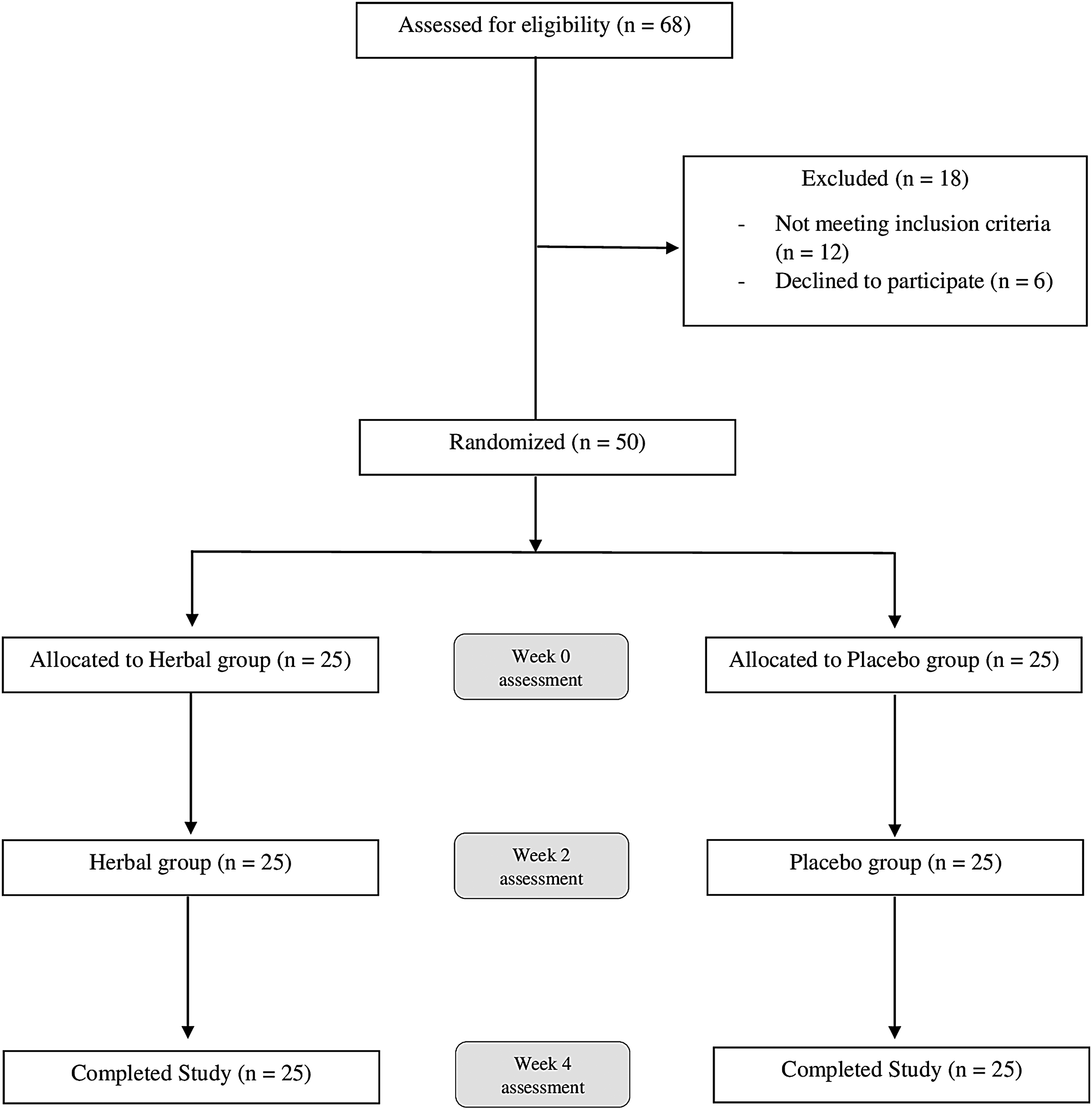
CONSORT flow diagram of participants through the study.
The general characteristics and blood chemistry of the participants are shown in Table 1. At baseline and after the intervention, most variables were not significantly different between the two groups (p > 0.05).
Values are means ± SD.
p1 = Comparison of means between the two groups at baseline.
p2 = Comparison of means between the two groups at week 4.
AST, aspartate aminotransferase; ALP, alkaline phosphatase; ALT, alanine aminotransferase; BP, blood pressure; BUN, blood urea nitrogen; HR, heart rate; Hb, hemoglobin; Hct, hematocrit; HDL-C, high density lipoprotein-cholesterol; LDL-C, low density lipoprotein- cholesterol; TC, total cholesterol; TG, triglyceride; BMI, body mass index; SD, standard deviation.
Total energy and nutrient intake at baseline and after the intervention did not differ for both the herbal group and placebo group (Table 2).
Values are means ± SD.
p1, comparison of means between the two groups at baseline.
p2, comparison of means between the two groups at week 4.
Human milk was recorded at baseline, week 2, and week 4 of the intervention period (Table 3). There were no between-group differences in milk volume at baseline. The means were 710 mL in the herbal group and 736 mL in the placebo group. At week 2 and week 4, human milk volume in the herbal group was significantly increased compared with the placebo group (p = 0.003 at week 2 and p < 0.001 at week 4) (Fig. 2). The percentage increase in milk volume in the herbal group was 49% at week 2 and 103% at week 4. These increases were greater than the placebo group at week 2 and week 4, which were 11% and 24%, respectively.
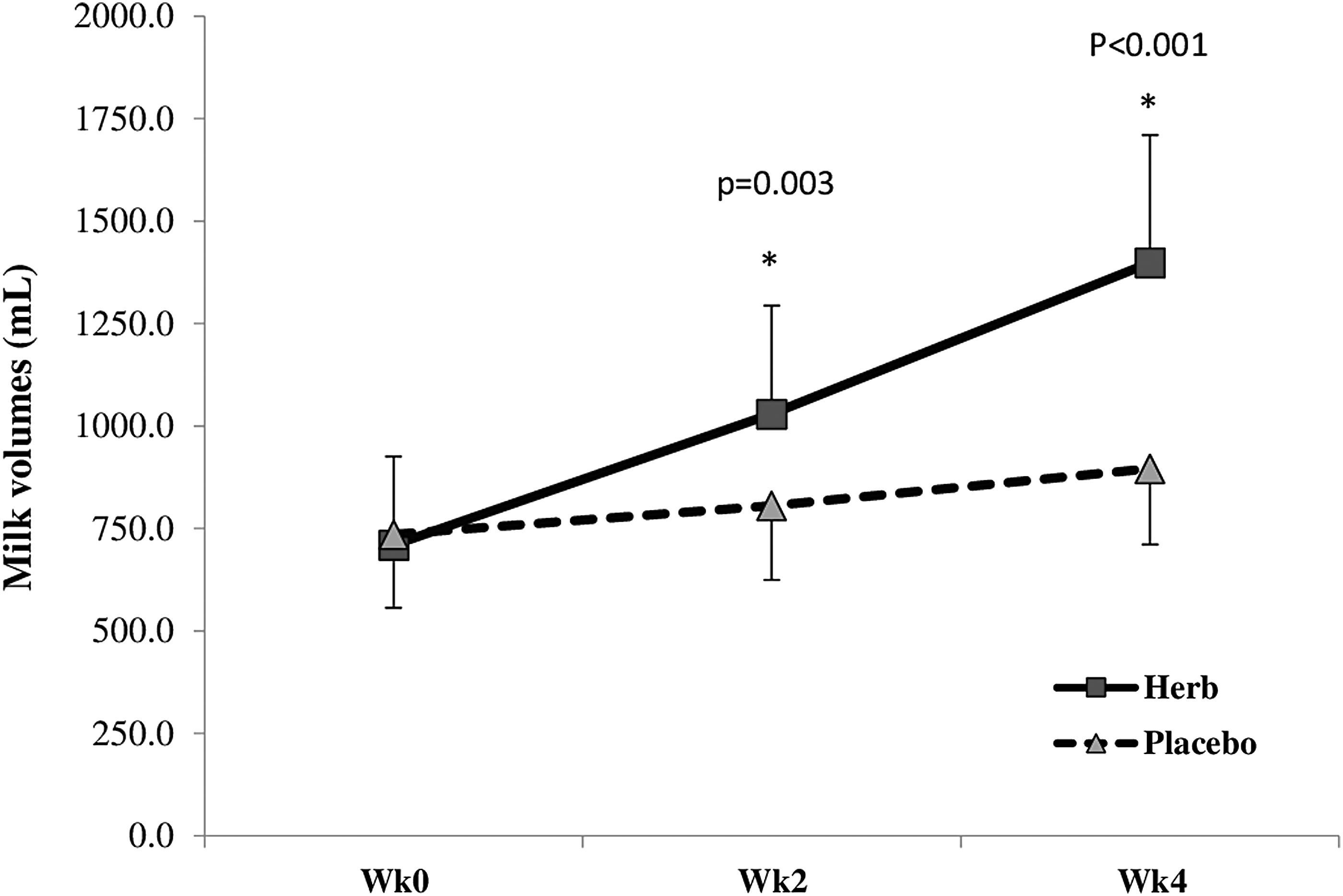
Milk volume before and after consumption of herbal supplement or placebo. *Significant differences at p < 0.05.
Significant differences at p < 0.05.
Energy and nutrient composition of human milk is presented in Table 4. Before and after the intervention, the difference between the two groups was not significant. However, in the herbal group the percent change in vitamin A tended to increase, whereas in the placebo group it tended to decrease.
Values are means ± SD.
There were no significant differences between the two groups at baseline.
Comparison of percentage change between the two groups; significant differences at p < 0.05.
ND, nondetectable.
The liver function and kidney function test results were not significantly different between two groups before and after the intervention. Moreover, the researchers interviewed the mothers regarding the adverse effects of the herbal supplement and placebo, including headache, rash, itching, nausea, excessive rectal gas, fatigue, bloating, abdominal pain, and maple syrup smelling urine. The results showed that two mothers in the herbal group and two mothers in placebo group got excessive rectal gas, and two mothers in the herbal group passed urine that smelled like maple syrup. However, there was no significant difference between the two groups. Adverse effects were not found in infants.
Discussion
Milk volume measurement is the standard method to assess the performance of milk production. This study found that the milk volume of the herbal group increased by 49% from baseline to week 2 of the intervention and then increased by 103% at week 4. This increase was statistically significant compared to the placebo group.
The major ingredient in this supplementation is fenugreek. It is a spice used in Egypt, India, and Middle Eastern countries and is believed to increase milk flow. 10 The major chemical compounds such as flavonoids, terpenoids, and saponin (diosgenin) are known phytoestrogens that enhanced milk production by stimulating the anterior pituitary gland to increase prolactin.5,10 An increase in milk production is often seen with fenugreek use within 24–72 hours after initiation of therapy. 5
Ginger also increases milk flow. It is a spice that is believed to improve blood circulation. A previous study by Paritakul et al. found that ginger increased milk volume more than the placebo at day 3. 8 Turmeric has been used as a galactagogue in India. 11 In addition, it has been used to decrease pain, tension, and inflammation in mastitis, and is commonly used in postpartum recovery because of its anti-inflammatory, antioxidant, and wound healing properties. 12 Increased blood circulation may improve milk production, and some chemical compounds in these herbs have an estrogenic effect that stimulates the anterior pituitary to produce more prolactin, resulting in increased milk quantity.13,14
The quality of milk in this study did not significantly change for both groups. In the herbal group, milk composition tended to improve, especially vitamin A concentration. A previous study found vitamin A and iron in fenugreek seed that might affect milk quality, but no studies have reported that fenugreek has an effect on milk nutrient content.10,15
This study found some adverse effects associated with the herbal supplement, including excessive rectal gas and maple syrup smelling urine. Some previous studies reported a maple syrup-like odor in the urine after fenugreek use.5,10 The aroma of fenugreek seed is eliminated through sweat and urine. Furthermore, essential oils in ginger and turmeric might improve poor digestion and relieve excessive gas from the rectum.16,17 Thai traditional medicine uses ginger and turmeric to support digestion and relieve a bloated stomach.
Currently, the Food and Drug Administration (FDA) regards fenugreek to be generally regarded as safe (GRAS), 5 although clinical supervision should be employed when recommending the use of fenugreek or any galactagogue. 17 However, some breastfeeding mothers choose natural medication to improve their milk volume because they have infant safety concerns about the use of conventional medications. Using galactagogues supports maternal mental health.7,18
More energy and nutrient intakes are commonly recommended for breastfeeding mothers to support sufficient milk supply. Buntuchai et al. found that some local traditional foods in Thailand may be used to maintain milk volume. 19 However, some food is difficult to find in a large city, especially in Bangkok. This result proved that mixed herbal supplementation that included fenugreek, ginger, and turmeric enhanced human milk volume at week 2 without serious adverse effects. Using this galactagogue supplementation is one of the options that have been used to promote breastfeeding mothers to feel more confident and maintain their milk supply. The infants will receive benefits from human milk for growth, development, and immunity.
Although one limitation of this study was its small sample size, it was a strong randomized double-blind placebo-controlled trial that included 1-month postpartum exclusively breastfeeding mothers. These mothers were in the stable period of producing mature milk. The measurement of human milk volume has many confounding factors such as nutrition, medication, smoking, and drinking. This study reduced confounding factors by using criteria and a food record. Moreover, the quantity of milk produced was measured from an average of 2 days milk collection. However, a study on the mechanism of these galactagogues is still needed to support the use of supplementation.
Conclusion
Based on this study, mixed herbal supplementation, including fenugreek, ginger, and turmeric, can increase human milk volume in a period of 2 weeks without serious adverse effects in mothers and infants.
Footnotes
Acknowledgments
The authors thank Dr. Carol Hutchinson, Department of Nutrition, Faculty of Public Health, Mahidol University, Bangkok, Thailand, for editing the article, and Herbal Acharn's Home (Thailand) Co. Ltd. that provided Fenucaps and placebo. This study was partially supported for publication by the China Medical Board (CMB), Faculty of Public Health, Mahidol University, Bangkok, Thailand.
Authors' Contributions
A.B. searched literature, prepared first draft, and collected data; A.B. and P.S. conceptualized and designed study, supervised data collection, and prepared the final draft; P.P. and S.T. reviewed literature and helped to write discussion. All authors approved the final article.
Disclosure Statement
No competing financial interests exist.