




Abstract

E
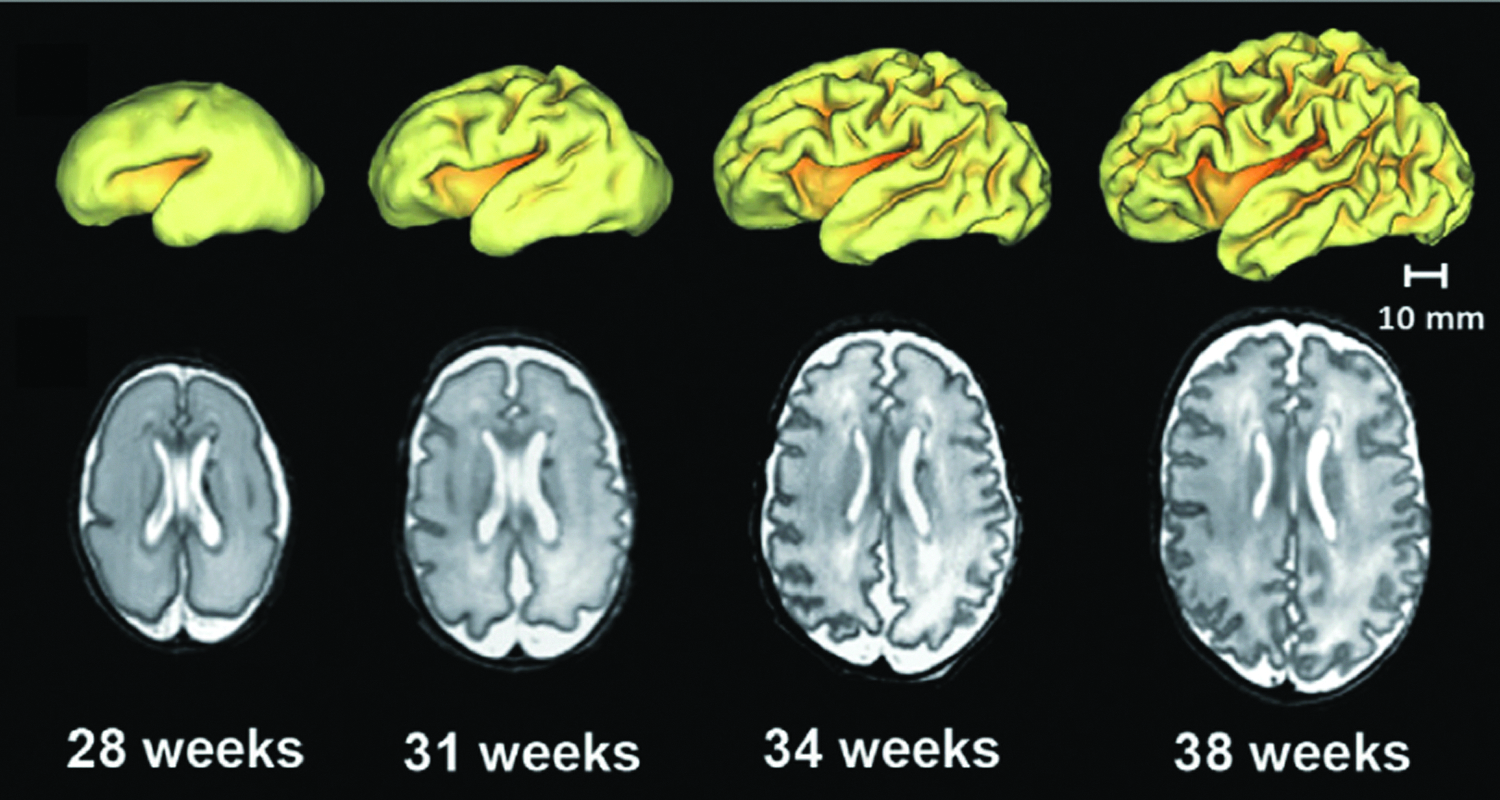
Growth and development of the preterm human brain. 1
Both observational and experimental studies have studied the effects of breastfeeding on infant brain development and neurodevelopmental outcomes among healthy populations. An observational cohort study (Project Viva; N = 1,312 mothers and children) found a clear linear association between breastfeeding duration and verbal IQ at 7 years of age (Fig. 2). 8 For each additional month of breastfeeding (any amount), verbal IQ score was 0.4-points higher at 7 years. The effects were greater in magnitude for exclusive breastfeeding; verbal IQ score was 0.8-points higher at 7 years for each additional month of exclusive breastfeeding to 6 months. A separate observational study comparing brain structure in formula-fed and breastfed children aged 10 months to 4 years demonstrated increased white matter development in frontal and association brain regions in breastfed infants. 9 These differences in white matter structure corresponded to improved cognitive and behavioral performance in breastfed children, supporting the association of breastfeeding with better cognitive development. Findings from the PROmotion of Breastfeeding Intervention Trial (PROBIT), a randomized cluster trial that enrolled 17,046 mother–infant pairs in 31 maternity hospitals, support a causal effect of breastfeeding on IQ; prolonged and exclusive breastfeeding was associated with a 7.5-point increase in verbal IQ score at age 6.5 years compared with controls. 10
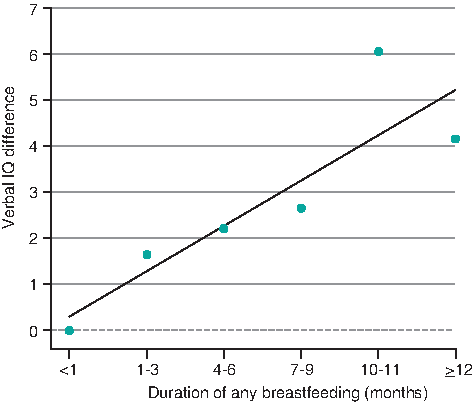
Association of breastfeeding duration with verbal IQ at age 7 years. 8
Studies demonstrating the benefits of breastfeeding may not be generalizable to preterm infants, who are more nutritionally vulnerable than full-term infants. Administering human milk to preterm infants is associated with short-term clinical benefits, such as faster feeding advancement and reduced risk of necrotizing enterocolitis and late-onset sepsis.11–13 Human milk in preterm infants has also been associated with long-term benefits in neurodevelopment. A large cohort study in extremely low birth weight infants (<1,000 grams; N = 1,035) found that breast milk consumption in the neonatal intensive care unit (NICU) resulted in dose-dependent increases in cognitive and motor development at 18 to 22 months that persisted through 30 months of age.14,15 However, another cohort study in premature infants born ≤33 weeks gestation (N = 611) found no association between human milk intake and neurodevelopmental outcomes at 18 months. 16 The inconsistent results reported in these and other published studies evaluating the potential benefits of human milk in preterm infants may be due to differences in study populations, older nutrition practices that did not account for the greater needs of preterm infants, and the assessment of infant and toddler outcomes, which are poorly predictive of later cognitive abilities.
A recent longitudinal cohort study included 180 breastfed children who were born at <30 weeks gestation or had a birth weight of <1,250 g. 17 The number of days the infants received predominantly maternal milk (i.e., >50% of total enteral intake) was recorded over the first 28 days of life. There was no association between breast milk intake and cognitive and motor development at 2 years of age. At 7 years of age, the Full Scale IQ was 0.5 points higher for each additional day the infant received >50% maternal milk (Table 1). Similar increases were seen in scores for reading, math, and working memory. An assessment of total and regional brain volumes at term-equivalent age showed an increase in deep nuclear gray matter (thalamus and basal ganglia) volume of 0.15 cc/day for each additional day of breast milk >50% of intake (Table 2). An association between average daily breast milk intake during the first 28 days and hippocampal volume (0.02 cc per 10 mL/[kg·day] of breast milk; 95% confidence interval [0.004–0.03]) was also seen at term. No differences in brain volumes were detected at school age. Overall, the results from this study suggest that human milk may contribute to improved neurodevelopment assessed at school age. The increase in volumes of the thalamus, basal ganglia, and hippocampus observed at term may help shed light on potential mechanisms by which breast milk affects later neurodevelopmental outcomes.
Predominant maternal milk feeding and school-age outcomes. 16
Estimates adjusted for age, sex, gestational age, NICU illness, and social risk. Boldface type indicates statistically significant result (p < 0.05).
NICU, neonatal intensive care unit.
Maternal milk intake and early brain development. 16
Estimates adjusted for age, sex, gestational age, NICU illness, and social risk. Boldface type indicates statistically significant result (p < 0.05).
Remaining questions to be addressed in future studies include characterizing the effects of donor human milk on early brain development and neurodevelopmental outcomes, identifying what components in human milk drive neurodevelopment, determining how to ensure adequate nutrient intake for preterm infants, and defining the mechanisms by which human milk/breastfeeding affects early brain development.