




Abstract
Abstract
Objectives:
During breastfeeding, there are two natural hand positions used most often by the mother to introduce her breast to the baby (palmar grasp [C-hold position] and scissor grasp). In this study, we aimed to investigate whether the milk intake is affected by the hand position.
Materials and Methods:
Both healthy term breastfed infants and their mothers were included in the study. Each mother–baby dyad was monitored during two feeding periods (100 mother–baby dyads, 200 breastfeeding sessions). Mothers were asked to grasp their breasts differently (palmar or scissor grasp) in each breastfeeding session. Milk intake was determined by test weighing.
Results:
One hundred mother–baby dyads were included in the study. There was no statistically significant difference between scissor grasp (34.60 ± 22.16 mL) and palmar grasp (38.30 ± 27.37 mL) positions when evaluated in terms of milk intake (p = 0.13). When asked what position they prefer to breastfeed at home, the majority of them (56%) stated that they preferred scissor grasp positions. In terms of breastfeeding by hand position, there was a statistically significant difference (p = 0.003) between the mothers who received breastfeeding training during pregnancy (59.2% palmar grasp position, 40.8% scissor grasp position) and the mothers who had not (29.4% palmar grasp position, 70.6% scissor grasp position).
Conclusions:
Our study showed that there was no difference in milk intake between palmar grasp position and scissor grasp position. The mothers should be encouraged to use the hand position that is most natural and comfortable.
Introduction
During breastfeeding, two natural hand positions, scissor grasp and palmar grasp (Figs. 1 and 2), are used most often by mothers to introduce the breast. In the scissor grasp, the thumb and index finger are placed above the areola and the other three fingers below the breast for support. 1 In the palmar grasp, all the fingers are under the breast and only the thumb above. This hand position has been also called the C-hold. 2
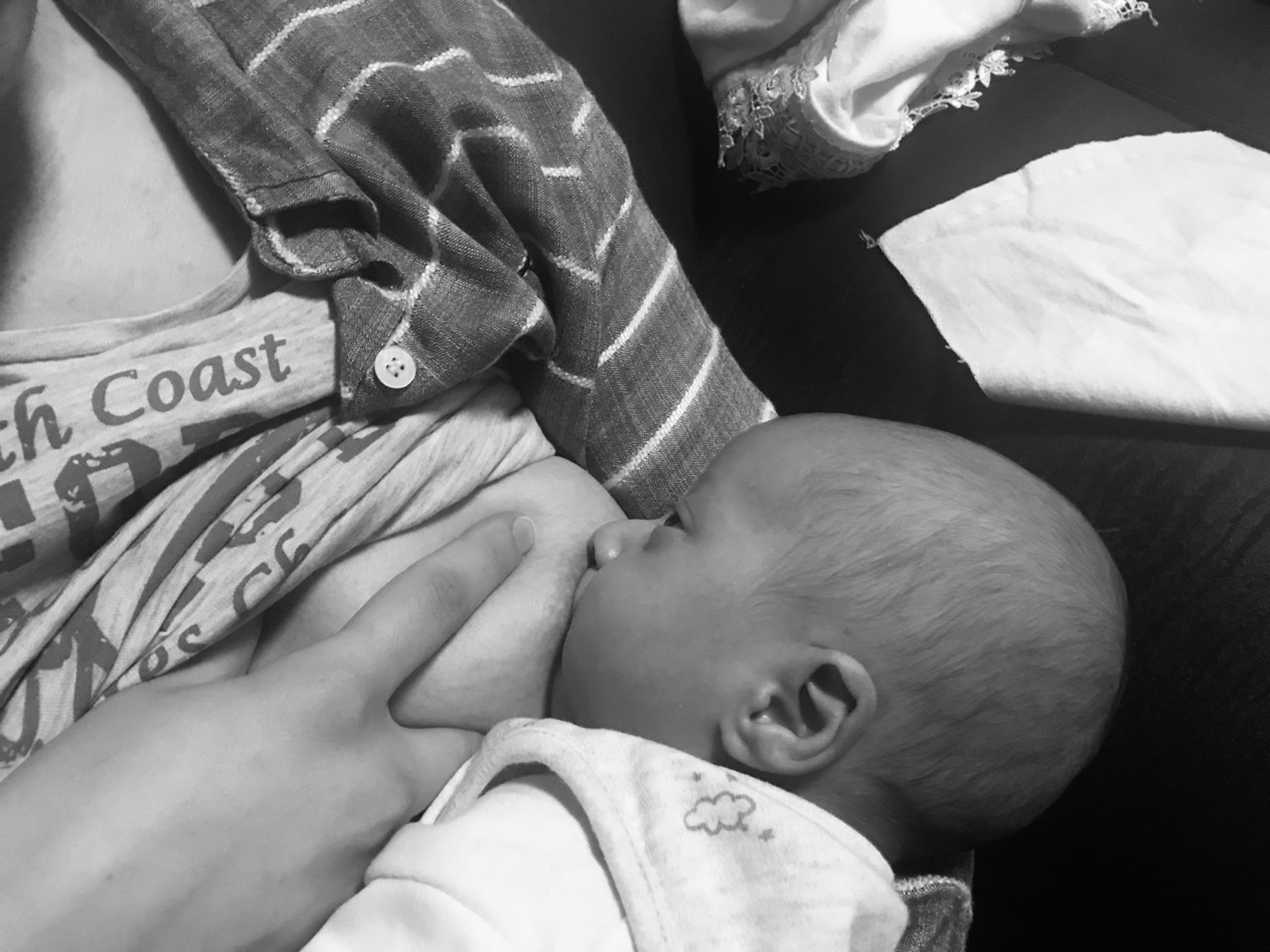
Scissor grasp position.
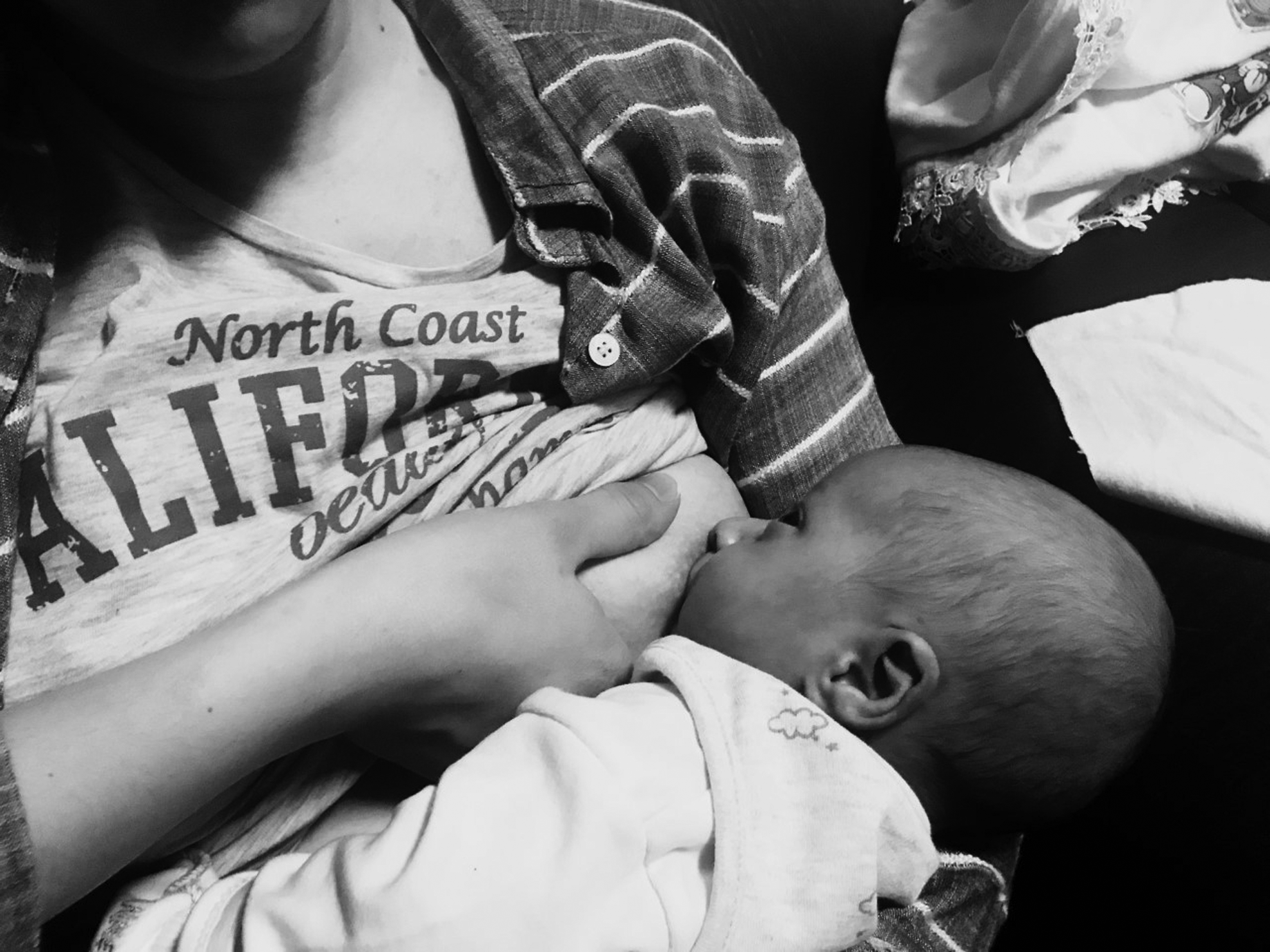
Palmar grasp (C-hold) position.
There are beliefs in Turkey that the scissor grasp position prevents milk flow and reduces the milk volume. That is why it is recommended to use C-hold position during breastfeeding. Interestingly in our society, scissor position is the generally preferred hand position during breastfeeding by the mothers. The reason for this preference is not known exactly and it is curious whether this behavior is learned from society or by instinct. Trying to change this preference can sometimes be tiring and compelling for the mother and health care providers. Furthermore, this attitude may break the mother's self-confidence and may cause the mother to feel that she is inadequate and inept. In fact, health care providers try to teach the mother the best breastfeeding position and technique.
Nevertheless, do we really know which hand position is the best and in which hand position the milk intake is better? We did not find any study showing better milk intake in the palmar grasp position. If the position has no effect on the milk intake, there will be no reason to force mothers to use palmar grasp position. Therefore, in this short pilot study, we aimed to investigate whether milk intake by the babies is affected by the position. According to our knowledge, our study is the first on this subject.
Materials and Methods
This short pilot study was carried out in a neonatal intensive care unit between April 2018 and December 2018. The research was approved by the local ethics committee, and informed consent was obtained from the mother of each child before enrollment.
Healthy term breastfed babies and their mothers were included in the study. Both of the mother's breasts were expressed by an electric pump to evaluate whether they had enough milk volume that the baby would need for each breastfeeding. Mothers who did not have enough milk for each feeding or who had nipple problems (plain or inverted nipple, cracked nipple) and infants who had a congenital abnormality that prevents sucking, anemia, central or peripheral nervous system disorders were excluded from the study. Mothers were offered a diet of 2,500 kcal/day and at least 1,500 cc/day of fluid during the study process.
Mother–baby dyads eligible for the study were observed at two breastfeeding sessions by the nurses (40 minutes for each breastfeeding). The observation was performed in two consecutive days and at the same feeding time for each mother–baby dyad. All mothers received training on breastfeeding techniques and hand positions before initiating study. Mothers were asked to use only one hand position (scissor grasp or palmar grasp) (Figs. 1 and 2) in each breastfeeding session. Position order was determined by a coin on the first day. It was emphasized that the nipple and areola should be given to the baby's mouth during breastfeeding and they should not overpress on their breast.
The nurses who worked in the clinic and wanted to participate in the study were also trained on breastfeeding techniques, test weighing, and study protocol. Breast milk intake was determined with test weighing.
Before each feeding, infants were weighed on an electronic scale by a nurse (N1). Then, infants were breastfed by their mothers in accordance with the study protocol. Breastfeeding was evaluated by latch scoring system. 3 Infants with a latch score <9 were excluded from the study. After feeding, another nurse (N2) weighed each infant with the same articles of clothing on the same electronic scale. Each nurse placed the results in the envelope for each infant and the envelopes were delivered to the researcher. In the test weighing, 1 g of weight gain postfeeding represented 1 mL of milk intake uncorrected for insensible water loss (1 g = 1 mL). N1 and N2 were selected among daytime nurses.
Mothers were also asked what hand position they preferred at home.
Statistical analysis
Statistical analysis was performed using SPSS version 16 software (SPSS, Inc., Chicago, IL). The normality of data was analyzed with Kolmogorov–Smirnov test and the normally distributed variables were expressed as means (standard deviations) and the non-normally distributed variables were expressed as medians (minimum–maximum). The chi-square test was used for categorical variables and expressed as observation counts (in percentages). Paired-samples t test was used for comparison of milk intake in scissor and palmar grasp positions. Statistical significance was accepted when the two-sided p-value was <0.05.
Results
In the study process, 120 mother–baby dyads were included in the study. Ten mother–baby dyads left the study because they did not come to the second breastfeeding process. Ten babies did not want to suck in the process of breastfeeding. The demographic and clinical characteristics of the infants and mothers are given in Table 1.
Demographic and Clinical Characteristics of the Study Population
Data are presented as medians (minimum–maximum).
Data are presented as mean ± standard deviation.
C/D, cesarean delivery; NSVD, normal spontaneous vaginal delivery.
There was no statistically significant difference between scissor (34.60 ± 22.16 mL) and palmar (38.30 ± 27.37 mL) grasp positions when evaluated in terms of milk intake (p = 0.13). When asked what position they prefer to breastfeed at home, the majority of them (56%) stated that they preferred scissor grasp position. In terms of hand position preferences, there was a statistically significant difference (p = 0.003) between the mothers who received breastfeeding training during pregnancy (59.2% C-hold position, 40.8% scissor position) and the mothers who had not received breastfeeding training (29.4% C-hold position, 70.6% scissor position).
Although all mothers had enough milk, the exclusively breastfeeding ratio was only 58%. All mothers who gave their babies a supplement thought that their milk was not enough and 31 mothers (31%) used a commercial galactagogue for the same reason. Only 49 (49%) mothers received breastfeeding training during pregnancy.
Discussion
Our study showed that there was no difference in milk intake between palmar and scissor grasp positions. Although there are studies on breastfeeding positions such as cradle and side-lying position,4–8 there is no study exploring the position of the hand during breastfeeding. Therefore, we cannot compare our results with other studies.
In contrast, in this study, we also asked the mothers for their preferred hand position. Most mothers stated that they preferred the scissor grasp position, whereas the mothers who received training during pregnancy preferred the palmar grasp (C-hold) position. This seems to be a result of breastfeeding training. Our results hold significance because they show that it is unnecessary to force the mothers into palmar grasp position.
The scissor grasp is the position commonly used by mothers during breastfeeding for centuries. This position is thought to prevent the infant from getting sufficient areola into the mouth and reduces the flow of milk by applying pressure on the areola. Consequently, health care providers recommend the palmar grasp position, so the baby would take more areola. In our study, we asked mothers to keep their fingers away from the areola and not to press on the breast in both positions. Based on our results, we can say that no matter which position is used as long as the correct technique was applied, having the nipple and areola given to the baby's mouth, there was no problem in the milk intake.
We excluded mothers with nipple problems from our study. Therefore, in this study we cannot tie down a relationship on how would the hand position affect the infants of the mothers with an abnormal nipple. We think that this relationship must be investigated, because sore nipples and nipple cracks are common1,9–11 and appear as an important factor in the discontinuation of breastfeeding. 12
Limitations
This study has several limitations: (1) the study is not a randomized controlled trial; (2) in our study, two breastfeeding processes (one in cross position, another in palmar grasp position) were observed for each mother–infant dyad, and it would be better to monitor more breastfeeding sessions in a longer time frame; (3) we only focused on milk intake in our study. Mothers with the nipple cracks were excluded from the study as milk intake may be affected. With a randomized controlled trial starting from birth, a long follow-up can be designed to evaluate the effect of the hand position on any breastfeeding or exclusively breastfeeding duration, nipple cracks, and weight gain of the baby.
Conclusions
According to our study results, we can say that the mothers should be encouraged to use the hand position that is most natural and comfortable, because there is no difference in milk intake between palmar and scissor grasp positions. The mother should not be confused with unnecessary intervention and conflicting information. In contrast, this was a preliminary pilot study with limitations and there is need for a larger and more detailed randomized study.
Footnotes
Acknowledgments
We thank the nurses Serpil Altunel and Nurcan Çiftçi Tekin for their valuable contributions to our study.
Authors' Contributions
Dr. Altuntas conceptualized and designed the study, acquired and interpreted the data, drafted the article, and approved the final article as submitted. Breastfeeding consultant A.U. acquired the data and approved the final article as submitted.
Disclosure Statement
No competing financial interests exist.