




Abstract
Introduction:
Human milk is the normative standard for infant/toddler nutrition. To better understand human milk's imprinting on health, and inform complex decisions about maternal medication, substance use, and other exposures during lactation, researchers at University of California San Diego (UC San Diego) established Mommy's Milk, a Human Milk Research Biorepository (HMB).
Materials and Methods:
The HMB was founded in 2014 with the goal of building a constant but rotating inventory of 3,000 human milk samples available for future research. Following informed consent, women in the United States or Canada provide 50 mL up to a full pump of expressed breast milk. Participants are also interviewed about their sociodemographic characteristics, pregnancy history, dietary intake, maternal stress, anxiety and depression, breastfeeding behaviors, and signs and symptoms of potential adverse reactions in the offspring. Data on growth of the infant/toddler are captured from medical records, and neurodevelopmental assessments are conducted longitudinally. Sample collections occur at UC San Diego, community sites, or the woman's home, and are aliquoted and stored at −80°C.
Results:
To date, 1,362 unique women have contributed to the HMB. The majority of mothers were between the ages of 31–35, and identified as White. The range of ages of breastfed offspring was well-represented through 23 months.
Conclusions:
The HMB is a well-characterized, accessible research resource that can contribute to better understanding of the characteristics of human milk, and potential effects of maternal medications, substances, and other environmental agents on the health and development of the breastfed infant/toddler.
Introduction
Although human milk is widely recognized as the normative standard for infant and toddler feeding and nutrition, 1 much work remains to be done to fully support lactation for the mother and her offspring. Up to 1.5 million lactating women in the United States are exposed to medication, and research examining the safety of maternal medications during lactation is lacking. 2 Although several trusted resources exist, 3 including LactMed and Drugs in Pregnancy and Lactation: A Reference Guide to Fetal and Neonatal Risk, it is difficult to find adequate information on levels of any medication in human breast milk or infant outcomes. In November of 2018, a review of LactMed found that 54% of the 1,408 products in the database were based on no lactation-specific data. 2 In the absence of evidence, clinical guidance on medication use during lactation may be solely based on predictions derived from the pharmacologic properties of the drug without supporting data from human breast milk, or may rely entirely upon animal studies. In addition to medication use during breastfeeding, numerous other agents have not been adequately studied with respect to potential exposure during lactation and outcomes in breastfed infants or toddlers, including alcohol, cannabis, and herbal supplements.
There is also a growing interest in the health imprinting process of human breast milk. Interest in the biologic mechanisms underpinning the maternal and offspring health benefits of breastfeeding, coupled with advances in analytical chemistry have furthered interest into the study of human breast milk. Current research has shifted focus from human milk's critical role in nutrition to its dual role in immune protection through the infant gut microbiome. 4 This has led to ongoing research studying human milk oligosaccharides, effects on gut microbiota, regulation of proinflammatory cytokine genes, and epigenetic modifications from human breast milk.
Purpose and scope of the Human Milk Research Biorepository
To better understand human milk's imprinting on health, and inform complex decisions about medication and other substance use during lactation, researchers at University of California San Diego (UC San Diego) have established Mommy's Milk, a Human Milk Research Biorepository (HMB).
The HMB was established in March 2014 with the overarching goal of establishing and maintaining a repository of human milk samples to be used for research purposes. Under the guidance of a multidisciplinary team, including epidemiologists, neonatologists, pharmacists, and biomedical scientists, the aim of the biobank is to collect and maintain a constant but rotating inventory of ∼3,000 breast milk samples over the next 10 years. These samples will be maintained as a resource for research into the health characteristics and benefits of human breast milk and medication, substance use, and other environmental exposures in human breast milk. A secondary aim of the repository is to collect behavioral, sociodemographic, and postnatal characteristics of participating women and information on infant/child health outcomes including signs and symptoms of adverse reactions, longitudinal growth, and neurodevelopmental performance in the offspring. General collections consist of single time point milk samples with cross-sectional exposure reporting and longitudinal infant follow-up. Targeted collections contain serial timed milk samples in relation to the time of exposure, sibling samples, or other biospecimens, dependent on project-specific needs.
Materials and Methods
Women residing in the United States and Canada are eligible to participate in the HMB. Recruitment of participants began on August 20, 2014. Lactating women are recruited or referred through multiple channels, including outreach to (1) mothers of newborns in San Diego hospitals, including Rady Children's Hospital-San Diego, UC San Diego Medical Center- Hillcrest, UC San Diego Jacobs Medical Center, and Sharp Mary Birch Hospital for Women and Newborns; (2) current patients at the UC San Diego General Pediatrics Clinic or at Rady Children's Hospital satellite clinics; (3) mothers enrolled in MotherToBaby Pregnancy Studies across United States and Canada; (4) the Lactation Center at the Women's Birth and Wellness Center at the University of North Carolina; (5) Mothers Milk, a donor milk bank located in San Diego; (6) the San Diego Blood Bank; (7) social media, including Facebook, online breastfeeding support groups, and Mom Blogs.
Eligibility and consent
Breastfeeding women aged 18 and older who speak English or Spanish are eligible for participation. Women must have sufficient breast milk supply in excess of what is required to feed their infant/toddler. Participants are asked for a minimum of 50 mL of expressed breast milk, although any sample greater than 1 mL is acceptable for banking. There is no requirement with respect to the age of the child or the duration or frequency of breastfeeding to be eligible. Eligible women who agree to provide a breast milk sample provide written informed consent approved by the University of California, San Diego Human Research Protections Program. Women may also consent to the release of maternal and pediatric medical records for additional information about maternal health, and growth of the child and illnesses. Request for permission to re-contact no more than once a year to update personal contact information and no more than twice a year for other research projects is requested from participants.
Optional genetic consent
Women are asked to sign an optional genetic consent addendum at the time of enrollment that enables a participant's breast milk sample to be included in research projects that include analysis of DNA.
Optional additional collection consent for serial samples
An additional collection consent addendum is available for women with medication or substance exposures of interest that are asked for serial milk samples for analysis. Women may be asked to provide milk samples at specific time points in relation to the time they are exposed to a specific medication or substance of interest. For example, samples may be collected using the following schedule: predose, 1-hour postdose, 2-hour postdose, 4-hour postdose, 8-hour postdose, 12-hour postdose, and 24-hour postdose.
Measures
The complete list of data elements collected at each sample collection is summarized in Table 1. At the time of breast milk sample collection, women are interviewed about their sociodemographic characteristics, pregnancy history, current breastfeeding behaviors, personal and family medical history, exercise and sleep habits, any illnesses, and birth and infant outcomes. In addition, women are asked to report use or exposure to prescription medication, over-the-counter medication, vitamins, herbal supplements, alcohol, caffeine, tobacco, second hand smoke, or recreational drugs over the previous 14 days by dose, timing, and indication. Women are asked to respond to the presence or absence of specific signs or symptoms in the child from a standard checklist of adverse reactions, that is, diarrhea or unusual sleep patterns.
Data Collection for the Human Milk Biorepository: Timing and Method of Collection
Participants are specifically queried on vitamins/supplements, prescription medications, over the counter medications, birth control, caffeine, alcohol, cigarettes, secondhand smoke, illicit drugs, and illness/fever.
Participants are queried specifically about drowsiness, sedation, poor feeding, rash, bruising/bleeding, constipation, diarrhea, bloody stools, fever, low body temperature, restlessness, irritability, poor sleep, high-pitched crying, abnormal movements, abnormal skin color, reflux, eczema, dehydration, or poor weight gain.
Neurodevelopmental testing is conducted at child ages of 3–5, 12–16, 24–28, and 30–36 months. The child is eligible to participate in up to four testings that occur postsample collection. If the child misses an assessment, they are still eligible to participate in the next age appropriate assessment.
Beginning in August 2015, a brief Block Food Frequency questionnaire, administered electronically through N utritionQuest, was added to the protocol. 5 The survey assesses the participant's usual and customary dietary intake over the past 30 days and is administered shortly after the breast milk collection.
In July 2016, the Edinburgh Postpartum Depression Scale, 6 Perceived Stress Scale-10 item, 7 and State-Trait Anxiety Inventory 8 were added to the protocol to measure a woman's symptoms of depression, stress, and anxiety.
Beginning in January 2016, neurodevelopmental outcomes were added to the protocol. Specifically, these include the following parent-reported screening questionnaires: the MacArthur Bates Communicative Development Inventories (CDI), 9 Ages and Stages Questionnaire (ASQ), 10 Infant-Toddler Social and Emotional Assessment (ITSEA), 11 and the Modified Checklist for Autism in Toddlers (MCHAT). 12 These screening questionnaires are completed by the parent when their breastfed infant is 3–5, 12–16, 24–28, and 30–36 months of age. A maximum of four sets of questionnaires are completed by the participant. Additionally, diagnostic neurodevelopmental testing is administered at ∼18–32 months with the Mullen Scales for Early Learning 13 and, at ∼4–5 years of age, with the Wechsler Preschool and Primary Scale of Intelligence. 14 These are administered by a trained psychometrist under the supervision of a licensed neuropsychologist. Results of both screening and diagnostic testing are communicated to the parent.
Breast milk collection, storage, and access
Sample collection can occur using one of three methods: sample collection at UC San Diego, affiliated community sites in San Diego, or home collection. In all cases, women are asked for a full expression (50 mL) to ensure that the breast milk sample is as well-rounded as possible and includes a combination of fore-milk and hind-milk. Per collection protocol, samples collected at UC San Diego may be stored on ice for a maximum of 3 hours before aliquot. Only samples collected in the presence of HMB staff following these procedures are available for human milk microbiome analyses. Samples collected in the woman's home are collected in provided sterile collection containers. These samples are either refrigerated at 4°C until pick up (within 3 hours of expression), or picked up by a courier within 24 hours of collection and shipped overnight on ice in a study-provided cold pack mailer to the repository. Breast milk cannot have been previously frozen. Home-based milk samples are not available for human milk microbiome analyses.
Sample storage
Upon receipt, samples are aliquoted into 10–1 mL cryovials, 5–5 mL centrifuge tubes, and 1–15 mL centrifuge tube. Any excess milk is aliquoted into 15 mL centrifuge tubes. All samples in the repository are stored at −80°C.
Results
Status to date
As of December 2019, 1,362 unique women donated 1,492 breast milk samples to the HMB (Table 2). We anticipate reaching 3,000 samples from unique participants by 2024. HMB recruitment is planned to continue indefinitely to ensure a constant but rotating inventory of ∼3,000 breast milk samples.
Enrollment and Assessment Completion of Human Milk Biorepository as of December 2019, n = 1,492 Milk Samples from 1,362 Unique Women
Samples available for human milk microbiome analyses.
HMB, Human Milk Research Biorepository.
Sample characteristics to date
Of the 1,362 participants in HMB, 462 have been recruited and donated milk through UC San Diego or community sites in San Diego County, 92 participated via home collections in San Diego County, and 808 mailed in expressed milk samples (Table 2). The majority of mothers were between the ages of 31–35, identified as White and non-Hispanic, and reported a college degree or postgraduate education (Fig. 1). The range of ages of breastfed infants/toddlers was well represented through 23 months, and there were slightly more samples from mothers of male offspring than female offspring (Fig. 2).
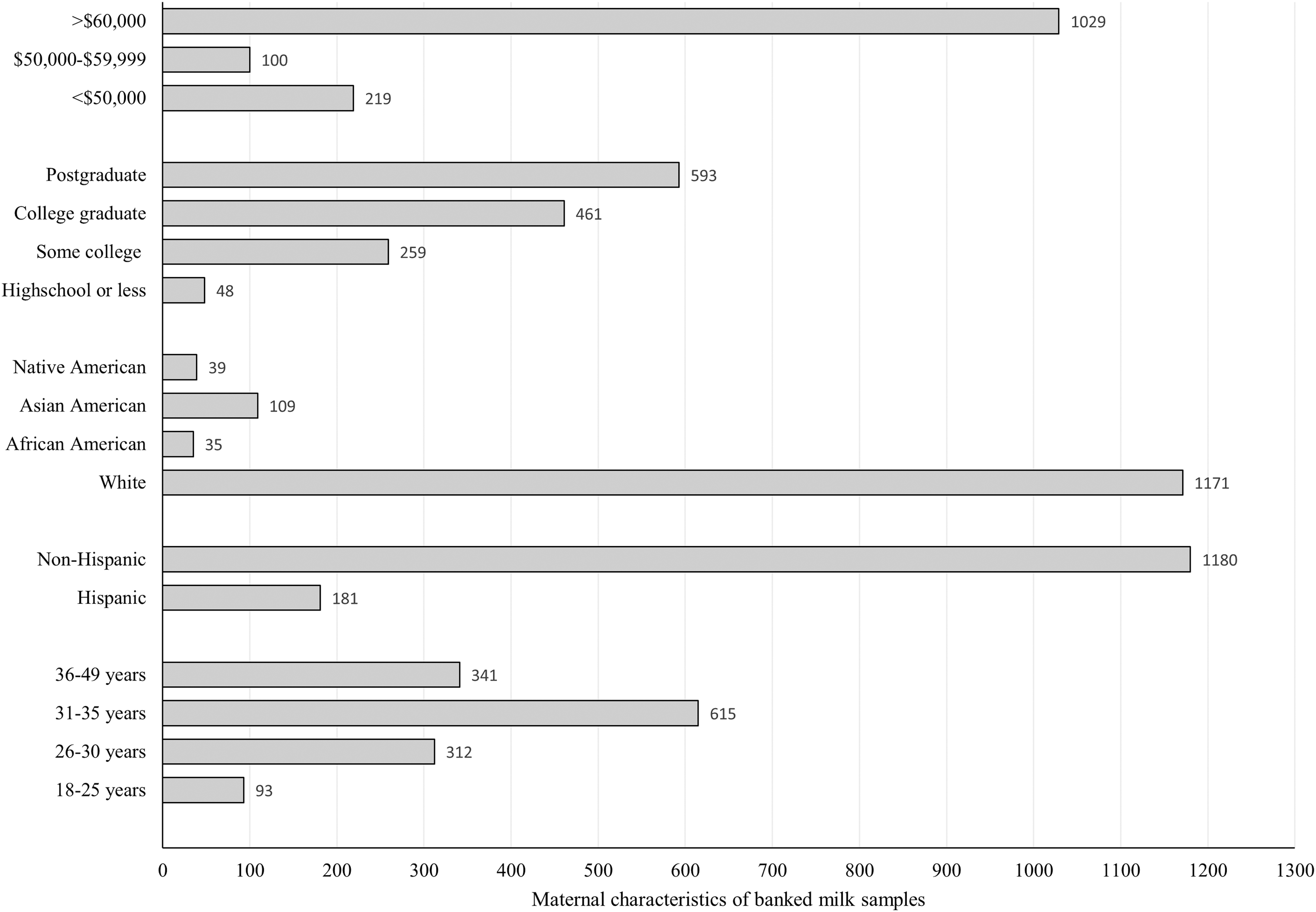
Distribution of maternal characteristics of human milk samples received in the Human Milk Biorepository. Deviations from full sample size are a result of participants choosing not to provide that information.
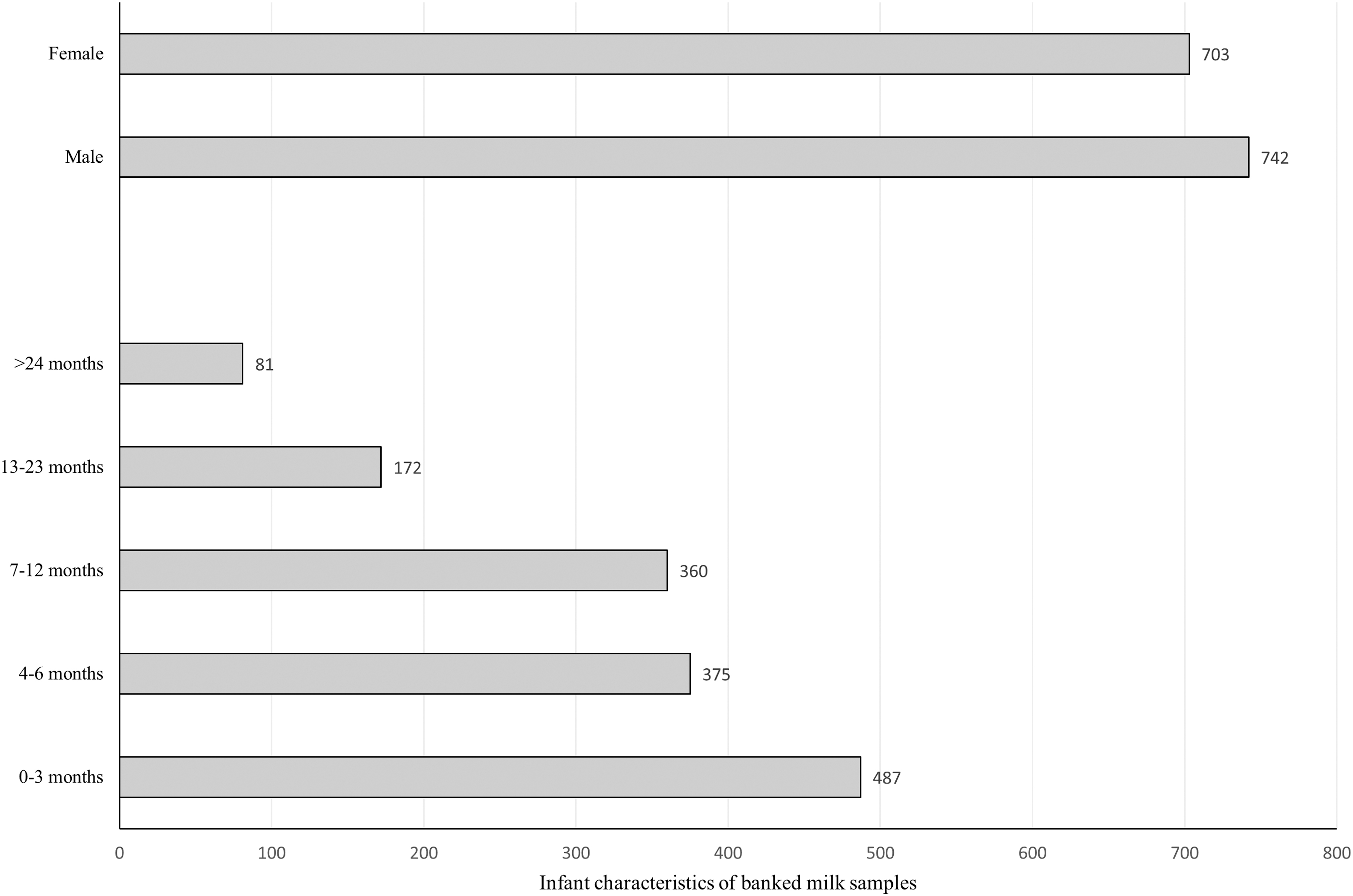
Distribution of offspring characteristics of human milk samples received in the Human Milk Biorepository. Deviations from full sample size are a result of participants choosing not to provide that information.
Commonly reported medications
A total of 956 prescription and over-the-counter medication exposures were reported by 581 unique women who were taking one or more medications of the top 10 most commonly used medications. The top 10 classes of medications reported during lactation were Nonsteroidal Anti-Inflammatory Drug, acetaminophen, antidepressant, second generation histamine H1 antagonist, thyroid hormone medication, corticosteroids, antibiotics, opioid analgesics, and first generation histamine H1 antagonists and H2 antagonists (Table 3). Less frequently reported exposures include Tumor Necrosis Factor inhibitors, antipsychotics, inhaled beta-2 agonists, beta blockers, protein pump inhibitors, anticonvulsants, and antiviral medications.
Top Medication Exposures Within 14 Days of the Milk Collection Reported to Date
NSAID, nonsteroidal anti-inflammatory drug.
Discussion
The HMB is designed to assist researchers in investigating complex questions about human milk. By recruiting both women with exposures of interest, and participants from the general population, the HMB aims to provide a resource for researchers that can query a broad range of exposures, mechanisms, and behaviors.
Examples of research utilizing the HMB
The HMB has been queried for a wide array of research projects. These include, but are not limited to:
Cannabinoids in human milk. The objective of this study was to quantify cannabinoids present in human milk following maternal marijuana use from women who donated samples to the HMB between 2014 and 2017.
15
Medications in human milk. The biobank has been accessed to study select medications in human milk, including etanercept and methotrexate. In addition, the ability to recruit women using specific medications of interest has enabled participation as a research site in the Pediatric Trials Network Cuddle study.
16
Environmental toxicants in human milk. Analyses are ongoing to investigate whether select toxicants are measurable in human milk, and associated outcomes in nursing offspring. Examples of these studies include assays of pesticides and lead.
Accessibility of the HMB samples and data
The HMB is overseen by a Steering Committee that establishes policy for access to and costs for obtaining HMB samples, and adheres to University requirements regarding material transfer, intellectual property, and publications. The process for applying and obtaining samples is multi-step (Fig. 3). Project requests must include a project summary, project aims, project analysis plan, and the number of samples and type of metadata requested. Proposals will be reviewed for scientific rationale, appropriate ethics approval, and sufficient sample to fulfill the request by the Steering Committee. The HMB website describes the study elements, and is the location for external researchers to determine whether sufficient sample numbers and quantities are available to address a specific research question. If targeted populations, serial samples, sibling samples, or other specific parameters (e.g., biologic samples from the mother or infant) are required that are not currently in the inventory, the HMB staff will work with the investigator to determine whether a targeted prospective collection is feasible. Once the project parameters are confirmed, an Institutional Review Board application will be submitted at the appropriate institution (either UC San Diego or the PIs institution). During the IRB review process, the study metadata will be prepared by the Honest Broker and a biospecimen sample request will be made to the laboratory. Once IRB approval is received, a material transfer agreement (MTA) will be submitted, if necessary. Once the MTA is executed, payment will be requested. Once payment is received, samples will be shipped to the receiving laboratory and de-identified metadata will be delivered electronically.
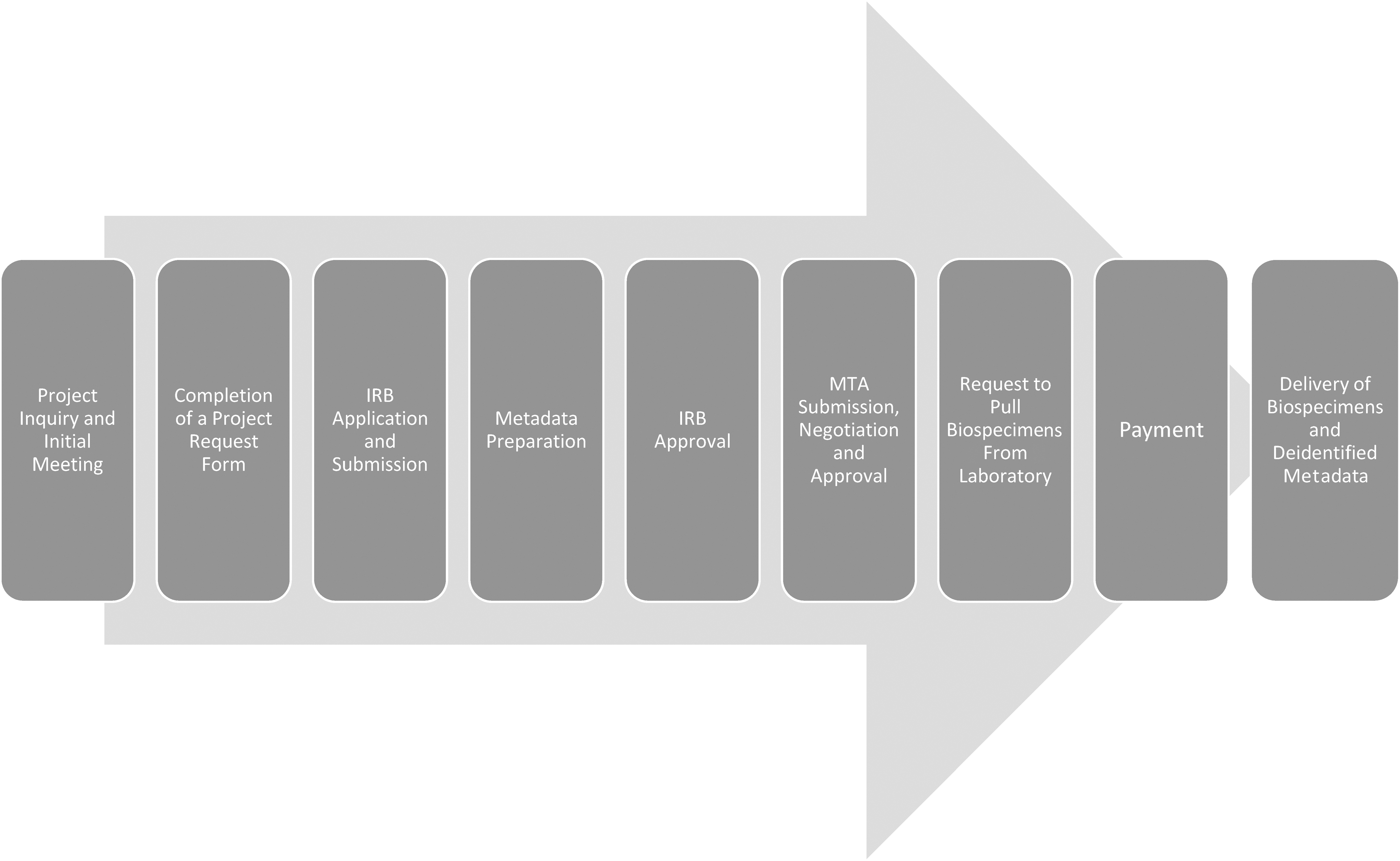
Process for obtaining human milk samples and the associated data for researchers located domestically and internationally.
Biannual project progress reports are required to track study progress and timelines. Once a project is complete, the data generated during analysis will be returned to the HMB and linked with the larger dataset.
Cost of human milk samples
There are several costs associated with sample withdrawal: (1) IRB and metadata preparation, (2) samples, and (3) shipping. Once the feasibility of a project is determined and a project is approved by the Steering Committee, the research manager will begin to prep the required documents for regulatory submission and identify the participants and their associated metadata and biospecimens that will be included in the proposed analysis. This is a flat fee of $1,000 independent of the number of samples requested. The second cost is for the human milk samples, which is charged per aliquot. This per aliquot fee is independent of the human milk volume requested. The price ranges from $75 to $250 per aliquot dependent on the amount of metadata accompanying the request. The third cost is for the shipping of the biospecimens. Samples are shipped on dry ice via overnight delivery by a preferred courier, and shipping is paid directly by the recipient. For projects that require prospective enrollment or the collection of additional variables, the research manager will provide a budget reflective of the specific needs for the project. With time these costs are subject to change, but will be clearly documented in the initial feasibility discussions.
Strengths and limitations
The HMB was established to investigate a broad range of unanswered questions surrounding lactation. These include but are not limited to the effects of pharmaceuticals, maternal nutrition, and other exposures on the breast milk microbiome and the nursing offspring, behaviors of lactating mothers, and breast milk's imprinting mechanisms. The HMBs approach to the coupling of detailed sociodemographic, behavioral, and physical characteristics of the mother and offspring with banked breast milk samples is rare, and will allow for these and other future analyses.
Though extensive in scope, the HMB is not without limitations. The HMB overrepresents women who are nonminority and have greater than average socioeconomic resources, and also overrepresents women with select chronic diseases or exposures of interest. This could have implications for researchers attempting to make population level inferences. However, the ability to work with HMB staff to target specific populations of interest allows for investigation of rare exposures or targeted populations of interest, and can also be used to increase external validity based on the research objectives. Another potential limitation is that women are not required to be exclusively breastfeeding, which will add heterogeneity to microbiome results. 17 Also, even with a biobank of 3,000 milk samples, the power to analyze the effects of specific types of medications may be insufficient, although this can be mitigated with targeted enrollment. Finally, although medical records are collected to supplement, and when possible confirm, maternal interview data the majority of offspring outcomes are self-reported by the mother, which may be differential by an exposure.
Conclusion
The HMB collection has begun and will continue with the aim to establish a constant but rotating inventory of 3,000 samples. Through the use of sample collection and banking, together with detailed demographic, behavioral, and exposure information, the HMB provides a unique opportunity to understand all aspects of human milk in hope that it will lead to optimal health for mothers and infants.
Footnotes
Acknowledgments
We are appreciative of the steering committee members, as well as our collaboration with the UC San Diego MoMI CoRE and the San Diego donor milk bank. We further thank the UC San Diego students who have volunteered time to support the biorepository.
Disclosure Statement
No competing financial interests exist.
Funding Information
Funding or services “in kind” for infrastructure within the HMB has been provided by the Clinical Translational Research Institute (CTRI) at UC San Diego, and a pilot grant from Rady Children's Hospital, San Diego, CA. Selected research projects have received funding from a pilot grant from Rady Children's Hospital, San Diego, CA, a seed grant from the Microbiome and Microbial Sciences Initiative at UC San Diego, and two grants from the Gerber Foundation. Sustainability of the biorepository depends on several planned sources of funding, including research grants submitted by investigators affiliated with the HMB, foundation or philanthropy resources, and a recharge mechanism for investigators not directly affiliated with the HMB who submit requests and receive approval for samples.